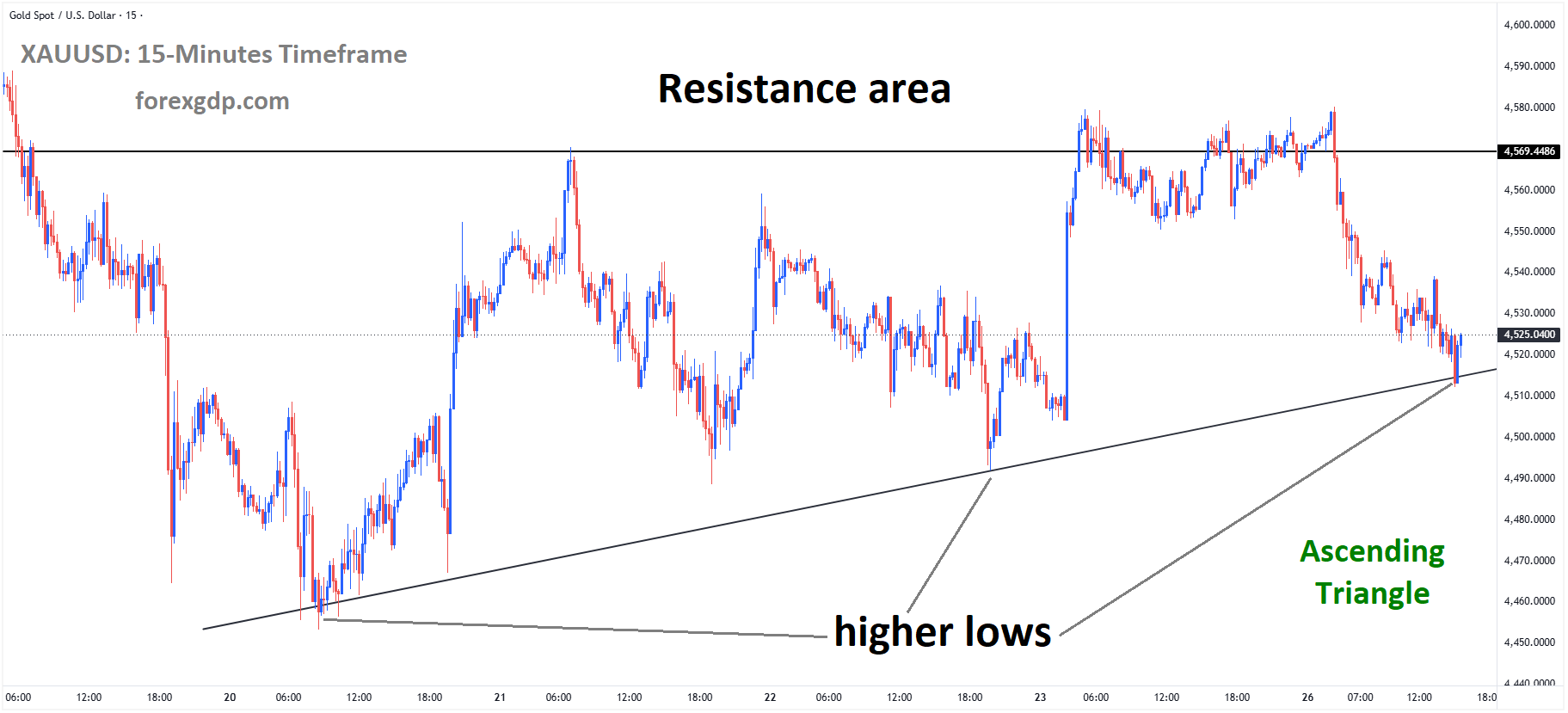
XAUUSD reached a higher low area of the ascending triangle pattern
Gold prices moved lower on Tuesday as the US Dollar regained strength and investors reacted to growing uncertainty in global markets. The precious metal struggled to hold its earlier momentum, with traders becoming more cautious due to rising expectations that the US Federal Reserve may keep interest rates higher for longer.
At the same time, ongoing tensions in the Middle East continue to create uncertainty across financial markets. While hopes of a possible peace agreement between the United States and Iran briefly improved market sentiment, conflicting developments have prevented investors from fully embracing optimism. This has kept demand for safe-haven assets active, although the stronger US Dollar is currently limiting gold’s upside potential.
Stronger US Dollar Weighs on Gold
One of the biggest reasons behind the latest weakness in gold prices is the renewed demand for the US Dollar. The greenback recovered after falling to its lowest level in more than a week, attracting buyers once again as investors searched for stability.
Gold and the US Dollar often move in opposite directions. When the dollar strengthens, gold becomes more expensive for buyers using other currencies. This usually reduces demand for the precious metal and puts downward pressure on prices.
The recent rise in the dollar has been supported by growing expectations that the Federal Reserve could maintain a tougher stance on interest rates. Investors are becoming increasingly concerned that inflation may remain elevated for longer than expected, especially as energy prices begin to recover.
Higher interest rates generally hurt gold because the metal does not offer any yield or interest income. When safer assets such as bonds provide better returns, investors often reduce their exposure to gold.
Middle East Tensions Continue to Support Market Uncertainty
Although gold is facing pressure from the stronger dollar, geopolitical tensions are still preventing a sharper decline in prices. The situation involving the United States and Iran remains highly uncertain, and investors are closely monitoring every new development.
Recent reports suggest that US military forces carried out defensive strikes in southern Iran. According to military officials, the operation targeted missile launch sites and Iranian boats that were allegedly attempting to place mines in strategic waters.
These developments come during a period of deep disagreements between both countries over Iran’s nuclear activities and the ongoing dispute surrounding the Strait of Hormuz, one of the world’s most important oil shipping routes.
The conflict has already lasted for nearly three months, and hopes for a quick resolution continue to fade. Adding to market concerns, US President Donald Trump has repeatedly warned that additional military action could take place if Iran refuses to agree to a broader peace arrangement.
Because of these tensions, investors remain cautious. Uncertainty in global politics often increases demand for safe-haven assets such as gold and the US Dollar. However, in the current environment, the stronger dollar appears to be attracting more attention from traders than gold itself.
Oil Supply Concerns Add to Inflation Fears
Another important factor influencing the gold market is the recent movement in crude oil prices. Iran has reportedly disrupted a large portion of shipping traffic through the Gulf region since the conflict began. This area is responsible for transporting a major share of the world’s oil supply.
Concerns about reduced oil exports have helped crude prices recover after recently touching a two-week low. The rebound in energy prices is once again raising fears that inflation could remain stubbornly high.
When oil prices rise sharply, transportation and production costs usually increase across the global economy. This can push consumer prices higher and create inflationary pressure.
As inflation fears return, investors believe central banks may be forced to keep monetary policy tighter for longer periods. In the United States, this has strengthened expectations that the Federal Reserve could even consider another interest rate hike in the future.
Market data from the CME FedWatch Tool shows that traders are already pricing in the possibility of at least one rate increase by the Federal Reserve in 2026. These expectations are helping support the US Dollar while reducing investor appetite for non-yielding assets like gold.
Investors Await Key US Economic Reports
Market participants are now focusing on several important US economic reports that could influence the next major move in gold and currency markets.
One of the most closely watched reports is the US Personal Consumption Expenditures (PCE) Price Index, which is scheduled for release on Thursday. The PCE report is considered the Federal Reserve’s preferred inflation measure and often plays a major role in shaping interest rate expectations.
If inflation data comes in stronger than expected, investors may increase bets on higher interest rates, which could further support the US Dollar and pressure gold prices.
Alongside the inflation report, traders will also monitor the updated estimate of US Gross Domestic Product (GDP). Strong economic growth data could reinforce confidence in the US economy and strengthen the case for tighter monetary policy.
Before those reports arrive, investors will also pay attention to the Conference Board’s US Consumer Sentiment Index. The data may provide insight into how American consumers are responding to economic conditions, inflation concerns, and geopolitical uncertainty.
Gold Market Remains Sensitive to Global Developments
The current environment shows how sensitive the gold market has become to both economic and geopolitical developments. On one side, ongoing tensions in the Middle East continue to create uncertainty and support demand for safe-haven assets. On the other side, a stronger US Dollar and expectations of higher interest rates are limiting gold’s ability to recover.
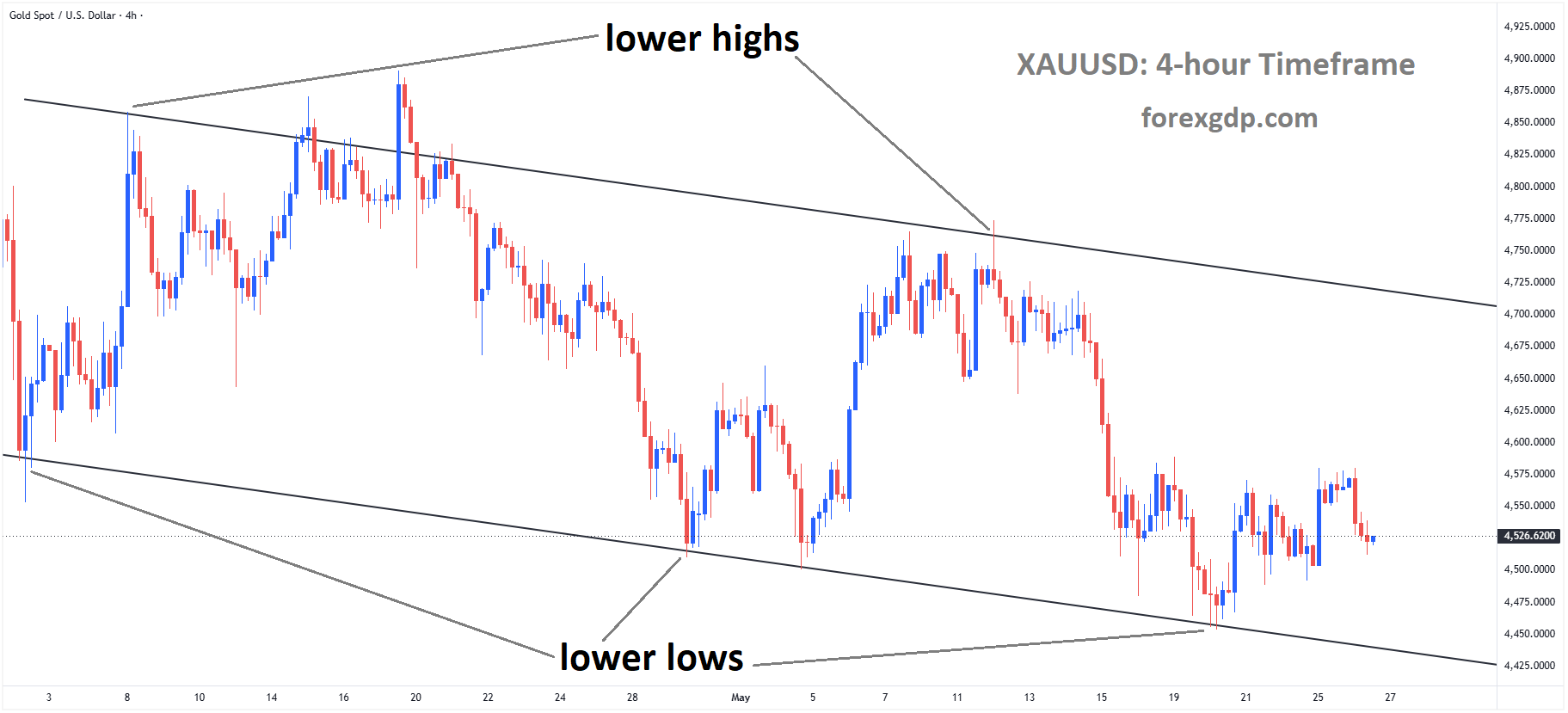
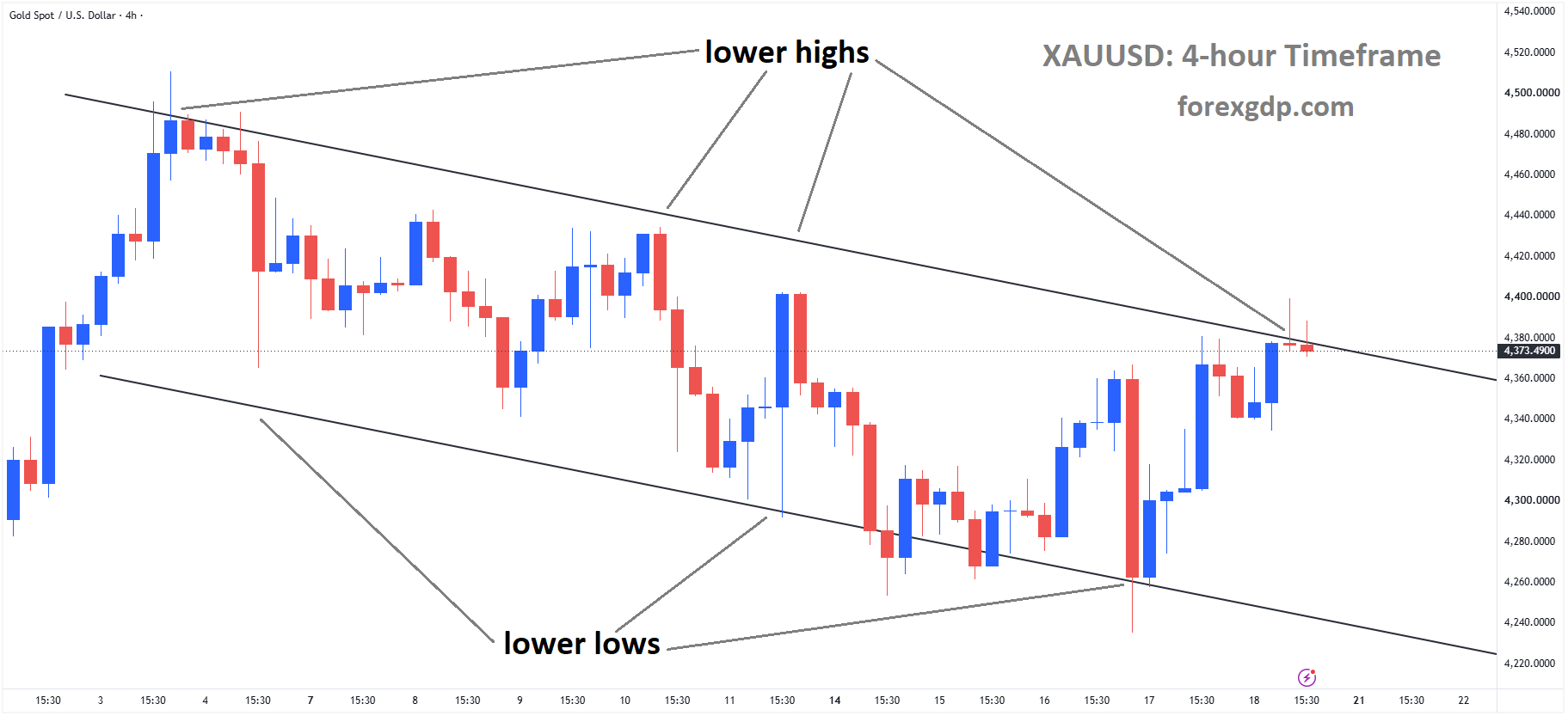
XAUUSD is rebounding from the lower low area of the descending channel
Investors are likely to remain cautious until there is more clarity regarding the US-Iran situation and the direction of Federal Reserve policy. Any escalation in geopolitical tensions could quickly increase demand for gold again, while stronger US economic data may continue to favor the dollar.
For now, the overall market mood suggests that gold may continue to face pressure as traders focus on inflation risks, central bank policy, and global political uncertainty.
Summary
Gold prices remain under pressure as the US Dollar strengthens and investors adjust expectations for future Federal Reserve policy. Rising oil prices and ongoing Middle East tensions are keeping inflation concerns alive, which is increasing speculation that interest rates could stay higher for longer.
At the same time, uncertainty surrounding the conflict between the United States and Iran continues to influence market sentiment. While geopolitical risks usually support gold demand, the stronger US Dollar is currently dominating market direction.
Upcoming US inflation and economic growth reports are expected to play a major role in shaping short-term market trends. Until then, investors are likely to remain focused on both economic data and geopolitical headlines as they assess the future direction of gold prices.