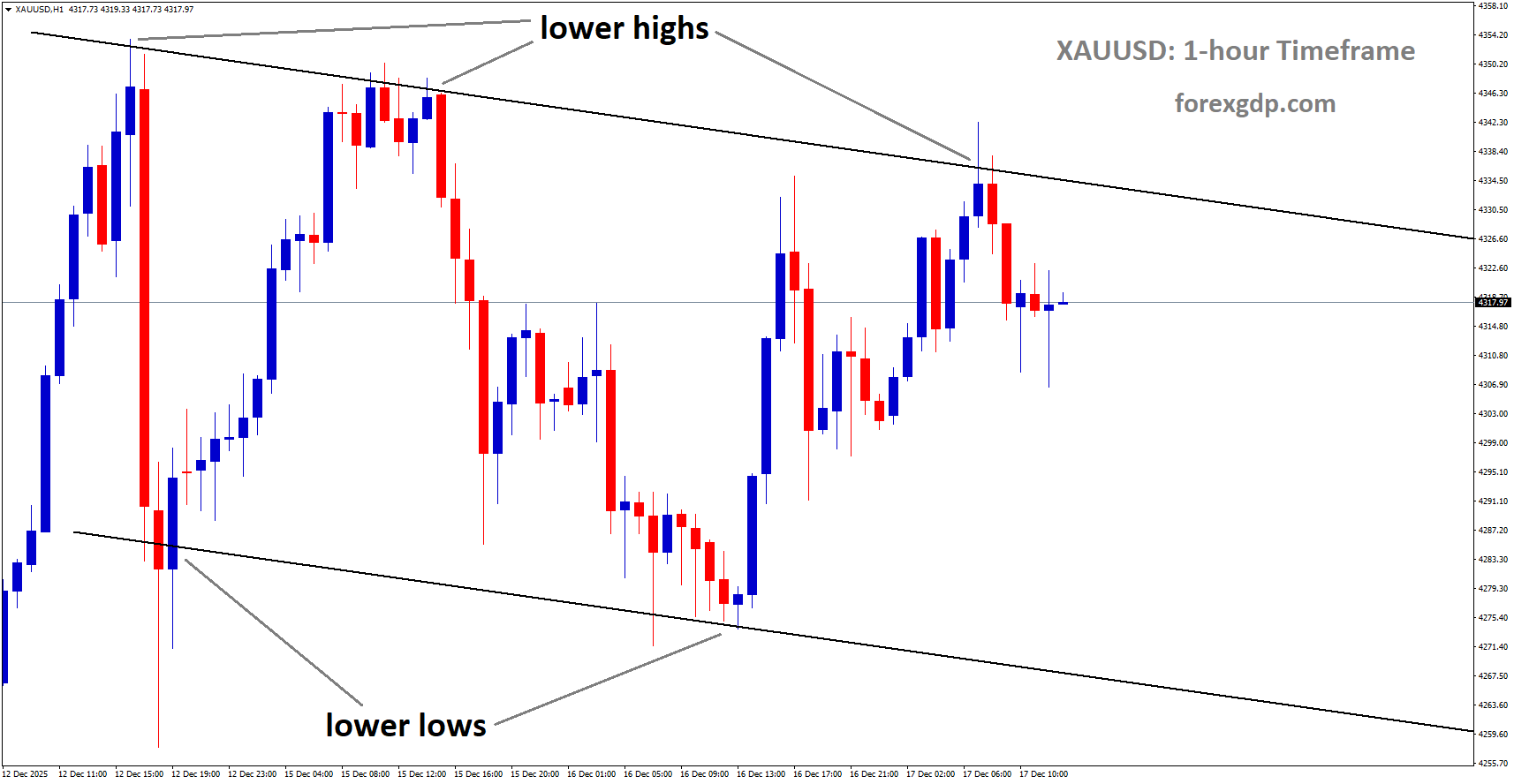

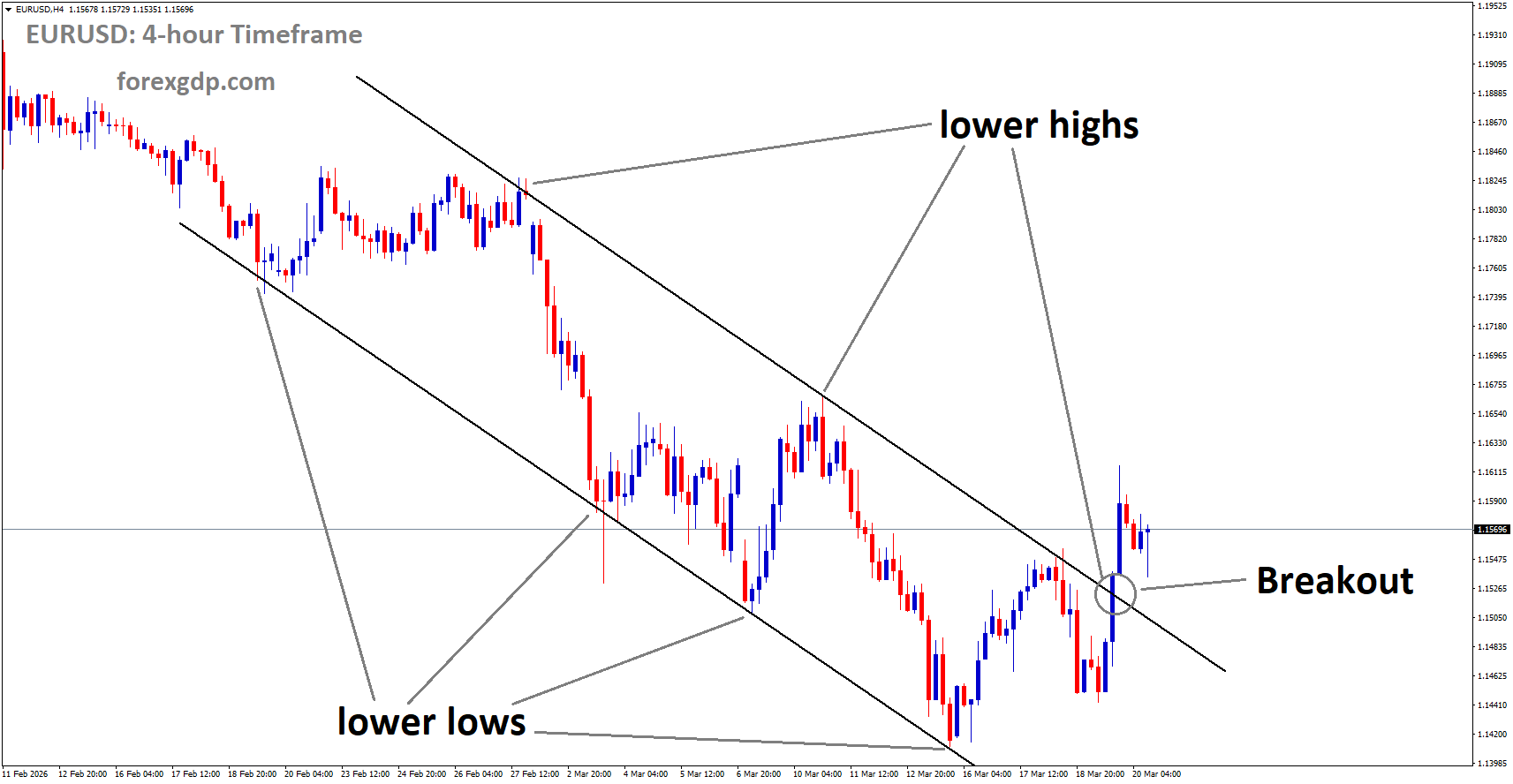
EURUSD has broken the descending channel on the upside
EURUSD pulls lower to 1.1560 as US dollar rebounds
The EUR/USD currency pair has recently seen a mild pullback after reaching a weekly high, reflecting a shift in momentum driven by changes in global economic sentiment. While the US Dollar is attempting to regain strength after a sharp decline, the Euro continues to find support from expectations surrounding future decisions by the European Central Bank (ECB). This balance between recovery and optimism is shaping the current movement of the pair.
EUR/USD Steps Back After Weekly High
The Euro against the US Dollar climbed earlier in the week, reaching its highest level before easing slightly. This decline comes as the US Dollar begins to stabilize following a period of weakness.
During recent trading sessions, the pair moved lower as traders reacted to renewed buying interest in the US Dollar. After falling sharply, the Dollar found some support, prompting investors to take profits on the Euro’s earlier gains. This kind of correction is common after a strong upward move, especially when market sentiment begins to shift.
Even with this pullback, the broader trend shows that both currencies are being influenced by ongoing global developments, particularly decisions and signals from central banks.
US Dollar Finds Support After Recent Weakness
The US Dollar had been under pressure due to concerns about how the Federal Reserve’s policies compare with those of other major central banks. Earlier fears suggested that the Fed might take a different path, which could weaken the Dollar.
However, those concerns have started to fade. Central banks around the world have raised warnings about rising inflation risks, especially due to higher energy prices linked to geopolitical tensions. As a result, expectations of major differences in policy between the Federal Reserve and other central banks have reduced.
This shift has helped the US Dollar recover slightly. Investors now see a more balanced global monetary environment, which reduces the pressure on the Dollar.
Impact of Global Central Bank Signals
Central banks play a key role in shaping currency movements. When they signal similar approaches to inflation and interest rates, currencies tend to stabilize relative to each other.
Recent statements from global policymakers suggest a shared concern about inflation, particularly due to rising energy costs. This has led to expectations that central banks may remain cautious rather than making aggressive changes.
For the US Dollar, this has been supportive. A more aligned global policy outlook means the Dollar is less likely to weaken sharply against other currencies.
ECB Holds Rates but Signals Inflation Concerns

The European Central Bank recently decided to keep interest rates unchanged. This decision reflects uncertainty about the economic outlook, especially given ongoing geopolitical tensions and their effect on energy prices.
ECB President Christine Lagarde highlighted that rising energy costs could push inflation higher in the near future. This statement is important because it suggests that inflation remains a concern for the Eurozone, even if immediate action is not taken.
By choosing to hold rates steady, the ECB is taking a cautious approach. However, it is also keeping the door open for possible changes if inflation continues to rise.
Why Energy Prices Matter
Energy costs have a direct impact on inflation. When energy becomes more expensive, it increases the cost of goods and services across the economy.
Recent global conflicts have pushed energy prices higher, creating uncertainty for central banks. For the Eurozone, this means inflation could stay above target levels, which may require future policy adjustments.
This factor is one of the main reasons why investors are paying close attention to the ECB’s next moves.
Growing Expectations of Future ECB Rate Hikes
Despite holding rates steady for now, there is increasing speculation that the ECB could consider raising interest rates in the coming months. Reports suggest that discussions about potential rate hikes could begin soon, with possible action later if conditions remain the same.
This expectation has provided support for the Euro. When investors believe that interest rates might rise, a currency often strengthens because higher rates can attract more investment.
The idea that the ECB might act if inflation stays elevated has added a positive tone to the Euro’s outlook.
Market Reaction to Rate Hike Possibilities
The Euro saw a noticeable boost when reports emerged about potential rate discussions. Traders reacted quickly, buying the currency in anticipation of future policy tightening.
This kind of reaction highlights how sensitive currency markets are to central bank expectations. Even the possibility of a rate increase can influence investor behavior and drive price movements.
However, these expectations are not guaranteed outcomes. They depend heavily on how economic conditions evolve, especially inflation and energy prices.
Focus Shifts to ECB Officials’ Comments
With the ECB decision now announced, attention is turning to comments from policymakers. These statements can provide deeper insight into future plans and help investors understand how likely a rate hike might be.
Officials often clarify their stance in the days following a policy decision. Their tone and language can influence market expectations and shape currency trends.
Investors are especially interested in whether policymakers support the idea of raising rates soon or prefer to wait for more data.
Why Communication Matters
Central bank communication is a powerful tool. Even without immediate action, clear guidance can move markets.
If ECB officials signal confidence in the economy and concern about inflation, it could strengthen expectations of future rate hikes. On the other hand, cautious or uncertain language might reduce those expectations.
For the Euro, these signals are crucial. They help determine whether the currency can maintain its recent strength or face renewed pressure.
Balancing Forces Between Euro and Dollar
The current movement of EUR/USD reflects a balance between two key forces. On one side, the US Dollar is recovering as global policy concerns ease. On the other, the Euro is supported by the possibility of future ECB action.
This creates a situation where neither currency has a clear advantage. Instead, short-term movements are driven by changing expectations and new information.
As global conditions continue to evolve, the pair is likely to remain sensitive to central bank signals, geopolitical developments, and economic data.
Final Summary
The EUR/USD pair has pulled back slightly after reaching a recent high, mainly due to a modest recovery in the US Dollar. At the same time, the Euro remains supported by growing expectations that the European Central Bank could consider raising interest rates in the near future.
Global central bank signals have reduced fears of major policy differences, helping stabilize the Dollar. Meanwhile, rising energy prices and inflation concerns are keeping the ECB on alert, adding strength to the Euro’s outlook.
Looking ahead, comments from ECB officials and ongoing developments in energy markets will play a key role in shaping the direction of the currency pair. Investors will continue to watch closely for any signals that could shift expectations and influence market sentiment.
GBPUSD dips as hawkish BoE outlook faces a resilient Greenback
The GBP/USD currency pair recently pulled back after a strong upward move, catching the attention of traders and global market watchers. While the earlier rally was fueled by a firm stance from the Bank of England (BoE), the latest shift reflects a mix of changing expectations, global uncertainty, and renewed strength in the US Dollar.

GBPUSD is moving in a descending channel, and the market has reached the lower high area of the channel
Understanding what’s behind this movement requires a closer look at central bank decisions, inflation outlooks, and broader economic forces shaping both the UK and the United States.
Bank of England Surprises with a Strong Message
The Bank of England made a notable impact on the market with its latest policy decision. While the central bank kept interest rates unchanged at 3.75%, the real surprise came from how the decision was made.
Instead of a divided vote, all nine members of the Monetary Policy Committee agreed to hold rates steady. This was unexpected, especially since earlier votes had shown a much narrower split. A unanimous decision sends a strong signal that policymakers are aligned and cautious about the current economic situation.
Rising Inflation Concerns Take Center Stage
One of the key reasons behind this unified stance is the updated inflation outlook. The BoE significantly raised its forecast for inflation in the coming months. It now expects inflation to rise to around 3.5%, compared to earlier expectations closer to 2%.
This change is largely driven by rising energy prices, which have been affected by ongoing geopolitical tensions in the Middle East. Higher energy costs tend to push up prices across the economy, making it harder to control inflation.
Shift Toward a More Hawkish Tone
The tone from the Bank of England has clearly become more cautious, even leaning toward tightening if needed. Governor Andrew Bailey emphasized that the central bank is prepared to act if inflation proves stubborn.
Interestingly, even policymakers who were previously seen as more cautious about raising rates have started to acknowledge the possibility of further action. This shift suggests that the BoE is taking inflation risks seriously and is ready to respond if conditions worsen.
Federal Reserve Holds Steady but Signals Caution
Across the Atlantic, the US Federal Reserve also decided to keep interest rates unchanged, maintaining them within a similar range. However, the message from the Fed carries its own set of implications.
While the central bank still expects one rate cut later in the year, there is growing uncertainty about whether that will actually happen.
Uncertainty Shapes the Fed’s Outlook
Fed Chair Jerome Powell highlighted rising uncertainty, particularly related to geopolitical tensions involving Iran. These global risks make it harder for policymakers to predict how the economy will evolve.
As a result, some members of the Federal Reserve are becoming less confident about cutting rates anytime soon. This shift in thinking is important because it changes how investors view the future path of US monetary policy.
Fewer Rate Cuts Expected
Recent projections show that more policymakers are now leaning toward keeping rates steady for longer. This has increased expectations that the Fed may not ease policy as quickly as previously thought.
When markets expect higher interest rates to remain in place, it generally supports the US Dollar. That’s exactly what has been happening, with the Dollar gaining strength and putting pressure on GBP/USD.
US Dollar Regains Momentum
After briefly weakening, the US Dollar has started to recover. This rebound is closely linked to changing expectations around Federal Reserve policy.
As investors begin to believe that US interest rates will stay higher for longer, demand for the Dollar increases. This is because higher rates tend to attract global capital, making the currency more appealing.
The recovery in the Dollar has played a key role in the recent pullback of GBP/USD, limiting the pair’s ability to continue its upward trend.
Market Reactions and Expert Views
Financial institutions and analysts are closely watching these developments and offering different perspectives on what might happen next.
UK Rate Expectations May Be Overdone
Some analysts believe that the market may have reacted too strongly to the Bank of England’s hawkish tone. The sharp increase in expectations for tighter policy has already pushed up UK bond yields, which typically supports the British Pound.
However, there is a risk that this optimism could fade if economic conditions change or if inflation does not rise as much as expected.
Global Risk Sentiment Still Matters
Another important factor is overall market sentiment. If global risks increase—especially due to geopolitical tensions—investors may move away from riskier assets like equities and certain currencies.
In such situations, the US Dollar often benefits as a safe-haven currency. This could further limit gains in GBP/USD, even if the Bank of England remains cautious about inflation.
The Role of Energy Prices in Currency Movements
Energy prices are becoming a major influence on currency markets, particularly for GBP/USD.
Why Oil Prices Matter
Rising oil prices affect both inflation and economic growth. For the UK, higher energy costs directly contribute to rising inflation, which may force the Bank of England to keep policy tight.
At the same time, global energy price movements influence investor sentiment. When oil prices rise بسبب geopolitical tensions, markets tend to become more cautious.
A Key Driver for Future Trends
Some analysts point out that oil prices could play a bigger role than interest rates in the near term. If energy costs continue to rise, they could shape both inflation expectations and overall market behavior.
This means that GBP/USD may not be driven solely by central bank decisions, but also by how global energy markets evolve.
Balancing Forces Between the Pound and the Dollar
The current movement in GBP/USD reflects a balance between two opposing forces.
On one side, the British Pound is supported by a more cautious and potentially tightening stance from the Bank of England. Rising inflation expectations and higher yields add to this support.
On the other side, the US Dollar is gaining strength due to expectations that the Federal Reserve will keep rates steady for longer. Increased global uncertainty also favors the Dollar as a safe haven.
These competing factors create a dynamic environment where the currency pair can move in either direction depending on new developments.
Final Summary
The recent pullback in GBP/USD highlights how quickly currency markets can shift when expectations change. A strong message from the Bank of England initially pushed the Pound higher, but renewed strength in the US Dollar has slowed that momentum.
Rising inflation concerns in the UK, combined with a more unified and cautious BoE, provide underlying support for the Pound. At the same time, growing uncertainty and changing expectations around US interest rates are helping the Dollar regain ground.
Global factors, especially energy prices and geopolitical tensions, are adding another layer of complexity. These elements not only influence inflation but also shape investor confidence and market direction.
As a result, GBP/USD is being pulled in different directions, with both currencies backed by strong but competing forces. Future movements will likely depend on how inflation evolves, how central banks respond, and how global risks unfold in the weeks ahead.
USDJPY edges up on renewed Dollar demand even as BoJ signals restraint
The USD/JPY currency pair has shown a noticeable recovery after a sharp drop, reflecting shifting market sentiment and renewed strength in the US Dollar. While global uncertainty continues to influence investor behavior, central bank policies in both the United States and Japan remain key forces shaping the direction of this major currency pair.

USDJPY reached the retest area of the broken Ascending channel
The recent movement highlights how quickly financial markets can react to changing expectations, especially when geopolitical risks and economic outlooks are involved.
USD/JPY Recovers After Recent Decline
After experiencing a steep fall, USD/JPY has bounced back and is trading higher, signaling renewed confidence in the US Dollar. This recovery comes as traders reassess earlier concerns and adjust their expectations regarding future monetary policy decisions.
The rebound is not just a technical correction. It reflects a broader shift in sentiment, where investors are once again favoring the US Dollar amid ongoing global uncertainties. When markets become unstable, the Dollar often benefits due to its role as a reliable and liquid currency.
This renewed strength has helped push the pair upward, reversing some of the losses seen earlier.
Federal Reserve Outlook Supports the US Dollar
A major factor behind the Dollar’s strength is the current outlook for US monetary policy. The Federal Reserve has decided to keep interest rates steady, signaling a cautious approach as it evaluates economic conditions and global risks.
Fewer Expectations of Rate Cuts
Earlier, there were stronger expectations that the Federal Reserve might lower interest rates within the year. However, recent developments have changed that view. Fewer policymakers now anticipate rate cuts in the near future, which has provided support to the US Dollar.
When interest rates are expected to remain stable or higher for longer, the Dollar tends to gain strength because it offers better returns compared to other currencies.
Uncertainty Keeps the Fed Cautious
The Federal Reserve has also pointed to ongoing uncertainty, especially due to geopolitical tensions. Issues such as conflicts in the Middle East and fluctuations in energy markets are making it harder to predict economic conditions.
This cautious stance reassures investors that the central bank is taking a balanced approach, which helps maintain confidence in the US economy and its currency.
Global Tensions Boost Demand for the Dollar
Geopolitical risks are playing a significant role in currency movements. Rising tensions involving major global players have increased market anxiety, leading investors to seek safer and more stable assets.
The US Dollar benefits strongly in such situations because it is widely considered a global safe-haven currency. During times of stress, investors often move their funds into the Dollar to protect their capital.
Energy Prices Add to Market Stress
Another important factor is the rise in energy prices. Higher oil prices can create economic pressure worldwide, increasing inflation risks and slowing growth.
As energy costs rise, financial markets often become more cautious. This environment tends to favor the US Dollar, as it is seen as a stable store of value during uncertain times.
Some analysts believe that continued increases in oil prices could further strengthen the Dollar, especially if global economic concerns persist.
Bank of Japan Maintains a Hawkish Tone

While the US Dollar is gaining strength, the Japanese Yen is also receiving some support from the Bank of Japan’s policy stance.
The central bank has maintained a relatively hawkish tone, meaning it is open to tightening monetary policy if economic conditions allow. This has helped prevent the Yen from weakening too sharply.
Possibility of Future Rate Hikes
Bank of Japan Governor Kazuo Ueda has indicated that interest rate hikes could still happen if the current economic slowdown proves temporary. This statement suggests that the central bank is not ruling out policy tightening in the future.
Such signals can support the Yen because higher interest rates typically make a currency more attractive to investors.
Economic Risks Remain a Concern
Despite its hawkish stance, the Bank of Japan remains cautious. Rising energy costs and global uncertainties are creating challenges for Japan’s economic growth.
If these risks continue, they could limit the central bank’s ability to raise interest rates, which in turn may reduce support for the Yen over time.
Policy Divergence Shapes Market Direction
One of the most important drivers of USD/JPY is the difference in monetary policy between the United States and Japan.
At the moment, the Federal Reserve is maintaining relatively higher interest rates, while the Bank of Japan is still navigating a slower path toward tightening. This difference creates a gap that often favors the US Dollar over the Japanese Yen.
Why Policy Differences Matter
When one country offers higher interest rates than another, investors tend to move their money toward the higher-yielding currency. This increases demand for that currency and pushes its value up.
In the case of USD/JPY, the stronger position of the US Dollar is largely due to this interest rate advantage.
Even though the Bank of Japan is showing signs of tightening, the pace remains slower compared to the Federal Reserve, which keeps the Dollar in a stronger position overall.
Safe-Haven Dynamics: Dollar vs Yen
Both the US Dollar and the Japanese Yen are considered safe-haven currencies, meaning they tend to perform well during times of uncertainty. However, their behavior can differ depending on the situation.
When the Yen Gains Strength
Traditionally, the Yen strengthens during periods of global risk aversion. Investors often turn to it because of Japan’s stable economy and low inflation environment.
Why the Dollar Is Leading Now
In the current scenario, the US Dollar is outperforming the Yen despite rising global tensions. This is mainly due to stronger economic resilience in the United States and higher interest rates.
Additionally, the Dollar’s global liquidity makes it more attractive during times of financial stress. Large institutions and governments prefer holding Dollars because they are easier to access and use in international transactions.
What to Watch Going Forward
The future direction of USD/JPY will depend on several key factors, including central bank decisions, geopolitical developments, and economic data.
Federal Reserve Signals
Any changes in the Federal Reserve’s stance on interest rates will have a major impact. If the central bank continues to hold rates steady or signals tighter policy, the Dollar could remain strong.
Bank of Japan Actions
Investors will also closely watch the Bank of Japan for any signs of actual rate hikes. A stronger move toward tightening could provide more support for the Yen.
Global Risk Environment
Geopolitical tensions and energy market developments will continue to influence market sentiment. Increased uncertainty is likely to keep demand for safe-haven currencies high.
Final Summary
USD/JPY has regained strength following a recent drop, driven mainly by renewed demand for the US Dollar. Expectations that the Federal Reserve will keep interest rates steady have supported the Dollar, while global uncertainty and rising energy prices have further increased its appeal.
At the same time, the Bank of Japan’s cautious but slightly hawkish stance is helping to limit losses in the Japanese Yen. However, the overall difference in monetary policy between the two countries continues to favor the Dollar.
As global tensions persist and economic conditions evolve, the balance between these forces will determine the next moves in the USD/JPY pair.
USDCAD in Focus as Canadian Dollar Stays Resilient with Easing Oil Prices
The Canadian Dollar has recently shown resilience in global currency markets, gaining ground against several major currencies. This strength comes even as oil prices pull back slightly and central banks signal caution on interest rates. While many factors influence currency movements, the current trend highlights how global energy dynamics and monetary policy expectations continue to shape the Canadian Dollar’s direction.

USDCAD is moving in a descending channel, and the market has reached the lower high area of the channel
Canadian Dollar Holds Firm in a Mixed Market
The Canadian Dollar has managed to perform well compared to other major currencies, reflecting underlying confidence in Canada’s economic position. However, when measured against the US Dollar, it has remained relatively stable, showing little movement during recent trading sessions.
This steady performance suggests that while the Canadian currency is benefiting from certain supportive factors, it is also facing balancing pressures. On one hand, Canada’s strong ties to the global energy market provide a boost. On the other hand, broader global economic conditions and US monetary policy continue to influence its movement.
Oil Prices and Their Influence on the Canadian Economy
Oil plays a central role in Canada’s economy, making it one of the most important factors affecting the Canadian Dollar. As one of the largest oil exporters to the United States, Canada benefits when oil demand is strong and prices are elevated.
When oil prices rise, foreign buyers need more Canadian Dollars to purchase Canadian oil. This increases demand for the currency and often strengthens its value. However, when oil prices fall or stabilize, that upward pressure can weaken.
Recent Changes in Oil Market Sentiment
Oil prices recently experienced a pullback after a period of strong gains. This shift happened as concerns about global supply began to ease. Several developments contributed to this change, including geopolitical signals suggesting reduced risks to oil production and supply chains.
For example, statements indicating a pause in targeting key oil infrastructure helped calm fears of supply disruptions. Additionally, discussions around easing restrictions on certain oil supplies further reduced uncertainty in the market.
As a result, oil prices moved lower from recent highs. Despite this decline, the Canadian Dollar has remained relatively strong, showing that other factors are also supporting its performance.
Why the Canadian Dollar Remains Supported
Even with softer oil prices, the Canadian Dollar has held its ground. This can be explained by a combination of economic fundamentals and investor expectations.
First, Canada’s role as a reliable energy exporter continues to attract international interest. Even if oil prices fluctuate in the short term, the long-term demand for energy supports Canada’s economic outlook.
Second, investors are closely watching monetary policy signals from the Bank of Canada. Expectations around interest rates can have a major impact on currency values, and current signals suggest a cautious but steady approach.
Bank of Canada’s Interest Rate Outlook

The Bank of Canada is expected to maintain its current interest rate levels for a longer period. This reflects a careful balance between controlling inflation and supporting economic growth.
Inflation and Growth Concerns
Inflation remains a key concern for policymakers. While price pressures may have eased in some areas, risks still exist, particularly from energy-related costs. At the same time, economic growth has shown signs of slowing, which adds another layer of complexity.
By holding interest rates steady, the Bank of Canada aims to avoid putting too much pressure on the economy while still keeping inflation under control. This cautious stance has helped provide stability for the Canadian Dollar.
Market Expectations and Currency Impact
When investors believe that interest rates will remain stable, it can reduce uncertainty. In the case of the Canadian Dollar, this expectation has contributed to its steady performance.
However, if future data suggests stronger inflation or unexpected economic changes, the central bank’s stance could shift. Such changes would likely influence the direction of the currency.
US Dollar Strength Adds Another Layer
While the Canadian Dollar has shown strength, it is also facing competition from a firm US Dollar. The US currency continues to benefit from expectations that the Federal Reserve will maintain its current policy stance for an extended period.
The Federal Reserve’s cautious approach is driven by ongoing concerns about inflation. Even as some economic indicators improve, policymakers remain focused on ensuring that inflation stays under control.
Federal Reserve’s Extended Pause
Investors widely expect the Federal Reserve to keep interest rates unchanged for now. This “wait and see” approach reflects the central bank’s desire to gather more data before making any major policy moves.
A stable or higher interest rate environment in the United States tends to support the US Dollar. This creates a natural limit on how much the Canadian Dollar can strengthen against it.
Recent Movements in the US Dollar
The US Dollar has shown mixed movements in recent sessions. While it has gained strength overall, there have been moments of decline. These fluctuations are often linked to global developments and changing expectations around central bank policies.
At one point, the US Dollar weakened after global central banks highlighted the risk of rising energy costs. This raised concerns that inflation could remain higher for longer, reducing the likelihood of major differences in policy between countries.
The Role of Global Central Banks
Central banks around the world are currently facing similar challenges. Inflation remains a concern, particularly with energy prices playing a key role. At the same time, economic growth is not as strong as it once was.
This shared situation has reduced the chances of large differences in interest rate policies between major economies. When central banks move in similar directions, currency movements tend to be more balanced.
For the Canadian Dollar, this means that while it can benefit from domestic strengths, it is also influenced by global trends.
What This Means for the Canadian Dollar Going Forward
The outlook for the Canadian Dollar will depend on several key factors:
-
Future movements in oil prices
-
Economic data from Canada and the United States
-
Central bank decisions and policy signals
-
Global geopolitical developments
If oil prices stabilize or rise again, the Canadian Dollar could receive additional support. However, continued strength in the US Dollar and cautious central bank policies may limit major gains.
Summary
The Canadian Dollar has demonstrated resilience in a complex global environment. Even as oil prices have eased, the currency remains supported by Canada’s strong energy sector and stable economic outlook.
At the same time, expectations of steady interest rates from both the Bank of Canada and the Federal Reserve are shaping currency movements. With both central banks taking a cautious approach, major shifts may take time to develop.
Overall, the Canadian Dollar’s performance reflects a balance of domestic strength and global influences. As energy markets and monetary policies continue to evolve, the currency will likely remain sensitive to changes in both areas.
USDCHF climbs toward 0.7890 as the US Dollar regains strength
The USD/CHF currency pair has shown a modest upward move, climbing toward the 0.7890 level during early European trading hours. This shift comes after the US Dollar regained some strength following a noticeable decline in the previous session. While the movement may appear small at first glance, it reflects deeper trends driven by central bank policies, market expectations, and investor sentiment.

USDCHF is moving in a descending channel, and the market has reached the lower high area of the channel
Understanding what is behind this movement requires a closer look at both the United States and Switzerland, particularly how their central banks are responding to current economic conditions.
US Dollar Finds Support After Recent Weakness
The US Dollar has managed to recover after facing selling pressure earlier. This rebound is helping push the USD/CHF pair slightly higher. A key factor behind this recovery is the growing belief that the Federal Reserve will not rush to lower interest rates anytime soon.
Market participants are closely watching the Federal Reserve’s next moves. Current expectations suggest that the central bank is likely to keep interest rates steady through the rest of the year. This outlook has strengthened confidence in the US Dollar, as higher or stable interest rates tend to make a currency more attractive to investors.
The US Dollar Index, which measures the value of the Dollar against a group of major currencies, has also moved higher. This reflects broader support for the currency across global markets, not just against the Swiss Franc.
Why Interest Rate Expectations Matter
Interest rates play a major role in currency movements. When rates are high or expected to remain stable, investors are more likely to hold assets in that currency because they can earn better returns.
In the case of the United States:
-
The Federal Reserve is expected to maintain its current stance.
-
There is less pressure to cut rates quickly.
-
Investors see stability in the US economy.
These factors combined are helping the Dollar recover and maintain its footing.
Federal Reserve Outlook Keeps Markets Steady
The Federal Reserve has been at the center of market attention for months. With inflation concerns and economic growth both in focus, the central bank has taken a cautious approach.
Recent data suggests that the likelihood of rate cuts happening before the end of the year remains relatively low. In fact, expectations point toward a strong chance that rates will stay at or above their current levels.
This steady outlook provides a sense of direction for investors. Instead of worrying about sudden policy changes, markets are adjusting to the idea that borrowing costs in the US will remain relatively unchanged for now.
Impact on Currency Markets
A stable interest rate environment often leads to:
-
Reduced volatility
-
Stronger investor confidence
-
Increased demand for the currency
This is exactly what is being seen with the US Dollar. Even after a temporary decline, it has managed to regain strength as expectations become clearer.
Swiss Franc Faces Pressure from Central Bank Signals

While the US Dollar is gaining support, the Swiss Franc is dealing with a different kind of pressure. The Swiss National Bank (SNB) has made it clear that it is closely watching the strength of its currency.
The Swiss Franc is often seen as a safe-haven asset. During times of uncertainty, investors tend to move their money into the Franc because Switzerland is known for its economic stability. However, when the currency becomes too strong, it can create challenges for the country’s economy.
A strong Franc can make Swiss exports more expensive, which can hurt businesses that rely on international trade. To prevent this, the SNB has indicated that it is ready to step in if needed.
SNB’s Willingness to Intervene
The Swiss National Bank has openly stated that it is prepared to act if the Franc strengthens too quickly. This includes intervening in foreign exchange markets to reduce upward pressure on the currency.
Key points from the SNB’s stance include:
-
A commitment to prevent excessive currency appreciation
-
Readiness to take action when needed
-
Focus on maintaining economic balance
This approach creates uncertainty around the Swiss Franc, as traders must consider the possibility of central bank intervention at any time.
Diverging Policies Shape USD/CHF Movement
One of the most important factors influencing the USD/CHF pair is the difference in policy approaches between the Federal Reserve and the Swiss National Bank.
On one side:
-
The Federal Reserve is maintaining a steady interest rate outlook.
-
The US economy is showing resilience.
-
The Dollar is gaining support.
On the other side:
-
The SNB is concerned about currency strength.
-
There is a willingness to intervene in markets.
-
The Franc faces downward pressure due to policy risks.
This divergence creates a natural upward push for the USD/CHF pair, as the Dollar becomes more attractive compared to the Franc.
How Traders Interpret This
Currency traders are constantly comparing economic signals from different countries. When one currency is supported by stable policies and the other faces intervention risks, the balance tends to shift.
In this case:
-
The Dollar is seen as stable and supported.
-
The Franc is viewed with caution due to possible intervention.
This difference is contributing to the gradual rise in the USD/CHF exchange rate.
Market Sentiment and Short-Term Outlook
The recent movement in USD/CHF reflects a broader shift in market sentiment. Investors are adjusting their expectations based on central bank signals and economic conditions.
In the short term, several factors will continue to influence the pair:
-
Updates from the Federal Reserve regarding interest rates
-
Any signals from the Swiss National Bank about intervention
-
Global economic developments that affect risk appetite
While the move toward 0.7890 may seem small, it highlights how sensitive currency markets are to policy changes and expectations.
What to Watch Going Forward
Traders and investors will be keeping a close eye on:
-
Central bank statements and speeches
-
Economic data from both countries
-
Signs of market intervention by the SNB
These elements will play a key role in determining whether the USD/CHF pair continues to move higher or stabilizes.
Summary
The upward movement in USD/CHF is driven by a combination of factors, including the US Dollar’s recovery and ongoing policy differences between the Federal Reserve and the Swiss National Bank. While the Fed is expected to maintain steady interest rates, providing support to the Dollar, the SNB’s readiness to intervene is creating pressure on the Swiss Franc.
This contrast in strategies is shaping the direction of the currency pair, with the Dollar gaining an edge in the current environment. As markets continue to react to economic signals and central bank actions, the USD/CHF pair will remain closely tied to these evolving dynamics.
Don’t trade all the time, trade forex only at the confirmed trade setups
Get more confirmed trade signals at premium or supreme – Click here to get more signals, 2200%, 800% growth in Real Live USD trading account of our users – click here to see , or If you want to get FREE Trial signals, You can Join FREE Signals Now!