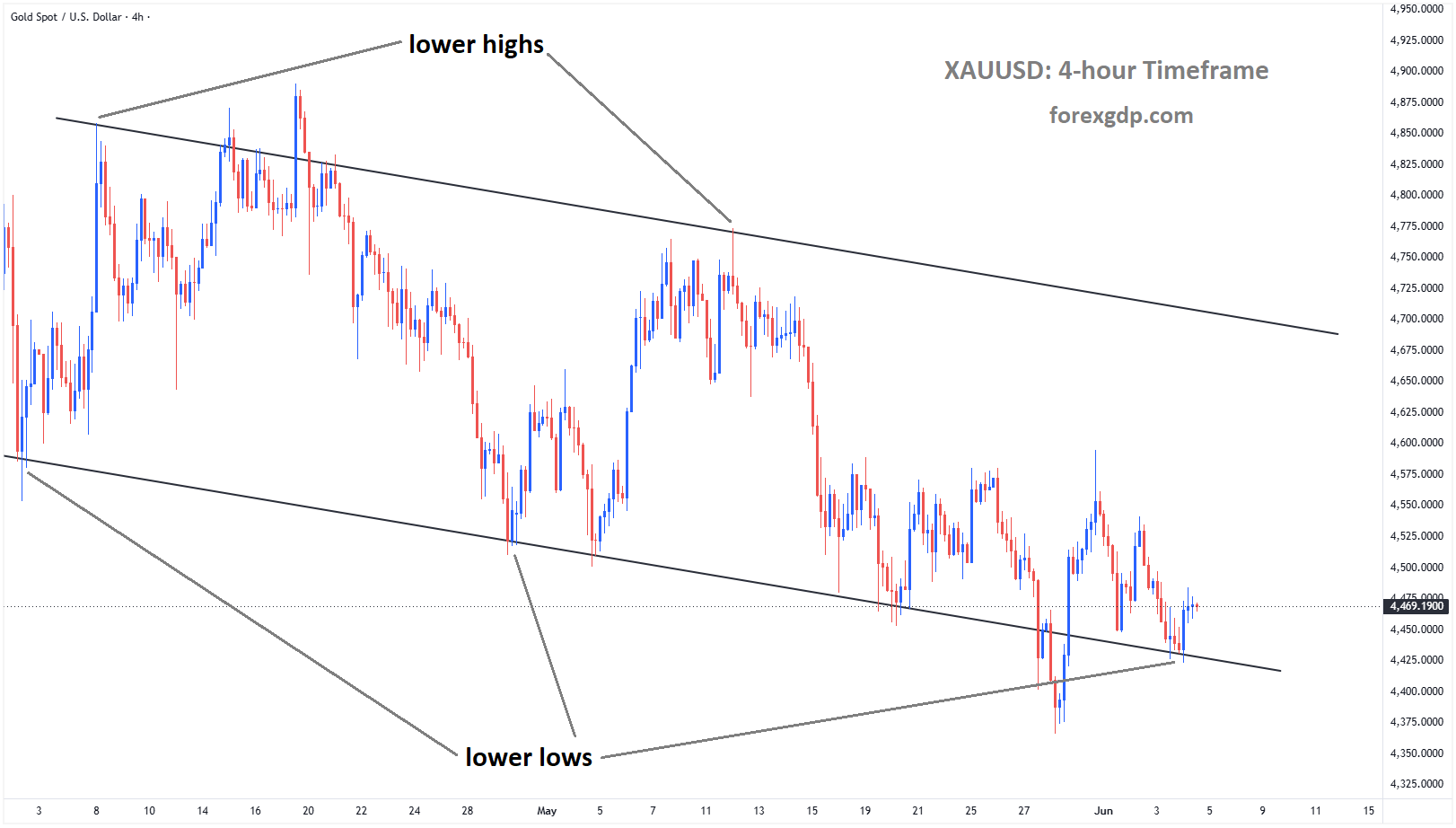
XAUUSD is moving in a descending channel
Gold prices showed signs of recovery after recently falling to their lowest level in a week. The rebound came as investors adjusted their positions following a ceasefire agreement between Israel and Lebanon, which reduced demand for the US Dollar as a traditional safe-haven asset. However, ongoing tensions involving the United States and Iran continue to keep geopolitical concerns alive, preventing a major decline in the Dollar and limiting stronger gains for Gold.
At the same time, expectations that the US Federal Reserve could maintain a firm stance on interest rates are creating additional challenges for the precious metal. Since Gold does not generate interest income, higher interest rate expectations often make it less attractive compared to other investments.
Israel-Lebanon Ceasefire Supports Gold
One of the main factors helping Gold regain some strength was the announcement of a ceasefire agreement between Israel and Lebanon. The deal followed talks led by the United States in Washington and was welcomed by investors looking for signs of stability in the region.
According to the joint statement, the ceasefire depends on a complete halt to attacks by Iran-backed Hezbollah and the withdrawal of its fighters from southern Lebanon. The agreement raised hopes that tensions in the region could ease after months of uncertainty.
As a result, some traders reduced their holdings of the US Dollar, which had recently reached its strongest level in months. When the Dollar weakens, Gold often becomes more attractive to investors because it is priced in US Dollars, making it less expensive for buyers using other currencies.
Adding to the positive sentiment, the Republican-controlled US House of Representatives approved a resolution aimed at preventing President Donald Trump from taking further military action against Iran. This move increased optimism that a broader conflict could be avoided and that diplomatic solutions might still be possible.
The combination of these developments encouraged investors to return to Gold, helping the metal recover from recent lows.
US-Iran Dispute Continues to Create Uncertainty
Despite the optimism surrounding the Israel-Lebanon ceasefire, the situation between the United States and Iran remains unresolved.
Reports indicate that diplomatic discussions between Washington and Tehran have encountered significant obstacles. One of the main sticking points is Iran’s demand that frozen financial assets be released immediately at the beginning of any agreement.
US officials, however, have maintained a firm position. They insist that no funds will be released unless Iran first takes meaningful steps regarding its nuclear program and issues related to the Strait of Hormuz, a strategically important shipping route.
Because neither side appears willing to compromise on these key issues, hopes for a quick diplomatic breakthrough have faded. This ongoing uncertainty keeps geopolitical risks elevated and encourages some investors to continue holding the US Dollar as a protective asset.
As a result, while Gold has benefited from periods of Dollar weakness, its upside remains limited due to the continued presence of global political risks.
Federal Reserve Expectations Remain a Key Factor
Another important influence on Gold’s performance is the outlook for US monetary policy.
Many investors believe that inflation risks remain a concern, partly because energy costs could stay elevated due to ongoing geopolitical tensions. Higher energy prices can contribute to broader inflationary pressures throughout the economy.
If inflation remains persistent, the Federal Reserve may decide to keep interest rates elevated for a longer period. Such a scenario generally supports the US Dollar and can create headwinds for Gold.
The relationship between interest rates and Gold is particularly important because Gold does not offer interest payments or dividends. When interest-bearing assets provide attractive returns, some investors may prefer them over holding Gold.
This dynamic explains why Gold’s recovery has been relatively modest despite recent geopolitical developments. Investors are balancing concerns about global tensions against expectations that US monetary policy could remain restrictive.
Markets Await Important US Economic Data
Investor attention is now turning toward several key economic events that could influence market sentiment in the coming days.
The release of US Weekly Jobless Claims data will provide insight into the strength of the labor market. In addition, speeches from influential members of the Federal Open Market Committee (FOMC) may offer clues about how policymakers view inflation, economic growth, and future interest rate decisions.
However, the biggest event on the calendar remains the upcoming US Nonfarm Payrolls (NFP) report. This monthly employment report is closely watched because it provides a detailed picture of job creation and overall labor market conditions.
A strong labor market could reinforce expectations that the Federal Reserve will maintain its current policy approach, while weaker-than-expected data could encourage speculation about future policy adjustments.
These economic releases are likely to play a major role in shaping both US Dollar movements and Gold prices in the near term.
Geopolitical Headlines Will Continue to Drive Sentiment
Beyond economic data, investors remain highly sensitive to developments in the Middle East. Any progress in diplomatic negotiations or unexpected escalation of tensions could quickly influence financial markets.
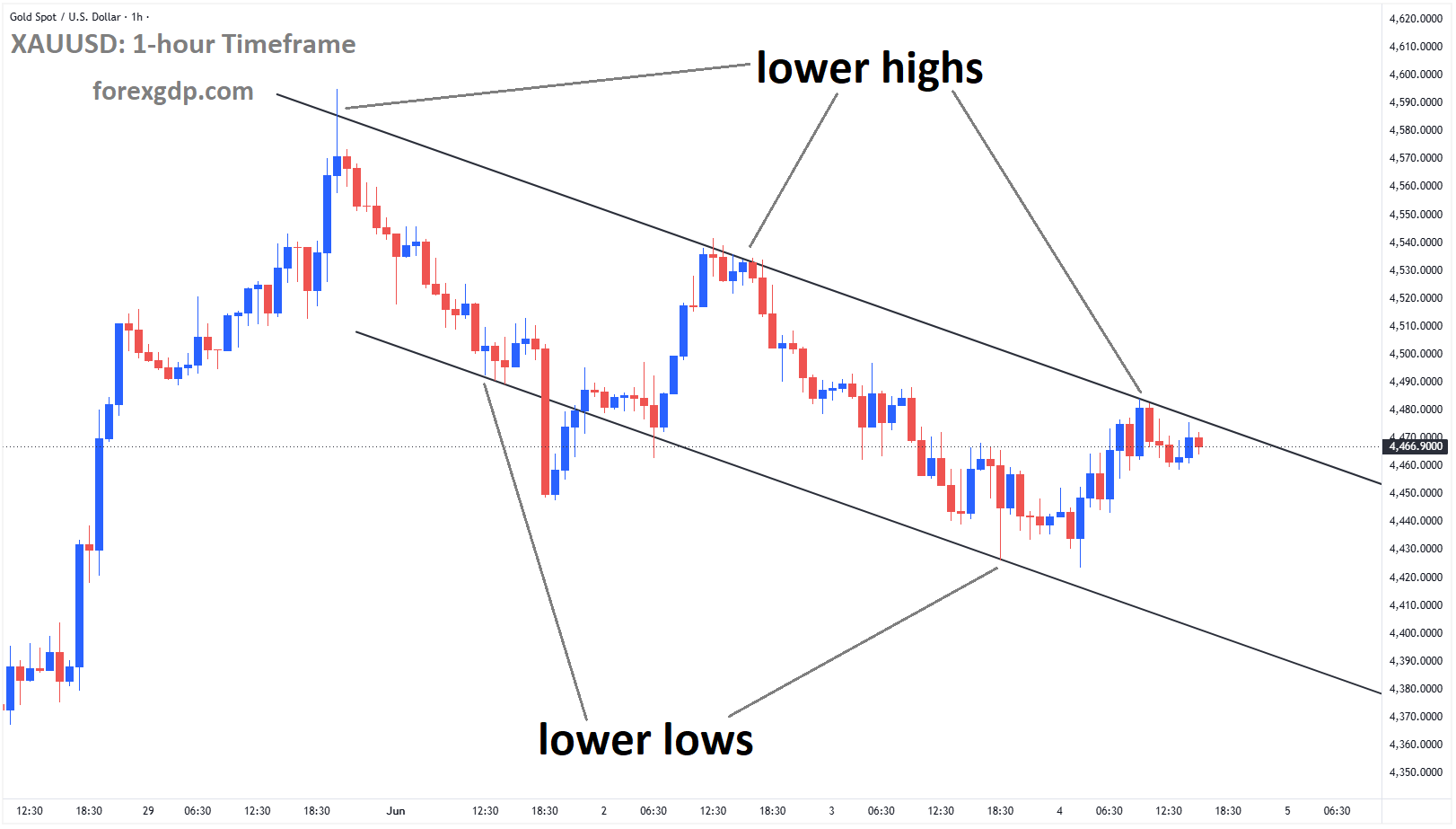
XAUUSD reached a lower high area of the descending channel
The ceasefire between Israel and Lebanon has provided a degree of relief, but unresolved issues involving Iran and the United States continue to create uncertainty. As a result, market participants are closely monitoring every new development for signs of either stability or renewed conflict.
This environment is likely to keep volatility elevated across global markets. Both Gold and the US Dollar are expected to remain highly responsive to changing geopolitical conditions as investors seek protection from uncertainty.
Summary
Gold has recovered from a recent one-week low as the Israel-Lebanon ceasefire reduced demand for the US Dollar and improved investor sentiment. However, ongoing disagreements between the United States and Iran continue to keep geopolitical risks alive, preventing a significant decline in the Dollar.
At the same time, expectations that the Federal Reserve may keep interest rates elevated are limiting Gold’s ability to make stronger gains. Investors are now focused on upcoming US economic reports, particularly the Nonfarm Payrolls data, while also watching developments in the Middle East. Together, these factors are expected to remain the primary drivers of Gold and US Dollar movements in the short term.