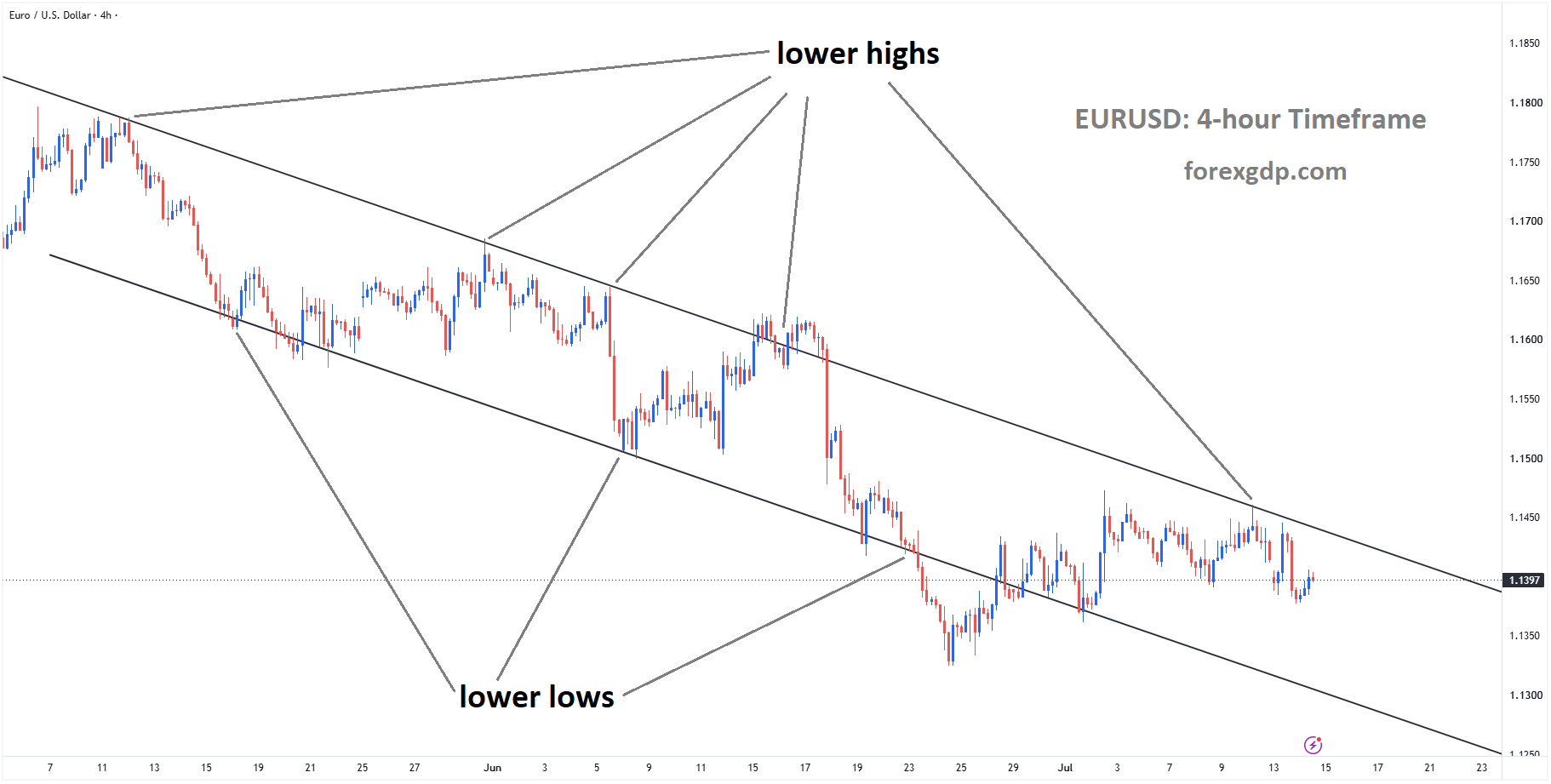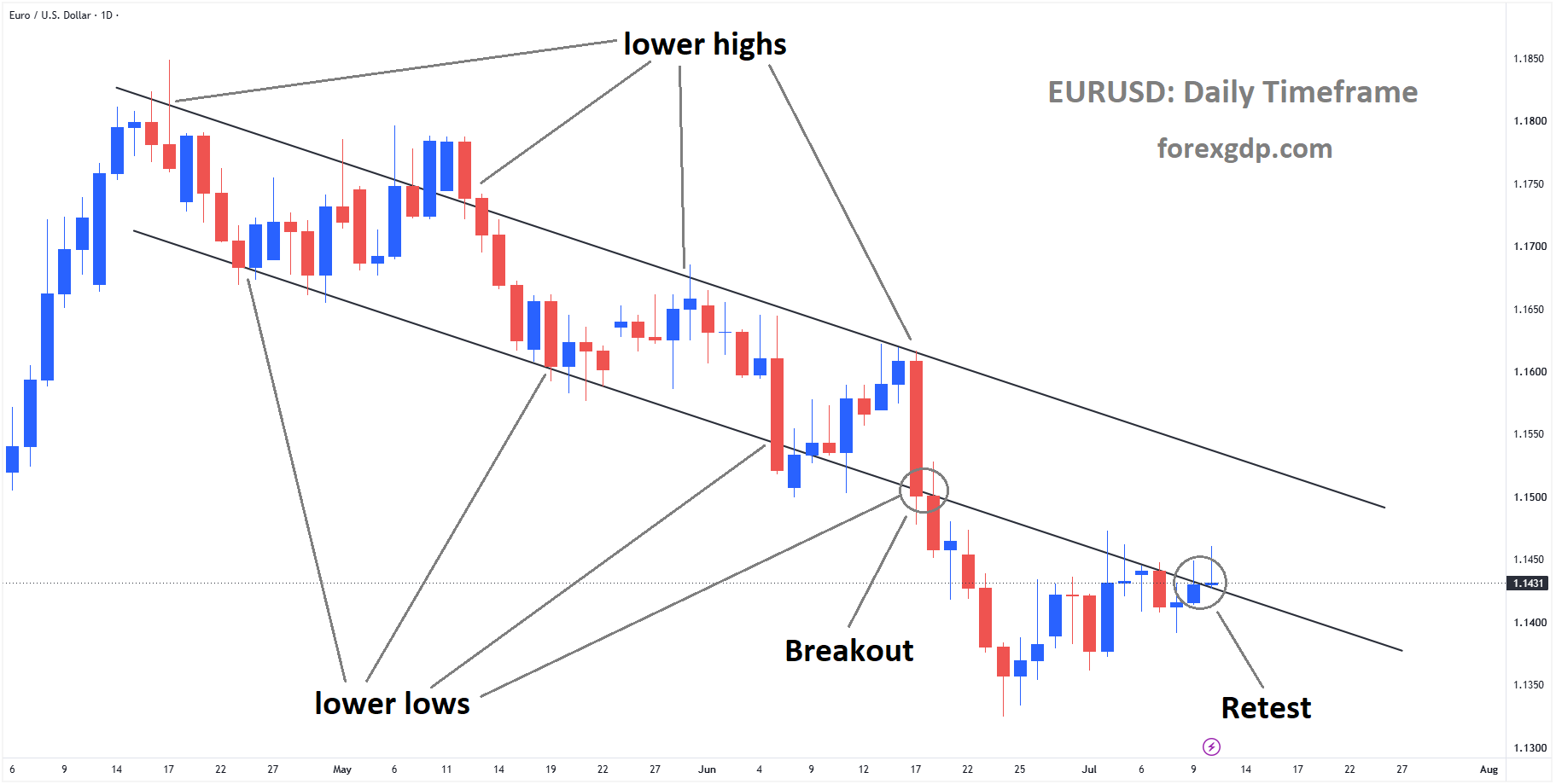
EURUSD reached the retest area of the broken descending channel
EURUSD Gives Up Early Gains as Eurozone Slowdown Clouds ECB Decision
The EUR/USD currency pair traded with little overall direction as the Euro lost most of its earlier gains against the US Dollar. Although the shared European currency showed strength at the beginning of the session, it later gave back those advances and finished the day close to where it started.
Several factors are keeping the Euro under pressure. Slower inflation across major Eurozone economies, weaker industrial activity, and continued geopolitical uncertainty are reducing investor confidence. At the same time, higher energy costs caused by global supply concerns are creating additional challenges for the European economy.
Eurozone Inflation Continues to Slow
Fresh economic reports from the Eurozone showed that inflation continued to cool during June. Germany, the region’s largest economy, confirmed that consumer price growth slowed compared to previous months.
The latest figures also showed that monthly inflation declined again, continuing a recent trend of easing price pressures. This suggests that inflation is moving closer to the European Central Bank’s long-term target after remaining elevated for an extended period.
Lower inflation can be positive for consumers because it reduces the pressure from rising living costs. However, it also signals that overall demand in the economy may be weakening, raising concerns about slower growth.
France Shows Similar Inflation Trend
France reported a similar picture, with inflation easing further during June. Official data confirmed earlier estimates, showing that annual price growth slowed while monthly consumer prices also declined.
The consistent slowdown across two of the Eurozone’s biggest economies strengthens the view that inflationary pressure is fading across the region. This gives policymakers more flexibility as they prepare for their upcoming monetary policy decisions.
For investors, these figures reduce expectations of any immediate changes in European monetary policy, leading to a more cautious outlook for the Euro.
Italy’s Industrial Output Adds to Growth Concerns
Economic challenges were not limited to inflation. Italy also released weaker-than-expected industrial production data, highlighting ongoing softness in manufacturing activity.
Factory output declined during May, reversing part of the previous month’s improvement. On an annual basis, industrial growth remained modest and fell short of market expectations.
Manufacturing plays a significant role in the Eurozone economy. When factories produce less, it often points to weaker business demand, slower investment, and reduced economic momentum. These developments add to concerns that economic growth across the region may remain limited in the coming months.
ECB Likely to Maintain a Cautious Approach

The combination of easing inflation and weaker economic activity has strengthened expectations that the European Central Bank may leave interest rates unchanged at its next policy meeting.
Central banks carefully balance inflation and economic growth when making interest rate decisions. While inflation has been moving lower, economic activity has also shown signs of slowing. This creates a situation where policymakers may prefer to wait for additional economic data before making any significant policy adjustments.
A cautious stance allows the ECB to monitor future developments while avoiding actions that could place additional pressure on an already fragile economy.
US Dollar Finds Support from Safe-Haven Demand
While the Euro struggled to build momentum, the US Dollar recovered part of its earlier losses as investors became more cautious about global risks.
Periods of uncertainty often encourage investors to move toward assets that are considered relatively safer. The US Dollar frequently benefits from this shift in market sentiment because of its role as the world’s primary reserve currency.
Although there were signs that tensions between the United States and Iran had eased, the overall geopolitical situation remains uncertain. Investors continue to monitor developments closely, avoiding aggressive positions until greater clarity emerges.
Energy Supply Concerns Continue to Influence Markets
One of the biggest sources of uncertainty remains the Strait of Hormuz, a strategically important shipping route for global energy supplies.
Despite the reduction in direct military tensions, the waterway continues to face operational uncertainty. Without a clear timeline for normal shipping activity to resume, concerns over global energy supply remain elevated.
These worries have supported higher oil prices, which can create additional economic challenges for countries that rely heavily on imported energy.
Higher Oil Prices Create Extra Pressure on the Eurozone
The Eurozone imports a significant portion of its energy needs, making it particularly sensitive to rising oil prices.
When energy costs increase, businesses often face higher operating expenses while consumers spend more on fuel and utilities. This can reduce household spending in other areas and slow overall economic growth.
Higher energy prices may also complicate the European Central Bank’s policy decisions. Even as inflation slows in many sectors, expensive energy can keep certain prices elevated, making it more difficult to achieve stable and balanced economic conditions.
Investors Focus on Economic Stability
Market participants are paying close attention to incoming economic reports and geopolitical developments before making major investment decisions.
Recent data has painted a mixed picture. Inflation is moving lower, which is generally positive, but weaker industrial production suggests that economic growth remains under pressure. At the same time, international tensions continue to create uncertainty across global financial markets.
This combination encourages investors to remain cautious rather than aggressively buying or selling major currencies.
What Could Shape EUR/USD Next?
Looking ahead, attention will remain focused on several important developments.
Upcoming economic reports from both the Eurozone and the United States will provide additional clues about the strength of each economy. Investors will also closely watch statements from central bank officials for any hints about future policy direction.
At the same time, global geopolitical events and developments in energy markets are likely to remain major drivers of market sentiment. Any improvement in international stability could support investor confidence, while renewed uncertainty may continue to favor safer assets.
Summary
The Euro ended the session with little overall change after giving back most of its earlier gains against the US Dollar. Slowing inflation across Germany and France, weaker industrial production in Italy, and expectations that the European Central Bank will maintain its current policy stance have all limited the Euro’s strength.
Meanwhile, continued geopolitical uncertainty and concerns over global energy supplies have supported the US Dollar by increasing demand for safe-haven assets. Until economic conditions improve and global risks become clearer, investors are likely to remain cautious, leaving the EUR/USD pair influenced by both economic data and international developments.
GBPUSD Climbs as BoE Rate Hike Expectations Strengthen the British Pound
The British Pound moved higher against the US Dollar during Friday’s Asian trading session, with GBP/USD climbing close to the 1.3430 level. The currency pair found support from growing confidence in the United Kingdom’s political outlook and rising expectations that the Bank of England (BoE) may continue tightening monetary policy later this year.
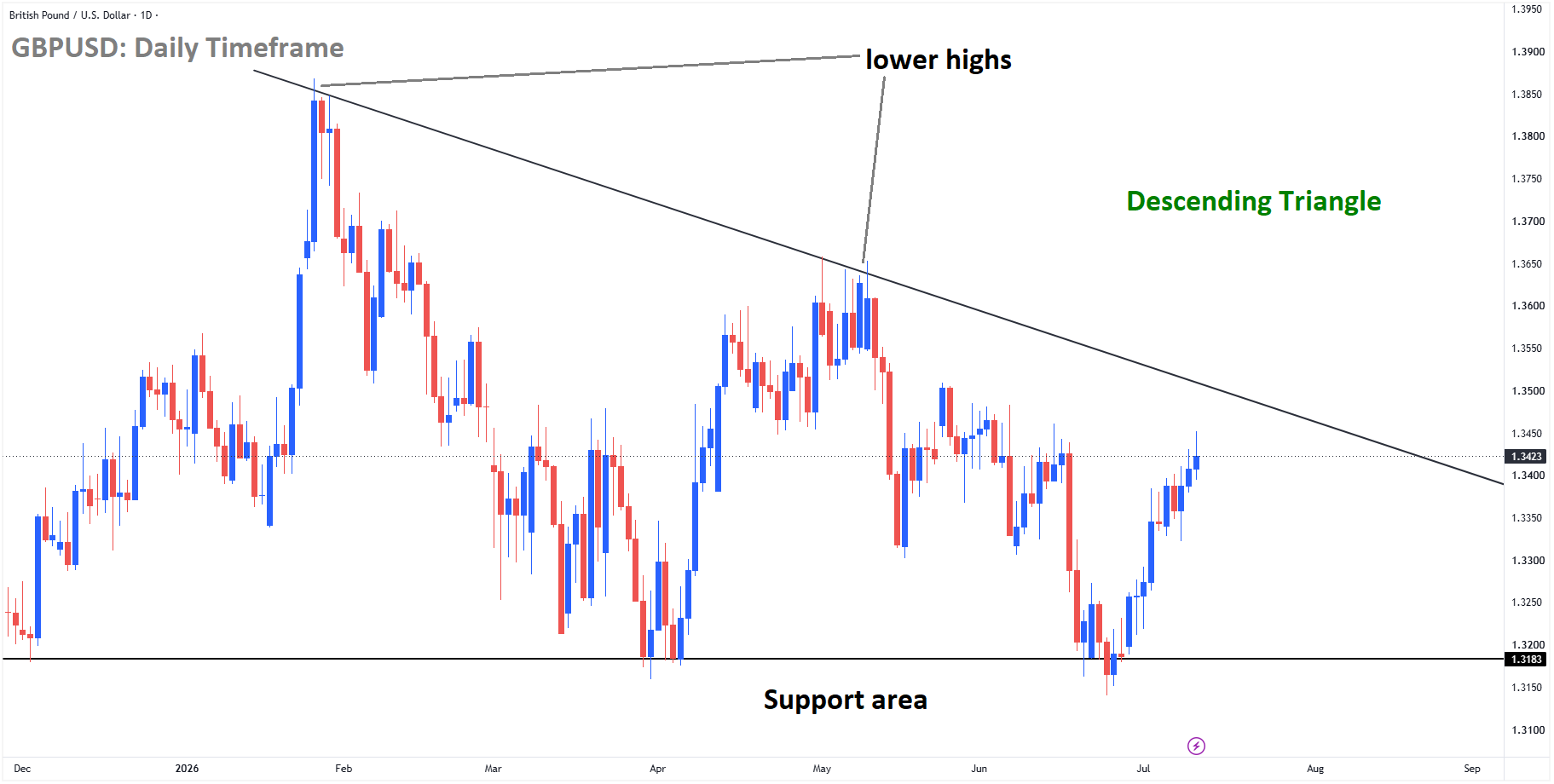
GBPUSD is moving in a descending triangle pattern
At the same time, rising geopolitical tensions in the Middle East created uncertainty across global financial markets. While the Pound benefited from domestic developments, stronger demand for the US Dollar as a safe-haven asset limited further gains.
UK Political Transition Supports the British Pound
One of the biggest factors helping the Pound was the latest political developments in the United Kingdom. Investors reacted positively after it became increasingly clear that Andy Burnham is set to become the country’s next Prime Minister.
The leadership contest within the Labour Party showed overwhelming support for Burnham. According to reports, a large majority of Labour Members of Parliament officially nominated him as the party’s next leader. This strong backing has reduced political uncertainty and provided investors with greater confidence in the UK’s future direction.
Burnham is expected to officially take office as Prime Minister on July 20. Financial markets often welcome periods of political stability because they reduce uncertainty surrounding future government policies. As confidence improves, the national currency can also receive additional support.
Expectations Grow for More Bank of England Rate Hikes
Another important reason behind the Pound’s strength is the increasing belief that the Bank of England could continue raising interest rates before the end of the year.
Market participants have become more confident that the central bank may need to maintain a tighter monetary policy to manage inflation and support economic stability. Current expectations suggest that a quarter-point interest rate increase is fully priced in before the end of the year, with many traders looking toward December as the most likely timing.
Higher interest rates generally make a country’s currency more attractive because they can provide better returns for investors holding assets in that currency. As these expectations continue to build, they have added further support to the British Pound.
Although future policy decisions will still depend on upcoming economic data, investors are closely watching every signal from the Bank of England for clues about its next move.
Middle East Developments Keep Investors Cautious
Despite the Pound’s positive momentum, global geopolitical risks remain an important factor influencing market sentiment.
Fresh reports from Iran indicated that several explosions occurred in the southern part of the country, including areas near the Bushehr nuclear facility. Iranian officials and state media confirmed multiple incidents, raising concerns about the stability of the region.
Adding to these concerns, Iranian media also reported that US forces targeted several locations along Iran’s coast. However, US officials did not officially confirm carrying out those reported strikes.
Whenever geopolitical tensions increase, investors often become more cautious. Instead of focusing solely on growth opportunities, many shift their attention toward protecting their investments from unexpected risks.
Safe-Haven Demand Continues to Support the US Dollar

The US Dollar often benefits during periods of global uncertainty because it is widely considered one of the world’s safest currencies.
As tensions between the United States and Iran continue to attract international attention, many investors have increased demand for the Greenback. This defensive buying helps strengthen the Dollar, even when other factors may be weighing against it.
For GBP/USD, this creates a balanced situation. While positive developments in the UK encourage buying of the Pound, increased demand for the US Dollar during uncertain times can limit the pair’s upward movement.
As long as geopolitical concerns remain unresolved, safe-haven demand is likely to remain an important influence on currency markets.
Investors Closely Watch Political and Economic Headlines
The current market environment highlights how closely politics, central bank expectations, and international events are connected.
The UK’s leadership transition has improved confidence in the country’s political outlook, while expectations for additional Bank of England interest rate increases have strengthened the Pound further.
At the same time, ongoing tensions in the Middle East continue to create uncertainty for global investors. Any new developments involving Iran or the United States could quickly influence market sentiment and shift demand toward safer assets like the US Dollar.
Because of these competing influences, traders remain cautious while monitoring every major headline that could affect global financial markets.
What Could Drive GBP/USD Going Forward?
Looking ahead, investors will continue watching several important developments that may influence the direction of the GBP/USD pair.
The official transition of political leadership in the United Kingdom will remain in focus, as markets assess whether the new government brings greater policy stability and confidence.
At the same time, attention will remain fixed on the Bank of England’s future interest rate decisions. Any comments from policymakers or new economic data could strengthen or weaken expectations for additional rate hikes.
Meanwhile, global geopolitical risks remain impossible to ignore. Any escalation or easing of tensions in the Middle East could quickly change investor sentiment, affecting both the British Pound and the US Dollar.
With several major factors unfolding at the same time, currency markets are likely to remain active as traders respond to both domestic and international developments.
Summary
The British Pound gained momentum against the US Dollar during Friday’s Asian session, supported by growing confidence in the UK’s political transition and stronger expectations that the Bank of England may raise interest rates again later this year.
However, rising geopolitical tensions involving Iran and reports of explosions near key locations have kept investors cautious. These developments continue to increase demand for the US Dollar as a safe-haven currency, preventing stronger gains for GBP/USD.
As markets continue to monitor UK political changes, central bank expectations, and global geopolitical events, the balance between optimism and caution will remain a key driver for the British Pound and the US Dollar in the days ahead.
USDJPY Slips as Japan Boosts Domestic Investment Strategy to Support the Yen
The USDJPY currency pair moved lower during Friday’s early European session as the Japanese Yen gained fresh support against the US Dollar. Investor attention shifted toward reports that Japan is considering measures to encourage major pension funds to invest more heavily in domestic financial assets. The news increased confidence in the Japanese currency and reduced demand for the US Dollar.
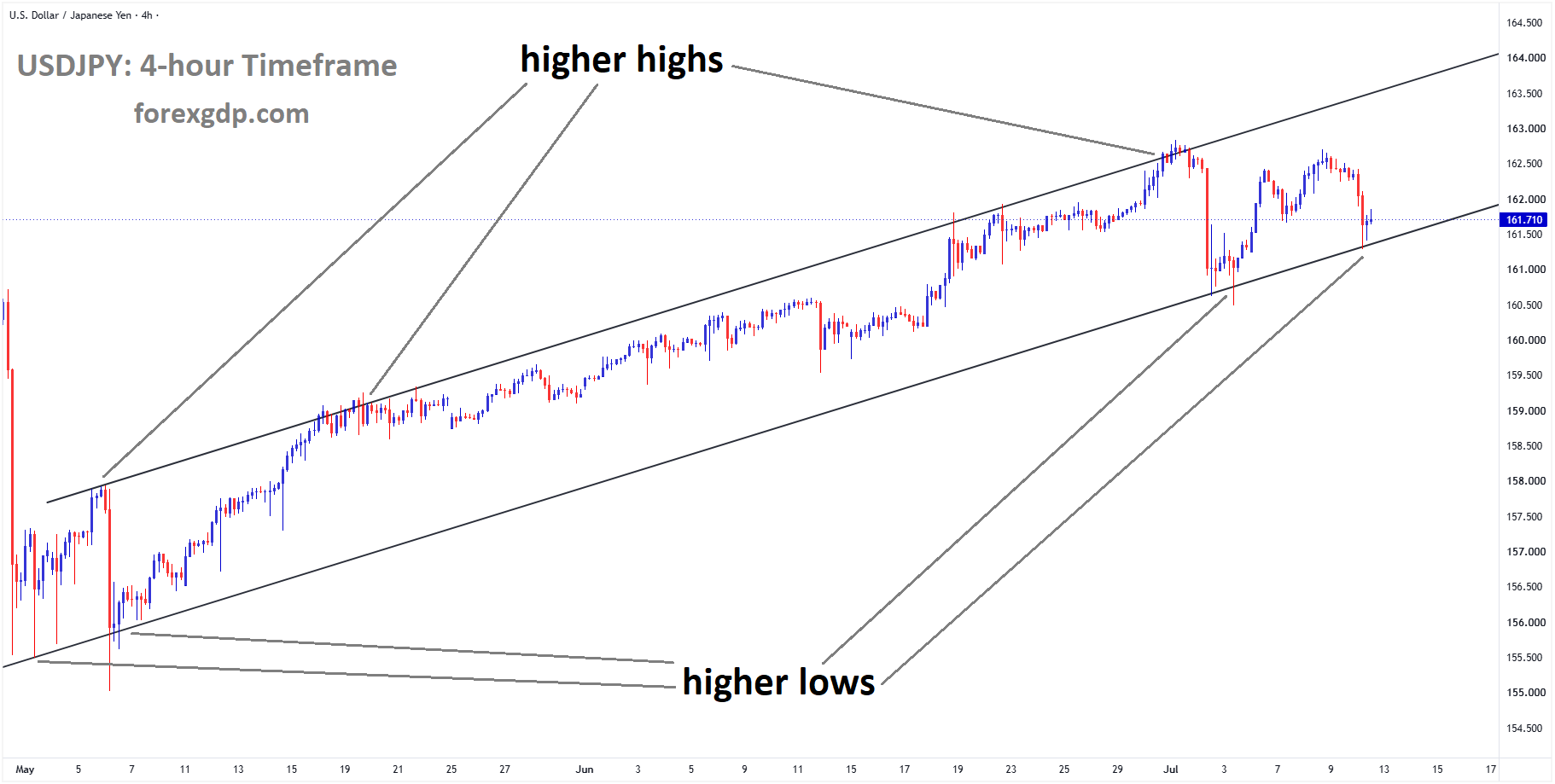
USDJPY is moving in an ascending channel, and the market has reached a higher low area of the channel
At the same time, comments from a senior US Federal Reserve official suggested that rising energy costs may not create lasting inflation pressure. This helped ease expectations for aggressive US monetary tightening and added further pressure on the US Dollar.
Japan Pushes for More Domestic Investment
One of the biggest reasons behind the stronger Japanese Yen is the Japanese government’s latest investment strategy.
According to reports, Japan is working on policies that would encourage the Government Pension Investment Fund (GPIF), one of the world’s largest pension funds, to significantly increase its investments in Japanese financial assets. Finance Minister Satsuki Katayama stated that the government wants pension funds to play a larger role in supporting the country’s financial markets.
This proposal has attracted significant attention because the GPIF manages an enormous amount of retirement savings. Any major change in its investment approach could have a meaningful impact on financial markets and investor confidence.
Many market participants believe that encouraging more domestic investment could provide stronger and longer-lasting support for the Japanese Yen than short-term government intervention in the currency market.
Why Pension Fund Investments Matter
Large institutional investors like pension funds can influence financial markets through their investment decisions.
If Japan’s largest pension funds increase their exposure to domestic assets, they may reduce the need to invest heavily in overseas markets. This shift could naturally increase demand for the Japanese Yen, as more capital remains within Japan instead of flowing abroad.
Investors often view these long-term investment strategies as more sustainable than temporary actions designed to stabilize currency movements. Because of this, the government’s latest proposal has improved confidence in the Yen’s long-term outlook.
US Dollar Faces Pressure After Fed Comments
While the Japanese Yen received positive support, the US Dollar struggled after fresh remarks from Federal Reserve officials.
New York Federal Reserve President John Williams said that although geopolitical tensions in the Middle East have increased again, he does not expect energy prices to continue rising throughout the rest of the year.
His comments reassured investors that temporary increases in oil and energy costs may not lead to persistent inflation. If inflation remains under control, the Federal Reserve may feel less pressure to introduce additional interest rate increases in the near future.
As a result, demand for the US Dollar weakened as traders adjusted their expectations for future monetary policy.
Rate Hike Expectations Continue to Shift
Financial markets constantly reassess the likelihood of future Federal Reserve decisions based on incoming economic data and comments from policymakers.
Following Williams’ remarks, expectations for another interest rate increase at the Fed’s upcoming July meeting declined compared to the previous trading session. Investors also slightly reduced the probability of another increase during the September meeting, although many still expect policymakers to keep a close watch on inflation and overall economic conditions.
These changing expectations directly affect the US Dollar because higher interest rates generally make a currency more attractive to investors seeking stronger returns. When confidence in future rate increases fades, the Dollar often loses some of its support.
Investors Focus on Long-Term Policy Direction

Rather than reacting only to short-term headlines, investors are paying close attention to the broader policy outlook in both Japan and the United States.
Japan’s effort to strengthen domestic investment reflects a longer-term strategy aimed at supporting its financial markets and reinforcing confidence in the national economy. If these measures move forward, they could continue influencing the Japanese Yen over an extended period.
Meanwhile, the Federal Reserve remains focused on balancing inflation with economic growth. Officials continue to emphasize that future decisions will depend on economic data instead of following a fixed path.
This cautious approach means traders will continue monitoring every new economic report and speech from central bank officials for clues about future policy.
Global Developments Remain Important
International events continue to influence currency markets, particularly developments related to inflation, energy prices, and geopolitical tensions.
Although recent conflicts in the Middle East have raised concerns about potential supply disruptions, Federal Reserve officials believe that any impact on energy prices may be temporary rather than long-lasting.
This outlook has helped calm fears that inflation could accelerate sharply again, allowing investors to focus more on underlying economic fundamentals instead of reacting to short-term volatility.
For the Japanese Yen, domestic policy initiatives are currently playing a larger role in shaping investor sentiment than external market intervention.
Summary
USDJPY moved lower as the Japanese Yen gained support from reports that Japan plans to encourage major pension funds to increase investments in domestic financial assets. Investors believe this strategy could strengthen the Yen over the long term by boosting demand for Japanese assets and keeping more capital within the country.
At the same time, the US Dollar weakened after New York Fed President John Williams indicated that recent increases in energy prices are unlikely to persist throughout the year. His comments reduced expectations for additional Federal Reserve interest rate increases, making the Dollar less attractive to investors.
Going forward, traders will closely follow Japan’s investment policy developments, Federal Reserve communications, inflation trends, and broader global economic conditions, as these factors are expected to remain key drivers of USDJPY in the weeks ahead.
USDCAD Under Pressure as Canadian Dollar Gains on Dovish Fed Sentiment
The USD/CAD currency pair moved lower during the early European trading session on Friday as the US Dollar lost some strength against the Canadian Dollar. Investors adjusted their expectations after the latest signals from the US Federal Reserve, while rising oil prices continued to provide support for Canada’s currency.
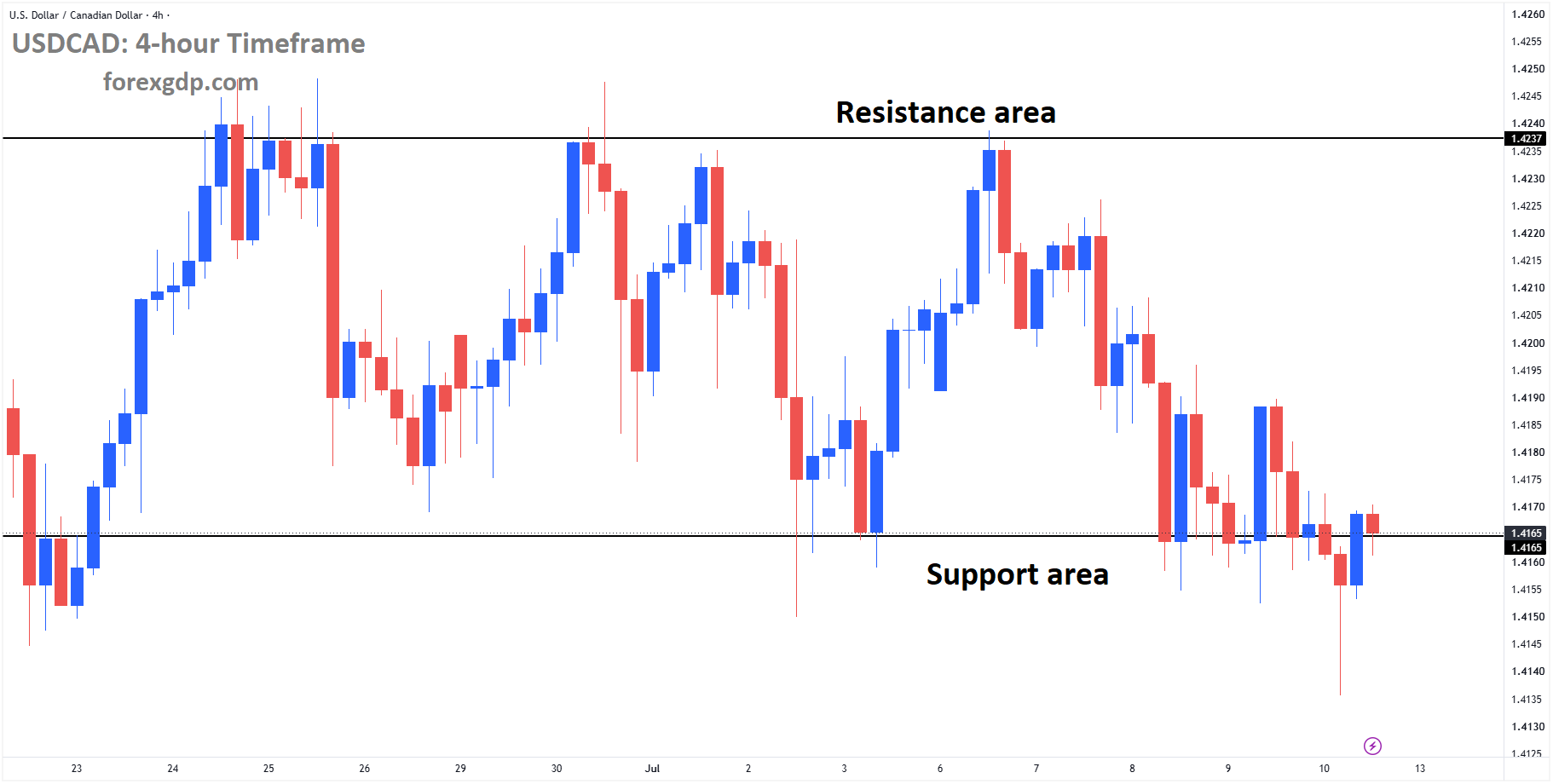
USDCAD reached the support area of the box pattern
At the same time, renewed tensions in the Middle East kept global markets cautious. Reports of fresh attacks in Iran added to geopolitical uncertainty, helping maintain strong demand for crude oil, which often benefits the Canadian Dollar due to Canada’s position as a major energy exporter.
Federal Reserve Officials Remain Divided on Interest Rates
One of the key reasons behind the weaker US Dollar was the latest Federal Reserve meeting minutes. The discussions revealed that policymakers were not united on the next step for interest rates.
The June meeting, which was the first chaired by new Federal Reserve Chairman Kevin Warsh, showed that many officials remained concerned about inflation. While some policymakers believed inflation pressures were still strong enough to justify another interest rate increase, others preferred to wait for more economic evidence before making another move.
This difference in opinion created uncertainty among investors. Rather than seeing a clear path toward higher interest rates, markets recognized that future decisions would depend heavily on incoming economic data and inflation trends.
The lack of a unified message reduced some of the recent support for the US Dollar, allowing other currencies, including the Canadian Dollar, to strengthen.
Markets Reduce Expectations for a July Rate Increase
Investor expectations shifted after reviewing the latest comments from Federal Reserve officials and the meeting minutes.
Market participants lowered the probability of another interest rate increase at the upcoming July Federal Reserve meeting. Although some traders still expect policymakers to raise rates later this year, confidence in an immediate move has weakened compared to previous expectations.
Attention has now shifted toward future policy meetings, where investors believe the Federal Reserve could still act if inflation remains stubborn or economic conditions require tighter monetary policy.
For now, however, the softer outlook for near-term rate action has reduced demand for the US Dollar, placing additional pressure on the USD/CAD pair.
John Williams Offers a Calmer View on Energy Prices
New York Federal Reserve President John Williams also influenced market sentiment with his latest remarks.
Despite the renewed conflict in the Middle East, Williams said he does not expect energy prices to remain significantly higher throughout the rest of the year. His comments suggested that while geopolitical events may create temporary disruptions, they may not necessarily lead to lasting inflationary pressure through higher fuel costs.
This more balanced outlook helped ease some concerns that rising oil prices would immediately force the Federal Reserve into more aggressive policy decisions.
His remarks reinforced the view that the central bank will continue monitoring incoming data rather than reacting quickly to short-term geopolitical developments.
Middle East Tensions Keep Investors on Alert
While monetary policy remained a major focus, geopolitical developments also played an important role in market sentiment.
Late Thursday, Iranian officials and state media reported multiple explosions in the southern part of the country, including areas near the Bushehr nuclear facility. These reports followed an earlier series of US military strikes and subsequent Iranian missile attacks targeting a US base in Jordan.
The latest developments raised fresh concerns about the possibility of further escalation in the region. Investors continue to watch these events closely because any disruption involving major energy-producing regions can influence global supply chains and broader financial markets.
Although the long-term impact remains uncertain, the situation has increased caution among traders worldwide.
Higher Oil Prices Continue to Support the Canadian Dollar

One of the biggest beneficiaries of rising oil prices is often the Canadian Dollar.
Canada is one of the world’s leading oil exporters, meaning stronger energy prices generally improve the country’s export revenues. When crude oil remains elevated, demand for the Canadian Dollar often increases because international buyers need Canadian currency to purchase Canadian exports.
Recent concerns surrounding shipping activity through the Strait of Hormuz have also contributed to keeping oil prices elevated. Since this route handles a significant portion of global oil transportation, any disruption or slowdown can create worries about future supply.
As long as energy markets remain supported by geopolitical uncertainty, the Canadian Dollar could continue receiving additional strength from the commodity sector.
Investors Focus on Multiple Market Drivers
Financial markets are currently balancing several important themes at the same time.
On one side, traders are evaluating the Federal Reserve’s next policy decision and whether inflation will remain high enough to justify additional interest rate increases.
On the other side, geopolitical tensions continue creating uncertainty across global markets. Events in the Middle East have kept investors alert, particularly because of their potential impact on energy supplies and global economic stability.
Meanwhile, movements in oil prices remain an important factor for the Canadian economy and its currency. The combination of these influences has created a market environment where investors are reacting to both economic data and international developments.
Summary
USD/CAD moved lower during Friday’s early European session as the US Dollar weakened following reduced expectations for a near-term Federal Reserve rate increase. Although Fed officials continue to debate the future direction of monetary policy, investors have become less confident about an immediate move.
At the same time, renewed tensions in the Middle East have supported higher oil prices, providing additional strength to the Canadian Dollar. With Canada being a major oil exporter, stronger energy markets often benefit its currency.
Going forward, traders will continue monitoring Federal Reserve communications, economic data, geopolitical developments, and changes in the energy market, all of which are expected to remain key drivers for USD/CAD in the coming weeks.
AUDUSD Moves Higher as RBA Policy Support Meets Fading Safe-Haven Demand
The Australian Dollar remained firm against the US Dollar on Friday, although it stepped back slightly after touching its highest level in more than two weeks earlier in the session. The currency pair continued to attract attention as investors balanced improving global sentiment with ongoing geopolitical concerns and expectations surrounding future central bank decisions.
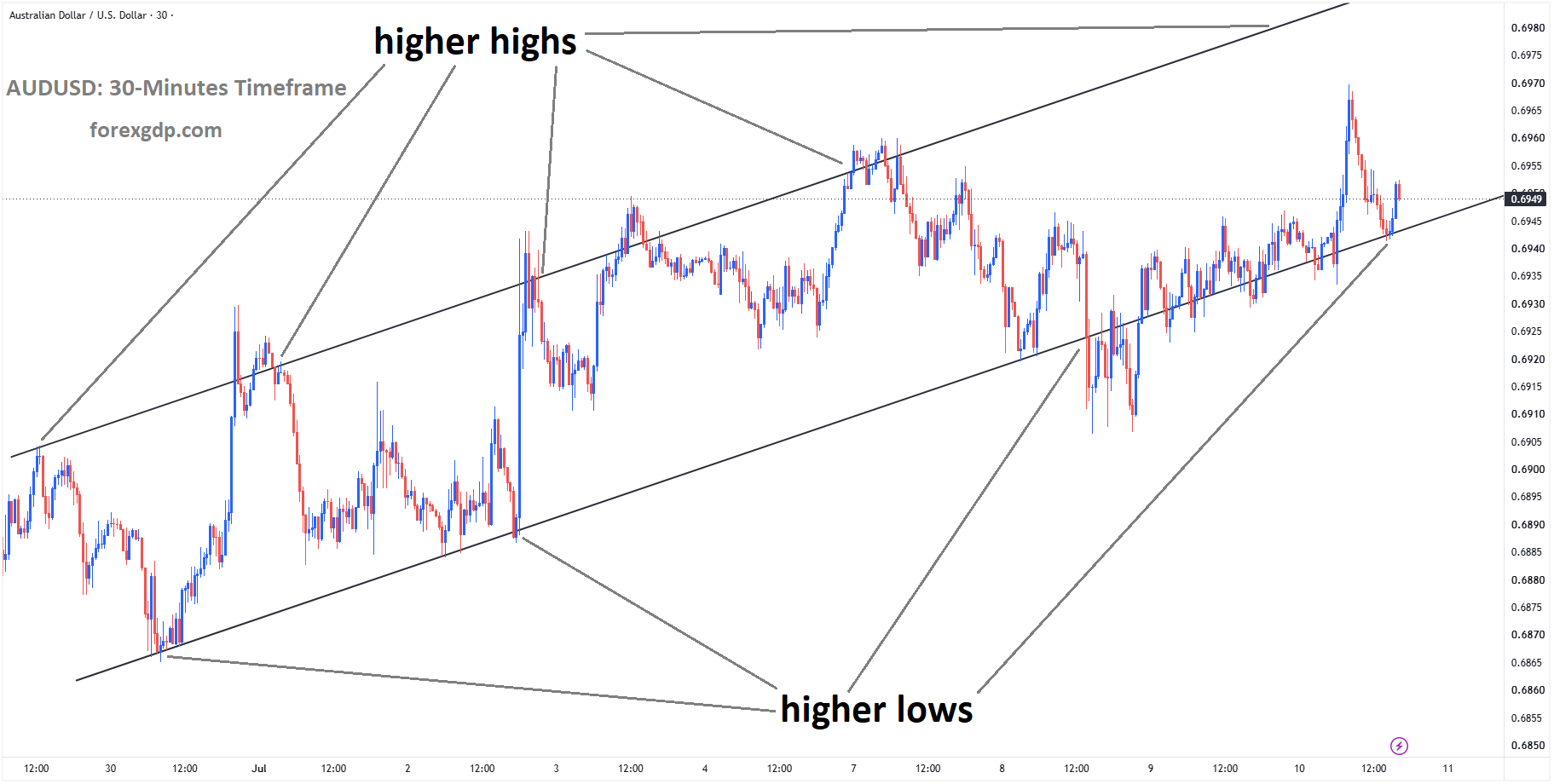
AUDUSD is moving in an ascending channel, and the market has rebounded from the higher low area of the channel
While optimism over possible diplomatic progress in the Middle East reduced demand for the US Dollar, lingering global risks prevented the Greenback from weakening too sharply. At the same time, the Reserve Bank of Australia’s firm stance on inflation continued to provide solid support for the Australian Dollar.
Improving Global Sentiment Weighs on the US Dollar
One of the main reasons behind the Australian Dollar’s strength has been the softer tone of the US Dollar. Investors became more optimistic after reports suggested that diplomatic discussions involving Iran and the United States were continuing.
According to recent comments from US President Donald Trump, Iran has shown interest in reaching an agreement with Washington. A White House official also confirmed that technical discussions related to Iran’s nuclear program and the Strait of Hormuz are still taking place.
These developments have encouraged hopes that tensions in the region could ease over time. When investors become more confident about global stability, they often reduce their demand for traditional safe-haven assets such as the US Dollar. This shift has provided additional support for currencies like the Australian Dollar.
Geopolitical Risks Continue to Influence Market Sentiment
Despite growing optimism, global uncertainty has not disappeared. Recent military actions between the United States and Iran continue to keep investors cautious.
The situation remains sensitive following US strikes on Iranian targets and Iran’s retaliatory actions against American interests across the region. As a result, financial markets remain alert to any new developments that could quickly change investor sentiment.
Because of these ongoing risks, the US Dollar continues to receive some level of support as traders remain prepared for unexpected geopolitical events. This has helped prevent a larger decline in the currency despite improving diplomatic signals.
RBA Maintains Strong Focus on Controlling Inflation
The Australian Dollar has also been supported by the Reserve Bank of Australia’s commitment to bringing inflation under control.
Reserve Bank of Australia Assistant Governor Sarah Hunter recently reaffirmed that the central bank remains focused on returning inflation to its target level. She emphasized that policymakers are prepared to take whatever action is necessary if inflation remains stubbornly high.
Hunter also warned that rising energy costs linked to tensions in the Middle East could push inflation expectations higher. If that happens, additional monetary tightening could become necessary to prevent inflation from becoming more persistent.
These comments reinforced market confidence that the RBA remains committed to maintaining price stability. Expectations of a firm policy approach generally strengthen a country’s currency by increasing investor confidence.
Federal Reserve Keeps Policy Outlook Balanced
On the US side, investors also continue to monitor signals from the Federal Reserve regarding future interest rate decisions.
Minutes from the Fed’s June policy meeting showed that several policymakers expect interest rates to remain close to current levels through the end of the year. However, many officials also believe there is still a possibility that borrowing costs could finish the year at higher levels if economic conditions require additional action.
This balanced outlook has helped prevent the US Dollar from losing too much ground. Markets continue to believe that the Federal Reserve remains cautious and ready to respond if inflation risks increase again.
As a result, expectations surrounding future monetary policy continue to play a major role in shaping the direction of the US Dollar.
Energy Prices Remain an Important Watchpoint
Energy markets continue to be closely watched because of their influence on inflation around the world.
New York Federal Reserve President John Williams recently said that he does not expect a long-lasting increase in energy prices despite the renewed tensions in the Middle East. His comments provided some reassurance that temporary disruptions may not necessarily create lasting inflationary pressure.
If energy prices remain relatively stable, central banks could have more flexibility when making future policy decisions. However, any major disruption to global energy supplies could quickly change that outlook and increase uncertainty across financial markets.
Investors Turn Their Attention to Global Headlines
With no major economic reports scheduled for release on Friday, investors have shifted their focus toward geopolitical developments and central bank communication.
In periods with limited economic data, headlines related to international events often become the biggest drivers of market sentiment. News surrounding diplomatic negotiations, military developments, or comments from policymakers can quickly influence investor confidence and currency movements.
Because of this, traders are expected to remain highly attentive to any updates from the Middle East as well as future statements from both the Federal Reserve and the Reserve Bank of Australia.
Monetary Policy Continues to Shape Currency Performance
Central bank decisions remain one of the most important influences on currency markets.
The Reserve Bank of Australia’s commitment to fighting inflation has helped strengthen confidence in the Australian Dollar. Meanwhile, the Federal Reserve continues to balance inflation concerns with economic growth, leaving investors carefully assessing every new policy signal.
As both central banks monitor inflation, employment, and global developments, future policy expectations will likely continue to influence how investors position themselves in the currency market.
Summary
The Australian Dollar remained supported as improving diplomatic hopes reduced demand for the US Dollar, while the Reserve Bank of Australia’s firm stance on inflation added further strength to the currency. However, ongoing geopolitical tensions and cautious expectations surrounding Federal Reserve policy continued to provide underlying support for the Greenback.
With few economic releases to guide markets, investors are expected to keep watching global political developments and central bank commentary. These factors are likely to remain the key forces shaping the direction of the AUDUSD pair in the coming sessions.
Don’t trade all the time, trade forex only at the confirmed trade setups
Get more confirmed trade signals at premium or supreme – Click here to get more signals, 2200%, 800% growth in Real Live USD trading account of our users – click here to see , or If you want to get FREE Trial signals, You can Join FREE Signals Now!