
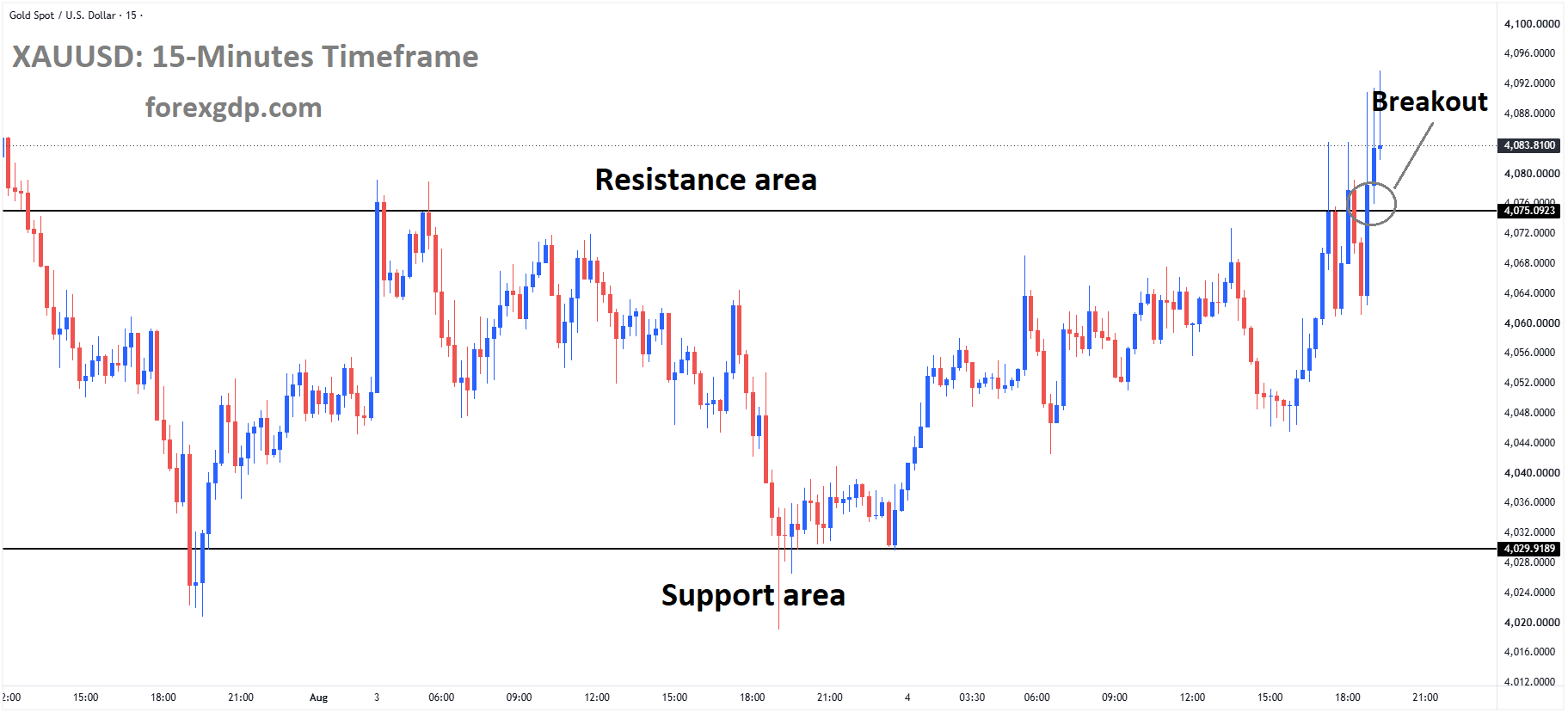
XAUUSD has broken the box pattern to the upside
Gold remains caught in a period of hesitation as investors struggle to understand where the global economy may be heading next. Uncertainty surrounding the Middle East and questions about the Federal Reserve’s future policy have created a cautious atmosphere. Neither buyers nor sellers appear ready to make a strong commitment.
The precious metal has shown limited momentum for several weeks. Its safe-haven appeal remains supported by geopolitical risks, but pressure from a stronger US Dollar and firm Treasury yields is preventing a meaningful rise. For now, gold traders seem more comfortable waiting for clearer information before making major decisions.
Middle East Uncertainty Supports Safe-Haven Demand
Tensions involving the United States and Iran continue to influence market sentiment. Washington has suggested that discussions with Tehran are happening, while Iranian officials have rejected claims that direct negotiations are underway. These conflicting statements make it difficult to judge whether diplomatic progress is genuinely being made.
US President Donald Trump has increased the pressure by warning that Iran may be approaching its final opportunity to reach an agreement. Such language reduces confidence in a quick and peaceful settlement. Investors know that diplomatic talks can change direction without warning, especially when both sides provide different accounts of the situation.
Gold normally benefits when political uncertainty grows because investors often view it as a place to protect wealth during unstable periods. However, the present situation is more complicated. Traders are worried about further escalation, but they are also reluctant to buy aggressively without stronger evidence that the conflict is getting worse.
This creates an uncomfortable balance. The fear of a broader crisis prevents gold from falling sharply, while hopes of a diplomatic solution limit the urgency to seek protection. As a result, the precious metal continues to lack a clear direction.
Restricted Energy Shipments Keep Inflation Risks Alive
The Strait of Hormuz remains an important part of the story. Restrictions affecting energy shipments through this vital route have kept oil costs elevated and increased concerns about global supply. Any prolonged disruption could affect transportation, manufacturing, electricity production and household expenses across many countries.
Iran and Oman are reportedly discussing a temporary route that could allow some shipments to move safely. If successful, such an arrangement may reduce immediate supply fears. Still, a temporary solution would not remove the deeper political risks surrounding the region.
High energy costs can quickly spread through the wider economy. Businesses pay more to transport goods and operate factories, while consumers face higher fuel and utility bills. Companies may then pass those additional expenses to customers, making everyday products more costly.
This matters to gold because persistent inflation can influence central-bank decisions. Gold often attracts attention during inflationary periods, but higher interest rates can weaken its appeal because it does not provide regular interest income. Investors are therefore watching two opposing forces: inflation may encourage demand for gold, while tighter monetary policy may hold it back.
Central Banks Face a Difficult Policy Choice

Central banks worldwide are dealing with an awkward situation. They want inflation to return to manageable levels, but overly restrictive policies could damage business activity, employment and consumer spending. Rising energy costs make that job even harder.
Some policymakers may need to keep borrowing conditions restrictive for longer than previously expected. Others may even consider additional rate increases if inflation begins accelerating again. However, acting too aggressively could place unnecessary pressure on economies that are already showing signs of weakness.
The Federal Reserve appears unwilling to rush into another policy change. It recently kept borrowing costs unchanged, suggesting that officials want more evidence before taking their next step. This cautious approach has not provided much comfort to investors because the central bank has also avoided offering a clear guide to its future decisions.
Fed Chair Kevin Warsh has repeated the central bank’s commitment to returning inflation to its target. At the same time, the Fed’s reduced reliance on forward guidance means traders must study every economic report and public statement for clues.
Without a predictable policy path, market expectations can change quickly. One strong report may increase expectations for tighter policy, while one weak report could produce the opposite reaction. That uncertainty is keeping gold trapped between competing pressures.
A Firm US Dollar Limits Gold’s Recovery
Many market participants still believe the Federal Reserve may raise interest rates at an upcoming meeting. Expectations of tighter policy generally support the US Dollar because higher borrowing costs can make American assets more attractive to international investors.
A stronger Dollar often creates difficulties for gold. Since the metal is commonly valued in the US currency, it becomes more expensive for buyers using other currencies. This can reduce international demand and make it harder for gold to achieve a sustained advance.
US Treasury yields are another important influence. When government bonds offer more attractive returns, some investors may choose those assets instead of gold. Bonds can provide income, while gold depends mainly on changes in value.
However, the pressure is not entirely one-sided. Geopolitical fears continue to encourage defensive demand, and uncertainty about future inflation prevents investors from abandoning gold. These conflicting forces explain why the market continues to move cautiously rather than choosing a strong direction.
US Employment Reports Move Into Focus
Attention is now turning toward fresh information from the US labour market. Several important employment reports are scheduled during the week, including figures covering job openings, private-sector hiring and overall payroll growth.
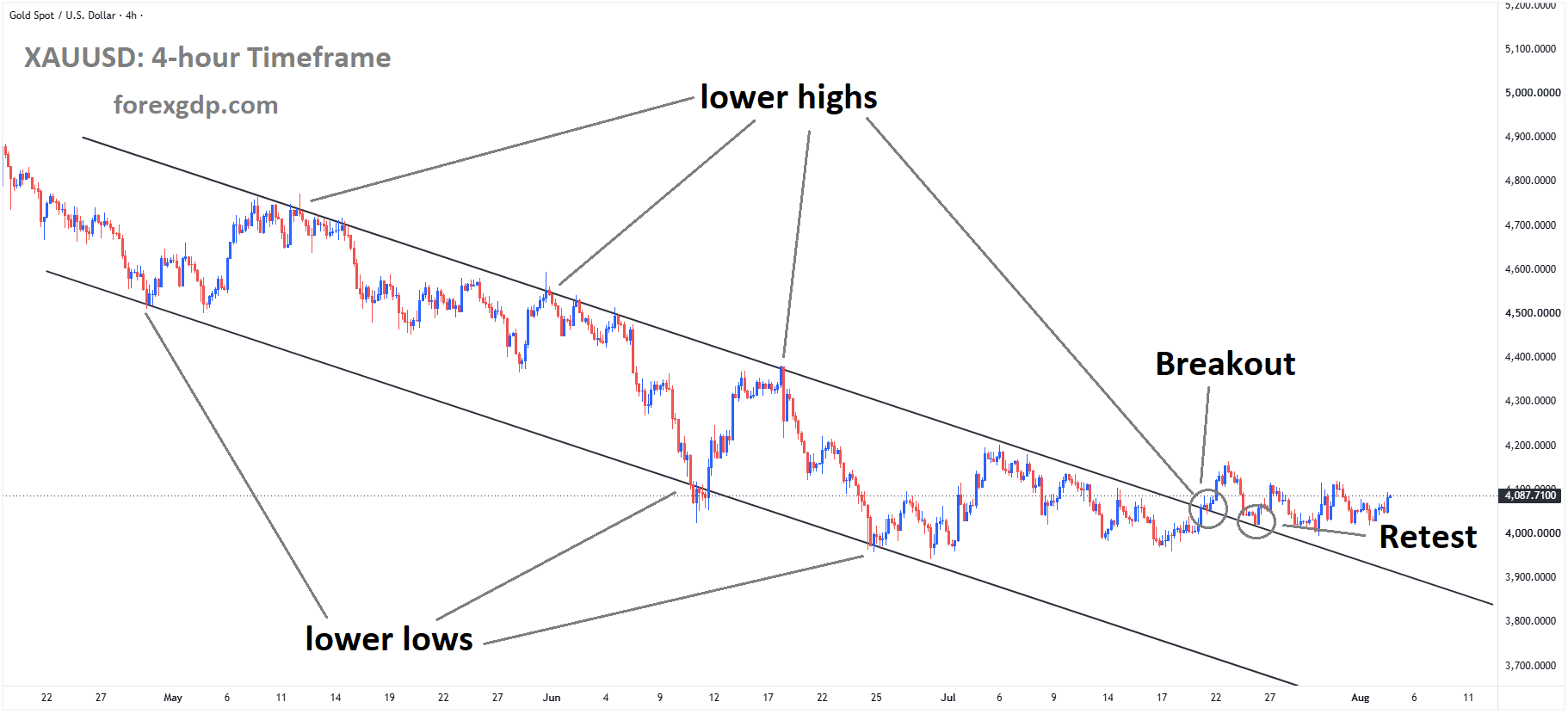
XAUUSD is rebounding from the retest area of the broken descending channel
These releases could play an important role in shaping expectations for Federal Reserve policy. Strong employment growth may suggest that the economy can cope with tighter borrowing conditions. It could also keep wage-related inflation concerns alive, giving policymakers more reason to consider higher rates.
Weak employment figures would send a different message. Slower hiring or fewer available jobs could indicate that restrictive policy is beginning to hurt the economy. In that situation, investors may reduce expectations for further tightening.
Gold could react strongly if the reports clearly shift the policy outlook. Until then, many traders are likely to remain careful. The labour data must be considered together because one report alone may not provide an accurate picture of the economy.
Final Summary
Gold remains directionless as geopolitical anxiety competes with pressure from a firm US Dollar and elevated Treasury yields. Middle East uncertainty continues to protect its safe-haven appeal, but conflicting statements from Washington and Tehran make the diplomatic outlook difficult to assess.
At the same time, restricted energy supplies are keeping inflation fears alive and complicating central-bank decisions. The Federal Reserve has not provided a clear policy roadmap, leaving investors dependent on incoming economic data. This week’s US employment reports may offer the next meaningful clue, but until greater clarity emerges, caution is likely to remain the dominant mood in the gold market.