XAUUSD Advances After Sluggish US Figures Shift Policy Outlook
Gold strengthened on Friday as the US Dollar lost ground following a series of weaker economic reports from the United States. Softer inflation figures, disappointing retail activity and growing concerns about consumer confidence encouraged investors to lower their expectations for another interest rate increase by the Federal Reserve.
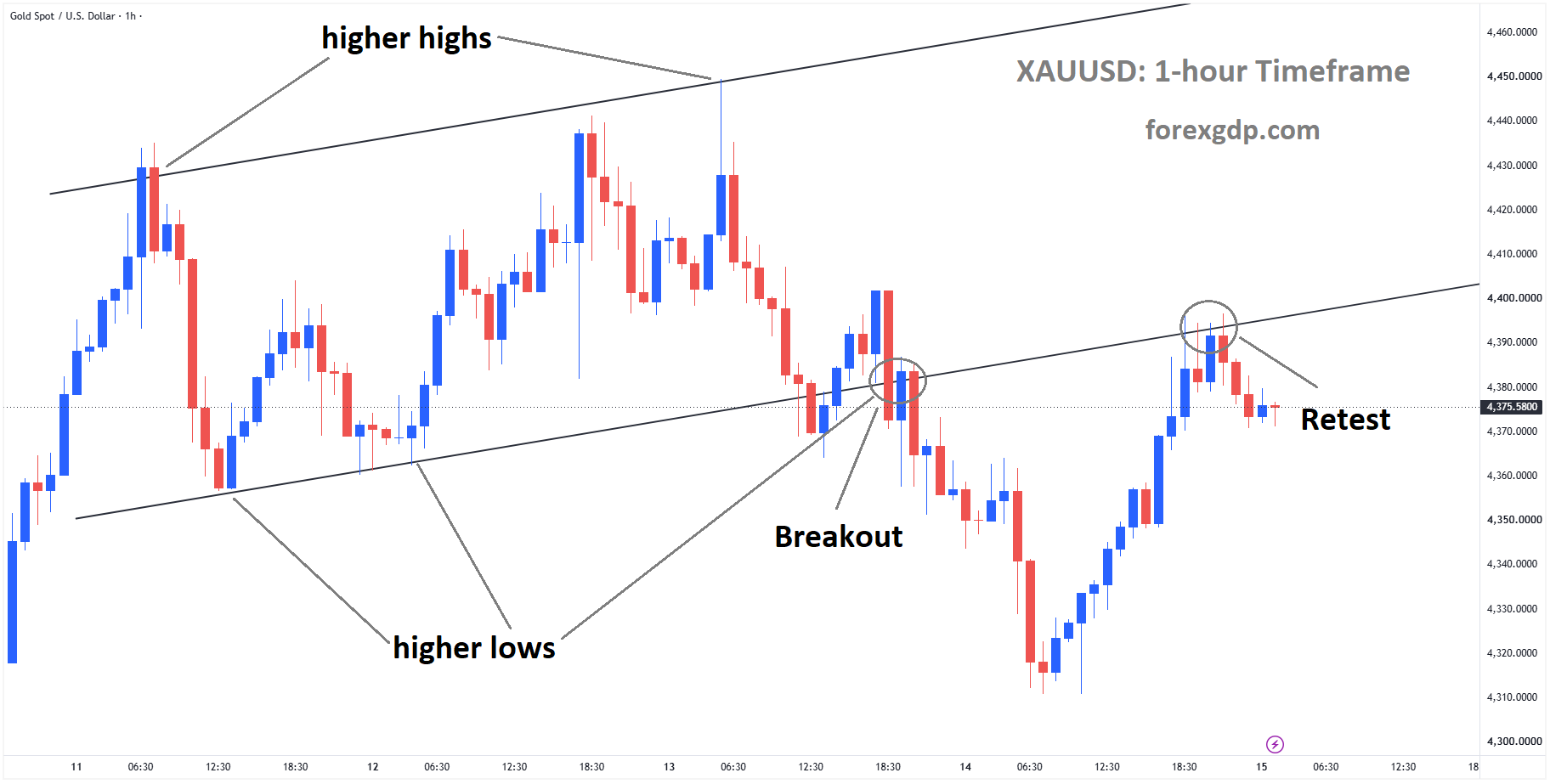
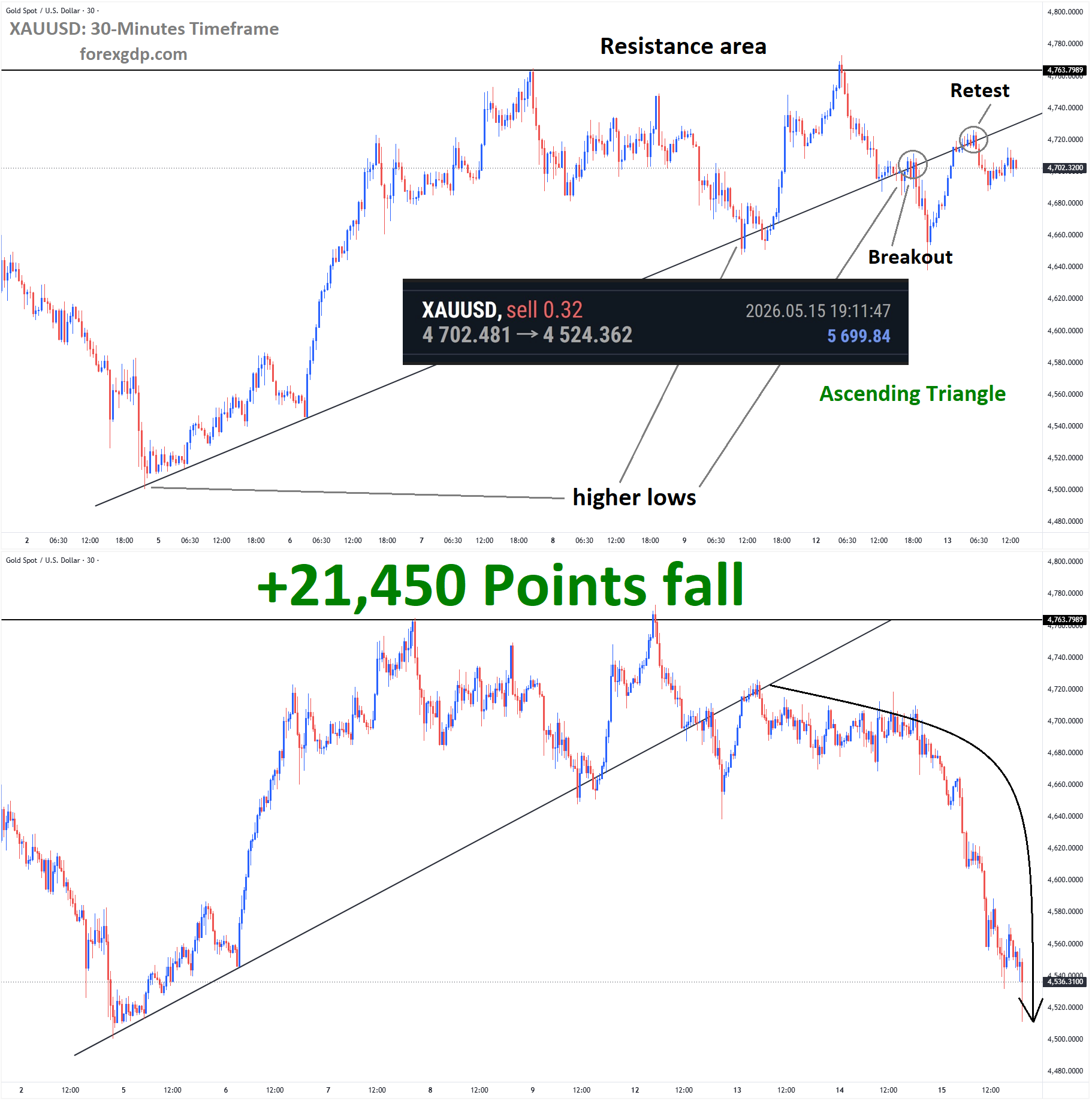
XAUUSD is falling from the retest area of the broken ascending channel
The precious metal recorded a solid daily advance as demand improved across the bullion market. Gold benefited from a combination of economic uncertainty, changing expectations for US monetary policy and limited developments surrounding tensions in the Middle East.
A weaker Dollar also helped support the recovery. Because gold is generally traded in the US currency, a decline in the Dollar can make the metal more affordable for buyers using other currencies. This relationship became an important driver during the week as investors responded to signs that inflationary pressure may be easing.
Softer Inflation Reduces Pressure on the Federal Reserve
Recent US inflation reports showed that price growth slowed at both the consumer and producer levels in July. These figures suggested that the broader disinflation process may still be moving forward, even if progress remains uneven.
The data reduced the urgency for the Federal Reserve to raise interest rates again at its September policy meeting. Central bank officials have repeatedly stated that their decisions will depend on incoming economic information. When inflation cools and economic activity loses momentum, policymakers have less reason to introduce tighter financial conditions.
Gold often performs better when investors expect interest rates to remain unchanged or decline. The metal does not provide interest payments, so higher rates can make income-producing assets more attractive by comparison. When expectations for rate increases fade, the opportunity cost of holding bullion becomes less significant.
Investors responded to the latest reports by reducing their bets on a September rate hike. Expectations had been considerably higher only a week earlier, but the combination of slowing inflation and weaker consumer activity changed the outlook.
The shift did not guarantee that the Fed would keep rates unchanged. However, it showed that financial markets were becoming less confident about the possibility of further tightening.
Weak Retail Sales Raise Concerns About Consumer Spending

Retail Sales delivered one of the clearest signs that the US economy may be losing some momentum. Sales fell in July, ending five consecutive months of growth and falling short of economists’ expectations.
The decline matters because consumer spending is a major part of the American economy. When households reduce purchases, businesses may experience slower revenue growth, which can eventually affect hiring, investment and overall economic activity.
A closely watched measure known as the Retail Sales Control Group also weakened. This category excludes several volatile areas and is used when calculating consumer spending within Gross Domestic Product. Its decline suggested that the slowdown was not limited to a narrow group of products.
Several factors may be affecting household behavior. Consumers have faced a long period of elevated living costs, while borrowing remains expensive due to high interest rates. Even though inflation has cooled from earlier peaks, many essential goods and services remain costly.
The softer sales figures added to the argument that the Federal Reserve should take a patient approach. Another rate increase could place additional pressure on borrowing, housing activity and household budgets at a time when spending already appears vulnerable.
Consumer Confidence Falls Further
The University of Michigan’s preliminary Consumer Sentiment reading for August also weakened. The survey showed that households had become more concerned about current economic conditions and the outlook ahead.
Lower confidence does not always lead directly to reduced spending, but it can influence how people manage their finances. Consumers who feel uncertain about employment, inflation or future income may delay major purchases and increase savings.
The survey also showed a slight increase in short-term inflation expectations. Longer-term expectations, however, remained unchanged. This mixed picture could attract attention from Federal Reserve officials because consumer expectations can influence actual inflation behavior.
If households expect prices to rise rapidly, they may bring purchases forward or demand higher wages. Businesses may also become more willing to raise prices. Stable longer-term expectations therefore remain important for the Fed’s effort to bring inflation under control.
For gold, weaker sentiment added another source of support. Bullion is often viewed as a defensive asset during periods of uncertainty, particularly when investors become concerned about economic growth or the direction of monetary policy.
US Dollar Weakness Supports Bullion Demand
The US Dollar declined against a basket of major currencies as investors reassessed the likely path of Federal Reserve policy. Softer inflation, a moderate rise in jobless claims and the drop in retail spending all contributed to the currency’s weakness during the week.
A falling Dollar can support gold in two important ways. First, it reduces the cost of bullion for international buyers. Second, it may signal that investors expect less aggressive monetary policy from the Federal Reserve.
The Dollar’s retreat reflected a broader change in market expectations rather than a response to a single report. Investors appeared to be weighing the combined message from inflation, employment and consumer data.
Although the US economy has continued to show areas of resilience, the latest information suggested that growth may be becoming less balanced. Any further weakness in employment or business activity could strengthen expectations that interest rates will remain unchanged for longer.
Middle East Developments Remain in Focus
Geopolitical conditions also influenced demand for gold. A lack of major new headlines from the Middle East reduced immediate market anxiety, but uncertainty surrounding Iran and the Strait of Hormuz remained significant.
US Treasury Secretary Scott Bessent said Washington was prepared to introduce unprecedented measures against Iran in an effort to increase pressure on the country’s leadership. At the same time, the Strait of Hormuz remained closed, although energy markets did not experience a dramatic reaction.
The waterway is vital to global energy transportation, and any prolonged disruption could affect oil supplies, inflation expectations and economic confidence. Even when markets remain relatively calm, unresolved geopolitical risks can encourage investors to maintain exposure to traditional safe-haven assets such as gold.
The absence of a fresh escalation allowed bullion to benefit more directly from Dollar weakness and changing Fed expectations. However, developments in the region are likely to remain an important source of uncertainty.
Investors Turn Attention to Upcoming US Reports
The next round of US economic releases will provide more information about the strength of the economy. Housing data will be closely watched because the sector is highly sensitive to borrowing costs.
Investors will also examine the four-week average of ADP employment figures, weekly jobless claims and preliminary business activity surveys. These reports could help determine whether the recent weakness represents a temporary slowdown or the beginning of a broader loss of momentum.
Employment information will be especially important. A stable labor market could give the Federal Reserve room to remain cautious, while a clear deterioration might increase pressure on policymakers to adopt a more supportive position.
Summary
Gold advanced as a weaker US Dollar, softer inflation and disappointing Retail Sales reduced expectations for a September Federal Reserve rate hike. Falling consumer confidence and signs of slower household spending strengthened the case for a cautious policy approach.
Geopolitical uncertainty surrounding Iran and the Strait of Hormuz provided additional support, even without a major new escalation. Attention now turns to upcoming housing, employment and business activity data, which may offer clearer guidance on the US economy and the Federal Reserve’s next decision.
EURUSD Climbs as Fed Policy Expectations Shift, but Global Conflicts Slow the Rally
The euro gained fresh support against the US dollar on Friday as investors responded to signs that inflation in the United States may be cooling. Recent economic reports have reduced expectations that the Federal Reserve will raise interest rates again soon, leaving the dollar under pressure.
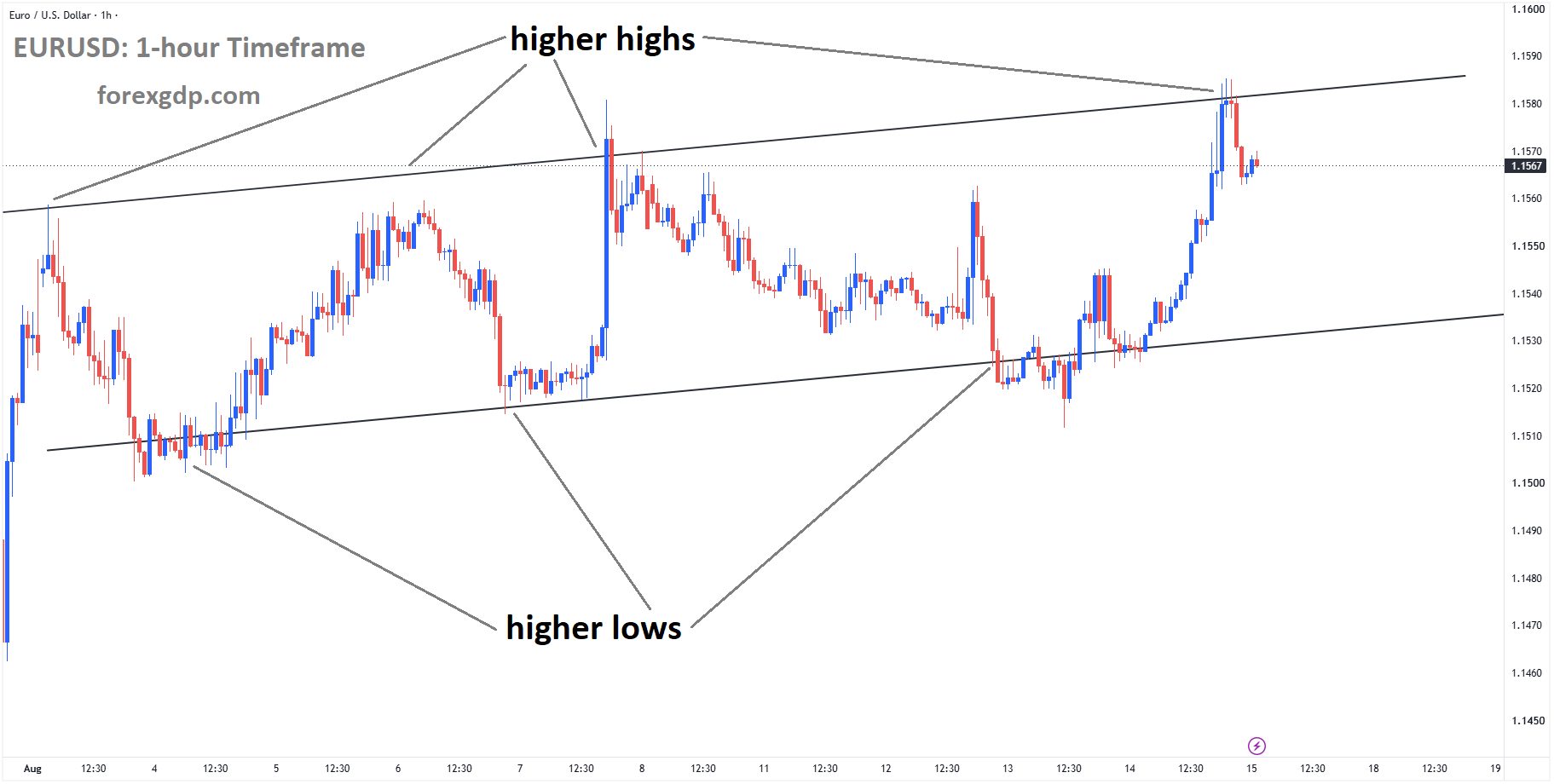
EURUSD is moving in an ascending channel, and the market has fallen from the higher high area of the channel
The currency pair continued the recovery that began during the previous trading session. However, investor confidence remained cautious because several political and military developments created demand for traditional safe-haven assets, including the US dollar.
This combination of weaker American inflation data and rising geopolitical uncertainty produced a mixed environment. The euro benefited from changing expectations for monetary policy, while global security concerns prevented traders from taking more aggressive positions.
Cooling US Inflation Weakens the Case for Another Fed Increase
The latest US Producer Price Index report showed that inflation at the wholesale level was weaker than economists had expected. Producer inflation measures changes in the prices businesses receive for their goods and services. It can also offer clues about future consumer costs because higher expenses faced by producers are often passed on to customers.
The softer producer inflation report followed encouraging Consumer Price Index data. Together, these reports suggested that inflationary pressure across the US economy was beginning to ease.
This development is important for the Federal Reserve. The central bank has used higher interest rates to control inflation, but policymakers must also consider the risks of keeping borrowing costs elevated for too long. High rates can reduce business investment, slow consumer spending and place pressure on the wider economy.
Evidence of cooling inflation gives the Fed more flexibility to leave interest rates unchanged. As investors reduced their expectations for another increase, demand for the dollar weakened. This created a more supportive setting for the euro.
Expectations surrounding US monetary policy remain one of the most important influences on the currency market. When traders believe the Fed will maintain higher rates or tighten policy further, the dollar often becomes more attractive. When the possibility of additional action decreases, the currency can lose some of that support.
European Central Bank Expectations Support the Euro
The euro also received help from the belief that the European Central Bank may approve one final interest-rate increase at its September meeting. Some investors expect policymakers to raise borrowing costs by a quarter of a percentage point before ending the current tightening cycle.
Inflation in the euro area remains above the ECB’s official target. Although price pressures have eased from earlier highs, policymakers still face the challenge of bringing inflation back under control without causing unnecessary damage to economic growth.
A final rate increase could demonstrate that the ECB remains committed to price stability. It may also improve the euro’s appeal compared with currencies linked to central banks that are expected to pause their tightening campaigns.
However, the ECB’s decision is far from straightforward. Parts of the European economy continue to experience weak growth, and higher borrowing costs create additional difficulties for households and businesses. Officials must weigh the need to reduce inflation against the risk of making economic conditions more challenging.
For now, expectations of further ECB action provide the shared currency with a degree of support. The contrast between a potentially cautious Federal Reserve and a European Central Bank that may still tighten policy has helped improve sentiment toward the euro.
Geopolitical Tensions Keep Safe-Haven Demand Alive

Despite the pressure created by weaker US inflation, the dollar continues to benefit from its role as a safe-haven currency. Investors often move money into dollar-based assets when political or military uncertainty increases.
Several recent incidents in Northern and Eastern Europe have added to concerns. NATO fighter jets reportedly destroyed a drone over Latvian airspace early Friday. Finland also introduced temporary restrictions on aviation and maritime activity in the eastern Gulf of Finland.
Separately, Russia reportedly brought down several drones near its borders with Finland and Estonia. These events raised fears that the Russia-Ukraine war could create wider security problems for nearby European countries.
Any incident involving NATO territory receives close attention because of the alliance’s collective defence commitments. Even when an event does not lead to a broader confrontation, uncertainty can encourage investors to become more cautious.
This cautious mood can work against the euro. Europe’s geographical proximity to the conflict means that renewed military tension may have a stronger effect on European confidence, energy security and economic activity.
Middle East Risks Add Another Layer of Uncertainty
Developments in the Middle East are also influencing demand for the dollar. Tensions between the United States and Iran over the Strait of Hormuz have increased concerns about the security of important global shipping routes.
The Strait of Hormuz is a major passage for international energy supplies. Any disruption in the area could affect transportation, trade and energy availability across several regions. Because of its importance to the world economy, even the possibility of conflict can influence investor behaviour.
The Iran-backed Houthi movement in Yemen has also intensified attacks on commercial vessels operating around the Red Sea and the Bab el-Mandeb Strait. These waterways connect major trading routes between Asia, the Middle East and Europe.
The group additionally claimed responsibility for a drone attack targeting a Saudi Aramco refinery. Such incidents increase fears that fighting could spread and involve more countries in the region.
For European economies, shipping disruptions and energy-related uncertainty can create serious problems. Longer transport routes may increase costs for companies, while instability affecting energy supplies can complicate the fight against inflation. These risks may limit enthusiasm for the euro even when monetary policy expectations appear favorable.
Investors Face Conflicting Economic and Political Signals
The outlook for the euro-dollar relationship is being shaped by two opposing forces. On one side, softer American inflation has reduced pressure on the Federal Reserve to raise rates. This has weakened the dollar and helped the euro recover.
On the other side, geopolitical threats in Europe and the Middle East continue to encourage defensive investment. The dollar remains one of the main currencies investors turn to during periods of uncertainty, which may protect it from deeper weakness.
The euro has its own source of support through expectations of another ECB rate increase. Still, the region’s exposure to nearby conflicts, energy risks and international shipping disruptions may prevent confidence from strengthening quickly.
Investors will therefore continue watching inflation reports, central-bank comments and geopolitical developments. Any clear shift in these areas could change expectations for both currencies.
Summary
The euro received support as weaker US producer and consumer inflation reduced expectations of another Federal Reserve interest-rate increase. At the same time, the possibility of one final ECB hike helped strengthen confidence in the shared currency.
However, growing security concerns in Northern Europe, continued tension surrounding the Russia-Ukraine war and rising risks in important Middle Eastern shipping routes supported demand for the safe-haven US dollar. As a result, the currency pair remained caught between favorable monetary policy expectations for the euro and persistent global uncertainty that continued to protect the dollar.
GBPUSD Advances as Cooling US Consumer Demand Pressures the Greenback
The Pound Sterling strengthened against the US Dollar after fresh economic reports raised concerns about the health of American consumer spending. A decline in US Retail Sales, combined with weaker consumer confidence, encouraged expectations that the Federal Reserve will leave interest rates unchanged at its September meeting.
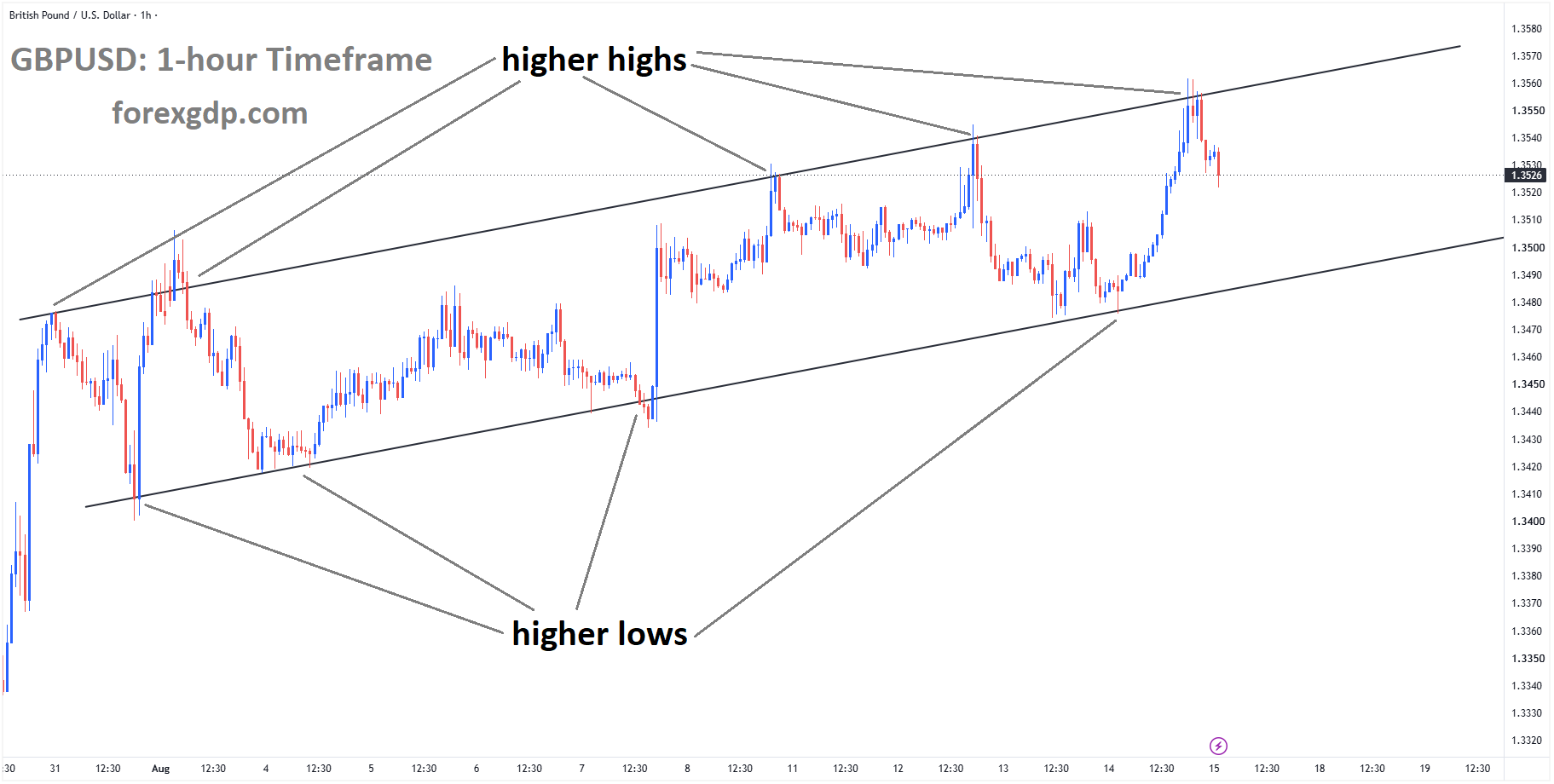
GBPUSD is moving in an ascending channel, and the market has fallen from the higher high area of the ascending channel
The British currency was also supported by encouraging economic growth figures from the United Kingdom. The latest UK Gross Domestic Product report showed stronger-than-expected activity, giving investors some confidence that the economy remains resilient.
Attention is now turning toward an important series of UK reports covering inflation, employment, wages and retail activity. These releases could offer clearer guidance on the Bank of England’s next policy decision and determine whether the Pound can maintain its recent strength.
Weak US Retail Sales Put Pressure on the Dollar
The latest US Retail Sales report showed that household spending lost momentum in July. Overall sales declined by 0.6% from the previous month, missing forecasts that had pointed to a small increase. It was the first monthly decline after five consecutive periods of growth.
The result raised concerns because consumer spending is one of the main engines of the US economy. When households reduce purchases, businesses may experience slower demand, which can eventually affect hiring, investment and economic growth.
A narrower measure known as the retail sales control group also weakened. This category excludes several volatile components and is used when calculating consumer spending within Gross Domestic Product. Control group sales fell by 0.4% after increasing by the same amount in June.
The decline suggested that the weakness was not limited to one part of the retail industry. Instead, consumers appeared to be becoming more careful with their money as they faced high living costs and uncertainty about the economic outlook.
This softer spending data reduced demand for the US Dollar. It also supported the argument that the Federal Reserve does not need to tighten monetary policy further in the near term.
Consumer Confidence Falls as Inflation Concerns Continue
Another important signal came from the University of Michigan’s preliminary Consumer Sentiment survey for August. The index declined from 55.2 in July to 51, ending two months of improvement.
Consumer confidence matters because it can influence future spending decisions. When people feel secure about their jobs, income and financial position, they are generally more willing to make major purchases. When confidence falls, households may delay spending and build savings instead.
The survey showed that Americans remained worried about elevated prices. Expectations for inflation over the next 12 months increased slightly from 4.2% to 4.3%. Longer-term expectations covering the next five years remained unchanged at 3.3%.
These results create a complicated situation for the Federal Reserve. Weak spending and falling sentiment suggest that economic demand may be cooling. However, persistent inflation expectations mean policymakers cannot declare that the fight against rising prices is complete.
Even so, investors increasingly expect the central bank to keep interest rates unchanged in September. Market expectations following the data indicated a 70% probability of no policy change, compared with a 30% possibility of an increase.
A pause would allow Federal Reserve officials more time to examine incoming reports before deciding whether additional action is necessary. Policymakers are likely to focus on employment, inflation and broader business activity when making that assessment.
Progress on Inflation Supports a Cautious Federal Reserve
Recent evidence that inflationary pressure is gradually easing has also strengthened the case for patience. The disinflation process remains uneven, but any continued improvement reduces the urgency for another interest-rate increase.
The Federal Reserve must balance two major responsibilities: maintaining stable prices and supporting a healthy labour market. Keeping borrowing costs high for too long could weaken demand, limit business investment and place pressure on employment. On the other hand, relaxing policy too early could allow inflation to become more persistent.
The combination of weaker retail activity and falling consumer confidence suggests that earlier rate increases are already affecting the economy. Borrowing has become more expensive for households and companies, while consumers are becoming increasingly selective about their spending.
For the US Dollar, expectations of a prolonged policy pause can reduce its appeal. The currency often benefits when investors expect American interest rates to rise or remain considerably higher than those in other major economies. Softer economic reports can weaken that advantage by making additional rate increases less likely.
UK Economic Growth Offers Support to the Pound

While the US data disappointed, the British economy delivered a more encouraging signal. UK Gross Domestic Product expanded by 0.3% in June, demonstrating that economic activity remained stronger than many observers had feared.
The result was especially notable because the UK recorded the strongest growth performance among the Group of Seven developed economies during the period covered by the report. This helped ease concerns that high borrowing costs and persistent living expenses were pushing the country toward a sharper slowdown.
Stronger growth can support the Pound because it gives the Bank of England more flexibility when setting interest rates. If the economy continues expanding, policymakers may feel less pressure to quickly reduce borrowing costs.
However, one positive GDP report does not remove all risks. British households still face expensive food, housing and energy costs, while companies continue to deal with higher wages and financing expenses. The broader direction of the economy will depend on whether growth can continue across services, manufacturing and household consumption.
UK Inflation and Employment Data Move Into Focus
The next set of British economic reports will be important for both the Pound and the Bank of England. Inflation data will receive particular attention because price growth remains one of the central bank’s biggest concerns.
Officials will look for evidence that inflation is moving toward the Bank’s target on a sustainable basis. Services inflation and wage growth are likely to be closely watched because both can reflect persistent domestic price pressure.
Employment figures will provide another major piece of the picture. A strong labour market could keep wages elevated and make inflation harder to control. Signs of weaker hiring or rising unemployment, however, could increase concerns about the economic impact of restrictive monetary policy.
Retail Sales will also help show whether British consumers are spending more confidently. Stronger activity could support economic growth, while a disappointing result would suggest that households remain under pressure.
In the United States, investors will monitor housing reports, jobless claims, private-sector employment estimates and preliminary business activity surveys. Together, these releases should provide a broader view of whether the US economy is experiencing a temporary loss of momentum or a more lasting slowdown.
Summary
The Pound Sterling gained support as weaker US Retail Sales and declining consumer sentiment weighed on the US Dollar. The reports showed that American households are becoming more cautious, strengthening expectations that the Federal Reserve will keep interest rates unchanged in September.
At the same time, solid UK economic growth improved confidence in the British outlook. The focus will now shift to UK inflation, employment and retail figures, which could shape expectations for the Bank of England’s next move. Upcoming US labour, housing and business activity reports will also be important in determining whether recent economic weakness continues.
USDJPY Remains Stable as US Economic Concerns Clash With Yen Weakness
USD/JPY showed little overall movement on Friday, despite a volatile period for global currency markets. The pair remained stable as weakness in the US Dollar was balanced by fresh selling pressure on the Japanese Yen.
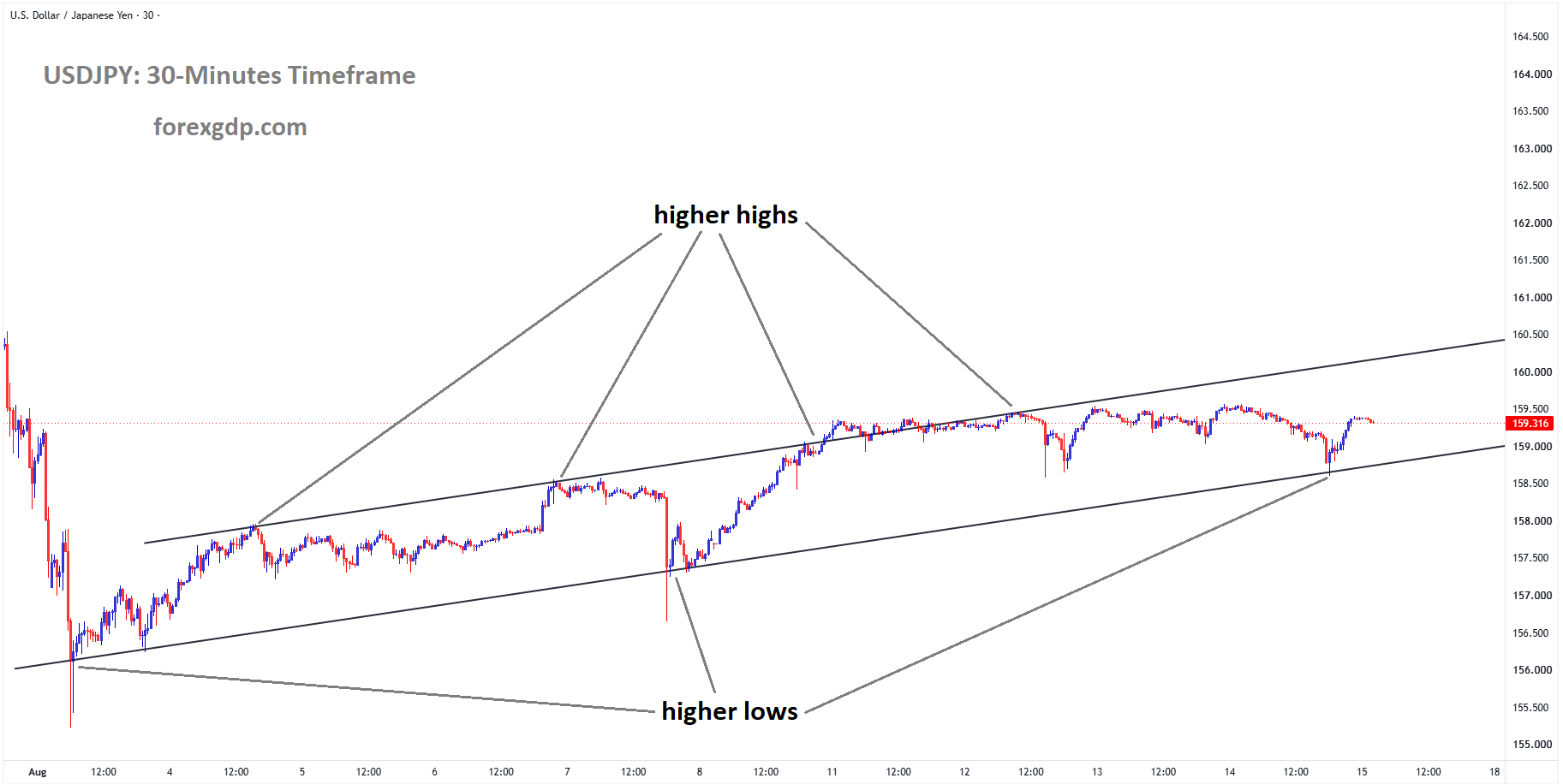
USDJPY is moving in an ascending channel, and the market has rebounded from the higher low area of the channel
Recent economic reports from the United States have raised concerns about the strength of consumer demand and the wider economy. A disappointing consumer confidence reading added to a series of softer US indicators released during the week. These figures reduced some of the support behind the Dollar.
Under normal conditions, a weaker US Dollar could place clear downward pressure on USD/JPY. However, the Yen has also struggled to attract buyers. The effect of Japan’s earlier intervention in the currency market appears to be fading, while the lack of further action from Tokyo has encouraged traders to sell the Japanese currency again.
As a result, USD/JPY is caught between two opposing forces. The Dollar is being held back by weaker US economic data, while the Yen is losing ground as concerns about possible Japanese intervention become less immediate.
US Consumer Sentiment Falls More Than Expected
The latest preliminary survey from the University of Michigan showed a sharp decline in US consumer sentiment during August. The headline index dropped from the previous month and came in below economists’ forecasts.
The expectations component of the survey also weakened. This part of the report measures how households feel about future economic conditions, including employment, personal finances and business activity. A decline can suggest that consumers are becoming less confident about the months ahead.
Consumer confidence is closely watched because household spending plays a major role in the US economy. When people feel secure about their jobs and income, they are generally more willing to make large purchases, travel or spend on non-essential services. When confidence falls, families may become more careful and increase their savings.
One survey does not provide a complete picture of the economy. However, the latest decline becomes more important when viewed alongside other disappointing US reports. It suggests that households may be feeling pressure from high living costs, uncertain employment conditions or concerns about future economic growth.
A Week of Softer US Economic Reports
The consumer sentiment figures were not the only weak data released during the week. The United States also reported cooler inflation and disappointing retail sales.
Lower inflation can be positive for households because it reduces pressure on everyday expenses. It may also give the Federal Reserve more freedom when making future interest-rate decisions. At the same time, a faster-than-expected slowdown in inflation can raise questions about demand, especially when it appears alongside weak consumer spending.
The retail sales report added to those concerns. Retail activity offers an important look at consumer behavior because it tracks spending across a wide range of businesses. A weak reading may indicate that households are becoming more selective about where they spend their money.
Together, softer inflation, weak retail sales and falling consumer sentiment created a less supportive environment for the US Dollar. Traders often favor the Dollar when the American economy is expanding strongly and interest rates are expected to remain high. When economic reports lose momentum, those expectations can change.
The recent data does not necessarily mean that the US economy is entering a serious downturn. It does, however, suggest that growth may be becoming less balanced. The coming reports on employment, wages and business activity will be important in determining whether the weakness is temporary or part of a broader slowdown.
Why the US Dollar Has Lost Some Support
The Dollar came under mild pressure as investors reviewed the latest economic information. Expectations for Federal Reserve policy remain a central influence on the currency.
If inflation continues to cool while consumer demand weakens, the central bank may have less reason to maintain restrictive borrowing conditions for an extended period. Any growing belief that US interest rates could move lower may reduce the Dollar’s appeal.
Higher interest rates often support a currency because they can offer better returns on certain investments. If traders expect those returns to decline, demand for the currency may also soften.
Still, the Dollar’s weakness has been limited. Investors may be reluctant to make strong decisions based on a small group of reports, particularly when other parts of the US economy remain relatively resilient. Global uncertainty can also support demand for the Dollar because it is widely used as a safe and liquid asset.
Japanese Yen Weakness Prevents a Clear Move

Although the Dollar faced pressure, the Japanese Yen was unable to take full advantage. Selling interest returned as the impact of Japan’s earlier currency intervention began to fade.
The United States and Japan carried out a major coordinated effort in late July and early August to support the Yen. The intervention initially changed market behavior by reminding traders that officials were prepared to respond to excessive currency weakness.
Such action can have a strong immediate effect because it raises the risk of sudden losses for investors betting against the Yen. However, the influence of intervention may weaken over time if it is not followed by additional measures or a clear shift in economic policy.
Tokyo has not announced another major round of action. That silence appears to have made some traders more comfortable with renewing bets against the Yen.
The deeper challenge is that intervention alone cannot permanently change the forces affecting a currency. Japan’s interest-rate environment, domestic economic outlook and central bank policy continue to shape demand for the Yen. Unless those conditions change, official intervention may provide only temporary relief.
Interest-Rate Differences Remain Important
The wide gap between US and Japanese borrowing conditions remains one of the main reasons the Yen has struggled.
Investors often move money toward currencies linked to higher interest rates. Japan has spent many years maintaining extremely loose monetary conditions, while the United States has followed a far tighter policy in response to inflation.
This difference encouraged a popular strategy in which traders borrowed or sold lower-yielding Yen to invest in assets connected to higher-yielding currencies. Even when the US Dollar weakens because of disappointing American data, the broader rate gap can continue to place pressure on the Yen.
The Bank of Japan has taken steps toward more normal monetary policy, but it has remained cautious. Japanese policymakers must consider weak domestic demand, wage growth, inflation and the effect of higher borrowing costs on businesses and households.
A rapid policy shift could strengthen the Yen, but it could also create new risks for the Japanese economy. This helps explain why officials have preferred gradual adjustments.
USD/JPY Caught Between Competing Pressures
The current stability in USD/JPY reflects weakness on both sides of the currency pair.
Soft US data is limiting demand for the Dollar. Falling consumer confidence and weaker retail activity have raised doubts about the strength of American growth. At the same time, cooler inflation has encouraged discussion about a less restrictive Federal Reserve policy.
The Yen, however, faces its own problems. The effect of the recent intervention has weakened, while the gap between US and Japanese interest rates continues to influence investor behavior. Without another strong response from Tokyo, traders appear increasingly willing to sell the Japanese currency.
Neither side currently has enough momentum to take firm control. Future direction will likely depend on upcoming US economic reports, signals from the Federal Reserve and any new comments or action from Japanese authorities.
Summary
USD/JPY remained broadly steady on Friday as softer US economic data was offset by renewed weakness in the Japanese Yen. A sharp fall in US consumer sentiment added to concerns created by cooler inflation and disappointing retail sales, reducing support for the Dollar.
However, the Yen could not benefit because the impact of the recent US–Japan intervention has faded. With no immediate follow-up from Tokyo, traders have returned to selling the Japanese currency.
The result is a balance between a Dollar weakened by economic uncertainty and a Yen pressured by interest-rate differences and cautious Japanese monetary policy. Upcoming economic releases and policy signals from both countries will determine which currency gains the stronger advantage.
USDCAD Slides as Weak US Consumer Spending Boosts the Loonie
The Canadian Dollar emerged as one of the strongest major currencies on Friday, extending its recent gains against the US Dollar. The USD/CAD pair fell to its lowest point in about two months as investors moved away from the Greenback following disappointing US economic data.
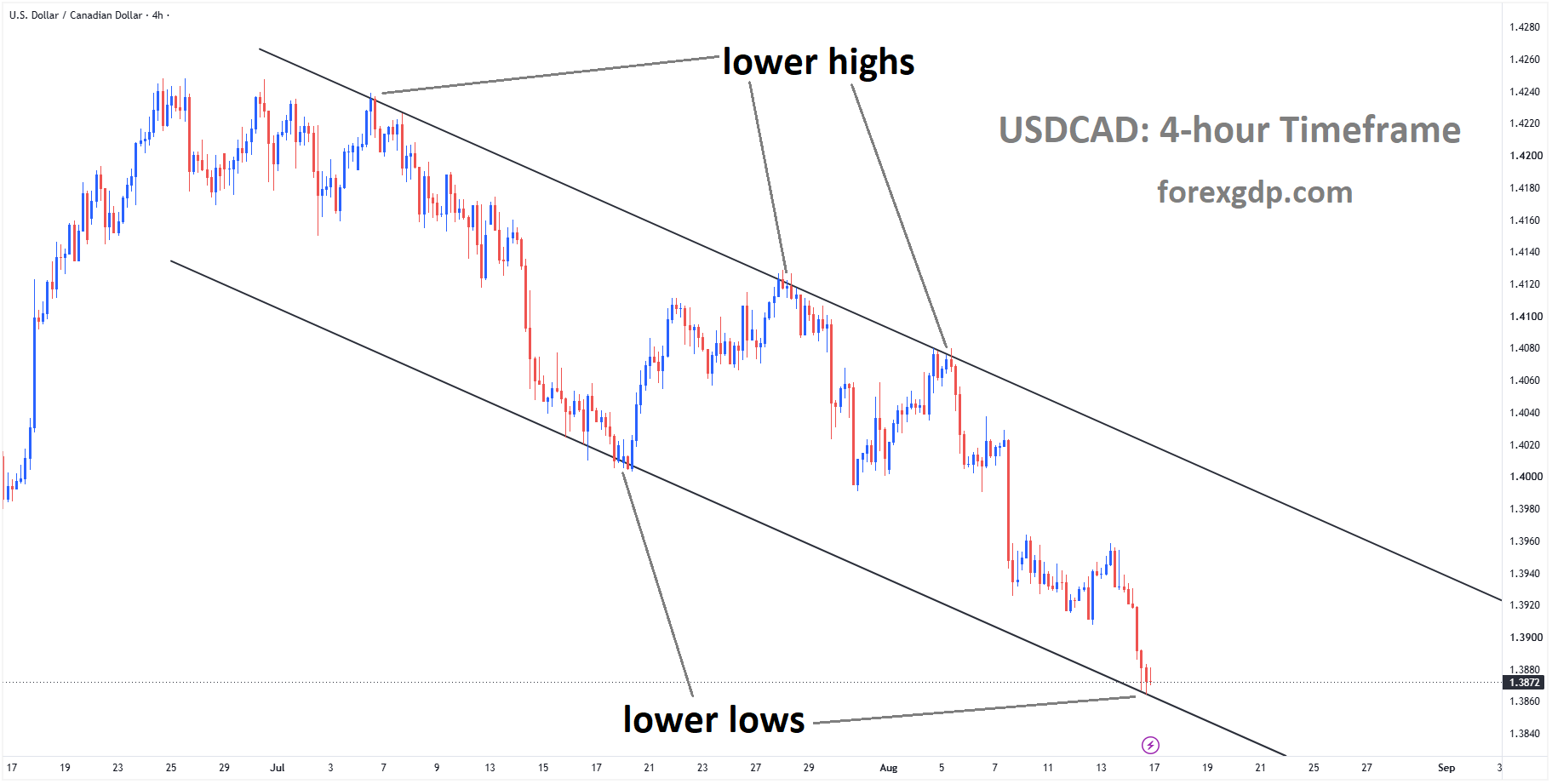
USDCAD reached the lower low area of the descending channel
The latest advance in the Canadian currency was already underway before the release of the US Retail Sales report. However, the weaker-than-expected figures added fresh momentum to the move. The data raised concerns about the health of consumer spending in the United States and pushed the US Dollar lower against a broad range of currencies.
Retail activity plays a major role in the American economy because household spending accounts for a large share of overall economic output. A noticeable decline in sales can therefore change expectations about economic growth, inflation, and the future direction of Federal Reserve policy.
Canadian Dollar Becomes a Top Performer
The Canadian Dollar recorded one of the strongest performances in the currency market on Friday. Its gains pushed USD/CAD to a fresh two-month low, continuing a shift that had begun before the latest US data became available.
This detail is important because it suggests that the move was not driven entirely by the Retail Sales report. Investors had already shown greater interest in the Canadian currency earlier in the session. The disappointing US figures then created additional pressure on the Greenback and helped strengthen the existing direction.
Currency movements often reflect a combination of factors rather than one isolated event. Changes in expectations for economic growth, central bank decisions, trade conditions, and general market confidence can all influence demand for the Canadian Dollar.
Canada also has close economic ties with the United States. Because the two countries share a large trading relationship, changes in the US economy can have a direct effect on Canadian businesses and consumers. Even so, weaker US data can sometimes benefit the Canadian Dollar against its American counterpart when traders respond by reducing their exposure to the Greenback.
US Retail Sales Record a Sharp July Decline
US Retail Sales fell by 0.6% in July, delivering a much weaker result than economists had predicted. Market forecasts had pointed to a small increase of 0.1%, making the actual decline a significant disappointment.
The July result also represented a clear reversal from the previous month, when Retail Sales had risen by 0.2%. Instead of showing continued improvement, the new report suggested that American consumers became more cautious with their spending.
This was one of the softer Retail Sales readings recorded during the year. The size of the decline attracted attention because consumer demand has remained an important source of support for the US economy.
Retail Sales data covers spending across a wide range of businesses, including stores, restaurants, vehicle dealers, and online sellers. Monthly figures can be affected by short-term changes, but a broad decline may still indicate that households are becoming less willing or able to spend.
Several factors can cause consumers to reduce purchases. Higher borrowing costs may discourage spending on expensive items, while persistent living expenses can leave households with less money for non-essential goods. Concerns about employment or future income may also encourage people to save rather than spend.
Control Group Data Adds to Economic Concerns
The headline Retail Sales figure was not the only disappointing part of the report. The Retail Sales Control Group, which is used when calculating gross domestic product, declined by 0.4%.
That result followed a revised increase of 0.4% in the previous month. The move from growth to contraction suggested that the weakness was meaningful for the wider economy and not limited to a small number of retail categories.
The Control Group receives close attention because it offers a clearer view of the spending that contributes directly to economic output. It removes several categories that can be highly volatile, allowing economists to form a more focused assessment of consumer activity.
A decline in this measure may lead analysts to reconsider expectations for US economic growth. If households continue to spend less, companies could experience weaker demand. Businesses may then become more cautious about hiring, investment, and inventory decisions.
One monthly report does not confirm a lasting slowdown. Retail activity can change quickly, and future data may show a recovery. Still, the July figures provide an important warning that the American consumer may be losing some momentum.
US Dollar Index Falls to a Weekly Low

The US Dollar weakened broadly after the Retail Sales report was published. The US Dollar Index, which measures the Greenback against a group of major currencies, dropped to its lowest level of the week.
The widespread reaction showed that investors viewed the report as important for the wider US economic outlook. The pressure was not limited to the Canadian Dollar, although the CAD was among the main beneficiaries.
A weaker consumer spending report can influence expectations surrounding the Federal Reserve. If economic activity loses strength and inflation pressures continue to ease, policymakers may have less reason to maintain restrictive monetary conditions for an extended period.
Traders often respond quickly when new data challenges earlier assumptions about interest rates. Expectations surrounding Federal Reserve policy are especially important because changes in US borrowing costs can affect international demand for Dollar-based assets.
The Retail Sales disappointment therefore had two effects. It raised questions about the strength of the US consumer while also encouraging the market to reassess the possible path of monetary policy. Together, these concerns placed broad pressure on the Greenback.
Attention Turns to Future Consumer Data
Investors will now watch upcoming US economic reports for evidence that July’s decline was temporary or part of a wider loss of momentum. Employment figures, inflation data, consumer confidence surveys, and personal spending reports could provide a clearer picture.
If future releases also point to weaker household demand, concerns about the US economic outlook may deepen. That could continue to limit support for the US Dollar. A recovery in spending, however, would reduce fears that consumers are pulling back in a lasting way.
The Canadian Dollar’s performance will also depend on domestic economic developments and expectations for the Bank of Canada. While Friday’s gains were supported by US Dollar weakness, Canadian employment, inflation, growth, and trade data remain important drivers of the currency.
Summary
The Canadian Dollar ranked among Friday’s strongest major currencies and reached its best position against the US Dollar in around two months. Its advance had started before the US Retail Sales release, but disappointing American data gave the move additional strength.
US Retail Sales declined sharply in July instead of posting the modest growth economists had expected. The Control Group also contracted, raising concerns about consumer demand and the wider economic outlook.
The report sent the US Dollar Index to a weekly low and weakened the Greenback across the currency market. Investors will now focus on future US data to determine whether the decline in consumer spending was a temporary setback or an early sign of a broader slowdown.
USDCHF Retreats as Easing Inflation Weighs on Dollar Demand
The USD/CHF currency pair ended a four-day run of gains on Friday as the US Dollar came under renewed pressure. Recent inflation figures from the United States suggested that price growth was becoming less intense, encouraging traders to lower their expectations for another Federal Reserve interest rate increase in September.
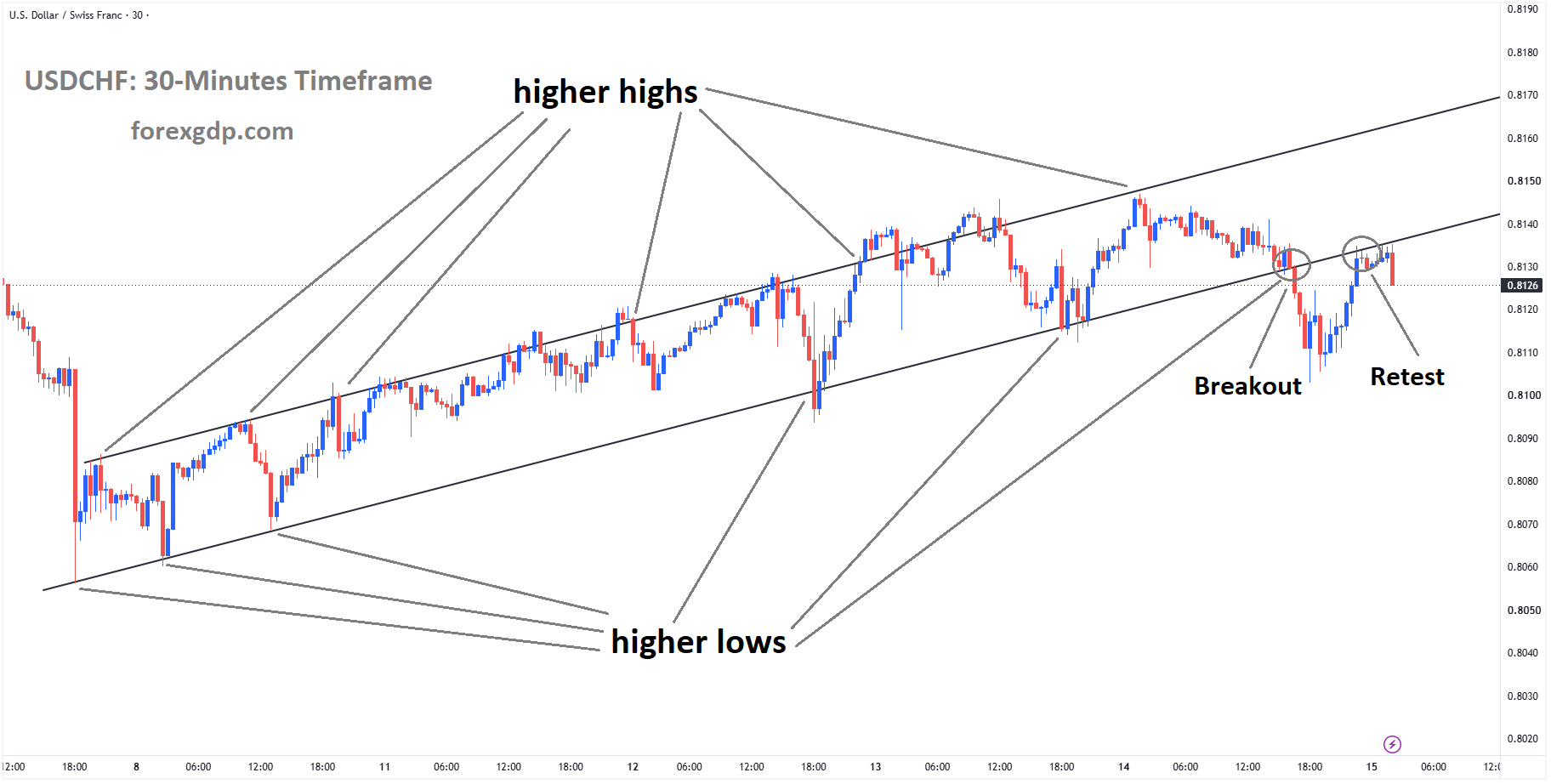
USDCHF reached the retest area of the broken ascending channel
Both the United States and Switzerland have reported softer inflation readings. However, the policy outlook for their central banks remains different. The Federal Reserve is facing growing pressure to avoid further tightening, while the Swiss National Bank is expected to keep borrowing costs unchanged for an extended period.
Investors are now looking at upcoming US economic reports, including July retail sales, for more information about consumer demand and the wider health of the economy.
US Inflation Data Puts Pressure on the Dollar
The latest decline in the US Dollar followed a weaker-than-expected inflation report. Slower price growth is important because inflation remains one of the main factors guiding Federal Reserve policy.
When inflation is high, the central bank may raise interest rates to reduce demand across the economy. Higher borrowing costs can make loans, mortgages, and business investment more expensive. This usually slows economic activity and can gradually bring inflation under control.
However, when inflation begins to cool, the need for additional rate increases becomes less urgent. That is what financial markets are now considering after the latest US data.
The recent figures indicated that inflation pressures were easing at both the consumer and producer levels. This reduced demand for the US Dollar and interrupted the USD/CHF pair’s recent upward movement.
The Dollar often benefits when investors expect US interest rates to remain high or rise further. If those expectations weaken, the currency can lose some of its appeal, particularly against traditional safe-haven currencies such as the Swiss Franc.
US Wholesale Inflation Remains Flat in July
The US Bureau of Labor Statistics reported that wholesale costs for goods and services did not increase in July. Economists had expected a modest monthly rise, making the unchanged reading a clear sign that inflationary pressure at the producer level was weaker than forecast.
The previous month’s figure was also revised to show a small decline. Together, the two reports suggest that businesses may be facing less pressure from rising production and supply costs.
Producer inflation matters because companies often pass higher expenses on to consumers. When the cost of raw materials, transportation, labor, or other business services increases, firms may respond by raising the prices of finished products.
If wholesale costs remain stable, businesses may have less reason to increase consumer prices. This could support a continued slowdown in broader inflation during the coming months.
Core producer inflation, which removes the often-volatile food and energy categories, recorded a limited monthly increase. However, the result was still slightly below economists’ expectations.
Annual producer inflation remained elevated, showing that price pressures have not disappeared completely. Even so, the softer monthly readings added to the view that inflation may be moving in a more manageable direction.
Federal Reserve Rate Hike Expectations Decline

The latest inflation reports have changed expectations for the Federal Reserve’s September policy meeting. The estimated probability of another US interest rate increase fell to nearly 35%, compared with about 40% shortly after the wholesale inflation figures were released.
This shift shows that investors are becoming less convinced that the Fed will need to tighten monetary policy again in the near term.
Federal Reserve officials will still examine several important economic indicators before making their decision. Inflation data will remain central, but policymakers will also consider employment conditions, wage growth, consumer spending, and overall economic activity.
A single report is unlikely to settle the policy debate. Nevertheless, a series of softer inflation readings would strengthen the case for keeping interest rates unchanged.
The central bank must carefully balance two risks. Raising rates too aggressively could weaken the economy and place unnecessary pressure on businesses and households. On the other hand, ending the tightening cycle too early could allow inflation to become stronger again.
For the US Dollar, the outlook will depend partly on how investors interpret incoming economic data. Evidence of persistent inflation could restore expectations for another rate increase. Continued cooling would make a September hike less likely and could keep the currency under pressure.
US Retail Sales Become the Next Major Focus
Attention is now shifting toward the US retail sales report for July. The data will provide a clearer picture of household spending, which is a major driver of the American economy.
Strong retail sales could indicate that consumers remain willing and able to spend despite higher borrowing costs. That would support economic growth, but it could also make the Federal Reserve more cautious about declaring victory over inflation.
Weak retail sales, meanwhile, could suggest that restrictive monetary policy is having a greater effect on demand. Such an outcome may reinforce expectations that the Fed will avoid another rate increase in September.
The report will therefore be assessed alongside the latest inflation figures. Investors are looking for signs that price pressures can continue to ease without causing a severe economic slowdown.
Swiss Inflation Falls to a Four-Month Low
Inflation has also cooled in Switzerland, declining to 0.4% in July from 0.5% previously. This was the lowest reading in four months and showed that price growth remained limited.
The result is especially notable because global energy markets have faced uncertainty linked to geopolitical tensions. Switzerland appears to have experienced only a limited effect from higher energy-related costs.
The softer figure differed from the Swiss National Bank’s expectation that inflation could rise slightly in the near term. The SNB recently kept its main policy rate at zero and is expected to maintain that position throughout the rest of the year.
Switzerland’s low inflation environment gives the central bank room to remain patient. Policymakers do not appear to be under immediate pressure to either raise rates or introduce further reductions.
SNB Expected to Keep Policy Steady
Further interest rate cuts are currently viewed as a backup option rather than the Swiss National Bank’s most likely course of action. This is partly because the country’s banking system has not suffered enough damage to require additional emergency support.
Most economists believe the SNB’s first rate increase is unlikely to arrive until early 2028. Currency markets, however, are allowing for the possibility of an earlier move during 2027.
The difference between economists’ forecasts and market expectations reflects uncertainty about the longer-term inflation outlook. Future decisions could be influenced by energy costs, currency movements, global trade conditions, and the health of the Swiss economy.
For now, the SNB appears likely to keep borrowing costs unchanged while monitoring whether inflation remains contained.
Summary
USD/CHF moved lower after four consecutive days of gains as softer US inflation figures reduced support for the Dollar. Flat wholesale costs and weaker-than-expected core producer inflation encouraged investors to lower the probability of a Federal Reserve rate hike in September to nearly 35%.
US retail sales are now the next major economic release in focus, as they could provide fresh evidence about consumer demand and the Fed’s policy options.
In Switzerland, inflation fell to a four-month low, supporting expectations that the Swiss National Bank will keep interest rates unchanged. Although economists generally expect the next SNB increase to remain some distance away, currency markets continue to consider the possibility of an earlier move.
AUDUSD Advances as Dollar Demand Fades Before Major US Data Release
The Australian Dollar strengthened against the US Dollar on Friday after comments from a senior Reserve Bank of Australia official reinforced expectations that monetary policy could remain tight for longer.
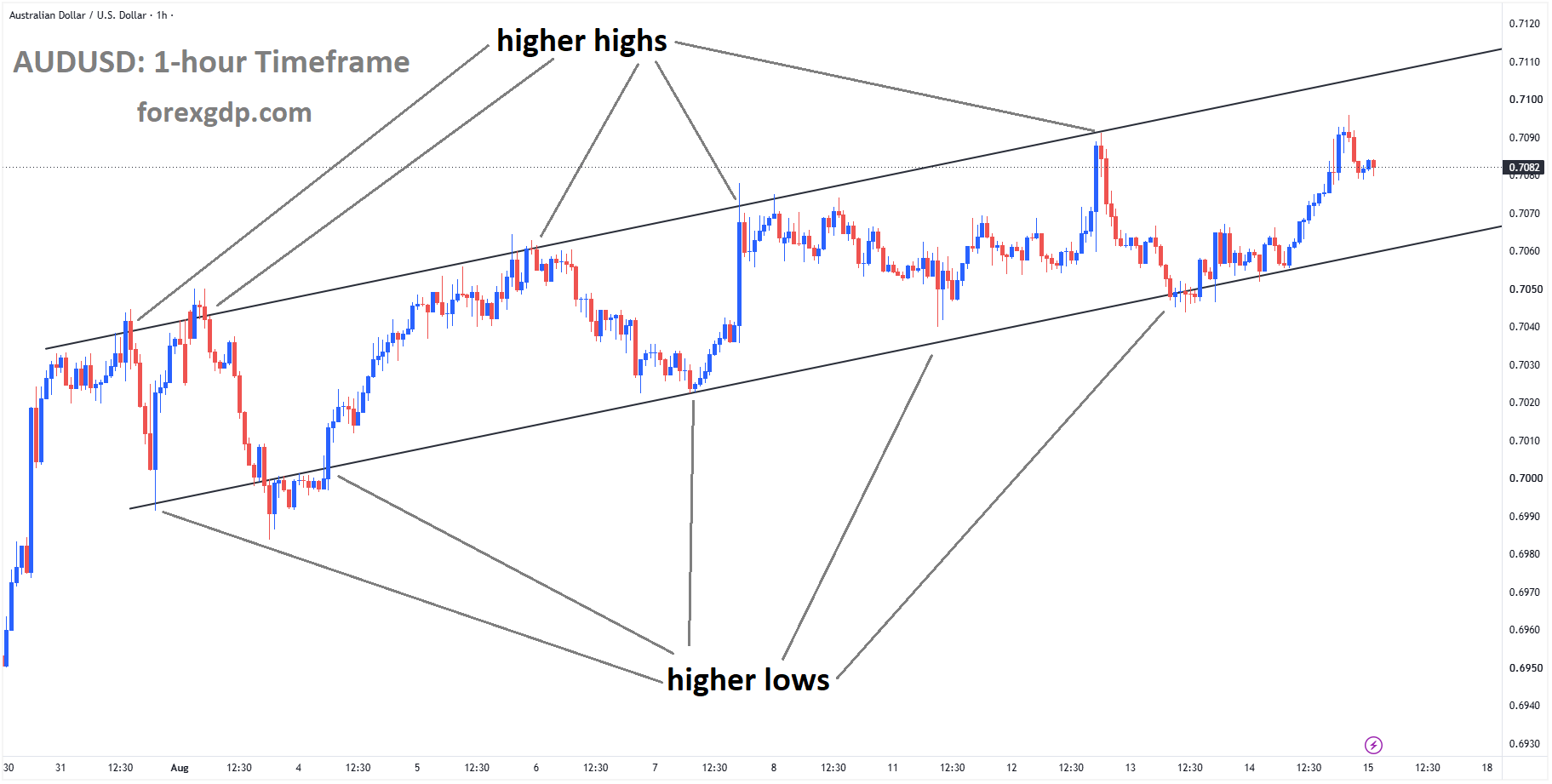
AUDUSD is moving in an ascending channel, and the market has rebounded from the higher low area of the channel
Reserve Bank of Australia Assistant Governor Chris Kent said current interest rates were restrictive and were having an impact on the economy. However, he also warned that inflation risks remained significant. His remarks suggested that the central bank was not ready to declare victory over rising prices and could consider further action if inflation failed to slow as expected.
The comments provided support for the Australian currency at a time when the US Dollar was struggling to maintain its earlier momentum. Recent economic reports from the United States showed that inflation pressures were becoming less intense, weakening expectations that the Federal Reserve would raise borrowing costs again at its September meeting.
Attention was also shifting toward the latest US retail sales report, which was expected to offer fresh information about the strength of household spending during the summer.
RBA Maintains a Firm Position on Inflation
Chris Kent’s comments reflected the cautious but firm approach currently being taken by the Reserve Bank of Australia. Although the central bank believes its previous policy decisions are slowing demand, officials remain concerned that inflation could stay above their preferred range for too long.
Kent explained that restrictive interest rates were working through the economy. Higher borrowing costs generally reduce household spending, discourage some business investment and cool demand for loans. These effects can help bring inflation under control, but they often take time to become fully visible.
The assistant governor’s warning about inflation risks was important because it kept the possibility of another rate increase alive. The RBA has not promised that borrowing costs will rise again, but it has also avoided suggesting that its tightening cycle is definitely over.
That position helped improve demand for the Australian Dollar. Investors often respond positively when a central bank signals that it may keep monetary policy tighter than previously expected. A more restrictive policy outlook can make a country’s currency more attractive, particularly when another major central bank appears to be moving in the opposite direction.
Bullock Says Another Rate Increase Remains Possible
Kent’s remarks followed the RBA’s policy meeting earlier in the week, when the central bank decided to leave interest rates unchanged. Despite that decision, the message from Governor Michelle Bullock was more cautious than supportive of an extended pause.
Bullock said policymakers wanted to wait for “a bit more information” before making their next decision. At the same time, she made clear that another rate increase remained under consideration.
This combination of patience and concern was widely viewed as a hawkish pause. The central bank chose not to act immediately, but its communication showed that officials were still focused on the risk of persistent inflation.
As a result, expectations of a possible tightening move at the RBA’s September meeting increased. The decision will depend heavily on upcoming inflation, employment, wage and consumer spending data.
Australian policymakers face a difficult balance. Keeping monetary policy restrictive for too long could place additional pressure on mortgage holders, businesses and the wider economy. However, easing policy before inflation is under control could allow price pressures to strengthen again.
The RBA’s recent statements indicate that inflation remains its main concern. Officials appear willing to wait for more evidence, but they are also prepared to respond if economic data shows that demand and prices are not cooling quickly enough.
US Inflation Reports Weaken the Dollar
While the Australian Dollar received support from the RBA’s message, the US Dollar remained under pressure following a series of softer economic releases.
The latest US Producer Price Index showed that inflation at the business level was more moderate than analysts had expected. Producer prices can influence future consumer inflation because companies may pass higher costs on to customers. A softer reading therefore supported the view that inflationary pressure was gradually easing.
The producer price report followed a relatively calm Consumer Price Index release earlier in the week. Together, the two reports suggested that the United States was making further progress toward slower inflation.
This reduced the urgency for the Federal Reserve to raise interest rates again. The US central bank has spent an extended period using restrictive monetary policy to control inflation, but officials must also consider the risk of weakening economic growth and employment.
Expectations of another September increase had already been damaged by the previous week’s Nonfarm Payrolls report. The employment figures indicated that job creation had slowed, adding to concerns that the US labour market was losing strength.
A combination of moderating inflation and softer hiring gives the Federal Reserve more reason to remain patient. If price growth continues to cool without a serious economic downturn, policymakers may prefer to keep rates unchanged while studying incoming data.
Retail Sales Become the Next Major Test
The US retail sales report was the next major event for currency markets. Household consumption played an important role in supporting American economic growth during the second quarter, making the July report an early test of whether that strength continued later in the summer.
Economists expected only modest growth in retail activity. A strong result could show that consumers were still willing and able to spend despite high borrowing costs and broader economic uncertainty. That outcome might support confidence in the US economy and provide some relief to the Dollar.
A weak report, however, could add to signs that economic momentum was slowing. Consumers have faced persistent pressure from high living costs, expensive credit and growing concerns about employment. Any clear loss of spending power would increase doubts about the strength of the economy during the second half of the year.
Analysts at Danske Bank noted that private consumption had been the main source of growth during the second quarter. They viewed the July retail sales figures as the first major evidence of whether that momentum carried into late summer.
Consumer Confidence Also in Focus
The University of Michigan’s Consumer Sentiment Survey was another important release on Friday’s calendar. Economists expected confidence to weaken slightly as households continued to deal with elevated everyday expenses and growing concerns about the labour market.
Consumer confidence does not always move in the same direction as actual spending, but it can provide useful information about future behaviour. People who feel uncertain about their jobs or finances may delay major purchases, increase savings or reduce discretionary spending.
Persistently high prices also affect sentiment even when the pace of inflation is slowing. Households experience the overall cost of goods and services, not only the monthly change in inflation. This means confidence can remain weak long after inflation begins to moderate.
The sentiment report could therefore help investors understand whether American consumers were becoming more cautious. When combined with retail sales data, it would offer a broader picture of household demand and the possible direction of Federal Reserve policy.
Summary
The Australian Dollar gained support after RBA Assistant Governor Chris Kent warned that inflation risks remained high and left the door open to further monetary tightening. His comments reinforced Governor Michelle Bullock’s earlier message that another rate increase was still being considered, even though the central bank had chosen to pause.
Meanwhile, the US Dollar remained on the defensive as softer consumer and producer inflation reports reduced expectations of another Federal Reserve increase in September. Slower employment growth added to the case for a patient approach.
US retail sales and consumer sentiment were the next key indicators. Together, they were expected to show whether household spending remained strong or whether high costs, expensive credit and labour market concerns were beginning to weaken consumer demand.
NZDUSD Climbs as Weak US Data Pressures the Greenback
EUR/JPY moved higher on Friday as investors examined the changing monetary policy outlook in both Europe and Japan. The Euro remained supported by expectations that the European Central Bank could increase interest rates at its September meeting. At the same time, growing speculation about a possible Bank of Japan rate hike helped strengthen the Japanese Yen and limited the currency pair’s advance.
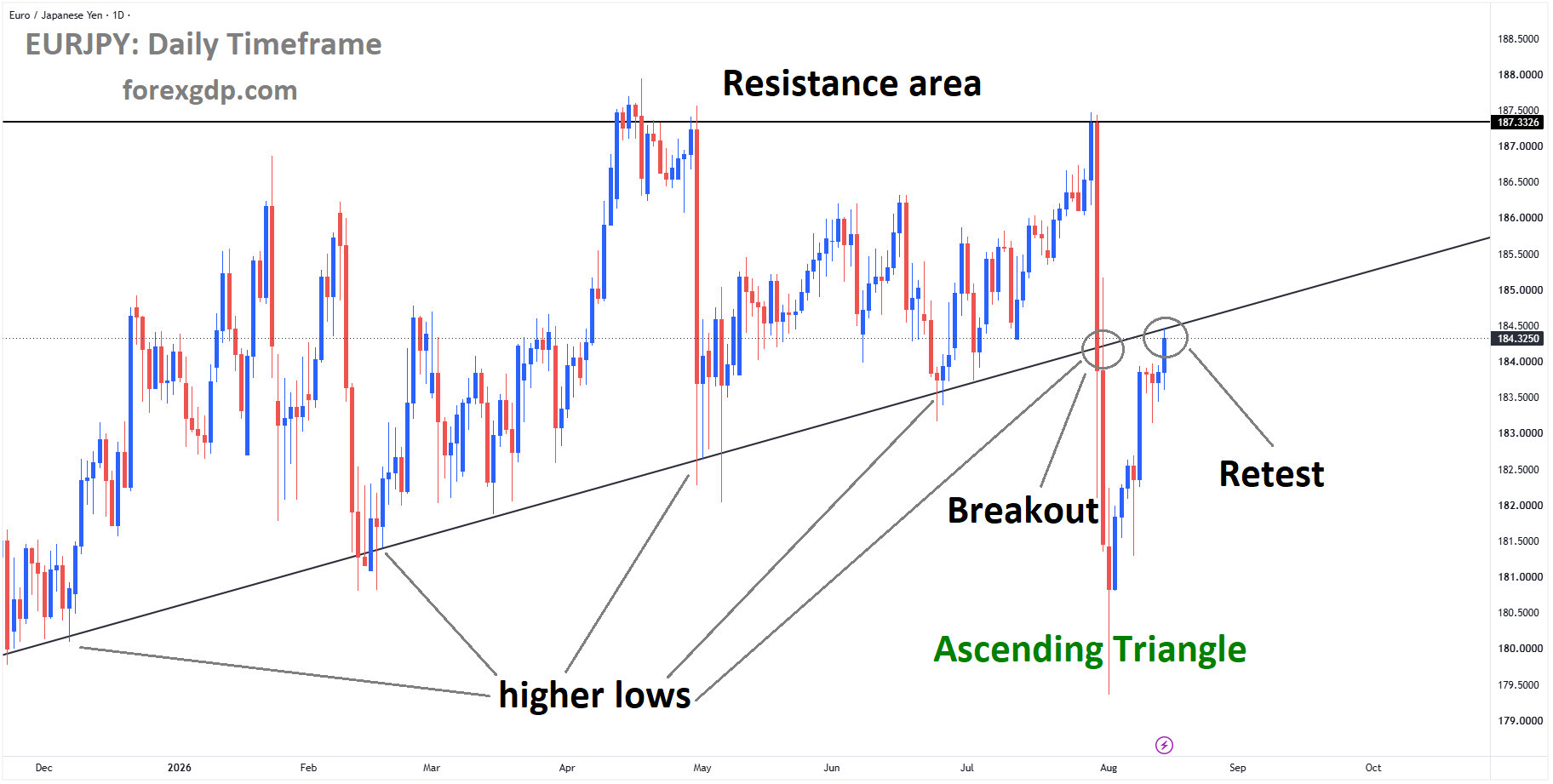
EURJPY reached the retest area of the broken ascending triangle pattern
The latest Eurozone economic growth figures added another positive factor for the Euro. Data confirmed that the region’s economy returned to growth during the second quarter after failing to expand in the previous three-month period.
However, the outlook remains finely balanced. Both the ECB and the Bank of Japan may tighten monetary policy in September, leaving investors to consider which central bank is likely to move more aggressively in the months ahead.
Euro Supported by Expectations of Another ECB Rate Hike
Investors widely expect the European Central Bank to raise borrowing costs at its September policy meeting. Such a decision would represent the ECB’s second rate increase of the year and signal that officials remain concerned about inflation across the Eurozone.
Inflation risks continue to lean toward the upside, meaning consumer prices could remain stronger than policymakers would prefer. This situation gives the ECB a reason to maintain a restrictive policy approach even as the regional economy shows only a moderate recovery.
Higher interest rates can support a currency because they may make assets denominated in that currency more attractive to international investors. As expectations of another ECB move grow, the Euro has received support against several major currencies, including the Japanese Yen.
Still, the central bank must make its decision carefully. Raising rates too quickly could place additional pressure on households, businesses, and governments. Borrowing becomes more expensive when interest rates rise, potentially slowing investment and consumer spending. The ECB therefore needs to balance persistent inflation risks against the need to protect the Eurozone’s economic recovery.
Eurozone Economy Returns to Quarterly Growth
Fresh information from Eurostat offered some encouragement about the health of the European economy. The agency’s second estimate confirmed that Eurozone gross domestic product expanded by 0.4% during the second quarter compared with the previous three months.
The result matched the initial estimate published in July. More importantly, it followed a period of stagnation in the first quarter, when the economy recorded no quarterly growth.
The improvement indicates that economic activity regained momentum during the April-to-June period. Although the expansion was not especially strong, it reduced some concerns that the currency bloc might remain stuck in a prolonged period of weak performance.
On a yearly basis, the Eurozone economy grew by 1% in the second quarter. That figure was also unchanged from the preliminary estimate. Annual growth accelerated from an upwardly revised increase of 0.5% in the previous quarter.
These numbers provide a more supportive economic background for the Euro. A return to growth could give the ECB greater confidence that the economy is capable of handling another interest rate increase. Policymakers may feel they have more room to address inflation if economic activity is improving rather than contracting.
However, one quarter of stronger growth does not remove all concerns. Economic conditions can vary significantly between Eurozone member states, while consumers and businesses continue to face the effects of elevated borrowing costs. Future data on employment, inflation, household spending, and industrial activity will help determine whether the recovery can continue.
Bank of Japan Policy Expectations Strengthen the Yen

While the European outlook supported the Euro, developments in Japan prevented EUR/JPY from making a stronger advance. Investors are increasingly considering the possibility that the Bank of Japan could raise interest rates at its September meeting.
A Reuters report published on Friday cited three people familiar with the central bank’s thinking. According to the report, the Bank of Japan could increase rates as soon as the following month. Officials might then consider speeding up the pace of monetary tightening.
This possibility is important because Japan maintained extremely loose monetary policy for many years. A faster move toward higher interest rates would represent a significant change in the country’s policy direction.
Expectations of tighter Bank of Japan policy generally support the Yen. If Japanese interest rates rise, investors may have fewer reasons to move money out of Japan in search of higher returns elsewhere. The currency could also become more attractive to some international investors.
The BoJ’s future decisions will depend on several factors, including inflation, wage growth, domestic demand, and the broader condition of the Japanese economy. Policymakers will want evidence that price increases are sustainable before moving too quickly.
Currency Intervention Remains an Important Issue
Possible action by Japanese authorities is another factor influencing the Yen. Japan’s Ministry of Finance said that the United States and Japan carried out joint intervention in the foreign exchange market in late July.
According to the ministry, the action was taken in response to excessive volatility and disorderly movements involving the Japanese currency during recent months. Intervention usually involves authorities buying or selling currencies to influence market conditions and reduce destabilizing movements.
The possibility of further intervention may encourage investors to act more cautiously when trading the Yen. Even without immediate action, official warnings and previous intervention can affect market behavior by increasing uncertainty about how authorities might respond to renewed volatility.
Japan’s government is particularly sensitive to rapid currency movements because they can create challenges throughout the economy. A weaker Yen can raise the cost of imported food, fuel, and raw materials. At the same time, it may benefit exporters by increasing the value of overseas earnings when converted into the Japanese currency.
Competing Central Bank Outlooks Keep EUR/JPY Balanced
EUR/JPY is being influenced by two strong and competing monetary policy stories. In Europe, expectations of another ECB rate increase are supporting the Euro. Confirmed economic growth during the second quarter has also improved confidence in the regional outlook.
In Japan, the prospect of a September rate hike is strengthening the Yen. Reports that the Bank of Japan could accelerate its policy normalization add further weight to that view. The possibility of additional currency intervention provides another reason for investors to remain careful.
The direction of the currency pair may therefore depend on how expectations change before the September central bank meetings. Investors will closely follow comments from ECB and BoJ officials, as well as upcoming reports on inflation and economic activity.
Any indication that one central bank is becoming more cautious could shift sentiment. Likewise, evidence of persistent inflation or stronger growth could increase expectations of additional policy tightening.
Summary
EUR/JPY advanced on Friday, supported by expectations that the European Central Bank may raise interest rates again in September. Eurozone data also confirmed a return to quarterly growth, with the economy expanding by 0.4% in the second quarter after stagnating in the previous period.
The pair’s gains were limited by growing expectations of a Bank of Japan rate increase at its own September meeting. Reports of potentially faster monetary tightening and concerns about further foreign exchange intervention provided support to the Yen.
With both central banks moving closer to tighter policy, investors face a closely balanced outlook. Future inflation figures, economic reports, and official comments will play a major role in shaping expectations for the Euro and Japanese Yen.
EURGBP Remains Calm While Markets Track Geopolitical Risks
The Euro and British Pound remained closely matched on Friday as fresh economic figures from the Eurozone failed to create a clear advantage for either currency. EUR/GBP saw limited movement during the session, continuing the calm trading conditions that had shaped the pair throughout the week.
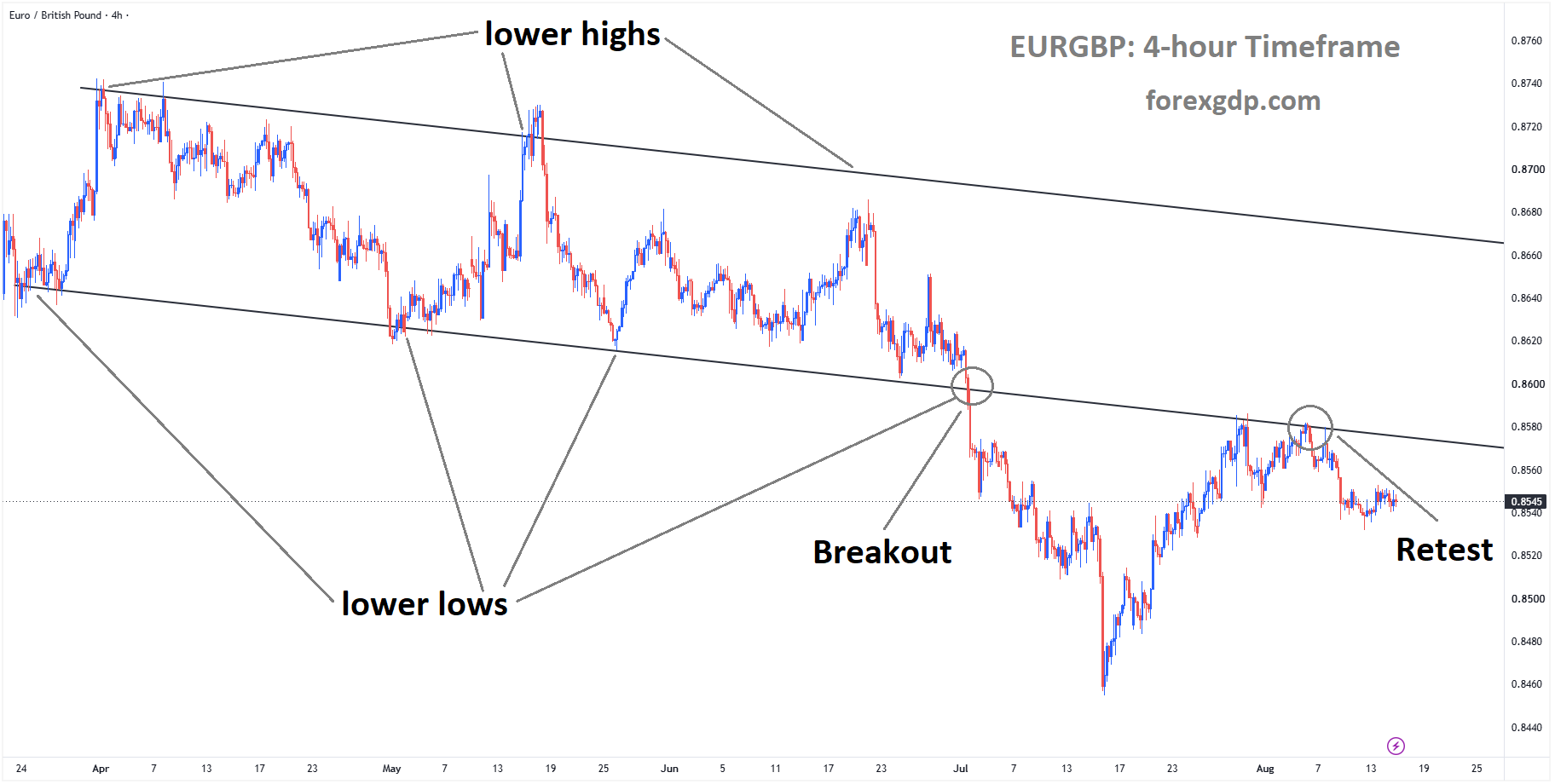
EURGBP is falling from the retest area of the broken descending channel
Economic growth and employment data from the Eurozone were broadly in line with forecasts. Because the figures delivered no major surprises, investors had little reason to make significant changes to their positions.
UK economic releases published earlier in the week had produced a similar result. Most of the numbers arrived close to market expectations, leaving the Pound without a strong domestic reason to outperform the Euro.
With the scheduled data offering few new clues, attention has shifted toward the conflict in the Middle East. Its effect on energy supplies, inflation, business costs, and central bank policy could eventually become more important than the latest economic reports.
Eurozone Economy Records Expected Growth
The Eurozone economy expanded by 0.4% during the second quarter, matching the widely expected result. Compared with the same period a year earlier, economic output grew by 1%.
These figures suggested that the region continued to grow, but they did not reveal an unexpected improvement or deterioration. Markets had already prepared for numbers at these levels, so the release had only a limited effect on the Euro.
The lack of a strong reaction also reflected the nature of Gross Domestic Product data. GDP is one of the most important measures of economic health, but it describes activity that has already taken place. Currency markets often place greater weight on information that offers clues about what may happen next.
Investors are therefore likely to focus more closely on upcoming business surveys, consumer activity, inflation reports, and comments from European Central Bank officials. These sources may provide a clearer picture of whether the Eurozone economy can maintain its momentum in the coming months.
The latest GDP report still carried a positive message. It showed that the currency bloc avoided a contraction and continued to expand despite difficult global conditions. However, growth that merely matches forecasts is rarely enough to produce a lasting currency move on its own.
Employment Data Offers Few Fresh Clues
Employment across the Eurozone increased by 0.1% during the second quarter, exactly as economists had predicted. The result pointed to continued stability in the labor market, but it did not change the wider outlook in a meaningful way.
A healthy employment environment can support household spending because people with secure jobs are generally more willing to make purchases. Consumer demand can then help businesses maintain production and invest in future growth.
However, employment conditions also matter for inflation. When labor markets remain tight, companies may need to offer higher wages to attract and retain workers. Rising labor costs can feed into the prices of goods and services, making it more difficult for inflation to return to a comfortable level.
The European Central Bank must balance these different forces when deciding its next policy steps. Officials need to consider whether economic growth is strong enough to handle restrictive borrowing conditions and whether inflation pressures are easing at a sustainable pace.
Friday’s employment report did not provide a decisive answer. Since the figure matched expectations, it reinforced the existing picture instead of creating a new one. That helps explain why the Euro saw little benefit from the release.
Pound Lacks a Clear Domestic Advantage

The British Pound also entered Friday without a powerful economic driver. UK data released earlier in the week had generally remained close to forecasts, reducing the chance of a major reassessment of Britain’s economic prospects.
When reports from both regions meet expectations, EUR/GBP can struggle to establish a lasting direction. The currency pair reflects the relative strength of the Euro and Pound rather than the performance of either currency in isolation.
For example, modestly encouraging Eurozone data may not lift the Euro against the Pound if the British economy is showing similar resilience. In the same way, stable UK figures may offer limited support to Sterling if comparable conditions are visible across the Eurozone.
This balance has kept the two currencies closely aligned. The Euro has stabilized following an earlier period of weakness, while the Pound has lacked the economic momentum needed to take control. Neither side has received the type of surprise that would encourage investors to make stronger commitments.
Future reports on inflation, wages, consumer spending, and business activity could eventually break this balance. Until then, the relative outlook for the European Central Bank and the Bank of England will remain an important part of the EUR/GBP story.
Middle East Conflict Becomes the Main Source of Uncertainty
With the latest European economic releases completed, geopolitical risk has moved to the center of market attention. The conflict in the Middle East is especially important because of the region’s role in global energy production and transportation.
Any disruption to oil or gas supplies could raise energy costs for households and businesses. Europe remains sensitive to these changes because many member countries depend heavily on imported energy.
Higher energy costs can affect the economy in several ways. Families may have less money available for other purchases, while companies can face higher expenses for transport, manufacturing, and heating. Some businesses may pass those costs on to customers, adding pressure to inflation.
This creates a difficult situation for the European Central Bank. If energy-driven inflation increases, policymakers may need to remain cautious about easing monetary conditions. At the same time, expensive energy can weaken economic growth, which could create pressure for more supportive policy.
The United Kingdom is also exposed to changes in global energy costs. However, differences in energy dependence, government policy, inflation trends, and central bank expectations could influence whether the Euro or Pound is more affected.
For now, the full economic impact of the conflict remains uncertain. That uncertainty gives market participants a reason to avoid large directional positions until the situation becomes clearer.
Central Bank Expectations Remain Important
The next meaningful change in EUR/GBP may depend on how investors view the future policies of the European Central Bank and the Bank of England.
Both institutions are watching inflation closely, but their economies do not always respond to the same pressures in the same way. Wage growth, services inflation, energy costs, and domestic demand can influence the timing and scale of future policy decisions.
If investors begin to believe that one central bank will keep borrowing conditions restrictive for longer than the other, the related currency could gain support. However, Friday’s Eurozone data did not provide enough evidence to create a major shift in those expectations.
Central bank comments will therefore be closely followed. Policymakers’ views on inflation, economic growth, and geopolitical risks may offer more guidance than backward-looking reports that simply confirm what markets already expected.
Summary
EUR/GBP remained calm on Friday because neither the Euro nor the Pound received a strong economic advantage. Eurozone GDP expanded by 0.4% in the second quarter and grew by 1% from a year earlier, while employment increased by 0.1%. All three results matched expectations and produced little market reaction.
UK data released earlier in the week also stayed close to forecasts, leaving the Pound without a clear source of strength. As a result, the two currencies continued to move within the balanced conditions seen over recent sessions.
Attention is now turning toward the Middle East conflict and its possible effects on energy supplies, inflation, economic growth, and central bank policy. Until investors receive clearer information from geopolitical developments or future economic reports, EUR/GBP may continue to reflect caution rather than firm conviction.
OIL Rises as Supply Uncertainty Takes Center Stage
West Texas Intermediate Oil regained some ground on Friday after falling during the previous two sessions. The recovery came as traders continued to assess the threat of energy supply disruptions across the Middle East.
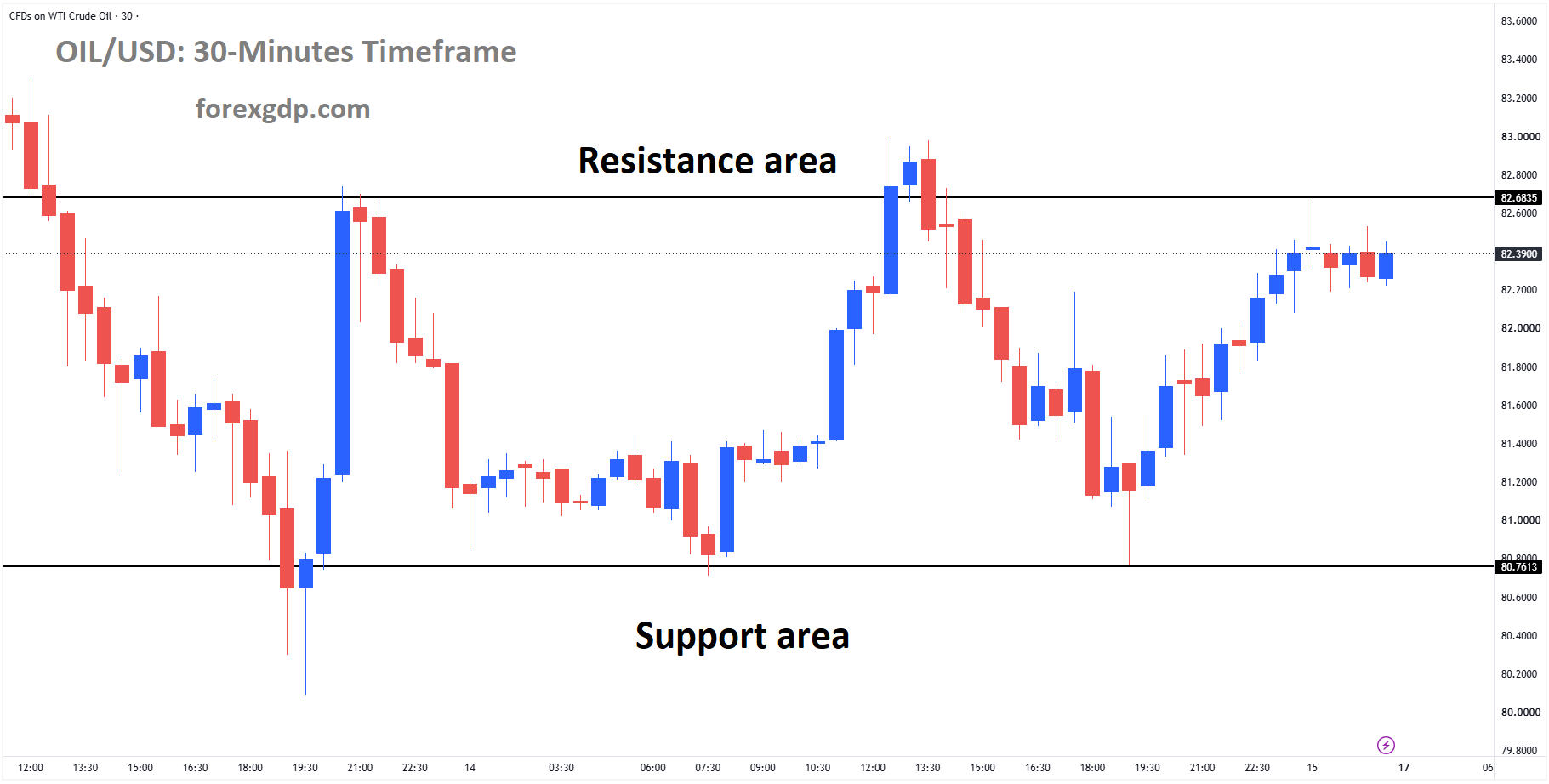
Crude Oil is moving in a box pattern, and the market has reached the resistance area of the pattern.
The central concern is no longer limited to production facilities or export terminals. Attention has shifted toward the safety and availability of major shipping routes that connect energy producers with customers around the world.
Two waterways are especially important: the Strait of Hormuz and the Bab el-Mandeb Strait. Continued disruption in these areas could affect the movement of Oil, natural gas and other essential commodities. Together, the two routes handle an estimated 27% of the world’s energy supply.
This level of exposure means that even a small change in shipping activity can influence confidence across the global Oil market. While demand expectations are weakening, the possibility of a prolonged supply interruption continues to provide support for WTI Oil.
Strait of Hormuz Traffic Remains Far Below Normal
Shipping activity through the Strait of Hormuz showed a slight improvement on Thursday, but traffic remained dramatically lower than it was before the conflict.
Kpler data cited by Reuters indicated that the number of commodity vessel crossings was still below the daily average recorded earlier in August. Before the war, the waterway typically handled approximately 130 to 140 vessels every day. Recent traffic has been only a fraction of that normal volume.
The Strait of Hormuz is one of the world’s most important energy routes. It provides access between the Persian Gulf and the Gulf of Oman, allowing major regional exporters to send Oil and liquefied natural gas to international markets.
When ships cannot move freely through the strait, exporters may face delays, higher transport costs and limited options for delivering supplies. Buyers can also become more cautious because they cannot be certain when contracted cargoes will arrive.
Even though traffic has not completely stopped, the sharp reduction in crossings is enough to keep concerns alive. Market participants are watching for evidence that commercial shipping can return safely and consistently. A brief increase in vessel movements may offer some encouragement, but it does not yet signal that normal conditions have returned.
Iran Denies Talks With the United States
Diplomatic developments have added another layer of uncertainty to the situation. Iran said it was not holding discussions with the United States about reopening the Strait of Hormuz.
The statement reduced hopes that Washington and Tehran might be moving toward a direct agreement aimed at restoring regular navigation. Without such talks, uncertainty surrounding the waterway could continue for longer.
Iran did, however, report progress in separate negotiations with Oman. According to Tehran, those discussions are approaching their final stage and focus on the collective management of navigation through the strait.
Oman could play an important role because of its geographical position and its history of maintaining diplomatic relations with several competing powers. An arrangement involving Oman may create a path toward safer vessel movements, even if direct discussions between Iran and the United States remain absent.
Still, the effectiveness of any agreement will depend on its practical details. Shipping companies and insurers will want clear security guarantees before they fully restore operations. Vessel owners are unlikely to resume normal activity based only on diplomatic statements if the threat of attack, seizure or military escalation remains high.
Bab el-Mandeb Adds Another Supply Concern
The Strait of Hormuz is not the only shipping route facing serious pressure. Supply risks also remain elevated around the Bab el-Mandeb Strait, which connects the Red Sea with the Gulf of Aden.
This passage is vital for ships travelling between Europe and Asia through the Suez Canal. When the route becomes unsafe, some vessels may choose to travel around the southern tip of Africa. That alternative journey is considerably longer and can increase fuel use, freight expenses and delivery times.
Disruptions at both the Strait of Hormuz and Bab el-Mandeb create a much wider problem for the energy industry. One affects exports leaving the Persian Gulf, while the other influences traffic moving through the Red Sea and Suez Canal.
If difficulties continue at both locations, the global supply network could become less efficient even when enough Oil is being produced. Cargoes may take longer to reach refineries, shipping capacity may become tighter and transportation expenses may increase.
These concerns help explain why WTI Oil remains supported despite growing doubts about the strength of worldwide consumption.
Weaker Demand Forecasts Limit the Recovery

Supply fears are helping Oil recover, but the demand outlook is creating strong resistance to a larger improvement.
The Organization of the Petroleum Exporting Countries has reduced its forecast for global Oil demand growth this year. OPEC now expects consumption to increase by 580,000 barrels per day, down from an earlier projection of 780,000 barrels per day.
This was the group’s fourth consecutive downward revision. Repeated cuts suggest that the slowdown may be more persistent than previously expected.
The International Energy Agency has also lowered its demand outlook. The agency warned that extended conflicts and higher energy costs are beginning to reduce consumption.
When Oil-related expenses remain elevated for a long period, households and businesses often change their behaviour. Consumers may reduce unnecessary travel, while companies can delay expansion or search for ways to use less fuel. Airlines, shipping groups and manufacturers may also face greater pressure because energy forms a major part of their operating costs.
Slower economic activity can weaken demand further. If industries produce fewer goods and global trade loses momentum, less fuel is required for factories, trucks, ships and aircraft.
The latest forecasts therefore suggest that supply disruption is only one side of the market. Oil may become harder or more expensive to transport, but weaker consumption could prevent shortages from becoming as severe as feared.
WTI Oil Faces Two Opposing Forces
The outlook for WTI Oil is being shaped by a clear struggle between supply security and global demand.
On one side, reduced shipping through the Strait of Hormuz and continued risks near Bab el-Mandeb create the possibility of delayed energy deliveries. The lack of direct talks between Iran and the United States also makes it difficult to predict when navigation could return to normal.
On the other side, repeated reductions in consumption forecasts show that demand is losing strength. OPEC and the IEA both see weaker growth, while extended conflict and high energy costs may place additional pressure on consumers and businesses.
These competing forces could keep the Oil market sensitive to fresh developments. Shipping data, security conditions and diplomatic announcements may influence short-term confidence, while economic growth and fuel consumption will remain important for the longer-term direction.
Summary
WTI Oil recovered after two days of losses as Middle East supply concerns returned to the forefront. Traffic through the Strait of Hormuz remains far below pre-conflict levels, while security risks around Bab el-Mandeb continue to threaten major energy and trade routes.
Iran has denied holding talks with the United States about reopening Hormuz, although it says negotiations with Oman over shared navigation management are close to completion.
Supply uncertainty is supporting Oil, but weaker demand expectations are limiting the strength of the recovery. With OPEC and the IEA both reducing their consumption forecasts, WTI remains caught between serious transportation risks and a slowing global appetite for energy.
BTCUSD Sentiment Weakens as Middle East Tensions Escalate
Bitcoin remained under pressure toward the end of the week as investors responded to weaker institutional demand, geopolitical uncertainty, and concerns about rising energy costs. Although the cryptocurrency began showing early signs of stability, the broader environment continued to discourage aggressive risk-taking.
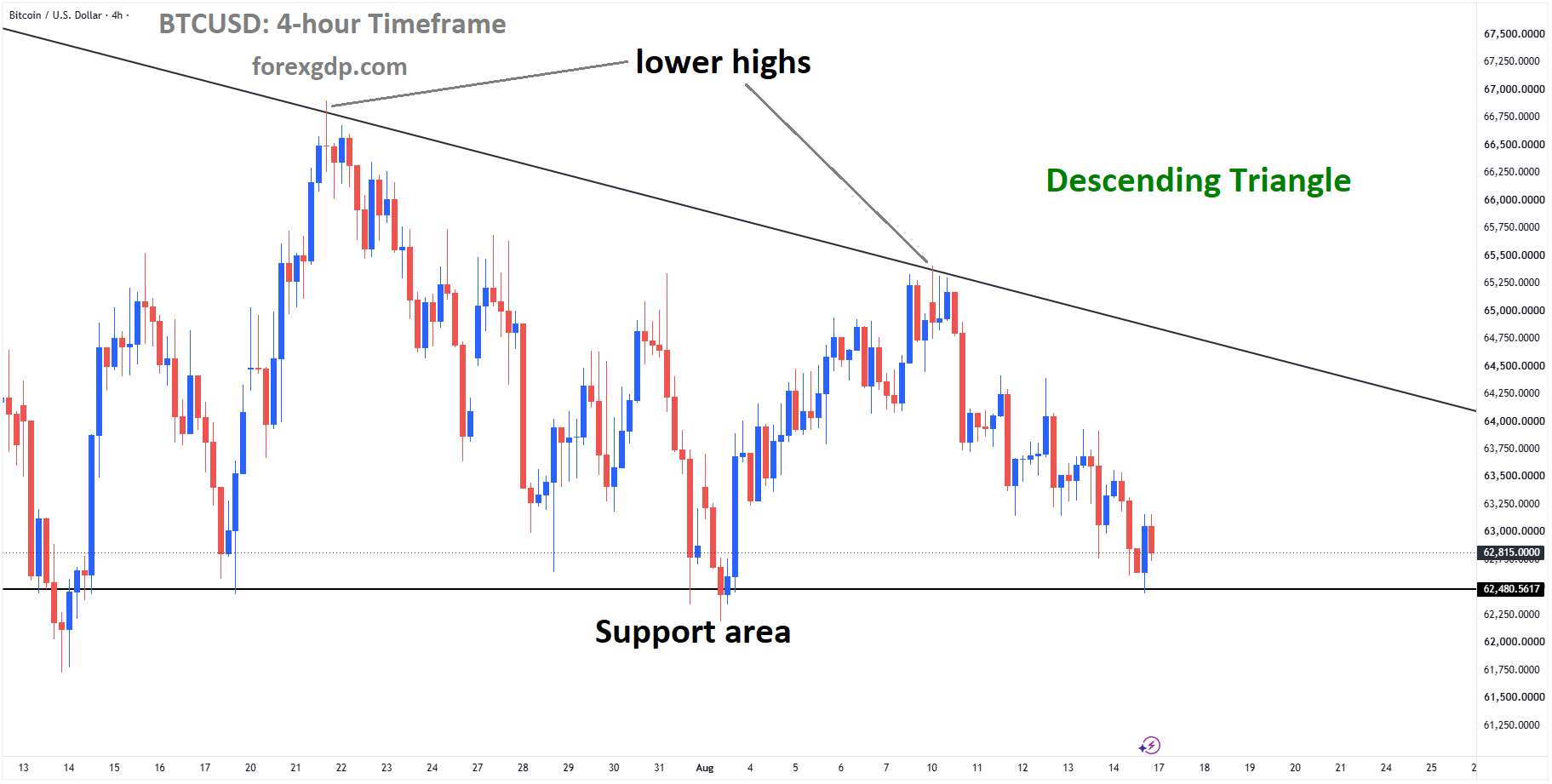
BTCUSD reached the support area of the descending triangle pattern
The main source of uncertainty came from the Middle East, where tensions involving the United States and Iran remained high. Disputes surrounding the Strait of Hormuz also raised concerns about global energy supplies and the possibility of a wider regional conflict.
At the same time, US-listed spot Bitcoin exchange-traded funds recorded notable withdrawals during the week. These outflows suggested that some professional investors were reducing exposure or waiting for clearer conditions before making new commitments.
Softer US inflation data offered some support to financial markets. However, it was not enough to overcome concerns about energy inflation, Federal Reserve policy, and geopolitical risk.
Middle East Tensions Limit Demand for Bitcoin
The continuing standoff between the United States and Iran has become an important influence on global market sentiment. Investors are closely watching political statements, military developments, shipping activity, and possible economic measures from both sides.
US Treasury Secretary Scott Bessent indicated that Washington was preparing unusually strong measures against Iran. His remarks suggested that additional announcements could follow, increasing expectations of deeper economic pressure on Tehran.
Iranian officials have also maintained a firm position. Mohammad Reza Naqdi, a senior adviser to the Islamic Revolutionary Guard Corps, said Iran wanted to make any conflict so costly that future US governments would hesitate before considering military action.
Such statements have reduced hopes of a quick diplomatic solution. They have also raised the possibility of a longer period of confrontation involving sanctions, military threats, and disruption to important trade routes.
For Bitcoin, this environment creates a difficult backdrop. The cryptocurrency is often viewed as an alternative financial asset, but during sudden periods of geopolitical stress, investors may still prefer traditional defensive holdings or cash. This can reduce demand for digital assets, particularly when uncertainty is spreading across several markets at once.
Strait of Hormuz Dispute Raises Global Energy Concerns
The Strait of Hormuz remains at the center of the conflict because it is one of the world’s most important shipping routes for energy supplies. Any disruption in the waterway could affect oil deliveries and increase costs for businesses and consumers around the world.
US President Donald Trump said the United States had control over the strategic route. Iran, meanwhile, pledged to keep the strait closed until its demands were satisfied. These opposing positions have added to fears that shipping activity could remain vulnerable.
The situation became more serious as the Iran-backed Houthis in Yemen increased attacks on vessels operating near the Red Sea and the Bab el-Mandeb Strait. The group also claimed responsibility for a drone attack targeting a Saudi Aramco refinery.
These developments have raised the risk of the conflict expanding beyond the Strait of Hormuz. If attacks on ships or energy infrastructure continue, companies may face higher insurance expenses, transportation delays, and security costs.
The additional expense attached to moving oil through dangerous areas is commonly known as a war-risk premium. When this premium remains elevated, energy costs can stay high even without a complete interruption in supply.
That matters for Bitcoin because rising oil costs can contribute to inflation. They can also support demand for the US Dollar during periods of uncertainty. A stronger Dollar and weaker appetite for risk-sensitive assets can make it harder for Bitcoin to build lasting momentum.
Spot Bitcoin ETF Outflows Signal Institutional Caution

Institutional participation has not provided strong support for Bitcoin during the week. Data from SoSoValue showed that US-listed spot Bitcoin ETFs experienced hundreds of millions of dollars in net withdrawals through Thursday.
Spot ETFs allow investors to gain regulated exposure to Bitcoin without directly holding the cryptocurrency. Because these products are widely used by professional investors and financial institutions, their daily inflows and outflows are often watched as a measure of broader demand.
The latest withdrawals do not necessarily mean institutions have abandoned Bitcoin. Fund flows can change quickly and may be influenced by portfolio adjustments, risk management decisions, or short-term economic concerns.
However, several days of net outflows can indicate that large investors are becoming more selective. Instead of increasing exposure during uncertain conditions, they may choose to preserve capital and wait for a clearer signal from monetary policy, global politics, or market liquidity.
This cautious behavior helps explain why Bitcoin struggled to benefit from encouraging inflation data. Without sustained institutional buying, positive economic reports may have a limited effect.
Softer US Inflation Offers Only Partial Relief
Economic figures released during the week showed that inflationary pressure in the United States had eased. Headline consumer inflation slowed slightly in July, while core inflation, which excludes food and energy, matched economists’ expectations.
Producer inflation was also weaker than forecast. The monthly Producer Price Index showed no increase, while its annual rate slowed more sharply than analysts had expected.
Combined with an earlier disappointing employment report, the data gave the Federal Reserve more room to leave interest rates unchanged at its next policy meeting. A less aggressive central bank can normally support Bitcoin and other risk-sensitive assets because lower borrowing costs and weaker bond yields may encourage investors to seek higher returns elsewhere.
However, Bitcoin’s response remained limited. One reason is that markets had already expected inflation to improve. Because the figures were broadly in line with forecasts, they did not provide the unexpected positive surprise needed to trigger a major shift in sentiment.
Investors are now paying closer attention to whether easing inflation will lead to better liquidity conditions and a more supportive policy environment. Until that connection becomes clearer, economic data alone may not be enough to create strong demand for Bitcoin.
Federal Reserve Officials Remain Divided
Comments from Federal Reserve policymakers added another layer of uncertainty. Chicago Fed President Austan Goolsbee suggested that some recent price increases were linked to temporary factors, including tariffs and energy costs. His comments supported a patient approach to monetary policy.
Cleveland Fed President Beth Hammack offered a more cautious view. She argued that inflation had not improved enough and suggested that additional tightening could still be necessary to restore price stability.
These different opinions show that the central bank has not reached a clear agreement about its next move. Although expectations of another rate increase have declined, traders still see a meaningful possibility of tighter policy before the end of the year.
Bitcoin generally benefits when investors expect easier financial conditions. However, persistent oil-related inflation could complicate the Federal Reserve’s decisions. Even if consumer and producer inflation continue to cool, another surge in energy costs could slow that progress.
Bitcoin Enters a Period of Rebuilding Confidence
Simon-Peter Massabni, Head of Business Development at XS.com, described Bitcoin’s current position as a period of rebuilding momentum rather than the beginning of a completely new downward phase.
His view suggests that buyers have not disappeared. Instead, they appear to be waiting for a stronger reason to return. Potential catalysts could include improved global liquidity, steady institutional inflows, reduced geopolitical tension, or clearer signals from the Federal Reserve.
Bitcoin has shown some resilience despite rising bond yields and widespread market uncertainty. Still, any recovery is unlikely to follow a smooth path while major political and economic questions remain unresolved.
The second half of August may therefore depend less on a single inflation report and more on the combined direction of institutional demand, energy markets, Federal Reserve expectations, and developments in the Middle East.
Summary
Bitcoin is facing pressure from several connected forces. Spot ETF withdrawals point to cautious institutional demand, while tensions involving Iran, the United States, and key shipping routes are weakening global risk appetite.
Softer US inflation has reduced some concerns about immediate monetary tightening, but higher oil costs could create fresh inflation risks and support the US Dollar. Federal Reserve officials also remain divided about whether current policy is restrictive enough.
Bitcoin is showing signs of stability, but investors appear to be waiting for a stronger catalyst. A lasting improvement in sentiment will likely require calmer geopolitical conditions, renewed institutional participation, and greater confidence that US monetary policy will become more supportive.
Don’t trade all the time, trade forex only at the confirmed trade setups
Get more confirmed trade signals at premium or supreme – Click here to get more signals, 2200%, 800% growth in Real Live USD trading account of our users – click here to see , or If you want to get FREE Trial signals, You can Join FREE Signals Now!