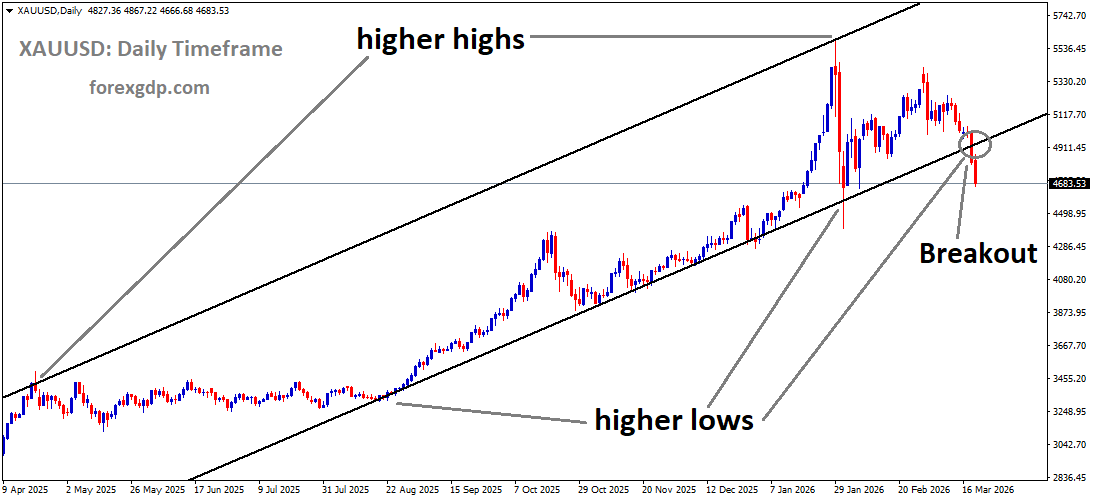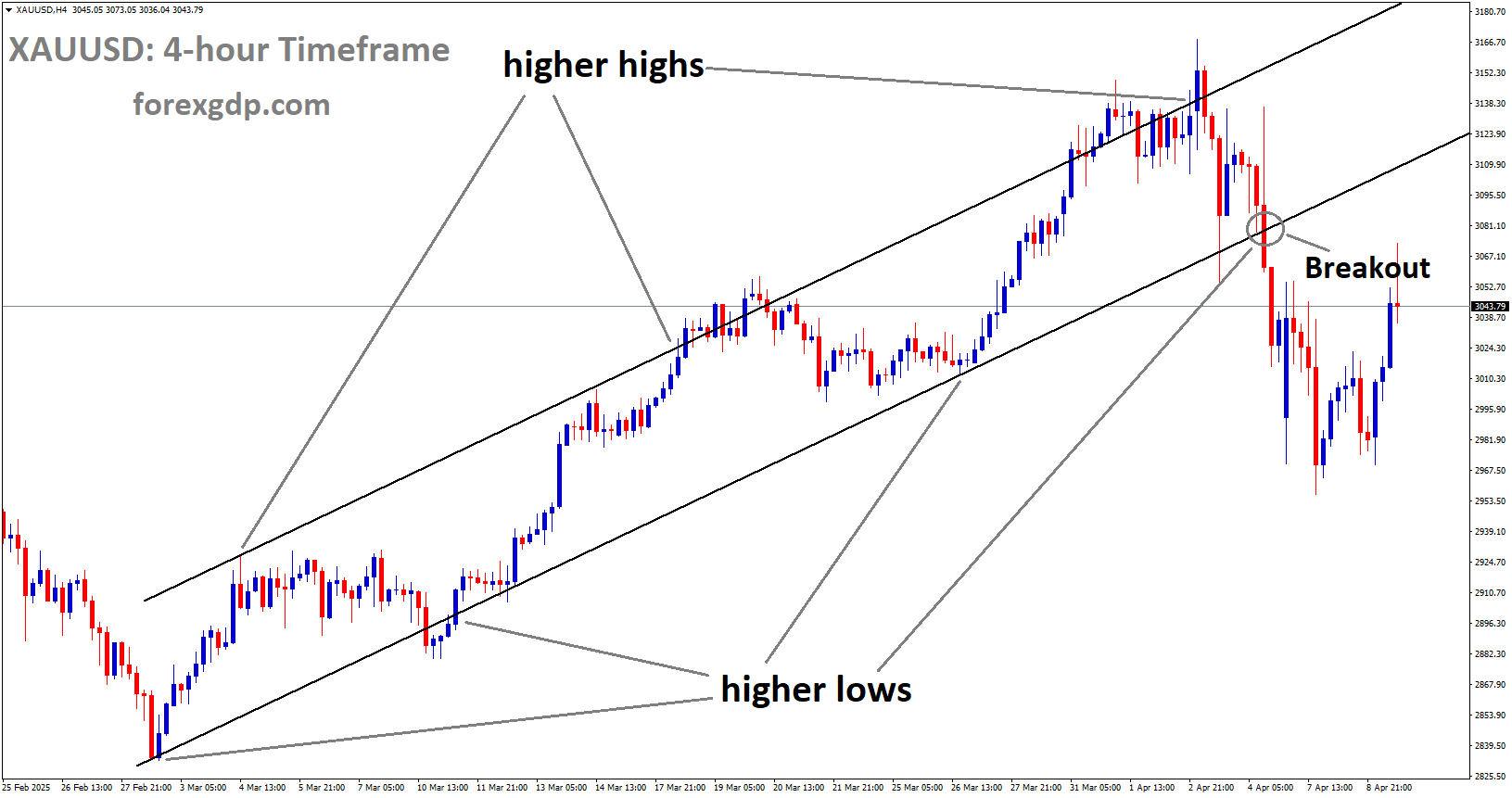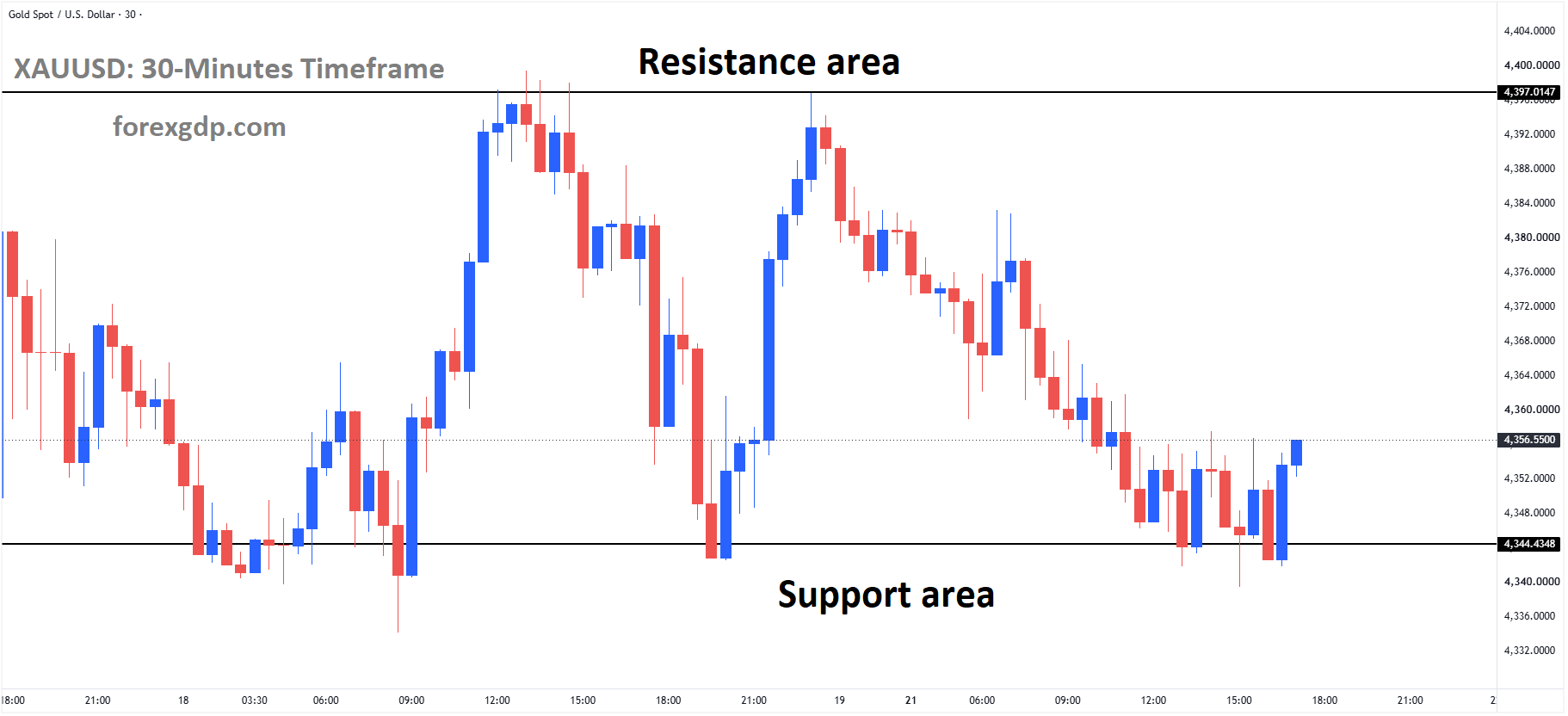
XAUUSD is moving in a box pattern, and the market has rebounded from the support area of the pattern
Gold started the new trading week with a softer tone as expectations of further interest-rate increases from the Federal Reserve strengthened the US Dollar. The precious metal had recorded gains during the previous two sessions, but that positive momentum faded as investors reviewed the outlook for US monetary policy.
The Federal Reserve’s recent decision to raise interest rates reinforced the view that borrowing costs could remain high for an extended period. Policymakers continue to focus on controlling inflation, especially as energy costs remain elevated and economic conditions show signs of resilience.
A stronger US Dollar often creates challenges for Gold because the metal is priced in dollars. When the Greenback becomes more attractive to global investors, Gold can become more expensive for buyers using other currencies. This may reduce demand and limit the metal’s ability to advance.
However, the selling pressure has remained relatively controlled. Investors are still monitoring several economic and geopolitical factors that could quickly influence market sentiment. Gold continues to receive some support from uncertainty, even as tighter monetary policy creates a difficult environment.
Federal Reserve Expectations Support the US Dollar
Interest-rate expectations remain one of the most important forces affecting Gold. The Federal Reserve recently increased borrowing costs as part of its continuing effort to bring inflation under control. Market participants are now considering whether policymakers will approve another increase before the end of the year.
The Fed’s latest projections indicated that further policy tightening could remain possible. This message encouraged traders to prepare for interest rates to stay higher for longer than previously expected.
Higher rates generally benefit the US Dollar because they can make American financial assets more attractive to international investors. They can also increase returns from interest-bearing investments such as government bonds. Gold does not provide regular interest, so it may appear less appealing when investors can earn stronger returns elsewhere.
Still, the Federal Reserve’s future decisions will depend heavily on incoming economic information. Policymakers will watch inflation, employment, consumer activity and business growth before deciding whether another increase is necessary.
If the US economy continues to perform strongly and inflation remains difficult to control, the Fed may maintain a firm policy position. On the other hand, weaker economic activity or easing inflation could reduce the need for additional tightening. This uncertainty means Gold traders will continue to examine every major data release and public statement from Fed officials.
Falling Oil Prices Offer Some Relief
The recent decline in crude Oil prices has provided limited support for Gold by reducing pressure on government bond yields. Oil has weakened for several consecutive sessions amid signs of improving energy flows and fresh diplomatic efforts connected to the conflict in the Middle East.
Energy costs have played an important role in the global inflation story. When Oil becomes more expensive, transportation, manufacturing and household expenses can rise. This may encourage central banks to maintain tighter monetary policies for longer.
A continued decline in Oil prices could ease some inflation concerns. That may reduce the urgency for aggressive interest-rate increases and prevent bond yields from rising rapidly. Such a development could offer relief to Gold because lower yields reduce the opportunity cost of holding a non-interest-bearing asset.
However, energy costs remain high compared with their levels before the conflict escalated. This means inflation risks have not disappeared. Central banks are likely to remain cautious until they see convincing evidence that price pressures are moving lower in a sustainable way.
The relationship between Oil, inflation, bond yields and monetary policy will therefore remain important for the Gold market. Any sharp change in energy prices could alter expectations surrounding the Fed and create fresh movement in the US Dollar.
Middle East Diplomacy Remains in Focus
Geopolitical developments are another major influence on investor confidence. Recent reports have raised hopes that diplomatic discussions could help reduce tensions surrounding the Middle East conflict.

US President Donald Trump indicated that he may be willing to meet Iranian President Masoud Pezeshkian during the United Nations General Assembly. Possible discussions with leaders from other Persian Gulf nations have also attracted attention.
Iran has reportedly shared its conditions with the United States through international mediators. At the same time, Iranian officials have warned that the country would respond forcefully to any further American military action. Fighting involving Iran-backed Houthi forces and Saudi troops also continues to create uncertainty.
Diplomatic progress could reduce fears of wider regional disruption and place additional pressure on traditional safe-haven assets. However, any breakdown in negotiations or renewed military escalation could quickly increase demand for Gold.
Investors often turn to Gold during periods of political instability, military conflict or financial uncertainty. For this reason, even when monetary policy is unfavorable, geopolitical risks can prevent the metal from experiencing deeper weakness.
The situation remains fluid, and headlines could lead to sudden changes in market sentiment. Traders will closely follow statements from political leaders, updates from international mediators and developments involving regional military activity.
US Economic Data and Fed Speeches Take Centre Stage
The US economic calendar is relatively quiet this week, but several important events could still influence Gold and the US Dollar. Preliminary business activity reports from S&P Global will provide an early view of conditions across the manufacturing and services sectors.
Strong business activity may support expectations that the Federal Reserve has room to keep interest rates elevated or tighten policy further. Weaker results could raise concerns about slowing economic growth and reduce confidence in additional rate increases.
The University of Michigan Consumer Sentiment survey will also be closely watched. Consumer confidence offers useful information about household expectations, spending behavior and views on inflation. Since consumer activity represents a major part of the US economy, any notable change may affect the wider policy outlook.
Several Federal Reserve officials are also scheduled to speak during the week. Investors will listen carefully for comments about inflation, economic growth and future interest-rate decisions.
If officials continue to emphasize inflation risks and the possibility of further tightening, the US Dollar may remain supported. A more cautious tone could provide Gold with some breathing room, particularly if policymakers express concern about slower growth or the impact of higher borrowing costs.
Gold Remains Caught Between Competing Forces
Gold currently faces a mixture of supportive and negative influences. A firm US Dollar, expectations of additional rate increases and elevated government bond yields are limiting demand for the metal.
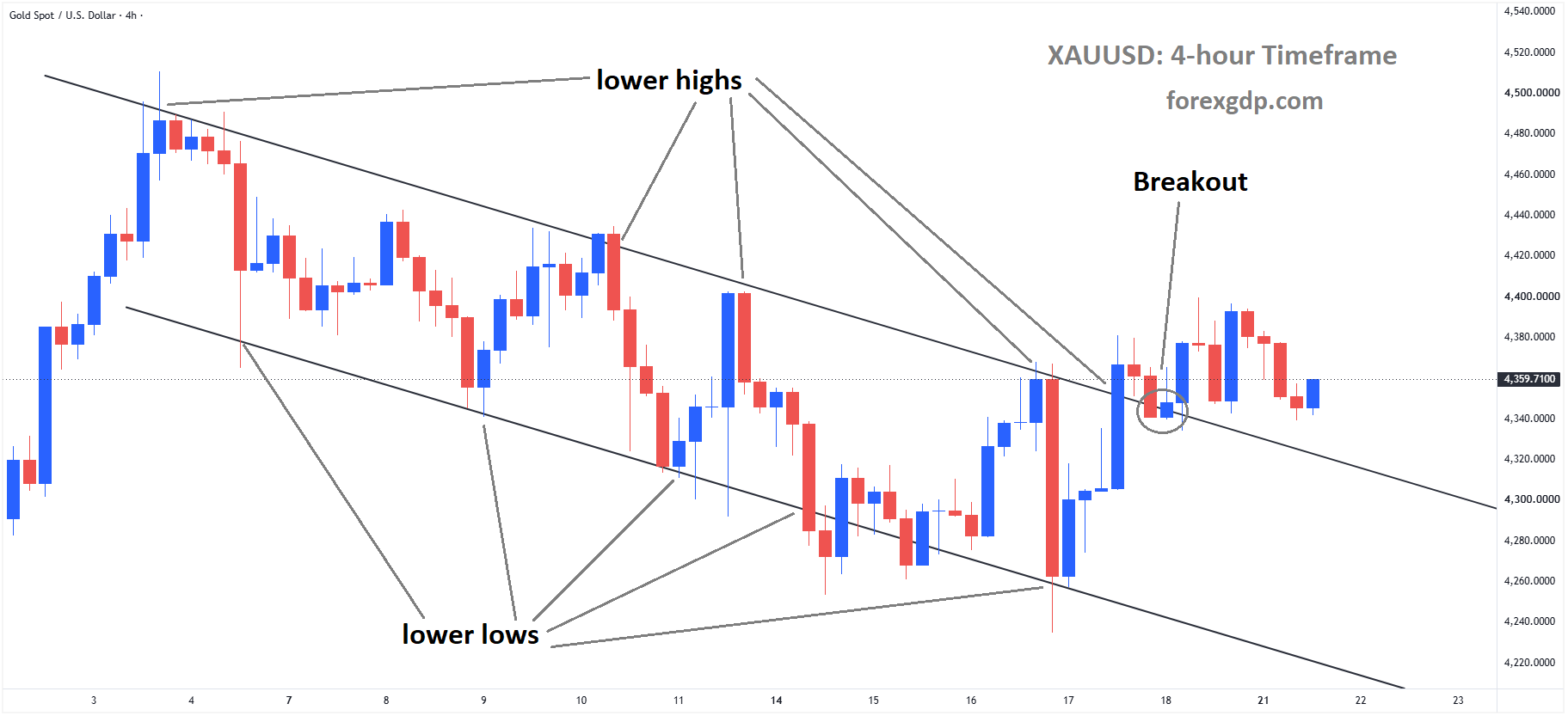
XAUUSD has broken the descending channel to the upside
At the same time, falling Oil prices may reduce inflation pressure and prevent yields from rising further. Continuing geopolitical uncertainty also preserves Gold’s appeal as a defensive asset.
This balance explains why the metal remains under pressure without experiencing aggressive selling. Investors are waiting for clearer information before making stronger decisions. Changes in Fed expectations, energy markets or Middle East diplomacy could quickly shift the overall mood.
Final Summary
Gold begins the week on a weaker footing as expectations of tighter Federal Reserve policy support the US Dollar. Higher borrowing costs continue to create a challenging environment for non-yielding assets, while the possibility of another rate increase keeps investors cautious.
Falling Oil prices are offering limited relief by easing some pressure on inflation expectations and government bond yields. Meanwhile, diplomatic developments and continuing conflict in the Middle East remain important sources of uncertainty.
Attention will now turn to US business activity data, consumer sentiment figures and speeches from Federal Reserve officials. These events may provide clearer guidance about the direction of monetary policy and shape the next phase of investor interest in Gold.
Don’t trade all the time, trade forex only at the confirmed trade setups
Get more confirmed trade signals at premium or supreme – Click here to get more signals, 2200%, 800% growth in Real Live USD trading account of our users – click here to see , or If you want to get FREE Trial signals, You can Join FREE Signals Now!