
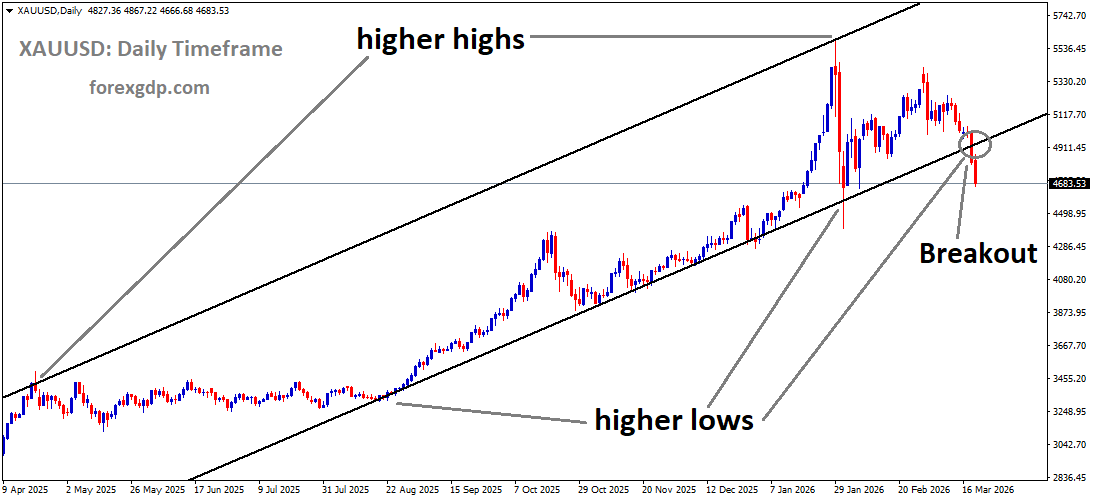
XAUUSD has broken the ascending channel on the downside
Gold has recently come under strong selling pressure, slipping to its lowest level in about a month. While the precious metal briefly showed signs of recovery during the day, those gains did not last long. Instead, prices moved lower again as broader economic forces continued to weigh heavily on the market.
At the same time, global tensions and uncertainty are creating a complex situation. While some factors are pushing gold down, others are helping prevent a deeper fall. This mix of influences is keeping investors cautious and watchful.
Strong US Dollar Weighs on Gold
One of the biggest reasons behind the recent drop in gold prices is the strength of the US Dollar. When the dollar becomes stronger, gold often becomes less attractive to investors. This is because gold does not offer interest or yield, unlike some other assets.
The US Federal Reserve has played a major role in supporting the dollar. Its latest outlook suggests that it plans to keep interest rates higher for longer than many had expected. This kind of approach is often called “hawkish,” meaning the central bank is focused on controlling inflation, even if it slows economic growth.
Higher interest rates tend to benefit the dollar. Investors can earn better returns from interest-bearing assets, making gold less appealing in comparison. As a result, demand for gold weakens, and prices come under pressure.
Inflation Data Strengthens the Fed’s Position
Recent economic data has further supported the Federal Reserve’s stance. The latest report on producer prices showed a noticeable increase, both on a monthly and yearly basis. This suggests that inflation is still a concern and may remain elevated for some time.
In addition, the Fed has raised its expectations for inflation in the coming months. One reason behind this is the risk of rising energy prices, especially due to ongoing geopolitical tensions. With inflation still in focus, the central bank appears cautious about cutting interest rates too quickly.
The Fed has also adjusted its growth outlook for the future, showing confidence in the economy’s strength. However, it now expects fewer rate cuts over the next couple of years. This outlook continues to support the dollar and puts pressure on gold prices.
Geopolitical Tensions Offer Support

While economic factors are pushing gold lower, global tensions are helping limit the downside. Gold has long been seen as a safe-haven asset. During times of uncertainty or conflict, investors often turn to gold as a way to protect their wealth.
Recent developments in the Middle East have added to this uncertainty. Reports of attacks on energy infrastructure in the Persian Gulf have raised concerns about the stability of global energy supplies. These events followed military actions targeting a major natural gas field, increasing fears of further escalation.
In response, strong warnings have been issued by global leaders, hinting at possible retaliation and a broader conflict. There are also reports that military operations in the region could expand, with additional troops potentially being deployed.
All of this has created a tense environment in global markets. When such risks increase, investors often seek safer assets, and gold is usually one of the top choices. This helps support gold prices, even when other factors are negative.
Balancing Risk and Opportunity
The current situation highlights how gold is influenced by both economic and political factors. On one hand, a strong dollar and high interest rates make gold less attractive. On the other hand, rising geopolitical risks increase its appeal.
This balance is why gold prices are not falling sharply despite strong selling pressure. Instead, they are finding support at certain levels, as investors remain cautious about global developments.
Key Events Traders Are Watching
Investors are also paying close attention to upcoming decisions from major central banks around the world. Policy updates from institutions like the Swiss National Bank, the Bank of England, and the European Central Bank are expected soon.
These announcements can have a significant impact on financial markets. Changes in interest rates or economic outlooks can influence currency movements, which in turn affect gold prices.
US Economic Data in Focus
In addition to central bank decisions, key economic data from the United States is also on the radar. Reports such as jobless claims and manufacturing activity provide insights into the health of the economy.
Strong data could further support the US Dollar, adding more pressure on gold. On the other hand, weaker data might raise expectations for future rate cuts, which could help gold recover.
For now, many traders prefer to wait and see how these events unfold before making major decisions. This cautious approach is contributing to the current market uncertainty.
Can Gold Recover Soon?
The big question for many investors is whether gold has reached a short-term bottom or if further declines are possible. At the moment, the answer is not entirely clear.
The overall environment remains challenging for gold. The Federal Reserve’s stance and strong economic data continue to favor the US Dollar. As long as this trend continues, it may limit any strong upward movement in gold prices.
However, geopolitical risks are still very much present. Any further escalation in global conflicts could quickly shift investor sentiment and increase demand for safe-haven assets like gold.
A Market Driven by Mixed Signals
Gold is currently caught between two powerful forces. Economic strength in the US is pushing it lower, while global uncertainty is pulling it higher. This creates a situation where prices may move in a narrow range, with sudden changes depending on new developments.
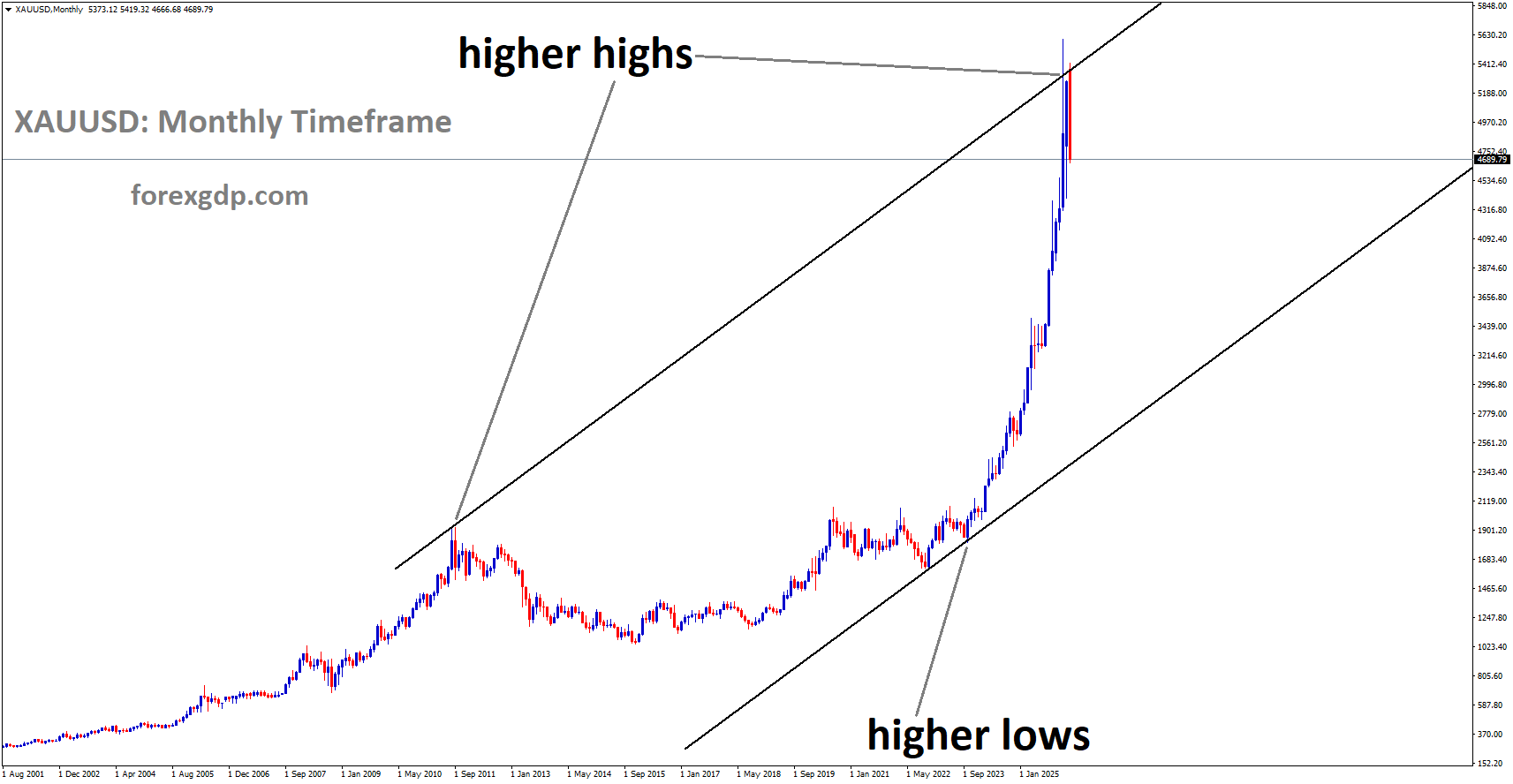
XAUUSD is moving in an ascending channel, and the market has fallen from the higher high area of the channel
Investors need to stay alert and consider both sides of the equation. Ignoring either economic data or geopolitical risks could lead to unexpected outcomes.
Summary
Gold prices have recently dropped to a one-month low, mainly due to a strong US Dollar supported by the Federal Reserve’s cautious approach to interest rates. Rising inflation and fewer expected rate cuts have made gold less attractive compared to interest-bearing assets.
At the same time, growing geopolitical tensions, especially in the Middle East, are providing some support to gold. These risks are encouraging investors to seek safety, helping prevent deeper losses.
Upcoming central bank decisions and key US economic data will play an important role in shaping the next move for gold. Until there is more clarity, the market is likely to remain uncertain, with gold influenced by both economic strength and global instability.