XAUUSD Recovers as Falling Oil Prices Ease Dollar Pressure
Gold recovered on Friday after two days of losses, helped by a softer US Dollar and a sharp drop in oil prices. The recovery came during a difficult week for the metal. US bond yields remained high, and investors grew more concerned that persistent inflation could lead the Federal Reserve to raise interest rates again.
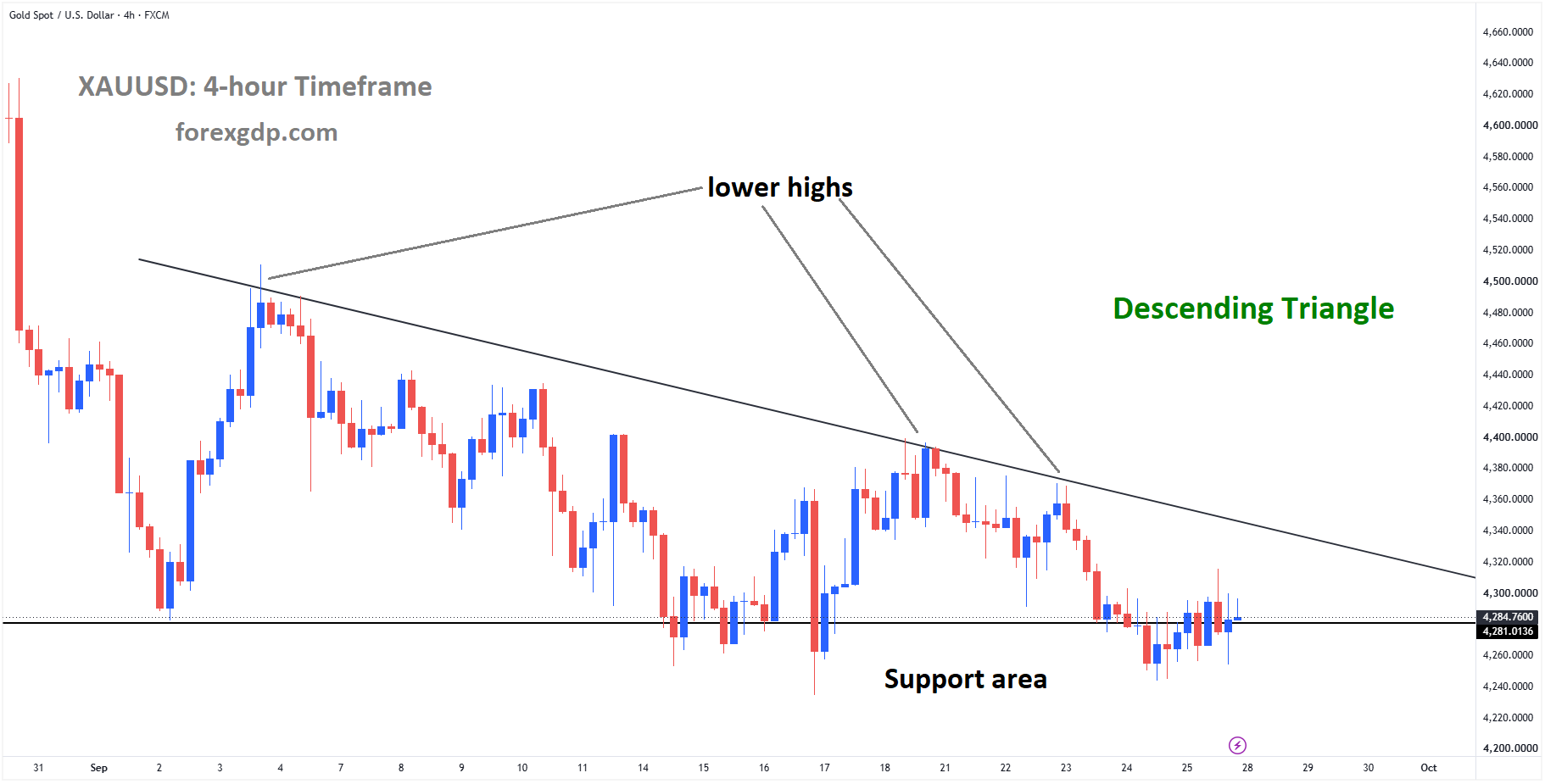
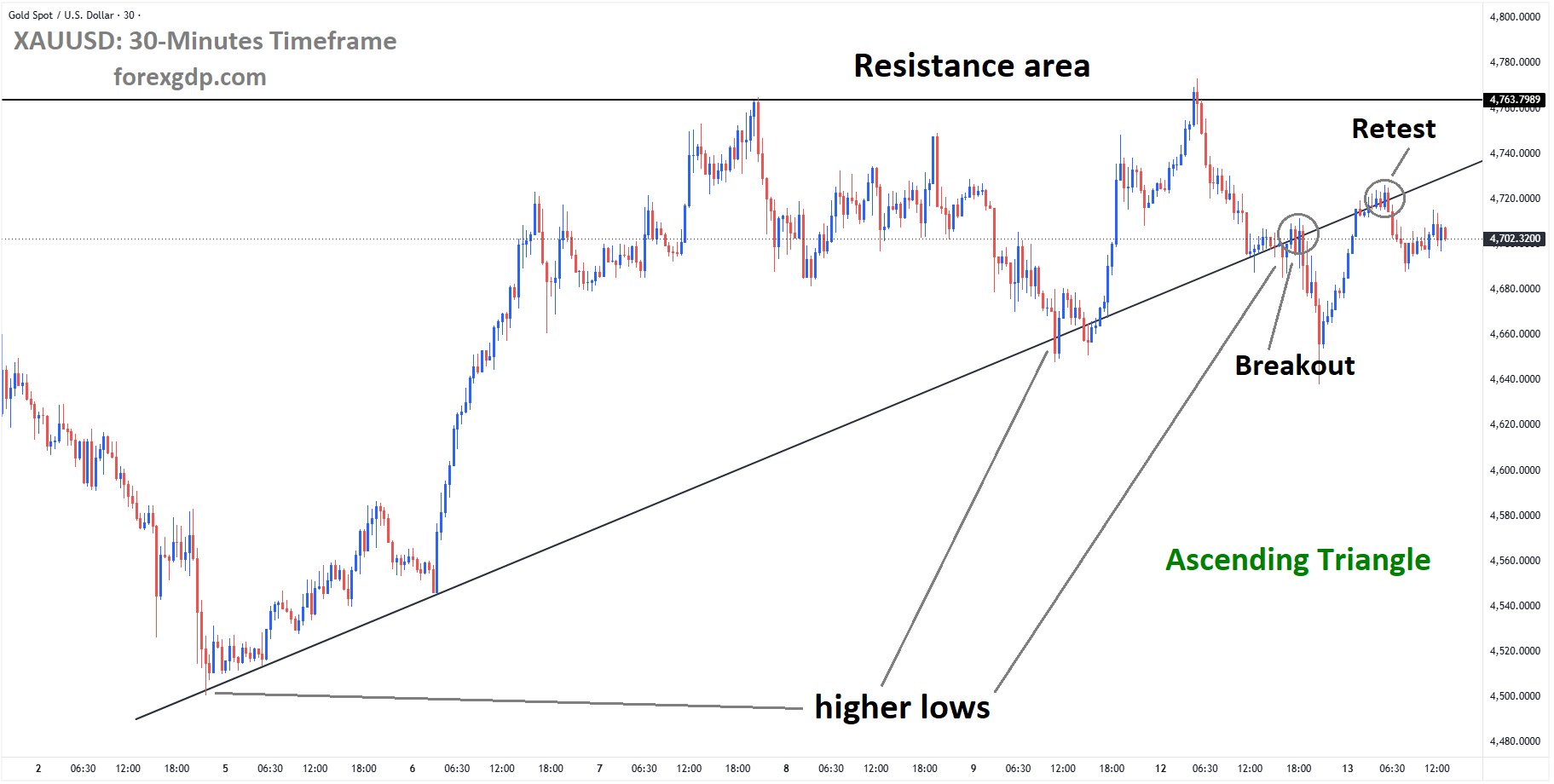
XAUUSD reached the support area of the descending triangle pattern
For gold, these forces pull in different directions. Easing oil prices can reduce some inflation pressure, while a weaker Dollar can make gold more attractive to buyers using other currencies. At the same time, high bond yields and the prospect of further rate hikes can make it harder for gold to hold its gains.
Falling Oil Prices Bring Some Relief
Oil prices fell as investors followed developments in negotiations between the United States and Iran. Reports suggested that discussions had moved into a more detailed phase, raising hopes that the two sides could make progress.
That hope came with considerable uncertainty. An Iranian official said that the Strait of Hormuz would remain closed and that the conditions for nuclear talks had not been met. Those comments showed that a resolution was far from certain, even as the latest reports gave oil traders a reason to reassess the outlook.
Oil matters to the gold market because energy costs affect inflation. When fuel becomes more expensive, transport and production costs can rise too. Businesses may pass some of those costs on to customers, adding to the pressure on household budgets. A fall in oil prices can ease those worries, although a single decline does not mean inflation has been brought under control.
That distinction matters for gold. Investors often look to the metal when they worry about the future value of money. Yet if inflation stays high enough to prompt central banks to raise interest rates, the policy response can create a fresh obstacle for gold.
A Softer US Dollar Helps Gold Recover
The US Dollar weakened during Friday’s trading, giving gold another source of support. Gold is commonly priced in Dollars, so a weaker US currency can make it less expensive for buyers who hold other currencies. That can help demand when other conditions are difficult.
The Dollar’s decline also gave gold some room to recover after its earlier losses. Investors were weighing the improvement in oil sentiment against the possibility that US interest rates could rise further. Neither influence had disappeared, which left the market sensitive to new economic reports and comments from policymakers.
Currency moves can change quickly as expectations about the economy shift. A softer Dollar may help gold on a given day, but its lasting effect depends partly on whether investors continue to expect tighter Federal Reserve policy.
High Bond Yields Remain a Challenge

US Treasury yields eased slightly on Friday but remained high. This matters because gold does not pay interest. When investors can earn attractive returns from bonds, holding gold may seem less appealing to some of them.
The relationship is not automatic. Gold can still draw interest during periods of uncertainty, especially when people are concerned about inflation or events that could disrupt the global economy. Even so, elevated yields help explain why gold’s recovery was cautious despite the weaker Dollar and lower oil prices.
Investors are also looking beyond one day’s movement in yields. They want to know how long borrowing costs might remain high and whether the Federal Reserve sees a need to tighten policy again. Those broader expectations can have a stronger effect on gold than a small daily change in bond yields.
Inflation Expectations Keep the Fed in Focus
A US consumer survey showed confidence falling as households worried about the economy and the cost of living. Respondents also expected inflation to be higher over both the near term and the longer term.
Those expectations are important to the Federal Reserve. If people believe prices will keep rising rapidly, they may change how they spend, save, and negotiate wages. Businesses may also factor higher costs into future decisions. Such behavior can make inflation harder to bring down.
The survey reflects what consumers expect, rather than a direct measure of future inflation. Still, it gives policymakers another reason to watch whether price pressures are becoming more deeply rooted. For gold investors, it adds to uncertainty about the Fed’s next move.
Other US data offered a different view of the economy. Stronger orders for long-lasting goods suggested that business spending remained resilient. An economy that continues to show strength may give the Fed more room to keep interest rates high if officials remain concerned about inflation.
Central Bank Decisions Could Shape Gold’s Next Move
Recent comments from Federal Reserve officials led investors to place greater weight on the possibility of another rate increase. That change in expectations contributed to gold’s weakness earlier in the week. Investors are also considering whether other major central banks may need to maintain tighter policies as they deal with inflation.
For now, gold faces a mixed backdrop. Lower oil prices may calm some immediate inflation fears, but the consumer survey shows that households remain worried about rising costs. The Dollar has softened, but bond yields are still high. These competing influences help explain why gold recovered without putting the wider debate about interest rates to rest.
Much will depend on incoming evidence. If inflation concerns ease, investors may become less convinced that further tightening is needed. If price pressures persist and economic activity remains firm, expectations of higher rates could continue to weigh on gold.
Final Summary
Gold recovered as falling oil prices and a softer US Dollar offered relief after two days of losses. Progress reported in US-Iran discussions helped oil prices decline, although major points of disagreement remain. Meanwhile, high bond yields, weaker consumer confidence, and rising inflation expectations kept attention on the Federal Reserve. Gold’s direction will remain closely tied to how investors assess inflation and the likelihood of further interest rate increases.
EURUSD Stays Under Pressure as Fed Signals More Tightening
EURUSD moved slightly higher on Friday as the US Dollar took a break after a strong week. The pause gave the Euro room to recover, but the broader picture remains difficult for the currency pair. EURUSD is still heading toward a third straight weekly decline as traders weigh the possibility of another US interest rate increase.
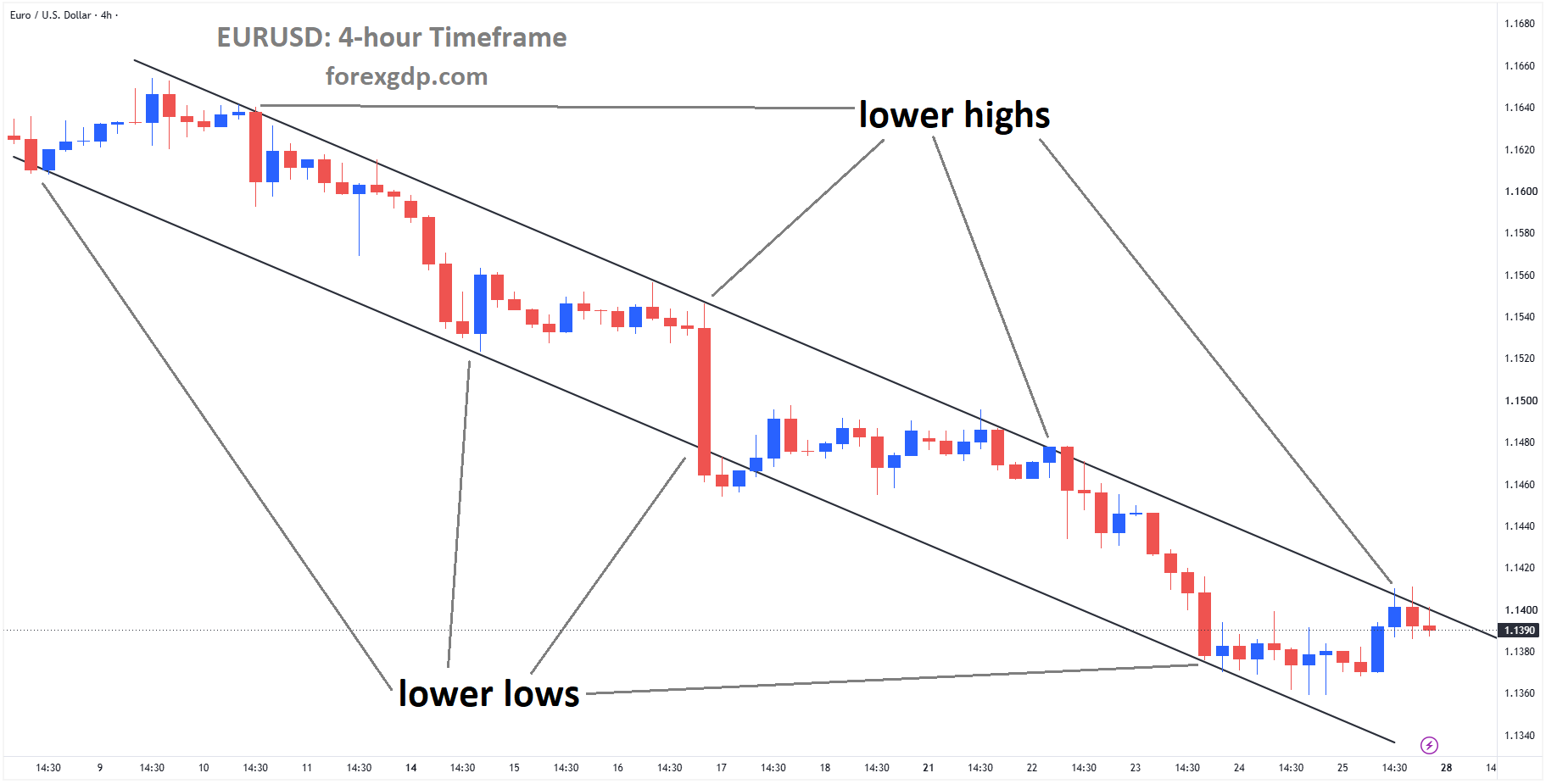
EURUSD reached the lower high area of the descending channel
The next round of economic reports could change that outlook. Inflation and employment data from the United States, along with Eurozone inflation figures, will give traders a clearer view of what the Federal Reserve and European Central Bank may do next.
Why the US Dollar Has Stayed Firm
The Dollar has drawn support from expectations that the Federal Reserve may raise interest rates again. The central bank increased rates last week, and some Fed officials have since indicated that further action could be needed to bring inflation back toward its target.
Those comments have kept traders focused on the Fed’s next meeting. If inflation stays stubborn, policymakers may see a reason to keep monetary policy tight. The possibility of higher interest rates can make the Dollar more appealing to investors, particularly when returns on US government bonds are also elevated.
Higher Treasury yields have added to that support. They can attract investors looking for returns on Dollar-denominated assets, increasing demand for the US currency. This has made it harder for the Euro to sustain a recovery, even when the Dollar pauses for a day.
Still, expectations are not decisions. The Fed will have more economic information to review before its next meeting, and incoming data could shift the outlook in either direction.
US Consumer Data Sends a Mixed Message

Friday’s US consumer survey showed a modest improvement in confidence. Consumers felt slightly better about current conditions and their expectations for the months ahead. That offered some encouragement for the US economy.
The same survey also showed that consumers’ inflation expectations had not eased. This matters because expectations can influence how people spend, save and negotiate wages. If households continue to expect high inflation, the Fed may remain cautious about declaring its work complete.
For currency traders, the survey did not settle the interest rate debate. A small improvement in confidence points to some resilience, while steady inflation expectations keep price pressures in focus. That combination helps explain why attention has already turned to next week’s more influential reports.
Fed Policy Hinges on Upcoming Reports
The US Personal Consumption Expenditures report will be one of the most closely watched releases. The Fed uses this measure to assess inflation, so it could influence expectations for the central bank’s next move. Signs that inflation is easing may reduce pressure for another rate increase. A stronger reading could reinforce the case for keeping policy tight.
The US jobs report will provide another piece of the picture. Employment growth and other labor market details can show whether the economy is cooling or continuing to withstand higher interest rates. A resilient labor market may give the Fed more room to focus on inflation. Clear signs of weakness could make policymakers more cautious.
Traders will also watch the US manufacturing survey for clues about business activity. Taken together, these reports may reveal whether the economy is slowing enough to ease inflation pressure without a sharp deterioration in employment.
Each release could move expectations on its own, but the overall picture will matter most. The Fed must judge how inflation, jobs and economic activity are developing together.
Eurozone Inflation Could Shape the ECB Outlook
The Euro faces its own interest rate questions. The European Central Bank has raised rates twice this year, and traders are considering whether more tightening may follow. ECB policymakers, however, have avoided committing to a fixed course. They have said decisions will depend on the information available at each meeting.
Next week’s preliminary Eurozone inflation report could therefore carry considerable weight. Both headline and core inflation are expected to rise. Headline inflation reflects a broad range of consumer prices, while core inflation leaves out more volatile components to give policymakers another view of underlying pressure.
If inflation proves stronger than expected, traders may see a greater chance of further ECB action. A softer report could ease those expectations and leave the Euro more exposed to Dollar strength.
Energy costs are another issue for European policymakers to monitor. Oil prices can raise costs for households and businesses, but the ECB has indicated that higher oil prices have not yet led to significant wider inflation effects. Future data will help show whether that remains the case.
What Comes Next for EURUSD
EURUSD will likely remain sensitive to the difference between US and Eurozone interest rate expectations. At present, the prospect of further Fed tightening and elevated US Treasury yields continues to favor the Dollar. Friday’s modest Euro recovery shows that the pair can rise when Dollar demand eases, but one session does little to settle the wider policy questions.
Next week’s reports could change the balance. Strong US inflation or employment data may reinforce expectations of another Fed rate increase. Firm Eurozone inflation could strengthen the case for ECB tightening. If the reports point in different directions, traders may gain a clearer view of which currency has stronger policy support.
Summary
EURUSD edged higher as the US Dollar paused, but it remains under pressure after several weeks of declines. Fed rate expectations and elevated Treasury yields have supported the Dollar, while the ECB’s next steps remain dependent on incoming data. US inflation and jobs figures, together with Eurozone inflation, will be central to the pair’s direction in the coming week.
GBPUSD Turns Higher as Dollar Strength Eases and Price Pressures Persist
The British Pound recovered some of its recent losses against the US Dollar as the Dollar’s rally paused. The move brought some relief after a difficult week for Sterling, but the wider outlook remains uncertain. Higher energy costs, inflation concerns and changing interest rate expectations are pulling the two currencies in different directions.
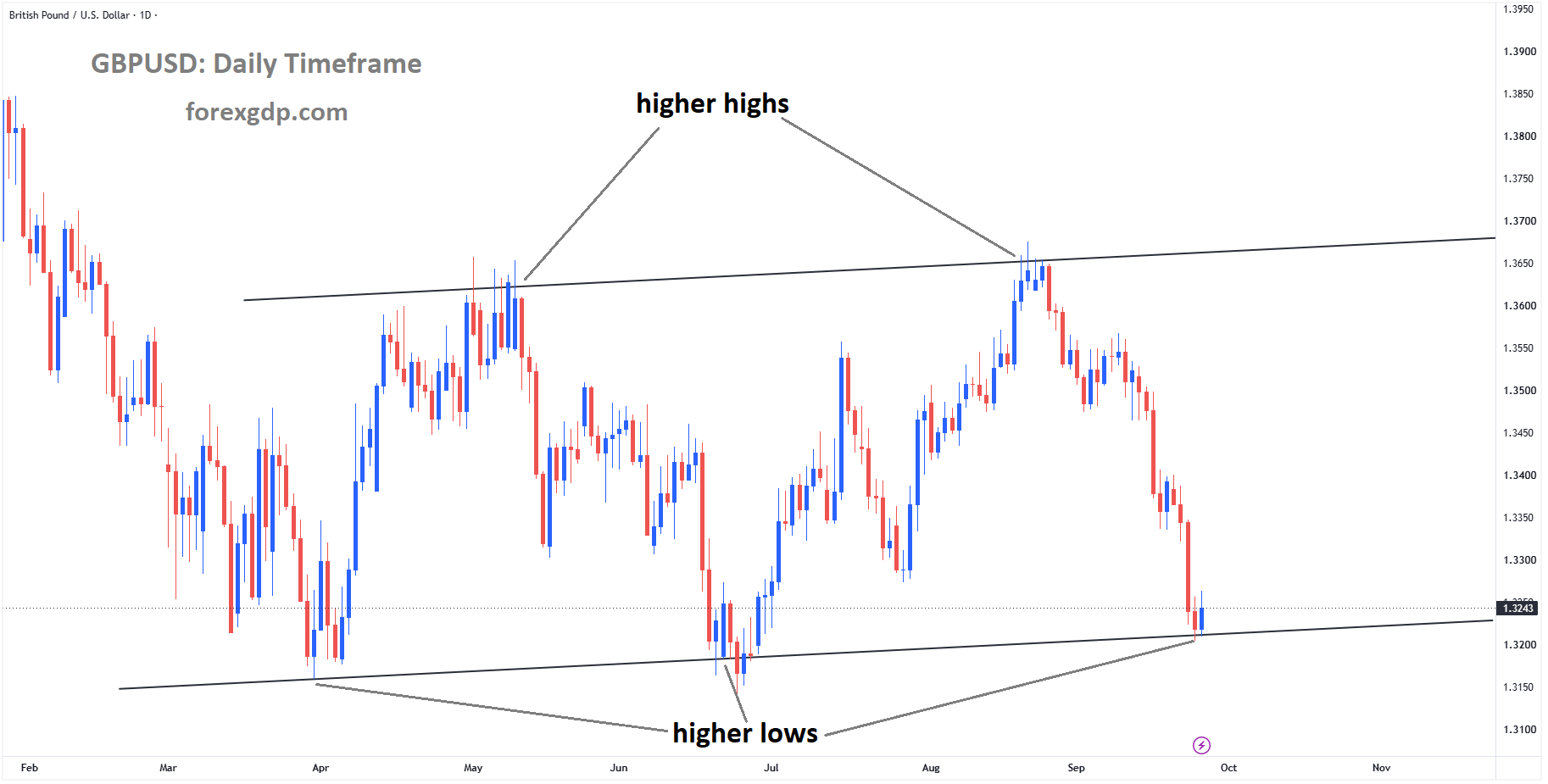
GBPUSD reached the higher low area of the ascending channel
For the Pound, rising UK energy costs have increased the chance that the Bank of England may need to raise interest rates again. In the United States, stronger inflation expectations and firm business spending have kept pressure on the Federal Reserve to maintain a cautious approach. These competing forces are shaping the next move in GBPUSD.
A Pause in the US Dollar Rally Helps Sterling
The Pound’s recovery came as the US Dollar eased after a period of strength. That pause gave Sterling room to regain some ground, even though the factors supporting the Dollar have not disappeared.
US Treasury yields remained elevated, reflecting expectations that interest rates could stay high. Higher yields can attract investors to Dollar-denominated assets, making it harder for the Pound to sustain a recovery. For that reason, a short break in Dollar buying does not necessarily mean a lasting change in direction.
The Pound also has support of its own. Investors are reassessing how the Bank of England might respond if rising energy costs feed into broader UK inflation. Expectations of further rate increases could make Sterling more attractive, although higher borrowing costs may also weigh on the UK economy.
Higher Energy Costs Complicate the UK Outlook
The rise in energy prices has become a key concern for the UK. When fuel and power costs increase, households have less money available for other purchases. Businesses may face higher transport and operating costs, which they can pass on to customers.
This creates a difficult choice for the Bank of England. If energy costs push inflation higher for a sustained period, the central bank may feel pressure to tighten monetary policy. Yet higher interest rates also raise costs for borrowers and can slow economic activity.
At its recent meeting, the Bank of England kept interest rates unchanged while leaving open the possibility of future increases if inflation continues to rise. Investors have since become more willing to expect additional tightening. That shift has offered the Pound some support, even as the energy shock raises concerns about UK growth.
The important question is whether the increase in energy costs will be temporary or begin to affect prices throughout the economy. The answer will influence both Bank of England decisions and confidence in Sterling.
US Inflation Expectations Keep the Federal Reserve in Focus

Inflation concerns are also influencing the US outlook. A recent University of Michigan survey showed consumer sentiment weakening as households became more worried about future price increases. When people expect everyday costs to rise, they may become more cautious with their spending.
Inflation expectations matter to the Federal Reserve because they can influence how consumers and businesses behave. Workers may seek higher pay to cover expected costs, while companies may be more willing to raise prices. If those expectations remain high, bringing inflation under control can become more difficult.
Other US data pointed to resilient business spending. Strong demand for durable goods suggests that companies are still investing despite higher borrowing costs. This gives the Federal Reserve another reason to move carefully before considering any easier policy.
Together, persistent inflation worries and steady business activity help explain why US Treasury yields remain elevated. They also show why the Dollar could regain strength, even after a brief pause.
Geopolitical Uncertainty Adds Another Layer
Developments in the Middle East continue to affect energy markets and investor confidence. Reports of a possible agreement between the United States and Iran offered some hope of reduced tensions, but firm comments from officials on both sides showed that the situation remains unsettled.
Any change in the conflict could affect the outlook for energy costs. That matters especially for countries where rising fuel prices can quickly add to inflation pressure. It also makes central bank decisions harder to predict.
US-China relations have drawn attention as well. Leaders from both countries described their recent meeting in positive terms, offering a more encouraging signal for their relationship. Even so, investors are likely to keep watching what follows those comments. Diplomatic progress can help confidence, while renewed friction could change market sentiment quickly.
What Could Shape GBPUSD Next?
The Pound’s recovery reflects a balance between two interest rate stories. Expectations of further Bank of England tightening are helping Sterling, while US inflation concerns and elevated Treasury yields continue to support the Dollar.
Upcoming inflation and economic reports will help clarify which force has the greater influence. For the UK, investors will watch whether higher energy costs spread into other prices and how the Bank of England responds. In the US, consumer inflation expectations, business activity and Federal Reserve comments will remain important.
Geopolitical news could also shift the outlook without much warning, particularly if it changes expectations for energy costs. Until there is more clarity, GBPUSD may remain sensitive to both central bank signals and events beyond either bank’s control.
Summary
GBPUSD recovered as the US Dollar’s rally paused and expectations of further Bank of England rate increases supported the Pound. The outlook remains mixed: rising UK energy costs may strengthen the case for higher rates but also put pressure on households and businesses. Meanwhile, US inflation expectations and firm business spending continue to support a cautious Federal Reserve. The next direction for the pair will depend on how these economic pressures develop and whether geopolitical tensions ease.
USDJPY Faces Pressure as Japan’s Policy Stance Supports the Yen
The Japanese Yen recovered some ground against the US Dollar on Friday after a difficult week. Rising Japanese government bond yields gave the currency support, while comments from Japan’s finance minister reminded investors that officials are watching the Yen closely.
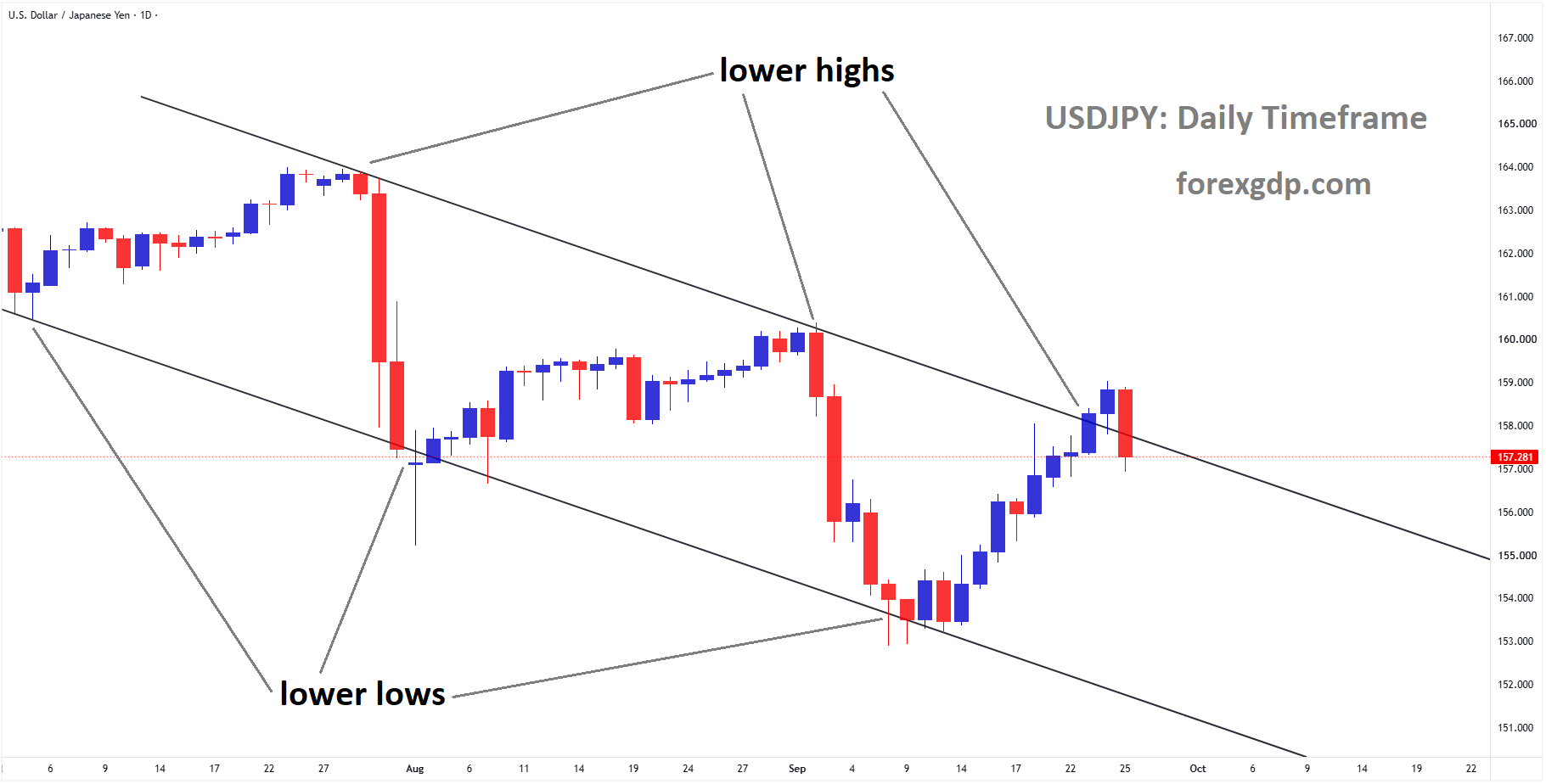
USDJPY reached the lower high area of the descending channel
The US Dollar remains firm, however. Strong US business activity and comments from Federal Reserve officials have increased expectations of another interest rate hike. These forces are pulling USDJPY in different directions: developments in Japan are helping the Yen, while the US policy outlook is supporting the Dollar.
Japan’s Finance Minister Puts Yen Stability in Focus
Japan’s Finance Minister Satsuki Katayama said the government respects the independence of the Bank of Japan. Her comments matter because the central bank’s interest rate decisions could have a strong influence on the Yen.
When investors believe the Bank of Japan has room to raise rates, Japanese assets can become more attractive. That can encourage demand for the Yen. Political pressure on the central bank, by contrast, could make its next steps harder to predict. Katayama’s remarks offered reassurance that the bank can make decisions based on economic conditions.
The finance minister also repeated that she is prepared to take action to protect the Yen’s stability. Officials have expressed concern about excessive currency moves, and her warning has given traders another reason to be cautious about betting heavily against the Yen.
A warning does not mean intervention will happen. It does mean investors must consider how Japanese authorities might respond if currency moves become too rapid or disruptive. That uncertainty can influence trading even when officials take no direct action.
Rising Japanese Bond Yields Help the Yen

Japanese government bond yields climbed further on Friday, adding to the Yen’s recovery. Bond yields are one way investors compare the appeal of holding assets in different currencies. Higher yields in Japan can make Japanese bonds more attractive and may encourage some investors to hold more Yen.
For years, the wide difference between Japanese and US yields has been an important reason for Yen weakness. Investors could often earn more by holding US assets. When Japanese yields rise, that difference narrows, reducing one source of pressure on the Yen.
The move in Japanese yields also reflects closer attention to the Bank of Japan’s future policy decisions. If investors expect tighter monetary policy, they may demand higher returns on Japanese bonds. Currency markets then respond to the prospect that holding Yen could become more rewarding over time.
This relationship is not automatic. The Yen’s direction also depends on what happens to US yields and on changes in investor confidence. Still, Friday’s rise in Japanese yields gave the currency a reason to recover after its earlier losses.
Bank of Japan Independence Shapes Market Expectations
Katayama’s defense of central bank independence comes at a sensitive time. Investors are trying to judge whether the Bank of Japan will continue moving toward tighter policy and how quickly it might act.
The government and the central bank have different responsibilities. The Bank of Japan sets monetary policy, while the government can address concerns about disorderly currency moves. Katayama’s comments touched on both areas: she expressed respect for the bank’s decisions and made clear that officials remain concerned about Yen stability.
That combination matters for confidence. If investors believe the Bank of Japan can respond to inflation and other economic conditions without political interference, they may have greater trust in its policy direction. At the same time, the possibility of government action can discourage one-sided trading against the Yen.
Neither factor guarantees lasting Yen strength. The Bank of Japan still has to weigh the effects of tighter policy on households, businesses and the wider economy. Investors will be watching its decisions and statements for signs of what comes next.
Federal Reserve Expectations Keep the Dollar Firm
The Yen’s recovery has met resistance from a strong US Dollar. US business activity data released earlier in the week encouraged investors to consider the possibility that the Federal Reserve may raise interest rates again to contain inflation.
Comments from Fed officials reinforced that view. Philadelphia Fed President Anna Paulson indicated that modest rate increases may be needed to bring inflation back to target. New York Fed President John Williams also pointed to the possibility of another increase before the end of the year.
Higher expected US interest rates can support the Dollar because they may increase returns on US assets. As long as investors believe the Fed could tighten policy further, the Dollar may remain attractive even when it gives back some of its recent gains.
The Fed has not made its next decision yet. Incoming data on inflation, employment and economic activity could change the outlook. For now, expectations of a rate increase are limiting how far Dollar weakness may extend.
What Could Drive USDJPY Next?
USDJPY now reflects two competing policy stories. In Japan, rising bond yields and official concern about Yen weakness are lending support to the Japanese currency. In the United States, expectations of further Fed tightening continue to favor the Dollar.
Investors will be looking for clearer signals from both central banks. A stronger case for Japanese rate increases could help the Yen, particularly if the difference between Japanese and US bond yields continues to narrow. Stronger US data or firmer Fed comments could instead renew demand for the Dollar.
Statements from Japanese officials will also remain important. Traders are likely to pay close attention to any further warnings about Yen volatility, especially if currency moves become unusually fast. Such remarks can affect expectations, although their impact may fade unless they are followed by action or a change in policy.
Summary
The Japanese Yen recovered against the US Dollar on Friday as Japanese bond yields rose and Finance Minister Katayama reaffirmed both the Bank of Japan’s independence and the government’s commitment to Yen stability. The Dollar remained supported by growing expectations of another Federal Reserve rate hike.
The next direction for USDJPY will depend on how those forces develop. Bank of Japan policy, Japanese bond yields, US economic data and Fed decisions will all shape whether the Yen can extend its recovery.
USDCAD Remains Elevated as Dollar Pause Fails to Lift the Loonie
USD/CAD remains elevated even as the US Dollar takes a break from its recent advance. A slight pullback in the Greenback has offered little relief to the Canadian Dollar, which is heading toward another weekly loss. Higher oil prices would normally provide some support for the Loonie, but traders are giving more attention to the different paths of the Federal Reserve and the Bank of Canada.
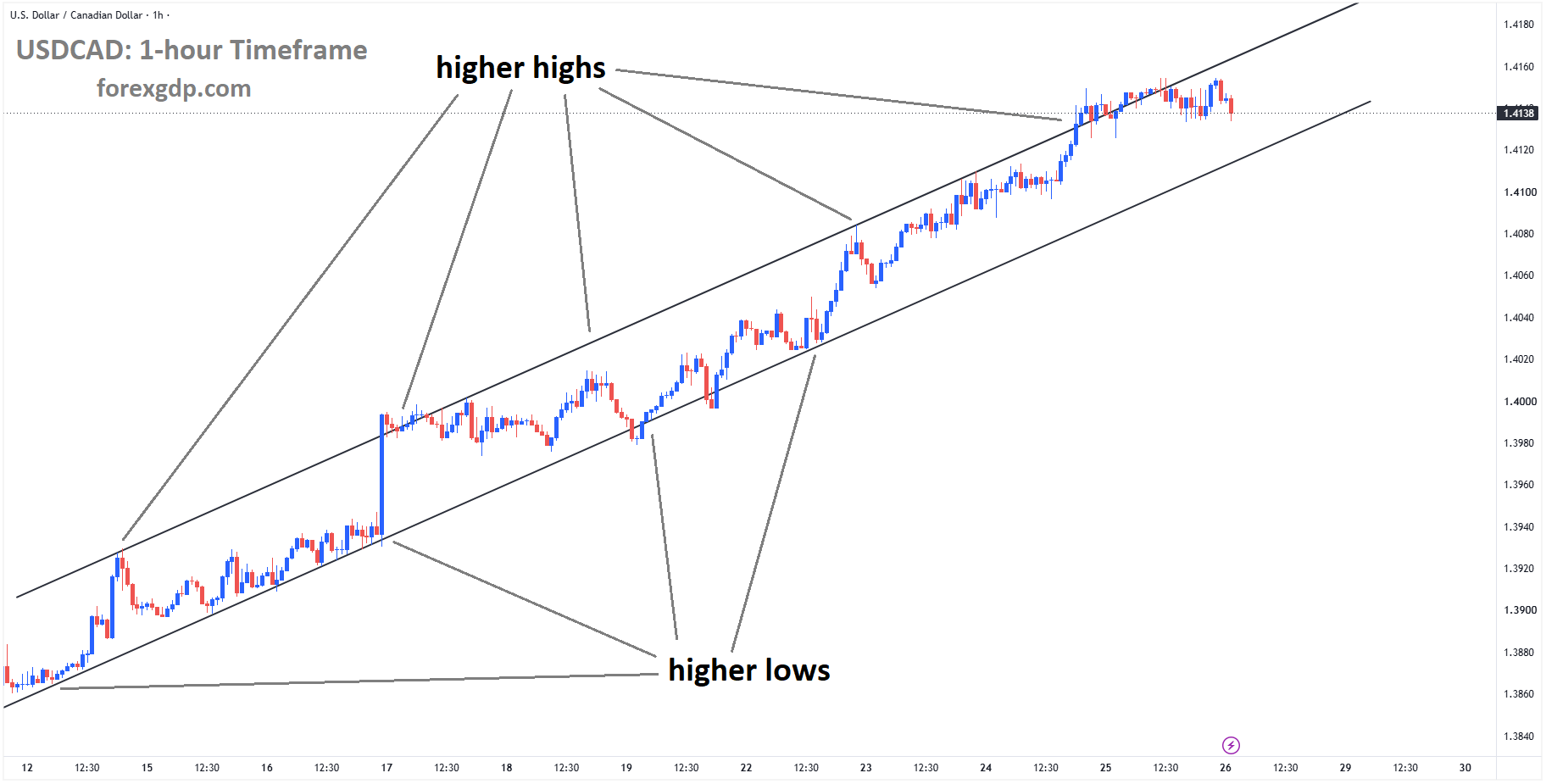
USDCAD is moving in an ascending channel
The coming week could give both currencies a clearer direction. US inflation and employment figures will help shape expectations for Federal Reserve policy, while Canadian growth data will show how the economy is holding up.
Why the US Dollar Still Has Support
The US Dollar’s rally has paused, but the reasons behind its strength have not disappeared. The Federal Reserve recently raised interest rates and indicated that another increase may be needed this year. That message has encouraged traders to expect US borrowing costs to stay high.
For currency markets, the expected direction of interest rates often matters as much as the latest central bank decision. If traders believe US rates may rise further, the Dollar can remain attractive even during a quieter trading session.
The US economy is also seen as relatively resilient. That outlook gives the Federal Reserve more room to focus on inflation. It helps explain why a brief easing in the Dollar has not led to a strong recovery in the Canadian currency.
The Bank of Canada Is Taking a Cautious Approach
The Bank of Canada has kept its policy rate unchanged and has sounded more cautious about further increases. Although higher energy costs can raise inflation concerns, the central bank has said there is little evidence so far that those costs are spreading widely through the economy.
That distinction matters. A rise in oil prices does not automatically mean that households are paying more for everything else or that businesses are raising prices across the board. The Bank of Canada will want to see broader evidence before changing its view.
Canada also faces questions about its growth outlook. If economic activity slows, the central bank may have less reason to raise borrowing costs. Traders are weighing that possibility against expectations that the Federal Reserve could tighten policy again.
The difference between the two central banks has made US assets more appealing to investors seeking higher returns. That preference can support the US Dollar against the Canadian Dollar, even when the immediate push from US yields eases.
Why Higher Oil Prices Have Offered Little Relief

Oil is an important Canadian export, so higher oil prices often help the Canadian Dollar. Stronger export revenue can improve Canada’s economic outlook and increase demand for the currency. This time, however, that support has been limited.
Traders appear more focused on interest rates and the relative strength of the two economies. The possibility of further Federal Reserve action has carried more weight than the benefit Canada may receive from expensive oil. As a result, the Loonie has struggled to recover despite conditions that might usually work in its favour.
There are also concerns about potential US tariffs. New trade barriers could make it harder for Canadian businesses to sell into their largest export market. Bank of Canada Governor Tiff Macklem has warned that tariffs could weaken Canadian growth later in the year.
The effect would depend on which goods are affected and how businesses respond. Still, uncertainty about trade can cause companies to delay investment or hiring. That risk adds another reason for traders to remain cautious about the Canadian Dollar.
US Data Could Shift Federal Reserve Expectations
Several major US reports are due next week, beginning with the Personal Consumption Expenditures inflation figures. The Federal Reserve closely follows this report when judging whether inflation is moving in a direction that supports its policy goals.
If inflation remains persistent, traders may become more confident that another rate increase is possible. A softer reading could ease those expectations and reduce some of the support behind the US Dollar.
The ISM Manufacturing Purchasing Managers’ Index will offer a view of business activity, while the Nonfarm Payrolls report will provide a broader picture of the labour market. Job growth and wages are especially relevant because a strong labour market can make it harder for inflation to cool.
These reports may give traders a reason to reassess the Fed’s next move. The details will matter: one strong or weak figure may have less influence if the wider set of data tells a different story.
Canadian Growth Figures Will Be Just as Important
Canada’s upcoming GDP report will show how the economy performed in July. A stronger reading could ease concerns about slowing growth and give the Canadian Dollar some support. Weak growth, on the other hand, could reinforce the view that the Bank of Canada will remain cautious.
The report will also help traders judge whether elevated oil prices are benefiting the wider economy. Canada’s energy sector is significant, but strength in one industry may not be enough to offset weakness elsewhere. Household spending, business activity and the effects of high borrowing costs all matter to the broader outlook.
Summary
USD/CAD remains firm because traders see a clear difference between the Federal Reserve’s willingness to raise rates and the Bank of Canada’s cautious stance. That gap has overshadowed the support the Canadian Dollar might usually receive from higher oil prices. Concerns about Canadian growth and possible US tariffs have added to the pressure.
Next week’s US inflation and employment reports, alongside Canada’s GDP figures, could change those expectations. Until the data arrives, the direction of central bank policy remains the main influence on the pair.
USDCHF Climbs as Higher US Rates Draw Investors Away From the Franc
USDCHF remains firm as the Swiss franc struggles to benefit from a brief pause in US Dollar strength. The Dollar has eased slightly after a strong week, but the wider difference between US and Swiss interest rate policies continues to favor the US currency.
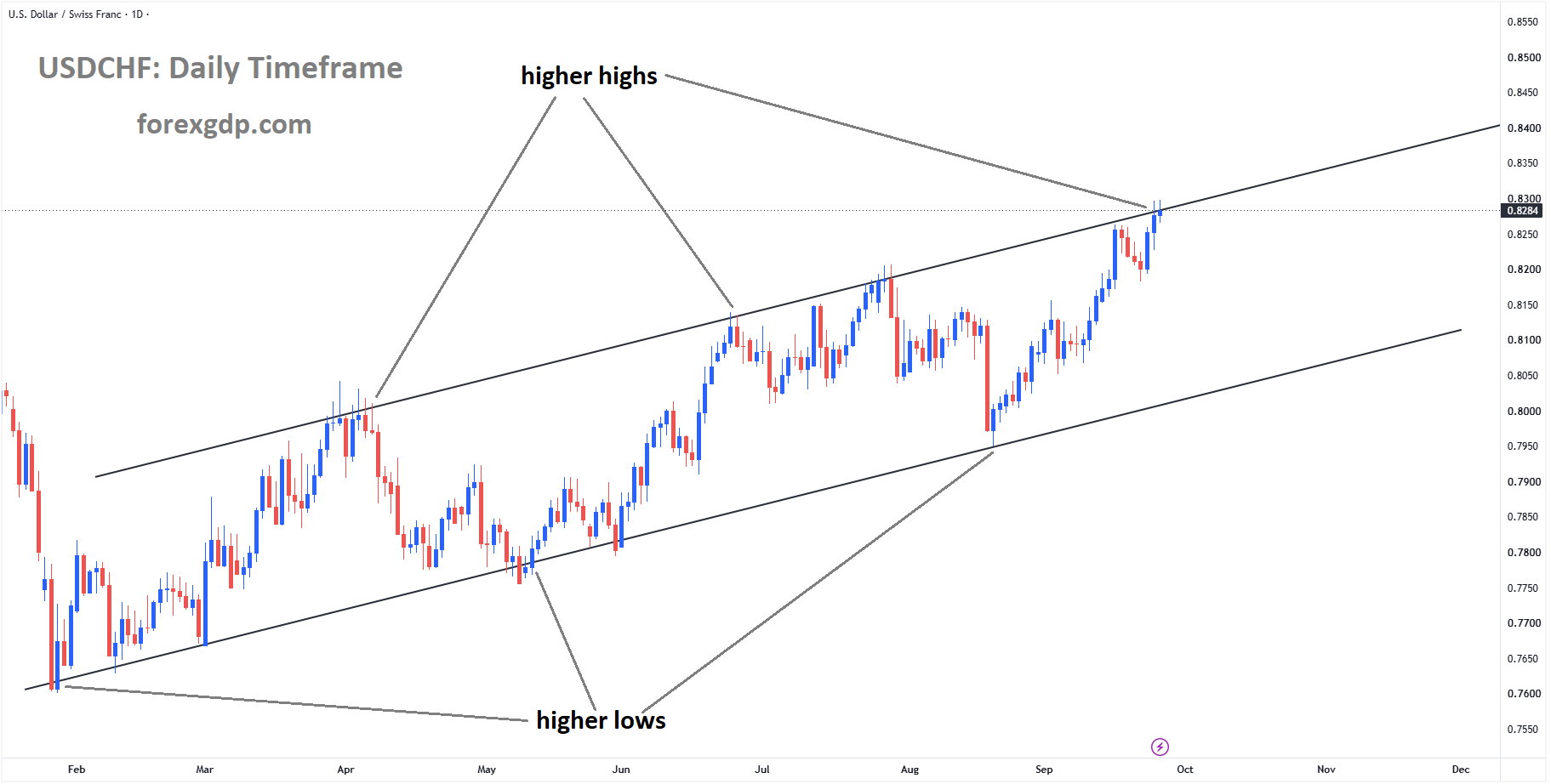
USDCHF reached the higher high area of the ascending channel
The Federal Reserve has signaled that it may raise interest rates again to bring inflation under control. The Swiss National Bank, meanwhile, has kept its policy rate at zero. That gap helps explain why the franc has remained under pressure, even when the Dollar takes a step back.
Investors are now looking ahead to a busy week of US economic reports. Inflation, business activity and employment data could change expectations for the Fed’s next decision and, in turn, influence the direction of USDCHF.
Why the Federal Reserve Is Supporting the US Dollar
The Federal Reserve recently raised interest rates and indicated that its work on inflation may not be finished. Most Fed policymakers expect at least one more increase this year, according to their latest projections. That message has given investors a reason to remain interested in the Dollar.
New York Fed President John Williams also emphasized the need to return inflation to the central bank’s target. His comments reinforced the view that another rate increase remains possible if inflation proves difficult to control.
Higher US interest rates can make Dollar based assets more appealing to investors seeking returns. They can also lift US Treasury yields, adding another source of support for the currency. This does not mean the Dollar will rise every day. Investors may take profits after a strong run, or react to individual economic releases. Still, the Fed’s policy stance remains an important reason for the Dollar’s broader strength.
For USDCHF, the question is whether incoming data will keep that outlook in place. If the US economy remains resilient and inflation stays persistent, expectations for further Fed action may continue to support the pair.
The Swiss National Bank Keeps Its Policy Steady

The Swiss National Bank took a different approach at its latest policy meeting. It left its interest rate unchanged and said the current setting remained appropriate for maintaining price stability while supporting the economy.
The bank acknowledged that higher oil prices had lifted inflation. It also raised its inflation forecast. However, it described the increase in medium term inflation pressure as modest, giving investors little reason to expect an immediate change in policy.
That contrast with the Fed matters for the Swiss franc. Investors comparing the two currencies see a US central bank still discussing higher rates and a Swiss central bank comfortable with its current position. As long as that difference remains, the franc may find it difficult to make a lasting recovery against the Dollar.
The SNB’s decision does not mean it will ignore future inflation risks. Its outlook can change if economic conditions shift. For now, however, its steady policy has left the franc with limited help from interest rate expectations.
Why Carry Trades Can Add Pressure to the Franc
Switzerland’s zero interest rate has also made the franc useful as a funding currency. In a carry trade, an investor borrows in a currency with a low interest rate and uses the funds to buy an asset or currency that offers a higher return.
The appeal depends on the gap between borrowing costs and potential returns. With Swiss rates at zero and US rates much higher, that gap can encourage investors to sell francs as part of such trades. This activity can add pressure to the Swiss currency.
Carry trades do involve risk. A sudden change in exchange rates or a shift in market confidence can quickly reduce or erase the expected benefit. During periods of uncertainty, investors may also close these positions, which can create a sharp move in the opposite direction.
Even so, the current difference between Swiss and US policy helps explain the franc’s recent weakness. It is one more factor, alongside the Fed’s firm stance, that has kept attention on USDCHF.
US Economic Reports Could Change Rate Expectations
Next week’s US data will give investors a closer look at whether the Fed may need to raise rates again. The Personal Consumption Expenditures inflation report will be closely watched because the Fed uses it to assess inflation trends.
The ISM Manufacturing Purchasing Managers’ Index will offer a view of activity in the US factory sector. A strong reading could suggest the economy remains resilient, while a weaker result may raise questions about the pace of growth.
The Nonfarm Payrolls report will add important information about hiring and the labor market. Strong employment can give the Fed more room to keep policy tight. Softer hiring may lead investors to question whether another rate increase is necessary.
No single report is likely to settle the debate by itself. Investors will look at the data together to judge whether inflation is easing and how well the economy is holding up. A change in those expectations could affect both the Dollar and USDCHF.
Middle East Developments Remain in Focus
Geopolitical events are another source of uncertainty. Markets continue to monitor tensions involving the United States and Iran, including developments around the Strait of Hormuz.
Disruption or prolonged uncertainty in the region could influence oil prices and the wider inflation outlook. It could also change how investors respond to risk. Those effects may complicate the picture for both the Fed and currency markets.
For that reason, USDCHF may react to more than scheduled US reports in the coming days. Unexpected news can quickly shift attention from interest rates to global risks.
Summary
USDCHF remains supported by the difference between Federal Reserve and Swiss National Bank policies. The Fed has left open the possibility of another rate increase, while the SNB has kept its policy rate at zero. That gap supports the US Dollar and encourages some investors to use the franc to fund carry trades.
The next US inflation, manufacturing and employment reports will help determine whether expectations for another Fed increase remain strong. Investors will also watch Middle East developments for their potential effect on energy prices and market confidence.
AUDUSD Stabilizes as Investors Pause Their US Dollar Buying
The Australian Dollar recovered some ground against the US Dollar on Friday, helped by a pause in the Greenback’s recent strength. The improvement offered relief after a difficult week for the Aussie, but the broader picture remains challenging. Higher US Treasury yields and expectations of further Federal Reserve tightening continue to support the US currency.
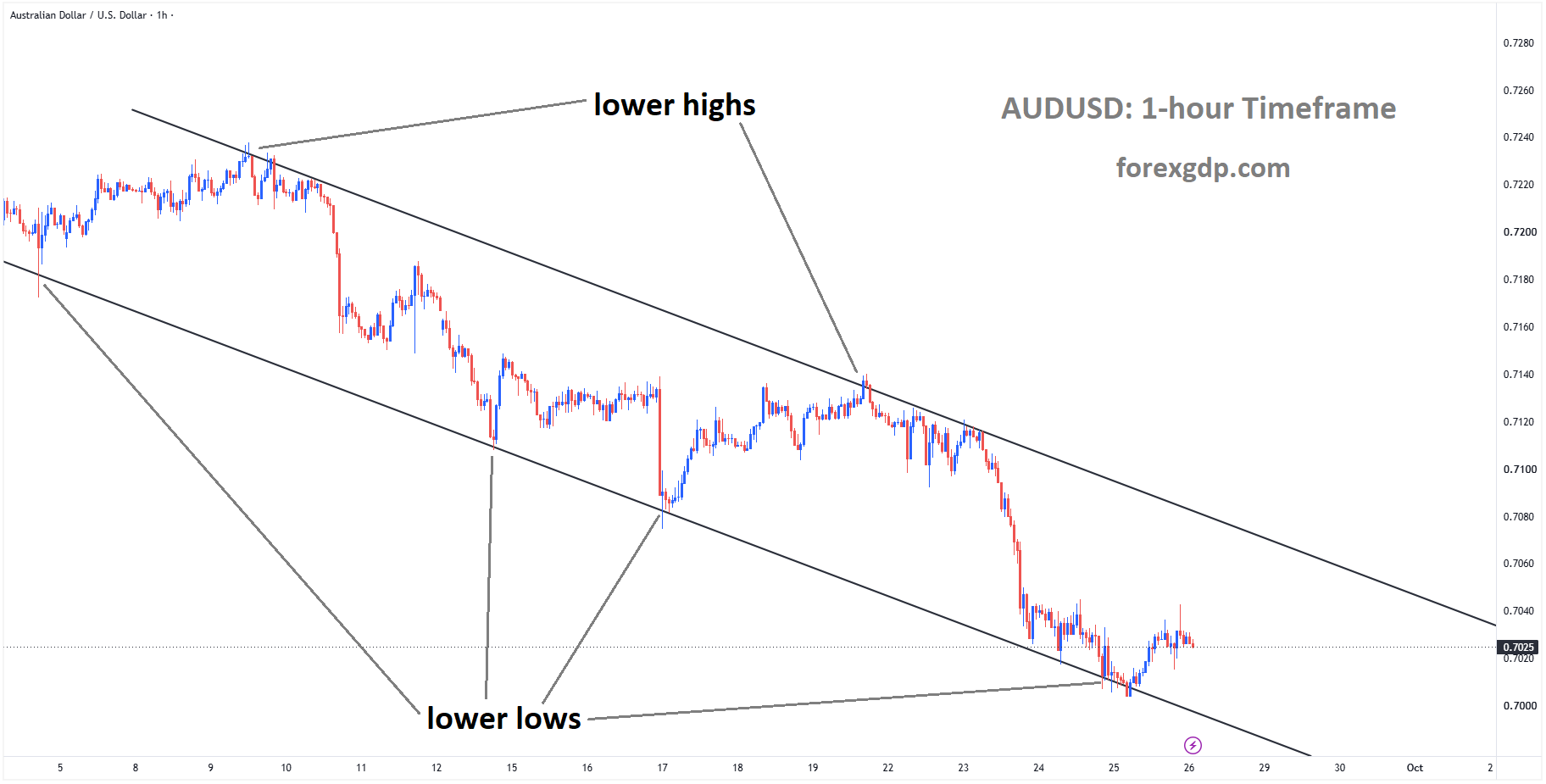
AUDUSD is rebounding from the lower low area of the descending channel
Investors are also weighing two developments that matter greatly for Australia: the outlook for interest rates at home and the relationship between the United States and China. Both could influence confidence in the Australian Dollar in the coming days.
A Pause in US Dollar Strength Helps the Aussie
Friday’s recovery in AUDUSD came as the US Dollar pulled back from its earlier gains. After a strong run, some investors stepped away from the currency, giving the Australian Dollar room to recover.
That shift has not erased the forces behind the Dollar’s strength. US Treasury yields rose during the week as investors considered the possibility that the Federal Reserve could raise interest rates again. Higher yields can make US assets more appealing to investors, increasing demand for the Dollar.
The Australian Dollar is therefore getting some short-term breathing room rather than a clear change in the wider outlook. For a more lasting recovery, investors would likely need stronger reasons to believe that US interest rates will stop rising or that Australia’s own outlook is improving.
The Federal Reserve Remains in Focus

Recent US business activity has held up well, while wage growth and energy costs remain concerns for inflation. These conditions have kept pressure on the Federal Reserve to maintain a firm approach to interest rates.
Comments from Fed officials have added to that view. New York Fed President John Williams indicated that another increase by year-end could be reasonable. Philadelphia Fed President Anna Paulson also suggested that modest further increases might be needed to bring inflation closer to the central bank’s goal.
Investors pay close attention to such remarks because interest rate expectations can quickly affect currency demand. If they believe US borrowing costs will remain high or rise further, the Dollar may continue to attract support. That makes it harder for the Australian Dollar to hold on to gains made during a brief US Dollar pullback.
US Consumers Remain Cautious About Inflation
The latest US consumer survey gave investors a mixed picture. Consumer sentiment was revised slightly higher than initially reported, but it was still weaker than in the previous month. Expectations about future conditions also improved from the first estimate while remaining below their earlier reading.
The inflation responses may matter more for the Fed’s next steps. Consumers continued to expect elevated price growth over both the near and longer term. When people believe inflation will stay high, those expectations can influence spending decisions and wage demands.
The survey alone is unlikely to decide the Fed’s next move. Still, it offers little comfort to investors hoping for a rapid shift toward easier US monetary policy. As long as inflation concerns persist, the Fed has reason to remain cautious, and the Dollar may retain some of its recent appeal.
US–China Talks Offer Encouragement, but Few Clear Results
The meeting between US President Donald Trump and Chinese President Xi Jinping drew attention across global markets. Both leaders used a more cooperative tone, raising hopes that Washington and Beijing could keep their trade relationship on a steadier path.
That matters to Australia because China is its largest trading partner. Better relations between the world’s two largest economies can improve confidence in Chinese growth and, in turn, the outlook for Australian exports. Those hopes often help the Australian Dollar.
For now, however, the meeting appears to have produced limited progress on the most difficult issues. Trade disagreements, artificial intelligence and Taiwan remain sensitive areas. Friendly language may ease immediate concerns, but investors will want to see concrete agreements before placing too much weight on a lasting improvement.
The result is a cautious response from the Aussie. The talks have reduced some uncertainty, yet they have not provided the kind of clear breakthrough that could strongly change sentiment toward Australia’s economy.
The RBA Could Offer Domestic Support
Attention is also turning to the Reserve Bank of Australia, with investors expecting a possible interest rate increase at its upcoming meeting. Higher Australian rates could support the local currency by making Australian assets more attractive.
Recent labour market figures showed a small rise in unemployment. Although that points to some cooling in the economy, it has not significantly changed expectations for the RBA’s decision. Policymakers will still need to balance signs of a softer jobs market against the need to keep inflation under control.
The RBA’s decision and its explanation will both matter. Investors will be listening for clues about whether officials see further action as necessary or believe current policy is doing enough. A firm message could help the Australian Dollar, particularly if the US Dollar continues to ease.
Summary
AUDUSD recovered on Friday as the US Dollar gave back some of its weekly gains. The Australian Dollar also found modest support from expectations of a possible RBA rate increase and a more cooperative tone in US–China talks.
Even so, the Aussie faces a demanding outlook. Higher US Treasury yields, persistent inflation concerns and expectations of further Fed tightening have supported the Greenback throughout the week. The next direction for AUDUSD may depend on whether the RBA provides stronger support for the Australian Dollar and whether the US Dollar’s pause develops into a broader retreat.
NZDUSD Edges Up as Falling US Yields Lift the Kiwi
The New Zealand Dollar has held its gains against the US Dollar after a period of uneven trading. The US Dollar has struggled to find fresh momentum, giving NZDUSD some breathing room even as investors remain cautious about inflation and interest rates.
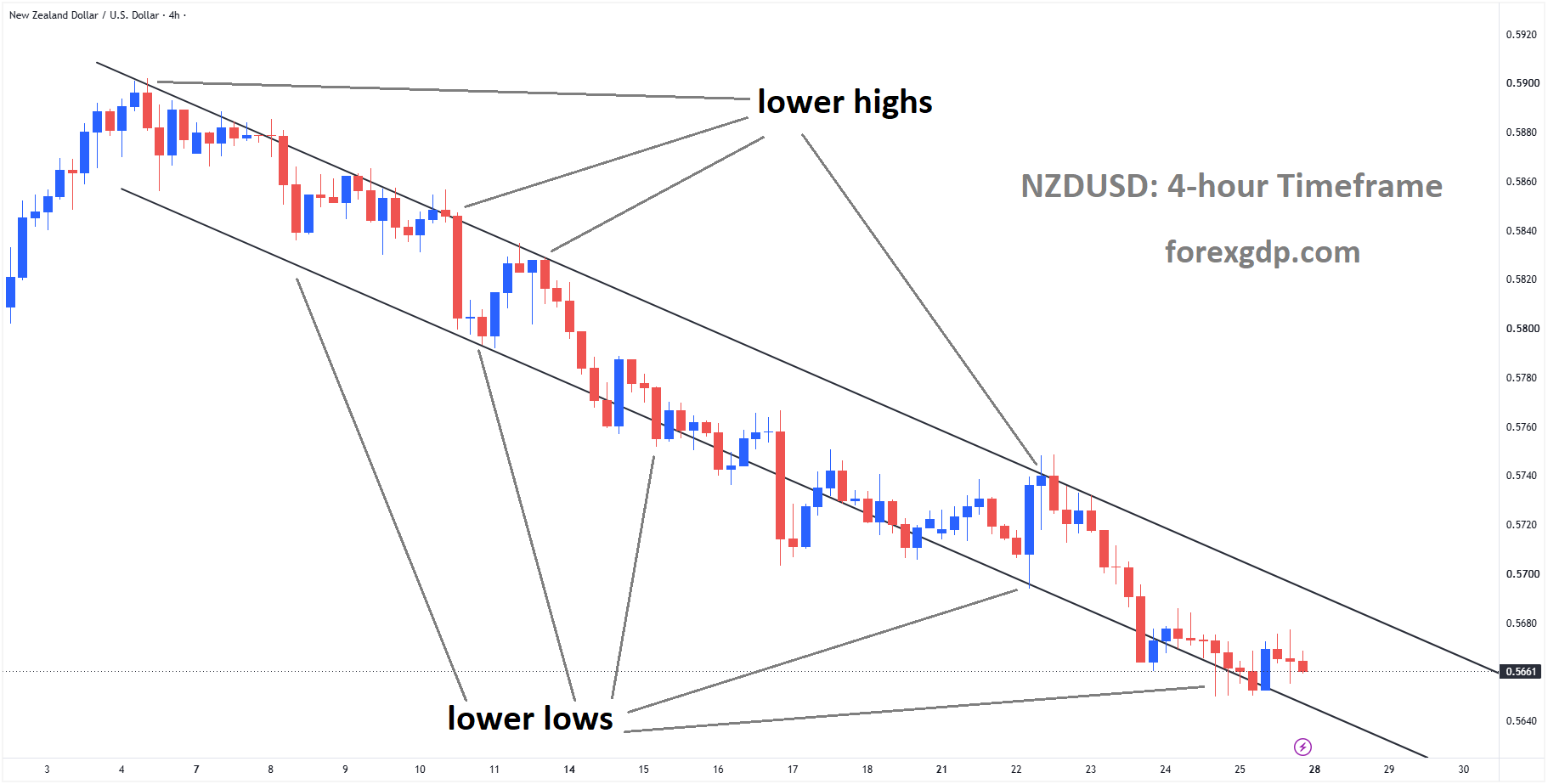
NZDUSD reached the lower low area of the descending channel
The outlook for both currencies depends heavily on upcoming economic reports. Strong US data has raised the possibility that the Federal Reserve could increase interest rates again. In New Zealand, a retreat in government bond yields and concern about rising oil costs could make it harder for the Kiwi Dollar to extend its gains.
Why the US Dollar Has Struggled
The US Dollar has softened despite expectations that the Federal Reserve may keep a firm stance on inflation. This has helped the New Zealand Dollar hold onto its recent improvement. Still, investors have been reluctant to make bold moves while the path of US interest rates remains uncertain.
Recent US economic reports have shown resilience, renewing concern that inflation could stay elevated. If businesses and consumers continue to spend at a healthy pace, the Fed may see less reason to ease its approach. Some investors are now considering the possibility of another rate increase at an upcoming meeting.
That expectation would usually offer support to the US Dollar. Currency markets, however, do not respond to one factor alone. Investors also consider how much of a future policy move they have already anticipated, whether new reports confirm their expectations, and how willing they are to take risks. For now, those mixed influences have kept the Dollar from gaining clear momentum.
New Zealand’s Bond Yield Retreat Brings Caution

The New Zealand Dollar faces its own challenges. The country’s government bond yields have pulled back after a sharp rise, drawing attention to changing expectations around inflation and borrowing costs.
The earlier rise came during a wider selloff in global bonds. Higher oil prices added to fears that inflation could remain difficult to control, prompting investors to reassess how long interest rates might stay elevated. As yields ease, that immediate source of support for the New Zealand Dollar has become less certain.
Changes in bond yields do not tell the whole story of a currency’s direction. They do, however, offer a useful view of how investors are thinking about future rates. If concerns about New Zealand’s economic outlook grow alongside falling yields, the Kiwi Dollar could find it harder to maintain its gains.
Oil Prices Complicate New Zealand’s Inflation Outlook
Oil is another issue for New Zealand’s economy. Persistently high oil costs can raise the price of transport and increase expenses for businesses. Over time, some of those costs may be passed on to households.
Reserve Bank of New Zealand Governor Anna Breman has warned that high oil prices could push inflation higher. This creates a difficult balance for policymakers. They need to keep inflation under control while also considering the pressure that borrowing costs place on consumers and businesses.
For currency investors, the key question is how the Reserve Bank of New Zealand will respond if inflation remains stubborn. An inflation increase does not automatically mean a stronger currency. Investors will also assess whether higher costs are weighing on economic activity and how much flexibility the central bank has to respond.
China’s Economic Reports Matter for the Kiwi Dollar
China’s upcoming purchasing managers’ index reports will also be closely watched. China is New Zealand’s main trading partner, so changes in Chinese business activity can influence expectations for New Zealand’s exports and wider economy.
The PMI reports offer a snapshot of conditions in manufacturing and services. Signs of stronger activity could improve confidence in demand from China. Weaker readings, on the other hand, may raise concerns about trade and add pressure to the New Zealand Dollar.
Investors will look beyond a single headline figure. They will want to know whether businesses are receiving more orders, whether employment conditions are improving, and whether the broader picture suggests steady demand. Those details may help shape how markets view New Zealand’s prospects in the months ahead.
US Data Could Shape the Fed’s Next Move
Several US reports could influence the next stage of the NZDUSD outlook. Consumer sentiment data may show how households feel about their finances and the economy. Durable goods figures will offer another view of business demand and spending on longer-lasting products.
Next week’s Personal Consumption Expenditures inflation report will draw particular attention because it is an important measure for the Federal Reserve. Investors will study whether price pressures are easing or proving more persistent than expected. The upcoming labor market report will add another piece to that picture.
If inflation remains firm and employment stays strong, expectations for tighter Fed policy could strengthen. That may renew demand for the US Dollar. Softer data could have the opposite effect by reducing the urgency for another rate increase.
Final Summary
NZDUSD has held its gains while the US Dollar lacks momentum, but the outlook remains unsettled. Inflation concerns and expectations for Federal Reserve policy continue to influence the US currency. At the same time, easing New Zealand bond yields and the impact of oil costs present challenges for the Kiwi Dollar.
Upcoming reports from China and the United States will give investors a clearer view of economic demand and possible central bank decisions. Until then, shifts in expectations for inflation and interest rates are likely to remain the main drivers of the currency pair.
GBPJPY Struggles as Traders Watch for Joint US-Japan Action to Support the Yen
The British Pound has recovered part of its earlier decline against the Japanese Yen, but GBPJPY remains under pressure. The Yen has strengthened against several major currencies as traders consider whether Japan and the United States could act together to address its weakness.
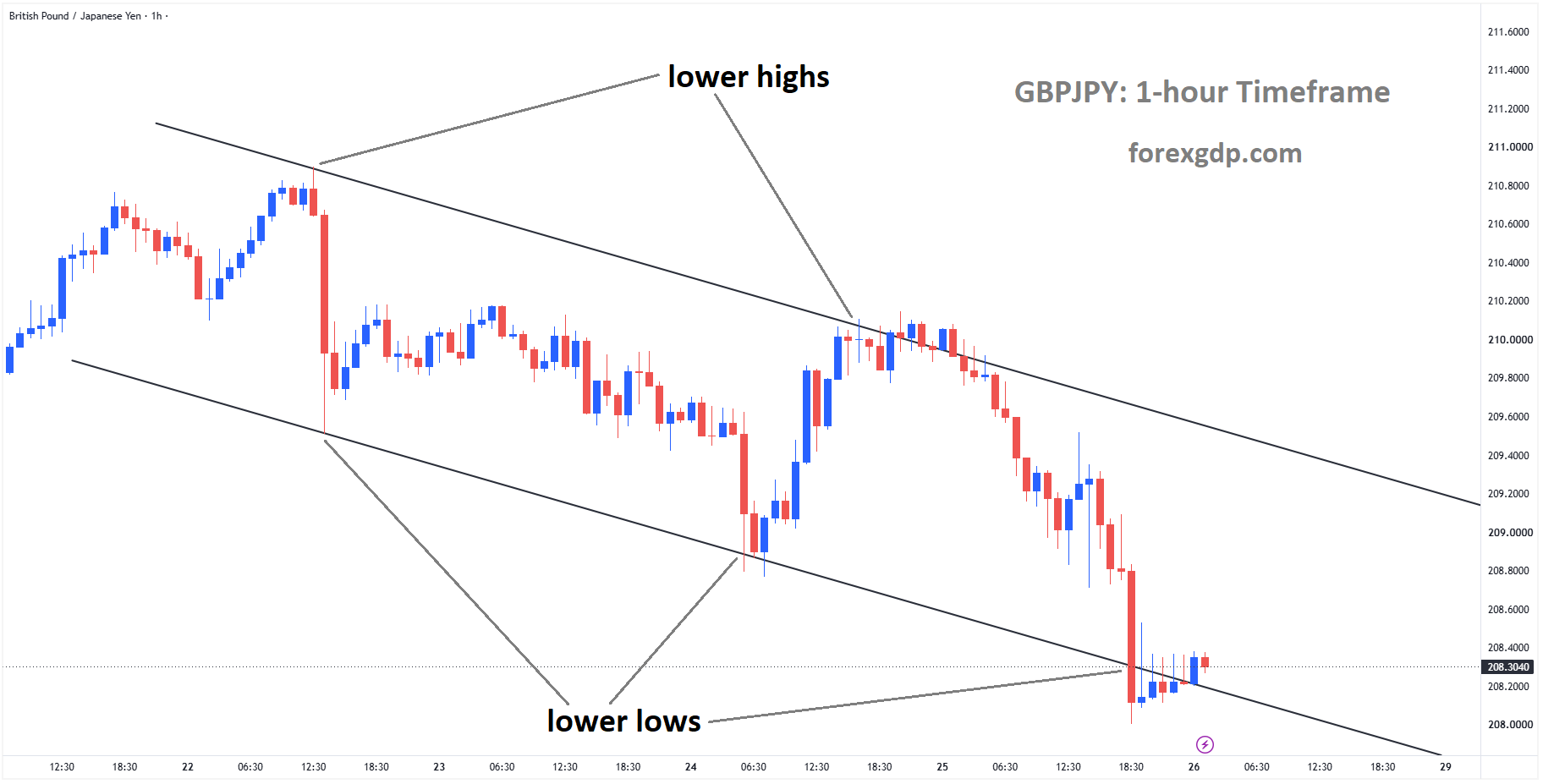
GBPJPY reached the lower low area of the descending channel
Comments from Japanese officials have brought currency intervention back into focus. At the same time, doubts about a more aggressive Bank of England outlook have given the Pound little help. For GBPJPY, the immediate question is whether concern about the Yen will continue to outweigh support for Sterling.
Why the Japanese Yen Is Strengthening
The Yen has drawn fresh attention after a period of weakness. Traders are watching Japanese officials closely for signs that they may respond if currency moves become too rapid or disruptive.
Japanese Finance Minister Satsuki Katayama said that US President Donald Trump had expressed concern about the Yen’s weakness during a meeting with Japanese Prime Minister Sanae Takaichi. Her remarks raised the possibility that the two countries could share an interest in addressing disorderly currency moves.
That does not mean intervention is certain. Officials can express concern without taking action, and traders have to judge how serious that concern is. Still, the possibility matters. When a currency is seen as a potential target for official support, investors may become less willing to bet heavily against it.
This change in mood has helped the Yen recover some ground. Its strength has weighed on GBPJPY even as the Pound has regained part of its earlier losses.
Why Joint Intervention Is Getting Attention
Currency intervention occurs when authorities enter the foreign exchange market to influence a currency’s movement. It is usually considered when officials believe that moves have become excessive or are causing wider economic concerns.
Katayama said that the principles behind previous joint intervention remain in place. That statement has encouraged traders to think about whether Japan and the United States could cooperate again if they see a need to respond to Yen weakness.
The prospect of joint action can have an effect even before anything happens. Traders who have been selling the Yen may reduce those positions to limit their exposure to a sudden change. As they buy the Yen back, it can strengthen against currencies such as the Pound.
There is a clear difference, however, between discussing intervention and carrying it out. The comments show that officials are paying attention to the Yen. They do not provide a timetable or a guarantee of action. Traders will therefore keep listening for further statements while watching how the currency behaves.
The Bank of Japan Remains Part of the Picture

The Yen’s recent performance also reflects expectations around the Bank of Japan. Following its latest monetary policy announcement, the currency struggled to maintain strength. Investors continue to assess how quickly the central bank may adjust its approach and how clearly it will communicate future decisions.
Official concern about the currency has now changed the near-term mood. Even if traders remain uncertain about the Bank of Japan’s next steps, the possibility of intervention gives them another reason to reconsider positions against the Yen.
These are separate influences. The Bank of Japan’s policy affects expectations about interest rates over time, while intervention concerns can prompt a much faster reaction. Both are relevant to GBPJPY because either one can alter demand for the Yen.
For now, the intervention discussion appears to be giving the Japanese currency more immediate support. Whether that lasts will depend on what officials say next and whether their comments are followed by action.
Why the Pound Has Limited Support
The British Pound has managed to recover some of its earlier losses against the Yen, showing that selling pressure has eased at times. Yet that recovery has not been enough to change the broader tone for GBPJPY.
One reason is uncertainty over the Bank of England. Some traders may be considering a firmer policy outlook, but market experts have questioned whether expectations for a more aggressive stance are justified. If investors are reluctant to adopt that view, it becomes harder for the Pound to find lasting support from interest rate expectations alone.
The Bank of England’s decisions will depend on how it judges inflation and the wider economy. Until investors have greater confidence about the direction of policy, Sterling may react more to changes in sentiment than to firm expectations of what the central bank will do.
GBPJPY is therefore being pulled by two different discussions. Traders are weighing the chance of support for the Yen against uncertainty about how much support the Pound can gain from the Bank of England. At present, concern over the Yen appears to be having the stronger effect.
What Could Shape GBPJPY Next
Further comments from Japanese and US officials will be closely watched. If they continue to raise concerns about Yen weakness, traders may see a greater chance of coordinated action. If those concerns fade without a clear response, attention could shift back toward central bank policy and the economic outlook.
Bank of Japan communication will also matter. Investors want a clearer sense of how the central bank views the economy and its future policy choices. Any change in those expectations could affect the Yen independently of intervention talk.
On the British side, the focus remains on whether economic developments support the case for a firmer Bank of England stance. Stronger confidence in that outlook could help the Pound. Continued doubt may leave it more exposed when the Yen strengthens.
For traders following GBPJPY, the key is to distinguish between what officials have said and what they may actually do. Statements can move sentiment quickly, but lasting shifts often depend on clearer policy signals or concrete action.
Summary
GBPJPY has recovered some of its early losses but remains weighed down by a stronger Japanese Yen. Comments about Yen weakness and the possibility of US-Japan cooperation have made traders more cautious about selling the currency.
The Pound has found only limited relief as investors question expectations for a more aggressive Bank of England. The pair’s next direction will depend on further official comments, central bank signals, and whether concern about the Yen develops into action.
EURGBP Defies Weak German Consumer Confidence as UK Concerns Weigh on Sterling
The Euro is holding firm against the British Pound, even after a disappointing report on German consumer confidence. The report points to growing pressure on households in Europe’s largest economy, but it has had little visible effect on EURGBP. Traders appear more focused on concerns about UK public finances and whether expectations for Bank of England interest rate increases have gone too far.
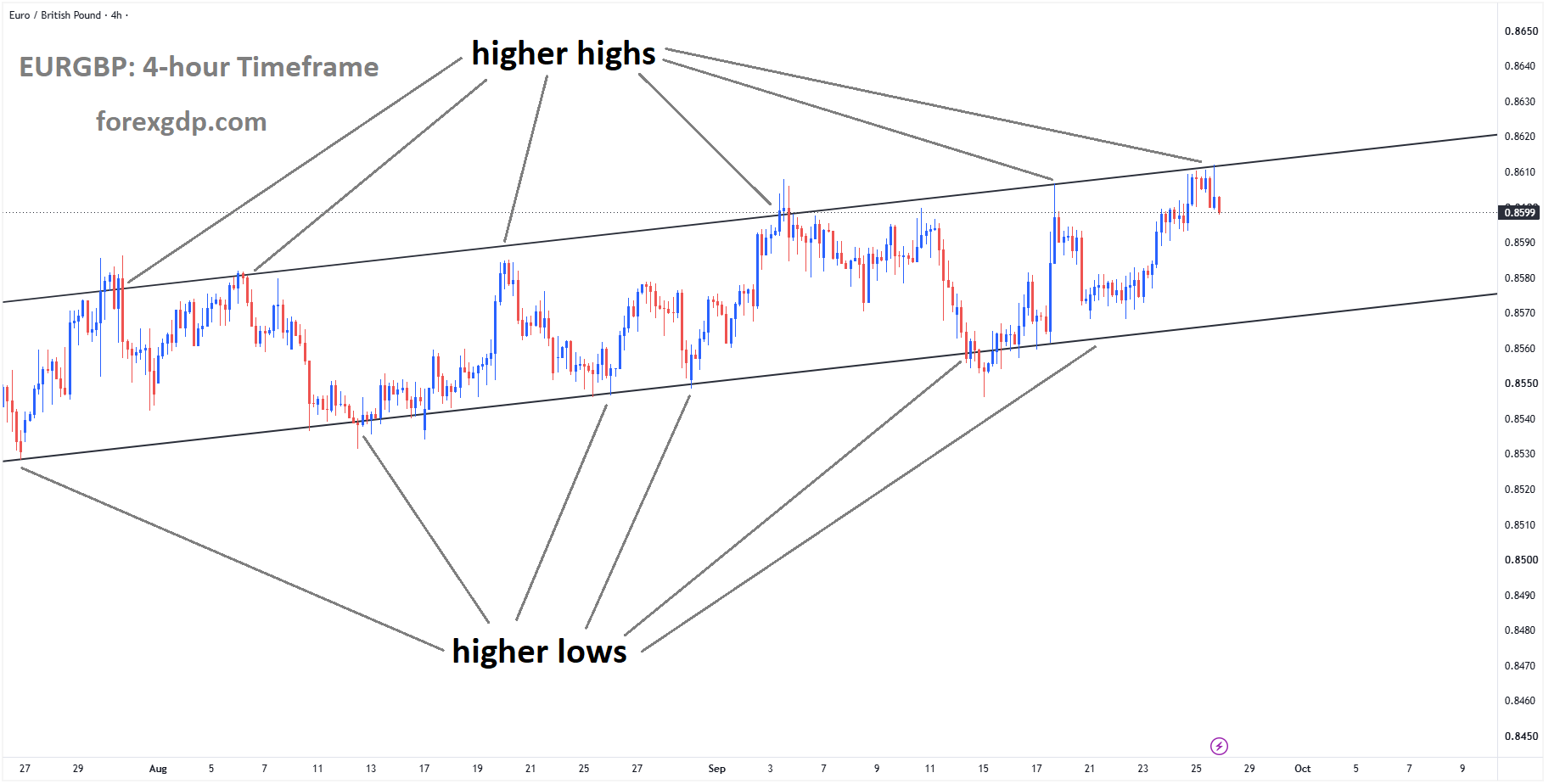
EURGBP is moving in an ascending channel, and the market has fallen from the higher high area of the channel
That leaves both currencies facing questions. German households are becoming more cautious as energy costs rise, while the UK faces a difficult mix of fiscal pressure and weaker economic activity. For now, those UK concerns are doing more to weigh on the Pound than Germany’s consumer confidence report is doing to weaken the Euro.
German Households Grow More Cautious
The latest survey from the Nuremberg Institute for Market Decisions and GfK showed that German consumer confidence has weakened more than expected. The outlook for October was the poorest in five months, suggesting that households are becoming less comfortable with their finances and less willing to spend.
Rising energy costs are a major reason for that change. When households spend more on heating, electricity, and other essentials, they have less money left for purchases they can postpone. The survey also showed a sharp drop in income expectations. People are becoming less hopeful about what they will earn in the months ahead.
As a result, more consumers want to save, while fewer are making plans to buy. That shift matters for the wider economy. Household spending supports retailers and service providers, so a lasting period of caution could make it harder for German businesses to grow.
The report gives a clear picture of the pressure consumers feel. Still, a weak survey does not tell the whole story of the Euro. Currency traders also weigh developments elsewhere, including the economic outlook in the UK. In this case, the disappointing German data has not been enough to change the broader view of EURGBP.
UK Borrowing Raises Questions About Fiscal Stability
The Pound has faced its own source of pressure after UK public sector borrowing came in higher than expected. The figures renewed concerns about the government’s finances and how much room it has to respond if the economy slows.
Higher borrowing can leave policymakers with difficult choices. They may need to raise revenue, limit spending, or accept a slower path toward improving the public finances. Each option can affect households and businesses. Even before any policy decision is made, uncertainty about those choices can influence confidence in the UK outlook.
Fiscal concerns also matter when the economy is already under strain. If government policy becomes more restrictive, it could add to the pressure on spending and growth. That possibility helps explain why traders have been reluctant to buy the Pound, despite talk of higher interest rates.
The borrowing figures do not determine where EURGBP will go next. They do, however, give the market a reason to question how much support the Pound can draw from the Bank of England’s policy stance.
Bank of England Rate Talk Gives the Pound Little Help
Bank of England Deputy Governor Clare Lombardelli said the central bank would need to raise interest rates if energy prices remain elevated. Normally, the prospect of higher rates can make a currency more attractive. In this case, her remarks brought little lasting support to the Pound.
One reason is that traders may already expect a substantial increase in UK interest rates. Brown Brothers Harriman strategists have pointed to a gap between those market expectations and their own assessment of what the Bank of England may need to do.
Their concern is that the UK economy may be too weak to justify as much tightening as markets anticipate. They also note that current interest rates are already near the upper end of the Bank of England’s estimated neutral range. If fiscal policy becomes more restrictive as well, it could reduce the need for the central bank to apply further pressure.
That creates a complicated picture for the Pound. Higher rates might support the currency, but they could also make borrowing more expensive for households and businesses. If the economy slows further, investors may become less confident that the Bank of England can raise rates as much as expected.
Energy Costs Complicate the Outlook for Both Currencies
Energy prices connect the concerns facing Germany and the UK, although they affect each country in different ways. In Germany, higher costs are reducing households’ spending power and making consumers more cautious. In the UK, persistent energy pressure could keep inflation elevated and prompt the Bank of England to consider higher rates.
Neither situation offers an easy path. German consumers may continue to hold back on purchases if essential bills take up more of their income. UK policymakers, meanwhile, must consider the risk that tighter borrowing conditions could hurt an already weak economy.
For EURGBP, the key question is how these pressures compare. Weak German confidence is a concern for the Euro, but doubts about UK growth, borrowing, and future rate increases are currently limiting the Pound’s appeal. New economic reports and Bank of England comments could change that balance.
Summary
EURGBP remains firm despite evidence that German consumers are feeling the strain of rising energy costs. Weak income expectations and stronger saving intentions point to a cautious outlook for household spending in Germany.
The Pound faces a different set of challenges. Higher than expected UK borrowing has revived fiscal concerns, while investors are questioning whether the Bank of England will raise interest rates as much as markets expect. Until those questions become clearer, even firm comments from central bank officials may offer the Pound limited support.
Crude Oil Steadies as Security Risks Keep Traders on Edge
WTI Oil has settled after retreating from its recent highs. Reports of stronger exports from Gulf producers have eased fears of a supply shortage, while possible talks between the United States and Iran have given traders another reason to watch for a calmer outlook. Yet the conflict remains uncertain, and fresh attacks in the region are keeping the oil market on alert.
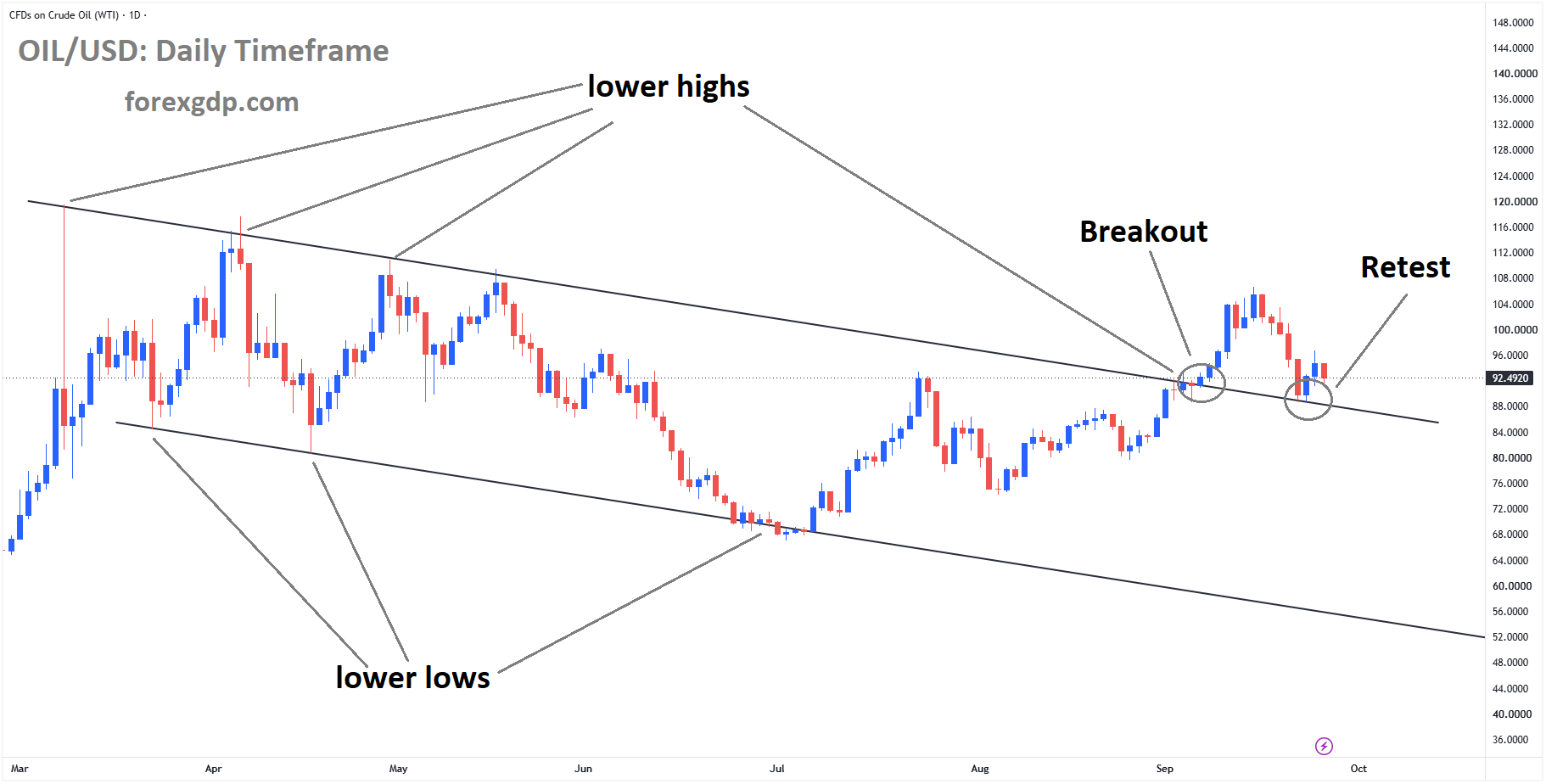
Crude Oil reached the retest area of the broken descending channel
For now, the main question is whether more oil can continue reaching buyers safely. Reports of higher shipments have offered some reassurance, but any threat to production or shipping could quickly change the mood.
Higher Gulf Exports Ease Supply Concerns
Oil markets pay close attention to how much crude leaves the Gulf because the region supplies a large share of global demand. When conflict threatens shipping routes, buyers may worry that deliveries will be delayed or interrupted. News of rising exports can ease those concerns.
A Bloomberg report said Saudi Arabia increased its oil shipments through the Strait of Hormuz during September. The report also indicated that Iraq, Kuwait, and the United Arab Emirates continued sending oil out of the Gulf. Together, those shipments suggest that regional producers have found ways to keep supplying customers despite the difficult security situation.
That news has helped calm fears of an immediate shortage. If buyers believe they can receive the crude they need, there is less urgency to secure extra supply. It also puts pressure on WTI Oil by shifting attention from what might be disrupted to what is currently reaching the market.
Still, export reports offer only a view of conditions at a particular time. Shipping can continue today and face new problems tomorrow. That is why traders are watching both the flow of oil and the safety of the routes carrying it.
The Strait of Hormuz Remains in Focus
The Strait of Hormuz connects Gulf oil producers with customers around the world. Any uncertainty around passage through the waterway can affect confidence far beyond the region. Even when shipments continue, concerns about vessel safety can influence how buyers, shipping firms, and insurers plan ahead.
Reports that some Gulf producers have used vessels with their transponders turned off show how unusual the operating conditions have become. The reported shipments have supported global supply, but they also underline the challenges of moving oil during a conflict.
If the route stays open and deliveries continue, supply concerns may ease further. If the security situation worsens, confidence could fade quickly. This tension helps explain why WTI Oil has steadied after its retreat rather than falling more sharply.
US-Iran Talks Offer Hope, but No Certainty

Reports of contact between the United States and Iran have raised hopes that negotiations could reduce the risks facing the oil market. The Financial Times reported that Tehran had put forward a seven-day ceasefire proposal that included reopening the Strait of Hormuz and carrying out an earlier memorandum of understanding.
A proposal is an early step. Its effect on oil supply would depend on whether the parties agree to it, follow its terms, and create conditions in which ships can travel safely. Until there is clearer evidence of progress, traders have reason to remain cautious.
Even so, the possibility of a negotiated pause matters. If tensions ease, concerns about disrupted Gulf exports may weaken. Buyers could then focus more closely on how much oil is available and whether demand is strong enough to absorb it.
Fresh Attacks Keep the Market Cautious
The security picture remains fragile. Saudi authorities reported intercepting another wave of missiles launched by the Houthis from Yemen. Such incidents keep attention on the risk to oil facilities and shipping, even when no new disruption to supply is confirmed.
For the market, the concern is what a successful attack could do. Damage to production facilities could reduce the amount of crude available for export. An incident involving shipping could slow deliveries or make transport more difficult. Either outcome would renew fears of a shortage.
This risk gives WTI Oil some support while traders assess the export reports and diplomatic developments. More supply may be reaching global buyers, but the possibility of a sudden interruption has not disappeared.
US Oil Stockpiles Add to the Pressure
Supply from the Gulf is only part of the picture. Recent US data showed that commercial crude stockpiles rose when the market had expected them to fall. A larger inventory suggests that more oil was available in storage than anticipated.
That result has made it harder for WTI Oil to sustain its earlier strength. When inventories grow unexpectedly, traders may question whether demand is keeping pace with supply. The figures do not settle the broader outlook on their own, but they add another reason for buyers to be patient.
The next inventory reports will help show whether the increase was temporary or part of a longer shift. Traders will also continue weighing US stockpiles against developments in the Gulf, where changes in exports or security could have a much wider impact.
Summary
WTI Oil is holding steady as competing forces shape the market. Higher reported exports from Gulf producers and a rise in US crude inventories have eased supply concerns. At the same time, uncertain US-Iran contacts and fresh attacks in the region leave open the risk of disruption.
The outlook will depend on whether Gulf shipments continue safely and whether diplomatic efforts lead to lasting progress. Until those questions become clearer, oil traders are likely to remain sensitive to both supply reports and news from the Middle East.
BTCUSD Stays Strong as Spot ETF Demand Surges
Bitcoin has gained attention after a strong week, supported by fresh investment through US spot exchange traded funds. The inflows suggest that large investors remain interested in gaining exposure to the cryptocurrency. At the same time, signs of increased profit taking show that some holders are using the rally to sell.
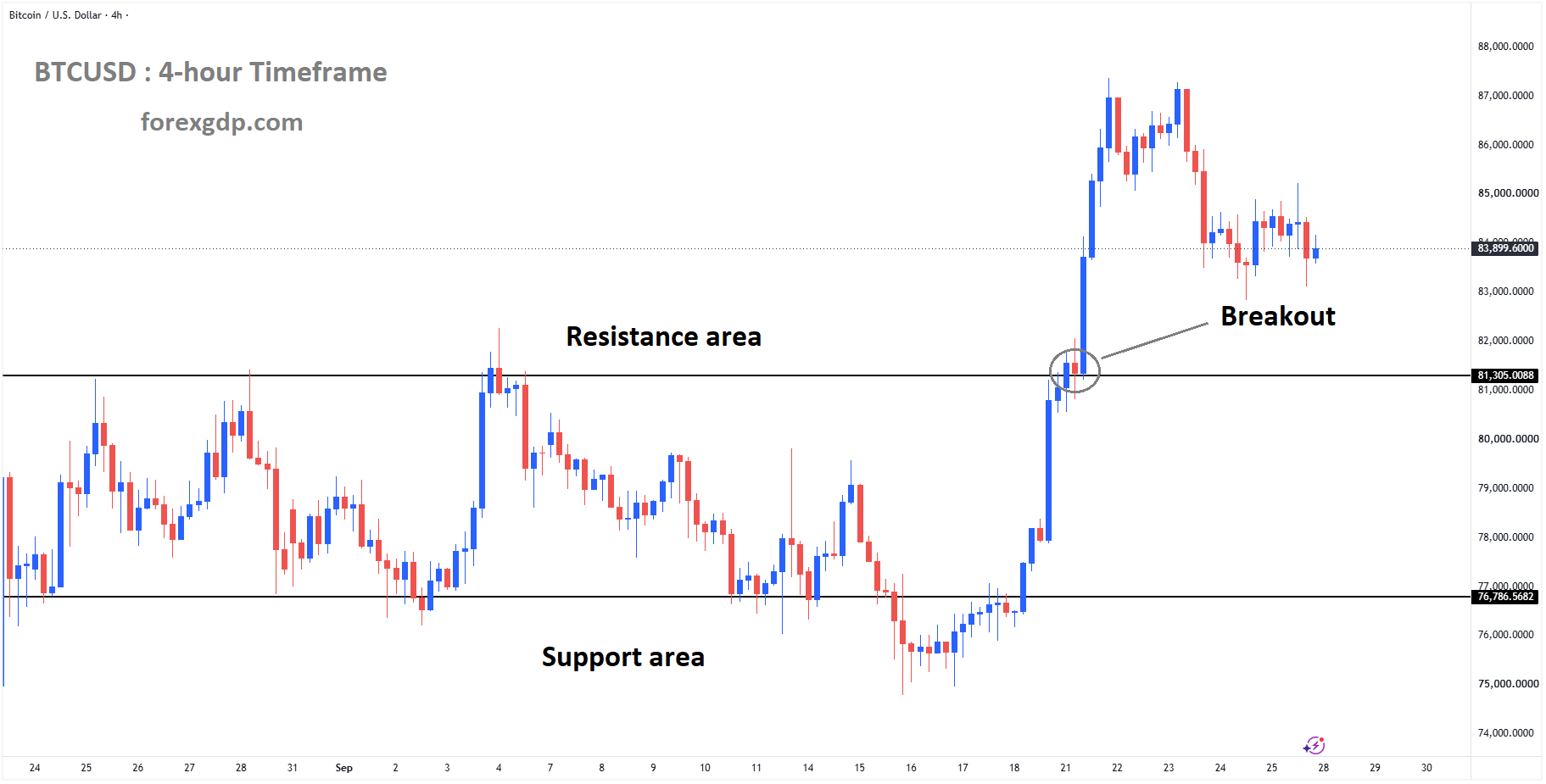
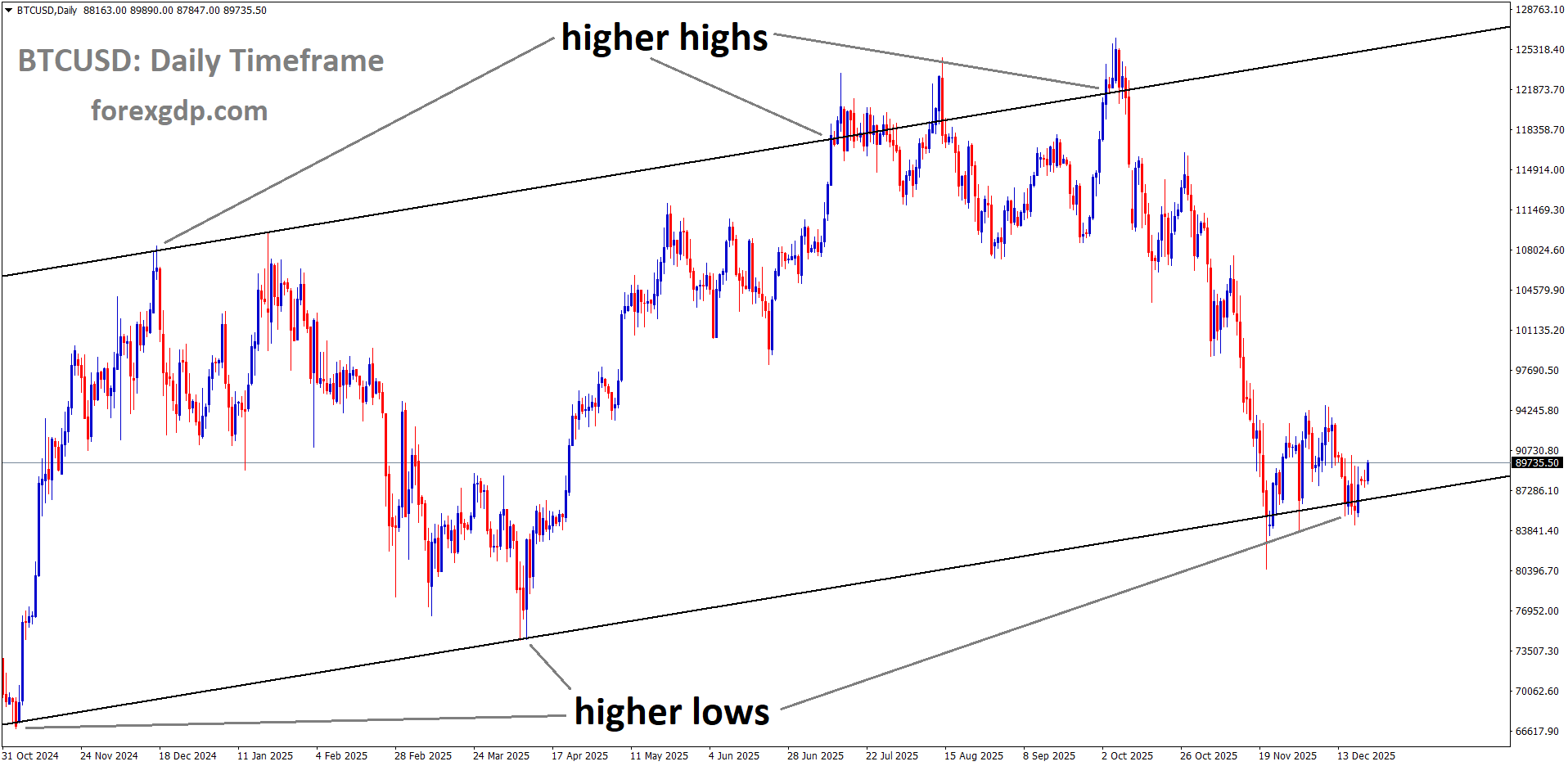
BTCUSD has broken the box pattern to the upside
That mix of buying and selling has left investors with a question: can steady demand absorb the Bitcoin now being sold by holders who want to lock in gains? Recent activity in investment funds, corporate treasuries, and new financial products offers a closer look at both sides of the market.
Spot Bitcoin ETFs Attract Strong Inflows
US-listed spot Bitcoin ETFs recorded substantial net inflows through Thursday, according to SoSoValue data. The total put the funds on course for their strongest week of inflows since October 2025. Monday also brought the largest single-day inflow over that period.
Spot ETFs give investors a way to gain exposure to Bitcoin through a familiar investment product. For institutions that already use traditional markets, these funds can be easier to access than buying and holding Bitcoin directly. Strong inflows therefore offer a useful sign of interest from investors who prefer to use established financial channels.
The timing matters. Fresh money continued to enter the funds during a week when Bitcoin had already risen. That suggests buyers were still willing to add exposure despite the recent gains. If interest continues, ETF purchases could remain a source of demand.
Fund inflows alone, however, cannot tell the whole story. They show how investors are using one route into Bitcoin, while activity elsewhere in the market may tell a different tale. Some existing holders may see the same rally as an opportunity to take profits.
Corporate Bitcoin Buying Remains in Focus
Corporate purchases are another part of Bitcoin’s story. Strategy, the Bitcoin treasury company led by Michael Saylor, announced an additional purchase on Monday, bringing its reported holdings to 846,000 BTC.
Strategy’s approach has made it one of the most closely watched companies in the Bitcoin market. Its purchases show how a business can treat Bitcoin as a major treasury asset rather than a short-term investment. For supporters of this approach, continued buying reflects confidence in Bitcoin’s longer-term role.
Still, a company’s decision to accumulate Bitcoin is its own financial choice. Other businesses may have different goals, funding needs, and tolerance for risk. Strategy’s latest purchase adds to evidence of corporate interest, but it does not mean every company will follow the same path.
What it does show is that demand for Bitcoin now comes from more than individual traders. Investment funds and companies both play a part, giving the market a broader set of participants whose decisions can shape activity over time.
New Funds Build Around Bitcoin Treasuries
The growing role of corporate Bitcoin holdings is also creating opportunities for new investment products. Tuttle Capital Management, working with sub-adviser Strive Asset Management, announced the launch of the T-Strive Digital Credit Preferred Income ETF, known as DCAP.

The fund seeks income by investing in preferred securities issued by companies that hold Bitcoin as a core balance sheet asset. It does not buy Bitcoin directly. Instead, it gives investors exposure to financial securities connected to Bitcoin treasury companies.
That distinction is useful for investors to understand. Owning a share of a spot Bitcoin ETF and owning a fund that invests in corporate preferred securities are different choices. Their returns depend on different factors, including the structure and financial health of the companies involved.
The launch nevertheless shows how Bitcoin’s influence is spreading through traditional finance. As more companies hold it, financial firms can create products linked to those companies and their funding needs. Bitcoin is becoming part of a wider set of investment decisions, even in products that do not own the cryptocurrency itself.
Profit Taking Could Test Recent Optimism
Strong demand does not mean every Bitcoin holder intends to keep buying. Recent data points to a sharp rise in profit-taking activity following the rally. That is a natural response when investors who bought earlier decide to realize their gains.
Profit taking can slow a rise when sellers bring more Bitcoin to the market. It may also lead to a period of caution as buyers decide whether to keep adding exposure. Neither outcome is certain: continued purchases could absorb the selling, while weaker demand could make the market more sensitive to it.
This is why ETF inflows and profit taking deserve attention together. The fund data shows fresh interest. The selling activity shows that some holders are ready to cash out. How those two forces develop will help shape Bitcoin’s next move.
It is also a reminder that a strong week does not remove uncertainty. Investors can be optimistic about Bitcoin’s longer-term adoption while still taking a careful view of its shorter-term swings. Those views can exist at the same time, particularly after a rapid rise.
Summary
Bitcoin’s recent strength has been supported by heavy inflows into US spot ETFs and another purchase by Strategy. The launch of a fund tied to Bitcoin treasury companies also shows how traditional finance is developing products around corporate holdings.
At the same time, increased profit taking suggests some existing holders are choosing to sell after the rally. The key issue now is whether fresh demand remains strong enough to meet that selling. Both developments matter for anyone following Bitcoin’s changing role in investment funds and corporate finance.
Don’t trade all the time, trade forex only at the confirmed trade setups
Get more confirmed trade signals at premium or supreme – Click here to get more signals, 2200%, 800% growth in Real Live USD trading account of our users – click here to see , or If you want to get FREE Trial signals, You can Join FREE Signals Now!