XAUUSD Buyers Keep Gold Firm as Dollar Loses Momentum
Gold is attracting renewed buying interest as lower US bond yields put pressure on the US Dollar. The precious metal has benefited from investors taking profits on the dollar after its recent strength, making gold more appealing to buyers using other currencies.
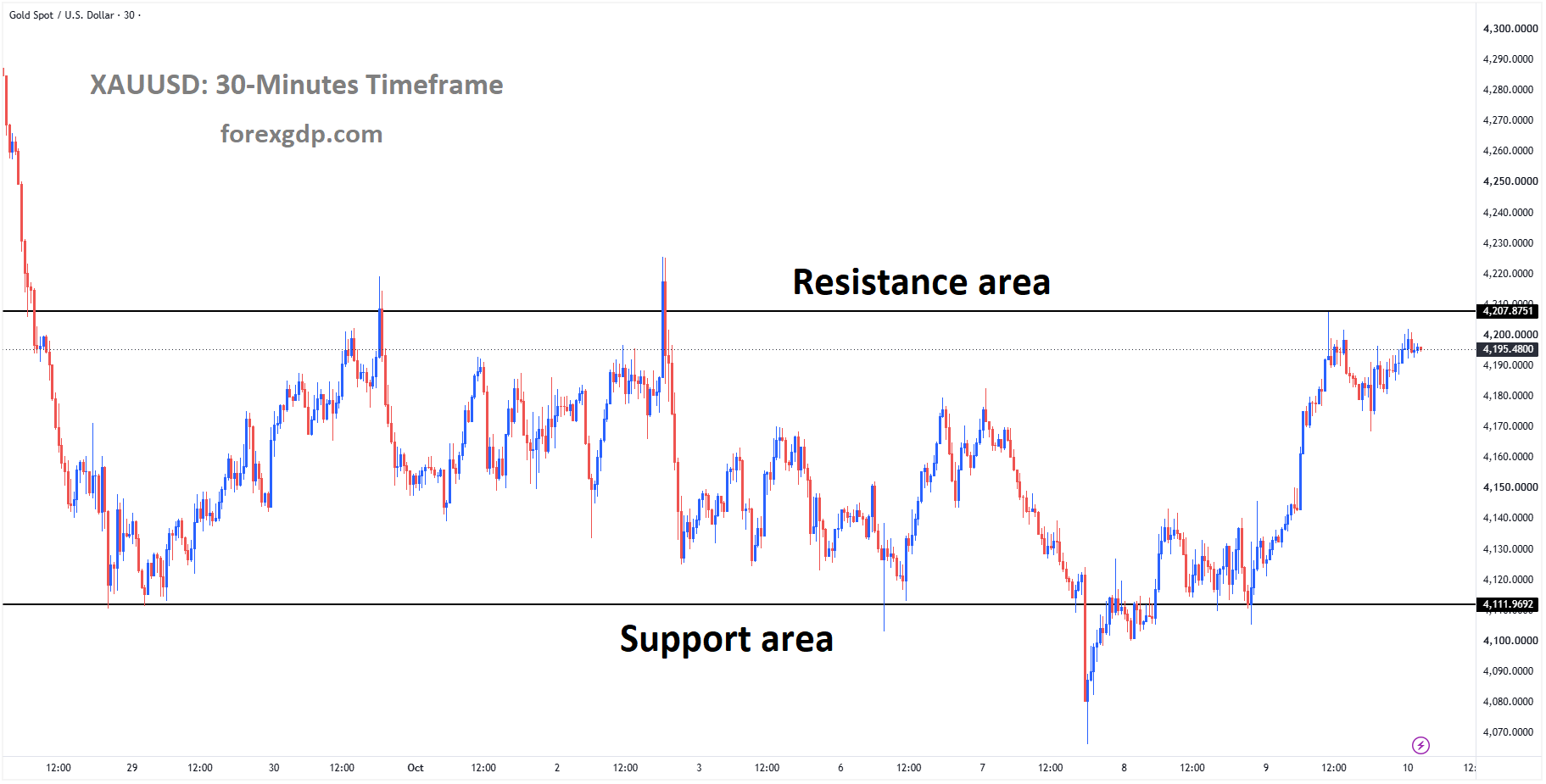
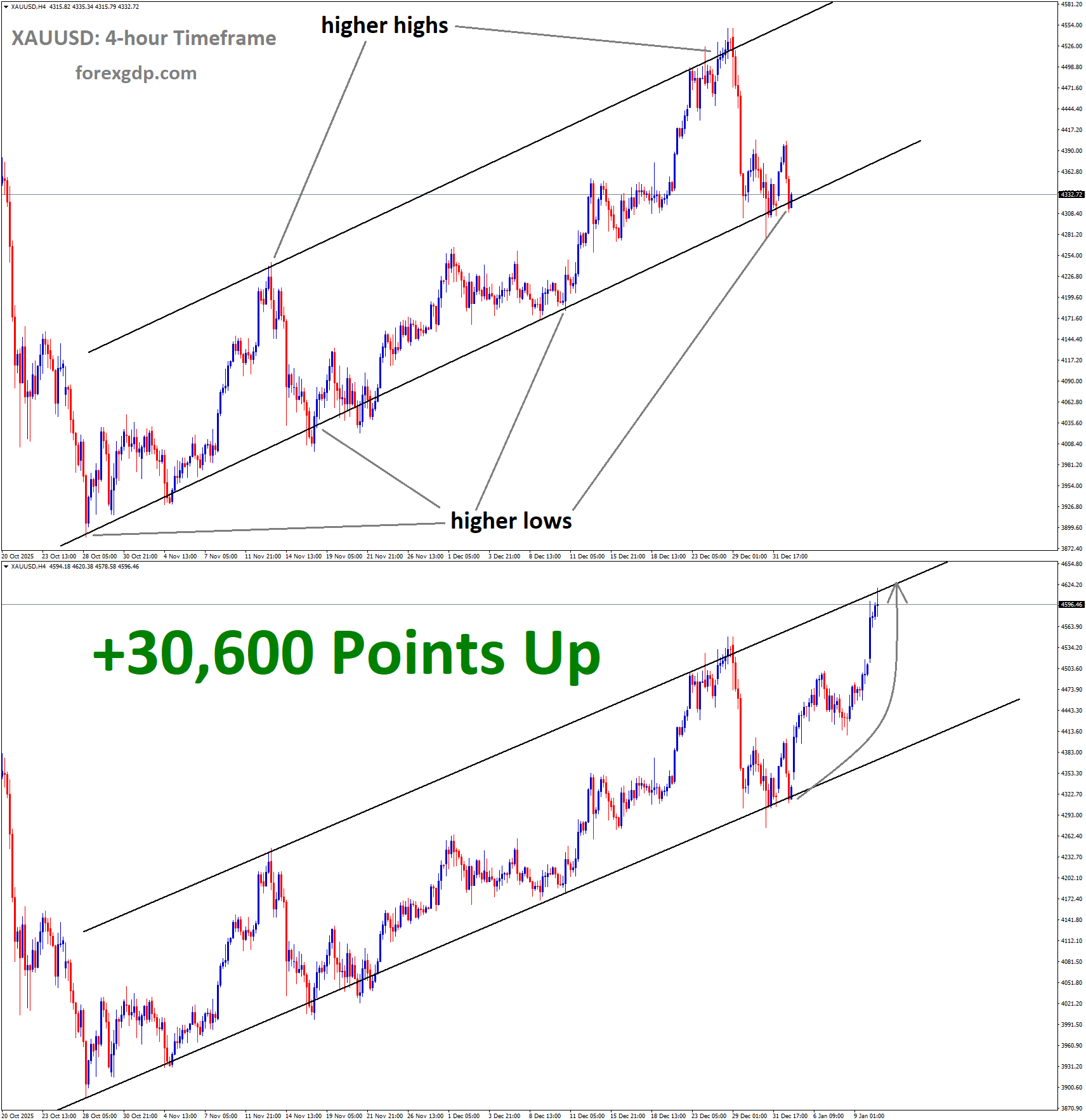
XAUUSD is moving in a box pattern
However, the recovery faces several challenges. Uncertainty in the Middle East continues to influence energy markets and inflation expectations, while the Federal Reserve’s firm approach to monetary policy remains a concern for gold buyers.
The result is a market pulled in different directions. Falling yields offer some breathing room for gold, but the possibility of higher borrowing costs could limit that benefit. Investors are watching diplomatic developments and upcoming US consumer data to assess which force may have the greater influence.
Lower Bond Yields Give Gold Some Breathing Room
The decline in US Treasury yields has played an important role in gold’s recent recovery. Strong demand at a US government bond auction helped push yields lower, reducing some of the appeal of holding dollar-denominated interest-bearing assets.
Gold does not pay interest. When bond yields rise, investors have more reason to consider assets that provide regular income. When yields fall, that income advantage becomes smaller, which can make gold more attractive.
The move in yields also encouraged some investors to take profits on their US Dollar holdings. A softer dollar generally makes gold less expensive for buyers outside the United States, helping demand from international investors.
Still, a short-term decline in yields does not necessarily mean the broader interest-rate environment has changed. Investors need to assess whether the latest move reflects a lasting shift in expectations or a temporary adjustment after strong demand for government debt.
Diplomatic Hopes Ease Some Energy Concerns
Signs of possible progress in discussions between the United States and Iran have helped ease concerns about further military escalation.
President Donald Trump indicated that the United States would avoid resuming military strikes before the November midterm elections. He also described discussions with Iran as productive, giving investors some reason to hope that diplomacy could reduce tensions.
That message helped contain pressure in crude oil markets. Energy costs matter because a sustained increase can raise transport, manufacturing and household expenses. Businesses may pass those costs on to customers, adding to wider inflation pressures.
When concerns about rising oil costs ease, investors may become less worried that the Federal Reserve will need to tighten monetary policy further. That can weigh on bond yields and the dollar, creating a more favourable environment for gold.
However, encouraging comments alone do not resolve the dispute. Markets remain sensitive to developments that could interrupt negotiations or threaten energy supplies.
Nuclear Disagreements Keep Uncertainty Alive
Despite the more encouraging diplomatic language, major differences remain between Washington and Tehran over Iran’s nuclear programme.
US Vice President JD Vance said Iran would need to make a meaningful reduction in its nuclear enrichment capacity to meet US demands. Iran’s Atomic Energy Chief Mohammad Eslami rejected demands to abandon uranium enrichment or surrender existing stockpiles.

These positions suggest that reaching an agreement could remain difficult. Talks may continue, but investors have limited reason to assume that the central disagreements will disappear quickly.
For gold, this uncertainty has competing effects. Concern about military conflict can encourage demand for assets viewed as stores of value. At the same time, a sharp deterioration in global confidence can also attract buyers to the US Dollar.
This means geopolitical tension does not automatically translate into uninterrupted gains for gold. Its influence depends partly on how investors respond through currency markets, energy markets and interest-rate expectations.
Middle East Fighting Adds to Supply Risks
The wider regional situation also remains a concern. Intensifying fighting between the Iran-aligned Houthis in Yemen and the Saudi-led military coalition adds another layer of uncertainty.
Investors are particularly sensitive to disruptions affecting important shipping routes, including the Strait of Hormuz. Interruptions to energy transport could create supply concerns and increase costs across the global economy.
Higher energy costs would complicate the inflation picture. Even if demand in other parts of the economy cools, more expensive fuel could keep pressure on household budgets and business spending.
That creates a difficult balance for gold. Regional instability may increase interest in the precious metal, while the inflation consequences of that instability could encourage a tougher response from the Federal Reserve.
Federal Reserve Expectations May Restrain Gold Buyers
The Federal Reserve’s hawkish stance remains one of the main obstacles to a stronger gold recovery.
Investors continue to consider the possibility that the central bank could raise borrowing costs before the end of the year. If inflation remains persistent, policymakers may feel less comfortable allowing financial conditions to ease.
Higher interest rates can support the US Dollar by increasing the appeal of dollar-based investments. They also raise the opportunity cost of holding gold, which provides no interest income.
For this reason, the dollar’s recent retreat may attract renewed buying if investors remain confident that US rates will stay elevated. Such demand could reduce the currency benefit currently helping gold.
The direction of monetary policy will depend on incoming evidence. Inflation trends, consumer expectations and economic conditions will all influence how investors assess the Fed’s next steps.
Consumer Sentiment Data Could Shape the Next Move
Attention is turning to the preliminary University of Michigan consumer sentiment report and its inflation expectations measures.
The sentiment reading offers insight into how households feel about their finances and the economy. The inflation expectations figures show whether consumers anticipate further increases in everyday costs.
Higher expectations could reinforce concerns that inflation will remain difficult to control. That may strengthen expectations for tighter monetary policy, potentially supporting the dollar and limiting gold’s recovery.
Lower expectations could ease some of those concerns. However, investors will also consider whether weaker confidence reflects growing pressure on household spending.
The report matters because it may help clarify whether easing energy concerns are changing consumer attitudes or whether inflation worries remain firmly in place.
Final Summary
Gold’s recovery is receiving support from falling US bond yields and a softer dollar. Hopes for diplomatic progress have also eased some concerns about energy-driven inflation.
Nevertheless, unresolved nuclear disagreements, regional fighting and uncertainty around shipping routes continue to cloud the picture. The Federal Reserve’s hawkish stance adds another constraint, particularly if incoming data strengthens expectations for higher borrowing costs.
Gold’s next direction will depend on how these forces interact. Diplomatic progress, energy developments and consumer inflation expectations will remain central to investor decisions.
EURUSD Keeps Its Edge as French Budget Fears Grow
EURUSD is gaining ground as investors reduce their expectations for an immediate interest rate increase from the US Federal Reserve. That shift has eased some demand for the US Dollar, giving the Euro room to recover. However, concerns about France’s public finances continue to weigh on confidence in the shared currency.
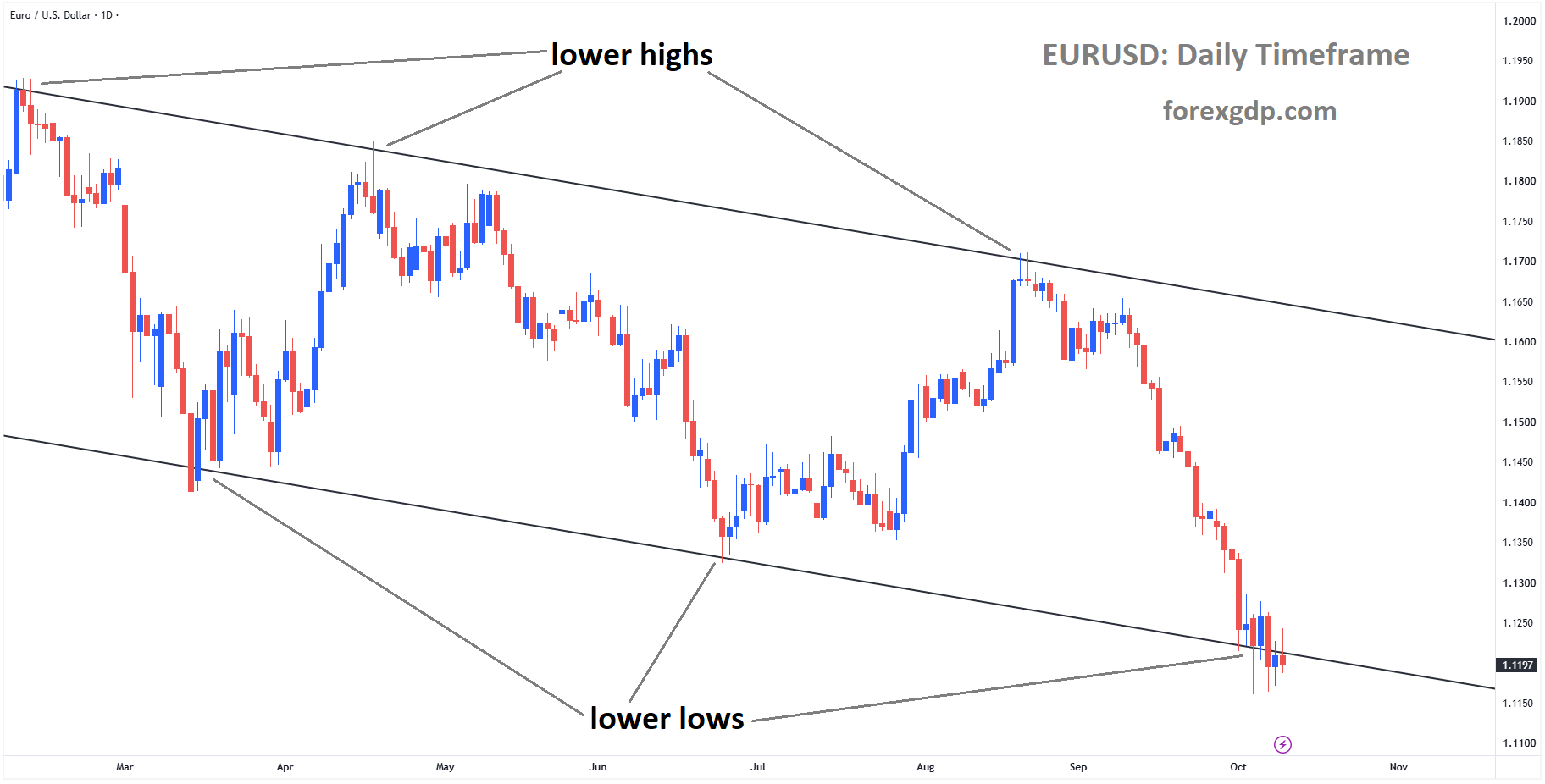
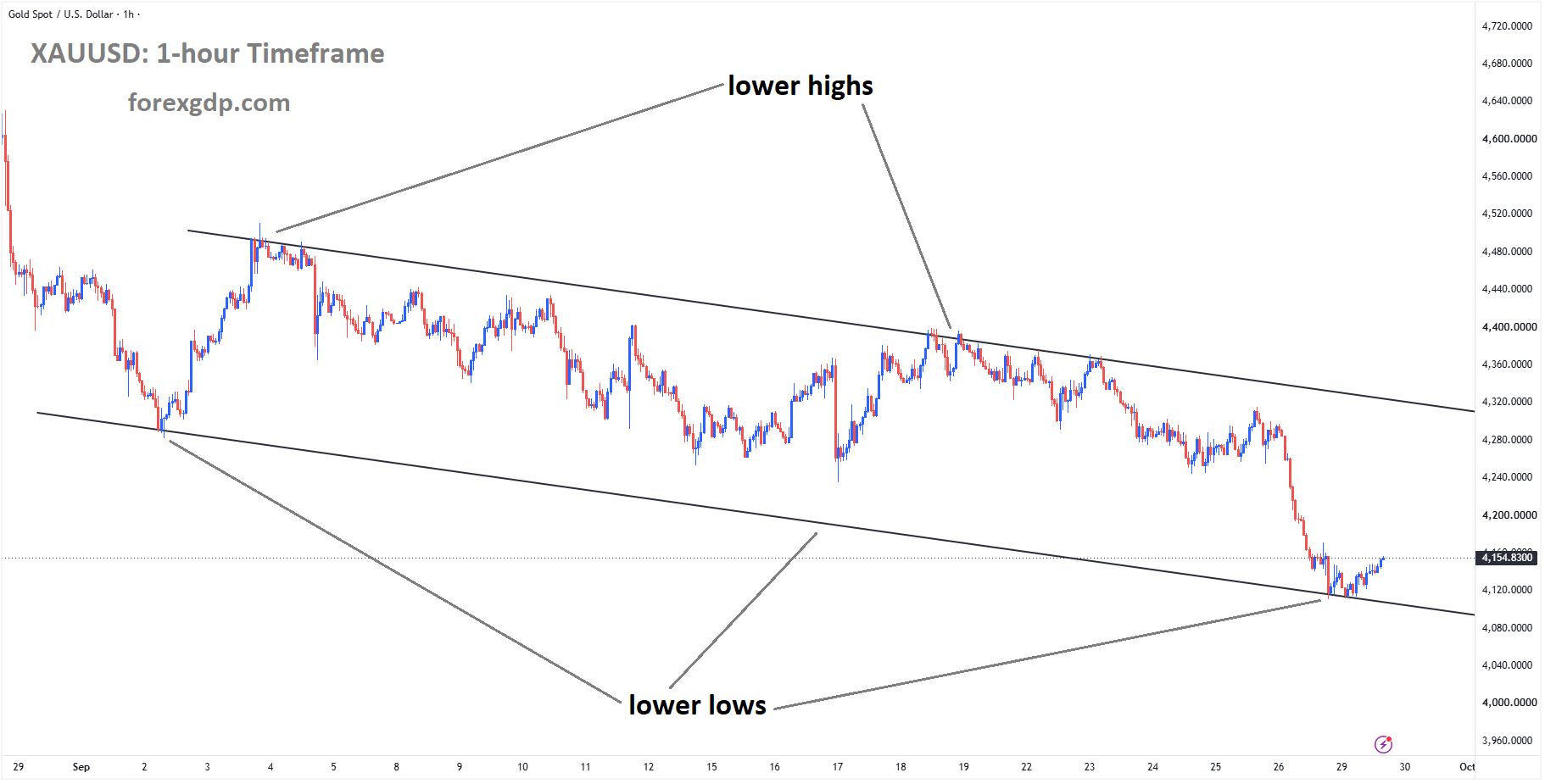
EURUSD reached the lower low area of the descending channel
The result is a mixed picture. The Euro is benefiting from changing US interest rate expectations, but it faces challenges within the Eurozone. France’s budget problems, uncertainty over government spending cuts, and stronger economic growth in the United States could limit the currency’s progress.
Investors are also watching US consumer sentiment for clues about household confidence and spending. Together, these developments are shaping the debate over whether EURUSD can maintain its recent gains.
Lower Expectations for an October Fed Hike Help the Euro
One of the main reasons behind the improvement in EURUSD is the reduced likelihood of an October interest rate increase by the Federal Reserve.
According to the CME FedWatch figures cited in the report, the probability of an October hike fell to roughly 18%, compared with about 38% a week earlier. This change suggests that investors have become less convinced that the Fed will tighten policy immediately.
Interest rate expectations matter because they influence the appeal of holding a currency. When investors expect US rates to rise, the Dollar can benefit from the prospect of higher returns on Dollar-based assets. When those expectations ease, some of that advantage can weaken.
For the Euro, this creates an opportunity to gain ground against the Dollar. Still, a lower chance of an October hike does not mean investors believe the Fed has finished raising rates.
The same figures showed a much higher probability of an increase in December. The market appears to be reconsidering the timing of further tightening, while continuing to see a possible need for higher rates later.
Fed Policymakers Remain Divided Over Inflation
The Federal Reserve’s September meeting minutes revealed differences in how policymakers viewed the need for higher interest rates.
Some officials focused on the risk that energy costs and other price shocks could keep inflation elevated. Their concern was that renewed increases in essential costs might make it harder to bring inflation under control.
Others placed greater emphasis on demand within the US economy. They viewed stronger spending and economic activity as potential sources of continuing inflation pressure.
These concerns lead to an important distinction. Inflation caused by a temporary rise in energy costs may develop differently from inflation supported by sustained demand. Policymakers must judge whether price pressures are likely to fade or remain persistent.
That uncertainty helps explain why expectations for the next Fed decision can change quickly. Investors are weighing each new economic release against the possibility that the central bank will need to act again.
For EURUSD, the timing of any further increase matters. A delayed hike can ease pressure on the Euro, while evidence of persistent US inflation could renew demand for the Dollar.
France’s Budget Problems Weigh on Euro Confidence
Despite the improvement in EURUSD, France’s financial position remains a major concern.
Investors have become increasingly uneasy about the country’s ability to reduce its budget deficit and manage its debt. The reported move away from French government bonds toward German government bonds reflects that loss of confidence.
The gap between French and German borrowing costs widened sharply during the period covered by the report. This suggests that investors were demanding greater compensation for holding French debt.
Higher borrowing costs can complicate efforts to repair public finances. A government facing larger interest payments has less flexibility to fund services, invest in growth, or reduce its deficit.
France’s importance within the Eurozone makes these concerns relevant beyond its own borders. Financial uncertainty in one of the region’s largest economies can affect how investors view the shared currency.
This helps explain why the Euro has not benefited more strongly from softer expectations for an immediate Fed hike. Investors have reasons to reduce Dollar exposure, but concerns about France make the Euro a less comfortable alternative.
Spending Cuts Face a Difficult Political Path
The French government has announced a substantial savings plan intended to improve public finances and reduce the risk of a damaging deterioration in its credit standing.
However, announcing a plan is only the first step. Investors also want evidence that the government can secure political backing and deliver the proposed measures.
A minority government faces particular challenges when pursuing major budget changes. Spending reductions can attract resistance from political parties, public institutions, and households affected by the decisions.
The government must also balance deficit reduction with economic activity. Cutting spending may help improve the budget, but poorly timed measures could place additional pressure on growth.
That balance matters for debt management. A healthier economy can support tax revenues, while weaker activity can make fiscal targets harder to achieve.
For the Euro, confidence will depend partly on whether France can present a credible plan and demonstrate steady progress toward it.
ECB Tightening Offers Some Support
The European Central Bank’s policy outlook provides a measure of support for the Euro.
The source report describes Eurozone inflation as remaining above target, while a firmer growth outlook gives the ECB room to consider further interest rate increases. Expectations for additional tightening can help maintain the appeal of Euro-denominated assets.
Strategists at Brown Brothers Harriman argue that this could limit the policy gap between the ECB and the Federal Reserve. A smaller gap may reduce some of the pressure on EURUSD.
However, central bank policy does not operate in isolation. Higher European rates cannot fully remove concerns about government debt or compensate for every difference in economic performance.
The strategists also suggest that the ECB’s meeting account may offer limited fresh guidance if financial conditions have changed significantly since the meeting. Investors need to consider both the earlier policy discussion and more recent developments.
US Growth and Consumer Confidence Remain Important
Stronger US growth relative to the Eurozone remains another factor supporting the Dollar.
An economy showing firmer activity can attract investment and give its central bank more room to keep interest rates elevated. This means the Dollar may retain support even when expectations for an immediate hike decline.
The upcoming University of Michigan consumer sentiment report could add to that discussion. Household confidence offers insight into how consumers view their finances and the wider economy.
A firmer reading could reinforce expectations for continued spending. A weaker reading could raise questions about whether households are becoming more cautious.
Investors will assess the release alongside inflation and other economic data when judging the Fed’s next steps.
Final Summary
EURUSD is benefiting from reduced expectations for an October Fed rate hike, but France’s budget difficulties continue to limit confidence in the Euro.
Further ECB tightening could provide support, while stronger US growth and the possibility of a later Fed increase keep the Dollar competitive. The next developments in French fiscal policy and US economic data will help determine whether the Euro can sustain its recovery.
GBPUSD Pushes Ahead While Budget Uncertainty Clouds Sterling
GBPUSD is finding fresh buying interest as the US Dollar softens following comments from Federal Reserve Governor Christopher Waller. His remarks suggest that the central bank may have room to pause between interest rate increases, even if further action is needed to bring inflation under control.
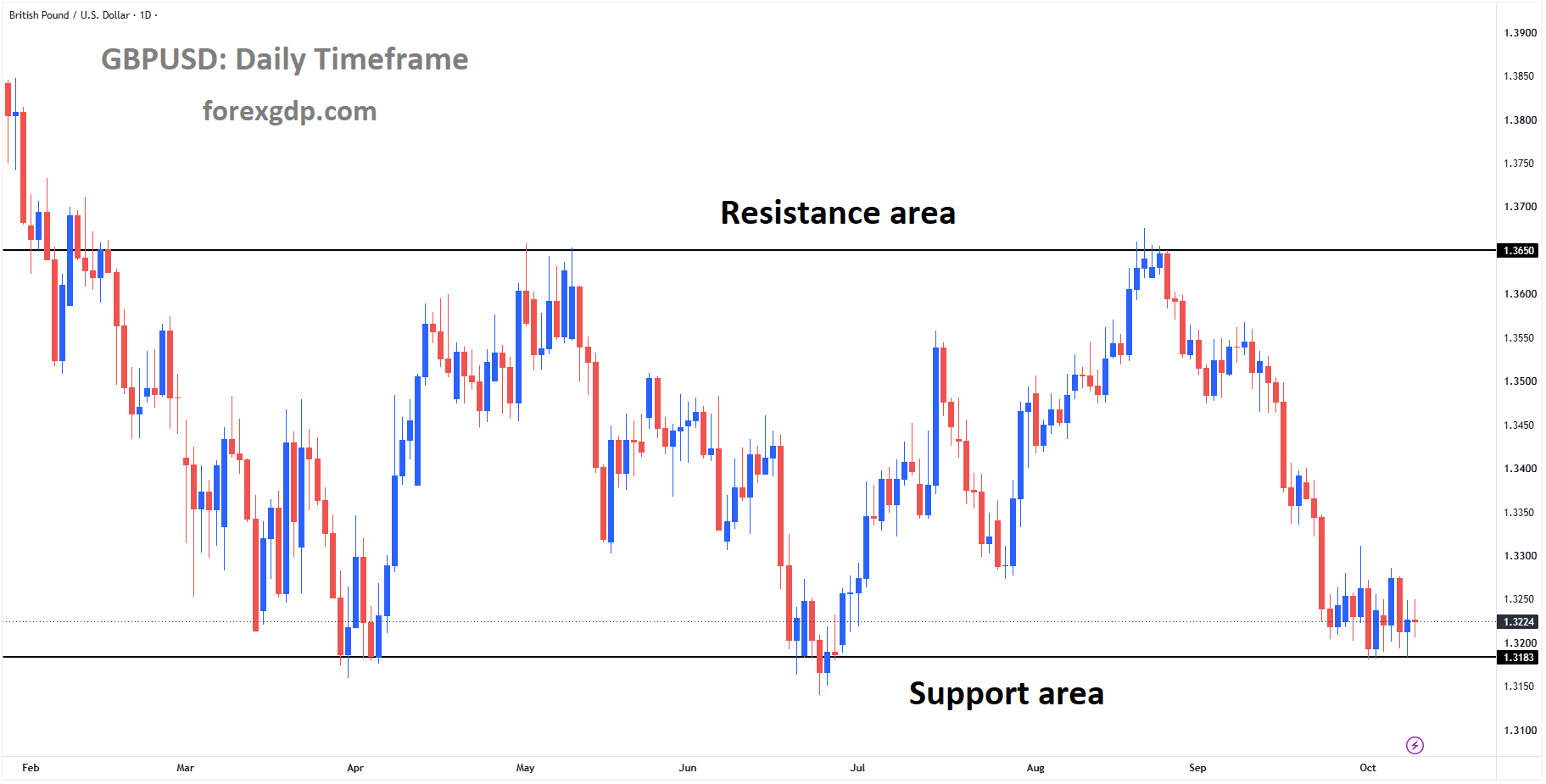
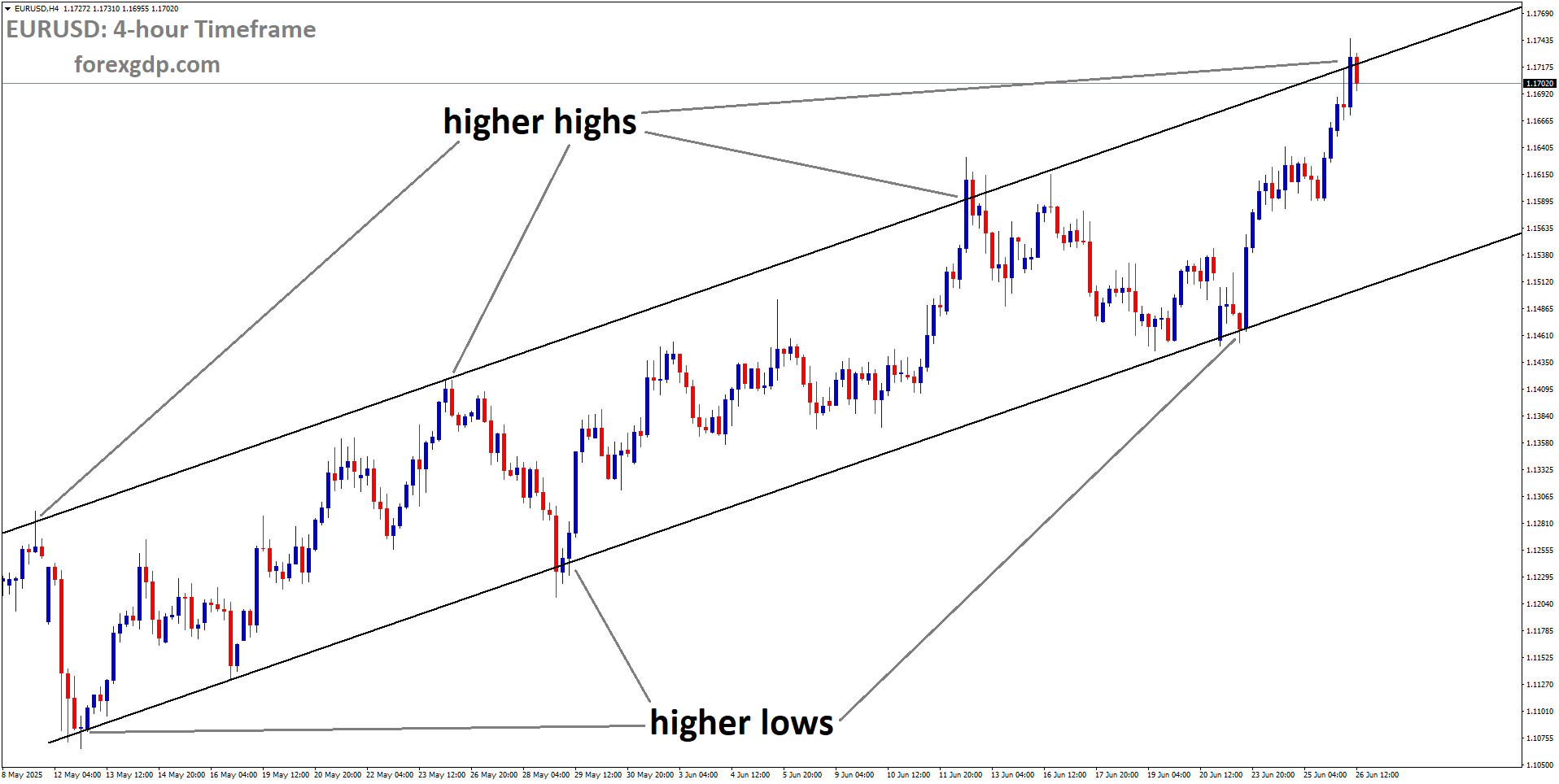
GBPUSD reached the support area of the box pattern
That possibility has given the British Pound some breathing room. When investors become less certain about an immediate US rate increase, demand for the Dollar can weaken, allowing other currencies to gain.
However, the Pound faces its own challenges. Concerns about Britain’s public finances, expensive government borrowing, and possible tax changes are keeping investors cautious. The result is a mixed picture for GBPUSD, with changing US interest rate expectations helping Sterling while uncertainty surrounding the UK budget limits confidence.
Waller’s Comments Change the Interest Rate Conversation
Waller’s message was clear on one point: the Federal Reserve’s fight against inflation may still require additional interest rate increases. However, he also stressed that those increases do not necessarily need to happen at consecutive meetings.
That distinction matters for currency markets. Investors pay attention to both the likely direction of interest rates and the timing of any changes. A central bank that raises rates quickly creates a different environment from one that pauses to assess the effects of earlier decisions.
A pause would give policymakers more time to examine inflation, employment, consumer spending, and borrowing conditions. Higher interest rates take time to affect the economy, so waiting can help officials judge whether existing policy is already doing enough.
For the Dollar, Waller’s comments reduced some of the urgency surrounding another immediate increase. His remarks did not remove the possibility of further tightening, but they encouraged investors to reconsider how soon it might happen.
This shift helped GBPUSD gain as the market adjusted its expectations for the next Federal Reserve meeting.
A Possible Fed Pause Does Not End Inflation Concerns
There is an important difference between pausing interest rate increases and declaring that inflation is under control.
Waller’s comments left room for both patience and further action. The Federal Reserve could decide to hold rates steady at one meeting while remaining willing to raise them later if economic data shows that inflation remains too persistent.
Market expectations reflected that distinction. The likelihood of an increase at the upcoming meeting had fallen compared with the previous week, while investors continued to anticipate a possible move later in the year.
For GBPUSD, this creates a source of uncertainty. Expectations of a near-term pause can weaken the Dollar, but that pressure may fade if new information points to continued inflation risks.
The currency pair therefore remains sensitive to changes in the US economic picture. Investors will be looking for evidence that confirms whether the Fed has room to wait or needs to act sooner.
US Consumer Sentiment Becomes the Next Focus

The upcoming University of Michigan Consumer Sentiment report is another event attracting attention.
Consumer confidence offers insight into how households view their finances and the wider economy. Those views can influence spending decisions, particularly when borrowing costs are high and families remain concerned about living expenses.
If consumers feel more confident, they may be more willing to make purchases. Stronger spending could suggest that the economy remains resilient despite restrictive interest rates.
Weaker confidence could point to growing pressure on households. That would give investors another reason to consider whether the Federal Reserve can afford to pause while it watches how the economy develops.
The report’s inflation expectations will also matter. Policymakers monitor how consumers expect prices to change because those beliefs can affect wage demands and spending behaviour.
For GBPUSD traders, the key question is whether the report strengthens or weakens the case for further US interest rate increases.
Britain’s Public Finances Keep Sterling Under Pressure
While US developments have helped the Pound, Britain’s fiscal position remains a concern.
Government borrowing costs have risen sharply, making it more expensive to finance public spending and manage debt. This puts pressure on the budget because more money must be directed toward interest payments.
That leaves less flexibility for other priorities. The government must balance demands for public services and investment against the need to maintain confidence in its financial plans.
Investors want to see a credible approach to these pressures. Uncertainty about spending, taxation, or borrowing can make them more cautious about the UK economy and Sterling.
A weaker Dollar can help GBPUSD rise, but lasting confidence in the Pound also depends on domestic conditions. The budget therefore remains an important event for investors assessing Britain’s financial direction.
Possible Bank Taxes Add to Budget Uncertainty
Questions about potential tax changes are adding another layer of concern.
The chancellor’s comments about a challenging fiscal picture have drawn attention to whether banks could face a larger tax burden. Without clear guidance, investors are left weighing several possible outcomes.
Higher taxes could provide additional government revenue. However, any changes would also need to be assessed for their effect on bank profitability, lending, and business confidence.
Banks play a central role in the economy by providing credit to households and companies. Budget measures affecting the sector may therefore have consequences beyond the lenders themselves.
The eventual details will matter more than speculation. Investors will examine how any proposed measures fit into the government’s wider plan and whether that plan offers a workable balance between revenue needs and economic growth.
Final Summary
GBPUSD has gained as Waller’s comments encouraged investors to consider a pause in Federal Reserve interest rate increases. Reduced expectations of immediate action have softened Dollar demand and given the Pound room to advance.
However, further US rate increases remain possible, making consumer sentiment and inflation expectations important for the next shift in market confidence.
At the same time, Britain’s difficult fiscal position continues to weigh on Sterling. Higher borrowing costs and uncertainty about budget measures mean that GBPUSD’s direction will depend on both the US policy outlook and confidence in the UK government’s financial plans.
USDJPY Slips as Trump Pledges to Delay Iran Attacks
USDJPY came under pressure after President Donald Trump said the United States would avoid attacking Iran before the midterm elections. His comments eased concerns about an immediate military escalation, prompting a drop in oil prices and US Treasury yields.
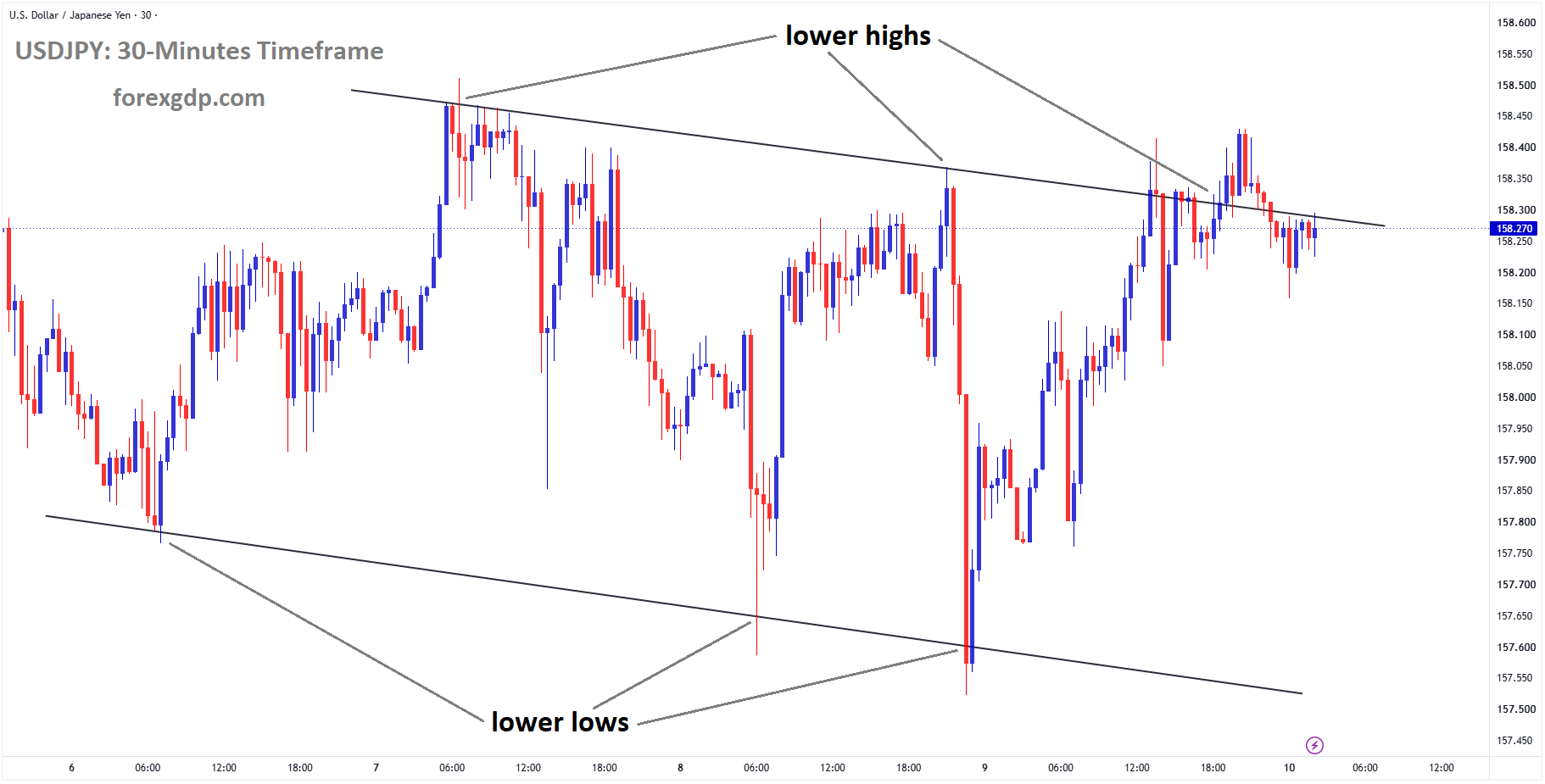
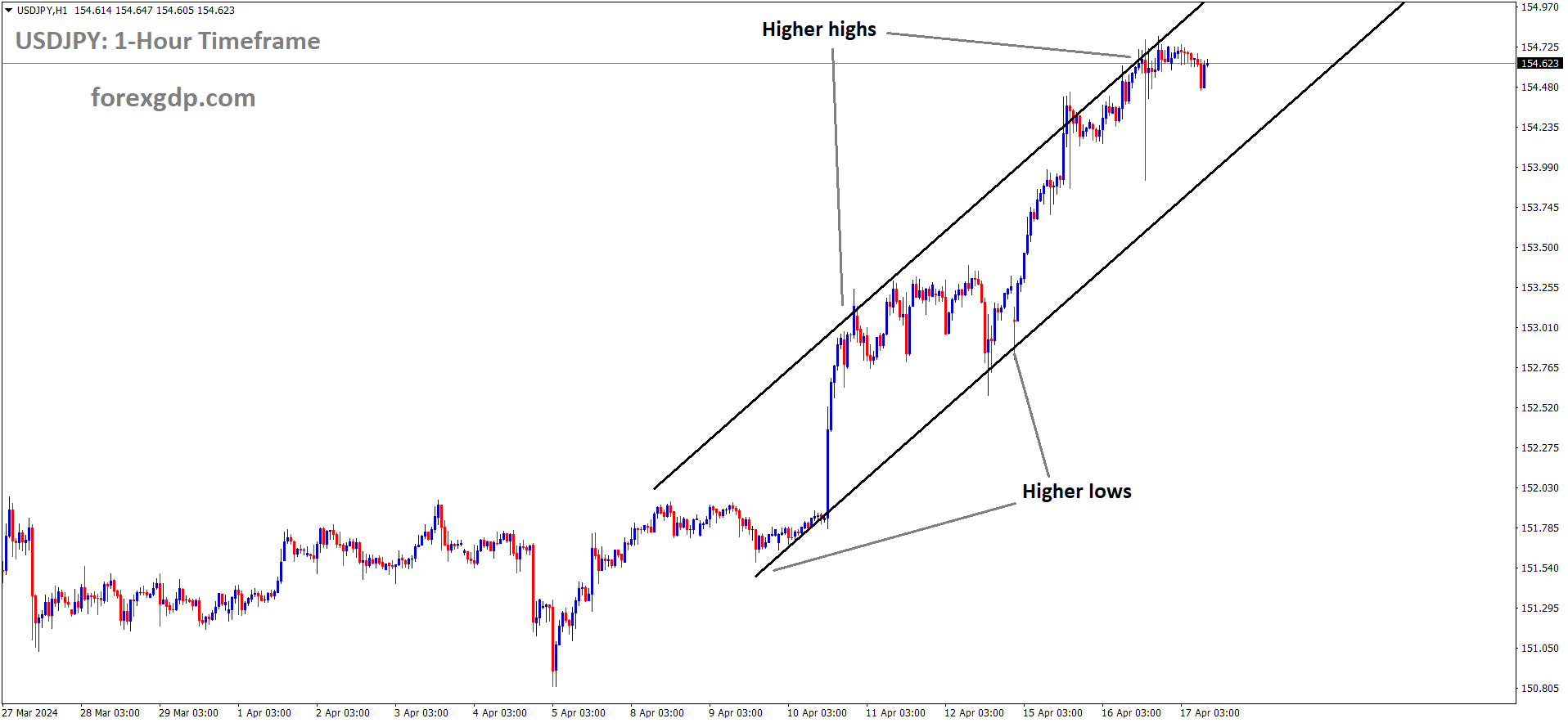
USDJPY reached the lower high area of the descending channel
The announcement changed the way investors viewed several connected risks. A wider conflict could disrupt energy supplies, raise business costs, and make inflation harder to control. The prospect of continued talks offered some relief, encouraging traders to reconsider how much pressure the Federal Reserve might face to raise interest rates.
For the US Dollar and Japanese Yen, the shift mattered because their relationship depends heavily on interest rate expectations. Falling US yields can reduce the appeal of holding Dollars, giving the Yen more room to strengthen.
However, comments from a Federal Reserve official later challenged the idea that lower oil prices would quickly remove the need for tighter monetary policy.
Trump’s Iran Pledge Changes Market Expectations

Trump described talks with Tehran as productive and said the United States would hold off on an attack before the elections. At the same time, the US blockade remained in place.
That combination offered reassurance while leaving important questions unanswered. The announcement reduced the immediate threat of military action, but it did not represent a complete settlement between Washington and Tehran. Investors still had to consider whether negotiations would produce a lasting agreement.
Oil reacted quickly because energy markets are sensitive to developments involving Iran. Any threat to production or shipping routes can increase concerns about supply shortages. When the chance of an immediate disruption falls, some of that concern can ease.
The limited duration of the pledge also matters. Businesses and investors may welcome a period of reduced tension, yet a temporary commitment provides less certainty than a lasting diplomatic agreement.
For currency markets, the main issue is how this change in geopolitical risk affects inflation and central bank decisions.
Lower Oil Prices Could Ease US Inflation Pressure
Energy costs influence much more than spending at the petrol pump. They affect transport, manufacturing, food distribution, and the day-to-day expenses of many businesses.
When oil becomes more expensive, companies may pass some of those higher costs to customers. Households then have less money available for other purchases, while businesses face pressure on their margins.
Cheaper oil can help ease that strain. It may slow the rise in consumer prices and reduce concerns that energy costs will keep inflation elevated.
This helps explain why US Treasury yields fell after Trump’s statement. Investors appeared to reassess the possibility that the Federal Reserve would need to raise interest rates in response to persistent inflation.
Still, lower oil prices do not guarantee that inflation will return to a comfortable level. Housing, wages, and service costs can remain firm even when energy becomes cheaper. The Fed therefore needs evidence from across the economy before changing its policy assessment.
The distinction between headline and core inflation will be especially important in the next round of US data.
Why US Treasury Yields Matter for USDJPY
The difference between US and Japanese interest rates is a major influence on USDJPY.
When Dollar investments offer higher returns than Yen investments, investors have a financial reason to favour the US currency. Some also borrow Yen at a lower cost and use the funds to hold assets that provide a higher return elsewhere.
A decline in US yields can reduce the benefit of those positions. If investors expect the return on Dollar assets to fall, demand for the currency may weaken.
That was one reason the Yen gained following the Iran announcement. The change in US yield expectations affected the relative appeal of the two currencies.
However, this relationship is not automatic. Investors also consider economic growth, political uncertainty, and the risk of sudden currency movements. A favourable interest rate gap may become less attractive when holding the position carries greater uncertainty.
For that reason, USDJPY can react sharply when diplomatic news changes expectations about both inflation and investment risk.
Fed Comments Keep Interest Rate Uncertainty Alive
The Dollar recovered part of its decline after St. Louis Fed President Alberto Musalem said interest rates might need to rise over the coming months.
His remarks highlighted a different concern: inflation could remain persistent even if energy pressures ease.
Markets often react quickly to developments that suggest borrowing costs may fall or stop rising. But central bank officials must judge whether the underlying inflation problem has actually improved.
If demand remains strong and price increases continue across services and other categories, cheaper oil alone may provide limited reassurance.
Musalem’s comments therefore gave investors a reason to reconsider the initial reaction to Trump’s announcement. They also showed why the outlook for USDJPY remains closely tied to incoming economic evidence.
A single official’s remarks do not determine Federal Reserve policy. Nevertheless, they can influence expectations when investors are weighing whether the next policy move could involve higher rates.
Upcoming US Data Will Shape the Dollar’s Direction
The next US inflation report will be an important part of that assessment.
Headline inflation includes food and energy, making it sensitive to changes in oil costs. Core inflation excludes those categories and helps investors assess whether price pressures remain widespread.
A firm core reading could strengthen expectations that the Fed will need to keep policy restrictive or consider further increases. That could support US yields and renew demand for the Dollar.
A softer reading may suggest that inflation pressure is easing more broadly, reducing the argument for additional tightening.
Consumer sentiment will offer another view of the economy. Confidence can reflect concerns about living costs, employment, and household finances, although weaker sentiment does not always lead immediately to lower spending.
Retail sales will help show how consumers are actually behaving. Producer price figures will provide further information about costs facing businesses and whether those pressures might eventually reach customers.
Taken together, these reports will offer a fuller picture than any single release.
Bank of Japan Signals Also Deserve Attention
The Japanese side of the interest rate relationship remains important. Comments from Bank of Japan board member Koeda could offer insight into how policymakers view inflation, wages, and future monetary policy.
If the BoJ signals greater confidence in sustained inflation, investors may reconsider expectations for Japanese interest rates. A cautious message could leave the existing return advantage of Dollar assets more influential.
Speculation about Japanese action to address sharp currency movements can also affect sentiment. Such speculation can cause quick changes in positioning, even without a confirmed policy announcement.
Final Summary
USDJPY weakened as Trump’s Iran pledge eased immediate conflict fears, lowered oil prices, and encouraged a retreat in US Treasury yields. The resulting shift reduced some of the Dollar’s appeal relative to the Yen.
However, Fed comments kept the possibility of higher interest rates in focus. Upcoming US inflation and spending data, alongside Bank of Japan communication, will help determine whether the latest easing in inflation concerns develops into a broader change in currency expectations.
USDCHF Retreats as Falling Bond Returns Favor the Franc
USDCHF has moved lower for a second consecutive day as falling US bond yields reduce demand for the US Dollar. The Swiss Franc has gained ground against its American counterpart, with traders adjusting their positions after the Dollar’s recent advance.
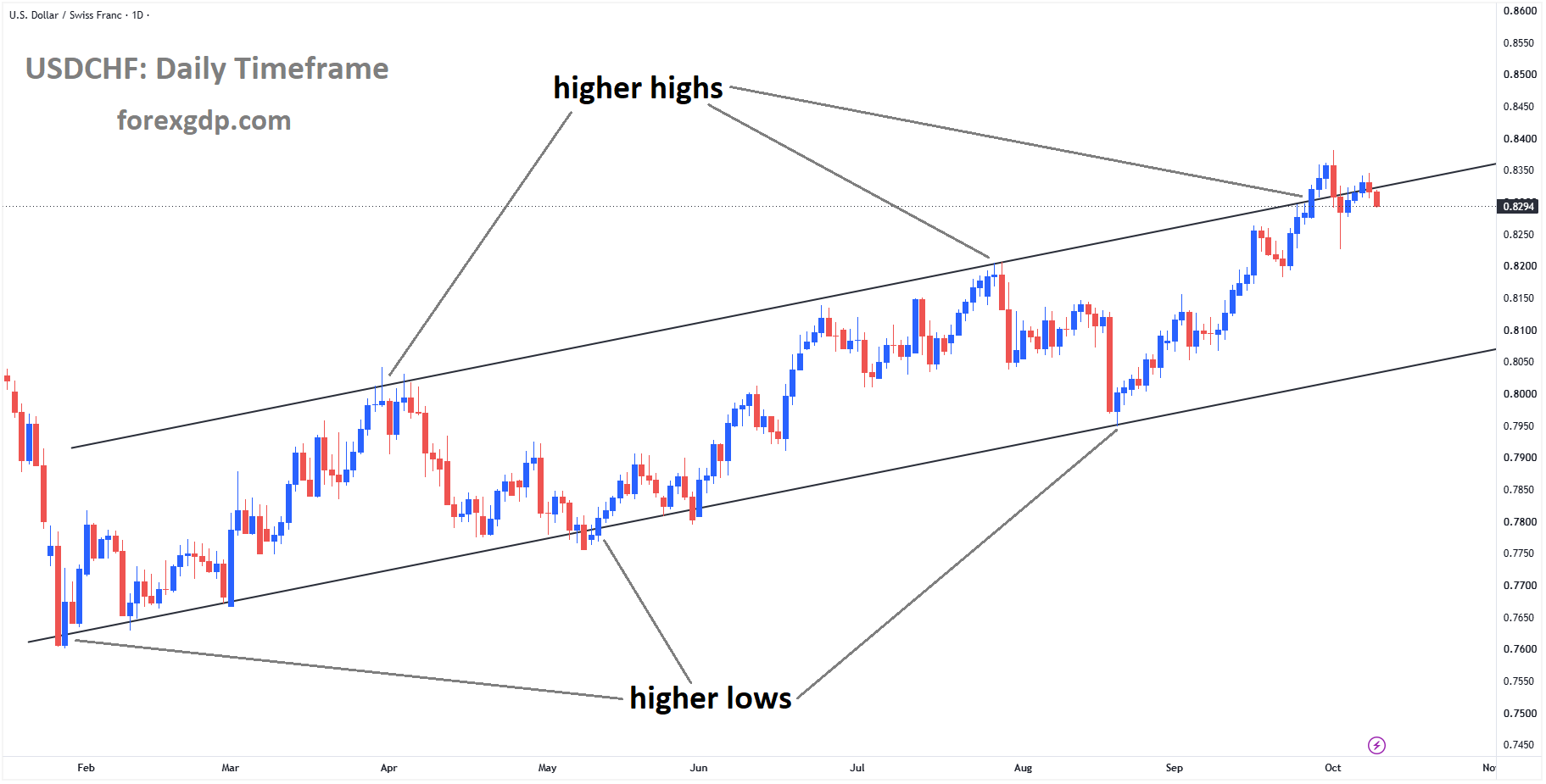
USDCHF is falling from the higher high area of the ascending channel
The shift reflects a combination of easing inflation concerns, strong demand for US government debt, and a more cautious mood around the Dollar. Comments from President Donald Trump about talks with Iran have also reduced some of the immediate pressure linked to possible military action.
Still, the forces behind the Dollar’s earlier strength have not disappeared. Disagreements over Iran’s nuclear program remain unresolved, while expectations for tighter Federal Reserve policy continue to offer support to the US currency. These competing influences have left USDCHF facing pressure without a clear change in the broader economic picture.
Lower Bond Yields Reduce the Dollar’s Appeal
The decline in US bond yields has been a major reason for the latest weakness in USDCHF. Government bond returns play an important role in currency demand because investors compare the income available across different countries.
When US yields rise, Dollar-based investments can become more attractive. When those yields fall, part of that advantage fades, giving investors a reason to reconsider their currency holdings.
A well-received auction of 30-year US government bonds helped bring yields lower. Strong demand at the auction suggested that investors were willing to commit money to longer-term US debt. Bond prices and yields move in opposite directions, so increased buying pushed returns down.
That development encouraged some traders to take profits after the Dollar’s recent rally. Closing those positions added to selling pressure on the currency and helped the Swiss Franc recover.
However, a decline in yields following a successful auction does not necessarily point to a lasting change in interest-rate expectations. Investors still need to assess whether upcoming economic reports justify a different view of Federal Reserve policy.
Trump’s Iran Comments Ease Immediate Inflation Concerns
Trump said the United States would refrain from resuming military strikes on Iran before the November midterm elections. He also described discussions with Iran as productive.
Those remarks eased concerns about an immediate escalation in the conflict. For currency markets, the significance extends beyond diplomacy because tensions involving Iran can affect energy supplies and oil costs.
The comments helped restrain crude oil, reducing fears that another increase in energy costs could add to inflation. Oil influences transport, manufacturing, and many everyday business expenses. When those costs rise, companies may pass them on to consumers.
A calmer energy outlook can therefore reduce expectations that the Federal Reserve will need to respond to additional inflation pressure. That helps explain why the Dollar softened alongside US bond yields.
The market reaction reflects some relief about the near-term situation. It does not mean that investors believe the underlying dispute has been settled.
Nuclear Disagreements Keep Geopolitical Uncertainty Alive
The United States and Iran remain divided over the future of Iran’s nuclear program. US Vice President JD Vance said Iran must make a meaningful reduction in its nuclear enrichment capacity to meet American demands and bring the conflict to an end.
Iran’s Atomic Energy Chief Mohammad Eslami rejected demands to abandon uranium enrichment or surrender the country’s stockpiles.
These positions highlight the difficulty of reaching an agreement. Productive discussions may lower the immediate risk of military action, but a lasting settlement would require progress on issues where both sides remain far apart.
For investors, that uncertainty creates a reason to remain cautious. A setback in negotiations could quickly revive concerns about energy supplies, inflation, and the wider economic effects of the conflict.
Both the US Dollar and the Swiss Franc can attract demand during periods of global uncertainty. Their movement against each other depends on where investors place greater weight: the Dollar’s interest-rate advantage, the Franc’s defensive appeal, or changes in the perceived severity of the conflict.
Federal Reserve Expectations Offer Support to the Dollar
Expectations for Federal Reserve policy remain an important counterweight to the Dollar’s recent decline. Traders continue to assign a high probability to another increase in US borrowing costs before year-end.
That view suggests investors still see a risk that inflation will require further action from the central bank. Even with some relief in energy markets, the Fed must consider a wider range of pressures across the economy.
Higher interest rates can support the Dollar by increasing the potential return available on US assets. This gives investors a reason to hold the currency even when short-term developments encourage some selling.
The key issue is whether incoming data confirms those expectations. Persistent inflation concerns would strengthen the argument for tighter policy. Clear signs of easing price pressure could lead investors to reduce their expectations for another increase.
Until that picture becomes clearer, lower bond yields and expectations for higher policy rates may continue to pull the Dollar in different directions.
The Fed and SNB Follow Different Policy Paths

The contrast between the Federal Reserve and the Swiss National Bank also matters for USDCHF. While markets anticipate the possibility of further US tightening, the SNB maintains a neutral stance and is waiting for more evidence before changing policy.
This difference can preserve the Dollar’s relative appeal. Investors looking for income may favor US assets if they expect American borrowing costs to remain higher or rise further.
For the SNB, waiting allows policymakers to assess inflation, domestic economic conditions, and developments abroad. Its approach reflects a different set of pressures from those facing the Fed.
The policy gap provides a reason to be cautious about expecting a prolonged decline in USDCHF based only on the latest retreat in US yields.
Final Summary
USDCHF has weakened as lower US bond yields and easing concerns about immediate military action against Iran weigh on the Dollar. Strong demand for long-term US government debt has also encouraged profit-taking after the currency’s recent gains.
However, unresolved nuclear disagreements and expectations for further Federal Reserve tightening continue to offer the Dollar support. The SNB’s neutral approach adds another important difference between the two currencies.
Attention now turns to the preliminary University of Michigan consumer sentiment and inflation expectations report. Its findings could help investors judge whether the recent easing in inflation concerns is reflected in household views and whether current Fed expectations remain justified.
USDCAD Slides as Market Optimism Boosts the Canadian Dollar
USDCAD has moved lower for a second consecutive day as easing concerns over a possible US attack on Iran reduce demand for the US Dollar. President Donald Trump’s comments about productive discussions with Tehran have encouraged investors to reconsider their need for currencies commonly bought during periods of uncertainty.
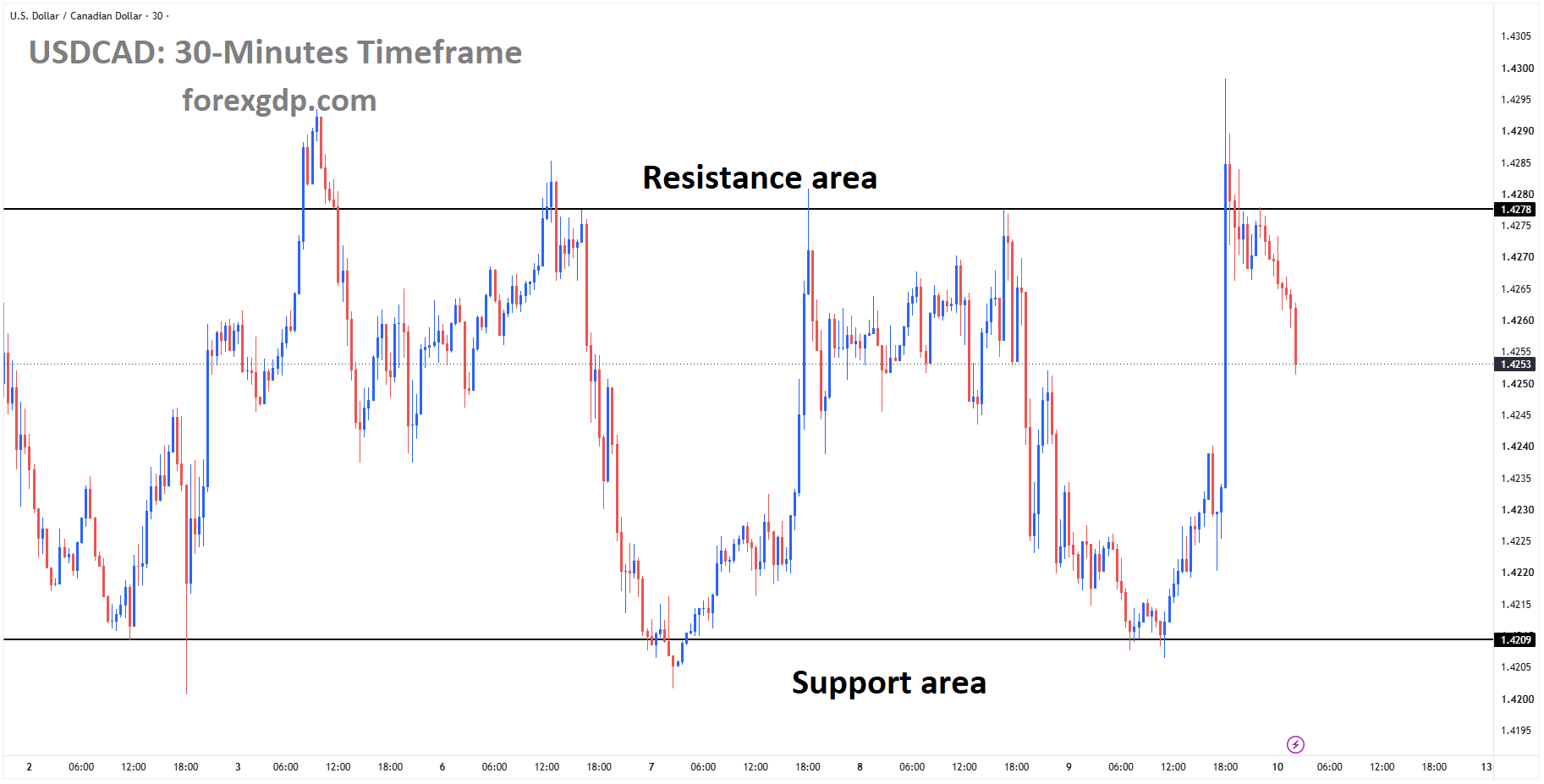
USDCAD is falling from the resistance area of the box pattern
However, the Canadian Dollar faces its own challenge. The same easing of geopolitical tension that weakens demand for the US Dollar can also weigh on oil. Since energy exports play an important role in Canada’s economy, lower oil prices may limit the Canadian currency’s gains.
At the same time, the Federal Reserve remains focused on inflation. Comments from St. Louis Fed President Alberto Musalem suggest that further interest rate increases may still be necessary. This leaves USDCAD caught between improving market confidence, changing oil conditions, and expectations for US monetary policy.
Iran Discussions Reduce Demand for the US Dollar
The US Dollar often attracts buyers when investors become concerned about military conflict or major disruptions to the global economy. During such periods, investors tend to place greater value on access to cash and the depth of US financial markets.
Trump’s announcement that Washington was holding productive discussions with Iran helped ease some of those concerns. He also stated that the US would refrain from attacking Iran before the midterm elections.
For currency markets, the immediate effect was a reduced sense of urgency. Investors who had bought the Dollar as protection against an escalation had less reason to maintain those positions. That shift contributed to the decline in USDCAD.
Still, diplomatic discussions do not guarantee a lasting agreement. Investors will want to see whether the talks produce concrete progress and whether both sides continue to avoid actions that could increase tensions.
The Dollar’s direction therefore remains sensitive to new developments. Encouraging diplomatic updates could further reduce defensive demand, while renewed threats could quickly change market sentiment.
Reported Strike Preparations Keep Uncertainty Alive
Although Trump’s comments offered reassurance, leaked reports described preparations for a possible three-day US military operation against Iran. The reported plans included attacks on military facilities and energy infrastructure.
These reports help explain why investors may remain cautious even after the announcement of talks. A pause in military action is different from a permanent resolution, particularly when preparations for an operation have reportedly taken place.
Iran’s energy infrastructure is especially relevant to global markets. Any disruption could affect oil supplies, shipping conditions, and business costs well beyond the region.
That possibility connects geopolitical developments directly with inflation concerns. Higher energy costs can raise transport and production expenses, making it harder for central banks to bring inflation under control.
For now, the diplomatic message has reduced immediate fears. However, the reported military preparations leave an element of uncertainty that markets are unlikely to ignore.
Lower Oil Creates a Challenge for the Canadian Dollar
The Canadian Dollar benefits from Canada’s position as a major energy exporter. Oil revenue contributes to export earnings, business activity, and investment, making changes in the energy market important for the currency.
When fears of supply disruption ease, oil can lose some of the extra demand associated with geopolitical risk. Trump’s remarks therefore created a mixed situation for the Canadian Dollar.
On one hand, a weaker US Dollar helped push USDCAD lower. On the other, falling oil prices could reduce support for the Canadian currency.
This explains why improving global confidence does not always translate into an equally strong Canadian Dollar. Investors must consider both the broader appetite for risk and the consequences for Canada’s export sector.
If oil continues to weaken, the Canadian Dollar may find it harder to benefit fully from reduced demand for the US currency. If energy markets stabilize, attention could shift more heavily toward interest rate expectations and economic conditions.
Fed Expectations Change as Investors Reassess the Next Meeting

Alongside the geopolitical developments, investors have reduced their expectations for an interest rate increase at the Federal Reserve’s upcoming meeting.
The supplied CME FedWatch figures suggest that the probability of an increase later in the month has fallen considerably compared with a week earlier. However, expectations for a December increase remain much stronger.
That difference matters. Investors appear less convinced that the Fed will act immediately, while still seeing a substantial possibility of tighter policy before the end of the year.
A lower likelihood of an immediate increase can weaken one source of support for the US Dollar. Yet expectations for later action may prevent a broader loss of confidence in the currency.
The key question is whether incoming economic information gives the Fed a reason to wait or strengthens the case for further tightening. Inflation, employment, and spending data will remain central to that assessment.
Musalem Says Strong Demand May Require Higher Rates
Alberto Musalem’s comments underline why investors cannot dismiss the possibility of additional Fed tightening.
He described the economy as strong and the labor market as balanced and stable. He also indicated that more monetary policy tightening would be needed to return inflation promptly to the Fed’s target.
His message suggests concern that demand remains strong enough to sustain inflation. If households and businesses continue spending at a healthy pace, price pressures may take longer to fade.
Musalem also discussed investment linked to artificial intelligence and strong demand for capital. Such investment can support economic growth, but it may also influence borrowing conditions and demand across the economy.
His concerns about the fiscal path add another consideration. Government borrowing and private investment together can shape the wider financial environment in which the Fed makes its decisions.
Although Musalem emphasized keeping an open mind before policy meetings, his remarks maintained a clear preference for controlling inflation. This offers the Dollar some support even as geopolitical demand weakens.
Final Summary
USDCAD is moving lower as diplomatic discussions between the US and Iran reduce demand for the US Dollar. However, lower oil prices create a competing challenge for the Canadian Dollar, potentially limiting its gains.
Federal Reserve policy remains another important influence. Investors have become less confident about an immediate rate increase, but expectations for later tightening remain significant. Musalem’s comments reinforce the view that strong demand could keep inflation concerns alive.
The pair’s direction will depend on how these forces develop: progress in US–Iran talks, changes in oil conditions, and economic evidence shaping the Fed’s next decisions.
AUDUSD Finds Fresh Momentum as October Pause Expectations Grow
The Australian Dollar ended the week on a firmer note against the US Dollar, benefiting from a pullback in the American currency and a more positive appetite for risk. However, uncertainty around US inflation and the Federal Reserve’s next steps kept investors cautious.
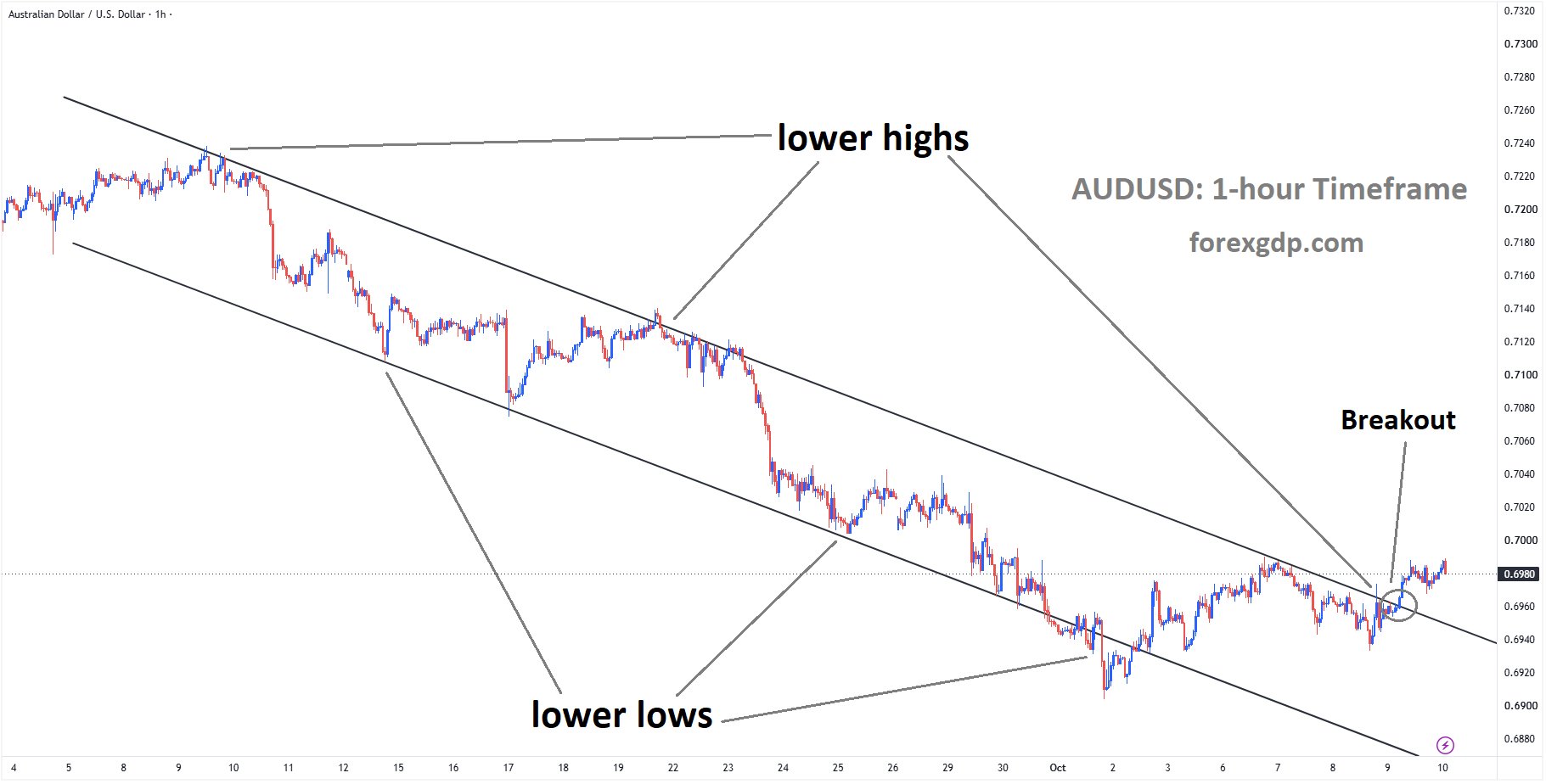
AUDUSD has broken the descending channel to the upside
Weaker US consumer confidence helped the Aussie gain ground, but rising inflation expectations complicated the picture. Households appeared less confident about the economy while also expecting prices to increase more quickly. That combination leaves the Fed facing a difficult balance between controlling inflation and protecting economic activity.
Attention now turns to Australian employment figures, the Reserve Bank of Australia’s meeting minutes, and several major US economic reports. Together, these releases could influence expectations for interest rates and shape demand for both currencies.
Weaker US Consumer Confidence Helps the Australian Dollar
The latest US consumer sentiment survey showed that households were becoming more concerned about economic conditions. The October reading fell to 46.3 from 48.1, coming in below the forecast of 47.6.
Consumer confidence matters because household spending plays a major role in the US economy. When people feel uncertain about their income, job security, or living costs, they may become more careful with purchases. That can eventually affect business revenue and broader economic growth.
However, weaker confidence does not automatically mean spending has already slowed. Consumers can express concern while continuing to spend, particularly when employment remains healthy. Upcoming retail sales figures will help investors judge whether the mood reflected in the survey is changing actual purchasing decisions.
For AUDUSD, the softer sentiment report reduced some of the US Dollar’s appeal. The Australian Dollar benefited as investors reconsidered the strength of the US economic picture and the likely timing of further monetary tightening.
Rising Inflation Expectations Complicate the Fed’s Decisions
Although confidence weakened, the same survey showed that consumers expected inflation to rise.
One-year inflation expectations increased from 4.6% to 4.7%, while expectations over five years moved from 3.4% to 3.5%. These changes added another concern for policymakers already trying to bring inflation under control.
Inflation expectations matter because they can influence financial decisions. Workers who anticipate higher living costs may seek larger pay increases, while businesses may adjust their pricing plans. If those expectations remain elevated, reducing inflation can become more difficult.
The Fed therefore has to assess two different messages. Falling confidence points to greater economic uncertainty, while higher inflation expectations suggest that price concerns remain firmly in place.
For currency traders, this makes the outlook less straightforward. A weaker economy could encourage the Fed to move cautiously, but persistent inflation could keep further rate increases under consideration. The Australian Dollar’s recent improvement reflects this uncertainty rather than a clear shift toward easier US monetary policy.
Federal Reserve Officials Keep Further Rate Hikes in View
The Federal Reserve’s meeting minutes showed support for a rate increase, although officials differed over what that move represented.
Some viewed it as a precaution to limit inflation risks. Others considered it a possible first step in a wider period of monetary tightening. This difference matters because a single adjustment carries different implications from a series of increases.
Fed Governor Christopher Waller supported additional rate hikes but indicated that they would not necessarily need to happen at consecutive meetings. That approach would allow policymakers time to examine incoming data between decisions.
St. Louis Fed President Alberto Musalem also highlighted elevated inflation and a strong labor market. His comments suggested that policymakers still had reasons to focus on price stability, even as consumers became less confident.
The message from these discussions was that a pause would not necessarily end the possibility of further tightening. Investors will continue watching Fed speeches for signs of whether officials are becoming more concerned about inflation or economic weakness.
October Pause Expectations Leave December in Focus
The market pricing cited in the report suggested an 81% probability that the Federal Reserve would leave interest rates unchanged in October. It also indicated an 81% chance of a quarter-percentage-point increase in December.
These expectations help explain why the US Dollar faced mixed influences. The prospect of an October pause reduced the urgency of near-term tightening, giving the Australian Dollar some room to advance. At the same time, expectations for a later increase continued to support demand for the American currency.
Market probabilities can change quickly after major economic releases. Stronger inflation or spending figures could reinforce expectations for a December increase. Softer results could lead investors to question whether another hike would be necessary.
The coming data will therefore matter more than any single probability reading. Traders will be looking for a consistent picture across inflation, consumer spending, and employment.
Australian Employment and RBA Minutes Take Center Stage
Australia’s upcoming economic calendar provides two important sources of information: the Reserve Bank of Australia’s meeting minutes and the employment report.
The minutes may offer more detail about policymakers’ views on inflation, household demand, and the wider economy. Investors will look for clues about which risks received the most attention and how officials assessed the effects of existing policy.
Employment figures will provide a more direct update on economic conditions. Healthy hiring can help sustain household income and spending, while weaker job growth may signal that businesses are becoming more cautious.
For the Australian Dollar, these releases will help determine whether domestic conditions can provide additional support. A firm labor market could strengthen confidence in the economy, while softer employment results could limit enthusiasm for the currency.
The effect on AUDUSD will also depend on US developments. Currency movements reflect the relative position of both economies, so Australian data will be assessed alongside the latest American reports.
Final Summary
AUDUSD finished the week stronger as weaker US consumer confidence and a pullback in the US Dollar helped the Australian currency. However, rising inflation expectations and continued discussion of further Fed rate hikes kept the outlook uncertain.
Australian employment figures and RBA meeting minutes will now share attention with US inflation, retail sales, and labor market reports. These releases will help investors judge whether the Aussie’s recent gains have broader economic support and whether the Fed remains on course for another rate increase.
NZDUSD Gains Momentum as the US Dollar Loses Steam
The New Zealand Dollar is gaining ground against the US Dollar as investors reconsider how quickly the Federal Reserve may raise interest rates again. Falling US Treasury yields have reduced some of the support for the American currency, giving the Kiwi room to strengthen.
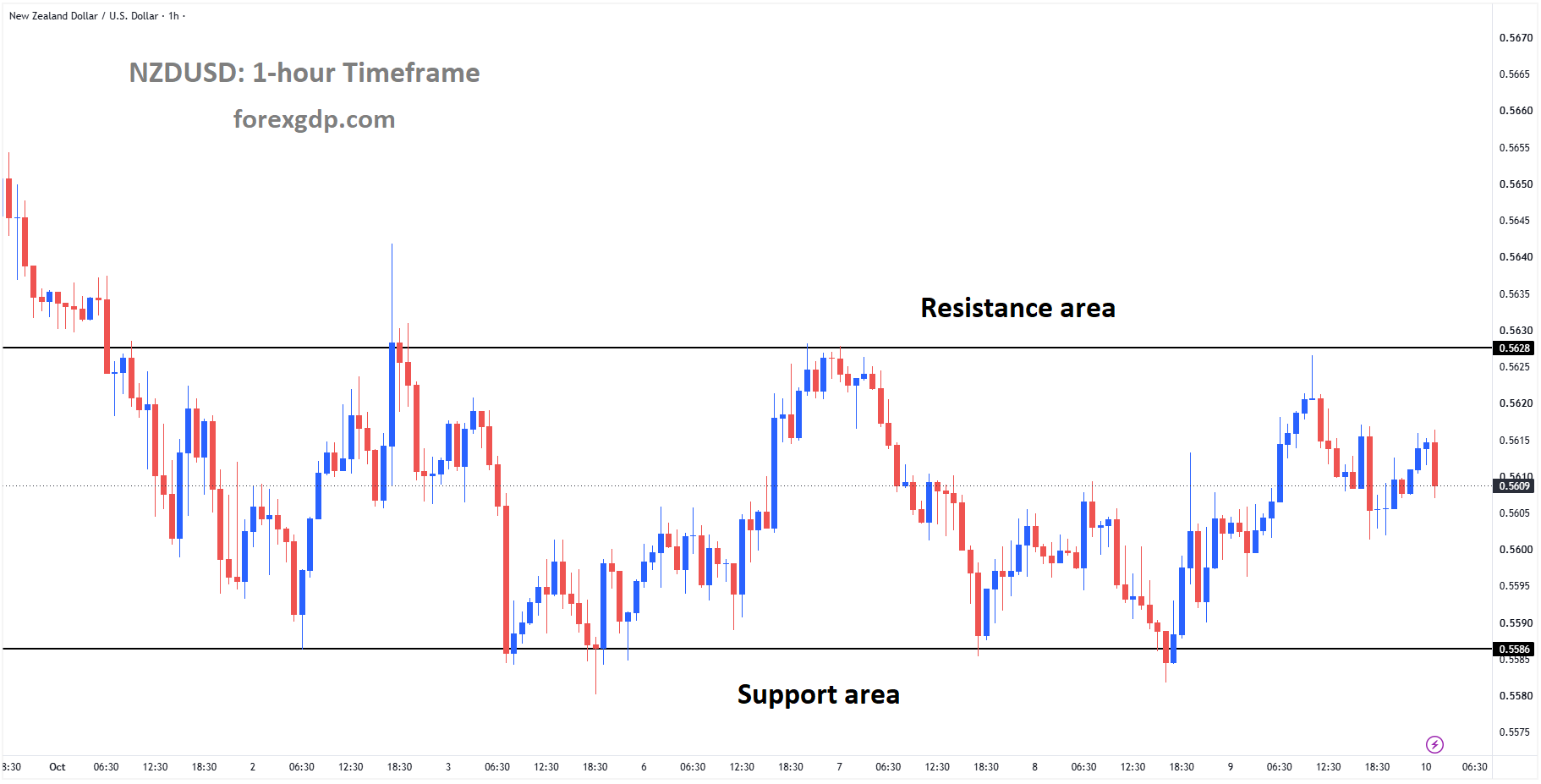
NZDUSD is falling from the resistance area of the box pattern
The move reflects a change in expectations rather than a clear end to inflation concerns. Federal Reserve officials continue to warn that more action may be necessary to bring inflation under control. However, recent comments suggest that policymakers have some flexibility over the timing of their next decision.
Meanwhile, expectations for monetary policy in New Zealand are adding another influence to NZDUSD. Westpac economists expect the Reserve Bank of New Zealand to keep rates unchanged in October before returning to increases in December.
These competing policy expectations are keeping attention on central bank comments, economic reports, and the future direction of borrowing costs in both countries.
A Softer US Dollar Gives the Kiwi More Breathing Room
The latest improvement in NZDUSD has been helped by a weaker US Dollar. A key reason for that weakness is the decline in US government bond yields.
Bond yields matter to currencies because they affect the returns available to investors. When US yields rise, dollar assets can become more attractive. When yields fall, some of that appeal can fade, especially if investors also expect the Federal Reserve to delay another interest rate increase.
That shift has recently worked in the New Zealand Dollar’s favour. Investors are reassessing whether the Fed needs to act immediately or can spend more time studying incoming economic data.
Still, the softer dollar does not mean markets have stopped worrying about US inflation. Investors are trying to distinguish between two possibilities: a temporary pause in rate increases and a lasting change in the Fed’s approach.
A pause would give policymakers more time to assess the economy. It would not necessarily mean that borrowing costs have reached their final level.
Waller Leaves Room for a Pause
Federal Reserve Governor Christopher Waller has offered a message that gives investors reasons to remain cautious while also considering the possibility of an October pause.
Waller suggested that further interest rate increases would likely be needed to bring inflation back to the Fed’s target. At the same time, he indicated that the central bank had flexibility over the pace of those increases.
For currency markets, that distinction matters. An official can favour tighter monetary policy overall without supporting an immediate increase at the next meeting.
Investors have focused on this room for flexibility because interest rate decisions affect borrowing, spending, and business activity over time. Previous increases may still be working through the economy, making the timing of additional action an important consideration.
Waller’s comments therefore left the door open to waiting in October. That possibility has eased expectations for an immediate move and contributed to lower Treasury yields.
For NZDUSD, the effect comes mainly through the US Dollar. When markets become less convinced that US rates will rise straight away, the currency can lose some of its interest rate support.
Inflation Concerns Keep Further Fed Action in View
Other Federal Reserve comments show why investors cannot treat a possible pause as the end of the tightening process.
St. Louis Fed President Alberto Musalem said that another increase would be needed to bring inflation back to the central bank’s target. However, he did not specify what policymakers ought to do at the October meeting.
His comments reinforce the difference between the direction of policy and the timing of a decision. The Fed may still see a need for higher rates while choosing to wait before taking the next step.
The central bank’s previous unanimous decision to raise rates also shows that inflation remained a shared concern among policymakers.
Market expectations reflect that tension. Traders have placed a much lower probability on an October increase than on a December move. This suggests that investors see a pause as a delay, with further tightening still possible later in the year.
That leaves the US Dollar sensitive to fresh information. Evidence of persistent inflation could strengthen expectations for another increase, while signs of cooling demand could give the Fed more room to wait.
New Zealand’s Rate Expectations Add Support

On the New Zealand side, investors are watching whether the Reserve Bank of New Zealand will follow a similar pause before raising borrowing costs again.
Westpac economists expect the RBNZ to leave the Official Cash Rate unchanged in October. Their forecast then points to an increase in December, followed by two more increases in early 2027.
This expectation gives investors a reason to pay attention to the New Zealand Dollar even while an immediate rate change appears unlikely.
Currencies often react to the expected path of interest rates, rather than only the decision made at the next meeting. If investors believe New Zealand will need higher borrowing costs in the months ahead, that can help support demand for its currency.
However, Westpac’s forecast remains an expectation rather than a confirmed policy decision. The RBNZ’s eventual choices will depend on the economic evidence available at the time.
For NZDUSD, the important question is how New Zealand’s expected policy path compares with the US outlook. Changes in either country’s expectations can alter the balance between the two currencies.
Consumer Sentiment Becomes the Next Focus
The upcoming October University of Michigan Consumer Sentiment report is another event attracting attention.
The report offers insight into how US households feel about their finances and the broader economy. Its inflation expectations measures can also help investors assess whether consumers believe price pressures will remain elevated.
A stronger reading could suggest that households remain confident despite higher borrowing costs. Elevated inflation expectations could add to concerns that bringing inflation under control will take more time.
A softer report could point to growing pressure on consumers and give investors another reason to expect the Fed to wait.
One release will not settle the policy debate. However, it can influence how markets interpret recent comments from Fed officials and whether expectations for an October pause remain convincing.
Final Summary
NZDUSD is benefiting from a softer US Dollar as falling Treasury yields and the possibility of a Fed pause reduce support for the American currency. Waller’s comments have highlighted flexibility over timing, while Musalem’s remarks keep further rate increases in view.
In New Zealand, Westpac expects an October hold followed by renewed tightening in December and early 2027. The next direction for the pair will depend on how incoming economic data changes these expectations, with US consumer sentiment providing another piece of the policy picture.
EURGBP Finds Fresh Momentum While Fiscal Worries Cloud the Euro
The Euro has recovered some ground against the British Pound as pressure in the European bond market begins to ease. A calmer mood has given the single currency room to recover after a difficult stretch. Even so, the improvement has not been enough to erase its recent losses, leaving EURGBP facing another weekly decline.
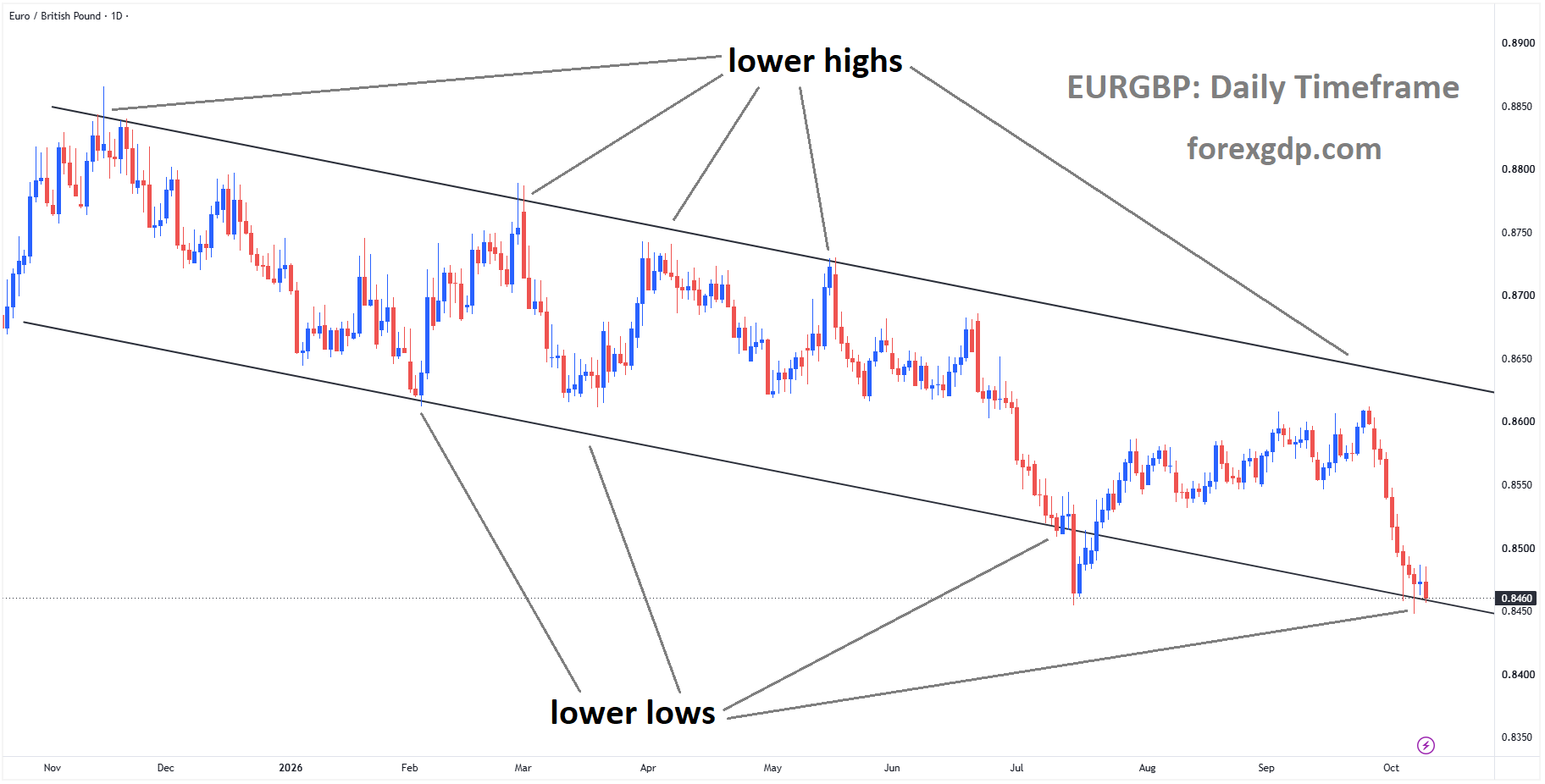
EURGBP reached the lower low area of the descending channel
The main concern remains France, where political disagreements are delaying progress on government finances. Lower French bond yields have brought temporary relief, but investors still want evidence that the government can agree on a credible budget.
High oil costs add another challenge for the Eurozone. Meanwhile, Bank of England Governor Andrew Bailey has repeated the bank’s commitment to bringing inflation back to target. Together, these developments help explain why the Euro’s recovery against Sterling remains cautious.
Calmer Bond Markets Give the Euro Breathing Room
The easing of the bond sell-off has helped improve sentiment toward the Euro. When government bonds come under heavy selling pressure, borrowing costs rise, and investors become more concerned about the financial position of the countries involved.
France has been at the centre of those concerns. Its bond yields had climbed sharply as doubts grew over the government’s ability to manage spending and agree on a savings plan. Their recent retreat has reduced some of the immediate pressure on the single currency.
A modest improvement in investors’ willingness to take risk has also supported the recovery. With the bond market looking less unsettled, traders have had fewer reasons to move away from the Euro.
However, calmer trading conditions do not resolve the underlying problem. Borrowing costs remain elevated, and the political obstacles behind the sell-off are still present. The Euro has gained breathing room, but a more lasting improvement depends on progress in France’s public finances.
French Budget Disagreements Keep Investors Cautious
France’s political deadlock remains an important source of uncertainty for EURGBP. Investors are waiting for a budget that shows how the government intends to control spending and put its finances on a more stable path.
Without agreement, it becomes harder to judge whether proposed savings can actually be delivered. Announcements alone offer limited reassurance when political divisions could prevent them from becoming policy.
This matters because government borrowing costs affect more than the public budget. Higher financing costs can gradually influence business investment, lending conditions and confidence across the wider economy. They also leave the government with less room to respond to future economic difficulties.
The concern extends beyond France because the country plays a major role in the Eurozone. Questions about its financial stability can influence how investors view the single currency as a whole.
For now, markets appear to be looking for practical decisions. A budget agreement with clear measures would provide more reassurance than repeated statements about the government’s intentions.
Student Protests Add to the Political Pressure
Spreading student protests have made an already difficult political situation more complicated. The government is trying to address financial concerns while also dealing with growing public dissatisfaction.
That creates a difficult balance. Measures designed to reduce spending may face resistance, yet delays in making those decisions can keep investors uneasy.
The protests do not determine the Euro’s direction on their own. Their importance comes from how they may affect the government’s ability to negotiate, approve and carry out its budget plans.
If political leaders struggle to build support for their proposals, uncertainty could last longer. This helps explain why the recent easing in bond yields has produced only cautious relief rather than a broad improvement in confidence.
European Officials Push for a Budget Agreement

Eurozone finance ministers and the European Central Bank have urged the French government to approve its 2027 budget as soon as possible. Their message highlights the importance of reducing uncertainty before it creates further market strain.
An approved budget would give investors a clearer view of the government’s priorities, expected spending and planned savings. It would also make it easier to assess whether France has a workable approach to its financial challenges.
Bank of France Governor Emmanuel Moulin has said that the country does not need assistance from the ECB. That statement presents the situation as one France can manage through its own decisions.
Still, reassurance is likely to depend on what happens next. Investors may welcome a calmer bond market, but they will also watch whether political leaders can turn budget discussions into an agreement.
High Oil Costs Create Another Burden for the Eurozone
Alongside France’s budget problems, elevated oil costs continue to weigh on the Eurozone’s economic prospects.
More expensive energy raises costs for transport, manufacturing and other business activities. Companies may absorb those increases, accept smaller profits or pass part of the burden to customers.
Households can also feel the impact through higher fuel bills and more expensive goods and services. When everyday expenses rise, consumers have less money available for other purchases.
This creates a difficult combination for the economy. Energy costs can keep inflation under pressure while weakening spending and business confidence.
For the Euro, that means relief from lower French bond yields is only one part of the picture. Persistent energy pressures can limit how much confidence improves, particularly when the region is already facing political and financial uncertainty.
Bailey’s Inflation Message Keeps UK Policy in Focus
On the UK side, Andrew Bailey has reaffirmed the Bank of England’s commitment to bringing inflation back to target.
His comments keep attention on the bank’s response to price pressures. For currency markets, central bank communication matters because it helps shape expectations about future interest-rate decisions.
A firm commitment to controlling inflation can encourage investors to remain cautious about expecting rapid policy easing. However, Bailey’s statement does not settle the timing of future decisions, which will depend on economic evidence.
EURGBP therefore reflects pressures on both currencies. The Euro is dealing with French fiscal uncertainty and costly energy, while Sterling is being influenced by the Bank of England’s inflation priorities.
Final Summary
EURGBP has regained some ground as the French bond sell-off eases, but the Euro remains under pressure overall. Political disagreements, delayed budget progress and spreading protests continue to weaken confidence in France’s financial plans.
High oil costs add to the Eurozone’s challenges by increasing expenses for businesses and households. Meanwhile, Bailey’s commitment to controlling inflation keeps UK monetary policy in focus. A more durable improvement in sentiment toward the Euro will depend heavily on credible budget progress and a sustained easing of financial uncertainty.
EURCAD Moves Higher as French Borrowing Costs Fall and CAD Weakens
EURCAD has recovered after four days of declines, helped by a modest improvement in sentiment toward the Euro and fresh pressure on the Canadian Dollar. The shift reflects two separate developments: French government bond yields have eased from unusually high levels, while falling crude oil prices have reduced support for Canada’s currency.
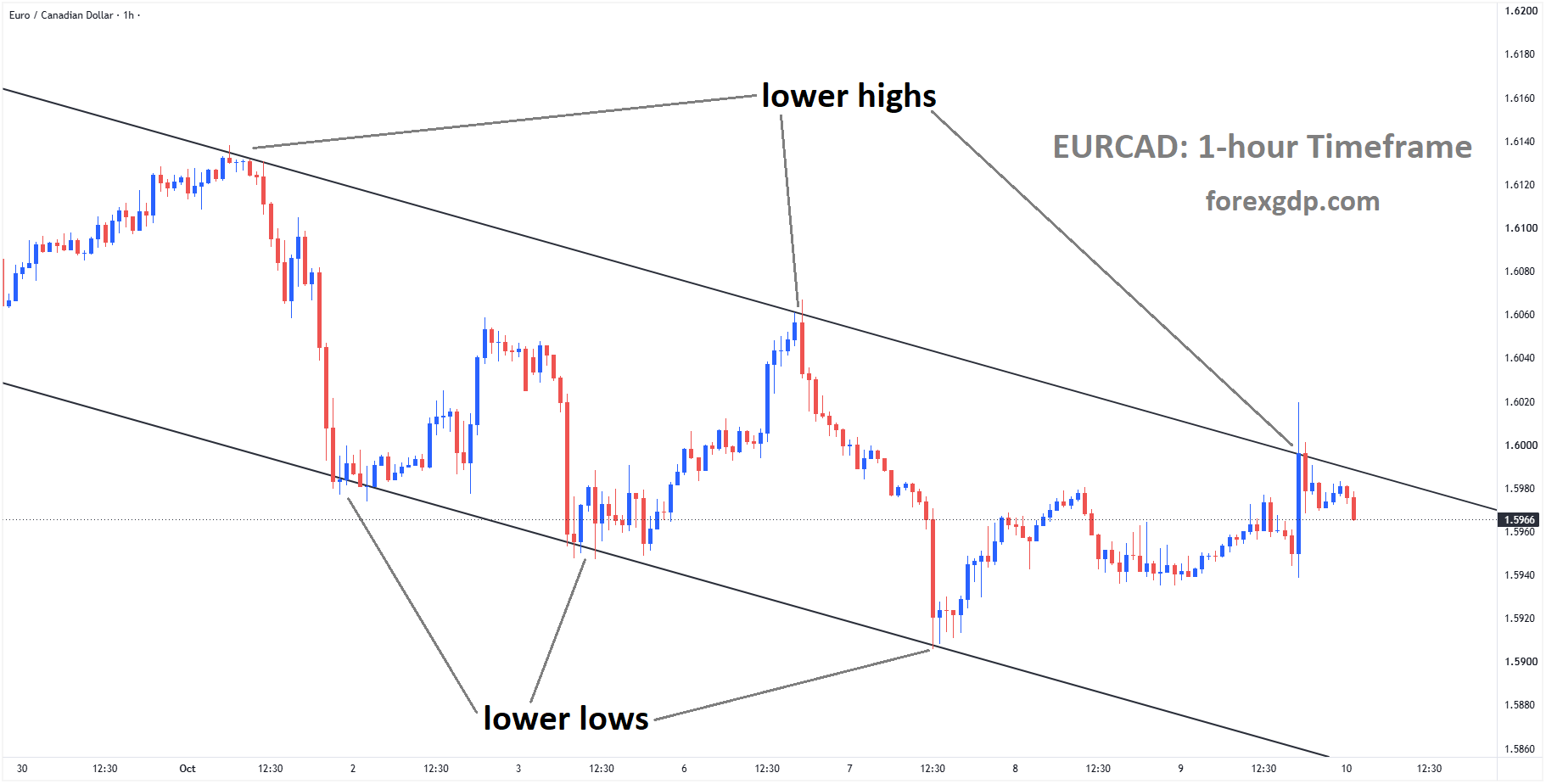
EURCAD is moving in a descending channel, and the market has fallen from the lower high area of the channel
Neither development offers a complete answer to the concerns facing these economies. France still needs a credible budget agreement, and the energy market remains sensitive to changing messages about relations between the United States and Iran.
For now, however, the combination has given the Euro some breathing room against the Canadian Dollar. Investors are weighing whether this improvement can last or whether unresolved political and economic risks will return to the spotlight.
French Bond Markets Give the Euro Some Breathing Room
The retreat in French government bond yields has helped ease some of the immediate pressure on the Euro. Borrowing costs had reached levels not seen in decades, drawing attention to the country’s public finances and its ability to agree on a workable savings plan.
When government borrowing costs rise sharply, investors often become more concerned about the expense of servicing public debt. For France, that concern carries weight beyond its own borders because the country is one of the largest economies in the Eurozone.
The recent easing in yields has therefore offered a measure of relief. It suggests that the immediate strain in the French debt market has softened, allowing investors to reassess some of their concerns about the single currency.
Still, lower yields do not mean the underlying problem has disappeared. French borrowing costs remain elevated, and the political disagreement blocking progress on public finances continues. The Euro’s improvement reflects a pause in that pressure rather than a clear resolution.
France’s Budget Deadlock Remains a Major Concern
France’s central challenge is reaching agreement on a credible plan for government spending and savings. Political deadlock has made that process difficult, leaving investors uncertain about how the country intends to manage its finances.
A budget provides more than a schedule for spending. It shows how a government plans to balance its priorities, meet financial commitments and respond to economic pressures. When approval becomes uncertain, businesses and investors have less clarity about the direction of policy.
Eurozone finance ministers and the European Central Bank have urged France to approve its 2027 budget quickly. Their message highlights the importance of restoring confidence through concrete decisions.
For currency markets, the next meaningful development will be evidence of progress. An agreement that offers a believable path toward more stable public finances could help improve sentiment toward the Euro. Further delays could keep concerns about French debt firmly in focus.
Official Reassurance Has Yet to Settle Investor Nerves
Bank of France Governor Emmanuel Moulin said that France does not need assistance from the European Central Bank. The statement was intended to signal that the country could manage its situation without outside help.
However, comments about whether assistance is necessary can receive mixed reactions. Some investors may welcome the reassurance, while others may focus on why the subject has become part of the discussion at all.
That leaves official communication with a difficult task. Confidence depends not only on what policymakers say, but also on whether political leaders can deliver an approved budget and a practical financial plan.
The distinction matters for EURCAD. The easing in French bond yields has supported the Euro, but words alone may struggle to sustain that support if the budget process remains stalled. Investors will continue to watch whether reassurance is followed by action.
Lower Crude Oil Prices Weigh on the Canadian Dollar
The Canadian Dollar has faced a different source of pressure: weaker crude oil prices.
Canada is a major energy exporter, so changes in the oil market can influence expectations for export earnings, business investment and broader economic activity. When crude prices fall, the Canadian currency can lose some of the support associated with the country’s energy sector.
This relationship is not automatic. Interest rates, economic reports and demand for the US Dollar also influence the Canadian Dollar. Nevertheless, oil remains an important part of the picture.
In the latest move, weaker crude added to the advantage created by improving sentiment toward the Euro. EURCAD therefore benefited from changes on both sides of the pair, with reduced French debt pressure helping the Euro while softer energy prices weighed on Canada’s currency.
US–Iran Messages Create an Uncertain Energy Backdrop

The decline in crude followed remarks from US President Donald Trump about discussions with Iran. He described the talks as productive and said the United States would refrain from military strikes before the midterm elections.
Those comments reduced some immediate concern about a possible escalation. When investors see less risk of disruption to oil supplies, part of the extra cost associated with geopolitical uncertainty can fade.
Trump also stated that record volumes of crude were moving through the Strait of Hormuz, while confirming that the naval blockade of Iranian ports would remain active. These remarks presented a complicated picture of continued energy flows alongside ongoing restrictions.
Subsequent reports added another layer of uncertainty, indicating that the United States had prepared plans for three days of targeted strikes against Iranian energy infrastructure, missile stockpiles and strategic sites.
Preparing military options does not establish that those operations will take place. Even so, the reports show why the energy market remains sensitive to fresh developments. Diplomatic progress could continue to weigh on crude, while renewed tensions could quickly change expectations.
Canadian Dollar Stability Adds Another Perspective
Rabobank strategists have highlighted the Canadian Dollar’s relatively calm position against the US Dollar. Their assessment points to lower implied volatility than other US Dollar pairs involving G10 currencies across different time horizons.
Implied volatility reflects the scale of currency movement anticipated by the options market. A lower reading suggests expectations for smaller fluctuations, rather than a guarantee of stability.
This observation provides useful context, but it relates specifically to the Canadian Dollar against the US Dollar. EURCAD can still respond to developments affecting the Euro, including French budget negotiations and changes in confidence across the Eurozone.
Canada’s currency may remain comparatively calm against the US Dollar while moving differently against the Euro.
Final Summary
EURCAD’s recovery reflects temporary relief in France’s bond market and weaker crude oil prices affecting the Canadian Dollar. The Euro has benefited from easing debt pressure, although France’s unresolved budget negotiations continue to limit confidence.
At the same time, US–Iran discussions have reduced some immediate concern in the energy market, while reports of military preparations keep uncertainty alive. Further progress on France’s finances and clearer developments in the Middle East will help determine whether the factors behind EURCAD’s recovery remain in place.
GBPJPY Gains Momentum as Japanese Budget Worries Deepen
GBPJPY is gaining ground as the British Pound benefits from expectations of higher UK interest rates, while the Japanese Yen faces pressure from concerns about government spending and weak household demand. These forces have helped the pair recover, bringing the different economic challenges facing Britain and Japan into sharper focus.
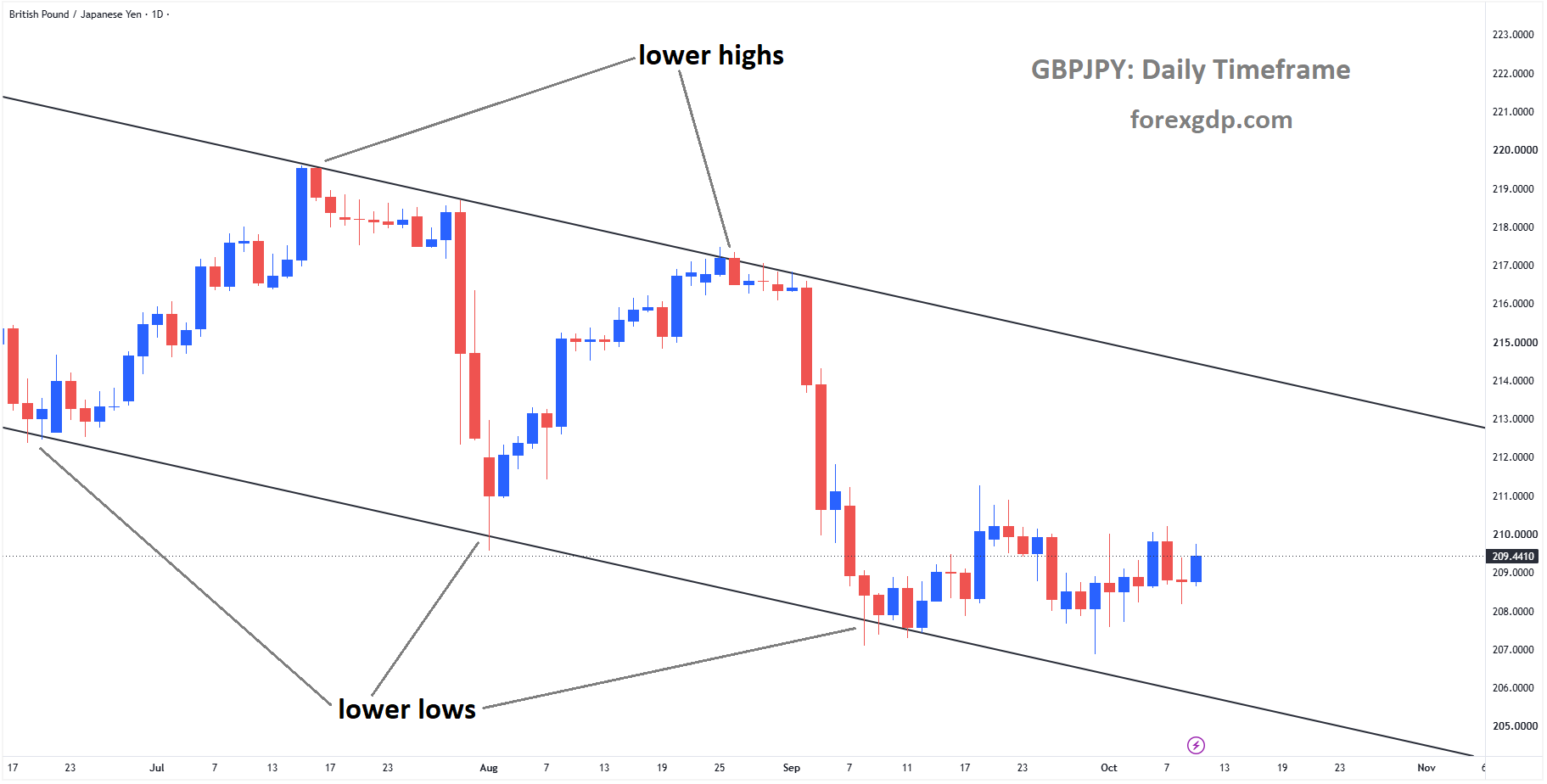
GBPJPY is rebounding from the lower low area of the descending channel
For the Pound, the main source of encouragement is a brighter UK growth outlook. A more resilient economy could give the Bank of England greater room to address inflation through further interest rate increases.
Japan faces a more complicated picture. Concerns about public debt and expansionary fiscal policies are weighing on confidence in the Yen. However, expectations of further Bank of Japan tightening and the possibility of action by Japanese authorities could help the currency regain some strength.
Japan’s Spending Plans Weigh on the Yen
Questions surrounding Prime Minister Sanae Takaichi’s expansionary fiscal policies have become an important influence on the Japanese Yen. Investors are considering how additional government spending might affect an economy already carrying a large public debt burden.
Government spending can support businesses, employment, and economic activity. But its impact depends on how the money is used and how it is funded. When debt is already substantial, fresh spending commitments can raise concerns about the longer-term health of public finances.
For currency markets, confidence matters. Investors want evidence that policies can support growth without creating greater financial strain. Uncertainty about that balance can reduce demand for a currency, even when some parts of the economy remain healthy.
These concerns have contributed to the Yen’s relative weakness. They also help explain why GBPJPY has advanced despite signs that the Bank of Japan may continue raising interest rates.
Weak Household Spending Adds to Japan’s Challenges
Japan’s household spending figures have added another source of concern. The reported decline in August marked the ninth consecutive month of falling spending, suggesting that consumers remain cautious.
Household demand plays a central role in the economy. When families spend less, retailers and service providers can face weaker sales. Businesses may then become more careful about hiring, investment, and expansion.
The figures also reveal a gap between improving wages and consumer behaviour. Rising earnings do not always lead immediately to stronger spending. Families may prefer to rebuild savings or remain careful if everyday costs still feel high.
This leaves Japanese policymakers with a difficult task. They need to consider inflation pressures while recognising that domestic demand remains fragile. Raising borrowing costs too quickly could place further pressure on consumers, but moving too slowly could allow inflation risks to grow.
For the Yen, weak spending creates uncertainty about the pace of future policy changes. That uncertainty has helped keep the currency under pressure.
A Brighter UK Economy Supports the Pound
The British Pound is benefiting from a more encouraging assessment of UK growth. If economic activity remains resilient, the Bank of England may have more flexibility to increase interest rates to contain inflation.
Higher interest rate expectations can support a currency because investors pay close attention to the returns available across different economies. When expectations shift towards tighter monetary policy, demand for that country’s currency can improve.
Commerzbank analysts have revised their assessment of the Bank of England’s next steps. They now consider a November rate increase more likely than previously expected and anticipate another increase in February.
Their reasoning centres on the relationship between growth and inflation. A healthier economy may be better able to absorb higher borrowing costs, giving policymakers more room to act against persistent price pressures.
These expectations have strengthened the Pound’s position against the Yen. A softer US Dollar has also provided a favourable backdrop for Sterling, although the outlook for GBPJPY depends more directly on developments in Britain and Japan.
The Bank of England Still Faces Uncertainty
Growing expectations of rate increases do not mean the Bank of England has committed to a series of moves. Governor Andrew Bailey has highlighted uncertainty across the broader economic outlook.
That caution matters because monetary policy affects households and businesses with a delay. Higher interest rates can help reduce inflation, but they also increase financing costs and may weaken spending over time.
The central bank must therefore judge whether improving growth is durable. It also needs to assess whether inflation pressures are broad enough to justify further action.
If future economic releases support the stronger growth picture, expectations of additional tightening could remain favourable for the Pound. If activity weakens, investors may reconsider how much room the Bank of England has to raise rates.
The Pound’s recent strength reflects changing expectations rather than a guaranteed policy outcome.
Japan’s Wage Growth Keeps Rate Increases in Focus

Although fiscal concerns and weak consumption are weighing on the Yen, Japan’s monetary policy outlook offers a potential source of support.
Bank of Japan Governor Kazuo Ueda has described a shift towards addressing inflation risks before they become more firmly established. This suggests that policymakers are looking beyond simply reaching their inflation target and are considering how to maintain stability over time.
An eighth consecutive month of rising real wages has also reinforced expectations of further tightening. Real wage growth means earnings are improving after accounting for inflation, which can strengthen household purchasing power.
The question is whether that improvement will eventually translate into stronger consumption. If it does, the Bank of Japan could gain greater confidence that the economy can manage higher borrowing costs.
For GBPJPY, this creates an important counterweight to the Pound’s advantages. Further Japanese rate increases could improve the Yen’s appeal and narrow the difference between the two currencies.
Possible Currency Action Keeps Investors Alert
The prospect of action by Japanese authorities is another factor shaping sentiment. Investors remain alert to the possibility that officials could step in to support the Yen if its weakness becomes a greater concern.
A weaker currency can benefit exporters, but it can also raise the domestic cost of imported fuel, food, and other goods. Those costs can place additional strain on households already spending cautiously.
Speculation about official action can influence behaviour before any decision is announced. Investors may become less willing to maintain large positions against the Yen when the risk of a sudden policy response increases.
However, possible intervention remains separate from a confirmed action. Its significance lies in the uncertainty it introduces and the way that uncertainty can temper enthusiasm for further GBPJPY gains.
Final Summary
GBPJPY is drawing support from expectations of further Bank of England rate increases and concerns about Japan’s fiscal direction. Weak Japanese household spending has added pressure on the Yen, while a brighter UK growth outlook has encouraged demand for the Pound.
The balance remains sensitive to new developments. Bank of England caution, improving Japanese real wages, potential Bank of Japan tightening, and possible currency action all remain relevant. The next shift in expectations will depend on whether economic data gives either central bank greater confidence to act.
Crude Oil Loses Ground as Trump Signals Restraint on Iran
West Texas Intermediate, the US crude oil benchmark, moved lower as comments from US President Donald Trump eased concerns about an immediate military attack on Iran. Plans to accelerate emergency oil reserve releases also helped calm worries about fuel shortages.
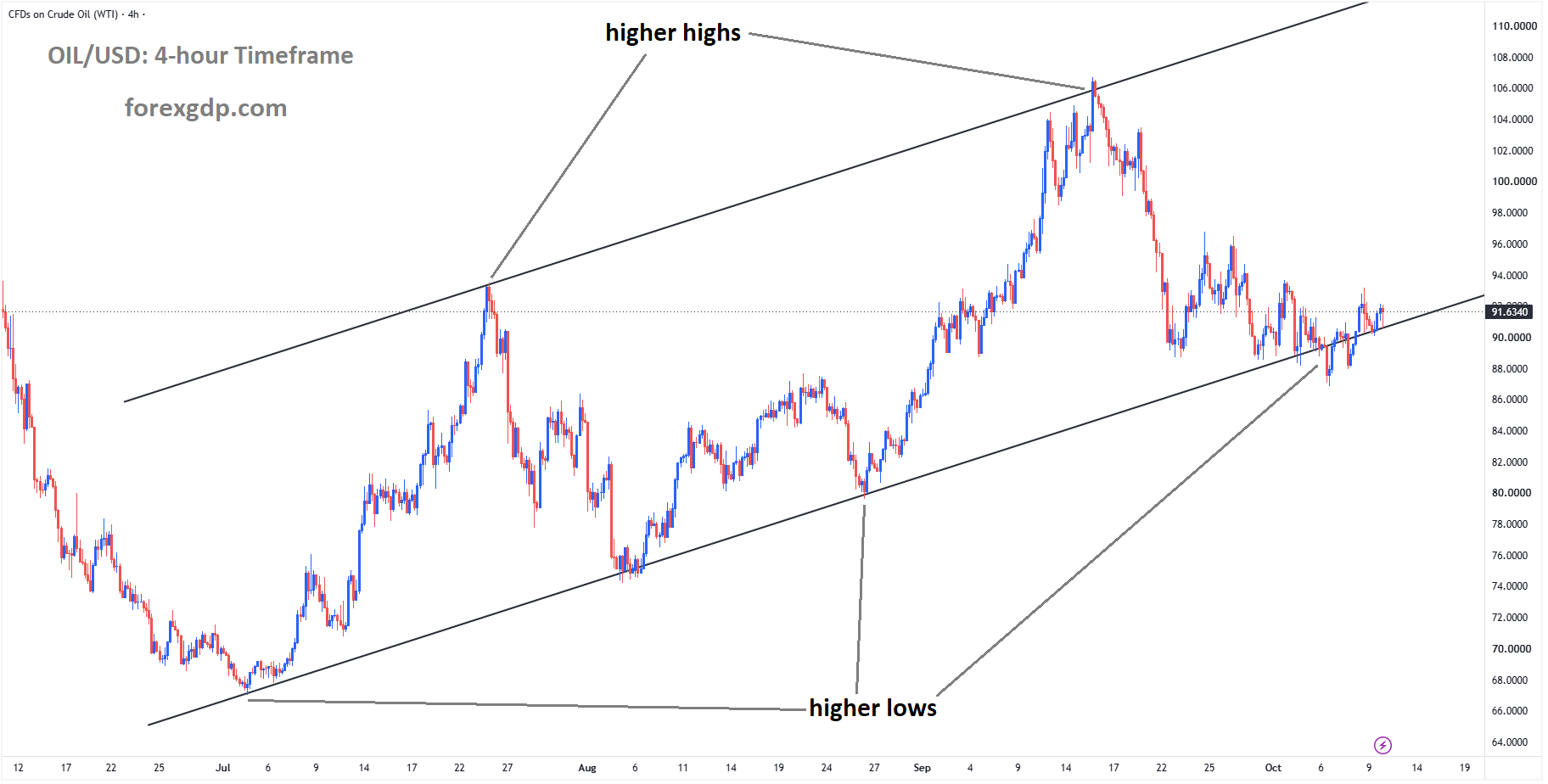
Crude Oil reached the higher low area of the ascending channel
However, the broader picture remains uncertain. A surprise decline in US crude inventories suggests that available supplies still face pressure, while security risks around Middle Eastern shipping routes continue to concern traders.
The oil market is weighing two competing forces: signs that supply disruptions could ease and the possibility that regional tensions could worsen again. That balance helps explain why reassuring headlines have softened crude without removing the uncertainty surrounding global energy supplies.
Trump’s Iran Comments Ease Immediate Supply Concerns
Trump said Washington would not attack Iran before November’s US midterm elections, according to the Reuters report cited in the market update. He also described discussions with Tehran as productive.
These comments reduced concern about an immediate escalation between the two countries. For oil markets, the possibility of military action matters because conflict can affect production facilities, export terminals, and shipping routes.
When traders fear that fewer barrels will reach buyers, they often become willing to pay more for available supplies. A statement suggesting that military action is less likely can reduce some of that urgency.
Trump also said crude was moving through the Strait of Hormuz in large volumes. This shipping passage is a major route for oil leaving the Middle East, making its operating conditions especially important to global energy markets.
The suggestion that shipments were continuing helped ease fears of a deeper supply interruption. Still, political statements offer reassurance only while developments on the ground remain consistent with them. Traders will continue watching both diplomatic progress and the security of oil transport.
Faster Oil Reserve Releases Offer Additional Relief

Another factor weighing on crude was the International Energy Agency’s agreement to accelerate the release of emergency oil stocks. The agency also planned to prioritize diesel supplies as governments dealt with high fuel costs and disruptions linked to the conflict.
Emergency reserves provide a temporary source of supply when normal deliveries become less reliable. Releasing these stocks can help refiners and fuel distributors meet demand while producers and shipping companies work through disruptions.
The announcement followed an agreement by G7 countries to release crude and diesel reserves. Together, these measures raised expectations that additional supplies could become available to the market.
Diesel deserves particular attention because it supports a wide range of everyday economic activity. Trucks, agricultural machinery, construction equipment, and parts of industry depend on it. A shortage can therefore affect much more than the cost of filling a vehicle.
By prioritizing diesel, governments are trying to limit pressure on transport and business costs. More reliable fuel availability could also reduce the need for companies to compete aggressively for immediate deliveries.
However, reserve releases have limits. They can ease a shortage, but they cannot permanently replace stable production and secure shipping. Their lasting impact will depend on whether normal supply conditions improve before those emergency stocks need replenishing.
Falling US Inventories Keep Supply Questions Alive
While diplomatic comments and reserve releases offered relief, the latest US inventory figures pointed in a different direction.
The Energy Information Administration reported that crude stockpiles declined during the week ending October 2. The fall reversed the previous week’s increase and surprised market participants who had expected inventories to rise.
A decline in stored crude means that fewer barrels remain available as a buffer against future disruptions. That can make the market more sensitive to problems elsewhere, particularly when international supply routes already face uncertainty.
However, one weekly report does not explain the full state of US oil demand. Inventory changes can reflect several factors, including refinery activity, imports, exports, and the timing of deliveries.
For that reason, the unexpected draw adds a note of caution rather than proving that a lasting shortage has developed. Further reports will help clarify whether the decline was temporary or part of a broader tightening in supply.
For now, the figures provide a counterweight to the more reassuring geopolitical headlines. They suggest that concerns about physical availability have not disappeared.
Shipping Risks Continue to Support an Oil Risk Premium
The outlook for Middle Eastern oil shipments remains a central concern. Even when deliveries continue, transporting crude through an area exposed to attacks can involve higher costs and greater uncertainty.
ABN Amro analysts highlighted risks linked to tanker attacks and the possibility of military escalation around the US midterm elections. Their assessment also noted that regional oil flows had largely returned to normal.
Those two observations can coexist. Ships may still reach their destinations while operators face expensive insurance, security requirements, and delays.
Naval escorts can help protect vessels, but their use also shows that normal shipping conditions have not fully returned. Buyers and transport companies must account for the possibility that a new incident could disrupt schedules.
Earlier reports about preparations for potential strikes on Iran also help explain why traders may remain cautious after Trump’s latest remarks. A reduced likelihood of immediate action does not eliminate the broader security concerns.
This uncertainty can keep a risk premium in oil prices. That premium reflects the amount buyers are willing to pay because future supplies might become harder or more costly to obtain.
What Could Shape the Next Move in Crude Oil
Diplomatic developments will remain important. Continued discussions between Washington and Tehran could further ease fears, particularly if they lead to clearer assurances about regional security.
The delivery of emergency supplies will matter as well. Announcing a reserve release is one step; moving those barrels and fuels to where they are needed is another. Traders will watch how quickly the additional supply reaches refiners and consumers.
Shipping conditions could prove equally influential. Fewer attacks and smoother deliveries would strengthen confidence that regional exports can continue reliably.
US inventory reports will offer another view of supply conditions. Repeated declines could keep concerns alive, while rebuilding stocks could give the market a larger cushion against disruption.
Final Summary
Crude oil eased as Trump’s comments reduced fears of an immediate attack on Iran and faster emergency reserve releases promised additional supply.
Yet the market still faces important uncertainties. Lower US inventories, tanker security concerns, and higher transport costs show that supply pressures remain.
The next direction for WTI will depend on whether diplomatic reassurance develops into lasting stability and whether additional reserves meaningfully improve fuel availability.
BTCUSD Faces Heavy Selling as ETF Outflows Shake Investor Confidence
Bitcoin is facing a difficult week as investors take profits, leveraged trades unwind, and demand through spot exchange-traded funds cools. The change in mood has weakened hopes for the seasonal rally that many crypto traders associate with October.
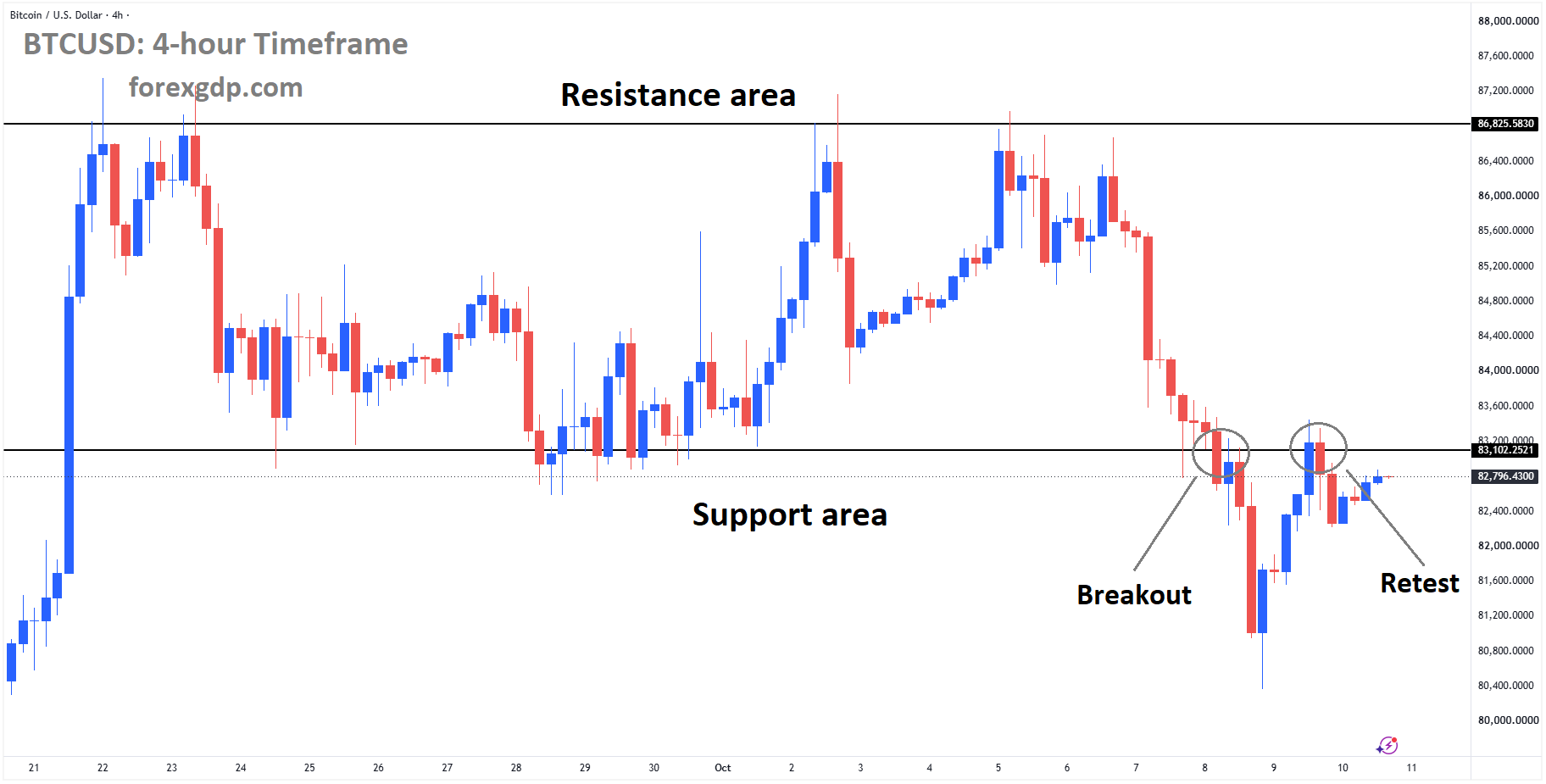
BTCUSD reached the retest area of the broken box pattern
The pressure comes from several directions. Institutional investors have withdrawn money from Bitcoin funds, while large wallet transfers have raised questions about possible selling. At the same time, rising US Treasury yields and a firmer US Dollar have created a less welcoming environment for riskier investments.
Together, these developments explain why enthusiasm around “Uptober” has faded. Bitcoin’s next chapter depends partly on whether demand returns and whether the recent wave of selling begins to ease.
Bitcoin ETF Withdrawals Raise Questions About Investor Demand
US-listed spot Bitcoin ETFs have become an important route for investors who want exposure to Bitcoin without holding the cryptocurrency directly. Their daily flows offer a useful view of demand through traditional investment accounts.
According to the figures cited from SoSoValue, these funds recorded more than $702 million in net withdrawals through Thursday. That put them on course to end a three-week run of net inflows.
The shift matters because sustained inflows can help absorb selling from other market participants. When that demand weakens, Bitcoin becomes more exposed to profit taking and changes in investor confidence.
However, ETF withdrawals do not reveal every investor’s motivation. Some may be reducing risk, while others may be taking profits or adjusting their portfolios. A single week of outflows does not establish a lasting change in institutional interest.
Even so, the reversal gives investors a reason to watch fund activity closely. A return to inflows would suggest renewed demand, while continued withdrawals would point to ongoing caution.
Large Bitcoin Transfers Add to Market Uncertainty
Activity involving large Bitcoin holders has also attracted attention. Lookonchain reported that wallets linked to the US government transferred substantial amounts of Bitcoin and wrapped Bitcoin to Coinbase Prime over several days.
Such transfers can make investors nervous because assets arriving at a trading or custody platform may become available for sale. When demand is already softer, even the possibility of a large sale can affect confidence.
Still, a transfer is not proof that a sale has taken place. Funds can move for custody, administrative, or other operational reasons. The reported activity therefore raises questions without providing a definite answer about what happens next.
A separate report highlighted a large holder moving 4,500 Bitcoin after more than four years of inactivity. The movement of long-dormant holdings often draws interest because it introduces uncertainty about the owner’s intentions.
The destination and later movement of those funds matter. A transfer into an exchange could increase concern about potential selling, but movement between wallets may have a different explanation. Investors need that context before treating every large transaction as a sign of an immediate exit.
Leveraged Liquidations Intensify the Pullback
Borrowed money has played a major role in the recent market turbulence. Traders using leverage can hold positions larger than their own capital would otherwise allow, but this also increases their exposure to sudden losses.
When Bitcoin moves against a leveraged position, the trading platform may close it automatically. For bullish positions, these forced closures can add selling to an already falling market.
The source material cites The Kobeissi Letter’s report that roughly $400 million in leveraged long positions were liquidated within an hour during the midweek decline. Coinglass data also showed elevated liquidations across Wednesday and Thursday, with bullish positions suffering heavily.
This helps explain why a pullback can gather speed. An initial decline triggers forced selling, which can then place pressure on other leveraged positions. The process can continue until enough borrowing has been removed or fresh buying absorbs the sales.
Liquidations also affect sentiment beyond the traders directly involved. Sharp losses can encourage other investors to reduce exposure, making the wider market more cautious.
Profit Taking Adds Another Source of Selling

Not all selling comes from forced exits. Some Bitcoin holders have chosen to lock in gains after earlier advances.
The supplied figures show that realized profits exceeded $1 billion on one day during the week, placing it close to the highest daily total reported for the year.
Realized profit refers to gains recorded when holders sell or move coins at a value above their acquisition cost. A large total suggests that significant amounts of previously profitable holdings are changing hands.
Profit taking is a normal part of investing. Holders may need cash, want to rebalance their investments, or decide that securing gains suits their goals.
The difficulty arises when many investors act at once while new demand slows. With ETF flows turning negative, the market has had less buying through that channel to absorb these sales. That combination has made the recent selling harder to offset.
Treasury Yields and the US Dollar Create Additional Pressure
Bitcoin is also responding to conditions outside the cryptocurrency market.
Higher US Treasury yields can make interest-paying investments more attractive. Some investors may prefer those returns over assets such as Bitcoin, which do not provide a regular income simply through ownership.
A stronger US Dollar can also influence investment decisions. It may reflect demand for dollar assets and a more cautious approach toward risk, although that relationship does not operate the same way every day.
These forces help explain why Bitcoin can struggle even without a major crypto-specific announcement. Investors compare opportunities across bonds, currencies, equities, and digital assets. Changes in one area can affect the amount of money available for another.
Final Summary
Bitcoin’s difficult week reflects a combination of weaker ETF demand, substantial profit taking, and forced selling from leveraged positions. Large wallet transfers have added uncertainty, while rising Treasury yields and a stronger US Dollar have increased the pressure.
October’s reputation for positive Bitcoin performance offers no guarantee of a rally. The more useful questions concern actual investor demand, the pace of selling, and the wider financial environment.
A recovery in ETF inflows and calmer leveraged activity could help restore confidence. For now, investors are weighing whether the recent withdrawals and selling represent a temporary adjustment or a longer period of caution.
Don’t trade all the time, trade forex only at the confirmed trade setups
Get more confirmed trade signals at premium or supreme – Click here to get more signals, 2200%, 800% growth in Real Live USD trading account of our users – click here to see , or If you want to get FREE Trial signals, You can Join FREE Signals Now!