The US Federal Reserve interest rate decision is attracting significant attention as policymakers prepare to announce the outcome of their October meeting. Although the central bank is widely expected to leave borrowing costs unchanged, the announcement could provide important clues about the direction of US monetary policy during the final months of the year.
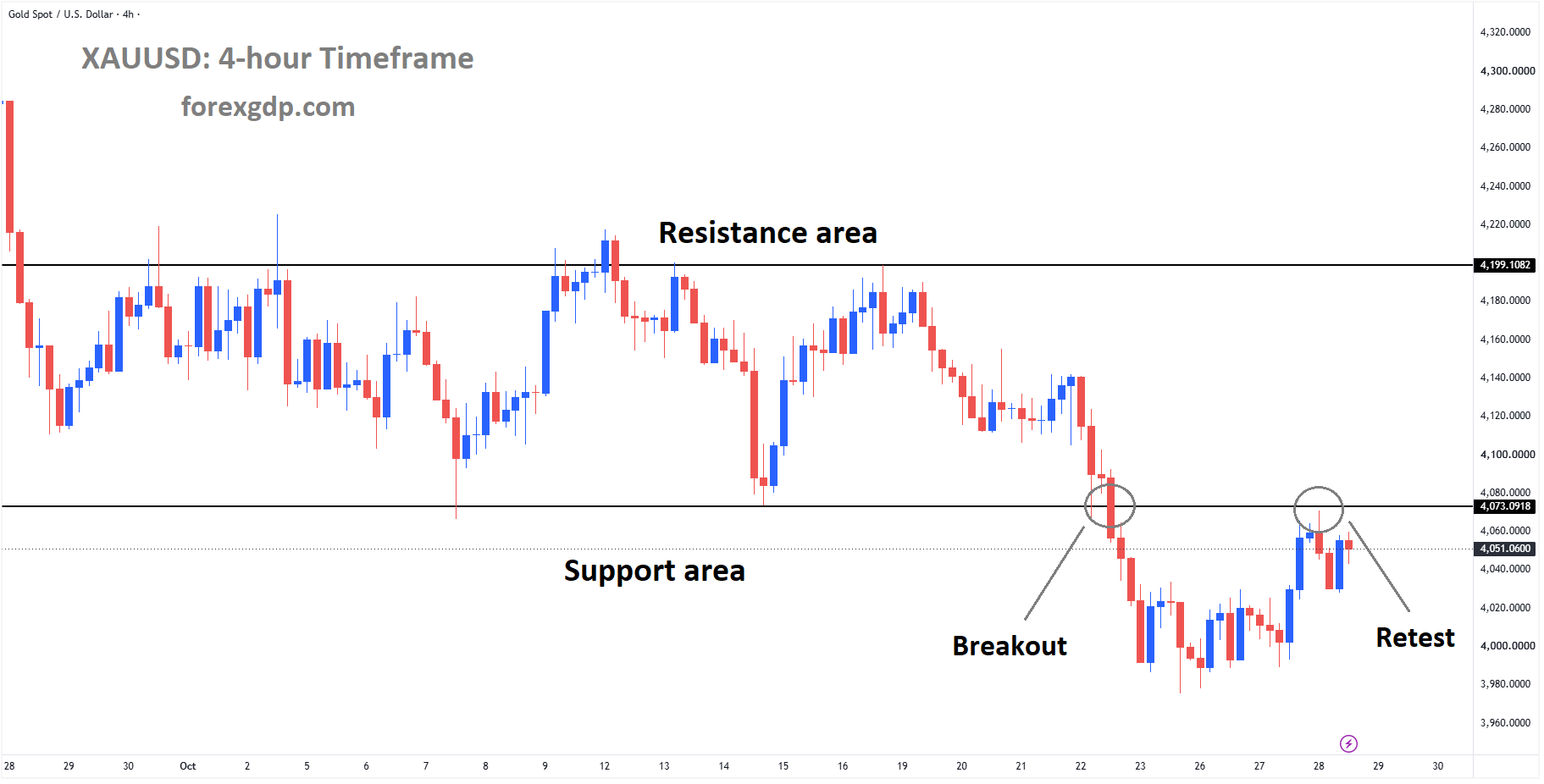
XAUUSD reached the retest area of the broken box pattern
The Federal Open Market Committee (FOMC) faces a difficult economic environment. Inflation remains above the Federal Reserve’s long-term target, economic activity continues to show resilience, and financial conditions have become more restrictive. These competing forces make the central bank’s next steps particularly important for businesses, consumers, and the broader economy.
Federal Reserve Chair Kevin Warsh is expected to play a central role in shaping expectations through his post-meeting press conference. His comments could help explain whether policymakers believe additional interest rate increases are necessary or whether they prefer to wait for more economic evidence.
While the October decision itself may offer few surprises, the discussion surrounding inflation, employment, economic growth, and future policy decisions could have lasting implications.
Federal Reserve Expected to Keep Interest Rates Unchanged in October
The Federal Reserve is widely expected to maintain its benchmark interest rate within the existing range of 3.75% to 4% following its October policy meeting.
This would represent a pause after the central bank increased borrowing costs by 25 basis points in September. That earlier decision reflected policymakers’ continuing concerns about inflation and their determination to prevent price pressures from becoming deeply established across the economy.
However, another immediate increase appears unlikely.
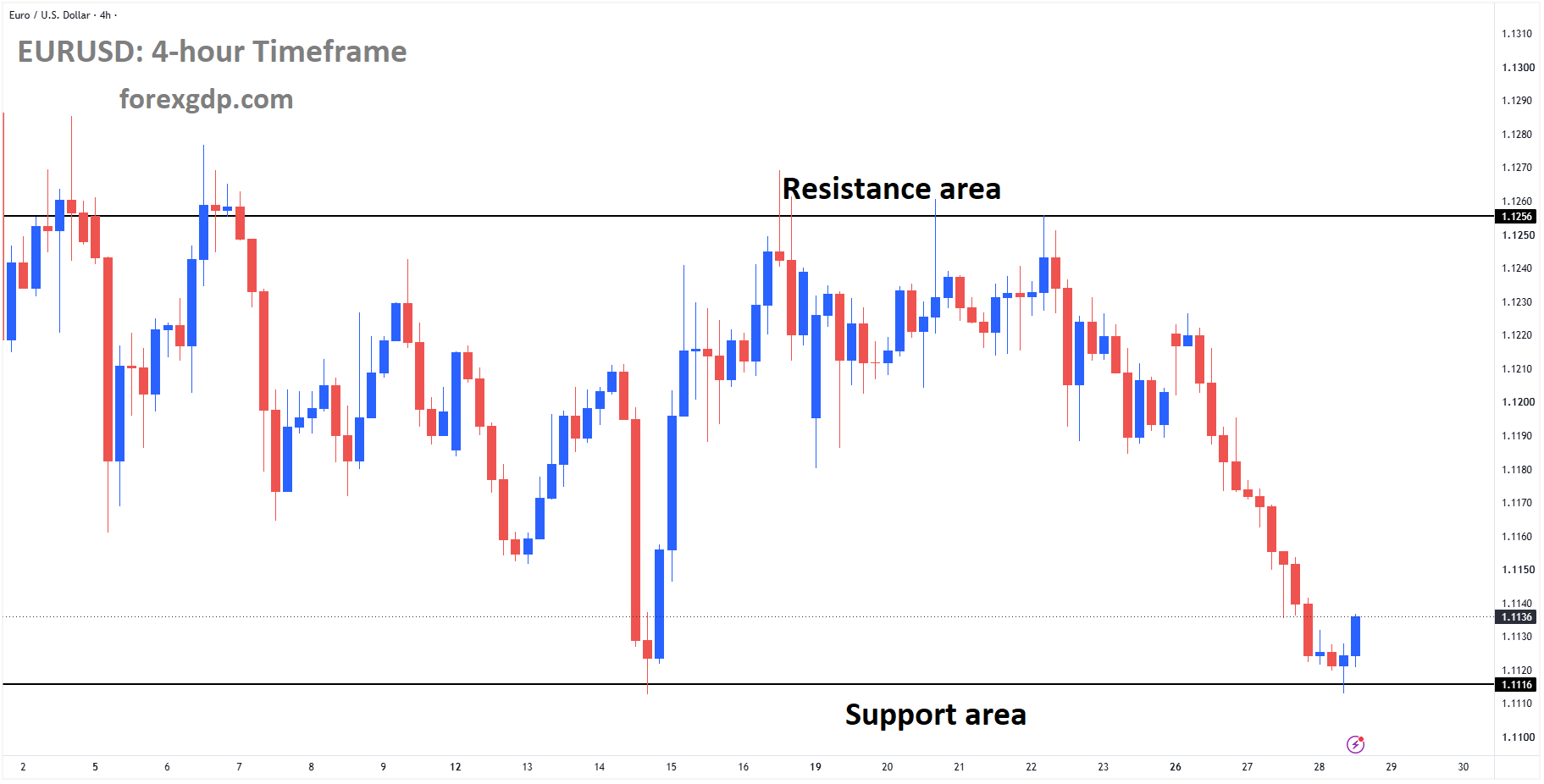
EURUSD reached the support area of the box pattern
Expectations reflected in the CME FedWatch Tool suggest that investors see only a small possibility of an additional increase at the October meeting. This indicates that a decision to maintain the current policy setting is widely anticipated.
The reasoning behind this expectation is relatively straightforward. Federal Reserve officials want to bring inflation under control, but they must also consider how previous policy decisions are affecting households, businesses, and financial institutions.
Interest rate increases do not influence the economy immediately. Their effects often develop gradually as borrowing becomes more expensive, businesses reconsider investment plans, and consumers adjust their spending habits.
By keeping rates unchanged, policymakers can assess whether the September increase and earlier monetary policy measures are producing the intended results.
A pause would not necessarily mean that the Federal Reserve believes its work is finished. Instead, it could reflect a preference for gathering additional information before deciding whether further restrictions are appropriate.
This distinction is particularly important because holding interest rates steady is not the same as preparing to lower them.
The central bank can maintain a restrictive policy stance without announcing a new increase at every meeting.
Why the October Decision May Offer Limited Surprises
Much of the attention surrounding Federal Reserve meetings usually focuses on whether officials will raise, lower, or maintain interest rates.
For October, however, the expected decision has already become the dominant assumption among investors and economists.
When the likely outcome is widely anticipated, the announcement itself may reveal relatively little about the central bank’s longer-term intentions.
Instead, attention often shifts toward the explanation accompanying the decision.
Policymakers may acknowledge that inflation remains too high while also recognizing that previous interest rate increases have already placed pressure on borrowing and economic activity.
The language used to describe these conditions can help clarify how officials are evaluating the balance between controlling inflation and protecting economic stability.
Even small changes in the Federal Reserve’s assessment of the economy may influence expectations about its next meeting.
Inflation Remains a Major Challenge for Federal Reserve Policymakers


Inflation continues to be one of the most important issues influencing the Federal Reserve’s monetary policy decisions.
The central bank aims to maintain inflation at 2% over the longer term. However, recent economic information indicates that price pressures remain stronger than policymakers would prefer.
According to the September Consumer Price Index report described ahead of the meeting, annual headline inflation increased to 3.7%, compared with 3.4% previously.
This development suggests that progress toward restoring price stability has become more difficult.
Inflation affects the economy in several ways. When everyday goods and services become more expensive, households may struggle to maintain their purchasing power.
Food, housing, transportation, healthcare, and other essential expenses can consume a larger share of family budgets.
For businesses, persistent inflation can increase operating expenses and make financial planning more complicated.
Companies may face higher costs for materials, transportation, employee compensation, and other important resources.
Some businesses respond by raising the prices they charge customers, while others accept lower profit margins or reduce spending.
These pressures help explain why the Federal Reserve remains cautious about declaring victory over inflation.
Why Persistent Inflation Makes Policy Decisions Difficult
The Federal Reserve uses interest rates as one of its primary tools for influencing economic activity.
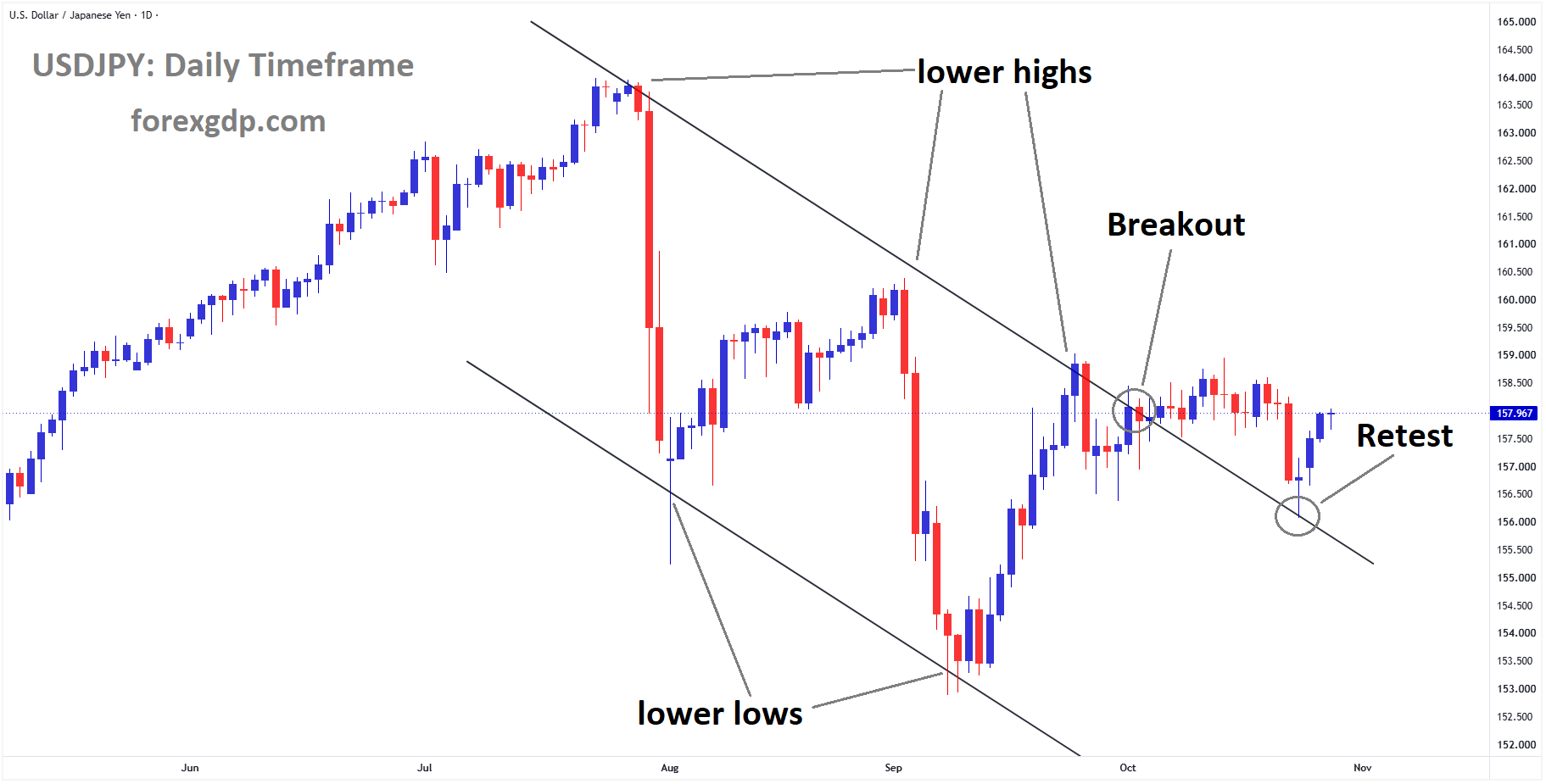
USDJPY is rebounding from the retest area of the broken descending channel
Higher borrowing costs generally discourage some forms of spending and investment. Over time, weaker demand can reduce pressure on prices.
However, the relationship between interest rates and inflation is not always immediate or predictable.
Some inflation pressures arise from factors that monetary policy cannot directly control, including supply disruptions, changes in production costs, and developments affecting international trade.
As a result, policymakers must determine whether inflation is being driven primarily by strong demand or by broader economic conditions.
If inflation remains elevated because consumers and businesses continue spending aggressively, additional monetary restrictions may be considered necessary.
On the other hand, if economic activity begins to slow while inflation gradually improves, officials may see less reason to increase borrowing costs further.
This creates a difficult balancing act.
The Federal Reserve must avoid allowing inflation to remain persistently high, but it must also consider the possibility that excessive tightening could weaken economic growth more than intended.
The October meeting provides another opportunity for officials to evaluate that balance.
Kevin Warsh’s Press Conference Could Be the Most Important Event
Federal Reserve Chair Kevin Warsh’s post-meeting press conference is expected to receive particularly close attention.
With the interest rate decision largely anticipated, his explanation of the central bank’s outlook may become the most informative part of the meeting.
Investors, economists, and financial institutions will be listening for indications of how policymakers view inflation, employment, economic growth, and financial conditions.
Warsh’s remarks could also clarify whether officials believe the current interest rate setting is sufficiently restrictive or whether additional action may eventually be needed.
Earlier in October, Warsh emphasized the Federal Reserve’s commitment to achieving price stability during remarks at an International Monetary Fund event.
At the same time, he indicated that policymakers should avoid making decisions about future meetings before reviewing the available information.
That approach reinforces the importance of economic data in determining monetary policy.
It also leaves the Federal Reserve with flexibility.
Rather than committing to a specific course of action, officials can respond to changes in inflation, employment, and broader economic conditions as they emerge.
Why the Federal Reserve Avoids Committing to Future Decisions


Central banks often avoid making firm promises about future interest rate changes because economic conditions can change unexpectedly.
An inflation report may show renewed price pressures, while employment figures may indicate that hiring is slowing.
Consumer spending can remain strong for several months before weakening, and businesses may adjust investment decisions in response to changing financial conditions.
If policymakers commit too early to a particular decision, they risk losing the flexibility needed to respond appropriately.
Warsh’s emphasis on evaluating each meeting independently reflects this challenge.
It suggests that the Federal Reserve wants to preserve its ability to act without creating the impression that any particular outcome is guaranteed.
This communication strategy also encourages businesses and investors to focus on incoming economic information rather than assuming that monetary policy will follow a fixed schedule.
For the October meeting, this means that even a decision to maintain interest rates could be accompanied by a firm warning that inflation remains a concern.
Alternatively, the chair could emphasize the importance of monitoring the effects of previous increases before considering additional action.
The difference between these messages would be meaningful for expectations surrounding December.
December Federal Reserve Meeting Becomes the Next Major Focus
Although an October interest rate increase is considered unlikely, expectations for December are notably different.
Investors are anticipating the possibility that the Federal Reserve could resume increasing borrowing costs at its final scheduled policy meeting of the year.
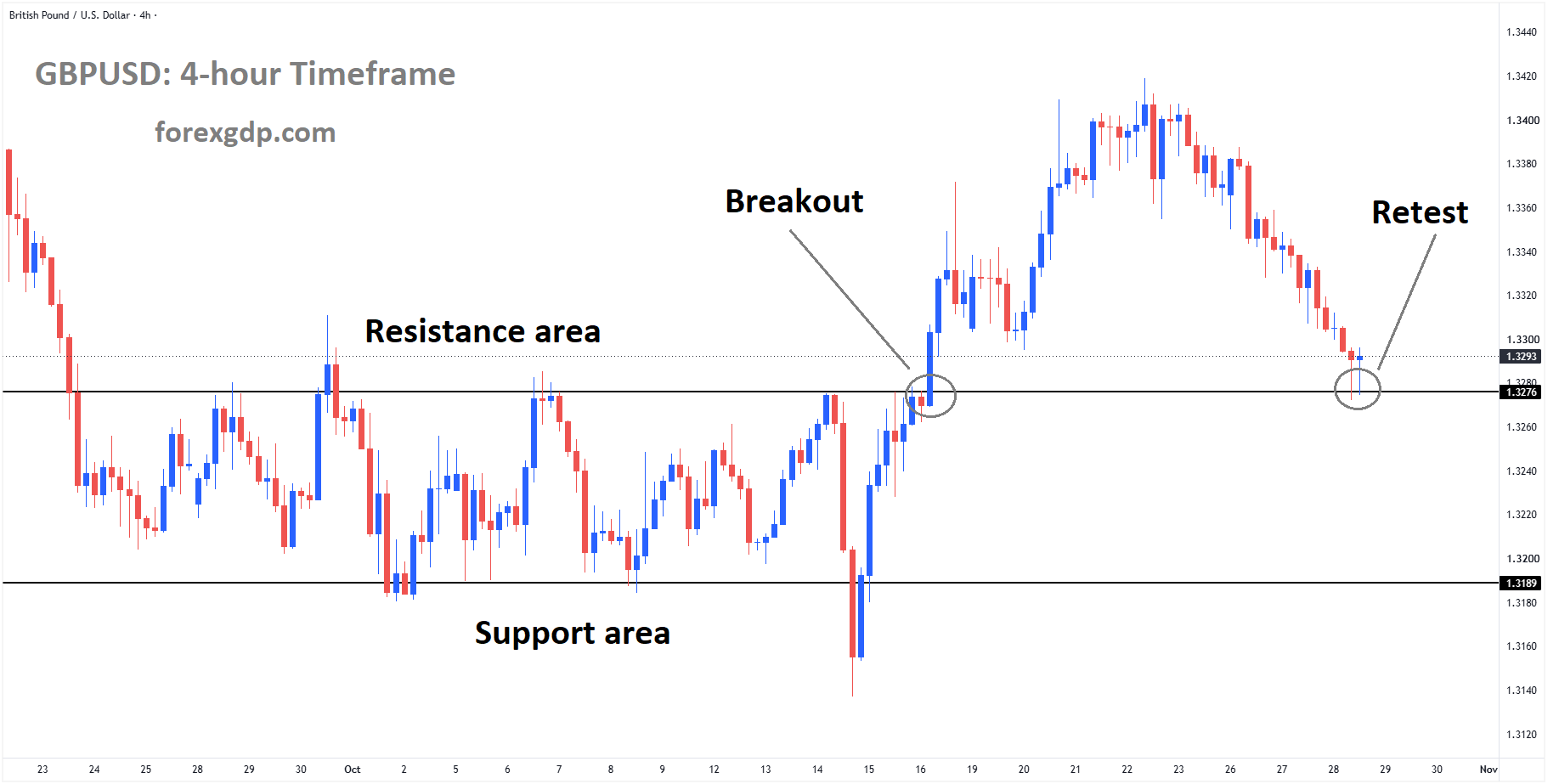
GBPUSD reached the retest area of the broken box pattern
This outlook reflects the belief that policymakers may prefer to wait in October while keeping the option of further tightening available.
The period between the two meetings will provide additional economic information that could influence the central bank’s decision.
Inflation developments will be especially important.
If price pressures remain elevated or strengthen further, policymakers may become more concerned that existing monetary restrictions are insufficient.
However, evidence of moderating inflation could reduce the urgency of another increase.
Economic growth and labor market conditions will also matter.
A strong economy may give the Federal Reserve more confidence that it can maintain restrictive policy without causing serious damage to employment.
By contrast, signs of weakening demand or deteriorating job conditions could encourage greater caution.
What Could Influence the December Decision?
Several economic developments could shape the Federal Reserve’s assessment before December.
Inflation trends will remain central because the bank’s commitment to price stability continues to guide its policy decisions.
Employment conditions will help officials determine whether the labor market is maintaining its strength or beginning to experience pressure from higher borrowing costs.
Consumer spending will provide insight into household confidence and the economy’s ability to withstand restrictive financial conditions.
Business activity will indicate whether companies are continuing to invest, expand, and hire or becoming more cautious about future growth.
Financial conditions will also influence the outlook, particularly if access to credit becomes more difficult for households and businesses.
None of these developments guarantees a particular decision.
Instead, policymakers will need to consider the overall economic picture.
The December meeting may therefore become a more important turning point if the Federal Reserve uses October to gather additional evidence.
Financial Conditions Add Another Layer of Complexity
The Federal Reserve’s interest rate decisions do not operate independently of the broader financial system.
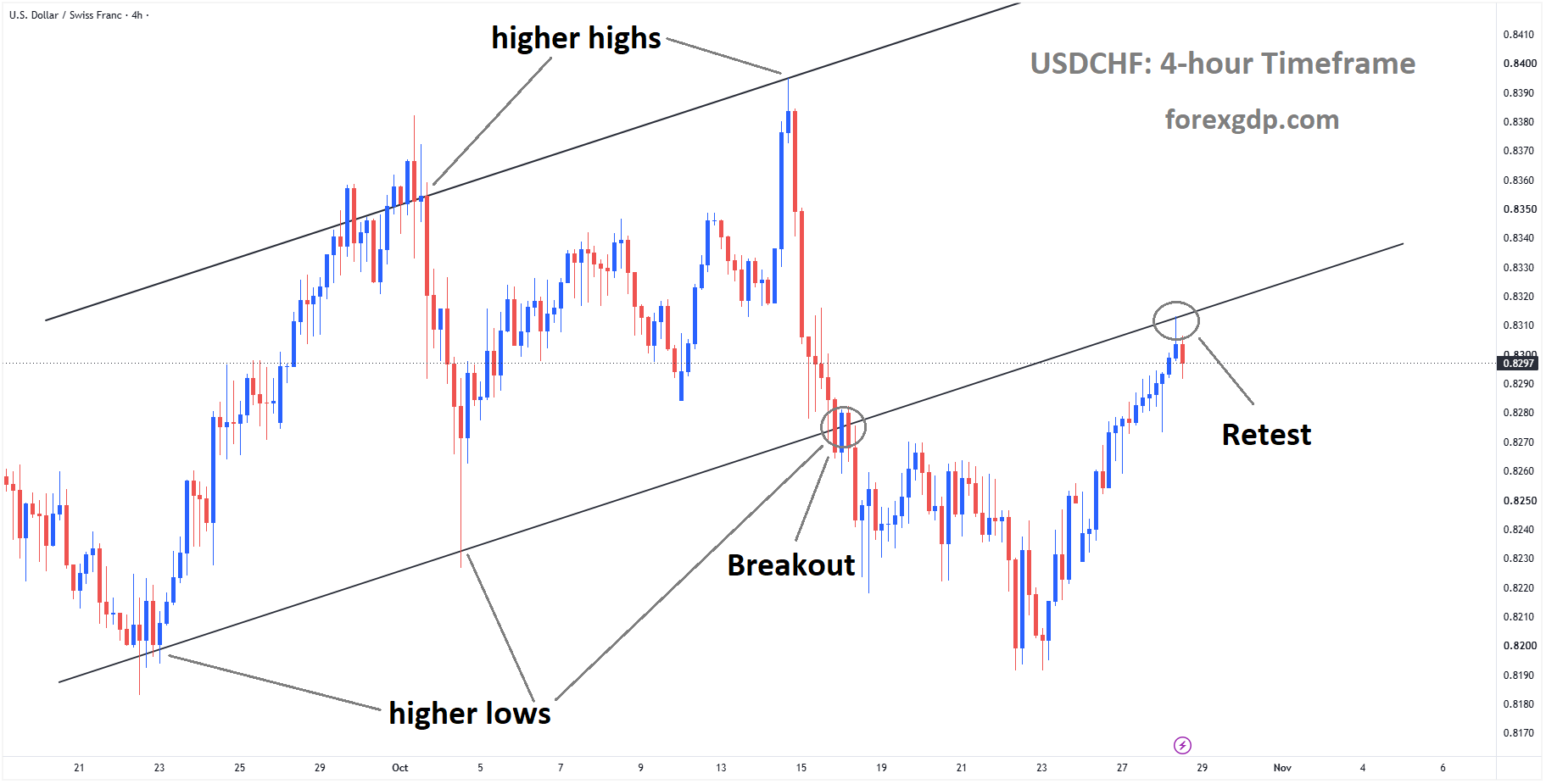
USDCHF reached the retest area of the broken ascending channel
Changes in lending standards, credit availability, and borrowing costs can influence economic activity even when the central bank leaves its benchmark rate unchanged.
Recent tightening in financial conditions has become an important consideration for policymakers.
When banks become more cautious about lending, businesses may find it harder to obtain financing for expansion, equipment, or everyday operations.
Households can also face more demanding borrowing requirements when applying for mortgages, personal loans, or other forms of credit.
These developments may slow economic activity without requiring an additional Federal Reserve rate increase.
That possibility complicates the central bank’s decisions.
If financial conditions are already becoming restrictive, another increase could intensify the pressure on consumers and businesses.
However, if inflation remains persistent despite tighter credit conditions, policymakers may still believe further action is necessary.
Economists at Deutsche Bank have highlighted this tension, suggesting that attention will focus on how the Federal Reserve balances elevated inflation and resilient economic growth against the effects of tighter financial conditions.
This is likely to be a major theme during the October press conference.
How Restrictive Financial Conditions Affect the Economy


More restrictive financial conditions can influence decisions across several parts of the economy.
For households, borrowing may become less attractive or more difficult to manage. Families may delay large purchases or reconsider taking on additional debt.
For businesses, higher financing costs can make expansion projects less appealing.
Companies may postpone investments, reduce spending, or take a more cautious approach to hiring.
Financial institutions may also become more selective about extending credit, particularly when uncertainty about future economic conditions increases.
These changes can gradually reduce demand throughout the economy.
From the Federal Reserve’s perspective, weaker demand may help reduce inflation.
The challenge is ensuring that this process does not produce an unnecessarily severe slowdown.
Officials must therefore consider not only their own policy decisions but also how the broader financial system is responding to them.
US Dollar Outlook Depends on the Federal Reserve’s Policy Message
The US Dollar could experience increased volatility around the Federal Reserve’s October announcement, particularly during Kevin Warsh’s press conference.
The direction of the currency’s response may depend more on the central bank’s communication than on the widely expected decision to maintain interest rates.
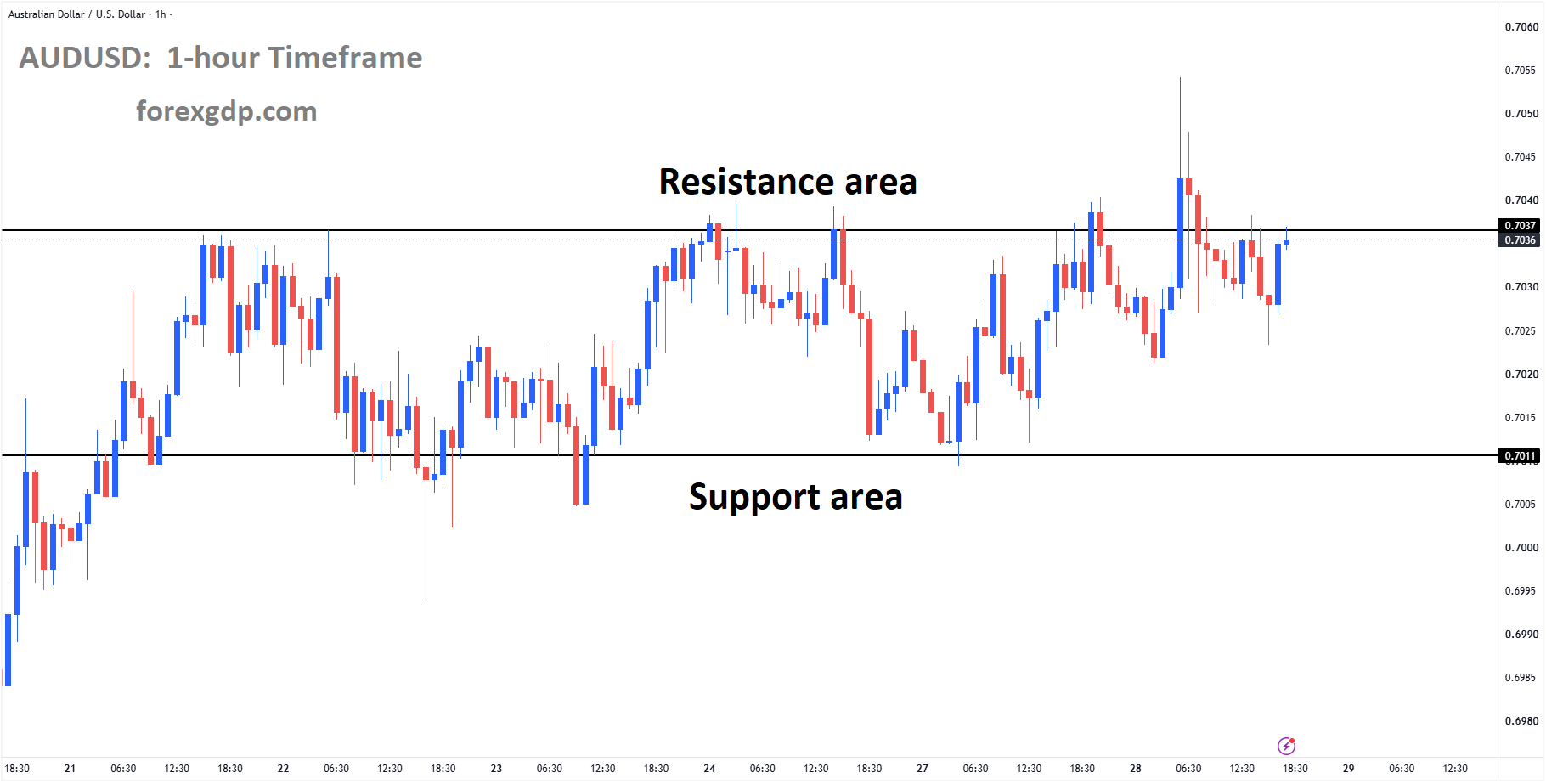
AUDUSD reached the resistance area of the box pattern
Monetary policy plays an important role in shaping international demand for currencies.
When a central bank signals that borrowing costs may remain elevated or increase further, international investors may reassess the attractiveness of assets denominated in that currency.
However, currency movements are influenced by several factors beyond interest rate expectations.
Economic growth, global uncertainty, international capital flows, and monetary policy decisions in other countries can all affect demand for the US Dollar.
This means that the Federal Reserve’s message should be considered within the broader global economic environment.
Why the Tone of the Press Conference Matters
The language used by Federal Reserve officials can influence expectations even when there is no immediate policy change.
If Warsh places strong emphasis on persistent inflation and the potential need for additional restrictions, his comments could reinforce expectations of another increase in December.
Such a message would suggest that policymakers remain concerned about inflation and are not ready to consider a less restrictive approach.
Alternatively, if he focuses heavily on tightening financial conditions and the risks facing economic growth, investors may interpret the message as a sign of greater caution.
That could lead to a reassessment of how soon another interest rate increase might occur.
A balanced message that acknowledges both inflation risks and economic uncertainty may leave expectations relatively unchanged.
The key issue is whether the press conference provides new information about the Federal Reserve’s priorities.
Because the October decision is already widely anticipated, any meaningful shift in communication could attract considerable attention.
October Meeting Will Not Include Updated Economic Projections


One important feature of the October Federal Reserve meeting is the absence of updated economic projections.
The central bank will not publish a new Summary of Economic Projections or an updated interest rate forecast chart commonly known as the dot plot.
These materials are normally useful because they show how Federal Reserve officials expect important economic conditions to develop.
They also provide insight into individual policymakers’ expectations for future interest rates.
Without these updates, observers will have less formal information about how officials view the path of monetary policy.
The written policy statement and Warsh’s press conference will therefore carry greater importance.
Why the Absence of Updated Forecasts Matters
Economic projections help explain how Federal Reserve officials interpret the relationship between inflation, employment, growth, and monetary policy.
They can reveal whether policymakers expect inflation to decline steadily or remain elevated for longer than previously anticipated.
They also provide an indication of how officials believe interest rates may need to evolve.
When updated forecasts are unavailable, it becomes harder to determine whether the committee’s broader outlook has changed.
This does not prevent the Federal Reserve from communicating its assessment of the economy.
However, the information is more limited.
Observers must pay closer attention to the wording of the policy statement and the chair’s answers during the press conference.
Questions about December, inflation persistence, and the effects of previous interest rate increases could be particularly revealing.
The absence of new projections may also increase uncertainty because individual policymakers can hold different views about the appropriate direction of policy.
Potential Disagreements Within the Federal Reserve
Although the Federal Reserve is expected to maintain interest rates, the decision may not receive unanimous support.
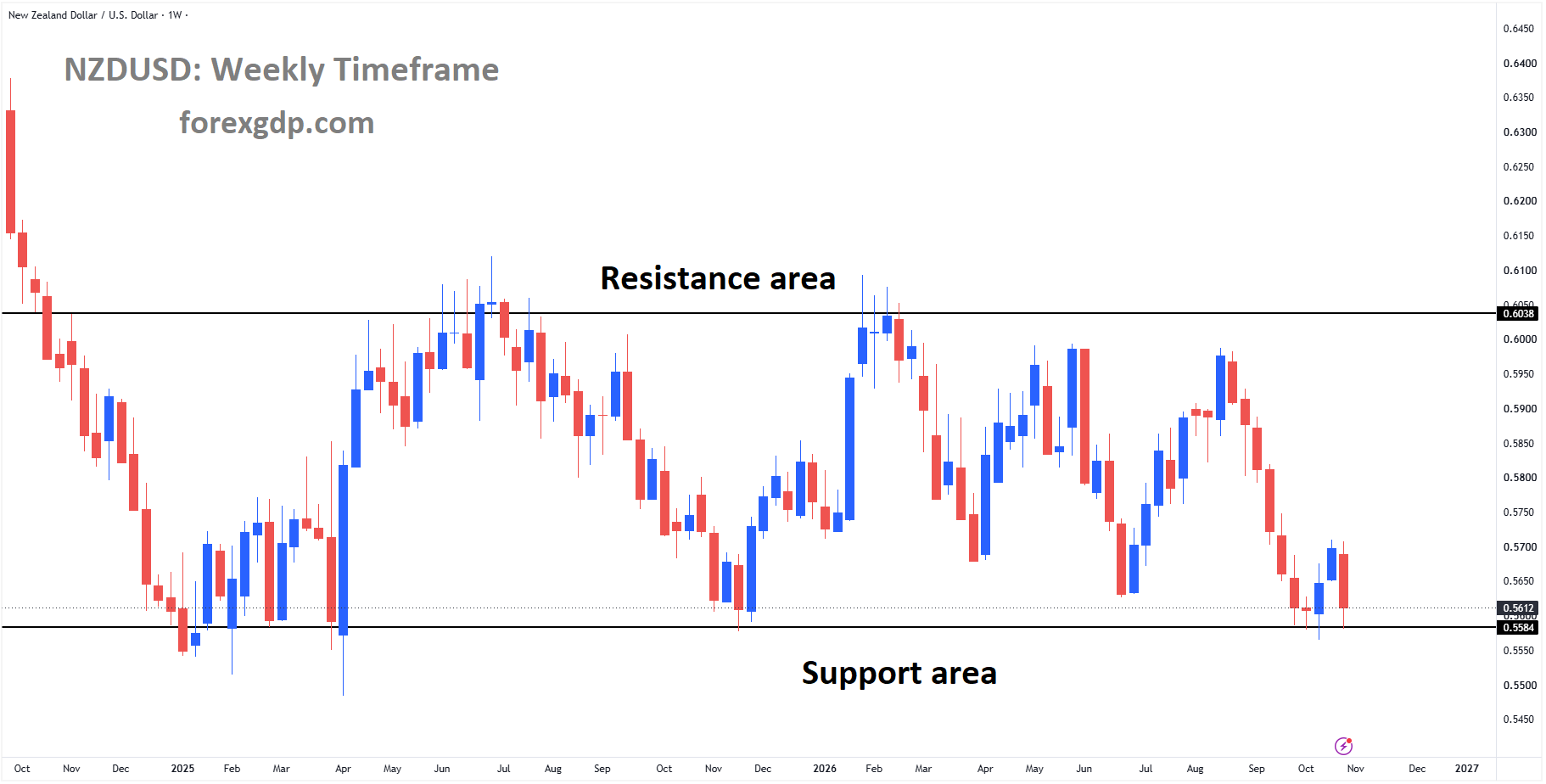
NZDUSD reached the support area of the box pattern
Some policymakers could favor additional tightening because inflation remains above the central bank’s target.
Others may believe that maintaining the current policy setting is the most appropriate approach while the effects of previous increases continue to develop.
Regional Federal Reserve officials Beth Hammack of Cleveland, Lorie Logan of Dallas, and Neel Kashkari of Minneapolis have been identified as possible dissenters.
All three previously opposed a decision to maintain rates at the July meeting, reflecting concerns about the appropriate policy response.
Their earlier positions do not guarantee that they will disagree again in October.
Nevertheless, the possibility of dissent highlights the difficult choices facing the committee.
What a Dissenting Vote Could Reveal
A dissent occurs when a voting member of the Federal Open Market Committee disagrees with the majority’s policy decision.
Such disagreements are a normal part of central bank decision-making.
Federal Reserve officials examine the same broad economic environment, but they may interpret the risks differently.
One policymaker may be especially concerned about persistent inflation and believe that further tightening is necessary.
Another may place greater emphasis on the delayed effects of previous rate increases and the possibility of weaker economic activity.
Dissenting votes can therefore provide insight into the range of views within the committee.
If some officials favor another increase while the majority chooses to wait, it could indicate that concerns about inflation remain influential.
However, a dissent does not automatically mean that the Federal Reserve will change policy at its next meeting.
Future decisions still depend on incoming economic information and the committee’s collective assessment.
US Midterm Elections Create an Unusual Political Backdrop


The October Federal Reserve meeting is taking place shortly before the US midterm elections, adding another dimension to the economic discussion.
The elections will determine the balance of power in Congress and could influence the direction of federal economic policy.
Issues such as household affordability, inflation, employment, and the cost of borrowing are important to voters.
Because Federal Reserve decisions affect many of these areas, monetary policy can become part of the broader political conversation.
However, the Federal Reserve operates independently when making monetary policy decisions.
Officials consistently emphasize that their responsibilities are based on economic conditions rather than political preferences or election outcomes.
This independence is intended to support public confidence in the central bank’s commitment to long-term economic stability.
Could Election Timing Influence the Interest Rate Decision?
Some economists have suggested that policymakers may prefer to avoid an interest rate increase immediately before a major election.
The argument is that such a decision could attract political attention and create controversy over the central bank’s independence.
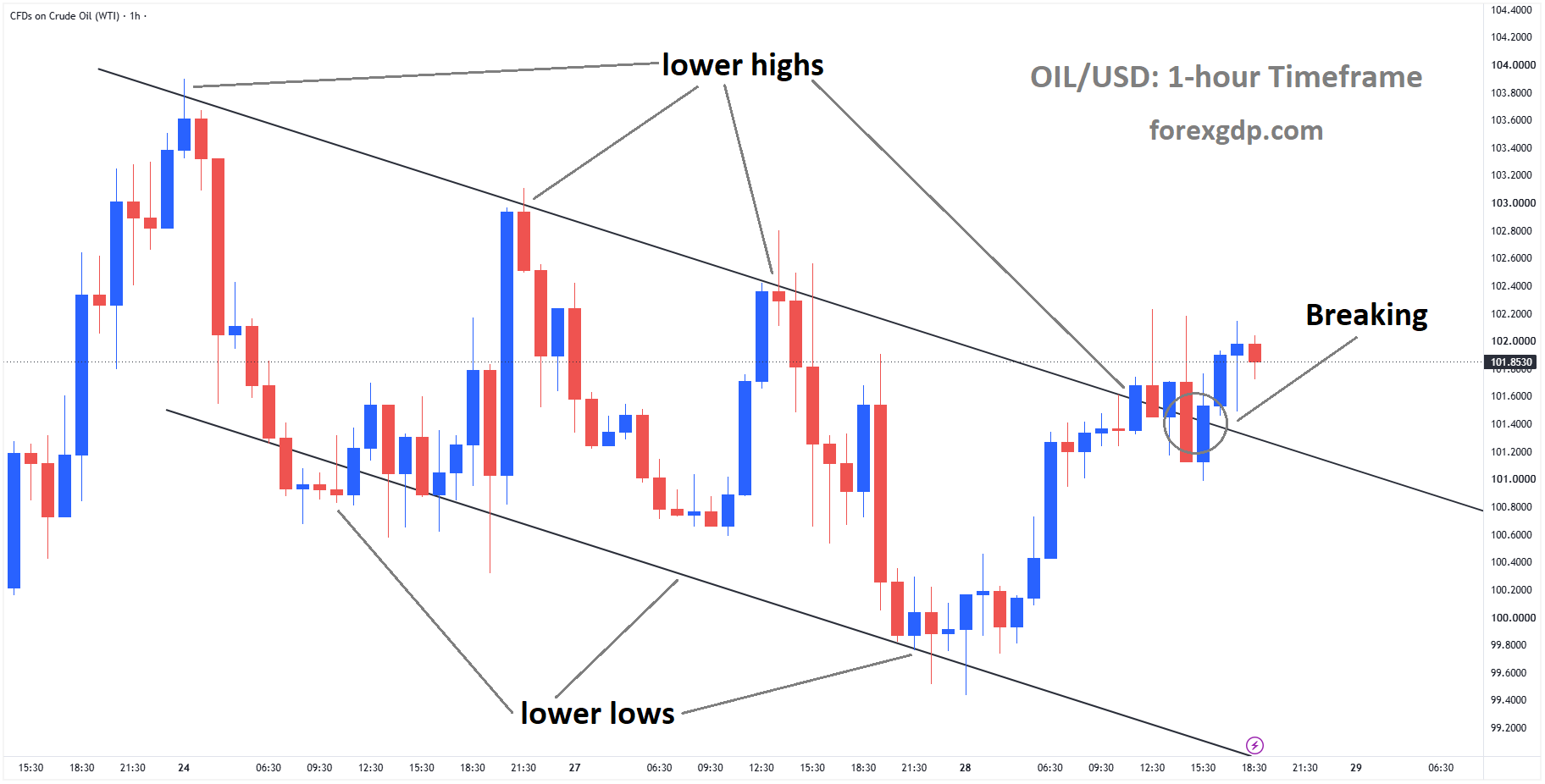
Crude Oil is breaking the lower high area of the descending channel
However, there is no basis for assuming that election timing alone will determine the October outcome.
The Federal Reserve’s stated responsibilities remain focused on achieving stable prices and maximum employment.
A decision to maintain interest rates can be justified by economic considerations, particularly when policymakers want more time to assess the effects of previous tightening.
Similarly, if inflation conditions clearly require further action, the central bank is expected to make decisions based on its economic mandate.
The political backdrop may influence how the decision is discussed publicly, but the economic reasoning behind the policy announcement remains the central issue.
What the Interest Rate Decision Means for American Households
Federal Reserve policy affects everyday financial decisions, even though the central bank does not directly set most consumer borrowing rates.
Its benchmark interest rate influences the broader cost of credit throughout the economy.
For households, this can affect mortgages, credit cards, personal loans, and other borrowing arrangements.
When monetary policy remains restrictive, financing major purchases can become more challenging.
Families may choose to delay buying a home, replacing a vehicle, or taking on additional debt.
At the same time, the Federal Reserve’s effort to control inflation is intended to protect household purchasing power over the longer term.
Persistent inflation can reduce the value of wages and savings, particularly for families whose incomes do not rise as quickly as their living expenses.
This creates a trade-off between the immediate burden of higher borrowing costs and the longer-term benefits of stable prices.
Why a Rate Pause May Not Bring Immediate Relief


A decision to leave interest rates unchanged does not necessarily mean borrowing will suddenly become easier or less expensive.
Existing financial conditions may remain restrictive.
Lenders consider several factors when setting borrowing terms, including credit risk, funding costs, and expectations about future economic developments.
As a result, households may continue to face elevated financing costs even when the Federal Reserve pauses.
The effects of monetary policy also vary across different borrowers.
People with variable-rate debt may experience changes differently from those with fixed-rate borrowing arrangements.
For households planning major financial commitments, the broader economic outlook may be just as important as the immediate policy announcement.
Businesses Will Be Watching for Signs of Policy Stability
The Federal Reserve’s October decision also carries implications for businesses across the United States.
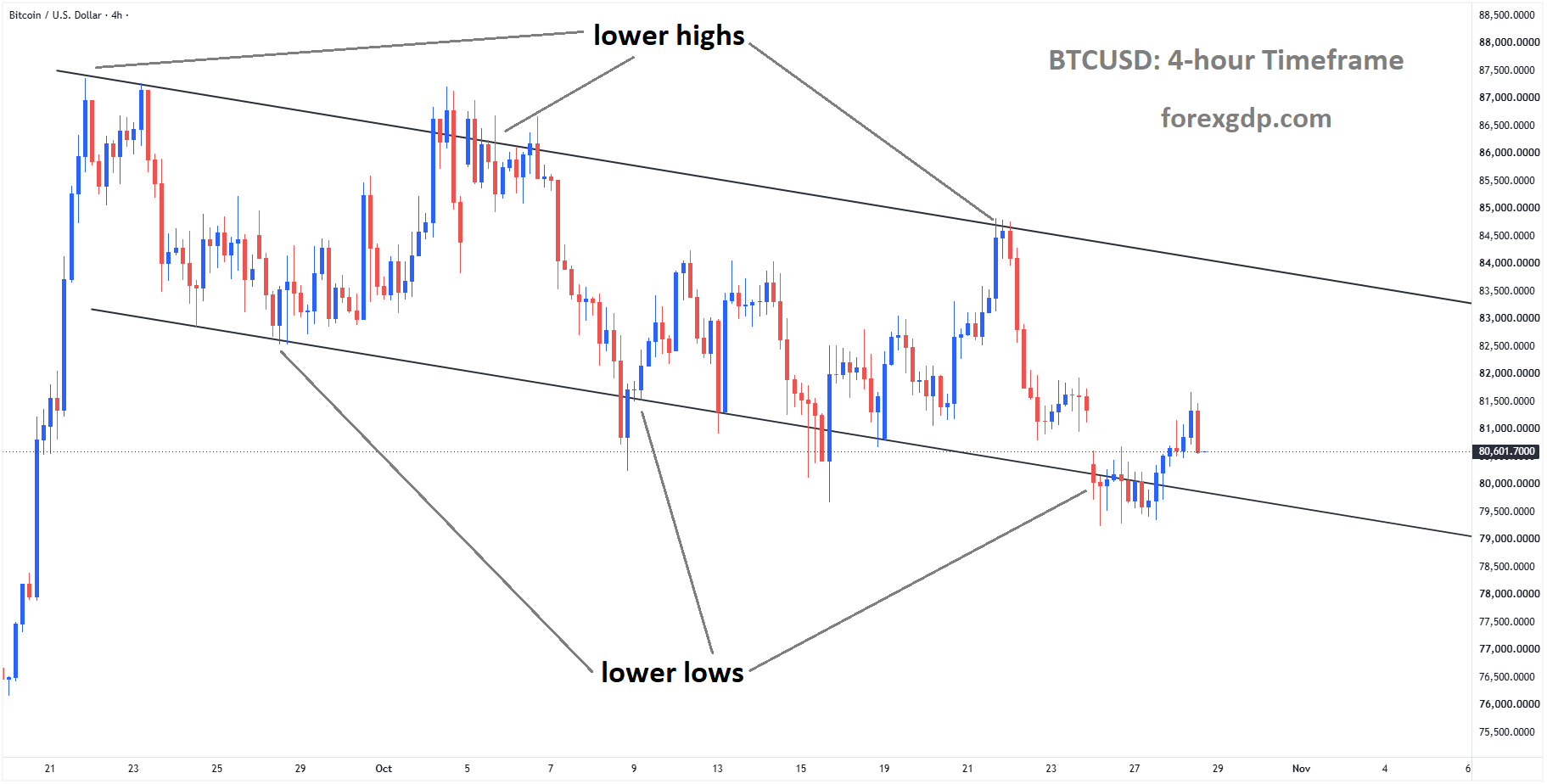
BTCUSD is rebounding from the lower low area of the descending channel
Companies rely on predictable financial conditions when making decisions about hiring, investment, expansion, and operating expenses.
Uncertainty about future interest rates can make those decisions more difficult.
Businesses that depend heavily on borrowed funds may be particularly sensitive to changes in monetary policy.
Higher financing costs can reduce the attractiveness of new projects and place pressure on companies with existing debt obligations.
Small businesses may face additional challenges because they often have fewer financing options than larger corporations.
A decision to maintain interest rates could provide some short-term clarity, especially if the Federal Reserve explains its reasoning clearly.
However, uncertainty about December may continue to influence business planning.
Companies will be interested in whether policymakers expect economic growth to remain resilient and whether inflation pressures are likely to ease.
A stable economic environment with gradually improving inflation would generally support more predictable planning.
By contrast, persistent inflation combined with restrictive credit conditions could create difficult choices for business owners.
Final Summary
The Federal Reserve’s October interest rate decision is expected to leave borrowing costs unchanged following September’s increase. Although the immediate outcome appears relatively predictable, the meeting could still provide valuable information about the future direction of US monetary policy.
Inflation remains above the Federal Reserve’s long-term target, creating pressure on policymakers to maintain their commitment to price stability. At the same time, tighter financial conditions and the delayed effects of previous interest rate increases make further decisions more complicated.
Federal Reserve Chair Kevin Warsh’s press conference will be particularly important because the meeting will not include updated economic projections or interest rate forecasts.
His comments may help clarify whether officials are preparing for another increase in December or prefer to continue evaluating economic developments.
Potential disagreements within the committee, persistent inflation, resilient economic activity, and the approaching midterm elections all contribute to the importance of the meeting.
For American households and businesses, the central question is whether the Federal Reserve can restore stable inflation without causing unnecessary damage to employment and economic growth.
For the US Dollar, attention will center on how the central bank communicates its expectations and whether its message changes perceptions of future monetary policy.
Ultimately, the October meeting is about more than whether interest rates change immediately. It is an opportunity for the Federal Reserve to explain how it views the economy, what risks remain, and which developments will guide its decisions during the final months of the year.
Don’t trade all the time, trade forex only at the confirmed trade setups
Get more confirmed trade signals at premium or supreme – Click here to get more signals, 2200%, 800% growth in Real Live USD trading account of our users – click here to see , or If you want to get FREE Trial signals, You can Join FREE Signals Now!