

Time has a quiet way of slipping through our fingers. One moment you’re convinced there’s plenty of it, and the next, you’re looking back wondering where it all went. When people reach an older age, regrets don’t usually come from dramatic failures or wild mistakes. They come from the small, everyday choices that felt harmless at the time. The chances not taken. The conversations avoided. The habits postponed for “someday.”
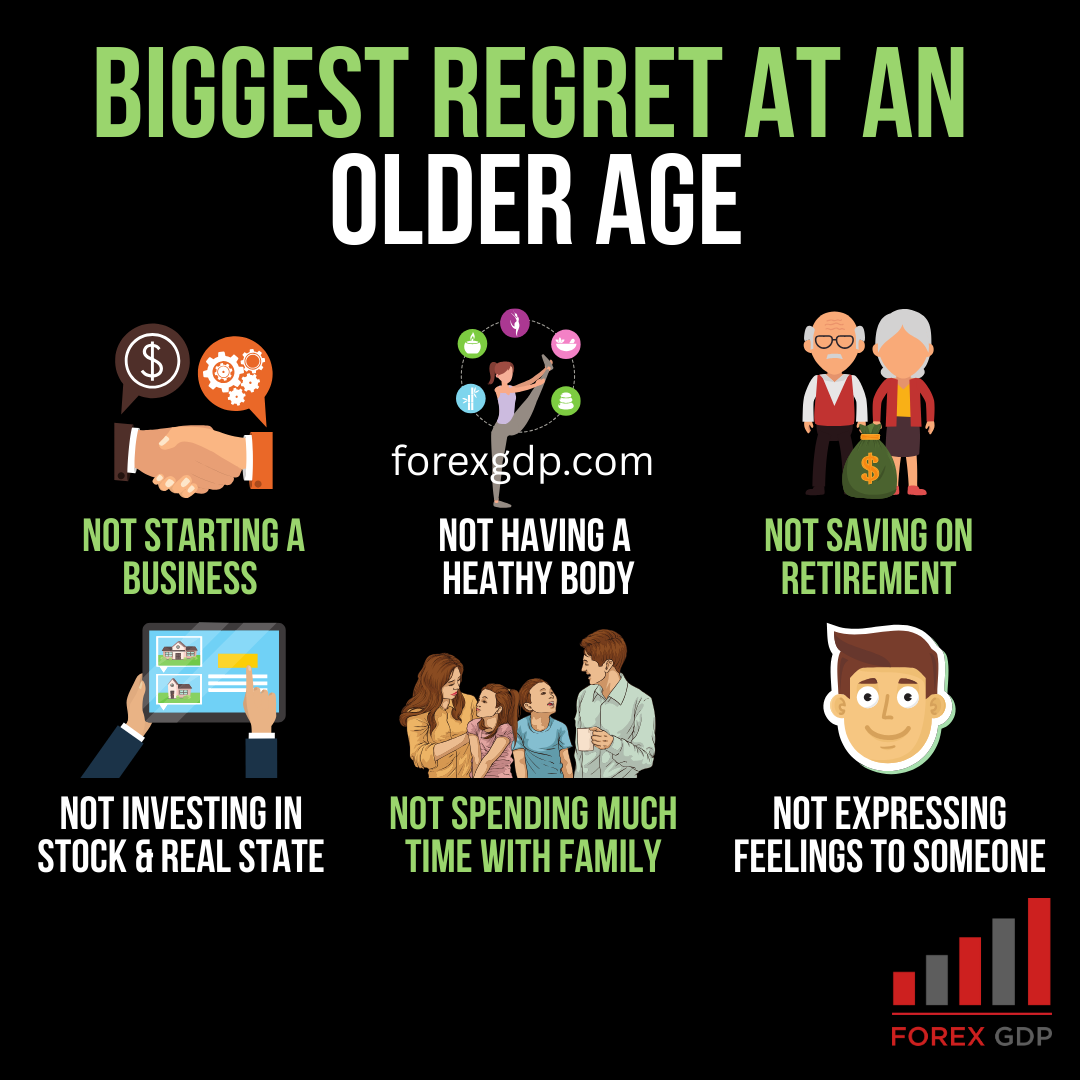
This article explores the most common regrets people carry later in life, inspired by the themes shown in the image. These regrets are deeply human, painfully relatable, and surprisingly preventable. If there’s a thread connecting them all, it’s this: we often underestimate how fast “later” becomes “never.”
Why Regret Hits Harder as Time Passes
The Weight of Missed Chances
Regret has a strange personality. It doesn’t scream when you’re young. It whispers. You brush it aside because life feels long and forgiving. But as years pass, that whisper turns into a steady echo. Missed chances don’t disappear; they age with you.
What makes regret so heavy is that it’s untouchable. You can’t negotiate with the past. You can’t redo a decade the way you redo a bad day. The mind replays moments endlessly, imagining alternate outcomes that will never exist. That mental loop can be exhausting, especially when energy is already limited by age.
There’s also a cruel clarity that comes later in life. You finally understand what mattered most, but that understanding arrives when changing course is harder. It’s like being handed a map after you’ve already walked the wrong road for miles.
Why People Ignore the Future Version of Themselves
When you’re younger, your future self feels like a stranger. You care about today’s stress, today’s bills, today’s comfort. Tomorrow’s version of you can wait. That disconnect is why so many regrets are rooted in long-term neglect rather than short-term mistakes.
We tell ourselves comforting lies. There will be time to start that business. Health can wait until life slows down. Family will understand. Feelings can be expressed later. These stories feel harmless, but they quietly shape decades.
Ironically, people often spend their youth preparing for emergencies that never happen while ignoring certainties that always do. Aging isn’t optional. Time isn’t refundable. And that’s what gives regret its sting.
Regret Around Money and Career Choices
Not Starting a Business When the Fire Was There
Fear Wearing the Mask of Practicality
Many people look back and realize they once had a spark. An idea. A business dream that kept them awake at night. Instead of chasing it, they chose safety. They called it being responsible, but deep down, it was fear.
Fear is clever. It disguises itself as logic. It tells you the timing isn’t right, the risk is too high, or someone else is already doing it better. Years later, that fear turns into a haunting question: what if?
The regret isn’t always about money. Often, it’s about identity. People wonder who they might have become if they had trusted themselves just once. That curiosity can hurt more than any financial loss ever could.
Watching Others Live Your Dream
There’s a unique pain in seeing someone else succeed at something you once imagined doing. It doesn’t come from jealousy alone. It comes from recognition. You see pieces of yourself in their journey and realize you stepped aside when you didn’t have to.
Older adults often admit they regret not failing sooner. Failure, at least, would have provided answers. Inaction leaves nothing but unanswered questions. And unanswered questions age poorly.
Not Investing in Stocks and Real Estate Early


Time as the Real Currency
Money regret later in life rarely comes from not earning enough. It comes from not letting money grow. People realize too late that time was the most valuable asset they had, and they spent it without investing.
Investing feels intimidating when you’re young. It seems complex, risky, and distant. But as years pass, the math becomes painfully clear. Small, consistent actions could have created massive change. That realization can feel like discovering you threw away winning lottery tickets.
What hurts isn’t just the missed wealth. It’s the missed freedom. More options. Less stress. The ability to say no when needed. Financial regret is really regret about lost control.
Living Paycheck to Paycheck by Choice
Some people weren’t forced into financial stagnation. They chose comfort over discipline. Spending felt good in the moment. Saving felt restrictive. Investing felt unnecessary.
Later in life, those same choices feel suffocating. The lack of a financial cushion limits decisions. Retirement becomes uncertain. Dependence creeps in. And suddenly, the freedom once traded for convenience feels priceless.
Regret About Health and the Body
Not Having a Healthy Body
Treating Health as an Unlimited Resource
Youth creates an illusion of invincibility. You can eat poorly, sleep little, move less, and still function. That false security convinces many people that health is automatic. It’s not.
As the body ages, neglect starts charging interest. Joints ache. Energy fades. Simple tasks feel heavy. People don’t regret skipping a workout. They regret skipping decades of care.
Health regret is brutal because it affects every part of life. Money can be rebuilt. Careers can pivot. But the body has limits. And once those limits are reached, options shrink fast.
Wishing for Strength, Not Looks
Interestingly, older adults rarely say they regret not looking better. They regret not being stronger. More mobile. More independent.
They wish they could walk without pain, lift grandchildren with ease, or travel without exhaustion. Those wishes don’t come from vanity. They come from a desire to live fully instead of cautiously.
Health isn’t about perfection. It’s about preserving freedom. That lesson often arrives late, accompanied by frustration and self-blame.
Regret in Relationships and Family Life


Not Spending Enough Time With Family
Trading Presence for Productivity
Many people justify distance from family by pointing to responsibilities. Work demands. Financial pressure. Ambition. These reasons feel valid in the moment, but they don’t age well.
Time with family isn’t like money. You can’t earn it back. Missed dinners become missed milestones. Children grow. Parents age. One day, you realize you were busy during moments that mattered most.
The regret isn’t always dramatic. It’s quiet. It shows up in memories that feel incomplete. In photos you’re not in. In stories you weren’t part of.
Assuming There Would Always Be More Time
The most dangerous assumption is that people will always be there. Life doesn’t guarantee that. Loss arrives without permission.
Older adults often say they regret waiting to slow down. Waiting to prioritize connection. Waiting for the “right time” that never came.
Family regret carries emotional weight because love was available, but attention wasn’t. And attention is what love needs to grow.
Not Expressing Feelings to Someone
Silence That Lasts a Lifetime
Unspoken feelings age into heavy regrets. Words not said don’t disappear. They linger, replayed in the mind with endless variations of how things might have turned out.
People regret not saying “I love you,” “I’m sorry,” or “I need you.” Pride, fear, and uncertainty often win in the moment. Later, those defenses feel pointless.
Silence can feel safe, but it’s rarely neutral. It either protects something fragile or slowly kills it.
Fear of Rejection Over Honesty
Many people avoid expressing feelings to avoid discomfort. Rejection feels final. Vulnerability feels dangerous. But unexpressed feelings don’t protect you; they trap you.
Older adults often admit they would rather have been rejected than left wondering. Rejection closes a door. Regret leaves it half-open forever.
Emotional honesty may sting briefly, but emotional regret can last decades.
Why These Regrets Are So Common
Society Rewards the Wrong Priorities

Modern life celebrates productivity, not presence. It rewards busyness, not balance. People are praised for working harder, not living better.
This cultural pressure shapes choices unconsciously. People delay joy, health, and connection in exchange for approval and security. Later, they question whether the trade was worth it.
The tragedy is that society doesn’t carry the regret. Individuals do.
Comfort Is More Dangerous Than Failure
Failure teaches. Discomfort forces growth. Comfort seduces people into staying still.
Many regrets stem from staying comfortable too long. Not uncomfortable enough to change. Not scared enough to act. Not curious enough to explore.
Comfort feels safe, but it slowly erodes potential. By the time people notice, years have passed quietly.
How Regret Changes Perspective With Age
Success Gets Redefined
As people age, success stops looking like money or status. It starts looking like health, freedom, and meaningful relationships.
That shift can be painful because it highlights past misalignment. People realize they chased goals that didn’t truly matter to them.
This realization isn’t bitter; it’s sobering. It brings clarity, but also loss.
Small Moments Gain Value
Older adults often find joy in simplicity. A walk. A conversation. A shared meal. These moments feel rich because they’re no longer taken for granted.
Regret sharpens appreciation. It teaches what should have mattered all along.
Unfortunately, wisdom gained late still costs something.
Living With Fewer Regrets While Time Is Still on Your Side
Choosing Courage Over Comfort
The common thread behind most regrets is avoidance. Avoiding risk. Avoiding effort. Avoiding vulnerability.
Courage doesn’t guarantee success, but it reduces regret. Trying and failing feels better in hindsight than never trying at all.
Small acts of courage compound. They reshape identity. They create stories worth remembering.
Acting Before Motivation Feels Perfect


Waiting for motivation is a trap. Motivation follows action, not the other way around.
People who regret less tend to act imperfectly. They don’t wait for certainty. They move despite fear.
Life rewards momentum more than planning.
A Final Reflection on Regret and Time
Regret isn’t a punishment. It’s a message. It points to what truly mattered. The tragedy is not feeling regret; it’s realizing it too late.
The regrets people carry into old age are rarely about what they did wrong. They’re about what they didn’t do at all. Dreams left untouched. Bodies neglected. Words unspoken. Time misspent.
The good news is that regret is also a teacher. As long as time remains, its lessons can still be used. You don’t need a perfect plan. You need movement. Honesty. Care. Presence.
Because one day, the future version of you will look back. And what they feel will depend on what you choose today.
Frequently Asked Questions
1.Why do people regret inaction more than mistakes?
Because mistakes provide closure and lessons, while inaction leaves endless unanswered questions that linger for years.
2.Is it ever too late to fix regrets?
It’s never too late to improve your present, but some opportunities truly are time-sensitive, which is why acting sooner matters.
3.Why is health regret so common later in life?
Because the body remembers neglect longer than the mind does, and physical limitations directly affect independence and freedom.
4.Do most people regret working too much?
Yes, many people later realize they traded irreplaceable time and relationships for work that didn’t love them back.
5.How can someone reduce future regret starting now?
By prioritizing health, relationships, honest expression, and taking small risks consistently instead of waiting for perfect conditions.