

Why Simplicity Rules in Forex Trading
Let’s face it — when most new traders open their charts for the first time, they’re tempted to fill them with every possible indicator, line, and signal they can find. RSI? Add it. MACD? Why not. Fibonacci, Bollinger Bands, Stochastic, and Moving Averages? The more, the better, right?
Well… not really.
The truth is, the cleaner your chart, the clearer your mind. When your trading screen looks like a chaotic spider web of indicators, it’s almost impossible to make confident decisions. Simplicity doesn’t mean weakness — it means clarity, focus, and discipline. In Forex, those three things are your real superpowers.
A clean chart strips away the noise and helps you see what truly matters — price action. It’s the difference between reacting emotionally and responding logically.
The Psychology Behind Cluttered Charts
Trading isn’t just about numbers — it’s a battle of the mind. When you clutter your chart with countless tools, you’re subconsciously trying to control uncertainty. Every new indicator gives a false sense of “confirmation.” You believe more information equals more accuracy.
But here’s the reality: more indicators often mean more confusion.
Your brain starts to experience analysis paralysis. You hesitate, you overthink, and by the time you decide to enter or exit a trade, the perfect opportunity has already passed.
It’s like trying to drive through fog with your high beams on — instead of helping, it blinds you.
A clean chart, on the other hand, creates mental space. You see trends, support, and resistance clearly. You trade with intention, not impulse.
Information Overload: The Silent Account Killer
Imagine walking into a room where ten people are shouting advice at once. One says “buy,” another says “sell,” and someone else screams “wait!” That’s exactly what happens on an overloaded chart.
Every indicator tells a slightly different story. RSI says oversold, MACD says bullish crossover, while Bollinger Bands hint at a breakout.
Who do you listen to?
Too much data leads to decision fatigue. You stop trusting your instincts and start chasing conflicting signals. Over time, this emotional exhaustion results in impulsive trading — revenge trades, over-leveraging, and poor risk management.
That’s how accounts are blown.
A clean chart removes the noise so your decisions come from logic, not chaos.
The Beauty of Price Action Trading
At the heart of every market is one simple truth: price never lies. Indicators are derived from price, meaning they lag behind it.
By focusing on price action — candlesticks, structure, and levels — you’re reading the market’s language directly.
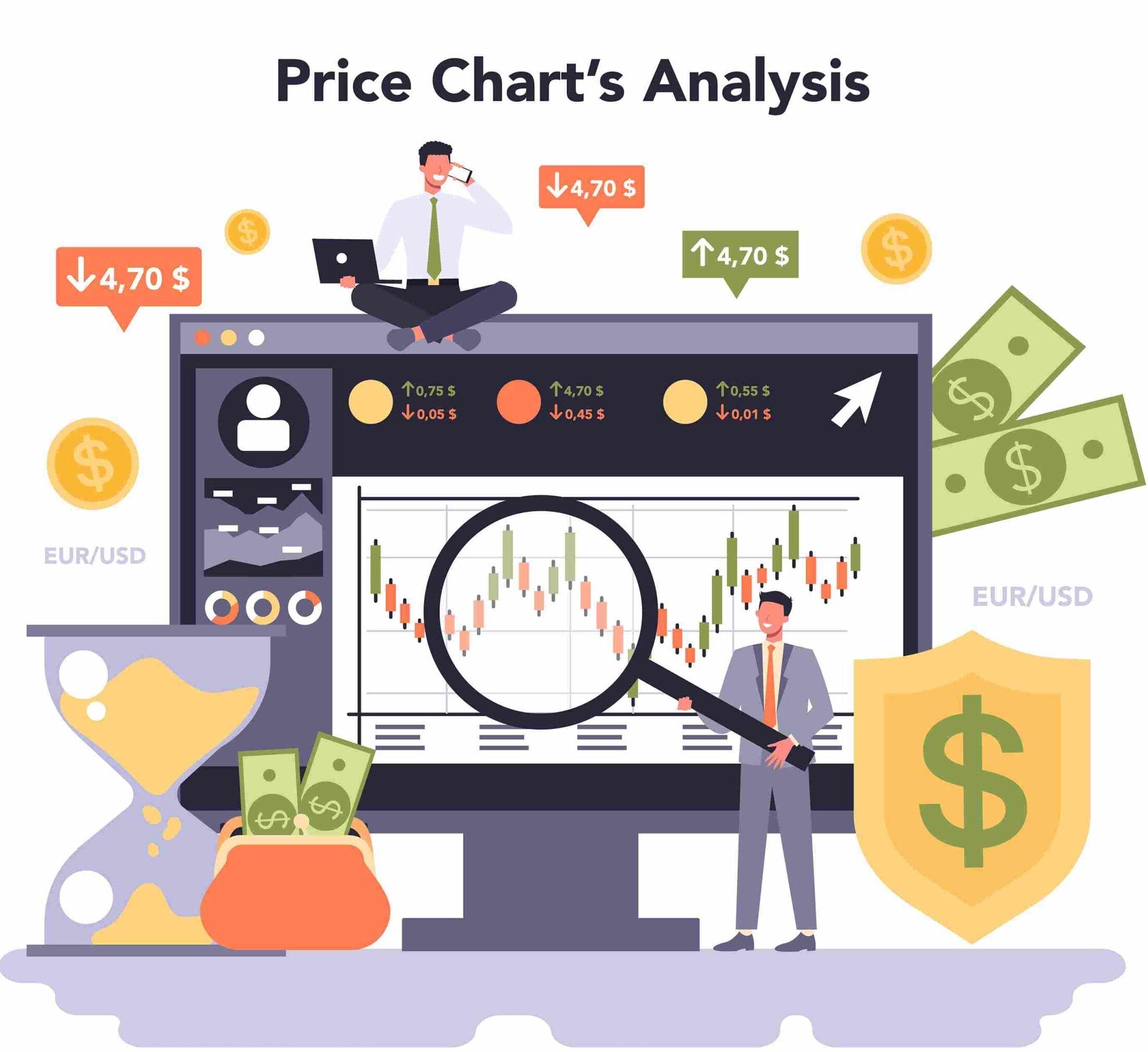
Price action gives you a front-row seat to what the market is doing right now, not what it did ten bars ago. You can spot momentum shifts, breakout traps, and liquidity zones — all from the raw data that truly matters.
And the best part? You don’t need to wait for a signal to “confirm” what price already told you.
Why Most Traders Hide Behind Indicators
Let’s be honest. Indicators make traders feel safe. They’re like training wheels on a bike — they provide comfort when you don’t fully trust your judgment yet.
New traders love them because they appear “scientific.” Green arrows, red signals, and colorful lines feel like control in a market that’s inherently uncertain.
But this false security comes at a cost. Instead of learning how to interpret price behavior, traders become slaves to indicators. When the signal fails, they blame the tool instead of their dependency.
The market rewards those who understand context, not just color changes on a chart.
Simplicity Enhances Consistency
Consistency is the holy grail of trading. And guess what? You can’t be consistent if your chart setup changes every week.
One week you rely on MACD, the next it’s Ichimoku, and the week after that you switch to Fibonacci. Your brain can’t form stable decision-making habits if your environment keeps changing.
A clean, consistent chart setup helps build muscle memory. Your mind begins to recognize patterns naturally. Over time, you’ll spot winning setups in seconds because your brain isn’t distracted by a rainbow of unnecessary tools.
As the saying goes: Master one setup, and it can feed you for life.
The Professional Trader’s Secret Weapon
If you’ve ever watched professional traders’ setups, you’ll notice something striking — their charts are often shockingly simple.
Maybe a few support and resistance zones, a trendline, and candlesticks. That’s it.
Professionals understand that trading isn’t about predicting — it’s about reacting intelligently to what price does.
They don’t need 10 indicators to tell them the market is trending. The chart itself tells the story.
They trust their experience and risk management, not visual clutter. Their secret weapon? Clarity through simplicity.
How a Clean Chart Improves Risk Management


Risk management is 90% psychology and 10% math. If your mind is cluttered, your risk perception becomes distorted.
You might enter trades impulsively, move your stop loss emotionally, or hold onto losing positions out of fear or hope.
When your chart is clean, your risk zones are crystal clear. You see where the market structure invalidates your setup, where your stop should go, and where your profit target lies.
There’s no guesswork, just clean logic.
You trade based on probabilities, not emotions — and that’s what separates professionals from gamblers.
The Connection Between Clarity and Confidence
Confidence in trading doesn’t come from winning streaks — it comes from understanding what you’re doing.
When your charts are cluttered, doubt creeps in. Every conflicting signal plants a seed of uncertainty: “What if I’m wrong?”
But when your analysis is clean and simple, you know why you’re taking a trade. Even if it loses, you can learn from it easily. There’s no confusion — just clear feedback.
That’s the foundation of sustainable confidence — clarity of thought, clarity of chart.
How to Simplify Your Chart Without Losing Edge
Simplifying your chart doesn’t mean trading blind. It means keeping only what genuinely adds value.
Here’s how to do it:
-
Start with price. Use a clean candlestick chart — no background clutter, no gridlines.
-
Add key levels. Mark your support, resistance, and trendlines manually.
-
Use one or two confirming tools. A moving average for trend direction or RSI for momentum is fine — but that’s it.
-
Stick to your setup. Don’t add tools just because you lost a trade. Stick to what you’ve tested and trust.
-
Review regularly. If something doesn’t serve a clear purpose, remove it.
Your goal is not to make the chart “look smart” — it’s to make decisions fast and accurately.
The Mental Detox: Trading With a Clear Mind
Trading can be emotionally exhausting. Constant screen time, market noise, and fluctuating P&L can fry your nerves.
That’s why cleaning your chart isn’t just a visual act — it’s a mental detox.
Each time you remove unnecessary lines and indicators, you’re also decluttering your thoughts.
You begin to see the market as it is, not as you want it to be. This mental clarity helps you trade calmly, wait patiently, and accept losses without emotional outbursts.
A clean chart is like meditation — silence for the mind, clarity for the soul.

Why “More” Is the Enemy of Progress
In the modern trading world, everyone’s looking for shortcuts — “the best indicator,” “the ultimate strategy,” or “AI-powered signals.”
But here’s the truth: the more complicated your system, the more ways it can fail.
Markets are fluid and dynamic. No single indicator works forever.
When you rely on complexity, your entire system collapses when one variable changes.
But when you rely on simplicity — trend, structure, and momentum — you can adapt to any condition.
Remember, simplicity is not about doing less; it’s about doing what matters most.
Building Your Trading Identity Through Minimalism
Every great trader has a style — a unique fingerprint on the chart. But that style doesn’t come from copying others; it comes from mastering simplicity.
When your chart is clean, your decisions are authentic. You stop chasing “perfect systems” and start developing intuition.
Minimalism in trading is not about removing everything; it’s about keeping what aligns with your strategy and personality.
You’ll begin to trust your analysis, follow your plan, and execute with confidence — that’s how real trading identity is built.
The Science Behind Visual Simplicity
Neuroscience proves that humans process visuals better when they’re clean and uncluttered.
When your brain sees too much visual data, it experiences cognitive overload, leading to poor memory retention and slower decision-making.
Clean visuals, on the other hand, improve focus, recognition, and reaction time — exactly what a trader needs during live markets.
So when you clear your chart, you’re not just improving aesthetics; you’re optimizing your brain’s efficiency.
Your eyes become sharper. Your mind becomes calmer. Your results become better.
Learning from the Masters of Simplicity
Some of the most legendary traders — like Jesse Livermore and Richard Wyckoff — never had modern indicators.
They relied purely on price, volume, and market structure.
And they made millions.

Modern traders often forget that technology is meant to assist, not replace understanding.
The legends succeeded not because they had fancy tools, but because they mastered simplicity and human behavior.
The lesson? Tools evolve, but the core principles of clarity, patience, and discipline never change.
The Emotional Freedom of Trading Light
When your chart is overloaded, you’re emotionally tied to every line and indicator. You feel a constant urge to check whether they’re “agreeing” with your trade.
That dependency creates anxiety.
But with a clean chart, you break free from that mental cage. You stop second-guessing and start trusting your analysis.
You’ll find peace in the process — and ironically, that’s when your results start improving.
Freedom in trading doesn’t come from having control over the market; it comes from having control over yourself.
How To Transition To A Clean Chart Setup
If you’ve been trading with cluttered charts for years, going minimalist might feel uncomfortable at first.
Here’s a simple roadmap:
-
Step 1: Strip your chart completely. Remove every indicator.
-
Step 2: Add only the essentials — candlesticks, support/resistance zones, and maybe one moving average.
-
Step 3: Backtest your setup. Review old data and analyze trades using this simple structure.
-
Step 4: Practice discipline. Resist the urge to add new tools unless absolutely necessary.
-
Step 5: Reflect weekly. Note how your decision-making and emotional control improve over time.
Soon, you’ll realize that simplicity doesn’t reduce accuracy — it enhances it.
The Market Rewards the Calm, Not the Clever
The market doesn’t care how smart or technical you are. It rewards patience, clarity, and consistency.
You can have the most complex algorithm, but if your mind is cluttered, you’ll still lose.
On the flip side, a trader with a clean chart and calm focus can outperform the most “advanced” system.
Because trading isn’t about prediction — it’s about reaction.
And you can’t react effectively when your vision is clouded by noise.
The calm mind always wins in the long run.
Common Myths About Clean Charts


Let’s bust a few common myths:
-
Myth 1: “Clean charts are only for professionals.”
Reality: Clean charts are for smart traders, not just pros. Simplicity benefits everyone. -
Myth 2: “You can’t make accurate entries without indicators.”
Reality: Price action is the most accurate indicator in existence. Everything else lags. -
Myth 3: “Minimalist charts are boring.”
Reality: Clarity isn’t boring — it’s profitable. Complexity might look exciting but drains your focus.
Traders often forget that the goal isn’t to be entertained — it’s to make money.
Developing Discipline Through Clean Charts
Every clean chart represents discipline.
You’re choosing patience over panic, focus over frenzy.
You’re teaching your brain to slow down, wait for confirmation, and execute with intention.
This discipline extends beyond trading — it sharpens your mindset in life.
You start filtering unnecessary distractions, focusing only on what adds value.
And that, in itself, is a life-changing skill.
Why a Clean Chart Reflects a Professional Mindset
A professional trader treats their workspace like a cockpit — neat, organized, and purposeful.
You wouldn’t trust a pilot whose dashboard is full of random blinking lights, right?
Similarly, your trading environment should reflect precision and clarity.
A clean chart shows you’re in control. It reflects maturity, patience, and confidence.
Professionals don’t chase signals; they execute systems. And systems are built on simplicity.

Conclusion: Simplicity Is the Ultimate Trading Edge
At the end of the day, a clean chart is more than a visual choice — it’s a mindset.
It’s about removing the noise, focusing on what matters, and trading with confidence.
You can’t control the market, but you can control your environment. And that’s where clarity begins.
When your charts are clean, your mind becomes calm.
When your mind is calm, your decisions become sharp.
And when your decisions are sharp, your results speak for themselves.
In trading and in life — simplicity always wins.
FAQs
1. Why do professional traders prefer clean charts?
Because they value clarity over confusion. Clean charts help them make faster, more confident decisions based on price, not conflicting indicators.
2. Can I still use indicators with a clean chart?
Yes — but use them sparingly. One or two confirming tools (like RSI or moving average) are enough if they align with your price action analysis.
3. How does chart clutter affect trading psychology?
Cluttered charts cause cognitive overload, leading to hesitation, doubt, and emotional trading — all of which destroy consistency.
4. Does a clean chart improve profitability?
Indirectly, yes. It enhances focus, confidence, and discipline — traits that lead to better decision-making and fewer impulsive trades.
5. What’s the best way to start trading with clean charts?
Strip your chart down to price action, mark key levels, and use one confirming indicator. Keep it simple, stay consistent, and review your trades regularly.