

From the beeping of a supermarket till to the chatter in a coffee shop, our brains work overtime to process the sounds around us. But for some, these everyday noises become overwhelming, making it hard to focus on voices or important alerts.
For Sophie, a 25-year-old administration assistant from London, this struggle is all too real. She’s often told she’s not paying attention or that she “zones out.” But the truth is far more complex—her brain simply has trouble processing sound.
After years of struggling, Sophie was diagnosed with Auditory Processing Disorder (APD), a condition that affects how the brain interprets sound. Now, audiologists are questioning whether prolonged use of noise-cancelling headphones could be playing a role in this growing issue.
When Sounds Become a Blur: Living with APD
The Sounds of a City Become Too Much
Growing up on a peaceful farm, Sophie never had any issues with hearing. But after moving to London for university, something changed.
“I just couldn’t figure out where sounds were coming from,” she said. “Lectures were a nightmare—all the words just sounded like gibberish.”
As a result, she stopped attending in-person lectures and relied on online classes with subtitles instead. Her social life also took a hit—bars and restaurants became overwhelming, forcing her to leave early.
A Diagnosis That Left More Questions Than Answers
When a standard hearing test showed no issues, Sophie met with a private audiologist who diagnosed her with APD. This condition means that although her ears work fine, her brain struggles to process the information they receive.
The cause of Sophie’s APD is still unknown. But one theory from audiologists is catching attention: could excessive use of noise-cancelling headphones be contributing to the problem?
Are Noise-Cancelling Headphones Changing the Way We Hear?
The Rise of Noise-Cancelling Headphones
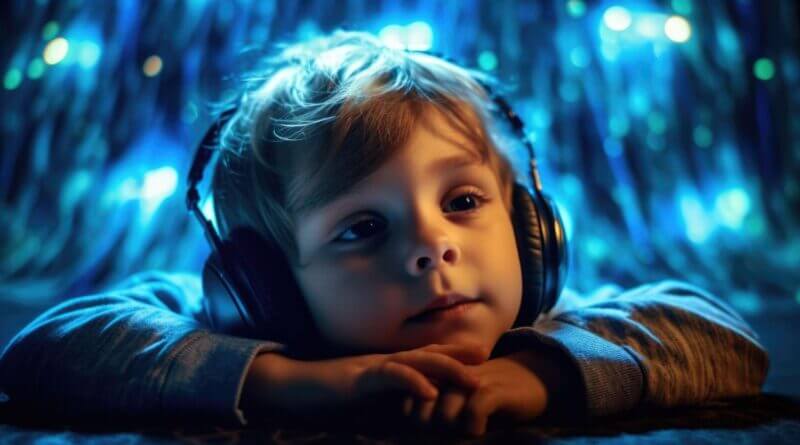
In today’s world, noise-cancelling headphones are everywhere. They help people focus, block out distractions, and even protect hearing from loud environments. But what if they’re also training our brains to filter out too much sound?
Some audiologists believe that by consistently blocking background noise, we may be weakening our ability to naturally process different sounds.
“We’re seeing more young people referred to hearing specialists with no actual hearing loss,” says Renee Almeida, a clinical audiologist. “The problem isn’t that they can’t hear—it’s that they struggle to listen and process sounds correctly.”
How Our Brains Decide What to Hear
Listening isn’t just about hearing—it’s about how our brains interpret what we hear. Usually, our brain filters out unnecessary background noise so we can focus on what’s important, like a conversation in a busy café.
But when someone relies too much on noise-cancelling headphones, they may miss out on training their brain to do this naturally. Instead of developing strong listening skills, they become dependent on artificial sound isolation.
According to Claire Benton from the British Academy of Audiology, this could lead to delayed development in how young people process speech and background noise.
“If someone spends their late teens and early twenties always using noise-cancelling headphones, their ability to separate sounds in a noisy environment might not fully develop,” she explains.
The Growing Need for Awareness and Research
A Rising Concern in the Medical Community
Hospitals and audiology clinics are seeing a sharp increase in young adults struggling with sound processing. A UK-wide survey found that only 4% of audiologists feel well-informed about APD, highlighting the need for more research.

For adults experiencing APD symptoms, NHS care options are extremely limited. The Royal National ENT and Eastman Hospital is currently the only place in England offering full APD assessments for adults, with a nine-month waiting list.
Professor Doris-Eva Bamiou, who conducts these assessments, explains why:
“It’s a time-consuming diagnosis. A standard hearing test isn’t enough—we need in-depth assessments that take hours, plus additional tests like cognitive evaluations.”
A Shift in How We Interact with Sound
The way people engage with sound has changed drastically over the years. More people than ever watch videos with subtitles, even when they can hear just fine.
A YouGov survey found that 61% of 18-24-year-olds prefer watching TV with subtitles on, despite having no hearing loss.
Dr. Angela Alexander, an audiologist and founder of APD Support, warns that this shift in behavior may be affecting our ability to process sound in real life.
“If we don’t look into the long-term effects of noise-cancelling headphones and increased reliance on subtitles, we may be creating future generations with even more sound processing difficulties,” she says.
Finding Solutions: Can APD Be Treated?
Training the Brain to Process Sound Again
The good news? APD treatment can help people regain their ability to process sound more effectively. Many patients see significant improvements, and some even make a full recovery.
One popular method is “word in noise” training, which helps the brain learn to pull speech from background noise. These exercises are available on mobile apps and can be practiced daily.
Other strategies include:
- Auditory discrimination training – Practicing distinguishing similar sounds (e.g., “seventy” vs. “seventeen”)
- Microphones and low-gain hearing aids – Useful in meetings or classrooms to help amplify speech
- Gradually reducing headphone use – Letting the brain adjust to natural sound environments again

Should You Stop Using Noise-Cancelling Headphones?
Experts aren’t suggesting people completely stop using noise-cancelling headphones. But moderation is key.
Dr. Alexander recommends:
- Using transparency mode – This allows background noise in while still reducing louder distractions
- Wearing headphones that don’t completely block the ears – Open-ear designs can help maintain natural hearing abilities
- Limiting use to a few hours per day – Giving the brain time to process sounds naturally
The Future of Sound Processing: What Happens Next?
Wayne Wilson, a professor at The University of Queensland, believes that while noise-cancelling headphones are useful, more research is needed to understand their long-term effects.
“The issue is complex,” he says. “It depends on so many factors—how long they’re worn, at what age, and in what environments. We need more data to fully understand the impact.”
For Sophie, the future looks brighter. She’s set to begin APD treatment and is hopeful it will improve her ability to navigate noisy spaces.
“If I can finally go to a bar without feeling overwhelmed, that would be life-changing,” she says.
As technology continues to evolve, so will our understanding of its impact on our brains, hearing, and the way we experience the world around us. The key takeaway? Listening is a skill, and like any skill, it needs practice.