

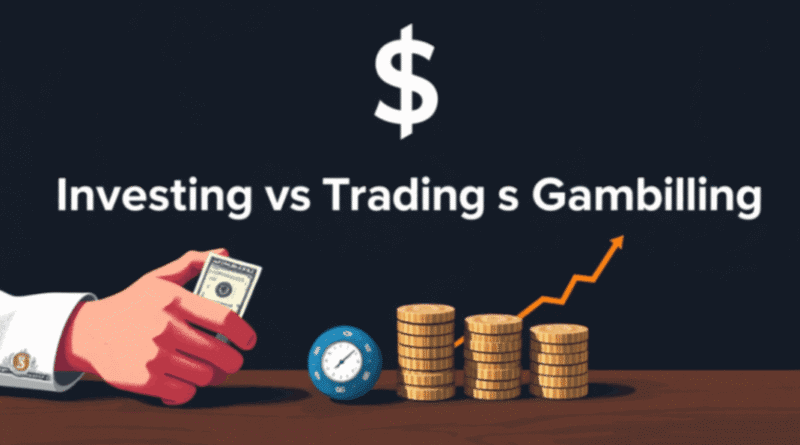
If you’ve ever thought about making money with your money, chances are you’ve bumped into three words: Investing, Trading, and Gambling. At first glance, they might look similar—after all, in each case, you’re putting money at risk in hopes of making more money. But here’s the kicker: the difference between them is the gap between building long-term wealth, constantly hustling, or completely wrecking your life.
This article is going to dig deep into what sets these three apart. We’ll keep it real, strip away the sugarcoating, and point out the harsh realities most people don’t want to admit. Ready? Let’s dive in.
What Exactly Is Investing?
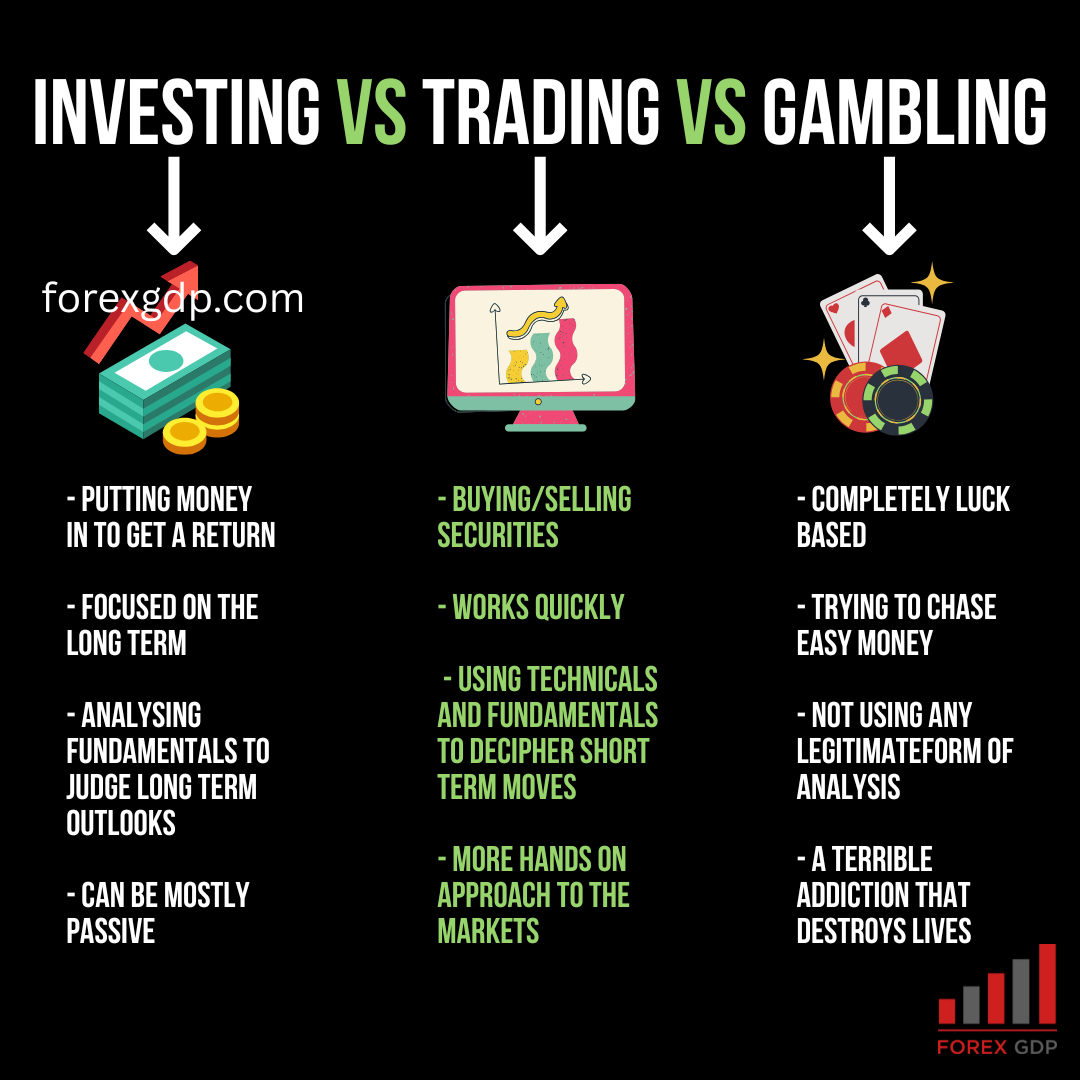
Investing is like planting a tree. You put your money into something with the hope it will grow over time—slowly, steadily, and predictably. Think of buying stocks, bonds, real estate, or mutual funds.
-
Focus: Long-term wealth building.
-
Tools: Fundamentals like earnings reports, company growth, and economic trends.
-
Mindset: Patience. Investors know it may take years to see big results.
It’s not sexy. It’s not fast. But it works.
What Is Trading?
Trading is like surfing waves. You’re not here to sit and wait—you’re riding quick price changes to pocket profits. Traders buy and sell securities like stocks, forex, or crypto, often within hours, days, or weeks.
-
Focus: Short-term gains.
-
Tools: Technical charts, patterns, and sometimes fundamentals.
-
Mindset: Active, hands-on, and always on the lookout.
Unlike investing, trading demands constant attention. Miss a move, and you could lose your edge.
What Is Gambling?
Gambling is the casino of money-making dreams. Instead of analyzing or planning, it’s all about luck—rolling dice, spinning wheels, or hoping your poker hand beats the rest.
-
Focus: Instant wins.
-
Tools: None—just chance.
-
Mindset: High-risk, high-adrenaline, but almost always ends in loss.
Let’s be blunt: gambling doesn’t build wealth. It destroys it. Fast.
The Key Differences in One Sentence
-
Investing = building wealth.
-
Trading = chasing short-term profits.
-
Gambling = throwing money into the fire and praying for rain.
Risk vs Reward
Here’s the reality: all three involve risk. But the kind of risk? That’s where the story changes.
-
Investing: Controlled risk, with compounding returns over time.
-
Trading: Higher risk, higher reward, but requires skill.
-
Gambling: Uncontrolled risk, and the house always wins in the long run.
So, which sounds smarter—stacking coins over decades or letting roulette decide your future?
Time Horizon: Patience or Impulse?
Your timeline says it all.
-
Investors think in years or decades. They play the long game.
-
Traders think in minutes, hours, or days.
-
Gamblers think in seconds.
If you’re impatient, you’ll lean toward trading or gambling. But patience? That’s the superpower of every successful investor.

Analysis vs Blind Bets
This is where gambling falls flat.
-
Investors analyze financial reports, market trends, and fundamentals.
-
Traders analyze charts, indicators, and news-driven events.
-
Gamblers analyze nothing—they hope for luck.
Would you drive blindfolded at 100 mph? That’s gambling.
The Psychology of Each
Money decisions aren’t just math—they’re emotional battles.
-
Investors need patience and discipline.
-
Traders need confidence and quick decision-making.
-
Gamblers are driven by greed, fear, and addiction.
This is why casinos rake in billions every year—emotions always beat logic when gambling.
Passive vs Active Participation
-
Investing can be passive. Buy an index fund, sit back, and let it grow.
-
Trading is highly active. You need to check charts daily.
-
Gambling is passive in terms of strategy but active in throwing money away.
The less you have to do, the more sustainable your wealth-building process becomes. That’s why investors tend to sleep better at night.

The Addiction Trap of Gambling
Gambling is marketed as “fun,” but it’s a silent killer. Studies show gambling addiction destroys relationships, drains finances, and leads to depression.
Unlike investing or trading, gambling doesn’t even pretend to offer control. It’s literally designed to keep you hooked—like feeding coins to a slot machine while your life crumbles.
Trading vs Gambling: Why People Confuse Them
Here’s the sneaky part: trading sometimes looks like gambling. Both are fast-paced, both carry risks, and both can give quick highs or devastating losses.
But here’s the difference: traders use strategy, gamblers rely on chance. If you trade without analysis? Congrats, you’ve just turned trading into gambling.
The Illusion of “Easy Money”
Why do people gamble? Why do reckless traders blow up their accounts? Because of one dangerous belief: easy money exists.
But let’s be real—there’s no such thing. If it were that easy, casinos would be broke, and Wall Street would hand out free yachts. Success comes only with skill, patience, and strategy.
The Long-Term Results
The proof is in the results:
-
Investors build wealth and retire comfortably.
-
Traders can make good money, but many burn out or lose it all without discipline.
-
Gamblers? They walk away broke more often than not.
It’s a simple equation—long-term strategy wins, shortcuts fail.
The Emotional Rollercoaster
-
Investors: Calm, steady progress.
-
Traders: Stress, excitement, sometimes burnout.
-
Gamblers: Heartbreak, desperation, and regret.
Ask yourself: do you want your money journey to feel like a slow climb up a mountain or a chaotic rollercoaster ride with no seatbelt?
The Bottom Line: Where Should You Be?
If you want to grow rich steadily and sleep peacefully, investing is the winner. If you’ve got the skills, discipline, and nerves of steel, trading can work—but it’s not for everyone. Gambling? That’s just financial suicide disguised as entertainment.
Conclusion
At the end of the day, investing, trading, and gambling aren’t the same game—even if they sometimes look alike. Investing is building wealth with time and patience. Trading is actively chasing profits with strategy. Gambling? It’s just giving away your money and calling it “fun.”
The choice is yours: Do you want to plant trees, surf waves, or spin the roulette wheel? One leads to wealth, one to constant hustle, and one to ruin. Choose wisely.
FAQs
1. Can trading ever be considered gambling?
Yes—if you trade without a plan, without analysis, and purely on “gut feelings,” you’ve crossed into gambling territory.
2. Which is safer: investing or trading?
Investing is safer long-term because it relies on fundamentals and time, while trading carries higher risks and demands constant attention.
3. Why do people confuse trading with gambling?
Because both involve quick wins and losses. But unlike gambling, trading relies on skill, charts, and strategy.
4. Can gambling ever be profitable?
Rarely, and only in the short term. In the long run, the house always wins, and gamblers almost always lose.
5. Should beginners start with trading or investing?
Beginners should always start with investing. It’s easier, safer, and helps build wealth without the stress of daily decisions.