

Let’s be real—trading isn’t as glamorous as social media makes it look. Behind every “winning trader” post, there’s a trail of bad decisions, emotional breakdowns, and costly mistakes. The harsh truth? Most traders don’t fail because they lack strategy—they fail because they lack self-awareness. And nothing exposes that faster than a trading journal.
Why Traders Avoid Journaling (And Why That’s a Mistake)
Most traders skip journaling because it feels like a chore. Writing things down after every trade sounds boring, especially when you’re already frustrated from a loss. Some even believe they’ll “remember everything” in their head.
But that’s a trap. Memory is selective and biased. Without a journal, you’re basically trusting a flawed system—your own mind—to track performance. That’s like trying to run a business without records. It doesn’t end well.
What a Trading Journal Really Does
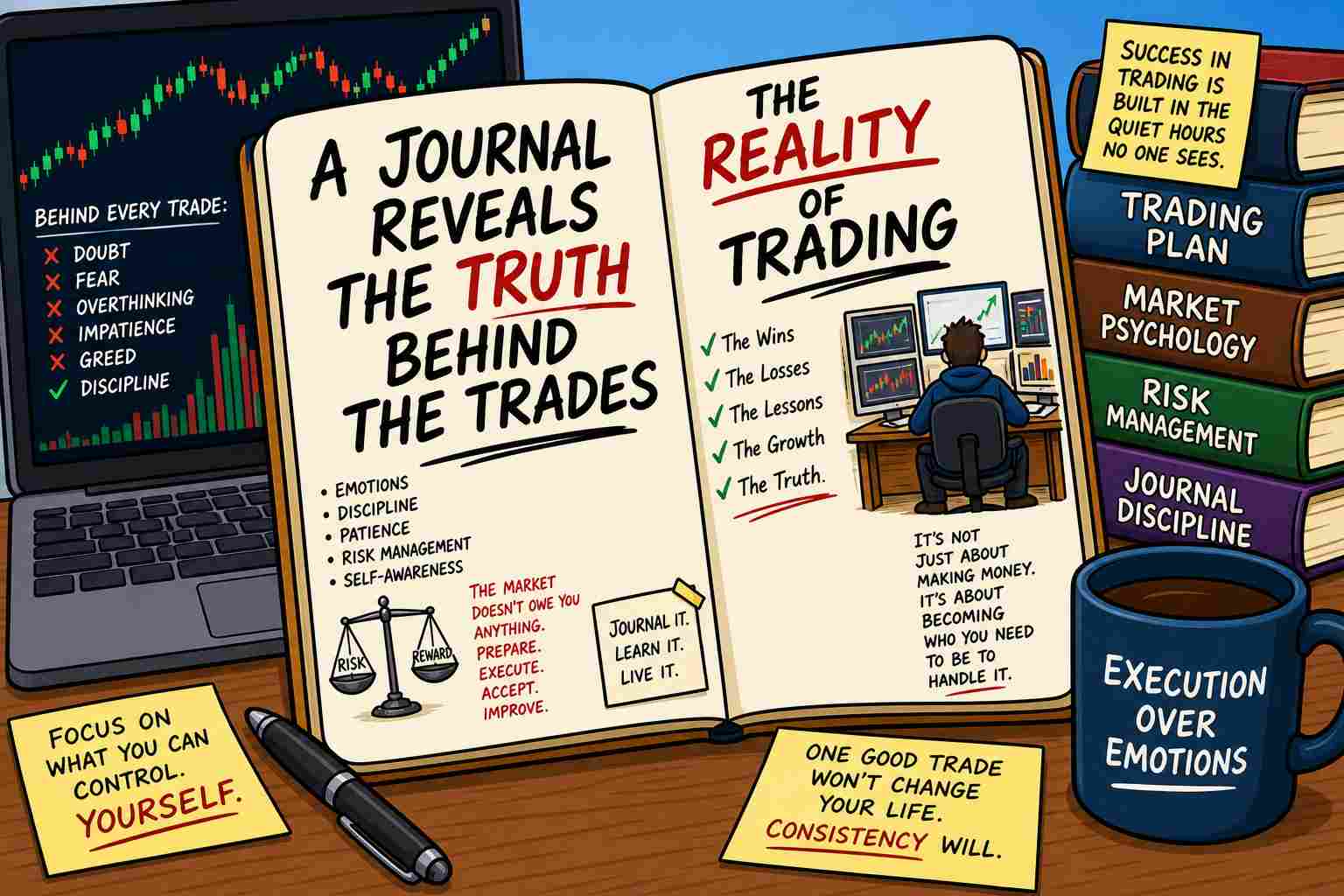
A trading journal isn’t just about numbers. It’s about truth. It shows you what actually happened—not what you think happened.
- It records your decisions
- It tracks your emotions
- It highlights patterns
Over time, it becomes a mirror. And honestly? Most traders don’t like what they see.
The Dangerous Illusion of Control
Ever felt like you had the market figured out? Like you could predict the next move? Yeah… that feeling doesn’t last.
Trading creates an illusion that you’re in control. But the market doesn’t care about your confidence. A journal helps you break that illusion by showing how often your “gut feeling” was wrong.
Your Memory Is Not Reliable
Your brain loves to protect your ego. It remembers your wins clearly but conveniently forgets your bad trades.
Without journaling, you might believe:
- You’re more profitable than you are
- Your strategy works better than it does
- Your mistakes are rare
A journal removes that bias. It keeps a record that doesn’t lie.

Emotions: The Real Reason Traders Lose
Let’s not blame the market. Most losses come from emotional decisions.
- Fear makes you exit too early
- Greed makes you hold too long
- Frustration leads to revenge trading
A journal helps you spot these emotional triggers. Once you see the pattern, you can start controlling it.
How Journaling Exposes Bad Habits
You might think your losses are random. They’re not.
After tracking trades for a while, patterns start showing up:
- You overtrade after a win
- You take risky trades when bored
- You ignore your plan under pressure
These habits are invisible without journaling. But once exposed, they’re hard to ignore.
Guessing vs Knowing Your Performance
Without a journal, everything is based on assumptions.
With a journal, you get facts:
- Your actual win rate
- Your average profit vs loss
- Your best-performing setups
It’s the difference between guessing your fitness progress and tracking it with data.
What to Include in Your Trading Journal
Keep it simple. Don’t overcomplicate things.
- Entry and exit points
- Reason for the trade
- Market conditions
- Emotional state
- Outcome and lesson learned
Think of it like telling a short story of each trade. Clear, honest, and complete.
Digital or Handwritten: Which Is Better?
There’s no perfect method. Some traders prefer spreadsheets, others like notebooks.
What matters is consistency. If you don’t update it regularly, it’s useless—no matter how fancy it looks.
Reviewing Your Journal: Where Growth Happens
Writing trades down is just step one. The real improvement comes from reviewing them.
When you go back, you start noticing:
- Repeated mistakes
- Successful patterns
- Emotional triggers
This is where learning actually happens. Without review, journaling loses its purpose.

Journaling Builds Discipline
Trading is full of impulsive decisions. Journaling forces you to slow down and think.
Before entering a trade, you start asking:
- Does this match my strategy?
- Am I being emotional?
- Is this a high-quality setup?
That pause can prevent costly mistakes.
The Psychological Edge You’re Missing
Most traders focus only on strategies and indicators. But mindset plays a bigger role.
A journal helps you understand:
- How you react under stress
- When you tend to make mistakes
- What triggers bad decisions
It’s like having a personal coach—one that tells you the truth, not what you want to hear.
Common Excuses Traders Make
Let’s address the excuses:
- “I don’t have time.” → You have time to trade, right?
- “It’s too much work.” → Losing money is worse
- “I’ll do it later.” → Later never comes
Avoiding journaling doesn’t save time—it delays improvement.
Turning Losses Into Lessons
Losses are part of trading. You can’t avoid them.
But you can learn from them.
A journal turns every loss into:
- Insight
- Data
- Experience
Without it, losses just repeat themselves.
The Long-Term Benefits of Journaling
Journaling doesn’t give instant results. But over time, it builds something powerful.
You start to:
- Make more consistent decisions
- Avoid emotional mistakes
- Improve your overall performance

It’s slow growth—but real growth.
Conclusion: The Truth You Can’t Ignore
A trading journal reveals the truth behind your trades—and that truth isn’t always pretty. It shows your mistakes, your habits, and your real performance.
But that’s exactly why it matters.
If you’re serious about trading, you need more than just strategy. You need awareness, discipline, and honesty. And journaling gives you all three.
So the real question is: are you ready to face the truth?
FAQs
1. Do I really need a trading journal as a beginner?
Yes. It helps you learn faster and avoid repeating mistakes early on.
2. How detailed should my journal be?
Keep it simple but clear. Focus on key details like reasons, emotions, and outcomes.
3. Can journaling improve profitability?
Indirectly, yes. It improves decision-making, which leads to better results.
4. How often should I review my journal?
At least once a week. Regular review helps you spot patterns quickly.
5. What’s the biggest benefit of journaling?
Self-awareness. It helps you understand your behavior, which is crucial for long-term success.