

Trading often feels overwhelming, and it’s easy to look for shortcuts. One of the most common shortcuts people take is relying on others to make their trading decisions. Whether it’s copying signals, following influencers, or letting a friend guide them, this myth has trapped countless traders into losses. Let’s break it down step by step and see why this mindset is not only dangerous but also one of the fastest ways to fail in the trading world.
The Comfort of Passing the Responsibility
Imagine you’re driving a car blindfolded while someone else is telling you when to turn, stop, or speed up. Sounds risky, right? That’s exactly what happens when you let others make your trading decisions. Sure, signals and advice can be helpful, but without your own understanding, you’re just gambling with your money.
This article dives deep into why you can’t fully rely on others for trading, the risks involved, and how you can build your own decision-making confidence.
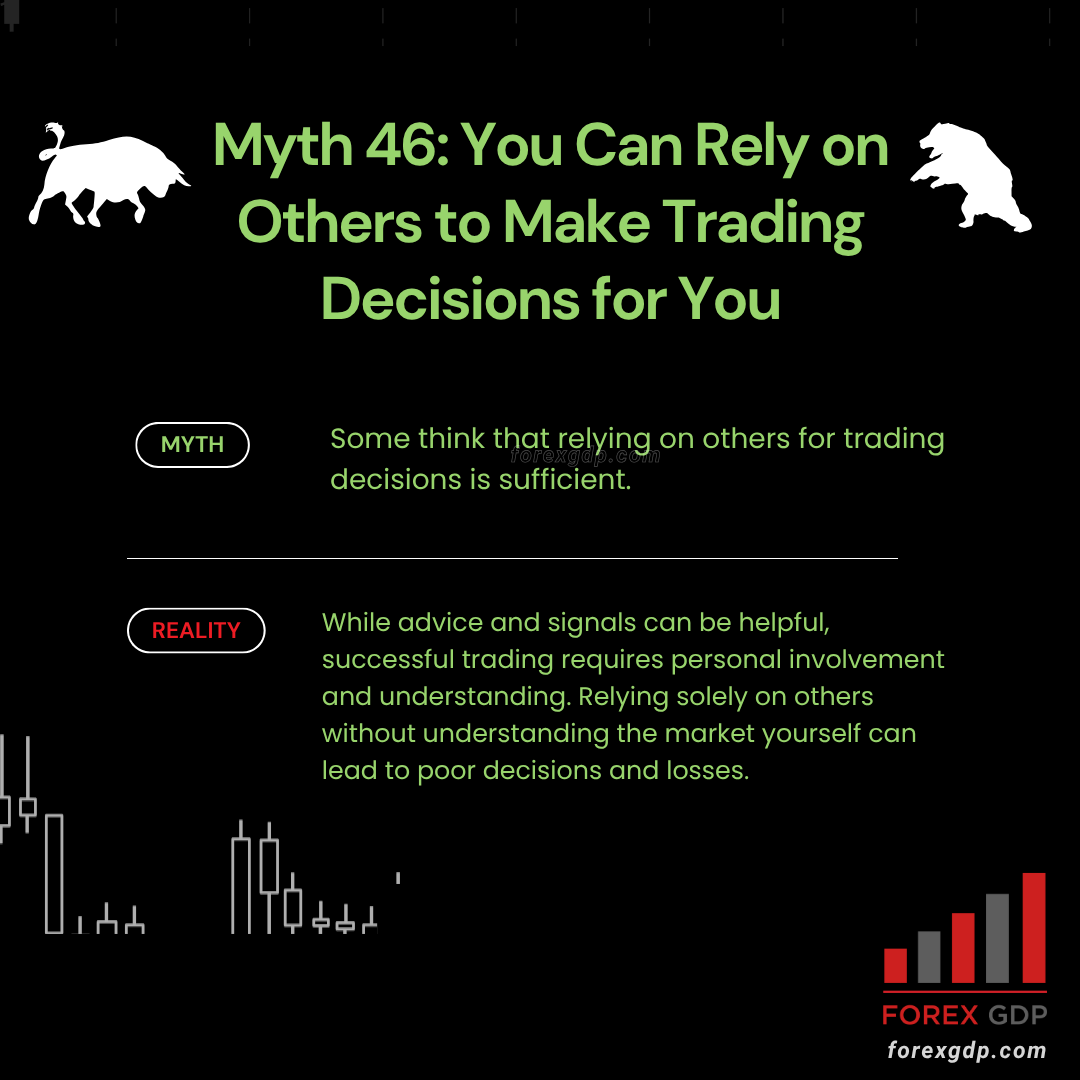
The Myth vs. Reality
-
The Myth:
Many think that relying on others for trading decisions is sufficient. They believe signals or advice are enough to guarantee profits. -
The Reality:
While advice and signals are helpful, successful trading requires your personal involvement and understanding. Blind reliance often leads to poor decisions and unnecessary losses.
Why Traders Fall Into This Trap
1. Laziness or Lack of Time
Many traders simply don’t want to learn the market. They think paying for signals or copying trades will save them effort. But what they save in time, they usually lose in money.
2. The Illusion of Expertise
When someone sounds confident, traders assume they know better. It’s easy to think, “This guy has been trading for years, so I’ll just follow him.” Sadly, expertise doesn’t guarantee accuracy.
3. Fear of Making Mistakes
Trading is scary. The fear of losing money pushes traders to let others decide, thinking it’s safer. In reality, it’s even riskier.
Signals Are Tools, Not Magic Wands
Signals, strategies, or expert advice can be valuable. But they should be a guide, not a rulebook. Think of them as road signs on a highway. Just because the sign says “Exit 12” doesn’t mean you should take it—you must first know if it leads where you want to go.

When you blindly follow signals, you’re not trading—you’re outsourcing your future.
The Dangers of Relying on Others
1. No One Understands Your Risk Appetite
Your mentor, signal provider, or influencer doesn’t know how much you’re comfortable losing. What’s a small risk for them may wipe out your entire account.
2. Lack of Market Context
Signals usually tell you where to enter and exit. But they rarely explain why. Without context, you can’t react when the market shifts unexpectedly.
3. Overconfidence in “Experts”
Even professional traders make mistakes. Blind faith in someone else’s strategy is like trusting a weather forecast without carrying an umbrella.
4. Emotional Detachment
When you don’t make your own decisions, you don’t learn to handle emotions like fear, greed, and impatience. These emotions control most traders’ success.
Why Personal Involvement Matters
Trading is not just about numbers—it’s about mindset, discipline, and adaptability. Here’s why being actively involved is non-negotiable:
-
You understand the reason behind a trade.
-
You can adjust when markets change.
-
You develop confidence in your decisions.
-
You build long-term skills instead of relying on temporary signals.
The Psychology Behind the Myth
Humans crave certainty. In a market filled with uncertainty, following others feels safe. But this false sense of security is dangerous.
It’s like eating pre-cooked meals every day—you survive, but you never learn how to cook. And one day, when there’s no one to cook for you, you starve.

Real-Life Examples of Failure
-
Copy Trading Gone Wrong: Many beginners copy “successful traders” only to realize they joined at the peak. The copied trader recovers, but the follower gets wiped out.
-
Signal Addiction: Some traders keep hopping from one signal provider to another, never learning, always losing.
-
The Silent Crash: Traders who rely on tips from friends or online forums often end up entering trades too late, chasing profits that never come.
The Harsh Truth About Trading Gurus
Most “gurus” or “signal providers” don’t care about your success. Some make more money selling signals than trading. Others exaggerate their success stories to build trust.
Would you let a stranger manage your bank account? Then why trust them with your trades?
How to Break Free From This Myth
1. Learn the Basics
Understand charts, candlesticks, and indicators. You don’t need to be an expert, but at least know why you’re entering a trade.
2. Test Before Trust
If you use signals, test them on a demo account first. Don’t risk real money until you’re confident.
3. Develop Your Strategy
Build a simple trading plan based on your goals and risk tolerance. It doesn’t have to be fancy—just consistent.
4. Stay Updated
Markets move based on news, events, and trends. Keep yourself informed rather than waiting for others to tell you what’s happening.
5. Accept Responsibility
Every trade you place is your responsibility, even if you followed someone else’s advice. Once you own your mistakes, you start learning.
The Role of Signals in Smart Trading
Let’s be clear: signals are not evil. They’re like GPS navigation. But you still need to know how to drive. Use signals to guide your decisions, not to replace them. Combine them with your analysis to make well-rounded choices.
What Happens When You Take Control
When you stop relying blindly on others and start analyzing trades yourself:
-
Your confidence grows.
-
Your losses become learning lessons instead of disasters.
-
You stop chasing quick profits and focus on steady growth.
-
Most importantly, you feel in control of your money.
Conclusion
The myth that you can rely on others to make trading decisions for you is a dangerous lie. Yes, advice and signals have their place, but they should never replace your own judgment. Trading success comes from personal involvement, critical thinking, and responsibility.
At the end of the day, no one cares about your money as much as you do. If you want lasting success in trading, take control, learn the craft, and use others only as guides—not as crutches.
FAQs
1. Can I ever fully rely on signals?
No. Signals can be helpful, but they should only be part of your decision-making process, not the entire foundation.
2. What’s the biggest risk of copying trades?
The biggest risk is losing money without learning anything. Even if you profit, you remain dependent on others.
3. Are paid signals better than free ones?
Not necessarily. Price doesn’t equal quality. Some free signals are great, while some paid ones are scams.
4. How can I build confidence in trading?
Start small, use demo accounts, learn the basics, and analyze your trades. Confidence comes from experience.
5. Is trading without guidance possible?
Yes, but it’s not recommended. Use guidance as a tool to learn, but don’t make it your entire strategy.