

Ever jumped into a trade too early, only to watch the market finally move your way after you’ve exited? If that sounds familiar, you’re not alone. One of the hardest lessons traders learn—especially in Forex—is the art of patience. “Let your setups mature” isn’t just a catchy phrase; it’s a golden rule that separates impulsive traders from professionals.
In trading, timing isn’t just about when to enter—it’s also about knowing when not to. Too many traders act like gardeners digging up seeds to check if they’re growing. The result? Missed profits and unnecessary losses. This article dives deep into why patience pays, how to identify maturing setups, and what habits can make you a more disciplined, profitable trader.
Understanding What It Means to Let Setups Mature
Letting your setups mature means waiting for the complete confirmation of a trade idea before acting on it. It’s about resisting the urge to jump in the moment you think something might happen and instead waiting until the market shows clear evidence that it’s ready.
Markets move in phases—accumulation, markup, distribution, and markdown. When traders jump in too soon during accumulation or too late in distribution, they end up swimming against the tide. The mature setup appears only when technical conditions, sentiment, and price action align perfectly. That’s when the probability of success skyrockets.
The Psychological Trap of Impatience
Impatience in trading often comes from fear—fear of missing out (FOMO) or fear of being wrong. The irony is that the more you rush to catch every move, the more likely you are to lose.
Think about it: successful traders don’t make money because they trade more—they make money because they wait for better opportunities. Impatience triggers premature entries, early exits, and emotional decision-making. It’s like trying to harvest fruit that’s not ripe yet—it might look good on the outside but tastes bitter inside.
How Market Noise Tricks You Into Early Entries
Markets are full of false signals—fake breakouts, sudden spikes, and short-lived reversals. These traps exist because institutional players often manipulate short-term moves to shake out emotional traders.
When you jump into trades based on early patterns or impulsive analysis, you’re essentially playing their game. Waiting for setups to mature filters out this noise. You allow the market to reveal its true direction, making your entries smarter and your confidence stronger.
Technical Confirmation: The Core of Mature Setups
Every professional trader knows the importance of confirmation signals. A setup isn’t ready just because one indicator or pattern aligns—it becomes mature when multiple signals agree.
For example:
-
A bullish setup might require a breakout above resistance, confirmation with a higher low, and volume expansion.
-
A bearish setup could demand a breakdown below support with momentum confirmation and rejection from a key Fibonacci level.
By waiting for multiple confirmations, you’re not being slow—you’re being strategic. Mature setups reduce the element of luck and increase the odds in your favor.
The Role of Time Frames in Setup Maturity

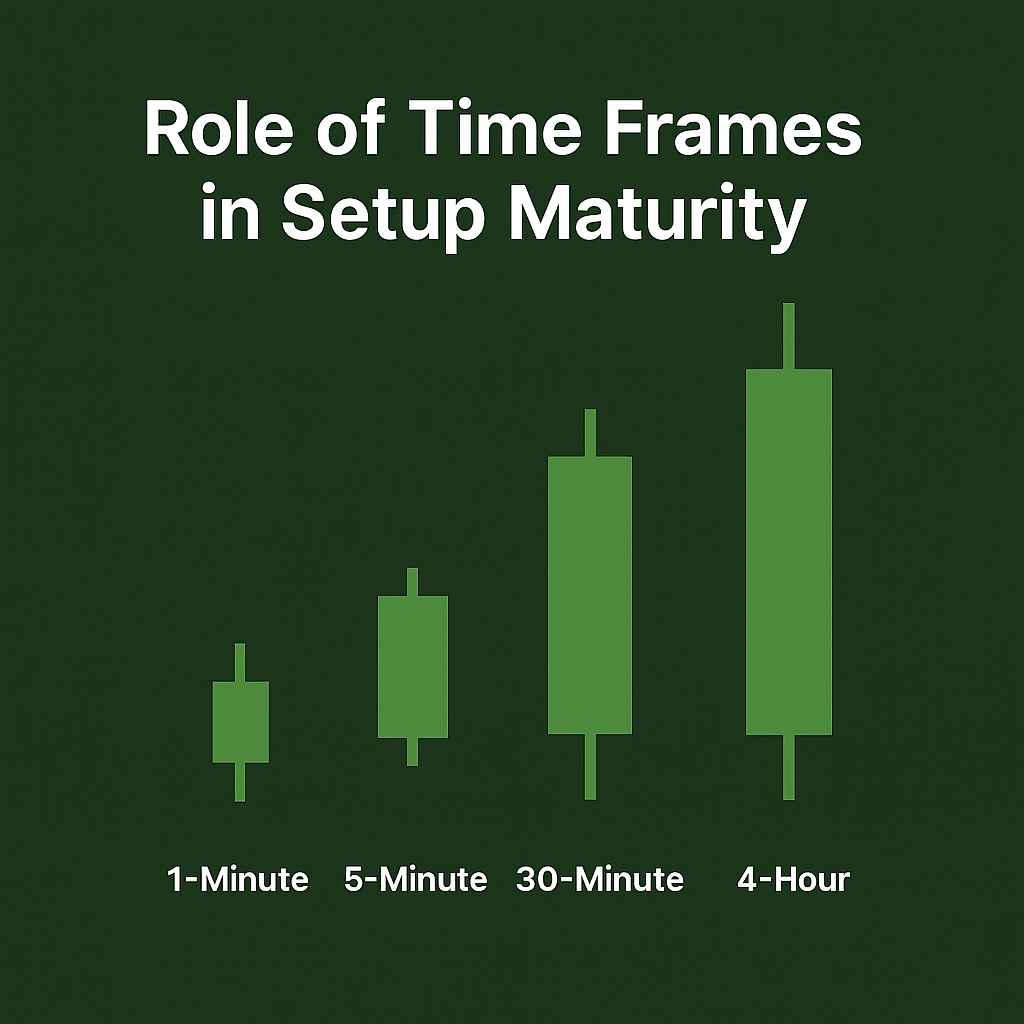
One of the biggest mistakes traders make is focusing on lower timeframes. The smaller the timeframe, the more noise you’ll face. Mature setups often develop on higher timeframes like H4, Daily, or Weekly charts.
These larger frames show the big picture—where institutional traders are actually placing their bets. While intraday traders may find smaller moves appealing, it’s often the swing traders who catch the high-probability setups because they give the market time to “breathe” and evolve.
The Science of Waiting: Why Patience Creates Profits
Trading is a game of probabilities, not predictions. Each setup has a statistical chance of success, and waiting allows that probability to play out fully.
When you let your setups mature, you avoid being shaken out by temporary retracements. The market is like a wave—it needs time to gather strength before it crashes in your direction. Jumping in too soon is like trying to surf before the wave even forms.
Patience lets you ride the wave instead of fighting against it.
Emotional Discipline: The Bridge Between Patience and Profit
Even the best analysis fails without emotional control. Emotional discipline means trusting your plan and letting time do its job.
Many traders sabotage themselves by constantly checking charts, moving stop-losses, or closing trades early out of fear. These habits stem from a lack of emotional maturity. If you want your setups to mature, you must mature emotionally too. It’s not just a strategy—it’s a mindset.
Recognizing Premature Setups
So, how can you tell if a setup is premature? Look for these red flags:
-
No clear confirmation: The price hasn’t broken key levels yet.
-
Low volume or volatility: Indicates weak momentum.
-
Mixed indicator signals: RSI, MACD, and moving averages don’t align.
-
Unclear market sentiment: News or fundamentals contradict your direction.
Jumping into these setups is like investing in an idea, not a reality. The mature trader waits until the picture is crystal clear.
The Hidden Cost of Early Entries
You might think that entering early gives you a better price—but in reality, it often leads to losses or unnecessary stress. Early entries can result in:
-
Getting stopped out before the real move begins.
-
Holding dead trades for days while your capital is locked.
-
Losing confidence after multiple failed attempts.
In trading, timing is everything. Being early is just as bad as being late.
How to Train Yourself to Wait for Mature Setups


Waiting isn’t easy—it’s a skill that must be trained. Here’s how you can build patience:
-
Set alerts: Let your platform notify you when your conditions are met instead of staring at charts.
-
Journal every trade: Note the difference between early and mature setups. You’ll quickly see which ones work better.
-
Trade fewer setups: Quality beats quantity. One mature trade is worth ten rushed ones.
It’s not about being passive—it’s about being precise.
The Power of Backtesting Mature Setups
Backtesting helps you understand how patience pays off. When you analyze historical data, you’ll see how mature setups perform significantly better than premature ones.
Use trading tools or software to simulate trades that waited for confirmation versus those that didn’t. You’ll notice fewer drawdowns, higher win rates, and more consistent equity growth. Data doesn’t lie—maturity works.
Combining Patience with Risk Management
Even the most mature setup can fail—that’s just trading reality. That’s why pairing patience with strong risk management is essential.
Use stop-losses wisely and avoid overleveraging. Letting a setup mature doesn’t mean holding on forever—it means entering smartly and managing risk intelligently. Think of it like fishing: once you’ve caught the right fish, reel it in steadily. Don’t jerk the line or let it break.
The Impact of News and Market Sentiment
Sometimes, traders forget that fundamentals play a massive role in setup maturity. A technically perfect setup can fail during high-impact news events.
Economic releases like interest rate decisions, CPI data, or NFP can completely reverse technical trends. Waiting until the news storm passes gives your setups time to mature safely. This is how professionals protect their accounts while amateurs get wiped out.
The Patience Paradox: Doing Less to Earn More
In trading, success often comes from doing less. The paradox is that by trading less frequently—but with higher-quality setups—you actually make more money.
When you let your setups mature, you spend less time in losing trades and more time in profitable ones. Your stress levels drop, and your confidence grows. Over time, this patience compounds just like interest in a bank account.
How “Mature Setup Thinking” Changes Your Trading Forever


Once you master the mindset of waiting for setups to mature, everything changes. You stop chasing every candle and start thinking strategically.
You no longer feel the pressure to be constantly “in the market.” Instead, you realize that sometimes the best trade is no trade. You begin to act like a sniper—waiting for the perfect shot, rather than spraying bullets and hoping one hits.
Conclusion
In the fast-paced world of trading, patience feels like a superpower. “Let your setups mature” isn’t just advice—it’s a survival strategy. Every trade you force teaches you the same painful lesson: the market rewards patience and punishes impulsiveness.
When you learn to wait—really wait—for the right conditions, your trading transforms. Your charts become clearer, your emotions calmer, and your profits more consistent. Remember: successful trading isn’t about predicting the future; it’s about waiting for the market to confirm your vision.
So next time you’re tempted to click that buy or sell button early, take a breath and remember—great setups, like fine wine, only get better with time.
FAQs
1. What does “let your setups mature” really mean?
It means waiting until all your technical, price action, and psychological confirmations align before entering a trade. You don’t act on potential—you act on confirmation.
2. Why is waiting important in trading?
Because premature entries expose you to false signals, emotional trading, and higher risk. Patience filters noise and increases your chances of catching real moves.
3. Can mature setups still fail?
Yes. No setup is 100% foolproof. Mature setups just reduce the probability of loss and make your decisions more data-driven and less emotional.
4. How do I know if my setup has matured?
Look for confluence—multiple factors like support/resistance, volume, and trend alignment confirming the same direction. When the story is clear, your setup is mature.
5. Is patience the same as inaction in trading?
Not at all. Patience is strategic waiting. You’re actively monitoring, analyzing, and preparing—just not rushing. It’s the smartest kind of action there is.