

Trading feels simple at first glance. You buy, you sell, you profit—at least that’s the dream. But reality hits hard. Most traders lose money, not because they lack tools or strategies, but because they think the wrong way. The quote, “The best traders think in probabilities, not certainties,” captures the core truth of successful trading. It’s not about predicting the future—it’s about managing uncertainty.
Why Certainty in Trading is a Dangerous Trap
Let’s be honest—everyone wants certainty. You want to know if a trade will win before you take it. But markets don’t work like that. Prices move based on countless factors like news, emotions, and global events, making them unpredictable.
Believing in certainty creates false confidence. It pushes traders to overcommit, ignore risks, and hold onto losing trades. The harsh reality is this: the market owes you nothing, and certainty is just an illusion that leads to costly mistakes.
Understanding Probabilistic Thinking in Trading
Thinking in probabilities means accepting that every trade is just a possibility, not a guarantee. Instead of saying, “This trade will work,” you shift to, “This trade has a good chance of working.” That small change rewires your entire approach.
You stop chasing perfection and start focusing on consistency. It becomes less about being right every time and more about playing the odds over a series of trades. This mindset reduces stress and improves decision-making.
Why the Casino Always Wins—and What Traders Can Learn
Casinos don’t win because they’re lucky—they win because they have an edge. Each game is designed with a slight advantage in their favor, and over time, that edge guarantees profit.
Traders should think the same way. You don’t need to win every trade. You just need a system that gives you a statistical advantage over time. Like a casino, your goal is long-term profitability, not short-term perfection.
The Real Reason Most Traders Fail
Many traders blame their strategy when things go wrong, but the real problem lies in their mindset. They act emotionally, chasing wins and avoiding losses at all costs.
They hold losing trades too long, hoping the market will turn. They cut winners too early out of fear. These behaviors stem from the need to be right, which is one of the biggest traps in trading.
Letting Go of the Need to Be Right
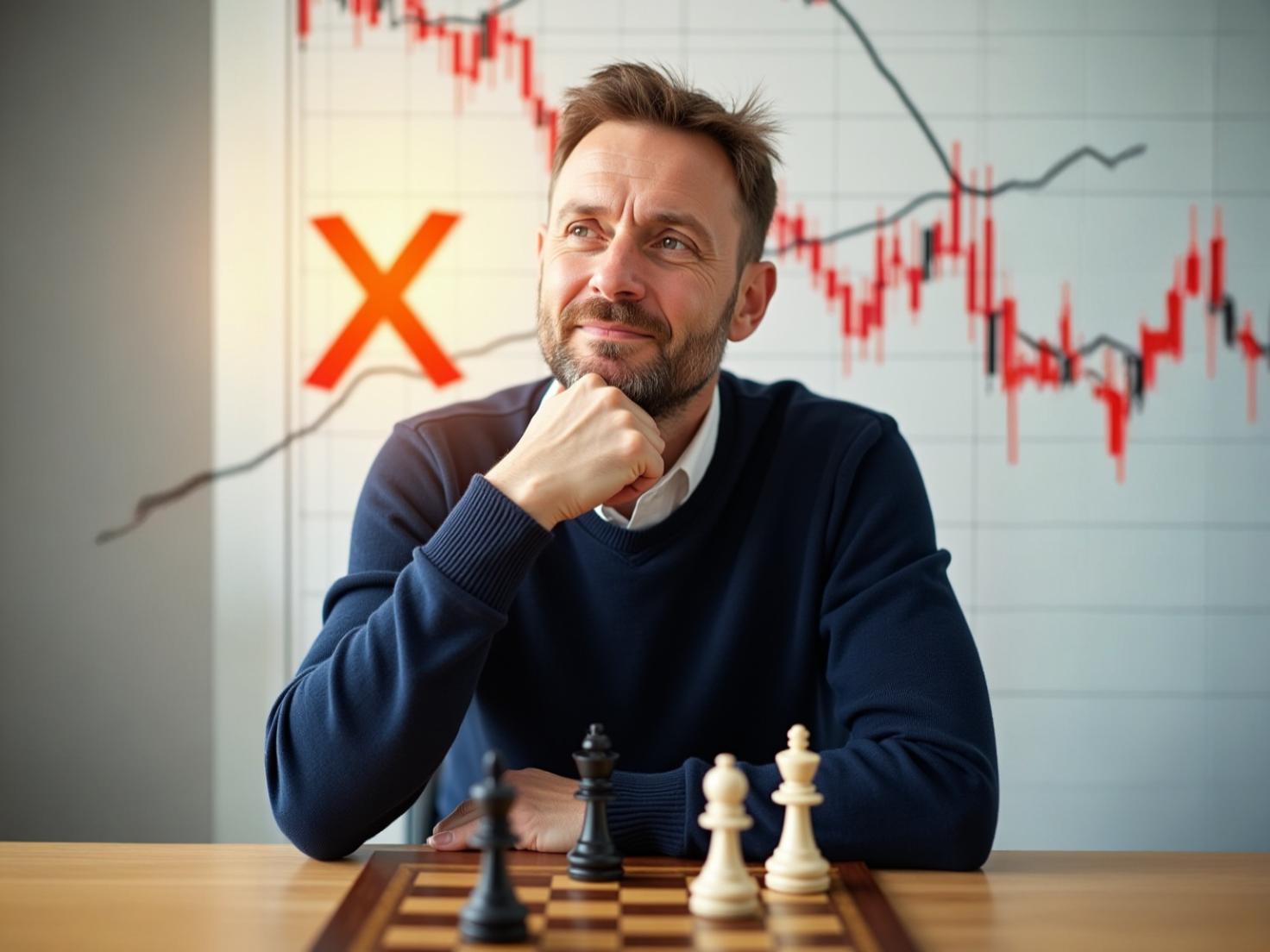
Ask yourself this: do you want to be right, or do you want to make money? Because in trading, those two don’t always go together.
When you think in probabilities, losses don’t feel like personal failures. They become part of the process. This shift allows you to stay calm, stick to your plan, and avoid emotional decisions that destroy accounts.
Risk Management: Your Safety Net
Probabilistic thinking is useless without proper risk management. Every trade should have a defined risk, no matter how confident you feel.
Smart traders focus on how much they can lose before thinking about how much they can gain. They never risk too much on a single trade because they know even the best setups can fail.
The Importance of Risk-to-Reward Ratio
A strong risk-to-reward ratio can make a huge difference in your profitability. For example, risking $1 to make $3 allows you to stay profitable even if you lose more trades than you win.
This approach shifts the focus from win rate to overall performance. You don’t need to win often—you just need your winners to outweigh your losers.
There’s No Such Thing as a Perfect Strategy
Many traders spend years searching for the “perfect” strategy that never loses. It doesn’t exist. Every system has wins and losses, and that’s completely normal.
The key is not perfection but consistency. A simple, well-tested strategy combined with discipline can outperform even the most complex systems if applied correctly.
How Professional Traders Approach the Market
Professional traders think differently. They don’t predict—they prepare. Instead of assuming one outcome, they consider multiple possibilities and plan accordingly.
They rely on probabilities, data, and experience rather than emotions. This allows them to stay flexible and adapt to changing market conditions without panic.
Why Data and Backtesting Matter
You can’t rely on feelings in trading. You need data to understand what works and what doesn’t. Backtesting helps you analyze past performance and identify patterns.
It turns trading into a structured process rather than a guessing game. With enough data, you can build confidence in your strategy and stick to it even during losing streaks.

Discipline: The Hidden Key to Success
Discipline is what separates successful traders from the rest. It’s not exciting, and it’s definitely not easy, but it’s essential.
Sticking to your plan, following your rules, and avoiding impulsive decisions are what create consistency. Without discipline, even the best strategy will fail.
Handling Losses Without Losing Control
Losses are inevitable in trading. No matter how skilled you are, you will experience losing trades. The difference lies in how you handle them.
Successful traders accept losses calmly and move on to the next opportunity. They don’t chase the market or try to recover losses emotionally. They stay focused on the bigger picture.
The Power of Long-Term Thinking
Trading is not about one trade or one day. It’s about performance over time. Focusing on short-term results can lead to frustration and poor decisions.
When you think long-term, you start to see patterns and trends in your performance. This perspective helps you stay patient and trust your process.
Common Mistakes When Adopting Probabilistic Thinking
Many traders struggle when shifting to this mindset. They expect immediate results and abandon their strategy too quickly when things don’t go their way.
Others ignore risk management or overtrade, trying to force outcomes. These mistakes can derail progress and lead to unnecessary losses.
How to Start Thinking in Probabilities
You don’t need years of experience to adopt this mindset. Start by accepting that you can’t predict the market with certainty.
Focus on setups with a clear edge, use stop losses, and track your performance. Over time, you’ll begin to see trading as a numbers game rather than a guessing game.
A Simple Analogy: Trading is Like Fishing
Trading is a lot like fishing. You don’t know which cast will catch a fish, but you know some spots and techniques increase your chances.
You keep casting, adjusting, and learning. Over time, your consistency improves, not because you control the outcome, but because you understand the odds.

Why This Mindset Creates Consistency
Consistency in trading comes from following a process, not from winning every trade. When you think in probabilities, you remove emotional decision-making.
This clarity allows you to execute your strategy with confidence. Over time, small consistent gains add up to significant results.
Conclusion
Trading success doesn’t come from certainty—it comes from understanding uncertainty. The best traders don’t try to predict the market; they manage risk and play the odds.
By thinking in probabilities, you shift your focus from being right to being consistent. And in trading, consistency is what builds long-term success. So the real question is—are you ready to stop chasing certainty and start thinking like a professional?
FAQs
1. What does thinking in probabilities mean in trading?
It means treating every trade as a possibility rather than a guarantee, focusing on long-term outcomes instead of individual results.
2. Can I succeed in trading without a high win rate?
Yes, a strong risk-to-reward ratio can make you profitable even with a lower win rate.
3. Why do traders struggle with this mindset?
Because it requires letting go of control and accepting uncertainty, which is psychologically challenging.
4. Is risk management more important than strategy?
Yes, without proper risk management, even the best strategy can lead to losses.
5. How long does it take to develop this mindset?
It varies, but with consistent practice and discipline, most traders start seeing changes within a few months.