

Trading can be exciting, fast-paced, and often overwhelming. One of the biggest myths floating around in the trading community is the idea that you must trade every single day to be successful. People assume that if they’re not constantly in the market, they’re missing out. But let’s be real—this belief is not only misleading but also dangerous.
In this article, we’re going to break down why this myth exists, why it’s wrong, and what you should really focus on if you want to build long-term profitability. Let’s dive in.
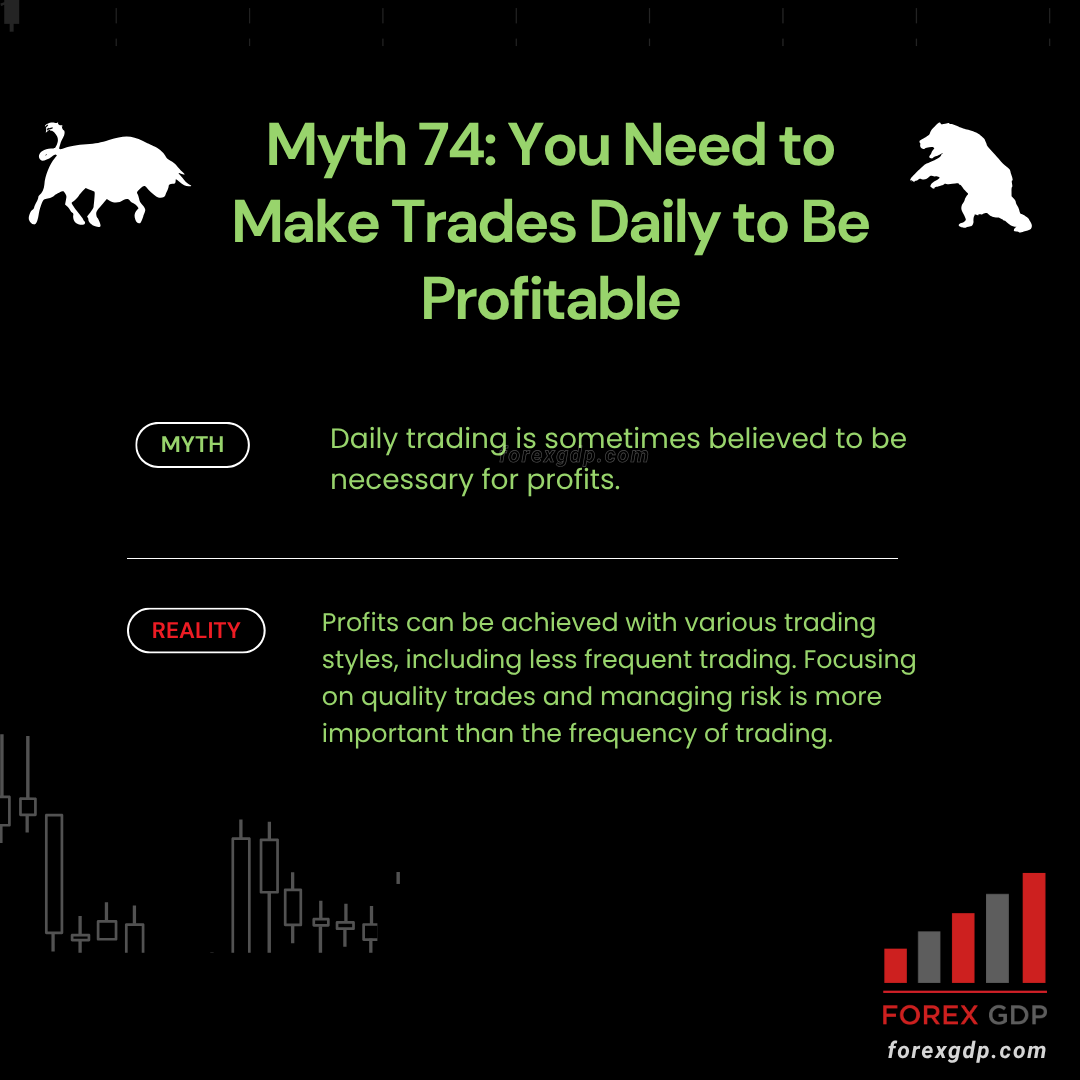
The Origins of the “Daily Trading” Myth
Where did this idea even come from? Well, it’s partly due to the way trading is portrayed in movies, advertisements, and social media. You see those flashy day traders sitting in front of 12 screens, clicking buy and sell like they’re playing a video game. It looks glamorous, right?
The problem is, that’s not reality for most traders. These images create pressure. People start thinking that if they’re not glued to their charts every day, they’re doing something wrong. It’s marketing, not truth. And unfortunately, many new traders buy into it, only to burn themselves out.
Why Daily Trading Feels So Tempting
Let’s be honest—daily trading feels exciting. It’s the adrenaline rush. Watching candles move up and down every second gives you that sense of action. You feel “in control” when you’re making constant decisions.
But here’s the trap: just because you’re active doesn’t mean you’re productive. Think of it like hitting the gym. You could go every day and lift random weights without a plan. Will you get stronger? Probably not. You’ll just get tired. Trading without strategy is the same—you might feel busy, but your account will tell a different story.
The Hidden Dangers of Overtrading
Overtrading is one of the biggest killers of trading accounts. When you’re in the market every day, you’re forcing trades that may not even meet your setup criteria. And when you trade just to trade, mistakes pile up quickly.
Every trade carries risk. The more trades you take, the more chances you give the market to chew through your capital. Overtrading also messes with your psychology. It creates frustration, revenge trading, and emotional decision-making. Before you know it, you’re digging a hole that’s hard to climb out of.
Profits Come From Quality, Not Quantity
Here’s the reality: you don’t need 50 trades a week to be profitable. In fact, most professional traders focus on quality setups rather than quantity. They wait patiently, sometimes sitting out entire days—or even weeks—if the conditions aren’t right.
Think of it like fishing. You could throw your net into an empty pond all day, or you could wait for the right moment in a pond full of fish. Which do you think pays off? Quality trades, with proper risk management, always outweigh random daily trades.
The Power of Patience in Trading


Patience is a trader’s secret weapon. The best opportunities don’t come every day. Sometimes the market needs time to form clean setups. If you rush into trades just to feel busy, you’ll end up giving your broker more money than you keep.
The truth? Waiting pays. Markets reward those who know when to sit on their hands. Patience prevents emotional mistakes and allows you to act only when the odds are truly in your favor.
Different Trading Styles Don’t Require Daily Activity
Not everyone is a day trader. And guess what? That’s perfectly fine. There are multiple trading styles, and not all of them require daily activity:
-
Swing Trading: Holding trades for days or weeks. Perfect for those who don’t want to stare at charts all day.
-
Position Trading: Long-term approach, where trades can last months.
-
Scalping: Short-term, high-frequency trading (but only works for those with extreme discipline).
-
Algorithmic Trading: Using automated systems to take trades without constant monitoring.
Each style can be profitable. The key is choosing one that matches your personality and lifestyle. Forcing yourself into daily trading just because someone else does it is a recipe for disaster.
Risk Management Matters More Than Frequency
Let’s set the record straight: risk management is the real game-changer, not how often you trade. A trader who takes two well-calculated trades a week with strict stop losses will likely outperform someone who takes 20 random trades with no plan.
Your job as a trader isn’t to be in the market constantly—it’s to protect your capital and grow it steadily. That means knowing how much to risk per trade, where to set stop losses, and when to walk away.
Think of it like driving. You don’t slam the gas pedal every second; you slow down, brake, or even stop at red lights. Trading is the same. It’s about control, not speed.
The Psychology of “Missing Out”
Fear of missing out (FOMO) is one of the biggest reasons traders think they need to be active daily. You see a chart moving and think, “I’m missing my chance!” But here’s the reality—there will always be another setup.

Chasing every little move is like running after every bus that passes by. Sure, you might catch one, but most of the time you’ll just exhaust yourself. Successful traders know that markets never run out of opportunities. Patience beats panic every single time.
Why Brokers Love This Myth
Let’s not ignore the obvious—brokers actually benefit from this myth. The more you trade, the more spreads and commissions they collect. That’s why so many “gurus” push the idea of constant trading. It’s not for your benefit; it’s for theirs.
This doesn’t mean trading is a scam—it just means you need to be smart. Understand who actually profits from overtrading, and make sure it’s you, not your broker.
The Role of Strategy in Trading Frequency
Without a solid strategy, trading daily is a guaranteed way to lose money. A strategy gives you rules—when to enter, when to exit, and when to stay out. If your rules don’t give you a trade today, then you shouldn’t be in the market.
The market doesn’t care about your desire to make money every day. It only rewards traders who respect its rhythm. A strategy-driven approach filters noise and helps you avoid unnecessary trades.
Learning From Professional Traders
If you look at professional traders, you’ll notice something interesting: most of them don’t trade daily. Hedge fund managers, institutional traders, and successful independents all know that profits come from waiting for the right moment.
They’re not glued to charts 24/7. Instead, they spend time researching, analyzing, and preparing. When the setup finally arrives, they strike. That’s what makes them profitable in the long run—not constant activity.
The Illusion of Control in Daily Trading
Many traders fall into the trap of thinking that daily trading gives them control. But in reality, it’s the opposite. The more you trade, the more you expose yourself to random market noise. That means more losses, more stress, and more bad decisions.

Real control comes from discipline. It comes from knowing when not to trade. Ironically, stepping back often gives you more power over your results than constant action ever could.
How to Break Free From the Daily Trading Mindset
So how do you stop believing this myth? The first step is awareness—recognizing that daily trading isn’t a requirement. The second step is building a plan that works for you.
-
Define your trading style.
-
Set clear rules for entries and exits.
-
Decide how much risk you’ll take per trade.
-
Accept that some days, doing nothing is the best move.
Trading is a marathon, not a sprint. The sooner you stop treating it like a daily hustle, the sooner you’ll start seeing real results.
Conclusion
The myth that you need to trade daily to be profitable is one of the most damaging beliefs in the trading world. Constant activity doesn’t equal success. In fact, it often leads to burnout, blown accounts, and frustration.
Profitability comes from quality setups, solid risk management, patience, and discipline. Whether you trade once a day, once a week, or even once a month, what matters is that your trades are strategic and calculated. The market isn’t going anywhere. Learn to wait for the right moment, and you’ll set yourself apart from the majority who fall into the trap of overtrading.
FAQs
1. Can I really be profitable if I trade only a few times a week?
Absolutely. Many successful swing traders and position traders only take a handful of trades per month and still earn consistent profits. It’s all about quality over quantity.
2. Why do I feel anxious when I’m not trading daily?
That’s FOMO at work. You feel like you’re missing opportunities, but in reality, the market will always provide more chances. Patience is key.
3. Do professional traders trade every day?
No. Most professionals wait for high-probability setups. They don’t care about daily activity—they care about long-term profitability.
4. What’s the biggest risk of trading daily?
Overtrading. It leads to unnecessary losses, emotional decisions, and eventually account blow-ups.
5. How do I know when not to trade?
If your strategy doesn’t give a valid signal, or if market conditions look uncertain, it’s better to stay out. Sometimes, the best trade is no trade at all.