

The market has a strange way of humbling people. One minute you feel unstoppable, convinced you’ve cracked the code. The next minute, a single candle wipes out a week of confidence. It happens every day in forex trading, and honestly, it happens more often than most traders would like to admit.
That’s why one simple phrase carries more weight than a thousand flashy indicators:
Respect the Higher Timeframe
At first glance, it sounds almost too simple. Maybe even boring. In a world obsessed with fast entries, quick profits, and dopamine-filled scalping sessions, higher timeframe analysis feels like the old man quietly sitting in the corner while everyone else screams over each other.
But here’s the uncomfortable truth: the higher timeframe is usually right.
Most traders lose money because they become trapped inside the noise of smaller charts. They stare at five-minute candles until every tiny move feels like an emergency. Fear grows. Greed grows even faster. Before long, they’re trading emotions instead of price action.
The higher timeframe acts like a map in the middle of a storm. Without it, every road looks correct until you realize you’re completely lost.
Why Most Traders Ignore the Higher Timeframe
People love speed. That’s the real reason.
Modern trading culture has trained traders to believe constant action equals productivity. Open social media and you’ll see screenshots of tiny timeframe entries, massive leverage, and exaggerated profits. Nobody posts the emotional breakdowns, the revenge trades, or the sleepless nights after blowing an account.
The lower timeframe feeds impatience. It creates the illusion that opportunities are everywhere. Every candle looks important. Every pullback feels tradable. It’s like trying to hear a whisper in the middle of a rock concert.
The higher timeframe, on the other hand, forces patience. And patience is uncomfortable.
The Addiction to Noise
Many traders become addicted to chart movement itself. Silence feels dangerous to them. If the market pauses for a few hours, anxiety creeps in. They begin searching for trades instead of waiting for them.
That’s where problems begin.
A five-minute chart can produce dozens of fake signals within a single session. The market may appear bullish for twenty minutes, only to collapse because the daily trend was strongly bearish all along.
The smaller timeframe is emotional. The higher timeframe is structural.
That difference changes everything.
Small Charts Create Emotional Trading
When traders stare at lower timeframes for too long, emotions start driving decisions. A tiny red candle suddenly feels catastrophic. A short bullish spike creates irrational confidence.
It becomes exhausting.
The mind was never designed to process endless micro-movements with complete emotional neutrality. Eventually discipline breaks down. That’s why overtrading often starts with excessive lower timeframe focus.
The Illusion of Constant Opportunity
Lower charts make traders feel like they’re missing something every second. There’s always another breakout. Another reversal. Another “perfect” setup.
But many of those setups are meaningless against the direction of the higher timeframe.
It’s similar to rowing against ocean waves. You may move forward briefly, but the larger force eventually wins.
Social Media Made It Worse

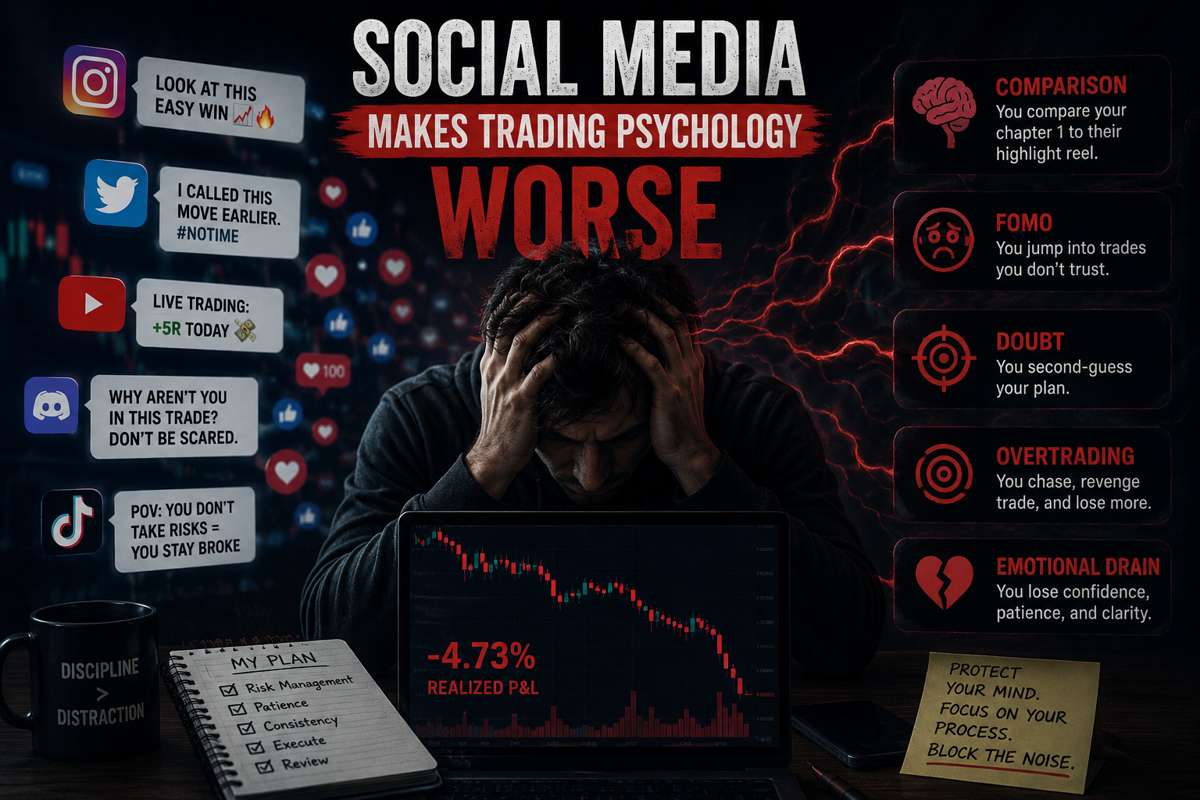
Trading content online often glorifies speed and aggression. Slow trading rarely goes viral because patience isn’t visually exciting.
A trader calmly waiting three days for confirmation doesn’t attract attention. Someone turning $100 into $1,000 in twenty minutes does.
Unfortunately, entertainment and consistency are not the same thing.
The market punishes traders who chase excitement.
Fast Profits Create Dangerous Expectations
Many beginners enter forex believing success should happen quickly. They expect daily wins, rapid account growth, and nonstop action.
When reality fails to match those expectations, frustration grows. That frustration leads directly to impulsive trades.
Respecting higher timeframes destroys unrealistic expectations. It teaches traders that quality matters more than frequency.
Patience Feels Boring Until It Pays
There’s something ironic about trading. The moments that feel boring are often the moments that make the most money.
Waiting isn’t glamorous. Watching the market move without participating can feel painful. But discipline usually looks boring before it looks brilliant.
That’s a lesson many traders learn the hard way.
What Higher Timeframes Actually Reveal
Higher timeframes strip away distractions. They expose the market’s true direction without all the chaotic movement found on smaller charts.
Think about standing too close to a painting. All you see are random brush strokes. Step back, and suddenly the image makes sense.
That’s exactly how timeframe analysis works.
The weekly and daily charts reveal the broader story. They show where institutions are pushing price, where major support and resistance zones exist, and where momentum genuinely lives.
The Market Leaves Clues
Price action is never random for long. The market constantly leaves footprints. Higher timeframes help traders recognize those footprints before getting trapped by short-term noise.
A trader focused only on fifteen-minute candles may see a bullish setup. But the weekly chart could be sitting directly beneath a major resistance zone that has rejected price for months.
Without context, traders walk straight into traps.
Trend Direction Becomes Clearer
Higher timeframes simplify trend analysis. Instead of reacting to every tiny retracement, traders can identify the market’s dominant direction.
That alone improves decision-making dramatically.
Trading with the trend feels smoother because momentum already supports the position. Trading against it feels like fighting gravity.
Support and Resistance Gain Meaning
Not all support and resistance levels are equal. A resistance zone on a five-minute chart might barely matter. A monthly resistance zone can completely reverse a market.
Higher timeframe levels carry emotional and institutional weight. Large market participants pay attention to them.
And where institutions focus, volatility follows.
Momentum Looks Different Up Close
Smaller charts exaggerate movement. A sudden spike feels enormous on a one-minute timeframe, even if it’s meaningless on the daily chart.
That distortion tricks traders into overreacting.
Higher timeframes restore perspective. They help traders distinguish between temporary fluctuation and genuine momentum.
Fake Breakouts Become Easier to Spot
Many fake breakouts occur because traders ignore higher timeframe context. Price may break a short-term level aggressively, only to reverse hard from a larger daily zone.
The market loves trapping impatient traders.
By checking higher timeframes first, traders avoid entering directly into major areas where reversals are likely.
Market Structure Stops Looking Random
At lower levels, price action often appears chaotic. But zooming out reveals patterns, cycles, and cleaner structure.
Suddenly the market no longer feels like gambling.
That shift in perspective changes a trader psychologically. Confidence grows because decisions become grounded in logic rather than emotional reaction.
The Psychology Behind Higher Timeframe Trading


Trading is mostly psychological. Technical analysis matters, but mindset determines whether traders follow their strategy consistently.
Higher timeframe analysis naturally improves emotional stability.
Why? Because it slows everything down.
Slower Decisions Create Better Decisions
Quick decisions are dangerous in emotional environments. Fear and greed thrive when traders feel rushed.
Higher timeframes remove urgency.
Instead of panicking over every candle, traders begin evaluating the market more calmly. They stop reacting impulsively and start thinking strategically.
That transition is powerful.
Stress Levels Drop Significantly
Constantly monitoring lower charts creates mental exhaustion. Every movement feels personal. Traders become emotionally attached to outcomes.
Higher timeframe trading reduces that pressure.
There’s less need to stare at charts all day. Less temptation to micromanage trades. Less emotional turbulence overall.
Confidence Comes From Clarity
Confusion destroys discipline.
When traders constantly switch bias based on tiny movements, they lose confidence in their analysis. That uncertainty creates hesitation and emotional inconsistency.
Higher timeframe direction acts like an anchor. It keeps traders grounded even during temporary pullbacks.
Patience Becomes a Competitive Advantage
Most traders struggle with patience because modern culture rewards instant gratification. People want immediate results in every area of life.
The market doesn’t care.
Forex rewards patience far more than excitement.
Good Trades Rarely Need Chasing
Strong setups usually develop slowly. They build around important levels, clear structure, and aligned momentum.
Impulsive trades feel urgent because they’re emotionally driven.
Higher timeframe traders learn to wait for confirmation instead of forcing entries.
Emotional Discipline Strengthens Over Time
Patience works like a muscle. The more traders practice waiting, the easier discipline becomes.
That emotional maturity separates experienced traders from reckless ones.
It’s not intelligence alone that creates consistency. It’s emotional control.
How Higher Timeframes Protect Traders
Losses are inevitable in trading. Nobody escapes them completely. But higher timeframe analysis reduces unnecessary losses dramatically.
It acts like a filter.
Instead of taking every attractive setup, traders learn to ask a critical question: does this align with the bigger picture?
That single habit prevents countless bad trades.
Filtering Weak Setups


Not every signal deserves execution. Some setups only appear strong because traders are too zoomed in.
Higher timeframe analysis exposes weak trades quickly.
A bullish setup directly beneath weekly resistance suddenly looks far less attractive when viewed properly.
Countertrend Trades Become More Obvious
Countertrend trades are seductive because reversals can produce explosive movement. But many traders attempt reversals too early.
The higher timeframe helps traders recognize whether a move is a true reversal or just temporary retracement.
That distinction matters enormously.
Risk Management Improves Naturally
When traders understand the larger market structure, stop placement becomes more logical.
Instead of random tight stops based on emotional fear, traders begin placing stops beyond meaningful structure levels.
That reduces premature exits caused by market noise.
Avoiding Death by Overtrading
Overtrading destroys accounts quietly. One bad trade rarely causes complete failure. A hundred impulsive trades usually do.
Higher timeframe focus reduces unnecessary activity.
Fewer Trades Often Mean Better Trades
This idea frustrates many beginners because it sounds counterintuitive. People assume more effort should produce more profit.
Trading doesn’t work that way.
Sometimes the best trade is no trade at all.
Mental Energy Gets Preserved
Every trade consumes emotional energy. Constant decision-making eventually weakens discipline.
Higher timeframe traders conserve mental focus because they avoid reacting to every tiny fluctuation.
That emotional stability becomes a major edge over time.
The Relationship Between Timeframes
No timeframe exists in isolation. Markets move in layers, almost like waves within waves.
The higher timeframe creates the broader trend. The lower timeframe refines entries.
Problems arise when traders reverse that relationship.
The Bigger Picture Comes First

Imagine trying to navigate a city without knowing the country you’re in. That’s what trading lower timeframes without higher timeframe context feels like.
The larger structure must come first.
Once traders identify higher timeframe direction, smaller charts become tools instead of traps.
Alignment Creates Stronger Setups
Trades become more reliable when multiple timeframes support the same idea.
A bullish lower timeframe entry inside a bullish daily trend carries stronger probability than a random standalone signal.
Alignment matters because momentum compounds.
Conflict Between Timeframes Creates Confusion
When lower and higher timeframes disagree, emotional conflict often follows.
Traders hesitate. They second-guess entries. They close positions early.
That inconsistency damages performance over time.
Lower Timeframes Still Have Value
Respecting higher timeframes doesn’t mean ignoring smaller charts completely. Lower timeframes remain useful for precision and timing.
The key difference is purpose.
Smaller charts should refine decisions, not dictate overall market bias.
Entries Become Cleaner
Once higher timeframe direction is established, lower charts help traders locate efficient entries.
Instead of blindly entering positions, traders can wait for pullbacks, confirmations, or breakout retests.
That improves risk-to-reward dramatically.
Timing Stops Feeling Random
Many traders struggle because they enter trades emotionally. Higher timeframe context combined with lower timeframe precision creates structure.
Suddenly entries stop feeling impulsive.
That structured approach builds confidence and consistency simultaneously.
Why Institutional Traders Respect Higher Timeframes
Retail traders often obsess over short-term movement. Institutions usually care far more about broader structure.
That difference explains a lot.
Large market participants cannot enter massive positions based on random five-minute fluctuations. They analyze macro trends, liquidity zones, and long-term momentum.
The higher timeframe matters because serious money respects it.
Institutions Move Markets


Banks and large funds operate differently from retail traders. Their positions carry enormous size.
Because of that, they think strategically rather than emotionally.
Large Players Need Structure
Institutions rely on major support and resistance areas because those zones contain liquidity.
Higher timeframe levels attract attention precisely because they matter to large participants.
Retail traders ignoring those levels often get caught on the wrong side of moves.
Patience Is Part of Professional Trading
Professional trading rarely resembles the chaotic image promoted online.
Institutional traders wait. They plan. They scale into positions strategically.
There’s a reason patience keeps appearing in discussions about successful trading. It genuinely matters.
Retail Traders Often Fight the Market
Many beginners unknowingly trade against institutional momentum.
They chase small reversals while larger trends continue dominating price action.
That’s exhausting and expensive.
Following Momentum Feels Easier
Trading with higher timeframe direction reduces friction. Positions tend to move more naturally because the broader market already supports them.
It’s similar to swimming downstream instead of upstream.
Both are possible, but one clearly requires less struggle.
Respect Creates Longevity
Arrogance destroys traders quickly. The market punishes people who believe they can outsmart every trend.
Respecting the higher timeframe is ultimately about humility.
It means accepting that the market’s broader direction matters more than personal opinion.
The Quiet Power of Simplicity
Trading becomes dangerous when people overcomplicate it.

Indicators pile up. Strategies become messy. Analysis turns into paralysis.
Yet some of the most effective trading wisdom sounds almost disappointingly simple.
Respect the higher timeframe.
That’s it.
Simple Doesn’t Mean Easy
People often confuse simplicity with ease. But simple ideas can still require enormous discipline.
Eating healthy is simple. Consistently doing it is harder.
Trading works the same way.
Discipline Beats Complexity
A trader with a simple strategy and strong discipline usually performs better than someone using complicated systems emotionally.
Higher timeframe analysis simplifies decision-making by reducing noise.
That simplicity creates clarity.
Clarity Creates Consistency
Consistent trading comes from repeatable behavior. Chaos produces inconsistency.
The higher timeframe provides structure, and structure supports emotional stability.
That combination becomes powerful over time.
The Market Rewards Perspective
Perspective changes everything.
When traders stop obsessing over every tiny fluctuation, they begin seeing the market differently. They stop reacting emotionally and start acting strategically.
That shift rarely happens overnight.
Maturity Changes Trading Style
Most traders eventually evolve toward patience after experiencing enough pain from impulsive behavior.
Losses teach lessons that excitement never will.
Respecting higher timeframes often becomes part of that emotional maturity.
The Bigger Picture Always Matters

Life itself works this way. People become overwhelmed when they focus only on immediate problems without seeing the broader picture.
Trading mirrors life more than many realize.
Zooming out creates clarity.
Final Thoughts
The forex market is loud, fast, emotional, and sometimes brutally unforgiving. It constantly tempts traders into impulsive decisions, especially on lower timeframes where every candle feels urgent.
But urgency is often an illusion.
The higher timeframe acts like a calm voice in the middle of chaos. It reminds traders to slow down, think clearly, and align with the broader market structure instead of fighting it emotionally.
Respecting higher timeframes doesn’t guarantee instant success. Nothing in trading does. But it dramatically improves perspective, discipline, patience, and decision-making.
And honestly, those qualities matter far more than finding some magical entry signal.
Because in the end, successful trading is rarely about reacting faster.
It’s about seeing clearer.
FAQs
1.Why is the higher timeframe important in forex trading?
Higher timeframes provide a clearer view of market direction, major support and resistance levels, and overall momentum. They help traders avoid emotional decisions caused by short-term market noise.
2.Can traders still use lower timeframes effectively?
Yes, lower timeframes are useful for refining entries and improving timing. The problem begins when traders rely only on small charts without understanding the bigger market structure.
3.Which higher timeframe is best for forex trading?
That depends on trading style, but daily and weekly charts are commonly respected because they reveal stronger trends and important market zones with less noise.
4.Does higher timeframe trading reduce stress?
In many cases, yes. Traders who focus on higher timeframes usually experience less emotional pressure because they avoid reacting to every small price movement throughout the day.
5.Why do beginners struggle with respecting higher timeframes?
Many beginners are attracted to fast profits and constant action. Lower timeframes appear exciting, but they often create emotional trading habits and unrealistic expectations.