

Personal development doesn’t announce itself with fireworks. It doesn’t always feel exciting, and it rarely gives instant rewards. That’s why so many people misunderstand it. They expect motivation to feel like a sugar rush or growth to look like overnight success. When that doesn’t happen, they quietly give up and tell themselves they’re just not “that kind of person.”
The truth is more uncomfortable. Personal development is subtle. It’s the slow rewiring of how you think, speak, and act when nobody is watching. It’s choosing restraint over impulse, awareness over autopilot. And yes, it can feel boring, frustrating, or even pointless at times. But that quiet discomfort is exactly where change is happening.
The Cost of Ignoring Inner Growth
Ignoring personal development doesn’t mean your life stays the same. It means it drifts. Thoughts go unchecked, words become careless, habits harden, and character forms by default. Before you know it, you’re living a life you didn’t consciously choose.
That’s the real danger. Not failure, but unconscious success at becoming someone you never intended to be. Personal development isn’t about becoming perfect. It’s about refusing to sleepwalk through your own existence while blaming the world for where you end up.
Watch Your Thoughts: The Silent Beginning
Thoughts as Seeds, Not Just Ideas
Thoughts are not harmless visitors. They are seeds. Some grow into confidence, discipline, and resilience. Others quietly turn into doubt, fear, and self-sabotage. The scary part is how easily negative thoughts slip in unnoticed, like weeds you didn’t plant but also didn’t remove.
Every belief you hold today started as a thought you entertained repeatedly. When you tell yourself you’re not good enough, not ready, or not lucky, you’re planting something. And like any seed, it doesn’t ask for permission before growing.
The Mental Noise We Normalize
Most people live with constant mental noise and call it normal. Self-criticism, overthinking, replaying old failures, imagining worst-case scenarios. It’s exhausting, yet familiar. So familiar that silence feels uncomfortable.
Personal development begins when you start questioning that noise. When you pause and ask, “Is this thought helping me or holding me hostage?” That moment of awareness is powerful. It’s the difference between being owned by your thoughts and owning them.
How Negativity Sneaks In Quietly
Negativity rarely barges in loudly. It whispers. It disguises itself as realism or caution. It says things like, “Don’t get your hopes up,” or “People like you don’t succeed.” Over time, those whispers become your inner narrator.
Once negativity feels familiar, it feels true. That’s when it becomes dangerous. Not because it’s loud, but because it feels reasonable.
Building Awareness Without Obsession
Watching your thoughts doesn’t mean policing every idea that crosses your mind. That would drive anyone crazy. It’s about noticing patterns, not perfection. When you become aware of recurring thoughts, you gain the power to interrupt them.

Awareness isn’t judgment. It’s observation. And observation alone can weaken even the strongest mental habits.
Watch Your Words: Giving Thoughts a Voice
Language Shapes Reality
Words are thoughts given momentum. The moment you speak, you give shape to what was once invisible. Your language doesn’t just describe your reality; it helps create it. That’s why people who constantly complain often feel stuck, while those who speak intentionally seem to move forward.
The way you talk to yourself matters just as much as how you talk to others. Internal dialogue becomes external behavior faster than we like to admit.
The Habit of Careless Speech
Many people speak without thinking and then wonder why their lives feel chaotic. Complaints, excuses, sarcasm, and self-deprecating jokes might feel harmless, but they reinforce certain identities. Say something often enough, and you start living as if it’s true.
Words have weight. Even jokes teach your brain what to believe. When you constantly talk down about yourself, don’t be surprised when your confidence stays low.
Self-Talk as a Daily Mirror
Your self-talk reflects how you see yourself. It reveals what you expect from life and what you think you deserve. If your inner voice is harsh, your outer life often mirrors that harshness.
Changing self-talk isn’t about fake positivity. It’s about honesty without cruelty. You can acknowledge flaws without turning them into life sentences.
Speaking With Intention, Not Perfection
Intentional speech doesn’t mean rehearsed or robotic language. It means choosing words that align with who you want to become. It means pausing before complaining, before insulting yourself, before spreading negativity.
You don’t need perfect words. You need conscious ones.
Watch Your Actions: Where Talk Meets Reality
Why Action Is the Great Revealer
Actions don’t lie. You can think positively and speak confidently, but your actions reveal what you truly believe. If you say you want change but repeat the same behaviors, the truth is in the repetition.
Personal development gets uncomfortable here. Because action exposes self-deception. It forces you to confront the gap between intention and execution.
Small Actions, Big Consequences

Life isn’t shaped by grand gestures. It’s shaped by small, repeated actions. Skipping discipline once feels harmless. Doing it daily builds a pattern. That pattern becomes your default mode.
Consistency is boring, but it’s powerful. It’s how ordinary actions compound into extraordinary results or quiet regret.
The Excuse Trap
Excuses feel logical in the moment. You’re tired. You’re busy. The timing isn’t right. But excuses, when repeated, turn into identities. You become “the person who always starts tomorrow.”
Breaking that cycle doesn’t require motivation. It requires honesty. Brutal honesty about what you’re choosing versus what you’re avoiding.
Momentum Over Motivation
Motivation is unreliable. It comes and goes like weather. Momentum, on the other hand, is built. When you act despite not feeling ready, you create forward motion.
Once momentum exists, action feels less heavy. That’s when growth becomes sustainable.
Watch Your Habits: The Architecture of Daily Life
Habits as Invisible Architects
Habits quietly design your life. They decide how you spend your time, energy, and attention. Most habits form without conscious choice, which is why they feel so hard to change.
You don’t rise to the level of your goals. You sink or climb to the level of your habits.
Comfort Can Be a Dangerous Place
Comfort isn’t evil, but unchecked comfort breeds stagnation. When habits revolve solely around ease, growth slows. You start avoiding discomfort, even when it’s necessary.
Personal development often requires choosing short-term discomfort for long-term freedom. That trade-off separates growth from stagnation.
Breaking Patterns Without Self-Hate
Many people try to change habits through shame. They insult themselves for failing and expect that pain to produce discipline. It rarely works.
Lasting change comes from curiosity, not cruelty. When you ask why a habit exists, you uncover the need it’s trying to meet. Only then can you replace it with something better.
Designing Habits That Support Growth
Good habits don’t rely on willpower alone. They rely on environment and identity. When your surroundings support better choices, discipline becomes easier.
Habits stick when they align with who you believe you are becoming, not who you think you should be.
Watch Your Character: The Person You Become
Character Is Built in Private
Character isn’t built in moments of praise. It’s built in silence. In how you act when no one is watching, when shortcuts are available, when excuses would be accepted.
Over time, these private decisions form your reputation with yourself. And that reputation influences every future choice you make.
Integrity as a Daily Practice
Integrity isn’t a grand moral stance. It’s a series of small decisions to stay aligned with your values. It’s saying no when yes would be easier. It’s choosing honesty when lying would be convenient.
When integrity erodes, confidence follows. You can’t trust yourself if you constantly betray your own standards.
Confidence Grows From Consistency
Confidence isn’t loud. It’s calm. It comes from knowing you do what you say, even when it’s hard. That internal trust creates quiet strength.
When character is solid, external validation becomes less necessary. You stop chasing approval and start respecting yourself.
The Long Memory of Character
People forget what you say, but character leaves a lasting impression. More importantly, you remember who you were when it mattered.
That memory shapes future decisions more than any motivational quote ever could.
Watch Your Destiny: The Final Outcome
Destiny Isn’t Random
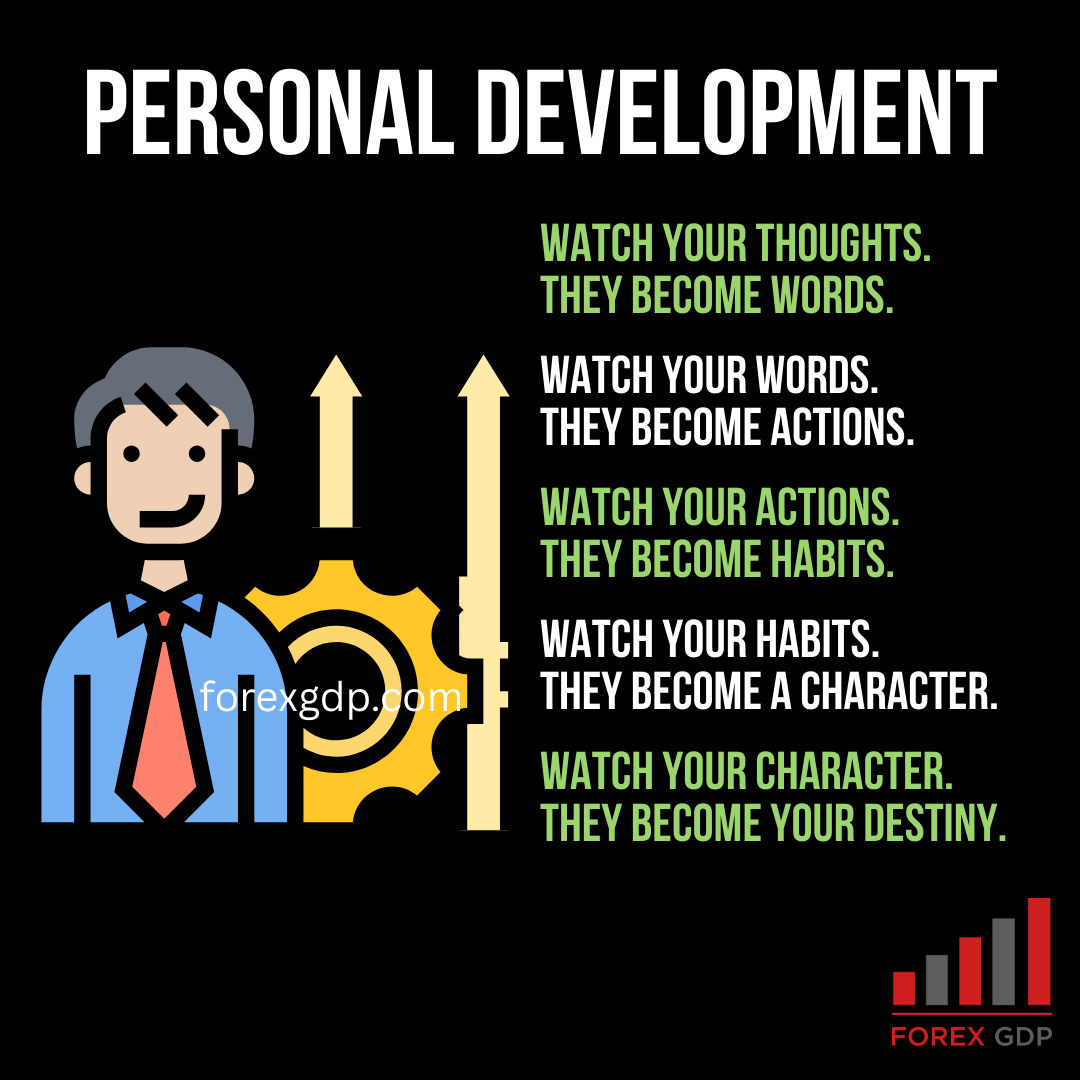
Destiny sounds dramatic, but it’s practical. It’s the natural outcome of repeated choices. Thoughts influence words. Words guide actions. Actions form habits. Habits shape character. Character determines direction.
There’s nothing mystical about it. It’s cause and effect playing out over time.
The Slow Reveal of Results
Results don’t show up immediately. That’s why many people quit early. They don’t see progress, so they assume nothing is happening. But growth works underground before it shows above the surface.
By the time outcomes become visible, the real work is already done.
Why People Feel “Stuck”
Feeling stuck usually means living with outdated patterns. Old thoughts, old habits, old language. Growth requires letting go, and letting go can feel like loss before it feels like freedom.
Stuckness isn’t a life sentence. It’s a signal.
Choosing Direction Over Speed

Speed without direction leads to burnout. Direction without speed still leads somewhere meaningful. Personal development is about choosing where you’re headed, not rushing blindly.
Slow progress in the right direction beats fast movement toward nowhere.
A Final Reflection on the Journey
Personal development isn’t glamorous. It doesn’t promise instant success or endless happiness. What it offers is something quieter but more powerful: alignment. When your thoughts, words, actions, habits, and character start pulling in the same direction, life feels less chaotic.
You stop fighting yourself. You stop feeling like you’re running in place. The journey isn’t easy, and it’s not always positive. There will be frustration, setbacks, and moments of doubt. But every small conscious choice moves you closer to a life that feels intentional rather than accidental.
In the end, destiny isn’t something you wait for. It’s something you build, one unnoticed decision at a time.
FAQs
1.Why does personal development feel so slow at the beginning?
Because most changes happen internally before they show externally. The early phase is about rewiring habits and beliefs, which takes time but creates lasting results.
2.Can negative thoughts ever be useful?
Yes, when they signal real problems that need attention. They become harmful when they turn into permanent narratives rather than temporary observations.
3.Is motivation necessary for personal growth?
Motivation helps, but it’s unreliable. Consistent action, even without motivation, creates momentum that lasts longer.
4.How do I change habits without feeling overwhelmed?
Focus on one small shift at a time. Sustainable change comes from simplicity, not intensity.
5.Does personal development ever end?
Not really. As long as life evolves, growth continues. The goal isn’t completion, but awareness and alignment along the way.