

There’s something quietly powerful about the phrase “Stop losses protect your peace.” At first glance, it sounds like a simple trading tip. But if you sit with it for a moment, it reveals something deeper—something almost philosophical. Trading isn’t just numbers, charts, or strategies. It’s emotional. It’s human. And sometimes, it’s messy.
If you’ve ever watched a trade go against you and felt that knot in your stomach tighten, you already know this isn’t just about money. It’s about control, discipline, and—most importantly—peace of mind. Let’s dig into why stop losses are more than just a technical tool and how they can completely transform your experience in the market.
The Emotional Battlefield of Trading
Why Trading Feels So Personal
Trading has a way of getting under your skin. It doesn’t matter if you’re new or experienced—every position you take carries a piece of your confidence with it. When a trade goes wrong, it can feel like you went wrong.
That’s because trading taps directly into your emotions. Fear whispers when prices drop. Greed shouts when they rise. And somewhere in between, doubt creeps in, asking if you really know what you’re doing. It’s not just a financial activity—it’s a psychological one.
The market doesn’t care about your feelings. That’s the harsh truth. It moves based on forces far bigger than any individual trader. But your reactions? Those matter. And they can make or break your success.
The Silent Stress of Holding Losing Trades
Let’s be honest—holding onto a losing trade is exhausting. You keep checking the chart, hoping it’ll turn around. You convince yourself it’s “just a pullback.” You wait. And wait.
Meanwhile, your mind is racing. What if it keeps dropping? What if you lose more? Should you close now or hold longer? That mental tug-of-war can drain you faster than the loss itself.
This is where many traders get stuck. Not because they lack knowledge, but because they struggle to let go. The fear of realizing a loss feels worse than the loss itself. And that’s where things start to spiral.
Peace of Mind as a Trading Strategy
Here’s something most people don’t talk about enough: peace of mind is a strategy.
Think about it. When you’re calm, you make better decisions. You stick to your plan. You don’t panic or overreact. But when you’re stressed, everything changes. You chase trades, second-guess yourself, and break your own rules.
Stop losses act like a safety net. They remove the need for constant monitoring and emotional decision-making. Instead of asking “What should I do now?” you already know—because you planned it in advance.
Understanding Stop Losses Beyond the Basics
What a Stop Loss Really Means
At its core, a stop loss is simple. It’s a predetermined point where you exit a trade to limit your loss. But reducing it to just a “tool” misses the bigger picture.
A stop loss is a boundary. It’s you telling the market, “This is as far as I’m willing to go.” It’s not about admitting defeat—it’s about protecting your capital and your mindset.
Without that boundary, you’re essentially leaving the door open for chaos. And markets love chaos.
The Difference Between Hope and Discipline
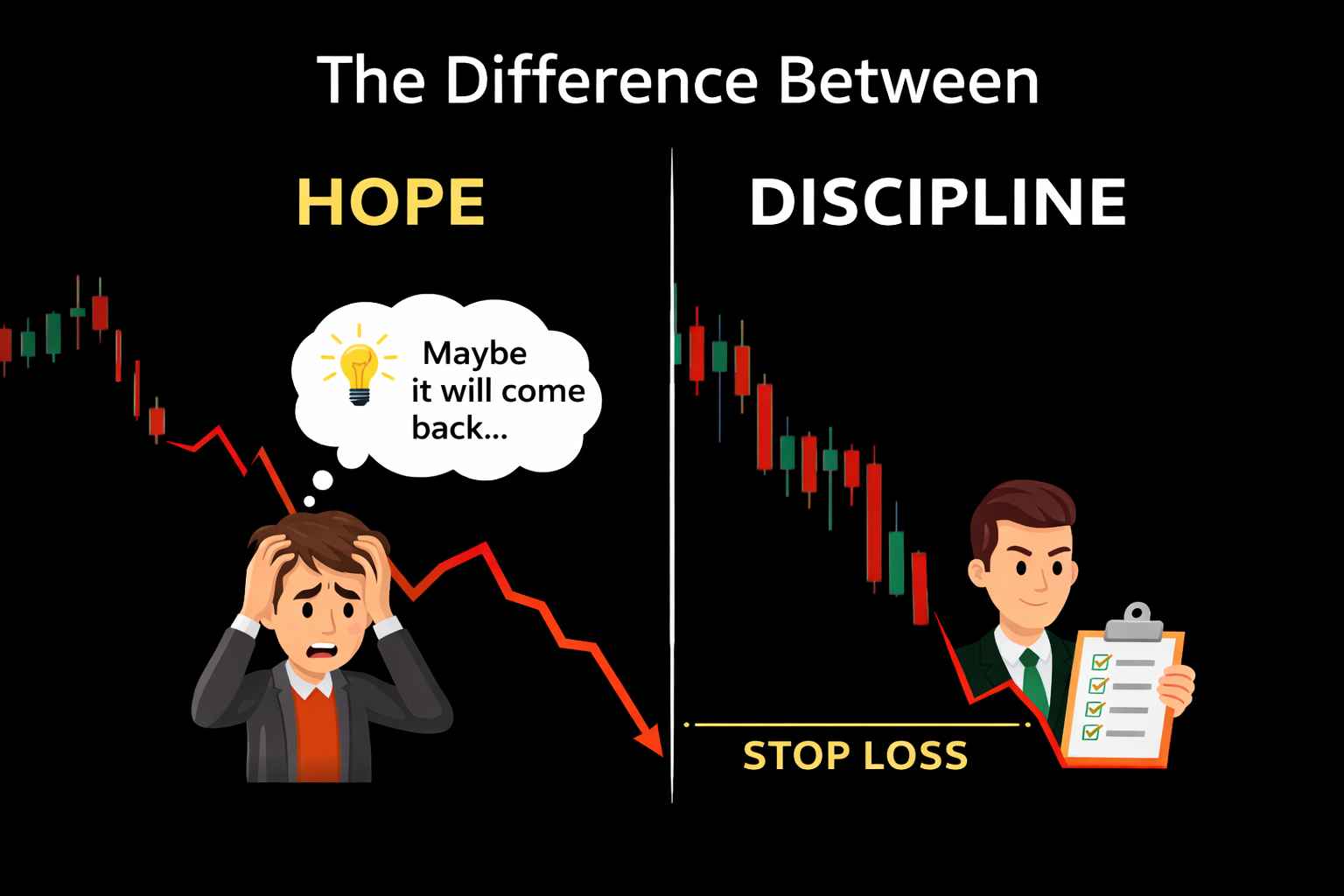
Hope is dangerous in trading. It sounds harmless, even positive. But when you rely on hope instead of discipline, you’re gambling.
Discipline, on the other hand, is quiet and firm. It doesn’t care about your feelings—it follows the plan. A stop loss is the embodiment of that discipline. It executes your decision without hesitation.
The difference is subtle but powerful. Hope says, “Maybe it’ll come back.” Discipline says, “I’ve already decided what to do if it doesn’t.”
Why Traders Avoid Using Stop Losses
You’d think something so useful would be universally embraced. But surprisingly, many traders avoid stop losses altogether.
Why? Because they don’t want to be wrong.
There’s a strange comfort in keeping a trade open, even when it’s losing. As long as it’s open, the loss isn’t “real.” But the truth is, the market doesn’t care about your denial. Losses don’t disappear just because you ignore them.
Avoiding stop losses is like refusing to look at your bank account after overspending. It doesn’t fix the problem—it just delays the pain.
How Stop Losses Protect More Than Money
Protecting Your Capital
Let’s start with the obvious. Stop losses protect your money.
Every trader experiences losses. It’s part of the game. But the difference between successful traders and struggling ones often comes down to how they manage those losses.
A small loss is manageable. A large loss? That can wipe out weeks—or even months—of progress. Stop losses ensure that no single trade has the power to derail your entire journey.
Protecting Your Confidence
Confidence in trading is fragile. One bad experience can shake it to the core.
When you let a loss spiral out of control, it doesn’t just hurt your account—it hurts your belief in yourself. You start doubting your strategy, your skills, even your ability to succeed.
But when you use stop losses, something interesting happens. You feel more in control. Even when a trade doesn’t work out, you know you handled it correctly. And that reinforces confidence instead of destroying it.
Protecting Your Mental Health
This might sound dramatic, but trading without boundaries can genuinely affect your mental health.
Stress, anxiety, sleepless nights—it’s not uncommon for traders who are constantly exposed to unmanaged risk. Watching the market move against you can feel like being stuck in a storm with no shelter.
Stop losses act as that shelter. They limit exposure, reduce stress, and allow you to step away without constant worry. And that’s not just helpful—it’s essential.
The Art of Setting the Right Stop Loss
Avoiding Random Placement


Setting a stop loss isn’t about picking a random number and hoping for the best. It requires thought, context, and a bit of strategy.
If your stop is too tight, you’ll get stopped out too early. Too wide, and you risk unnecessary losses. It’s a delicate balance.
Think of it like setting boundaries in life. Too rigid, and you limit yourself. Too loose, and you lose control. The key is finding that middle ground where protection meets flexibility.
Letting the Market Breathe
Markets move. That’s their nature. Prices fluctuate, retrace, and sometimes behave unpredictably.
A good stop loss accounts for this movement. It gives your trade enough room to “breathe” without exposing you to excessive risk.
If you place your stop too close, normal market noise can knock you out. But if you place it thoughtfully, you allow your trade the space it needs to develop.
Aligning Stop Losses with Your Strategy
Every trading strategy is different. Some focus on short-term movements, others on long-term trends. Your stop loss should align with your approach.
A mismatch can create unnecessary friction. For example, using a tight stop in a volatile market can lead to frustration. On the flip side, a wide stop in a quick trade might expose you to more risk than necessary.
Consistency is key. When your stop loss aligns with your strategy, everything feels more structured—and less chaotic.
The Psychological Freedom of Letting Go
Accepting Loss as Part of the Journey
Here’s a hard truth: losses are inevitable.
No strategy wins all the time. No trader is perfect. The sooner you accept that, the easier everything becomes.
Stop losses help you embrace this reality. Instead of fearing losses, you plan for them. You control them. And that shifts your mindset from reactive to proactive.
Breaking the Cycle of Overthinking
Overthinking is a trader’s worst enemy. You analyze, reanalyze, and second-guess every move.
It’s exhausting.
Stop losses simplify the process. Once they’re set, the decision is already made. There’s no need to constantly debate what to do next.
That mental clarity is incredibly freeing. It allows you to focus on the bigger picture instead of getting lost in every tiny fluctuation.
Building Trust in Your System
Trust takes time. And in trading, it’s built through consistency.
When you use stop losses consistently, you start to see patterns. You understand your strategy better. You learn from your results.
Over time, this builds trust—not just in your system, but in yourself. And that trust is what allows you to grow as a trader.
Why Peace Matters More Than Profit
The Hidden Cost of Stressful Trading


Chasing profits at the expense of your well-being is a losing game.
Sure, you might win a few trades. But if it comes with constant stress, anxiety, and burnout, is it really worth it?
Trading should enhance your life, not consume it. If you’re constantly on edge, something needs to change.
Sustainable Trading Over Quick Wins
There’s a temptation to go big, take risks, and chase fast profits. It’s exciting—but it’s also dangerous.
Sustainable trading is different. It’s steady, disciplined, and focused on long-term growth.
Stop losses play a crucial role here. They keep you grounded. They prevent impulsive decisions. And they help you build a system that lasts.
Finding Balance in the Market
At the end of the day, trading is just one part of your life. It shouldn’t define your mood, your energy, or your peace.
Stop losses help create that balance. They allow you to step away, knowing you’re protected. They give you the freedom to live your life without constantly worrying about the market.
And honestly, that’s priceless.
Final Thoughts: Trading with Clarity and Calm
“Stop losses protect your peace” isn’t just a catchy phrase—it’s a mindset.
It’s about setting boundaries, embracing discipline, and prioritizing your well-being over short-term gains. It’s about understanding that trading is as much about psychology as it is about strategy.
When you start seeing stop losses as a form of self-respect rather than a limitation, everything changes. You trade with clarity. You make decisions with confidence. And most importantly, you protect what truly matters—your peace.
FAQs
1.What is a stop loss in trading?
A stop loss is a predefined price level where a trade is automatically closed to limit potential losses. It helps traders manage risk and avoid emotional decision-making.
2.Why do traders struggle to use stop losses?
Many traders avoid stop losses because they don’t want to accept losses. It often comes down to ego, fear, and the desire to be right.
3.Can stop losses guarantee profits?
No, stop losses don’t guarantee profits. They are designed to limit losses and protect capital, which indirectly supports long-term profitability.
4.How do stop losses improve mental health?
They reduce stress by removing uncertainty and preventing large, unexpected losses. This allows traders to think more clearly and stay emotionally balanced.
5.Is it possible to trade successfully without stop losses?
While some traders claim to do so, it’s extremely risky. Without stop losses, a single bad trade can cause significant damage to both your account and your confidence.