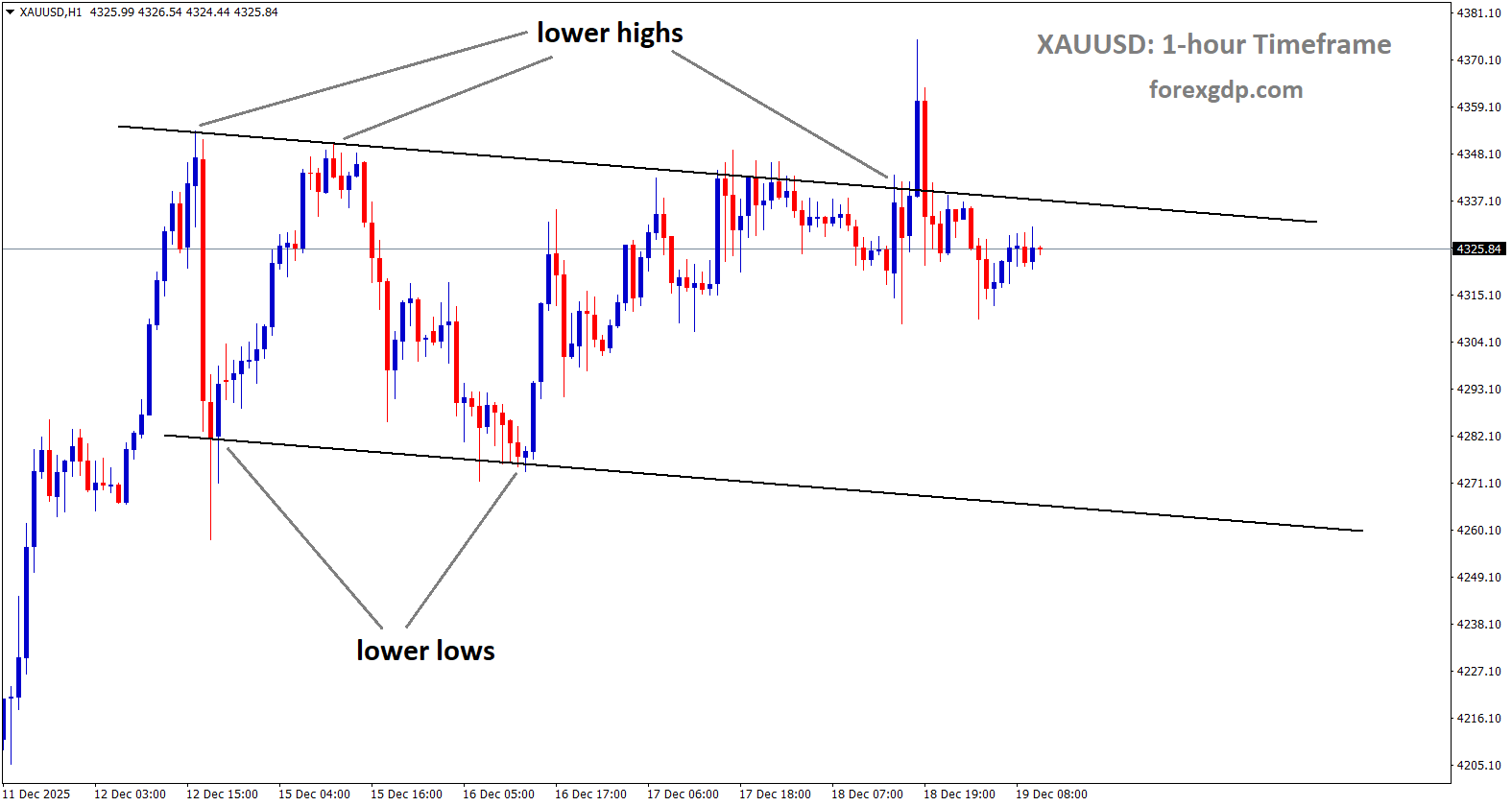
XAUUSD is moving in a descending channel
Gold started Friday on a softer note, slipping during the early European session as some traders chose to lock in gains. After a recent run higher, it’s normal to see short-term investors step back, take profits, and reduce risk. That’s exactly what seems to be happening now, with selling pressure coming from futures markets where quicker, shorter-term positions can change direction fast.
Even with this dip, the broader story around gold hasn’t suddenly turned negative. Many of the forces that helped support the metal lately are still in play, especially growing expectations that the US Federal Reserve may cut interest rates further in the period ahead. When investors believe borrowing costs will fall, gold often becomes more attractive because it doesn’t pay interest, and lower rates reduce the “cost” of holding it compared with interest-bearing assets.
So while the price action on Friday morning looks weaker, the bigger picture still has several supportive threads—especially if upcoming US economic signals reinforce the idea that inflation pressures are easing.
Cooling US Inflation Fuels Rate-Cut Expectations
One of the strongest reasons gold is still getting attention is the latest US inflation data. The Consumer Price Index (CPI), released by the US Bureau of Labor Statistics, showed inflation slowing more than many expected in November. Headline CPI eased to 2.7%, coming in below the 3.1% forecast. Core CPI—which removes the more volatile food and energy categories—rose 2.6%, also below the expected 3.0%.
For markets, the details matter as much as the headline. A softer inflation trend can give the Federal Reserve more room to cut rates, because the central bank is less worried about price pressures flaring up again. And when traders think rate cuts are more likely, gold can benefit.
That’s partly because gold is a non-yielding asset. It doesn’t generate interest or dividends. When interest rates are high, investors can earn more by holding assets like bonds or cash equivalents, which can make gold less appealing. But if rates fall, the trade-off changes. Gold may look more competitive as a store of value, especially for investors focused on preserving purchasing power over time.
What economists are watching now
The surprise in the inflation numbers also shaped the tone of commentary from analysts. Some economists suggested that a sharper-than-expected slowdown could make it easier for the Fed to continue easing policy in the future. That kind of messaging tends to keep gold on investors’ radar, even when the metal pulls back on profit-taking.
At the same time, rate expectations aren’t always straightforward. Markets don’t price decisions based on a single report. They adjust continuously as new data arrives—jobs numbers, inflation updates, consumer spending, and sentiment surveys can all influence the outlook.
The Fed, Politics, and Market Expectations
The Federal Reserve is always central to gold’s direction, but politics can add another layer of uncertainty. This week, US President Donald Trump said the next Fed chair will be someone who supports much lower interest rates, and added that he expects to announce a successor to current Fed Chair Jerome Powell soon.
Comments like these can move markets because they shape expectations around future policy. Even if the Fed is meant to be independent, investors pay close attention when political leaders speak strongly about interest rates. The reason is simple: markets are forward-looking, and any perceived shift in leadership style or policy priorities can ripple into bond yields, the US dollar, and risk sentiment—all of which can influence gold.
For now, traders appear cautious about the very next Fed decision. Market pricing suggests only a limited chance of another rate cut at the upcoming January meeting, following quarter-point cuts at the last three meetings. In other words, investors may believe the Fed could pause soon, even if longer-term expectations still lean toward additional easing later on.
This mix—short-term caution but longer-term rate-cut hopes—can create choppy trading for gold. Prices may drift lower when traders take profit, then steady again when fresh data or headlines revive demand for safety.
Geopolitical Tensions Keep Safe-Haven Demand in Focus
Gold is not only about inflation and interest rates. It also reacts to uncertainty, and geopolitical risk is one of the most reliable drivers of safe-haven demand.
A developing situation involving the US and Venezuela is adding to that background tension. Reports said Venezuela’s government ordered its navy to escort ships carrying petroleum products from its port. That move comes as concerns grow about a possible confrontation after President Trump ordered a “blockade” aimed at Venezuela’s oil industry.
When geopolitical risks rise, investors often look for assets that are seen as more defensive. Gold is a classic example because it is widely recognized, globally traded, and historically viewed as a store of value during periods of stress. This doesn’t mean gold rises every time there’s a headline, but escalating tensions can help limit downside moves and keep buyers interested on dips.
Demand beyond headlines
Gold can also find support from steady industrial and investment demand. While jewelry demand and cultural buying patterns matter in many regions, investor positioning often drives the bigger short-term swings. If investors see a combination of easing inflation, potential rate cuts, and global uncertainty, gold can remain attractive—even if the day-to-day price action includes pullbacks.
What Markets Are Watching Next: Consumer Sentiment
Friday’s key scheduled event is the University of Michigan Consumer Sentiment Index for December. This report is closely followed because it offers insight into how households feel about the economy, their personal finances, and future conditions.
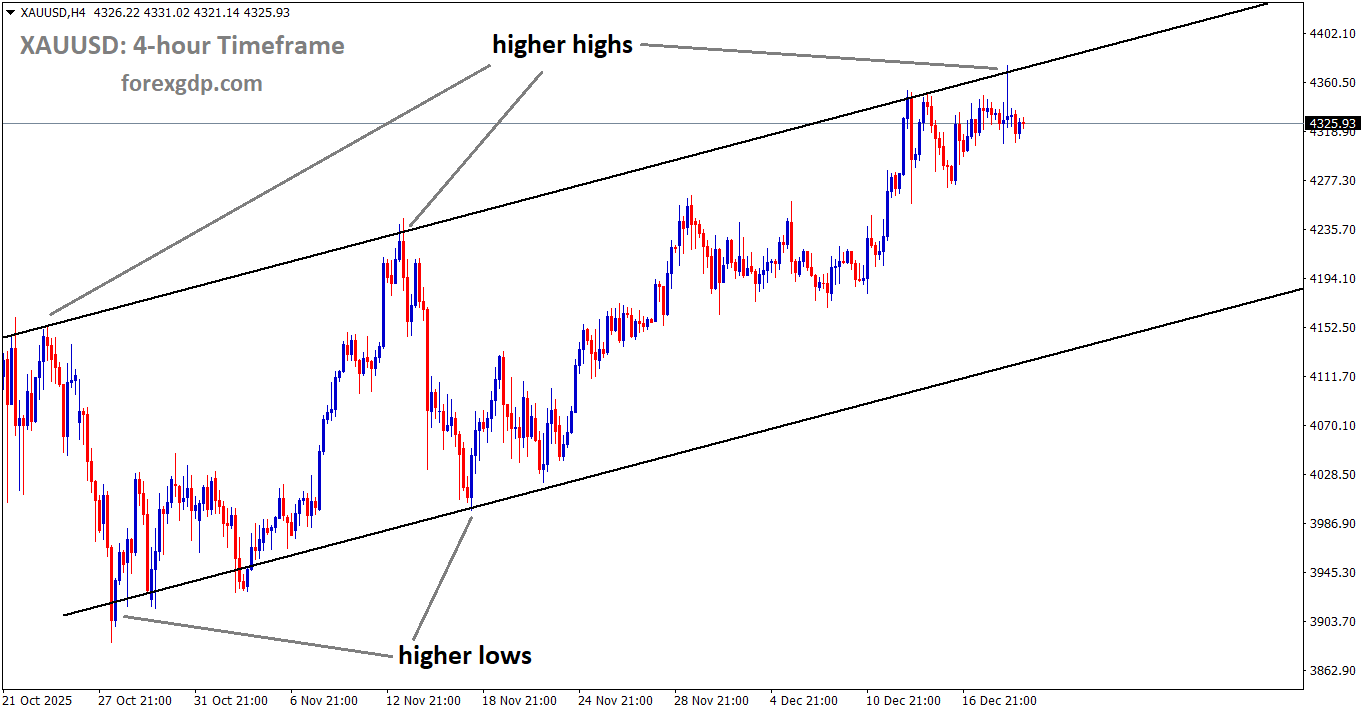
XAUUSD is moving in an uptrend channel, and the market has fallen from the higher high area of the channel
Consumer sentiment matters because consumer spending is a major engine of economic activity in the United States. If sentiment weakens, it can hint at slower spending and softer growth ahead. That, in turn, can influence expectations about whether the Fed should support the economy with lower rates.
The survey also tends to influence inflation expectations. If consumers expect higher inflation in the future, that can become a concern for policymakers. But if expectations stay steady or ease, it can reinforce the view that inflation is becoming less of a threat.
For gold, this creates two possible paths:
-
If sentiment is weaker than expected, markets may lean more toward rate cuts, potentially supporting gold.
-
If sentiment is strong and inflation expectations rise, markets may rethink the pace of easing, which could weigh on gold in the near term.
Either way, the report is likely to be a focus point because it arrives at a time when investors are highly sensitive to signals about growth and inflation.
Summary
Gold slipped in early European trading on Friday as short-term profit-taking surfaced, but the broader backdrop still includes supportive forces. Softer-than-expected US CPI and core CPI readings strengthened the narrative that inflation may be cooling, keeping expectations of future Federal Reserve rate cuts alive. Political comments about future Fed leadership added another layer of uncertainty, while geopolitical tensions involving the US and Venezuela continued to support safe-haven interest. The next major spotlight is the University of Michigan Consumer Sentiment Index, which could influence market views on growth, inflation expectations, and the direction of US interest rates—all key drivers for gold’s next move.