XAUUSD is moving in an uptrend channel
Gold started the week with fresh energy. In early European trading on Monday, the metal climbed to a new all-time high, drawing attention from investors who have been watching the market closely for weeks. The move reflects a mix of shifting expectations around US interest rates, a softer US Dollar, and a steady flow of money into safer assets while global tensions remain in focus.
Even though gold can rise for many reasons, the story this time is fairly clear: traders are reacting to signs that the US economy may be cooling just enough to change the direction of the Federal Reserve. Add in geopolitical stress and a quiet holiday stretch that tends to reduce trading activity, and you have the kind of backdrop that often leads investors to lean toward gold.
Why Gold Is Rising: The Interest Rate Story
One of the biggest drivers behind gold’s rally is the growing belief that the Federal Reserve may lower interest rates again in the months ahead. Recent data has hinted at softer inflation and a labor market that is not as hot as it used to be. When investors see those signals, they start thinking about what the Fed might do next.
Gold is especially sensitive to rate expectations because it does not pay interest. When interest rates are high, investors can earn more from assets like bonds or cash-based investments. In that environment, holding gold can feel less attractive because it offers no yield.
But when rates are expected to fall, the math changes. Lower rates reduce the “opportunity cost” of holding gold. In other words, investors feel like they are giving up less by choosing gold instead of interest-paying alternatives. That shift can increase demand, which often pushes gold higher.
A Weaker US Dollar Adds Extra Support
Gold also tends to benefit when the US Dollar weakens. Since gold is commonly priced in dollars, a softer dollar can make the metal cheaper for buyers using other currencies. That can lead to stronger international demand, which supports prices.
This relationship is not perfect every day, but over time it shows up often enough that traders watch it closely. When the dollar loses strength and gold is already supported by rate-cut expectations, the two forces can work together in the same direction.
Safe-Haven Demand Grows as Global Risks Stay in the Headlines
Gold is not only an economic trade. It is also one of the most widely recognized “safe-haven” assets—something investors often buy when the world feels uncertain. That demand can rise quickly when conflict risk increases or when political tensions create fear about markets, supply chains, or global stability.
At the moment, investors are weighing ongoing conflict risks in the Middle East, including the Israel-Iran situation. Comments from Israeli leadership suggesting preparations to brief the US on options for renewed action have added another layer of concern for markets. When headlines point toward escalation, some investors prefer to shift part of their portfolio into assets that are seen as better at holding value during turbulence.
At the same time, tensions between the United States and Venezuela are also making noise in the background. Reports that US officials are still pursuing a third oil tanker near Venezuela, tied to an intensifying oil blockade against Nicolás Maduro’s government, add to the sense that global political friction is not fading. When energy routes, sanctions, or international disputes start to widen, uncertainty grows—and gold often benefits from that.
Why Investors Choose Gold During Uncertainty

Gold has a long history as a store of value. Investors do not buy it because it is guaranteed to rise every day, but because it is less tied to the success of any one government, currency, or company. In uncertain moments, that independence can feel reassuring.
Many investors also see gold as a hedge against extreme outcomes. When markets are stable, that hedge may feel unnecessary. But when risks pile up—from conflict to policy surprises—gold can become more appealing, even to people who normally focus on stocks or bonds.
Holiday Trading Could Cool the Next Move
Even with all the supportive factors, markets do not move in a straight line forever. Traders are heading into a long holiday stretch, and that often changes behavior in a few important ways.
First, trading activity can become lighter. With fewer major players active, price moves can sometimes become choppy or muted. Second, some traders prefer to lock in profits before the calendar turns quiet. After a strong run, that kind of profit-taking can slow momentum, at least temporarily.
That does not mean gold must fall. It simply means that the market may not have the same push and pull as it does during a normal full-volume week. In quieter periods, even strong trends can pause while investors wait for fresh catalysts.
Key US Data Releases Traders Are Watching
Even during a slower holiday mood, a few economic updates can still shape expectations. Traders are looking toward US releases that can influence how the Fed thinks about growth and inflation.
-
The Chicago Fed National Activity Index is expected later on Monday, offering another snapshot of how the economy is performing.
-
On Tuesday, attention shifts to a preliminary reading of US Gross Domestic Product (GDP) for the third quarter, which can affect confidence about growth trends.
For gold, these reports matter because they can shift the probability of future rate decisions. If growth looks weaker than expected, markets may lean more strongly toward rate cuts. If growth looks firm, that pressure can ease.
What the Latest Fed Signals Suggest
Fed messaging has been mixed, and that is part of what makes the market interesting. Cleveland Fed President Beth Hammack said monetary policy is in a good place to pause, noting she wants time to assess how earlier rate cuts affect the economy. That kind of comment can slow the market’s rush toward pricing in more cuts, because it signals the Fed may prefer patience.
Meanwhile, market expectations still reflect uncertainty. Based on current pricing tools that track rate odds, traders are assigning a relatively low chance of another cut at the next meeting in January. That tells us investors are not fully convinced a cut is immediate—even if they believe it could arrive later.
This push and pull is important. Gold can rise on expectations of easier policy, but if the market begins to think the Fed will hold steady longer than expected, gold’s pace can cool. The direction may still be positive, but the path can become less smooth.
Consumer Mood Adds Another Piece to the Puzzle
Economic confidence also plays a role. A recent final reading from the University of Michigan showed consumer sentiment was revised slightly lower than earlier estimates. While that single number does not control the gold market, it helps paint a picture of how households feel.
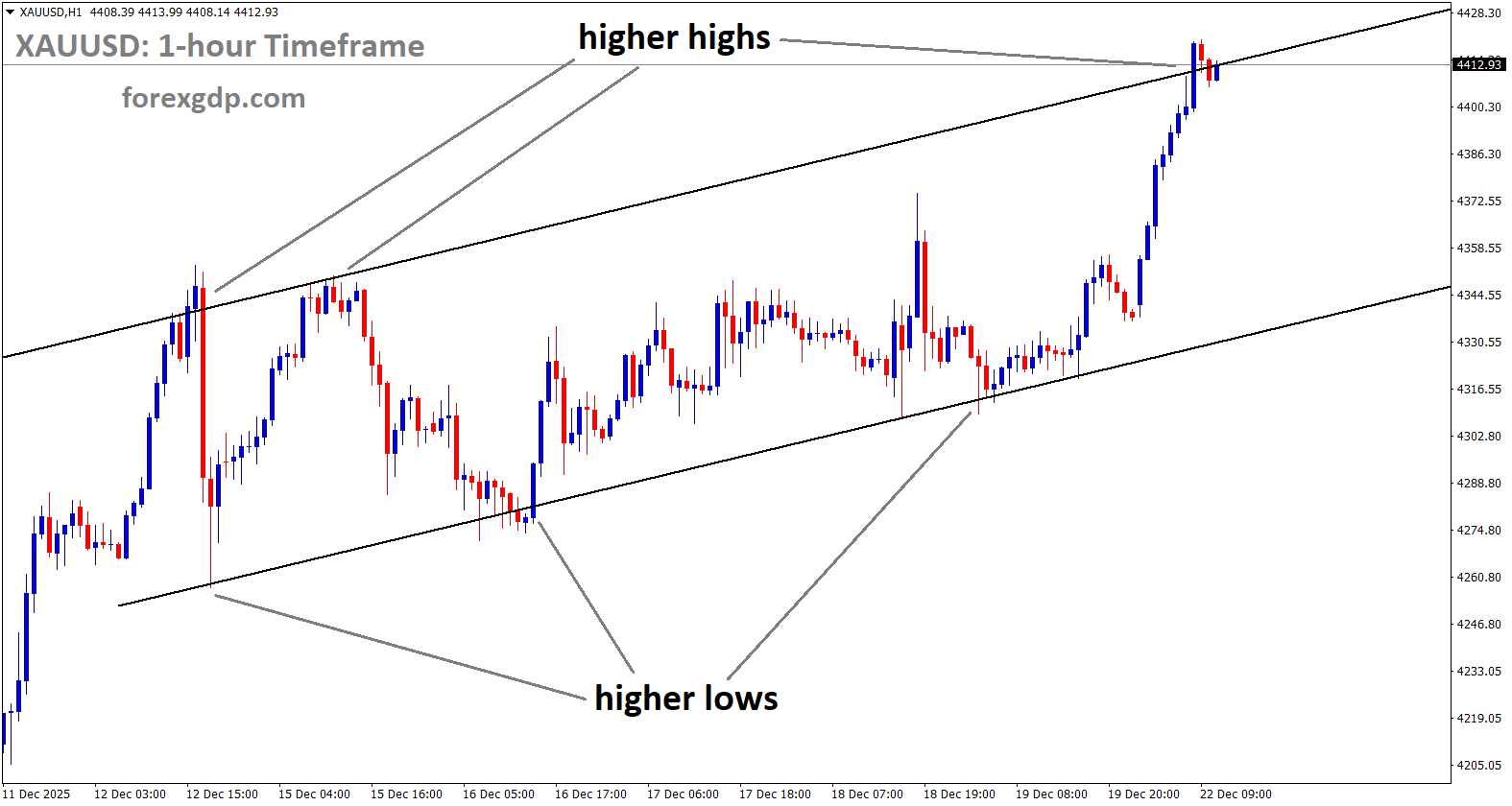
XAUUSD is moving in an uptrend channel, and the market has reached a higher high area of the channel
When consumer mood is weaker, it can hint at softer spending ahead. That can feed into the broader narrative of an economy that is cooling, which can influence rate expectations and, by extension, gold demand.
Summary
Gold has surged to a new record high as traders respond to a powerful mix of drivers. Expectations for future Fed rate cuts, combined with a weaker US Dollar, have improved the case for holding a non-yielding asset like gold. At the same time, safe-haven demand remains strong as investors track tensions involving Israel and Iran, along with rising friction between the US and Venezuela. While holiday season trading can slow momentum and encourage profit-taking, upcoming US economic data and evolving Fed signals will remain central to what happens next.