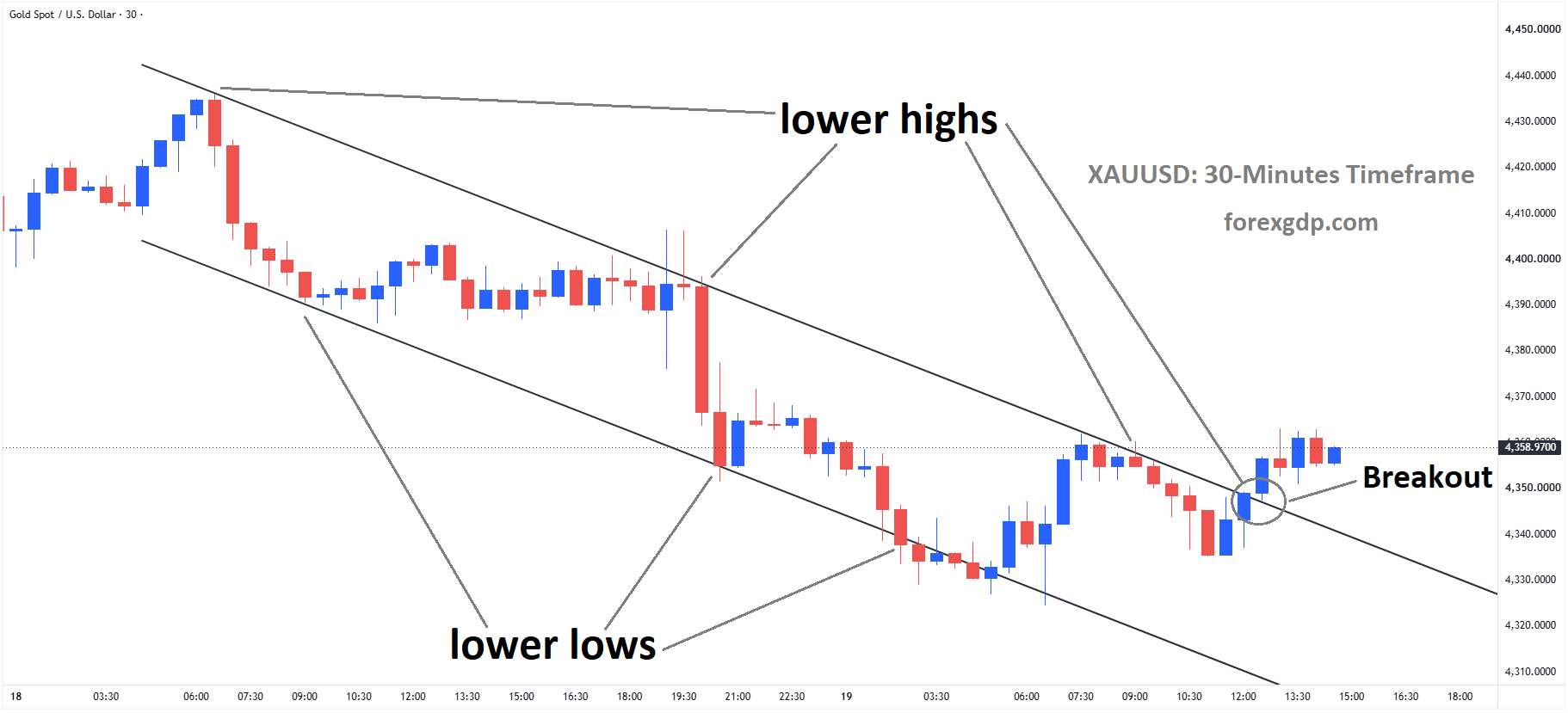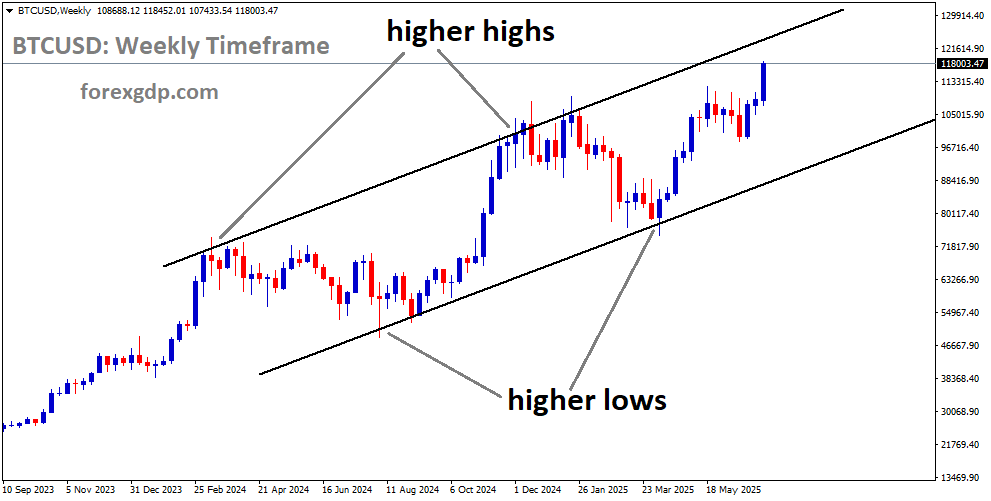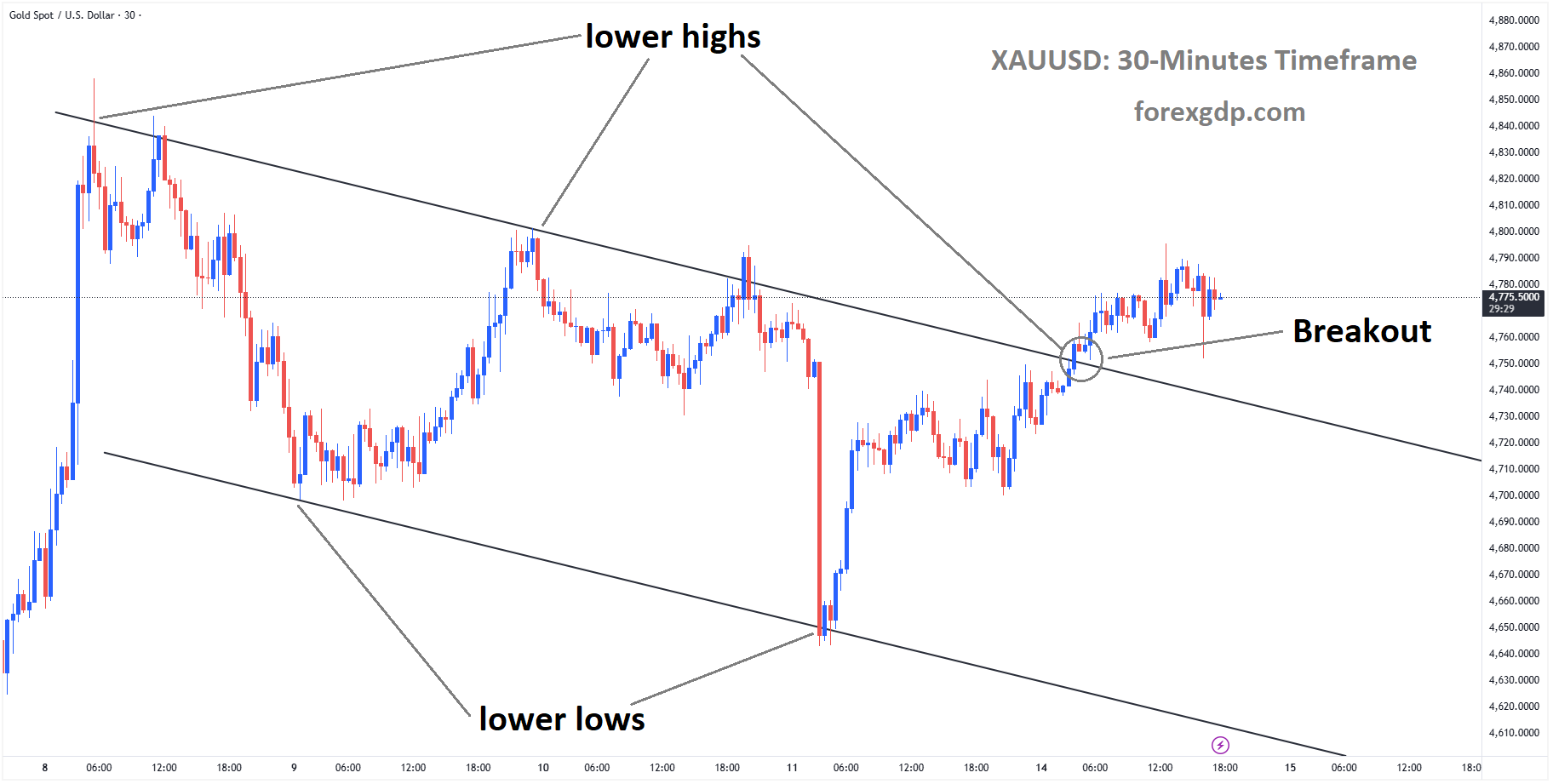

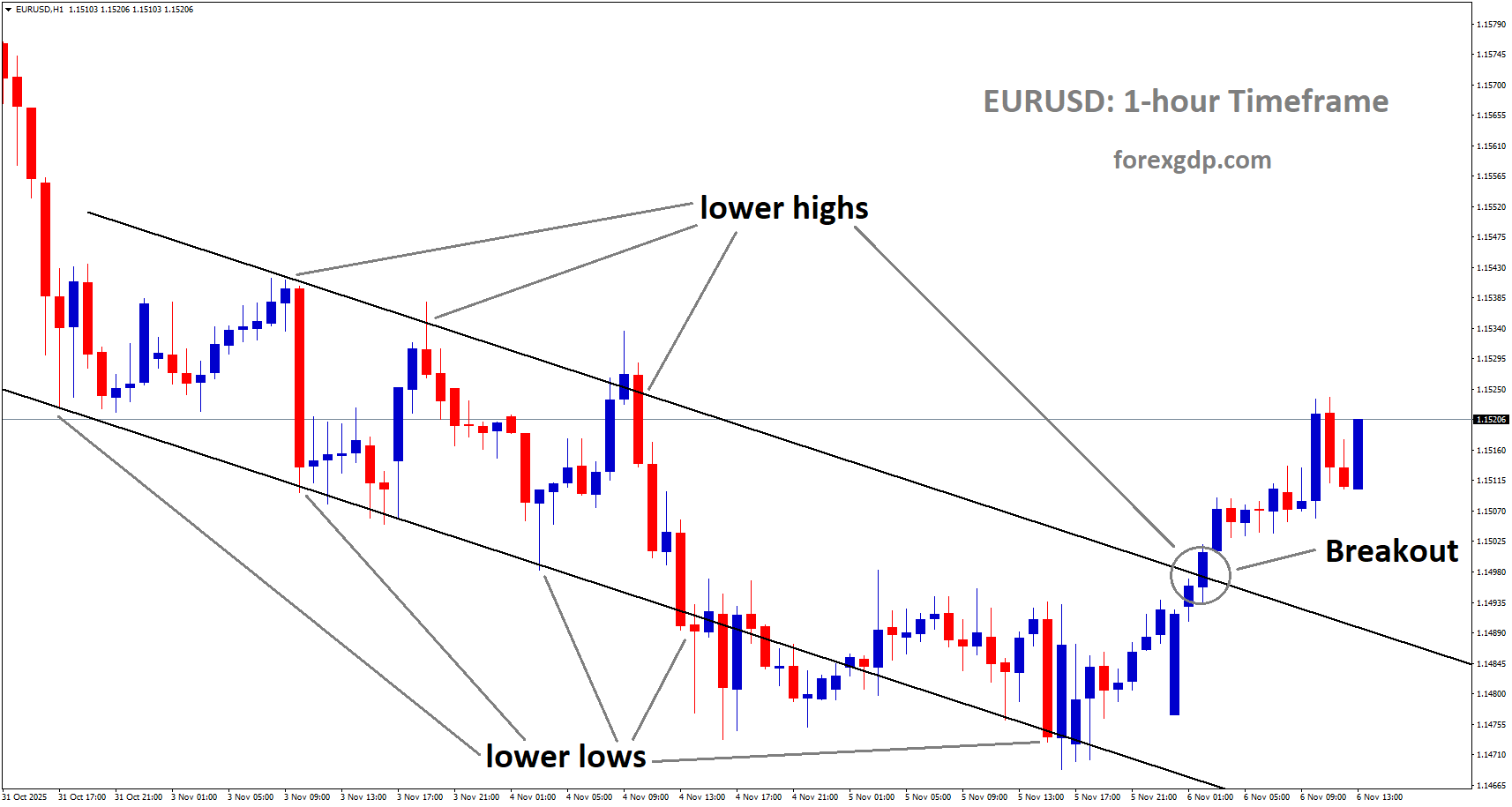
EURUSD has broken the descending channel on the upside
EURUSD Recovers Slightly While Investors Eye Upcoming Eurozone Sales Figures
The Euro has managed to stage a modest comeback after a period of noticeable weakness, gaining some ground against the US Dollar as market sentiment begins to improve. While the overall outlook remains cautious, the return of risk appetite among investors has helped the Euro bounce back slightly.
This shift follows a combination of strong US economic data and better-than-expected performance from European companies, giving traders a reason to take a more balanced stance toward both currencies. Let’s break down what’s been happening and what it might mean for the days ahead.
A Shift in Market Mood: Risk Appetite Returns
In recent days, global markets have shown signs of recovery as worries surrounding the US tech sector begin to fade. Investors are feeling slightly more confident, and that confidence is spilling over into the broader financial markets. This renewed sense of optimism has given the Euro some breathing room after struggling at lower levels earlier in the week.
European equity markets, in particular, have performed better than many anticipated. Strong third-quarter earnings from major companies have eased concerns about the region’s economic stability. Data from LSEG revealed that European firms are now expected to show around 4.3% growth in quarterly earnings, a much stronger result compared to the earlier forecasts of near-flat growth.
This improvement in corporate performance has reassured investors that Europe may be more resilient than previously thought, even amid slower global growth and persistent inflationary challenges.
The Role of US Economic Data in Shaping Currency Trends
While the Euro has shown signs of life, its recovery remains somewhat restrained by the strength of the US Dollar. The latest figures from the United States show that the economy continues to perform well, especially in the labor and services sectors.
The ADP employment report revealed stronger job creation than expected, signaling that the labor market remains firm. In addition, the US services sector showed faster growth in business activity and new orders. These upbeat numbers have made investors reconsider the likelihood of an upcoming interest rate cut by the Federal Reserve.
Before the release of this data, markets were expecting a high chance of a Fed rate cut in December. However, the new figures have led to a noticeable shift in expectations — fewer investors now believe that a rate reduction is imminent. As a result, the US Dollar has maintained its strong footing, making it harder for the Euro to advance more decisively.
Why Interest Rate Expectations Matter
When the Federal Reserve signals that it might cut rates, it typically weakens the Dollar because lower interest rates reduce the currency’s appeal to investors seeking higher returns. But when the data suggests the opposite — that the US economy is strong enough to avoid rate cuts — the Dollar often stays strong or even gains further.
This dynamic explains why, despite improving sentiment in Europe, the Euro’s rebound has remained measured. The market is still largely influenced by what the Fed might do next, and right now, the tone from the US remains relatively confident.
Europe’s Modest Economic Recovery: Signs of Progress
Across the Eurozone, the latest data has been slightly encouraging. Retail sales are expected to have improved modestly, showing that consumer spending is stabilizing. Though not a dramatic jump, steady retail activity is a positive sign for an economy that has faced challenges from inflation and high borrowing costs.

Additionally, the Eurozone services PMI — a measure of business activity in the services sector — came in stronger than expected. It climbed to 53.0 in October, indicating moderate expansion. This is an important development because the services sector makes up a large portion of Europe’s overall economy.
Together, these data points paint a picture of slow but steady recovery. While Europe is not out of the woods yet, the recent numbers suggest that the region is finding a bit of momentum as 2025 progresses.
Corporate Earnings Offer Hope
Corporate performance often serves as a key indicator of economic resilience. The fact that many European companies have reported better-than-expected results has helped restore some confidence. When companies perform well, they tend to hire more workers and invest in growth — both of which can support the broader economy and, by extension, the Euro.
What Investors Are Watching Next
Markets are now turning their attention to upcoming speeches from Federal Reserve officials, who are expected to provide more clarity on the direction of US monetary policy. Any indication of continued caution or a shift toward future rate cuts could influence the Dollar and, by extension, the Euro’s movement.
At the same time, investors will be closely monitoring upcoming European economic releases, including inflation and industrial production data. If these figures show improvement, they could provide further support for the Euro in the short term.
The general sentiment right now is one of cautious optimism. Traders are becoming more comfortable with risk, and that’s good news for currencies like the Euro, which tend to perform better when global markets are stable and investors are willing to diversify away from the Dollar.
The Bigger Picture: Balancing Strength and Caution
Even with these encouraging developments, the Euro still faces several challenges. The overall strength of the US Dollar continues to limit how far the Euro can rise. Additionally, Europe’s economy is growing at a slower pace compared to the US, which keeps the pressure on the European Central Bank (ECB) to maintain a careful approach to policy changes.
However, if European companies continue to deliver strong earnings and retail activity remains consistent, there’s a good chance that the Euro could maintain its current stability or even make gradual progress.
Why Investor Confidence Matters Now More Than Ever
At its core, currency movement often reflects investor confidence — not just in the short-term data but in the broader economic outlook. Right now, the Euro’s recent rebound shows that investors are beginning to believe in Europe’s ability to weather global economic uncertainties. That confidence, even if tentative, can help keep the Euro supported in the coming weeks.
Final Summary
The Euro’s recent performance tells a story of steady recovery amid shifting global sentiment. While the US economy continues to show strong momentum, the Eurozone is also displaying early signs of improvement through solid corporate results and stable consumer activity.
Investors are cautiously optimistic, and as risk appetite returns, the Euro is regaining some strength after its recent decline. Still, the road ahead depends heavily on future data from both sides of the Atlantic — especially regarding employment, inflation, and central bank policy direction.
In short, the Euro is slowly finding its balance again. With improving European confidence and resilient corporate growth, it’s shaping up to be a phase of gradual stabilization rather than rapid change, reminding everyone that in global markets, even small steps forward can make a meaningful difference.
GBPUSD climbs as traders await growing anticipation for BoE policy decision
The Pound Sterling (GBP) continues to move cautiously against its major counterparts as traders and investors keep a close watch on the Bank of England’s (BoE) upcoming monetary policy announcement. The air is filled with anticipation, and market participants are treading carefully, waiting to see whether the central bank will make any surprise moves. Let’s break down what’s going on and why this moment matters for the UK economy and global investors.
The Calm Before the BoE’s Decision
The Bank of England stands at a critical juncture. Most market analysts expect the BoE to hold interest rates steady at 4%, signaling a cautious stance amid persistent inflation pressures and an uncertain fiscal outlook. The last few months have seen the UK grappling with slower growth, high energy costs, and consumer spending that has started to cool.
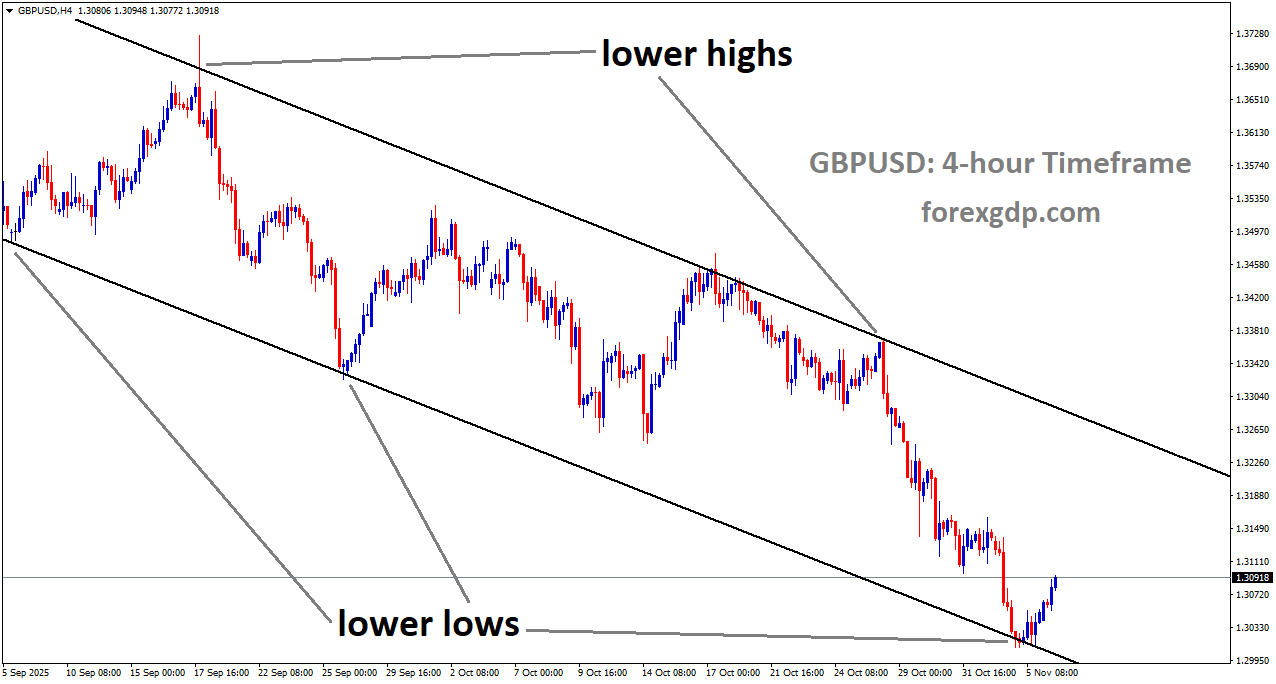
GBPUSD is moving in a downtrend channel, and the market has rebounded from the lower low area of the channel
Adding to the complexity, Chancellor of the Exchequer Rachel Reeves is preparing to unveil the Autumn Budget, which is expected to include tax hikes to cover a substantial £22 billion gap in public finances. This move may test her earlier commitment not to raise taxes on working families, creating a balancing act between fiscal responsibility and political promises.
For the BoE, this situation presents a delicate challenge. While inflation has gradually eased, it remains well above the 2% target, meaning that cutting rates too soon could reignite price pressures. On the other hand, keeping rates high for too long risks dampening business investment and household spending.
Inflation Still Haunts the UK Economy
One of the biggest drivers of market caution is the persistent inflationary pressure in the UK. The latest Consumer Price Index (CPI) data revealed that overall inflation rose 3.8% year-on-year in September. Although this marks progress compared to last year’s highs, it’s still nearly double the BoE’s official target.
Core inflation — which excludes volatile components like food and energy — also shows mixed signals. It dropped slightly to 3.5%, indicating that while some sectors are cooling, others remain under strain. The service sector, for instance, continues to experience price increases driven by higher wages and strong demand.
This inflation backdrop makes it harder for the BoE to act decisively. Many analysts believe the bank will maintain its “wait-and-watch” approach, preferring stability while assessing how previous rate hikes are affecting the broader economy. Traders currently assign a one-in-three chance that the BoE could cut rates by 0.25%, but such a move would likely depend on upcoming data confirming a sustained decline in inflation.
What Investors Are Watching Closely
Beyond the rate decision itself, investors are keenly interested in the BoE’s statement and outlook. The bank’s comments about the labor market, wage growth, and the timing of potential rate cuts will shape market sentiment for weeks ahead.
In recent months, the UK labor market has shown early signs of loosening. Job vacancies are declining, and businesses are reporting less difficulty in hiring workers. However, average earnings growth remains strong, keeping pressure on inflation through higher consumer spending. The BoE will likely highlight this as a key factor in determining how long rates need to stay elevated.
Another point of focus will be the central bank’s inflation forecast. In its previous meeting, the BoE suggested inflation might peak around 4% before slowly returning toward the target next year. Whether that view has changed will be a crucial clue for traders deciding their next moves.
The Broader Market Reaction: Pound Gains Slightly
While the BoE prepares its announcement, the Pound Sterling has managed to gain modestly against the US Dollar (USD) and other major currencies. The move reflects a combination of factors, including a pause in the Dollar’s recent rally and slightly improved investor sentiment toward the UK economy.

Recent US economic data — particularly the ADP Employment Change and the ISM Services PMI — exceeded expectations, hinting at a resilient US economy. Normally, such strong data would boost the Dollar, but investors appear to be reassessing their outlook for the Federal Reserve’s next steps. With Fed officials signaling uncertainty about future rate cuts, the Dollar’s advance has slowed, giving the Pound a brief lift.
However, this relief may be temporary. The Fed’s cautious tone and the lingering strength of the US economy could eventually restore upward pressure on the Dollar. For the Pound, that means any rally may remain limited unless the BoE adopts a surprisingly optimistic tone about growth and inflation.
Why the BoE’s Decision Matters Beyond the UK
The Bank of England’s move isn’t just important for British households or investors — it also has global implications. As one of the world’s most influential central banks, the BoE’s policies affect international capital flows, global bond yields, and currency markets.
If the BoE signals that rates will stay higher for longer, it could attract more foreign investment into UK assets, strengthening the Pound further. Conversely, if it hints at a future rate cut, investors may shift toward markets offering better returns, putting downward pressure on the currency.
Moreover, the BoE’s decision could influence other central banks. With the European Central Bank (ECB) and the Federal Reserve also navigating similar inflation-versus-growth dilemmas, a clear stance from the BoE could help shape broader monetary policy trends.
Market Sentiment Ahead of the Announcement
As the announcement approaches, the overall market sentiment remains mixed but cautious. Traders are reluctant to make big moves before knowing whether the BoE will maintain its tightening bias or pivot toward an easing stance.
Bond markets suggest investors expect rates to stay high for a few more months before gradual cuts begin next year. Meanwhile, equity markets remain steady, reflecting optimism that the worst of inflation might be behind us.
Currency traders, on the other hand, are keeping their positions light, anticipating potential volatility once the BoE’s statement is released. Depending on how the central bank frames its message — whether hawkish or dovish — the Pound could swing sharply in either direction.
Final Summary
In short, the Pound Sterling finds itself in a holding pattern as investors await clarity from the Bank of England’s monetary policy decision. With inflation still running above target, a shaky fiscal outlook, and the upcoming Autumn Budget stirring fiscal uncertainty, the BoE faces a tightrope walk between supporting growth and maintaining price stability.
The central bank is widely expected to keep interest rates unchanged at 4%, but what really matters is how the BoE communicates its future plans. Traders and businesses alike are watching for clues about when rate cuts might finally begin — a signal that could reshape not only the UK’s economic outlook but also global currency markets.
For now, the Pound’s modest gains reflect cautious optimism, but the real story will unfold once the BoE reveals its hand. Whether the next chapter brings stability or fresh turbulence depends on how well policymakers balance the ongoing battle between inflation, growth, and public confidence.
USDJPY Faces Tug-of-War While Traders Weigh BoJ Moves and Japan’s Spending Plans
The Japanese Yen (JPY) has been moving cautiously against the US Dollar (USD) as investors keep a close eye on decisions from both the Bank of Japan (BoJ) and the Federal Reserve (Fed). After a short-lived pullback earlier this week, the Yen has stabilized, but traders remain uncertain about the next big move. Let’s explore what’s really happening behind this tug-of-war between the two major currencies.
Japan’s Currency Holds Steady Amid Market Confusion
For now, the Yen has managed to stop its decline against the Dollar. This pause came after the BoJ’s meeting minutes from September hinted that Japan’s central bank could be preparing for an eventual interest rate hike. That possibility alone was enough to give the Yen a bit of support, as higher interest rates typically make a currency more attractive to investors.
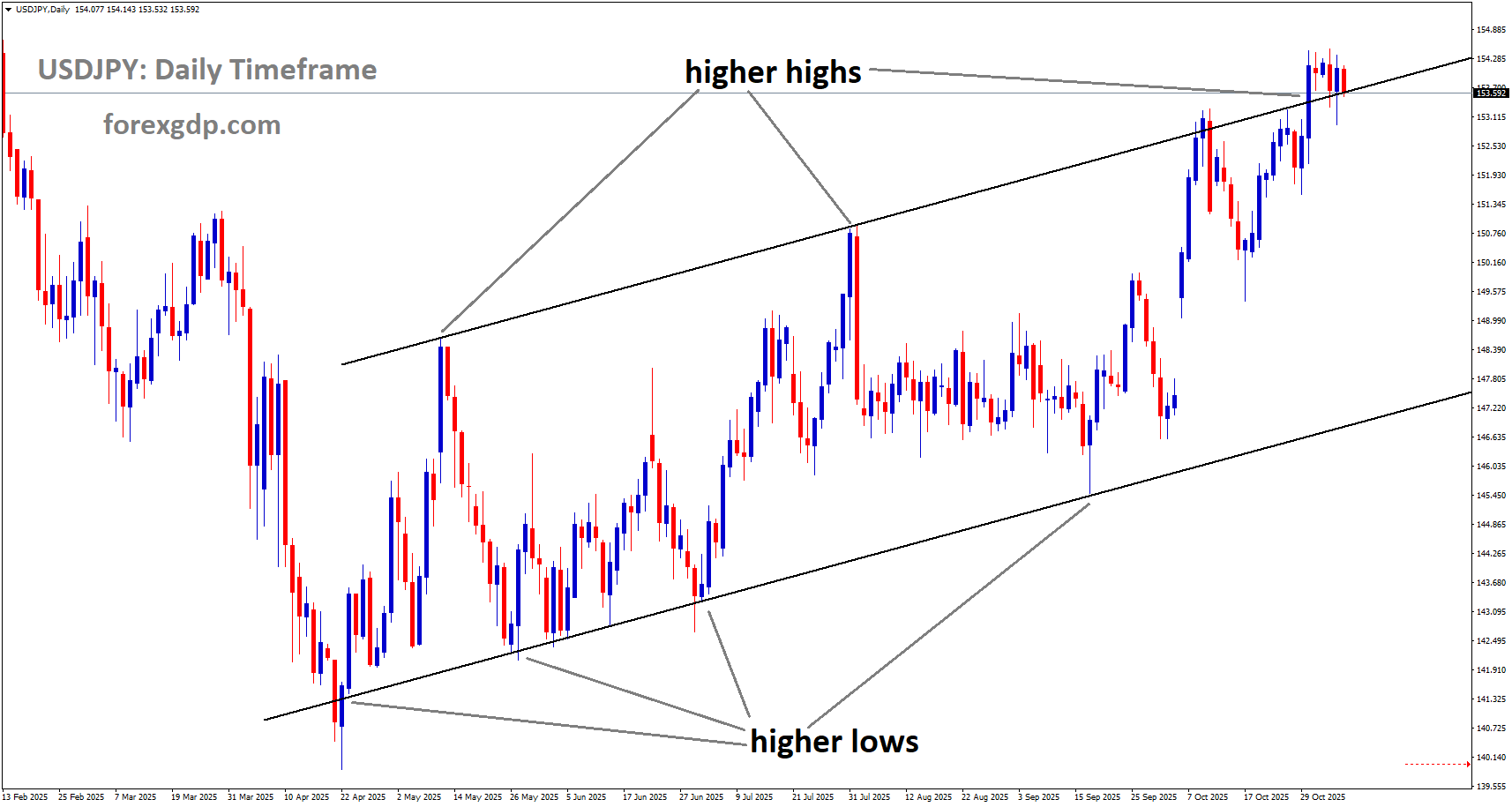
USDJPY is moving in an uptrend channel, and the market has reached a higher high area of the channel
However, not everyone is convinced. Market participants are still unsure when or even if the BoJ will move forward with tightening its policy. The arrival of Japan’s new Prime Minister, Sanae Takaichi, has added another layer of uncertainty. She is known for her pro-stimulus stance, which means she may favor government spending over quick monetary tightening. If her administration pushes for more fiscal expansion, that could delay any potential rate hike and weigh on the Yen.
Meanwhile, some analysts believe Japanese authorities might intervene in the foreign exchange market to prevent the Yen from weakening too much. Such speculation often provides short-term support for the currency, even without direct government action. Still, until there’s an actual policy shift or clear intervention, traders remain cautious about making large bullish bets on the Yen.
The Role of the US Dollar: Fed’s Tough Stance Keeps USD Strong
While Japan deals with uncertainty, the US Dollar continues to benefit from a hawkish Federal Reserve. The Fed has been firm in its message that inflation remains a concern and that interest rates will stay higher for longer if needed. This outlook helps the Dollar maintain its strength because investors tend to favor currencies with higher yields.
Recent US economic data has also painted a fairly stable picture. Employment numbers and service sector reports have both shown resilience, which reduces the chances of the Fed cutting rates anytime soon. As a result, the Dollar has remained near its strongest level in months.
However, the US economy isn’t completely free of trouble. The prolonged government shutdown has started to cloud the economic outlook, leading to uncertainty about upcoming official reports. Economists warn that the longer the shutdown drags on, the greater the risk it poses to the overall economy. This mix of strong data and political gridlock has kept traders on edge, unsure whether the Dollar’s dominance will last or fade.
Yen’s Struggle: Between Policy Promises and Market Reality
BoJ’s Careful Approach
The Bank of Japan has been walking a tightrope for years, trying to manage inflation without hurting growth. The central bank’s September meeting minutes revealed that policymakers are discussing how to gradually exit from ultra-loose monetary policy. Many board members noted that Japan’s inflation target of 2% has been “more or less achieved,” but they remain cautious due to global economic risks and trade uncertainties.
Despite this progress, the BoJ has not made any firm commitment to raising rates soon. The hesitation stems from concerns that premature tightening could derail Japan’s fragile recovery. That caution frustrates traders who want clearer signals, leading to hesitation in the currency market.
Political and Fiscal Factors
Adding to the complexity, Prime Minister Takaichi’s economic plans may influence how quickly monetary policy changes. Her push for aggressive fiscal spending could boost short-term growth but might also delay the need for higher interest rates. Investors are watching closely to see how her administration balances growth support with inflation management.
Japan’s Vice Finance Minister for International Affairs, Atsushi Mimura, recently commented that the Yen’s movements do not align with economic fundamentals. He noted that speculative trading and shifting expectations about fiscal policy are distorting market behavior. This statement suggests that authorities are aware of the currency’s volatility and could act if the situation worsens.
The Bigger Picture: A Delicate Balance Between Two Central Banks
The current USD/JPY situation is not just about Japan—it’s also heavily influenced by what happens in the United States. The Fed’s tough stance on inflation contrasts sharply with the BoJ’s cautious approach, creating a policy gap that often drives the pair higher. When the Fed signals fewer rate cuts or even hints at further tightening, the Dollar gains ground. Meanwhile, any delay or hesitation from the BoJ tends to weaken the Yen.
That said, global investors are increasingly aware that this imbalance cannot continue forever. If Japan’s inflation remains stable and wage growth picks up, the BoJ might have to act sooner rather than later. Even a modest rate hike could give the Yen fresh strength. On the other hand, if US data begins to weaken or inflation cools down faster than expected, the Dollar might lose its shine, helping the Yen recover naturally.
For now, traders are taking a wait-and-see approach. Market movements remain driven more by speculation and central bank commentary than by clear economic trends. Every speech from a Fed or BoJ official has the potential to shift momentum, making the next few weeks crucial for both currencies.
Final Summary
The Japanese Yen’s current position reflects a mix of hope, hesitation, and speculation. The BoJ’s hints at a possible rate hike have given the currency a mild boost, but uncertainty about the timing keeps investors cautious. Japan’s new Prime Minister’s pro-spending stance adds another variable that could delay monetary tightening. Meanwhile, the US Dollar remains strong, supported by the Fed’s firm stance and steady economic performance, though political tensions in the US are starting to cast shadows over future stability.
In simple terms, the Yen is caught in a tug-of-war between expectation and reality. Traders want to believe in a stronger Yen, but they’re not ready to commit until Japan’s central bank shows clear action. On the other side, the Dollar’s dominance is secure for now, but even small changes in economic outlook or Fed tone could alter that balance.
The coming months will reveal whether Japan finally joins other major economies in normalizing its monetary policy—or continues to hold back while watching the rest of the world move ahead. Until then, both the Yen and the Dollar remain locked in a complex dance, shaped by central bank decisions, political shifts, and global economic currents.
GBPJPY Stays Weak as Investors Eye BoE’s Upcoming Monetary Policy Move
The GBP/JPY pair has been moving with noticeable caution lately, as investors eagerly await the Bank of England’s (BoE) upcoming policy decision. While the Pound Sterling had shown some gains earlier in the week, it has since lost momentum. Many traders believe the BoE will leave interest rates unchanged, signaling a period of monetary stability before any possible easing in the future.
The central bank’s current policy rate has remained steady for months, largely because the UK economy has been showing mixed signals. Inflation has been cooling, and wage growth—though still elevated—has started to slow. These trends have strengthened the case for potential rate cuts in the coming months.
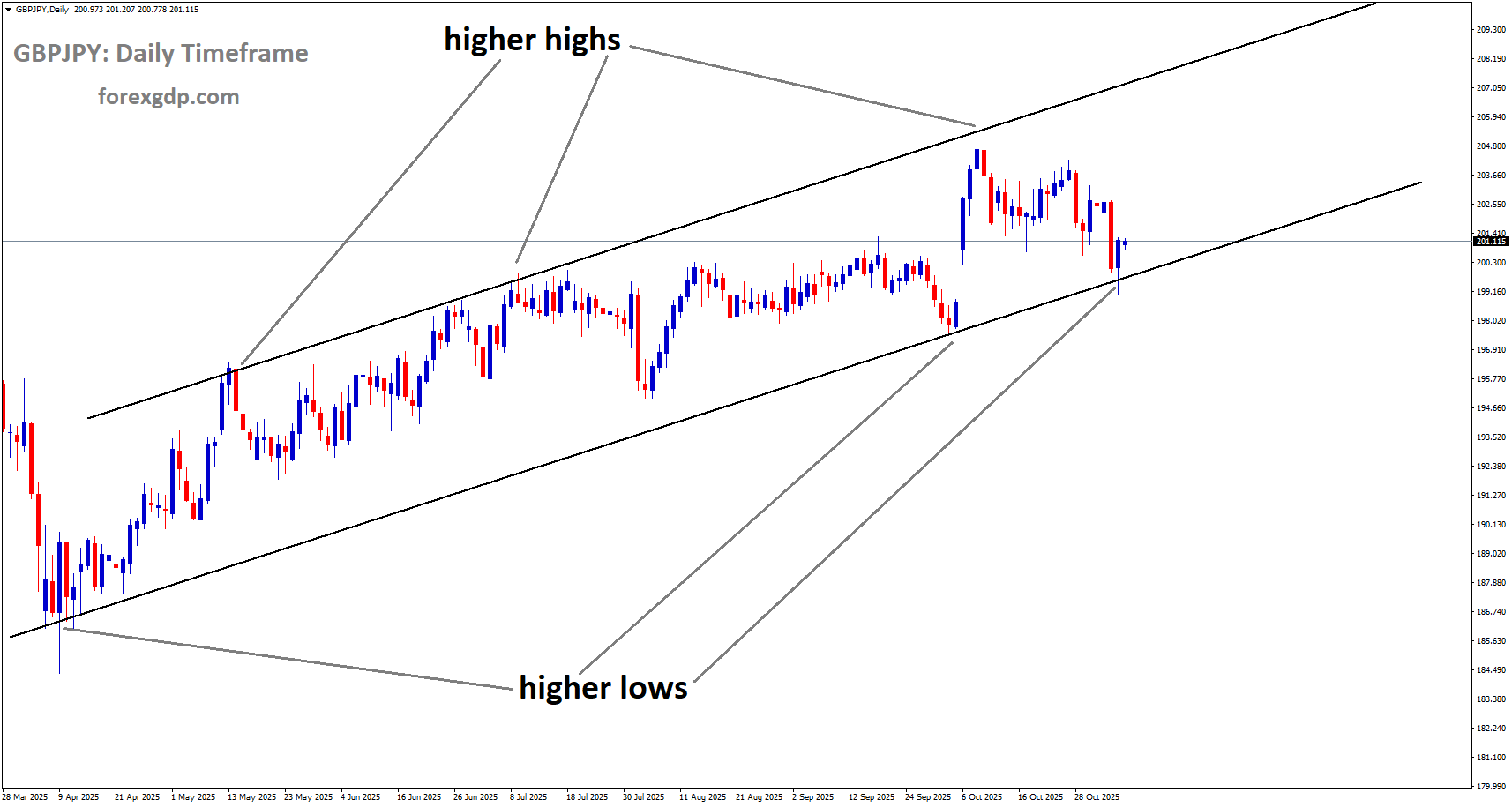
GBPJPY is moving in an uptrend channel, and the market has reached the higher low area of the channel
In the financial world, stability in interest rates often provides a cushion for the local currency. That’s exactly what’s happening with the Pound, as it finds some short-term support. Investors are cautious but not completely bearish, as they weigh the possibility that the BoE might begin a gradual shift toward lower borrowing costs if the UK’s economic data continues to soften.
Fiscal Policy in Focus: Rachel Reeves and the UK’s Economic Path
Adding another layer of complexity to the Pound’s outlook is the government’s fiscal policy direction. UK Chancellor Rachel Reeves is preparing for her budget announcement on November 26, and early indications point toward tighter fiscal measures. Reeves has already hinted that her focus will be on reducing national debt and borrowing costs, even if that means introducing tax increases or limiting public spending.
The UK’s fiscal health has been under scrutiny, with significant borrowing pressures weighing on future growth expectations. By tightening fiscal policies, the government aims to restore market confidence and stabilize long-term public finances. However, such steps can also dampen economic growth in the short term, leading investors to carefully watch how these decisions interact with monetary policy.
The BoE and the Treasury seem to be moving in a delicate balancing act—one managing inflation through interest rates, and the other managing debt through taxation and spending restraint. Together, their actions will significantly influence how the Pound behaves against the Japanese Yen in the weeks ahead.
Japan’s Growing Confidence: The Yen Gains Strength
While the UK navigates its policy crossroads, Japan is beginning to show signs of economic confidence that could reshape the Yen’s trajectory. Recent data revealed that Japan’s Labor Cash Earnings rose by 1.9% in September, aligning with expectations but reinforcing a clear trend—steady wage growth.
This figure is crucial because Japan’s economy has long struggled with stagnant wages, one of the key factors preventing sustained inflation. Now, with wage growth stabilizing and prices gradually rising, policymakers at the Bank of Japan (BoJ) are beginning to discuss shifting away from their ultra-loose monetary stance.
The BoJ’s meeting minutes, released earlier this week, hinted that several board members believe a rate hike could be appropriate soon. This marks a significant change from years of extremely accommodative policy. For investors, this means that the Yen might be entering a period of renewed strength, as rising interest rate expectations make Japanese assets more attractive.
A Step Toward Normalization
Governor Kazuo Ueda has emphasized that the 2026 wage outlook will play a central role in determining the exact timing of any policy tightening. Policymakers are cautious, preferring to ensure that inflation remains sustainably above target, rather than being a temporary effect of global price swings.
Meanwhile, Prime Minister Sanae Takaichi has echoed a similar sentiment. She has pointed out that while inflation has met the BoJ’s 2% target, it is not yet underpinned by robust, long-term wage growth. Her statement suggests that while Japan is closer than ever to achieving economic normalization, officials are not rushing into tightening policies too quickly.
This measured approach reflects Japan’s deep-rooted concern about past experiences—moving too fast could risk undermining the fragile recovery they’ve worked hard to build. Still, even small hints of tightening have been enough to boost investor confidence in the Yen, giving it an upper hand in the short term against currencies like the Pound.
GBP/JPY: Balancing Two Different Worlds
The GBP/JPY currency pair is currently caught between two contrasting monetary stories. On one side, the UK is stepping into a cautious phase, potentially nearing the end of its rate hike cycle. On the other, Japan is moving closer to an exit from decades of ultra-loose policy.
This contrast makes the GBP/JPY one of the more volatile yet intriguing pairs in the forex market. When one central bank pauses while another hints at tightening, traders often reassess their positions, seeking opportunities in the shifting momentum.

At the moment, the Yen’s growing strength appears to be the dominant factor. Even though the Pound has underlying support from stable BoE policy, the market sentiment is gradually leaning toward the Japanese currency due to rising expectations of a policy shift in Tokyo.
For investors, this means that short-term movements could favor the Yen, especially if upcoming Japanese data continues to show improvement in wages and inflation. However, in the long run, much will depend on how both countries manage their economic transitions—the UK trying to control borrowing without stifling growth, and Japan trying to encourage sustainable inflation without overheating its economy.
Final Summary
The GBP/JPY pair is currently navigating a period of transition defined by central bank decisions, government policies, and shifting investor sentiment. The Bank of England’s steady stance provides a short-term floor for the Pound, while fiscal tightening by Chancellor Reeves adds a cautious tone to the UK’s outlook.
On the other side, Japan’s economy is showing positive momentum, supported by improving wages and growing confidence that the Bank of Japan could finally tighten policy after years of ultra-easy conditions. As both nations move in opposite monetary directions, the GBP/JPY exchange rate reflects this ongoing tug-of-war.
In the coming months, traders will closely watch not just policy announcements but also the tone and timing of each decision. Whether the Pound finds renewed strength or the Yen continues to rise, one thing is clear—the global currency market is entering a phase where economic fundamentals and fiscal discipline matter more than ever.
EURGBP Edges Higher as Traders Await Eurozone Reports and BoE Policy Update
The EUR/GBP pair has been quietly building strength, moving higher ahead of key economic data from Germany and the broader Eurozone. As investors wait for fresh reports on industrial production and retail sales, market sentiment has shifted slightly in favor of the Euro. Meanwhile, the Pound Sterling remains steady as traders anticipate the Bank of England’s (BoE) next interest rate decision.
The calm before these announcements is giving the market a cautious yet confident tone. Investors aren’t making drastic moves, but the Euro’s resilience suggests that traders expect a supportive economic picture from Europe. This subtle optimism comes after months of mixed signals from both economies, where growth concerns and inflation pressures have played tug-of-war on currency movements.
Germany’s Industrial Outlook: A Sign of Recovery?
Germany’s upcoming industrial production report is a major focus for traders this week. The latest estimates suggest a notable recovery after previous declines. Industrial output, which reflects the health of Europe’s largest economy, is expected to show improvement. A rebound here would indicate that the manufacturing sector—long seen as the backbone of the German economy—is slowly regaining its footing after months of contraction.
A positive figure could strengthen confidence not only in Germany but across the entire Eurozone. As industrial activity picks up, it may signal that supply chains are stabilizing and that energy-related disruptions are easing compared to the challenges faced in the past year.
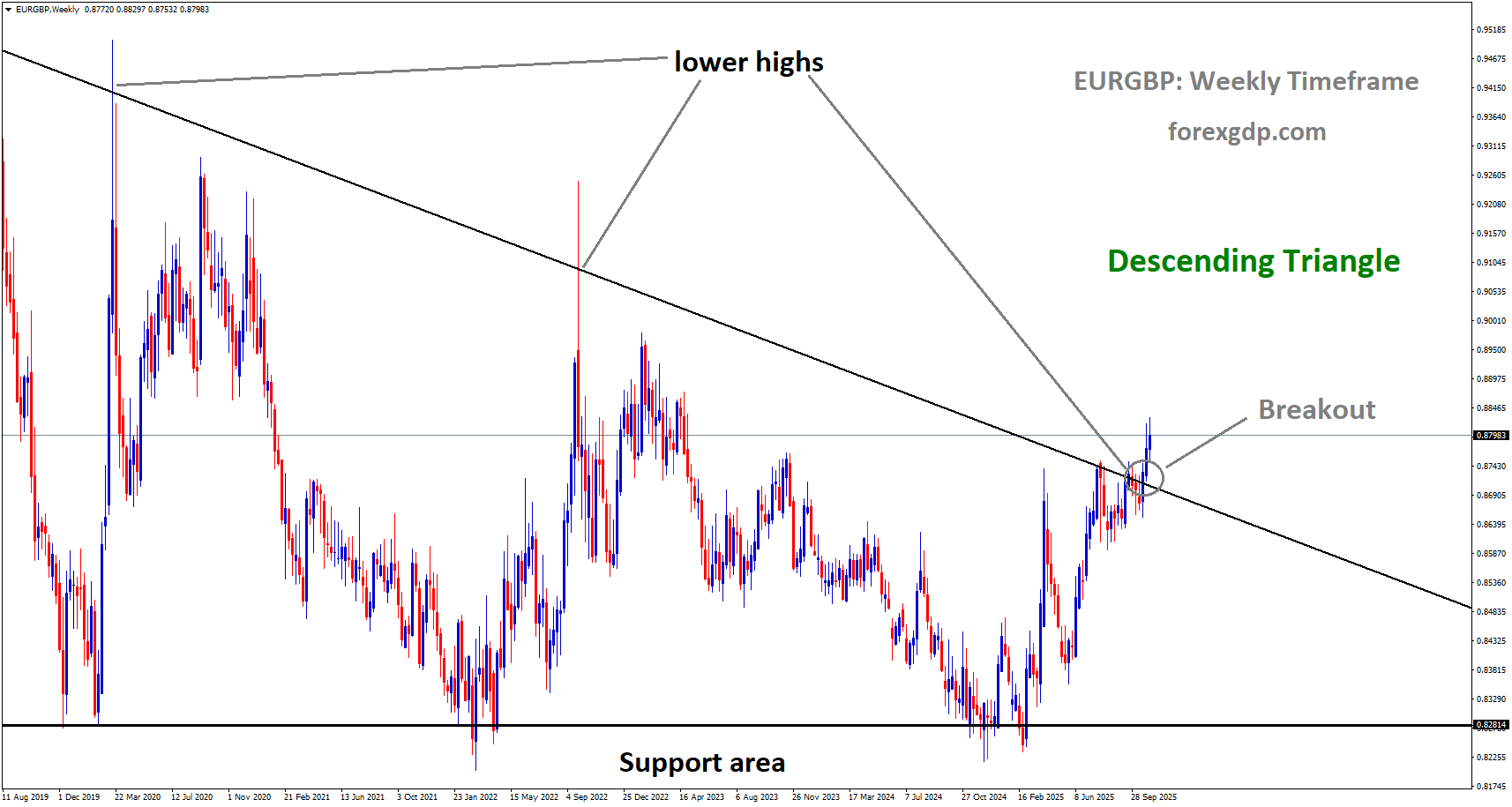
EURGBP has broken the descending triangle pattern to the upside
This optimism also feeds into the broader narrative that the Eurozone’s economic foundation remains solid despite global uncertainty. The region’s ability to maintain production and consumer demand, even in a challenging environment, could give the Euro an edge over other major currencies.
Eurozone Retail Sales: A Glimpse into Consumer Sentiment
Retail sales data for the Eurozone is another critical piece of the puzzle. Economists expect a modest rise in spending, reflecting a steady consumer base despite lingering inflation. Even small improvements in retail activity can be meaningful, as they indicate that consumers are continuing to spend—an essential factor in supporting economic growth.
A steady pace of retail sales growth, especially following months of subdued activity, can also strengthen the perception that the Eurozone is stabilizing. Consumer spending tends to mirror public confidence, so any sign of resilience helps calm fears of a deeper slowdown.
If both Germany’s industrial output and Eurozone retail sales show positive trends, it could encourage investors to maintain their faith in the Euro. That sentiment would reinforce the EUR/GBP pair’s upward momentum, at least in the short term.
The ECB’s Cautious Approach: Stability Over Aggression
One of the biggest influences on the Euro’s recent strength has been the European Central Bank’s (ECB) measured tone. The ECB has chosen to hold its deposit rate steady, signaling that it prefers to wait and observe rather than make aggressive policy moves.
This cautious stance reflects the bank’s belief that inflation is stabilizing while the economy continues to grow modestly. By keeping rates unchanged, the ECB is sending a message that it values consistency and long-term balance over short-term reaction.

Traders often appreciate this kind of steady hand, especially when global markets are dealing with volatility and uncertainty. A consistent policy outlook gives investors confidence that the ECB won’t surprise them with sudden changes that could disrupt the currency’s value.
As a result, the Euro has found support even in a relatively quiet market environment. Investors are more willing to hold Euros knowing that the central bank is prioritizing sustainable stability.
The Pound’s Steadiness: BoE’s Policy Holds Firm
While the Euro has been gaining modest ground, the Pound Sterling hasn’t been left behind. In fact, its stability has helped limit the Euro’s potential gains. Most traders believe the Bank of England will maintain its current interest rate level, choosing not to make any significant adjustments in the near term.
This decision aligns with the central bank’s cautious approach amid slowing inflation and moderate wage growth. By holding rates steady, the BoE is signaling that it’s confident in the direction of the economy while also keeping an eye on potential future risks.
However, this stability doesn’t mean the Pound is poised for major gains. Instead, it acts as a balancing force—preventing sharp declines but also capping rapid appreciation. The tug-of-war between a steady Pound and a slightly stronger Euro has created a balanced trading range that reflects current market uncertainty.
UK’s Fiscal Future: Tough Choices Ahead
Beyond monetary policy, the UK’s fiscal outlook is also playing a key role in shaping the Pound’s performance. Chancellor Rachel Reeves is expected to unveil new fiscal measures aimed at addressing the nation’s rising borrowing costs. In her recent remarks, Reeves emphasized the importance of managing public debt responsibly, even hinting at potential tax increases to strengthen the government’s financial position.
This cautious fiscal tone may reassure investors that the UK is serious about maintaining financial discipline. However, the mention of higher taxes could dampen business sentiment if companies fear reduced spending power among consumers.
Still, most analysts agree that these fiscal adjustments are necessary to support long-term economic health. As the UK prepares for its upcoming budget announcement, traders are likely to monitor how these policy shifts affect both investor confidence and the overall growth outlook.
How Traders Are Reading the Market Mood
The current EUR/GBP movement reflects a complex balance of optimism and caution. On one hand, positive expectations from the Eurozone are supporting the Euro. On the other, the Pound’s consistent policy environment is preventing any sharp breakouts.
Traders are focusing less on speculative moves and more on fundamental developments. Economic reports, central bank announcements, and fiscal updates are all guiding short-term sentiment. For now, the market seems content with a slow and steady path rather than volatile swings.
In this environment, even modest data improvements can have an outsized effect. A small uptick in industrial activity or consumer spending could give the Euro just enough momentum to hold its gains against the Pound.
Final Summary
The EUR/GBP pair is holding firm as both currencies find support from their respective economic backdrops. The Euro is benefiting from expectations of a steady European Central Bank and potential improvements in industrial and retail data across the Eurozone. Meanwhile, the Pound remains stable ahead of the Bank of England’s policy decision and upcoming fiscal announcements.
Investors appear to be adopting a wait-and-see attitude, keeping positions balanced until more clarity emerges from key reports and policy updates. The next few weeks will likely define whether the Euro can maintain its upward push or if the Pound’s stability will reclaim dominance.
For now, both currencies seem evenly matched—each supported by careful policymaking and a shared desire to navigate uncertain global conditions with patience and precision.