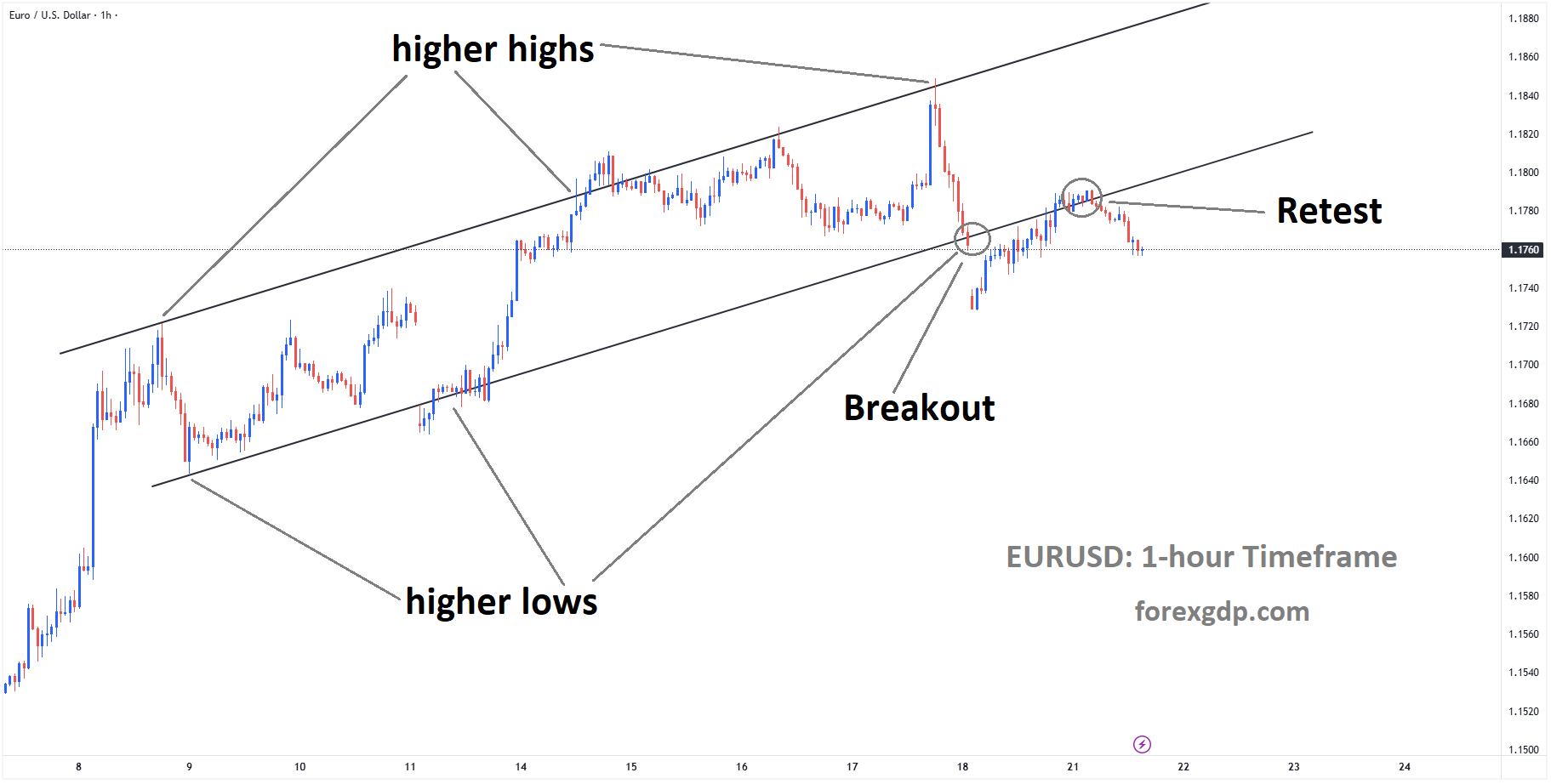
EURUSD is falling from the retest area of the broken Ascending channel
EURUSD Stalls Near 1.1760 as Markets Watch Warsh Confirmation and Iran Negotiations
The EUR/USD currency pair is moving cautiously this week, reflecting a mix of economic worries in Europe and global political developments. After failing to push higher earlier, the pair has found some stability, but the overall tone remains uncertain. Traders and investors are closely watching key events, including fresh economic data and political updates, which continue to influence the direction of the market.
Euro Struggles After Failing to Break Higher
The Euro recently attempted to climb but faced resistance near the 1.1790 level. After this rejection, the currency lost some momentum and slipped slightly against the US Dollar. By Tuesday, it was trading around 1.1765, showing mild weakness but still holding above a key support area near 1.1750.
This kind of movement suggests hesitation in the market. Buyers are not strong enough to push prices significantly higher, while sellers are also not fully in control. As a result, the pair is moving within a narrow range, reflecting a wait-and-see approach among traders.
Weak Economic Sentiment Weighs on the Euro
A major reason behind the Euro’s softer tone is the latest economic sentiment data from the Eurozone. Reports released by the ZEW Institute painted a concerning picture, especially for Germany, which is the largest economy in the region.
Investor Confidence Drops Sharply
Institutional investors have become noticeably more pessimistic about Germany’s economic outlook. The sentiment index fell sharply in April, reaching its lowest level since late 2022. This decline was much worse than expected, signaling growing concerns about economic growth and stability.
Even more worrying is that this drop comes after already weak readings in previous months. It suggests that confidence is not just temporarily shaken but may be part of a broader trend of declining optimism.
Current Economic Conditions Also Decline
It is not just future expectations that are weakening. The assessment of the current economic situation has also deteriorated. This indicates that the slowdown is not only anticipated but is already being felt across different sectors of the economy.
When both present conditions and future expectations weaken at the same time, it often creates a negative outlook that can weigh heavily on a currency.
Eurozone Sentiment Follows the Same Path
The broader Eurozone is facing similar challenges. Economic sentiment across the region also dropped significantly, reaching levels not seen in over a year. Analysts had expected a slight improvement, but the actual figures showed a deeper decline instead.
This unexpected weakness adds pressure on the Euro, as it suggests that economic recovery in the region may take longer than hoped.
Global Politics Add Another Layer of Uncertainty
Beyond economic data, geopolitical developments are also influencing market behavior. One of the key areas of focus is the ongoing dialogue between the United States and Iran.
Mixed Signals from US-Iran Talks
There have been some positive signs suggesting that discussions between the US and Iran are continuing. Reports indicate that Iran is willing to engage through regional mediators, which has helped ease some tensions.
However, the situation remains fragile. Earlier concerns about Iran potentially withdrawing from the peace process created uncertainty. These concerns were linked to actions taken by the US military, which had seized an Iranian cargo vessel.
Such events highlight how quickly the situation can change, making investors cautious.
Market Reaction Remains Balanced
Despite the mixed signals, there is a slight sense of optimism that talks are moving forward. This has helped prevent major market disruptions. However, traders are not fully confident, and many prefer to wait for clearer developments before making strong moves.
Geopolitical uncertainty often leads to cautious trading behavior, as sudden changes can have a significant impact on global markets.
Attention Turns to the US Federal Reserve
Another important factor influencing the EUR/USD pair is developments in the United States, particularly related to the Federal Reserve.
Confirmation Hearing for Fed Chair Nominee
Kevin Warsh, recently nominated as the new Chair of the Federal Reserve, is set to appear before the US Senate for his confirmation hearing. This event is drawing significant attention from investors.
During the hearing, lawmakers are expected to question him on key issues such as the independence of the central bank and its approach to managing financial assets.
Why This Matters for the Market
The Federal Reserve plays a crucial role in shaping the value of the US Dollar. Any signals about future policy direction, leadership style, or independence can influence investor confidence.
If markets perceive stability and independence in the Fed’s leadership, it can strengthen the Dollar. On the other hand, concerns about political influence or unclear policy direction could create uncertainty.
Because of this, traders are closely monitoring the hearing for any hints that could affect future decisions.
A Market in Waiting Mode
At the moment, the EUR/USD pair reflects a broader sense of caution. There are several important factors at play, but none are strong enough on their own to drive a clear trend.
Key Drivers Creating Uncertainty
Weak economic sentiment in the Eurozone
Ongoing geopolitical tensions involving the US and Iran
Anticipation surrounding US Federal Reserve leadership
Each of these elements adds a layer of complexity, making it difficult for the market to take a firm direction.
Why Traders Are Holding Back
When multiple uncertainties exist at the same time, traders often prefer to stay cautious. Instead of making aggressive moves, they wait for clearer signals.
This leads to smaller price movements and a more stable range, as seen in the current behavior of the EUR/USD pair.
What to Watch Going Forward
Looking ahead, several developments could influence the next move in the currency pair.
Economic Updates from Europe
Any improvement or further decline in economic sentiment will play a key role. Stronger data could support the Euro, while continued weakness may keep it under pressure.
Progress in Global Talks
Updates on US-Iran negotiations will also be important. Positive developments could boost market confidence, while setbacks may increase uncertainty.
Signals from the Federal Reserve
Comments and decisions from the Fed, especially following the confirmation hearing, will be closely watched. Clear guidance on future policies could provide direction to the US Dollar.
Final Thoughts
The EUR/USD pair is currently navigating a complex environment shaped by economic concerns and geopolitical developments. While the Euro is under pressure due to weak sentiment data, the US Dollar is influenced by political and institutional factors.
For now, the market remains balanced, with neither side taking full control. As new information emerges, traders will be looking for clearer signals to determine the next move. Until then, cautious trading and limited price swings are likely to continue.
GBPUSD Holds Steady as Markets Await Warsh Speech and UK Inflation Update
The British Pound is trading slightly lower against the US Dollar, reflecting a mix of economic signals and cautious market sentiment. While there are some positive signs from the UK labor market, investors remain careful as they wait for key inflation data and important developments from the United States. These factors are shaping expectations around future interest rate decisions and overall currency movement.
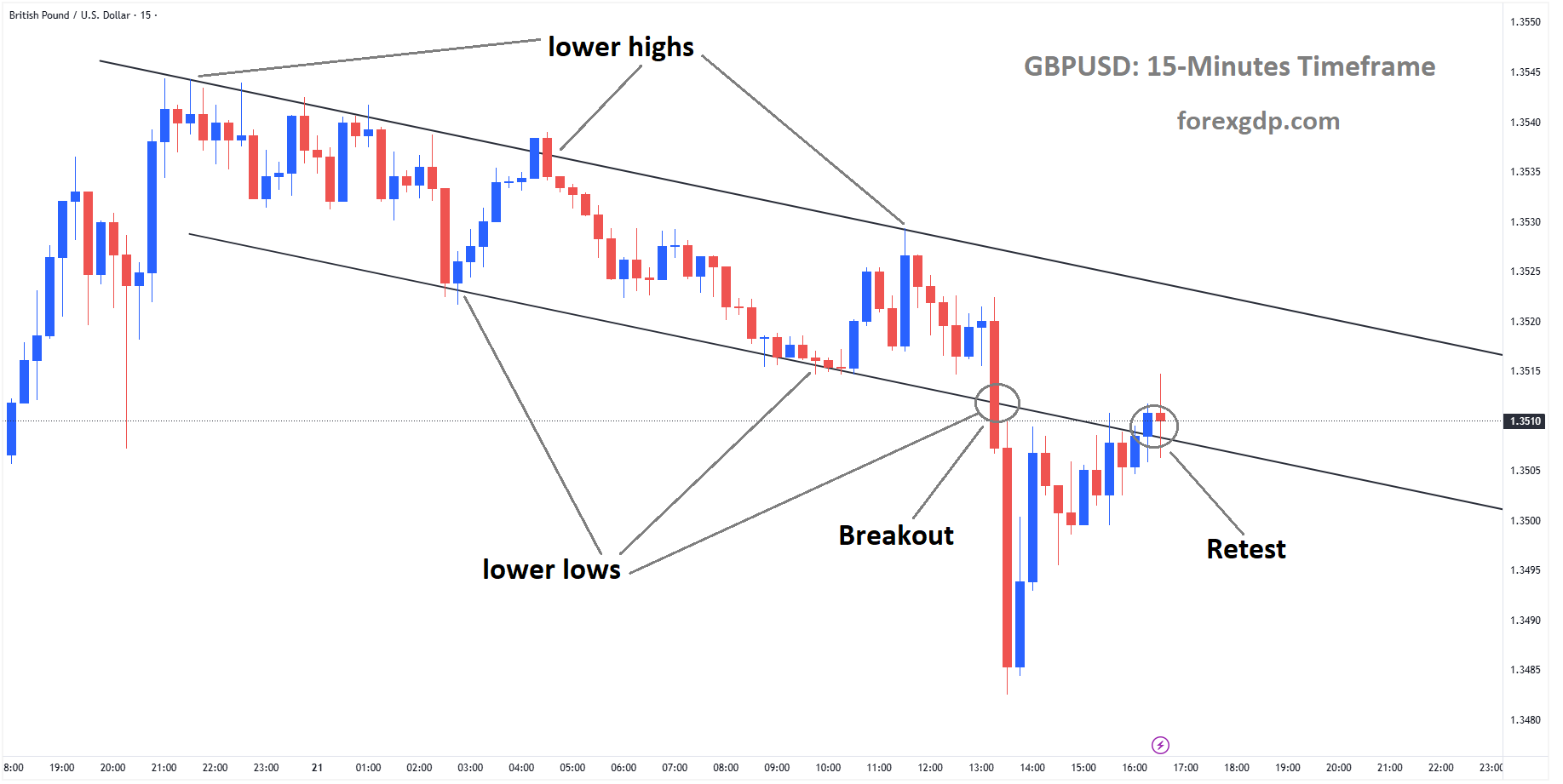
GBPUSD reached the retest area of the broken downtrend channel
Pound Shows Mixed Movement Against Major Currencies
During the European trading session, the Pound Sterling showed a mixed trend against other major currencies. Against the US Dollar, it managed to recover part of its earlier losses but still remained slightly weaker overall. The GBP/USD pair hovered around 1.3510, indicating a modest decline.
This movement highlights how sensitive the currency market is to incoming data and global events. Even when there are positive developments, such as better-than-expected economic numbers, other uncertainties can limit gains. Traders are carefully balancing these factors while adjusting their positions.
UK Labor Market Sends Mixed Signals
Recent data from the UK labor market has provided a combination of encouraging and cautious signs. On the positive side, the unemployment rate dropped to 4.9%, which is lower than what analysts had expected. This suggests that more people are finding jobs and that the job market remains relatively stable.
However, the number of new jobs created during the same period slowed down significantly. Only 25,000 new positions were added, compared to a much higher figure in the previous report. This slowdown raises questions about whether the pace of job growth is losing momentum.
Wage Growth Remains Steady
One of the most closely watched indicators, average earnings excluding bonuses, showed a moderate increase of 3.6% compared to the same period last year. This figure came in slightly above expectations, even though it was lower than the previous reading.
Steady wage growth is an important factor for the economy. It supports consumer spending, which in turn drives economic activity. At the same time, it can also contribute to inflation if wages rise too quickly. For now, the data suggests a balanced situation where wages are growing but not overheating.
What This Means for Interest Rates
The combination of lower unemployment and stable wage growth is likely to influence expectations around the Bank of England’s next policy decision. Many market participants believe that the central bank may choose to keep interest rates unchanged in its upcoming meeting.
Holding rates steady can be a sign that policymakers are comfortable with the current economic conditions. It also suggests that they want more data before making any major changes. The upcoming inflation figures will play a key role in confirming or challenging this outlook.
All Eyes on UK Inflation Data
Investors are now turning their attention to the upcoming Consumer Price Index (CPI) report for March. This data is expected to show a rise in inflation compared to the previous month.
If inflation does increase as expected, it could complicate the Bank of England’s decision-making process. Higher inflation often puts pressure on central banks to consider tightening policies. On the other hand, if inflation remains under control, it may support the case for keeping interest rates unchanged.
The CPI report is therefore seen as a critical piece of information that could influence market direction in the short term.
US Dollar Gains Strength Ahead of Key Event
While the Pound has been reacting to domestic data, the US Dollar has also been gaining some strength. The US Dollar Index, which measures the currency against a basket of major currencies, has moved slightly higher.
This rise comes ahead of an important event in the United States: the confirmation hearing of Kevin Warsh, who has been nominated as the next chairman of the Federal Reserve. His testimony is expected to provide insights into his views on economic policy and interest rates.
Why Kevin Warsh’s Testimony Matters
Kevin Warsh is known for his past role at the Federal Reserve, where he supported a strong US Dollar and was cautious about large-scale monetary easing policies. His approach to economic management could have a significant impact on how the central bank operates in the future.
Influence of Political and Economic Factors
At the same time, his decisions may also be shaped by the broader economic agenda of the US administration. There has been ongoing criticism of the Federal Reserve for not lowering interest rates more aggressively. This creates an environment where policy decisions are closely watched and sometimes influenced by political expectations.
Investors are eager to understand how Warsh plans to balance these pressures. His comments during the hearing could provide clues about future policy direction, which in turn can affect the value of the US Dollar.
Currency Markets Remain Sensitive to Global Developments
The current situation highlights how interconnected global markets are. Movements in the Pound are not only influenced by UK data but also by developments in the United States and other major economies.
Traders are paying attention to multiple factors at once, including employment data, wage growth, inflation trends, and central bank signals. This creates a complex environment where currencies can move quickly based on new information.
Short-Term Outlook for the Pound
In the near term, the direction of the Pound will likely depend on upcoming data releases and central bank communication. The inflation report will be particularly important, as it could shape expectations around future interest rate decisions.
At the same time, developments in the US, especially related to Federal Reserve leadership and policy outlook, will continue to influence the Dollar. Since currency values are relative, changes in one can directly impact the other.
Final Summary
The Pound Sterling is experiencing a period of mixed performance as markets respond to a blend of economic data and global events. While the UK labor market shows some resilience through lower unemployment and steady wages, slower job growth raises concerns about future momentum. Investors are now focused on upcoming inflation data, which could play a decisive role in shaping interest rate expectations.
Meanwhile, the US Dollar is gaining attention due to important developments in Federal Reserve leadership. The outcome of these events may influence global currency trends in the days ahead. For now, the market remains cautious, with traders closely watching every new piece of information before making their next move.
USDJPY Pushes Higher Beyond 159 While Momentum Remains Limited
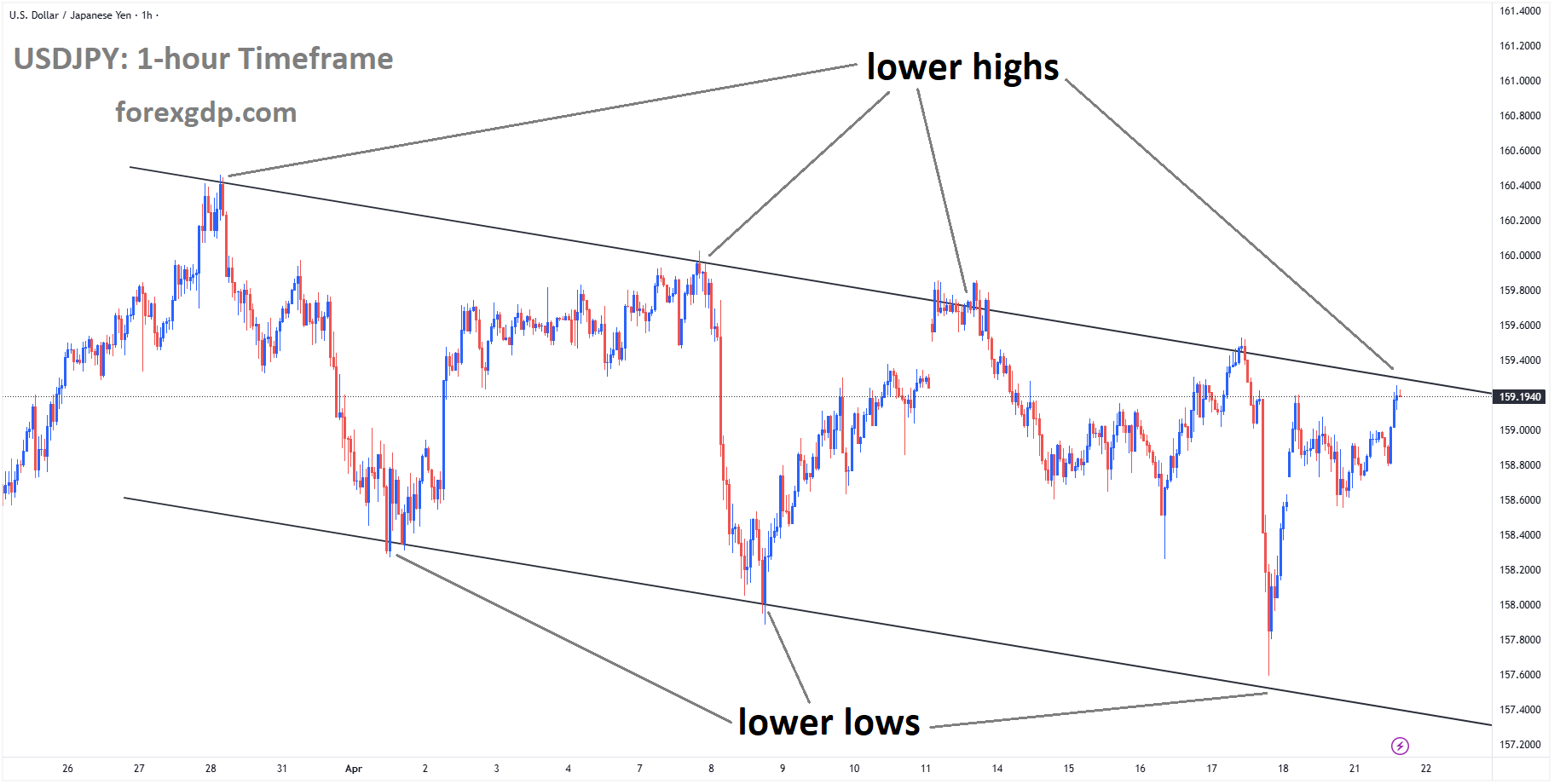
The USD/JPY currency pair has been showing steady movement above the 159.00 level, but it is still struggling to break past the important 160.00 mark. While the US Dollar is gaining some strength, the Japanese Yen remains under pressure due to a mix of economic expectations and global uncertainty. At the same time, investors are choosing to stay cautious as they wait for major developments on both economic and geopolitical fronts.
USDJPY reached a lower high area of the descending channel
Yen Weakens as Bank of Japan Signals Caution
One of the main reasons behind the weaker Yen is growing speculation about the Bank of Japan’s next move. Recent reports suggest that the central bank may decide to keep interest rates unchanged in its upcoming policy meeting.
Sources close to the Bank of Japan have hinted that officials are not in a hurry to make any major changes. Instead, they are likely to wait for more economic data before taking action. This cautious approach comes at a time when global tensions, especially in the Middle East, are adding uncertainty to the economic outlook.
Why Interest Rates Matter for the Yen
Interest rates play a major role in determining the strength of a currency. When a country keeps its rates low, it often leads to a weaker currency because investors look for better returns elsewhere.
In Japan’s case, the expectation that rates will stay low makes the Yen less attractive compared to other currencies, including the US Dollar. This is one of the key reasons why USD/JPY has been moving higher.
Economic Uncertainty Adds to Pressure
The ongoing conflict in the Middle East is also influencing the Bank of Japan’s thinking. Policymakers are concerned about how global tensions could affect trade, energy prices, and overall economic growth.
Rather than making quick decisions, the central bank appears to be taking a wait-and-see approach. While this may help avoid sudden policy mistakes, it also keeps the Yen under pressure in the short term.
US Dollar Gains Support but Remains Limited
The US Dollar has been showing moderate strength against the Yen, helping the USD/JPY pair move above 159.00. However, the gains have been relatively limited, and the pair is still trading within a narrow range.
The US Dollar Index, which tracks the performance of the Dollar against several major currencies, has also posted small gains. This suggests that the Dollar is holding steady, but not making any aggressive moves.
Investors Stay on the Sidelines
A major reason for the limited movement is that investors are waiting for important updates before making big decisions. Two key events are currently in focus:
Ongoing discussions between the United States and Iran
Testimony from Federal Reserve Chair Kevin Warsh
These events could have a significant impact on global markets, and traders are being cautious until there is more clarity.
What the Fed’s Role Means for the Dollar
The Federal Reserve plays a crucial role in shaping the direction of the US Dollar. Any signals about future interest rate changes or economic outlook can influence investor sentiment.
Kevin Warsh’s upcoming testimony is being closely watched, as it may provide hints about the Fed’s next steps. If the Fed suggests tighter monetary policy, it could strengthen the Dollar further. On the other hand, a more cautious tone could limit gains.
Geopolitical Developments Keep Markets on Edge
Global politics are also playing a big role in shaping currency movements. The situation involving the United States and Iran remains uncertain, and markets are reacting to every update.
Recent reports indicate that Iran is preparing to send delegates for negotiations, despite earlier threats to withdraw from the peace process. This has raised hopes that progress might be possible.
Mixed Signals Create Uncertainty
While there is optimism about the talks, messages from different sources have not always been consistent. This has created a sense of uncertainty in the market.
Investors are unsure whether the discussions will lead to meaningful results or not. As a result, many are choosing to wait rather than take strong positions.
Impact on Safe-Haven Demand
In times of uncertainty, currencies like the US Dollar often act as safe-haven assets. However, in this case, the Dollar’s gains have been somewhat limited.
This is because the possibility of progress in peace talks is reducing the demand for safe-haven assets. If tensions ease, investors may feel more comfortable taking risks, which can weaken the Dollar slightly.
USD/JPY Stays Within a Tight Range
Despite all these factors, the USD/JPY pair has been moving within a relatively narrow range. It has been fluctuating between approximately 158.50 and 160.00, showing a lack of strong directional momentum.
This sideways movement reflects the current market mood. Traders are not fully committed in either direction, as they wait for clearer signals.
Why the 160.00 Level Matters
The 160.00 level is seen as an important point for the currency pair. It has acted as a barrier that the pair has not been able to break convincingly.
If the pair manages to move above this level, it could signal stronger upward momentum. However, without strong support from economic data or policy changes, such a move may be difficult.
Short-Term Outlook Remains Uncertain
In the near term, the direction of USD/JPY will likely depend on a combination of factors:
Decisions and signals from the Bank of Japan
Updates from the Federal Reserve
Progress in global geopolitical events
Until there is more clarity, the pair may continue to move within its current range.
Summary
The USD/JPY pair is currently trading above 159.00, supported by a stronger US Dollar and a weaker Japanese Yen. Expectations that the Bank of Japan will keep interest rates unchanged have added pressure on the Yen, while global uncertainty is encouraging a cautious approach from policymakers.
At the same time, the US Dollar is gaining moderate support, but not enough to push the pair beyond the key 160.00 level. Investors are closely watching major developments, including US-Iran talks and statements from the Federal Reserve, before making significant moves.
With mixed signals from both economic and geopolitical fronts, the market remains in a holding pattern. For now, USD/JPY is likely to stay within its current range until a clearer direction emerges.
USDCAD recovers slightly as markets weigh Iran updates and Fed outlook
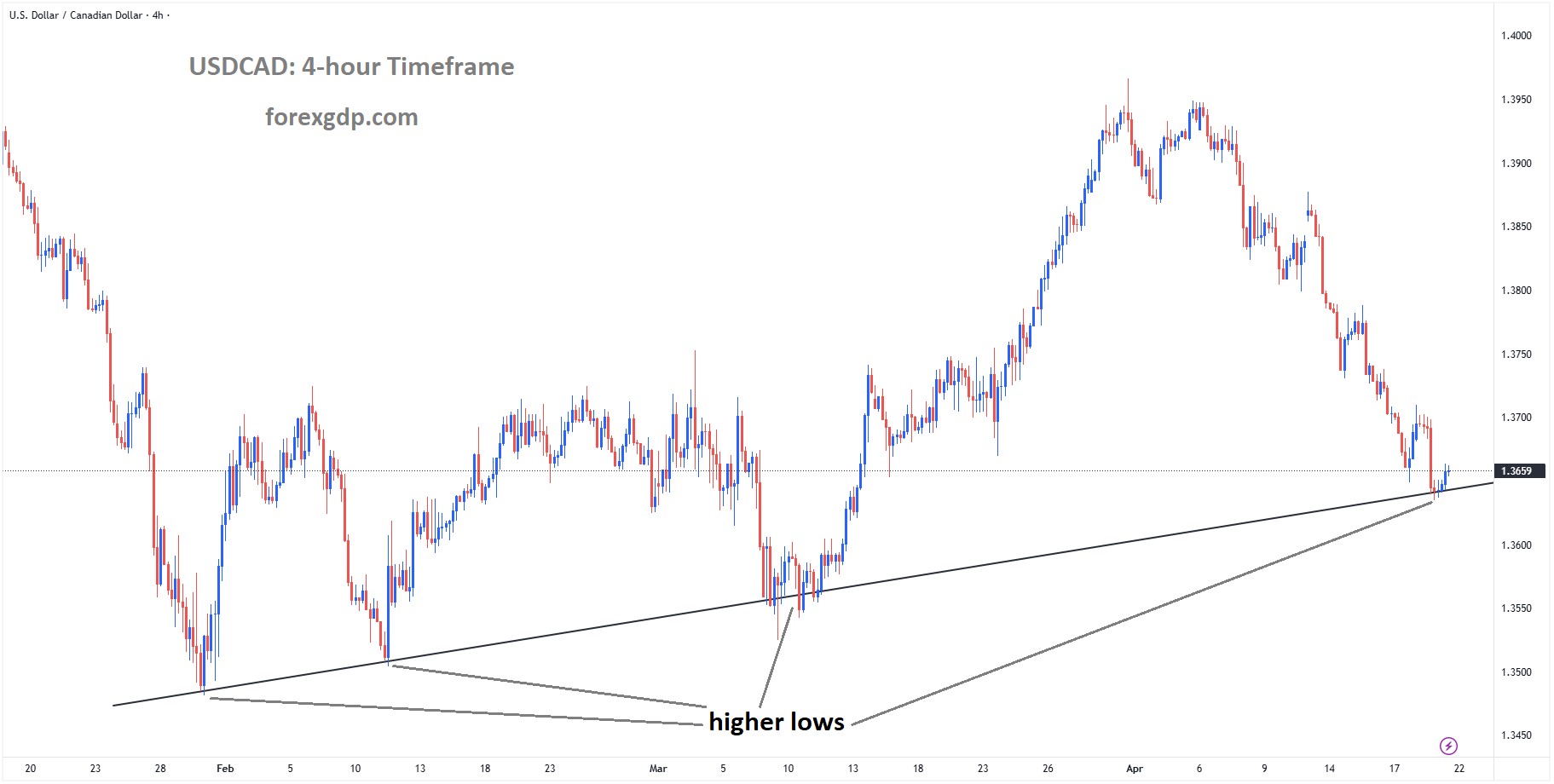
The USD/CAD currency pair showed a slight recovery on Tuesday, rising toward the 1.3660 level after several days of decline. Despite this modest upward move, the broader trend still points downward. The US Dollar has been under pressure recently, and even with this small rebound, it remains close to recent lows seen over the past few weeks.
USDCAD reached a higher low area of the uptrend line
This movement reflects a cautious market mood, where traders are balancing economic data, geopolitical developments, and central bank expectations. While the US Dollar managed to trim some of its earlier losses, the overall sentiment has not shifted enough to reverse the existing bearish direction.
Canadian Dollar Gains Support from Inflation Data
The Canadian Dollar received some support earlier in the week after the release of Canada’s Consumer Price Index (CPI) data. The report showed that inflation increased in March, confirming that price pressures are still present in the economy. However, the rise in inflation was not as strong as many analysts had expected.
What This Means for the Bank of Canada
This moderate increase in inflation gives the Bank of Canada some flexibility. Instead of rushing into any major policy changes, the central bank can afford to wait and monitor upcoming economic data. Keeping interest rates steady becomes a more comfortable option when inflation is rising but not too quickly.
For investors, this creates a sense of stability around the Canadian Dollar. When a central bank is not under pressure to make sudden moves, it often helps support the currency, as uncertainty is reduced.
Geopolitical Tensions Keep Markets on Edge
Global developments continue to play a major role in shaping currency movements. One of the key factors influencing the market right now is the ongoing situation involving the United States and Iran.
Uncertain Progress in Peace Talks
Reports suggest that there has been some progress in diplomatic discussions between the two countries. According to recent updates, Iran is expected to send a delegation to Pakistan for further talks. This comes after earlier tensions that nearly caused a breakdown in the process.
At the same time, there are still clear differences between the two sides. Iran has raised concerns about certain demands from the United States, indicating that a final agreement may not come easily. This mix of positive and negative signals has left investors uncertain about the outcome.
Ceasefire Deadline Adds Pressure
Another important factor is the approaching end of a temporary ceasefire. The current agreement is set to expire soon, and there are indications that it may not be extended. This adds urgency to the negotiations and increases the risk of renewed tensions.
Markets typically react strongly to geopolitical uncertainty. Even small changes in expectations can influence investor decisions, especially in currency trading. For now, the cautious tone reflects a wait-and-see approach as traders look for clearer direction.
US Economic Data in Focus
Alongside geopolitical developments, economic data from the United States is also drawing attention. One of the key releases expected is the March Retail Sales report, which provides insight into consumer spending.
Consumer Spending Trends
Retail sales are expected to show a noticeable increase compared to the previous month. This suggests that consumers may be spending more, which is generally a positive sign for the economy. Strong consumer activity often supports economic growth and can influence currency strength.
However, a deeper look at the data reveals a more mixed picture. A specific measure within the report, often referred to as the control group, is expected to show slower growth. This part of the data is closely watched because it feeds directly into calculations of overall economic output.
The combination of stronger headline numbers and weaker underlying details may create a balanced reaction in the market. Traders will likely assess both aspects before making decisions.
Focus on Federal Reserve Leadership
Another key event scheduled for the day is the confirmation hearing of Kevin Warsh, the newly appointed Chair of the Federal Reserve. This hearing is expected to draw significant attention from both policymakers and investors.
Central Bank Independence Under Discussion
One of the main topics likely to be discussed is the independence of the Federal Reserve. This issue has become increasingly important, as central banks play a crucial role in managing economic stability.
Investors closely watch any signals related to monetary policy direction. Comments made during the hearing could influence expectations about future interest rate decisions and overall economic strategy.
Why This Matters for the US Dollar
The Federal Reserve has a strong impact on the value of the US Dollar. Any indication of how the new leadership plans to approach economic challenges can lead to shifts in currency markets.
If the hearing suggests a steady and predictable policy approach, it could provide support to the US Dollar. On the other hand, uncertainty or unexpected statements may lead to increased volatility.
Market Sentiment Remains Cautious
Overall, the market environment remains cautious. There are multiple factors at play, and none of them provide a clear direction on their own. Instead, traders are weighing a mix of economic data, political developments, and central bank signals.
Balancing Multiple Influences
The Canadian Dollar is supported by steady inflation and stable policy expectations.
The US Dollar is trying to recover after recent losses but faces uncertainty.
Geopolitical tensions add an extra layer of risk.
Economic data offers mixed signals rather than a clear trend.
This combination makes it difficult for any single currency to dominate, leading to relatively small and cautious movements.
Final Thoughts
The USD/CAD pair is showing signs of short-term recovery, but the broader trend still leans downward. The Canadian Dollar continues to benefit from stable economic conditions, while the US Dollar is navigating a complex mix of data and global events.
Geopolitical developments, especially involving the United States and Iran, remain a key source of uncertainty. At the same time, upcoming economic data and central bank discussions will play an important role in shaping market expectations.
For now, the overall tone in the market is one of caution. Traders are waiting for clearer signals before making strong moves, which keeps the currency pair within a relatively tight range despite recent fluctuations.
USDCHF hovers close to 0.7800 as investors turn to the dollar for safety
The USD/CHF currency pair has been showing a steady upward move, supported by a stronger US Dollar amid rising global uncertainty. As investors react to ongoing geopolitical developments, particularly tensions involving the United States and Iran, demand for safe-haven assets has increased. This has created an interesting dynamic between the US Dollar and the Swiss Franc, both traditionally seen as safe-haven currencies.
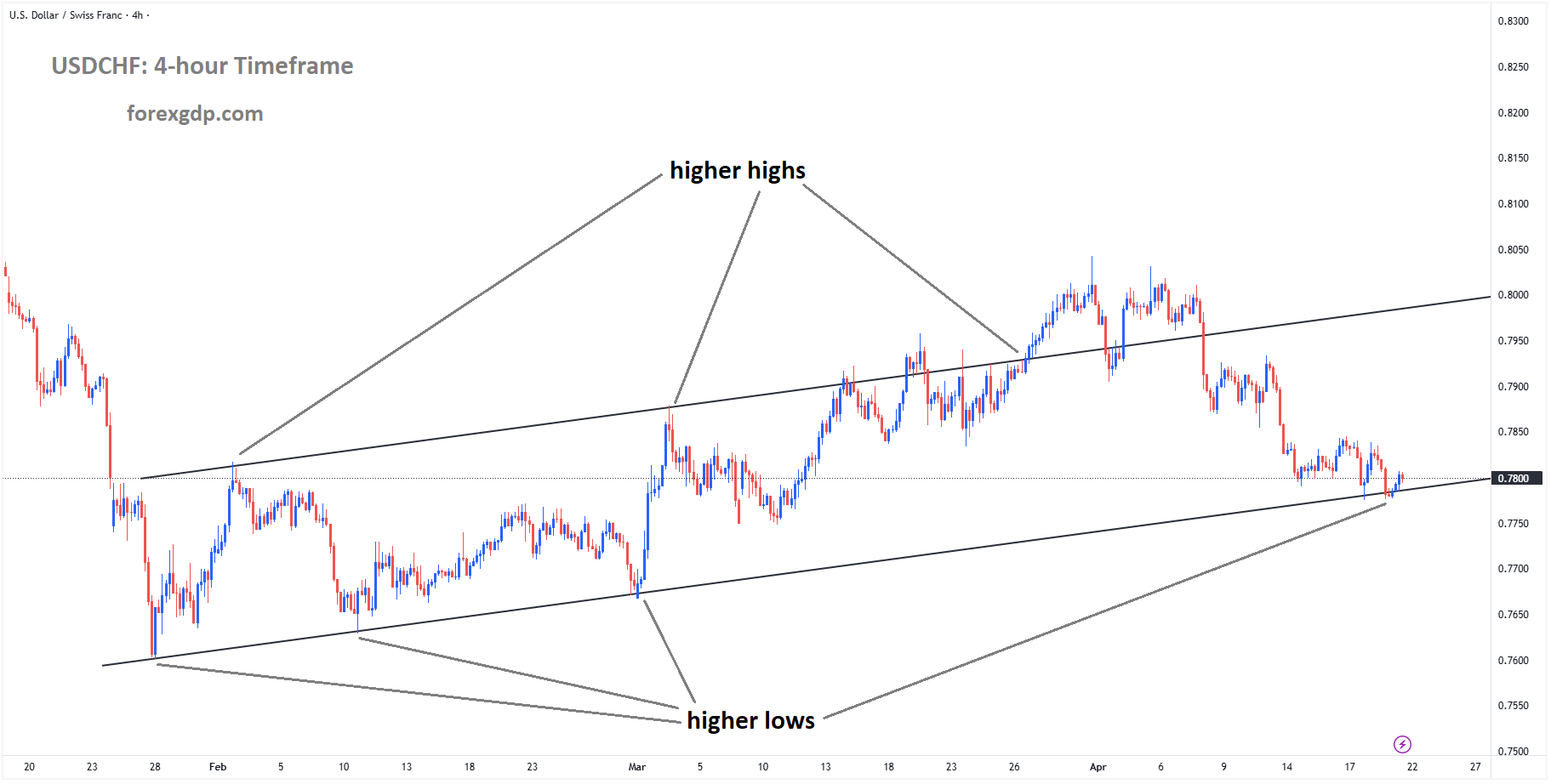
USDCHF reached a higher low area of the uptrend channel
During Asian trading hours on Tuesday, USD/CHF edged higher after a slight pullback in the previous session. The pair hovered around the 0.7790 level, reflecting cautious optimism toward the US Dollar while broader risks continue to shape market sentiment.
Rising Geopolitical Tensions Support the US Dollar
Global markets are closely watching the situation between the United States and Iran. As uncertainty remains around ceasefire negotiations, investors are becoming more risk-averse. This shift often leads to increased demand for safer assets, with the US Dollar being one of the primary beneficiaries.
The current ceasefire agreement is nearing its 14-day deadline, adding urgency to ongoing diplomatic efforts. Reports suggest that US officials are actively working to restart negotiations, aiming to reduce tensions before the deadline expires.
Adding to the developments, President Donald Trump announced that Vice President JD Vance is expected to travel to Pakistan to resume talks. The discussions are likely to take place either late Tuesday or early Wednesday. Iran is also reportedly sending a delegation, although details about its leadership remain unclear.
These ongoing efforts highlight the fragile nature of the situation. While there is hope for progress, the lack of clarity continues to keep markets on edge. This uncertainty has been a key factor driving demand for the US Dollar.
Mixed Signals from US Leadership Keep Markets Cautious
Statements from US leadership have added another layer of complexity to the situation. President Trump has sent mixed messages regarding the conflict with Iran. On one hand, he has indicated that there is no immediate rush to bring the conflict to an end. On the other, he has expressed optimism about renewed diplomatic engagement.
This combination of caution and hope has left traders uncertain about the near-term outlook. As a result, markets are reacting carefully, with investors balancing risk and opportunity.
The possibility of renewed talks has helped prevent extreme market reactions. However, the absence of clear direction means that traders remain alert to any new developments. Even small updates can influence sentiment and lead to quick shifts in currency movements.
Swiss Franc Remains Supported by Safe-Haven Flows
While the US Dollar is gaining strength, the Swiss Franc is also holding firm due to its own safe-haven appeal. In times of global uncertainty, investors often turn to both currencies as a way to protect their capital.
This creates a unique situation for the USD/CHF pair. Even as the US Dollar rises, the Swiss Franc can limit further gains due to its own demand. This balance often results in more controlled and gradual price movements.
In addition to geopolitical factors, economic concerns are also supporting the Swiss Franc. There are growing worries about long-term inflation, particularly driven by energy costs. These concerns are influencing expectations around Switzerland’s monetary policy.
Expectations Around the Swiss National Bank
The Swiss National Bank (SNB) plays a crucial role in shaping the direction of the Swiss Franc. Market participants believe that the SNB may take steps to prevent the currency from strengthening too quickly.
A rapidly rising Swiss Franc can hurt Switzerland’s export-driven economy, making goods more expensive for international buyers. To avoid this, the SNB has a history of intervening in foreign exchange markets when needed.
Recent meeting notes from the SNB have highlighted increasing uncertainty about the country’s economic outlook. This has added to speculation that policymakers are prepared to act if the currency appreciates too much.
Potential Market Intervention
Traders widely expect that the SNB will step in if the Swiss Franc rises sharply. This expectation alone can influence market behavior, as investors adjust their positions in anticipation of possible intervention.
Such actions are not uncommon and are seen as part of the SNB’s strategy to maintain economic stability. By managing currency strength, the central bank aims to support growth while keeping inflation under control.
Key Data to Watch from Switzerland
Aside from geopolitical developments, economic data also plays an important role in shaping currency movements. Market participants are keeping an eye on Switzerland’s Trade Balance figures, which are expected later in the day.
This data provides insight into the country’s export and import activity, offering clues about the health of the Swiss economy. Strong trade numbers could support the Swiss Franc, while weaker data might limit its strength.
A Delicate Balance Between Two Safe-Haven Currencies
The current movement in USD/CHF reflects a delicate balance between two strong currencies influenced by global uncertainty. On one side, the US Dollar is gaining support due to its role as a global reserve currency and increased demand during times of risk. On the other, the Swiss Franc continues to attract investors seeking stability.
This push and pull effect is likely to continue as long as geopolitical tensions remain unresolved. Both currencies have strong foundations, making sharp and one-sided moves less likely unless there is a major shift in the global outlook.
Final Thoughts
The USD/CHF pair is currently shaped by a mix of geopolitical tension, central bank expectations, and economic uncertainty. The US Dollar is benefiting from increased demand as investors seek safety amid ongoing concerns about US–Iran relations. At the same time, the Swiss Franc remains supported by its own safe-haven status and expectations around the Swiss National Bank’s actions.
As negotiations unfold and new data emerges, the direction of the pair will depend on how these factors evolve. For now, cautious optimism and global uncertainty continue to define the landscape, keeping both currencies in focus for traders and investors alike.
Don’t trade all the time, trade forex only at the confirmed trade setups