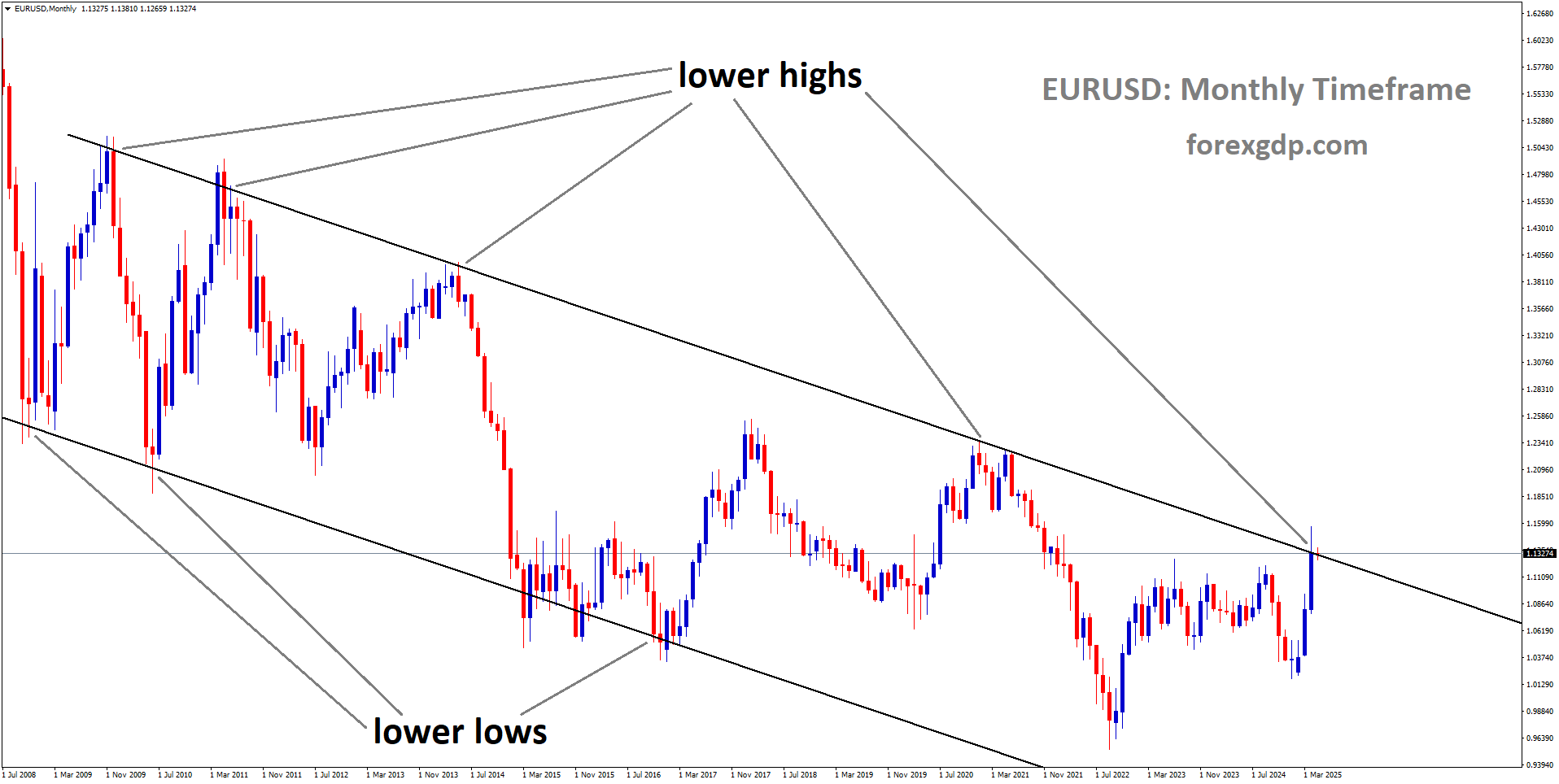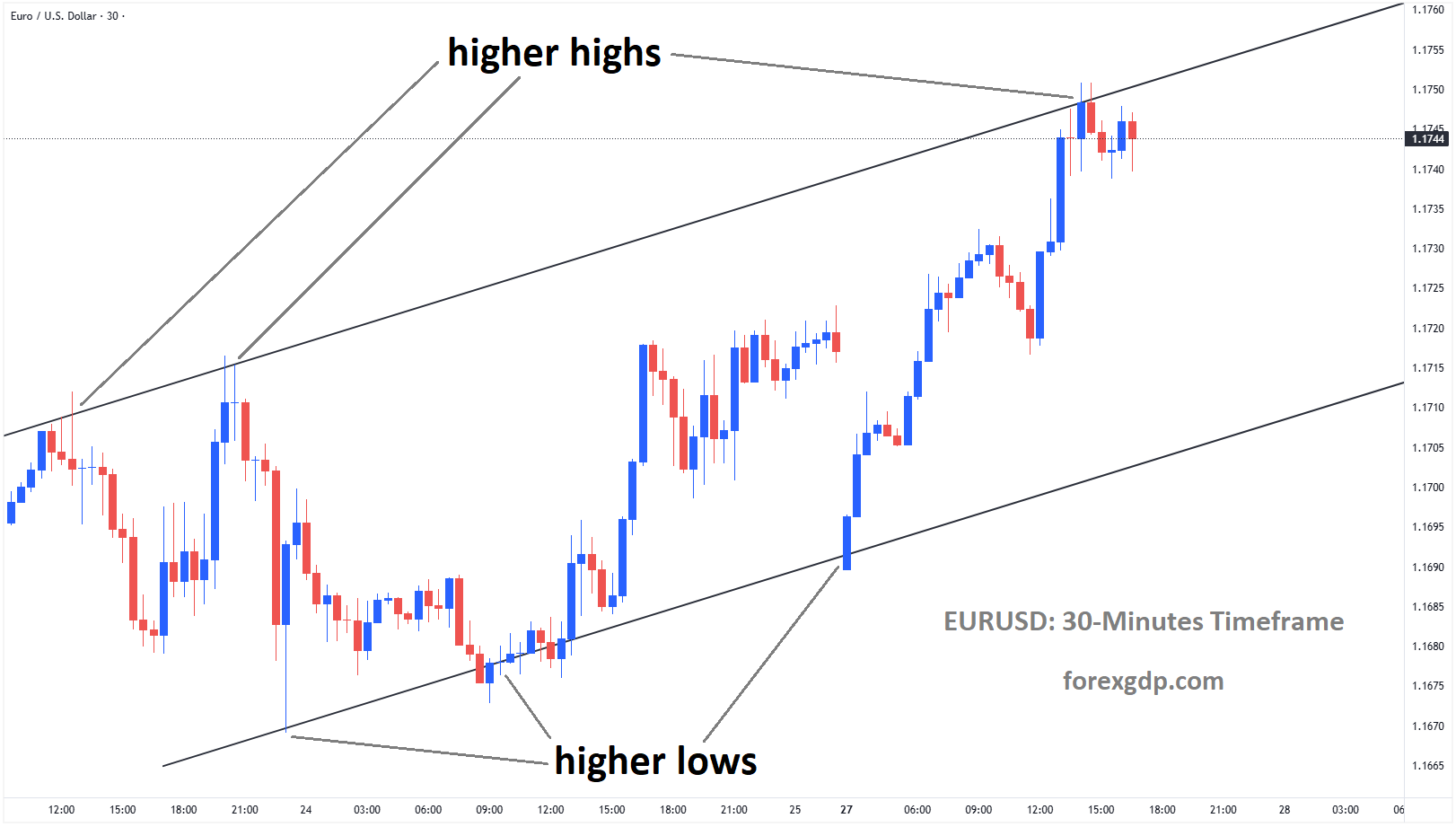
EURUSD reached a higher high area of the Ascending channel
EURUSD Remains Resilient as Fed and ECB Moves Keep Markets on Edge
The EUR/USD currency pair has started the week on a steady note, showing resilience despite a mixed economic backdrop. While recent data from Europe points to growing pressure on consumers, the Euro has managed to stay supported. At the same time, the US Dollar is facing weakness due to global uncertainty and shifting expectations around interest rates. With key central bank decisions approaching, market participants are closely watching what comes next.
EUR/USD Gains Ground Despite Eurozone Concerns
At the beginning of the week, EUR/USD is trading near the 1.1740 level, marking a modest daily gain. This move builds on the recovery seen late last week when the pair bounced back from lower levels. The upward movement suggests that traders are not overly concerned about recent economic signals from the Eurozone, at least for now.
Although economic conditions in Europe are showing signs of strain, the Euro has not reacted strongly. This indicates that other factors, particularly global developments, are playing a more important role in shaping the currency pair’s direction.
German Consumer Confidence Drops Sharply
Fresh economic data from Germany has raised concerns about the strength of the Eurozone’s largest economy. Consumer confidence has taken a significant hit, reflecting the pressure households are facing.
The GfK consumer sentiment index for May has fallen to -33.3, marking its lowest level in over three years. This is a sharp drop from the previous reading of -28.1 and comes in well below expectations. Such a decline signals that consumers are becoming increasingly cautious about spending.
What’s Driving the Decline?
Several factors are contributing to this weakening sentiment:
- Rising energy costs: Higher energy prices continue to strain household budgets.
- Geopolitical tensions: Ongoing global conflicts are adding uncertainty to the economic outlook.
- Inflation concerns: Persistent price increases are reducing purchasing power.
Despite these negative signals, the Euro has remained relatively stable. This suggests that investors are currently placing more weight on external developments rather than domestic economic data.
Geopolitical Developments Influence Market Mood
Global events, especially in the Middle East, are playing a key role in shaping market sentiment. Any signs of easing tensions tend to boost confidence, while uncertainty often leads investors to seek safer assets.
Recent reports indicate that Iran has put forward a new proposal aimed at reducing tensions with the United States. One of the key elements of this proposal includes reopening the Strait of Hormuz, a critical route for global oil shipments. This development has sparked cautious optimism in the markets.
However, the situation remains far from resolved. Negotiations have yet to reach a clear breakthrough, and concerns about potential disruptions to oil supply continue to linger. These uncertainties are keeping energy prices elevated, which in turn affects the global economic outlook.
Weaker US Dollar Supports the Euro

The US Dollar has been under pressure, providing support for the EUR/USD pair. A key measure of the Dollar’s performance, the US Dollar Index, has been trending lower, reflecting broad-based weakness.
There are several reasons behind this decline:
- Expectations of steady interest rates: Markets widely believe that the Federal Reserve will keep rates unchanged in the near term.
- Shift toward a softer policy stance: There is growing speculation that the Fed may adopt a more cautious or supportive approach if economic conditions weaken.
- Improved risk appetite: As geopolitical tensions show signs of easing, investors are moving away from safe-haven assets like the US Dollar.
This combination of factors has reduced demand for the Dollar, allowing the Euro to hold its ground even in the face of weaker domestic data.
Focus Shifts to Central Bank Decisions
One of the most important drivers for currency markets this week will be the upcoming policy announcements from major central banks. Both the Federal Reserve and the European Central Bank are scheduled to deliver their decisions, and investors are paying close attention.
Federal Reserve Outlook
The Federal Reserve is expected to keep interest rates unchanged at its upcoming meeting. While no immediate changes are anticipated, traders will be watching closely for any signals about future policy direction.
If the Fed hints at a more cautious approach, it could put further pressure on the US Dollar. On the other hand, any unexpected shift toward tighter policy could strengthen the currency.
European Central Bank Expectations
The European Central Bank is also expected to leave its rates unchanged. However, the focus will likely be on its forward guidance.
With inflation still a concern in the Eurozone, especially due to high energy costs, the ECB may signal the possibility of future rate increases. A clear message about tightening policy could provide additional support for the Euro in the short term.
External Factors Drive EUR/USD Movement
Even though economic data from Europe is showing signs of weakness, the EUR/USD pair continues to be influenced mainly by external forces. Movements in the US Dollar and developments in global politics are currently having a stronger impact than domestic indicators.
This highlights an important point: currency markets often react more to expectations and global trends than to individual data releases. In this case, the combination of a softer US Dollar and cautious optimism around geopolitical developments is helping the Euro stay stable.
What to Watch Moving Forward
As the week unfolds, several key themes are likely to shape market direction:
- Central bank communication: Any hints about future policy changes will be closely analyzed.
- Geopolitical updates: Progress or setbacks in global negotiations could quickly shift sentiment.
- Energy market trends: Changes in oil supply conditions may influence both inflation and growth expectations.
- Economic data releases: Additional reports from both the US and Europe could provide further insight into the health of the global economy.
Investors will need to balance these factors carefully as they assess potential risks and opportunities.
Summary
The EUR/USD pair is holding steady at the start of the week, supported by a weaker US Dollar and improving risk sentiment. While economic data from Germany highlights growing challenges within the Eurozone, the Euro has remained resilient due to the influence of global factors. Geopolitical developments and expectations around central bank policies are currently driving market behavior. With key decisions from the Federal Reserve and the European Central Bank just ahead, the coming days are likely to bring important signals that could shape the next move in the currency pair.
GBPUSD Edges Downward as Markets Brace for BoE Announcement
The British Pound has been moving under pressure in recent days, especially when compared to other major global currencies. While it has shown slight strength against the US Dollar, the overall mood surrounding the currency remains cautious. This uncertainty is largely tied to upcoming decisions from central banks, particularly the Bank of England (BoE) and the US Federal Reserve (Fed).
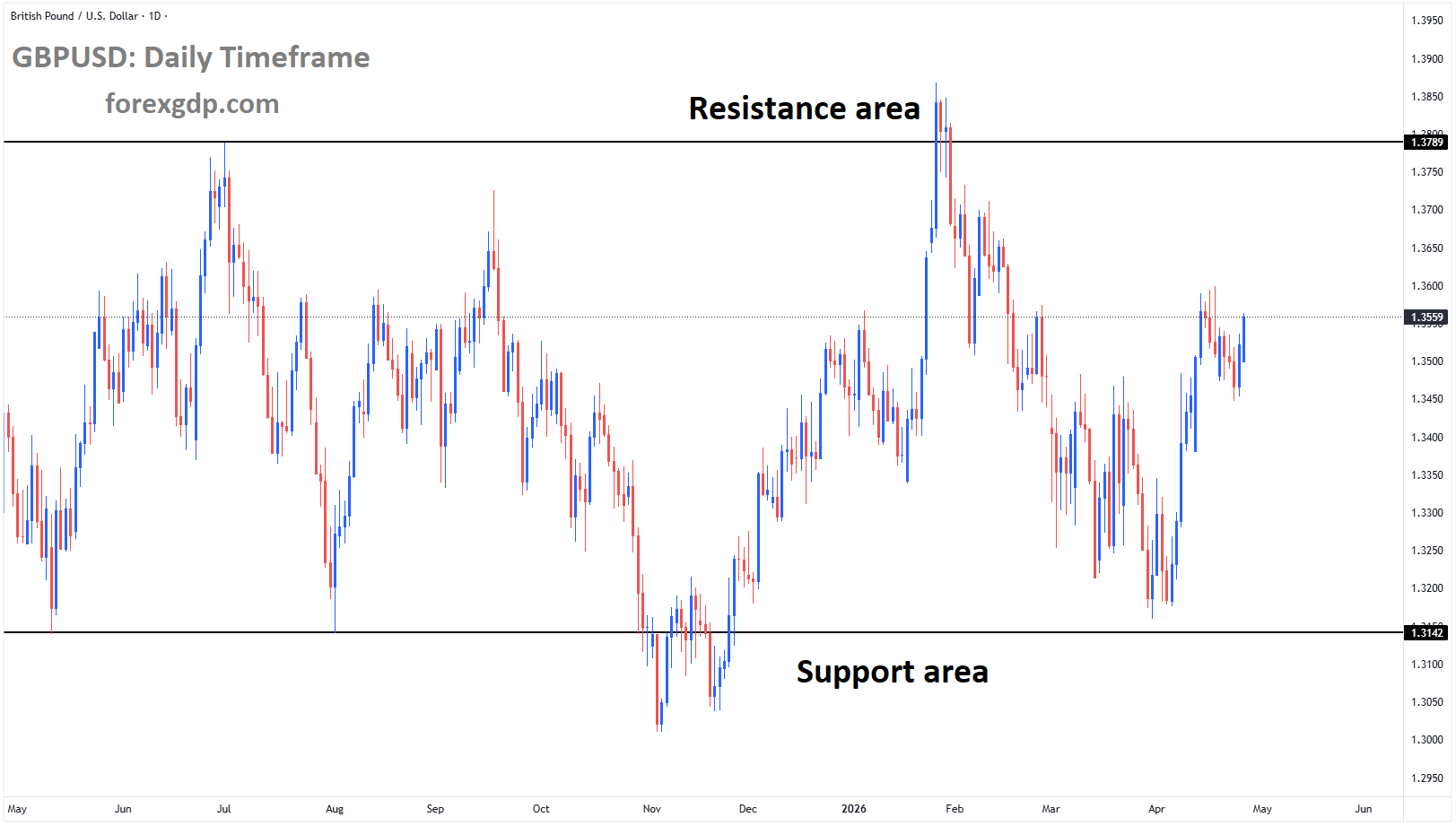
GBPUSD is moving in a box pattern, and the market has rebounded from the support area of the pattern
Investors and traders are closely watching these developments, as interest rate decisions and economic signals can significantly influence currency movements. With inflation trends shifting and global events adding to economic uncertainty, the Pound’s direction remains a key topic of discussion.
Uncertainty Ahead of the Bank of England’s Decision
The main reason behind the Pound’s recent weakness is the uncertainty surrounding the Bank of England’s upcoming monetary policy announcement. The central bank is expected to make a decision soon, and markets are trying to anticipate its next move.
Most investors believe that the BoE will keep interest rates unchanged. The expectation is that the rate will remain at 3.75%, with a strong majority of policymakers supporting this decision. This outlook comes at a time when inflation pressures in the UK have started to ease slightly, reducing the urgency for immediate changes.
However, uncertainty still lingers. Even if rates remain steady, the tone of the central bank’s communication could influence how the Pound performs. Any hints about future policy direction may trigger reactions in the currency market.
Mixed Signals from Policymakers
Within the Bank of England, there are slightly different views among policymakers. While most members appear comfortable with holding interest rates steady, not everyone fully agrees.
One key voice is Huw Pill, the BoE’s Chief Economist. He has recently expressed concerns about rising price pressures and suggested that tighter monetary conditions might still be necessary. This indicates that he could vote in favor of raising interest rates, even if others prefer to wait.
On the other hand, BoE Governor Andrew Bailey has taken a more cautious stance. Speaking at an international meeting, he made it clear that there is no immediate need to rush into policy changes. Despite acknowledging that the economy has faced significant challenges, he signaled that the central bank can afford to take a measured approach.
This difference in opinion adds another layer of uncertainty. Markets are not just focused on the decision itself but also on how divided or united policymakers appear.
Cooling Inflation Brings Some Relief
Recent data on inflation in the UK has offered a bit of relief. The core Consumer Price Index (CPI), which removes volatile items such as food and energy, showed a slight slowdown in March. It dropped to 3.1% from the previous 3.2%.
Although this change might seem small, it is an important signal. It suggests that inflation pressures could be easing, which reduces the need for aggressive action from the central bank. For policymakers, this kind of data supports the idea of holding interest rates steady rather than increasing them further.
Still, inflation remains above the desired target, meaning the BoE must stay cautious. Even a small rise in prices can have long-term effects if not managed carefully.
External Factors Adding Complexity
While domestic inflation is showing signs of cooling, external factors continue to create uncertainty. One of the key concerns is the rise in oil prices, which has been influenced by ongoing tensions in the Middle East.
Higher oil prices can lead to increased costs for businesses and consumers, potentially pushing inflation higher again. This creates a difficult situation for the central bank, as it must balance domestic improvements with global risks.
As a result, even though inflation has slowed slightly, the overall economic outlook remains uncertain. This is another reason why the Bank of England is expected to take a cautious approach.
The Role of the US Federal Reserve
The Federal Reserve’s upcoming decision is also playing a significant role in shaping the Pound’s movement. As one of the most influential central banks in the world, the Fed’s policies often have a ripple effect across global markets.
Similar to the BoE, the Fed is widely expected to keep interest rates unchanged. If this happens, it would mark the third consecutive time that rates have been held steady within the current range.
For currency markets, this creates an interesting dynamic. When both the UK and the US maintain stable interest rates, the relative strength of their currencies depends on other factors, such as economic growth and investor confidence.
How Market Expectations Shape Currency Movement
Currency values are not driven only by actual decisions but also by expectations. In this case, both the BoE and the Fed are expected to keep rates unchanged. Since these expectations are already priced into the market, the real impact will come from any surprises or unexpected signals.
For example, if either central bank hints at future rate changes, it could lead to sudden movements in the Pound or the Dollar. Even small changes in tone or language can influence investor sentiment.
This is why traders remain cautious ahead of these announcements. They are not just waiting for the decision itself but also for clues about what might happen next.
Pound’s Performance Against the US Dollar
Despite the overall pressure, the Pound has shown some resilience against the US Dollar. It has managed to stay slightly higher in recent trading sessions, reflecting a balance between the two currencies.
This stability suggests that neither currency has a clear advantage at the moment. Both are influenced by similar factors, including central bank decisions and global economic conditions.
However, this balance can shift quickly. Once the BoE and Fed release their statements, the market could react strongly, leading to changes in the exchange rate.
Investor Sentiment Remains Cautious
At the heart of the current situation is investor sentiment. Uncertainty often leads to cautious behavior, and this is clearly visible in the currency market right now.
Investors prefer to wait for clear signals before making major decisions. Until then, the Pound may continue to face pressure, especially against currencies that appear more stable or predictable.
What Lies Ahead for the Pound
Looking forward, the direction of the Pound will largely depend on how central banks respond to economic data and global developments. If inflation continues to ease and economic conditions remain stable, the BoE may maintain its current approach.
However, if external factors push inflation higher again, policymakers might need to reconsider their stance. This could lead to changes in interest rates, which would directly impact the Pound.
Similarly, any shifts in the Federal Reserve’s policy could influence the Dollar and, in turn, affect the Pound’s performance.
Summary
The British Pound is currently navigating a period of uncertainty, shaped by upcoming decisions from the Bank of England and the US Federal Reserve. While both central banks are expected to keep interest rates unchanged, differences in policymaker opinions and global economic risks add complexity to the outlook.
A slight cooling in UK inflation has reduced immediate pressure for rate hikes, but external factors like rising oil prices continue to create challenges. At the same time, investor sentiment remains cautious, with markets waiting for clear guidance from central banks.
In the near term, the Pound’s movement will depend not just on policy decisions but also on the signals and expectations that come with them.
USDJPY slips as Yen strengthens before key central bank decisions
The Japanese Yen has shown renewed strength against the US Dollar in recent trading sessions, reflecting shifting global sentiment and changing expectations around economic policy. While the Yen is gaining ground against the Dollar, its performance against other major currencies remains weaker. This mixed movement highlights how global factors, central bank decisions, and geopolitical developments are shaping currency markets.
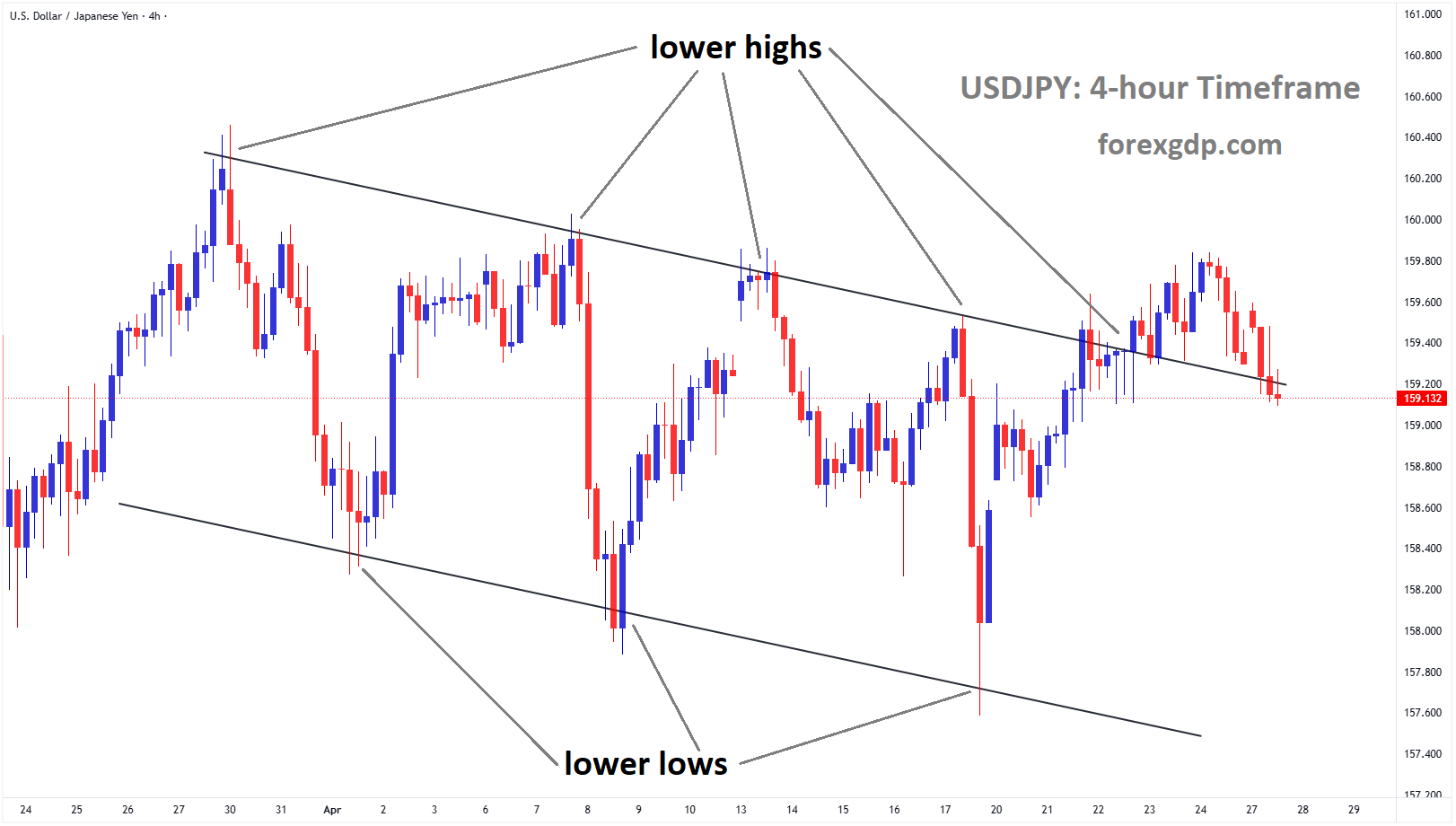
USDJPY is moving in a descending channel, and the market has reached the lower high area of the channel
Why the Japanese Yen Is Rising Against the US Dollar
The Japanese Yen has moved higher against the US Dollar, with the USD/JPY pair falling close to the 159.15 level during European trading hours on Monday. This drop means that the Dollar is weakening compared to the Yen.
One of the main reasons behind this shift is the reduced demand for the US Dollar. The Dollar often acts as a safe-haven currency during times of uncertainty. However, recent geopolitical signals suggest a possible easing of tensions, which has lowered the need for investors to hold the Dollar.
At the same time, the US Dollar Index, which measures the Dollar’s strength against a group of major currencies, has also slipped. After starting the day with gains, the index dropped around 0.25% to near 98.25. This decline reflects broader weakness in the Dollar, not just against the Yen but across global markets.
Geopolitical Developments and Their Impact on the Dollar
One of the key drivers behind the Dollar’s decline is the latest update on relations between the United States and Iran. Reports suggest that Iran has shown a willingness to move toward a long-term ceasefire agreement with the US. This development has reduced global uncertainty, which in turn has weakened the appeal of the US Dollar as a safe-haven asset.
Further details indicate that Iran has submitted a new proposal regarding its nuclear program. However, the proposal comes with a condition: the lifting of US sanctions to allow the reopening of the Strait of Hormuz. This waterway is one of the most important routes for global oil shipments, and any disruption there can affect energy prices worldwide.
Over the weekend, US President Donald Trump announced that a planned visit by US envoys to Islamabad had been canceled. He described the ongoing negotiations, including Iran’s counteroffer delivered through Pakistan, as not satisfactory. Despite this, the broader tone of discussions still suggests that both sides may be moving closer to a more stable arrangement.
If a lasting truce is achieved and the Strait of Hormuz reopens fully, it could lead to more stable oil prices. Lower or stable energy costs tend to reduce inflation pressures. This is important because inflation plays a key role in shaping central bank decisions, especially in the United States.
How Inflation Expectations Affect Currency Movements
When inflation expectations fall, central banks are less likely to raise interest rates. In the case of the US Federal Reserve, stable or lower inflation reduces the need for tighter monetary policy.
For currency markets, this matters a lot. Higher interest rates usually attract foreign investment, which strengthens a country’s currency. On the other hand, if investors believe that interest rates will stay the same or even fall, the currency can lose strength.
The recent geopolitical developments suggest that inflation pressures in the US might ease. As a result, expectations for future rate increases by the Federal Reserve have weakened. This has contributed to the current decline in the US Dollar.
What Investors Expect From the Federal Reserve
All eyes are now on the upcoming Federal Reserve policy announcement scheduled for Wednesday. Market participants widely expect the Fed to keep interest rates unchanged within the range of 3.50% to 3.75%.
This expectation of steady rates is another factor weighing on the US Dollar. Without the prospect of higher returns from US assets, investors may look elsewhere, leading to reduced demand for the Dollar.
Even though the Fed is expected to hold rates steady, investors will closely watch the central bank’s comments for hints about future policy direction. Any signal about possible rate cuts or continued caution could further influence currency movements.
The Bank of Japan’s Role in Yen Performance
While the Japanese Yen is gaining against the US Dollar, its performance against other currencies tells a different story. The Yen has weakened against several of its peers, showing that its strength is not broad-based.
This mixed performance is largely tied to expectations surrounding the Bank of Japan (BoJ). The BoJ is set to announce its own monetary policy decision on Tuesday, just one day before the Fed’s announcement.
Investors generally expect the BoJ to keep its interest rate steady at 0.75%. This relatively low rate reflects Japan’s ongoing efforts to support economic growth. However, recent increases in energy prices have raised concerns about the country’s economic outlook.
Higher energy costs can put pressure on businesses and consumers, especially in a country like Japan that relies heavily on imported energy. This makes it harder for the BoJ to tighten policy aggressively, even if inflation rises.
Why the Yen Is Weak Against Other Currencies

The Yen’s weakness against other currencies can be explained by the difference in interest rate levels across countries. Many major economies have higher interest rates compared to Japan. This makes their currencies more attractive to investors seeking better returns.
As a result, even though the Yen is gaining against the US Dollar due to specific factors affecting the Dollar, it is still under pressure when compared to other global currencies.
This situation highlights how currency movements are rarely driven by a single factor. Instead, they reflect a combination of domestic economic conditions, central bank policies, and global developments.
What This Means for Global Markets
The current movement in the Japanese Yen and the US Dollar is a clear example of how interconnected global markets are. A shift in geopolitical tensions in one region can influence inflation expectations, central bank decisions, and ultimately currency values worldwide.
For investors, this environment requires careful attention to both economic data and political developments. Changes in expectations around interest rates, especially in major economies like the US and Japan, can quickly impact market trends.
At the same time, the differing paths of central banks create opportunities and risks in currency markets. While the Fed appears to be holding steady, the BoJ remains cautious due to domestic economic challenges.
Final Summary
The Japanese Yen has strengthened against the US Dollar due to a combination of weakening demand for the Dollar and improving global sentiment. Developments in US-Iran relations have reduced uncertainty, lowering the need for safe-haven assets like the Dollar. At the same time, expectations that the Federal Reserve will keep interest rates unchanged have added further pressure on the US currency.
However, the Yen’s gains are limited when compared to other major currencies. This is mainly due to Japan’s lower interest rates and ongoing economic concerns, especially related to rising energy costs. With both the Federal Reserve and the Bank of Japan set to announce their policy decisions soon, currency markets are likely to remain active as investors look for clearer direction.
USDCHF Dips Toward 0.7850 While Safe-Haven Flows Fail to Lift the US Dollar
The USD/CHF currency pair has been moving cautiously, reflecting a mix of global uncertainty, political developments, and central bank signals. While investors often turn to safe-haven assets during times of tension, the recent behavior of both the US Dollar and the Swiss Franc tells a more complex story. Several key factors are influencing this pair, including geopolitical developments in the Middle East, diplomatic shifts involving the United States and Iran, and policy signals from Switzerland’s central bank.
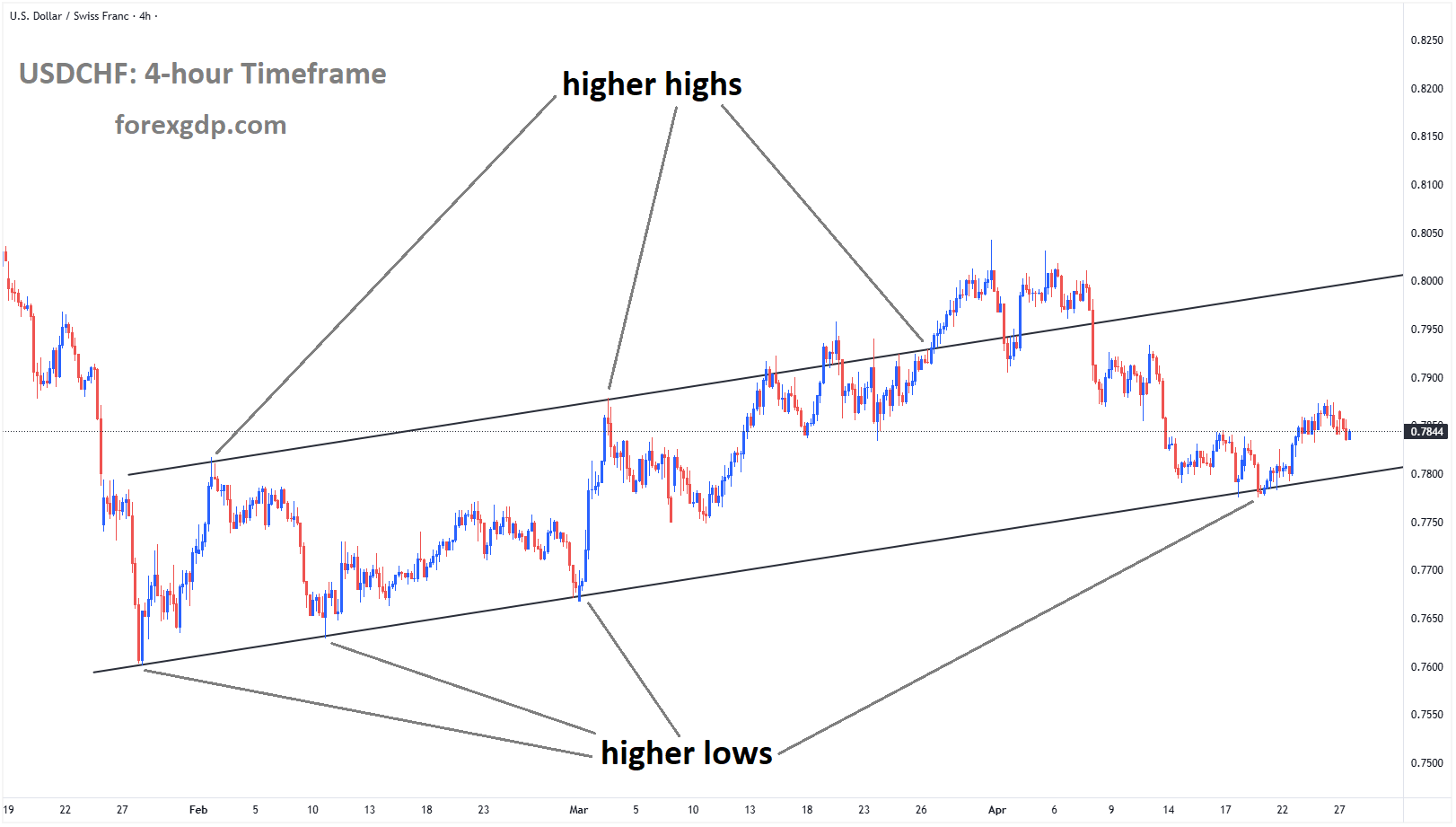
USDCHF is moving in an uptrend channel, and the market has rebounded from the higher low area of the channel
USD/CHF Struggles Amid a Softer US Dollar
The USD/CHF pair has remained under pressure for the second day in a row, hovering around the 0.7840 level during Asian trading hours. This movement comes as the US Dollar continues to weaken, even though global uncertainty would normally support it.
In times of risk or instability, the US Dollar is usually considered a safe-haven currency. Investors tend to move their funds into it for security. However, the current situation is different. Despite growing demand for safe-haven assets, the Dollar is not gaining strength as expected. This suggests that other forces are influencing investor behavior.
One possible reason is the shifting confidence in the US economic outlook and global political landscape. When confidence weakens, investors may diversify into other safe-haven options instead of relying solely on the Dollar. This has created room for currencies like the Swiss Franc to maintain strength.
Rising Geopolitical Tensions Add Uncertainty
Global tensions continue to play a major role in shaping currency movements. The fragile ceasefire between Israel and Hezbollah has come under pressure, with both sides reportedly increasing attacks. This situation has raised concerns that the temporary pause in conflict may not hold.
The ceasefire, initially brokered with US involvement, was meant to last for several weeks and provide a window for de-escalation. However, the renewed clashes suggest that the region remains unstable. This ongoing uncertainty typically supports safe-haven demand, yet the impact on currencies has been uneven.
Investors are closely watching these developments, as any escalation could trigger broader market reactions. While such tensions often strengthen safe-haven currencies, the current environment shows that the response is not always straightforward.
Diplomatic Shifts Between the US and Iran
Another important factor affecting market sentiment is the evolving relationship between the United States and Iran. Recent developments indicate a shift in diplomatic strategy.
US President Donald Trump canceled a planned delegation to Pakistan, where discussions involving Iran were expected to take place. Instead, the focus appears to be shifting toward the possibility of more direct engagement between the US and Iran. This decision highlights the complexity of ongoing negotiations and the challenges in reaching common ground.
Statements from both sides reveal differing positions. While the US has expressed dissatisfaction with Iran’s proposals, Iranian leadership has made it clear that they will not participate in negotiations under pressure or threats. This difference in approach continues to slow progress.
At the same time, reports suggest that Iran has presented a new proposal aimed at easing tensions. The plan includes reopening the Strait of Hormuz and working toward ending the conflict, while delaying nuclear discussions. It also calls for extending the current ceasefire to allow more time for negotiations.
These developments have added another layer of uncertainty to global markets. Diplomatic progress could improve sentiment, while setbacks may increase risk aversion.
Swiss National Bank Signals Readiness to Act
While global events shape market sentiment, central bank policies also play a crucial role in currency movements. The Swiss National Bank (SNB) has made it clear that it is prepared to take action if needed.
SNB Chairman Martin Schlegel recently stated that the central bank remains open to adjusting its policies and intervening in foreign exchange markets. This includes the possibility of purchasing foreign currencies to prevent the Swiss Franc from becoming too strong.
A strong Swiss Franc can create challenges for Switzerland’s economy, particularly for exports. When the currency rises too much, Swiss goods become more expensive for international buyers, which can slow economic growth.
Schlegel also highlighted growing uncertainty in Switzerland’s economic outlook. While growth is expected to remain modest in the near term, inflation pressures are rising, largely due to increasing energy costs. This combination of slower growth and higher inflation creates a complex environment for policymakers.
Why SNB Intervention Matters
Central bank intervention can have a significant impact on currency markets. When the SNB steps in to weaken the Swiss Franc, it can influence the direction of the USD/CHF pair.
If the SNB actively works to limit CHF strength, it could provide support for the USD/CHF pair, even if the US Dollar remains under pressure. However, the effectiveness of such measures depends on broader market conditions and investor sentiment.
Traders and investors are paying close attention to any signals from the SNB, as these actions can shift market dynamics quickly.
Safe-Haven Demand Is Becoming More Complex
Traditionally, both the US Dollar and the Swiss Franc are considered safe-haven currencies. During times of uncertainty, investors often choose between these two options. However, the current environment shows that this relationship is not always predictable.
The US Dollar is facing pressure despite global risks, while the Swiss Franc continues to hold firm. This suggests that investors are carefully balancing their decisions based on multiple factors, including interest rates, economic outlook, and geopolitical risks.
In addition, the role of other safe-haven assets, such as gold, can also influence currency demand. When investors diversify across different assets, the impact on any single currency may be reduced.
What to Watch in the Coming Days
Several key developments could influence the direction of the USD/CHF pair in the near future:
Geopolitical Developments
Any escalation or resolution in Middle East tensions could quickly impact market sentiment. A stable ceasefire may reduce safe-haven demand, while renewed conflict could increase it.
US-Iran Negotiations

Progress in diplomatic talks could improve global confidence, while continued disagreements may keep markets cautious.
Central Bank Actions
Signals or actions from the Swiss National Bank will remain important. Any intervention to control the strength of the Swiss Franc could influence currency movements.
Economic Outlook
Changes in economic data and outlook for both the US and Switzerland may also play a role in shaping investor expectations.
Final Thoughts
The USD/CHF pair is currently navigating a complex mix of global uncertainty, political developments, and central bank signals. The weakening US Dollar, ongoing geopolitical tensions, and the Swiss National Bank’s readiness to act are all contributing to the current market dynamics.
While safe-haven demand remains strong, its impact is not as straightforward as in the past. Investors are taking a more balanced approach, considering multiple factors before making decisions.
As global events continue to unfold, the USD/CHF pair is likely to remain sensitive to both political and economic developments. Careful monitoring of these factors will be essential for understanding future movements in this important currency pair.
NZDUSD Edges Up as Iran Deal Hopes Lift Market Confidence
The NZD/USD currency pair started the week with a slight upward move, trading close to the 0.5885 level during the early European session on Monday. This modest gain reflects a shift in global market sentiment, where traders are showing a bit more confidence. When investors feel more optimistic, currencies like the New Zealand Dollar—often called the “Kiwi”—tend to perform better against safer options like the US Dollar.
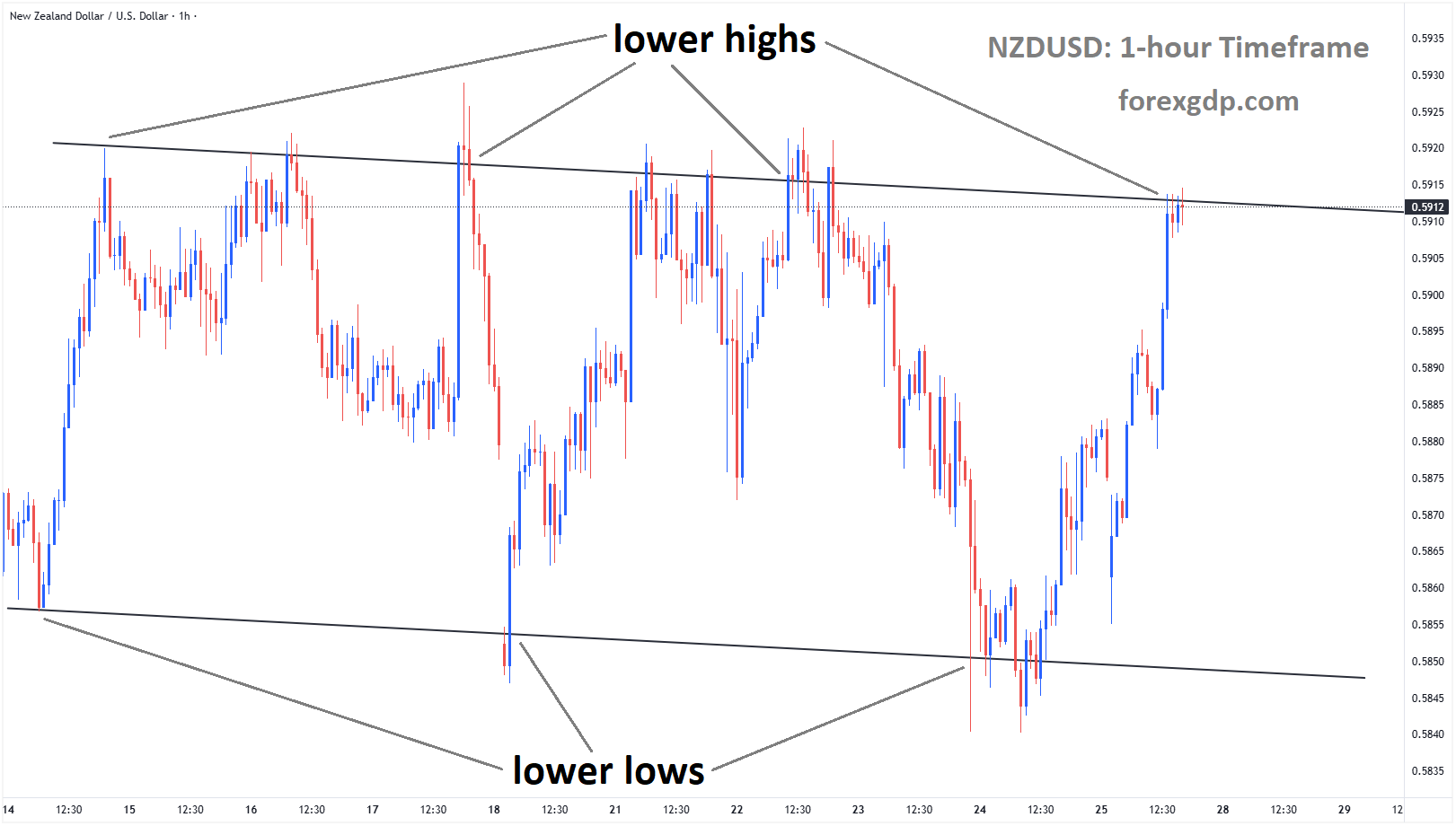
NZDUSD is moving in a descending channel, and the market has reached the lower high area of the channel
This movement is not happening in isolation. Several global developments, including geopolitical news and expectations around US monetary policy, are shaping how this currency pair behaves.
Geopolitical Developments Boost Risk Appetite
One of the main reasons behind the Kiwi’s strength is the latest update involving Iran and the United States. Reports suggest that Iran has offered a proposal to reopen the Strait of Hormuz while delaying discussions related to its nuclear program. This move is being seen as a possible step toward reducing tensions in a region that plays a key role in global energy supply.
The Strait of Hormuz is a critical shipping route for oil, and any disruption there can have wide-reaching effects on the global economy. By proposing to reopen it and extend a ceasefire, Iran is signaling a willingness to ease tensions, at least temporarily. This kind of news often encourages investors to take on more risk, which benefits currencies like the New Zealand Dollar.
However, it’s important to note that the situation is still uncertain. While the proposal sounds promising, there is no guarantee that it will lead to lasting peace. Any sudden change or escalation in the Middle East could quickly shift market sentiment back toward caution. In such cases, the US Dollar usually gains strength because it is considered a safe-haven currency.
Why the US Dollar Still Holds Strong Influence
Even though the New Zealand Dollar is gaining some ground, the US Dollar remains a powerful force in the global currency market. Its strength is closely tied to economic conditions in the United States and the policies set by the Federal Reserve.
At the moment, traders are closely watching the Fed’s next move. The central bank is expected to keep interest rates unchanged in the range of 3.50% to 3.75% at its upcoming meeting. If this happens, it would be the third time in a row that rates remain steady.
This pause reflects the Fed’s cautious approach. Policymakers are trying to balance different challenges, including rising energy costs and ongoing geopolitical risks. By holding rates steady, the Fed is likely waiting for clearer signals about inflation and economic growth before making any major changes.
The Role of Inflation Data in Currency Movement
Later in the week, attention will turn to a key economic report from the United States—the Personal Consumption Expenditures (PCE) Price Index. This is the Federal Reserve’s preferred measure of inflation, and it plays a major role in shaping future policy decisions.
If the PCE data shows that inflation is still running high, it could strengthen the US Dollar. Higher inflation often increases the chances of tighter monetary policy in the future, which can attract investors to the USD. On the other hand, softer inflation data might reduce pressure on the Fed and could weaken the Dollar slightly.
For the NZD/USD pair, this means the upcoming data release could bring some short-term volatility. Traders will be watching closely for any signs that could influence the direction of interest rates in the US.
Understanding Risk Sentiment and Currency Trends
To better understand why the NZD/USD pair is moving the way it is, it helps to look at the concept of “risk sentiment.” This term describes how comfortable investors feel about taking risks in the market.
When sentiment is positive, investors are more willing to invest in higher-yielding or growth-linked currencies like the New Zealand Dollar. These currencies are often tied to global trade and economic activity, so they tend to benefit when the outlook is stable or improving.

In contrast, when uncertainty rises—due to geopolitical tensions, economic slowdowns, or unexpected events—investors usually move toward safer assets. The US Dollar is one of the most popular safe-haven currencies, which is why it often strengthens during times of stress.
Right now, the slight improvement in sentiment, driven by the Iran-US development, is giving the Kiwi a bit of support. But this could change quickly if the situation takes a different turn.
What to Watch in the Coming Days
Several factors will likely influence the NZD/USD pair in the near term. Geopolitical updates will remain a key driver. Any confirmation or rejection of Iran’s proposal could have an immediate impact on market mood.
At the same time, the Federal Reserve’s policy decision will be closely analyzed. Even if rates remain unchanged, the tone of the Fed’s statement could provide hints about future actions. Investors will be looking for clues about how the central bank views inflation and economic risks.
The PCE inflation report will also play a major role. Stronger-than-expected data could boost the US Dollar, while weaker numbers might give the New Zealand Dollar more room to rise.
Summary
The NZD/USD pair has started the week with modest gains, supported by improved global sentiment following a diplomatic proposal from Iran. This development has encouraged investors to move toward riskier assets, benefiting the New Zealand Dollar.
However, the situation remains fragile. Ongoing uncertainty in the Middle East means that any negative news could quickly shift demand back toward the US Dollar. At the same time, expectations around the Federal Reserve’s policy and upcoming inflation data are adding another layer of complexity.
As a result, the NZD/USD pair is likely to remain sensitive to both geopolitical headlines and economic signals in the days ahead.
Don’t trade all the time, trade forex only at the confirmed trade setups
Get more confirmed trade signals at premium or supreme – Click here to get more signals, 2200%, 800% growth in Real Live USD trading account of our users – click here to see , or If you want to get FREE Trial signals, You can Join FREE Signals Now!