
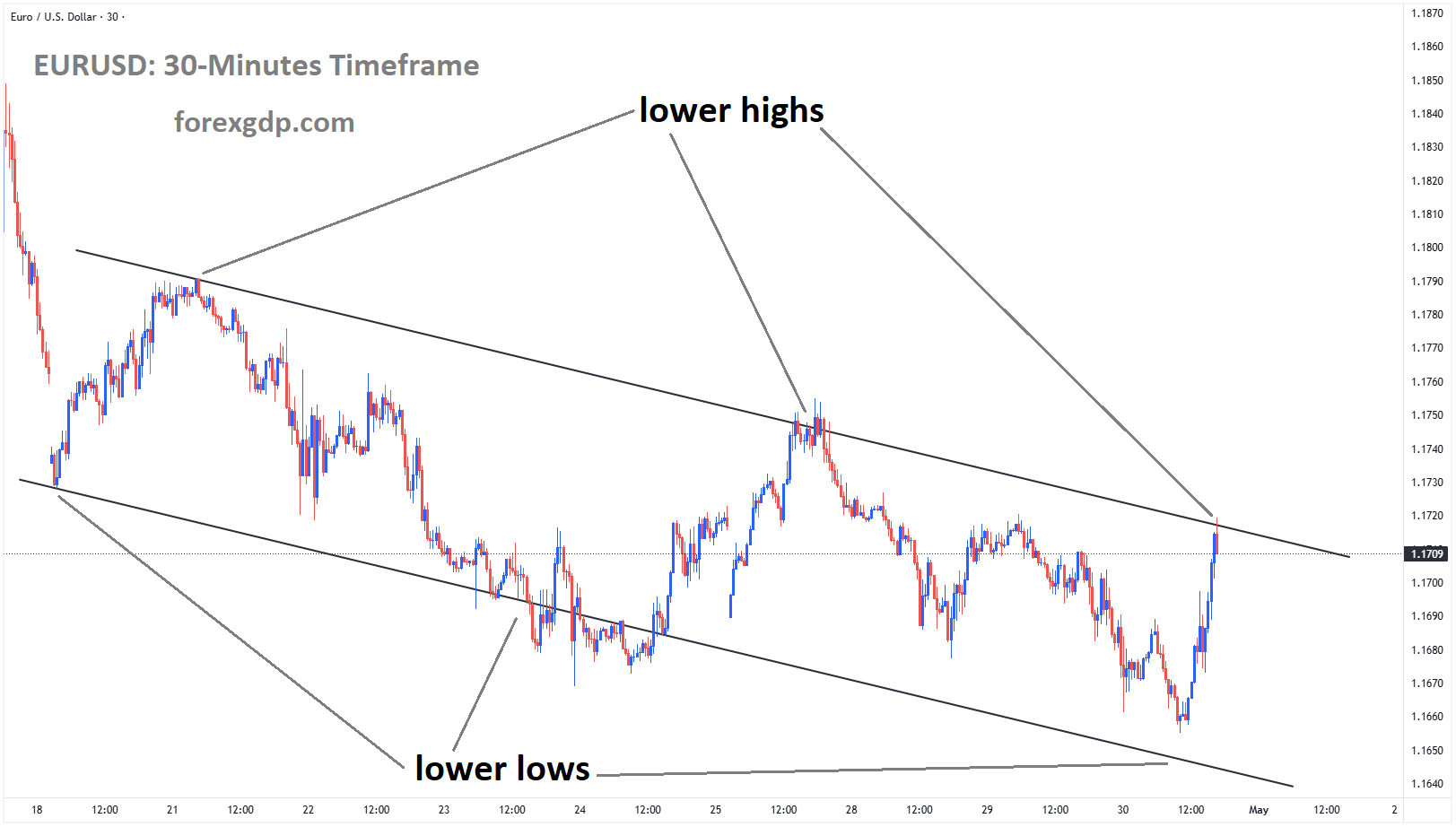
EURUSD is moving in a descending channel, and the market has reached the lower high area of the channel
EURUSD under pressure after weak Eurozone GDP misses forecasts
The latest economic data from the Eurozone paints a mixed picture, with slower growth and slightly higher inflation shaping the region’s outlook. Recent figures reveal that the economy is expanding, but not as strongly as expected, while consumer prices are climbing a bit faster than forecasts suggested. These trends are important because they influence everyday life, from job opportunities to the cost of living.
GDP Growth Falls Short of Expectations
Economic growth in the Eurozone has been weaker than anticipated in the first quarter of the year. The region’s Gross Domestic Product (GDP), which measures the total value of goods and services produced, increased by just 0.1% compared to the previous quarter. Analysts had expected a slightly stronger rise of 0.2%, making the actual figure a disappointment.
On a yearly basis, the slowdown is even more noticeable. GDP grew by 0.8% compared to the same period last year, which is below the expected 0.9% and significantly lower than the previous reading of 1.2%. This drop suggests that economic momentum is weakening across the region.
What Slower Growth Means
Slower GDP growth can signal that businesses are producing less, consumers are spending cautiously, or investment is cooling. While a small increase still indicates expansion, the pace matters. When growth slows down, it can affect job creation, wage increases, and overall economic confidence.
Several factors could be contributing to this softer performance. These may include global uncertainties, tighter financial conditions, and lingering effects from earlier economic disruptions. Regardless of the causes, the latest data shows that the Eurozone economy is not growing as steadily as many had hoped.
Inflation Edges Higher Than Forecasts
While growth is slowing, inflation is moving in the opposite direction. The Harmonized Index of Consumer Prices (HICP), which tracks changes in the cost of a typical basket of goods and services, rose by 3% compared to the previous year. This is slightly above expectations of 2.9% and noticeably higher than the March reading of 2.6%.
This increase means that prices are rising at a faster pace, which can put pressure on household budgets. Even small changes in inflation can have a meaningful impact, especially when combined with slower income growth.
Monthly Inflation Trends
Looking at the monthly data, both headline inflation and core inflation have increased significantly. Headline inflation rose by 1% in just one month, while core inflation climbed by 0.9%. These figures suggest that price pressures are not only present but also picking up speed in the short term.
Core Inflation Shows Signs of Cooling
Interestingly, not all inflation indicators are rising. Core inflation, which excludes more volatile items like food and energy, has slightly eased. It dropped to 2.2%, compared to expectations that it would remain steady at 2.3%.
Why Core Inflation Matters
Core inflation is often seen as a more stable measure of underlying price trends because it removes items that can fluctuate widely due to external factors. A decline in core inflation may indicate that some of the deeper inflationary pressures are starting to ease.
However, the drop is small, and overall inflation remains above levels that policymakers typically aim for. This creates a challenging situation where headline inflation is rising, but underlying trends are only slightly improving.
Expectations vs. Reality
Before the official data release, economists had projected a somewhat more balanced outcome. Inflation was expected to rise modestly, while growth was anticipated to remain steady. Instead, the data shows a less favorable combination: weaker growth and higher inflation.
Forecasts for April and Q1
Earlier expectations suggested that annual inflation in April would reach 2.9%, up from 2.6% in March. Core inflation was predicted to stay unchanged at 2.3%. On a monthly basis, previous readings showed inflation rising by 1.3% and core inflation by 0.8% in March.
For GDP, forecasts pointed to a quarterly increase of 0.2%, matching earlier performance, while annual growth was expected to slow to 0.9% from 1.2%. The actual figures fell short on both counts, reinforcing concerns about the region’s economic strength.
What This Means for the Eurozone
The combination of slower economic growth and rising inflation presents a difficult situation for the Eurozone. Typically, strong growth helps offset the impact of higher prices, but when growth is weak, households and businesses may feel the strain more sharply.
Impact on Consumers
For everyday consumers, rising inflation means higher costs for goods and services. When wages do not increase at the same pace, purchasing power declines. This can lead to reduced spending, which in turn affects businesses and the broader economy.
Impact on Businesses
Businesses may also face challenges. Higher input costs, such as raw materials and labor, can reduce profit margins. At the same time, weaker demand due to slower economic growth can limit their ability to pass these costs on to customers.
Policy Implications

The latest data is likely to be closely watched by policymakers, especially those responsible for managing monetary policy. Central banks aim to keep inflation under control while supporting economic growth. However, when inflation rises while growth slows, achieving both goals becomes more complicated.
Balancing Growth and Inflation
Policymakers may need to carefully balance their approach. Efforts to control inflation could further slow economic growth, while measures to support growth might risk keeping inflation elevated. This delicate balance makes decision-making more complex in the current environment.
Signs to Watch Going Forward
The coming months will be important in determining whether these trends continue or begin to shift. Key indicators to watch include:
- Changes in consumer spending patterns
- Business investment activity
- Labor market conditions
- Future inflation readings
If growth continues to weaken while inflation remains elevated, it could signal deeper challenges ahead. On the other hand, any improvement in these areas could help stabilize the outlook.
Summary
The Eurozone’s latest economic data highlights a challenging phase marked by slower growth and rising inflation. GDP expanded at a weaker pace than expected, both quarterly and annually, signaling a loss of momentum in the region’s economy. At the same time, inflation has climbed slightly above forecasts, increasing the pressure on households and businesses.
While core inflation has shown a small decline, overall price levels remain elevated. This mix of conditions creates uncertainty and makes economic management more difficult. The situation will require careful monitoring as policymakers and market participants look for signs of improvement or further slowdown in the months ahead.
GBPUSD retreats after expected interest rate hold by Bank of England
The Pound Sterling has come under noticeable pressure against other major currencies following the latest interest rate decision by the Bank of England (BoE). While the outcome itself was widely expected, the reaction in the currency markets shows that investors are still adjusting their expectations about the future direction of monetary policy in the United Kingdom.
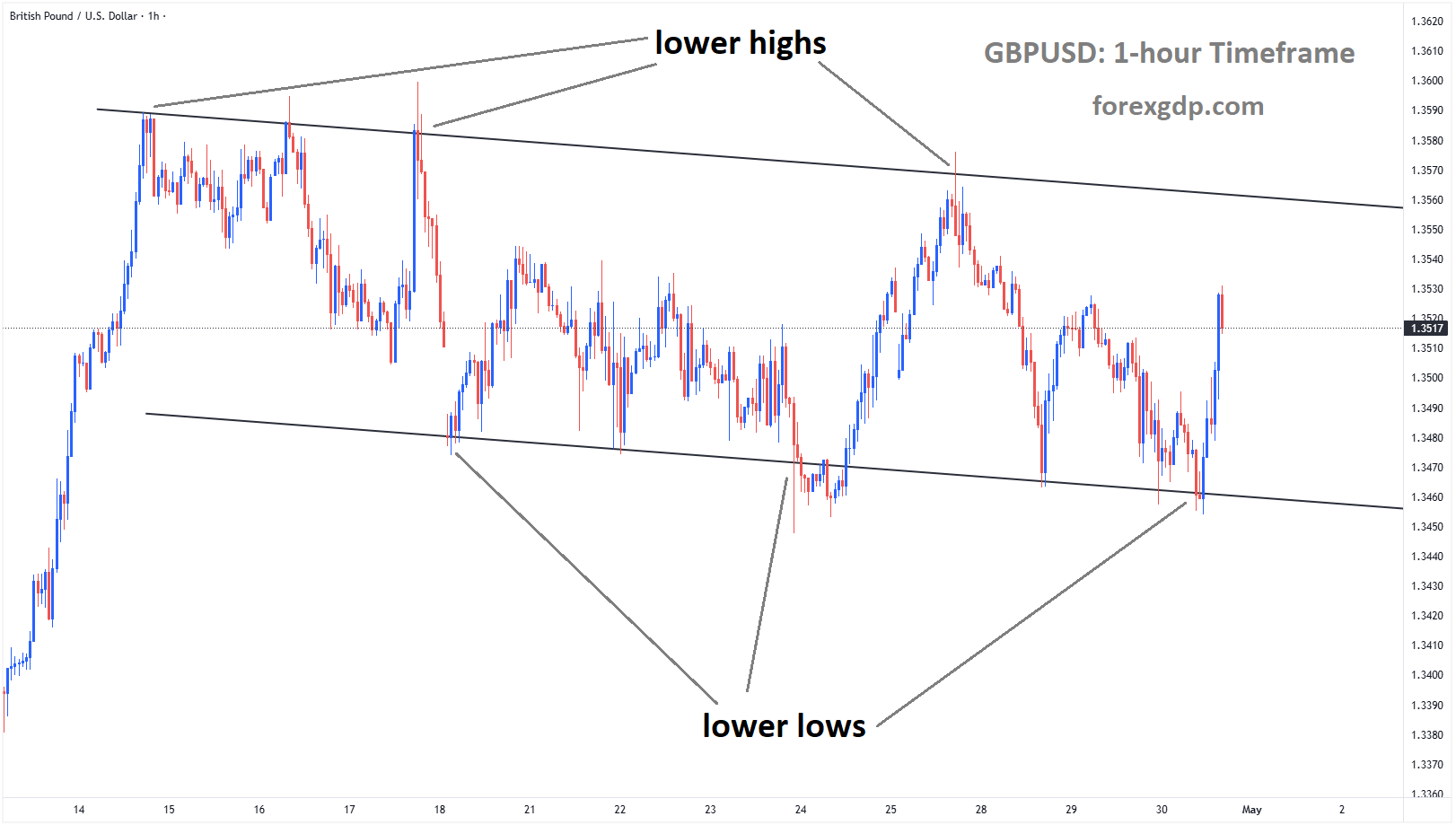
GBPUSD is moving in a descending channel, and the market has rebounded from the lower low area of the channel
At its most recent meeting, the BoE decided to keep interest rates unchanged at 3.75%. This marks the third consecutive time the central bank has chosen to hold rates steady, signaling a cautious approach as policymakers continue to assess economic conditions and inflation trends.
A Divided View Within the Bank of England
Although the decision to keep rates unchanged was largely anticipated, it was not unanimous. Out of the nine members of the Monetary Policy Committee (MPC), eight voted in favor of maintaining the current rate, while one member dissented.
Why One Member Pushed for Higher Rates
The lone dissent came from Chief Economist Huw Pill, who has consistently expressed concern about inflation risks. He voted for a rate increase, arguing that tighter monetary policy may still be necessary to ensure inflation returns to the BoE’s target of 2%.
Pill has previously warned that simply waiting for inflation to fall on its own could be risky. He believes the central bank should take proactive steps to prevent a repeat of the sharp inflation surge experienced in 2022. According to his view, acting early can provide a form of “insurance” against future economic shocks.
This difference in opinion highlights the ongoing debate within the BoE. While most members prefer to wait and observe how the economy evolves, others are more cautious and believe further action might be needed sooner rather than later.
Market Reaction to the BoE Decision
Even though the rate hold was expected, the Pound Sterling weakened after the announcement. This suggests that traders may have been hoping for stronger signals about future rate hikes or a more aggressive stance on inflation.
When a central bank appears cautious or hesitant, it can sometimes reduce confidence in the currency. In this case, the lack of clear direction on tightening policy may have contributed to selling pressure on the Pound.
At the same time, global factors are also playing a role in shaping currency movements, making the situation more complex.
US Dollar Faces Pressure Despite Strong Signals
Interestingly, the US Dollar is also experiencing selling pressure, even though recent developments might normally support it. The Federal Reserve (Fed) has also chosen to keep interest rates unchanged, maintaining them within the range of 3.50% to 3.75%.
Internal Differences Within the Federal Reserve
Similar to the BoE, the Fed’s decision was not fully unanimous. Three members of the rate-setting committee disagreed with the decision and argued for a shift away from the current easing bias. This indicates that some policymakers in the US are leaning toward a tighter monetary approach.
Such internal divisions often reflect uncertainty about the economic outlook. While some officials believe inflation risks remain, others may be more focused on supporting growth.
Geopolitical Tensions Add to Market Uncertainty
Beyond central bank decisions, global political developments are also influencing currency markets. Tensions in the Middle East, particularly around the Strait of Hormuz, are adding another layer of uncertainty.
The situation escalated after US President Donald Trump confirmed that a naval blockade of Iranian ports would continue until Iran abandons its nuclear ambitions. This kind of geopolitical tension can affect global trade routes, energy supply, and investor sentiment.
Normally, such risks might strengthen the US Dollar as a safe-haven currency. However, in this case, the Dollar has still faced selling pressure, suggesting that other factors, including monetary policy expectations, are currently having a stronger influence.
What Investors Are Watching Next
With both the BoE and the Fed choosing to hold rates steady, attention is now shifting to upcoming economic data. One key event on the horizon is the release of preliminary US Gross Domestic Product (GDP) figures.
Importance of GDP Data

GDP is one of the most important indicators of economic health. It measures the total value of goods and services produced in a country and provides insight into growth trends.
The upcoming data is expected to show that the US economy is growing at an annualized rate of 2.3%, a significant improvement compared to the previous reading of 0.5%. If confirmed, this stronger growth could influence future decisions by the Federal Reserve and potentially impact currency markets.
Stronger economic performance may give the Fed more flexibility in its policy approach, while weaker data could reinforce the need for caution.
The Bigger Picture for the Pound Sterling
The recent weakness in the Pound reflects a mix of domestic and global influences. On one hand, the Bank of England is taking a careful approach, balancing the need to control inflation with the risk of slowing economic growth. On the other hand, global uncertainty and shifting expectations around US policy are also affecting market sentiment.
Balancing Inflation and Growth
For the BoE, the challenge lies in managing inflation without putting too much pressure on the economy. Keeping rates unchanged suggests that policymakers believe current levels are sufficient for now, but the dissenting vote shows that concerns remain.
If inflation proves stubborn, the central bank may eventually need to take further action. However, if economic growth slows, it may prefer to maintain or even ease policy to support the economy.
Summary
The Pound Sterling has come under pressure following the Bank of England’s decision to keep interest rates unchanged at 3.75%. While the move was expected, the lack of a strong signal about future policy direction has weighed on the currency.
A split within the BoE, highlighted by Huw Pill’s call for higher rates, shows that concerns about inflation are still present. Meanwhile, the US Dollar is also facing selling pressure despite steady rates and ongoing geopolitical tensions.
As investors look ahead, upcoming economic data, especially US GDP figures, will play a key role in shaping expectations for future policy decisions. In the meantime, currency markets are likely to remain sensitive to both economic signals and global developments.
USDJPY Falls After Strong Rally as Japan Pushes Back Against Weak Yen
The USD/JPY currency pair saw a noticeable pullback on Thursday after climbing to its highest level in several months. Earlier in the day, the pair surged past the 160 mark, a level not seen since July 2024. However, the upward move did not last long, as the Japanese Yen staged a strong comeback, pushing the pair lower to around 159.50 by the end of the session.
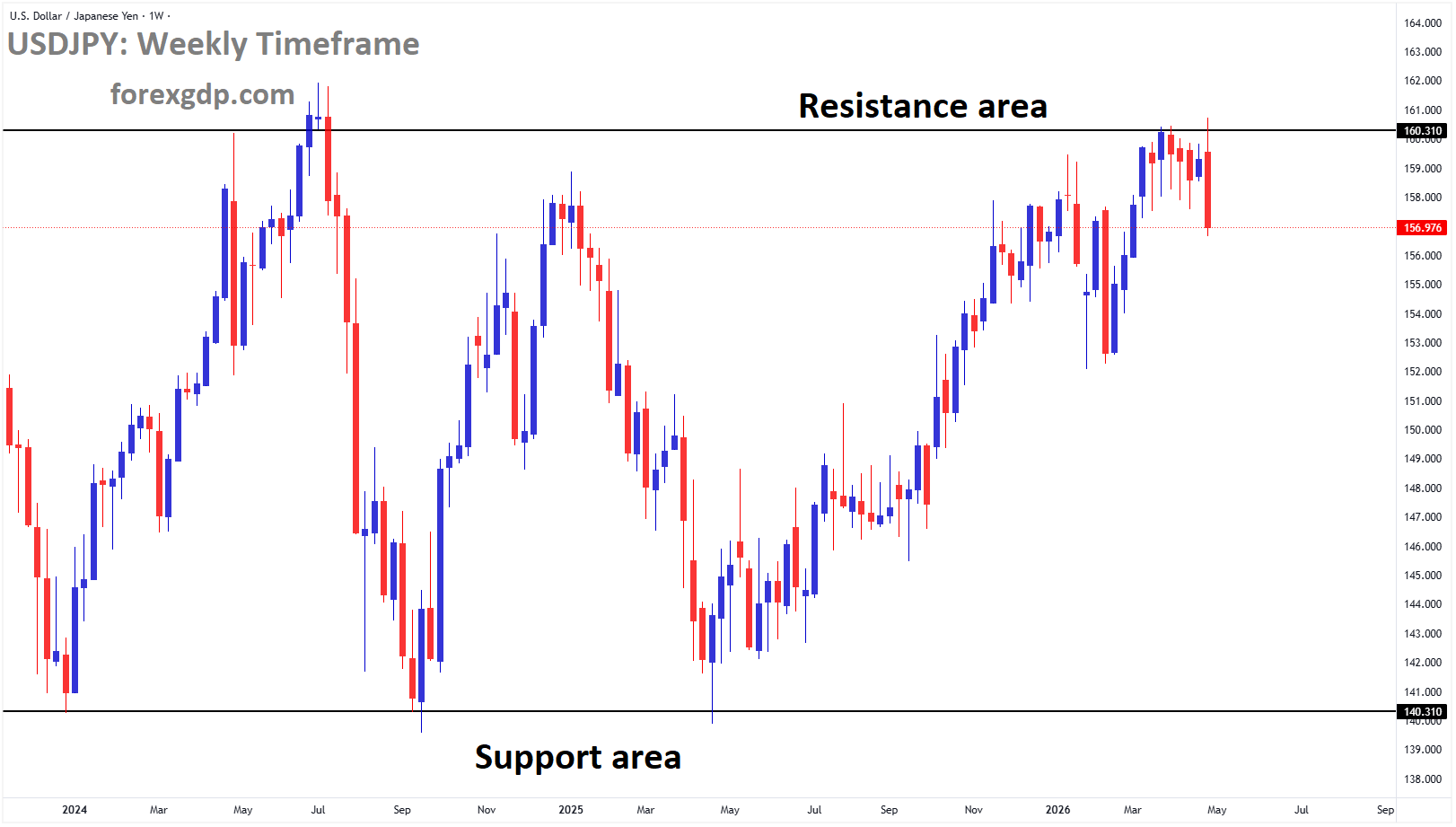
USDJPY is moving in a box pattern, and the market has reached the resistance area of the pattern
This sudden reversal highlights the delicate balance currently shaping the currency market. On one side, the US Dollar continues to find strong support from monetary policy signals. On the other, Japan’s growing concern about Yen weakness is starting to influence market sentiment in a meaningful way.
Strong Warnings from Japan Boost the Yen
A key factor behind the Yen’s recovery was the firm stance taken by Japanese authorities. Officials in Tokyo have recently increased their warnings about the rapid decline in the Yen’s value. These statements are not just routine comments—they are often seen by investors as signals that direct action could be on the table.
Japan’s Finance Minister, Satsuki Katayama, made it clear that the government is closely watching currency movements and is prepared to respond if needed. Such remarks are commonly referred to as “verbal intervention,” and they can have a powerful impact even without actual market action.
What Verbal Intervention Means
Verbal intervention is when government officials publicly express concern about currency movements. While it does not involve direct buying or selling in the market, it sends a strong message to traders. The goal is to influence expectations and reduce speculative activity.
In this case, the comments from Tokyo were enough to trigger a shift in sentiment. Investors who had been betting on further gains in USD/JPY began to reduce their positions. This wave of position adjustments helped the Yen strengthen quickly, leading to the pair’s decline.
Why the 160 Level Matters
The move above 160 in USD/JPY is significant because it is widely viewed as a critical threshold by Japanese policymakers. Historically, levels around this range have prompted concern and, in some cases, intervention.
As the pair crossed this line, fears grew that authorities might step in to support the Yen more directly. This perception alone was enough to limit further gains and encourage a reversal.
US Dollar Remains Supported by Federal Reserve Signals
While the Yen gained strength due to intervention concerns, the US Dollar continues to benefit from a supportive backdrop. The Federal Reserve recently held its interest rates steady but delivered a message that leaned more toward maintaining tighter conditions for longer.
This stance surprised some market participants who had expected a more relaxed tone. Instead, the central bank’s communication suggested that rate cuts may not come as quickly as previously thought.
Impact of the Fed’s Decision
The Fed’s message had an immediate effect on the broader market. Expectations for future rate reductions were scaled back, which helped push US Treasury yields higher. Higher yields typically make the Dollar more attractive to investors, as they offer better returns compared to other currencies.
As a result, the Greenback remained well-supported even as USD/JPY pulled back from its peak. This shows that the underlying strength of the Dollar is still intact, despite short-term fluctuations.
Market Reaction and Investor Behavior
Investors are now carefully balancing two major forces. On one side, the US economy and Federal Reserve policy continue to favor a stronger Dollar. On the other, Japan’s readiness to act is creating a sense of caution.
This combination is leading to more cautious trading behavior. Rather than aggressively pushing USD/JPY higher, traders are becoming more selective and responsive to official comments from Japan.
A Tug of War Between Policy and Intervention Risks
The current movement in USD/JPY can best be described as a tug of war. The Dollar is being lifted by solid economic signals and central bank support, while the Yen is gaining ground due to increasing intervention risks.
Short-Term Limits on USD/JPY Gains

With Japanese authorities clearly uncomfortable with a weaker Yen, the upside for USD/JPY appears limited in the near term. Each time the pair moves toward higher levels, the risk of intervention grows stronger.
This creates a natural ceiling, where traders hesitate to push the pair too far. Even without actual intervention, the threat alone can influence market behavior significantly.
Long-Term Outlook Remains Uncertain
Looking ahead, the direction of USD/JPY will depend on how these opposing forces evolve. If the Federal Reserve continues to maintain a firm stance, the Dollar could remain strong. However, any sign of direct intervention from Japan could quickly shift momentum in favor of the Yen.
For now, the market remains highly sensitive to both policy signals and official comments. Traders are likely to stay alert, reacting quickly to any new developments.
Summary
The USD/JPY pair experienced a sharp pullback after reaching a multi-month high above 160, driven by strong warnings from Japanese authorities about potential market intervention. These comments boosted the Yen and encouraged investors to reduce positions favoring further gains in the pair.
At the same time, the US Dollar continues to find support from the Federal Reserve’s steady and firm policy stance. This has kept the broader outlook balanced, with neither side gaining full control.
As a result, USD/JPY is currently moving within a narrow space shaped by Dollar strength and rising intervention risks. This dynamic is likely to keep the pair volatile, with traders closely watching both central bank signals and government actions in the days ahead.
USDCAD softens with oil losing strength and diverging rate outlooks stirring market swings
The USD/CAD currency pair is showing a slight downward movement, trading near the 1.3655 level after a relatively quiet session earlier. While the change may seem small, it reflects a mix of global and domestic factors influencing both the US Dollar and the Canadian Dollar. From oil price movements to central bank policies, several elements are shaping the direction of this currency pair.
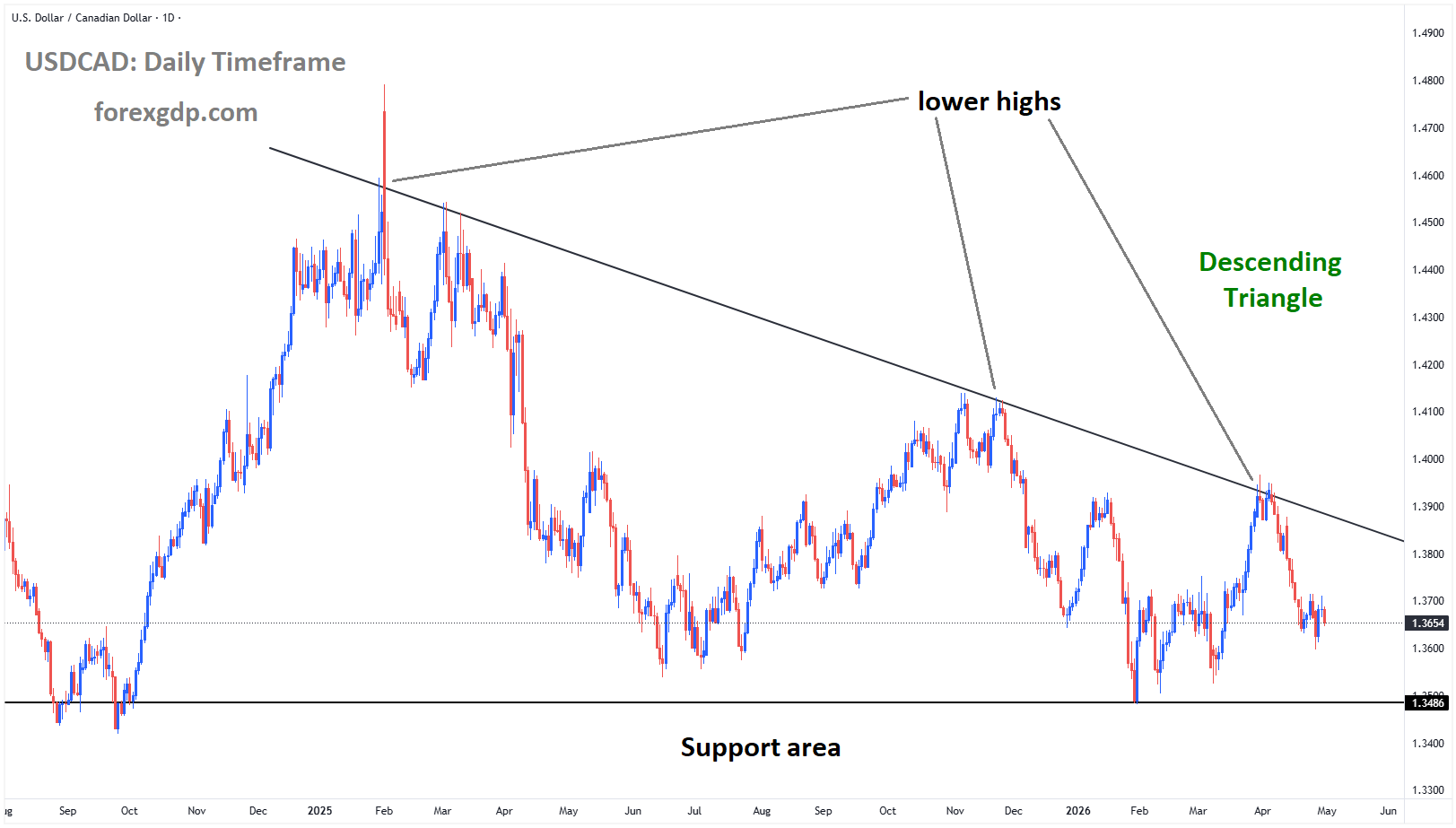
USDCAD is moving in a descending triangle pattern, and the market has fallen from the lower high area of the pattern
Oil Prices and Their Influence on the Canadian Dollar
Canada’s economy has a strong connection to the energy sector, especially crude oil exports. Because of this, the Canadian Dollar often reacts to changes in oil prices. Recently, oil prices have started to dip after a period of steady gains. This decline is putting some pressure on the Canadian Dollar, also known as the Loonie.
Even though oil prices are softening, the situation is not entirely negative for Canada. Ongoing tensions in the Middle East and concerns about possible supply disruptions are still supporting the broader outlook for oil. These global risks help prevent a sharper fall in energy prices, which in turn provides some stability for the Canadian Dollar.
This balance between falling prices and ongoing global uncertainty is why the Loonie continues to show resilience. It may weaken slightly when oil drops, but it is not collapsing because the bigger picture still supports demand for energy.
A Closer Look at USD/CAD Performance
The recent dip in USD/CAD reflects a modest pullback in the US Dollar rather than a strong rally in the Canadian Dollar. After gaining strength over the past couple of days, the US Dollar is now taking a step back. This kind of movement is common in currency markets, where short-term corrections often follow periods of growth.
At the same time, the downside for USD/CAD appears limited. The global economic environment remains uncertain, and that uncertainty tends to support the US Dollar as a safe-haven currency. Because of this, even when the Dollar weakens slightly, it usually finds some level of support.
Bank of Canada Maintains a Cautious Approach
The Bank of Canada (BoC) is playing a key role in shaping expectations for the Canadian Dollar. Recently, the central bank decided to keep its policy rate unchanged at 2.25%. This decision reflects a cautious approach, as policymakers wait for more economic data before making any major moves.
Governor Tiff Macklem has made it clear that the BoC is not following a fixed path. Instead, decisions will depend on how the economy evolves. This flexible strategy allows the central bank to respond quickly to changes, but it also creates uncertainty for markets.
Inflation and Wage Pressures
One of the main concerns for the BoC is inflation. Current projections suggest that inflation could remain slightly elevated into 2026. At the same time, wages are continuing to rise, adding another layer of pressure.
These factors make it harder for the central bank to consider lowering interest rates in the near future. Cutting rates too soon could risk pushing inflation higher, which the BoC wants to avoid.
Potential for Policy Changes
The BoC has also highlighted two possible scenarios that could influence future decisions:
- Trade-related disruptions from the United States could weaken Canada’s economy, creating a case for lowering rates.
- On the other hand, strong energy prices could keep inflation high, which might require tighter monetary policy.
This dual possibility shows just how complex the situation is. The central bank must carefully balance growth and inflation, making each decision highly dependent on incoming data.
Federal Reserve Signals a Firm Stance
On the US side, the Federal Reserve is also shaping the outlook for USD/CAD. The Fed has chosen to keep its interest rates within the range of 3.5% to 3.75%. However, the decision was not unanimous, which is unusual and highlights internal differences among policymakers.
Despite these differences, Fed Chair Jerome Powell has maintained a firm tone. He has emphasized that inflation remains a concern, partly due to rising energy costs. This message suggests that the Fed is not ready to shift toward a more relaxed policy stance anytime soon.
A Divided Yet Focused Central Bank
The split decision within the Federal Reserve shows that not all members agree on the best path forward. Some may prefer to hold rates steady for longer, while others might be more open to adjustments depending on economic data.
Even so, the overall message remains clear: controlling inflation is still the top priority. This focus supports the US Dollar, as higher interest rates tend to attract investors looking for better returns.
Diverging Policies Keep Markets Active
One of the most important drivers of USD/CAD right now is the difference in policy outlooks between the Federal Reserve and the Bank of Canada. While both central banks are cautious, their approaches are not identical.
- The Fed is leaning toward maintaining a firm stance to control inflation.
- The BoC is taking a more flexible, wait-and-see approach.
This divergence creates uncertainty in the market, leading to increased volatility. Traders closely watch any signals from either central bank, as even small changes in tone can influence currency movements.
The Role of Global Uncertainty
Beyond central bank policies and oil prices, broader global factors also play a significant role. Economic uncertainty, geopolitical tensions, and trade risks all influence investor behavior.
In times of uncertainty, the US Dollar often benefits as a safe-haven currency. This means that even when it weakens temporarily, it tends to recover quickly if global risks remain high.
At the same time, Canada’s reliance on exports, particularly energy, makes it more sensitive to global demand and trade conditions. This adds another layer of complexity to the USD/CAD relationship.
What This Means for the Currency Pair
The current movement in USD/CAD reflects a delicate balance between competing forces. On one side, the Canadian Dollar is supported by resilience in the energy sector and a cautious central bank. On the other side, the US Dollar continues to draw strength from a firm monetary policy stance and its role as a global safe haven.
Because of these factors, sharp movements in either direction are less likely unless there is a major shift in economic conditions. Instead, the pair may continue to experience moderate fluctuations as new data and events unfold.
Summary
USD/CAD is currently trading slightly lower, influenced by a mix of short-term corrections and broader economic trends. The Canadian Dollar is under some pressure from falling oil prices but remains supported by ongoing global energy concerns. Meanwhile, the US Dollar is easing after recent gains but continues to benefit from a firm stance by the Federal Reserve.
The Bank of Canada is taking a cautious, data-driven approach, keeping its options open as it monitors inflation and economic growth. In contrast, the Federal Reserve is focused on controlling inflation, even as internal disagreements emerge.
These differing approaches, combined with global uncertainty, are keeping the currency pair active and somewhat unpredictable. As new developments emerge, USD/CAD will continue to reflect the evolving balance between these powerful economic forces.
USDCHF Climbs Past 0.7900 on Stronger Dollar Outlook from Fed
The USD/CHF currency pair has been climbing steadily, marking its third straight day of gains. During early Thursday trading in the Asian session, the pair hovered around the 0.7920 level. This upward movement reflects a stronger US Dollar, which is recovering after earlier losses and gaining fresh momentum following signals from the Federal Reserve.
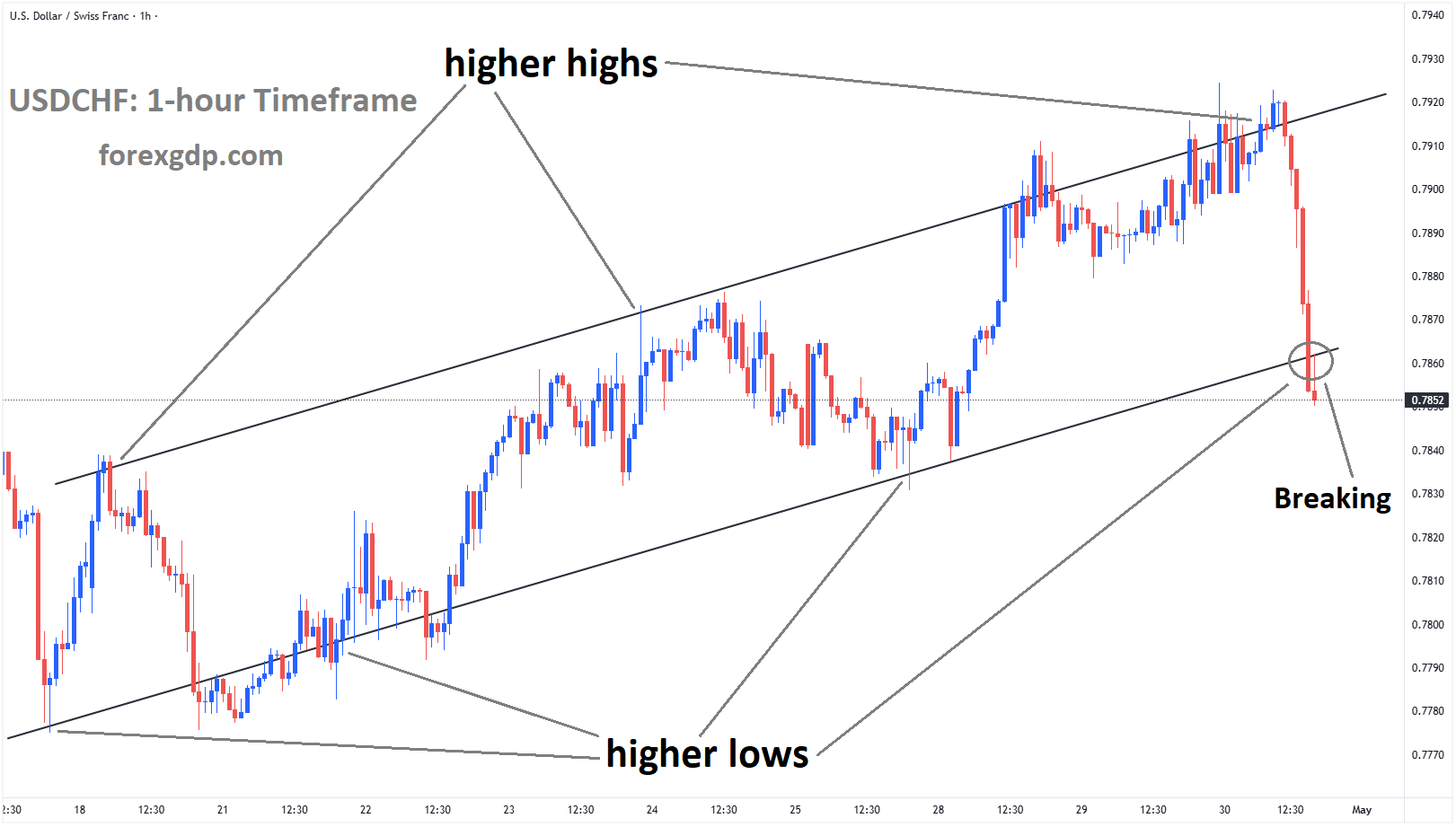
USDCHF is breaking the higher low area of the Ascending channel
The recent shift in tone from the Fed, combined with global uncertainty and economic data, is shaping how investors view both the US Dollar and the Swiss Franc. These developments are influencing market sentiment and driving changes in currency flows.
Federal Reserve Holds Rates but Signals Caution
The US Federal Reserve recently decided to keep its interest rates unchanged. While this decision was expected, what stood out was the more cautious and firm tone in its communication. The central bank made it clear that inflation remains a concern and that it is not yet ready to consider lowering rates.
The Federal Open Market Committee (FOMC), which is responsible for setting monetary policy, voted 8-4 to maintain the current interest rate range. This level of disagreement within the committee is unusual and has not been seen in decades. It highlights the uncertainty policymakers face as they balance inflation control with economic growth.
Officials pointed to rising global energy prices as one of the reasons inflation continues to stay elevated. This factor adds pressure on the economy and makes it harder for the Fed to ease its stance. As a result, the central bank appears to be leaning toward keeping policy tight for longer than previously expected.
Changing Expectations from Major Financial Institutions
Market expectations have also shifted following the Fed’s latest stance. Earlier, many analysts believed that the central bank would begin cutting interest rates later in the year. However, this outlook is now changing.
Morgan Stanley, one of the world’s leading financial institutions, has updated its forecast. The firm had previously expected two rate cuts before the end of the year. Now, it believes that no rate changes will take place at all.
This revised outlook is based on two key factors. First, inflation has not cooled as much as hoped. Second, the US economy has shown strong resilience, with data suggesting that growth remains steady. Together, these factors reduce the urgency for the Fed to lower rates.
Such changes in expectations tend to support the US Dollar, as higher interest rates for longer periods make it more attractive to investors.
Safe-Haven Demand Strengthens the US Dollar
Another important factor behind the Dollar’s recent strength is rising global uncertainty. When geopolitical tensions increase, investors often move their money into safe-haven assets. The US Dollar is considered one of the safest currencies in the world, so it typically benefits during uncertain times.
Recent developments involving the United States and Iran have added to these concerns. US President Donald Trump stated that a naval blockade on Iran would continue until a nuclear agreement is reached. He also rejected calls to reopen key routes, choosing to maintain economic pressure rather than pursue military action.
In response, Iran warned of possible retaliation and accused the US of using aggressive tactics to force compliance. This exchange has increased tensions in the region, raising fears of further escalation.
As a result, investors are becoming more cautious, and demand for the US Dollar is rising. This trend is helping push the USD/CHF pair higher.
Swiss Economic Sentiment Shows Modest Improvement
While the US Dollar is gaining strength, the Swiss Franc is also influenced by domestic economic conditions. Recent data from Switzerland suggests a slight improvement in investor sentiment, though concerns still remain.
The ZEW Survey Expectations, which measures economic outlook among analysts and institutional investors, showed a modest rise in April. The index improved to -30.3 from -35.0 in March. Although this is still in negative territory, it signals that confidence is slowly recovering.
A closer look at the data reveals mixed expectations. More than half of the respondents believe that the economic situation will remain stable over the next six months. Meanwhile, a little over one-third expect conditions to worsen.
This cautious outlook reflects ongoing uncertainties in the global economy, which continue to affect Switzerland despite its strong financial position.
Focus Turns to the KOF Leading Indicator
Market participants are also paying attention to upcoming economic data from Switzerland. One of the key releases is the KOF Leading Indicator, which provides insights into the country’s future economic performance.
This indicator is closely watched because it helps predict trends in growth and business activity. A stronger reading could support the Swiss Franc, while a weaker figure might put additional pressure on it.
As traders wait for this data, it could play a role in shaping short-term movements in the USD/CHF pair.
Why USD/CHF Is Moving Higher
Several factors are working together to push USD/CHF upward:
Stronger US Dollar
The Fed’s cautious stance and expectations of stable interest rates are boosting confidence in the Dollar.
Global Uncertainty

Geopolitical tensions are increasing demand for safe-haven assets like the US Dollar.
Changing Market Expectations
Major institutions are adjusting their forecasts, reducing expectations for rate cuts and supporting the Dollar further.
Mixed Swiss Outlook
While Swiss economic sentiment has improved slightly, it remains weak overall, limiting support for the Franc.
What This Means for Traders and Investors
The current movement in USD/CHF highlights how sensitive currency markets are to central bank decisions and global events. Even small changes in tone or expectations can lead to noticeable shifts in exchange rates.
For traders, this environment requires careful attention to both economic data and geopolitical developments. The balance between risk and safety is constantly changing, and currencies like the US Dollar and Swiss Franc often reflect these shifts.
Investors are also watching how long the Fed will maintain its current stance. If inflation continues to stay high, the central bank may keep interest rates steady for an extended period. This would likely continue to support the Dollar.
At the same time, any changes in global tensions or economic data could quickly alter market sentiment.
Summary
The USD/CHF pair is gaining strength as the US Dollar recovers and builds momentum. The Federal Reserve’s decision to hold rates while signaling concern about inflation has played a key role in supporting the currency. At the same time, updated forecasts from major financial institutions suggest that rate cuts may not happen this year, further boosting the Dollar’s appeal.
Global tensions are also contributing to the Dollar’s rise, as investors seek safety during uncertain times. Meanwhile, Switzerland’s economic outlook shows slight improvement but remains cautious, limiting the Swiss Franc’s strength.
With upcoming data like the KOF Leading Indicator and ongoing geopolitical developments, market direction may continue to shift. For now, the combination of strong US fundamentals and global uncertainty is keeping the USD/CHF pair on an upward path.
Don’t trade all the time, trade forex only at the confirmed trade setups
Get more confirmed trade signals at premium or supreme – Click here to get more signals, 2200%, 800% growth in Real Live USD trading account of our users – click here to see , or If you want to get FREE Trial signals, You can Join FREE Signals Now!