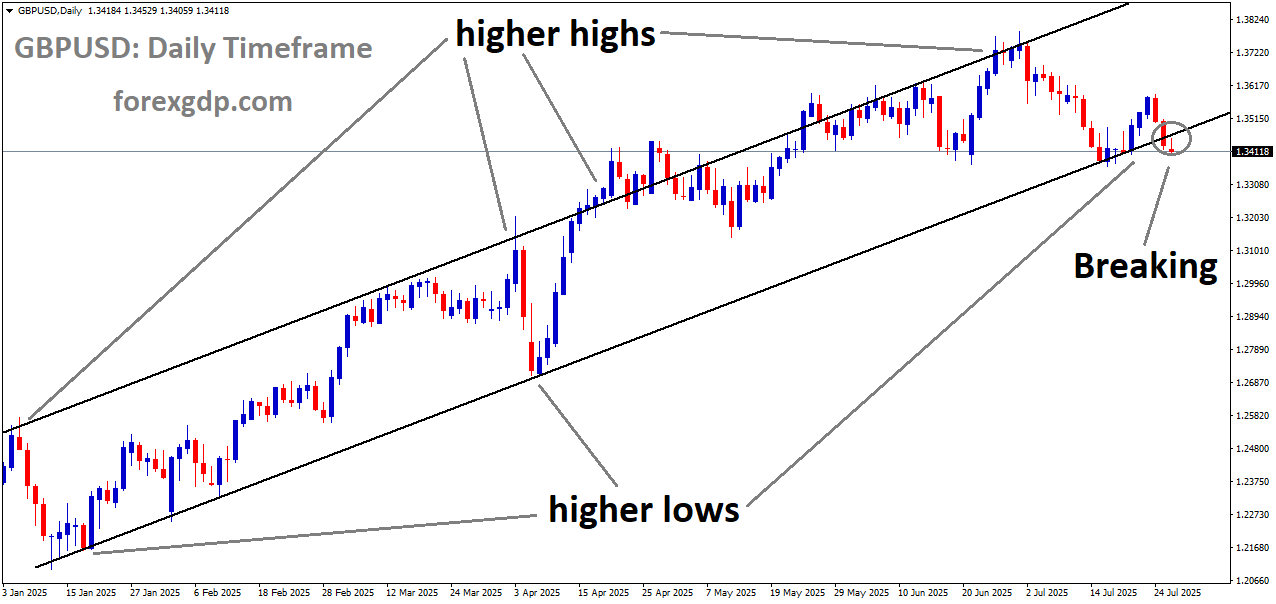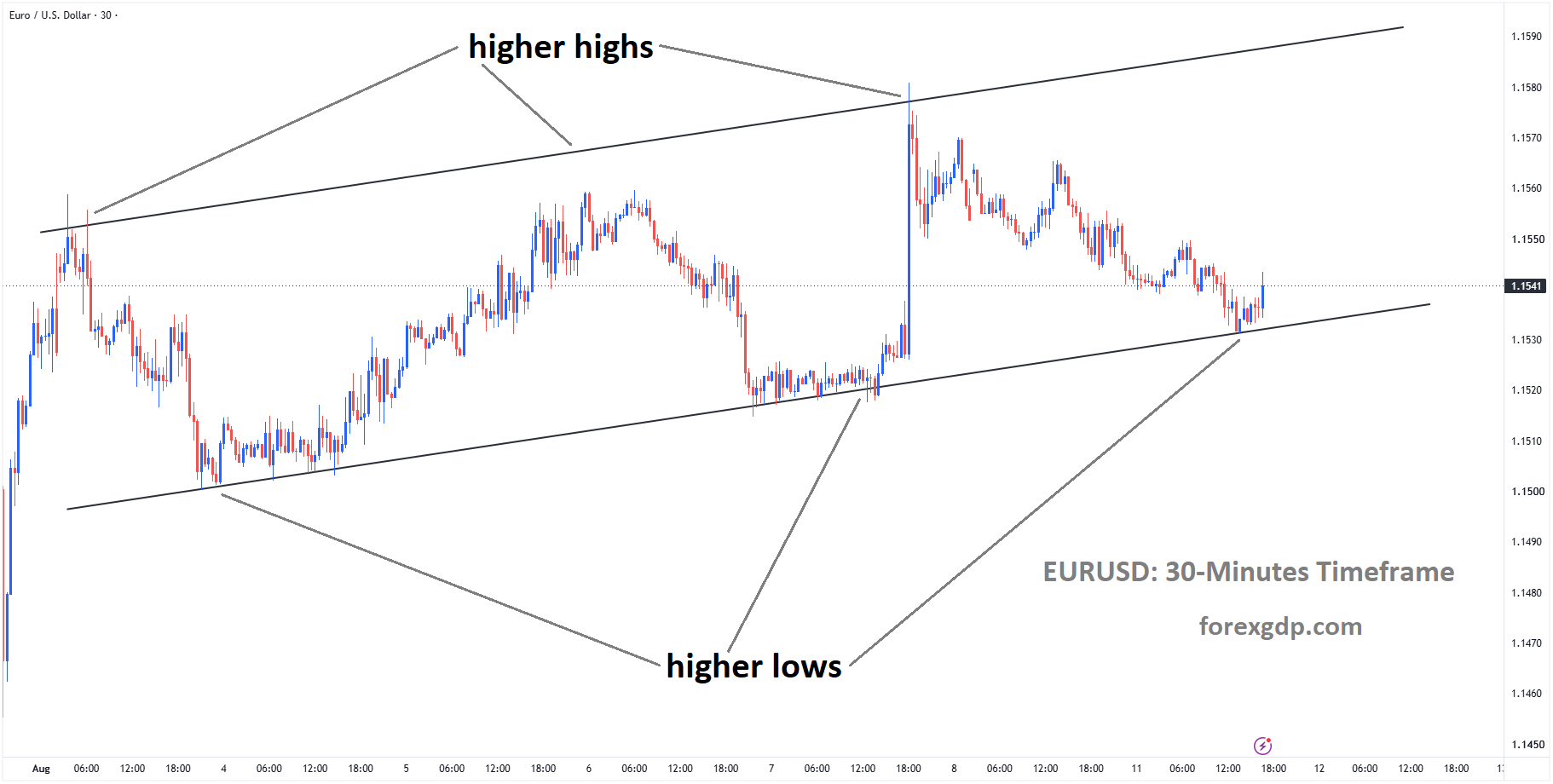
EURUSD is moving in an ascending channel, and the market has reached the higher low area of the channel
EURUSD Loses Momentum With Key US Price Data on the Horizon
The euro weakened slightly against the US dollar on Tuesday as investors responded to growing geopolitical uncertainty, rising energy costs, and caution ahead of important US inflation data.
The currency pair has moved away from its recent multi-week peak as hopes for a quick diplomatic agreement between the United States and Iran continue to fade. Negotiations between Washington and Tehran appear to have reached a difficult stage, keeping concerns about global energy supplies and major shipping routes firmly in focus.
The situation is especially important for the Eurozone because the region depends heavily on imported energy. If disruptions continue and energy costs remain elevated, businesses and consumers across Europe could face additional financial pressure. At the same time, the US dollar is receiving some support from firm comments by a senior Federal Reserve official.
Investors are now waiting for the latest US Consumer Price Index report, which could influence expectations for the Federal Reserve’s next policy decision.
US-Iran Negotiations Struggle to Make Progress
The United States and Iran remain unable to find common ground on several major issues. One of the main areas of disagreement involves the full reopening of the Strait of Hormuz, a narrow but extremely important waterway used for global energy shipments.
A large share of the world’s seaborne oil trade passes through this route. Any restriction on shipping can create fears about supply shortages, delivery delays, and higher transportation costs. These concerns can quickly affect the wider global economy, particularly countries that depend on imported fuel.
Efforts to reach an agreement have become more complicated because both sides are seeking compensation related to war damage. These competing demands have reduced confidence that a peace arrangement can be completed soon.
Shipping activity through the Strait of Hormuz remains heavily restricted. The continued disruption is creating uncertainty for energy traders, transport companies, governments, and industries that rely on stable fuel supplies.
The outlook for negotiations has weakened further after Iran reportedly rejected the possibility of beginning fresh talks with US President Donald Trump. Reports in Iranian media suggest that Tehran may wait until the end of Trump’s current term before considering a return to formal negotiations.
Such a long delay would leave the region facing an extended period of uncertainty. Even without a direct escalation, the lack of diplomatic progress may continue to influence energy markets, international shipping, and investor confidence.
Disruptions Spread Across Important Shipping Routes
The Strait of Hormuz is not the only regional trade route facing problems. Disruptions are also continuing around the Bab el-Mandeb Strait, another strategically important passage for commercial shipping.
The Bab el-Mandeb connects the Red Sea with the Gulf of Aden and provides access to the Suez Canal. It plays a major role in trade between Europe and Asia. When vessels cannot safely use this route, shipping companies may be forced to take longer journeys around Africa.
These alternative routes increase fuel use, insurance expenses, delivery times, and operating costs. The effects can spread through international supply chains and make imported goods more expensive.
Simultaneous disruption in both the Strait of Hormuz and the Bab el-Mandeb creates a particularly difficult environment for the global economy. One route is vital for energy exports from the Middle East, while the other is central to trade moving toward Europe through the Red Sea.
This combination has supported higher oil costs and increased concerns that energy supply problems could continue. For the euro, that creates an important economic risk.
Higher Energy Costs Create Challenges for the Eurozone
The Eurozone imports a significant amount of the energy it consumes. As a result, rising oil costs can place pressure on the region’s trade balance, businesses, and household spending.
European companies may face higher transportation and production expenses when fuel becomes more costly. Some businesses can pass those expenses on to customers, but others may have to accept lower profits. Both outcomes can weaken economic activity.
Consumers can also feel the impact through higher costs for transport, heating, food, and other essential goods. When households spend more on energy, they often have less money available for shopping, travel, and services. This can slow demand across the wider economy.
The situation also creates a difficult challenge for policymakers. Higher energy costs can add to inflation even when economic growth is losing momentum. That combination may limit the options available to the European Central Bank.
If geopolitical tensions remain elevated for a prolonged period, investors may become more cautious about the Eurozone’s growth prospects. This could reduce demand for the euro, especially when the US dollar is benefiting from expectations that American interest rates may stay restrictive.
Federal Reserve Comments Support the US Dollar

The US dollar received additional support after Cleveland Federal Reserve President Beth Hammack delivered a firm message about monetary policy.
Hammack said that current policy settings were not damaging the US economy. She also suggested that more than one interest rate increase might be necessary to bring inflation back toward the Federal Reserve’s target.
Her remarks indicate that some Fed officials remain concerned about inflation and may support tighter policy if price pressures do not continue to ease. Higher interest rates can make dollar-denominated assets more attractive to global investors, which may strengthen demand for the US currency.
However, investors remain divided over what the Federal Reserve will do at its September meeting. The central bank will review several economic reports before making its decision, including data on inflation, employment, consumer activity, and overall growth.
This uncertainty is encouraging traders to avoid making large commitments before receiving clearer evidence about the direction of the US economy.
US Inflation Report Becomes the Main Focus
Attention is now turning to the US Consumer Price Index report for July, scheduled for release on Wednesday. The figures will provide an updated picture of how quickly consumer costs are rising.
Economists expect both headline and core inflation to show a small annual slowdown. Headline inflation includes all major categories, while core inflation removes food and energy because those components can change sharply from month to month.
The core figure is often closely watched because it can reveal whether price pressures are becoming deeply established across the economy. Persistent core inflation could encourage the Federal Reserve to maintain a restrictive approach or consider further rate increases.
If inflation comes in above expectations, investors may become more confident that US monetary policy will remain tight. That outcome could offer additional support to the dollar and create more pressure for the euro.
A weaker-than-expected inflation report could produce the opposite reaction. Clear evidence that price growth is slowing may reduce expectations for further monetary tightening and make the dollar less attractive.
Summary
The euro is facing pressure from a combination of geopolitical and economic risks. Difficult negotiations between the United States and Iran have reduced hopes for a rapid reopening of the Strait of Hormuz, while disruption around the Bab el-Mandeb Strait is adding to global shipping concerns.
Higher energy costs are particularly challenging for the import-dependent Eurozone because they can increase business expenses, weaken household spending, and damage the region’s growth outlook. Meanwhile, firm comments from Cleveland Fed President Beth Hammack have helped support the US dollar.
The next major influence will be the US inflation report. Its results could shape expectations for the Federal Reserve’s September decision and determine whether the dollar gains further strength or faces renewed selling pressure.
GBPUSD Pauses Near Recent Highs Before Key Economic Reports
The British pound struggled to extend its recent gains against the US dollar during Tuesday’s early European trading session. The currency pair moved between small gains and modest losses as investors avoided taking strong positions ahead of several important economic reports from the United States and the United Kingdom.
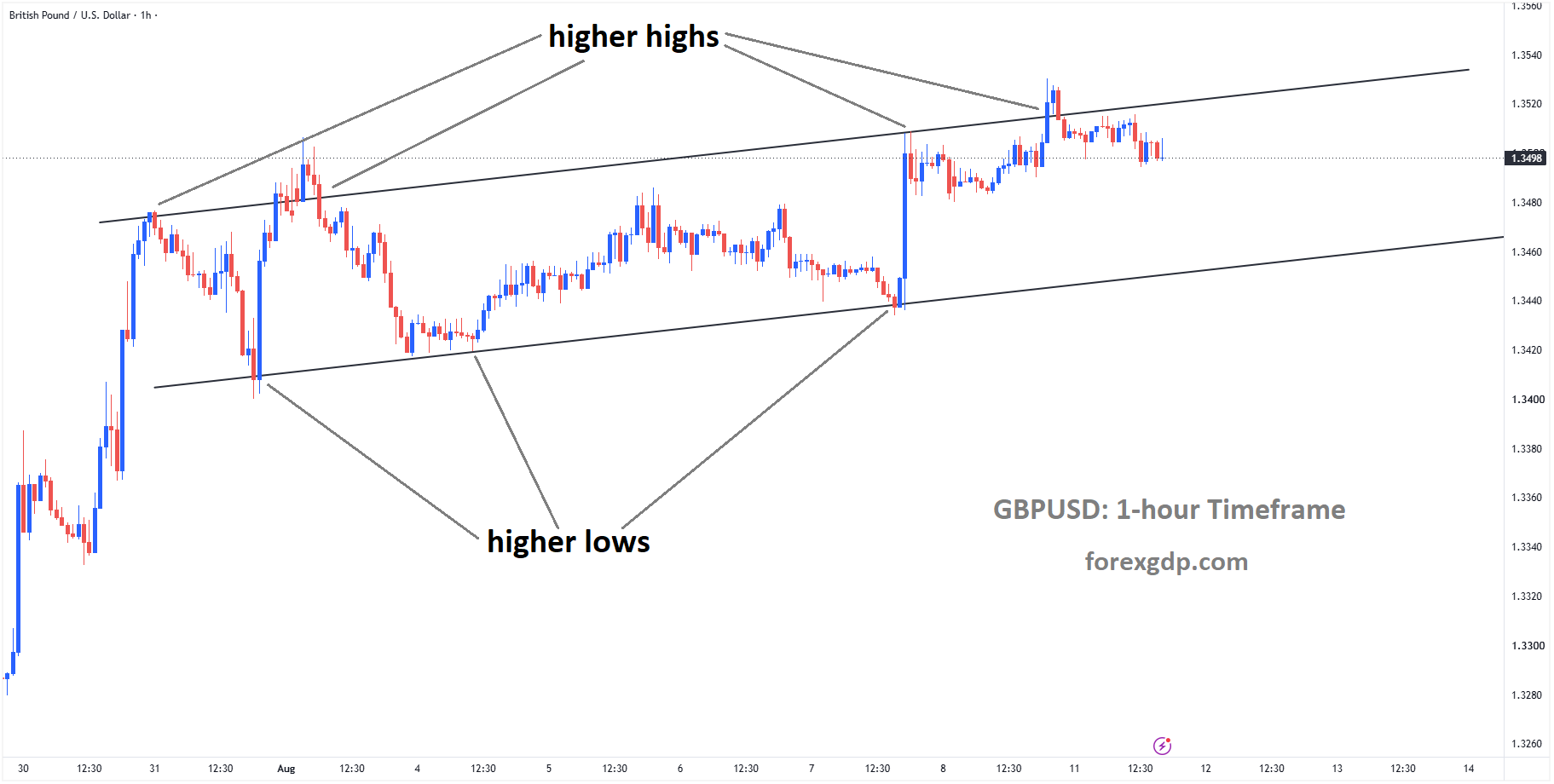
GBPUSD is moving in an ascending channel, and the market has fallen from the higher high area of the channel
Sterling remained close to its strongest level since mid-July, but the latest upward move showed signs of losing momentum. A combination of geopolitical uncertainty, concerns about inflation, and expectations of tighter monetary policy from the US Federal Reserve helped support the dollar.
Traders are now turning their attention to upcoming inflation and economic growth figures. These releases could influence expectations for interest rates in both countries and shape the next phase of movement in GBP/USD.
US Inflation Report Takes Center Stage
The US Consumer Price Index report, due on Wednesday, is expected to be one of the most closely watched economic releases of the week. The data will provide fresh information about inflation across the American economy and could affect the Federal Reserve’s policy outlook.
Inflation has become an even greater concern because of renewed volatility in global oil markets. Higher energy costs can raise transportation, manufacturing, and household expenses. If these pressures continue, inflation may remain stronger than policymakers would prefer.
A surprisingly high inflation reading could strengthen expectations that the Federal Reserve will maintain a firm policy stance. Some market participants already believe the central bank may raise borrowing costs at least once before the end of the year.
Such expectations have helped keep US Treasury bond yields elevated. Higher bond yields can make dollar-based assets more attractive to global investors, which often increases demand for the US currency.
On the other hand, weaker inflation data could reduce the pressure on the Federal Reserve to tighten policy. That outcome may limit demand for the dollar and give the pound more room to recover. Until the figures are released, however, many traders appear unwilling to make large commitments.
UK Growth Figures Could Shape the Pound’s Direction
The preliminary estimate of UK economic growth for the second quarter is scheduled for Thursday. This report will offer an early view of how the British economy performed during the period and may influence expectations surrounding future Bank of England decisions.
A healthy expansion would suggest that the economy is coping with high borrowing costs and ongoing pressure on household budgets. It could also provide some support for sterling by reducing fears of a significant slowdown.
However, disappointing growth figures would raise fresh concerns about the country’s economic strength. Businesses and consumers have faced higher financing costs, while uncertainty about inflation continues to affect spending and investment decisions.
The Bank of England must balance the need to control inflation with the risk of placing too much pressure on the economy. Stronger growth could give policymakers more flexibility to keep monetary conditions restrictive. Weak growth, by contrast, could make future policy decisions more difficult.
Investors will therefore examine the report carefully rather than focusing only on the headline number. Details covering household spending, business activity, services, and industrial production could provide a clearer picture of the economy’s overall condition.
Geopolitical Tensions Increase Demand for the Dollar
Events in the Middle East remain another major influence on currency markets. The continuing dispute between the United States and Iran has reduced hopes for a quick diplomatic solution and increased uncertainty around important global shipping routes.
Iran has ruled out further negotiations with US President Donald Trump and indicated that talks may not resume until his term ends in January 2029. The statement has weakened expectations that restrictions around the Strait of Hormuz will be resolved soon.
The Strait of Hormuz is a vital route for global energy shipments. Any disruption in the area can create concerns about oil supplies and add pressure to energy markets. These risks have contributed to a rise in crude oil costs in recent sessions.
Conditions around the Bab el-Mandeb Strait have also added to the uncertainty. Shipping traffic through the route remains restricted because of a naval blockade linked to the Iran-backed Houthi movement and its actions against Saudi Arabia.
Together, these developments have increased concerns about transportation delays and possible supply disruptions. When geopolitical risks rise, investors often move toward assets they consider safer. The US dollar commonly benefits from this behavior because of its central role in global trade and finance.
Energy Risks Complicate the Federal Reserve Outlook
The rise in oil costs is important not only for global trade but also for monetary policy. Energy expenses can spread through the wider economy by increasing the cost of producing and delivering goods.
Businesses may pass those higher expenses on to customers, keeping consumer inflation elevated. Persistent inflation would make it harder for the Federal Reserve to move toward easier monetary policy.
This connection between geopolitical tension, oil supplies, and inflation has strengthened the argument for the Fed to remain cautious. Even if some areas of the US economy begin to slow, policymakers may hesitate to reduce borrowing costs while energy-related inflation risks remain significant.
The dollar is therefore receiving support from two connected forces. It is attracting safe-haven demand because of geopolitical uncertainty, while also benefiting from expectations that US interest rates could stay high or rise further.
Investors Avoid Large Positions Before Key Releases

The cautious behavior in GBP/USD reflects the busy economic calendar and the number of risks currently affecting financial markets. Traders must consider US inflation, British economic growth, producer-level inflation in the United States, Federal Reserve policy expectations, and developments in the Middle East.
With so many important events approaching, short-term trading has become hesitant. Investors appear reluctant to push the pound much higher without stronger evidence that the UK economy is performing well or that inflation pressure in the United States is easing.
The recent inability of sterling to build decisively on its gains also suggests that buyers remain careful. The pound may benefit if UK growth exceeds expectations, but any renewed strength in US inflation or further escalation in geopolitical tensions could keep the dollar well supported.
Summary
GBP/USD remains caught between recent support for the British pound and renewed demand for the US dollar. Traders are waiting for major economic reports from both countries before choosing a clearer direction.
The upcoming US consumer inflation report will be central to expectations for Federal Reserve policy, while preliminary UK growth figures will offer new evidence about the health of the British economy. US producer inflation data will provide another important measure of underlying cost pressures.
At the same time, tensions involving the United States, Iran, and key Middle Eastern shipping routes continue to support oil costs and safe-haven demand. These risks could keep inflation concerns alive and encourage the Federal Reserve to maintain a more restrictive approach.
Until the main economic releases provide greater clarity, cautious and uneven trading in the pound-dollar pair is likely to continue.
USDJPY Finds Support from Wide Interest Rate Differences and Yen Weakness
USD/JPY recovered from an early decline on Tuesday as renewed demand for the US Dollar and continued pressure on the Japanese Yen shaped market activity. The currency pair moved back toward the upper end of its recent range during the early European trading session, extending its recovery from the weakness recorded earlier in the month.
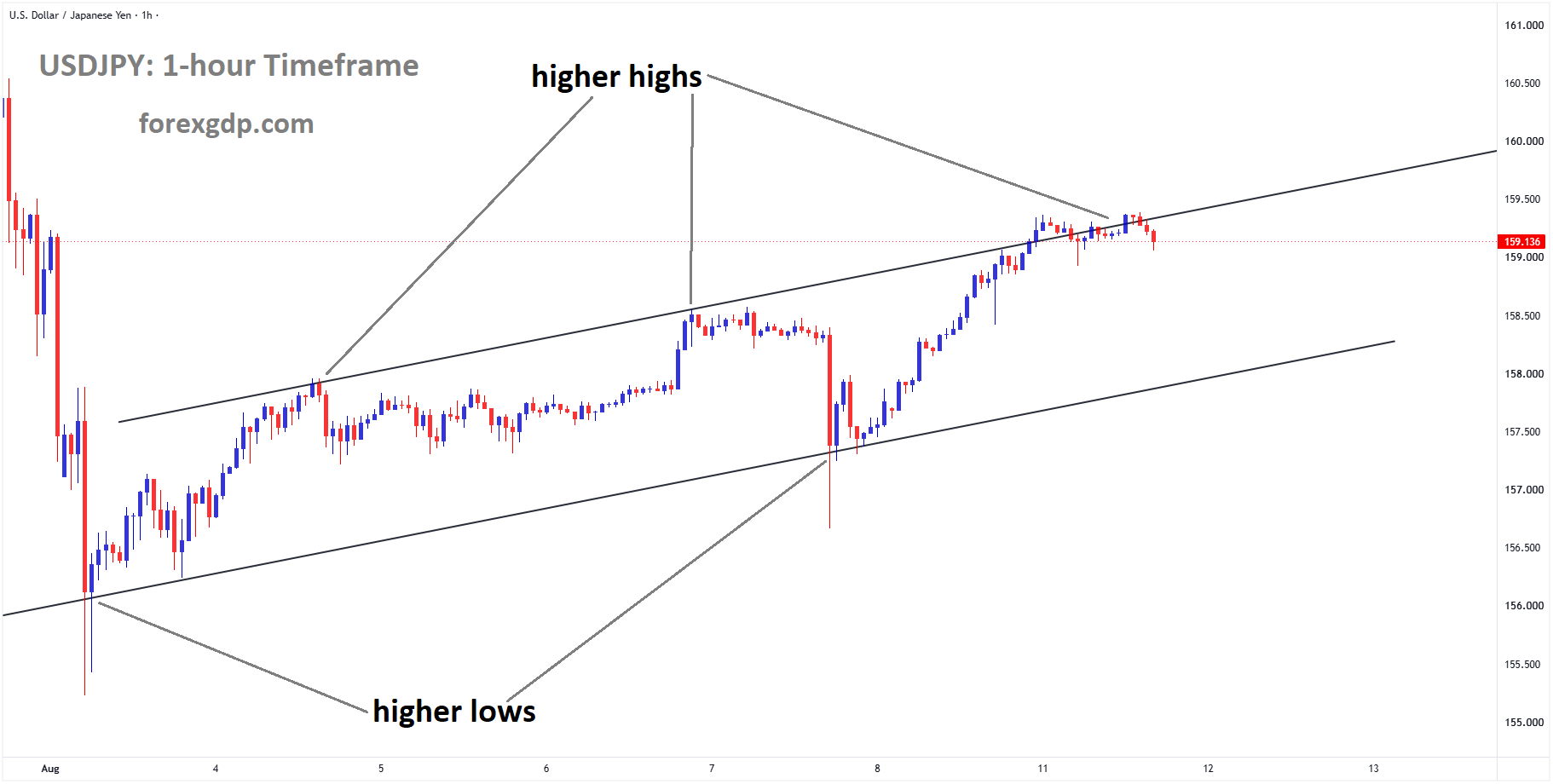
USDJPY is moving in an ascending channel, and the market has fallen from the higher high area of the channel
Several fundamental factors are supporting the pair. Concerns about Japan’s growing public spending, the large interest rate difference between the United States and Japan, and uncertainty surrounding the conflict in the Middle East have all reduced demand for the Yen. At the same time, inflation worries and expectations that the Federal Reserve could maintain a tougher policy stance are helping the US Dollar.
Although traders remain cautious ahead of important US inflation reports, the broader economic environment continues to favor the American currency against the Yen.
Japan’s Fiscal Outlook Creates Pressure on the Yen
The Japanese Yen has lost a significant part of the recovery it achieved following coordinated action by authorities in Japan and the United States. That intervention initially provided support for the currency, but its effect has weakened as investors have returned their attention to Japan’s financial position.
One of the main concerns is the size of the Japanese government’s fiscal plans. Prime Minister Sanae Takaichi’s government has introduced a record budget for the 2026 fiscal year, totaling ¥122.3 trillion. The spending plan has renewed questions about how Japan will manage its already heavy public debt burden.
Large government budgets are not automatically negative for a currency. Public spending can support economic growth, employment, and household demand. However, investors may become concerned when spending rises without a clear long-term strategy for controlling debt or increasing government revenue.
Japan has spent years using generous fiscal support to strengthen an economy affected by slow growth, weak consumer demand, and an aging population. These challenges make it difficult for the government to reduce spending quickly. As a result, worries about the country’s financial health may continue to influence confidence in the Yen.
Wide Interest Rate Gap Keeps Carry Trades Attractive
The difference between Japanese and US interest rates remains another major source of weakness for the Yen. Japan has moved away from its previous ultra-loose monetary policy, but borrowing costs in the country are still much lower than those in the United States and several other developed economies.
This gap encourages investors to use the Yen in carry trades. In this strategy, traders borrow money in a currency with low interest rates and invest it in assets linked to currencies that offer higher returns. The Yen has long been used for this purpose because funding costs in Japan remain relatively low.
As long as the interest rate difference stays wide, investors have a financial reason to sell Yen and hold higher-yielding currencies. This creates steady pressure on the Japanese currency, even when government intervention or safe-haven demand produces a temporary rebound.
The Bank of Japan faces a difficult policy decision. Raising interest rates more quickly could help the Yen and control inflation, but it could also increase borrowing costs for the government, businesses, and households. A slower approach may protect the domestic economy, though it risks keeping the currency under pressure.
Weak US Employment Data Has a Limited Impact
The latest US employment report initially raised questions about the strength of the American economy. Disappointing Nonfarm Payrolls figures encouraged some traders to consider whether the Federal Reserve might eventually adopt a softer approach to monetary policy.
That reaction did not last long. Investors quickly shifted their attention back to inflation, particularly the risk that higher energy costs could make price pressures more difficult to control.
Employment data remains important because a weaker labor market can reduce wage growth and consumer spending. These developments would normally give the Federal Reserve more room to lower interest rates. However, the central bank must also consider the effect of rising fuel and transportation costs on the wider economy.
If energy-driven inflation remains strong, the Fed may be reluctant to provide monetary support, even if hiring slows. This conflict between weaker employment conditions and persistent inflation has made the future direction of US policy less certain.
Middle East Tensions Strengthen Safe-Haven Demand

Developments in the Middle East are also supporting the US Dollar. The continuing US-Iran standoff has increased demand for assets that investors traditionally view as safer during periods of political and economic uncertainty.
Oil supply concerns have become especially important. Hopes for a quick reopening of the Strait of Hormuz have faded, while restricted traffic through the Bab el-Mandeb Strait has added to fears about global shipping and energy deliveries.
Both waterways are essential routes for international trade. Any prolonged disruption could increase transportation costs, delay shipments, and reduce the availability of oil and other goods. These problems may eventually raise costs for companies and consumers in many countries.
The situation creates a complicated environment for financial markets. The Yen has historically benefited from safe-haven demand, but Japan’s dependence on imported energy can limit that advantage when oil supply risks increase. Higher energy costs can weaken Japan’s trade position and place additional pressure on businesses and households.
The US Dollar, meanwhile, often attracts demand during global uncertainty because of its central role in trade, finance, and international reserves. This has allowed the American currency to benefit more clearly from the latest geopolitical concerns.
Inflation Data Will Guide Federal Reserve Expectations
Investors are now preparing for the latest US Consumer Price Index and Producer Price Index reports. These releases will offer valuable information about inflation at both the consumer and business levels.
The Consumer Price Index shows how the cost of everyday goods and services is changing for households. The Producer Price Index measures price pressures faced by companies earlier in the supply chain. Together, the reports can help traders judge whether inflation is becoming more persistent.
Stronger inflation figures could reinforce expectations that the Federal Reserve will keep monetary policy tight or consider another interest rate increase during 2026. Such an outcome would likely support the US Dollar by keeping American assets attractive to global investors.
Softer data could reduce those expectations, especially after the disappointing employment report. It might also encourage investors to believe that the Fed has more flexibility to support economic growth.
Until the figures are published, many traders may avoid making large commitments. The results could significantly change expectations for US interest rates and influence the next move in USD/JPY.
Summary
USD/JPY recovered from an early decline as weakness in the Japanese Yen combined with renewed support for the US Dollar. Japan’s record fiscal plans and concerns about its long-term debt position are reducing confidence in the Yen, while the wide US-Japan interest rate gap continues to encourage carry-trade activity.
In the United States, the effect of disappointing employment data has been limited by fresh inflation concerns. Rising energy supply risks linked to tensions in the Middle East could keep price pressures elevated and encourage the Federal Reserve to maintain a firm policy stance.
The next US consumer and producer inflation reports will be important for determining whether expectations of tighter Federal Reserve policy remain justified. Geopolitical developments will also influence safe-haven demand. For now, the overall fundamental picture continues to provide more support for the US Dollar than the Japanese Yen.
USDCAD Struggles to Recover as Crude Supply Fears Favor the Canadian Dollar
The Canadian Dollar is holding firm against the US Dollar as rising crude oil costs and encouraging Canadian employment figures improve demand for the currency. At the same time, the Greenback continues to benefit from inflation concerns, geopolitical uncertainty, and expectations that the Federal Reserve may keep monetary policy restrictive.
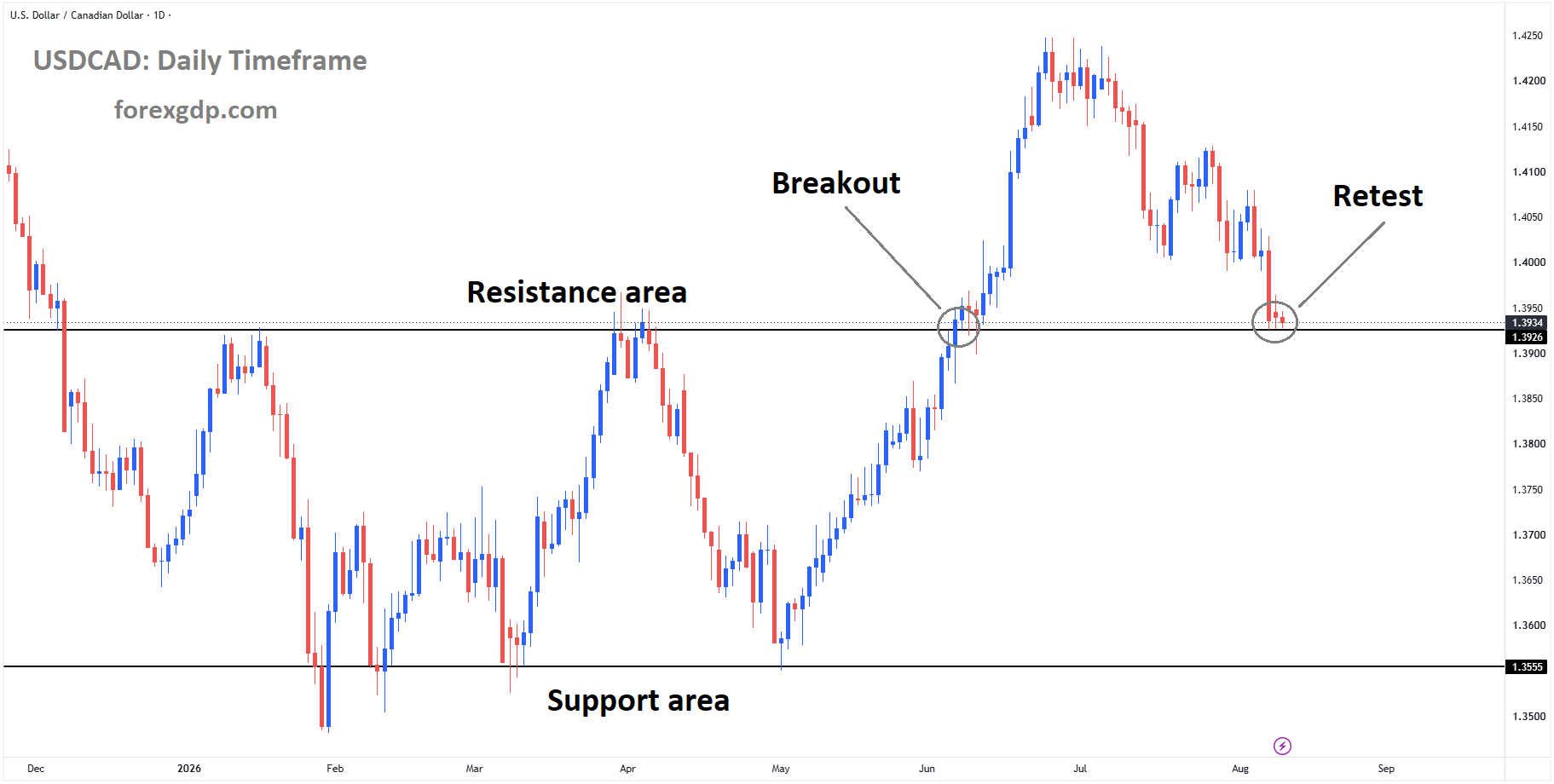
USDCAD reached the retest area of the broken box pattern
This combination has left USD/CAD near a two-month low, with neither currency able to establish complete control. The Canadian Dollar is receiving meaningful support from the energy market, while the US Dollar remains protected by its safe-haven role and changing expectations surrounding US interest rates.
The next major influence could come from American inflation reports. Investors are preparing for the Consumer Price Index and Producer Price Index, which may offer clearer guidance about the Federal Reserve’s next steps.
Oil Supply Concerns Support the Canadian Dollar
Crude oil remains one of the most important drivers of the Canadian Dollar because Canada is a major energy exporter. When oil becomes more valuable or concerns grow about the availability of global supplies, Canada’s export outlook can improve. This often creates additional demand for the Canadian currency.
Oil markets are currently being supported by growing uncertainty in the Middle East. Tensions involving the United States and Iran have reduced expectations that shipping conditions in the region will return to normal quickly.
The Strait of Hormuz remains a central concern. It is one of the world’s most important routes for transporting oil and other energy products. Any prolonged disruption could affect international supplies and make it more difficult or expensive to move energy shipments between producers and buyers.
Shipping through the Bab el-Mandeb Strait is also facing continued disruption. This route connects the Red Sea with the Gulf of Aden and plays a major role in global trade. Problems in both areas have increased worries that energy supplies could face further delays or restrictions.
For the Canadian Dollar, these developments provide a helpful external advantage. Canada is not directly involved in the regional conflict, but its currency can still benefit when global oil supply fears make Canadian energy exports more important.
US-Iran Dispute Reduces Hopes for a Quick Settlement
Political tensions between Washington and Tehran have added another layer of uncertainty. Iran has reportedly rejected the possibility of holding further negotiations with US President Donald Trump during his current term.
Reports from Iranian media suggest that Tehran may wait until Trump leaves office before considering a return to formal discussions. If that position remains unchanged, a diplomatic breakthrough could be difficult to achieve in the near future.
The absence of negotiations raises the risk that disruptions affecting major shipping routes will continue. It also makes businesses and energy traders more cautious when assessing the security of future supplies.
These concerns extend beyond the oil industry. Important sea routes in the Middle East carry a large share of international trade, including fuel, manufactured goods, and raw materials. Longer travel times, higher insurance costs, and limited access to key waterways could eventually increase expenses across several parts of the global economy.
Such uncertainty tends to support oil-producing economies, including Canada. However, it can also strengthen the US Dollar because investors often turn to highly liquid and widely accepted assets during periods of international stress.
Canadian Employment Data Adds Domestic Support
The Canadian Dollar is not relying only on higher oil costs. Recent employment figures from Canada have also provided support by pointing to continued strength in the labor market.
A healthy jobs market can help maintain household spending and reduce concerns about a sharp economic slowdown. It may also influence the Bank of Canada’s policy decisions, especially if employment strength contributes to persistent wage growth or inflation.
Stronger labor conditions can make policymakers less willing to introduce rapid interest-rate reductions. Although employment data is only one part of the economic picture, it can improve confidence in Canada’s ability to handle uncertain global conditions.
The combination of supportive energy developments and better labor-market results has allowed the Canadian Dollar to maintain an advantage against its US counterpart. Still, that advantage remains limited because the US Dollar has several sources of support of its own.
Inflation Risks Keep the US Dollar Resilient
The latest US employment report failed to meet expectations, but it did not completely remove the possibility of tighter Federal Reserve policy. Some investors still believe the central bank could raise interest rates before the end of the year if inflation becomes more difficult to control.
Energy costs are an important part of this debate. A lasting rise in oil expenses can affect transportation, production, and shipping costs. Companies may eventually pass some of those additional expenses to consumers, creating broader inflationary pressure.
Federal Reserve officials have repeatedly focused on returning inflation to a sustainable level. If new data shows that consumer or producer costs are accelerating, policymakers may decide that restrictive borrowing conditions need to remain in place for longer.
Expectations of higher US interest rates can support the Dollar by making American assets more attractive to international investors. This helps explain why the Greenback has remained relatively stable despite weaker employment growth.
Geopolitical uncertainty is offering further support. During periods of conflict or financial concern, investors frequently move money into the US Dollar because of its central role in global trade and finance. That safe-haven demand is preventing a larger shift in favor of the Canadian Dollar.
US CPI and PPI Reports Move Into Focus
Attention is now turning toward two important US inflation releases. The Consumer Price Index will provide an update on changes in the cost of goods and services paid by households. It is one of the most closely followed measures of inflation in the American economy.
The Producer Price Index will follow and show how costs are changing for businesses. Producer inflation can offer early signs of pressure that may later reach consumers, particularly when companies face higher expenses for fuel, materials, or transportation.
Together, these reports could reshape expectations for Federal Reserve policy. Stronger inflation would likely reinforce the argument for keeping interest rates elevated or considering another increase. Softer figures could reduce those expectations and shift attention back toward signs of weakness in the labor market.
Oil developments will remain equally important for USD/CAD. Further disruption in the Middle East could continue to benefit the Canadian Dollar through its connection with energy exports. A reduction in regional tensions could weaken that support and allow US economic data to become the main influence.
Summary
The Canadian Dollar remains supported by rising oil costs, concerns about Middle Eastern supply routes, and encouraging domestic employment data. Canada’s position as a major energy exporter makes its currency particularly sensitive to changes in the global oil outlook.
The US Dollar, however, continues to benefit from inflation risks, possible Federal Reserve tightening, and demand for safer assets during geopolitical uncertainty. Upcoming US consumer and producer inflation reports may provide the clearest signal about the central bank’s policy direction.
Until those figures are released, developments involving Iran, the United States, and major regional shipping routes are likely to remain central to the outlook for both oil and USD/CAD.
AUDUSD Pushes Higher Before Crucial Central Bank Update
The Australian Dollar regained strength against the US Dollar on Tuesday as investors prepared for the Reserve Bank of Australia’s latest monetary policy decision. The currency recovered from modest weakness in the previous session, supported by expectations that Australian interest rates will remain unchanged.
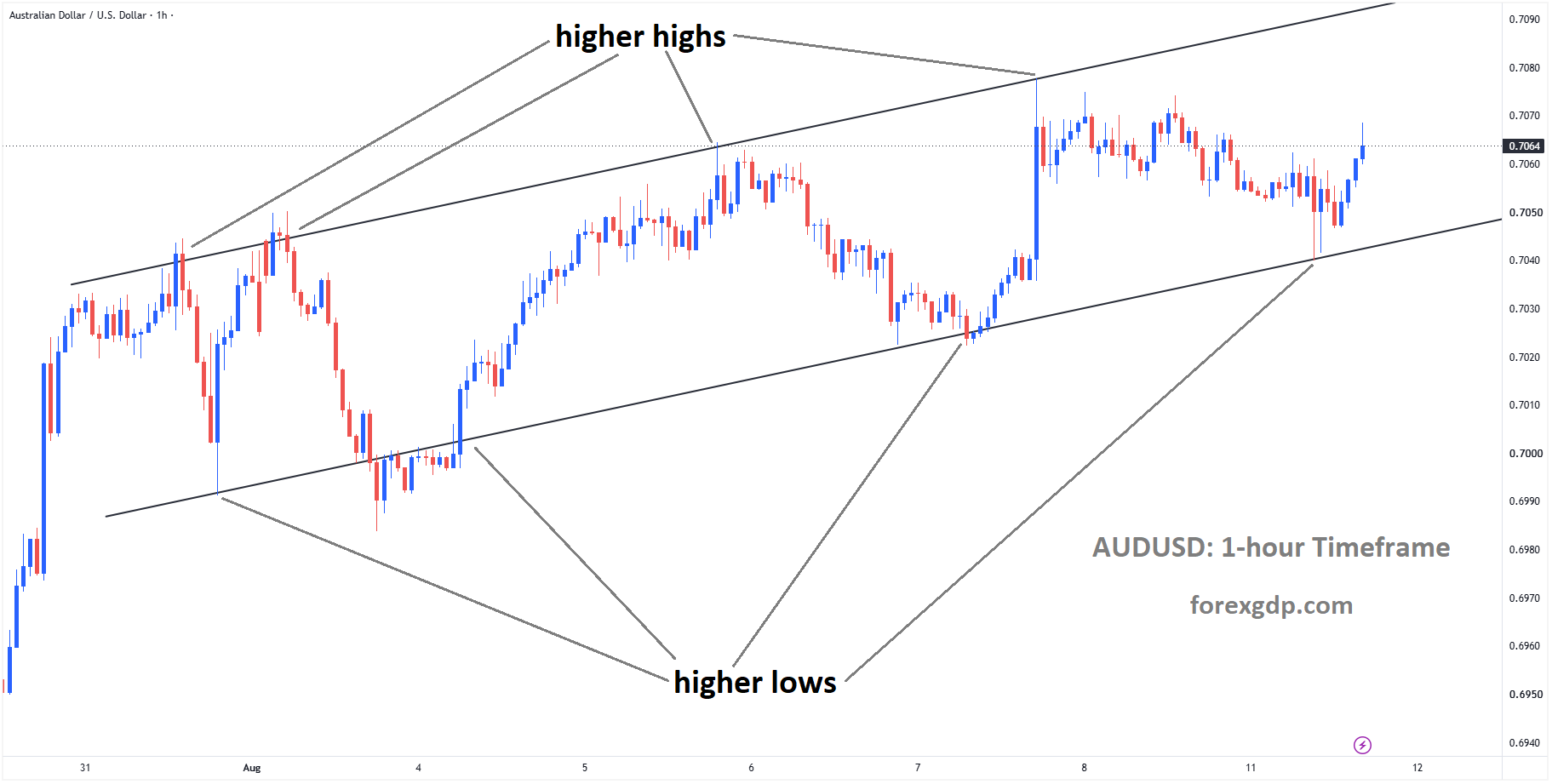
AUDUSD is moving in an ascending channel, and the market has rebounded from the higher low area of the channel
Attention is firmly focused on the RBA’s policy announcement, its updated economic forecasts, and comments from Governor Michele Bullock. Although no immediate policy change is widely expected, the central bank’s assessment of inflation, employment, and economic growth could influence expectations for the months ahead.
At the same time, the US Dollar is facing pressure after weaker American employment data raised fresh questions about the Federal Reserve’s next move. The combination of uncertainty surrounding US monetary policy and caution ahead of the RBA decision has helped the Australian currency remain resilient.
RBA Expected to Leave Cash Rate Unchanged
The Reserve Bank of Australia is widely expected to keep its Official Cash Rate at 4.35% for a second consecutive meeting. Such a decision would suggest that policymakers are willing to wait for more economic evidence before considering another adjustment.
Holding the rate steady does not necessarily mean the RBA believes its fight against inflation is complete. Instead, officials may want more time to study how existing borrowing costs are affecting households, businesses, employment, and consumer demand.
Australian families have already experienced a prolonged period of high mortgage repayments and rising living expenses. Further tightening would add pressure to household budgets, particularly for borrowers whose loans move closely with the central bank’s policy rate.
However, the RBA must also consider the risk of leaving policy unchanged for too long. If inflation remains persistent, especially in services and other domestic areas of the economy, officials may decide that additional action is required later.
This balance makes the central bank’s guidance just as important as the rate decision itself. Investors will be watching closely for any change in language that reveals whether policymakers remain concerned about inflation or are becoming more confident that price pressures are easing.
Economic Forecasts Could Shape the Australian Dollar Outlook
The RBA’s Monetary Policy Statement and revised economic projections will provide a broader picture of how the central bank views the Australian economy. These forecasts are likely to cover inflation, unemployment, household spending, wage growth, and overall economic activity.
Inflation will remain the most important issue. Softer price growth would reduce the urgency for another increase in borrowing costs. However, signs that inflation is becoming more widespread could encourage the RBA to maintain a firm policy position.
Employment conditions will also play an important role. Australia’s labor market has shown resilience, helping households manage higher living and borrowing costs. A strong jobs market can support consumer spending, but it may also contribute to wage and service-sector inflation if demand remains too strong.
Economic growth presents another challenge. Higher interest rates have already slowed some areas of activity, while households continue to limit non-essential spending. The RBA must avoid placing unnecessary pressure on the economy while still working to return inflation to a sustainable level.
Updated projections may therefore offer valuable clues about the likely direction of future decisions. Even if rates remain unchanged, a cautious or inflation-focused message could support the Australian Dollar by suggesting that policy will stay relatively tight.
Governor Michele Bullock’s Comments Take Center Stage
RBA Governor Michele Bullock’s press conference will give investors an opportunity to hear a more detailed explanation of the central bank’s position. Her answers may clarify how the board is interpreting recent inflation figures and whether officials discussed alternative policy options.
Markets will pay particular attention to any comments about the possibility of another rate increase. Bullock may stress that future decisions will depend on incoming economic data rather than follow a fixed path.
The governor could also address the financial pressure facing Australian households. Mortgage costs, rent, food, energy, and other essential expenses remain important public concerns. At the same time, the RBA’s main responsibility is to bring inflation under control while protecting employment and economic stability.
A careful message would allow the central bank to keep its options open. The RBA may want to avoid creating the impression that further tightening is certain, but it is also unlikely to declare victory over inflation before there is clear and lasting evidence of improvement.
Weak US Employment Data Pressures the Dollar

The Australian Dollar is also benefiting from softer sentiment toward its US counterpart. A weaker-than-expected July payrolls report created uncertainty about the strength of the American labor market and the future course of Federal Reserve policy.
Before the employment report, many investors expected the Fed to keep interest rates unchanged for an extended period. The disappointing labor figures challenged that view by raising concerns that economic conditions may be losing momentum.
A softer jobs market could eventually reduce inflation pressure and make additional tightening less necessary. It could also increase the possibility of easier monetary policy if employment conditions weaken significantly.
This change in expectations has placed the US Dollar under pressure. However, the outlook remains uncertain because Federal Reserve officials are still concerned about inflation.
Federal Reserve Faces Conflicting Policy Signals
Cleveland Federal Reserve President Beth Hammack has argued that more than one additional interest rate increase may be required to control broadening inflation. She believes current borrowing costs are not yet restrictive enough to slow price pressures across the economy.
Hammack had already supported an immediate rate increase at the Federal Reserve’s July policy meeting. Her position shows that some officials remain more worried about inflation than slowing employment growth.
This creates a difficult policy environment for the Fed. On one side, weak payroll figures suggest that officials should be cautious about placing further pressure on the labor market. On the other, persistent inflation could require a tighter approach.
The upcoming US Consumer Price Index report will be an important part of that debate. A strong inflation reading could support arguments for further action, while softer data may strengthen the case for patience.
For the Australian Dollar, uncertainty at the Fed may provide short-term support, especially if the RBA maintains a cautious stance toward domestic inflation. Still, the broader direction will depend on how economic conditions develop in both countries.
Summary
The Australian Dollar has strengthened as markets await the Reserve Bank of Australia’s policy decision. The RBA is expected to keep its cash rate unchanged at 4.35%, but its updated forecasts and Governor Michele Bullock’s comments could reveal whether further action remains possible.
Meanwhile, weaker US payroll data has created new uncertainty around Federal Reserve policy and placed pressure on the US Dollar. Despite that weakness, comments from Cleveland Fed President Beth Hammack show that inflation concerns remain serious.
The outlook will depend on the contrast between the two central banks. The RBA is balancing persistent inflation against pressure on households, while the Fed must respond to both softer employment conditions and continuing price risks.
Don’t trade all the time, trade forex only at the confirmed trade setups
Get more confirmed trade signals at premium or supreme – Click here to get more signals, 2200%, 800% growth in Real Live USD trading account of our users – click here to see , or If you want to get FREE Trial signals, You can Join FREE Signals Now!