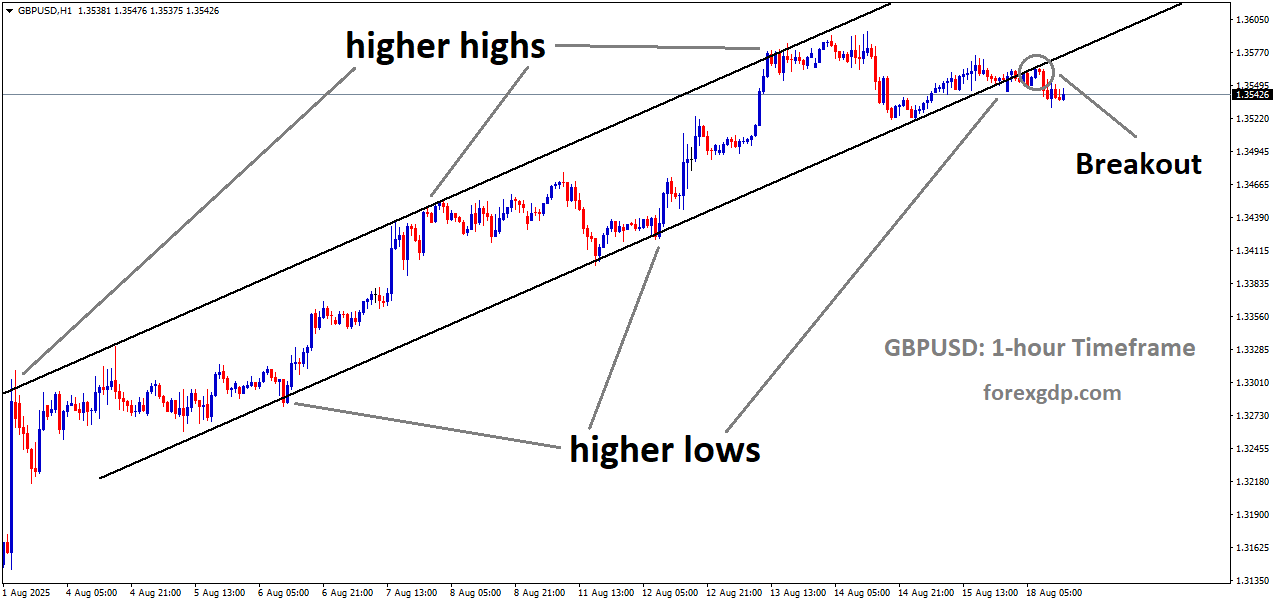
GBPUSD has broken the uptrend channel on the downside
Daily Forex Trade Setups Aug 18, 2025
Stay on top of market trends with our Daily Forex Trade Setups (Aug 18, 2025)
GBPUSD consolidates as Trump-Zelenskyy meeting draws global attention
The currency market has entered a quiet yet highly watchful phase. The Pound Sterling (GBP) is consolidating against the US Dollar (USD), with traders and investors turning their attention toward both global political developments and upcoming economic reports. Instead of big price swings, the current atmosphere is marked by cautious optimism, patient waiting, and a healthy dose of curiosity about what lies ahead.
A Calm Before the Storm: Why Traders Are Watching the White House
At the center of attention is a significant meeting at the White House. U.S. President Donald Trump is scheduled to sit down with Ukrainian President Volodymyr Zelenskyy, alongside NATO representatives, to discuss Russia’s proposed conditions for halting the ongoing war in Ukraine.
This follows Trump’s earlier meeting with Russian President Vladimir Putin in Alaska, where Putin suggested freezing the front lines of the war in exchange for Ukraine giving up the Donetsk region. Unsurprisingly, Ukraine’s leadership has rejected the idea of surrendering any territory, keeping the conflict at a standstill.
For financial markets, these political discussions matter a lot. A breakthrough, even a small one, could ease tensions and spark a wave of confidence in riskier assets like equities and emerging market currencies. On the other hand, if talks end without progress, traders are less likely to panic since much of the war’s economic impact has already been priced into global markets. In other words, a truce could give risk assets a boost, but no deal will probably just keep things steady.
UK Inflation Data: The Next Big Test for the Pound
Beyond politics, investors are carefully waiting for fresh economic numbers from the United Kingdom. On Wednesday, the latest Consumer Price Index (CPI) report is set to be released, and it could have a strong influence on the Pound’s direction.
Why Core CPI Matters
The spotlight will be on the core CPI figure, which strips out volatile items like food and energy to give a clearer picture of long-term price trends. Analysts expect the number to show steady growth of about 3.7% on an annual basis. If inflation remains stubbornly high, it signals that the Bank of England may need to keep monetary policy tighter for longer, despite having recently trimmed its interest rates.
The central bank has emphasized a “gradual and careful” approach when adjusting policy. That careful balancing act—managing growth without letting inflation slip out of control—is why every piece of inflation data is so closely watched by traders and economists alike.
Focus Shifts to the U.S.: Jackson Hole Symposium in the Spotlight
While the UK prepares for its inflation update, across the Atlantic, the United States has its own high-stakes event on the calendar. The annual Jackson Hole Symposium, a gathering of central bankers, economists, and policymakers, is set for later this week.

Why This Symposium Is So Important
The highlight will be remarks from Federal Reserve Chair Jerome Powell. Traders will hang on to every word as they look for hints about the Fed’s next move on interest rates. Powell’s tone—whether cautious, confident, or dovish—could sway not only the U.S. Dollar but also global markets.
Recently, expectations for a September rate cut by the Fed have grown significantly. After U.S. job market data showed signs of cooling, investors quickly adjusted their forecasts, now strongly betting that the central bank will take action to support growth. According to market gauges, more than four out of five traders believe a rate cut is coming soon.
Adding weight to this expectation, San Francisco Fed Bank President Mary Daly has already suggested that there is room for at least one, possibly two, rate cuts this year. That kind of commentary has fueled speculation that U.S. monetary policy will soon shift in a more supportive direction.
How Markets Are Reacting So Far
Despite all the noise around politics and upcoming events, the broader market mood remains calm. Stock futures are showing only modest gains, suggesting investors are not rushing into big bets until they see concrete outcomes from either the White House meeting or the economic events scheduled later in the week.
For the Pound, this means limited movement in the short term. Instead of sharp rallies or steep declines, the currency is likely to stay in a narrow trading range until traders get fresh clues. Once the inflation data lands and the Jackson Hole Symposium begins, however, volatility could pick up quickly.
What This Means for Everyday Observers
You don’t need to be a professional trader to recognize the ripple effects of these developments. Political negotiations over the Russia-Ukraine conflict have implications for energy markets, food supplies, and global stability. Meanwhile, inflation and interest rate policies directly shape borrowing costs, savings returns, and even job prospects.
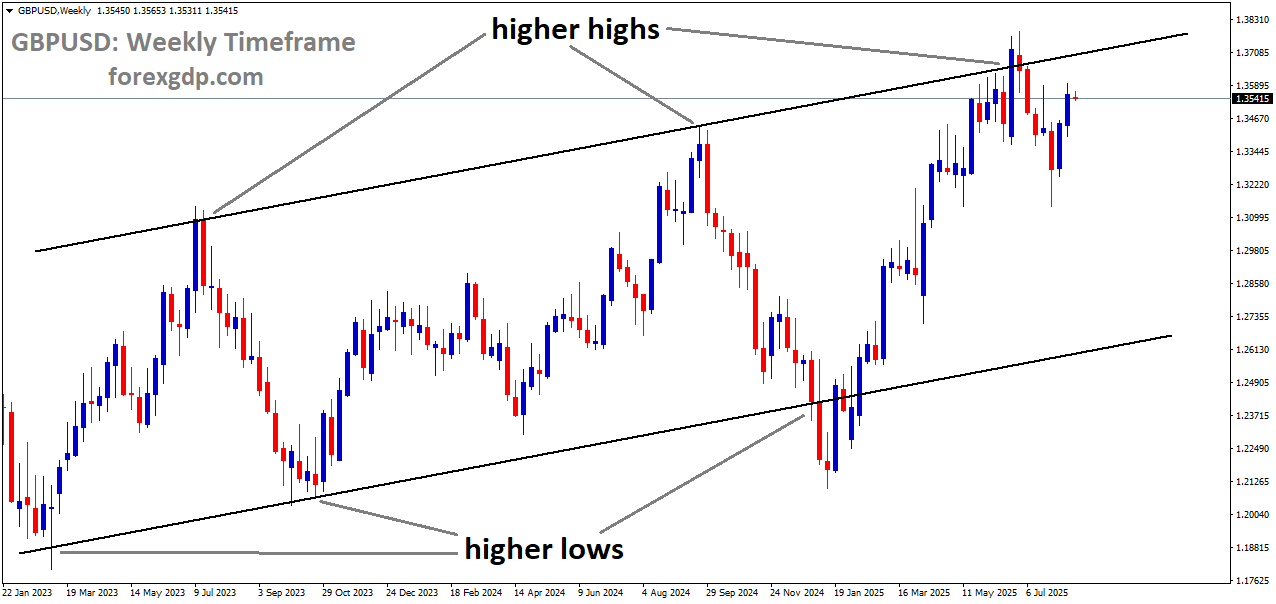
GBPUSD is moving in an uptrend channel
So, while the technical jargon of financial markets can feel distant, the underlying stories—peace talks, cost of living, and central bank decisions—are deeply connected to everyday lives. Watching these events unfold gives a window into how the global economy adapts to constant change.
Final Summary
The Pound Sterling is in a holding pattern, with traders keeping a close eye on both geopolitics and economics. The upcoming Trump-Zelenskyy meeting at the White House could either signal progress toward peace or reinforce the status quo, while the UK’s inflation report will play a crucial role in shaping expectations for the Bank of England. Across the Atlantic, the Jackson Hole Symposium will provide much-needed insight into the Federal Reserve’s policy direction.
Right now, markets are calm, almost as if holding their breath. But with these key events lined up, the stage is set for potential shifts that could influence currencies, stocks, and broader investor sentiment worldwide.
EURUSD drifts lower as markets await outcome of White House discussions
When it comes to global markets, politics and central bank speeches can shift sentiment almost overnight. Right now, the Euro is holding on to most of its recent gains, even though the overall market mood feels flat. Investors and traders are keeping a close eye on what could become a decisive week — not because of major economic reports, but due to political talks and influential speeches.
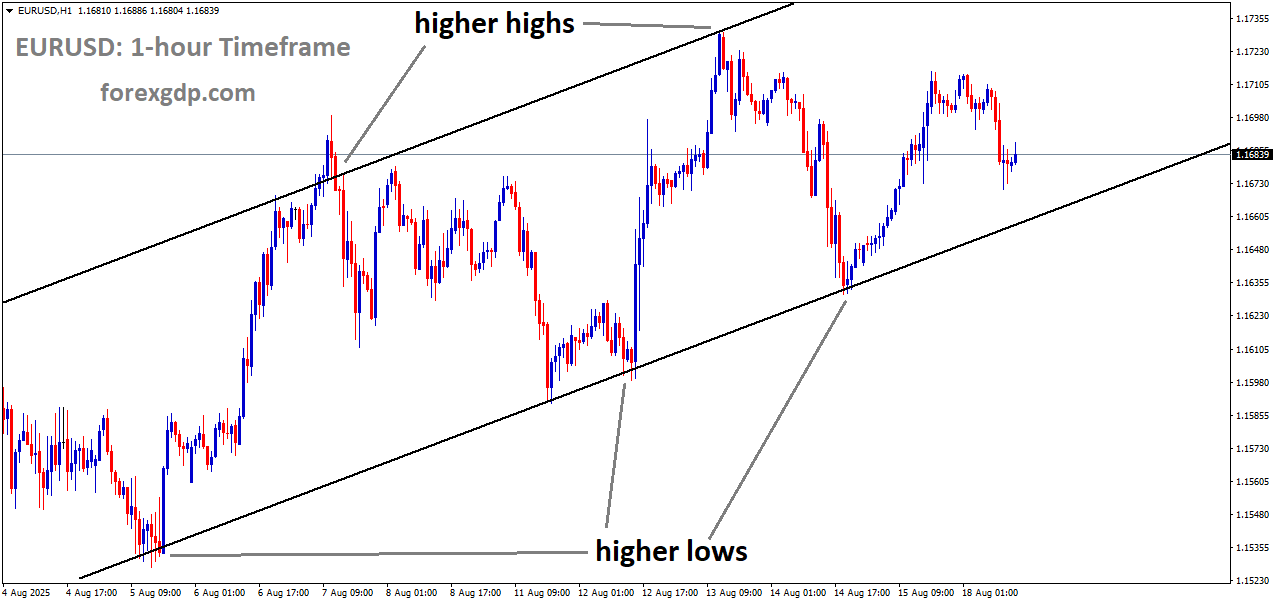
EURUSD is moving in an Ascending channel
Let’s break down what’s happening and why it matters.
The Trump-Zelenskyy Summit: A Meeting Loaded With Tension
At the center of attention this week is the upcoming meeting between U.S. President Donald Trump and Ukraine’s President Volodymyr Zelenskyy. What makes this summit so important isn’t just the fact that it’s happening in the White House, but also the shadow of Russia looming behind it.
Reports suggest that Trump is expected to push Zelenskyy toward accepting conditions that favor Moscow, particularly those proposed by President Vladimir Putin. The idea of Ukraine conceding occupied territory has been floated — something Zelenskyy has consistently rejected. For Ukraine, giving up land taken by Russia is not only politically unthinkable but also a direct challenge to its sovereignty.
European leaders are also watching closely, as their support for Ukraine remains strong. The divide between what Trump may push for and what Europe wants could become a defining factor in how the West continues to approach the war in Ukraine.
Why This Matters to Markets
Political stability, or lack of it, often shows up in market sentiment. Even though the Euro has been relatively stable in early sessions, investors know that any sign of progress or failure in these talks could ripple into currencies and broader financial markets.
A Quiet Start, But Big Speeches Ahead
Interestingly, the beginning of the week doesn’t bring any heavy-hitting data from either the U.S. or the Eurozone. Monday’s calendar is essentially empty, meaning markets are just drifting for now. But that calm won’t last.
The real action is set for midweek and beyond:
-
Wednesday: Christine Lagarde, the President of the European Central Bank (ECB), is scheduled to speak at the World Economic Forum in Geneva. While she’s expected to stick to her cautious “meeting-by-meeting” stance, even the smallest hint that the ECB could end its easing cycle would grab investor attention. Markets are especially sensitive to anything that sounds “hawkish” — meaning policies that tighten rather than loosen economic conditions.
-
Friday: Jerome Powell, the Chairman of the Federal Reserve, will take the stage at the Jackson Hole Symposium. This event is known for making headlines, and Powell’s words often sway global markets. With recent U.S. data showing strong consumer spending and rising inflation pressures, Powell might lean on the hawkish side. That could dampen expectations of a rate cut later this year, something markets have been hoping for.
What’s Driving the Fed’s Caution?
The Federal Reserve’s role in shaping the global economy cannot be overstated. Traders are paying close attention to Powell’s remarks because the Fed’s stance directly impacts the dollar, global investments, and of course, the Euro.

Strong U.S. Consumer Spending
Recent U.S. retail sales figures point to a resilient economy. July sales rose at a steady pace, following strong growth in June. Even when automobiles were excluded, spending remained solid. This shows that American consumers are still driving growth, which makes it harder for the Fed to justify aggressive rate cuts.
Inflation Concerns
On top of strong spending, inflation pressures have been building. Producer price data last week came in hotter than expected, reigniting worries about how tariffs and trade policies might push prices higher. With inflation being a core part of the Fed’s mandate, Powell may stress the need to remain vigilant, even if it means delaying the much-anticipated rate cuts.
Europe’s Position in the Mix
While the Fed seems to be leaning hawkish, the ECB faces its own balancing act. Europe’s economy has been slower to recover compared to the U.S., which is why Lagarde has taken a more cautious tone in recent months.
By sticking to a “wait-and-see” approach, she avoids committing to any sharp policy shift while leaving room to react if economic conditions worsen. However, if she even hints that the ECB might soon step away from its easing measures, markets could interpret it as a sign of confidence in Europe’s recovery. That would likely give the Euro an additional boost.
Market Sentiment: Calm Before the Storm?
At the moment, foreign exchange volatility remains unusually low. Markets in Asia and Europe have been relatively flat, with traders essentially in “wait and see” mode. But this quiet environment may not last long.
Political risk from the Trump-Zelenskyy talks, combined with back-to-back speeches from two of the world’s most influential central bankers, could easily break the calm. Even without immediate economic data, sentiment alone can drive big moves.
The Role of Investor Psychology
Markets aren’t only about numbers — they’re also about confidence, expectations, and fear. Right now, many investors are cautious, waiting to see whether geopolitical tension or central bank signals will tilt the balance toward risk-taking or risk-aversion.
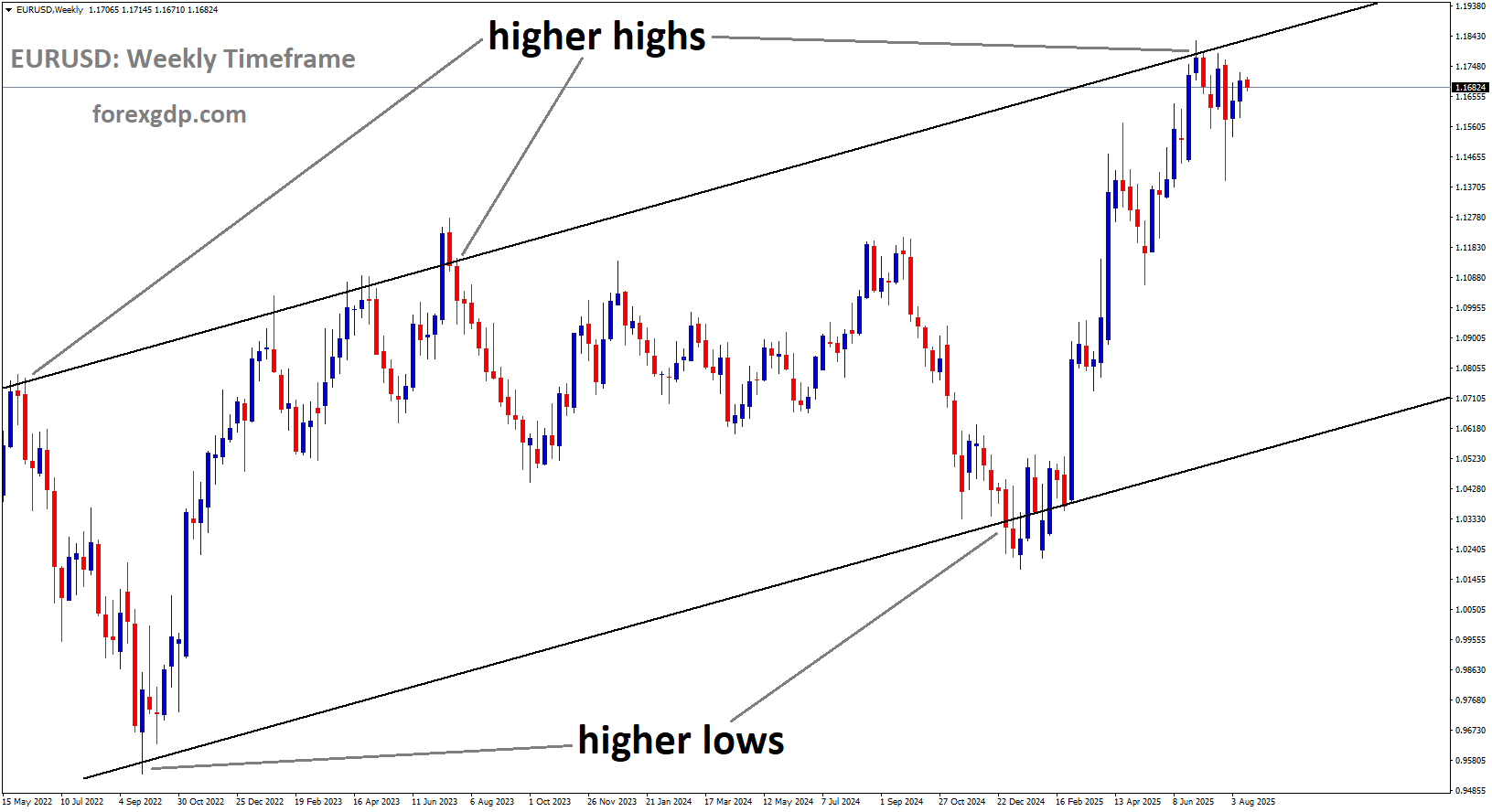
EURUSD is moving in an uptrend channel, and the market has reached a higher high area of the channel
Final Summary
The Euro has managed to hold steady, but the real test for markets lies ahead. The Trump-Zelenskyy summit carries enormous geopolitical weight, especially with Russia’s influence looming in the background. Any development there could shift global sentiment quickly.
On the economic side, Christine Lagarde and Jerome Powell’s speeches will be the highlights of the week. Their words will likely shape expectations for monetary policy in both Europe and the U.S., influencing everything from interest rates to investor confidence.
For now, markets are quiet, but this calm feels more like a pause than a permanent state. By the end of the week, we’ll likely have a clearer picture of where both politics and monetary policy are headed — and with them, the direction of global markets.
USDJPY Steady as Risk Appetite Grows While BoJ Stance Remains Clouded
When it comes to global currencies, the Japanese Yen (JPY) often makes headlines because of its reputation as a safe-haven asset. But recently, the Yen has been under pressure, leaving many traders and investors wondering what’s really driving its movements. Let’s dive into the bigger picture and explore why the Yen is struggling, what role the Bank of Japan (BoJ) and the Federal Reserve (Fed) are playing, and how global politics are adding more uncertainty to the mix.
Why the Japanese Yen is Losing Its Shine
The Yen has traditionally been one of the go-to currencies for investors during times of uncertainty. Whenever global markets look shaky, people tend to flock toward it for safety. However, things are changing.
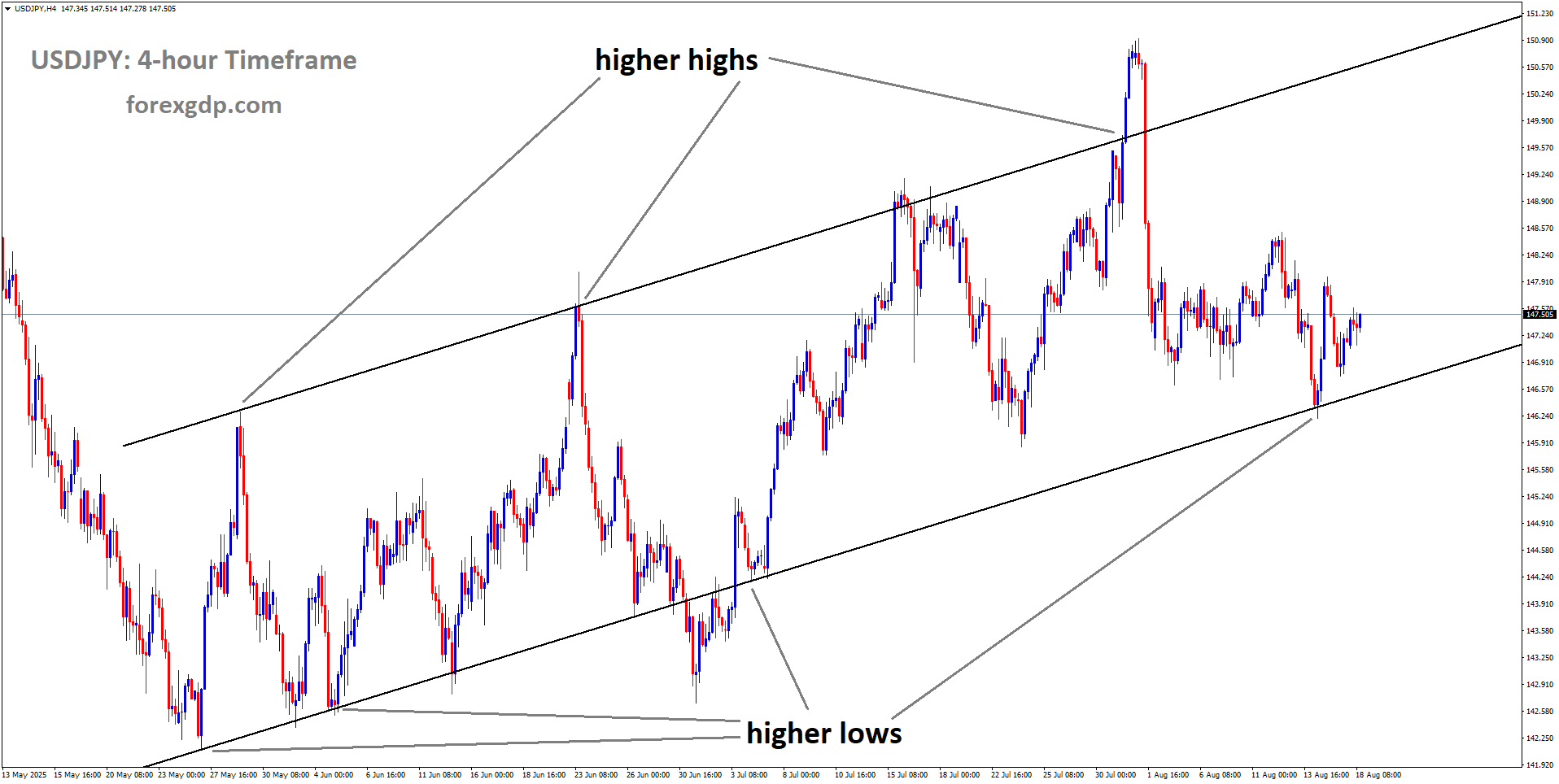
USDJPY is moving in an uptrend channel
Safe-Haven Demand Weakens
Right now, the world is showing more appetite for risk. In other words, investors are less worried about immediate financial shocks and are willing to explore riskier assets. This reduces the need to hold the Yen, which explains part of its recent weakness.
At the same time, the uncertainty around the Bank of Japan’s next interest rate move makes it harder for Yen bulls to step in with confidence. Even though the BoJ has signaled a more hawkish stance in the long run, nobody is sure exactly when the next rate hike might happen. This hesitation leaves the Yen vulnerable.
The U.S. Dollar Stands Strong Against the Yen
While the Yen is facing its own troubles, the U.S. Dollar (USD) is looking much stronger in comparison. And this has a lot to do with what’s happening at the Federal Reserve.
Fed Policy Expectations
Earlier this year, many thought the Fed would quickly move toward aggressive rate cuts to boost the economy. But recent data out of the U.S. tells a different story. Retail sales numbers have been fairly solid, showing that consumers are still spending. Inflation data also points to lingering price pressures, which makes it harder for the Fed to slash rates too aggressively.
Because of this, investors are betting on a more cautious approach from the Fed. Fewer rate cuts mean higher yields for the U.S. Dollar, which keeps it attractive compared to the lower-yielding Japanese Yen.

A Tale of Divergence
Here’s where things get interesting: the BoJ and the Fed seem to be moving in opposite directions. The BoJ is slowly inching toward policy normalization, while the Fed is preparing for potential rate cuts. Normally, this divergence could give the Yen some strength. But the timing mismatch and uncertainty about the BoJ’s actual steps have prevented the Yen from taking advantage of it.
Geopolitical Factors Add Another Layer of Pressure
It’s not just central banks moving the currency markets. Politics and global events also play a huge role.
U.S. and Russia Talks Stir the Markets
Recently, a high-stakes meeting between U.S. President Donald Trump and Russian President Vladimir Putin took place in Alaska. Although it didn’t lead to a breakthrough, the dialogue raised hopes that tensions over Ukraine could eventually ease. This possibility of reduced geopolitical risk further undermined the Yen’s safe-haven appeal.
On top of that, Trump’s statement about Ukrainian President Volodymyr Zelenskiy having the power to end the war “almost immediately” caught investor attention. While it may be more of a political statement than a realistic solution, it still adds to the sense of optimism in markets, again pushing investors away from the Yen.
Japan’s Domestic Concerns
Inside Japan, the situation is also complicated. The ruling Liberal Democratic Party recently faced a setback in the upper house election, which creates a bit of political uncertainty at home. Add in worries about the negative effects of U.S. tariffs on Japan’s economy, and you can see why investors aren’t too eager to bet heavily on the Yen right now.
Still, not everything is gloomy. Japan’s economy showed stronger-than-expected growth in the second quarter, and the BoJ has upgraded its inflation outlook. These factors suggest that a rate hike could still be on the table before the end of the year, which gives Yen supporters some hope.
Investor Sentiment and What Lies Ahead
At the moment, the markets seem to be in a “wait and see” mode. Nobody wants to place overly aggressive bets until more clarity emerges.
Upcoming Fed Signals
Investors are especially focused on two key events: the release of the Federal Open Market Committee (FOMC) meeting minutes and Fed Chair Jerome Powell’s speech at the Jackson Hole Symposium. Both are expected to provide important clues about how the Fed plans to approach monetary policy in the coming months. If Powell hints at fewer rate cuts than expected, the Dollar could get even stronger against the Yen.
Data-Driven Decisions
Another factor that investors are watching is economic data. The U.S. consumer sentiment index recently showed a decline, suggesting that people are feeling less confident. However, inflation expectations remain high, which complicates the Fed’s job. Any new data releases could quickly shift market sentiment and impact the Yen-Dollar dynamic.
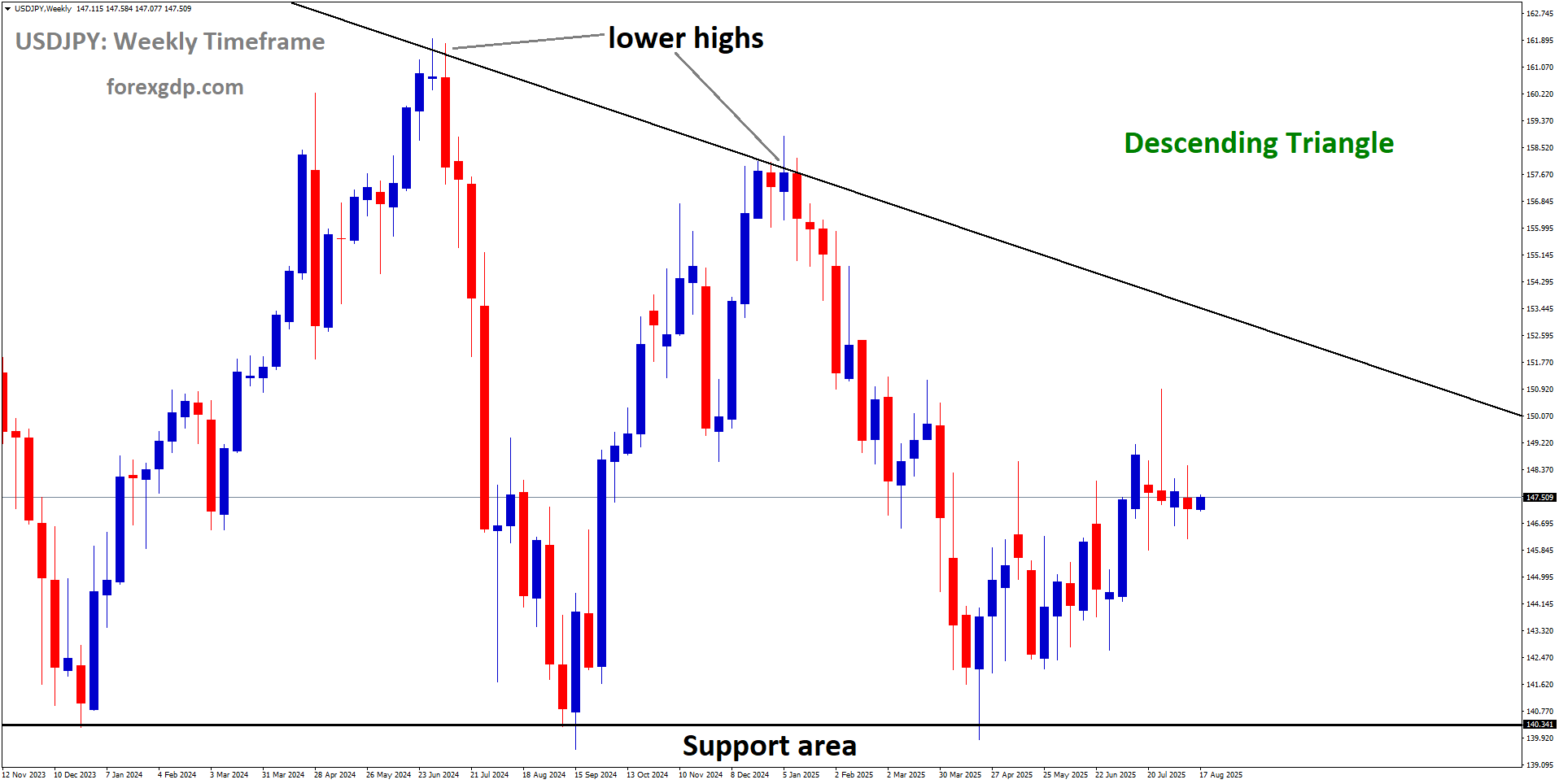
USDJPY is moving in a descending triangle pattern, and the market has rebounded from the support area of the pattern
Final Summary
The Japanese Yen is currently caught in a web of uncertainty. On one side, the BoJ is moving cautiously toward policy normalization but has not given a clear timeline for rate hikes. On the other side, the U.S. Dollar remains strong because investors no longer believe the Fed will aggressively cut rates this year. Add in global political developments, hopes for easing tensions in Ukraine, and Japan’s own domestic challenges, and it’s no surprise the Yen is drifting lower.
For now, the Yen remains under pressure, but the story is far from over. The next few months will be crucial as central bank policies become clearer and global events continue to unfold. Whether the Yen regains its safe-haven shine or continues to weaken will depend heavily on what happens next with both the BoJ and the Fed, as well as the broader geopolitical landscape.
USDCHF Under Pressure as Traders Await Key Geopolitical Dialogue
The foreign exchange market is once again filled with speculation, political developments, and cautious trading moves. Among the most closely watched pairs right now is the USD/CHF, which has been slipping lower as pressure builds on the US Dollar. From central bank expectations to global politics, there’s a lot happening behind the scenes that every trader and investor should know about.
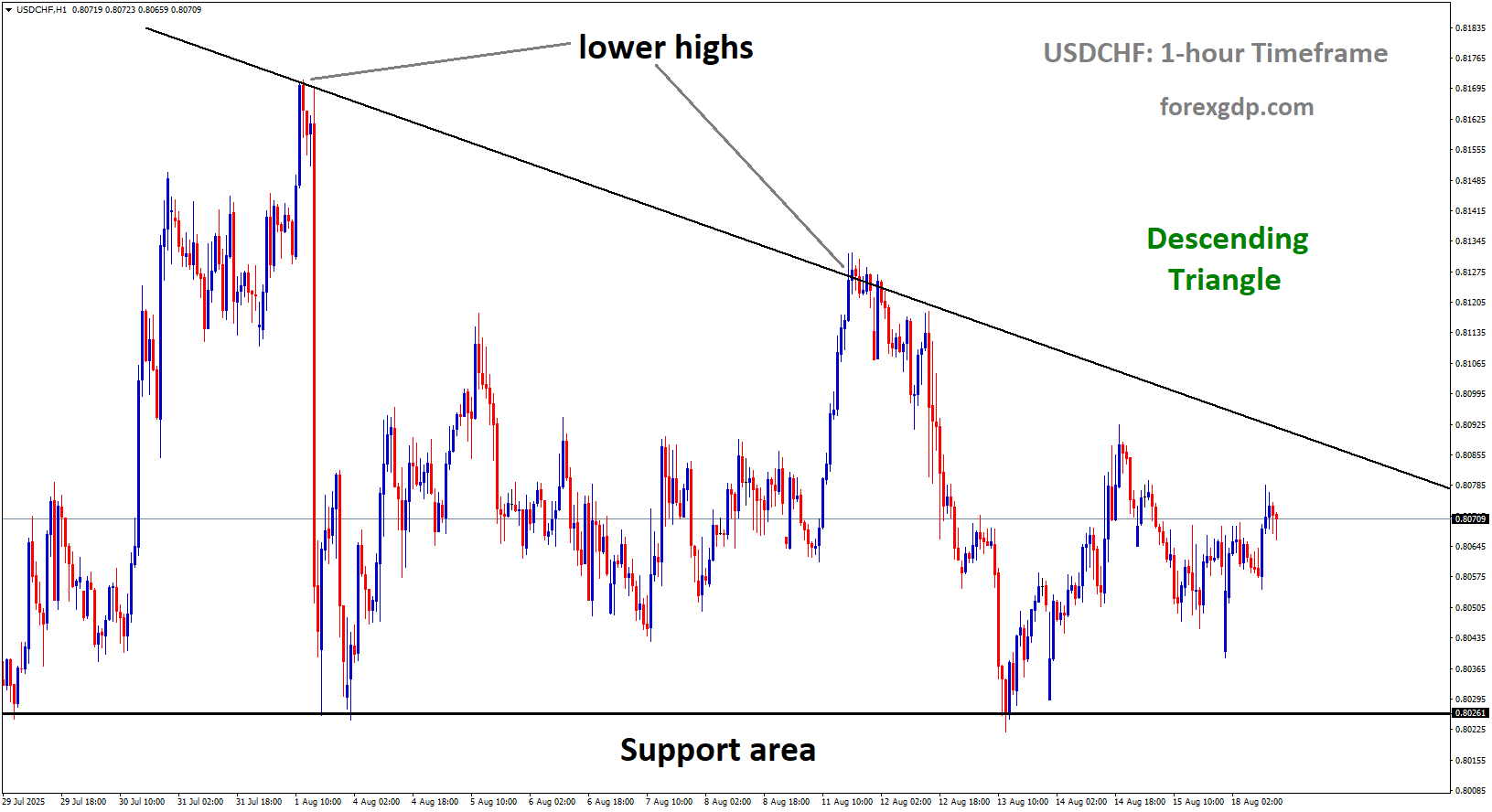
USDCHF is moving in a descending triangle pattern
Let’s break it down in simple terms and explore why the Swiss Franc is strengthening against the US Dollar, what role the Federal Reserve’s potential decisions are playing, and how upcoming political meetings might shake things up even more.
Why the US Dollar is Under Pressure
The US Dollar has been struggling to find strength lately. One of the main reasons is growing confidence among traders that the Federal Reserve will cut interest rates in September. When markets believe that rates are headed lower, the Dollar usually takes a hit because lower interest rates make the currency less attractive to investors searching for better returns.
At the moment, analysts are pointing out that conditions in the US labor market are cooling, which gives the Fed more reason to shift toward a softer monetary policy stance. The weaker employment data makes it harder for the central bank to justify keeping rates higher for longer.
To put it simply, if the Fed cuts rates, borrowing becomes cheaper, businesses expand more easily, but at the same time, the Dollar tends to weaken because global investors may start moving their money to currencies that promise higher yields. The Swiss Franc is one such safe-haven currency that benefits when the Dollar loses momentum.
Fed’s September Meeting is the Market’s Main Focus
The September meeting of the Federal Reserve is shaping up to be the big event everyone is waiting for. According to the CME FedWatch tool, there’s already a very high probability that a rate cut will happen.
When you see this type of confidence in the market, it usually means traders are already adjusting their positions ahead of time. That’s why the Dollar is not only weaker today but may continue to face challenges as September approaches.
But the Fed isn’t the only player in the story. Another important event on the horizon is the Jackson Hole Symposium, which is scheduled for late August. This annual gathering often gives investors valuable hints about how the Fed and other global central banks are planning to steer monetary policy. Any signals coming from this event could move the markets dramatically.

Global Politics Add Another Layer of Uncertainty
As if monetary policy wasn’t enough, the USD/CHF pair is also being influenced by politics—specifically the ongoing war in Ukraine and diplomatic talks involving the United States.
Traders are keeping a close eye on an upcoming meeting between US President Donald Trump and Ukrainian President Volodymyr Zelenskyy, along with NATO members. The key question everyone is asking is whether Ukraine is ready to accept peace terms suggested by Russia.
If any progress is made toward a peace agreement, markets could react quickly. Investors often view peace talks as positive for global stability, and that could lead to shifts in safe-haven flows. In other words, if the risk of war decreases, currencies like the Swiss Franc may not be in as high demand as before. However, if talks fail or tensions rise, the Franc could strengthen even more as investors look for safety.
Switzerland’s Economic Updates in the Spotlight
While most of the market buzz is around the Fed and US politics, traders aren’t ignoring Switzerland’s own data. The Swiss economy has been holding up relatively well, and investors are waiting for the release of Q2 Industrial Production data.
In the last quarter, industrial output grew strongly, which showed that Switzerland’s economy had resilience despite global uncertainty. If the new numbers confirm another strong performance, it could further support the Swiss Franc. On the other hand, if the data disappoints, the currency might lose some of its current shine against the US Dollar.
What Traders Should Keep an Eye On
The USD/CHF currency pair is currently caught between two powerful forces:
-
Monetary Policy Expectations in the US: Markets are betting heavily on a September rate cut by the Fed. Every speech, economic report, or official comment from central bankers will be carefully analyzed for clues.
-
Geopolitical Events: The Trump-Zelenskyy meeting and ongoing discussions about the Ukraine war carry the potential to sway market sentiment in a matter of minutes.
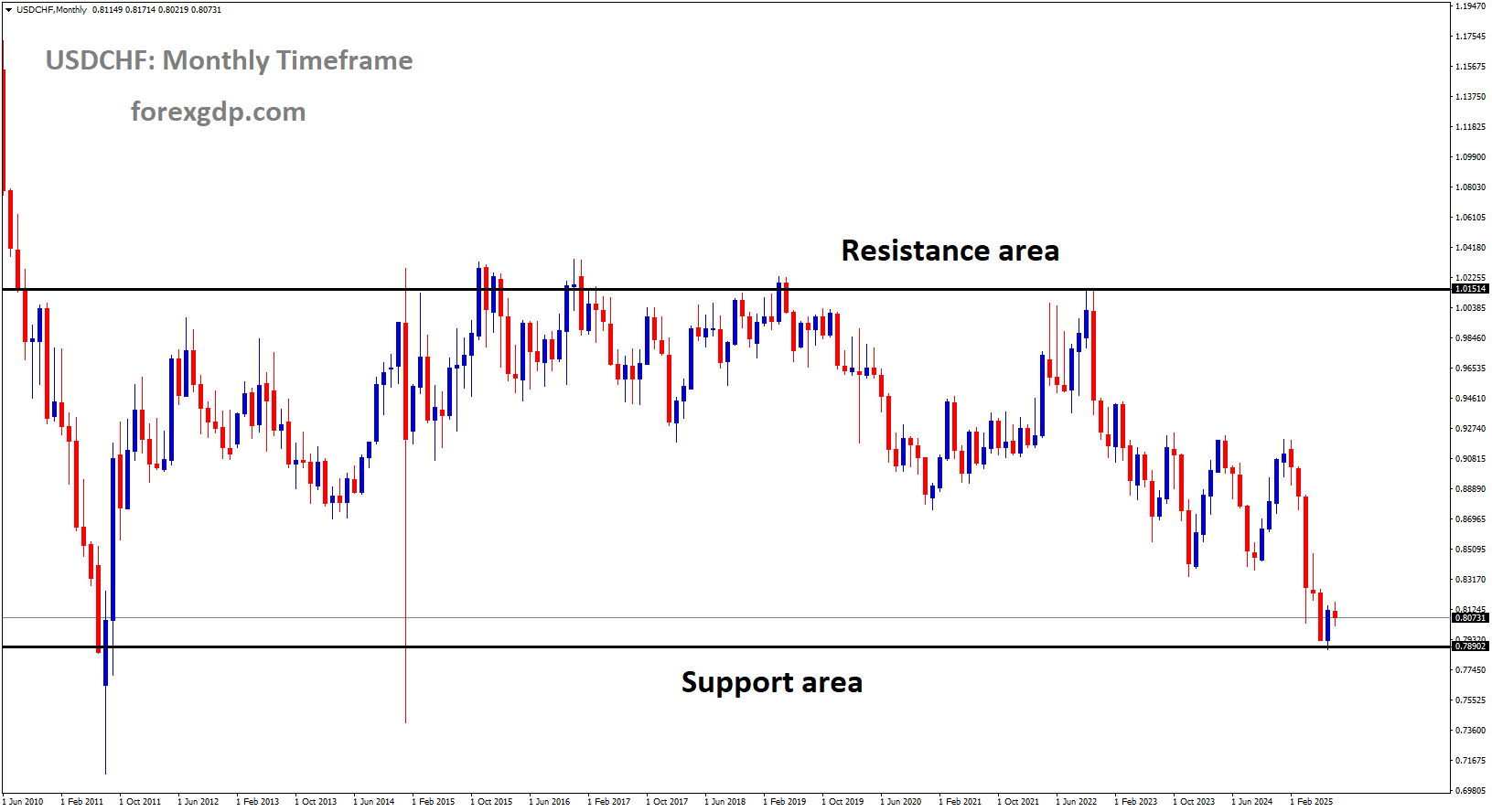
USDCHF is moving in a box pattern, and the market has reached the support area of the pattern
For traders, this means staying alert and avoiding overconfidence. Currency pairs like USD/CHF can swing sharply when central bank decisions and geopolitical headlines hit the wires at the same time.
Final Summary
The USD/CHF is under pressure as the US Dollar weakens amid growing expectations of a Federal Reserve rate cut in September. Traders are increasingly convinced that the Fed will move in this direction due to slowing labor market conditions. At the same time, investors are closely following political developments, particularly the meeting between US President Donald Trump, Ukrainian President Volodymyr Zelenskyy, and NATO members, which could signal whether Ukraine is prepared for peace with Russia.
On the Swiss side, upcoming Industrial Production data will provide fresh insight into the country’s economic health, potentially influencing the Franc’s performance.
In short, the USD/CHF pair is being shaped by a mix of monetary policy speculation, geopolitical risks, and local economic indicators. Anyone trading or investing in this space needs to keep a close watch on all three factors. The weeks ahead could be full of market-moving developments, and staying informed will be the key to navigating the uncertainty.
GBPJPY Attracts Bulls, Trading Steady Around Long-Term Highs
When it comes to global markets, the currency pair GBP/JPY often reflects how traders feel about risk, uncertainty, and economic outlooks. At the start of this new week, the pair is once again catching attention. Fresh buying interest is pushing it higher, and there are several factors behind this move. Let’s break down the story in a simple, conversational way so you can clearly understand why the British Pound is gaining strength against the Japanese Yen right now.
The Mood of Investors is Driving the Market
One of the biggest reasons why GBP/JPY is moving higher is because of investor sentiment. When global markets feel optimistic, traders tend to move away from safe-haven assets like the Japanese Yen. The Yen usually performs well when fear is high, but loses ground when confidence grows.
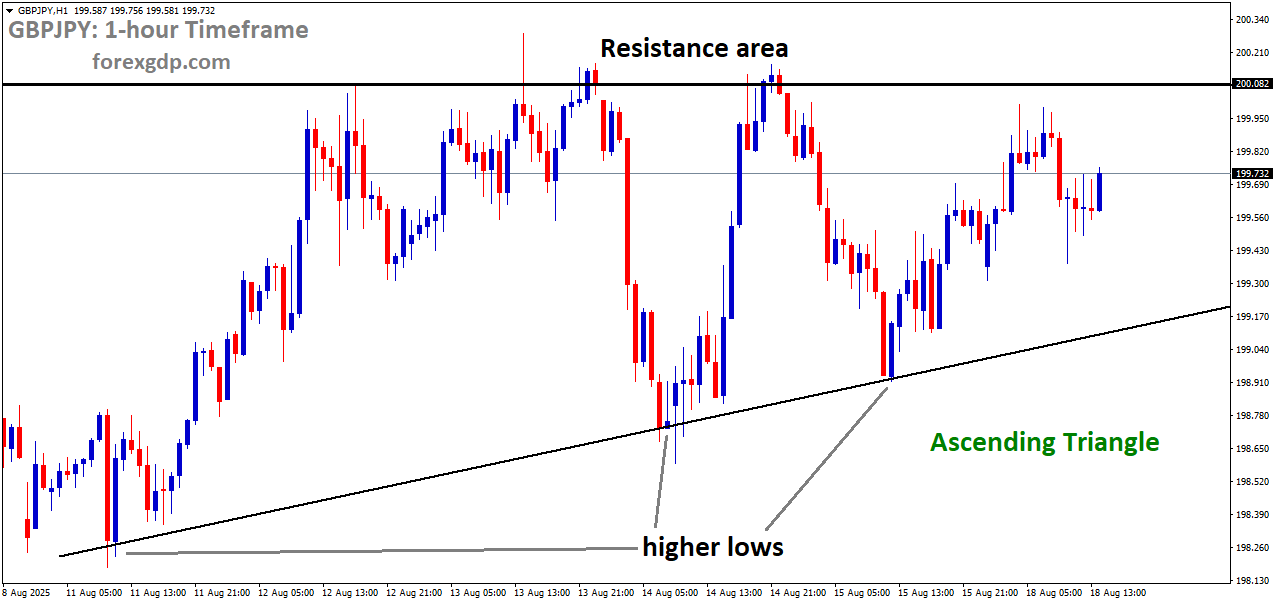
GBPJPY is moving in an Ascending Triangle pattern
This week, confidence has been fueled by ongoing discussions between global leaders. Even though no major breakthroughs have come from high-level talks between the United States and Russia, the fact that dialogue is happening keeps optimism alive. Investors are hopeful that prolonged global tensions may eventually ease, and that hope is enough to shift money toward riskier assets.
The Japanese Yen, being a safe-haven, is naturally weakened in such conditions. As a result, currencies like the British Pound get a stronger lift.
The UK Economy Adds More Support for the Pound
On the other side of the equation, the British Pound is enjoying its own reasons for strength. Recent data from the UK showed that the economy is still growing at a healthier pace than many expected.
-
UK Growth Outpaces Forecasts
Last week, reports confirmed that the UK economy expanded by 0.3% over the three months leading into June 2025. While this was slower than the previous quarter’s performance, it still beat expectations, which were pointing toward only a tiny gain. -
Impacts on Bank of England Policy
Because the economy held up better than expected, traders now believe the Bank of England (BoE) will delay cutting interest rates. Previously, markets were expecting an earlier cut, but now many are shifting those expectations toward later in the year. A delay in rate cuts generally supports the Pound, since higher interest rates (or the expectation of them) attract investors looking for stronger returns.
This mix of stronger-than-expected growth and delayed monetary easing is giving the Pound a solid foundation, especially when compared to the uncertain stance of the Japanese Yen.
Japan’s Position Adds Another Layer
While the UK economy is supporting the Pound, Japan’s economy is also making headlines. Surprisingly, Japan’s growth figures have been stronger than many analysts predicted, despite trade challenges and U.S. tariff pressures. This normally would support the Yen, but other factors are offsetting the impact.
-
BoJ Inflation Outlook
The Bank of Japan (BoJ) recently revised its inflation forecasts upward, reinforcing expectations that the bank will stick to its long-term plan of normalizing monetary policy. In simple terms, this means Japan might eventually move away from ultra-low interest rates. -
Uncertainty Lingers
However, political uncertainty at home is making investors cautious. While Japan’s economy is improving, the policy direction is not as crystal clear as traders would like. This hesitation prevents the Yen from fully benefiting from its economic progress.

Because of this mix, GBP/JPY buyers are stepping in more confidently, especially with the Pound backed by recent strong UK numbers.
Why Investors Are Paying Attention to This Pair
The GBP/JPY pair isn’t just another set of numbers on a chart. It’s often seen as a reflection of global investor behavior:
-
When investors feel bold, the Pound usually gains.
-
When fear dominates, the Yen often strengthens.
Right now, optimism in global markets, combined with the UK’s steady economic performance, is tilting the balance toward the Pound. That’s why we’re seeing renewed interest in the pair at the beginning of the week.
What Traders Should Keep in Mind
While the current trend is upward, it’s important to remember that markets are always changing. Investor sentiment can shift quickly, especially when global political events are involved. Here are a few things traders will be watching closely:
Global Political Developments
Even though recent talks between global leaders didn’t produce a major breakthrough, the very possibility of progress can shift markets. Any positive headlines could weaken the Yen further, while negative news could quickly bring it back into demand.
Central Bank Policies
The difference between the Bank of England and the Bank of Japan’s policies will continue to shape GBP/JPY. As long as the BoE delays cutting rates and the BoJ remains cautious with tightening, the Pound may keep an edge.
Economic Surprises
Future data from both the UK and Japan will also play a big role. A surprise slowdown in the UK could weigh on the Pound, while stronger-than-expected Japanese growth could give the Yen some support.
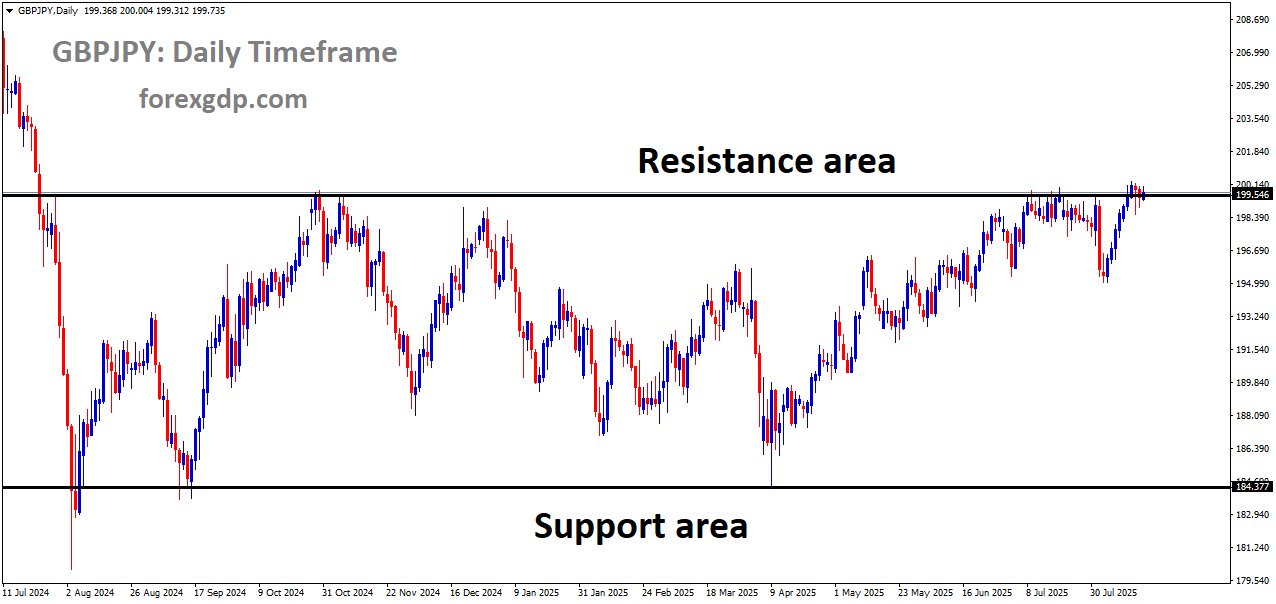
GBPJPY is moving in a box pattern, and the market has reached the resistance area of the pattern
Final Summary
The GBP/JPY pair is gaining fresh strength as this week begins, supported by a combination of optimism in global markets and encouraging UK economic data. The Japanese Yen, often a safe-haven currency, is under pressure as investors move toward riskier assets. At the same time, stronger-than-expected UK growth and delayed expectations for Bank of England rate cuts give the Pound solid backing.
Japan’s economy is also showing signs of resilience, but political uncertainty and cautious moves from the Bank of Japan are preventing the Yen from making full use of its progress. This mix of factors makes GBP/JPY a fascinating currency pair to watch right now.
In short, the pair reflects both investor mood and economic fundamentals. As long as optimism stays in play and UK numbers remain firm, the Pound looks set to enjoy more strength against the Yen in the near term.