
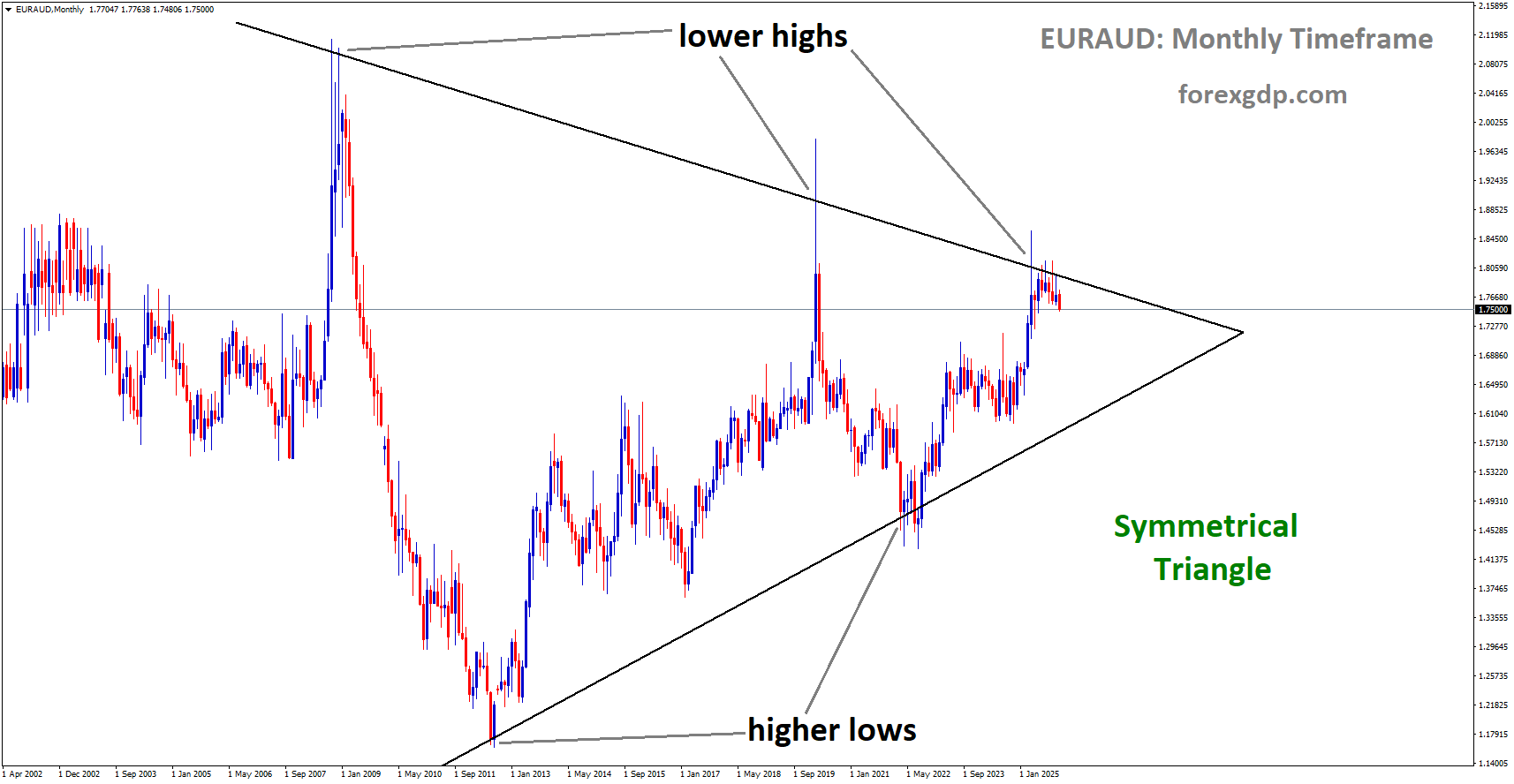
EURAUD is moving in a symmetrical Triangle pattern
EURAUD Dips as RBA Freezes Rates at 3.6%, Defying Cut Speculation
The Reserve Bank of Australia (RBA) recently decided to keep its official cash rate unchanged at 3.6%. While this decision was widely expected, it still managed to create some waves in the market—especially for the Australian Dollar (AUD). Initially, the currency showed signs of weakness, but that changed quickly following comments from RBA Governor Michelle Bullock. Her firm stance against interest rate cuts helped the AUD bounce back, and now market watchers are wondering if a rate hike could come sooner than expected.
What Happened at the RBA Meeting?

The RBA’s decision to hold rates steady wasn’t surprising. With inflation still lingering above comfortable levels, the central bank is clearly treading carefully. But what sparked interest wasn’t the decision itself—it was the wording of the initial press release.
In that release, the language appeared somewhat open-ended, leading many to wonder if the RBA might actually be considering a rate cut in the near future. That was enough to cause some early weakness in the AUD as traders reacted to the uncertainty.
Governor Bullock Clears the Air
It didn’t take long for the confusion to be cleared up. During a follow-up press conference, Governor Michelle Bullock addressed the market’s reaction directly. She made it clear that a rate cut is not on the cards for the near term. That strong statement reversed the AUD’s earlier losses and gave it a boost against the US dollar.
Her comments also sparked a shift in market expectations. Previously, many had believed that if there was going to be a rate hike, it wouldn’t come until August. But after the press conference, that timeline was pulled forward, with some now expecting a possible hike as early as June.
Inflation Remains a Concern
One of the key reasons behind the RBA’s cautious approach is inflation. Despite efforts to bring it down, inflation in Australia has remained higher than anticipated. It’s been a recurring issue, and recent data has only added to the concern. That’s why the RBA isn’t ready to commit to cutting rates, even though some voices in the market had been hoping for looser policy.
However, not everyone agrees on what should happen next. Some experts believe that part of the inflation rise is only temporary and may not require further action from the central bank. This group remains skeptical about the idea of raising interest rates again so soon.
Market Speculation vs. Central Bank Patience
There’s now a clear divide between market expectations and the RBA’s own outlook. While investors have started pricing in a rate hike as early as June, the central bank appears to be taking a more measured, patient approach.
This kind of mismatch isn’t uncommon. Markets often move ahead of official decisions, especially when trying to anticipate how central banks will respond to changing economic conditions. But in this case, the RBA is signaling that it’s not in a rush to make another move—especially not a rate hike.
What This Means for Australians
For everyday Australians, the central bank’s cautious stance is a mixed bag. On one hand, steady interest rates mean borrowing costs remain stable for now. That’s good news for homeowners and businesses with loans. On the other hand, if inflation stays high, it can continue to put pressure on household budgets.
The RBA is clearly walking a fine line. It wants to fight inflation, but without choking off economic growth. That’s why it’s holding off on both rate cuts and hikes, at least for now. Governor Bullock’s comments seem to suggest that the central bank is keeping all options on the table but isn’t leaning strongly toward any immediate change.
Watching the Road Ahead
As the economic data continues to roll in, all eyes will be on the RBA to see whether it adjusts its stance. Inflation reports, employment numbers, and consumer spending trends will all play a role in shaping future decisions.
While the market may be betting on a rate hike by June, the RBA’s current tone suggests otherwise. The central bank is more likely to wait and see how things develop before making any bold moves. That said, if inflation keeps rising or shows signs of sticking around longer than expected, the pressure to act could mount quickly.
Final Thoughts
The RBA’s decision to keep interest rates steady wasn’t a surprise, but the reaction to it shows just how sensitive the market is to every word and signal from the central bank. Governor Bullock’s clear rejection of a near-term rate cut helped the Australian Dollar recover quickly, and now the focus has shifted to when—if at all—a rate hike might happen.
For now, the RBA is standing its ground, watching the data, and staying flexible. That means rate hikes aren’t guaranteed, and cuts are still very unlikely. In the coming months, expect the conversation to continue as Australia tries to balance inflation control with economic stability.
EURUSD Pauses Near Recent Levels While Markets Wait on the Fed
The EUR/USD pair has been trying to recover after sliding to fresh weekly lows around 1.1615. Buyers pushed it back up toward the 1.1640 zone, but the move has been cautious and uneven. After briefly testing higher levels during the European session, the pair struggled to hold onto those gains and drifted back toward the 1.1630 area.
This kind of slow, rangebound trading is common when the market is focused on one major event. Right now, that event is the US Federal Reserve’s policy decision due later today. Many traders are sitting on their hands until they hear not only what the Fed decides, but also how it explains the decision and what it signals about the path ahead.
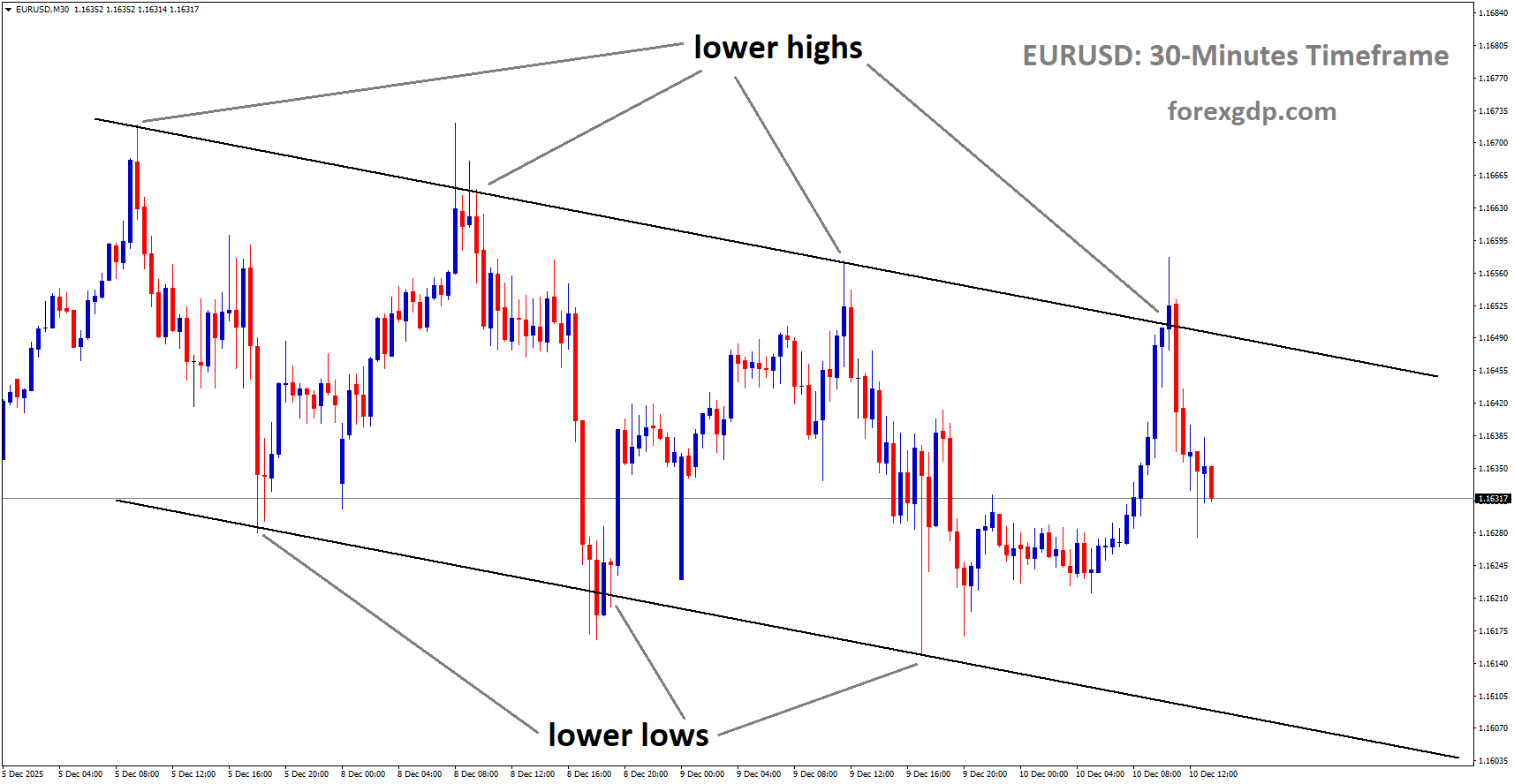
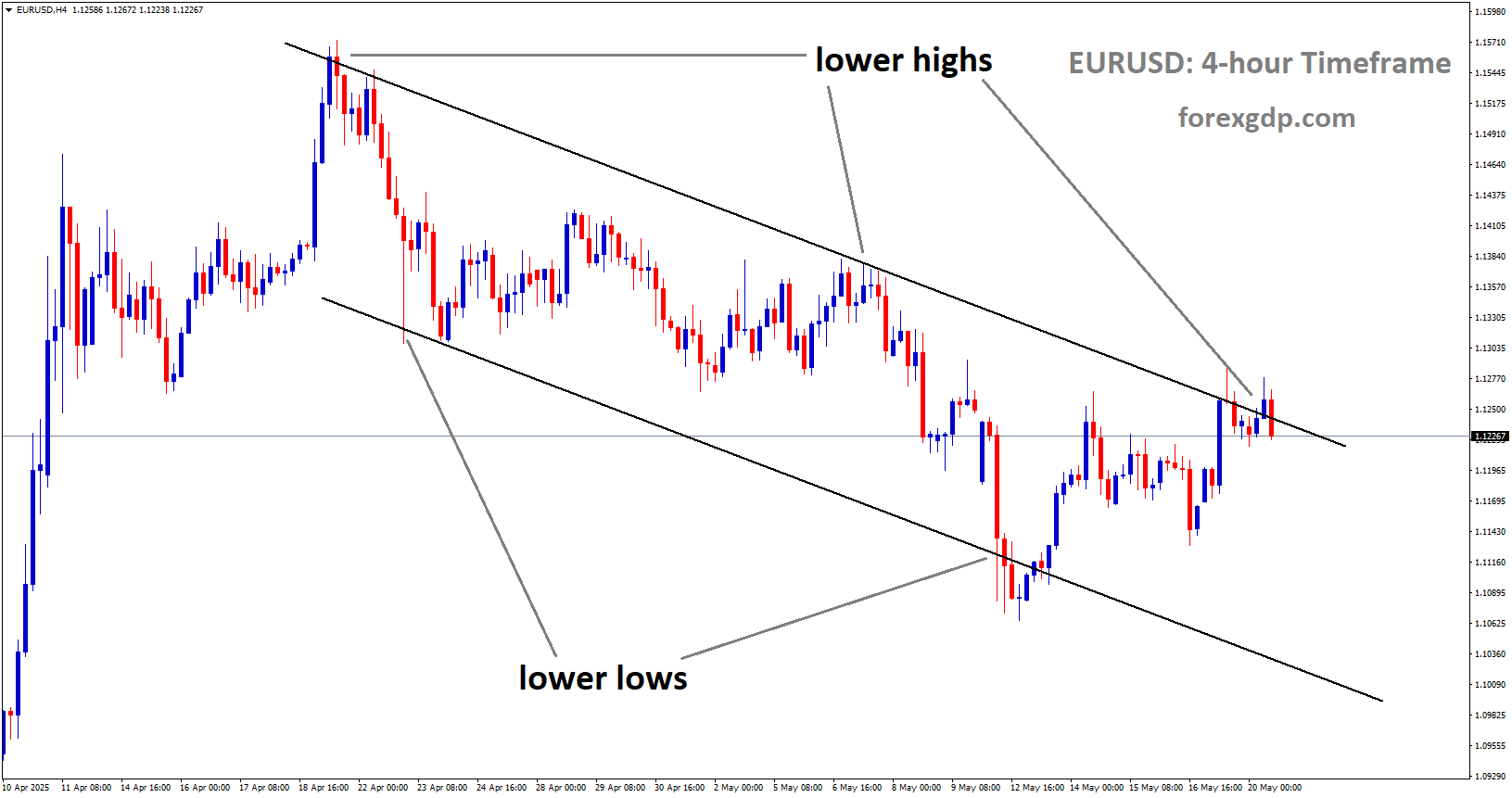
EURUSD is moving in a descending channel, and the market has fallen from the lower high area of the channel
At the same time, the pair is trading below an old trendline support area, which is now acting more like a ceiling. That zone sits near 1.1665, and it has become an important level for short-term sentiment. If EUR/USD cannot reclaim it, rallies may continue to face selling pressure.
Why the Fed Decision Matters So Much Today
The market has largely priced in an interest rate cut from the Federal Reserve. Expectations have centered on a quarter-point move, which means the initial reaction may not be about the cut itself. Instead, investors will pay close attention to the details around it.
There are two things traders tend to focus on most during a Fed day:
What the Fed’s projections suggest
The Fed’s interest rate projections—often called the “dot plot”—can shape expectations for months. These projections show how policymakers see rates evolving over time. Even if today’s move is widely expected, the dots can change how the market views the next steps.
If the dots suggest fewer cuts ahead than traders currently expect, the US Dollar could regain strength. If the dots hint at more easing, the Dollar may soften further.
The tone of Jerome Powell’s press conference
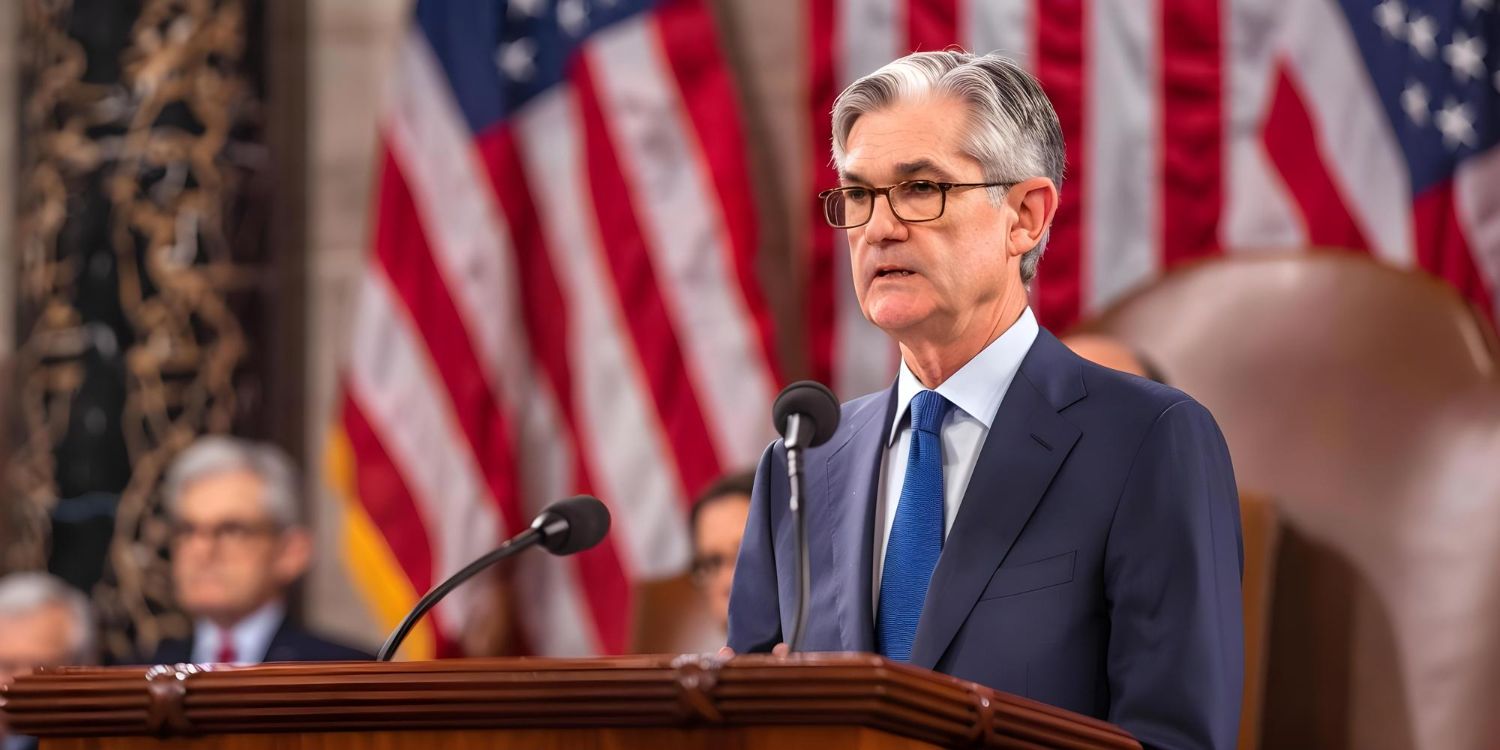
Fed Chair Jerome Powell’s comments often move the market as much as the rate decision itself. Traders will listen closely for clues about whether the Fed sees today’s cut as part of a longer easing cycle—or more like a one-off adjustment.
A key theme could be the idea of a “hawkish cut.” That’s when the Fed cuts rates but still sounds cautious, especially if it believes inflation risks remain. In that case, the Dollar might not weaken much, because the message to markets is: “We’re cutting, but we’re not promising a long series of cuts.”
US Data Adds Complexity to the Rate-Cut Story
Recent US economic data has not made the Fed’s job any easier. On one hand, many traders are looking for lower rates. On the other hand, parts of the US economy continue to show resilience, and inflation has not faded away as quickly as some hoped.
One standout update came from delayed US labor market data. The Job Openings and Labor Turnover Survey (JOLTS) figures for September and October surprised to the upside. Job openings rose to 7.658 million in September and 7.67 million in October, up from 7.227 million in August. That kind of improvement suggests that demand for workers remains solid.
Why does that matter? A strong labor market can keep wage pressures alive, and wage growth can feed into inflation over time. Add that to recent “sticky” inflation readings, and it becomes easier to understand why some investors are preparing for a cautious Fed message even if a cut happens today.
In simple terms, the data gives the Fed room to be careful. If the economy is still holding up, the central bank doesn’t need to rush into deep or rapid easing.
Politics Enters the Picture, but Markets Stay Focused
As often happens during key Fed weeks, politics has found a way into the conversation. US President Donald Trump renewed public pressure on the central bank, arguing for faster and deeper interest rate cuts. Those comments drew attention, but they did not dramatically change market behavior.
The reality is that most currency traders are likely to treat political headlines as background noise unless they clearly alter the Fed’s approach. Right now, investors appear more interested in what Powell and the policy committee will actually do and say.
There were also comments tied to the broader conversation about the future direction of US monetary policy leadership. White House economist Kevin Hassett, viewed by some as a potential candidate for future Fed leadership, suggested there is “plenty of room” to ease policy, while also noting that inflation trends could change the picture. Even so, markets tend to react most strongly to official Fed messaging, especially on decision days like this.
EUR/USD Price Action: Calm, but Not Fully Comfortable
Even with the US Dollar easing slightly after two days of gains, EUR/USD has not been able to build a strong rebound. The pair rose during the European session but met resistance close to 1.1660 and turned lower again.
That rejection matters because it reinforces the idea that the market is hesitant to push the euro higher without fresh direction from the Fed. It also keeps attention on the former trendline support area, now near 1.1665. When a level that used to act like a floor becomes a ceiling, traders often treat it as a sign that momentum has shifted.
This doesn’t mean EUR/USD cannot climb again. It simply highlights that the pair is in a waiting mode, and many short-term moves are likely being driven by positioning rather than strong conviction.
Europe’s Side of the Story: Lagarde and the Euro’s Global Role
While the Fed is the main event, Europe is not completely quiet. European Central Bank President Christine Lagarde is scheduled to appear at an event in London where she is expected to discuss the future of the euro and the US Dollar as global currencies.
However, traders are not expecting major monetary policy hints from her right now. The ECB is in its blackout period ahead of next week’s policy meeting, which typically limits how much officials say about interest rates or near-term policy decisions.
Still, Lagarde’s comments can matter in a broader sense. When the head of the ECB speaks about the euro’s place in the global financial system, markets sometimes look for subtle signals about long-term confidence, stability, and the role of Europe in global trade and finance. Even if it doesn’t move prices immediately, it can add context to how investors think about the euro over time.
Final Summary
EUR/USD has rebounded modestly from weekly lows near 1.1615, lifting toward the 1.1640 area, but the recovery has been limited as traders wait for the Federal Reserve’s policy decision. Markets broadly expect a quarter-point rate cut, yet the bigger driver may be the Fed’s guidance through its rate projections and Jerome Powell’s press conference. Stronger-than-expected US JOLTS job openings data and recent firm inflation readings support the possibility of a cautious, “hawkish” tone even if rates are lowered. Political pressure on the Fed has made headlines but has not replaced the central bank’s messaging as the key market focus. In Europe, Christine Lagarde is set to speak about the euro and the Dollar’s global roles, though she is unlikely to discuss policy due to the ECB blackout period.
GBPUSD edges up as investors await the Fed and a potential rate reduction
The Pound Sterling is moving a little higher against many major currencies, and there’s a clear reason why: key voices at the Bank of England (BoE) are leaning toward gradual interest rate cuts rather than a fast rush into easier policy. At the same time, currency markets are keeping one eye firmly on the United States, where the Federal Reserve (Fed) is about to announce its next policy decision.
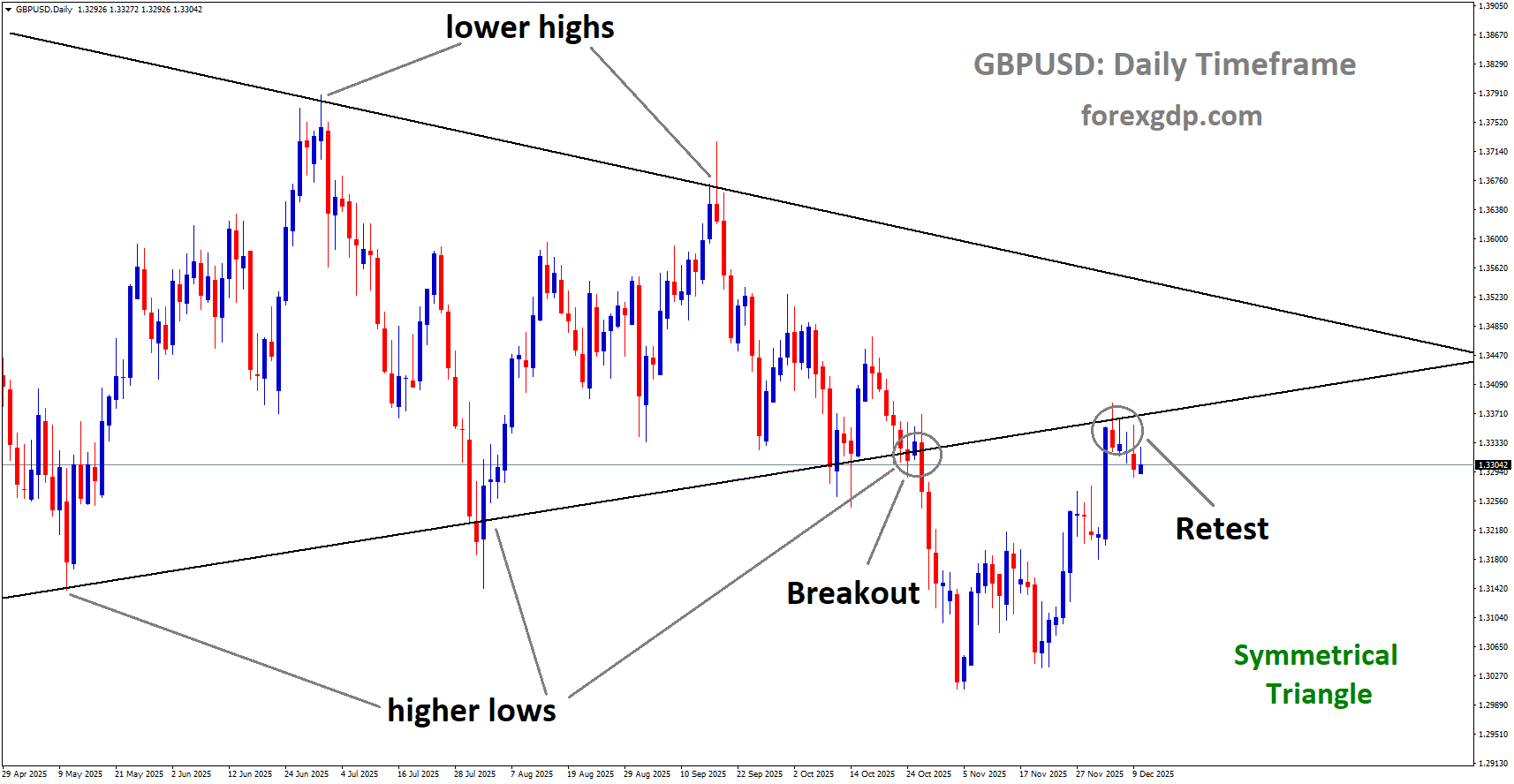
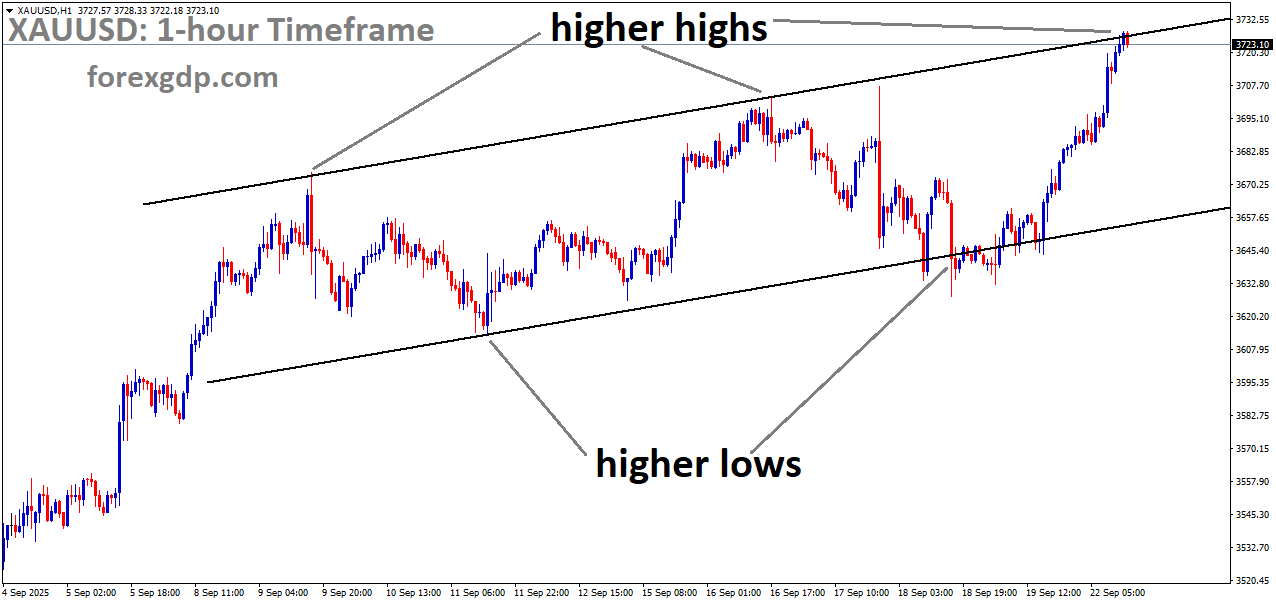
GBPUSD reached the retest area of the broken symmetrical Triangle pattern
During the European session on Wednesday, the Pound ticked up against the US Dollar, helped by a softer Greenback as traders turned cautious ahead of the Fed’s announcement. This kind of “wait and see” mood is common right before major central bank decisions, because even a small wording change from policymakers can shift expectations quickly.
Why the US Dollar Is Softer Ahead of the Fed Decision
The US Dollar has been under mild pressure as investors increasingly expect the Fed to cut interest rates at this meeting. Market pricing has been pointing toward another step down, which would mark the third rate cut in a row. When traders become more confident that borrowing costs will fall, the Dollar often loses some of its shine—especially against currencies where policymakers are sounding more careful or less eager to ease.
A big driver behind the Fed’s expected move is concern about the US labour market. Recent months have shown signs that hiring is cooling, and job growth has not looked as strong as it did earlier. That matters because the Fed’s job is not only about managing inflation—it’s also about keeping the economy stable and supporting employment. If job conditions soften too much, the Fed has more reason to loosen policy.
That said, the Fed is not expected to sound wildly optimistic about cutting rates again and again. Inflation has stayed above the Fed’s long-term target for a long time, and that makes policymakers cautious. Even when the Fed cuts rates, it may still try to keep expectations controlled by using careful language—basically saying, “We’re adjusting policy, but we’re not declaring victory.”
What Markets Will Listen for From the Fed
The actual rate decision is only one piece of the puzzle. Investors will also pay close attention to:
-
The Fed’s policy statement, which can reveal how worried (or relaxed) the committee feels about growth, jobs, and inflation.
-
The dot plot, which shows where Fed officials think interest rates could go over time.
-
Chair Jerome Powell’s press conference, where a single answer can reshape expectations for months.
In recent remarks, Powell has acknowledged that demand for workers has cooled, but he has also pushed back on the idea that rate cuts are guaranteed at every meeting going forward. Other Fed officials have offered slightly different views, with some highlighting downside risks to employment and suggesting there may still be room to reduce rates further because policy remains restrictive.
For currency traders, these differences matter. If the Fed sounds more cautious than markets expect, the Dollar can bounce. If the Fed sounds comfortable with further easing, the Dollar can weaken.
Why the Pound Is Holding Up: The BoE’s “Gradual Easing” Message
While the Fed is expected to move toward easier policy, the BoE story is a bit different. In the UK, central bank officials are also talking about easing, but the tone coming from important members has been measured and deliberate.
Two rate-setting figures—Deputy Governors Clare Lombardelli and Dave Ramsden—have both pointed to a gradual approach to removing policy restrictiveness. Their shared concern is that inflation risks may not be fully gone, and moving too fast could bring problems later.
Lombardelli has been especially direct about her unease with upside risks to inflation. In other words, she’s not fully convinced that inflation pressures are safely under control, and she’s also less certain than some colleagues about how restrictive policy truly is right now. That kind of comment tends to support the Pound because it suggests the BoE may not cut quickly or deeply.
Ramsden has also backed a steady, careful approach. His key idea is that a gradual pace gives the Monetary Policy Committee (MPC) time to assess the incoming data and judge whether inflation risks are rising or fading. Central banks prefer flexibility, and gradual moves help them keep options open.
Taken together, these messages can be supportive for Sterling. When a central bank signals “slow cuts” rather than “fast cuts,” it can reduce the risk of a sharp drop in the currency. Traders often reward caution when inflation uncertainty is still in the mix.
The Next BoE Decision and What Investors Expect
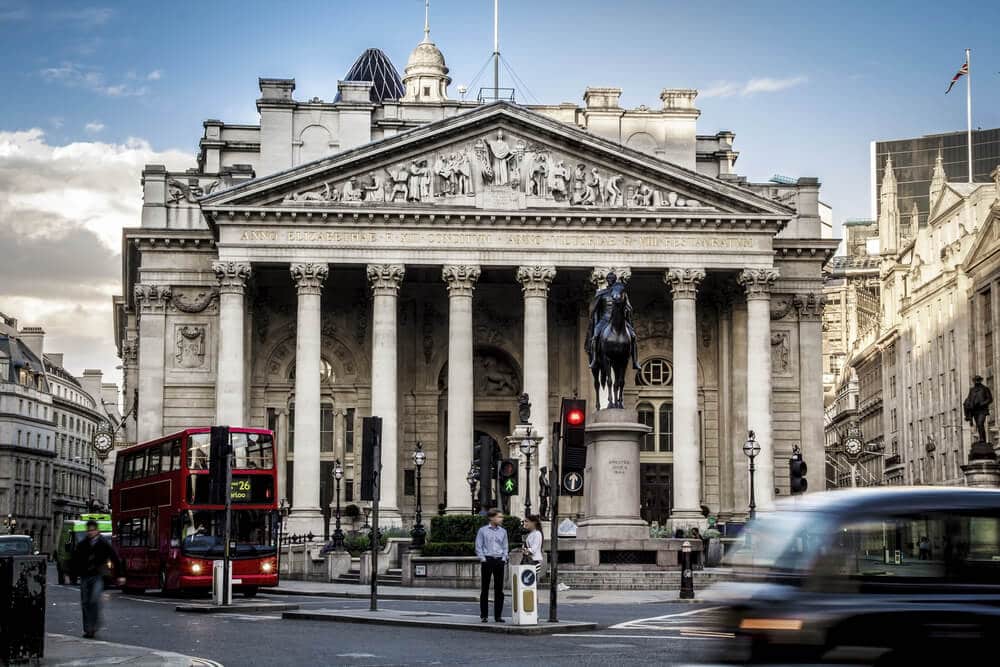
The BoE’s next policy decision is coming next week, and markets broadly expect a modest cut. The bigger question is what the BoE signals about the road ahead. A quarter-point cut is one thing. The path after that—how often, how soon, and how far rates might fall—is what really shapes currency trends over time.
That’s why any public comments from senior BoE figures can move the Pound. Investors are trying to build a clear story: Is the BoE cutting because inflation is beaten, or because growth needs help? And if inflation risks are still “on the upside,” does that mean the BoE will move slowly even if growth softens?
Governor Andrew Bailey: A Key Voice Markets Want to Hear
Another UK-focused event is also on the radar: comments from BoE Governor Andrew Bailey, expected in a pre-recorded fireside chat about financial stability at a Financial Times event in London.
Bailey’s words matter because he can tie together what individual committee members are saying into a more unified message. If he echoes the idea of “gradual easing,” markets may feel more confident that the BoE won’t rush. If he leans more toward concern about growth, traders may start to price a faster cutting cycle.
Even if he avoids direct hints, investors will listen closely for how he frames the balance of risks—especially the tension between inflation pressure and economic momentum.
UK Fiscal Signals Also Play a Role in Sterling Sentiment
Currency markets don’t move only on central banks. Government policy, taxes, and spending also shape how investors view a country’s outlook.
On Wednesday, UK Chancellor of the Exchequer Rachel Reeves said she can rule out capital gains tax on primary residences in this parliament. While fiscal headlines don’t always create big immediate moves, clarity can reduce uncertainty. In general, when markets feel they have a better read on the government’s direction, it can make the overall investment environment seem steadier.
The Bigger Picture: Two Central Banks, Two Different Balancing Acts
Right now, Sterling’s performance reflects a mix of UK and US narratives.
In the US, the debate is about how much the labour market is weakening, how quickly policy should adjust, and how strongly the Fed needs to keep talking tough on inflation even while cutting rates.
In the UK, the conversation is about keeping inflation risks in check while easing gradually. BoE officials appear keen to avoid moving so fast that inflation pressures re-ignite—or that markets start assuming the cutting cycle will be deeper than policymakers intend.
That contrast can matter for GBP/USD. If the Fed is perceived as more willing to keep cutting, while the BoE is perceived as cautious and gradual, the Pound can find support relative to the Dollar.
What to Watch Next for GBP/USD Direction
With big events clustered together, the next moves will likely depend on messaging more than action.
Here are the main triggers to keep an eye on:
Fed Communication Signals
-
Does the Fed hint that further cuts are likely soon, or does it stress data dependence?
-
Does Powell highlight employment risks more strongly than inflation concerns, or the other way around?
BoE Tone and Follow-Through
-
Do BoE speakers keep emphasizing inflation upside risks?
-
Does the BoE signal a slow path of easing that keeps policy relatively tight compared to market expectations?
Macro Themes That Can Shift Sentiment
-
Any surprise changes in how investors judge inflation persistence in either country.
-
Any sharper signs of job market weakness in the US or growth strain in the UK.
Summary
Sterling is gaining support as Bank of England officials lean toward gradual rate cuts and remain alert to upside inflation risks. Meanwhile, the US Dollar is softer as markets expect the Federal Reserve to cut rates again, with investors focused on how the Fed talks about employment risks and inflation persistence. The next major drivers for GBP/USD will be central bank messaging—especially the Fed’s statement, projections, and Chair Powell’s comments, along with any signals from BoE Governor Andrew Bailey and other UK policy developments.
USDJPY Stays Elevated Around 157.00 as All Eyes Turn to the Fed Decision
The USD/JPY currency pair is staying firm near the 157.00 mark, hovering close to a two-week high. It has also held on to gains for three straight days during Wednesday’s European session. Even though traders are being cautious ahead of the US Federal Reserve’s policy announcement, the pair continues to show strength. That tells us something important: the Japanese Yen is looking weaker overall, and the US Dollar is still holding enough support to keep the pair elevated.
This move is happening at a time when global markets are paying close attention to central banks. In the next few hours, the Fed is set to share its interest rate decision, along with updated forecasts and messaging that could shape expectations for months.
A Cautious US Dollar Still Keeps the Upper Hand
Going into the Fed announcement, the US Dollar is not exactly racing higher. In fact, it has been trading carefully, with investors avoiding big bets until they hear what policymakers have to say. The US Dollar Index (DXY), which measures the Dollar against a basket of six major currencies, has slipped slightly and is sitting near 99.10. That’s not far from last week’s five-week low of 98.75.
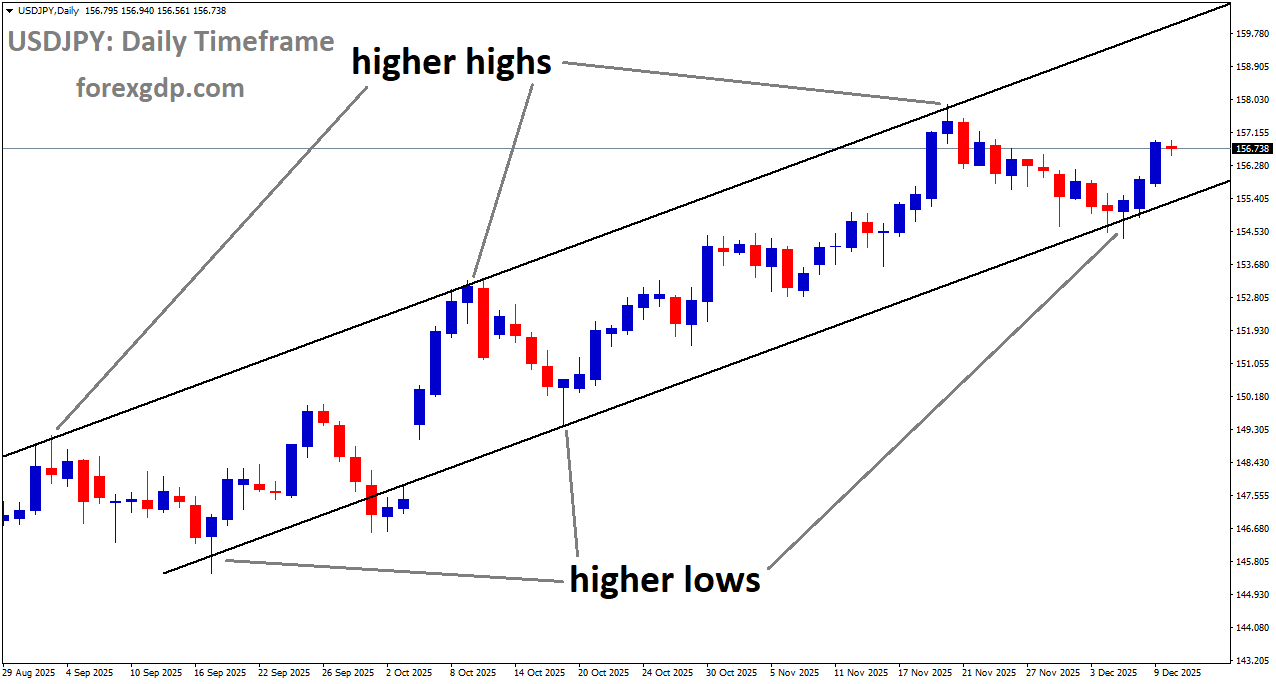
USDJPY is moving in an uptrend channel, and the market has rebounded from the higher low area of the channel
Still, even with the Dollar moving cautiously, USD/JPY has remained strong. That may look a little surprising at first, but it makes more sense when you look at the other side of the pair. When the Japanese Yen is under pressure, USD/JPY can rise even if the Dollar itself is not particularly strong across the board.
In other words, this isn’t just a “Dollar story.” It’s also very much a “Yen story.”
What Markets Expect From the Federal Reserve
Most investors are confident the Fed will cut interest rates by 25 basis points. Expectations have been leaning in that direction because the US job market has shown signs of weakness and cooling momentum for much of the year. When employment data loses strength, it tends to push central banks toward a more supportive stance, especially if policymakers believe the risk of slowing growth is increasing.
Why employment has become a key issue
Recent comments from Fed officials have highlighted growing concern about the labor market. Several members of the Federal Open Market Committee (FOMC), including Chair Jerome Powell, have pointed to downside risks tied to employment. That kind of language matters because the Fed’s decisions are heavily influenced by how it sees the balance between growth and inflation risks.
One widely watched voice, New York Fed President John Williams, commented in late November that economic growth has slowed and the labor market has gradually cooled. He also suggested there may be room for additional rate cuts. When senior officials speak like that, markets listen closely, because it often signals the Fed is more comfortable shifting toward easing.
The dot plot and Powell’s press conference matter a lot
Even if the Fed delivers the expected 25-basis-point cut, the bigger market reaction may come from what’s said next. Traders will be paying close attention to two things:
-
The Fed’s dot plot, which shows where policymakers expect rates to go over time
-
Jerome Powell’s press conference, where the tone and wording can reshape expectations instantly
If the Fed hints at more cuts ahead, the Dollar could weaken further. But if policymakers frame the cut as a cautious or limited adjustment, the Dollar could stabilize or even rebound. It all comes down to how confident the Fed sounds about growth, inflation progress, and labor market risks.
The Japanese Yen Struggles as Local Pressures Build

While Fed expectations are important, the Japanese side of the equation has its own set of problems right now. The Yen has been underperforming broadly, and part of that weakness is tied to rising fiscal concerns in Tokyo. When investors worry about government finances, it can affect confidence in the currency, especially if it creates uncertainty around future policy choices.
At the same time, these concerns are weighing on expectations that the Bank of Japan (BoJ) will move toward higher interest rates. Rate hike speculation has been one of the few themes that could have helped the Yen, so when that support fades, the currency can lose ground quickly.
Japan’s revised GDP adds to the pressure
Fresh revised data has also made the picture look worse. Japan’s economy shrank by 0.6% in the third quarter, which is a deeper contraction than the earlier estimate of 0.4%. That revision matters because it points to weaker momentum than initially believed, and it makes it harder for the BoJ to confidently push toward tightening policy.
When growth slows, central banks tend to become more cautious. That’s especially true in Japan, where policymakers have been careful for years due to long-running concerns about low inflation and fragile demand. A sharper GDP decline supports the idea that the BoJ may not be in a hurry to hike rates, even if inflation pressures exist in certain areas of the economy.
Why USD/JPY Can Stay Elevated Even If the Dollar Softens
A lot of people assume USD/JPY rises only when the US Dollar is strong. But the pair can also climb when the Yen is simply weaker than the Dollar. That seems to be what’s happening now.
With the Fed expected to cut, the Dollar’s upside may look limited in the short term. But if Japan’s outlook continues to weaken and BoJ rate hike expectations cool off, the Yen can remain under pressure. That creates a situation where USD/JPY can hold higher levels, even if the broader Dollar trend is mixed.
This is also why USD/JPY often reacts sharply to shifts in central bank expectations. It’s a pair that’s especially sensitive to differences in policy direction, growth outlook, and confidence about where interest rates are heading next.
What traders are watching over the next sessions
In the near term, market attention is likely to stay focused on:
-
The Fed’s guidance on whether more cuts are likely
-
Powell’s tone when discussing jobs, growth, and inflation
-
Any shift in expectations around BoJ policy as Japan’s data evolves
-
Broader risk sentiment, which can influence demand for safe-haven currencies like the Yen
The key idea is simple: if the Fed sounds more cautious about future cuts, the Dollar may find support. If Japan’s outlook keeps deteriorating, the Yen could stay weak. Either way, USD/JPY has clear reasons to remain active and sensitive to headlines.
Summary
USD/JPY is holding near 157.00, close to a two-week high, as markets wait for the Federal Reserve’s policy announcement. While the US Dollar is trading cautiously, the pair remains strong largely due to broad weakness in the Japanese Yen. Investors widely expect the Fed to cut rates by 25 basis points, but the bigger market reaction may come from the dot plot and Jerome Powell’s press conference. On the Japan side, the Yen is under pressure as fiscal concerns rise and revised third-quarter GDP shows a deeper contraction of 0.6%, making Bank of Japan rate hike expectations harder to sustain. Together, these forces are keeping USD/JPY supported near its recent highs.
NZDUSD Edges Higher as US Dollar Weakens Before Key Fed Move
The New Zealand Dollar (NZD) is showing resilience as it holds near the 0.5800 level, with all eyes on an upcoming decision from the U.S. Federal Reserve. Despite some recent economic turbulence and mixed signals from global markets, the NZD continues to trade in a relatively stable range. The big question now is: what will the Fed do next, and how will it shape the path forward for both the U.S. Dollar (USD) and the Kiwi?
Tension Builds Ahead of the Federal Reserve Decision
Markets are in a cautious mood as the U.S. Federal Reserve prepares to announce its latest decision on interest rates. The anticipation is not just about the rate cut itself, which is widely expected, but more about the tone and future outlook that Fed Chair Jerome Powell will share during his press conference.
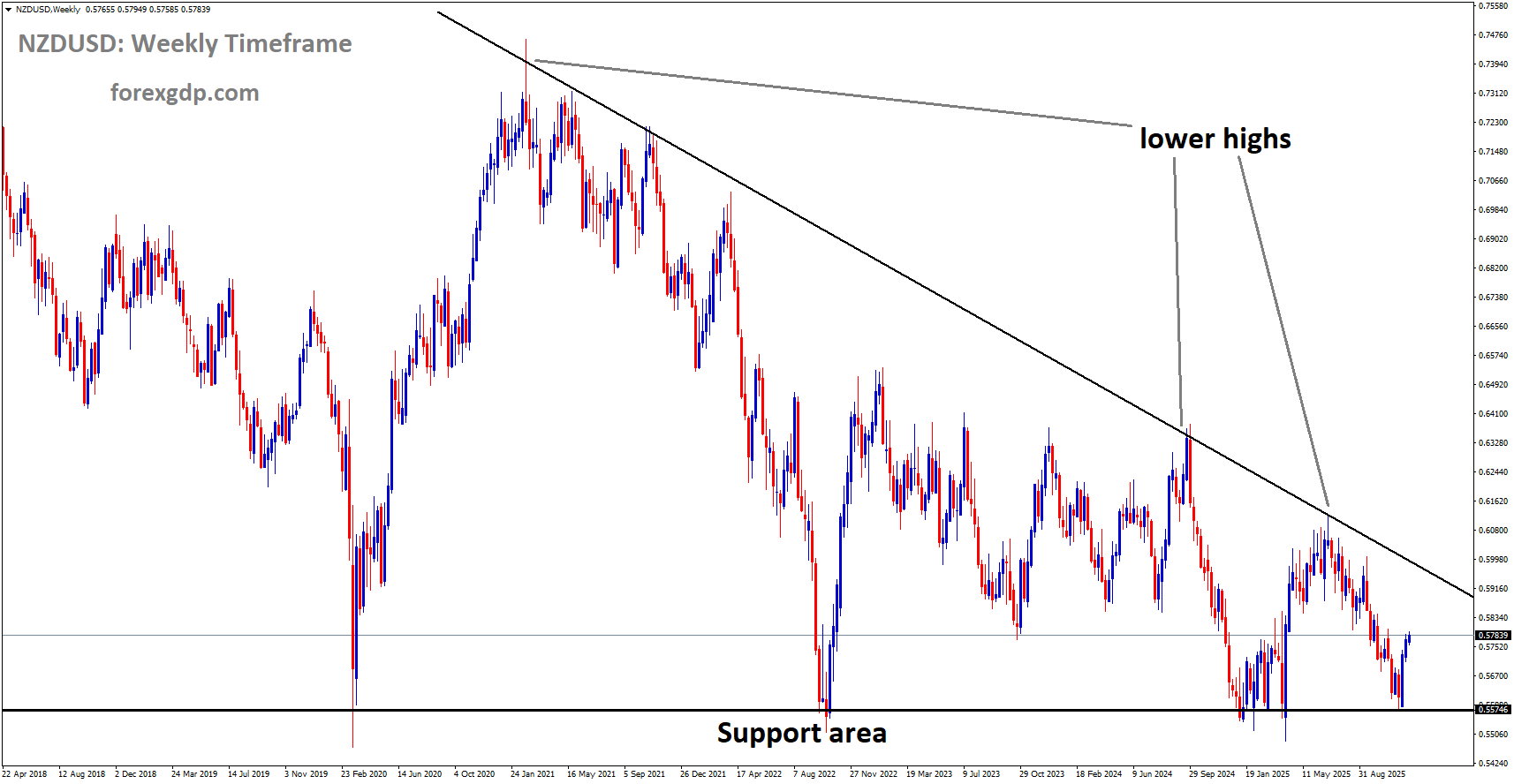
NZDUSD is moving in a Descending Triangle pattern, and the market has rebounded from the support area of the pattern
Investors expect the Fed to lower interest rates again, marking the second cut this year. But unlike previous cuts aimed at stimulating the economy, this one could come with a firmer message—a so-called “hawkish cut.” This means the central bank might reduce rates while signaling that it remains concerned about inflation and could slow down or limit further easing in the near future.
Such a stance would likely give the U.S. Dollar some breathing room, especially since recent employment data and stubborn inflation have suggested the economy is not cooling off as quickly as some had hoped.
The New Zealand Dollar Holds Its Ground
While the U.S. Dollar has been facing some mild selling pressure, the New Zealand Dollar is staying relatively strong, trading just below the key 0.5800 mark. The Kiwi’s ability to stay firm is partly due to a slight dip in U.S. Treasury yields and a general softening of the U.S. Dollar ahead of the Fed meeting.
However, the NZD has not been without its challenges. One of the main factors weighing on it recently has been weak economic news out of China.
China’s Economic Concerns Spill Over to New Zealand
During the early Asian trading session, the New Zealand Dollar took a step back following the release of fresh inflation data from China. While China’s consumer prices rose at the fastest pace in nearly two years on a yearly basis, the month-to-month figures told a different story. Factory gate prices, which reflect the cost of goods leaving China’s factories, showed deeper deflation, raising fresh concerns about weak domestic demand in the world’s second-largest economy.
This matters greatly to New Zealand. China is its largest trading partner, and any signs of economic slowdown there can quickly affect the outlook for New Zealand’s exports, especially in sectors like agriculture, dairy, and raw materials.
Even though earlier in the week China reported a strong trade balance and a surprising jump in exports, the mixed inflation data is enough to rattle investor confidence. As a result, the Kiwi’s rally has lost some momentum, despite signs of improvement in trade.
What to Watch Next: Fed’s Message and China’s Recovery
As the global market turns its attention to the Federal Reserve, investors will be paying close attention not only to the actual interest rate change but also to what Powell says about the path forward. His comments, along with the updated “dot plot”—which shows where Fed members think interest rates are heading—could be crucial in setting the tone for both the U.S. Dollar and currencies like the NZD in the weeks ahead.

At the same time, New Zealand watchers will be keeping a close eye on China. The Kiwi’s performance is increasingly tied to how quickly and effectively China can address its slowing domestic demand and reignite economic growth. A stronger recovery in China would likely boost confidence in New Zealand’s export-driven economy.
How the NZD/USD Pair Could Move
Although the NZD/USD pair is currently holding within a tight range, future moves will likely depend on the balance between U.S. interest rate policy and China’s economic health. If the Fed’s message leans hawkish, the U.S. Dollar could regain some lost ground, putting pressure on the Kiwi. On the other hand, any signs of stronger growth out of China could provide support for the NZD and push it higher.
Short-term stability in the pair might give way to more dramatic shifts depending on how the global economic story unfolds. For now, traders seem content to wait, watching key data points and central bank commentary before making big moves.
Summary
The NZD/USD pair is staying relatively stable near 0.5800 as traders wait for the U.S. Federal Reserve to announce its latest policy decision. While the Kiwi has been supported by a weaker U.S. Dollar and improved trade data from China, concerns about China’s inflation and slowing demand are creating some headwinds. A potential hawkish message from the Fed could boost the USD, while further signs of recovery in China might help lift the NZD. With both central banks and major economies in the spotlight, the next few days could bring important shifts in the currency markets.
Don’t trade all the time, trade forex only at the confirmed trade setups
Get more confirmed trade signals at premium or supreme – Click here to get more signals, 2200%, 800% growth in Real Live USD trading account of our users – click here to see , or If you want to get FREE Trial signals, You can Join FREE Signals Now!