

EURUSD is moving in an ascending channel, and the market has fallen from the higher high area of the channel
EURUSD Loses Upward Steam but Keeps 1.1800 Intact Following German Report
The EUR/USD currency pair continued to move higher for the second day in a row, showing steady but limited strength during the European trading session on Monday. While the pair managed to stay above the important 1.1800 level, it struggled to build strong upward momentum. Even positive economic data from Germany failed to give the Euro a meaningful push.
At the same time, renewed trade tensions and uncertainty around US policies put pressure on the US Dollar. This weakness in the dollar offered support to the EUR/USD pair, helping it maintain gains despite the lack of strong buying interest.
EUR/USD Stays Positive but Lacks Strong Momentum
The EUR/USD pair opened the week on a firm note and extended its gains from the previous session. However, the upward movement remained modest. After briefly rising during the day, the pair trimmed some of its intraday gains but continued to trade comfortably above the 1.1800 level.
The overall tone of the market suggested cautious optimism rather than aggressive buying. Traders appeared hesitant to make large moves, especially without stronger economic signals or clear direction from policymakers.
The limited follow-through buying shows that while the pair is supported, there is still uncertainty in the broader market environment. Investors are carefully watching global developments before making bigger commitments.
German IFO Survey Fails to Boost the Euro
Germany released its latest IFO Business Climate survey for February, which showed slight improvement compared to the previous month. The headline Business Climate Index rose to 88.6 from 87.6. Meanwhile, the Current Assessment Index increased to 86.7 from 85.7.
What the IFO Survey Measures
The IFO Business Climate survey is one of Germany’s key economic indicators. It measures the confidence of businesses regarding current conditions and future expectations. Since Germany is the largest economy in the Eurozone, the report often influences the Euro.
A rise in the index typically suggests improving business sentiment, which can support the currency. However, in this case, the better-than-expected numbers did not significantly strengthen the Euro.
Why the Euro Did Not React Strongly
Despite the improvement in business confidence, the Euro remained mostly unchanged. There are two main reasons for this muted reaction:
-
Ongoing uncertainty about the European Central Bank (ECB) leadership, particularly questions surrounding President Christine Lagarde’s tenure.
-
Broader global trade tensions that are creating uncertainty for European exporters and businesses.
These concerns overshadowed the positive economic data, limiting the Euro’s upside potential.
Renewed Trade Tensions Weigh on the US Dollar

One of the main drivers behind the EUR/USD pair’s recent gains is the weakness in the US Dollar. This weakness is largely linked to renewed trade tensions involving the United States.
US President Donald Trump introduced a new global levy of 15% following a Supreme Court decision related to previous trade policies. This move has reignited concerns about a possible escalation in global trade disputes.
In response, the European Parliament’s trade chief announced that the European Union may freeze the ratification process of its trade agreement with the US. The EU is seeking more clarity from Washington regarding its trade strategy before moving forward.
Market Reaction to Trade Developments
These developments have unsettled investors. Trade tensions often create uncertainty in global markets, affecting both business confidence and economic growth expectations.
As a result, many investors have started reducing their exposure to US assets. This trend, often described as the “Sell America” trade, puts downward pressure on the US Dollar.
When investors sell US assets, demand for the dollar declines, making it weaker against other currencies such as the Euro.
Federal Reserve Rate Cut Expectations Add Pressure
Another important factor weighing on the US Dollar is the growing expectation that the Federal Reserve could cut interest rates again.
Markets are currently pricing in at least two additional rate cuts of 25 basis points each. Lower interest rates generally make a currency less attractive to investors because they reduce returns on investments denominated in that currency.
Why Rate Cuts Matter for EUR/USD
When the Federal Reserve cuts rates, it often weakens the US Dollar. At the same time, if the European Central Bank maintains a steady policy stance, the interest rate gap between the US and the Eurozone narrows.
This shift can support the Euro against the Dollar, pushing the EUR/USD pair higher.
However, it is important to note that expectations alone do not guarantee strong movements. Traders often wait for confirmation from official statements or economic data before making decisive moves.
A Cautious Market Environment
Even though the EUR/USD pair has gained for two consecutive days, the overall market mood remains cautious. The pair is benefiting from US Dollar weakness rather than strong Euro strength.
Several uncertainties continue to hang over the market:
-
Ongoing trade policy disputes between the US and EU.
-
Questions about future Federal Reserve rate decisions.
-
Uncertainty surrounding the European Central Bank’s leadership and policy direction.
Because of these factors, traders appear reluctant to push the pair significantly higher without clearer signals.
Lack of Follow-Through Buying
One noticeable feature of the recent price action is the lack of strong follow-through buying. While the pair is holding above 1.1800, it has not shown aggressive upward momentum.
This suggests that market participants are taking a wait-and-see approach. They may be looking for additional catalysts, such as new economic data, central bank comments, or clarity on trade policies.
Until then, the pair may continue to move within a relatively narrow range.
Broader Implications for Investors
The current situation highlights how global politics and central bank expectations can strongly influence currency markets.
Trade tensions not only affect businesses directly but also shape investor sentiment. When uncertainty rises, currencies linked to countries facing policy risks often weaken.
At the same time, interest rate expectations play a crucial role in currency valuation. Investors closely monitor central bank signals because even small changes in rate outlooks can shift capital flows across borders.
For now, the EUR/USD pair is caught between moderate Euro stability and noticeable US Dollar weakness.
Summary
The EUR/USD pair has posted gains for two straight sessions and continues to hold above the 1.1800 level. However, the upward movement lacks strong momentum.
Germany’s latest IFO Business Climate survey showed improving business sentiment, but the data failed to significantly strengthen the Euro. Ongoing uncertainty around ECB leadership and global trade tensions limited the currency’s reaction.
Meanwhile, renewed trade disputes involving the United States have pressured the US Dollar. The introduction of a new global levy and the European Union’s cautious response have unsettled markets. Additionally, expectations of further Federal Reserve rate cuts are weighing on the dollar.
As a result, the EUR/USD pair remains supported, mainly due to US Dollar weakness rather than strong Euro demand. With many uncertainties still present, traders are likely to remain cautious while watching for clearer signals from economic data and policymakers.
GBPUSD Retreats as Dovish BoE Tone Weighs on British Pound
The Pound Sterling started the week under clear pressure, falling against several major currencies after fresh comments from a senior Bank of England (BoE) policymaker. At the same time, the US Dollar regained strength following an important legal decision in the United States related to trade policy. Together, these events shaped currency movements during the European trading session on Monday.
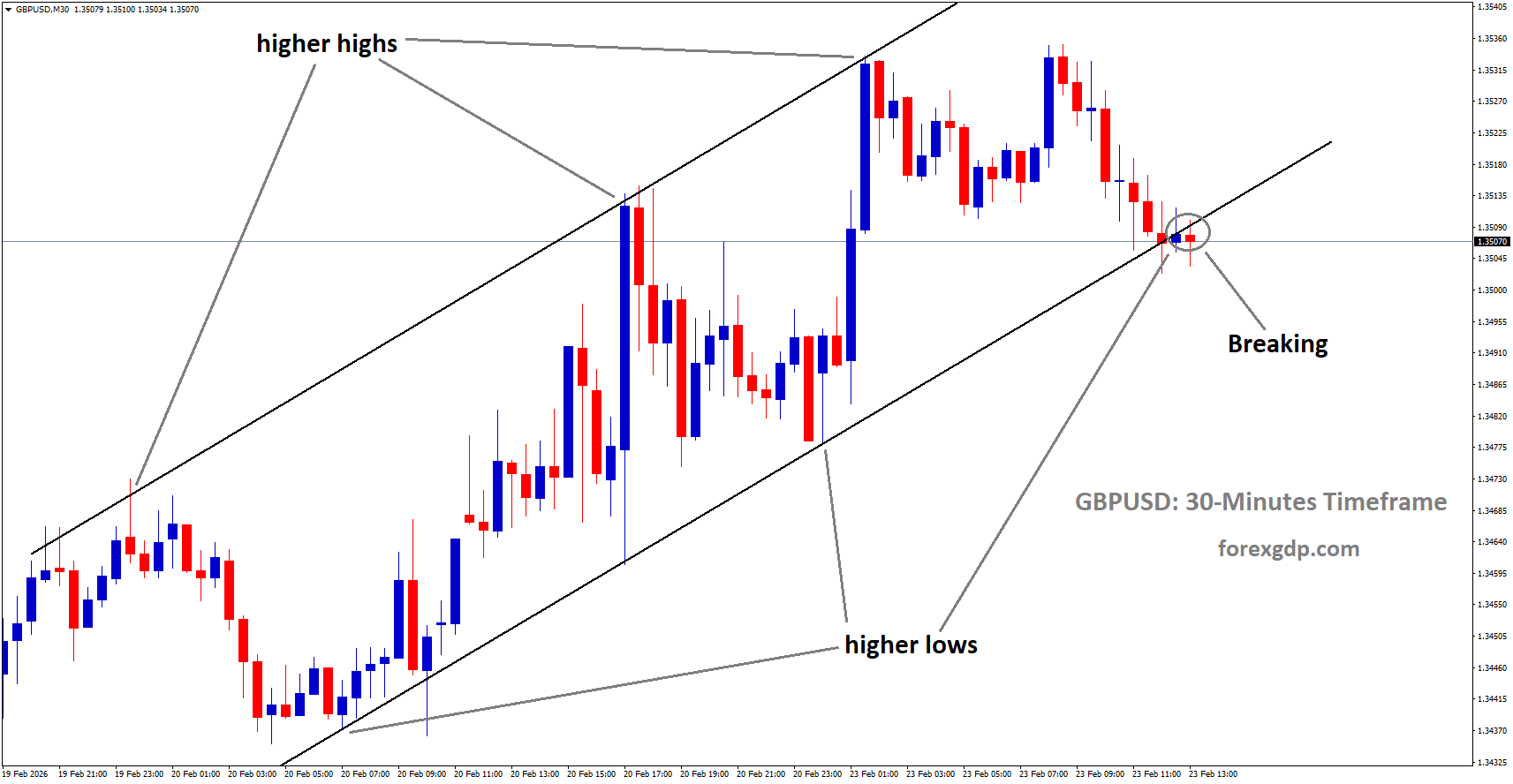
GBPUSD is breaking the higher low area of the uptrend channel
This shift in momentum highlights how sensitive the foreign exchange market is to central bank signals and political developments. Even small changes in tone from policymakers can quickly influence investor confidence and currency values.
BoE Policymaker Signals More Rate Cuts Ahead
The main driver behind the Pound’s decline was a set of dovish remarks from Alan Taylor, a member of the Bank of England’s Monetary Policy Committee (MPC). Speaking at an event hosted by Deutsche Bank in London, Taylor shared his views on inflation, economic growth, and the future path of interest rates.
Taylor had already voted in favor of a 25 basis point interest rate cut earlier this month. His latest comments made it clear that he sees room for further reductions.
He expressed growing confidence that inflation in the United Kingdom is moving back toward the central bank’s 2% target. According to him, price pressures—especially in the services sector—are expected to cool down. He also believes wage growth will slow, helping inflation return to more normal levels over the course of the year.
This outlook reduces the need for tight monetary policy. When inflation is high, central banks usually raise interest rates to control rising prices. But when inflation starts to ease and economic growth slows, they may lower rates to support the economy.
Taylor suggested that the risks are now shifting toward lower inflation and higher unemployment. Because of that, he believes the Bank of England might need to deliver two or three more rate cuts before interest rates reach what he called a “neutral” level. A neutral rate is one that neither stimulates nor restricts economic growth.
Why Dovish Comments Weigh on the Pound
When central bank officials signal lower interest rates, the local currency often weakens. This happens because lower rates can make a country less attractive to investors seeking higher returns. If investors expect reduced yields on UK assets, demand for the Pound can fall.
Taylor’s comments reinforced expectations that the Bank of England may continue easing policy in the coming months. That shift in expectations triggered selling pressure on the Pound during the European session.
Concerns Over UK Economic Growth
Another key factor behind the Pound’s weakness is concern about the strength of the UK economy.
Taylor’s remarks highlighted worries about slowing economic growth and rising unemployment. If growth remains soft, the Bank of England may feel even more pressure to support the economy through lower borrowing costs.
While inflation appears to be moving in the right direction, economic momentum remains fragile. Policymakers are trying to balance two goals: keeping inflation under control while also preventing a deeper slowdown.
The fact that an MPC member openly supports additional rate cuts suggests that the central bank may prioritize economic stability over keeping rates high for longer. For currency markets, that shift in focus can have a noticeable impact.
GBP/USD Erases Early Gains
Earlier in the day, the Pound had actually strengthened against the US Dollar. The GBP/USD pair initially moved higher as the Dollar weakened.
However, once Taylor’s comments gained attention, the Pound gave up nearly all of those gains. By the European session, the currency pair was trading close to flat levels, hovering around the mid-1.34 range.
This reversal shows how quickly market sentiment can change. What began as a stronger session for the Pound turned into a more cautious one as investors reassessed the outlook for UK interest rates.
US Dollar Recovers After Supreme Court Ruling
While the Pound struggled, the US Dollar staged a recovery.
The Dollar had fallen earlier in the day after the United States Supreme Court ruled against a tariff policy associated with former President Donald Trump. The decision initially raised questions about the future of certain trade measures and created short-term uncertainty in the market.
However, during European trading hours, the US Dollar regained its footing. Investors appeared to believe that the US administration still has alternative tools to manage trade policy and maintain agreements.
Why Trade Policy Matters for the Dollar
Trade policy can influence economic growth, inflation, and investor confidence. Tariffs, for example, can affect import costs and global supply chains. When courts or governments adjust trade rules, currency markets often react.
In this case, the Supreme Court’s ruling briefly pressured the Dollar. But the recovery suggests that traders believe the broader US economic outlook remains stable.
The US Dollar Index, which measures the Dollar’s performance against a basket of major currencies, erased its earlier losses and moved back into positive territory. This rebound added further pressure on the GBP/USD pair.
The Bigger Picture for the Pound and the Dollar
The recent movements in the Pound Sterling and the US Dollar reflect broader themes shaping global markets.

On the UK side, attention is focused on inflation trends, wage growth, and the possibility of additional interest rate cuts. If more policymakers echo Taylor’s dovish tone, expectations for further easing could strengthen. That may continue to weigh on the Pound.
On the US side, investors are watching political developments, trade policy decisions, and overall economic performance. Despite legal challenges, the Dollar remains supported by confidence in the resilience of the US economy.
Currency markets often move based on relative strength. Even if both economies face challenges, the currency backed by a more stable outlook tends to perform better. At the moment, shifting expectations around UK interest rates have placed the Pound at a disadvantage.
What Investors Are Watching Next
Looking ahead, market participants will closely monitor upcoming economic data from both the United Kingdom and the United States.
For the UK, key indicators include inflation reports, employment data, and wage growth figures. If inflation continues to ease and job market conditions weaken, the case for additional rate cuts could become stronger.
For the US, economic growth numbers, labor market data, and updates on trade policy will remain in focus. Any signs of economic resilience could support the Dollar further.
Central bank communication will also play a major role. Comments from other Bank of England officials could either confirm or challenge Taylor’s outlook. If more members signal support for rate cuts, expectations could shift even more decisively toward easing.
Summary
The Pound Sterling came under strong pressure after Bank of England policymaker Alan Taylor signaled that more interest rate cuts may be needed. His comments reflected confidence that inflation is moving toward the 2% target but also highlighted concerns about slower economic growth and rising unemployment.
Lower rate expectations typically weaken a currency, and the Pound felt that impact during the European session. At the same time, the US Dollar recovered after an initial drop linked to a Supreme Court ruling on trade policy. Investors appeared confident that the broader US outlook remains stable.
As markets look ahead, the focus will remain on economic data and central bank guidance. For now, shifting interest rate expectations in the UK and renewed strength in the US Dollar are shaping the direction of the GBP/USD pair.
USDJPY Moves Higher as Market Anxiety Over Trade Disputes Strengthens the Yen
The USD/JPY currency pair started the week under pressure, moving lower as global uncertainty pushed investors toward safer assets. The Japanese Yen gained strength due to rising trade-war fears, while the US Dollar struggled under the weight of growing expectations that the Federal Reserve could lower interest rates later this year.
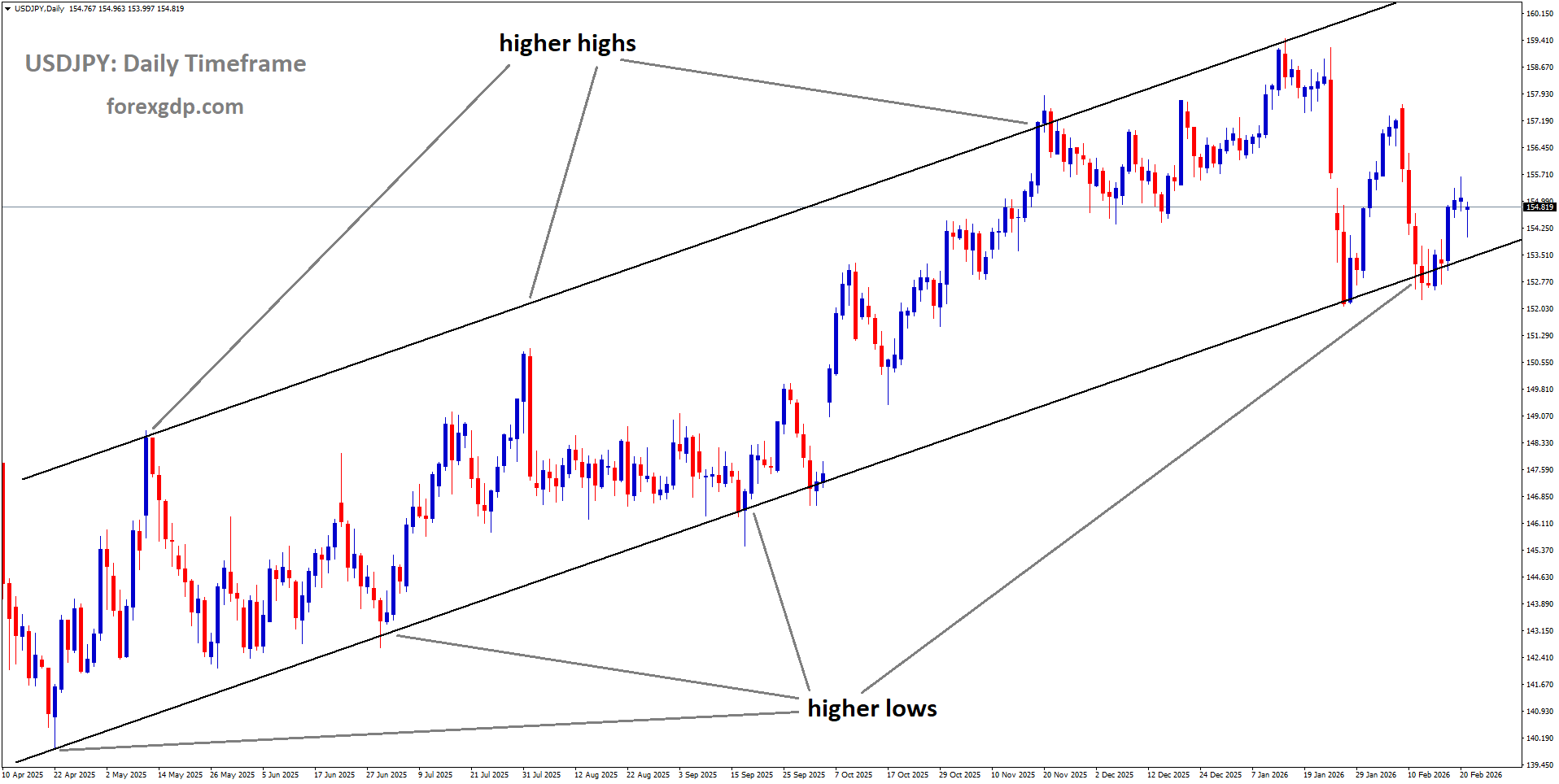
USDJPY is moving in an uptrend channel
Although the pair managed to recover slightly from its early losses, it remained weak during the Asian trading session. The overall mood in global markets, mixed economic data, and policy expectations from both the United States and Japan continue to shape the direction of USD/JPY.
Trade-War Concerns Boost Demand for the Japanese Yen
One of the main drivers behind the Yen’s strength is the return of trade-war concerns. Investors reacted strongly after US President Donald Trump announced a new global levy of 15%. This decision followed a Supreme Court ruling against his broader tariff plans.
The announcement sparked fresh worries about global trade relations. Many market participants fear that other countries could respond with their own measures. If that happens, global supply chains may face further disruptions, which could hurt economic growth around the world.
When uncertainty rises, investors often look for safe places to protect their money. The Japanese Yen is widely seen as a safe-haven currency. During times of global tension or financial stress, demand for the Yen usually increases. That is exactly what happened as markets absorbed the news of potential trade conflicts.
As a result, USD/JPY moved lower, reflecting the stronger Yen and weaker US Dollar.
Weak US Dollar Adds to Downward Pressure
While the Yen gained support from safe-haven demand, the US Dollar faced its own challenges.
Recent economic data from the United States showed mixed signals. The Personal Consumption Expenditures (PCE) Price Index, which is closely watched by the Federal Reserve, indicated that core inflation rose more than expected in December. This initially supported the idea that the Fed might keep interest rates unchanged in the near term.
However, other data painted a less positive picture. US Gross Domestic Product (GDP) growth slowed sharply in the fourth quarter, expanding at an annualized pace of 1.4%. This weaker growth has raised concerns that the economy is losing momentum.
Because of this slowdown, many traders now believe that the Federal Reserve could cut interest rates later this year. Current expectations suggest the possibility of two rate cuts before the year ends. Even if the Fed decides to keep rates steady in the short term, the longer-term outlook of easing monetary policy weighs heavily on the Dollar.
Lower interest rates tend to reduce the appeal of a currency, as investors receive lower returns on assets denominated in that currency. This expectation has pulled the US Dollar away from recent highs and added to the pressure on USD/JPY.
Japan’s Economic Challenges Limit Yen Gains

Although the Japanese Yen benefited from safe-haven flows, its gains were not unlimited. Domestic economic concerns in Japan have acted as a counterweight.
Japan’s economy showed weak growth in the fourth quarter, increasing pressure on Prime Minister Sanae Takaichi to consider additional stimulus measures. A sluggish economy can reduce the chances of higher interest rates, which in turn may limit the strength of a country’s currency.
Adding to this, Japan’s key inflation gauge slowed to its weakest pace in two years. Lower inflation makes it less urgent for the Bank of Japan (BoJ) to tighten monetary policy. In other words, expectations for an immediate interest rate hike from the BoJ have cooled.
For years, Japan has maintained very loose monetary policy compared to other major economies. While there has been some speculation about gradual tightening, the latest data suggests that policymakers may move slowly and cautiously.
This hesitation reduces the upside potential for the Yen. Even though global risk concerns are supporting it, domestic economic weakness and delayed policy tightening limit how far it can rise.
Thin Trading and Market Caution
Another factor influencing USD/JPY is relatively light trading activity. A bank holiday in Japan reduced market participation during the Asian session. Lower trading volumes can sometimes lead to sharper short-term moves, but they can also make traders more cautious.
In such conditions, investors are often reluctant to place aggressive bets in one direction. Instead, they prefer to wait for clearer signals from economic data or policy decisions.
This cautious approach has helped the pair avoid a deeper slide, even though the overall trend remains under pressure.
The Role of Federal Reserve Policy Expectations
The Federal Reserve remains a central focus for currency markets. Even though inflation data has shown some resilience, the broader economic slowdown has changed the conversation.
If economic growth continues to weaken, the Fed may feel pressure to support the economy by lowering rates. Markets tend to move ahead of actual policy decisions, meaning expectations alone can drive significant currency shifts.
For USD/JPY, this creates a delicate balance. On one side, sticky inflation could delay rate cuts. On the other, slowing growth strengthens the argument for easing later in the year.
As long as traders believe rate cuts are coming, the US Dollar may struggle to regain strong momentum.
Global Risk Sentiment Remains Key
Beyond domestic factors, global risk sentiment continues to play a major role in USD/JPY movements.
Trade tensions between major economies can quickly shift investor behavior. If concerns about tariffs and retaliatory measures intensify, demand for safe-haven assets like the Japanese Yen could increase further.
However, if diplomatic solutions emerge or economic fears ease, risk appetite may return. In that case, the Yen could lose some of its safe-haven appeal, potentially supporting a rebound in USD/JPY.
This makes the pair highly sensitive to headlines and political developments, not just economic data.
Balancing Forces in the Currency Market
At the moment, USD/JPY is caught between competing forces.
On the bearish side, trade-war fears and expectations of US rate cuts are weighing on the Dollar. On the supportive side, Japan’s weak growth and softer inflation limit the Yen’s strength.
This tug-of-war creates a complex environment for traders. Movements may remain driven by short-term news and shifting expectations rather than a clear long-term trend.
Investors will likely keep a close eye on upcoming economic reports from both countries, as well as any new statements from central bank officials.
Final Summary
The USD/JPY pair began the week under pressure as rising trade tensions boosted demand for the Japanese Yen. A new US levy announcement sparked fears of economic disruption, pushing investors toward safer assets.
At the same time, expectations that the Federal Reserve may cut interest rates later this year have weakened the US Dollar. Slower economic growth in the United States has reinforced this outlook, even though inflation remains somewhat elevated.
However, Japan’s own economic challenges, including weak growth and easing inflation, have limited the Yen’s gains. The Bank of Japan is unlikely to rush into tighter policy, which keeps a ceiling on further currency strength.
With global uncertainty still present and central bank decisions ahead, USD/JPY remains sensitive to both economic data and political developments. The balance between risk sentiment and monetary policy expectations will continue to shape the pair’s direction in the days and weeks to come.
USDCAD Edges Down While Oil Surge and Trade Worries Support Canadian Dollar
The USD/CAD currency pair moved lower during Monday’s Asian trading session, hovering near the 1.3665 level. The shift comes as investors react to fresh developments around US trade policy, global tariff concerns, and movements in crude oil prices. At the same time, traders are preparing for important US economic data later in the week, which could further influence the direction of the US Dollar and the Canadian Dollar.
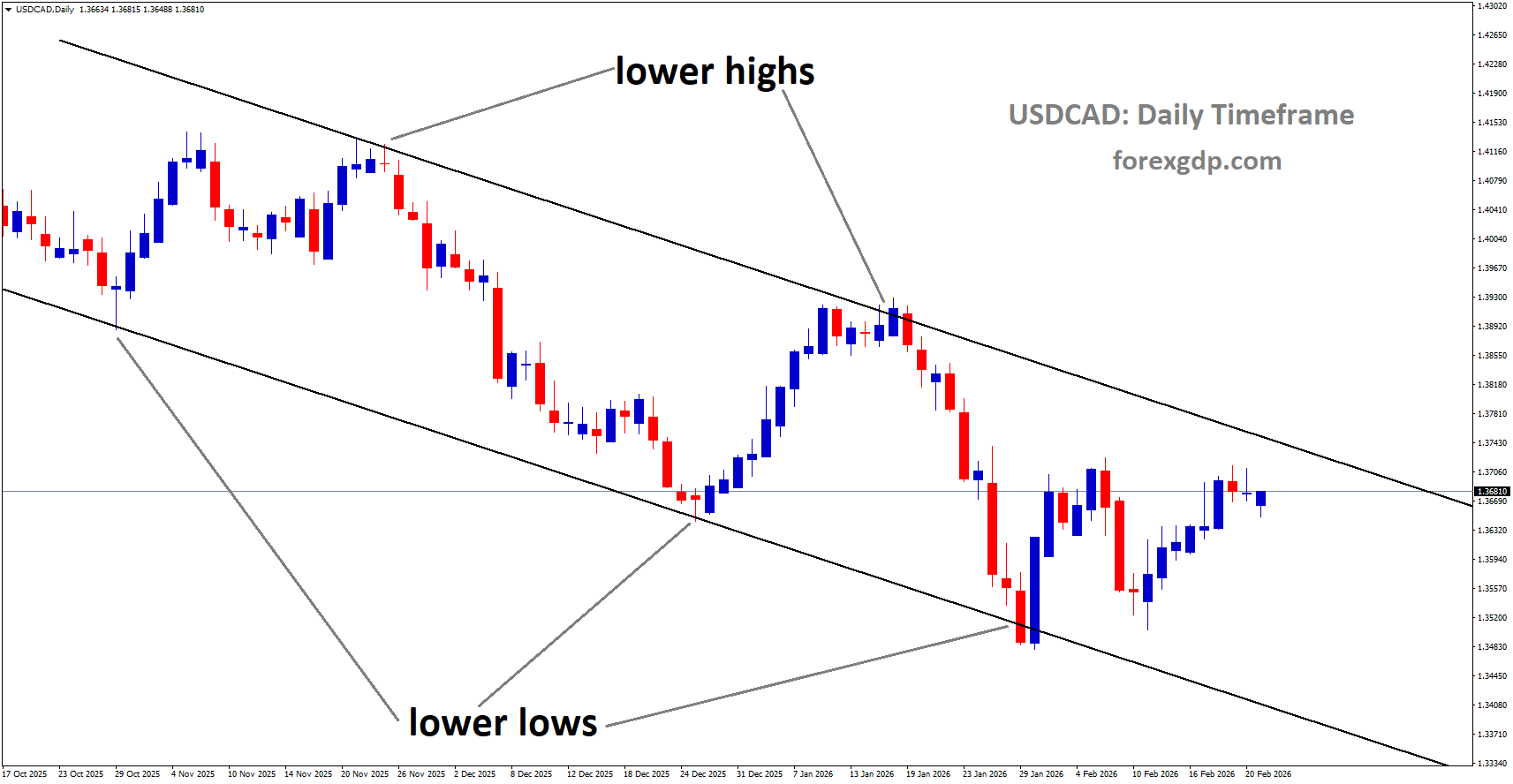
USDCAD is moving in a descending channel
Several key factors are shaping the outlook for USD/CAD right now. These include new tariff announcements from US President Donald Trump, a ruling by the US Supreme Court, and ongoing geopolitical tensions that could impact oil markets. Since Canada is a major oil exporter, changes in crude oil prices often play a direct role in how the Canadian Dollar performs.
USD/CAD Edges Lower in Asian Trading
During Monday’s Asian session, the USD/CAD pair drifted down, reflecting mild weakness in the US Dollar compared to the Canadian Dollar. Currency markets are currently navigating uncertainty around US trade policy and global economic conditions.
One of the main events on traders’ radar is the upcoming US Producer Price Index (PPI) report for January, scheduled for release later in the week. The PPI measures changes in prices received by producers and is often seen as an early signal of inflation trends. If the data shows stronger-than-expected inflation pressures, it could influence expectations about future US economic policy and affect the US Dollar.
For now, however, the focus remains on trade tensions and geopolitical risks, which are creating cautious sentiment in global markets.
Trump Announces 15% Global Tariffs
Trade policy is once again at the center of attention. President Donald Trump recently stated that he will impose a blanket 15% tariff on imports. This move follows a US Supreme Court decision that struck down his earlier sweeping tariffs introduced under the International Emergency Economic Powers Act (IEEPA).
The IEEPA is a law designed for use during national emergencies. The Supreme Court ruled against the broad use of this law to impose wide-ranging tariffs. In response, President Trump criticized the court’s decision and announced the new 15% global levy.
This fresh tariff announcement has created uncertainty in financial markets. Investors are concerned about the potential impact on global trade, economic growth, and inflation. As a result, the US Dollar has faced some pressure, contributing to the decline in USD/CAD.
Impact on Canada
For Canada, the direct impact of the court ruling appears limited. Economists have noted that most Canadian exports were already exempt from the IEEPA-related tariffs. In addition, product-specific tariff measures, which have been more significant for the Canadian economy, were not affected by the Supreme Court’s decision.
Still, broader global tariffs can influence business confidence and trade flows. Since the US and Canada share one of the largest trading relationships in the world, any changes in US trade policy can have ripple effects across the Canadian economy.
Oil Prices Offer Support to the Canadian Dollar

Crude oil prices are another key driver of the USD/CAD pair. Canada is one of the world’s largest oil exporters, and higher oil prices typically strengthen the Canadian Dollar, often referred to as the “Loonie.”
Persistent geopolitical risks are currently supporting oil markets. According to reports, President Trump is considering limited airstrikes on Iran. He has stated that if diplomatic efforts or initial targeted US actions fail to persuade Iran to abandon its nuclear program, he may consider a much larger military response in the coming months.
These developments have raised concerns about potential disruptions to global oil supply. When geopolitical tensions increase, especially in oil-producing regions, energy markets often react with higher prices due to fears of supply constraints.
Higher crude oil prices generally benefit the Canadian economy, as oil exports contribute significantly to national income. As a result, rising oil prices can strengthen the Canadian Dollar and put downward pressure on USD/CAD.
US-Iran Talks in Focus
The next round of talks between the United States and Iran is scheduled to take place in Geneva on Thursday. Investors will closely watch these discussions for signs of progress or further escalation.
If negotiations break down and tensions intensify, oil prices could remain elevated. On the other hand, signs of diplomatic progress might ease supply concerns and potentially limit gains in the energy market.
How Tariff Uncertainty Weighs on the US Dollar
The US Dollar is often seen as a safe-haven currency during times of global uncertainty. However, trade-related tensions can sometimes create mixed reactions.
In this case, uncertainty surrounding new tariffs and the legal battle over trade policy has weighed on the US Dollar. Investors are trying to assess how the new 15% tariff will affect inflation, consumer spending, and business investment in the United States.
Higher tariffs can lead to higher import costs, which may eventually be passed on to consumers. This can create inflationary pressure and reduce purchasing power. At the same time, trade restrictions can slow economic growth if they disrupt supply chains and reduce international trade activity.
With these risks in mind, some traders have reduced their exposure to the US Dollar, contributing to the recent dip in USD/CAD.
What to Watch Next for USD/CAD
Several upcoming events could influence the direction of the USD/CAD pair in the near term.
US Economic Data
The US Producer Price Index report will be closely monitored. Stronger inflation data could support the US Dollar if it changes expectations about future economic policy. On the other hand, softer data may add to the Dollar’s recent weakness.
Developments in Trade Policy
Investors will also watch for further details about the new 15% tariffs. Markets will want to know how quickly they will be implemented, which products will be affected, and how other countries might respond.
Any signs of retaliation or escalation in global trade tensions could increase volatility in currency markets.
Geopolitical Headlines
Updates related to US-Iran negotiations or potential military action will remain a major focus. Since oil prices are sensitive to geopolitical risks, any sudden developments could quickly impact the Canadian Dollar.
Final Summary
The USD/CAD pair has moved lower during Monday’s Asian session as markets respond to a mix of trade policy uncertainty, geopolitical tensions, and movements in crude oil prices. President Trump’s announcement of a 15% global tariff has added fresh concerns about global trade and economic stability, putting pressure on the US Dollar.
At the same time, rising oil prices linked to geopolitical risks are offering support to the Canadian Dollar. As a major oil exporter, Canada benefits when crude prices climb, which can strengthen the Loonie and weigh on USD/CAD.
Looking ahead, traders will focus on upcoming US inflation data, developments in trade policy, and the outcome of US-Iran talks. These factors will likely shape the next moves for the USD/CAD pair as global markets continue to navigate a period of uncertainty.
EURGBP Moves Little While Investors Eye German Confidence Figures
The EUR/GBP currency pair is holding steady as both the Euro and the British Pound show resilience in the face of ongoing global trade developments. Recent political and economic events have supported both currencies, helping the pair recover from earlier losses. As markets adjust to shifting trade policies in the United States and fresh economic data from the United Kingdom, investors are keeping a close eye on what comes next.
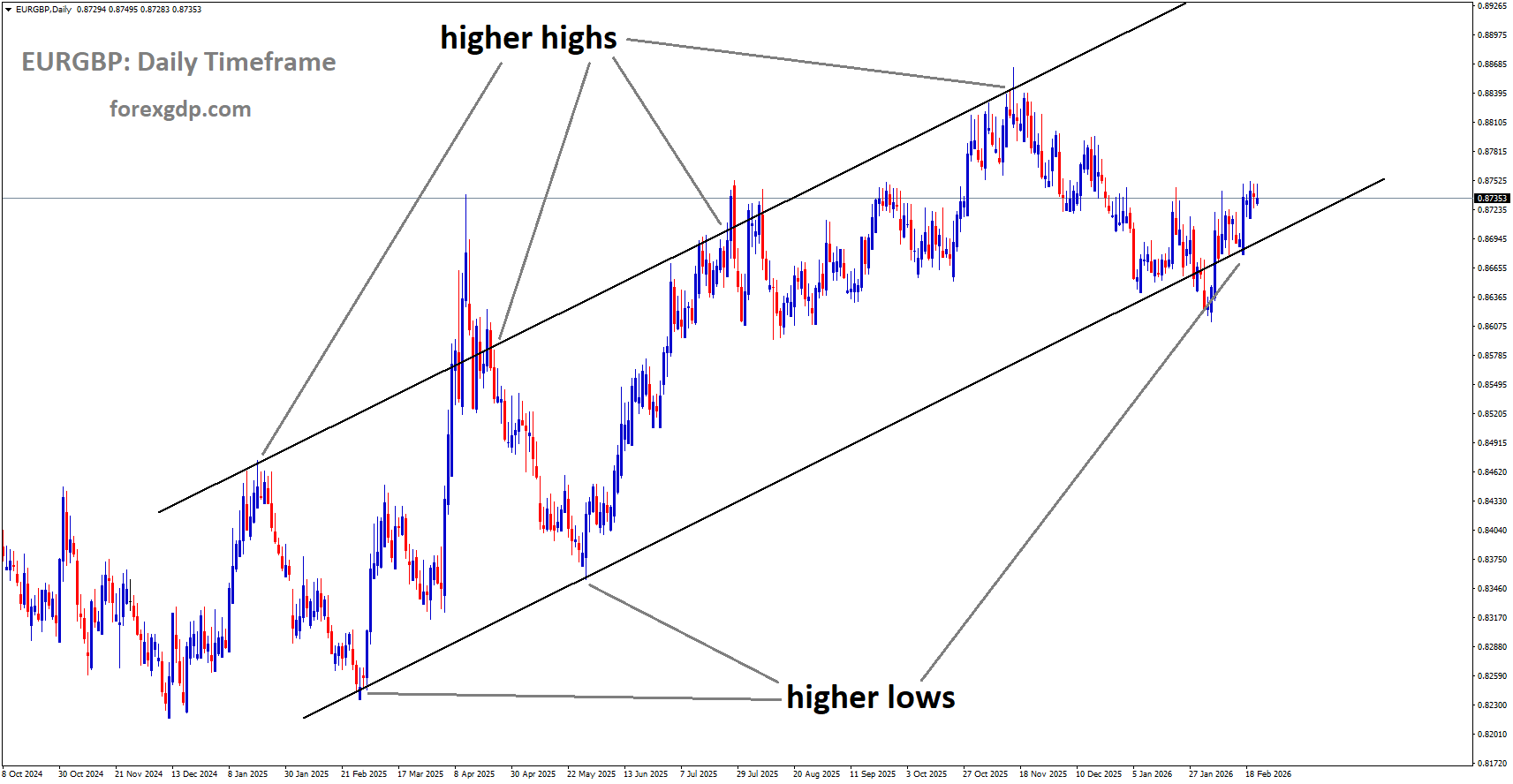
EURGBP is moving in an ascending channel, and the market has reached the higher low area of the channel
This week begins with attention turning toward Germany’s latest business sentiment data, which could offer further direction for the Euro. At the same time, traders continue to digest news from the United States and Europe regarding trade policies that could influence global economic growth.
US Supreme Court Decision Sparks Trade Policy Uncertainty
A major development came from the United States, where the Supreme Court ruled that certain tariffs imposed under the International Emergency Economic Powers Act (IEEPA) were unlawful without approval from Congress. This decision has created fresh uncertainty around US trade policy.
The ruling challenges tariffs that were previously introduced under executive authority. As a result, questions have emerged about how the US government will handle trade restrictions moving forward. While the court decision removes some legal backing for certain tariffs, it does not necessarily mean trade tensions are easing.
Former President Donald Trump responded by signaling plans to introduce a new 15% global tariff using different trade laws. Meanwhile, US Treasury Secretary Scott Bessent and other White House officials indicated that the administration intends to explore alternative legal routes to keep many existing tariffs in place.
This situation leaves global markets in a state of uncertainty. Trade policy plays a key role in shaping economic confidence, business investment, and currency movements. With the legal framework under review and new proposals on the table, investors are closely monitoring developments in Washington.
European Union Pauses Trade Agreement Progress
The ripple effects of US trade uncertainty are being felt in Europe. The European Parliament’s trade chief recently stated that the European Union plans to suspend the ratification of its trade agreement with the United States. The EU wants clearer guidance from the US administration regarding its long-term trade strategy before moving forward.
This cautious approach reflects broader concerns about stability in international trade relations. The EU and the US share one of the largest trade relationships in the world, and any changes in tariffs or trade rules can have significant economic consequences.
By pausing ratification, the EU is signaling that it wants predictability and transparency before committing to deeper trade cooperation. This stance may limit immediate progress on transatlantic trade talks but also underscores the importance of clarity in global economic partnerships.
For the Euro, this development adds a layer of complexity. On one hand, the currency has benefited from weakness in the US Dollar following the Supreme Court ruling. On the other hand, uncertainty around trade agreements can limit stronger gains if businesses and investors become more cautious.
Strong UK Economic Data Supports the Pound
While trade headlines dominate the global stage, the British Pound has found support from encouraging domestic data.
Retail sales in the United Kingdom showed impressive growth in January, rising by 4.5% compared to the same period last year. This result was well above expectations and suggests that consumer spending remains solid despite broader economic challenges. Strong retail activity is often seen as a positive sign for economic health, as it reflects confidence among households.
In addition, business activity in the UK gained momentum in February. The latest S&P Flash Purchasing Managers’ Index (PMI) showed expansion in both the services and manufacturing sectors. When both sectors are growing, it indicates that businesses are seeing improved demand and operating conditions.
Services and Manufacturing Show Expansion
The services sector plays a major role in the UK economy, covering industries such as finance, hospitality, and professional services. Growth in this area often has a strong impact on overall economic performance.
At the same time, the manufacturing sector also recorded expansion. This suggests that production levels are increasing and that businesses are experiencing healthier order books.
Together, these data points have provided meaningful support for the Pound. Investors often respond positively when economic indicators exceed expectations, as it reduces concerns about a slowdown.
Labor Market Concerns and Bank of England Outlook
Despite strong retail and business activity data, not all signs point to strength. The UK labor market has shown some softness, which has influenced expectations around monetary policy.
The unemployment rate rose in the fourth quarter of 2025, signaling that the job market may be losing some momentum. A rising unemployment rate can weigh on consumer confidence and spending over time, even if short-term data remains strong.
Because of this, financial markets are increasingly expecting the Bank of England (BoE) to consider further policy easing. Current expectations suggest a high probability that the central bank will deliver a quarter-point interest rate cut at its upcoming March meeting.
Lower interest rates are typically used to support economic activity. By reducing borrowing costs, the central bank aims to encourage spending and investment. However, rate cuts can also influence currency values, as lower yields may make a currency less attractive to international investors.
Balancing Growth and Inflation
The Bank of England faces a delicate balancing act. On one side, strong retail sales and expanding business activity point to resilience. On the other, rising unemployment suggests potential weakness ahead.
Policymakers must weigh the risks of slowing growth against concerns about inflation and financial stability. The decision in March will likely depend on how incoming data shapes the overall economic outlook.
For now, the Pound is benefiting from the recent upbeat data. But expectations of rate cuts could limit how far it strengthens in the near term.
Germany’s Business Climate in Focus

Looking ahead, attention is turning to Germany’s IFO Business Climate survey for February. This report measures confidence among German businesses and is widely seen as an important indicator of economic trends in the Eurozone’s largest economy.
If business sentiment improves, it could provide additional support for the Euro. Stronger confidence typically suggests that companies expect better conditions in the months ahead. On the other hand, weaker results may raise concerns about growth prospects in the region.
As Germany plays a central role in the European economy, its data often has a meaningful impact on the Euro’s performance.
A Period of Cautious Stability for EUR/GBP
With both the Euro and the Pound finding support from different factors, the EUR/GBP pair has remained relatively stable. The Euro is benefiting from US Dollar softness and cautious optimism around European economic data. Meanwhile, the Pound is supported by strong retail and business activity figures in the UK.
At the same time, ongoing trade uncertainty and expectations around central bank decisions are preventing large moves in either direction. Investors are waiting for clearer signals on US trade policy, EU negotiations, and the Bank of England’s next steps.
This combination of global political developments and domestic economic trends is keeping the pair balanced for now.
Final Thoughts
The EUR/GBP pair is navigating a complex environment shaped by global trade decisions and domestic economic performance. The US Supreme Court’s ruling on tariffs has added uncertainty to international trade policy, while the European Union is taking a cautious approach to its agreement with the United States.
In the United Kingdom, strong retail sales and expanding business activity have boosted confidence in the Pound. However, rising unemployment has increased expectations of potential interest rate cuts from the Bank of England.
As new data and policy decisions emerge, the balance between the Euro and the Pound may shift. For now, both currencies are holding firm, supported by a mix of political developments and economic resilience.
Don’t trade all the time, trade forex only at the confirmed trade setups
Get more confirmed trade signals at premium or supreme – Click here to get more signals, 2200%, 800% growth in Real Live USD trading account of our users – click here to see , or If you want to get FREE Trial signals, You can Join FREE Signals Now!