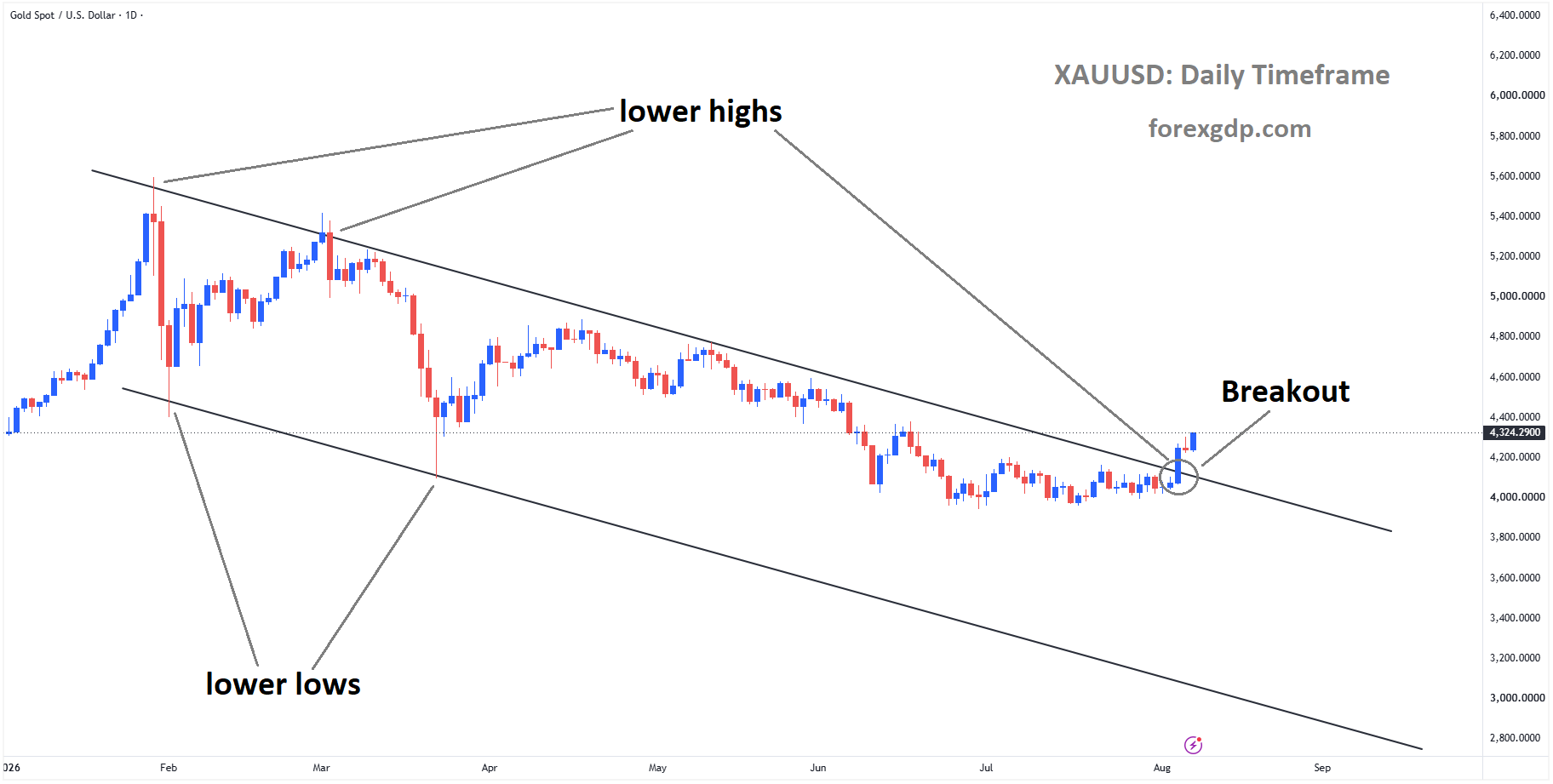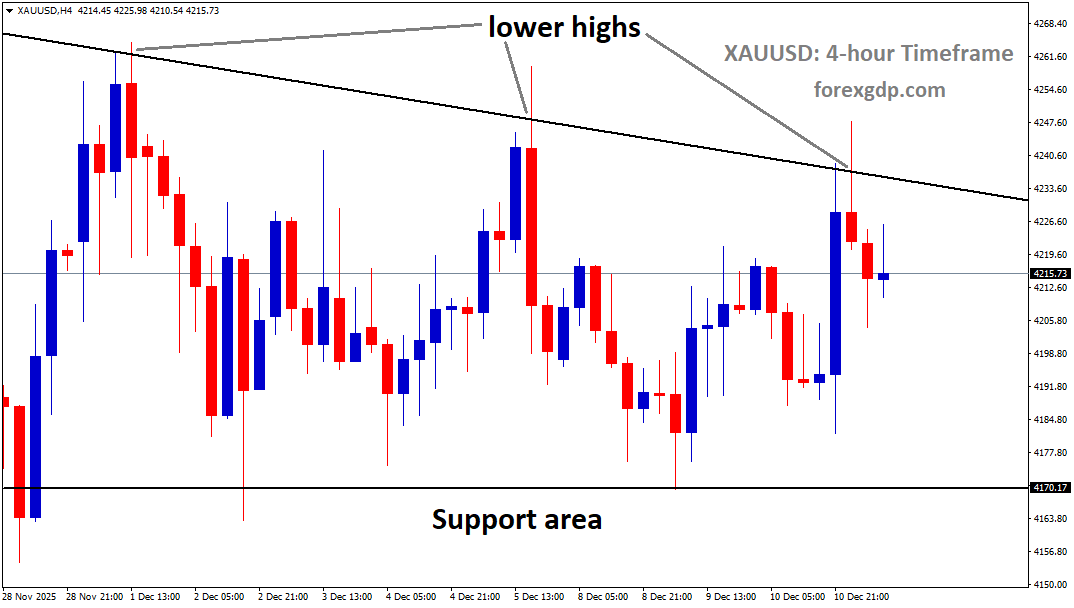


EURUSD is moving in an uptrend channel, and the market has fallen from the higher high area of the channel
EURUSD Stable While ECB Sees Inflation Easing, Markets Eye Germany’s CPI Release
The EUR/USD currency pair is moving in a narrow range this week, hovering close to the 1.1800 level. The exchange rate has shown little change overall, even after briefly slipping following comments from European Central Bank (ECB) President Christine Lagarde.
While there was some initial reaction in the market, traders quickly shifted their focus to upcoming economic data and broader global developments. Inflation trends in Europe, Germany’s latest price data, and ongoing uncertainty around US trade policy are now shaping market sentiment.
ECB Sees Inflation Moving Toward 2% Target
Christine Lagarde recently addressed the European Parliament’s Committee on Economic and Monetary Affairs, offering an update on the ECB’s fight against inflation. Her message was clear: the central bank’s efforts are working.
According to Lagarde, inflation in the Eurozone is gradually moving toward the ECB’s 2% target over the medium term. This target is considered a healthy and stable level for price growth. Too much inflation hurts consumers, while too little can slow economic growth. Reaching and maintaining 2% is a key goal for the ECB.
She also highlighted that food inflation, which has been a major concern for households, is expected to continue easing. By late 2026, food prices are projected to stabilize slightly above the 2% level. This is an encouraging sign for consumers who have been struggling with high grocery bills in recent years.
However, Lagarde emphasized that the ECB will remain data-dependent. In simple terms, this means policymakers will continue to monitor economic figures closely before making any changes to interest rates. She stressed the need to stay flexible and ready to adjust policy if needed.
A Possible Pause in Monetary Policy
Lagarde’s comments strengthen the view that the ECB may keep interest rates unchanged for an extended period. If inflation is indeed moving toward the target, there may be less urgency to raise or cut rates in the near term.
For the Euro, this outlook offers limited immediate support. Currency markets often react strongly to expectations about future interest rate changes. When investors believe rates will stay steady, price movements tend to be more restrained.
At the same time, recent economic surveys from the Eurozone paint a mixed picture.
Economic Sentiment Slips
The Economic Sentiment Indicator fell to 98.3 in February, down from a revised 99.3 in January. This reading came in below expectations and suggests that confidence among businesses and consumers has weakened slightly.
While the drop is not dramatic, it shows that the region’s economic recovery remains uneven. Companies and households are still dealing with higher borrowing costs, global uncertainties, and slower growth in some sectors.
Consumer Confidence Still Negative
Consumer Confidence improved slightly to -12.2, compared to the previous month. Although this marks some progress, the figure remains in negative territory. This means many households are still cautious about spending and worried about the broader economic outlook.
Weak consumer confidence can limit economic growth because household spending is a major driver of activity in the Eurozone. Until confidence returns to positive levels, growth may remain modest.
All Eyes on Germany’s Inflation Data

Investors are now turning their attention to Germany’s preliminary Consumer Price Index (CPI) data, scheduled for release on Friday.
Germany is the largest economy in the Eurozone, so its inflation figures often have a strong impact on the Euro. If price growth in Germany shows signs of cooling further, it could support the ECB’s view that inflation is moving toward the 2% target.
On the other hand, if inflation surprises to the upside, it might raise questions about whether the ECB needs to adjust its policy stance. For now, traders are waiting for the data before making major moves.
US Dollar Gains Strength Amid Trade Policy Uncertainty
While the Euro has been steady, the US Dollar has regained some ground. The US Dollar Index (DXY), which tracks the Greenback against six major currencies, has moved higher as markets digest ongoing trade policy uncertainty in the United States.
Recent developments involving the US Supreme Court have challenged parts of President Donald Trump’s tariff framework. This has created some uncertainty around future trade policies. However, investors appear to believe that Washington will work to preserve key trade agreements.
As a result, the Dollar has found support. Even in times of uncertainty, the US currency often benefits from its status as a global reserve currency and safe-haven asset.
Federal Reserve Expected to Hold Rates Steady
Monetary policy expectations in the United States are also playing a role in currency movements. Investors largely expect the Federal Reserve (Fed) to keep interest rates unchanged at its upcoming meetings.
When markets anticipate stable interest rates, it can help calm volatility. In this case, expectations of a steady Fed policy are helping to stabilize the US Dollar in the short term.
The Fed has made it clear that it is closely watching economic data before making any decisions. This cautious approach mirrors the ECB’s stance in Europe.
Focus on US Labor Market Data
Weekly Jobless Claims data, due later in the day, could provide additional insight into the health of the US labor market. A strong labor market supports economic growth and can influence future policy decisions by the Fed.
If jobless claims remain low, it would signal continued strength in employment. That could reinforce expectations that the Fed will maintain its current policy path. Conversely, weaker data might spark speculation about future adjustments.
What This Means for EUR/USD
The EUR/USD pair is currently caught between steady policy expectations in Europe and the United States. On one side, the ECB is signaling that inflation is gradually under control and that it can afford to remain patient. On the other side, the Fed is also expected to hold rates steady while monitoring economic data.
With both central banks taking a cautious and data-driven approach, large and sudden moves in the currency pair may be limited in the near term.
However, upcoming data releases—especially Germany’s inflation figures and US labor market numbers—could shift the balance. Markets are highly sensitive to surprises, and any unexpected developments could trigger stronger price movements.
Final Summary
The EUR/USD exchange rate is holding steady as investors weigh central bank guidance and wait for fresh economic data. ECB President Christine Lagarde has expressed confidence that inflation in the Eurozone is moving toward the 2% target, reducing pressure for immediate policy changes. At the same time, economic sentiment in the region remains mixed, with consumer confidence still in negative territory.
Germany’s upcoming inflation data is likely to be a key driver for the Euro in the short term. Meanwhile, the US Dollar is gaining support as markets navigate trade policy uncertainty and anticipate steady interest rates from the Federal Reserve.
With both the ECB and the Fed taking a careful and flexible approach, the next moves in EUR/USD will likely depend on how incoming data shapes the economic outlook on both sides of the Atlantic.
GBPUSD Strengthens Even as Traders Anticipate Bank of England Rate Reductions
The GBP/USD currency pair has been moving higher for several days in a row, supported by a weaker US Dollar and shifting expectations around interest rates in both the United States and the United Kingdom. As political and economic uncertainty continues to influence global markets, investors are carefully watching central bank decisions, inflation trends, and labor market data.
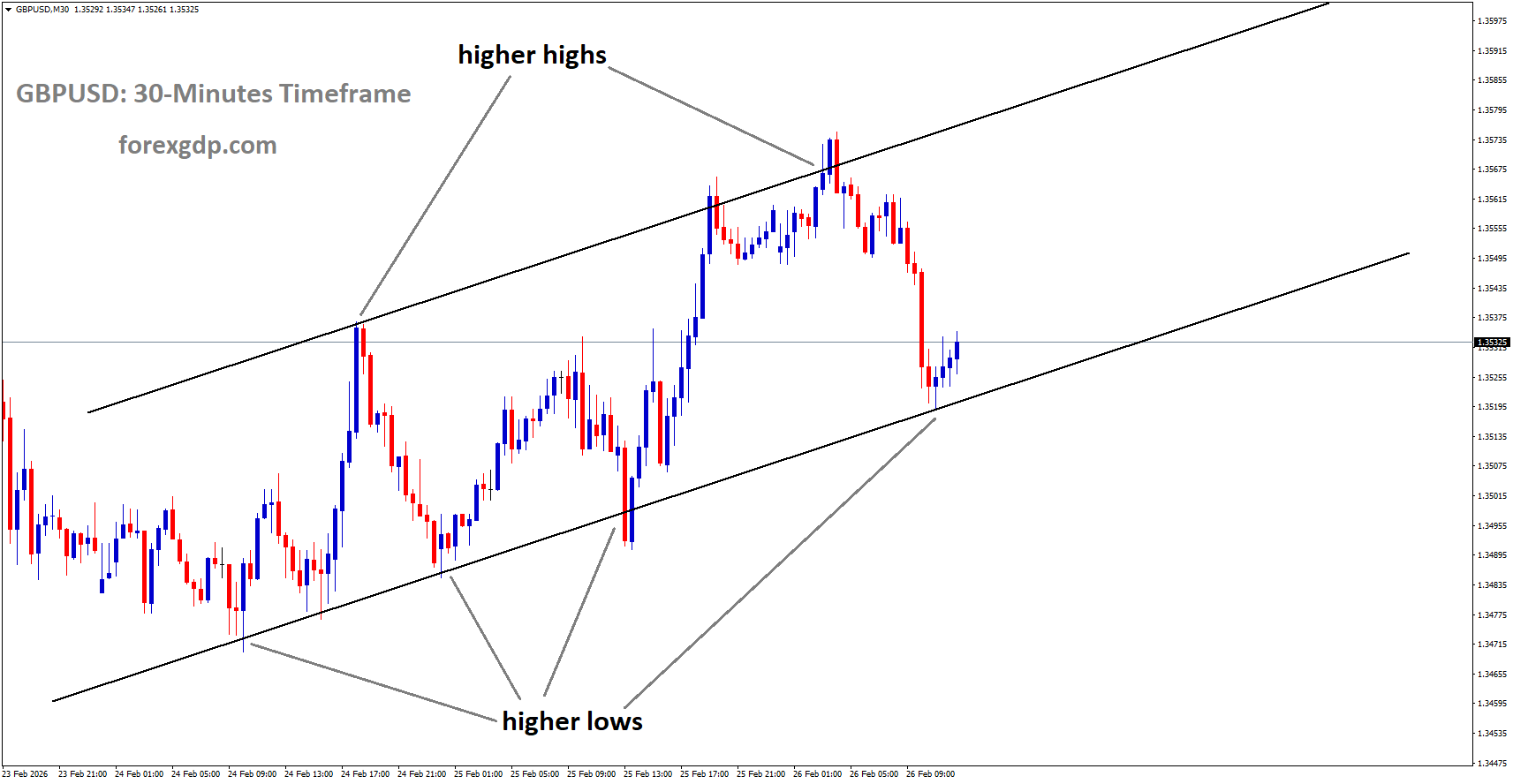
GBPUSD is moving in an uptrend channel, and the market has rebounded from the higher low area of the channel
While the British Pound has benefited from the recent softness in the US Dollar, there are still risks ahead. Concerns about the UK economy and growing expectations of interest rate cuts from the Bank of England (BoE) could limit further gains.
US Dollar Faces Pressure from Economic Policy Uncertainty
The US Dollar has been under pressure as investors react to mixed signals coming from Washington. During his recent State of the Union address, President Donald Trump stated that the US economy is rebounding strongly. He defended his tariff policies, arguing that they support domestic growth and protect American industries.
However, uncertainty increased after the Supreme Court blocked part of his tariff policy. Despite this legal setback, the administration announced new 10% tariffs, adding to the confusion around future trade policy. This has created concern among investors who prefer stability and predictability when making financial decisions.
Trade policy plays a major role in currency strength. When investors feel unsure about the direction of economic policy, they often become cautious. In this case, ongoing debates over tariffs and legal challenges have weakened confidence in the US Dollar.
As a result, currencies like the British Pound have gained some support, especially as traders reduce their exposure to the Dollar in the short term.
British Pound Supported but Faces Challenges
Although the Pound Sterling has benefited from the weaker Dollar, it is not free from its own economic concerns. In fact, expectations that the Bank of England may soon cut interest rates are creating a more cautious outlook for the UK currency.
Interest rates are one of the biggest drivers of currency value. Higher interest rates generally attract foreign investors looking for better returns, which strengthens a currency. On the other hand, expectations of rate cuts can reduce demand.
Many traders now believe that the Bank of England could lower interest rates as early as March. This view is mainly based on recent economic data showing signs of cooling inflation and a softer labor market.
UK Inflation Cools More Than Expected

One of the key factors influencing rate cut expectations is the latest inflation data from the United Kingdom. The Consumer Price Index (CPI) showed that inflation slowed to 3.0% in January, down from 3.4% in December. This drop was sharper than analysts had predicted and marked the lowest inflation level since mid-2025.
Lower inflation reduces pressure on the central bank to keep interest rates high. When price growth begins to slow, policymakers may feel more comfortable easing monetary policy to support economic growth.
However, the situation is not entirely straightforward.
Services Inflation Remains Elevated
While headline inflation has fallen, services inflation remains relatively high. Bank of England Governor Andrew Bailey recently told Parliament’s Treasury Committee that a rate cut in March remains “a genuinely open question.” He pointed out that services inflation stood at 4.4% in January, slightly above the Bank’s earlier projections.
Services inflation is important because it often reflects domestic economic pressures, including wages and demand within the country. If services prices continue rising quickly, the Bank of England may hesitate to cut rates too soon.
Chief Economist Huw Pill also urged caution. He warned policymakers not to be overly encouraged by the recent drop in headline inflation. According to him, it is important to look beyond short-term improvements and ensure inflation is truly moving toward the 2% target in a sustainable way.
Weakening UK Labor Market Adds to Dovish Expectations
Another factor supporting the case for rate cuts is the weakening UK labor market. Signs of slower hiring and potential downside risks to employment have raised concerns about economic momentum.
Alan Taylor, a member of the Bank of England’s Monetary Policy Committee (MPC), recently suggested that two to three rate cuts may be appropriate in the near term. He cited employment risks and easing price pressures as reasons for considering a more supportive monetary policy stance.
When central bank officials openly discuss the possibility of multiple rate cuts, markets tend to respond quickly. Traders adjust their expectations, and currency movements often follow.
This shift toward a more dovish outlook — meaning a preference for lower interest rates — could limit how much further the Pound strengthens against the Dollar.
Balancing Forces: Dollar Weakness vs. BoE Caution
At the moment, GBP/USD is being driven by two opposing forces.
On one side, the US Dollar is struggling due to political uncertainty and unclear economic direction. Ongoing debates over tariffs and legal challenges are weighing on investor confidence.
On the other side, the British Pound faces its own challenges as traders anticipate rate cuts from the Bank of England. While inflation has cooled, policymakers remain divided on how quickly they should act.
This balance between Dollar weakness and Pound caution explains why the currency pair has been rising, but may not see unlimited gains.
What Traders Are Watching Next
Looking ahead, investors will focus on several key developments:
-
Further comments from Bank of England officials
-
Upcoming UK employment and inflation data
-
Updates on US trade policy and tariff decisions
-
Any signals from the Federal Reserve regarding its own rate path
If US policy uncertainty continues, the Dollar could remain under pressure. However, if UK economic data continues to soften and strengthens the case for rate cuts, the Pound may struggle to maintain upward momentum.
Currency markets often react quickly to new information, especially when central banks are involved. Even small changes in tone from policymakers can shift expectations and trigger volatility.
The Bigger Economic Picture
Beyond short-term currency movements, this situation highlights a broader global theme. Many central banks are now navigating a delicate balance between controlling inflation and supporting economic growth.
In the UK, inflation is slowing but still above the official target. The labor market is showing signs of strain, and policymakers must decide whether to prioritize stability or growth.
In the US, political and trade-related uncertainty adds another layer of complexity. Markets prefer clear, consistent policies, and any confusion can weaken investor confidence.
For now, the GBP/USD pair reflects this global uncertainty. It shows how interconnected economic policies, political decisions, and central bank actions are in shaping currency trends.
Final Summary
The recent rise in GBP/USD has been largely driven by weakness in the US Dollar, fueled by uncertainty surrounding US economic and trade policies. President Trump’s defense of tariffs and the introduction of new duties, despite legal challenges, have created mixed signals for investors.
At the same time, the British Pound faces its own challenges. Slowing inflation and a weakening labor market have increased expectations that the Bank of England could cut interest rates in the near future. While some policymakers support easing policy, others urge caution due to persistent services inflation.
As both economies navigate uncertain paths, the direction of GBP/USD will depend on upcoming data and central bank decisions. For now, the pair remains supported by Dollar softness, but expectations of UK rate cuts could limit further gains.
USDJPY Slips After Early Drop While Yen Stays Supported by BoJ Rate Hike Signals
The Japanese Yen moved higher against the US Dollar on Thursday, supported by fresh comments from Bank of Japan (BoJ) Governor Kazuo Ueda. While the Yen gave back part of its early gains during the European trading session, it still remained stronger overall.
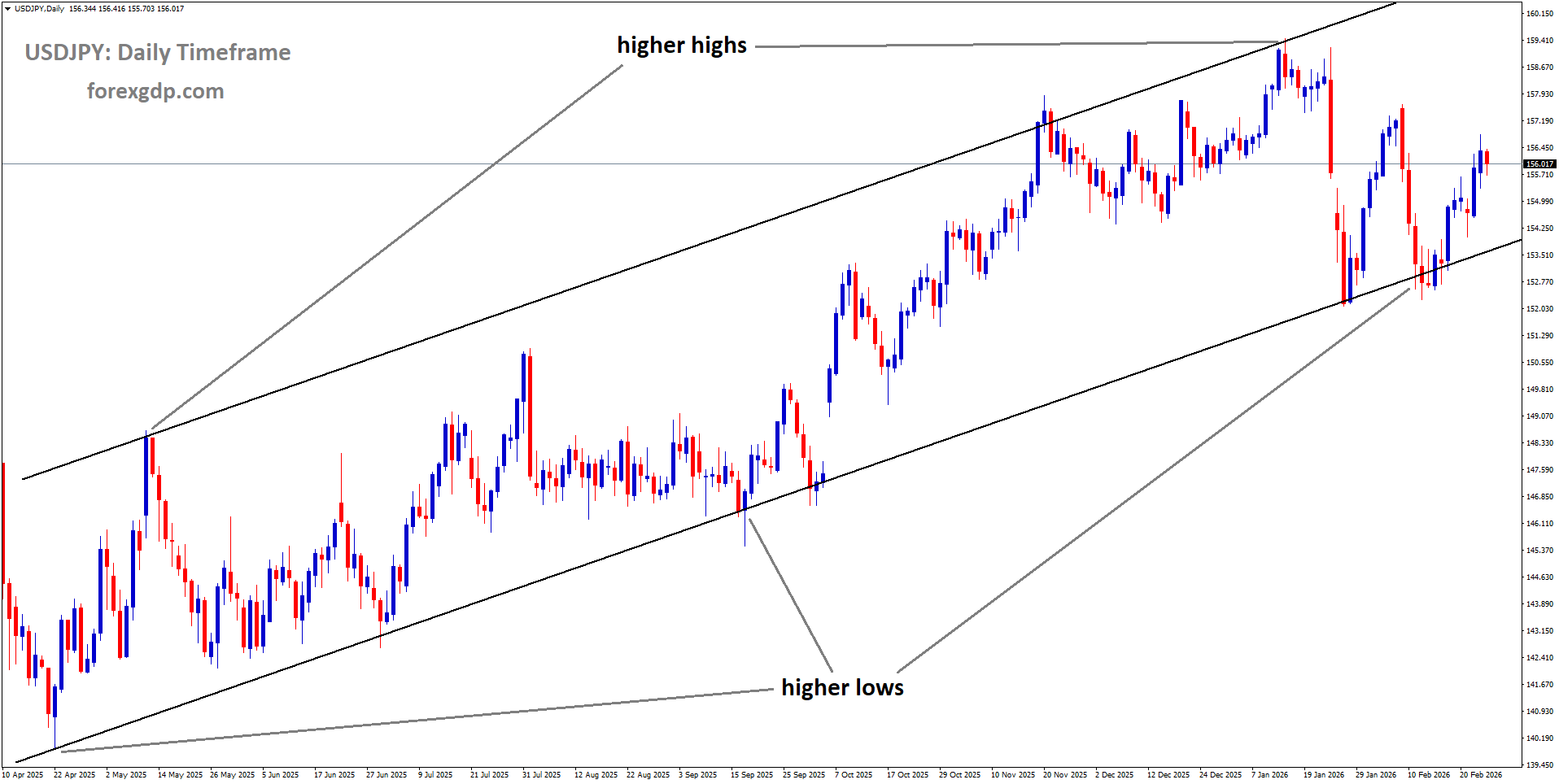
USDJPY is moving in an ascending channel, and the market has rebounded from the higher low area of the channel
The movement in the currency comes at a time when investors are carefully watching signals from central banks and major geopolitical events. With the Bank of Japan keeping the possibility of raising interest rates alive and the United States preparing for nuclear talks with Iran, the global currency market is reacting to both economic and political developments.
BoJ Governor Ueda Signals Rate Hike Still Possible
The main driver behind the Yen’s strength was a recent interview given by BoJ Governor Kazuo Ueda. In his remarks, Ueda made it clear that the central bank is not ruling out further interest rate hikes this year.
He explained that policymakers will closely examine economic and inflation data during their policy meetings in March and April. Only after reviewing this information will the central bank decide whether changes to interest rates are necessary.
Ueda emphasized that the Bank of Japan’s basic approach remains unchanged. If the economy performs in line with expectations and inflation continues to move toward the bank’s goals, then raising interest rates would remain a valid option.
This message is important because it signals that Japan is not stepping away from tightening policy completely. Even though the country has maintained very loose monetary policy for years, the possibility of further adjustments remains open.
For currency markets, this matters. Higher interest rates generally make a country’s currency more attractive to investors. As a result, even the suggestion that rates could rise can strengthen a currency, which is what happened with the Japanese Yen.
Political Pressure Adds Uncertainty
While the central bank’s stance supported the Yen, recent political developments have created some uncertainty around Japan’s monetary policy direction.
Reports earlier in the week indicated that Japan’s Prime Minister, Sanae Takaichi, expressed concerns about the Bank of Japan’s plans to raise interest rates further. These concerns were reportedly discussed during a meeting with Governor Ueda on February 16.
Political influence over central bank decisions can sometimes make markets nervous. Investors often prefer central banks to act independently, based on economic data rather than political pressure. If the government appears hesitant about tighter monetary policy, it can weaken confidence in further rate increases.
In addition, the Japanese government recently nominated two new members to the Bank of Japan’s nine-member policy board: Toichiro Asada and Ayano Sato. Both nominees are viewed as strong supporters of economic stimulus.
What This Means for Monetary Policy
The addition of stimulus-friendly board members could make it harder for the Bank of Japan to move aggressively toward higher interest rates. If more policymakers favor supporting economic growth through loose monetary policy, it may limit how quickly or how much rates can rise.
This has created a mixed outlook for the Yen. On one hand, Governor Ueda’s comments keep rate hike expectations alive. On the other hand, political concerns and new board nominations suggest that policy tightening may not happen quickly.
Because of this balance, the Yen initially surged but later gave up part of its gains during the trading session.
US Dollar Edges Higher Ahead of US-Iran Talks

At the same time, the US Dollar showed mild strength as investors prepared for nuclear talks between the United States and Iran in Geneva.
Geopolitical events can strongly influence currency markets. When global uncertainty rises, investors often move money into assets they consider safer. The US Dollar is frequently seen as one of those safe-haven currencies.
The upcoming meeting between US and Iranian officials is focused on Iran’s nuclear program. The United States wants Tehran to abandon its plans to build nuclear facilities. The outcome of these talks could have significant political and economic consequences.
Why Geopolitics Matter for Currencies
If tensions between countries increase, financial markets may become more cautious. Investors might reduce exposure to riskier assets and seek stability instead. This behavior often strengthens major global currencies like the US Dollar.
On the other hand, if the talks show signs of progress, market confidence could improve. That might reduce demand for safe-haven currencies and shift attention back to economic factors such as interest rate expectations.
For now, traders appear to be positioning themselves carefully ahead of the discussions, which has helped the US Dollar remain slightly stronger.
The Broader Picture for USD/JPY
The exchange rate between the US Dollar and Japanese Yen has been influenced by two major themes: central bank policy and global uncertainty.
Over the past two trading days, the Yen had been under pressure. That weakness was partly linked to concerns about Japan’s political stance on interest rate hikes and the appointment of stimulus-supporting board members.
However, Governor Ueda’s reaffirmation that rate hikes are still possible provided fresh support. The market responded quickly, pushing the Yen higher before some of those gains faded later in the session.
At the same time, the US Dollar’s modest strength ahead of the US-Iran talks has limited how much the Yen can rise.
What Investors Are Watching Next
Looking ahead, investors will closely monitor several key developments.
First, attention will turn to Japan’s upcoming economic data releases. Inflation figures, wage growth, and overall economic performance will likely influence the Bank of Japan’s decisions in March and April. If the data supports the central bank’s forecasts, the probability of a rate hike could increase.
Second, market participants will follow any further comments from Japanese political leaders. Clear communication between the government and the central bank can help stabilize expectations. Mixed signals, however, may lead to increased volatility.
Third, the outcome of the US-Iran nuclear talks could shift global risk sentiment. A breakthrough could ease tensions and affect the US Dollar’s direction. On the other hand, escalating tensions could strengthen the Dollar further.
Final Summary
The Japanese Yen strengthened after Bank of Japan Governor Kazuo Ueda confirmed that interest rate hikes remain a possibility this year. While political concerns and new board nominations have created some uncertainty about the pace of tightening, the central bank’s data-driven approach continues to guide expectations.
At the same time, the US Dollar remains supported as investors await important nuclear talks between the United States and Iran. Geopolitical developments and central bank decisions are currently shaping the USD/JPY exchange rate.
As markets move forward, traders will keep a close eye on economic data from Japan, signals from policymakers, and global political events. Together, these factors will determine whether the Yen can maintain its strength or if the Dollar regains control in the days ahead.
AUDUSD Jumps as Inflation Data Fuels Hawkish RBA Sentiment
The Australian Dollar has been on a steady rise against the US Dollar, pushing the AUD/USD pair closer to its three-year high of 0.7147. The pair has extended its gains for a third straight session, trading around the 0.7120 level during Asian market hours on Thursday.
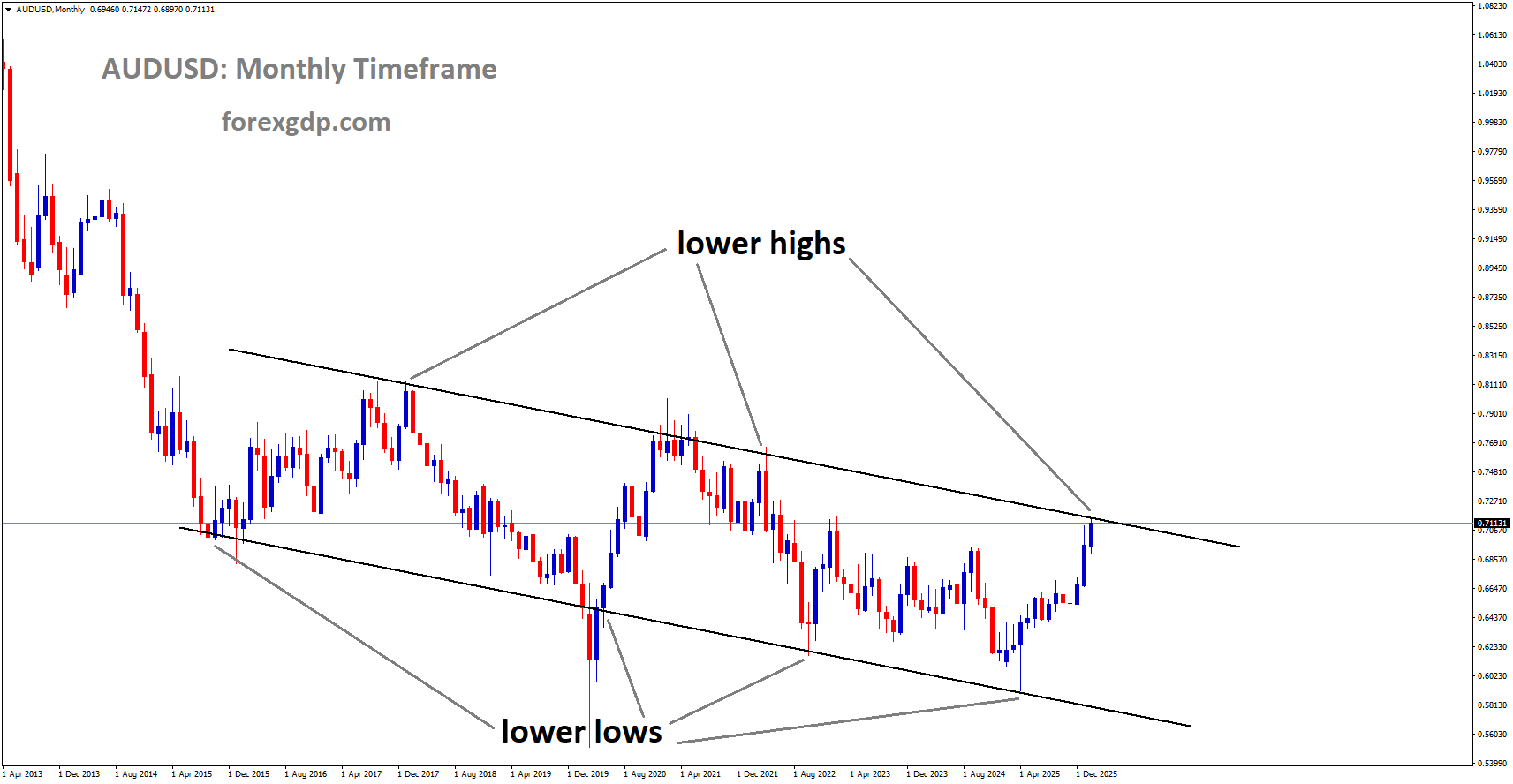
AUDUSD is moving in a descending channel, and the market has reached the lower high area of the channel
This upward move reflects growing confidence in the Australian economy after stronger-than-expected inflation data. At the same time, the US Dollar is facing pressure due to ongoing concerns about economic policy direction in the United States. Together, these factors have created a supportive environment for the Australian Dollar.
Australian Inflation Data Supports the Currency
One of the main drivers behind the Australian Dollar’s recent strength is fresh inflation data from Australia. The country’s Consumer Price Index (CPI), which measures changes in the price of goods and services, rose 3.8% compared to the same time last year in January. While this figure matched the previous reading, it came in slightly above market expectations of 3.7%.
On a monthly basis, CPI increased by 0.4%. Although this was lower than the 1.0% monthly increase seen previously, it still signals that inflation pressures remain present in the economy.
Trimmed Mean CPI Adds to the Story
Another important measure closely watched by policymakers is the Trimmed Mean CPI. This figure removes extreme price movements to provide a clearer view of underlying inflation trends. In January, the Trimmed Mean CPI rose 0.3% month-over-month and 3.4% compared to a year earlier.
These numbers suggest that inflation in Australia is not cooling as quickly as some had expected. For currency markets, this matters because persistent inflation can influence central bank decisions.
RBA Rate Hike Expectations Grow
With inflation holding firm, expectations are increasing that the Reserve Bank of Australia (RBA) may need to keep interest rates higher for longer, or even consider further rate hikes later this year.
Higher interest rates can make a currency more attractive to investors. When rates rise, returns on investments tied to that currency often improve, drawing in global capital. As a result, demand for the currency increases.
RBA Governor Michele Bullock recently commented that Australia’s economy remains in a relatively strong position. However, she also acknowledged that policy decisions are not simple and require patience. Central banks must carefully balance the need to control inflation without harming economic growth.
Even so, the latest inflation figures have reinforced the view that the RBA may have more work to do. This belief has given additional support to the Australian Dollar in recent sessions.
US Dollar Under Pressure from Policy Uncertainty
While the Australian Dollar gains strength, the US Dollar is facing its own challenges.
The US Dollar has weakened amid ongoing concerns about economic policy direction from the White House. In a recent State of the Union address, US President Donald Trump did not provide any signals that tariff measures would be eased. This lack of clarity has added to market uncertainty.
Trade policy plays a key role in shaping investor confidence. When there is uncertainty around tariffs and international trade rules, businesses and investors may become cautious. This can reduce demand for the US Dollar.
Changes to Tariff Policy Add to Market Worries
Adding to the uncertainty, President Trump increased newly introduced Section 122 tariffs to 10%. This move followed a Supreme Court decision that struck down several country-specific tariffs previously enacted under emergency powers.
Earlier, there had been threats of raising tariffs to 15%, but the final decision settled at 10%. Even so, the adjustment has kept markets on edge. Frequent changes in trade policy can make it difficult for businesses to plan and invest, which can weigh on economic confidence.
As a result, the US Dollar has struggled to gain traction, allowing the Australian Dollar to push higher in comparison.
Why AUD/USD Is Nearing a Three-Year High
The combination of strong Australian data and weaker US Dollar sentiment has helped the AUD/USD pair approach levels not seen in three years. The last time it reached 0.7147 was in mid-February.
Currency pairs reflect the relative strength of two economies. In this case, the Australian economy appears stable with ongoing inflation pressures, while the US faces policy-related uncertainty. That contrast is helping to lift the Australian Dollar against its US counterpart.
Investor sentiment also plays a key role. When markets believe that one central bank may maintain tighter policy compared to another, capital tends to flow toward the stronger outlook. At the moment, expectations surrounding the RBA are more supportive for the Australian Dollar than those surrounding US economic policy for the US Dollar.
The Bigger Picture for the Australian Economy
Australia’s economic performance remains relatively solid. While inflation is still above ideal levels, the broader economy has shown resilience. Employment conditions have remained stable, and consumer activity has not collapsed despite higher borrowing costs.
The RBA’s careful approach highlights the delicate balance policymakers must maintain. Raising rates too aggressively could slow growth sharply. Moving too slowly could allow inflation to stay elevated for longer.
For now, markets appear to believe that the RBA is prepared to act if needed. This confidence is helping underpin the Australian Dollar’s upward movement.
What to Watch Going Forward
Looking ahead, several factors will likely influence the direction of the AUD/USD pair:
Future Inflation Data
If inflation in Australia remains firm or rises further, expectations for tighter monetary policy could strengthen. This would likely provide continued support for the Australian Dollar.
On the other hand, signs of rapid inflation cooling could reduce the urgency for additional policy action.
RBA Communication

Statements from RBA officials, including Governor Michele Bullock, will be closely monitored. Even subtle changes in tone can shift market expectations.
Clear signals that the central bank is leaning toward further tightening could push the currency higher. More cautious language could slow the rally.
US Economic and Policy Developments
In the United States, developments related to trade policy, fiscal measures, and broader economic data will shape the US Dollar’s path.
If uncertainty around tariffs continues, it may keep pressure on the US Dollar. However, stronger US economic data or improved policy clarity could help stabilize it.
Final Summary
The Australian Dollar has gained momentum, pushing the AUD/USD pair close to its highest level in three years. Stronger-than-expected inflation data in Australia has increased expectations that the Reserve Bank of Australia may need to keep interest rates elevated or consider further action. This has boosted investor confidence in the currency.
At the same time, the US Dollar has weakened due to ongoing uncertainty surrounding White House economic policies and recent tariff adjustments. The lack of clear direction has weighed on market sentiment.
With Australia showing economic resilience and inflation remaining firm, the Australian Dollar currently holds the advantage. However, future data releases and policy decisions in both countries will play a crucial role in determining whether the pair can break beyond its recent highs or if momentum begins to slow.
BTCUSD Edges Closer to $69K While Investor Confidence Rebounds
The global cryptocurrency market is still facing pressure, but there are clear signs that investor confidence may be slowly returning. Bitcoin, the world’s largest cryptocurrency, has been moving closer to the $69,000 level, sparking fresh conversations about market sentiment and risk appetite.
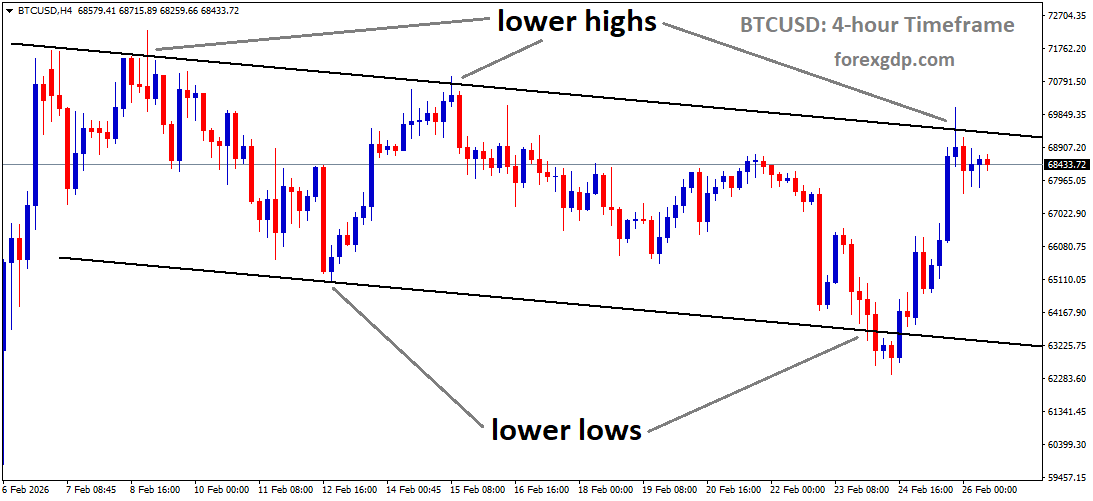
BTCUSD is moving in a descending channel, and the market has reached the lower high area of the channel
At the same time, the Fear and Greed Index (FGI), a popular measure of investor emotions, has climbed to 16 points. While this still reflects fear in the market, it also suggests that sentiment may be improving compared to recent weeks. Let’s take a closer look at what’s happening and what it could mean for the broader crypto space.
Investor Risk Appetite Begins to Shift
For much of the past few months, crypto investors have been cautious. Market volatility and sharp price corrections pushed many traders to stay on the sidelines. However, recent movements suggest that confidence may be slowly rebuilding.
The Fear and Greed Index, now at 16 points, remains in the “fear” zone. Still, the rise hints that investors may be warming up to the idea of taking on more risk. In the crypto world, changes in sentiment often happen before major price shifts, making this index an important tool for understanding the mood of the market.
Bitcoin was last seen trading around $68,090, just shy of the $69,000 mark. This is a notable recovery from the dip to $63,000 recorded on February 24, 2026. For a brief moment during New York trading hours, Bitcoin even touched $69,987, coming extremely close to the $70,000 milestone.
Many analysts believe that part of this upward move is due to “buying the dip.” This strategy involves investors purchasing assets after a sharp drop, expecting prices to recover over time. After the recent sell-off phase, some traders may have seen lower levels as an opportunity rather than a risk.
Caroline Mauron, Co-Founder of Orbit Markets, shared her view that the recent movement likely reflects dip-buying activity. She also mentioned that if Bitcoin crosses the $70,000 level, the overall narrative around the crypto sector could shift in a more positive direction.
Political and Economic Signals Influence the Market
Interestingly, Bitcoin’s movement gained momentum shortly after U.S. President Donald Trump delivered his State of the Union Address. While he did not directly mention cryptocurrencies during his speech, he highlighted the economic growth achieved under his administration and referred to it as a “golden era.”
Markets often respond not only to direct policy statements but also to broader economic tone and outlook. A confident message about economic strength can influence investor behavior across various asset classes, including crypto.
At around the same time, Nvidia reaffirmed its commitment to artificial intelligence processors and released a quarterly forecast that exceeded expectations. Strong developments in the technology sector often support positive sentiment in risk assets, including digital currencies.
Crypto markets are closely linked to innovation and technology trends. When major tech companies perform well and express optimism about future growth, it can encourage investors to re-enter markets they previously viewed as risky.
Rotation Into Altcoins Adds Another Layer
While Bitcoin continues to attract attention, some experts believe the real shift may be happening within the broader crypto ecosystem.
Daniel Reis-Faria, CEO of ZeroStack, suggested that investors could be rotating funds into altcoins. In simple terms, this means traders might be moving capital from Bitcoin into other cryptocurrencies in search of higher returns.
The Altcoin Index, as tracked by CoinMarketCap, currently stands at 35 out of 100. This indicates that Bitcoin still dominates the market, but altcoins are gaining some traction.
A rotation into altcoins can sometimes signal growing confidence in the crypto sector overall. When investors feel more comfortable taking risks, they often explore smaller and more volatile projects beyond Bitcoin.
However, this dynamic can also lead to increased volatility. Altcoins typically experience larger price swings compared to Bitcoin, which can amplify both gains and losses.
Ongoing Pressure in the Global Crypto Market

Despite the recent bounce, the global crypto market remains under pressure. Many major cryptocurrencies are still trading below their previous highs, and overall sentiment remains cautious.
Bitcoin’s struggle to firmly break past the $70,000 level reflects the broader uncertainty in the market. Ethereum, the second-largest cryptocurrency, is currently trading above $2,000 at around $2,060. However, it remains highly volatile, with significant price swings in recent weeks.
The pressure on the market is partly due to the sharp declines seen over the past couple of months. Sudden corrections can shake investor confidence and take time to recover from. Even when prices begin to rise again, many traders prefer to wait for stronger confirmation before making major moves.
Macroeconomic factors also play a role. Global financial conditions, interest rate policies, and economic growth forecasts can all influence investor behavior. Crypto assets are often seen as high-risk investments, meaning they can be especially sensitive to changes in economic outlook.
The Importance of Caution and Research
As the market shows early signs of recovery, it is important to remember that volatility remains high. Both new and experienced investors should approach crypto investments with care.
Cryptocurrencies can offer significant opportunities, but they also come with risks. Prices can move quickly in either direction, and external events can have an immediate impact on market sentiment.
Before making any investment decision, individuals should conduct thorough research. This includes understanding the fundamentals of the asset, evaluating risk tolerance, and considering how crypto fits into their overall portfolio strategy.
Diversification is another key principle. Spreading investments across different asset classes can help reduce risk. In the crypto space, this might mean balancing exposure between Bitcoin, Ethereum, and selected altcoins.
A Market at a Turning Point?
The recent rise in Bitcoin’s price and the uptick in the Fear and Greed Index suggest that the market could be entering a new phase. While it is too early to declare a full recovery, the shift in sentiment is worth watching.
If Bitcoin manages to move decisively beyond the $70,000 mark, it could attract additional interest from both retail and institutional investors. At the same time, continued strength in the technology sector and supportive economic signals may further boost confidence.
However, the crypto market has proven time and again that it can change direction quickly. Investors should remain alert, informed, and prepared for different scenarios.
Final Thoughts
The cryptocurrency market is navigating a delicate balance between caution and renewed optimism. Bitcoin’s approach toward $69,000, combined with a modest improvement in investor sentiment, indicates that confidence may be slowly returning.
Political messaging, strong performance in the tech sector, and dip-buying behavior have all contributed to recent movements. Meanwhile, growing interest in altcoins adds another layer of complexity to the market landscape.
Even so, the global crypto market remains under pressure, and volatility continues to shape investor decisions. For those considering entering or expanding their positions, careful research and disciplined risk management remain essential.
The coming weeks will likely play a crucial role in determining whether this shift in sentiment develops into a stronger and more sustained recovery across the digital asset market.
Don’t trade all the time, trade forex only at the confirmed trade setups
Get more confirmed trade signals at premium or supreme – Click here to get more signals, 2200%, 800% growth in Real Live USD trading account of our users – click here to see , or If you want to get FREE Trial signals, You can Join FREE Signals Now!