
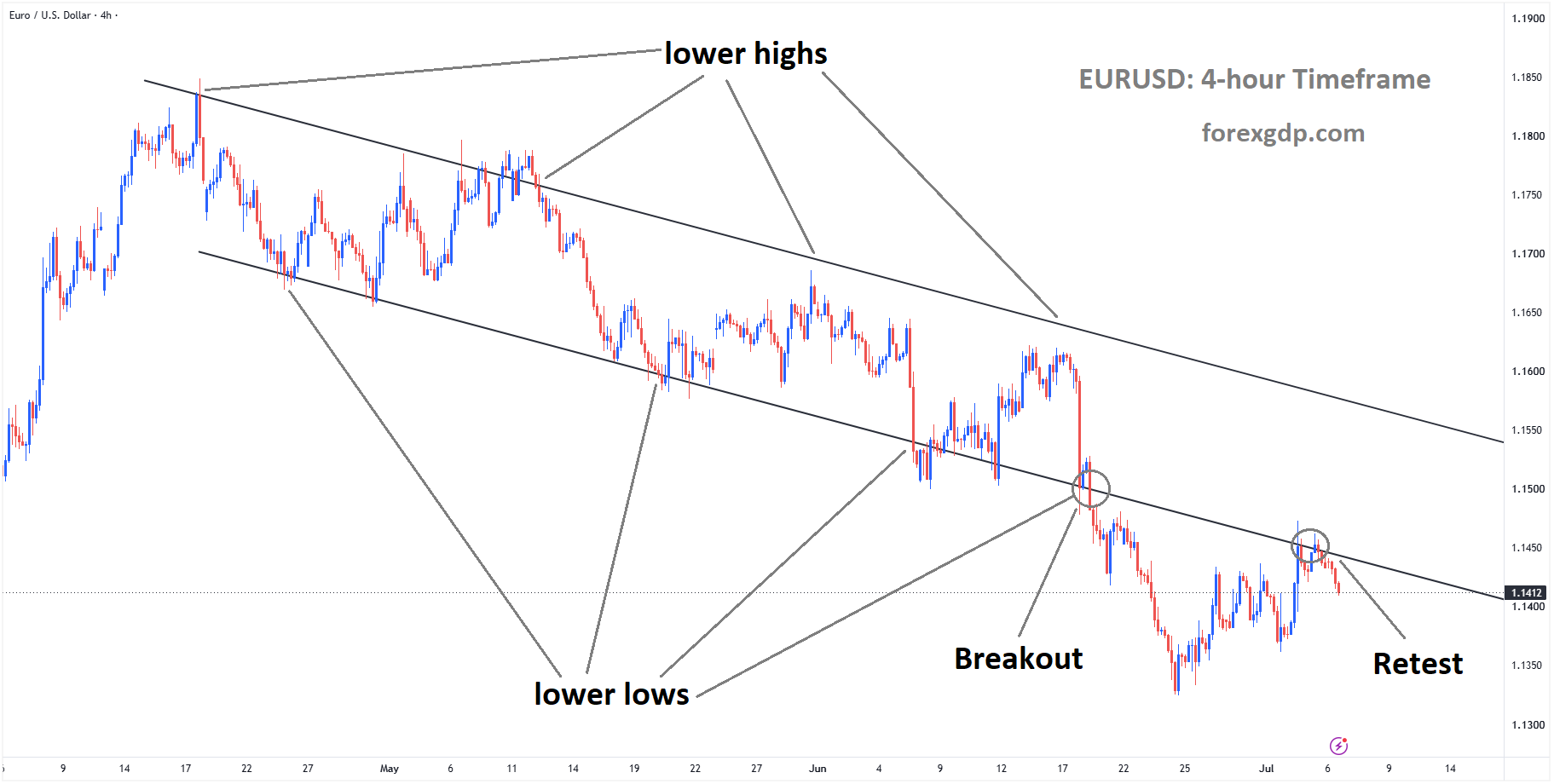
EURUSD is falling from the retest area of the broken descending channel
EURUSD Falls as Safe-Haven Demand Outweighs Germany’s Economic Strength
The Euro started the week on a softer note against the US Dollar after failing to maintain last week’s upward momentum. Even though Germany released stronger-than-expected economic data and investor confidence across the Eurozone improved, global uncertainty continued to influence market sentiment.
Growing concerns over geopolitical tensions in the Middle East have encouraged investors to move toward safer assets, helping support the US Dollar. As a result, the positive impact of encouraging European economic reports has been limited.
German Factory Orders Show Strong Recovery
Germany delivered encouraging economic news with its latest Factory Orders report for May. The figures came in above market expectations, showing that demand for manufactured goods increased more than analysts had predicted.
This improvement followed a weak performance in April and suggests that Germany’s manufacturing sector may be finding some stability after recent challenges. Since Germany is the largest economy in the Eurozone, stronger factory activity often creates optimism about the region’s overall economic outlook.
Investor Confidence Continues to Improve
Another positive sign for the Eurozone came from the latest Sentix Investor Confidence survey. The index improved significantly compared to the previous month, reaching its strongest level in several months.
Although confidence remains below positive territory, the sharp improvement suggests that investors are becoming less pessimistic about the region’s economic prospects. Better confidence can support business investment and consumer spending if the trend continues in the coming months.
Geopolitical Tensions Limit Euro Strength
Despite the encouraging economic data, international developments have kept investors cautious. Fresh uncertainty surrounding the situation between the United States and Iran has reduced overall market confidence.
Reports of disagreements over shipping routes and continued political tensions between Iran and Israel have raised concerns about regional stability. Even without immediate economic disruptions, uncertainty often pushes investors toward assets considered safer during periods of global risk.
This cautious mood has helped increase demand for the US Dollar while reducing the Euro’s ability to benefit fully from strong domestic economic data.
Upcoming Eurozone Data Remains Important
Investors are now waiting for additional reports from the Eurozone to better understand the region’s economic health. Producer Price Index (PPI) and Retail Sales data will offer fresh insights into inflation trends and consumer spending.
Strong retail activity would suggest that households remain confident despite economic uncertainty. Meanwhile, producer prices can provide clues about future inflation pressures that may influence economic decisions in the months ahead.
Attention Turns to the US Economy
In the United States, market participants are closely watching the upcoming ISM Services Purchasing Managers’ Index (PMI). The services sector represents a large portion of the US economy, making this report an important indicator of business activity.
A solid reading would reinforce the view that the US economy continues to perform well despite global uncertainties. Investors will also pay close attention to comments from Federal Reserve Governor Christopher Waller, as his remarks could offer further insight into the central bank’s economic outlook.
Why Global Events Still Matter
Financial markets are influenced by much more than economic reports alone. Political developments, international conflicts, and changes in global trade conditions can quickly affect investor decisions.
Even when economic data points in a positive direction, uncertainty in other parts of the world can reduce confidence and shift money toward safer investments. This balance between economic performance and global risk remains one of the biggest drivers of currency movements.
What Investors Are Watching Next
The coming days will provide several important updates that could shape market expectations. Investors will continue monitoring European economic reports alongside major US data releases for a clearer picture of economic strength on both sides of the Atlantic.
At the same time, any new developments related to geopolitical tensions in the Middle East could quickly influence market sentiment. The combination of economic performance and global events will likely remain the main focus for investors throughout the week.
Final Summary
The Euro began the week under pressure despite stronger-than-expected German Factory Orders and improving investor confidence across the Eurozone. Positive economic signals have been overshadowed by renewed geopolitical concerns, which continue to support demand for the US Dollar. As investors await fresh economic reports from both Europe and the United States, global uncertainty remains an important factor influencing market sentiment and currency performance.
GBPUSD Trades Quietly as Geopolitical Uncertainty Lifts Demand for the Dollar
The GBP/USD currency pair started the new week with limited movement as traders balanced several important global developments. While the British Pound continues to receive support from political stability and hopes of responsible fiscal policies, a stronger US Dollar and ongoing geopolitical tensions are preventing the pair from making stronger gains.
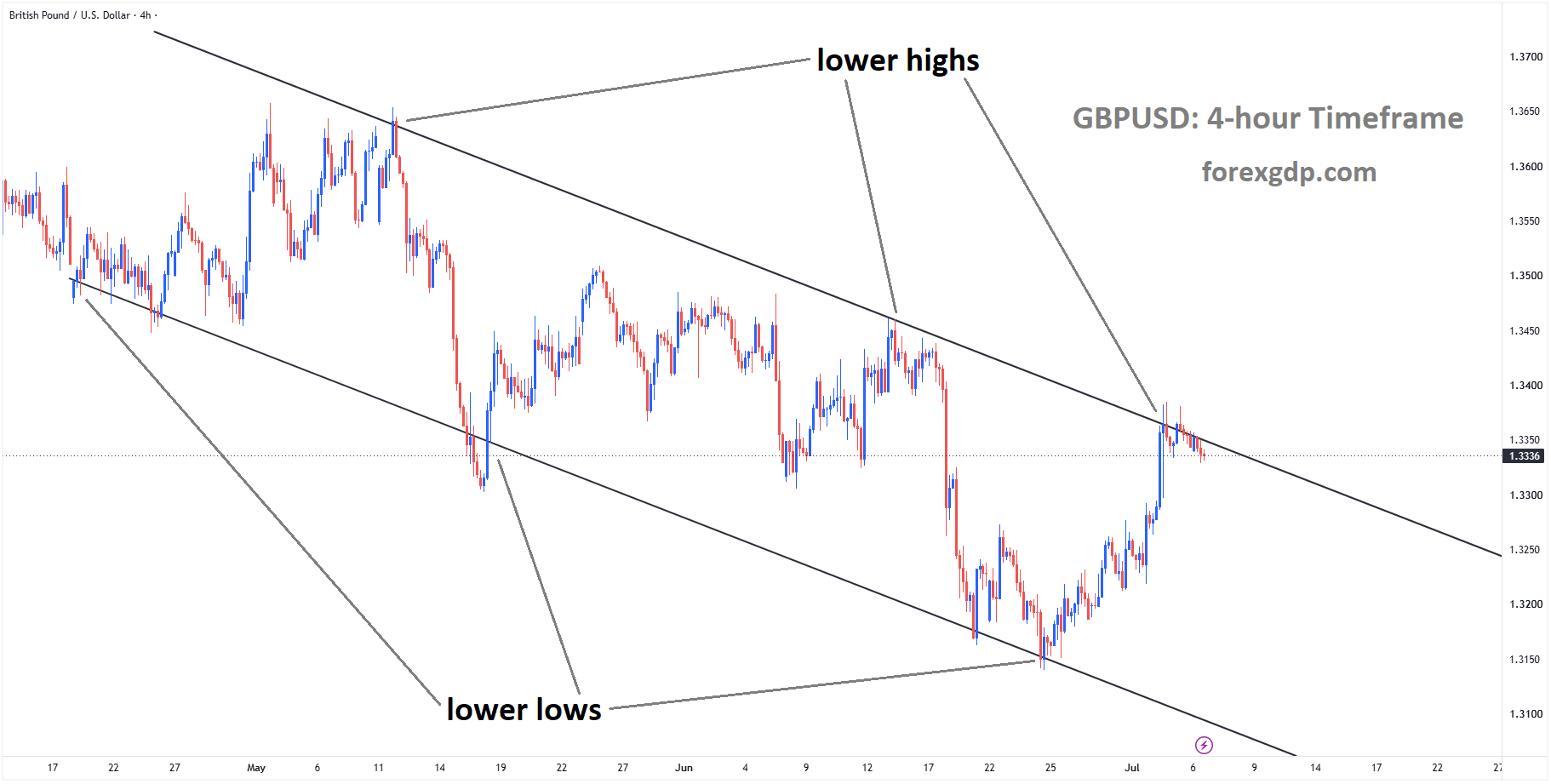
GBPUSD is moving in a descending channel, andthe market has reached the lower high area of the channel
Investors are also taking a cautious approach ahead of key economic reports from both the United Kingdom and the United States. These upcoming releases could offer fresh clues about the health of both economies and influence market direction in the days ahead.
Safe-Haven Demand Supports the US Dollar
One of the main reasons for the US Dollar’s steady performance is the rise in geopolitical uncertainty. Fresh concerns surrounding the Strait of Hormuz have once again increased global market caution.
Iran recently announced plans to introduce new service fees for ships using the strategically important shipping route. Although the United States has rejected this proposal, the announcement has raised concerns about possible disruptions in one of the world’s most important trade passages.
Whenever geopolitical tensions increase, investors often move their money into assets considered safer during uncertain times. The US Dollar usually benefits from this trend because it is widely viewed as one of the world’s leading safe-haven currencies. As a result, demand for the Dollar has remained firm, limiting the British Pound’s ability to move higher.
Federal Reserve Expectations Continue to Shift
Despite the Dollar’s strength, expectations surrounding the US Federal Reserve are preventing the currency from gaining too much momentum.
Recent US employment data showed signs that the labor market may be slowing. Weaker job-related figures have led many investors to believe that the Federal Reserve could become more cautious when making future monetary policy decisions.
At the same time, easing inflation concerns have also influenced market expectations. Lower energy costs have reduced some of the pressure on consumer prices, making it less likely that policymakers will need to maintain a restrictive policy stance for an extended period.
These changing expectations have reduced confidence that the Federal Reserve will introduce additional interest rate increases in the near future. While the Dollar continues to attract safe-haven buying, this softer outlook has prevented stronger gains.
British Pound Finds Support From Fiscal Discipline
The British Pound has managed to stay relatively stable thanks to growing confidence in the UK’s political and fiscal direction.
Andy Burnham, who is widely viewed as a leading candidate to replace Prime Minister Keir Starmer in the future, recently reaffirmed his commitment to maintaining strict government borrowing rules. His comments have reassured investors that fiscal discipline will remain an important priority.
Financial markets generally respond positively to governments that promise responsible spending because it helps improve long-term economic confidence and reduces uncertainty over public finances.
This political support has helped limit losses for the Pound even as broader market conditions remain challenging.
Mixed Economic Signals Keep Pound Gains Limited
Although political developments have been supportive, recent economic data from the United Kingdom has painted a more complicated picture.
Last week’s Purchasing Managers’ Index (PMI) reports showed mixed results across different sectors of the economy. In particular, weakness in the services sector has raised concerns that economic growth could be slowing.
Since services make up a significant share of the UK economy, softer activity in this area is attracting close attention from investors. Slower business activity could affect employment, consumer spending, and overall economic momentum if the trend continues.
Because of these concerns, traders remain cautious about becoming overly optimistic on the British Pound.
UK Construction PMI Becomes the Next Focus

Attention is now turning to the latest UK Construction Purchasing Managers’ Index.
This report provides valuable insight into activity across the construction industry, including residential housing, commercial projects, and infrastructure development. Although construction represents a smaller portion of the economy than services, it still offers important clues about business confidence and investment trends.
A stronger-than-expected reading could improve confidence in the broader UK economy, while weaker figures may reinforce concerns about slowing growth.
Investors will carefully study the report for any signs that economic conditions are improving or weakening further.
US ISM Services PMI Could Influence Market Sentiment
Later in the day, attention will shift to the United States with the release of the ISM Services PMI.
This report is considered one of the most closely watched indicators of business activity in America’s services sector, which accounts for the majority of the country’s economic output.
The survey measures factors such as business activity, new orders, employment, and overall business confidence. Since the services sector plays such an important role in the US economy, the report often influences expectations for future economic growth and Federal Reserve policy.
A stronger reading could reinforce confidence in the US economy, while weaker results may strengthen expectations that policymakers could remain cautious in the coming months.
Global Uncertainty Continues to Shape Currency Markets
Beyond scheduled economic reports, broader global developments remain an important influence on currency markets.
Geopolitical events, changes in government policy, inflation trends, and central bank expectations continue to create uncertainty for investors around the world.
When uncertainty rises, traders often reduce risk and seek stability. This dynamic has helped support the US Dollar in recent sessions even as expectations for future monetary policy have become less aggressive.
Meanwhile, the British Pound continues to balance domestic political support against concerns over slowing economic activity.
Summary
The GBP/USD pair began the week with limited movement as investors weighed competing factors affecting both currencies. Ongoing geopolitical tensions have increased demand for the US Dollar as a safe-haven asset, while softer expectations for future Federal Reserve policy have prevented even stronger Dollar gains.
At the same time, the British Pound has found support from commitments to responsible fiscal management, although concerns about slowing UK economic activity continue to limit investor confidence.
With the UK Construction PMI and the US ISM Services PMI scheduled for release, traders are closely watching for fresh economic signals that could shape market sentiment and influence the next phase of movement for the GBP/USD pair.
USDJPY Gains Momentum as Interest Rate Advantage Lifts US Dollar
The USDJPY currency pair started the new week with another strong advance, marking its second straight day of gains. The move reflects continued demand for the US Dollar, supported by the large interest rate gap between the United States and Japan and rising geopolitical tensions in the Middle East.
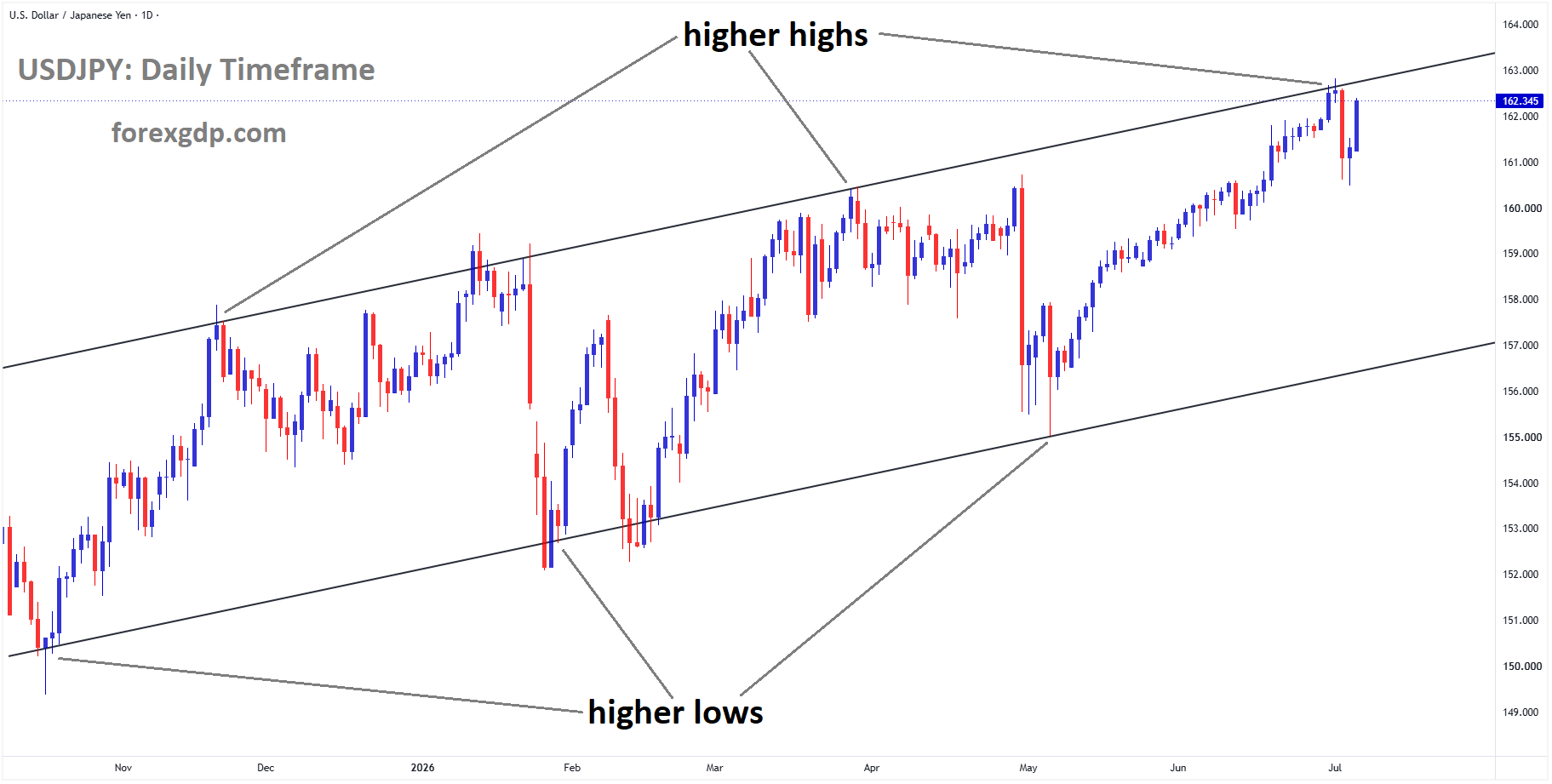
USDJPY is moving in an ascending channel, and the market has reached a higher high area of the channel
At the same time, traders remain cautious. Japanese officials have once again signaled that they are watching the currency market closely and are prepared to take action if exchange rate movements become excessive. This keeps the possibility of intervention in focus, making investors careful about pushing the pair too aggressively in one direction.
USDJPY Continues Its Recovery
The pair has extended its rebound after recovering from recent lows seen at the end of last week. Strong buying interest has helped the US Dollar regain momentum against the Japanese Yen, with investors responding to both economic and geopolitical developments.
Although the recent recovery has been impressive, market participants are aware that sharp moves in the currency market often attract attention from Japanese authorities. This has created a balance between buyers looking to benefit from the trend and traders who fear sudden government action.
Japanese Officials Continue to Watch Currency Moves
Japanese policymakers have made it clear that they are closely monitoring exchange rate movements.
Finance Minister Satsuki Katayama recently stated that the government stands ready to respond appropriately if currency fluctuations become excessive. Chief Cabinet Secretary Minoru Kihara delivered a similar message, emphasizing that officials are prepared to intervene if necessary.
These statements are important because Japan has stepped into the foreign exchange market before when the Yen weakened rapidly. Even if no immediate action is taken, repeated warnings can make traders more cautious and reduce aggressive selling of the Japanese currency.
Intervention Remains a Key Market Risk
The possibility of official intervention remains one of the biggest risks for traders following USDJPY.
According to Vitalii Bulynin, CEO of Versus Trade, intervention can trigger some of the largest and fastest moves in the foreign exchange market. However, he also pointed out that these moves often lose momentum unless they are supported by meaningful changes in economic policy.
This means that while government action could temporarily strengthen the Yen, longer-term market direction is still likely to depend on broader economic conditions rather than short-lived interventions.
Interest Rate Difference Continues to Weigh on the Yen
One of the biggest reasons behind the Yen’s weakness is the large difference in interest rates between Japan and the United States.
The Bank of Japan has gradually raised borrowing costs and recently lifted its policy rate to the highest level seen since 1995. Even so, US interest rates remain significantly higher, making Dollar-based investments more attractive for global investors.
This difference encourages what is commonly known as the carry trade. Investors borrow in currencies with relatively lower interest rates and invest in assets offering higher returns. As long as this gap remains wide, the Japanese Yen may continue facing downward pressure.
Middle East Tensions Increase Demand for Safe-Haven Assets
Geopolitical uncertainty has also become an important driver of the US Dollar.
Attention remains focused on the Strait of Hormuz, one of the world’s most strategically important shipping routes. Iran has announced plans to introduce new service charges for vessels passing through the waterway, although the United States has rejected the proposal.
The disagreement has added another layer of uncertainty to global markets. Whenever geopolitical risks increase, investors often seek assets that are considered safer during uncertain periods, and the US Dollar is frequently one of those choices.
This additional demand has provided further support for the USDJPY pair over the past few trading sessions.
Federal Reserve Expectations Could Limit Further Dollar Strength
Despite the recent gains, there are still reasons for caution.
Recent US economic data has encouraged investors to scale back expectations of further interest rate increases from the Federal Reserve. Softer employment figures released last week have suggested that the US economy may be slowing gradually rather than overheating.
At the same time, easing inflation concerns have also reduced pressure on the central bank to tighten monetary policy quickly.
If expectations continue shifting toward a more patient Federal Reserve, the US Dollar could find it harder to extend its recent strength.
Mixed Factors Keep Traders Alert
The current market environment presents a combination of supportive and limiting factors for USDJPY.
On one side, the interest rate advantage enjoyed by the United States continues to favor the Dollar. Geopolitical uncertainty is also encouraging demand for safer assets.
On the other hand, the possibility of intervention from Japanese authorities remains a significant source of uncertainty. Any official action could trigger sudden volatility and temporarily reverse market direction.
Meanwhile, changing expectations regarding future Federal Reserve policy may also influence investor sentiment in the coming weeks.
Market Focus Shifts to Upcoming Economic Developments
Looking ahead, traders will continue watching comments from central bank officials and government policymakers.
Any new signals from the Bank of Japan or Japanese government regarding possible intervention could quickly affect market sentiment. Investors will also closely monitor upcoming US economic reports for clues about the Federal Reserve’s next policy decisions.
In addition, geopolitical developments in the Middle East will remain an important factor. Any escalation or easing of tensions could influence demand for safe-haven assets and shape the direction of the US Dollar.
Summary
USDJPY has carried its recovery into a second straight trading session, supported by the wide interest rate gap between the United States and Japan and stronger demand for the US Dollar amid geopolitical uncertainty.
However, the outlook remains balanced. Japanese authorities continue to warn that they are prepared to act against excessive currency movements, while expectations for a more cautious Federal Reserve could limit additional Dollar strength. As economic updates, policy decisions, and global developments unfold, traders are likely to remain alert for fresh signals that could influence the next move in the currency market.
USDCAD Advances While Rising Crude Prices Offer Little Help to Loonie
The USD/CAD currency pair started the week on a stronger note, extending its gains for a second straight session during Monday’s Asian trading hours. However, while the US Dollar continues to receive support from expectations surrounding future Federal Reserve policy, the Canadian Dollar may also find strength from rising oil prices, creating a balanced outlook for the pair.
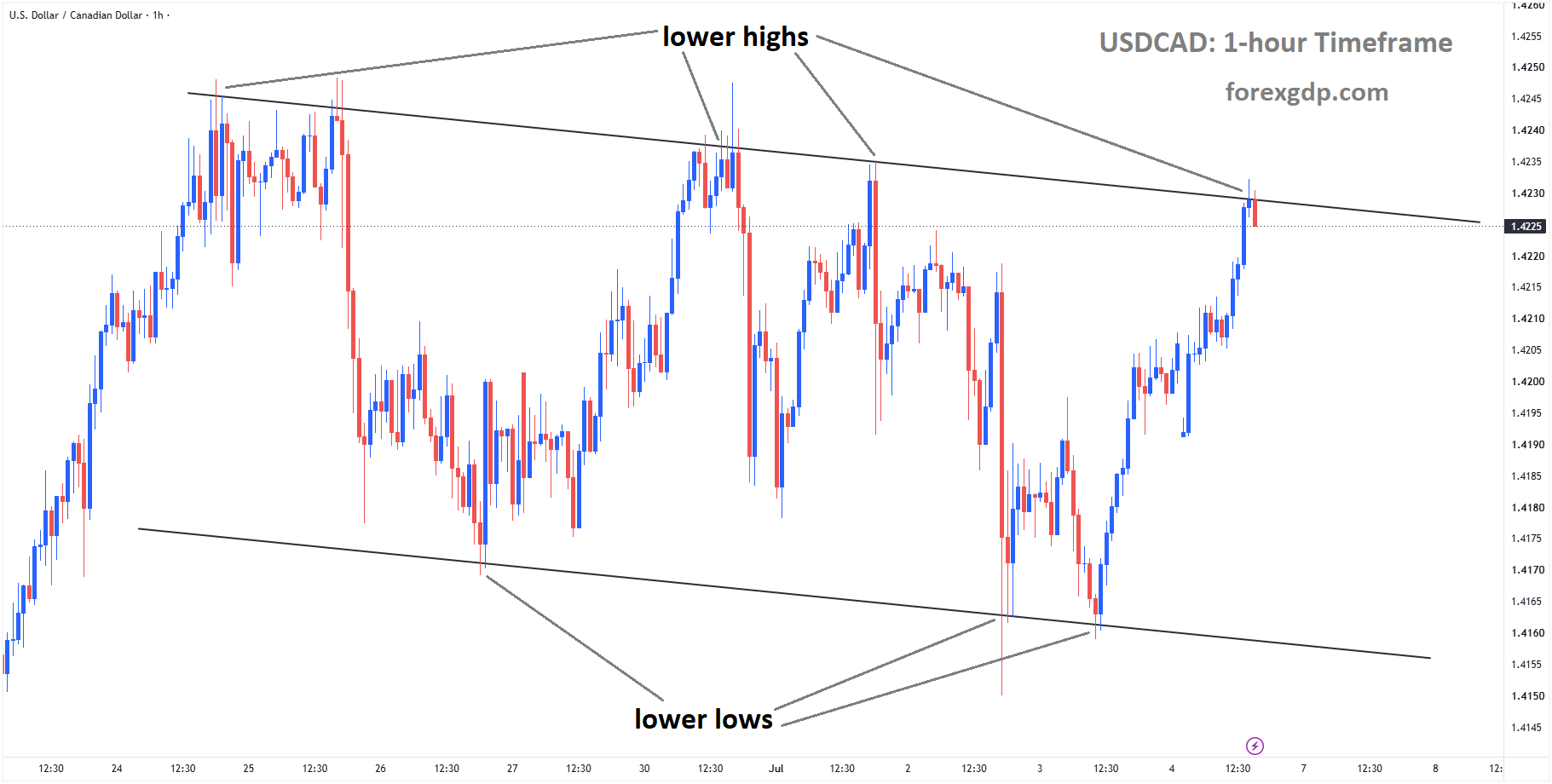
USDCAD reached the lower high area of the descending channel
Investors are closely watching developments in the global energy market, central bank expectations, and geopolitical events, all of which are shaping sentiment in both the US and Canadian currencies. As these factors continue to evolve, traders remain cautious about the direction of USD/CAD in the coming days.
Oil Prices Continue to Influence the Canadian Dollar
The Canadian Dollar has a close relationship with oil prices because Canada is one of the world’s largest oil exporters. When oil prices rise, the country’s export earnings often improve, providing support for the Canadian economy and its currency.
This connection is once again attracting attention as oil prices receive support from improving conditions in global shipping routes. Although there are still concerns about energy supply, recent developments have helped reduce some of the uncertainty that previously weighed on the market.
As a result, any sustained strength in the energy market could continue to benefit the Canadian Dollar and help limit further gains in USD/CAD.
Shipping Conditions Improve in the Strait of Hormuz
One of the key areas being watched by energy traders is the Strait of Hormuz, one of the world’s most important oil shipping routes. Earlier concerns about disruptions had raised worries about the movement of crude oil across global markets.
Reports showed that several oil tankers unexpectedly changed their routes over the weekend, creating temporary uncertainty. However, by Sunday, shipping activity through the strait had largely returned to normal.
The return of smoother shipping operations has eased fears of major supply disruptions. This has allowed markets to focus more on long-term supply expectations rather than immediate transportation risks.
OPEC+ Signals Confidence With Production Increase
Another major development supporting market sentiment came from OPEC+, the alliance of major oil-producing countries led by Saudi Arabia and Russia.
The group approved a moderate increase in oil production for the coming month. The decision suggests that producers believe regional conditions are stable enough to support additional output without causing significant disruptions.
At the same time, the production increase has also raised concerns that global oil supplies could become more abundant in the months ahead. If supply grows faster than demand, it could eventually limit further gains in oil prices.
For now, however, the decision reflects confidence among major producers that the energy market remains stable despite recent geopolitical concerns.
US Dollar Benefits From Federal Reserve Expectations
While the Canadian Dollar receives support from the energy market, the US Dollar continues to strengthen because investors expect the Federal Reserve to maintain a firm stance on monetary policy.
Market participants increasingly believe that US interest rates could rise further before the end of the year. Higher interest rates generally make the US Dollar more attractive because they can increase returns on dollar-based investments.
These expectations have helped the US Dollar remain resilient even as inflation concerns have gradually eased across many parts of the global economy.
The combination of solid economic expectations and confidence in the Federal Reserve has kept demand for the US currency relatively strong.
Markets Await Federal Reserve Meeting Minutes
Attention is now turning to the release of the Federal Reserve’s June policy meeting minutes. Investors hope the document will provide more detailed insight into how policymakers view the economy and future interest rate decisions.
Every comment from Fed officials is being closely examined, as markets want to understand whether policymakers remain committed to tightening monetary policy or if they may become more cautious in the months ahead.
The meeting minutes could influence investor expectations and affect demand for the US Dollar depending on how policymakers describe inflation, economic growth, and labor market conditions.
Interest Rate Expectations Remain a Major Driver

Current market expectations continue to favor additional Federal Reserve rate increases before the end of the year. Investors are pricing in a strong possibility that borrowing costs could move higher if economic conditions remain supportive.
Interest rate expectations often play a major role in currency markets because they influence capital flows between countries. When investors anticipate higher returns in one economy, they often shift funds toward that country’s currency.
This ongoing belief in further Federal Reserve action has become one of the main reasons behind the recent strength of the US Dollar against several major currencies, including the Canadian Dollar.
A Balance Between Two Strong Influences
USD/CAD is currently being influenced by two powerful but competing forces.
On one side, the US Dollar continues to gain support from expectations that the Federal Reserve may continue raising interest rates. On the other side, the Canadian Dollar is receiving help from a stronger energy market and improving confidence surrounding global oil transportation.
Because both currencies have supportive factors, traders may continue to see mixed price movements as new economic data and geopolitical developments emerge.
Future changes in oil prices, Federal Reserve communication, and global market sentiment will likely determine which currency gains the stronger advantage over the coming weeks.
Summary
USD/CAD remains supported by a stronger US Dollar driven by expectations of additional Federal Reserve interest rate increases. At the same time, the Canadian Dollar continues to benefit from stronger oil prices, improved shipping conditions through the Strait of Hormuz, and confidence following OPEC+’s decision to modestly increase production.
With investors closely watching the upcoming Federal Reserve meeting minutes and ongoing developments in the energy market, both currencies have meaningful sources of support. The balance between US monetary policy expectations and Canada’s connection to oil prices will remain an important factor influencing USD/CAD in the near term.
USDCHF Rises as Stronger US Dollar Pressures Swiss Franc
The US Dollar has started the week on a stronger note against the Swiss Franc, recovering some of its recent losses despite changing expectations around future Federal Reserve policy. While confidence in another US interest rate increase has softened slightly, the Dollar has managed to regain momentum as investors prepare for a series of important economic reports from both the United States and Switzerland.
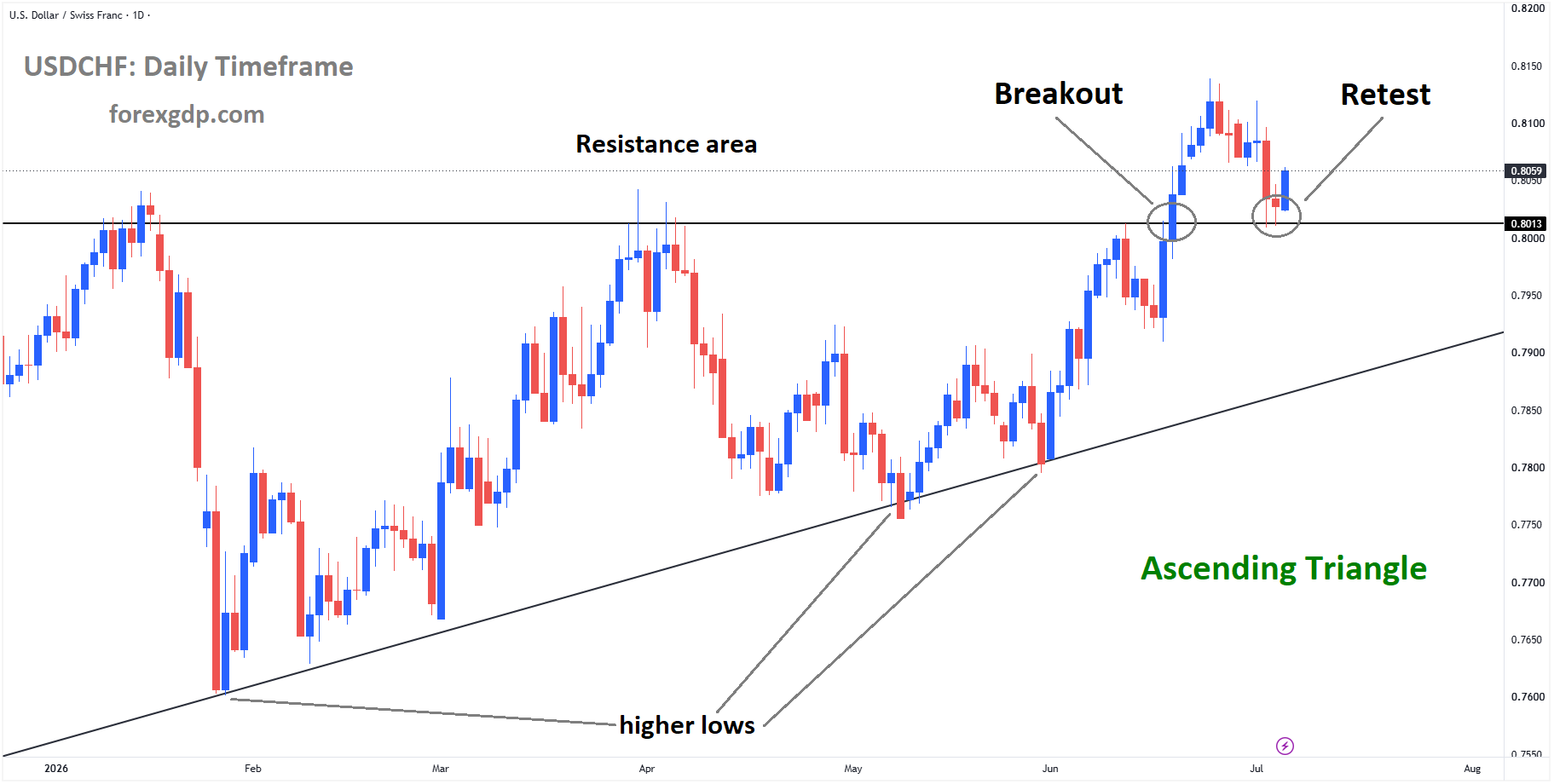
USDCHF reached the retest area of the broken ascending triangle pattern
Attention is now turning to key economic releases, including Switzerland’s unemployment figures and the US ISM Services PMI. These reports could provide valuable insight into the health of both economies and influence market sentiment in the coming days.
US Dollar Finds Support Despite Softer Rate Expectations
The US Dollar has bounced back after experiencing pressure following recent economic data. Even though traders have reduced their expectations for additional interest rate increases from the Federal Reserve, the Greenback has still attracted buying interest at the beginning of the week.
The recovery suggests that investors continue to view the US Dollar as a relatively stable currency, especially as they wait for more information about the future direction of US monetary policy. While expectations have changed, they have not disappeared completely, leaving room for further adjustments depending on upcoming data.
The Dollar’s performance highlights how market sentiment can shift quickly as investors react to fresh economic developments rather than relying solely on earlier expectations.
Fed Rate Outlook Remains an Important Market Driver
One of the biggest influences on the US Dollar continues to be the outlook for Federal Reserve interest rates. Recent market estimates indicate that traders now see a slightly lower chance of another rate increase by the end of September compared to last week.
This shift followed the release of the latest US employment report, which showed that job creation during June was weaker than economists had expected. Although the labor market remains relatively healthy, the slower pace of hiring has encouraged investors to rethink how aggressively the Federal Reserve may act in the coming months.
The adjustment in expectations reflects the market’s belief that future policy decisions will continue to depend heavily on incoming economic data rather than following a fixed path.
Investors Await the FOMC Meeting Minutes
Another major event this week is the release of the Federal Open Market Committee (FOMC) meeting minutes. These minutes provide a detailed record of discussions among Federal Reserve officials during their most recent policy meeting.
Investors will carefully examine the document for any clues about how policymakers view inflation, economic growth, and the labor market. Any signs that officials remain concerned about inflation could support expectations for tighter monetary policy, while a more cautious tone may strengthen the view that the Fed could pause further rate increases.
Because the minutes often reveal opinions that are not fully reflected in the official policy statement, they frequently become an important source of market-moving information.
US ISM Services PMI Will Offer Fresh Economic Insights
Another closely watched report is the US ISM Services Purchasing Managers’ Index (PMI), which measures business activity across the country’s large services sector.
Economists expect the June reading to show a slight decline compared to the previous month. Even if activity slows modestly, the report is still expected to indicate continued expansion in the services industry.
Since the services sector represents a major part of the US economy, investors use this report to assess overall business conditions. Stronger-than-expected data could improve confidence in economic growth, while weaker results may increase concerns about slowing momentum.
The outcome could also influence expectations regarding future Federal Reserve policy decisions.
Swiss Employment Data Also in Focus
In Switzerland, attention is centered on the release of the June unemployment rate. Forecasts suggest that the country’s jobless rate remained unchanged from the previous month.
A stable labor market generally reflects resilience in the Swiss economy and can provide support for the Swiss Franc. However, if the report surprises investors with a higher unemployment rate, it may raise concerns about slowing economic activity.
Although Switzerland’s unemployment figures do not always create large market moves, they remain an important indicator of domestic economic health and are closely monitored by investors.
Economic Reports Could Shape Market Sentiment
The combination of key US and Swiss economic releases means that investors have several important events to monitor throughout the week.
Market participants will compare the strength of both economies while also evaluating how central banks may respond to changing economic conditions. Expectations surrounding interest rates remain one of the biggest drivers of currency movements, making every major data release especially important.
Rather than focusing on a single report, traders will likely assess the overall picture created by employment data, business activity surveys, and central bank communications before adjusting their positions.
Global Investors Remain Focused on Economic Direction

Financial markets continue to navigate a period of uncertainty as central banks balance inflation concerns with signs of moderating economic growth. Recent data has shown that economic conditions remain mixed, making future policy decisions less predictable.
Investors are paying close attention to every major economic release because each report has the potential to influence expectations for future monetary policy. As a result, currencies are likely to remain sensitive to changing economic signals throughout the week.
The coming days may provide greater clarity about whether the world’s largest economies continue to show resilience or begin to experience a more noticeable slowdown.
Final Summary
The US Dollar has regained strength against the Swiss Franc despite slightly weaker expectations for another Federal Reserve interest rate increase. Investors are reassessing the outlook after softer US employment data while waiting for additional guidance from the upcoming FOMC meeting minutes.
This week also brings important economic reports, including the US ISM Services PMI and Switzerland’s unemployment data. Together, these releases will offer fresh insight into the health of both economies and may play a significant role in shaping market expectations and currency movements in the days ahead.
Don’t trade all the time, trade forex only at the confirmed trade setups
Get more confirmed trade signals at premium or supreme – Click here to get more signals, 2200%, 800% growth in Real Live USD trading account of our users – click here to see , or If you want to get FREE Trial signals, You can Join FREE Signals Now!