
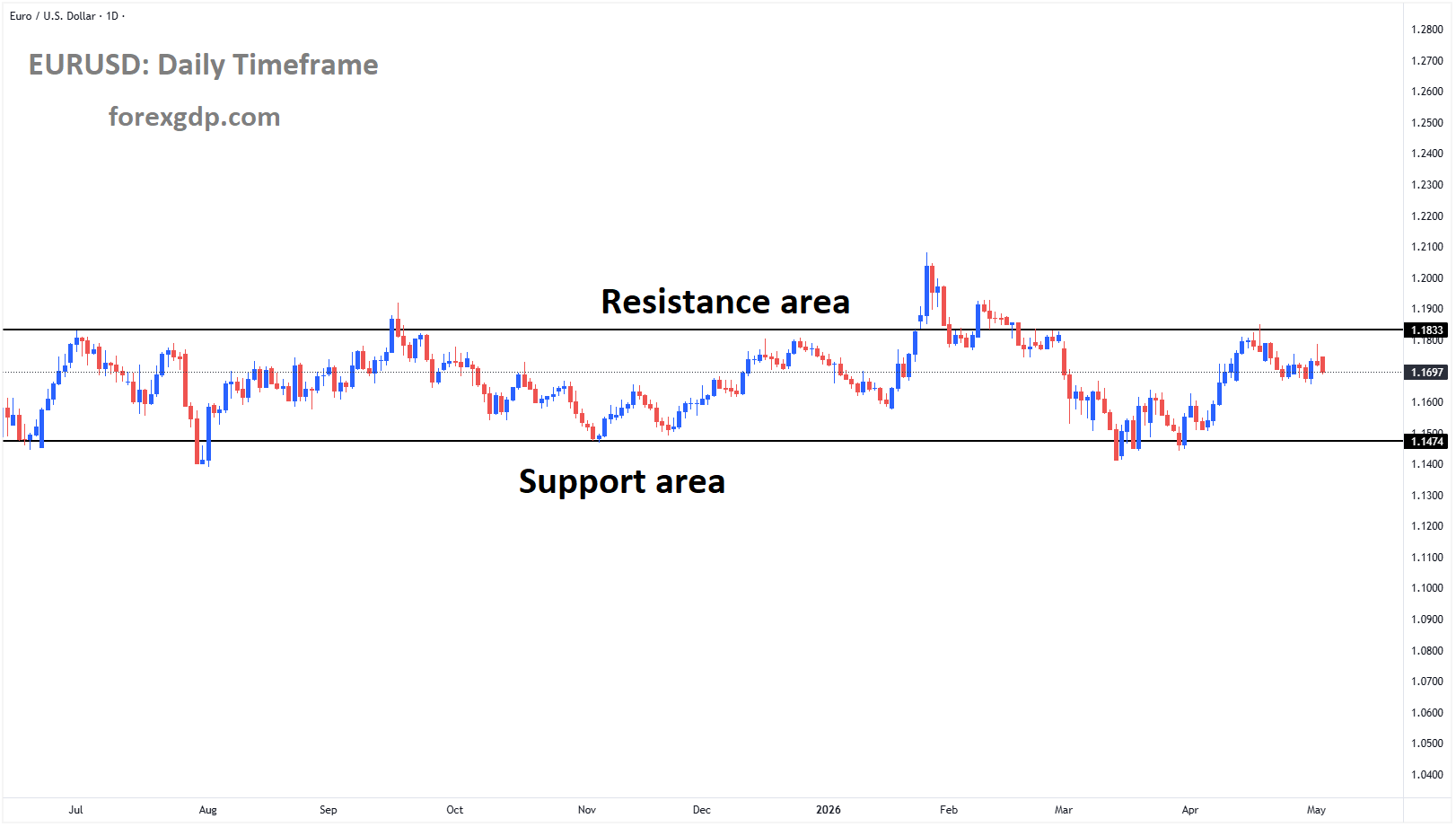
EURUSD is moving in a box pattern, and the market has fallen from the resistance area of the pattern
EURUSD Under Pressure as Iran Crisis Fuels Global Market Uncertainty
The EUR/USD currency pair started the week on a weaker note, with the Euro losing ground against the US Dollar. After reaching highs near 1.1785 late last week, the pair has dropped below the 1.1700 level as trading activity picks up in the United States. While economic data from the Eurozone has shown encouraging signs, global uncertainty and rising geopolitical tensions are taking center stage, pushing investors toward safer assets like the US Dollar.
Geopolitical Tensions Drive Market Sentiment
One of the main factors influencing the market right now is the growing tension between the United States and Iran. Over the weekend, US President Donald Trump announced plans to ensure safe passage for ships stuck in the Strait of Hormuz, a key global shipping route. This statement quickly drew a strong reaction from Iran, which warned that any US military presence near its waters would be met with force.
This exchange has increased fears of a broader conflict in the region. As a result, investors are becoming more cautious and are moving their funds into assets considered safer during uncertain times. The US Dollar often benefits from this kind of environment, as it is widely seen as a stable and reliable currency during global instability.
Adding to the tension, reports from Iran suggested that a US warship had been targeted by missiles. Although US officials quickly denied the claim, the news added to the overall sense of unease in the markets during the European trading session.
Rising Oil Prices Add Pressure on the Euro

Another important factor weighing on the Euro is the sharp increase in oil prices. Crude oil has been climbing steadily, with Brent crude trading above $110 per barrel and West Texas Intermediate (WTI) moving past $101. This surge is largely linked to concerns that conflict in the Middle East could disrupt global oil supplies.
For the Eurozone, higher oil prices present a serious challenge. Many European countries rely heavily on imported energy, meaning that rising costs can put pressure on businesses and consumers alike. Increased energy expenses can slow economic growth and reduce overall demand, making it harder for the Euro to gain strength against other currencies.
Positive Eurozone Data Offers Limited Support
Despite the negative pressure from global events, recent economic data from the Eurozone has been surprisingly strong. The manufacturing sector, in particular, has shown solid improvement.
The final reading of the HCOB Manufacturing Purchasing Managers’ Index (PMI) for April came in at 52.2, confirming earlier estimates. This marks the highest level in nearly four years and shows that manufacturing activity in the region is expanding at a healthy pace. The figure is also an improvement from March’s reading of 51.6, indicating steady growth.
Investor Confidence Sees Mild Improvement
In addition to manufacturing data, investor sentiment has also shown some signs of recovery. The Sentix Investor Confidence Index rose to -16.4 in May, up from -19.2 in April. While the index remains in negative territory, the improvement suggests that investors are becoming slightly more optimistic about the region’s economic outlook.
However, these positive developments have had little impact on the Euro’s performance so far. The focus of the market remains firmly on geopolitical risks and energy prices, which are currently outweighing the benefits of stronger economic data.
Focus Shifts to Upcoming US Economic Data
Looking ahead, attention is turning toward key economic reports from the United States. On Monday, data on Factory Orders for March is expected to provide insights into the strength of the US manufacturing sector. While this report is important, the main highlight of the week will come later.
Employment Data in the Spotlight
The upcoming labor market reports are likely to play a major role in shaping market expectations. In particular, Friday’s Nonfarm Payrolls (NFP) report is expected to draw significant attention. This data will offer a clearer picture of job growth in the US and could influence future decisions by the Federal Reserve.
Strong employment figures would reinforce confidence in the US economy and could provide additional support for the Dollar. On the other hand, weaker-than-expected results might limit the Dollar’s gains, although geopolitical factors may still keep demand for safe-haven assets elevated.
Why the US Dollar Remains Strong
The current strength of the US Dollar can be linked to several factors working together. First, global uncertainty is driving investors toward safer currencies. Second, rising tensions in key regions like the Middle East are increasing demand for stability. Third, expectations of strong economic performance in the United States continue to support the Dollar’s appeal.
Even when economic data from other regions, such as the Eurozone, shows improvement, it may not be enough to shift market sentiment if global risks remain high. This is exactly what is happening now, as the Euro struggles to gain traction despite encouraging signs from its economy.
Final Summary
The EUR/USD pair is facing downward pressure as a mix of global tensions and rising oil prices shifts investor focus toward the US Dollar. Concerns about a potential conflict between the United States and Iran have increased market uncertainty, leading to a stronger demand for safe-haven assets. At the same time, higher energy costs are adding stress to the Eurozone economy, limiting the Euro’s ability to recover.
Although recent economic data from Europe has been positive, it has not been enough to counterbalance the impact of geopolitical risks. As the week progresses, attention will turn to key US economic reports, especially the employment data, which could further influence the direction of the currency pair.
GBPUSD declines as global uncertainty lifts the US Dollar appeal
The British Pound has come under pressure against the US Dollar, giving back its recent gains and slipping lower as global uncertainty weighs on market sentiment. After reaching highs near 1.3657 late last week, the GBP/USD pair has moved downward, falling below the 1.3550 level. This shift reflects a broader change in investor mood, driven largely by rising geopolitical tensions and a growing preference for safer assets.
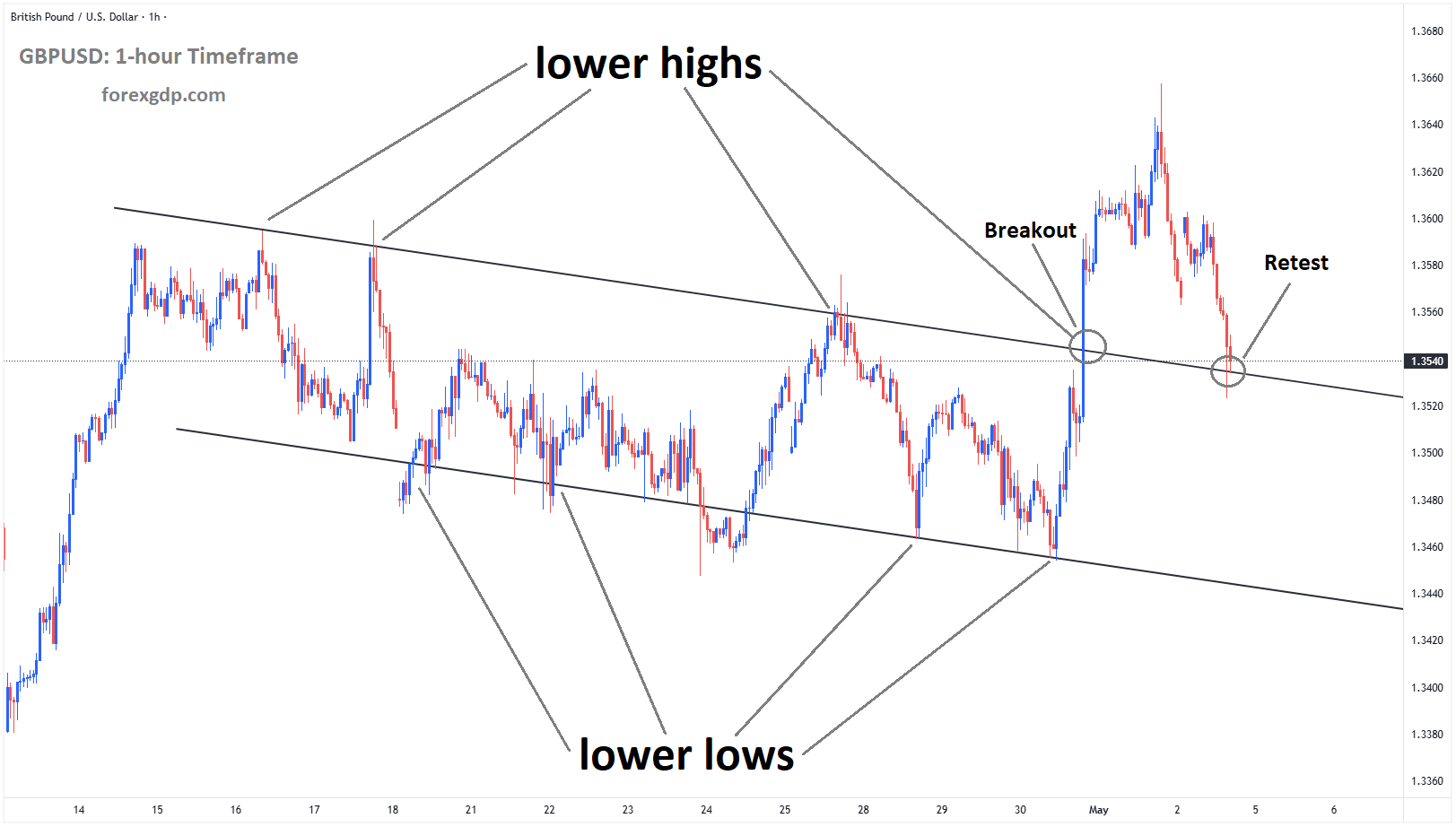
GBPUSD reached the retest area of the broken descending channel
Geopolitical Risks Shake Market Confidence
Global financial markets often react quickly to political and military developments, especially when they involve key regions that influence energy supply and international trade. Recent reports from the Middle East have triggered concern among investors, leading to a more cautious approach.
According to Iranian state-linked media, missiles reportedly struck a US warship after it ignored warnings while attempting to move through the Strait of Hormuz. This narrow waterway is one of the most important oil transit routes in the world, making any disruption there a serious global issue.
Even though details remain unclear, the report alone was enough to spark a wave of risk aversion. Investors tend to move away from riskier assets like stocks and currencies tied to economic growth when uncertainty rises. Instead, they shift toward safer options such as the US Dollar, which is widely seen as a reliable store of value during turbulent times.
The US Dollar Gains Safe-Haven Appeal
The US Dollar’s strength in this situation is not surprising. During periods of global stress, it often benefits from its status as a reserve currency and its deep, liquid financial markets.
As tensions between the United States and Iran appear to be escalating, traders are increasingly favoring the Dollar. This shift in demand has pushed the GBP/USD pair lower, reversing the upward momentum seen just days earlier.
Another factor supporting the Dollar is the reaction in oil markets. Concerns about disruptions in the Strait of Hormuz have led to higher oil prices. Since oil is traded globally in US Dollars, rising prices can indirectly support the currency.
Trump’s Plan Adds Another Layer of Uncertainty
Adding to the already tense situation, former US President Donald Trump announced a plan aimed at freeing vessels stranded in the Strait of Hormuz. The operation was expected to begin on Monday, but the lack of clear details has left investors uneasy.
Such military or strategic moves are often complex and carry significant risks. Markets generally do not respond well to uncertainty, especially when it involves potential conflict. As a result, traders have become more cautious, choosing to reduce exposure to riskier assets.
The announcement came as a surprise, and its timing has further contributed to the nervous atmosphere in global markets. Investors are closely watching how the situation unfolds, as any escalation could have wide-reaching consequences.
Iran’s Response Raises Stakes
In response to the US plan, Iranian officials have issued strong warnings. Tehran has stated that any military action within its waters would be viewed as a violation of existing agreements and would be met with a forceful response.
Such statements increase the risk of further escalation, which in turn keeps investors on edge. The possibility of a broader conflict in the region is a major concern, not only for political reasons but also for its potential economic impact.
This heightened tension has reinforced the shift toward safer investments, benefiting the US Dollar while putting pressure on currencies like the British Pound.
Limited UK Data Leaves Pound Exposed

On the economic front, the UK calendar has been relatively quiet, offering little support for the Pound. With no major data releases to guide traders, the currency has been more vulnerable to external factors such as global risk sentiment.
In contrast, the US has at least some economic updates, including Factory Orders data and remarks from Federal Reserve officials. While these may not be major market movers on their own, they still provide context for the broader economic outlook.
When one currency lacks domestic support while the other benefits from both economic data and safe-haven demand, the balance tends to shift accordingly. This dynamic has played a role in the Pound’s recent decline.
Key US Events Ahead Could Shape Direction
Looking ahead, several important US economic events are expected later in the week. These include the ADP Employment Change report and the widely watched Nonfarm Payrolls data.
These indicators provide insight into the health of the US labor market, which is a key factor in the Federal Reserve’s policy decisions. Strong employment data could reinforce expectations that the Fed will maintain a firm stance on interest rates.
In addition, multiple Federal Reserve officials are scheduled to speak throughout the week. Their comments will be closely analyzed for clues about future monetary policy.
If the Fed continues to signal a cautious or firm approach, it could further support the US Dollar. On the other hand, any signs of a softer stance might limit the currency’s gains.
Market Sentiment Remains Fragile
At the heart of the recent movement in GBP/USD is a shift in overall market sentiment. When confidence is high, investors are more willing to take risks, often supporting currencies like the Pound. But when uncertainty rises, the opposite happens.
The current environment is marked by caution. Geopolitical tensions, unclear policy moves, and limited economic guidance from the UK have all contributed to a more defensive stance among traders.
This fragile sentiment means that markets are likely to remain sensitive to new developments. Even small changes in the geopolitical or economic landscape could lead to noticeable shifts in currency movements.
Summary
The recent drop in GBP/USD highlights how quickly global events can influence currency markets. Rising tensions in the Middle East, combined with uncertainty around military plans and strong safe-haven demand, have boosted the US Dollar while weighing on the British Pound.
With limited economic data from the UK and several key events ahead in the US, the focus remains on both geopolitical developments and central bank signals. As long as uncertainty persists, the US Dollar is likely to retain its appeal, keeping pressure on the Pound in the near term.
USDJPY recovers losses, eyes 157.00 after suspected Japan market action
The USD/JPY currency pair showed signs of recovery on Monday after experiencing a sharp and unexpected drop earlier in the day. The sudden movement caught the attention of traders and analysts, especially as it appeared to happen without a clear economic trigger. This type of price action often raises questions about possible intervention by authorities, and that seems to be the case once again.
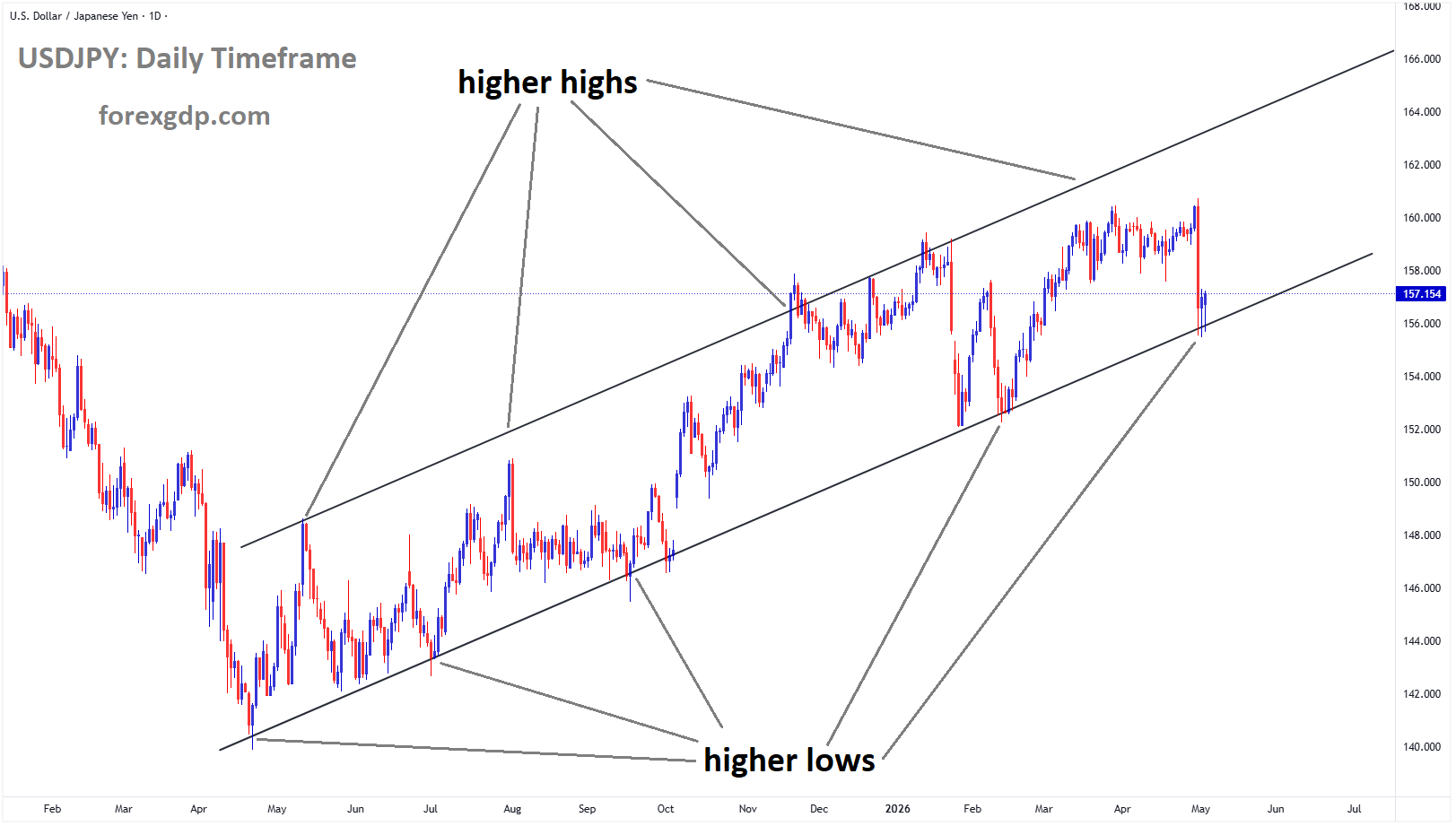
USDJPY reached a higher low area of the Ascending channel
Sharp Drop Raises Intervention Suspicions
During the Asian trading session, the US Dollar weakened quickly against the Japanese Yen. Within just a few minutes, the pair dropped significantly, reaching a low near 155.70. Such a rapid decline is unusual, especially when there is no major economic news or data release to explain it.
Soon after, the pair began to recover, climbing back toward the 156.80 level ahead of the European session. While markets are no stranger to volatility, the sudden nature of this move led many to suspect that Japanese authorities may have stepped in to support their currency.
Historically, similar patterns have often been linked to intervention by Japan’s Ministry of Finance. Although officials typically avoid confirming such actions immediately, the signs in this case were hard to ignore. Not only did USD/JPY fall sharply, but other Yen pairs also showed similar movements at the same time.
Why Japan May Be Supporting the Yen
Japan has been closely watching the performance of its currency, especially as the Yen has faced ongoing pressure in recent months. A weaker Yen can help exports by making Japanese goods cheaper abroad, but it also increases the cost of imports, including energy and food. This can put pressure on businesses and households.
Japanese authorities have made it clear that they are willing to act if the currency weakens too quickly or moves beyond certain levels. The area around 160.00 against the US Dollar has been seen as a key threshold. When USD/JPY crossed that level recently, it triggered warnings from officials.
Finance Minister Satsuki Katayama has openly stated that the government is prepared to take firm action against excessive currency movements. These comments are often seen as a signal to markets that intervention is possible if conditions require it.
Reports Suggest Large-Scale Market Action
Adding to the speculation, a recent report from Reuters suggested that Japan may have already spent a significant amount to support the Yen. According to the report, authorities could have used around 5.48 trillion Yen, which equals roughly $35 billion, in the previous week.
If confirmed, this would represent a major effort to stabilize the currency. Such large-scale intervention shows how serious Japan is about preventing sharp declines in the Yen’s value. It also highlights the challenges policymakers face in balancing market forces with economic stability.
While officials have not publicly confirmed these actions, the market behavior aligns with past interventions. Sudden and synchronized moves across multiple currency pairs are often a key sign that authorities have stepped in.
Market Focus Shifts to Global Developments
Beyond currency movements, global events are also shaping market sentiment. On Monday, attention remained on developments in the Middle East. Reports indicated rising tensions in the region, particularly around the Strait of Hormuz, a critical route for global oil shipments.
The situation gained further attention after US President Donald Trump pledged to take action to free vessels blocked in the area. However, no clear details about the plan were provided. Meanwhile, Iranian officials stated that the waterway would remain closed, adding uncertainty to the situation.
Geopolitical tensions like these can influence currency markets, as investors often seek safer assets during uncertain times. The Japanese Yen is traditionally considered a safe-haven currency, which means it can strengthen when global risks increase.
Quiet Start to the Week for Japanese Data
On the economic front, Japan’s calendar remained quiet due to the Golden Week holidays. This period is one of the busiest holiday seasons in Japan, leading to reduced trading activity and fewer economic updates.
With no major domestic data releases, the focus for Yen traders has shifted more toward external factors, including global risk sentiment and potential government action in currency markets.
Key US Economic Data in Focus
While Japan’s schedule is light, the United States has a busy week ahead in terms of economic data. The week begins with the release of Factory Orders, which provides insight into demand within the manufacturing sector.
Following that, the ISM Services PMI is expected to offer a look at the performance of the services sector, a key part of the US economy. However, the most closely watched data will come later in the week with the release of employment reports.
The Nonfarm Payrolls report, due on Friday, is especially important. It provides a snapshot of job growth, unemployment levels, and wage trends in the US. These figures often have a strong impact on the US Dollar, as they can influence expectations around interest rates.
Federal Reserve Signals Also in Spotlight
In addition to economic data, comments from Federal Reserve officials will be closely watched. Policymakers are expected to speak throughout the week, offering insights into the central bank’s outlook on inflation, growth, and interest rates.
Their statements can play a key role in shaping market expectations. If officials signal a more cautious or aggressive stance, it could influence the direction of the US Dollar and, in turn, the USD/JPY pair.
What This Means for Traders and Investors
The recent movements in USD/JPY highlight how quickly currency markets can shift, especially when government actions come into play. Intervention, whether confirmed or suspected, can create sudden and sharp changes that catch traders off guard.
At the same time, global events and economic data continue to play an important role. From geopolitical tensions to employment reports, multiple factors are influencing market direction.
For those following the Yen, it is clear that Japanese authorities remain alert and ready to act when needed. Their actions, combined with broader market forces, will likely continue to shape the currency’s path in the coming days.
Summary
The USD/JPY pair experienced a sharp drop followed by a quick recovery, raising strong suspicions of intervention by Japanese authorities. Reports suggest that significant resources may have already been used to support the Yen, reflecting the government’s commitment to stabilizing the currency.
At the same time, global tensions and upcoming US economic data are adding new layers of uncertainty to the market. With key reports and central bank signals ahead, traders are watching closely for the next move. The combination of policy action, economic indicators, and global events ensures that the currency market remains active and unpredictable.
USDCHF edges up as market caution lifts the US Dollar and Swiss policy outlook keeps Franc stable
The USD/CHF currency pair is showing upward movement, trading near 0.7840 as the week begins. This rise reflects a shift in investor sentiment, where safety becomes a priority during uncertain times. When global risks increase, traders often turn to assets they consider more stable, and both the US Dollar and Swiss Franc fall into that category. However, recent developments are giving the US Dollar a stronger edge.
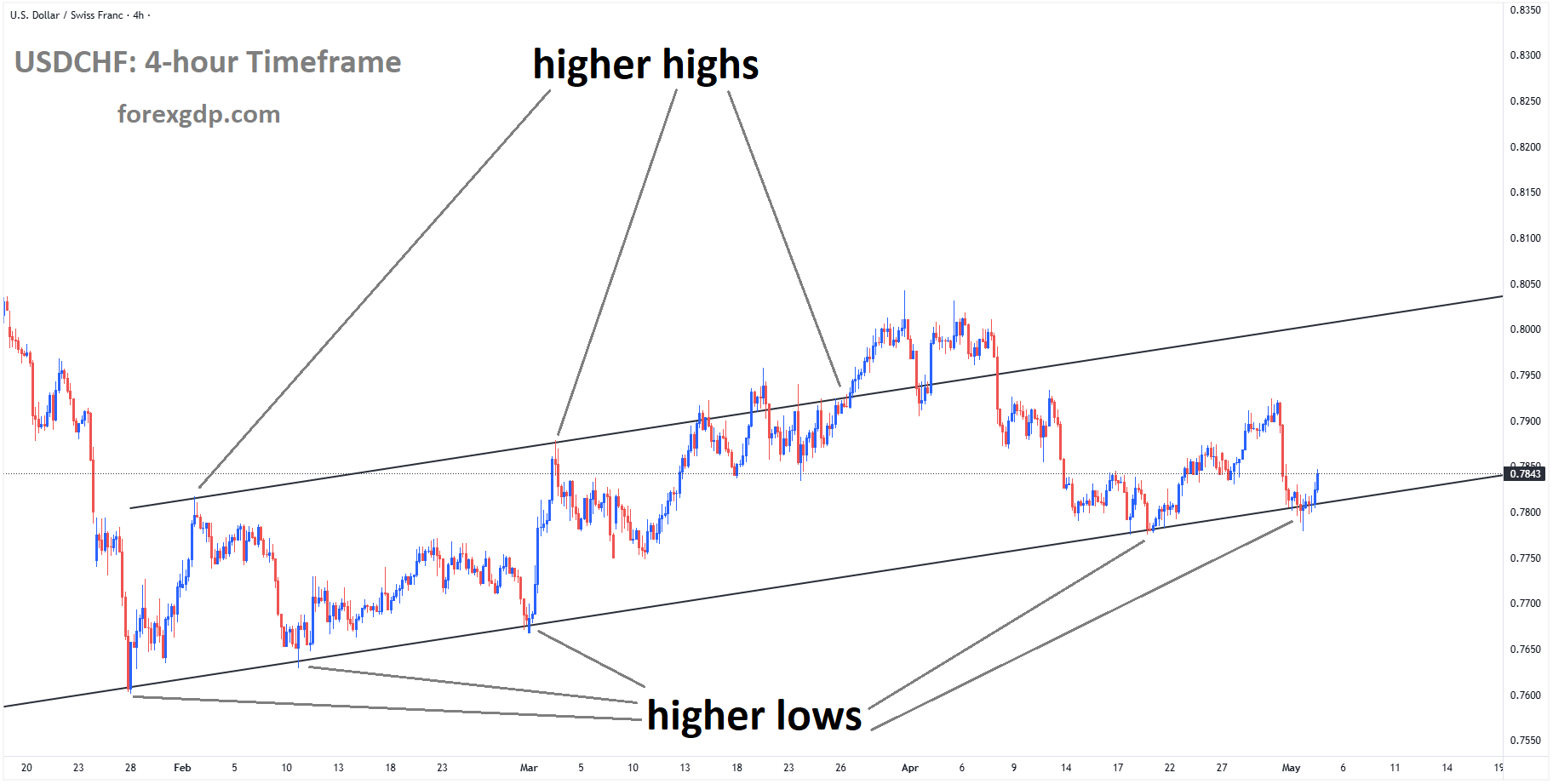
USDCHF is moving in an ascending channel, and the market has reached the higher low area of the channel
Rising Geopolitical Concerns Shape Market Mood
Markets are currently reacting to growing tensions in the Middle East. Reports about a possible incident involving a US warship in the Strait of Hormuz have stirred uncertainty. While initial claims suggested that missiles may have been fired, later responses from US officials denied a direct strike. Iranian sources, on the other hand, hinted that it could have been a warning rather than an attack.
This conflicting information has created confusion and caution across financial markets. Investors are not waiting for full clarity. Instead, many are choosing to reduce exposure to riskier investments and move their funds into safer options. This behavior is common during periods of geopolitical stress, where the focus shifts from returns to capital protection.
Why the US Dollar Is Gaining Strength
The US Dollar is benefiting from this cautious approach. During uncertain times, it often attracts strong demand because of its global reserve status and deep financial markets. Even though recent US economic data has shown mixed signals, the Dollar continues to gain support due to these defensive flows.
Another factor supporting the Dollar is the rise in oil prices. Tensions in key energy-producing regions tend to push oil prices higher, as traders worry about supply disruptions. Higher oil prices can indirectly support the US Dollar, especially when global investors seek stability in major currencies.
Despite some uncertainty around economic indicators, the overall demand for safety is currently outweighing concerns about weaker data. This is helping the Dollar maintain its upward momentum against several currencies, including the Swiss Franc.
Investors Await Key US Economic Data
While geopolitical developments are driving short-term movements, attention is also turning toward upcoming economic reports from the United States. Key data releases, such as the ADP Employment Change report and the Nonfarm Payrolls (NFP), are expected to provide important insights into the health of the US labor market.
These reports are closely watched because they influence expectations about future decisions by the Federal Reserve. Recently, the Fed has taken a more cautious stance, signaling that it may keep interest rates higher for longer if needed. Strong employment data could reinforce this approach, while weaker numbers might raise questions about the economic outlook.
In addition to data releases, speeches from Federal Reserve officials will also be in focus. Their comments can shape market expectations and influence currency movements, especially during uncertain times.
Swiss Franc Remains Stable Despite Pressure
Although the US Dollar is gaining ground, the Swiss Franc is not showing significant weakness. Switzerland’s economic fundamentals remain solid, which is helping to support its currency. Recent data indicates that manufacturing activity in the country is improving, with the SVME Manufacturing PMI rising to 54.5 in April. This suggests that the industrial sector is expanding and contributing positively to the economy.
The Swiss Franc is traditionally seen as a safe-haven currency, much like the US Dollar. This means that it also benefits during periods of global uncertainty. However, in the current situation, the Dollar appears to be attracting more attention from investors.
Role of the Swiss National Bank

The Swiss National Bank (SNB) plays an important role in shaping the direction of the Swiss Franc. However, its ability to significantly weaken the currency is limited. Analysts believe that large-scale interventions would be required to influence the Franc in a meaningful way.
Such interventions come with risks. Expanding the central bank’s balance sheet could create financial and political challenges. Because of this, the SNB is unlikely to take aggressive steps to weaken the currency unless absolutely necessary.
This cautious approach means that the Swiss Franc retains a level of structural strength. Even when it faces pressure from a stronger US Dollar, its downside tends to be limited.
Balancing Forces in USD/CHF Movement
The current movement in USD/CHF reflects a balance between two strong currencies. On one side, the US Dollar is gaining support from safe-haven demand and rising geopolitical concerns. On the other side, the Swiss Franc remains resilient due to solid economic fundamentals and limited central bank intervention.
This dynamic creates a situation where the pair can move higher, but not without limits. While the Dollar may continue to benefit from short-term risk aversion, the Franc’s underlying strength could prevent a sharp or sustained rise.
Market Sentiment and Future Direction
Looking ahead, the direction of USD/CHF will likely depend on two main factors: geopolitical developments and economic data. If tensions in the Middle East continue or escalate, demand for safe-haven assets could remain strong, supporting the US Dollar further.
At the same time, upcoming US economic reports will play a crucial role. Strong data could reinforce confidence in the US economy and support the Dollar. On the other hand, weaker data might reduce its appeal, allowing the Swiss Franc to regain some ground.
Investors will also keep a close eye on central bank signals. Any changes in tone from the Federal Reserve or the Swiss National Bank could influence expectations and shift currency trends.
Summary
The USD/CHF pair is moving higher as global uncertainty drives investors toward safer assets. Ongoing tensions in the Middle East have increased demand for the US Dollar, giving it an advantage despite mixed economic signals. At the same time, the Swiss Franc remains supported by strong fundamentals and a cautious central bank approach. This balance of forces suggests that while the Dollar may stay firm in the short term, the Franc’s resilience could limit further gains in the pair.