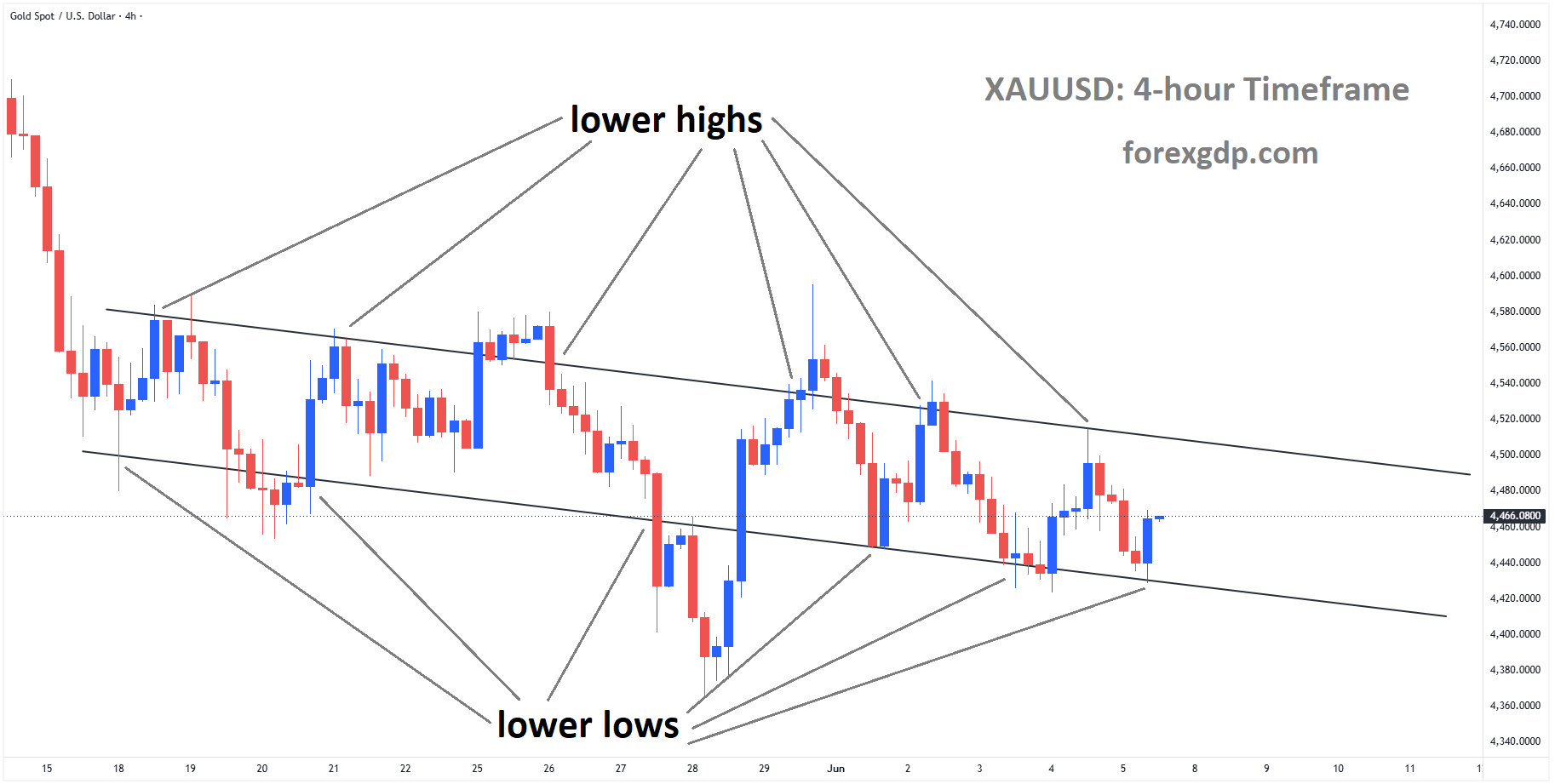

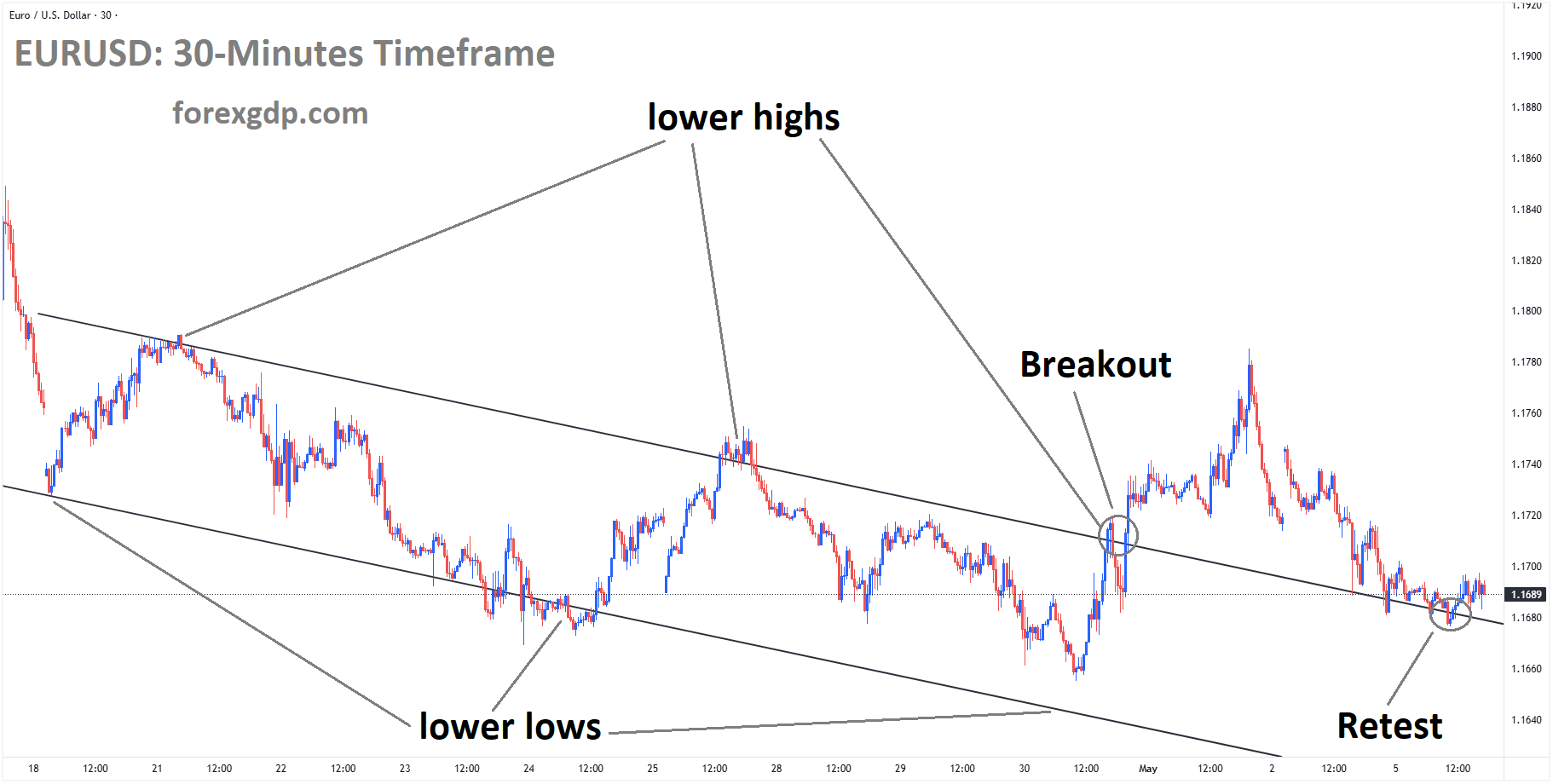
EURUSD reached the retest area of the broken descending channel
EURUSD Under Pressure as Global Uncertainty Rises, All Eyes on ECB’s Lagarde
The EUR/USD currency pair has been moving lower for several days in a row, reflecting growing uncertainty in global markets. Investors are becoming more cautious as geopolitical tensions rise and economic signals remain mixed. This shift in sentiment has placed pressure on the Euro while supporting demand for the US Dollar, which is often seen as a safer option during uncertain times.
Rising Global Tensions Shake Investor Confidence
One of the main reasons behind the recent weakness in the Euro is the increase in geopolitical risks. Concerns have intensified over a possible return of conflict involving the United States and Iran. These fears have created unease across financial markets, leading investors to reduce exposure to riskier assets.
Recent developments in key shipping routes have added to this tension. Reports of military involvement, disruptions in maritime traffic, and incidents near critical oil transport areas have raised alarms. Such events often lead to a flight to safety, where investors move their funds into more stable assets like the US Dollar.
When global risks increase, currencies tied to economic stability and security tend to perform better. The Dollar benefits from this trend, while the Euro, which is more sensitive to global trade and energy costs, faces downward pressure.
Energy Concerns Put Pressure on the Eurozone
Another major factor affecting the Euro is the rise in energy-related concerns. Europe relies heavily on imported crude oil, and any disruption in supply chains or increase in energy costs can create challenges for the region’s economy.
Tensions in oil-producing regions often lead to higher energy costs. This situation puts additional pressure on European economies, as businesses and households face rising expenses. Increased energy costs can slow down economic growth and reduce consumer spending, both of which negatively impact the Euro.
At the same time, higher oil prices can influence inflation levels. While central banks may respond with policy changes, the immediate effect is often increased uncertainty. This uncertainty makes investors more cautious, further weakening the Euro against stronger currencies like the Dollar.
ECB Policy Outlook in Focus

Market attention is also turning toward the European Central Bank (ECB) and its next steps. Investors are closely watching for signals from ECB President Christine Lagarde, who is expected to provide insights into future monetary policy.
Several members of the ECB have recently suggested the possibility of raising interest rates in the near future. These discussions indicate a shift toward tightening monetary policy, which could support the Euro if implemented effectively.
However, the situation is not straightforward. While higher interest rates can strengthen a currency, they also depend on the broader economic environment. If economic growth slows due to rising energy costs or global uncertainty, the benefits of rate hikes may be limited.
Investors are therefore looking for clear guidance from the ECB. Any strong or confident message about controlling inflation and supporting growth could help stabilize the Euro. On the other hand, cautious or unclear communication may continue to weigh on the currency.
Key Economic Data from the United States
On the US side, economic data remains an important driver of currency movements. Investors are paying close attention to reports that provide insight into the strength of the American economy.
Service sector activity is one area of focus. Indicators that measure business performance in services can reveal how well the economy is holding up. Strong data from the US tends to support the Dollar, especially when compared to weaker conditions elsewhere.
In addition, the upcoming employment report is expected to play a significant role. Job market data often influences expectations about future economic growth and central bank decisions. A strong labor market can reinforce confidence in the US economy, making the Dollar more attractive to investors.
Market Sentiment Favors Safe-Haven Assets
The overall mood in financial markets is currently cautious. When uncertainty increases, investors often look for stability rather than higher returns. This shift in sentiment is known as a “risk-off” environment.
In such conditions, currencies like the US Dollar typically perform well. They are considered safe havens due to the strength and stability of the underlying economy. On the other hand, currencies like the Euro may struggle, especially if they are affected by external risks such as energy dependence or geopolitical tensions.
This change in sentiment has played a key role in the recent decline of the EUR/USD pair. As long as uncertainty remains high, the demand for safer assets is likely to continue.
Technical Levels Draw Attention
While many factors influence currency movements, certain price zones often attract attention from traders. The EUR/USD pair is currently moving close to an important area that could influence its next direction.
These levels are watched closely because they can act as points where buying or selling activity increases. If the pair holds above this area, it may find some support. If it moves below, it could signal further weakness.
However, it is important to note that broader economic and geopolitical factors often have a stronger impact than short-term price movements. In the current environment, external risks and policy expectations are likely to remain the main drivers.
What to Watch Next
Looking ahead, several key developments could shape the direction of the EUR/USD pair. Statements from central bank officials will be closely analyzed for clues about future policy decisions. Clear communication from the ECB could help reduce uncertainty and support the Euro.
At the same time, updates on geopolitical tensions will remain critical. Any signs of escalation or resolution could quickly change market sentiment. Investors will also continue to monitor energy markets, as fluctuations in oil supply and demand can have a direct impact on the Eurozone.
In the United States, economic data releases will provide important signals about growth and stability. Strong reports could strengthen the Dollar further, while weaker data might offer some relief to the Euro.
Final Summary
The EUR/USD pair is currently under pressure due to a mix of global tensions, energy concerns, and shifting investor sentiment. Rising geopolitical risks have reduced confidence in riskier assets, leading investors to favor the US Dollar. At the same time, the Euro faces challenges from its reliance on energy imports and uncertainty around economic growth.
Attention is now focused on central bank actions, especially signals from the European Central Bank. Economic data from the United States will also play a key role in shaping market expectations. As uncertainty continues, the balance between risk and stability will remain the driving force behind currency movements.
GBPUSD Under Pressure as Geopolitical Risks Boost Demand for US Dollar
The GBP/USD currency pair has been moving lower for the third straight day, reflecting a mix of global uncertainty and shifting expectations around central bank policies. While the decline shows some consistency, the downside momentum appears limited for now, with the pair managing to stay above an important psychological level.
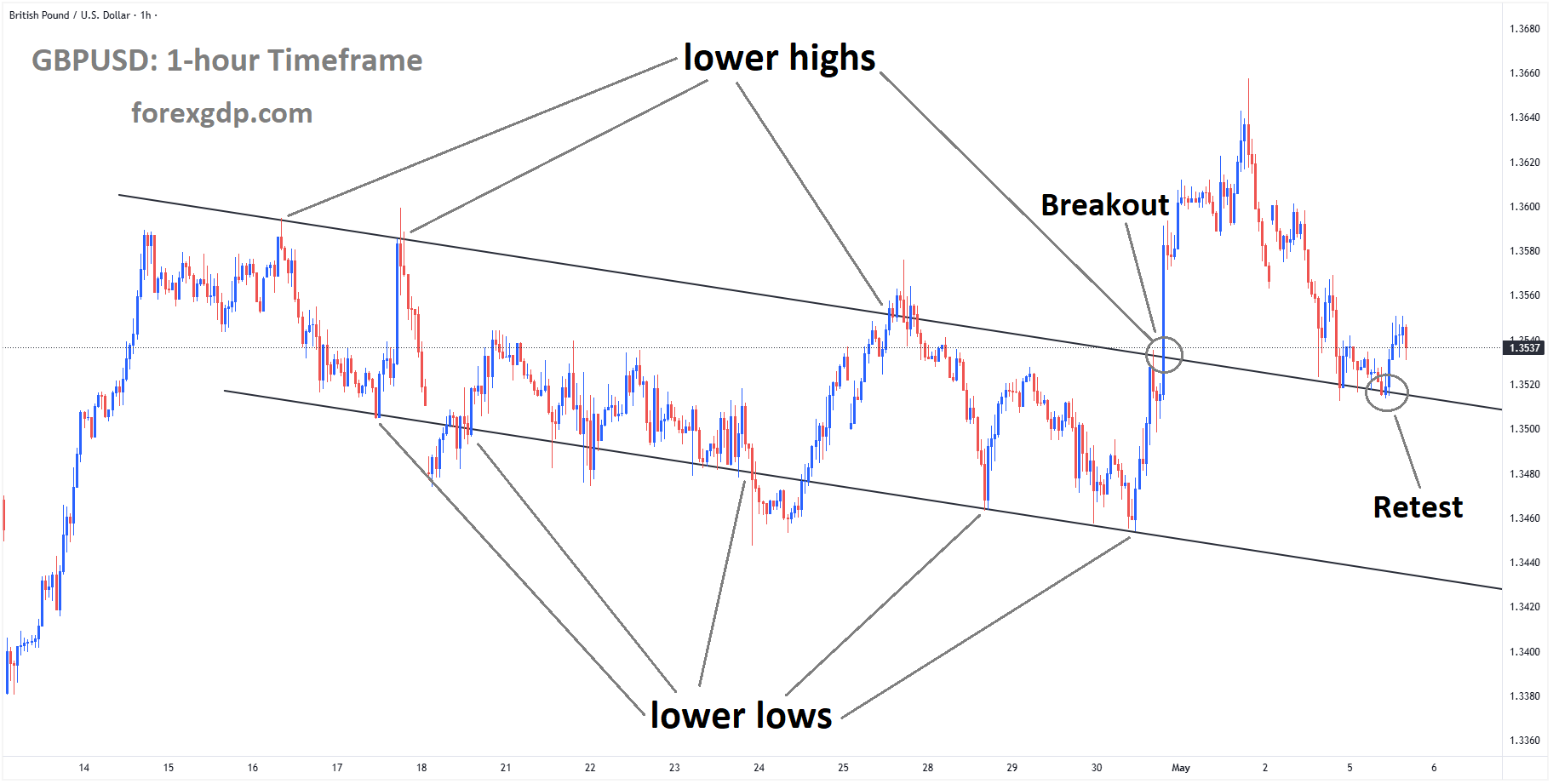
GBPUSD is rebounding from the retest area of the broken descending channel
This delicate balance highlights how geopolitical developments, economic signals, and central bank outlooks continue to influence the relationship between the British Pound and the US Dollar.
Geopolitical Tensions Boost Demand for the US Dollar
One of the main drivers behind the recent movement in GBP/USD is the rising tension between the United States and Iran. The situation around the Strait of Hormuz has raised concerns across global markets, leading investors to seek safer assets.
The US Dollar is often viewed as a safe-haven currency during times of uncertainty. As tensions rise, traders tend to move funds into the Dollar, increasing its strength against other currencies like the British Pound.
Recent reports have added to the uncertainty. An incident involving a vessel in the Strait of Hormuz, combined with strong warnings from US leadership and military actions in the region, has increased fears of a broader conflict. These developments have made markets more cautious and boosted demand for the USD.
Rising Oil Prices Add Another Layer of Pressure

Another key factor supporting the US Dollar is the sharp rise in oil prices. Geopolitical instability in the Middle East often disrupts supply expectations, pushing crude oil prices higher.
Higher oil prices can lead to increased inflation. When inflation concerns grow, central banks may hesitate to lower interest rates. In the case of the United States, this has reduced expectations that the Federal Reserve will cut rates anytime soon.
This shift in outlook strengthens the Dollar further. When interest rates remain higher for longer, it attracts more investment into US assets, making the currency more appealing globally.
For the GBP/USD pair, this creates downward pressure. A stronger Dollar naturally pushes the pair lower, even if other factors are trying to support the British Pound.
Bank of England’s Stance Helps Limit Losses
While the US Dollar has gained strength, the British Pound has not been completely left behind. The Bank of England (BoE) has maintained a relatively firm stance on inflation, signaling that it may keep interest rates elevated if price pressures remain persistent.
This more cautious approach from the BoE provides some support to the Pound. It suggests that the UK is not in a rush to ease monetary policy, which helps maintain investor confidence in the currency.
As a result, the GBP/USD pair has not seen a sharp drop despite the strength of the Dollar. Instead, it is showing signs of stability, holding above key levels even as it trends slightly lower.
Market Sentiment Remains Mixed
The current situation reflects a mixed fundamental backdrop. On one hand, geopolitical risks and rising oil prices are strengthening the US Dollar. On the other hand, the Bank of England’s stance is helping the British Pound hold its ground.
This combination has created a cautious environment for traders. Many are waiting for clearer signals before making strong directional bets on the GBP/USD pair.
The recent pullback from higher levels also suggests that the market is adjusting rather than entering a strong downward trend. Without a clear catalyst, the pair may continue to move within a limited range.
Key Economic Data in Focus
Traders are closely watching upcoming economic data from the United States, which could provide further direction. Important releases include reports on the services sector, job openings, and housing activity.
These indicators offer insights into the health of the US economy. Strong data could reinforce the view that the Federal Reserve will keep interest rates steady, supporting the Dollar even more. On the other hand, weaker data might reduce some of that strength.
In addition to data releases, comments from Federal Reserve officials are also being monitored. Their statements can influence expectations around future policy decisions and impact currency movements.
The Importance of the Nonfarm Payrolls Report
Among all upcoming events, the US Nonfarm Payrolls (NFP) report stands out as a major market driver. This report provides a detailed look at employment trends in the United States and often leads to significant volatility in currency markets.
A strong jobs report would likely support the Dollar, as it suggests a resilient economy. This could add more pressure on the GBP/USD pair. Conversely, a weaker report might ease some of the upward momentum in the USD.
Because of its importance, many traders prefer to wait for the NFP data before making major decisions.
Geopolitics Continues to Influence Market Direction
Beyond economic data, geopolitical developments remain a key factor. Any escalation in tensions between the US and Iran could lead to further increases in oil prices and additional demand for safe-haven assets.
At the same time, any signs of de-escalation could calm markets and reduce the pressure on the GBP/USD pair.
This ongoing uncertainty means that headlines can quickly influence market sentiment. Traders are keeping a close eye on global events as they assess the next move.
Short-Term Outlook for GBP/USD
In the short term, the GBP/USD pair is likely to remain influenced by a combination of geopolitical risks, oil price movements, and central bank expectations.
The US Dollar currently has the upper hand due to its safe-haven status and reduced expectations for rate cuts. However, the British Pound is finding support from the Bank of England’s firm approach to inflation.
This creates a situation where downside moves may be limited unless there is a significant shift in the underlying factors.
Summary
The GBP/USD pair is facing mild downward pressure as global tensions and rising oil prices strengthen the US Dollar. Safe-haven demand and changing expectations around US interest rates are key drivers behind this trend.
At the same time, the British Pound is holding steady thanks to the Bank of England’s firm stance on inflation. This balance is preventing sharper declines and keeping the pair relatively stable.
With important US economic data and geopolitical developments on the horizon, the market remains in a wait-and-see mode. The next major moves in GBP/USD will likely depend on how these factors evolve in the coming days.
USDJPY Jumps for Third Day as Geopolitical Risks Lift the Dollar
The US Dollar continues to gain strength against the Japanese Yen, marking its third consecutive day of upward movement. As the currency pair edges closer to the 158.00 level, global developments—especially rising geopolitical tensions and energy concerns—are playing a major role in shaping market sentiment.
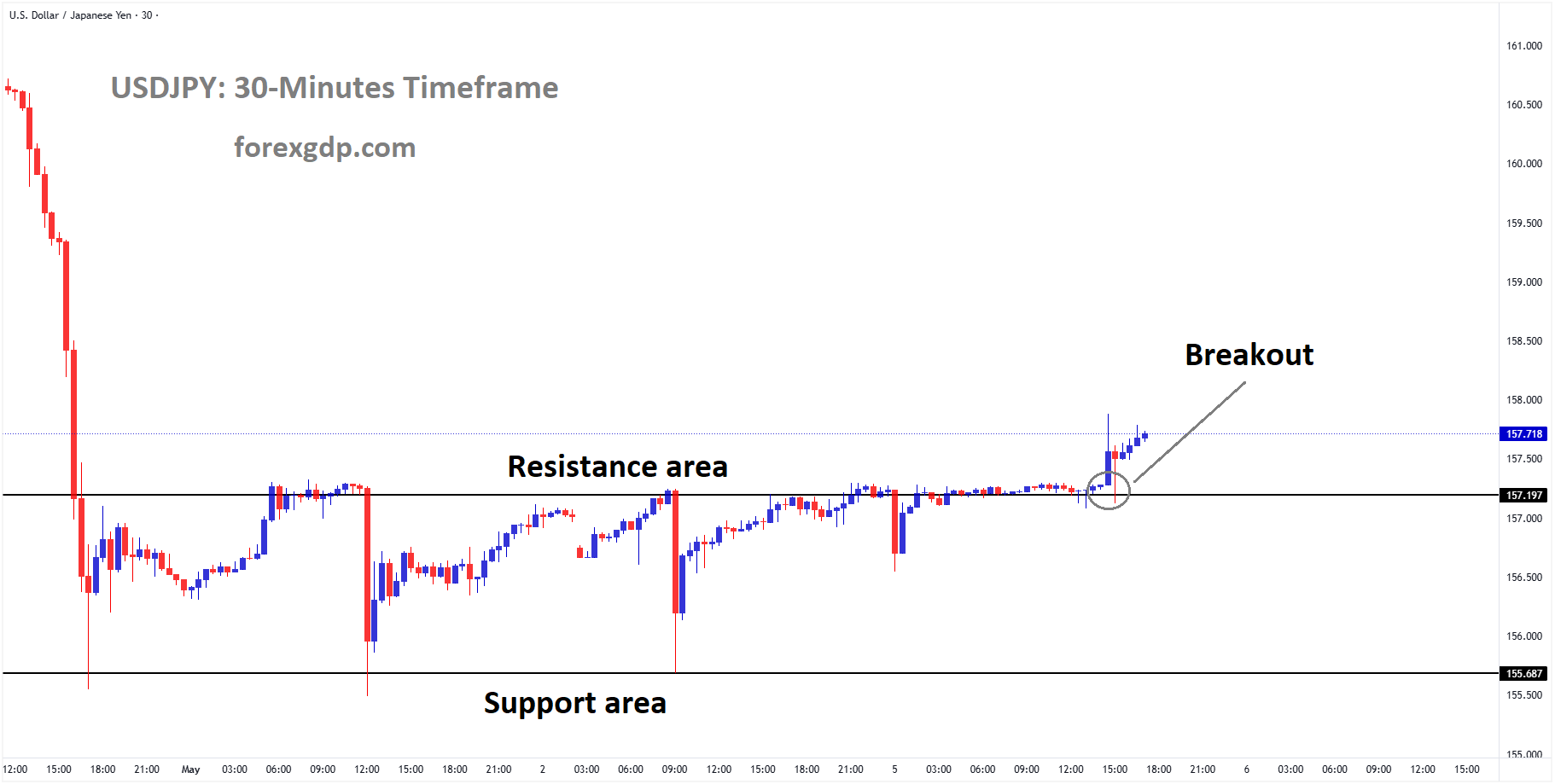
USDJPY has broken the box pattern to the upside
At the heart of this movement lies a mix of political uncertainty, surging oil prices, and differing central bank policies. Together, these factors are putting pressure on the Yen while boosting demand for the US Dollar.
Rising Geopolitical Tensions Support the US Dollar
One of the key drivers behind the Dollar’s recent strength is the growing tension in the Strait of Hormuz. This narrow waterway is one of the world’s most important routes for oil transportation, and any disruption there can quickly impact global markets.
Recent developments have raised serious concerns. The United States signaled its intention to step in and assist vessels navigating the region, following reports of attacks and disruptions. Some ships reportedly encountered fires and explosions while attempting to pass through the area. Additionally, an oil facility in the United Arab Emirates was hit, with accusations pointing toward Iranian involvement.
Iranian officials have responded strongly, suggesting that control over the Strait of Hormuz is shifting and blaming Western nations for escalating the situation. This back-and-forth has created uncertainty, pushing investors toward safer assets.
The US Dollar often benefits in such situations because it is widely viewed as a safe-haven currency. When global risks increase, investors tend to move their money into assets they believe will hold value, and the Dollar is one of the most trusted options.
High Oil Prices Add Pressure on the Japanese Yen
Another major factor influencing the USD/JPY pair is the sharp rise in oil prices. Crude oil has been trading at elevated levels, staying near long-term highs. This has a direct impact on countries that rely heavily on energy imports—and Japan is one of them.
Japan imports most of its oil, which means higher prices increase the country’s costs. When energy becomes more expensive, it puts pressure on the Japanese economy and weakens its currency. Businesses face higher operating expenses, and the overall trade balance can suffer.
This situation contrasts with the United States, which is less dependent on imported oil. As a result, rising oil prices tend to hurt the Yen more than the Dollar, widening the gap between the two currencies.
Why Energy Costs Matter for Currency Strength
Currencies are closely tied to a country’s economic health. When a nation spends more on imports—especially essential resources like oil—it can weaken its currency over time. For Japan, higher oil prices mean more money flowing out of the country, reducing demand for the Yen in global markets.
This imbalance adds another layer of pressure on the Japanese currency, especially when combined with other global challenges.
Central Bank Policies Create a Growing Gap
Monetary policy differences between Japan and other major economies are also playing a crucial role. Around the world, many central banks have taken a stricter stance by keeping interest rates higher in an effort to control inflation.
Japan, however, has maintained a more relaxed approach. The Bank of Japan continues to keep interest rates relatively low compared to its global counterparts. This creates a noticeable gap between Japan and countries like the United States, where borrowing costs are higher.
Higher interest rates often attract foreign investment because they offer better returns. As investors move their funds into countries with higher yields, demand for those currencies increases. In this case, the US Dollar becomes more attractive, while the Yen faces reduced demand.
The Impact of Policy Differences
This difference in policy direction is one of the biggest long-term challenges for the Yen. Even if short-term interventions provide temporary support, the broader trend is influenced by these underlying economic factors. As long as Japan maintains lower interest rates, the Yen may continue to struggle against stronger currencies like the Dollar.
Japan’s Intervention Efforts and Market Doubts
In recent days, the Japanese Yen did show some signs of strength following a sudden surge. This movement was widely believed to be the result of intervention by Japanese authorities.

When the USD/JPY pair moved past a critical level earlier, officials in Tokyo stepped in to support their currency. Such actions are aimed at stabilizing the market and preventing excessive volatility. However, these interventions often have only a short-term effect.
Investors remain uncertain about how long Japan can continue to defend the Yen in this way. Intervention requires significant resources, and without changes in underlying economic conditions, it may not be enough to reverse the broader trend.
A Combination of Forces Driving the Market
The recent movement in USD/JPY is not the result of a single factor but rather a combination of several powerful forces. Geopolitical tensions are increasing demand for the US Dollar, while high oil prices are putting pressure on Japan’s economy. At the same time, differences in central bank policies are widening the gap between the two currencies.
Each of these elements reinforces the others, creating a situation where the Yen faces ongoing challenges. Even when temporary support appears, the larger picture continues to favor the Dollar.
Final Summary
The steady rise of USD/JPY reflects a complex mix of global events and economic realities. Escalating tensions in key regions are driving investors toward safer assets like the US Dollar. Meanwhile, rising oil prices are placing added strain on Japan’s import-heavy economy, weakening the Yen.
At the same time, policy differences between major central banks and the Bank of Japan are making the Dollar more attractive to investors. Although Japan has attempted to support its currency through intervention, doubts remain about the long-term effectiveness of these measures.
As these global and economic forces continue to unfold, the balance between the US Dollar and the Japanese Yen will remain closely tied to developments in geopolitics, energy markets, and monetary policy decisions.
AUDUSD weakens despite rate increase while investors turn toward safer US Dollar assets
The Australian Dollar has found it difficult to gain strength, even after a recent interest rate increase by the Reserve Bank of Australia (RBA). While such moves often support a currency, this time the reaction has been muted. At the same time, global tensions and a stronger US Dollar have added pressure, keeping the AUD/USD pair on the defensive.
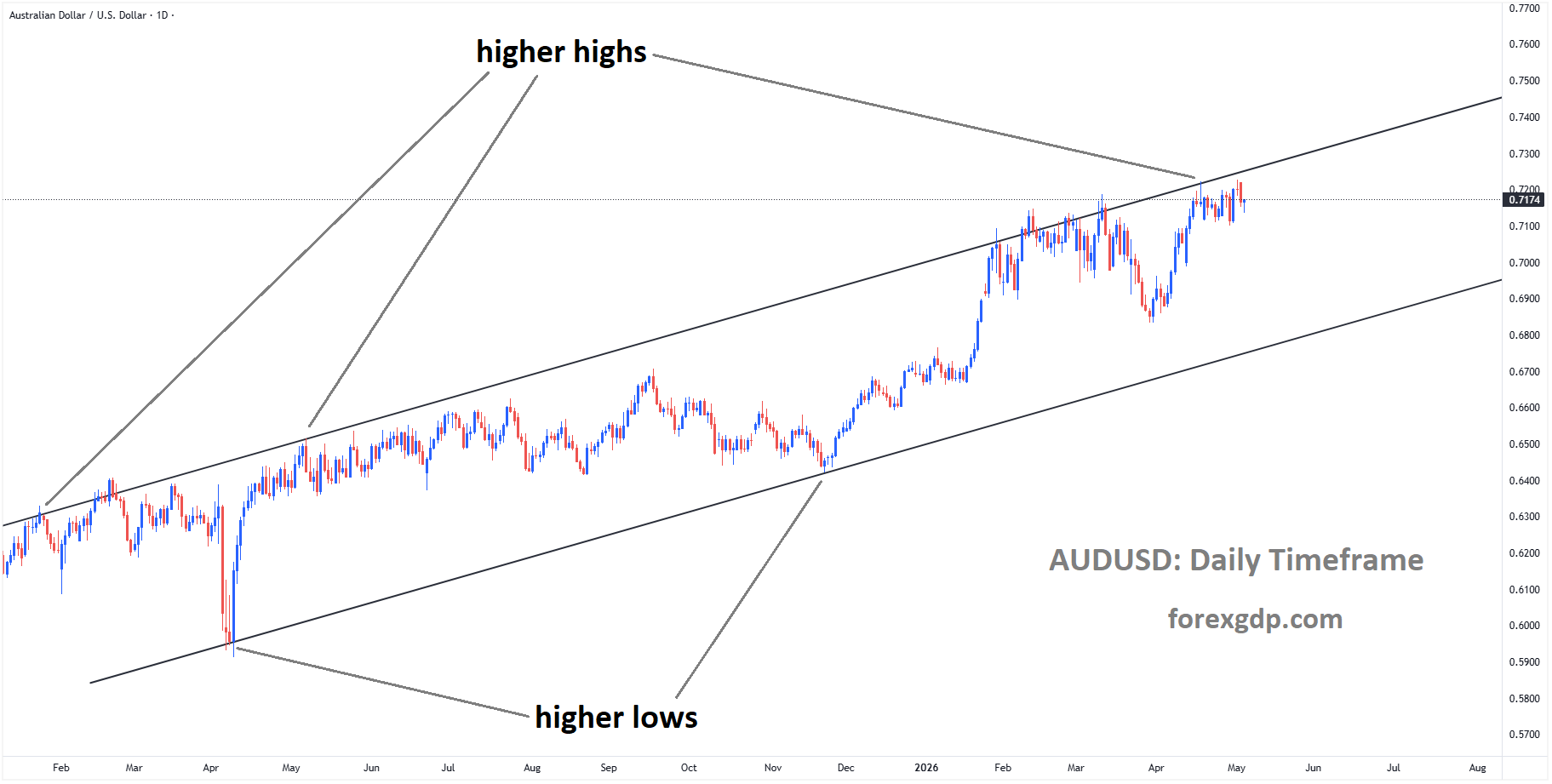
AUDUSD reached a higher high area of the ascending channel
This situation highlights how currency movements are influenced by more than just interest rate decisions. Broader economic signals, central bank tone, and global risks all play an important role in shaping market direction.
RBA Rate Hike Fails to Lift the Australian Dollar
The Reserve Bank of Australia recently raised its key interest rate by 25 basis points, bringing it to 4.35%. This decision was widely expected by investors, which meant that much of its impact had already been priced into the market.
Normally, higher interest rates attract investors seeking better returns, which can strengthen a currency. However, in this case, the Australian Dollar did not receive a meaningful boost. Instead, it continued to trade with a slightly weaker tone for the second day in a row.
One of the main reasons for this reaction lies in the messaging from the RBA itself. Although the rate hike suggests ongoing efforts to control inflation, the central bank did not signal strong confidence in future economic growth. This cautious stance reduced enthusiasm among investors.
Inflation Concerns Remain a Key Focus
The RBA pointed out that inflation has picked up again, especially during the second half of 2025. Several factors are driving this trend, including limited production capacity and rising energy costs.
Energy prices, in particular, have been affected by ongoing tensions in the Middle East. As these costs rise, businesses often pass them on to consumers, which keeps inflation elevated. The central bank also noted that short-term inflation expectations have increased, adding another layer of concern.
Despite these pressures, the RBA described its current policy stance as already restrictive. This suggests that while inflation is still a problem, the central bank may not rush into further rate hikes unless necessary.
A Cautious Approach Limits Market Optimism
Governor Michele Bullock emphasized a careful, wait-and-see strategy moving forward. This approach signals that the central bank is closely watching how the economy responds before making additional changes.
Such cautious language often reduces expectations of aggressive policy action. For currency markets, this means less incentive to buy the Australian Dollar, even after a rate increase.
Some analysts believe that the RBA may pause its tightening cycle after this move. This expectation further limits the upside potential for the currency. Without strong signals of continued rate hikes, investors may look elsewhere for better opportunities.
Global Risks Add Pressure on the Aussie
Beyond domestic factors, global developments are also weighing on the Australian Dollar. Rising geopolitical tensions have increased uncertainty in financial markets, leading investors to shift toward safer assets.
Recent events in the Middle East have intensified these concerns. Reports of drone and missile attacks have heightened fears of a broader conflict, which can disrupt global energy supplies and economic stability.
In such situations, investors typically reduce exposure to riskier assets and move funds into safer options. The Australian Dollar, often seen as a risk-sensitive currency, tends to weaken during these periods.
US Dollar Gains Strength as a Safe Haven
While the Australian Dollar struggles, the US Dollar has been gaining support. It is widely considered a safe-haven currency, meaning investors turn to it during times of uncertainty.
As geopolitical tensions rise, demand for the US Dollar increases. This shift naturally puts downward pressure on the AUD/USD pair, as the stronger currency pulls the exchange rate lower.
In addition to its safe-haven appeal, the US Dollar is also benefiting from rising US Treasury yields. Higher yields make US assets more attractive to global investors, further boosting demand for the currency.
Federal Reserve Outlook Supports the Greenback

Another factor supporting the US Dollar is the outlook for US monetary policy. Officials from the Federal Reserve have indicated that further rate hikes remain a possibility if inflation continues to persist.
Minneapolis Fed President Neel Kashkari recently suggested that the central bank may need to take additional action to control inflation, especially if energy prices continue to rise.
This stance contrasts with the more cautious tone from the RBA. While Australia’s central bank appears willing to pause, the Federal Reserve is keeping the door open for more tightening. This difference in policy outlook adds to the US Dollar’s strength relative to the Australian Dollar.
Economic Growth Concerns Weigh on Australia
Australia’s economic outlook is another factor limiting support for its currency. The RBA has revised down its growth forecasts, reflecting concerns about both domestic and global conditions.
Slower economic growth combined with persistent inflation creates a challenging environment. This combination, often referred to as stagflation, can reduce investor confidence and weaken a currency.
Higher energy costs and global uncertainty are expected to continue affecting Australia’s economy. The central bank also warned that ongoing geopolitical tensions could further slow economic activity.
Limited Upside for AUD/USD in the Near Term
Given the current conditions, the Australian Dollar faces several challenges. Even with higher interest rates, the lack of strong forward guidance from the RBA has limited its appeal.
At the same time, the US Dollar remains supported by safe-haven demand, higher yields, and a potentially more aggressive central bank. This combination makes it difficult for the AUD/USD pair to move higher in a sustained way.
Analysts suggest that any meaningful recovery in the Australian Dollar would likely require a broader weakening of the US Dollar. Without such a shift, gains may remain limited.
Final Summary
The recent rate hike by the Reserve Bank of Australia has done little to strengthen the Australian Dollar, mainly due to the central bank’s cautious tone and uncertain economic outlook. Inflation remains a concern, but expectations of a pause in further tightening have reduced market enthusiasm.
At the same time, global geopolitical tensions have increased demand for the US Dollar, which is seen as a safer asset. Stronger US economic signals and the possibility of additional Federal Reserve rate hikes have added further support to the Greenback.
With rising global risks, weaker growth prospects in Australia, and a cautious central bank approach, the Australian Dollar may continue to face pressure. Unless there is a significant shift in global sentiment or US Dollar strength, the AUD/USD pair is likely to remain under strain in the near future.