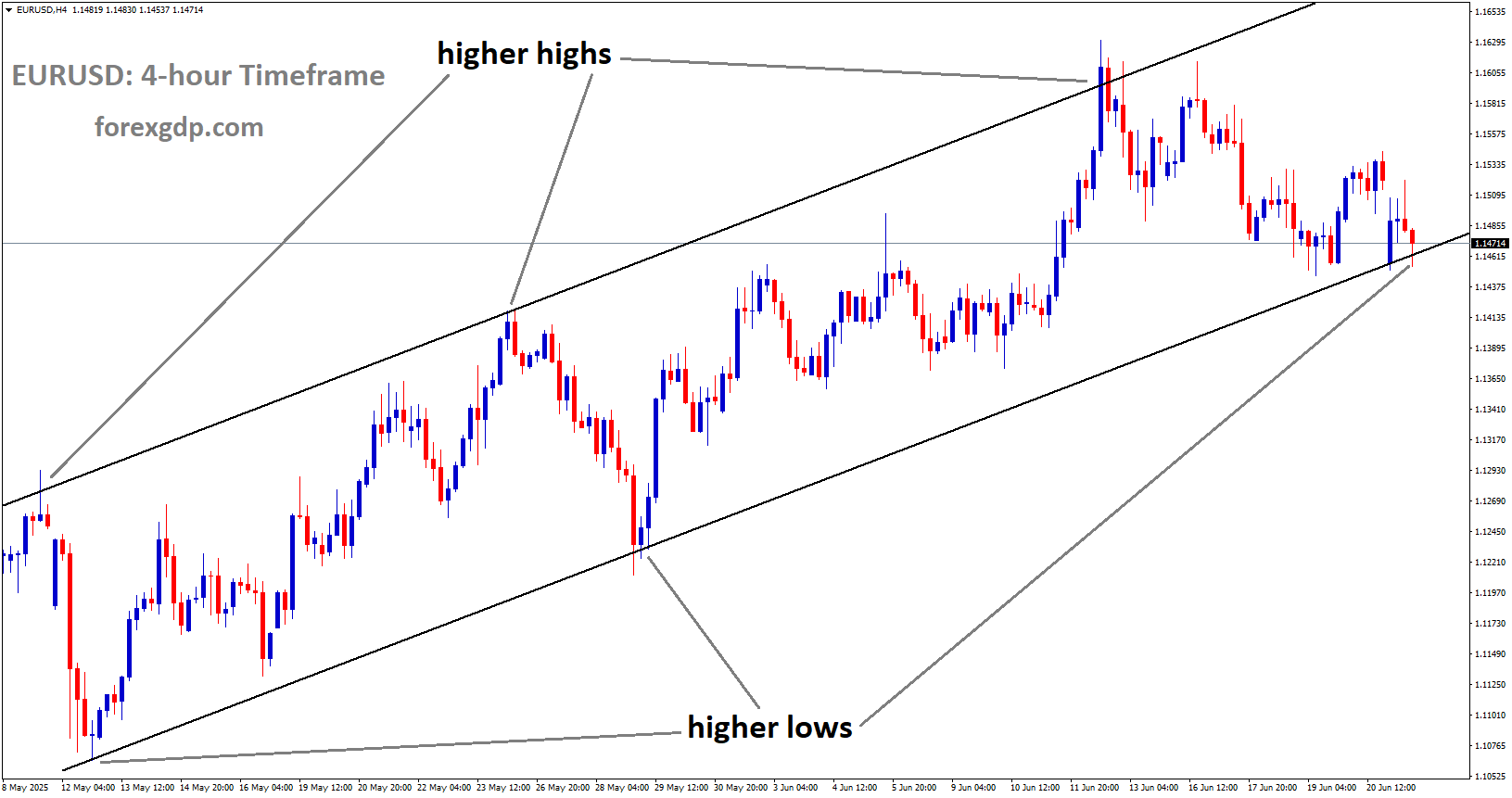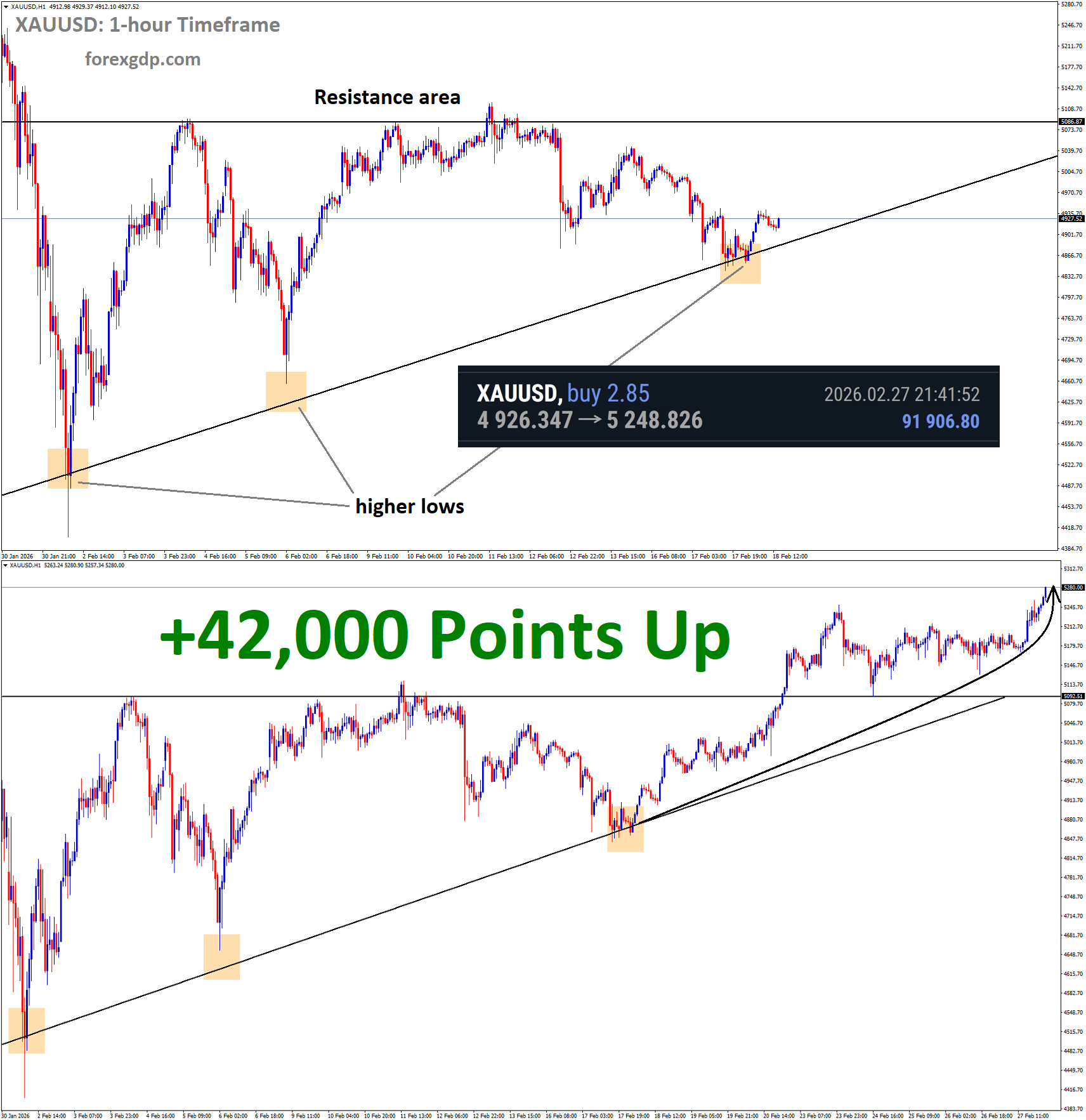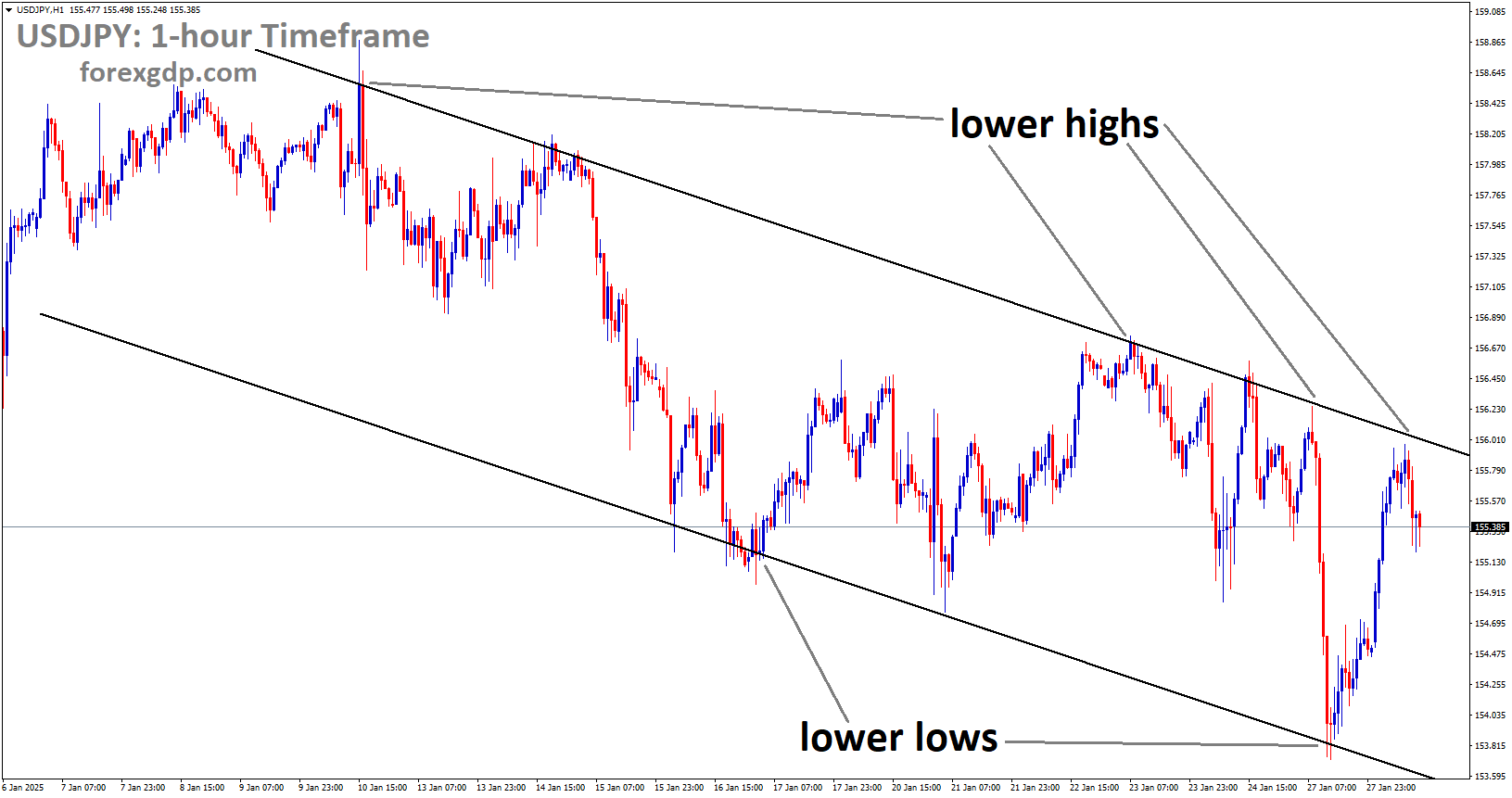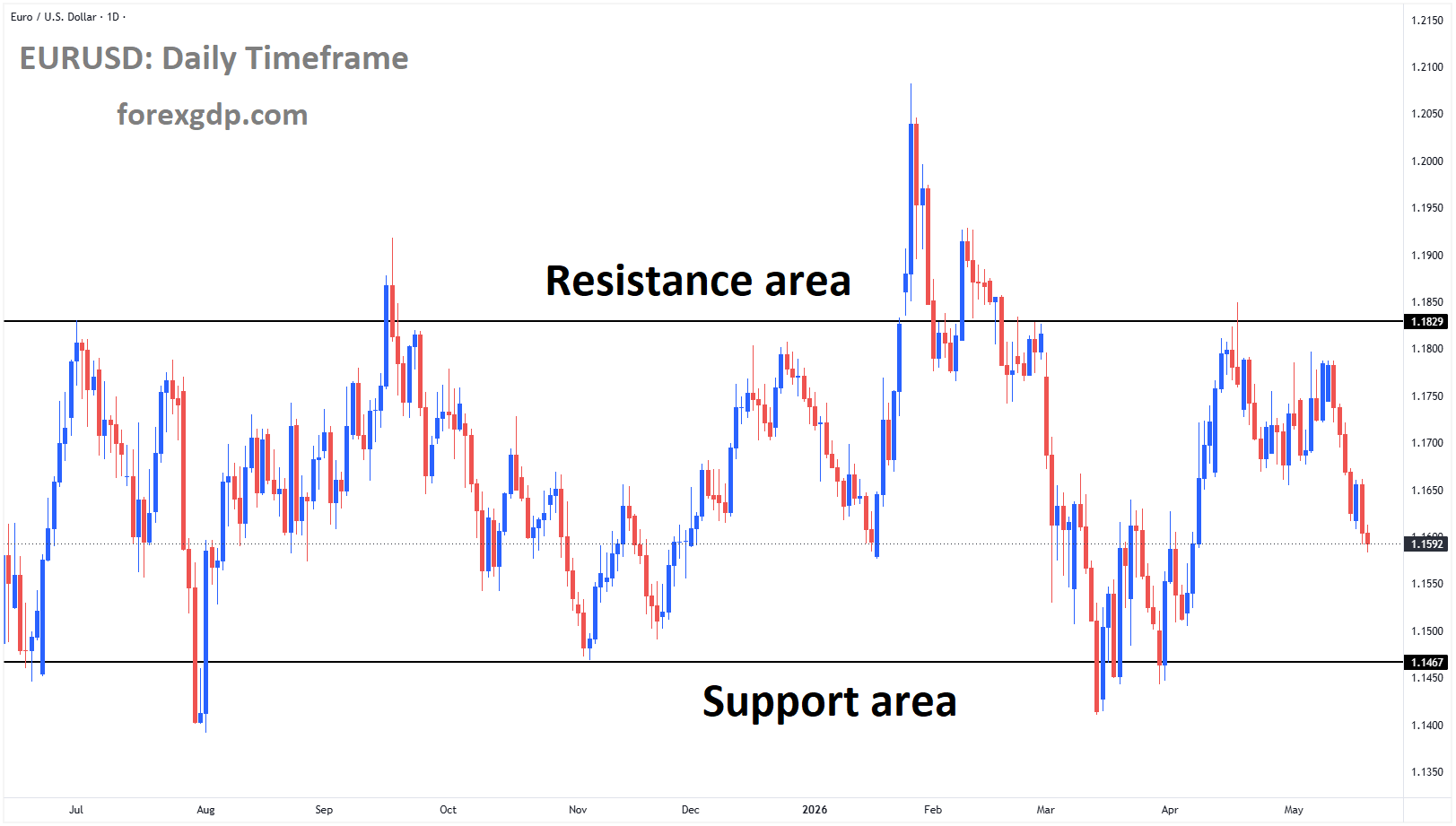
EURUSD is moving in a box pattern, and the market has fallen from the resistance area of the pattern
EURUSD Falls Further as Rising Inflation and Global Tensions Boost Dollar Demand
The Euro continued to weaken against the US Dollar on Wednesday, with the EUR/USD pair slipping to fresh six-week lows near 1.1583. The decline came after the release of the Eurozone’s latest inflation data and rising geopolitical tensions involving the United States and Iran.
The combination of stronger inflation pressures in Europe, soaring Oil prices, and growing demand for the safe-haven US Dollar created heavy pressure on the Euro. Investors are also closely watching the US Federal Reserve for clues about future interest rate policy, adding even more uncertainty to the currency market.
Euro Struggles Despite Higher Inflation in the Eurozone
Fresh data from the Eurozone confirmed that inflation accelerated in April. The Harmonised Index of Consumer Prices (HICP), one of the European Central Bank’s key inflation measures, showed annual inflation rising to 3% from 2.6% in March.
Although inflation increased on a yearly basis, monthly inflation slowed slightly. Consumer prices rose 1% during April compared to 1.3% in the previous month. At the same time, core inflation, which excludes more volatile items like food and energy, eased slightly from 2.3% to 2.2%.
Even though inflation remains elevated, the data failed to provide meaningful support for the Euro. Investors appeared more focused on broader economic risks, especially the impact of higher energy costs and global uncertainty.
The weaker Euro highlights how financial markets are reacting not only to inflation numbers but also to fears about slowing economic growth across the Eurozone.
Rising Oil Prices Add Pressure on Europe

One of the biggest drivers behind the Euro’s weakness is the sharp rise in Oil prices. Growing tensions between the US and Iran have pushed energy prices higher, keeping Oil above the important $100 level.
The situation between the two countries remains highly unstable, with both sides exchanging threats and showing little progress toward a peaceful resolution. As concerns about supply disruptions increase, global energy markets remain under pressure.
For the Eurozone, expensive Oil creates serious economic challenges. Many European countries depend heavily on imported energy, meaning higher Oil prices can quickly increase costs for businesses and consumers alike.
This environment puts additional strain on the region’s economy and weakens confidence in the Euro. Higher energy prices also contribute directly to inflation, making it more difficult for policymakers to control rising costs without hurting economic growth.
German Producer Prices Reflect Inflationary Pressure
Germany’s latest Producer Price Index (PPI) also pointed to mounting inflation pressures across Europe. Annual producer inflation rose to 1.7% in April after showing a negative reading of -0.2% in March.
Producer prices are important because they often signal future consumer inflation. When manufacturers face rising costs for raw materials and energy, those increases are frequently passed on to consumers later.
The latest German data suggests that energy-related inflation is continuing to spread through the economy. Analysts believe the ongoing conflict involving Iran is one of the key reasons behind these rising production costs.
Germany, being Europe’s largest economy, plays a major role in shaping expectations for the broader Eurozone. Stronger inflation pressures in Germany often influence decisions made by the European Central Bank.
ECB Faces Growing Pressure to Act
The latest inflation numbers are increasing pressure on the European Central Bank to respond more aggressively. Policymakers are becoming increasingly concerned that inflation could remain elevated for longer than expected.
ECB Council member Peter Wunsch added to these concerns by stating that the central bank may eventually need to react more strongly. According to Wunsch, Europe could be at the beginning of a larger inflation problem.
His comments strengthened expectations that the ECB may consider further interest rate increases if inflation continues to rise. Higher interest rates are usually seen as supportive for a currency because they can attract foreign investment.
However, in this case, the Euro has struggled to benefit from those expectations. Investors remain worried that tighter monetary policy could slow the already fragile Eurozone economy even further.
Safe-Haven Demand Boosts the US Dollar
While the Euro faces multiple challenges, the US Dollar continues to gain strength from its role as a safe-haven asset.
During times of geopolitical uncertainty and economic instability, investors often move money into assets considered safer and more stable. The US Dollar remains one of the world’s most trusted reserve currencies, making it a popular choice during periods of global tension.
The worsening situation involving Iran has increased demand for the Dollar across financial markets. Rising Oil prices, fears of supply disruptions, and uncertainty about global growth are all contributing to stronger demand for the US currency.
This safe-haven flow has been one of the main reasons behind the EUR/USD pair’s recent decline.
Investors Await Federal Reserve Meeting Minutes
Attention is now turning toward the upcoming release of the Federal Reserve’s April meeting minutes. Investors hope the document will provide deeper insight into how US policymakers view inflation and interest rates.
At its previous meeting, the Federal Reserve kept interest rates unchanged. However, the discussion inside the central bank appeared divided.
One policymaker reportedly supported a rate cut, while several others pushed for removing language that suggested possible future easing. This difference in opinion has created uncertainty about the Fed’s next move.
Many traders expect the meeting minutes to show a slightly more hawkish tone, meaning officials may still be concerned about inflation risks despite slowing economic growth.
If the Federal Reserve signals that interest rates could remain high for longer, the US Dollar may continue strengthening against other major currencies, including the Euro.
Global Uncertainty Continues to Drive Currency Markets
Currency markets remain highly sensitive to both economic data and geopolitical developments. The recent fall in EUR/USD reflects how quickly investor sentiment can shift when inflation, central bank policy, and global tensions collide.
The Eurozone faces a difficult balancing act. Inflation remains stubbornly high, energy prices continue rising, and economic growth remains fragile. Meanwhile, the United States is benefiting from strong safe-haven demand and expectations that interest rates could stay elevated.
As long as uncertainty surrounding Iran and global energy supplies continues, the US Dollar may remain well supported. At the same time, the Euro could face continued pressure unless the European economy shows stronger resilience in the coming months.
Summary
The EUR/USD pair dropped to its lowest level in six weeks as investors reacted to rising Eurozone inflation, higher Oil prices, and escalating tensions between the US and Iran. Although inflation data confirmed stronger price pressures in Europe, it failed to lift the Euro due to concerns about economic growth and expensive energy imports.
The European Central Bank is now facing growing pressure to respond to inflation, while the US Dollar continues benefiting from its safe-haven status. Investors are also waiting for the Federal Reserve’s meeting minutes, which could provide important clues about future US interest rate policy.
With geopolitical risks still high and energy markets under pressure, currency markets are expected to remain volatile in the near term.
GBPUSD Drops Sharply as Cooling UK Prices Weigh on British Pound
The British Pound faced fresh pressure on Wednesday after the latest inflation data from the United Kingdom showed that price growth slowed more than economists expected. The weaker inflation numbers raised new expectations that the Bank of England could move closer to cutting interest rates in the coming months.
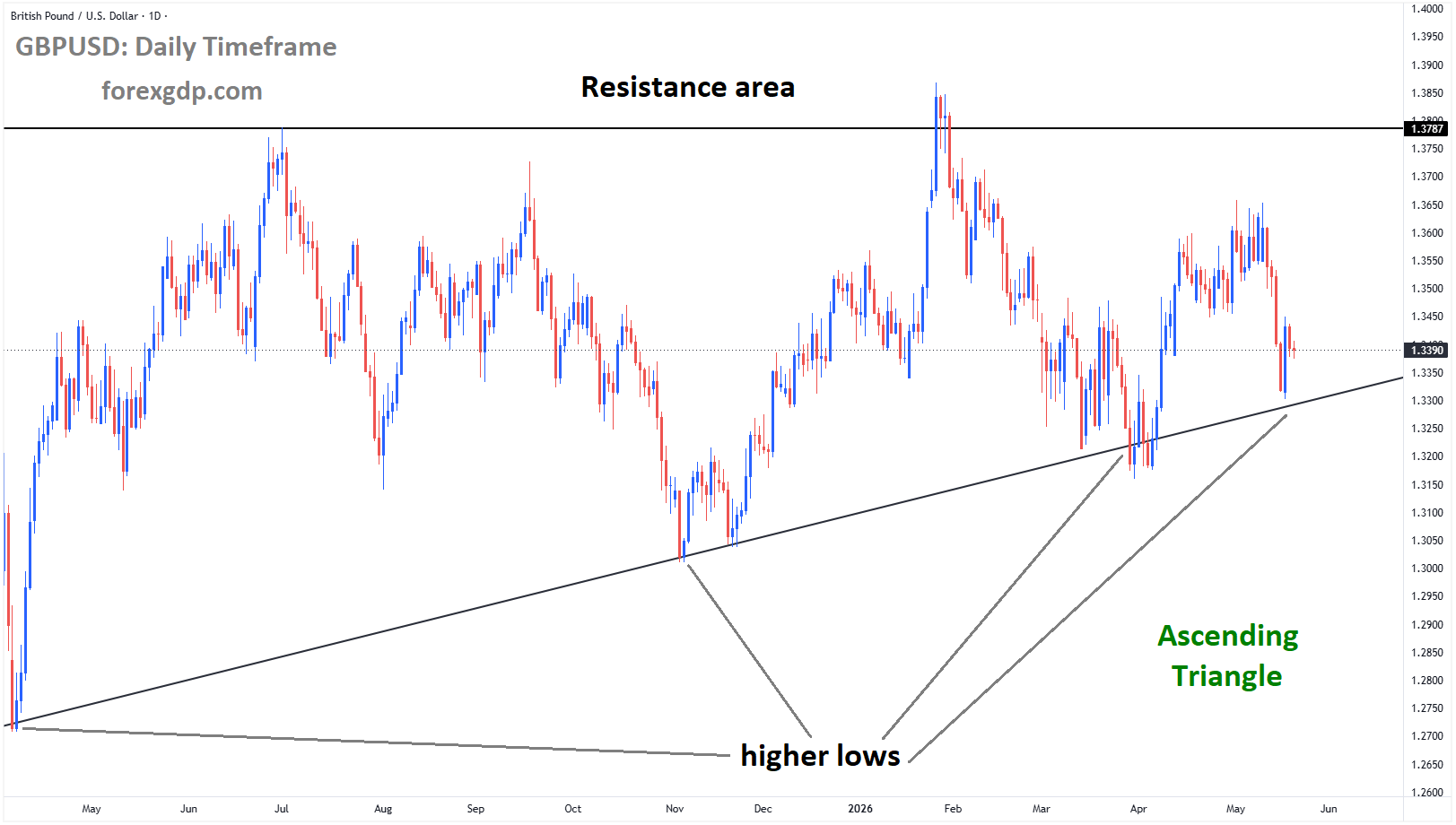
GBPUSD reached a higher low area of the ascending triangle pattern
At the same time, investors are closely watching upcoming economic reports from both the UK and the United States, which could shape the direction of the currency market for the rest of the week.
UK Inflation Drops More Than Forecast
Fresh data released by the Office for National Statistics (ONS) showed that the UK’s headline Consumer Price Index (CPI) rose by 2.8% year-on-year in April. Economists had expected inflation to come in at 3%, while the previous reading in March stood at 3.3%.
The lower-than-expected inflation reading suggests that price pressures across the UK economy are easing faster than many analysts predicted. This is important because inflation has been one of the biggest concerns for policymakers over the last few years.
Core inflation, which excludes more volatile items such as food, energy, alcohol, and tobacco, also slowed sharply. Core CPI fell to 2.5% from the previous 3.1% reading. Market expectations were slightly higher at 2.6%.
On a monthly basis, inflation increased by 0.7%, missing forecasts of 0.9%. Although prices still rose compared to the previous month, the pace of growth was slower than expected.
These figures indicate that inflation is moving closer to the Bank of England’s target level, giving policymakers more room to consider easing monetary policy later this year.
British Pound Weakens Across Currency Markets
Following the release of the inflation data, the British Pound lost ground against several major currencies during the European trading session. The currency slipped toward the 1.3375 level as traders reacted to the softer inflation numbers.
The Pound often reacts strongly to inflation reports because they can directly influence the Bank of England’s decisions on interest rates. When inflation slows faster than expected, investors usually believe the central bank may lower borrowing costs sooner.
Lower interest rates can reduce the appeal of a currency because investors may earn smaller returns from holding assets tied to that currency. As a result, demand for the Pound weakened after the inflation release.
The market reaction also reflected growing confidence that the Bank of England may begin cutting rates sooner than previously expected if inflation continues to cool over the coming months.
Expectations Grow for Bank of England Rate Cuts
The latest inflation data has strengthened speculation that the Bank of England could adopt a more supportive stance toward the economy.
Over the past two years, the central bank kept interest rates elevated to fight stubborn inflation. Higher borrowing costs helped slow consumer spending and reduce price pressures, but they also placed pressure on economic growth and household finances.
Now that inflation is showing clearer signs of easing, traders are increasing their bets that the Bank of England could start lowering interest rates in the near future.
Many investors believe policymakers may become more confident about easing monetary policy if upcoming economic reports also point to slowing demand and softer business activity.
However, Bank of England officials are still expected to remain cautious. Policymakers will likely want further confirmation that inflation is moving steadily toward their long-term target before making major changes to interest rates.
Investors Focus on Upcoming UK Economic Reports

Market attention is now turning toward several important UK economic releases scheduled later this week.
On Thursday, preliminary S&P Global Purchasing Managers’ Index (PMI) data for May will be released. The PMI reports provide an early look at business activity in sectors such as manufacturing and services.
Strong PMI readings could suggest that the UK economy remains resilient despite higher borrowing costs. Weak figures, on the other hand, could increase concerns about slowing economic momentum and further support expectations for interest rate cuts.
Retail Sales data, scheduled for Friday, will also attract significant attention. Retail spending is a key indicator of consumer confidence and overall economic health.
If retail sales weaken, it could reinforce the idea that consumers are feeling the impact of tighter financial conditions and higher living costs. That scenario may add more pressure on the Bank of England to consider easing policy sooner rather than later.
Because of these upcoming reports, analysts expect continued volatility in the British Pound throughout the remainder of the week.
US Dollar Remains Supported by Federal Reserve Expectations
While the Pound struggled after the inflation release, the US Dollar continued to hold firm against major currencies.
The US Dollar Index, which measures the Greenback against a basket of six leading currencies, traded slightly higher near 99.40 during Wednesday’s session.
The Dollar has remained supported by expectations that the Federal Reserve could maintain a tighter monetary policy stance for longer than previously expected.
Investors are now waiting for the release of the Federal Open Market Committee (FOMC) meeting minutes, which may provide fresh clues about the Fed’s outlook on inflation and interest rates.
Recent comments from Federal Reserve officials have suggested that policymakers remain cautious about cutting rates too quickly, especially while inflation risks continue to linger.
Rising Oil Prices Add to Inflation Concerns
Another factor supporting the US Dollar is the recent increase in oil prices.
Energy markets have become more volatile due to concerns over restricted energy flows through the Strait of Hormuz, one of the world’s most important shipping routes for oil exports.
Higher oil prices can create fresh inflationary pressure because energy costs influence transportation, manufacturing, and consumer prices globally.
As a result, investors believe the Federal Reserve may need to keep interest rates elevated for longer to ensure inflation remains under control.
This outlook has strengthened demand for the US Dollar while placing additional pressure on currencies like the British Pound.
Market Sentiment Remains Sensitive
Currency markets remain highly sensitive to economic data and central bank expectations.
For the British Pound, the latest inflation report has shifted attention toward the possibility of earlier interest rate cuts from the Bank of England. However, upcoming PMI and Retail Sales data could still influence the broader outlook.
Meanwhile, the US Dollar continues to benefit from expectations that the Federal Reserve may maintain a more cautious approach toward policy easing, especially as energy-related inflation risks remain present.
With several major economic events scheduled in the coming days, traders are expected to remain cautious as they look for clearer direction on future interest rate moves from both central banks.
Summary
The British Pound weakened after UK inflation data showed that price pressures cooled faster than expected in April. Headline inflation slowed to 2.8%, while core inflation also declined sharply, increasing expectations that the Bank of England may move closer to cutting interest rates.
Investors are now focused on upcoming UK PMI and Retail Sales reports, which could provide further insight into the strength of the British economy. At the same time, the US Dollar remains supported by expectations that the Federal Reserve may keep interest rates elevated for longer amid ongoing inflation concerns and rising oil prices.
The combination of softer UK inflation and a stronger US Dollar has added pressure on the Pound, setting the stage for a volatile trading environment in the days ahead.
USDJPY Falls Back as Strong Japan Growth Data Lifts Yen Demand
The USD/JPY currency pair moved lower during Wednesday’s early European trading session, trading near 158.95. The Japanese Yen gained support after Japan released stronger-than-expected economic growth data, while concerns about possible intervention from Japanese authorities also helped the currency remain firm against the US Dollar.
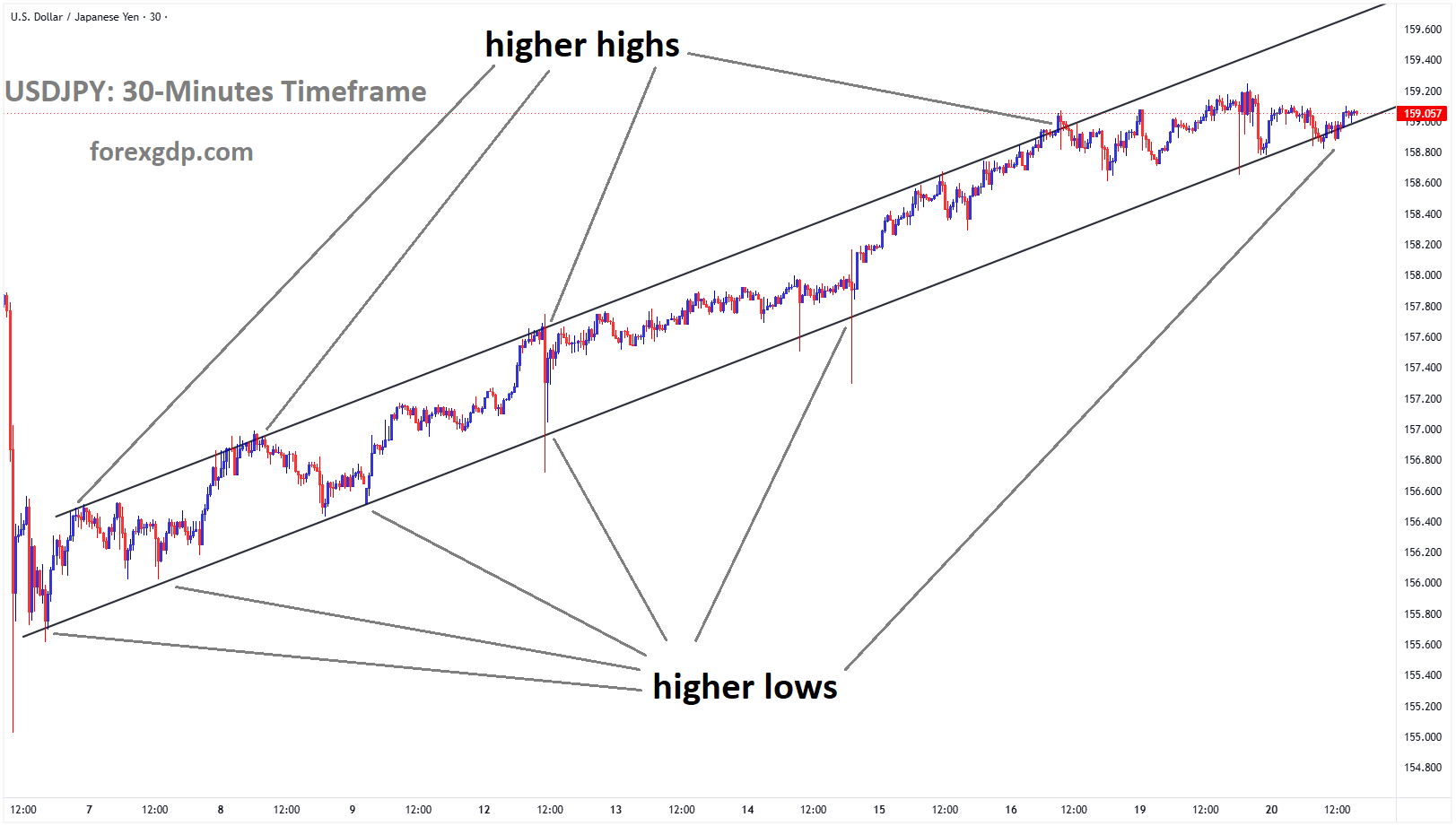
USDJPY reached a higher low area of the ascending channel
At the same time, the US Dollar continued to receive backing from expectations that the US Federal Reserve could keep interest rates high for a longer period due to stubborn inflation pressures.
Japan’s Economy Shows Strong Growth
Japan’s latest economic data surprised markets in a positive way. The country’s economy expanded at an annualized rate of 2.1% in the first quarter of 2026, beating market expectations of 1.7%.
Quarter-on-quarter growth also came in stronger than expected. Japan’s Gross Domestic Product (GDP) increased by 0.5% in the first quarter, compared to the previous quarter’s 0.3% growth. Analysts had expected a smaller rise of around 0.4%.
The stronger economic performance is an encouraging sign for Japan after years of slow growth and weak domestic demand. Better economic conditions often support a country’s currency because investors may view the economy as more stable and attractive.
The positive GDP numbers helped the Japanese Yen strengthen against the US Dollar, putting pressure on the USD/JPY pair.
Inflation Data in Focus

Investors are now closely watching Japan’s upcoming April National Consumer Price Index (CPI) report, which is expected later this week.
Inflation data has become increasingly important for financial markets because it can influence future decisions by central banks. If inflation in Japan continues to rise, it could increase expectations that the Bank of Japan may eventually shift toward tighter monetary policy.
For many years, Japan maintained ultra-loose monetary conditions to support growth and encourage inflation. However, stronger inflation combined with improving economic activity could gradually change the policy outlook.
As a result, traders are paying close attention to every major economic release from Japan.
Intervention Fears Support the Japanese Yen
Another major factor helping the Yen is the possibility of intervention from Japanese authorities.
Japan’s Finance Minister, Satsuki Katayama, recently stated that the government is prepared to respond to excessive foreign exchange volatility whenever necessary. Officials also emphasized that any intervention would be handled carefully to avoid disrupting US Treasury markets.
These comments have increased market caution around selling the Yen too aggressively. Traders know that Japanese authorities have stepped into currency markets in the past when the Yen weakened rapidly.
The fear of possible intervention often discourages speculative trading against the Yen. Even the suggestion of government action can slow down sharp currency moves.
Because of this, the USD/JPY pair faced additional downward pressure despite continued strength in the US Dollar.
The US Dollar Still Finds Support
Although the Yen gained some strength, the US Dollar remains supported by expectations that the Federal Reserve could maintain a tough stance on inflation.
Recent US inflation data came in hotter than expected, reinforcing the belief that the central bank may keep interest rates elevated for an extended period. Investors are increasingly adjusting their expectations for future monetary policy.
Market participants are also watching global energy markets closely. Ongoing disruptions linked to the closure of the Strait of Hormuz have created concerns about rising energy costs. Higher energy prices could increase inflation pressures worldwide, including in the United States.
If inflation remains stubbornly high, the Federal Reserve may feel forced to keep borrowing costs elevated to slow price growth.
Expectations for Federal Reserve Policy
Traders are now reassessing the possibility of additional policy tightening from the Federal Reserve before the end of the year.
According to market pricing tracked by the CME FedWatch tool, there is currently a significant chance that the Fed could raise interest rates again by 25 basis points before year-end.
This shift in expectations has helped prevent larger losses for the US Dollar.
Higher US interest rates generally make the Dollar more attractive to investors because they can receive better returns on US-based assets. This creates steady demand for the currency even when short-term market movements turn negative.
As long as inflation remains a concern in the United States, the Federal Reserve is likely to maintain a cautious and firm policy approach.
Global Uncertainty Keeps Markets Sensitive
Currency markets remain highly sensitive to both economic data and geopolitical developments.
The ongoing concerns surrounding global energy supply disruptions continue to influence investor sentiment. Rising energy costs can impact inflation, economic growth, and central bank decisions across multiple countries.
At the same time, traders are carefully monitoring any signals from Japanese authorities regarding potential intervention. A sudden move by officials could quickly change market direction.
This combination of economic data, monetary policy expectations, and geopolitical uncertainty is creating a volatile environment for major currency pairs like USD/JPY.
What Traders Are Watching Next
Several key factors are likely to shape the next move in the USD/JPY pair.
Investors will continue monitoring Japanese economic data, especially inflation figures, for clues about future policy decisions from the Bank of Japan. Stronger inflation and continued economic growth could provide additional support for the Yen.
Meanwhile, developments in the United States will remain equally important. Any new inflation reports, Federal Reserve comments, or changes in energy market conditions could influence expectations for future interest rate decisions.
Currency traders are also likely to remain alert for any signs of direct intervention from Japanese officials if the Yen weakens sharply again.
Summary
The USD/JPY pair moved lower as stronger Japanese economic growth data boosted confidence in the Yen. Concerns about possible intervention from Japanese authorities also supported the Japanese currency and limited gains in the pair.
At the same time, the US Dollar continues to receive support from expectations that the Federal Reserve may keep interest rates high for longer due to persistent inflation pressures and ongoing energy market disruptions.
With inflation data, central bank policies, and geopolitical risks all influencing market sentiment, traders are expected to remain cautious in the coming days.
USDCAD Rises Steadily as Falling Oil Prices Weigh on the Canadian Dollar
The USD/CAD currency pair continued to move higher for a second straight session during Asian trading hours, holding near the 1.3760 level. The Canadian Dollar came under pressure as oil prices weakened slightly, while the US Dollar gained strength from growing global uncertainty and safe-haven demand.
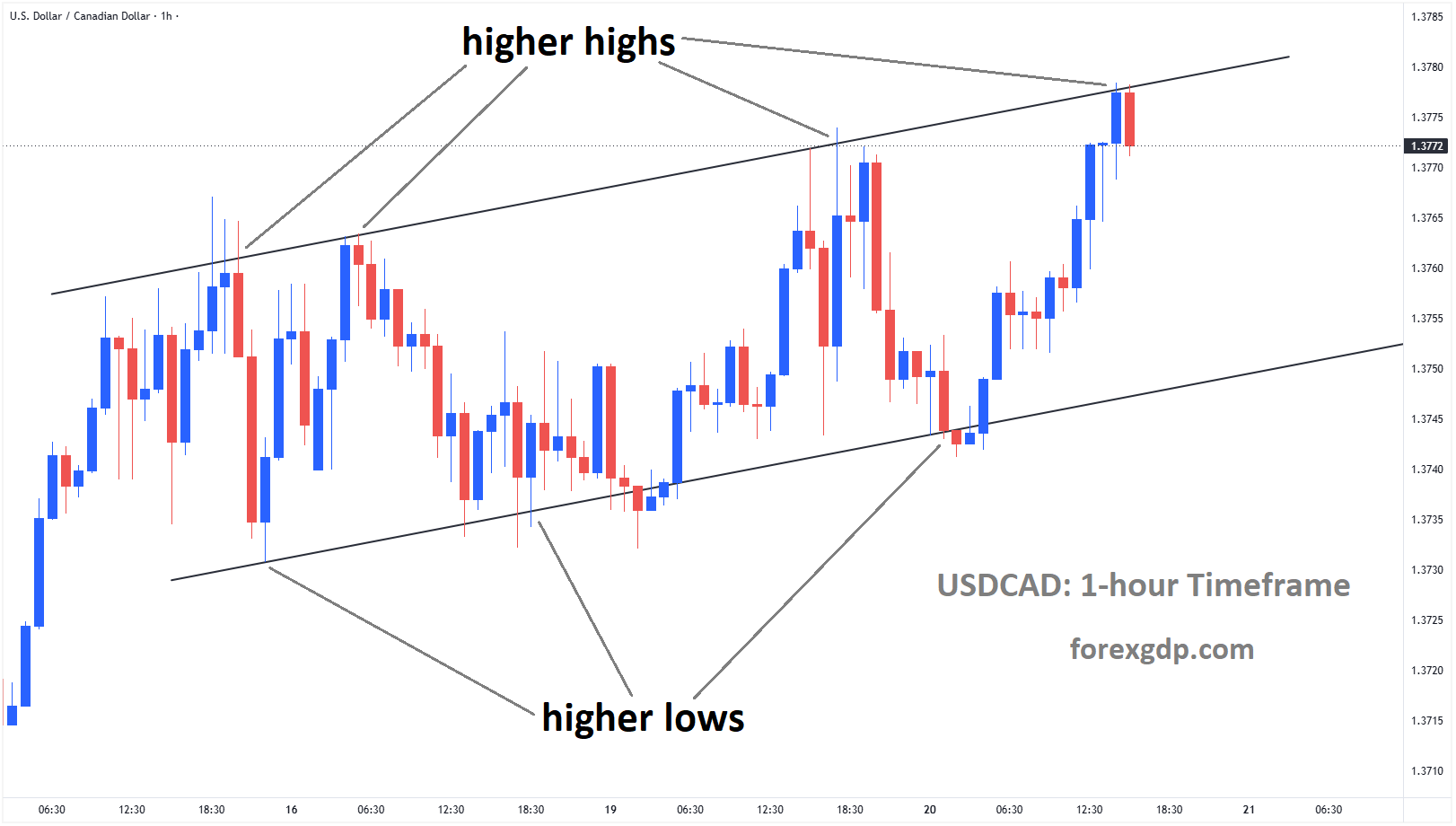
USDCAD reached a higher high in the ascending channel
Investors are closely watching developments in the energy market, inflation trends in Canada, and rising geopolitical tensions involving the United States and Iran. These factors are shaping market sentiment and influencing the direction of the USD/CAD pair.
Canadian Dollar Weakens as Oil Prices Ease
The Canadian Dollar is strongly connected to movements in crude oil because Canada is one of the world’s biggest oil exporters. A large share of Canadian oil exports goes directly to the United States, making energy prices an important driver of the country’s economy.
When oil prices rise, the Canadian Dollar often strengthens because higher energy revenues support economic growth and trade performance. On the other hand, falling oil prices can reduce export income and put pressure on the currency.
Recently, West Texas Intermediate (WTI) crude oil ended a four-day rally and moved lower. This decline added pressure on the Canadian Dollar and helped support gains in the USD/CAD pair.
Despite the short-term drop, the oil market remains highly sensitive to geopolitical developments. Traders are paying close attention to tensions in the Middle East, especially after renewed warnings from US President Donald Trump regarding possible military action against Iran.
Rising Iran Tensions Keep Markets on Edge
Market sentiment became more cautious after reports that the United States could resume military strikes on Iran within days if negotiations fail to produce a deal aimed at ending the ongoing conflict.
The latest comments from President Trump increased concerns about further instability in the region. Iran also responded strongly, warning that it is fully prepared to defend itself against any military action.
These developments have created uncertainty across global financial markets. Investors often move toward safer assets during periods of geopolitical tension, and the US Dollar tends to benefit from this type of environment.
At the same time, fears of supply disruptions in oil-producing regions could eventually push crude oil prices higher again. This possibility continues to keep energy markets volatile.
Canadian Inflation Rises but Core Pressures Cool
Canada’s latest inflation report showed that consumer prices increased faster in April compared to March. According to Statistics Canada, annual inflation rose to 2.8% from 2.4% in the previous month.
The increase was mainly driven by higher gasoline prices, which had a direct impact on overall consumer costs. However, the inflation reading still came in below market expectations, suggesting that price pressures may not be as severe as some investors feared.
On a monthly basis, inflation growth slowed compared to the previous month. This moderation gave some relief to financial markets and supported the view that inflation pressures linked to energy prices could ease over time.
What This Means for the Bank of Canada

The latest inflation data may allow the Bank of Canada to remain patient regarding future interest rate decisions. Although headline inflation moved higher, softer core inflation measures indicate that broader price pressures are not accelerating rapidly across the economy.
This is important because central banks often focus on core inflation to better understand long-term trends. If underlying inflation remains under control, the Bank of Canada may avoid taking a more aggressive stance on interest rates.
That outlook has limited support for the Canadian Dollar in recent trading sessions.
US Dollar Gains Support From Safe-Haven Demand
The US Dollar continued to strengthen as investors looked for safer assets amid growing geopolitical uncertainty and concerns about inflation risks.
The combination of rising tensions in the Middle East and higher energy costs has increased fears that inflation in the United States could remain elevated for longer than expected.
If energy prices rise sharply again, it could make it harder for the Federal Reserve to bring inflation under control. As a result, markets are increasingly expecting US interest rates to remain higher for an extended period.
Higher interest rates generally support the US Dollar because they attract global capital seeking better returns.
Treasury Yields Reflect Inflation Concerns
The bond market also showed signs of investor caution. Long-term US Treasury yields remained near multi-year highs, reflecting worries that inflation may stay persistent.
The US 30-year Treasury yield eased slightly after reaching its highest level in nearly two decades. Even with the small pullback, borrowing costs remain elevated compared to recent years.
Meanwhile, shorter-term Treasury yields continued to hold firm. Both the 10-year and 2-year yields stayed near recent highs, showing that investors still expect tight monetary conditions in the near future.
Higher Treasury yields often strengthen the US Dollar because they make US assets more attractive to international investors.
Oil Market Remains a Key Driver for USD/CAD
The future direction of the USD/CAD pair may continue to depend heavily on developments in the oil market and geopolitical headlines.
If tensions between the United States and Iran escalate further, oil prices could rebound sharply due to fears of supply disruptions. In that scenario, the Canadian Dollar may recover some losses because stronger oil prices typically benefit Canada’s economy.
However, if global uncertainty continues to increase and investors keep moving toward safe-haven assets, the US Dollar could maintain its upward momentum.
Traders are also likely to watch upcoming economic reports from both Canada and the United States for additional clues about inflation, interest rates, and economic growth.
Summary
USD/CAD remained firm as the Canadian Dollar weakened alongside softer oil prices and cautious market sentiment. Although crude oil prices paused after a strong rally, geopolitical tensions involving Iran continue to create uncertainty across global markets.
Canada’s latest inflation data showed higher consumer prices, but cooling core inflation reduced concerns about aggressive action from the Bank of Canada. At the same time, the US Dollar gained support from safe-haven demand and expectations that US interest rates may stay elevated for longer.
With energy markets, inflation concerns, and geopolitical risks all playing major roles, USD/CAD is likely to remain sensitive to global developments in the days ahead.
USDCHF Pushes Upward as Traders Favor the Dollar Over the Swiss Franc
The USD/CHF currency pair continued to rise for a second straight session as investors turned toward the US Dollar during a period of growing global uncertainty. Increased geopolitical tensions in the Middle East, combined with concerns about inflation and interest rates in the United States, helped strengthen the Dollar against the Swiss Franc.
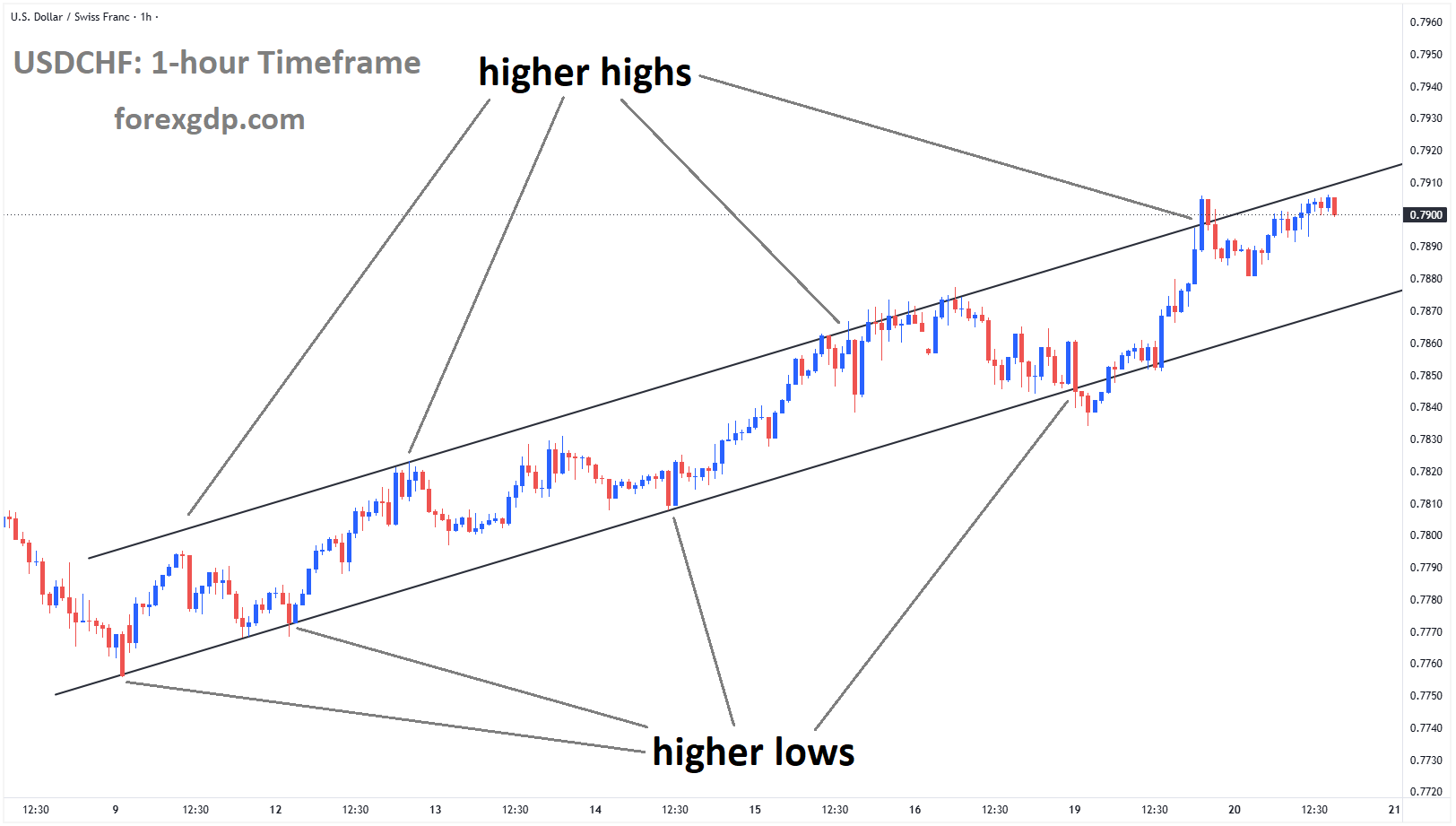
USDCHF reached a higher high area of the ascending channel
At the same time, Switzerland released encouraging economic data that showed its economy is recovering steadily. However, the stronger demand for the US Dollar remained the main driver behind the pair’s upward movement.
Safe-Haven Demand Supports the US Dollar
The US Dollar gained fresh support after reports suggested that former US President Donald Trump threatened to restart military action against Iran within days if negotiations failed to move forward. According to reports, the comments came during discussions aimed at ending tensions connected to the US-Israeli conflict.
Although there had been a temporary pause in hostilities following a proposal from Tehran, markets remained cautious. Investors often move toward safer assets during periods of geopolitical instability, and the US Dollar is widely viewed as one of the world’s leading safe-haven currencies.
As a result, traders increased their demand for the Dollar, pushing the USD/CHF pair higher during Asian trading hours. The pair climbed near the 0.7890 level as concerns over possible conflict continued to influence market sentiment.
Inflation Concerns Remain in Focus
Another important factor supporting the Dollar has been rising concern over inflation in the United States. Ongoing geopolitical tensions have raised fears that energy prices could remain elevated, especially if disruptions affect global oil supplies.
Higher energy costs often increase inflationary pressure across the broader economy. When inflation stays high for longer periods, central banks may be forced to maintain tighter monetary policies. In the case of the United States, traders increasingly believe the Federal Reserve could keep interest rates elevated for an extended period.
There are also concerns that the central bank may even consider further tightening if inflation pressures continue to rise. This expectation has helped maintain strength in the US Dollar despite some weakness in Treasury yields.
Treasury Yields Pull Back Slightly
US Treasury yields remained a major point of attention for investors. The 30-year Treasury yield slipped slightly to 5.181% after reaching 5.200%, its highest level in nearly 19 years.
Even though yields eased slightly, they are still holding near very high levels compared to recent years. Meanwhile, the 10-year Treasury yield stayed close to a 16-month high, while the 2-year yield also remained near levels not seen in more than a year.
These elevated yields reflect continued investor concerns about inflation and long-term borrowing costs in the US economy. High Treasury yields often support the US Dollar because they can attract global investors seeking better returns on American assets.
Why Treasury Yields Matter
Treasury yields are closely connected to market expectations surrounding inflation, economic growth, and Federal Reserve policy decisions. When yields rise, it generally signals that investors expect interest rates to remain higher for longer.
That environment can make the US Dollar more attractive compared to other currencies, especially during periods of uncertainty.
In this case, even though the 30-year yield moved slightly lower, the overall level of yields remains historically strong, helping maintain support for the Dollar.
Swiss Economy Shows Signs of Recovery

While the US Dollar remained strong, Switzerland also released positive economic figures that highlighted improving domestic conditions.
Preliminary data showed that Switzerland’s economy expanded by 0.5% during the first quarter of the year compared to the previous quarter. This marked a notable improvement from the 0.2% growth recorded in the previous period.
More importantly, it represented the country’s strongest quarterly growth performance in a year. The data suggests that economic activity in Switzerland is gradually recovering after a slower period.
The stronger growth figures provided some support for the Swiss Franc, which is also considered a safe-haven currency during uncertain times. However, the impact was limited because investors remained more focused on developments surrounding the US Dollar and global geopolitical risks.
Market Attention Turns to Swiss Industrial Data
Investors are now waiting for Switzerland’s upcoming Industrial Production data for the first quarter of 2026. The report is expected to offer additional insight into the strength of the country’s economic recovery.
Industrial production figures are closely watched because they help measure activity across factories, manufacturing, and production sectors. Strong numbers could improve confidence in the Swiss economy and potentially support the Swiss Franc further.
However, market direction will likely continue to depend heavily on global risk sentiment and developments related to the Middle East situation.
Geopolitical Risks Continue to Influence Currency Markets
Currency markets are currently being shaped by a combination of economic data and geopolitical uncertainty. Investors are balancing concerns over inflation, interest rates, and global conflict risks all at the same time.
The US Dollar continues to benefit whenever uncertainty increases because many investors still see it as a reliable store of value during volatile periods. At the same time, expectations surrounding Federal Reserve policy remain a major influence on market direction.
For the Swiss Franc, strong domestic economic data may provide support over time, especially if Switzerland’s recovery continues to strengthen. However, the Franc’s performance will also depend on how global investors respond to ongoing geopolitical developments.
Summary
USD/CHF moved higher for a second consecutive session as renewed geopolitical tensions boosted demand for the US Dollar. Concerns about possible military action involving Iran increased caution in financial markets, encouraging investors to move toward safe-haven assets.
At the same time, worries about inflation and expectations that the Federal Reserve may keep interest rates elevated continued to support the Dollar. US Treasury yields remained near multi-year highs, reinforcing confidence in the currency.
Meanwhile, Switzerland reported stronger-than-expected economic growth in the first quarter, signaling that the country’s recovery is gaining momentum. Investors are now looking ahead to upcoming Swiss industrial production data for further clues about the economy’s direction.
Global political developments, inflation concerns, and central bank expectations are likely to remain the key drivers for the USD/CHF pair in the coming sessions.
Don’t trade all the time, trade forex only at the confirmed trade setups
Get more confirmed trade signals at premium or supreme – Click here to get more signals, 2200%, 800% growth in Real Live USD trading account of our users – click here to see , or If you want to get FREE Trial signals, You can Join FREE Signals Now!