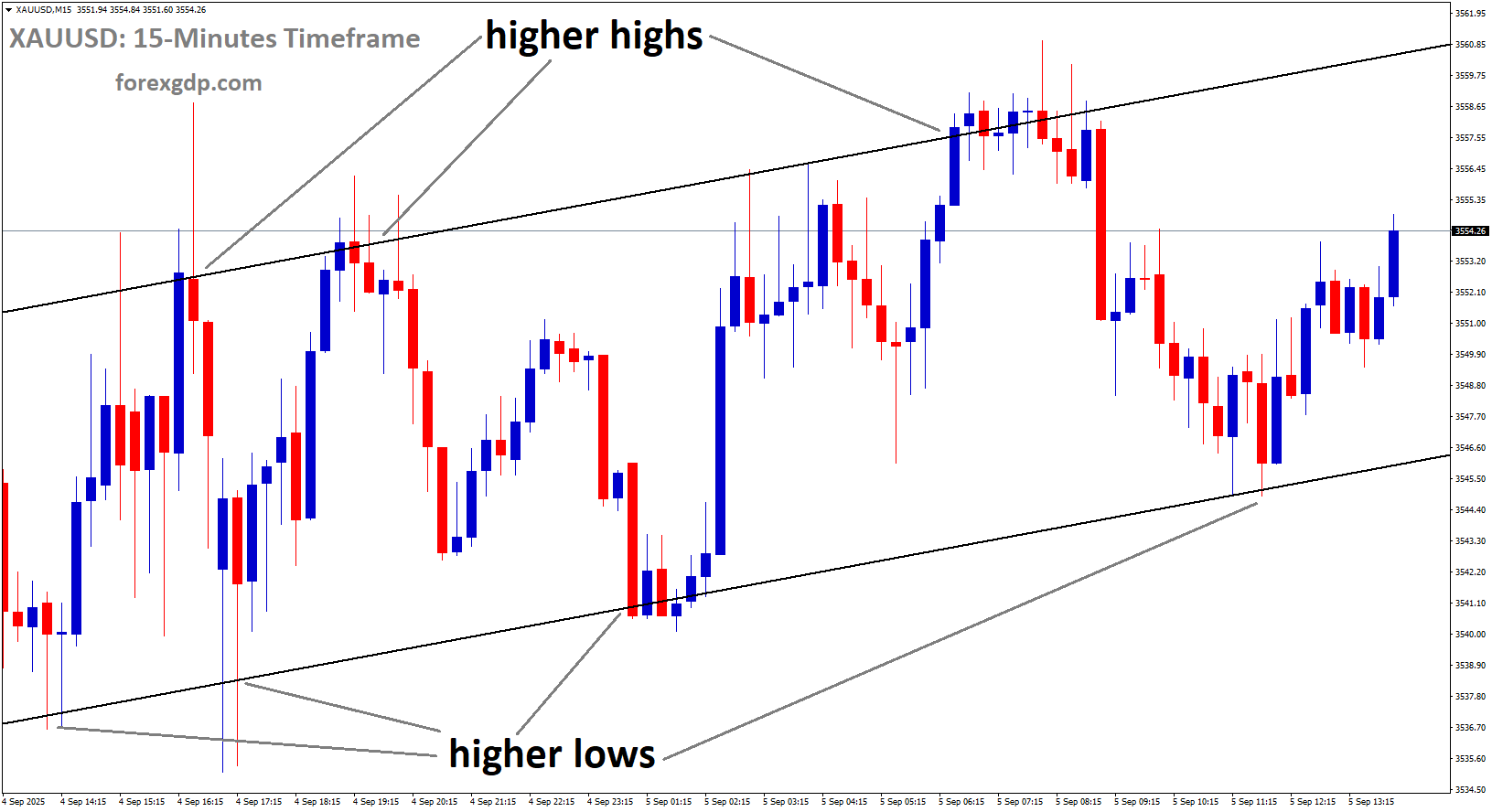

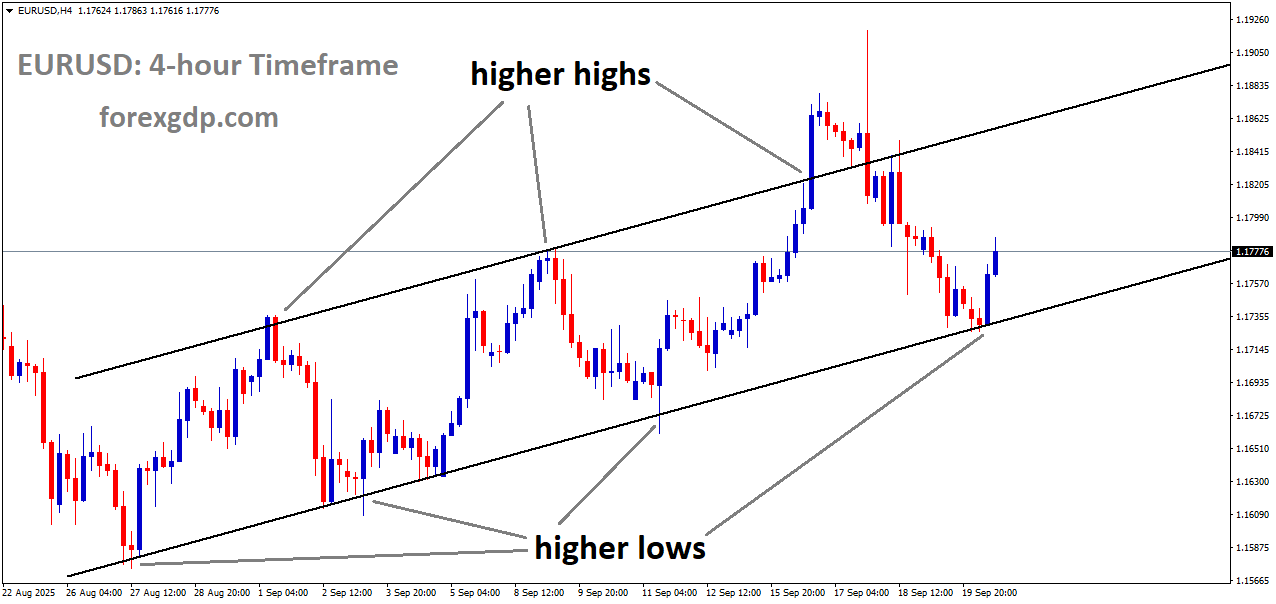
EURUSD is moving in an Ascending channel
EURUSD stays under pressure with Dollar firm ahead of key Fed speeches
The Euro started the week on a weaker note, holding on the downside while the US Dollar carried a steady strength. Investors are now keeping their eyes on the speeches from top officials of the Federal Reserve, which are expected to provide fresh clues about the future of US monetary policy. With more than ten Fed policymakers lined up to speak, markets are bracing for a busy week of commentary that could influence global sentiment.
In Europe, the spotlight will also fall on comments from European Central Bank (ECB) leaders and fresh data on consumer confidence and business activity. But for now, the balance seems tilted toward the Dollar’s favor, keeping the Euro’s recovery attempts limited.
Why the Federal Reserve’s Words Matter
When central bankers speak, markets listen closely. This week, a series of speeches from key Federal Reserve officials is set to dominate attention. Investors are particularly interested in hearing from Jerome Powell, the Fed’s Chair, who will deliver a major address on the economic outlook. His remarks could set the near-term tone for the US Dollar and provide hints on whether policymakers plan to continue with cautious steps or move faster on rate decisions.
Alongside Powell, new Fed Governor Stephen Miran will be closely watched. Having recently disagreed with the committee’s stance on rates, his comments could shed light on internal debates within the central bank. Other regional Fed presidents, including those from New York, St. Louis, Richmond, and Cleveland, are also scheduled to share their perspectives. Each speech adds another piece to the puzzle of how the Fed sees the US economy and inflation path.
Market Sentiment Driven by Policy Expectations
The core reason these speeches matter is simple: monetary policy shapes the direction of currencies. If the Fed hints at sticking with higher rates for longer, the Dollar often strengthens, making it harder for the Euro to gain traction. On the other hand, any sign of earlier rate cuts could shift momentum. Right now, markets expect slow and cautious adjustments, which keeps the Dollar relatively firm.
The Eurozone’s Side of the Story
While the US dominates headlines, Europe has its share of developments. ECB leaders are expected to make comments about how they see the region’s economy evolving. Some policymakers argue there’s no urgent need to cut rates further, suggesting stability is preferable. Others believe more support might be necessary, highlighting the ongoing debate inside the ECB.
Apart from speeches, fresh data is due this week. The Eurozone’s consumer confidence figures will provide insight into how households feel about the economy. Additionally, preliminary readings for manufacturing and services activity will reveal whether Europe is gaining momentum or struggling to recover.

Italy’s Credit Upgrade
One development that caught attention was Fitch’s upgrade of Italy’s credit rating. After years of uncertainty, the move reflects improved political stability and progress on managing public finances. This upgrade is the first in four years and signals that international observers see a healthier outlook for Italy, which could provide some indirect support to the Eurozone as a whole.
Dollar Dominance in Quiet Markets
Despite the absence of major data releases early in the week, the Dollar has managed to hold onto its gains. In calm trading sessions, especially during Asia’s hours, the Dollar’s appeal as a safe and stable currency tends to stand out. Without strong economic news from Europe to balance things out, the Euro finds little room to climb higher.
US policymakers’ speeches are expected to guide the Dollar’s path for now, and until Europe brings stronger economic signals, the currency struggle is likely to remain in favor of the Dollar. This cautious market environment is keeping the Euro on the defensive, even as investors look for opportunities to buy it on dips.
ECB Voices Add to the Mix
Over the weekend, some ECB officials offered their perspectives. They suggested that the bank’s current policies are well-positioned and that rushing into additional rate cuts may not be necessary. These comments contrast with more dovish voices that hint at further easing. The mixed signals highlight the ECB’s balancing act: supporting growth without fueling inflation.
For traders and investors, these internal differences mean uncertainty. Until the ECB offers a clearer direction, the Euro is likely to stay reactive rather than leading the way.
Final Summary
The start of the week paints a picture of cautious markets where the US Dollar is benefiting from steady confidence, while the Euro struggles to find support. The central focus lies on upcoming speeches from Federal Reserve officials, with Jerome Powell’s address standing out as a key moment. In Europe, comments from ECB policymakers and upcoming data on consumer confidence and business activity will help shape the narrative.
For now, the Dollar enjoys a stronger footing, supported by investor caution and policy expectations. The Euro, meanwhile, remains under pressure, waiting for stronger signals from both its central bank and the region’s economy. The days ahead will likely be shaped less by data and more by words, as central bankers take the stage to guide markets into the next phase of monetary policy.
GBPUSD attempts recovery as debt concerns weigh on investor confidence
The British Pound has started the week with a small recovery, but the mood around the currency remains fragile. Traders, economists, and ordinary observers alike are paying attention to how government debt, central bank policies, and upcoming economic data could shape the direction of the Pound in the coming weeks. Let’s take a deeper dive into what’s happening right now.
UK Borrowing Sparks Fresh Worries
One of the biggest reasons behind the weakness in the Pound is the rising debt situation in the United Kingdom. Recent government data revealed that public sector net borrowing in August climbed close to £18 billion, which was much higher than the expectations of around £12.5 billion.
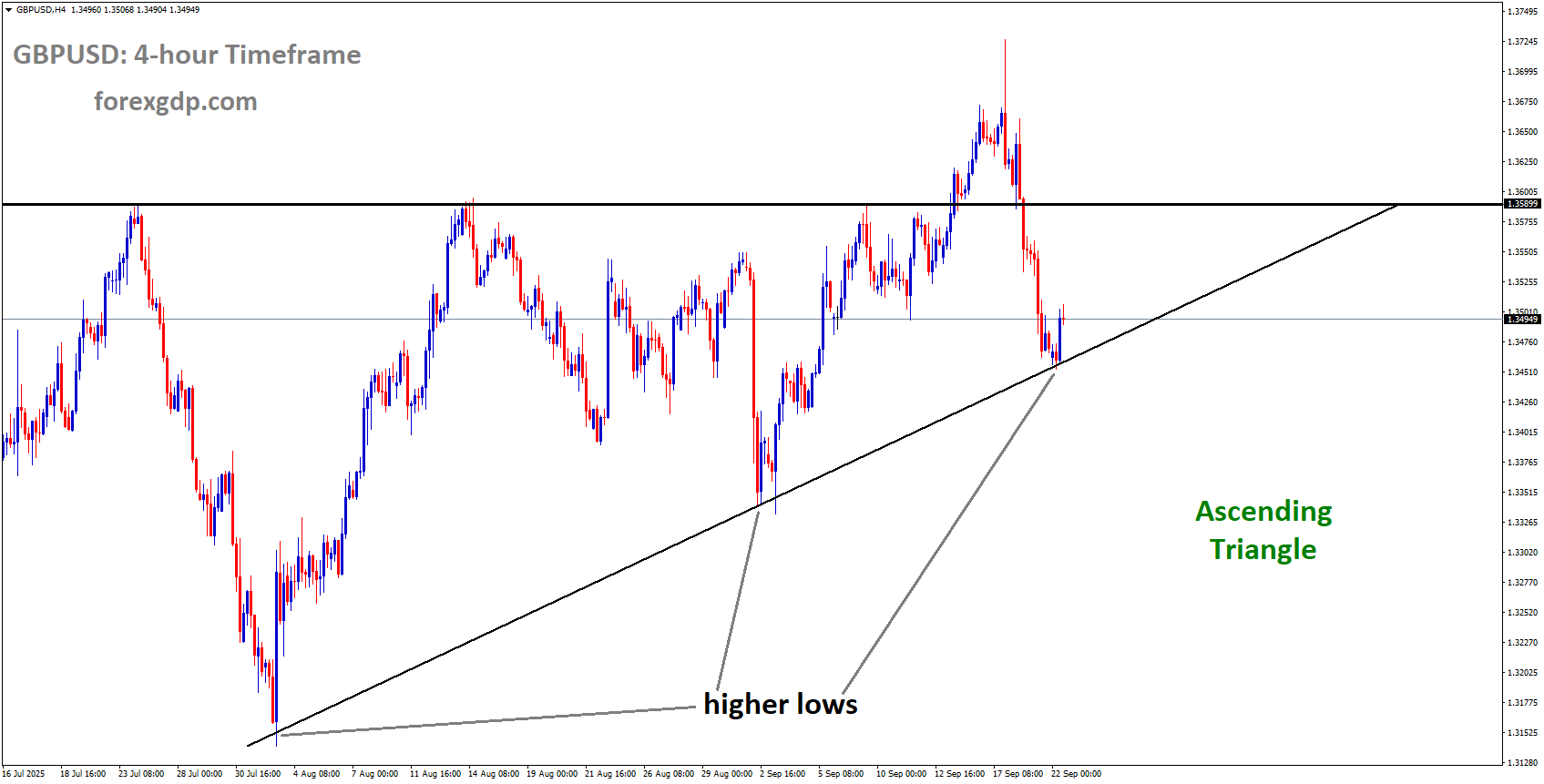
GBPUSD reached a higher low area of the Ascending triangle pattern
This growing gap between revenue and spending has raised eyebrows among economists and investors. High borrowing levels mean the government will likely have fewer options when it comes to new spending programs in the Autumn Budget due in November. In fact, some believe that Chancellor Rachel Reeves may be forced to lean toward higher taxes just to balance out the finances.
This fiscal pressure has already pushed up long-term government borrowing costs. Yields on 30-year UK gilts have shot upward, and that kind of movement usually signals deep market concerns about the long-term financial stability of the government. When debt becomes more expensive to manage, it limits the flexibility of any administration trying to announce new programs or reforms.
Why Investors Are So Cautious Right Now
Beyond the borrowing issue, there’s a broader sense of caution among investors. Several key events are lined up this week that could change the market mood.
PMI Data in Focus
On Tuesday, traders will be watching closely for the preliminary UK Purchasing Managers’ Index (PMI) numbers. This data offers a real-time look at business activity across industries like services and manufacturing. A slowdown in the services sector, in particular, could add to worries that the UK economy is not firing on all cylinders.
Bank of England’s Voice
Adding to the tension, Bank of England Governor Andrew Bailey is scheduled to speak. Markets often hang on his words because even subtle hints about future interest rates or inflation outlooks can sway investor confidence. If his tone suggests a weaker economy or less aggressive monetary policy, the Pound could face renewed selling pressure.

The Bigger Picture: US Policies in Play
While the UK grapples with its debt challenges, developments across the Atlantic are also steering currency markets. Recently, the Federal Reserve cut its interest rates by 25 basis points. Normally, that would weaken the US Dollar, since lower rates reduce its appeal. But interestingly, the Dollar has held firm and even gained ground.
The reason? Investors had already anticipated the rate cut. So instead of reacting negatively, the market is now focused on what the Fed will do next. Traders are also closely watching comments from Fed Chair Jerome Powell, who is expected to provide more clarity on the central bank’s outlook at a high-profile business event this week.
US PMI Data Also Matters
Just like in the UK, the United States will also release PMI data for September. If the data signals steady growth, it could support the US Dollar further. Since currencies move in pairs, any Dollar strength naturally adds pressure on the Pound.
Why The Pound’s Struggle Isn’t Over Yet
At first glance, Monday’s small bounce in the Pound may seem encouraging. But most experts agree that this relief could be temporary. The combination of rising UK debt, investor caution about tax changes, weaker growth prospects, and strong competition from the Dollar keeps the British currency under pressure.
The Role of Market Sentiment
Currencies aren’t just driven by cold, hard data. Market psychology plays a big part too. Right now, the sentiment around the Pound feels shaky. Each new headline about debt, political uncertainty, or slowing economic growth chips away at confidence.
What Traders Are Watching Next
Over the next few days, all eyes will be on the UK’s budget signals, speeches from both the Bank of England and the Federal Reserve, and the PMI numbers on both sides of the Atlantic. If the UK data disappoints while the US continues to show resilience, the Pound could once again slip into a weaker position.
Final Summary
The Pound Sterling may have started the week with a small lift, but it is far from being on solid ground. Rising UK public borrowing has shaken investor trust and made long-term debt more expensive to manage. At the same time, potential tax hikes and cautious fiscal policies add more weight on the currency. Meanwhile, the Federal Reserve’s actions and upcoming US economic data are keeping the US Dollar strong, which in turn challenges the Pound even further.
In short, the Pound is navigating through choppy waters. The next few days will be critical as key speeches and data releases unfold. For now, the outlook remains uncertain, and the British currency may continue to face hurdles until there’s a clearer picture of both UK fiscal discipline and global monetary trends.
USDJPY bounces back from lows while BoJ-Fed divide curbs further decline
The Japanese Yen (JPY) has been making headlines again, slipping to a two-week low before bouncing back slightly. At first glance, this seems like just another currency fluctuation, but when you look closer, there are deeper reasons behind this move. Let’s break down what’s happening, why it matters, and what could lie ahead for the Yen in the coming months.
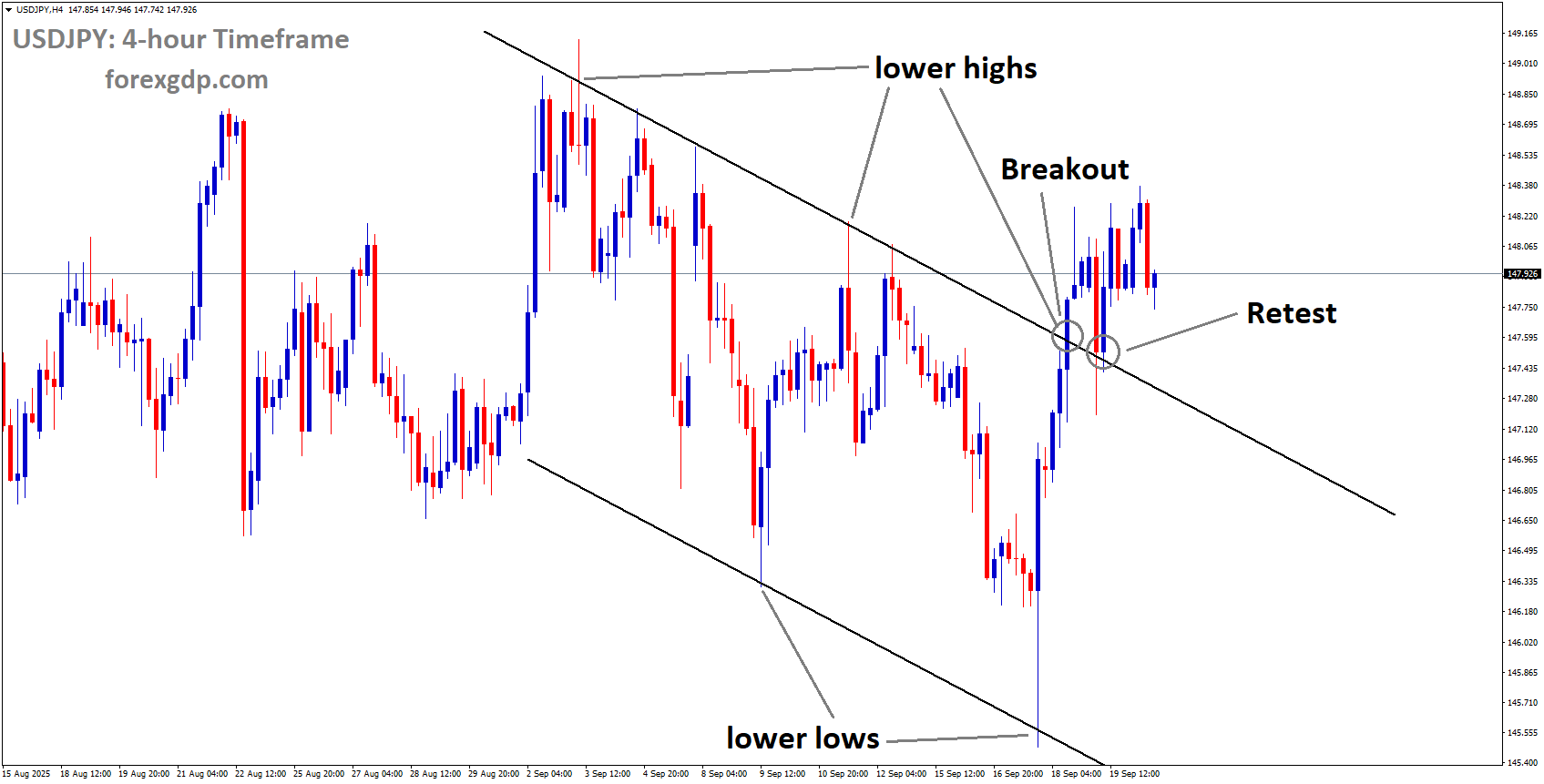
USDJPY is rebounding from the retest area of the broken descending channel
A Tug of War Between Japan and the U.S. Central Banks
One of the biggest drivers behind the Yen’s movement is the policy gap between the Bank of Japan (BoJ) and the U.S. Federal Reserve (Fed). These two institutions take very different approaches, and that difference keeps showing up in the currency market.
The Bank of Japan has been cautious. Even though inflation and living costs are rising, the BoJ isn’t rushing to raise interest rates. It recently kept its rate steady at 0.50%, even though a couple of members of its committee wanted a hike. On the other side, the Federal Reserve has been cutting rates after years of tightening. Officials in the U.S. even hinted at two more cuts this year, citing concerns about a slowing job market.
This mix creates a push-and-pull effect. The Yen tends to gain when Japan shows signs of tightening, but it loses ground when the Fed signals it’s becoming more cautious. Right now, the two are heading in opposite directions, which makes investors think twice before making bold moves with the Yen.
Domestic Politics and Economic Uncertainty in Japan
Another factor weighing on the Yen is Japan’s internal political situation. Leadership changes and uncertainty about future policies make global investors nervous. For example, Yoshimasa Hayashi, a top political figure and prime minister hopeful, has been stressing the need to balance government spending with monetary policy. His stance suggests Japan will continue supporting households and businesses struggling with rising costs and natural disasters.
On the surface, this may sound positive, but it also means the BoJ could delay future interest rate hikes. Political leaders prefer stability, and that often translates into avoiding bold monetary moves. This cautious approach adds pressure on the Yen, especially when other central banks, like the Fed, are adjusting their course more visibly.
The Global Backdrop: Tariffs, Trade, and Risk Appetite
Currencies don’t move in isolation. The Yen, in particular, has a reputation as a safe-haven currency. Investors often flock to it when global markets get shaky. But right now, risk sentiment is tilted toward optimism.
Despite tensions between the U.S. and China, there are hints of easing trade worries. The People’s Bank of China (PBOC) has also kept its key lending rates unchanged, signaling that it doesn’t see an urgent need for drastic monetary action. These moves have calmed global markets a little, pushing investors toward riskier assets like stocks instead of the Yen.

At the same time, the U.S. tariffs on Japan add another layer of economic pressure. These trade-related headwinds could weigh on Japanese businesses and growth, making the BoJ even more cautious about tightening policy. In turn, this reduces the Yen’s safe-haven appeal compared to other times of global stress.
The Role of the U.S. Dollar in This Story
While the Yen is under pressure, the U.S. Dollar is not exactly in top shape either. The Dollar recently rebounded after hitting its weakest point in years, supported by Fed Chair Jerome Powell’s comments. Powell described the latest rate cut as a “risk management” move rather than a sign of panic, reassuring investors that the U.S. still has room to maneuver.
This gave the Dollar some strength back, but not enough to erase its longer-term weakness. As a result, the Yen has not collapsed completely—its losses are being capped because the Dollar isn’t firing on all cylinders either. In other words, both currencies are being pulled in opposite directions, keeping the USD/JPY pair somewhat balanced.
What Traders and Investors Are Watching Next
So, where does this leave things? For now, traders are cautious. Without major economic data from either the U.S. or Japan, market participants are waiting for speeches from key Federal Reserve members, including Powell. Any hints about how aggressive or patient the Fed will be with its rate cuts could shift the balance quickly.
Meanwhile, in Japan, all eyes are on whether the BoJ will stay patient or feel forced to act sooner than expected. Political voices like Hayashi’s will play a big role in shaping those decisions. Add in the ongoing influence of global trade tensions and shifting risk appetite, and you’ve got a recipe for more volatility ahead.
Final Summary
The Japanese Yen’s recent dip highlights how sensitive currencies are to central bank decisions, political shifts, and global trade dynamics. On one side, the Fed’s dovish tilt supports the Yen by narrowing the interest rate gap. On the other, Japan’s political uncertainty and cautious monetary stance keep it under pressure.
For now, the Yen is caught between opposing forces: a weaker Dollar that prevents it from falling too far, and domestic challenges that stop it from rallying strongly. Investors are left watching both Washington and Tokyo closely, knowing that the next big move in USD/JPY could hinge on just a few carefully chosen words from policymakers.
GBPJPY Pushes Upward, Riding on Renewed Pressure Against the Japanese Yen
When it comes to forex trading, the GBP/JPY pair is often one of the most talked-about. Known for its volatility and large price swings, this pair keeps traders on their toes. Recently, GBP/JPY caught attention after bouncing back from a two-week low. Even though it managed to recover slightly, the bigger picture shows a lot of uncertainty. Let’s dive deep into what’s happening, why it matters, and what traders might want to keep in mind.
The Yen’s Struggles: Why the BoJ Keeps Traders Guessing
One of the main drivers behind GBP/JPY movements is the Japanese Yen (JPY). Traditionally, the Yen is considered a safe-haven currency, which means investors tend to buy it during uncertain times. But things aren’t so simple right now.
The Bank of Japan (BoJ) recently took a “hawkish on-hold” stance. In plain terms, they didn’t raise interest rates but hinted that they’re still leaning toward tightening monetary policy in the future. Normally, that would make the Yen stronger. However, political instability, global economic risks, and fresh concerns over trade tariffs have raised doubts. Investors worry that the BoJ might be forced to delay rate hikes, weakening the Yen’s appeal.
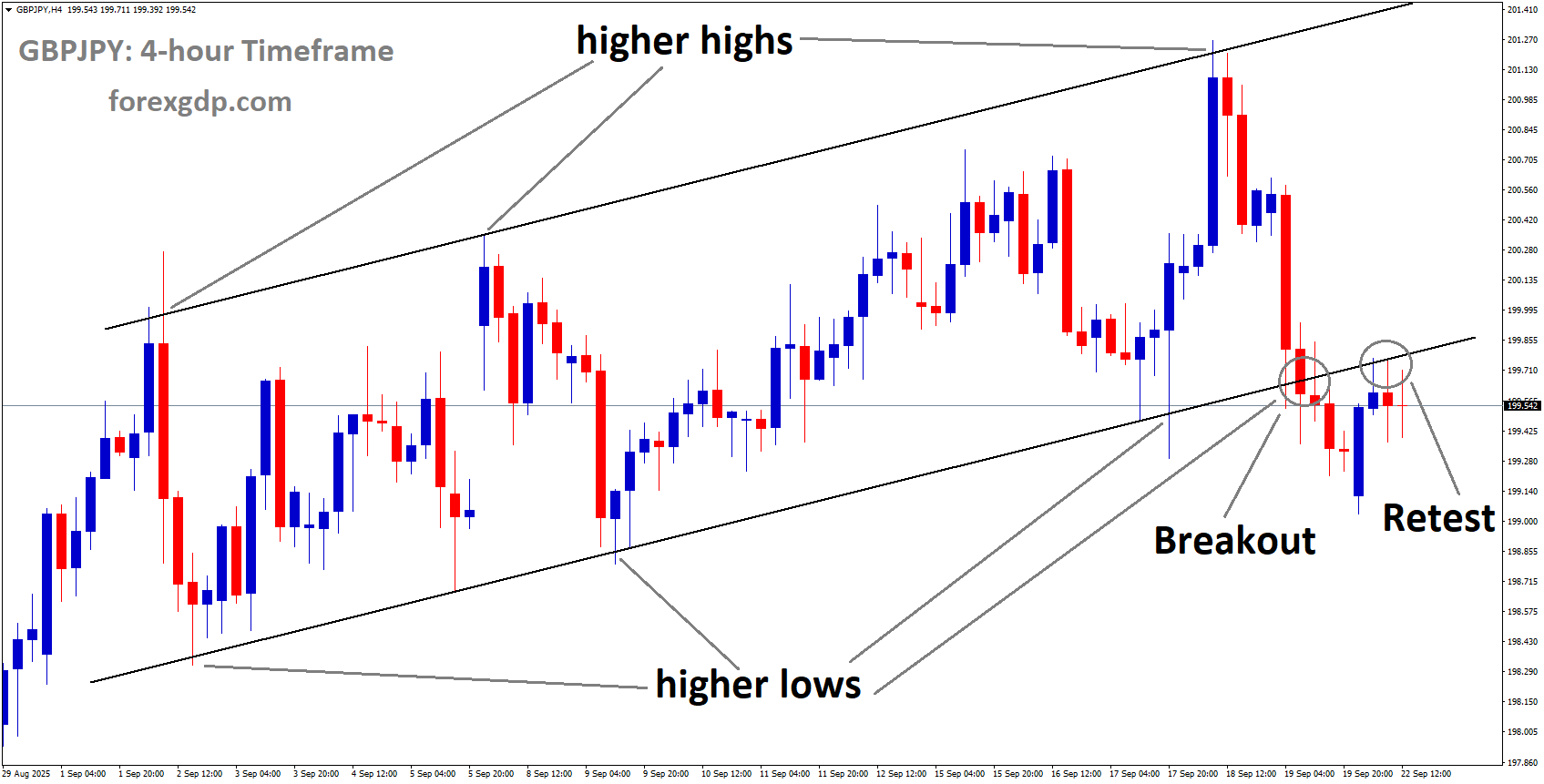
GBPJPY reached the retest area of the broken uptrend channel
This tug-of-war creates confusion: on one side, the market expects the BoJ to normalize policy eventually, but on the other, economic headwinds make it hard to act aggressively. That uncertainty is why the Yen has lost some of its safe-haven charm recently.
The Pound’s Mixed Story: Strength and Weakness Collide
While the Yen faces challenges, the British Pound (GBP) isn’t exactly shining either. The UK economy is dealing with its own set of problems.
Fiscal Concerns in the UK
There’s increasing worry about the UK’s fiscal health. Rising government spending, debt levels, and budget concerns weigh heavily on investor sentiment. These fiscal risks make the Pound less attractive compared to other major currencies, especially when confidence in the economy is shaky.
The BoE’s Policy Path
Adding to this, the Bank of England (BoE) has been signaling a dovish stance. That means rate cuts could be on the horizon. While the BoJ is leaning toward tightening, the BoE looks set to ease. This divergence creates a push-and-pull effect on GBP/JPY, making the pair harder to predict.
The Pound’s relative weakness, combined with the uncertain policy outlook, prevents strong upward momentum in GBP/JPY. Even though the pair bounces from time to time, sustained rallies are capped by these concerns.

Geopolitical Tensions: A Wildcard Factor
Another piece of the puzzle is global geopolitics. Rising tensions in different regions, ongoing trade disputes, and tariff battles all play into how safe-haven currencies like the Yen behave. Normally, these situations would boost the Yen, but with doubts about BoJ policies, the impact is mixed.
For GBP/JPY traders, this means keeping an eye not just on the UK and Japan, but also on broader global developments. Events outside of these two countries can heavily influence how the pair moves, sometimes in unexpected ways.
Why Traders Should Be Careful Right Now
Even though GBP/JPY recently found buyers and managed to rebound, the move doesn’t guarantee a full return to a long-term uptrend. A lot of uncertainties remain:
-
The BoJ could still surprise with its timing of rate changes.
-
The BoE may act more dovishly than expected, weighing down the Pound.
-
Fiscal risks in the UK remain unresolved.
-
Geopolitical events could shift sentiment overnight.
All these factors suggest that traders should be cautious. Instead of jumping in expecting a quick rally, it might be smarter to wait for stronger signs of follow-through momentum.
Final Summary
The GBP/JPY pair is at an interesting crossroads. On one hand, the Yen is struggling because of doubts over Japan’s rate policy and its reduced safe-haven role. On the other hand, the Pound is facing pressure from fiscal concerns and a dovish Bank of England. Together, these forces create a volatile environment where neither side has a clear advantage.
For traders, this means one thing: patience and careful observation are key. While rebounds like the recent one can spark excitement, the broader picture remains uncertain. Staying alert to central bank signals, fiscal news, and geopolitical developments will be crucial for anyone looking to trade GBP/JPY in the coming weeks.
USDCAD Pushes Upward Fueled by Widespread Dollar Recovery
The currency market often reacts quickly to global events, economic updates, and central bank decisions. On Monday, the US Dollar (USD) showed renewed strength against the Canadian Dollar (CAD), climbing back above the 1.3800 mark. This rebound comes after a weaker performance late last week, and many investors are keeping a close eye on what lies ahead. Let’s dive into the details of why the USD is climbing and what could influence the next big moves.
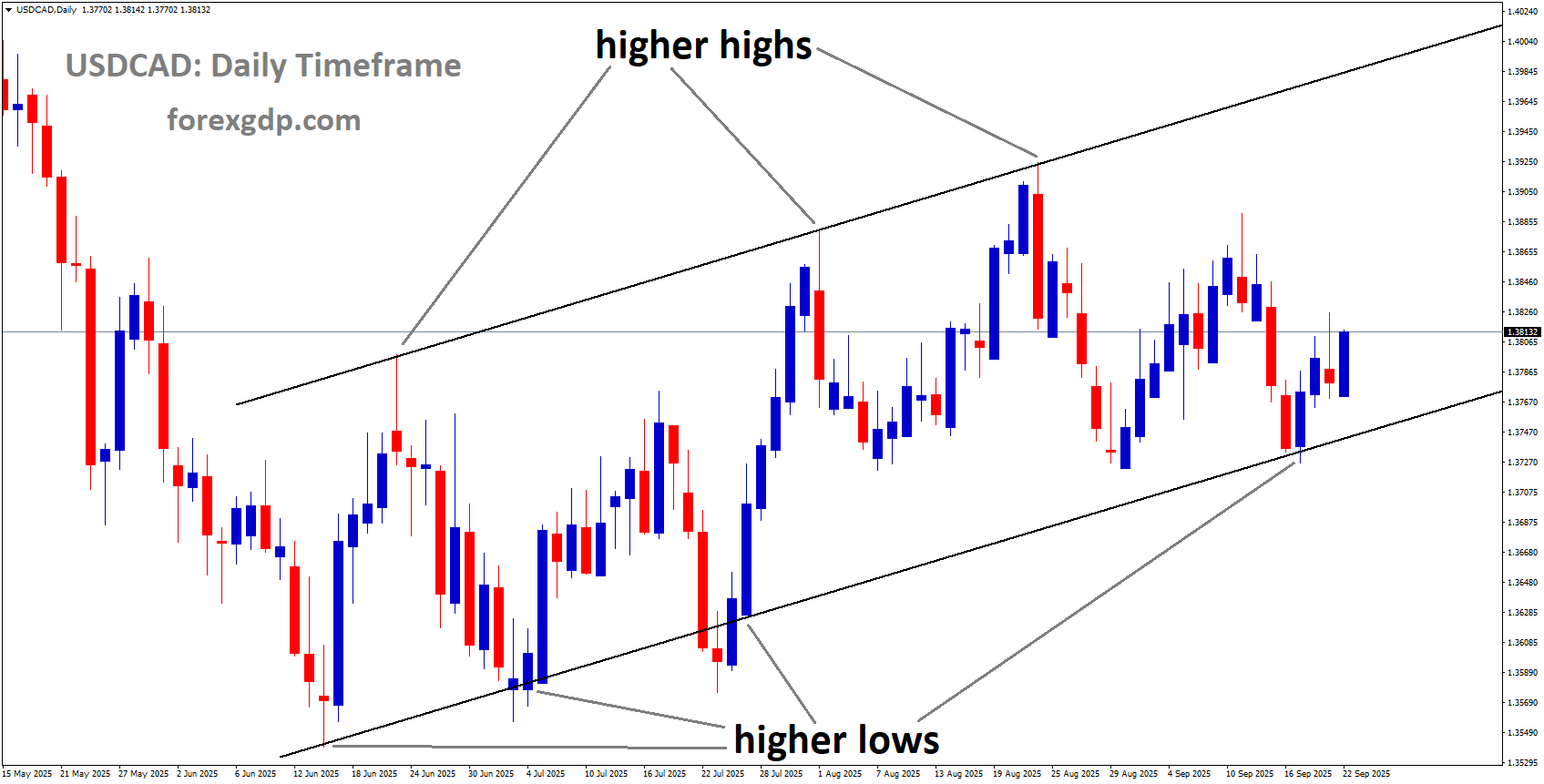
USDCAD is moving in an uptrend channel, and the market has rebounded from the higher low area of the channel
Why the US Dollar is Bouncing Back
The US Dollar gained momentum on Monday after slipping in the previous session. Several factors are contributing to this recovery, making it clear why traders and investors are paying such close attention.
Market Sentiment and Caution
The overall mood in global markets is a bit cautious. Investors are carefully waiting for more guidance before making big decisions. When this happens, the USD often benefits because it’s seen as a safe-haven currency. In simple terms, when people are unsure about the market, they tend to hold on to dollars.
Focus on the Federal Reserve
One of the biggest reasons behind the USD’s strength is the attention on the Federal Reserve. Later in the day, multiple Fed officials are scheduled to give speeches, and markets are expecting to pick up hints about future monetary policy. For traders, even a few carefully chosen words from Fed policymakers can be enough to shift currency markets.
All Eyes on Stephen Miran’s Speech
Out of the several speeches lined up, the most anticipated one is from Stephen Miran, a newly appointed member of the Federal Reserve board. His talk at the Economic Club of New York is already drawing headlines for several reasons.
Why Miran’s Appointment Matters
Miran is seen as a fresh and somewhat controversial voice on the board. Appointed during a politically charged period, he has been positioned as someone willing to push for more aggressive policy moves. This sets him apart from some of his colleagues, who often lean toward caution. Investors want to know if he will stick to this stance or adjust his tone now that he’s officially part of the Fed.
Hints at Bigger Rate Cuts
Last week, Miran supported a 50 basis points rate cut, while the majority of the committee settled on a smaller quarter-point reduction. His willingness to take a more aggressive step makes markets wonder if he will continue advocating for deeper cuts. If so, that could put pressure on Fed Chair Jerome Powell, who is scheduled to speak the following day. Traders love clarity, and any disagreement within the Fed makes things more interesting—and sometimes more volatile.

Canada’s Side of the Story
While the US Dollar is grabbing attention, the Canadian Dollar has its own set of challenges and drivers. Canada’s recent economic data shows some mixed results, which are influencing how the CAD is performing.
Retail Sales Data and Market Reactions
On Friday, the release of Canadian Retail Sales data offered a glimpse into the country’s consumer spending. Sales contracted in July, which wasn’t a surprise since markets were expecting it. However, what caught attention was the preliminary data suggesting a rebound of around 1% in August. This bounce offers some relief and signals that consumer spending might still be resilient.
Impact on the Bank of Canada
For the Bank of Canada (BoC), these numbers matter a lot. A July contraction could have fueled speculation about more aggressive interest rate cuts. But the August preview showing growth changes that narrative. It suggests the economy might be on firmer ground than initially feared, making it less urgent for the BoC to rush into consecutive rate cuts. This helps the CAD to find some stability, even as the US Dollar strengthens.
What Traders and Investors Should Watch Next
Currency markets move quickly, and Monday’s events are just one part of a much bigger story. Here’s what’s worth watching in the coming days:
More Fed Speeches
Besides Miran, several other Fed officials are set to speak. Each of them could offer small but meaningful clues about where US monetary policy is heading. If there’s a general agreement on a cautious approach, the USD might lose some steam. But if more voices echo Miran’s call for bolder cuts, the market could get lively again.
Powell’s Conference
Jerome Powell, the Fed Chair, will have his say on Tuesday. His words carry the most weight, and markets will dissect every sentence. Powell is known for balancing optimism with caution, but given the current backdrop, traders will want to see whether he hints at further rate cuts or signals patience.
Canadian Economic Updates
For Canada, the focus will be on whether retail sales growth in August carries forward into the following months. If consumers continue spending, it strengthens the case for the CAD. But if the rebound is short-lived, pressure on the BoC to act could return.
Final Summary
The US Dollar’s bounce against the Canadian Dollar on Monday reflects a mix of cautious market sentiment, anticipation of key Federal Reserve speeches, and contrasting economic signals from Canada. With Stephen Miran’s bold stance on rate cuts and Jerome Powell’s upcoming conference, the US side of the story is full of potential twists. On the other hand, Canada’s economy is showing signs of resilience after a weak July, giving the CAD a chance to hold its ground.
For now, traders and investors should keep their attention on central bank speeches and upcoming economic data, as these will likely shape the next chapter of the USD/CAD story. The battle between a cautious market and bold policy voices is far from over, and that makes the currency market an exciting place to watch in the days ahead.