EURUSD is moving in an Ascending channel, and the market has rebounded from the higher low area of the channel
EURUSD faces uncertainty as Eurozone growth indicators clash
The euro has been moving cautiously, with investors paying close attention to the latest economic updates. Recently, the common currency has shown signs of hesitation, holding near key levels while the market digests fresh figures from the Eurozone and awaits critical news from the United States. Let’s break down what’s happening and why traders and investors are watching so closely.
Eurozone’s PMI Data: A Story of Contrasts
One of the main talking points has been the release of preliminary Purchasing Managers Index (PMI) numbers from the Eurozone. These figures are often seen as an early indicator of economic health since they reflect how businesses are performing in both the manufacturing and services sectors.
Manufacturing Takes a Step Back
The Eurozone’s manufacturing activity didn’t meet expectations. Instead of showing resilience, it contracted in September. This development surprised many analysts who had predicted steady or slightly stronger performance. Germany, the region’s largest economy, followed the same pattern—manufacturing slowed down instead of recovering.
Services Show Some Strength
On the flip side, the services sector delivered better results. The data showed an acceleration in activity, which helped balance out the weakness in manufacturing. For Germany, services expanded faster than expected, suggesting that consumer demand and related industries are holding up.
France, however, painted a more concerning picture. Both manufacturing and services activity there dropped, raising questions about the country’s economic momentum. Since France is the Eurozone’s second-largest economy, this dual contraction is not an encouraging sign for the region as a whole.
Why Investors Are Watching the US PMI and Powell’s Speech
While the Eurozone data set the stage, investors are now shifting their focus across the Atlantic. The United States is also releasing its preliminary PMI figures, which will provide an updated snapshot of business conditions in the world’s largest economy.

The Importance of US Flash PMI
These numbers matter because they can reveal whether the US economy is slowing down or staying resilient despite global challenges. A softer reading could raise concerns, while stronger data might support the US dollar and pressure the euro further.
All Eyes on Jerome Powell
Later in the day, Federal Reserve Chairman Jerome Powell is scheduled to speak. His words often move markets, as traders try to decode what the Fed might do next with interest rates. Investors will be looking for hints about how the central bank plans to handle inflation, growth, and the broader economic outlook. Depending on his tone, the US dollar could either gain strength or continue its recent softer trend.
The US Dollar’s Mixed Signals
The dollar has been sending out mixed signals in recent sessions. On one hand, some policymakers have hinted that interest rates may not need to stay as high as they currently are. For example, one Federal Reserve official suggested that rates should come down closer to 2% in the long run, arguing that structural changes like immigration and lower taxes could ease pressure on inflation.
On the other hand, other Fed members remain more cautious. They have warned that inflation is still a risk and emphasized the need to stay careful before making any major policy changes. This split in views has left markets uncertain about the direction of US monetary policy.
For now, the dollar has softened against major currencies, including the euro, as traders await more clarity.
Why These Updates Matter for Everyday Investors
At first glance, PMI numbers and central bank speeches might seem like topics reserved for economists or traders glued to their screens. But in reality, these updates affect everyone in different ways.
-
For businesses: PMI data gives companies insight into demand trends and supply chain health. If manufacturing is slowing, it could mean challenges ahead for exporters.
-
For consumers: A weaker euro or stronger dollar can affect travel costs, imported goods, and even inflation levels.
-
For investors: These developments directly impact currency markets, stock performance, and bond yields. Even small shifts in tone from central banks can change how global money flows.
Final Summary
The euro is currently caught between mixed signals from the Eurozone and uncertainty about upcoming US data. On one side, Eurozone services are showing resilience, but manufacturing—especially in key economies like Germany and France—is struggling. On the other side, the US is about to release its own PMI figures, followed by a speech from Fed Chairman Jerome Powell that could set the tone for markets in the coming weeks.
For now, investors are cautious. They’re balancing optimism about parts of the economy with concern about weaker spots, all while trying to anticipate the Federal Reserve’s next move. Whether you’re a trader, business owner, or simply curious about the global economy, the coming days could provide important clues about where currencies, markets, and broader financial trends are headed.
GBPUSD Drops as Investors React to Sluggish UK PMI Results
The Pound Sterling has been facing some tough days lately, especially after the release of fresh economic data from the United Kingdom. The numbers revealed slower growth in business activity, which instantly put pressure on the currency. At the same time, global investors are keeping a close watch on comments from central banks, especially in the United States, for clues about where interest rates are heading next. Let’s break down what’s happening, why it matters, and what could come next for the Pound.
UK Business Activity Slows Down
The latest figures from the UK have raised eyebrows in financial markets. The data showed that growth across industries wasn’t as strong as many expected. The Composite PMI, which is a measure that combines the performance of both manufacturing and services, showed slower expansion.
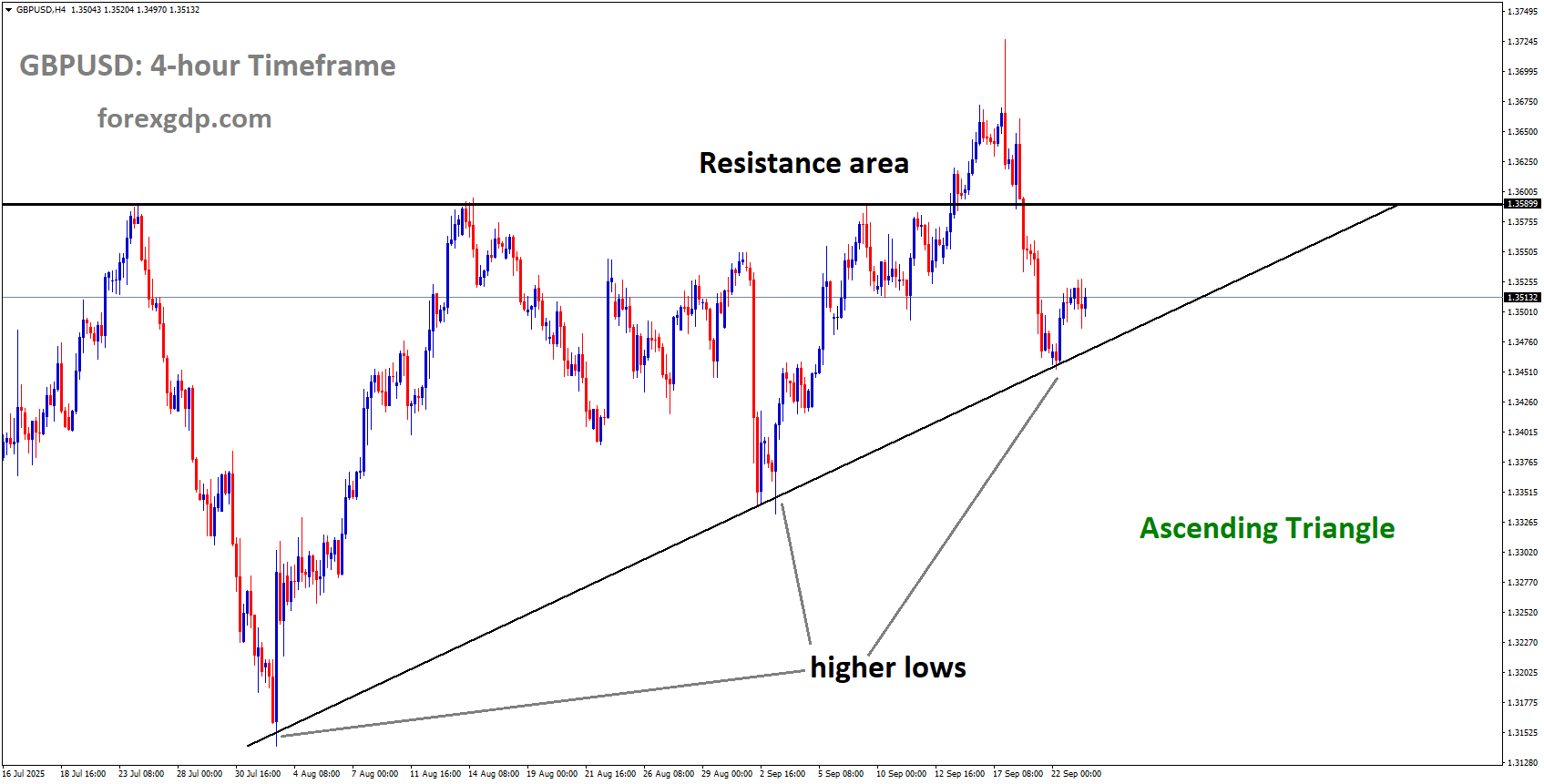
GBPUSD is moving in an Ascending Triangle pattern
This slowdown was mainly driven by two factors:
-
Manufacturing remains weak: Factories are still struggling, with new orders and exports falling short.
-
Services lose momentum: The services sector, which usually supports the UK economy, also showed signs of cooling down.
Economists noted that businesses are reporting weaker confidence, lower international demand, and even job cuts. These warning signs suggest that the UK economy is not as stable as some hoped, making it harder for the Pound to stay strong against other major currencies.
The Bigger Picture for the UK Economy
The UK’s economic troubles are not limited to just weaker business activity. Rising government borrowing and a heavy public debt burden are putting extra strain on the economy. Recent figures showed that government borrowing has climbed to levels not seen in years, which may force the government to consider raising taxes in the upcoming budget. Higher taxes can slow down growth even further, leaving households and businesses with less money to spend.
What Central Banks Are Doing
Whenever weak economic data comes out, traders immediately start asking: What will the central bank do about it?
Bank of England’s Careful Approach
The Bank of England (BoE) recently decided to hold interest rates steady. After previously raising rates to fight inflation, the BoE is now being cautious. Officials say they want to move “gradually and carefully” when it comes to easing policy. That means while there could be more rate cuts later, they don’t want to act too quickly and risk letting inflation flare up again.

This “wait and see” approach has left markets unsure of what’s coming next. If the economy continues to weaken, pressure will grow on the BoE to take more aggressive steps to support growth.
The Federal Reserve’s Influence
While the UK’s central bank is important, what happens in the United States also has a big impact on the Pound. The Federal Reserve (Fed) recently cut rates for the first time in 2025 and hinted that more cuts might be on the way. Investors are watching closely to see how far the Fed will go.
Fed Chair Jerome Powell’s speeches often move markets worldwide. If Powell signals a more aggressive easing path, the US Dollar could weaken, which might give the Pound some breathing space. On the other hand, if Powell sounds cautious and focused on inflation, the Dollar could remain firm, keeping pressure on the Pound.
Why the Pound Sterling Is Losing Strength
So, why exactly is the Pound falling? The answer lies in a combination of domestic and global factors:
-
Weaker UK Data: Slowing growth and signs of business struggles make the UK less attractive for investment.
-
High Government Debt: Rising borrowing raises fears about future tax hikes and slower growth.
-
Central Bank Uncertainty: With the Bank of England holding rates steady and not giving clear signals, investors are left guessing.
-
Global Dollar Strength: The US Dollar remains a safe-haven currency, and even small changes in Fed policy can pull money away from the Pound.
When you put all these together, it’s not surprising that the Pound is struggling to hold its ground against other major currencies.
Investor Reactions and Market Sentiment
Traders reacted quickly after the weak UK data was released. The Pound slipped against the US Dollar and other major peers. Meanwhile, the Dollar itself has been moving cautiously as markets await more guidance from the Fed.
Interestingly, some Fed officials believe the US still needs more rate cuts to protect jobs, while others warn about keeping inflation in check. This mix of opinions adds uncertainty, which tends to make investors more careful. When there’s doubt, many prefer to hold onto the Dollar instead of riskier currencies like the Pound.
Looking Ahead: What to Watch For
For anyone keeping an eye on the Pound Sterling, a few things will be key in the coming weeks:
-
UK Autumn Budget: Will the government raise taxes to cover the high borrowing? If so, it could weigh further on economic growth.
-
Bank of England Meetings: Any shift in tone or action on interest rates will be closely watched.
-
US Federal Reserve Speeches: Every word from Powell and other Fed members can swing currency markets.
-
Fresh Economic Data: Reports on jobs, inflation, and consumer spending in both the UK and the US will guide investor decisions.
Final Summary
The Pound Sterling is under pressure as the UK economy shows signs of slowing down. Weak business activity, rising government debt, and uncertainty about future monetary policy are all weighing on the currency. At the same time, the strength of the US Dollar adds extra challenges.
For now, the Pound’s future will largely depend on how the Bank of England balances its cautious stance with the need to support the economy, and how the Federal Reserve shapes global market sentiment. In simple terms, the Pound is in a tricky spot, and the next few months could prove decisive in shaping its path forward.
USDJPY Holds Steady as Markets Await Powell’s Next Move
The Japanese Yen (JPY) has always been viewed as one of the most reliable safe-haven currencies in the world. Investors often turn to it during times of global uncertainty or market turbulence. However, in recent times, the Yen has been caught in a tug-of-war between domestic political challenges, global risk appetite, and diverging central bank policies. Let’s break down what’s really happening with the Yen right now, and why traders seem unsure about where it’s headed next.
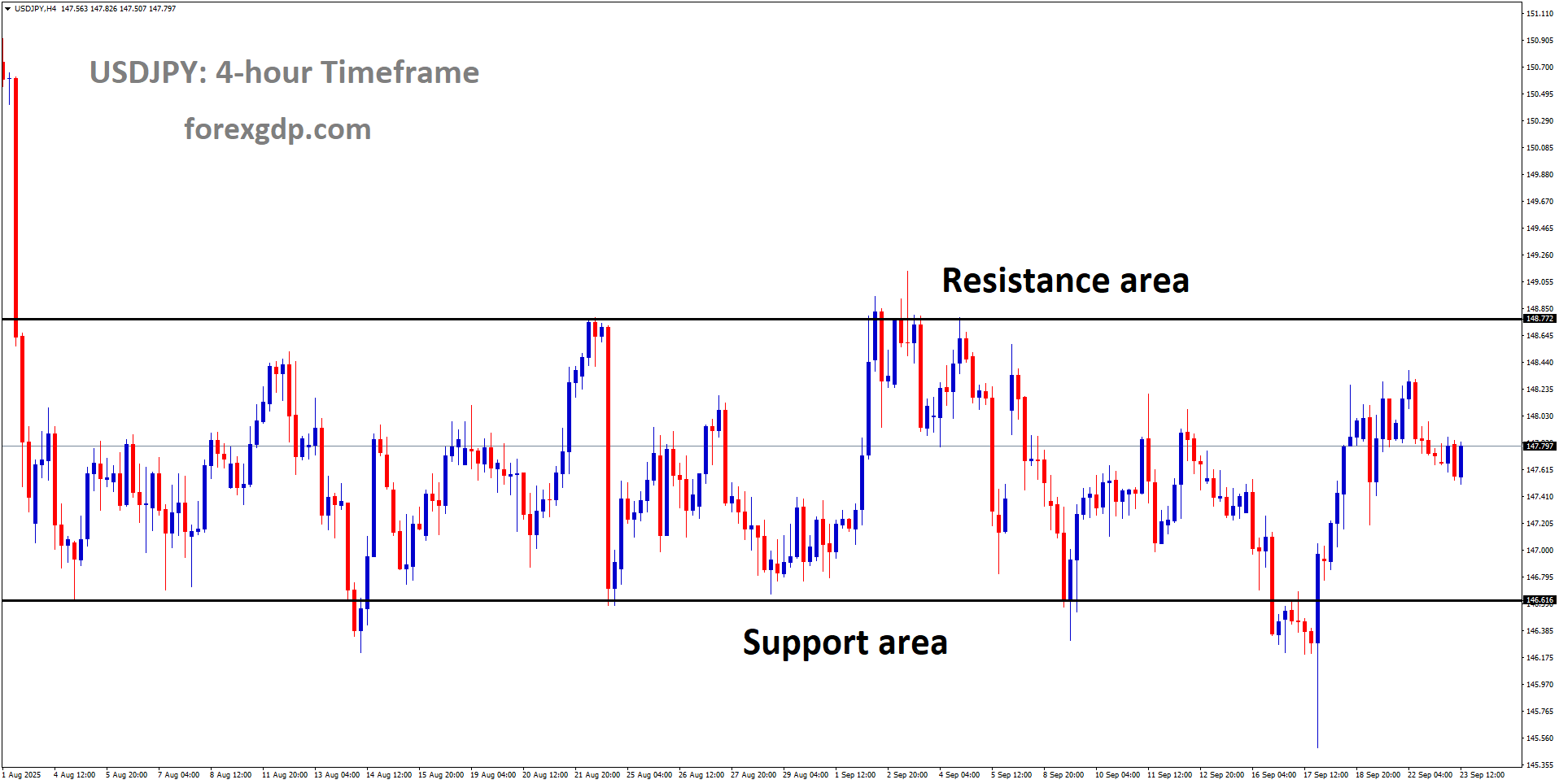
USDJPY is moving in a box pattern, and the market has rebounded from the support area of the pattern
Political Uncertainty Clouds the Outlook
One of the biggest domestic issues influencing the Yen right now is political uncertainty in Japan. The upcoming Liberal Democratic Party (LDP) leadership election, set for early October, is already shaping expectations for the nation’s future economic and fiscal direction.
-
Leadership Stakes: If the new leader leans more dovish on monetary policy, it could push back the timing of the next interest rate hike by the Bank of Japan (BoJ). This has made investors cautious, as political decisions could indirectly affect currency stability.
-
Key Figures Speaking Out:
-
Shinjiro Koizumi, one of the frontrunners, stressed the importance of balancing fiscal discipline with economic growth.
-
Yoshimasa Hayashi, another contender, argued against excessive government borrowing through deficit-covering bonds.
-
Sanae Takaichi pointed out the risks of rising yields, highlighting the need for careful fiscal planning.
-
These varying viewpoints show that Japan’s political climate could heavily influence how the BoJ approaches interest rates in the coming months.
Central Bank Policies: BoJ vs. The Fed
Another major factor weighing on the Yen is the divergence between Japan’s central bank and the U.S. Federal Reserve.
-
Bank of Japan’s Position:
The BoJ recently decided to keep its interest rate unchanged at 0.5%, but not without pushback. Two members dissented, signaling readiness for hikes if inflation and growth trends continue as forecasted. Investors now believe there’s a growing chance of a BoJ rate hike in October. -
The Fed’s Dovish Tilt:
Meanwhile, the U.S. Federal Reserve has already cut rates for the first time in years and suggested more cuts may come by the end of the year. The Fed is trying to balance concerns over slowing growth and a weaker labor market.
This contrast—Japan possibly tightening while the U.S. loosens—has created a complex scenario. On one hand, higher Japanese rates could support the Yen. On the other, if the Fed cuts too aggressively, it may cap the U.S. Dollar’s strength, leaving the Yen stuck in a sideways struggle.

Global Market Sentiment and Risk Appetite
Apart from politics and monetary policy, global market mood also plays a huge role in shaping demand for the Yen. Traditionally, when investors feel nervous about global risks, they buy safe-haven assets like the JPY. But lately, strong performance in global stock markets has kept demand for the Yen limited.
-
Stock Market Rally: Wall Street indices recently hit record highs, and the optimism spread across Asian markets as well. When investors are confident in riskier assets like stocks, they’re less likely to flock to safe-haven currencies.
-
Geopolitical Risks Still Looming:
Even though markets are upbeat, geopolitical risks remain. NATO has accused Russia of airspace violations, and tensions in the Russia-Ukraine conflict are intensifying with drone attacks on civilian areas. Meanwhile, violence has escalated in the Middle East, with Hamas launching rockets into Israel and the Israeli military responding with heavier strikes.
These ongoing conflicts keep safe-haven demand alive in the background. The Yen, as a trusted shelter in uncertain times, could benefit if global risks escalate further.
Key Events Traders Are Watching
Investors in the Yen market aren’t just reacting to today’s news—they’re also keeping an eye on upcoming events that could swing the currency either way.
Fed Chair Powell’s Speech
All eyes are on Federal Reserve Chair Jerome Powell, who is scheduled to speak soon. His comments could provide fresh clues about how aggressively the Fed plans to cut rates, which will directly affect the Dollar and, by extension, the Yen.
Economic Data Releases
Flash Purchasing Managers’ Index (PMI) reports will give insights into global economic health. Strong numbers might encourage more risk-taking, reducing Yen demand. Weak numbers, on the other hand, could revive the safe-haven appeal.
Inflation Readings
Two inflation figures stand out:
-
Japan’s capital city, Tokyo, will release its latest inflation data. If inflation rises, it could strengthen the case for the BoJ to raise rates soon.
-
In the U.S., the Personal Consumption Expenditure (PCE) Price Index will be published, and this is the Fed’s preferred inflation measure. A softer PCE reading could support more rate cuts, indirectly boosting the Yen.
Why Traders Are Still Hesitant
Despite all the moving parts—politics, central bank policies, and global risks—traders are cautious about making bold moves with the Yen. The signals are mixed:
-
Political changes could either speed up or delay monetary tightening in Japan.
-
The Fed’s policy shift may keep the Dollar in check, but not enough to give the Yen a strong boost.
-
Global stock rallies are keeping safe-haven demand muted, even as geopolitical tensions simmer in the background.
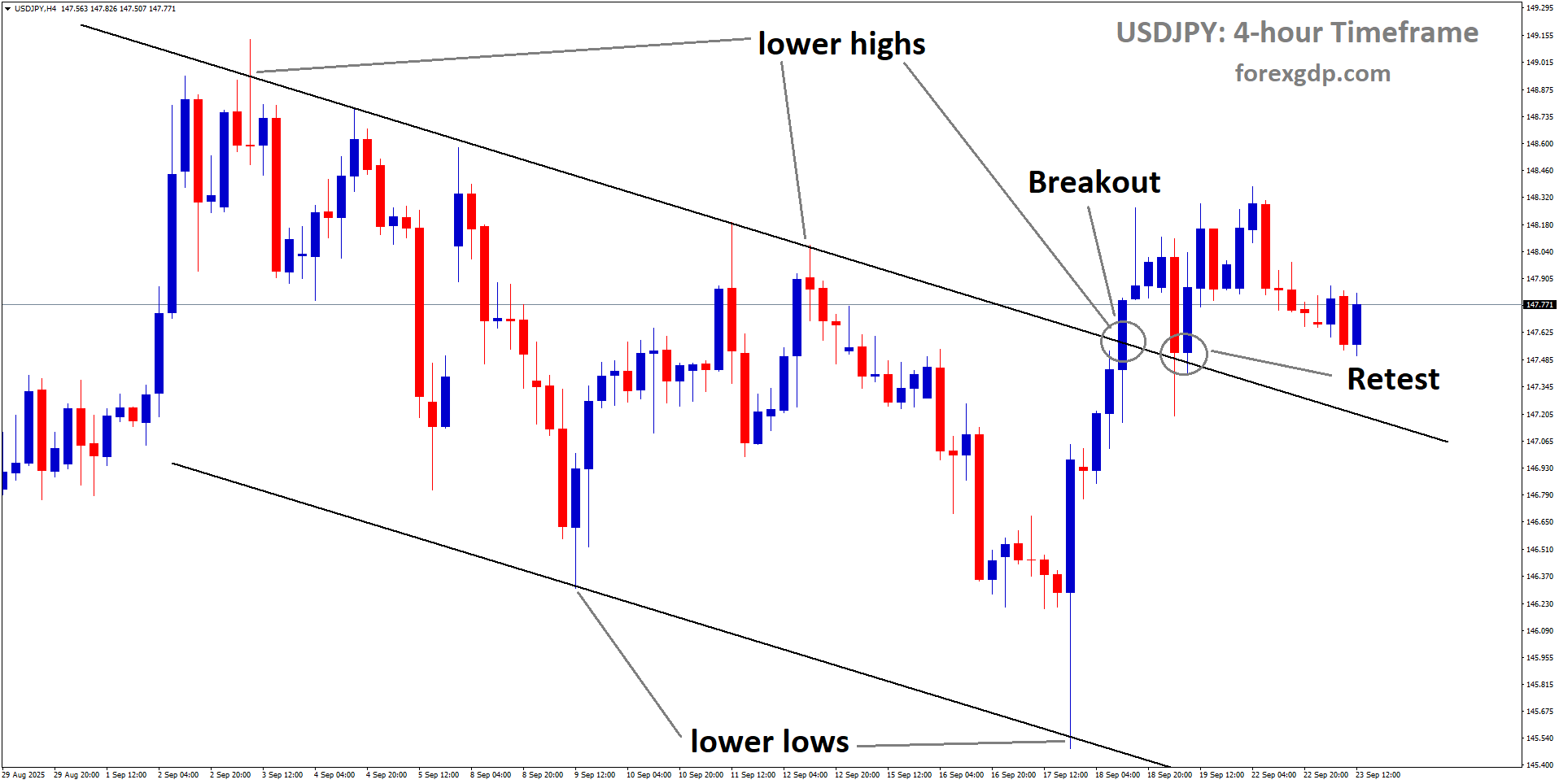
USDJPY is rebounding from the retest area of the broken downtrend channel
This uncertainty explains why the Yen has been moving sideways instead of trending strongly in one direction.
Final Summary
The Japanese Yen is currently at a crossroads. Domestic political uncertainty, diverging central bank policies, and shifting global risk appetite are all pulling it in different directions. While there’s potential for the Yen to strengthen if the Bank of Japan raises rates or if global risks flare up, the opposite could happen if global markets stay upbeat and the Fed continues cutting rates.
For now, traders seem to be waiting for clearer signals—whether from Japan’s upcoming leadership election, BoJ’s next moves, or U.S. policy shifts. Until then, the Yen may remain trapped in a balancing act, swayed by headlines and investor sentiment from around the globe.
AUDUSD Struggles While Dollar Strengthens on Fed Signals
The global currency market has been a bit tense lately, especially with the Australian Dollar (AUD) showing weakness against the US Dollar (USD). A combination of local data releases and cautious tones from US Federal Reserve officials has kept traders on edge. Let’s dive into what’s really going on and why the AUD seems to be losing some ground.
Why the Australian Dollar Lost Momentum
Australia’s economic performance often sets the tone for how its currency trades, and this week, fresh data has revealed a slowdown in growth.
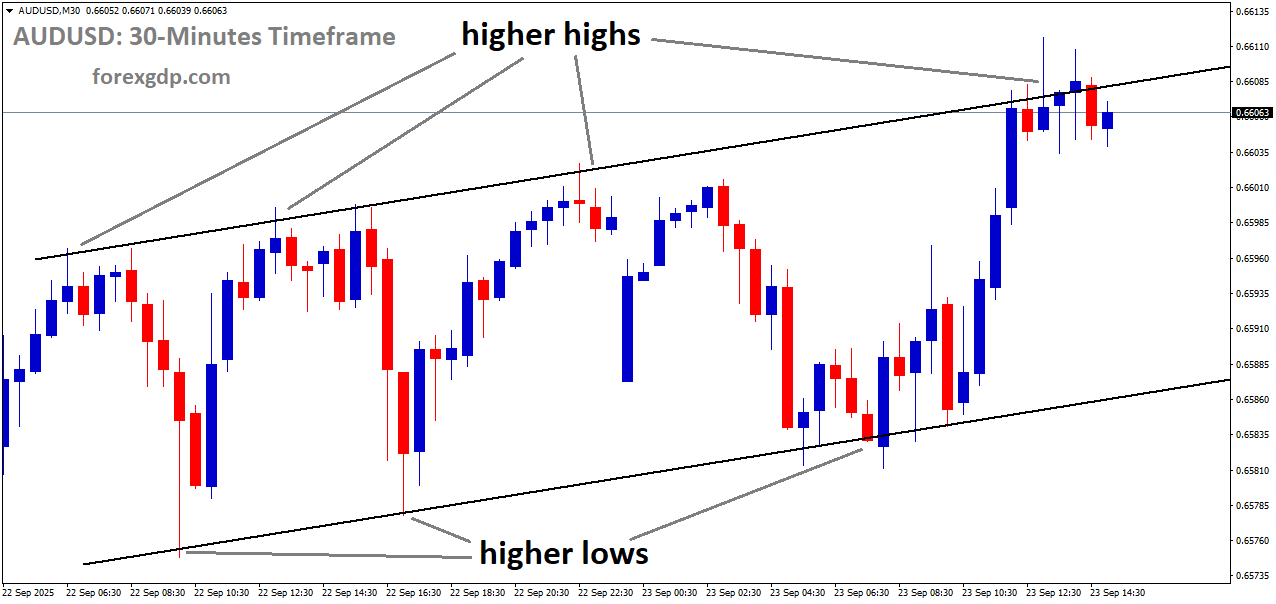
AUDUSD is moving in an Ascending channel, and the market has reached a higher high area of the channel
Slowing PMI Figures
The Purchasing Managers’ Index (PMI) numbers were the first big sign of cooling. Australia’s Composite PMI slipped to its lowest point in three months, falling from 55.5 to 52.1. While the number still signals expansion, it shows businesses are feeling the strain.
Both manufacturing and services sectors slowed down. Weaker demand, lower goods orders, and reduced inflows of new business suggest companies are becoming more cautious. This shift can reduce confidence in the economy, putting pressure on the Australian Dollar.
Comments from the Reserve Bank of Australia (RBA)
Adding to the cautious outlook, RBA Governor Michele Bullock noted that while unemployment has ticked slightly higher, the labor market remains tight. She highlighted that recent interest rate cuts were aimed at helping households and businesses keep spending, but also warned that the central bank must stay alert to changing conditions.
This tone reflects a balancing act — the RBA wants to support growth but can’t afford to ignore risks like inflation or global uncertainty. Markets now see a higher chance of another cut later in the year, which tends to weigh on the currency.
The Role of the US Dollar in This Story
The weakness in the Australian Dollar isn’t just about domestic issues. The US Dollar has been holding firm, adding extra pressure to the AUD/USD pair.
Caution From Federal Reserve Officials
Fed officials have been sending clear signals that inflation remains a stubborn problem.
-
Beth Hammack, President of the Cleveland Fed, suggested that price pressures will likely linger.
-
Thomas Barkin, Richmond Fed President, pointed out that tariffs and trade policies could push prices higher, making the Fed’s job even more complicated.
With the Fed already cutting interest rates recently — the first move this year — Chair Jerome Powell explained it was necessary due to growing weakness in the labor market. Yet at the same time, the Fed has made it clear they are far from done with keeping inflation in check. This cautious stance has helped the US Dollar stay firm against other currencies.

Strong Labor Market Signals in the US
Recent US labor data also supported the Greenback. Jobless claims dropped, and continuing claims also fell, suggesting the job market is not collapsing despite some weakness. A healthy labor market gives the Fed more room to take a careful approach rather than rushing into deeper rate cuts.
Global Factors Adding to Market Jitters
Beyond Australia and the US, other global developments are shaping how traders view currencies right now.
China’s Central Bank Holds Rates Steady
The People’s Bank of China (PBOC) kept its Loan Prime Rates unchanged. Since China is a major trade partner for Australia, its economic policies directly influence the Aussie Dollar. Any sign of slower demand from China can impact Australia’s exports, especially commodities, which in turn affects the currency’s strength.
Geopolitical and Trade-Related Moves
Another story catching headlines is the agreement that US companies will take control of TikTok’s algorithm in its American operations. While this doesn’t directly impact the Australian Dollar, it reflects ongoing trade and technology tensions that feed into global risk sentiment. When uncertainty rises, investors often flock to the US Dollar as a safe haven, leaving currencies like the Aussie exposed.
What This Means for the Future of the AUD
The Australian Dollar’s struggle is not just about short-term numbers. It reflects deeper challenges that may linger in the months ahead.
-
Economic slowdown at home: With weaker PMI data and businesses reporting reduced demand, the Australian economy could continue to cool.
-
RBA’s cautious path: Interest rate cuts may provide temporary relief, but they also make the currency less attractive to global investors seeking higher returns.
-
US Dollar dominance: As long as the Federal Reserve maintains a careful but firm stance, the Greenback is likely to remain strong.
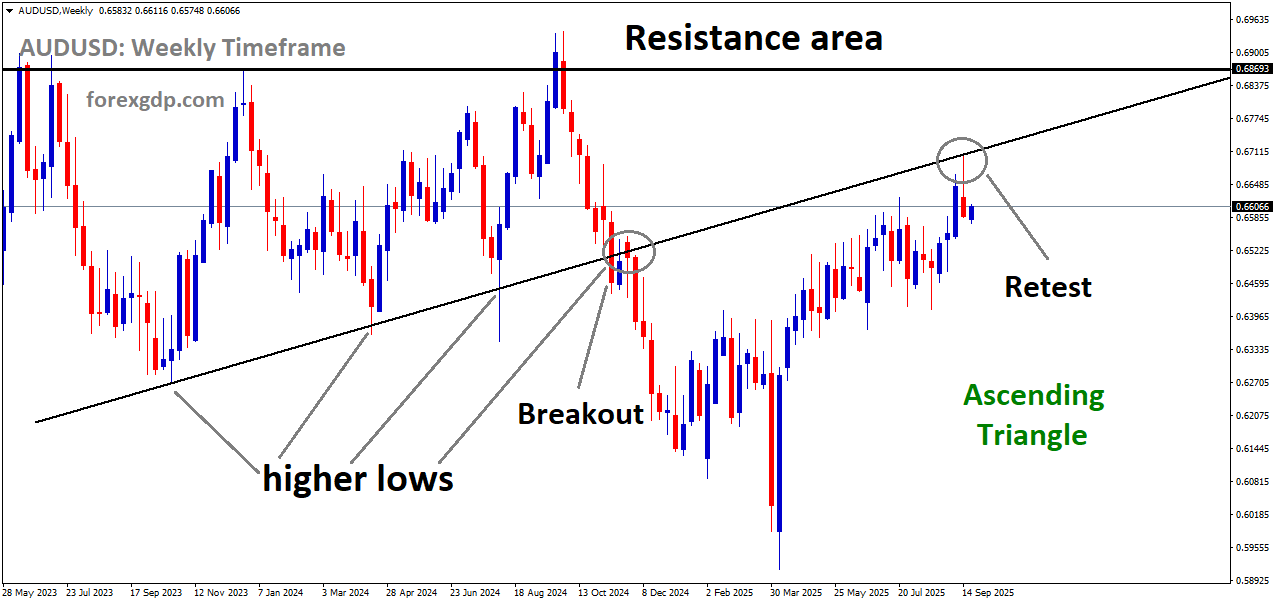
AUDUSD reached the retest area of the broken Ascending Triangle pattern
-
External risks: Global trade issues, China’s policies, and geopolitical developments can all quickly swing market sentiment.
Final Summary
The Australian Dollar has been losing strength, weighed down by softer economic data and cautious signals from the Reserve Bank of Australia. At the same time, the US Dollar is holding its ground thanks to the Federal Reserve’s careful approach to inflation and a still-resilient labor market.
With global uncertainties — from China’s central bank moves to shifting trade policies — adding extra layers of pressure, the AUD could remain under stress in the near term. For now, the story seems clear: the Australian Dollar is on the back foot while the US Dollar continues to command the spotlight.
NZD/USD struggles to hold ground as US Dollar regains strength
The currency market is always full of ups and downs, and the New Zealand Dollar (NZD) is a perfect example of how quickly things can change. After showing strength at the start of the week, the Kiwi lost ground again, pressured by disappointing economic data at home and a recovery in the U.S. Dollar (USD). Let’s break down what’s really happening and why this matters.
The Rollercoaster Ride of the New Zealand Dollar
The New Zealand Dollar started the week with some gains, briefly pushing higher. But those gains didn’t last long. By the next day, the Kiwi slipped back near two-week lows as the U.S. Dollar regained strength.
The main reason behind this shift? Confidence in the U.S. economy compared to the shaky outlook in New Zealand. Traders are watching closely, and even small changes in data or central bank signals can quickly swing momentum.

NZDUSD reached the retest area of the broken downtrend channel
The U.S. Dollar’s Recovery and Market Expectations
The U.S. Dollar had taken a breather earlier in the week after climbing strongly against the New Zealand Dollar. This pause didn’t mean weakness—rather, it reflected investors waiting for fresh cues from U.S. data releases and Federal Reserve updates.
One big event drawing attention is the release of U.S. PMI (Purchasing Managers’ Index) data. These figures give a quick snapshot of how business activity is holding up. If the data shows weakness, it could fuel speculation that the Federal Reserve might lean toward more accommodative policies. On the other hand, stronger numbers would support the idea that the U.S. economy is still resilient.
Adding to the anticipation, Fed Chair Jerome Powell’s upcoming speech is expected to provide more clarity about the central bank’s outlook. Markets are on edge, waiting for hints about whether further policy easing is on the table. Investors know that Powell’s words often set the tone for global financial markets.
Why New Zealand’s Economy is Under Pressure
While traders watch the U.S., New Zealand is facing its own challenges. Recent economic data from the country has been disappointing.

-
GDP Contraction: The economy shrank more than analysts expected, signaling weaker growth momentum. This is a big red flag because it suggests businesses and households are struggling.
-
Widening Trade Deficit: New Zealand is importing more than it’s exporting, which adds pressure to the currency. A widening trade gap often means more money leaving the country than coming in, and that weighs on the Kiwi.
These figures have led to growing speculation that the Reserve Bank of New Zealand (RBNZ) may have to consider cutting rates further to support the economy. While rate cuts might provide short-term relief, they usually make a currency less attractive to global investors, adding more downward pressure on the NZD.
Global Market Sentiment and the Kiwi’s Struggles
Currency movements don’t happen in isolation. Global sentiment plays a huge role. Right now, traders are balancing two key narratives:
-
The U.S. Dollar Story: Even with some risks in the U.S. economy, the dollar remains attractive as a safe-haven asset. Investors often flock to it when uncertainty rises.
-
The New Zealand Struggles: Weak data and the potential for more RBNZ easing make the Kiwi less appealing compared to its peers.
This combination explains why the New Zealand Dollar is finding it hard to hold onto gains. Even when it rallies briefly, global headwinds and domestic weakness pull it back down.
What Traders and Investors Are Watching Next
Looking ahead, several things will decide where the NZD heads:
U.S. Economic Data
Upcoming PMI results could set the tone for the dollar. A slowdown would pressure the Fed to be more cautious, while stronger numbers could keep the USD firm.
Fed Powell’s Speech
Markets want guidance. If Powell signals concerns about growth and hints at possible policy adjustments, that could shake up the dollar’s momentum.
New Zealand’s Policy Outlook
Investors will closely watch RBNZ commentary and upcoming data releases. Any signs of further weakness will reinforce expectations of additional easing, limiting NZD’s ability to rise.
Final Summary
The New Zealand Dollar’s recent slip reflects the perfect storm of domestic weakness and global market dynamics. Disappointing GDP and trade figures at home are raising the chances of more RBNZ action, which makes the Kiwi less attractive. Meanwhile, the U.S. Dollar is finding strength again as investors look for safety and await fresh guidance from the Federal Reserve.
In simple terms, the Kiwi is under pressure because it’s stuck between weak local data and a powerful U.S. Dollar. Until New Zealand shows stronger growth signals or the Fed takes a more dovish stance, the NZD is likely to remain on the defensive.