
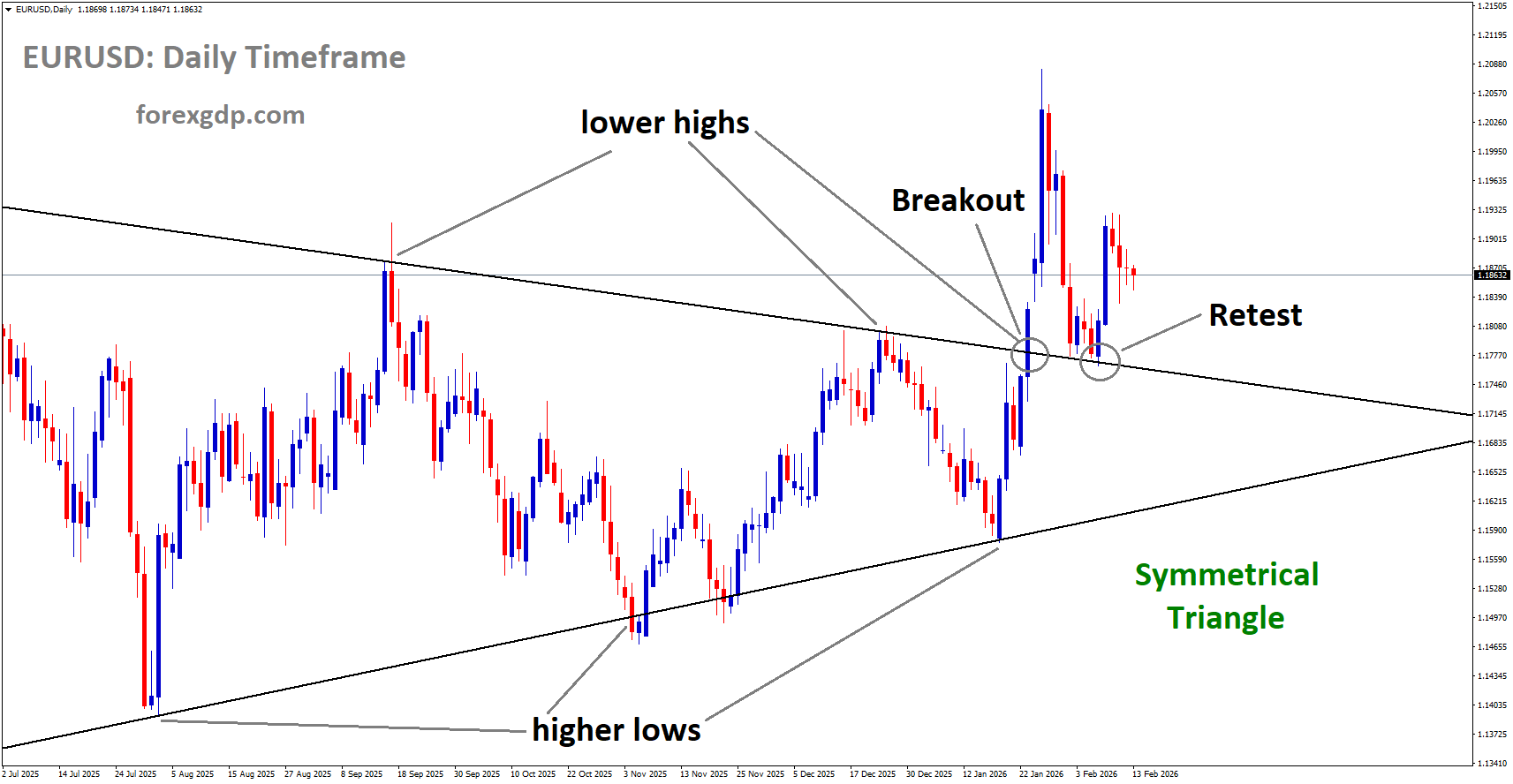
EURUSD is rebounding from the retest area of the broken symmetrical Triangle pattern
EURUSD Struggles to Rebound Even After Strong Euro Area Growth Report
The EUR/USD currency pair has been trading lower for several days, drifting away from its recent weekly high. After touching levels near 1.1928 earlier in the week, the pair has eased back and is now hovering around 1.1855. Despite solid economic data from the Eurozone, the Euro has struggled to hold its ground against the US Dollar.
At the heart of the recent move is a shift in market mood. Even though the Eurozone economy showed steady growth, global investors remain cautious. Concerns about the impact of artificial intelligence on jobs, along with uncertainty about the global economy, have kept risk appetite low. In this environment, the US Dollar has found support as a safe-haven currency.
Eurozone Economy Shows Steady Growth
Fresh data from Europe painted a relatively stable picture of the region’s economy at the end of 2025. According to preliminary figures from Destatis, the Eurozone economy expanded by 0.3% in the fourth quarter compared to the previous quarter. On a yearly basis, growth reached 1.4%, slightly above expectations of 1.3%.
These numbers suggest that the Eurozone avoided a sharper slowdown and managed to maintain steady momentum. While the growth rate is not particularly strong, it shows resilience in the face of global economic challenges.
Employment Data Adds to Positive Signals
Alongside GDP figures, employment data also offered encouraging signs. Employment in the Eurozone rose by 0.2% during the fourth quarter, matching the pace seen in the previous quarter. This was better than expectations, which had predicted a smaller increase of 0.1%.
On a yearly basis, employment climbed by 0.6%, in line with forecasts. This steady rise in jobs suggests that the labor market remains relatively stable, even as economic growth remains modest.
Under normal conditions, such data would likely provide support to the Euro. However, currency markets are not driven by economic figures alone. Broader investor sentiment and global developments often play a much bigger role.
AI Fears Weigh on Investor Confidence
One of the key reasons behind the cautious mood in financial markets is growing concern about artificial intelligence and its potential impact on the labor market. Recent comments from Microsoft AI CEO Mustafa Suleyman sparked renewed debate about how quickly AI could replace white-collar jobs.
In an interview with the Financial Times, Suleyman suggested that many office-based roles could be replaced within the next 12 to 18 months. These remarks unsettled investors and added to worries about the future of employment and economic stability.
As a result, stock markets, particularly on Wall Street, experienced another decline. When investors feel uncertain about the future, they often reduce their exposure to riskier assets such as stocks and certain currencies. This shift in mood is commonly referred to as a “risk-off” environment.
In such times, currencies like the US Dollar tend to benefit because they are seen as safer options. This dynamic has played a major role in the Euro’s recent weakness against the Dollar.
US Dollar Gains Support in Risk-Off Markets
The cautious tone seen in US markets carried over into the Asian trading session. As global investors continued to pull back from risk, the US Dollar gained additional support.
Interestingly, this happened even though recent US economic data has not been particularly strong. Initial Jobless Claims in the United States fell by 5,000 to 227,000. While the drop suggests some improvement, the total number remains relatively high and above expectations of 222,000.
At the same time, Existing Home Sales declined sharply by 8.4% in January. This added to concerns about the strength of the US housing market and the broader economy.
Despite these mixed signals, the US Dollar has managed to stay firm. The reason lies in the overall market mood. In times of uncertainty, investors often prioritize safety over growth. The Dollar’s role as the world’s primary reserve currency gives it a unique advantage during such periods.
Focus Turns to US Inflation Data
While recent economic reports have influenced short-term movements, traders are now looking ahead to a key event: the release of US Consumer Price Index (CPI) data for January.
Inflation figures are closely watched because they help shape expectations about the Federal Reserve’s next moves. The central bank’s decisions on interest rates have a direct impact on the strength of the US Dollar.
Current forecasts suggest that headline inflation may have eased to 2.5% year-on-year, down from 2.7% in December. Core inflation, which excludes food and energy prices, is also expected to slow slightly to 2.5% from 2.6%.
If inflation continues to cool, it could increase expectations that the Federal Reserve may consider adjusting its monetary policy stance in the future. On the other hand, if inflation remains stubbornly high, policymakers might maintain a cautious approach.
Because of this uncertainty, trading activity has been somewhat subdued. Many investors prefer to wait for clearer signals before making major decisions.
Why EUR/USD Remains Under Pressure
Even though the Eurozone’s economic data has been relatively positive, the broader environment has limited the Euro’s ability to recover. Currency markets often react more strongly to global sentiment and central bank expectations than to individual economic reports.
Several factors are keeping pressure on the EUR/USD pair:
-
Ongoing global risk aversion driven by AI-related job concerns
-
Weak performance in equity markets
-
Safe-haven demand supporting the US Dollar
-
Uncertainty ahead of important US inflation data
In this context, the Euro’s solid GDP and employment numbers have not been enough to change the overall direction of the market.
The Bigger Picture for Investors
The current situation highlights how interconnected global markets have become. A comment from a technology executive about artificial intelligence can influence stock markets, currencies, and investor confidence around the world.
At the same time, central bank policy remains a major driver of currency trends. With inflation still a key issue in both the United States and Europe, future data releases will continue to shape expectations and market behavior.
For now, caution appears to be the dominant theme. Investors are balancing signs of steady economic growth in the Eurozone against broader global uncertainties. Until there is greater clarity on inflation and the future direction of monetary policy, the EUR/USD pair may continue to move within a limited range.
Final Thoughts
The EUR/USD exchange rate has pulled back from recent highs, despite stronger-than-expected economic data from the Eurozone. Steady GDP growth and solid employment figures show that the European economy remains stable, but this has not been enough to lift the Euro.
Concerns about the impact of artificial intelligence on jobs have dampened investor confidence, pushing markets into a risk-off mood. In this environment, the US Dollar has gained support as a safe-haven currency.
With US inflation data on the horizon, traders are waiting for fresh clues about the Federal Reserve’s next steps. Until then, caution and uncertainty are likely to remain key themes in the currency market.
GBPUSD Stalls Near 1.3600 as Traders Brace for Key US CPI Release
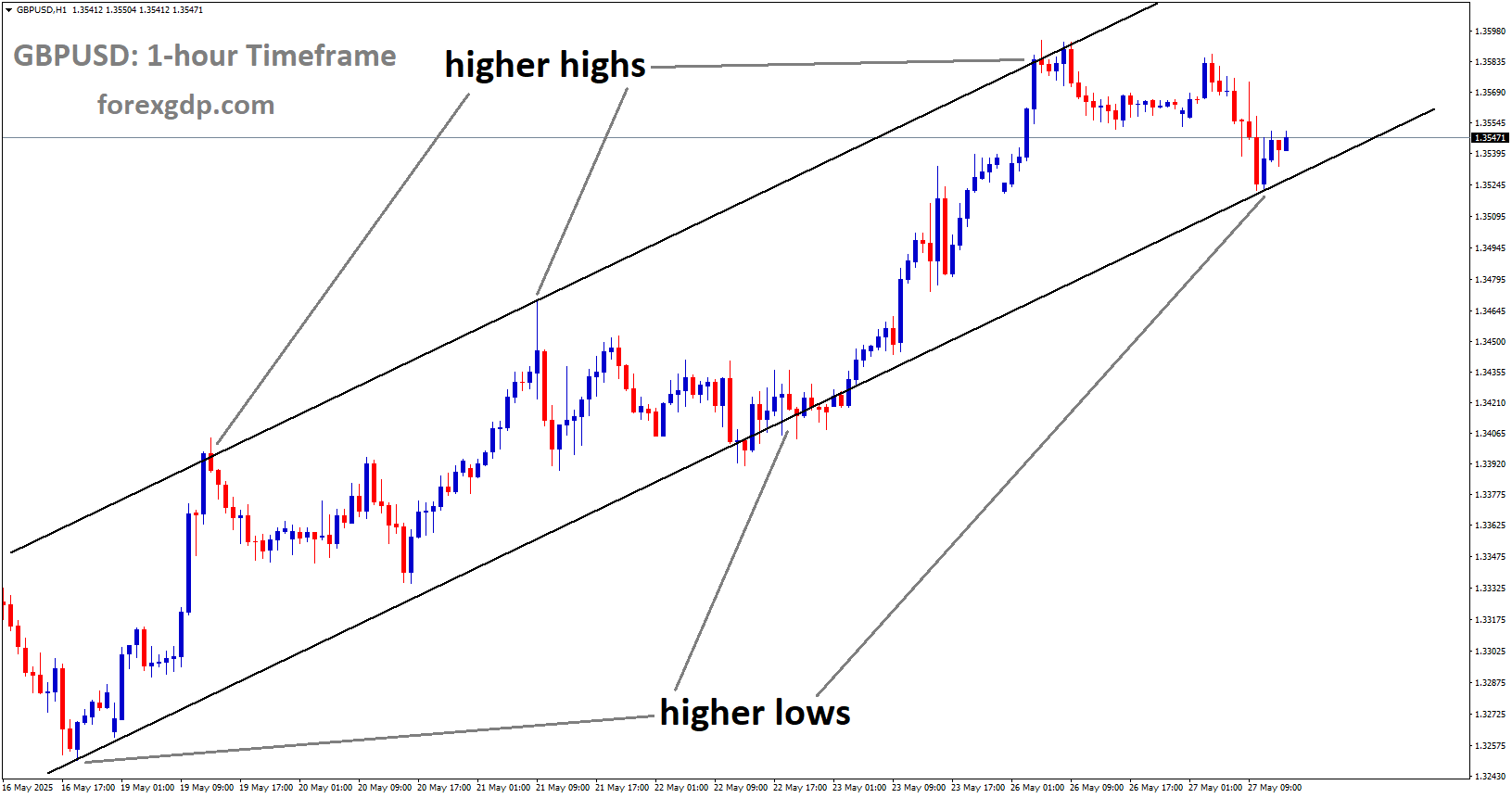
The British Pound has been under steady pressure against the US Dollar in recent days. After reaching highs above 1.3700 earlier in the week, the GBP/USD pair has slipped back and is now hovering around the 1.3600 level. This marks the fourth straight day of losses for the Pound, as investors grow cautious and wait for fresh economic signals from both the United States and the United Kingdom.
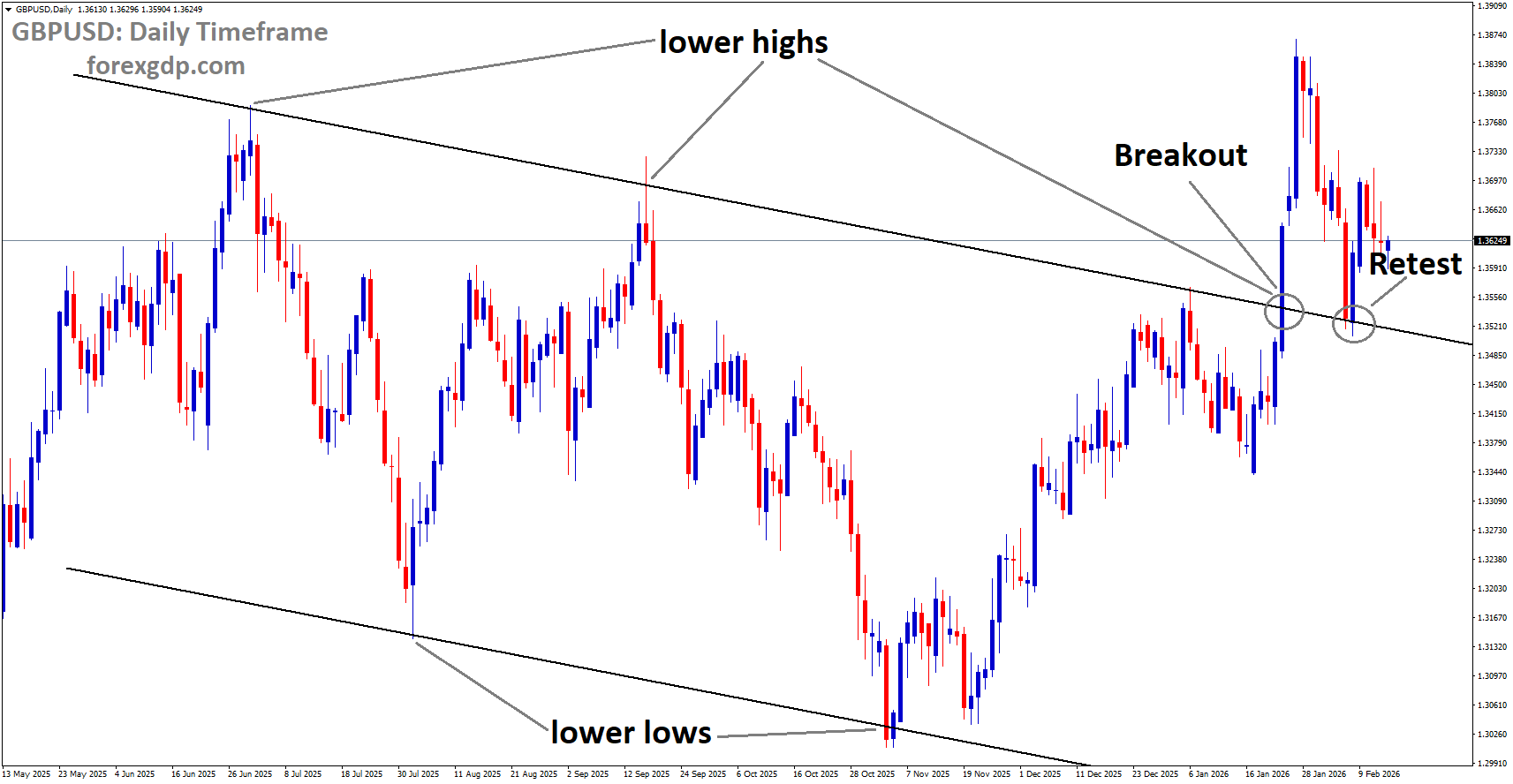
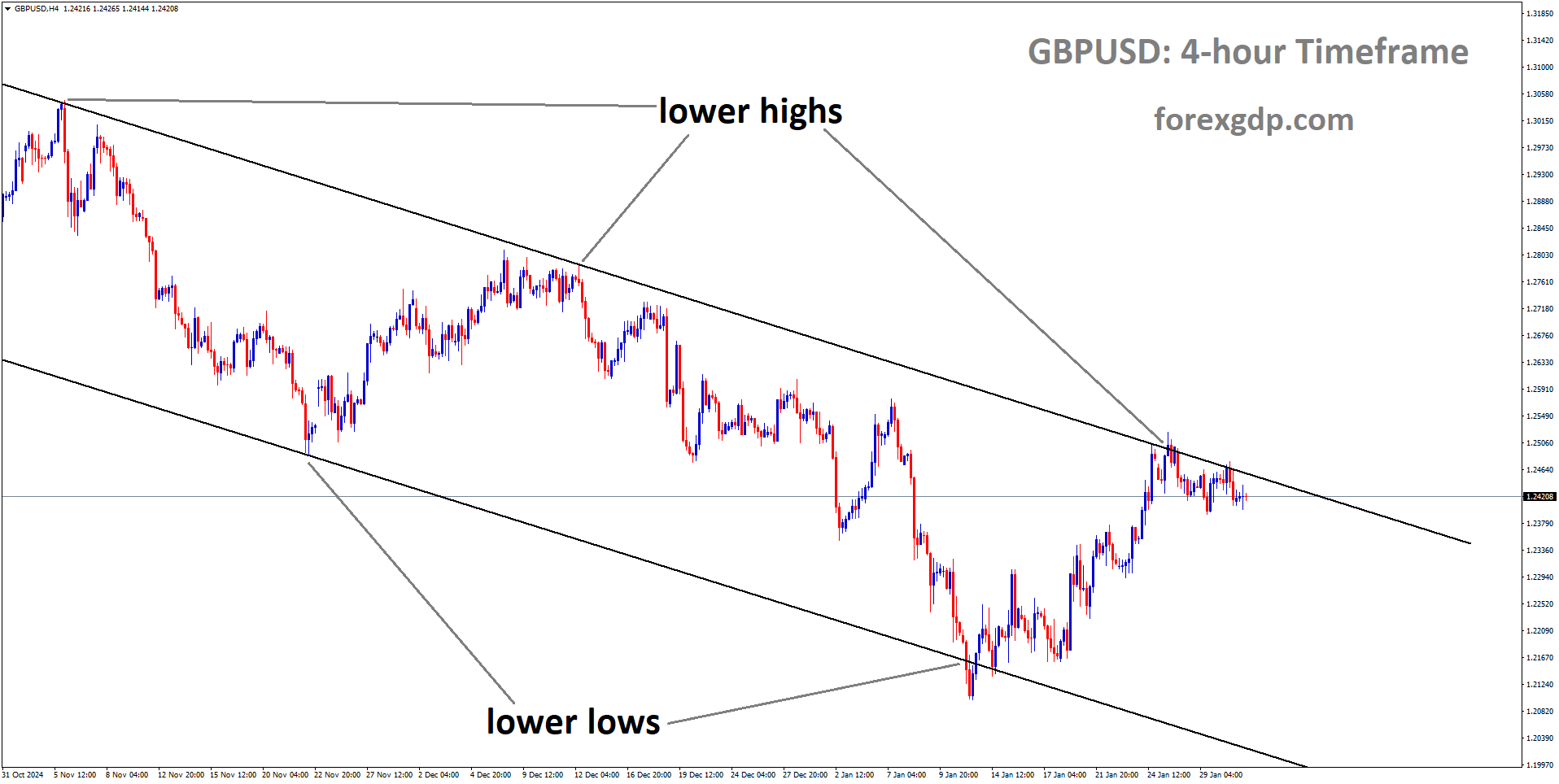
GBPUSD is rebounding from the retest area of the broken descending channel
At the heart of the current market mood is uncertainty. Traders are closely watching upcoming US inflation data, while also digesting weaker-than-expected economic figures from the UK. Together, these factors are shaping short-term expectations for interest rates and the broader direction of the currency market.
US Inflation Data Takes Center Stage
Global currency markets are moving within tight ranges as investors hold back ahead of the latest US Consumer Price Index (CPI) report. This data release is seen as a key event because it provides insight into inflation trends, which heavily influence Federal Reserve policy decisions.
Economists expect headline inflation for January to have risen by 0.3% compared to the previous month. On a yearly basis, inflation is projected to slow slightly, easing to 2.5% from 2.7% in December. The core CPI, which excludes food and energy prices to provide a clearer view of underlying price pressures, is also expected to show a small decline on an annual basis.
These forecasts suggest that inflation in the US may be cooling gradually, though not dramatically. For investors, the exact outcome matters. Even a small deviation from expectations could trigger noticeable moves in the US Dollar.
Why Inflation Matters So Much
Inflation data plays a major role in shaping central bank decisions. If inflation remains high, the Federal Reserve may keep interest rates elevated for longer. If inflation slows more than expected, it increases the chances that the Fed could begin cutting rates sooner.
Recently, some US economic reports have come in weaker than anticipated. This has already led to growing speculation that the Federal Reserve might shift toward a more supportive stance in the coming months. If inflation falls more sharply than forecast, that speculation could intensify.
In such a scenario, the US Dollar could weaken broadly, as lower interest rates tend to reduce its appeal to global investors. On the other hand, if inflation proves stickier than expected, the Dollar may strengthen again as markets adjust their expectations.
Risk-Averse Mood Supports the Dollar
Another key factor influencing GBP/USD is the overall market mood. Investors are currently showing a more cautious, or risk-averse, attitude. In uncertain times, the US Dollar often benefits from its reputation as a safe-haven currency.
Trading volumes have been relatively light, reflecting the wait-and-see approach ahead of the inflation data release. When markets are cautious, investors often move funds into assets perceived as safer, and the US Dollar frequently tops that list.
This shift in sentiment has helped the Dollar recover from earlier weakness and has added pressure on the Pound. Even without major new developments, this defensive positioning can keep currency pairs like GBP/USD moving within narrow but important ranges.
UK Economic Data Disappoints

While US inflation data is in focus, the Pound is also dealing with domestic challenges. The latest UK Gross Domestic Product (GDP) figures, released on Thursday, came in below expectations and weighed further on the currency.
The UK economy grew by 0.1% in the fourth quarter compared to the previous quarter. On a yearly basis, growth stood at 1%. Both figures were weaker than what analysts had predicted. Markets had been looking for slightly stronger quarterly and annual growth rates.
Although the economy did avoid contraction, the modest pace of expansion highlights ongoing weakness in certain sectors.
Manufacturing and Services Under Pressure
Additional data showed that the manufacturing sector contracted sharply in December. This decline played a major role in limiting overall economic growth. At the same time, output in the services sector, which is a major part of the UK economy, stalled.
When both manufacturing and services struggle, it raises concerns about the broader health of the economy. Businesses may reduce investment, hiring could slow, and consumer confidence might weaken. All of these factors can hold back economic momentum.
For currency markets, weak economic data often translates into expectations of easier monetary policy. That is exactly what is happening in the UK right now.
Growing Expectations of Bank of England Rate Cuts
The softer GDP figures have strengthened the belief that the Bank of England may need to do more to support economic growth. Investors are increasingly pricing in the possibility of additional interest rate cuts in the coming months.
Lower interest rates generally make a currency less attractive, as investors earn smaller returns on assets denominated in that currency. As expectations for further rate cuts build, the Pound tends to face selling pressure.
The Bank of England faces a delicate balance. On one hand, it wants to support economic growth. On the other hand, it must ensure that inflation remains under control. If economic data continues to disappoint while inflation shows signs of easing, the central bank may feel more comfortable loosening policy.
For now, markets appear to be leaning toward the view that the BoE will need to take action sooner rather than later.
GBP/USD Caught Between Two Forces
The recent movement in GBP/USD reflects a tug-of-war between developments in the UK and the United States. On the UK side, weaker growth and rising expectations of rate cuts are weighing on the Pound. On the US side, uncertainty around inflation and Federal Reserve policy is creating mixed signals for the Dollar.
If US inflation data comes in softer than expected, it could reduce support for the Dollar and give the Pound some breathing room. However, if inflation remains steady or surprises to the upside, the Dollar could extend its recovery, putting further pressure on GBP/USD.
At the same time, any additional signs of weakness in the UK economy could reinforce the case for more Bank of England easing, limiting the Pound’s ability to rebound.
What to Watch Next
Investors will be closely analyzing not only the headline inflation number but also the details within the US CPI report. Core inflation trends, wage growth indicators, and consumer spending data will all play a role in shaping expectations.
In the UK, upcoming economic releases and comments from Bank of England officials will be important. Markets will be looking for clues about how concerned policymakers are about growth and whether they are preparing for further policy adjustments.
Global risk sentiment will also remain a key driver. If markets grow more optimistic, the Pound could find support. If caution continues to dominate, the US Dollar may remain firm.
Final Thoughts
GBP/USD is currently trading near 1.3600 after retreating from recent highs above 1.3700. The Pound has weakened for several days in a row, pressured by disappointing UK economic data and rising expectations of further Bank of England rate cuts.
Meanwhile, the US Dollar is finding support from a cautious market mood as investors wait for crucial inflation figures. The upcoming US CPI report could play a decisive role in shaping short-term direction, especially as markets weigh the possibility of future Federal Reserve rate cuts.
With both economies sending mixed signals, the currency pair is likely to remain sensitive to fresh data and central bank commentary. For now, traders are watching closely and waiting for clearer signs about the next move from policymakers on both sides of the Atlantic.
USDJPY pushes higher past 153.50 as markets brace for US inflation update
The USD/JPY currency pair has moved back above the 153.00 level after finding support near 152.30. While the US Dollar has managed to recover slightly against the Japanese Yen, it is still heading toward a notable weekly decline. Market activity has remained relatively quiet, with traders waiting for the upcoming US Consumer Price Index (CPI) report.
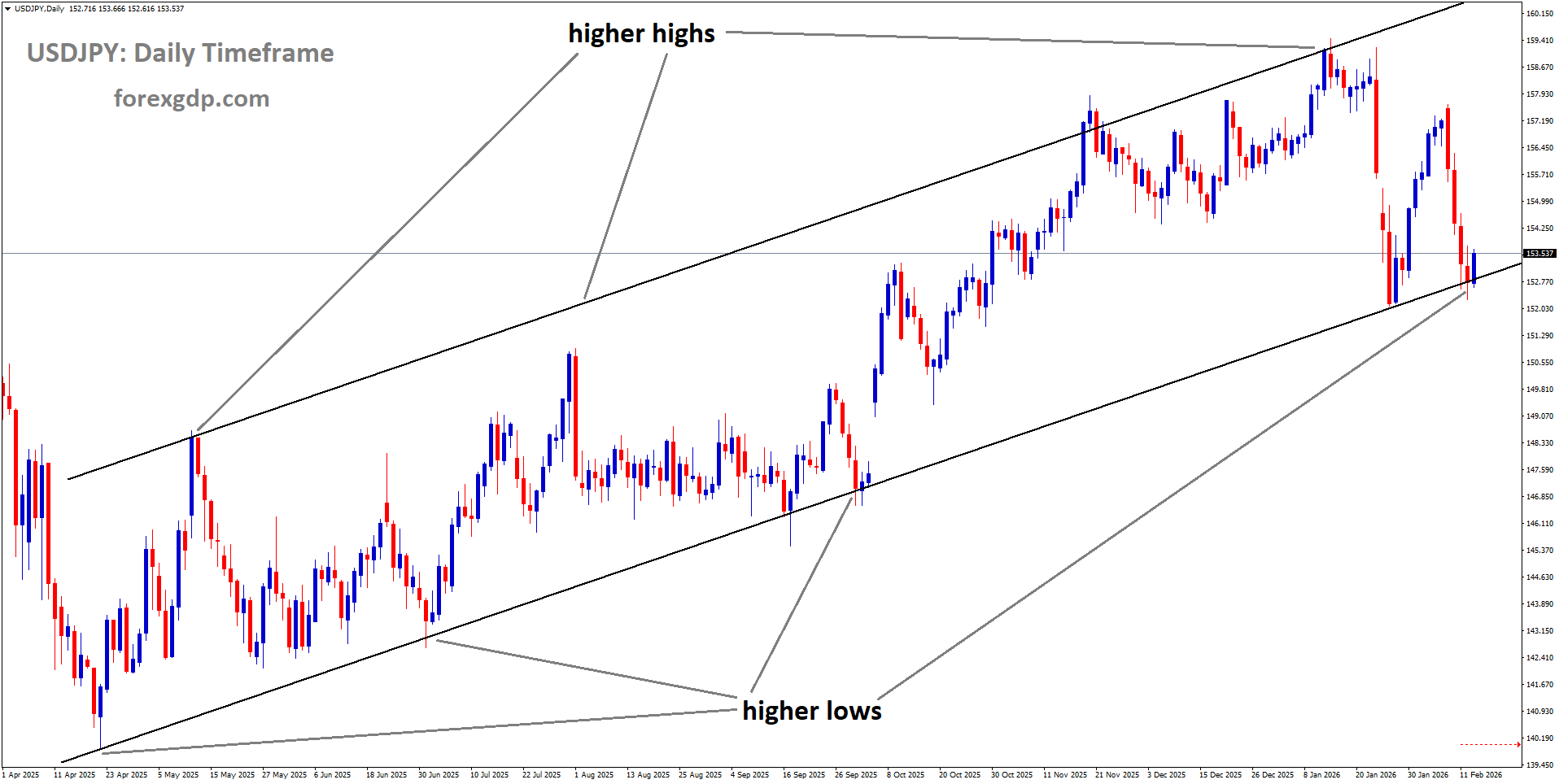
USDJPY is moving in an uptrend channel, and the market has reached the higher low area of the channel
At the same time, the Japanese Yen continues to gain strength due to expectations of a stable political environment in Japan and growing calls for further monetary tightening by the Bank of Japan (BoJ). These factors are shaping the direction of the USD/JPY pair and influencing investor sentiment.
US Dollar Recovers Modestly Ahead of Inflation Report
On Friday, the US Dollar showed signs of stabilizing after falling earlier in the week. It found support around the 152.30 level against the Yen and gradually moved back into the 153.00 range. However, trading volumes have been lower than usual, reflecting caution among investors.
One of the main reasons for the cautious mood is the upcoming release of the US CPI report. This data is closely watched because it provides insight into inflation trends in the United States. Inflation figures can heavily influence the Federal Reserve’s decisions on interest rates, which in turn affect the value of the US Dollar.
What the Market Expects from CPI
Economists expect consumer prices to have increased by 0.3% in January on a monthly basis. On a yearly basis, overall inflation is projected to ease to 2.5%, down from 2.7% in December.
The core CPI, which excludes food and energy prices and is often seen as a better measure of underlying inflation, is also expected to show a slight decline. Forecasts suggest it may slow to 2.5% from 2.6% in the previous month.
If inflation comes in weaker than expected, it could increase expectations that the Federal Reserve will lower interest rates in the coming months. Lower rates typically reduce the appeal of the US Dollar, as investors may seek higher returns elsewhere.
Pressure Builds on the Federal Reserve
In recent weeks, several US economic indicators have pointed to slower growth. This has added pressure on the Federal Reserve to consider reducing borrowing costs to support the economy.
If inflation shows a larger decline than expected, it would strengthen the argument for rate cuts. That could weigh further on the US Dollar and limit any significant recovery against the Yen.
On the other hand, if inflation remains steady or comes in higher than expected, it could delay potential rate cuts. In that case, the US Dollar might find renewed support.
For now, however, the overall risk for the Dollar appears tilted to the downside, especially if inflation data surprises to the softer side.
Japanese Yen Gains Strength from Political Stability

While the US Dollar has been under pressure, the Japanese Yen has shown resilience. The broader trend in the USD/JPY pair suggests that the Yen is having one of its strongest weeks in over a year.
A key factor supporting the Yen is Japan’s political situation. Prime Minister Takaichi’s recent landslide victory has been welcomed by markets. Investors see this result as a sign of political stability, which often boosts confidence in a country’s currency.
Although there were some concerns about her fiscal policies, those worries have taken a back seat for now. Stability and continuity in leadership are currently seen as more important, especially in a global environment filled with uncertainty.
Growing Expectations of Bank of Japan Tightening
Another important driver of the Yen’s strength is the outlook for Japan’s monetary policy. For many years, the Bank of Japan maintained extremely low interest rates to stimulate economic growth. However, the situation appears to be changing.
Naoki Tamura, a member of the BoJ, recently stated that current interest rates are still “considerably distant” from what is considered a neutral level. He also noted that Japan’s economy is getting closer to achieving its 2% inflation target.
These comments have fueled speculation that the BoJ could raise interest rates again as soon as its March meeting. If that happens, it would further narrow the interest rate gap between Japan and the United States.
Why BoJ Policy Matters for USD/JPY
The difference in interest rates between two countries is one of the main factors that influence currency movements. When US rates are higher than Japanese rates, investors tend to favor the Dollar over the Yen. But if Japan begins raising rates, that gap could shrink.
A smaller gap makes the Yen more attractive to investors. As a result, the Japanese currency could continue to gain strength against the US Dollar.
This shift in expectations marks an important change. For years, the Yen was often under pressure due to Japan’s ultra-loose monetary policy. Now, the possibility of further tightening is giving the currency fresh support.
Risk Sentiment and Safe-Haven Demand
The current market environment is also playing a role. Risk-averse sentiment has provided some support to the US Dollar, which is often seen as a safe-haven currency during times of uncertainty. However, the Yen is also considered a safe haven, and in this case, domestic factors in Japan are adding extra strength to it.
With global investors carefully monitoring economic data and central bank signals, both currencies are benefiting at different times. Still, the overall momentum this week has favored the Yen.
Lower trading volumes on Friday suggest that many traders prefer to wait for clearer signals before making larger moves. The CPI report could be the next key catalyst that sets the direction for the pair.
What to Watch Going Forward
Several factors will likely shape the future direction of USD/JPY:
-
The outcome of the US CPI report and how it affects expectations for Federal Reserve policy.
-
Additional US economic data that may confirm or challenge the idea of slowing growth.
-
Signals from the Bank of Japan regarding potential rate hikes.
-
Political developments in Japan and how markets react to fiscal policy plans.
If US inflation continues to cool and the Fed signals openness to rate cuts, the Dollar could remain under pressure. Meanwhile, if the BoJ moves closer to tightening policy, the Yen may continue to strengthen.
On the other hand, if inflation in the US proves sticky and the Fed holds rates steady for longer, the Dollar could regain some ground.
Final Summary
The USD/JPY pair has climbed back above 153.00 after finding support near 152.30, but it is still on track for a significant weekly decline. Investors are waiting for the US CPI report, which could heavily influence expectations for future Federal Reserve rate decisions.
At the same time, the Japanese Yen is benefiting from political stability following Prime Minister Takaichi’s strong electoral victory and growing speculation that the Bank of Japan may raise interest rates again soon.
With inflation data, central bank policies, and political developments all in focus, the direction of USD/JPY will depend largely on how these factors unfold in the coming days and weeks.
USDCAD Pushes Higher as Robust US Labor Market Clouds Outlook for Policy Easing
The USD/CAD currency pair moved slightly higher during Friday’s Asian trading session, hovering near the 1.3615 level. The modest rise reflects renewed strength in the US Dollar, supported by better-than-expected economic data from the United States. At the same time, weakness in crude oil prices is putting pressure on the Canadian Dollar, also known as the Loonie.
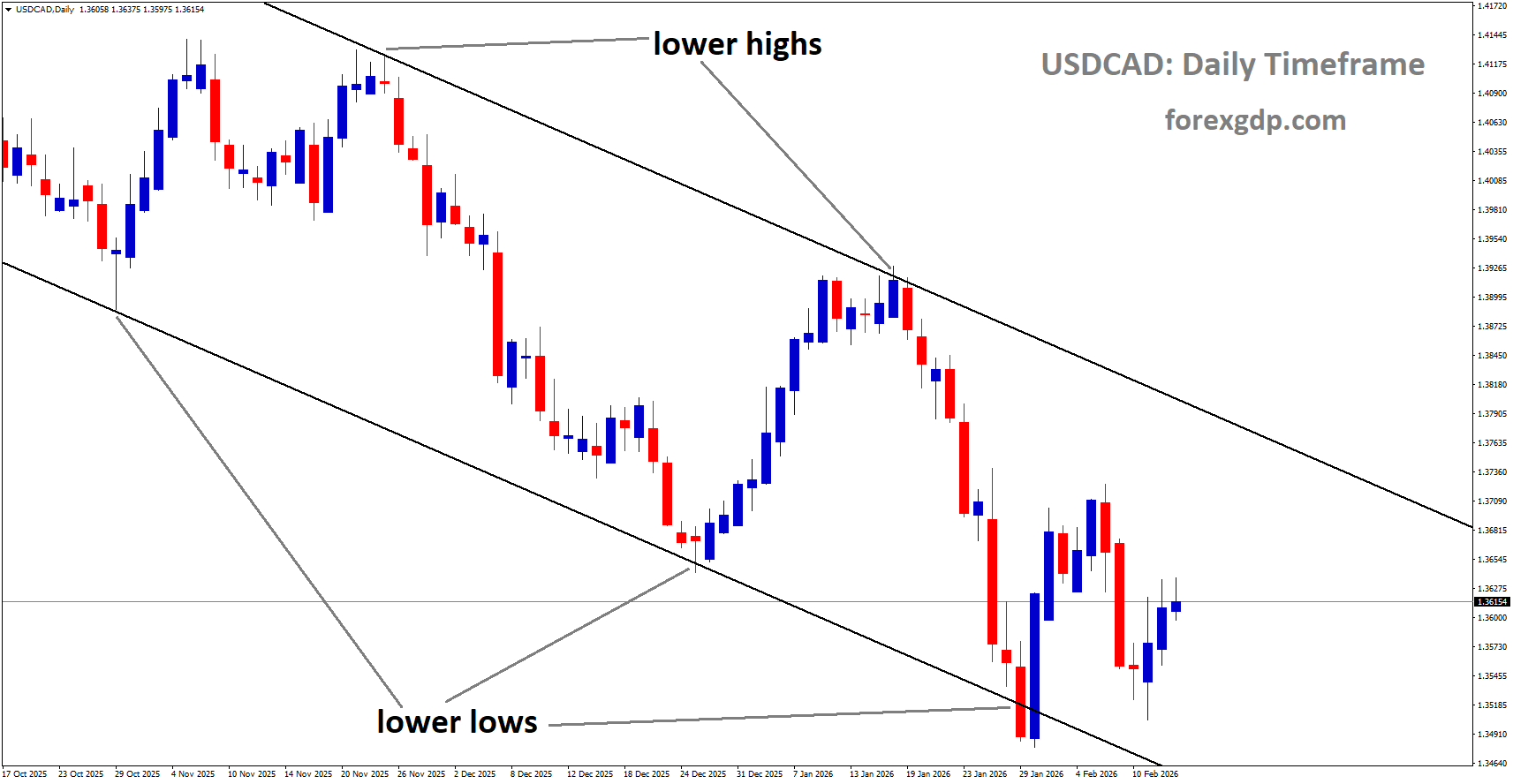
USDCAD is moving in a descending channel
Investors are now turning their attention to the upcoming US inflation report, which could shape expectations for future moves by the Federal Reserve. With strong labor market numbers already shifting sentiment, the next set of data could further influence how traders position themselves in the USD/CAD pair.
Strong US Jobs Report Boosts the Dollar
One of the main reasons behind the US Dollar’s recent strength is the solid performance of the US labor market. The latest Nonfarm Payrolls report showed that the US economy added 130,000 jobs in January. This figure came in well above market expectations, which had forecast around 70,000 new jobs.
In addition to stronger job growth, the unemployment rate edged lower to 4.3%. A drop in unemployment suggests that businesses are still hiring and that the economy remains resilient despite earlier concerns about slowing growth.
A healthy labor market often supports the US Dollar because it signals economic stability. When job growth remains steady and unemployment declines, it reduces the urgency for the Federal Reserve to lower interest rates. As a result, traders have become less confident that the Fed will cut rates in the near future.
This shift in expectations has helped the Greenback gain ground against the Canadian Dollar.
Fed Rate Expectations Shift After Data Surprise
Interest rate expectations play a major role in currency movements. When traders believe a central bank will keep rates higher for longer, the country’s currency tends to benefit. In this case, the stronger US jobs report has tempered expectations of additional rate cuts by the Federal Reserve in the coming months.
Current market pricing suggests there is a strong chance that the Fed will leave interest rates unchanged at its next meeting. However, there is still a notable probability that a rate cut could happen around midyear. Even so, the recent economic data has made investors more cautious about betting on immediate easing.
The US Consumer Price Index (CPI) inflation report, due later on Friday, will be closely watched. If inflation remains stubbornly high, it could further reduce the likelihood of rate cuts in the short term. On the other hand, softer inflation could reopen the discussion about policy easing later in the year.
For now, the stronger labor data has given the US Dollar an advantage, pushing USD/CAD slightly higher.
Oil Price Weakness Pressures the Canadian Dollar

While the US Dollar is benefiting from domestic strength, the Canadian Dollar is facing challenges from falling crude oil prices.
Oil prices have come under pressure due to growing expectations of slower global demand in 2026. Concerns about weaker economic growth in key regions have raised doubts about future energy consumption. As a result, oil has struggled to maintain upward momentum.
This is particularly important for Canada because it is one of the world’s major oil exporters. The Canadian economy relies heavily on energy exports, and changes in oil prices often have a direct impact on the value of the Canadian Dollar.
When oil prices decline, export revenues may fall, which can weigh on the country’s overall economic outlook. In turn, this tends to weaken the Loonie against other major currencies, including the US Dollar.
The recent drop in oil prices has therefore added extra pressure on the Canadian Dollar, helping USD/CAD edge higher.
Mixed Signals from Federal Reserve Officials
Despite the stronger economic data, not all signals from the Federal Reserve have been firmly supportive of the US Dollar.
Federal Reserve Board member Stephan Miran recently commented that US monetary policy has passively tightened. He suggested that current conditions are more restrictive than previously thought. According to Miran, the central bank may have room to consider lower interest rates if necessary.
Such remarks are often described as dovish because they point toward the possibility of easier monetary policy. If more Fed officials begin to echo this view, it could limit further gains in the US Dollar.
Currency markets are highly sensitive to comments from central bank officials. Even small shifts in tone can influence expectations and trigger movement in exchange rates. For now, however, the stronger jobs data appears to be outweighing these more cautious remarks.
Market Focus Shifts to Inflation Data
With employment data already released, attention now turns to inflation. The upcoming US CPI report could play a key role in shaping the next move for USD/CAD.
If inflation remains elevated, it would strengthen the argument for keeping interest rates steady for longer. This scenario would likely support the US Dollar further. On the other hand, if inflation shows clear signs of cooling, traders may increase bets on future rate cuts, which could weigh on the Greenback.
Inflation and employment are the two main pillars guiding Federal Reserve decisions. Strong job growth combined with sticky inflation makes it harder for policymakers to justify cutting rates quickly. That balance is currently favoring the US Dollar.
For USD/CAD, the outcome of the inflation report could determine whether the pair extends its gains or pulls back in the near term.
What This Means for USD/CAD
The recent movement in USD/CAD reflects a combination of factors:
-
Stronger-than-expected US employment data
-
Reduced expectations of near-term Fed rate cuts
-
Falling oil prices weighing on the Canadian Dollar
-
Mixed but slightly cautious comments from Fed officials
At present, the US Dollar appears to have the upper hand. The positive labor market data has provided fresh support, while weaker oil prices have limited the Canadian Dollar’s ability to strengthen.
However, the situation remains fluid. Future economic reports, especially inflation data, will continue to influence expectations for US monetary policy. At the same time, developments in global energy markets will remain a key driver for the Canadian Dollar.
Final Summary
USD/CAD is trading with mild gains as strong US job growth supports the US Dollar and reduces expectations of immediate rate cuts by the Federal Reserve. The latest employment figures showed solid hiring and a slight drop in unemployment, reinforcing confidence in the US economy.
Meanwhile, falling crude oil prices are weighing on the Canadian Dollar, given Canada’s strong ties to the energy sector. Although some Fed officials have hinted that monetary policy may already be tight, the broader market focus remains on economic data.
All eyes are now on the upcoming US inflation report, which could influence the Federal Reserve’s next move and shape the direction of USD/CAD in the days ahead.
USDCHF rebounds past 0.7000 as weak Swiss inflation weighs on Franc
The USD/CHF currency pair has climbed back above the 0.7700 level, showing modest strength for the US Dollar against the Swiss Franc. Even with this rebound, the pair is still heading toward a weekly decline of around 0.5%. The move comes at a time when investors are closely watching inflation data from both Switzerland and the United States.
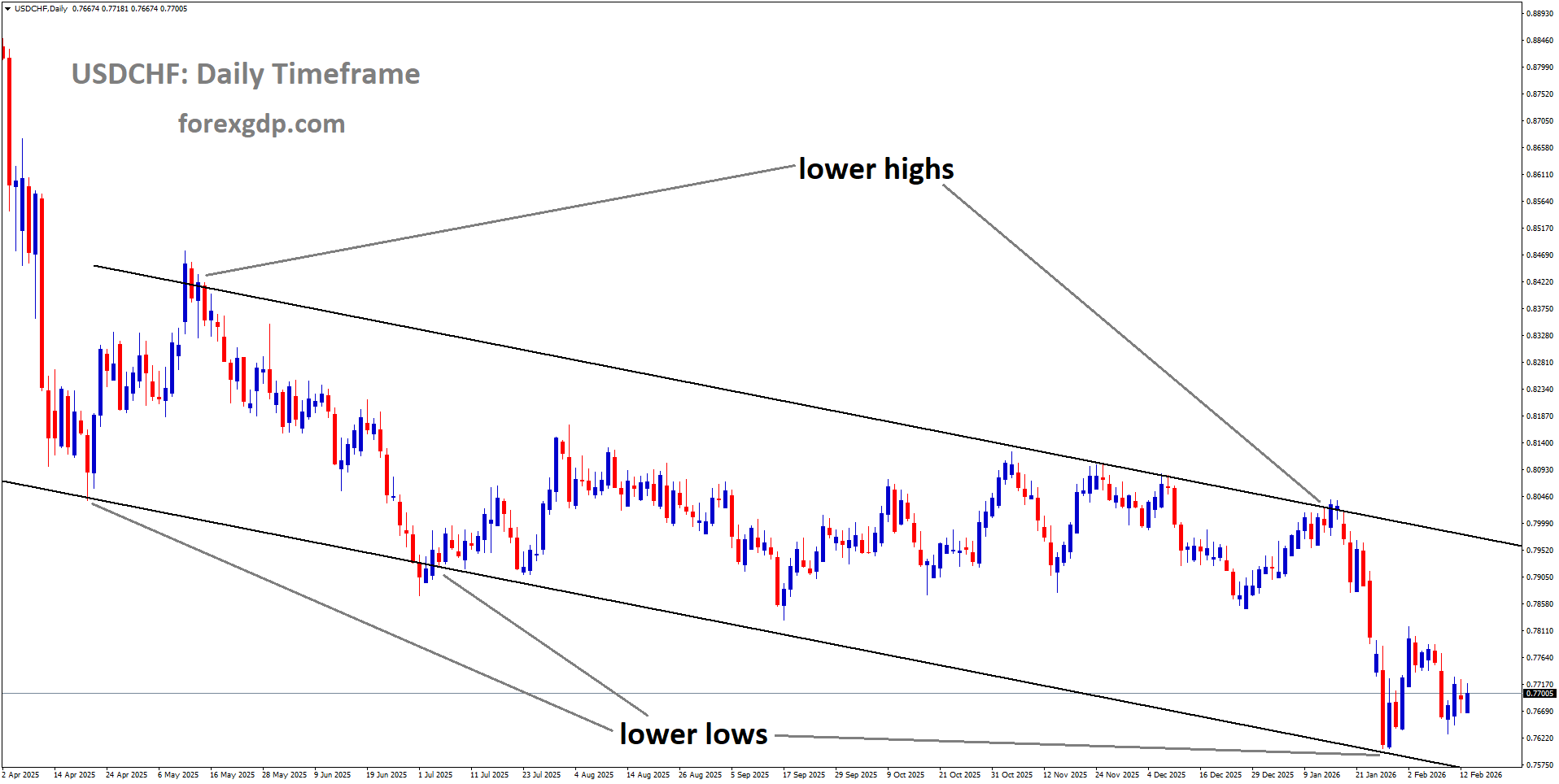
USDCHF is moving in a descending channel, and the market has rebounded from the lower low area of the channel
On Friday, the US Dollar gained some ground and traded around 0.7714 against the Swiss Franc. However, despite this upward move, the pair has stayed within a narrow trading range seen over the past two days. Market participants remain cautious, especially as important US inflation data is set to be released later in the day.
Swiss Inflation Data Puts Pressure on the Franc
The Swiss Franc has come under pressure after new inflation figures from Switzerland showed unexpected weakness. According to the latest data, the Consumer Price Index (CPI) fell by 0.1% in January compared to the previous month. Analysts had expected inflation to remain flat, so the contraction caught some investors off guard.
On a yearly basis, inflation remained steady at 0.1%, which matched market expectations. While the annual number did not surprise markets, the monthly drop added fresh concerns about the strength of price growth in the Swiss economy.
Low inflation can be a serious challenge for central banks. When prices rise too slowly—or even fall—it can signal weak demand and slow economic activity. This situation often leads policymakers to consider measures that encourage spending and investment.
Growing Expectations for Swiss National Bank Action
The weaker inflation data has increased speculation that the Swiss National Bank (SNB) could take further steps to support the economy. The central bank’s benchmark interest rate currently stands at 0%. With inflation remaining very low, some investors believe the SNB may consider cutting rates below zero.
Negative interest rates are an unusual tool. They are typically used when a central bank wants to encourage banks to lend more and businesses and consumers to spend more. However, this approach also comes with risks, including potential strain on the banking system.
SNB President Martin Schlegel has previously shown reluctance about moving rates below zero. Still, he has made it clear that inflation remains the central bank’s top priority. Last week, he emphasized that the SNB is prepared to take all necessary steps to maintain price stability. His comments suggest that, while negative rates may not be the first choice, the option is not completely off the table.
As a result, traders are reassessing their outlook for Swiss monetary policy. If markets believe the SNB may ease policy further, the Swiss Franc could remain under pressure in the short term.
US Dollar Supported by Cautious Market Mood
While the Swiss Franc struggles, the US Dollar has received mild support from broader market conditions. Global markets have recently seen increased volatility, partly linked to rapid changes in the artificial intelligence sector and shifting investor sentiment in equity markets.
When markets become uncertain or volatile, investors often turn to safer assets. The US Dollar is widely viewed as a safe-haven currency, meaning it tends to attract demand during periods of risk aversion. This cautious mood has helped the Dollar gain some strength against several major currencies, including the Swiss Franc.
However, the Dollar’s gains have been moderate rather than aggressive. Many traders are holding back from making large bets until they see the latest US inflation figures.
Focus Turns to US CPI Data

The next key event for the USD/CHF pair is the release of US Consumer Price Index data for January. Inflation figures from the United States play a major role in shaping expectations about the Federal Reserve’s next moves.
Economists expect US headline inflation to have remained steady at 0.3% on a monthly basis in January. On an annual basis, inflation is projected to ease slightly to 2.5%, down from 2.7% in December.
If the data shows inflation cooling as expected, it could support the idea that price pressures are gradually easing in the US economy. On the other hand, if inflation comes in higher than forecast, it may suggest that the Federal Reserve needs to maintain a tighter monetary stance for longer.
Investors are particularly focused on what the numbers mean for future interest rate decisions. The Federal Reserve has made it clear that inflation control remains its primary objective. Any surprise in the data could quickly shift expectations and move currency markets.
Why Inflation Matters So Much for Currency Markets
Inflation is one of the most important drivers of currency movements. When inflation is high, central banks often raise interest rates to slow down the economy and reduce price pressures. Higher rates can make a currency more attractive to investors, as they may offer better returns.
On the other hand, low inflation can lead to lower interest rates or other supportive measures. This can reduce a currency’s appeal and lead to weakness.
In the case of USD/CHF, both the US and Swiss inflation data are influencing the pair in different ways. Weak Swiss inflation increases the possibility of policy easing by the SNB, which can weigh on the Franc. At the same time, stable or persistent US inflation may support the Dollar if it keeps Federal Reserve policy firm.
USD/CHF Outlook Remains Cautious
Despite the recent move back above 0.7700, USD/CHF remains within a tight range and is still on track for a weekly decline. This reflects the current mood in the market: cautious, watchful, and highly sensitive to economic data.
Traders are balancing several factors at once. On one side, there is weakness in Swiss inflation and growing talk of further SNB action. On the other, there is uncertainty about the US inflation outlook and what it means for Federal Reserve policy.
Until clearer signals emerge from economic data and central bank commentary, the pair may continue to trade within established ranges.
Key Factors to Watch Next
Several developments could shape the next move in USD/CHF:
US Inflation Results
The immediate focus is on US CPI data. A stronger or weaker reading than expected could quickly change the direction of the pair.
Central Bank Messaging
Any new comments from Federal Reserve or Swiss National Bank officials may offer additional clues about future policy steps.
Global Risk Sentiment
Broader market trends, including developments in equity markets and global economic news, can also influence demand for safe-haven currencies like the US Dollar and the Swiss Franc.
Final Summary
USD/CHF has moved back above the 0.7700 mark, supported by moderate US Dollar strength and weakness in the Swiss Franc. Negative Swiss inflation data has raised concerns about the country’s economic outlook and increased pressure on the Swiss National Bank to consider further easing measures.
At the same time, investors remain cautious ahead of key US inflation data, which could influence expectations for Federal Reserve policy. With both central banks facing important decisions and global markets showing signs of uncertainty, the currency pair is likely to remain sensitive to economic releases and policy signals in the days ahead.
BTCUSD Faces Critical Turning Point Before Regaining Long-Term Strength
Bitcoin has always been known for its dramatic price swings. It rises fast, falls hard, and often surprises both supporters and critics. Recently, however, the mood around the world’s largest cryptocurrency has shifted. According to Jean-David Péquignot, Chief Commercial Officer at derivatives exchange Deribit, Bitcoin’s long-term upward momentum is currently “broken.”
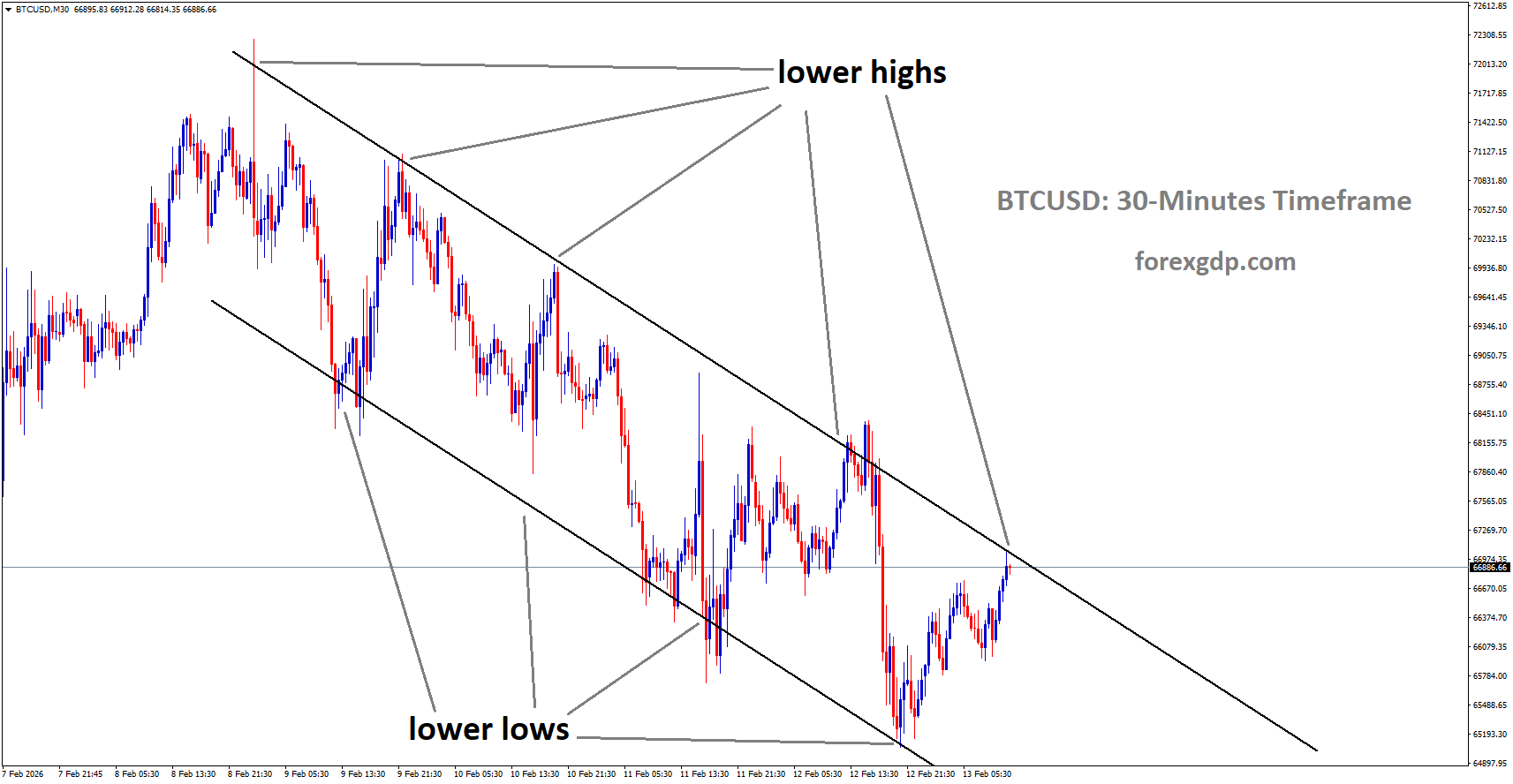
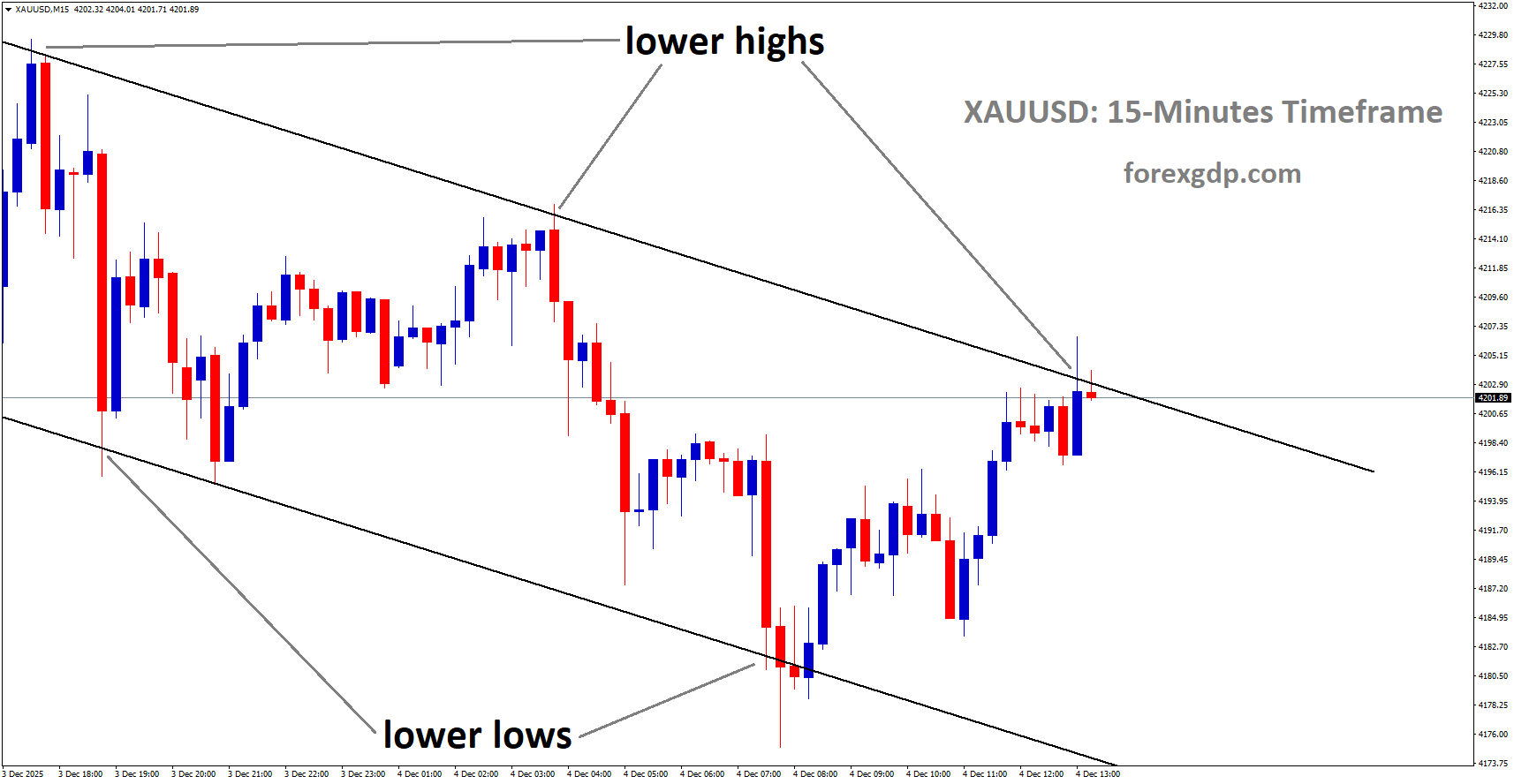
BTCUSD is moving in a descending channel, and the market has reached the lower high area of the channel
For that bigger bullish trend to return, he believes Bitcoin needs to climb back above $85,000. Until then, the broader outlook remains uncertain, and investors are watching closely.
Bitcoin Stuck in a Tight Range
Over the past week, Bitcoin has been trading between $60,000 and $70,000. This range-bound movement shows a market that is undecided. Buyers are stepping in around the lower end, while sellers appear near the upper end, keeping the price locked in place.
Not long ago, Bitcoin reached a record high in October. Since then, it has pulled back significantly and is now sitting roughly 45% below that peak. The cryptocurrency has also been heading toward its fourth consecutive week of losses. That kind of sustained pullback naturally raises questions about where things are headed next.
Péquignot shared his views during the Consensus Hong Kong conference, where he explained that the long-term structure of Bitcoin’s price action has been damaged. In his opinion, only a decisive move above $85,000 would show that buyers have regained strong control.
Why $85,000 Matters So Much
The $85,000 level has become a key psychological and structural point for the market. Earlier this year, Bitcoin slipped below that level, signaling a potential shift in momentum. Since then, it has struggled to recover that ground.
According to Péquignot, reclaiming $85,000 would mean that buyers have absorbed the selling pressure that previously pushed prices lower. In simple terms, it would show that demand is strong enough to overpower supply again.
Right now, Bitcoin is trading well below that threshold. As long as it stays under $85,000, the broader picture remains weak. Many traders see this as a sign that the path forward could still include further downside before any meaningful recovery.
The Importance of the $60,000 Level
While $85,000 is seen as the level that would restore long-term confidence, $60,000 has become the line that many investors are watching for support.
A Psychological Barrier
The $60,000 mark is more than just a number. It carries psychological weight. Over time, this level has attracted strong buying interest. Large purchase orders have often appeared around this area, creating what traders sometimes call “buy walls.”
When a price level repeatedly attracts buyers, it becomes a reference point. Investors remember it. That memory can influence future behavior. If Bitcoin stays above $60,000, it suggests that buyers are still willing to defend the market at that level.
However, if Bitcoin closes below $60,000 and fails to recover quickly, confidence could weaken further.
What Happens If $60,000 Breaks?
If the market falls below $60,000 on a sustained basis, Péquignot believes the next likely stopping point would be around $58,000. This area is closely tied to Bitcoin’s 200-week simple moving average, a long-term measure that many investors respect.
Historically, this long-term average has acted as a floor during major bear markets. Since 2015, several large downturns have found their lows near this level. Because of that history, many long-term investors keep a close eye on it.
The Role of the 200-Week Average
The 200-week simple moving average may sound technical, but its importance is rooted in history rather than short-term signals.
A Historical Turning Point
Over the years, this long-term average has often marked the point where heavy selling finally slowed down. During past downturns, when Bitcoin approached this level, bargain hunters and long-term believers stepped in.
These buyers are often looking beyond short-term volatility. They see deep pullbacks as opportunities to accumulate. As a result, the 200-week average has gained a reputation as a place where the market might stabilize.
Currently, this level sits near $58,000. If Bitcoin were to drop toward that area, it could become a critical test of long-term confidence.
Why Investors Watch It Closely

The reason traders monitor this level so carefully is simple: history matters in financial markets. When certain levels have consistently played a role in past cycles, they become part of collective market memory.
If Bitcoin reaches this zone again, it would likely draw significant attention. Some investors may view it as a final stage of correction, while others could see it as confirmation that the market remains under pressure.
Broader Market Conditions Add Pressure
Bitcoin’s recent weakness has not happened in isolation. Earlier this month, the cryptocurrency declined alongside software stocks, showing how closely it can move with broader risk assets.
When investors grow cautious about growth-focused sectors, cryptocurrencies often feel the impact. This connection means Bitcoin’s direction can be influenced by global economic conditions, investor sentiment, and changes in financial markets outside of crypto.
The combination of these factors has created a cautious environment. While Bitcoin remains one of the most recognized digital assets in the world, it is not immune to wider market trends.
Is This a Temporary Pause or a Deeper Shift?
One of the biggest questions facing investors right now is whether this downturn represents a temporary pause in a longer bullish cycle or the beginning of a more extended cooling period.
Péquignot’s view is clear: until Bitcoin climbs back above $85,000, the long-term rally remains damaged. That does not mean recovery is impossible. It simply means the market has more work to do before confidence fully returns.
On the downside, holding above $60,000 would help maintain some stability. A drop below that level, especially if sustained, could lead to further weakness toward the long-term average around $58,000.
What This Means for Long-Term Holders
For long-term holders, volatility is nothing new. Bitcoin has experienced multiple boom-and-bust cycles over the years. Each time, the market has gone through periods of doubt before finding its footing again.
The current situation may feel uncomfortable, especially after the excitement of record highs. But seasoned investors understand that corrections are part of Bitcoin’s history.
The key levels being discussed—$85,000 on the upside and $60,000 on the downside—serve as reference points. They help define the current battle between buyers and sellers. How the market behaves around these levels will likely shape the next chapter.
Final Thoughts
Bitcoin is at a crossroads. Its long-term upward momentum has stalled, and confidence will only return if it can push back above $85,000. Until then, the market remains in a fragile state.
At the same time, the $60,000 level stands as a major support zone. If that area holds, Bitcoin may continue to consolidate and attempt a recovery. If it breaks, attention will shift toward the historically significant area near $58,000.
As always, Bitcoin’s journey remains dynamic and unpredictable. Investors are watching closely, knowing that the next major move could define the direction of the market for months to come.
Don’t trade all the time, trade forex only at the confirmed trade setups
Get more confirmed trade signals at premium or supreme – Click here to get more signals, 2200%, 800% growth in Real Live USD trading account of our users – click here to see , or If you want to get FREE Trial signals, You can Join FREE Signals Now!