

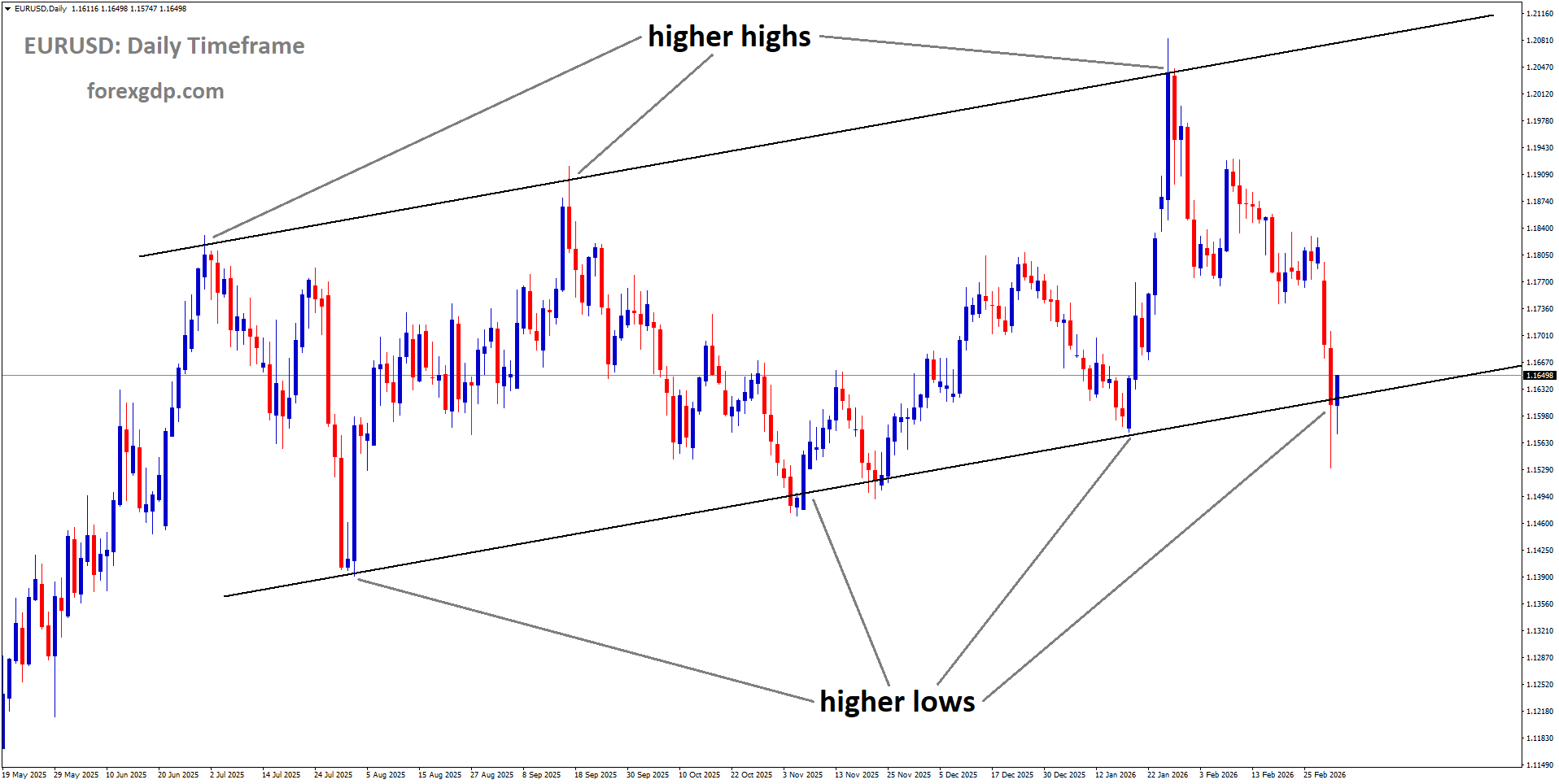
EURUSD is moving in an uptrend channel, and the market has reached a higher low area of the channel
EURUSD Under Pressure as Market Sentiment Favors the US Dollar
The EUR/USD currency pair has been under noticeable pressure recently, extending its decline for a third straight day. After a brief attempt to recover, the pair struggled to maintain upward momentum and slipped again during the Asian trading session. Several global factors are contributing to this weakness, including rising geopolitical tensions, concerns about energy supplies in Europe, and shifting expectations surrounding US economic policy.
The US Dollar continues to gain strength as investors seek stability in uncertain times, while the Euro faces challenges tied to the region’s dependence on imported energy. Together, these forces are shaping the current direction of the EUR/USD pair and influencing how traders and investors view the outlook for both currencies.
Geopolitical Tensions Strengthen the US Dollar
One of the biggest influences on the currency market right now is the rising tension in the Middle East. Ongoing conflict in the region shows few signs of easing, and that uncertainty is pushing investors toward safer financial assets. Historically, the US Dollar has been seen as a safe-haven currency, meaning it often becomes more attractive when global risks increase.
When geopolitical risks rise, investors tend to move their money into assets considered more stable. The US Dollar benefits from this trend because it is the world’s primary reserve currency. Central banks, global companies, and international investors rely heavily on the dollar for trade and financial transactions.
As concerns about the conflict continue, the demand for the US Dollar has remained strong. This increased demand naturally puts pressure on other currencies, including the Euro. As a result, the EUR/USD pair has struggled to recover from recent losses.
In addition to geopolitical uncertainty, expectations about US monetary policy are also helping the dollar remain strong. Markets have been reducing their expectations that the Federal Reserve will move quickly to ease its policies. This shift in sentiment has further supported the US currency.
Energy Supply Concerns Weigh on the Euro
While the US Dollar benefits from global uncertainty, the Euro is facing its own challenges. One of the most significant issues affecting the European currency is the growing concern about energy supplies.
Reports about the closure of the Strait of Hormuz have raised alarms across global markets. This waterway is one of the most important routes for transporting oil from major producing regions. Any disruption to this route could have a significant impact on global energy supplies.
Europe is particularly vulnerable to such disruptions because many countries in the region depend heavily on imported energy. If oil or natural gas supplies are interrupted or reduced, the cost of energy across Europe could rise sharply.
Higher energy costs can create serious economic challenges. Businesses face increased operating expenses, households pay more for heating and electricity, and overall economic growth may slow. These factors can weaken confidence in the region’s economic outlook, which in turn can reduce demand for the Euro.
Investors are closely monitoring this situation because energy stability plays a major role in Europe’s economic health. The possibility of supply disruptions has added another layer of pressure on the shared European currency.
Market Attention Turns to Key Economic Data
Alongside geopolitical developments, traders are also watching upcoming economic reports that could influence currency movements. Several important indicators from both the United States and the Eurozone are scheduled for release.
In the Eurozone, the final reading of the Services Purchasing Managers’ Index (PMI) will offer insight into how the region’s services sector is performing. This sector plays a major role in the European economy, covering industries such as tourism, finance, transportation, and hospitality.
Strong data could help improve confidence in the Euro, while weaker results may reinforce concerns about economic growth.
In the United States, two important reports are attracting attention. The first is the ADP report on private-sector employment, which provides an early snapshot of hiring trends across American businesses. The second is the ISM Services PMI, a widely watched indicator that reflects activity across the US services industry.
These reports can influence how investors view the strength of the US economy. If the data suggests continued economic resilience, it may further support the US Dollar.
Why the US Dollar Remains in Demand
The current market environment highlights the unique role the US Dollar plays in the global financial system. Even during periods of economic uncertainty or political tension, the dollar often attracts strong demand.
There are several reasons for this. The United States has the largest economy in the world, and its financial markets are among the most liquid and stable. Government bonds issued by the US Treasury are widely viewed as reliable investments, especially during times of market volatility.
Because of these factors, global investors frequently turn to the US Dollar as a form of protection when risks rise elsewhere in the world. This pattern has been visible again in recent days as geopolitical tensions escalate.
The continued strength of the dollar has made it difficult for the Euro to gain ground in the currency markets.
The Broader Impact of Energy and Inflation Risks
Another concern connected to the Middle East conflict is the potential impact on inflation. If energy supplies are disrupted and prices rise, the cost of goods and services may increase across many economies.
Energy prices play a crucial role in global inflation because fuel is essential for transportation, manufacturing, and electricity production. When energy costs increase, those higher expenses often spread throughout the entire economy.
For Europe, which already faces energy supply challenges, this situation could become particularly difficult. Rising costs could slow economic growth while also making it harder for policymakers to stabilize inflation.
These uncertainties add to the pressure on the Euro and strengthen the appeal of the US Dollar in the short term.
What Traders and Investors Are Watching Next
Looking ahead, market participants are focusing on two main themes: geopolitical developments and economic data releases.
Any changes in the Middle East conflict could quickly affect global financial markets. If tensions escalate further, safe-haven demand for the US Dollar may increase. On the other hand, signs of diplomatic progress or reduced conflict could ease some of the pressure on currencies like the Euro.
At the same time, upcoming economic reports from the United States and the Eurozone will provide important clues about the health of both economies. Investors will study these numbers carefully to assess how growth and employment trends are evolving.
Central bank expectations will also remain an important factor. Shifts in how markets view the Federal Reserve’s policy path can have a significant influence on currency movements.
Summary
The EUR/USD pair is currently facing strong downward pressure as global uncertainty continues to shape currency markets. Rising geopolitical tensions in the Middle East have increased demand for the US Dollar, which is widely viewed as a safe-haven currency during periods of instability.
At the same time, the Euro is being weighed down by concerns about Europe’s energy security. Potential disruptions to oil and gas supplies could create economic challenges for the region, adding to investor caution.
Upcoming economic reports from both the United States and the Eurozone may provide additional direction for the market. However, the broader themes of geopolitical risk, energy supply concerns, and strong demand for the US Dollar remain the key forces influencing the EUR/USD pair for now.
GBPUSD dips as investors turn to the US Dollar during geopolitical turmoil
The GBP/USD currency pair moved slightly lower during the early European trading session on Wednesday, drifting closer to the 1.3310 area. The shift comes as global investors react to rising geopolitical tensions in the Middle East and reassess expectations for monetary policy in the United Kingdom.
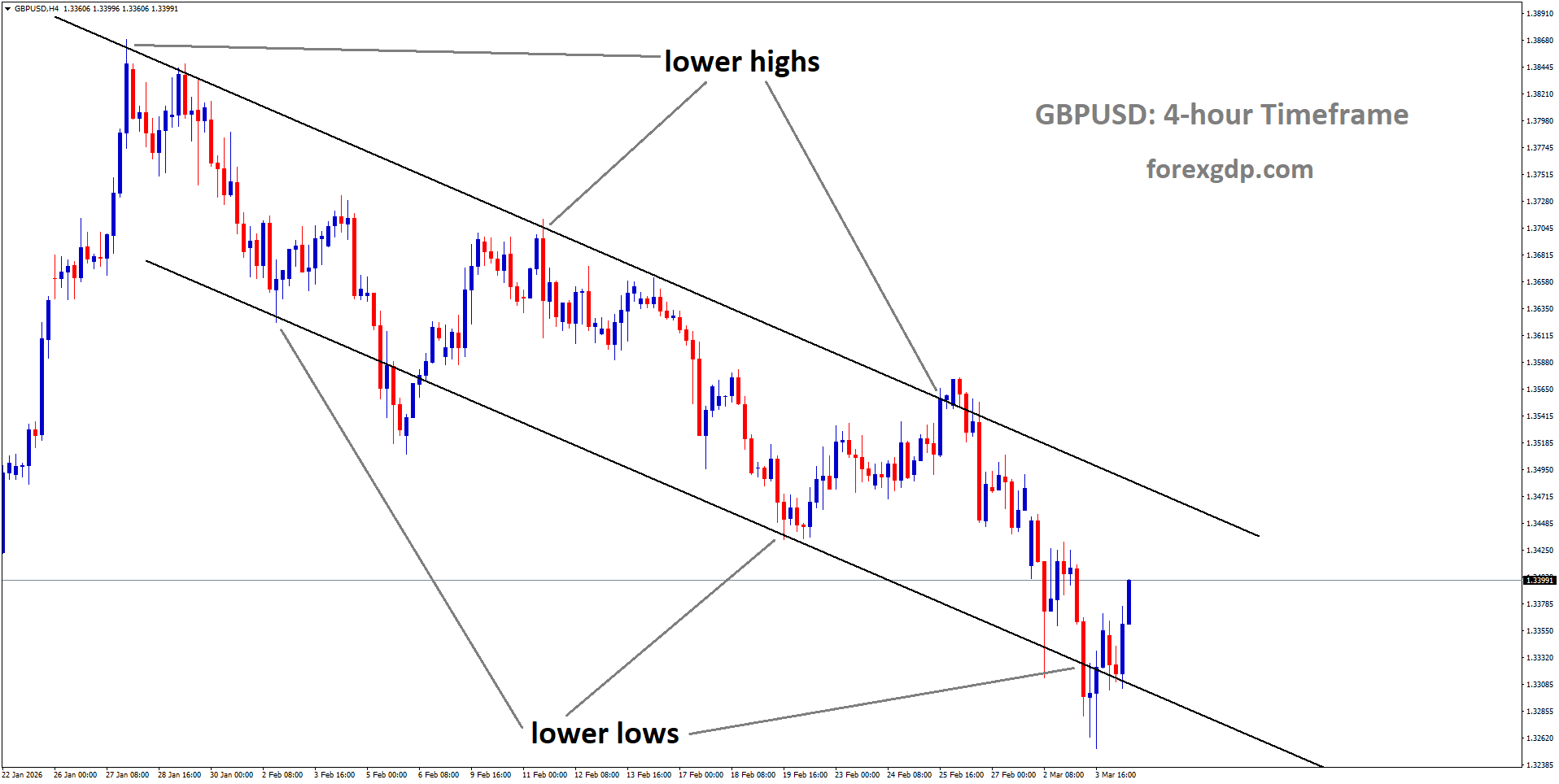
GBPUSD is moving in a descending channel, and the market has rebounded from the lower low area of the channel
Uncertainty surrounding international conflicts often pushes investors toward safer assets. In this environment, the US Dollar has benefited from increased demand, while the British Pound has faced some pressure. At the same time, changing expectations about interest rates in the UK are influencing how traders view the Pound’s outlook.
Several economic events scheduled later in the day are also expected to shape market sentiment, including important employment and business activity reports from the United States.
Rising Middle East Tensions Support the US Dollar
Geopolitical developments in the Middle East have become a key factor influencing currency markets. When conflicts escalate or uncertainty grows, investors tend to move their funds toward assets that are considered safer. The US Dollar is widely viewed as one of the world’s primary safe-haven currencies, which means it often gains strength during periods of global instability.
Recent developments in the region have heightened these concerns. Ongoing tensions between Israel, the United States, and Iran have raised fears that the conflict could widen or continue for an extended period.
US President Donald Trump recently described the ongoing military campaign as a critical opportunity to address concerns about Iran’s ballistic missile program and nuclear ambitions. According to his remarks, the operation could continue for several weeks and potentially last even longer if necessary.
Statements like these often increase uncertainty in global markets. Investors typically react by reducing exposure to assets considered risky and shifting toward currencies and investments perceived as more stable.
As a result, the US Dollar has seen stronger demand, which has contributed to downward pressure on the GBP/USD pair.
Escalating Conflict Adds to Global Uncertainty
The situation in the Middle East has continued to develop rapidly. Reports indicate that Iran has launched retaliatory strikes targeting locations connected to the United States and Israel.
Among the reported incidents were attacks affecting the US embassy in Dubai and a port facility in Fujairah, located in the United Arab Emirates. Such events add to fears that the conflict could expand geographically or intensify further.
Whenever geopolitical risks increase, financial markets tend to react quickly. Investors often seek to protect their capital by pulling back from riskier assets such as certain currencies, stocks, or commodities.
In this environment, the British Pound—often considered more sensitive to global risk sentiment—has faced some selling pressure. This has helped push the GBP/USD pair lower during the European trading session.
While the decline has been relatively modest so far, ongoing developments in the region could continue influencing market behavior in the coming days.
Key US Economic Reports in Focus
Apart from geopolitical tensions, traders are also paying close attention to upcoming economic data from the United States. Two important reports scheduled for release later on Wednesday are expected to provide fresh insights into the strength of the US economy.
ADP Employment Report
The ADP Employment report offers an early estimate of job creation in the US private sector. Although it does not always perfectly match the official government employment data released later in the week, it still provides a useful indication of labor market trends.
A strong employment reading may reinforce confidence in the resilience of the US economy. This could support the US Dollar further, especially if investors interpret the data as a sign that economic activity remains steady.
ISM Services Purchasing Managers Index
Another important release is the ISM Services Purchasing Managers Index (PMI). This report measures business activity in the US services sector, which represents a large portion of the country’s economy.
The data includes information about business conditions, demand, employment, and overall economic momentum within service industries. Strong results often suggest continued economic expansion, while weaker readings may indicate slower growth.
Because the services sector plays such a major role in the US economy, this report can significantly influence currency market sentiment.
Oil Prices Spark Fresh Inflation Concerns

Another factor affecting the British Pound is the recent rise in energy prices. Conflicts in the Middle East often disrupt energy markets because the region is a major producer and exporter of oil and natural gas.
As tensions increase, supply concerns can drive energy prices higher. This has been the case in recent days, with oil and gas prices moving upward amid fears that the conflict could impact production or transportation routes.
Higher energy prices can contribute to broader inflation pressures. When fuel and energy costs rise, they often increase the cost of transportation, manufacturing, and everyday goods.
For central banks, inflation is a major factor when deciding whether to adjust interest rates. If inflation risks increase, policymakers may become more cautious about lowering rates.
Shifting Expectations for Bank of England Policy
Changing expectations for monetary policy in the United Kingdom have also influenced the Pound’s recent performance.
Earlier, many investors believed the Bank of England might lower interest rates soon in order to support economic growth. However, the recent surge in energy prices has raised concerns that inflation could remain elevated.
Because of this, traders have begun reducing their expectations for an immediate rate cut by the Bank of England. Market estimates suggest that the likelihood of a rate reduction this month has dropped sharply.
According to Bloomberg data, the probability of a rate cut was around 80% just one week ago. Now, that expectation has fallen to below 20%.
This shift reflects growing uncertainty about the future direction of UK monetary policy. If inflation pressures remain strong due to rising energy costs, policymakers may prefer to keep interest rates steady for longer.
Why This Matters for the British Pound
Interest rate expectations play a significant role in determining the strength of a currency. When investors believe a central bank will maintain higher rates for longer, the currency often receives support.
In the current situation, reduced expectations of a near-term rate cut may help limit further losses for the British Pound. Even though geopolitical tensions have pushed investors toward the US Dollar, the changing outlook for UK monetary policy provides some counterbalance.
This dynamic explains why the GBP/USD pair has weakened but not dramatically. While safe-haven demand supports the US Dollar, the Pound is still receiving some support from shifting interest rate expectations.
Summary
The GBP/USD pair edged lower during the early European trading session as investors reacted to rising geopolitical tensions in the Middle East. Increased uncertainty has strengthened demand for the US Dollar, which is widely seen as a safe-haven currency during times of global instability.
Ongoing conflict involving Iran, Israel, and the United States has heightened market caution. Reports of retaliatory strikes and warnings about the potential duration of military operations have contributed to a shift toward safer assets.
At the same time, traders are closely watching upcoming US economic reports, including the ADP employment data and the ISM Services PMI, for additional clues about the strength of the US economy.
Meanwhile, rising oil and gas prices have sparked new concerns about inflation in the United Kingdom. As a result, expectations for a near-term interest rate reduction by the Bank of England have dropped significantly.
These shifting factors—geopolitical risks, economic data, and evolving monetary policy expectations—continue to shape movements in the GBP/USD pair and influence the broader currency market outlook.
USDJPY drifts lower to around 157.50 as safe-haven flows lift the Japanese Yen
The USD/JPY currency pair moved lower during early Asian trading on Wednesday, with the exchange rate falling to around 157.55. The shift reflects growing demand for the Japanese Yen as investors look for safer assets amid rising geopolitical tensions in the Middle East.
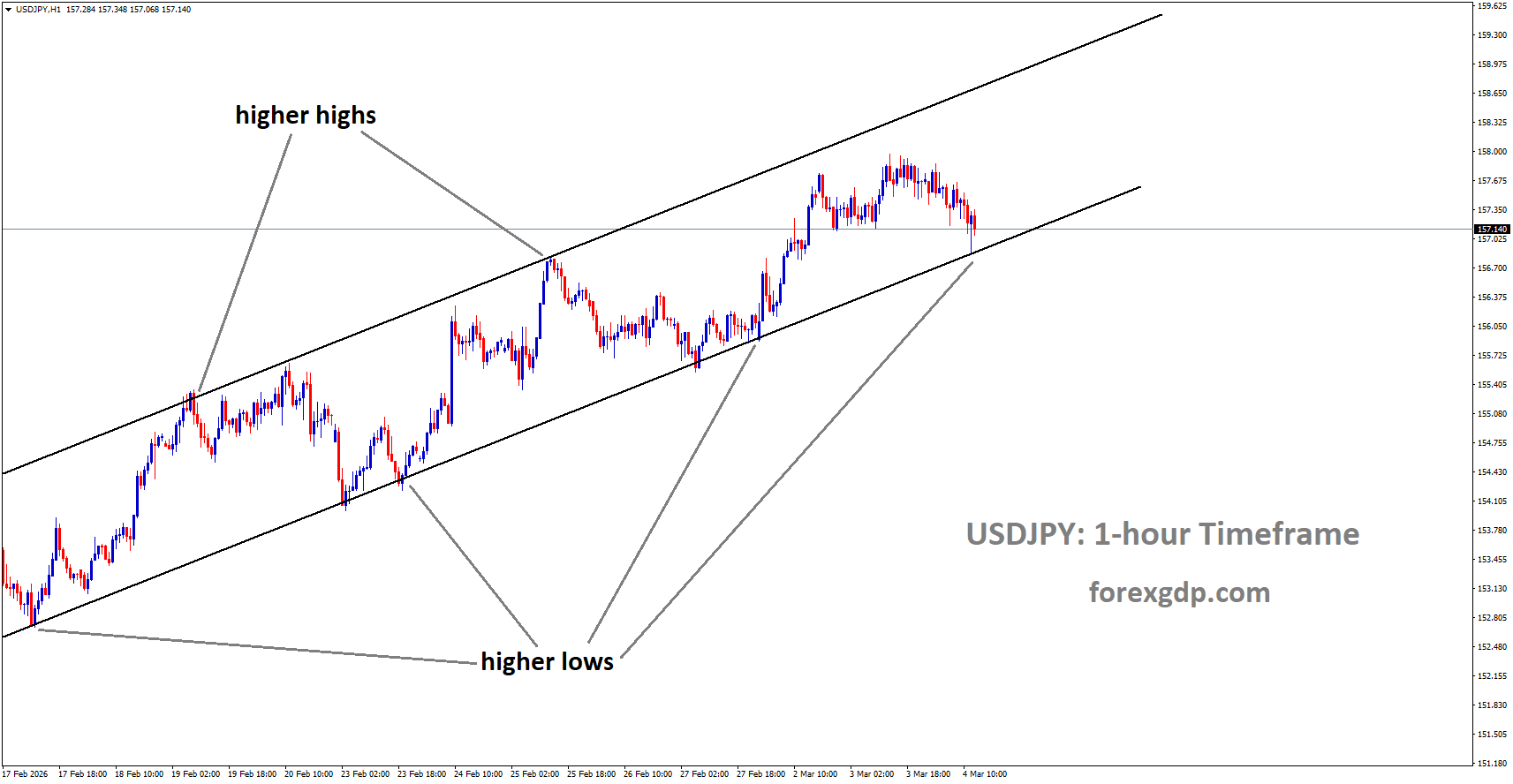
USDJPY is moving in an uptrend channel, and the market has reached a higher low area of the channel
Concerns about a potential escalation in conflict involving the United States, Israel, and Iran have unsettled global markets. When uncertainty increases, traders often turn to currencies like the Japanese Yen, which is widely viewed as a safe haven during turbulent times.
At the same time, financial markets are closely watching upcoming economic data from the United States, particularly the ISM Services Purchasing Managers Index for February. The report is expected to provide new insights into the health of the US services sector and may influence the direction of the US Dollar later in the day.
Rising Geopolitical Tensions Boost Demand for the Yen
The Japanese Yen gained strength as investors reacted to reports of new military actions involving Iran. According to statements from US President Donald Trump, several Iranian military installations have reportedly been heavily damaged by recent strikes. He also indicated that new attacks targeted members of Iran’s leadership.
In addition, Israel reportedly carried out an attack on a compound linked to a group responsible for selecting Iran’s next supreme leader. These developments have increased fears that the situation in the region could escalate further.
Whenever geopolitical risks rise, global investors often become more cautious. In such situations, many shift their investments into assets that are considered more stable. The Japanese Yen has historically benefited from this pattern because Japan has a large, stable economy and strong financial system.
As tensions grow and uncertainty spreads across markets, demand for the Yen tends to increase. This shift in investor sentiment has helped push the USD/JPY pair lower during Wednesday’s trading session.
Safe-Haven Currencies Gain Attention During Uncertain Times
The concept of a “safe-haven currency” plays an important role in global financial markets. These currencies are typically associated with countries that have stable economies, strong institutions, and low political risk.
Japan’s currency is often at the top of this list. During periods of geopolitical instability or economic stress, investors frequently move their money into the Yen to reduce exposure to riskier assets.
This pattern becomes even stronger when conflicts involve major global powers or regions that are strategically important. The current situation involving the United States, Israel, and Iran has increased concerns about broader instability in the Middle East.
Energy markets, trade routes, and global supply chains could all be affected if the conflict deepens. Because of these risks, traders are seeking safety, and that demand is helping support the Japanese currency.
Hawkish Signals From the Bank of Japan Support the Yen
Another factor supporting the Yen is the tone coming from Japan’s central bank. Recent comments from Bank of Japan Deputy Governor Ryozo Himino have drawn attention from traders.
Himino stated earlier this week that the Bank of Japan’s current monetary policy remains somewhat accommodative. However, he also suggested that interest rates could be gradually increased if economic conditions continue to meet the bank’s expectations.
These comments signal that the central bank may slowly move toward tighter monetary policy if inflation and economic growth remain on track.
For many years, Japan maintained extremely low interest rates as part of its effort to stimulate economic growth. Even small hints that the Bank of Japan could adjust its policy stance are closely watched by currency traders.
A shift toward higher rates could strengthen the Yen because it may increase returns on Japanese assets. As a result, investors may become more willing to hold Yen-denominated investments.
While any policy adjustments are likely to happen gradually, the possibility alone has contributed to the Yen’s recent gains against the US Dollar.
Markets Focus on Key US Economic Data

While geopolitical developments and central bank comments are shaping market sentiment, attention is also turning to important economic data from the United States.
The upcoming ISM Services Purchasing Managers Index for February is expected to be one of the most closely watched indicators of the day. This report measures activity in the US services sector, which represents a large portion of the country’s overall economy.
Economists are forecasting a slight decline in the index to around 53.5, compared with the previous reading of 53.8 in January. Even a small change in this figure can influence currency markets because it offers insight into the pace of economic activity.
If the data comes in stronger than expected, it could boost confidence in the strength of the US economy. That outcome might support the US Dollar and limit the Yen’s gains.
On the other hand, weaker data could increase pressure on the Dollar, allowing the Yen to maintain its recent strength.
How Economic Data Influences Currency Movements
Currency markets react quickly to economic indicators because they help shape expectations about future monetary policy. Strong economic data can suggest that an economy is expanding at a healthy pace, which may encourage central banks to keep policies tight.
When investors believe interest rates could remain elevated or rise further, demand for that country’s currency often increases.
In contrast, weaker economic reports can signal slowing growth. This may raise expectations that a central bank could adopt a more supportive policy stance, potentially weakening the currency.
Because of this relationship, the ISM Services PMI has the potential to move the USD/JPY pair once the data becomes available.
Investor Sentiment Remains the Key Driver
At the moment, global sentiment appears to be leaning toward caution. The combination of geopolitical tensions and shifting expectations around central bank policies has created a complex environment for currency markets.
Investors are weighing multiple factors at the same time. On one side, rising tensions in the Middle East are encouraging safe-haven demand for the Yen. On the other, economic data from the United States could strengthen the Dollar if the numbers come in stronger than anticipated.
Central bank signals also play a role in shaping long-term expectations for both currencies.
For now, traders are likely to remain cautious as they monitor both geopolitical developments and economic indicators.
Summary
The USD/JPY pair slipped to around 157.55 during early Asian trading as the Japanese Yen gained strength. Rising tensions involving the United States, Israel, and Iran have increased demand for safe-haven assets, benefiting the Yen.
Comments from Bank of Japan Deputy Governor Ryozo Himino suggesting possible gradual rate increases have also provided support for Japan’s currency. At the same time, markets are waiting for the release of the US ISM Services PMI, which could influence the direction of the US Dollar.
With geopolitical risks still unfolding and key economic data ahead, currency markets remain sensitive to both political developments and economic signals. Investors are likely to continue monitoring these factors closely as they assess the next move for the USD/JPY pair.
USDCHF falls closer to 0.7800 as investors turn to Swiss Franc during Middle East uncertainty
The USD/CHF currency pair moved slightly lower during the early European trading session on Wednesday, hovering near the 0.7805 level. The shift came as the Swiss Franc gained support from investors seeking safer assets during a period of increasing geopolitical uncertainty.
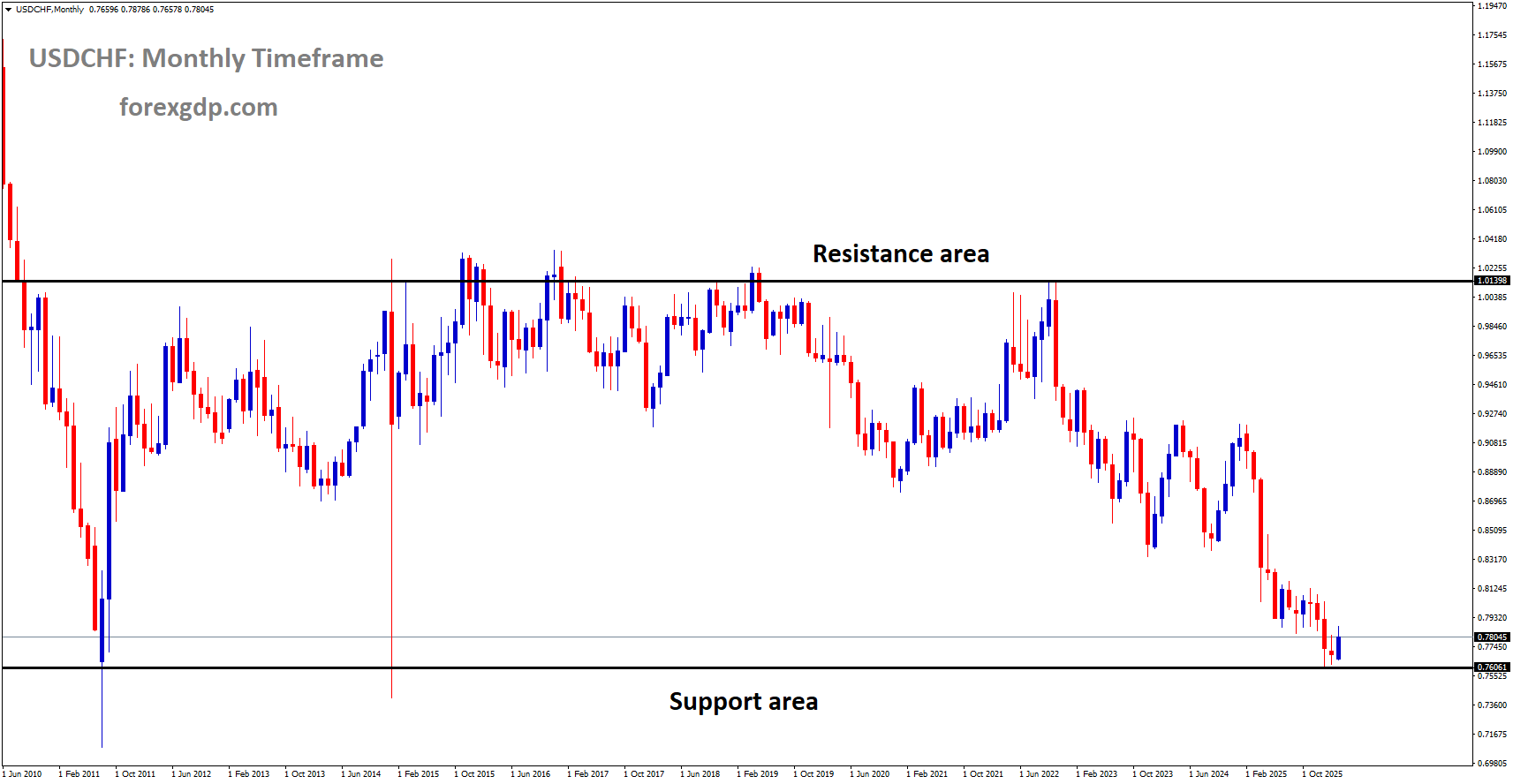
USDCHF is moving in a box pattern, and the market has reached the support area of the pattern
At the same time, comments from the Swiss National Bank (SNB) suggesting possible action to limit excessive strength in the Swiss Franc are creating some balance in the market. Traders are also closely watching key economic reports scheduled for later in the day, including Switzerland’s inflation data and a major services sector report from the United States.
Swiss Franc Benefits From Safe-Haven Demand
The Swiss Franc has long been considered one of the world’s safest currencies during times of global uncertainty. When geopolitical tensions rise or markets become unstable, investors often move their money into assets viewed as more stable and reliable. This shift in capital is known as safe-haven demand.
Recently, rising tensions in the Middle East have increased global market uncertainty, prompting investors to look for safer places to store their funds. As a result, demand for the Swiss Franc has grown, putting pressure on the USD/CHF pair.
Escalating Conflict Raises Global Concerns
The situation in the Middle East has become increasingly tense in recent days. Reports indicate that military activity involving the United States and Israel has continued across several areas, including Iran and Lebanon. One reported strike targeted a hotel near Beirut, while another hit a building associated with the Assembly of Experts in the Iranian city of Qom.
In response, Tehran has carried out retaliatory strikes against Israeli and US-linked targets in the region. Among the reported incidents are attacks involving the US embassy in Dubai and a port facility in Fujairah in the United Arab Emirates.
Such developments tend to increase global uncertainty and raise concerns about broader regional instability. Whenever geopolitical risks rise, investors typically turn toward assets that historically hold value during turbulent periods, and the Swiss Franc is often one of the top choices.
Swiss National Bank Signals Readiness to Act
While the Swiss Franc has gained strength due to safe-haven demand, the Swiss National Bank is closely monitoring the situation. A rapidly strengthening currency can create challenges for Switzerland’s economy.
On Monday, the SNB made it clear that it is prepared to step in if the Swiss Franc strengthens too quickly. This type of communication from a central bank is often referred to as verbal intervention.
Why a Strong Currency Can Be a Problem
A stronger currency can make a country’s exports more expensive for foreign buyers. Switzerland is known for exporting products such as pharmaceuticals, luxury watches, machinery, and financial services. If the Swiss Franc rises too sharply, it can reduce the competitiveness of these products in global markets.
For this reason, the Swiss National Bank tries to maintain balance. While a stable currency is important, excessive strength can harm economic growth.
In its recent statement, the SNB emphasized that it is willing to intervene in currency markets if necessary.
“We are prepared to intervene in the foreign exchange market to counter a rapid and excessive appreciation of the Swiss franc, which jeopardises price stability in Switzerland,” the central bank said.
This message signals that policymakers are watching the currency closely and could take action if its rise becomes too strong or too fast.
Key Economic Data in Focus
Beyond geopolitical developments and central bank comments, traders are also focusing on important economic data scheduled for release later on Wednesday. These reports could influence both the Swiss Franc and the US Dollar.
Two key indicators are expected to draw the most attention: Switzerland’s Consumer Price Index (CPI) and the US ISM Services Purchasing Managers Index (PMI).
Swiss Consumer Price Index

The Swiss Consumer Price Index measures changes in the prices of goods and services purchased by households. In simple terms, it tracks inflation in Switzerland.
Inflation data is closely watched because it helps central banks decide how to manage monetary policy. If inflation rises too quickly, policymakers may consider tightening financial conditions. If it remains low or falls, they may choose a more supportive approach to encourage economic activity.
For the Swiss National Bank, maintaining price stability is one of its primary goals. The CPI report will provide insight into whether inflation in Switzerland is moving in line with the central bank’s expectations.
US Services PMI Report
At the same time, the United States will release its ISM Services Purchasing Managers Index. This report measures the performance of the services sector, which represents a large portion of the US economy.
The services industry includes businesses such as finance, healthcare, retail, hospitality, and transportation. Because this sector plays a major role in economic growth, its performance often influences expectations about future economic activity.
If the report shows strong expansion in the services sector, it could reinforce the view that the US economy remains resilient. In that case, policymakers at the Federal Reserve may feel less pressure to ease monetary policy.
Implications for the US Dollar
Stronger economic data from the United States could support the US Dollar. When the economy performs well, investors often expect the Federal Reserve to maintain higher interest rates for a longer period.
Higher rates can make the US Dollar more attractive to global investors because they may receive better returns on dollar-denominated assets. As a result, a strong services sector report could help the dollar regain some strength against the Swiss Franc.
On the other hand, if the data falls short of expectations, it could weaken the dollar and allow the Swiss Franc to maintain its recent gains.
Market Sentiment Remains Cautious
At the moment, market sentiment remains cautious. Investors are balancing several competing factors: geopolitical risks, central bank signals, and incoming economic data.
Safe-haven demand continues to support the Swiss Franc due to the uncertain global environment. However, the Swiss National Bank’s willingness to intervene could limit how far the currency rises.
Meanwhile, the US Dollar’s direction may depend heavily on economic indicators that provide clues about the health of the American economy and the future path of monetary policy.
Final Summary
The USD/CHF pair moved lower in early European trading as the Swiss Franc gained strength from increased safe-haven demand. Rising tensions in the Middle East have heightened global uncertainty, encouraging investors to shift toward traditionally stable currencies like the Swiss Franc.
At the same time, the Swiss National Bank has indicated that it is ready to intervene if the currency strengthens too rapidly, which could prevent excessive gains.
Traders are now focusing on upcoming economic reports, including Switzerland’s inflation data and the US ISM Services PMI. These releases may offer important clues about future monetary policy decisions and could influence the direction of both the US Dollar and the Swiss Franc in the near term.
USDCAD rises toward 1.3700 as traders seek stability in the US Dollar
The Canadian Dollar has recently softened against the US Dollar, reflecting a mix of domestic economic challenges and shifting global market forces. At the same time, rising oil prices have provided some support for the currency, creating a complex environment for traders and policymakers alike.
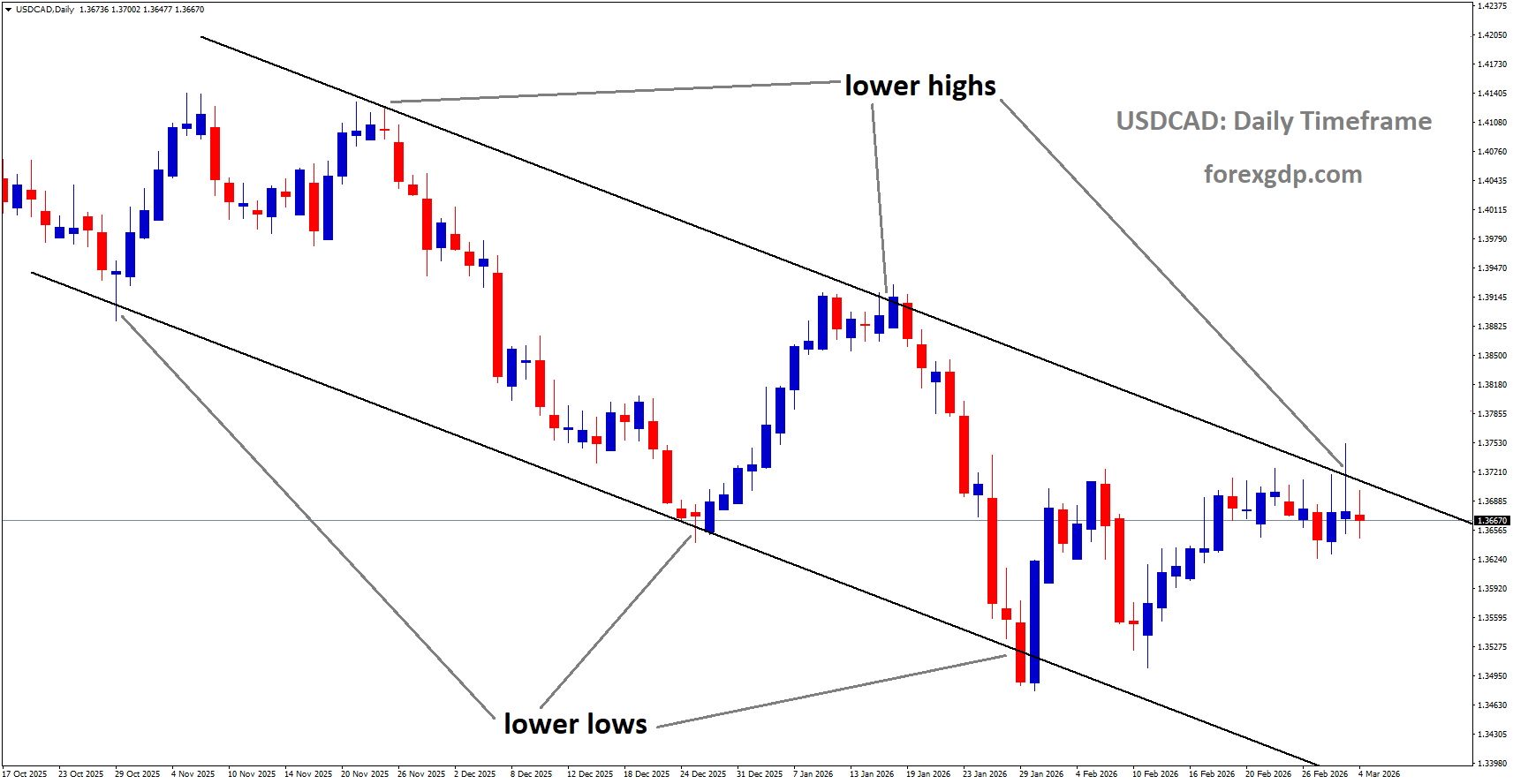
USDCAD is moving in a descending channel, and the market has reached the lower high area of the channel
While Canada’s economy showed signs of slowing during the final quarter of last year, geopolitical developments affecting global oil supply have added a new layer of influence. These contrasting factors are shaping the short-term outlook for the Canadian Dollar and the broader economic landscape.
Weak Economic Growth Weighs on the Canadian Dollar
Canada’s economic performance toward the end of the year raised concerns after official data revealed that the country’s Gross Domestic Product contracted by 0.6% in the fourth quarter. This marked the sharpest decline since the economic disruptions seen in 2020.
A contraction in GDP typically signals reduced economic activity across several sectors. Lower consumer spending, weaker business investment, or slowing exports can all contribute to such a decline. For Canada, the data suggests that economic momentum slowed more than many analysts expected.
Slower growth often puts pressure on a country’s currency because it can lead to lower investor confidence and reduced expectations for economic expansion. When growth weakens, international investors may look for stronger opportunities elsewhere, which can decrease demand for that currency.
Despite the disappointing GDP figures, not all economic indicators have been negative. Canada’s manufacturing sector has shown some signs of recovery, offering a small but notable bright spot.
Manufacturing Activity Shows Signs of Improvement
Although overall economic growth slowed, recent data from Canada’s manufacturing sector suggests that industrial activity may be stabilizing. The country’s Manufacturing Purchasing Managers Index (PMI) climbed to 51 in February, reaching its highest level in 13 months.
A PMI reading above 50 generally indicates expansion in the manufacturing sector, meaning that factories are seeing increased orders, production, and employment activity. This improvement could signal that parts of the Canadian economy are beginning to regain strength after a challenging period.
However, a single positive indicator does not fully offset the broader economic slowdown. Policymakers and investors are likely to watch upcoming data closely to determine whether this improvement marks the beginning of a stronger recovery or simply a temporary rebound.
Rising Oil Prices Provide Support for the Loonie
One of the most important influences on the Canadian Dollar is the global oil market. Canada is one of the world’s largest exporters of crude oil, and changes in energy prices can significantly affect the country’s currency.
Recently, oil prices surged after geopolitical tensions escalated in the Middle East. Military strikes involving the United States and Israel against targets in Iran prompted a sharp response from Iran’s Revolutionary Guard. In reaction, the group declared the Strait of Hormuz closed.
The Strait of Hormuz is one of the most critical oil transit routes in the world. Roughly one-fifth of global oil consumption passes through this narrow waterway. Any disruption to tanker traffic in the area can quickly push oil prices higher due to concerns about supply shortages.
Following the announcement, West Texas Intermediate crude oil prices jumped more than two percent in a single day. Brent crude also rose as traders reacted to the potential risk to global energy supplies.
For Canada, higher oil prices often provide a boost to the national currency. Increased energy prices can improve export revenues and strengthen the country’s trade balance, which tends to support the Canadian Dollar in global currency markets.
The Role of the Bank of Canada
Another key factor influencing the Canadian Dollar is monetary policy set by the Bank of Canada. Interest rate decisions by the central bank play a major role in shaping currency movements, economic growth, and inflation expectations.
In January, the Bank of Canada chose to keep its benchmark interest rate unchanged at 2.25%. This decision continued a pause that began in December after a long period of rate cuts.
Since June 2024, the central bank has lowered borrowing costs multiple times, bringing the policy rate down significantly from its earlier level. These rate cuts were intended to support economic activity by making loans cheaper for businesses and consumers.
Lower borrowing costs can encourage spending and investment, which helps stimulate economic growth. However, they can also reduce the attractiveness of a country’s currency to international investors because returns on interest-bearing assets become smaller.
Inflation Pressures Remain a Concern
Even as the economy shows signs of slowing, inflation risks have not disappeared. Rising energy prices are one of the factors complicating the outlook for policymakers.
When oil prices climb, transportation and production costs across the economy often rise as well. These increases can eventually feed into consumer prices, pushing inflation higher.
The Bank of Canada must carefully balance these competing forces. On one hand, the central bank wants to support economic growth after the recent GDP contraction. On the other hand, it must remain cautious about inflation pressures that could emerge if energy costs stay elevated.
Because of this delicate balance, most analysts expect the Bank of Canada to maintain its current policy stance in the near term rather than rushing to make additional changes.
What to Expect from the Next Policy Decision
The Bank of Canada is scheduled to announce its next interest rate decision on March 18. Financial markets widely expect the central bank to keep rates unchanged once again.
Holding rates steady would allow policymakers more time to evaluate the economic situation. Officials will likely analyze several key factors before making any future adjustments, including inflation trends, employment data, consumer spending, and global economic conditions.
Energy prices will also remain an important part of the equation. If oil prices remain elevated due to ongoing geopolitical tensions, the resulting impact on inflation could influence the bank’s long-term policy strategy.
At the same time, continued signs of economic weakness could increase pressure on the central bank to consider additional support measures later in the year.
Global Forces Continue to Shape Currency Movements
Currency markets rarely move based on a single factor. Instead, they respond to a wide range of economic indicators, political events, and investor sentiment.
The Canadian Dollar is particularly sensitive to global commodity markets because of Canada’s strong role as an energy exporter. When oil prices rise, the currency often benefits. When they fall, the opposite effect can occur.
Meanwhile, the US Dollar remains influenced by its own economic outlook and demand from global investors seeking stability during uncertain times. When demand for the US Dollar increases, other currencies, including the Canadian Dollar, may face additional pressure.
This dynamic means that movements in the USD/CAD exchange rate often reflect both Canadian economic conditions and broader global trends.
Summary
The Canadian Dollar is currently navigating a complex mix of economic forces. Weak domestic growth, highlighted by a contraction in fourth-quarter GDP, has placed pressure on the currency and raised concerns about the country’s economic momentum.
At the same time, rising oil prices linked to geopolitical tensions have provided support, as Canada’s position as a major energy exporter ties its currency closely to global crude markets.
The Bank of Canada has chosen to keep its benchmark interest rate steady while monitoring the evolving economic landscape. With inflation risks and slowing growth both influencing policy decisions, the central bank is expected to proceed cautiously in the months ahead.
As global developments continue to unfold and new economic data emerges, the direction of the Canadian Dollar will likely depend on how these competing forces balance out.
BTCUSD Consolidates With Crypto Market Unable to Push Beyond Key Boundaries
The cryptocurrency market has shown surprising resilience during a period of uncertainty in global financial markets. While traditional assets such as stocks and gold experienced notable volatility, the overall value of the crypto market remained relatively steady. This stability has sparked discussions among investors and analysts about whether digital assets—especially Bitcoin—are beginning to act as a safe place to store value during economic uncertainty.
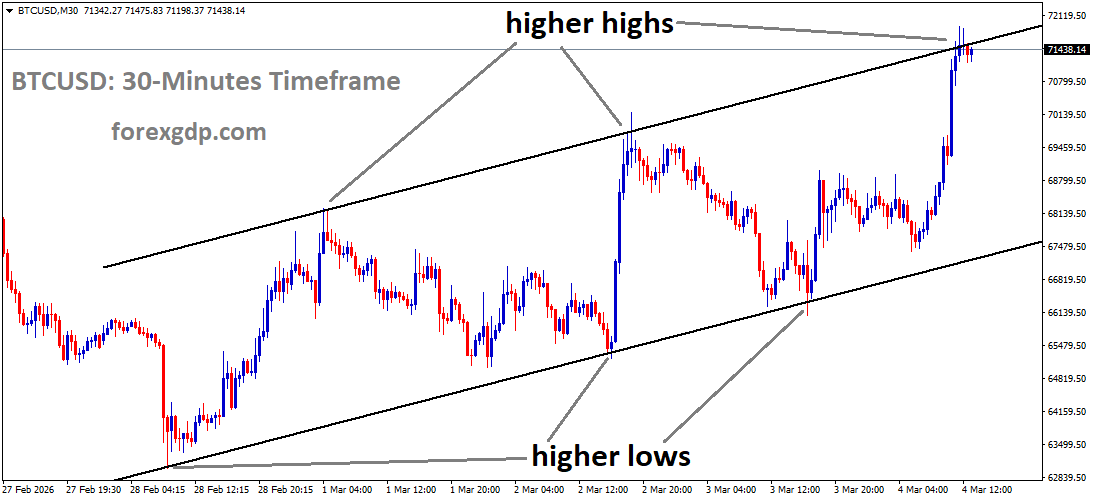
BTCUSD is moving in an uptrend channel, and the market has reached a higher high area of the channel
Over the past 24 hours, the total crypto market capitalization increased slightly to around $2.34 trillion, compared with $2.33 trillion the previous day. Although the change appears small, it is significant considering the sharp movements seen in other financial markets during the same period.
Crypto Holds Firm While Traditional Markets Struggle
Global financial markets experienced a wave of selling pressure that affected several major assets. The US Nasdaq 100 index, which tracks large technology companies, fell sharply during the trading session. At one point, it dropped by more than 2.5% in a single day. By the end of the session, however, the index managed to recover more than half of those losses.
Gold, traditionally viewed as a safe-haven asset, also experienced selling pressure during this time. Such movements typically indicate uncertainty among investors as they shift their portfolios in response to economic or geopolitical developments.
In contrast, cryptocurrencies remained largely unaffected by the turmoil. Instead of dropping alongside traditional markets, the crypto sector maintained its overall value and even recorded a slight increase in total market capitalization.
This unusual stability has led some analysts to believe that investors may increasingly view cryptocurrencies as an alternative safe haven. While gold has historically played that role, digital assets are now being considered by some traders as a hedge during uncertain economic conditions.
Bitcoin Shows Strength Against Market Volatility
Bitcoin, the largest cryptocurrency by market value, demonstrated particularly strong performance during the recent market fluctuations.
During the early hours of the European trading session on Tuesday, Bitcoin experienced a sharp upward move. Within roughly five hours, the cryptocurrency surged by about 6%. This rally pushed Bitcoin past a key price barrier that had limited its movement for several weeks.
The surge suggested renewed buying interest in the asset. Throughout the trading day, Bitcoin displayed a pattern of gradually rising lows, which often indicates that buyers are entering the market consistently over time.
Despite this positive momentum, analysts caution that the broader market environment remains fragile. Financial markets around the world are still experiencing high volatility, especially within major stock indices. Because many institutional investors participate in both stock and crypto markets, turbulence in traditional finance can still influence digital assets.
When stock market volatility increases, large investors often reduce the amount of borrowed capital they use in trading. This reduction in leverage can limit buying power in riskier assets, including cryptocurrencies.
Geopolitical Tensions Could Influence Bitcoin Demand
Some industry groups believe that geopolitical developments could play a role in Bitcoin’s future performance.
Analysts from the London Crypto Club have suggested that escalating tensions in the Middle East could become a catalyst for Bitcoin adoption. Specifically, they pointed to the possibility of military actions involving the United States, Israel, and Iran.
In the event of a prolonged conflict, investors may seek alternative assets to protect their wealth. Historically, times of geopolitical instability often drive interest in assets that are not tied directly to any government or central bank.
Bitcoin fits that description because it operates on a decentralized network and is not controlled by a single country or authority. For this reason, some investors view it as protection against disruptions in traditional financial systems or political structures.
While it is impossible to predict how global events will unfold, geopolitical uncertainty has often increased interest in decentralized financial assets.
Experts Offer Mixed Views on Bitcoin’s Outlook
Industry experts remain divided on Bitcoin’s longer-term outlook.
Investment firm VanEck believes Bitcoin may currently be forming a market bottom. According to their analysis, the cryptocurrency could begin a gradual upward movement during the remainder of the year. Rather than a rapid surge, VanEck expects a slow and steady recovery.
However, not all research groups share the same optimism.
Analysts at 10x Research argue that there is still no clear evidence that the broader bearish trend in global markets has ended. Even though investment funds are flowing into Bitcoin exchange-traded funds (ETFs), they believe this alone does not confirm a lasting shift in market direction.
Another indicator closely monitored by analysts is the relationship between Bitcoin prices on different exchanges. Previously, Bitcoin traded at a discount on Coinbase compared to other exchanges, which sometimes reflected weaker demand in the US market. That discount has now disappeared, but according to 10x Research, it still does not confirm that the bearish trend has fully reversed.
This difference in opinions highlights the uncertainty that continues to shape the crypto market.
Crypto Mining Companies Shift Strategies

While the market debates Bitcoin’s future direction, several major mining companies are making strategic decisions that could influence the industry.
Core Scientific, a well-known Bitcoin mining firm, has announced plans to sell its entire Bitcoin holdings. The company currently owns 2,537 BTC and intends to sell all of it by the end of the first quarter.
According to its annual report, the sale is part of a broader strategy aimed at strengthening liquidity and funding new technology initiatives. The company plans to direct some of the funds toward expanding its artificial intelligence operations.
This move reflects a growing trend among mining companies that are exploring opportunities beyond cryptocurrency mining. As AI computing demand increases worldwide, data centers originally built for mining can sometimes be adapted to support AI infrastructure.
Another mining company, Riot Platforms, has also reported significant growth. The firm recently announced record annual revenue for 2025. Over the course of 12 months, its revenue nearly doubled.
This growth was partly driven by the company’s strategic shift toward supporting artificial intelligence infrastructure alongside traditional mining operations.
The intersection between cryptocurrency mining and AI computing is becoming an increasingly important trend within the technology sector.
Stablecoin Payments Expand Through Global Partnerships
Beyond mining and market movements, the broader crypto ecosystem continues to expand into everyday financial services.
Payment giant Visa has partnered with the stablecoin infrastructure platform Bridge to launch stablecoin-linked payment cards. These cards allow users to make purchases using digital currencies while merchants receive traditional currency payments.
The project aims to expand access to stablecoin-based payments across more than 100 countries.
Although the initiative officially launched in 2025, it has already achieved notable adoption. The service is currently active in 18 countries and can be used at more than 175 million points of sale worldwide.
Stablecoins are cryptocurrencies designed to maintain a stable value by being linked to traditional currencies such as the US dollar. Because they avoid the volatility associated with many cryptocurrencies, they are often used for payments and transfers.
By integrating stablecoins into traditional card networks, companies like Visa are helping bridge the gap between digital assets and everyday commerce.
Summary
The cryptocurrency market has demonstrated notable stability during a period of volatility in traditional financial markets. While stocks and gold faced sharp movements, the overall crypto market maintained its value and even recorded a small increase.
Bitcoin showed particular strength, rising quickly during the European trading session and displaying signs of renewed investor interest. However, analysts remain cautious, noting that global financial volatility could still impact the market.
Geopolitical tensions, institutional investment trends, and broader economic conditions continue to influence Bitcoin’s outlook. At the same time, crypto mining companies are adapting their business models, with some exploring artificial intelligence infrastructure as a new source of revenue.
Meanwhile, partnerships between major financial companies and blockchain platforms are expanding the use of stablecoins for everyday payments across the globe.
Together, these developments highlight the growing role of cryptocurrencies within the broader financial system, even as uncertainty remains part of the market landscape.
Don’t trade all the time, trade forex only at the confirmed trade setups
Get more confirmed trade signals at premium or supreme – Click here to get more signals, 2200%, 800% growth in Real Live USD trading account of our users – click here to see , or If you want to get FREE Trial signals, You can Join FREE Signals Now!