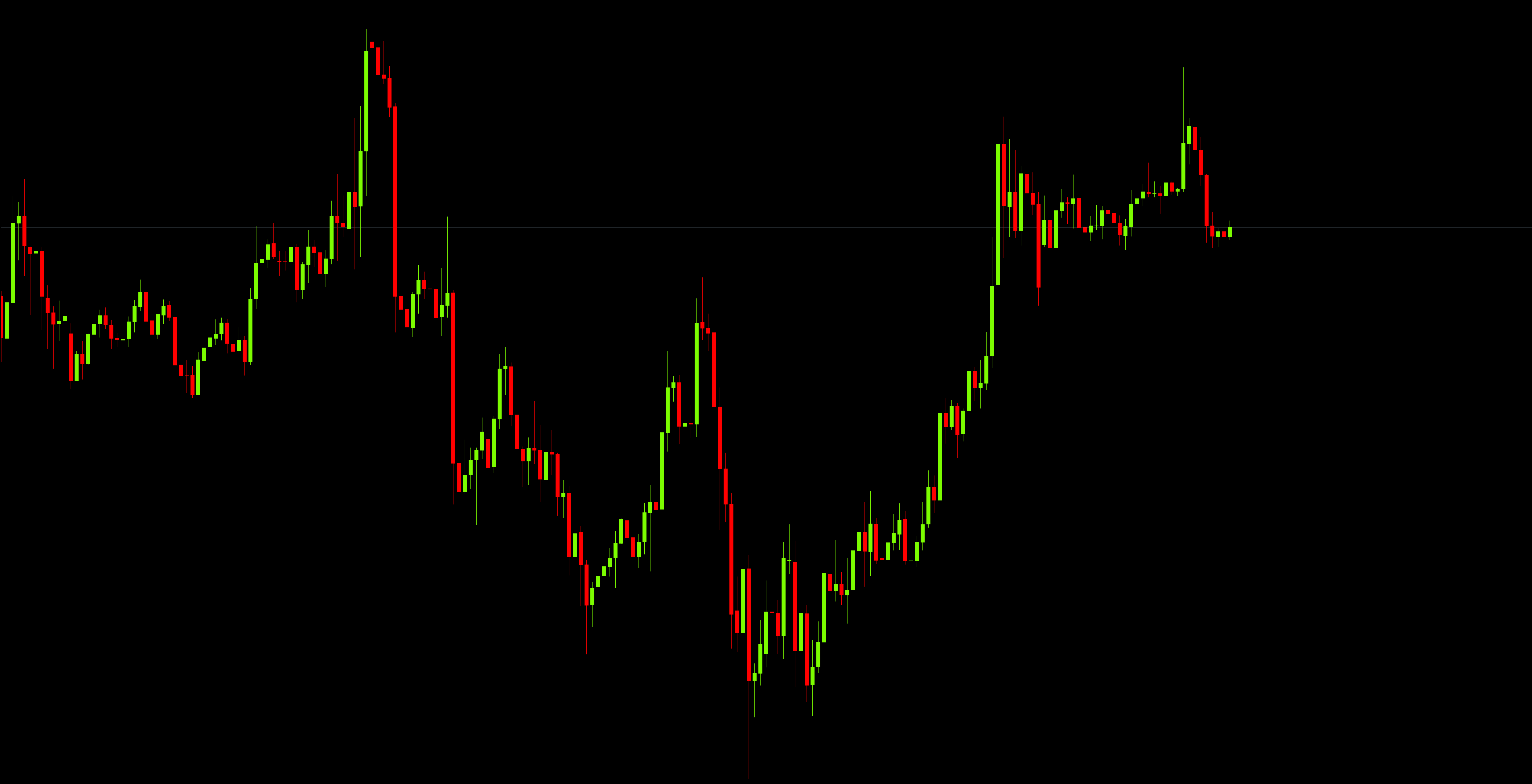

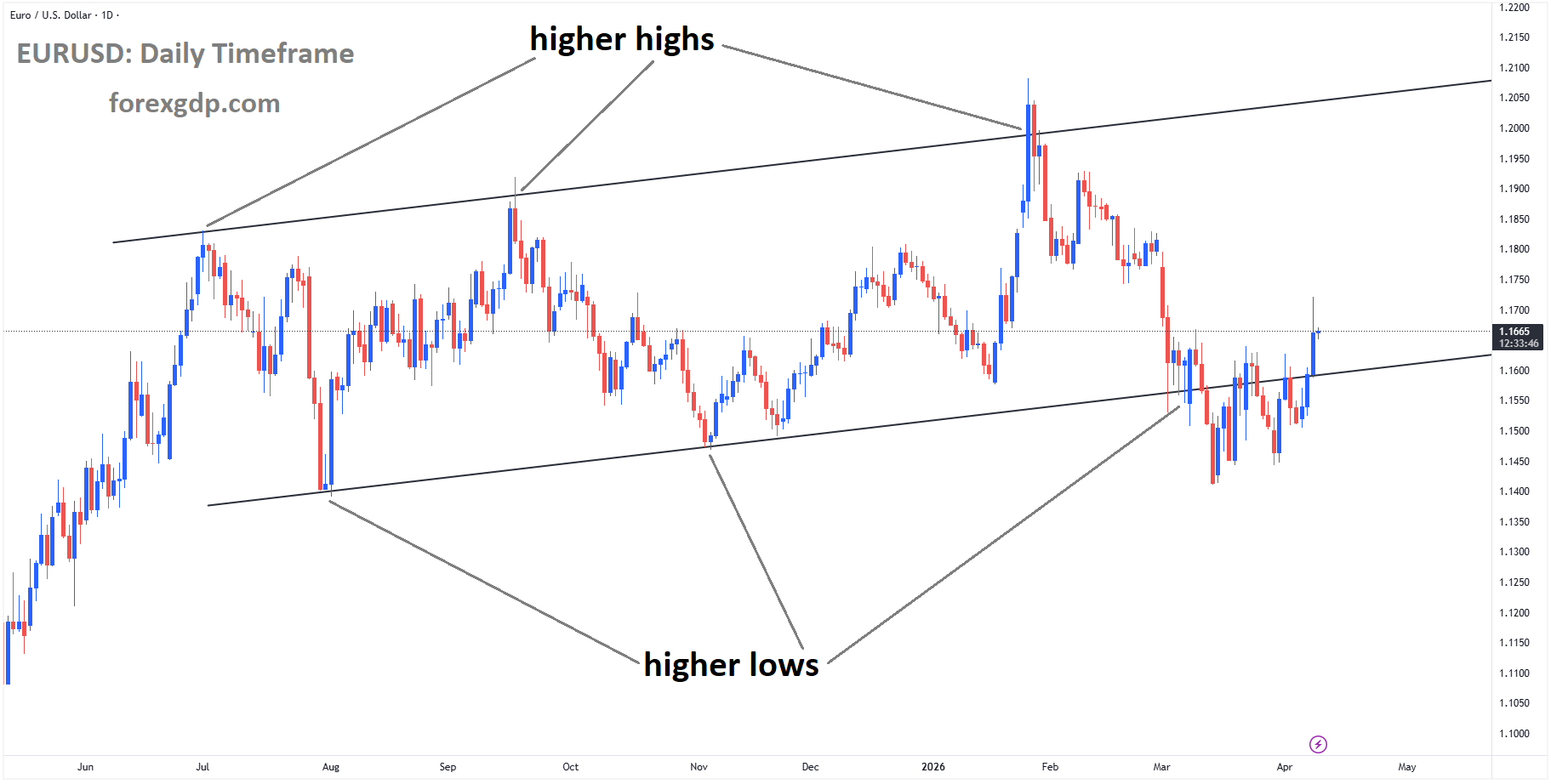
EURUSD is moving in an ascending channel, and the market has reached the higher low area of the channel
EURUSD Pushes Higher, Approaches 1.1700 in Nervous Trading Conditions
The EUR/USD currency pair has been moving cautiously higher, showing a slight upward push during Thursday’s trading session. After dipping to around 1.1650 earlier in the day, the pair managed to recover and trade near the 1.1680 level. While this bounce suggests some resilience in the Euro, the broader picture remains uncertain as global events and economic signals continue to influence market sentiment.
Despite this recovery, the pair is still trading below its recent peak near 1.1721, highlighting the ongoing pressure and hesitation among investors. A mix of geopolitical tensions and shifting expectations around interest rates is shaping the direction of the market.
Geopolitical Tensions Keep Markets Nervous
One of the biggest factors influencing currency movements right now is the fragile situation in the Middle East. The ongoing conflict involving Iran has created uncertainty across global markets, and investors are closely watching every development.
Ceasefire Concerns Add to Uncertainty
Although there were initial hopes for a ceasefire, the situation remains delicate. Iran recently took a significant step by closing the Strait of Hormuz, a key global shipping route, following heavy military actions by Israel in Lebanon. This move has raised concerns about disruptions in global trade and energy supply, both of which can impact currency markets.
Iranian officials have also raised concerns about possible violations of the ceasefire proposal. On the other side, both the United States and Israel have made it clear that Lebanon is not included in the agreement. This difference in interpretation has added confusion and increased the risk of further escalation.
Adding to the tension, US President Donald Trump has warned of potential action if Iran does not follow the terms of the agreement. Such statements tend to increase market anxiety, as they suggest that the situation could worsen quickly.
Peace Talks Offer Some Hope
Despite the tensions, there are still signs that both sides are willing to avoid further conflict. Delegations from the involved parties are expected to meet in Pakistan for direct discussions. This development has helped maintain some level of optimism in the market.
However, investors remain cautious. Until there is clear progress or a stable agreement, uncertainty is likely to continue affecting currency movements, including the EUR/USD pair.
Federal Reserve Signals Influence the US Dollar
Another key factor affecting the EUR/USD exchange rate is the latest communication from the US Federal Reserve. The minutes from the recent Federal Open Market Committee (FOMC) meeting have provided new insights into how policymakers are thinking about inflation and interest rates.
A Shift Toward a More Hawkish Tone
The Fed’s latest meeting notes suggest a more cautious outlook on inflation. Policymakers now believe that reaching the 2% inflation target may take longer than previously expected. This has led to a shift in tone, with some members even discussing the possibility of raising interest rates again.
This is particularly noteworthy because the Fed had been cutting rates since September 2024. The mention of potential rate hikes marks a change in direction and has supported the US Dollar, making it stronger against other currencies, including the Euro.
Why Interest Rate Expectations Matter
Interest rates play a major role in currency value. When rates are expected to rise, the currency often becomes more attractive to investors because it can offer better returns. In this case, the possibility of tighter monetary policy in the US has helped the Dollar recover some strength.
As a result, even though the Euro has shown some gains, the stronger Dollar has limited how far the EUR/USD pair can rise.
Key Economic Data in Focus
Investors are also paying close attention to upcoming economic data releases from the United States. These reports are expected to provide more clarity on how inflation is evolving, especially in light of the recent geopolitical tensions.
Inflation Data Could Shape Market Direction
Two important reports are on the radar. The Personal Consumption Expenditures (PCE) Price Index is scheduled for release on Thursday, followed by the Consumer Price Index (CPI) on Friday. Both of these indicators are closely watched by the Federal Reserve when making policy decisions.
These reports will reflect inflation trends for March and may also show how recent global events, including the Iran conflict, are affecting prices. If inflation turns out to be higher than expected, it could strengthen the case for tighter monetary policy in the US.
On the other hand, softer inflation data might reduce pressure on the Fed to act, which could weaken the Dollar and support the Euro.
Mixed Signals from the Eurozone Economy
While global and US factors are playing a major role, economic data from Europe has also been part of the picture. Recent reports from Germany, the largest economy in the Eurozone, have provided mixed signals.
Industrial Output Falls Short
Germany’s industrial production data for February showed a decline, which came as a surprise to many analysts. This suggests that the manufacturing sector may be facing challenges, possibly due to weaker demand or ongoing global uncertainty.
A slowdown in industrial activity can weigh on the Euro, as it reflects reduced economic strength in the region.
Trade Data Offers Some Support
At the same time, Germany’s trade balance showed some positive signs. The trade surplus was slightly better than expected, with both imports and exports increasing beyond forecasts. This indicates that international trade remains active, even amid uncertainty.
However, the overall impact of these figures on the Euro has been limited. Investors appear to be more focused on global developments and US monetary policy rather than regional data.
Market Sentiment Remains Fragile
Overall, the EUR/USD pair is being influenced by a combination of factors that are pulling in different directions. On one side, the Euro is finding some support from its recent recovery. On the other, a stronger US Dollar and ongoing geopolitical risks are limiting further gains.
The fragile ceasefire situation continues to create uncertainty, while central bank signals are adding another layer of complexity. As a result, traders are likely to remain cautious, reacting quickly to any new developments.
Summary
The EUR/USD pair has shown a modest recovery, moving up from earlier lows but still facing resistance due to broader market pressures. Ongoing tensions in the Middle East, especially involving Iran, are keeping investors on edge and contributing to market volatility.
At the same time, the US Federal Reserve’s more cautious stance on inflation and openness to possible rate hikes have strengthened the US Dollar. This has limited the Euro’s ability to rise further.
Upcoming inflation data from the United States will play a key role in shaping expectations for future policy decisions. Meanwhile, mixed economic signals from Europe have had only a minor impact compared to global events.
As uncertainty remains high, the direction of EUR/USD will likely depend on how geopolitical risks evolve and how central banks respond to changing economic conditions.
GBPUSD under pressure as shaky Iran truce unsettles investors
The British Pound has recently faced slight downward pressure against major global currencies, reflecting a shift in investor sentiment. During European trading hours, the currency hovered near 1.3400 against the US Dollar, showing signs of hesitation rather than strong directional movement. While the decline is not sharp, it highlights a cautious mood across financial markets driven by geopolitical concerns and uncertainty about future economic policies.
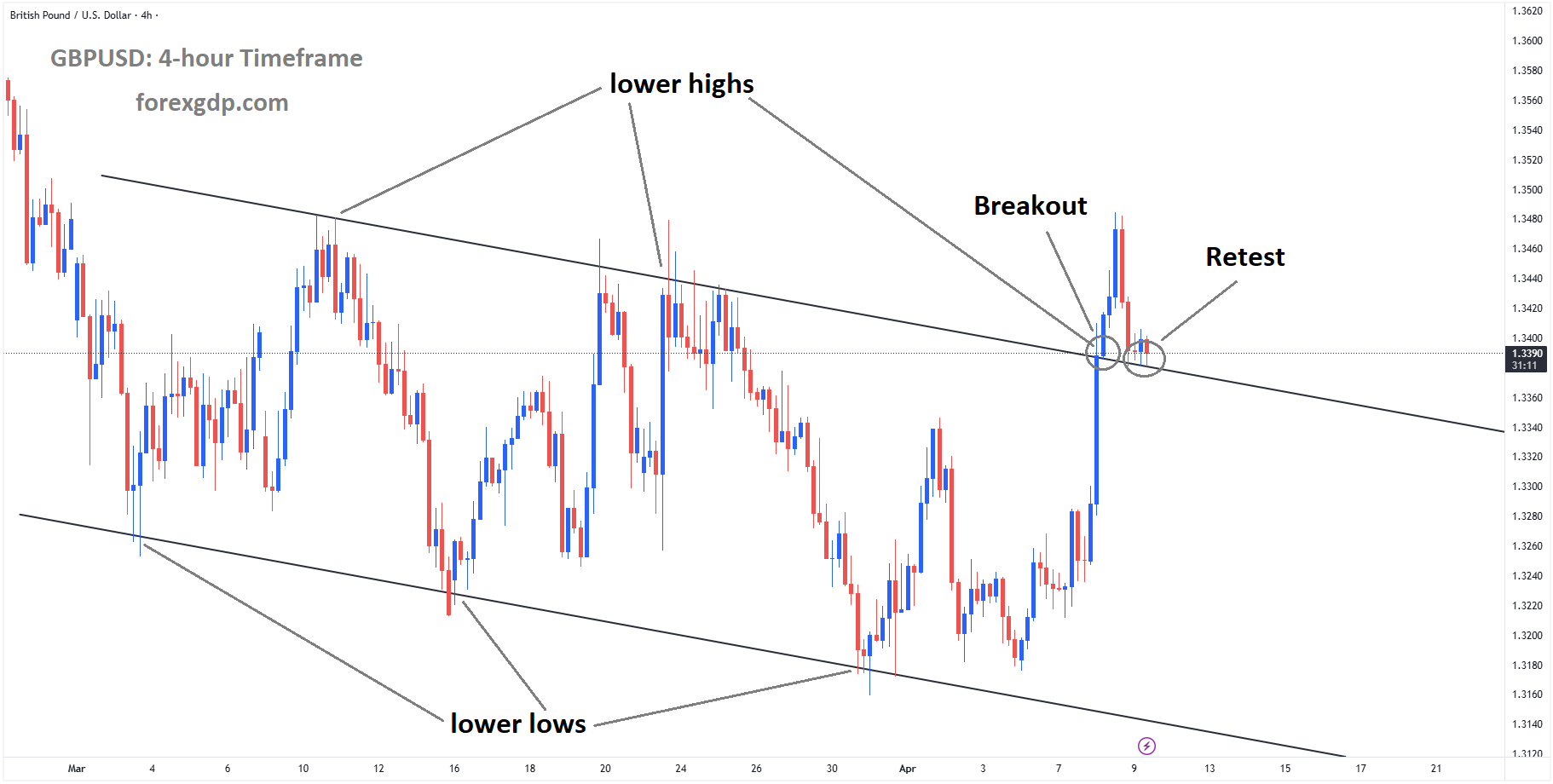
GBPUSD reached the retest area of the broken descending channel
This shift is closely linked to growing doubts about stability in the Middle East, as well as changing expectations around central bank decisions in the United Kingdom.
Rising Geopolitical Tensions Shake Investor Confidence
Global markets have turned more cautious following uncertainty surrounding a recently announced ceasefire between the United States and Iran. While the agreement initially brought a sense of relief, confidence has started to fade as new developments raise questions about how long the truce will hold.
Reports indicate that military activity involving Israeli forces has continued in the region. One notable incident involved the killing of Ali Yusuf Harshi, who was closely connected to Hezbollah leadership. Events like these have made investors uneasy, as they suggest that tensions in the region are far from resolved.
At the same time, political voices in Iran have expressed dissatisfaction with how the ceasefire terms are being followed. Iran’s parliament speaker and lead negotiator publicly criticized what he described as violations of the agreement. The original proposal called for an immediate halt to hostilities across all affected areas, including Lebanon, but ongoing military actions appear to contradict that goal.
Despite these concerns, both the United States and Iran have agreed to continue diplomatic efforts. Negotiation teams from both sides are expected to meet in Pakistan for the next phase of discussions. While this shows willingness to pursue peace, the outcome remains uncertain, keeping markets on edge.
Market Sentiment Turns Cautious
The uncertainty surrounding geopolitical developments has had a noticeable impact on global market sentiment. Investors are becoming more risk-averse, meaning they are less willing to take chances in uncertain conditions.
This cautious approach is reflected in stock market futures, which have shown slight declines. A softer performance in equity markets often signals that traders are moving toward safer assets or reducing exposure to riskier investments.
At the same time, the US Dollar has gained modest strength. The Dollar Index, which measures the value of the US currency against a group of major currencies, has edged slightly higher. This suggests that investors are seeking the relative safety of the US Dollar during periods of uncertainty.
For the Pound Sterling, this environment creates additional pressure. When global risk appetite falls, currencies like the Pound can struggle to gain traction, especially if there are no strong domestic drivers to support them.
Focus Shifts to Bank of England Policy Outlook
Beyond geopolitical concerns, attention is also turning toward the Bank of England and its future monetary policy decisions. Investors are closely watching for signals about how the central bank plans to respond to changing economic conditions.
Earlier expectations had leaned toward tighter monetary policy, driven in part by rising inflation concerns. One of the key factors behind these concerns was the increase in energy prices linked to Middle East tensions. Higher energy costs can push overall inflation upward, which often leads central banks to consider raising interest rates.
However, the recent optimism around a potential easing of geopolitical tensions has started to change this outlook. If the situation stabilizes and energy prices become less volatile, inflation pressures could ease. This, in turn, may reduce the need for aggressive policy tightening by the Bank of England.
As a result, some investors are beginning to scale back their expectations for future interest rate increases. This shift in thinking is contributing to the Pound’s softer performance, as currencies often benefit from higher interest rate expectations.
Balancing Global Risks and Domestic Factors
The current movement of the Pound highlights how closely global and domestic factors are intertwined. On one hand, international developments such as geopolitical tensions and diplomatic negotiations are shaping investor sentiment. On the other hand, local economic policies and central bank decisions remain key drivers of currency performance.
For now, the Pound appears to be caught between these competing influences. The lack of clear direction in global events, combined with uncertainty about future policy moves, is keeping the currency in a narrow range.
Investors are likely to remain cautious until there is more clarity on both fronts. A stable geopolitical environment could improve risk appetite and support the Pound, while clearer guidance from the Bank of England could provide stronger direction for currency markets.
What Investors Are Watching Next

Looking ahead, several factors will play a crucial role in determining the Pound’s trajectory:
Progress in US-Iran Negotiations
Any positive developments in upcoming talks could help restore confidence in global markets. A lasting agreement would likely reduce uncertainty and improve investor sentiment.
Stability in the Middle East
Continued military activity or escalating tensions could keep markets on edge. On the other hand, signs of de-escalation would support a more stable environment.
Bank of England Signals
Statements or policy decisions from the central bank will be closely analyzed. Investors are particularly interested in how officials assess inflation and economic growth.
Global Risk Appetite
Broader market trends, including movements in equities and demand for safe-haven assets, will continue to influence currency behavior.
Summary
The Pound Sterling’s recent dip reflects a mix of global uncertainty and shifting expectations around monetary policy. Concerns about the durability of a ceasefire in the Middle East have made investors more cautious, leading to weaker demand for risk-sensitive currencies.
At the same time, changing views on inflation and interest rates in the United Kingdom are adding another layer of complexity. With investors reassessing the likelihood of future policy tightening, the Pound has struggled to find strong support.
As diplomatic efforts continue and central banks evaluate economic conditions, the direction of the Pound will depend on how these key factors evolve. Until clearer signals emerge, cautious trading and limited movement are likely to remain the dominant themes.
USDJPY strengthens while Yen struggles amid oil market rebound
The Japanese Yen has come under pressure in recent trading sessions, losing ground against several major global currencies. A mix of rising oil prices, geopolitical uncertainty, and cautious investor sentiment has created a challenging environment for the currency. At the same time, market participants are closely watching upcoming economic data from the United States, which could shape the next direction for global markets.
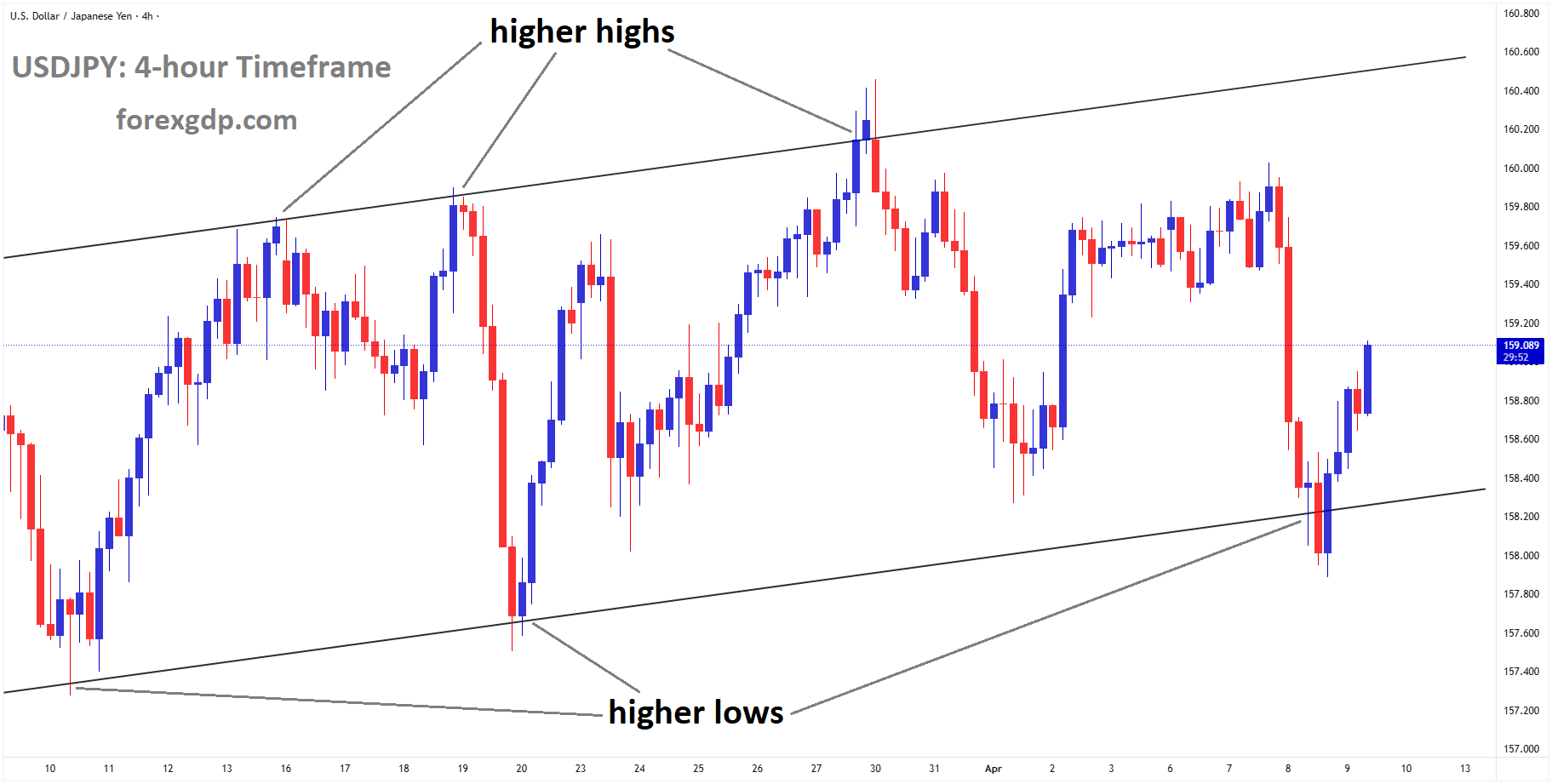
USDJPY is moving in an ascending channel, and the market has rebounded from the higher low area of the channel
Rising Oil Prices Add Pressure on the Yen
One of the main reasons behind the Yen’s recent weakness is the rebound in oil prices. Oil has seen a noticeable increase due to concerns about the stability of a recently announced ceasefire between the United States and Iran. As uncertainty grows, energy markets are reacting quickly.
Japan relies heavily on imported oil to meet its energy needs. Unlike countries that produce their own oil, Japan must purchase large amounts from international markets. When oil prices rise, it increases the country’s import costs. This, in turn, can weaken the national currency because more money flows out of the country to pay for energy.
As oil continues to trade higher, currencies like the Japanese Yen often struggle. Investors tend to move their money toward economies that are less affected by rising energy costs, putting additional downward pressure on the Yen.
Uncertainty Around the US-Iran Ceasefire
Geopolitical developments are also playing a major role in shaping market movements. A ceasefire between the United States and Iran was announced recently, raising hopes for reduced tensions in the region. However, those hopes are already being tested.
Iran has raised concerns that the United States may not be fully honoring the terms of the agreement. According to Iranian officials, one of the key points of the ceasefire—an immediate halt to conflict in multiple regions—has not been properly followed. Reports of continued military activity involving Iran-backed groups have added to the uncertainty.
These developments have made investors cautious. When global tensions rise or agreements appear fragile, markets often react with increased volatility. Traders become more careful, and risk-sensitive currencies can be affected.
At the same time, both the US and Iran have indicated that they are willing to continue discussions. Teams from both countries are expected to meet soon for another round of talks. While this shows that dialogue is ongoing, the current situation remains unclear, leaving markets in a wait-and-watch mode.
Market Sentiment Turns Slightly Risk-Averse
Investor sentiment has shifted slightly toward caution as a result of these global developments. When markets become uncertain, investors tend to reduce exposure to riskier assets and move toward safer options.
This cautious mood has been reflected in stock market futures, which have shown mild declines. Although the drop is not dramatic, it signals that traders are not fully confident about the near-term outlook.
Interestingly, the Japanese Yen is traditionally considered a safe-haven currency. In times of global uncertainty, it often strengthens as investors seek stability. However, the current situation is different because rising oil prices are offsetting this typical safe-haven demand.
This creates a unique dynamic where the Yen is facing pressure from multiple directions—both economic and geopolitical.
Focus Shifts to Upcoming US Inflation Data
Looking ahead, one of the most important events for global markets is the release of the United States Consumer Price Index (CPI) data. This report provides key insights into inflation trends in the world’s largest economy.
Inflation data is closely watched because it influences decisions made by the US Federal Reserve regarding interest rates. If inflation is higher than expected, it may lead to tighter monetary policy. On the other hand, softer inflation could support a more relaxed approach.
Changes in US interest rate expectations can have a strong impact on currency markets. A stronger US Dollar often puts additional pressure on other currencies, including the Japanese Yen.
Investors are therefore paying close attention to the upcoming data. It could provide clearer direction for the market and help determine whether the Yen will continue to weaken or find some support.
How Global Events Are Shaping Currency Movements
The current situation highlights how interconnected global markets have become. A single event, such as rising oil prices or geopolitical tensions, can influence currencies, stocks, and investor behavior across the world.
For Japan, the combination of higher energy costs and external uncertainties creates a difficult environment for the Yen. At the same time, developments in the United States, especially related to inflation and interest rates, add another layer of complexity.
Currency markets are constantly adjusting to new information. Traders analyze economic data, political events, and global trends to make decisions. In times like these, even small changes in sentiment can lead to noticeable shifts in currency values.
What Traders and Investors Are Watching Next
There are several key factors that market participants are closely monitoring:
Geopolitical Developments
The progress of talks between the US and Iran will be crucial. Any signs of improvement could ease tensions and stabilize markets. On the other hand, further disagreements could increase uncertainty.
Energy Market Trends
Oil prices will remain an important driver for the Yen. If prices continue to rise, the currency may face ongoing pressure.
US Economic Data
The upcoming inflation report is likely to influence expectations around US monetary policy. This will have a direct impact on currency movements globally.
Overall Market Sentiment
Investor confidence plays a major role in determining currency trends. A shift toward risk-taking or risk aversion can quickly change market dynamics.
Summary
The Japanese Yen is currently facing a mix of economic and geopolitical challenges. Rising oil prices are increasing pressure on Japan’s import-dependent economy, while uncertainty surrounding the US-Iran ceasefire is keeping investors cautious. At the same time, attention is turning toward key US inflation data, which could shape expectations for future interest rate decisions.
As global markets navigate these developments, the direction of the Yen will depend on how these factors evolve. Traders are watching closely, knowing that even small changes in sentiment or data can have a significant impact on currency movements.
USDCAD gains momentum while oil recovery fails to fully support the loonie
The USD/CAD currency pair has recently moved upward after several days of decline, reflecting changing global conditions and shifting investor sentiment. The rise comes as the US Dollar regains strength due to increased demand for safe-haven assets, while the Canadian Dollar faces mixed influences from oil price movements and geopolitical developments.
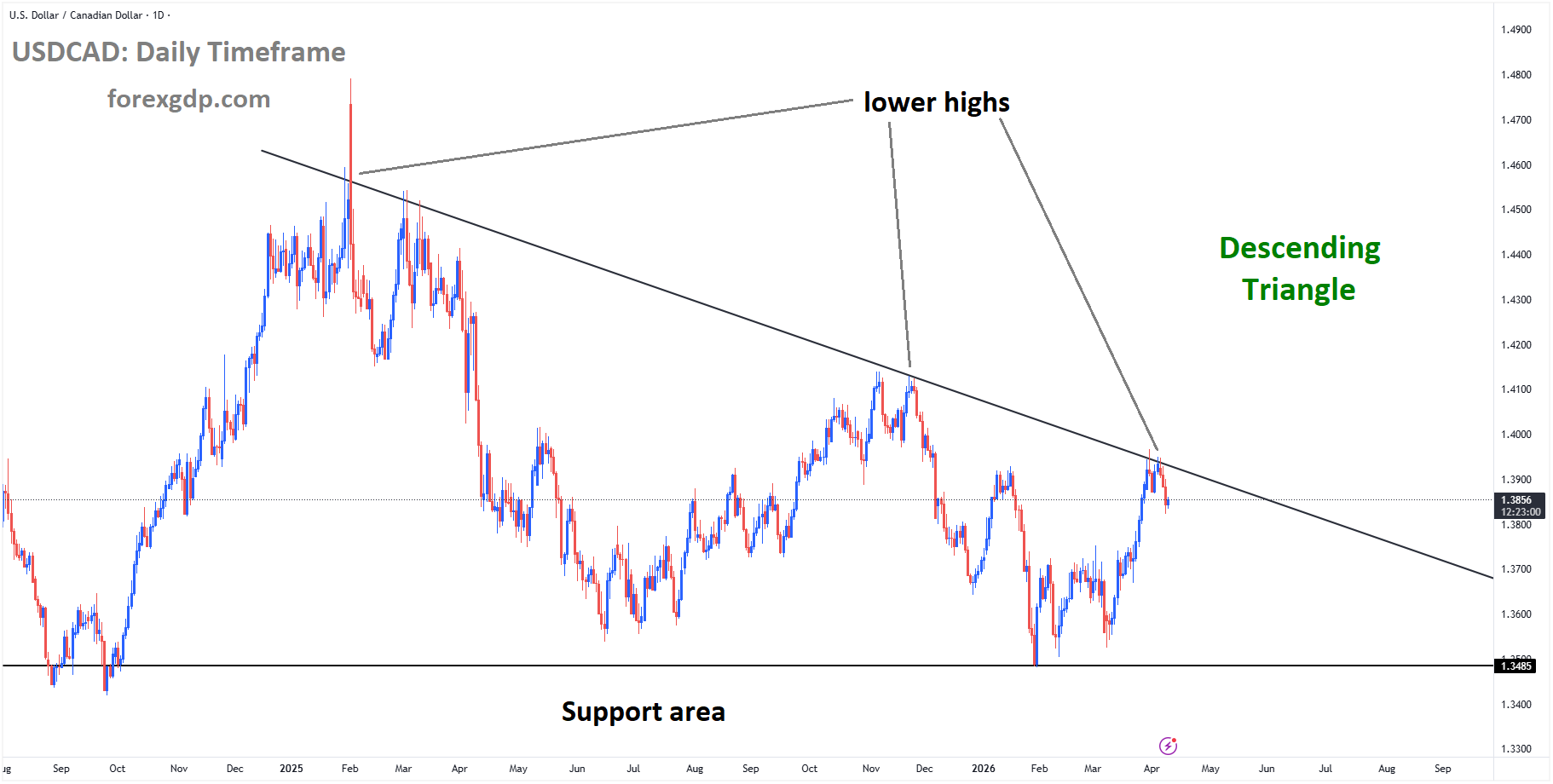
USDCAD is moving in a descending triangle pattern, and the market has fallen from the lower high area of the pattern
During Thursday’s Asian trading session, USD/CAD hovered around the 1.3860 level. This movement highlights how quickly currency markets can react to global uncertainty, especially when political tensions and economic signals collide.
Safe-Haven Demand Lifts the US Dollar
One of the main drivers behind the recent rise in USD/CAD is the renewed demand for the US Dollar as a safe-haven currency. Investors often turn to the Dollar during times of uncertainty because it is widely seen as stable and reliable.
Recent developments involving the United States and Iran have added to global unease. Optimism surrounding a ceasefire agreement between the two nations has started to fade, creating doubts about whether a lasting resolution can be achieved. As tensions resurface, investors are becoming more cautious, shifting their funds toward safer assets like the US Dollar.
This shift in sentiment is a key reason why the Dollar has gained ground against other currencies, including the Canadian Dollar.
Federal Reserve Signals a Cautious Approach
Another important factor influencing the USD is the latest update from the US Federal Reserve. The minutes from the Fed’s March meeting provide insight into how policymakers are viewing the current economic environment.
The central bank appears to be taking a “wait-and-see” approach. Most officials agreed that interest rates should remain unchanged for now, suggesting that the current policy stance is already close to a neutral level. This means the Fed is neither strongly stimulating nor restricting the economy at this point.
Interestingly, policymakers also noted that economic risks are becoming more balanced. This indicates that while there are still uncertainties, the overall outlook is not tilted heavily in one direction. However, the Fed made it clear that raising interest rates further would require stronger justification, setting a high threshold for any future tightening.
This cautious stance supports the US Dollar by reinforcing confidence in the stability of US monetary policy.
Oil Prices Add Support to the Canadian Dollar

While the US Dollar has been gaining strength, the Canadian Dollar has its own source of support—oil prices. Canada is a major exporter of crude oil, so the value of its currency often moves in line with changes in the oil market.
Recently, oil prices have rebounded, offering some support to the CAD. West Texas Intermediate (WTI), a key benchmark for crude oil, has been trading at elevated levels. This increase is linked to disruptions in tanker traffic through the Strait of Hormuz, one of the world’s most important oil shipping routes.
Supply Concerns Drive Oil Higher
Reports from Iranian media indicated that tanker movement in the Strait of Hormuz had been halted following new military actions in the region. This development raised concerns about potential supply shortages, pushing oil prices higher.
When oil prices rise, it generally benefits the Canadian economy, as higher export revenues can strengthen the Canadian Dollar. This dynamic may help limit the upside of USD/CAD, even as the US Dollar gains strength.
Geopolitical Tensions Continue to Influence Markets
The situation between the US and Iran remains complex and fluid. Iranian officials have expressed frustration over recent developments, claiming that certain actions have violated the terms of a newly proposed ceasefire agreement.
According to Iranian leadership, key elements of their proposal were not respected, making further negotiations difficult. This has added another layer of uncertainty to an already fragile situation.
At the same time, efforts to ease tensions are still ongoing. US Vice President JD Vance is reportedly leading a delegation for direct talks with Iran, aiming to stabilize the situation and potentially reopen critical trade routes like the Strait of Hormuz.
Impact on Global Trade and Currency Markets
The Strait of Hormuz plays a vital role in global energy supply, and any disruption can have far-reaching effects. When shipping routes are threatened, oil prices tend to rise, and market volatility increases.
These developments influence not only commodity prices but also currency markets. The US Dollar often benefits from uncertainty, while commodity-linked currencies like the Canadian Dollar react more directly to changes in resource prices.
Balancing Forces Shape USD/CAD Movement
The current movement in USD/CAD reflects a balance of competing forces. On one side, the US Dollar is gaining strength due to safe-haven demand and steady monetary policy expectations. On the other side, the Canadian Dollar is receiving support from rising oil prices.
This push-and-pull dynamic creates a situation where the pair may continue to fluctuate rather than move sharply in one direction. Traders and investors are closely watching both geopolitical developments and economic signals to determine the next trend.
What to Watch in the Coming Days
Several key factors are likely to influence USD/CAD in the near future:
- Updates on US-Iran negotiations and any progress toward a stable agreement
- Changes in oil prices and the status of tanker traffic in the Strait of Hormuz
- Further signals from the Federal Reserve regarding interest rates and economic outlook
- Broader market sentiment and demand for safe-haven assets
Each of these elements has the potential to shift the balance between the US Dollar and the Canadian Dollar.
Summary
The recent rise in USD/CAD highlights how global uncertainty, central bank decisions, and commodity prices can all interact to shape currency movements. The US Dollar is benefiting from renewed safe-haven demand as geopolitical tensions increase, while the Federal Reserve’s cautious stance adds to its stability.
At the same time, the Canadian Dollar is finding support from stronger oil prices, driven by supply concerns linked to disruptions in a key shipping route. As these opposing forces continue to play out, USD/CAD is likely to remain sensitive to both economic updates and geopolitical developments in the days ahead.
USDCHF Edges Higher Past 0.7900 as Geopolitical Risks Weigh on Sentiment
The USD/CHF currency pair has shown a modest recovery after slipping to recent lows, reflecting a shift in global sentiment driven by geopolitical uncertainty and upcoming economic data. While the move itself appears measured, the underlying factors influencing it reveal a broader story about risk, stability, and investor behavior in uncertain times.
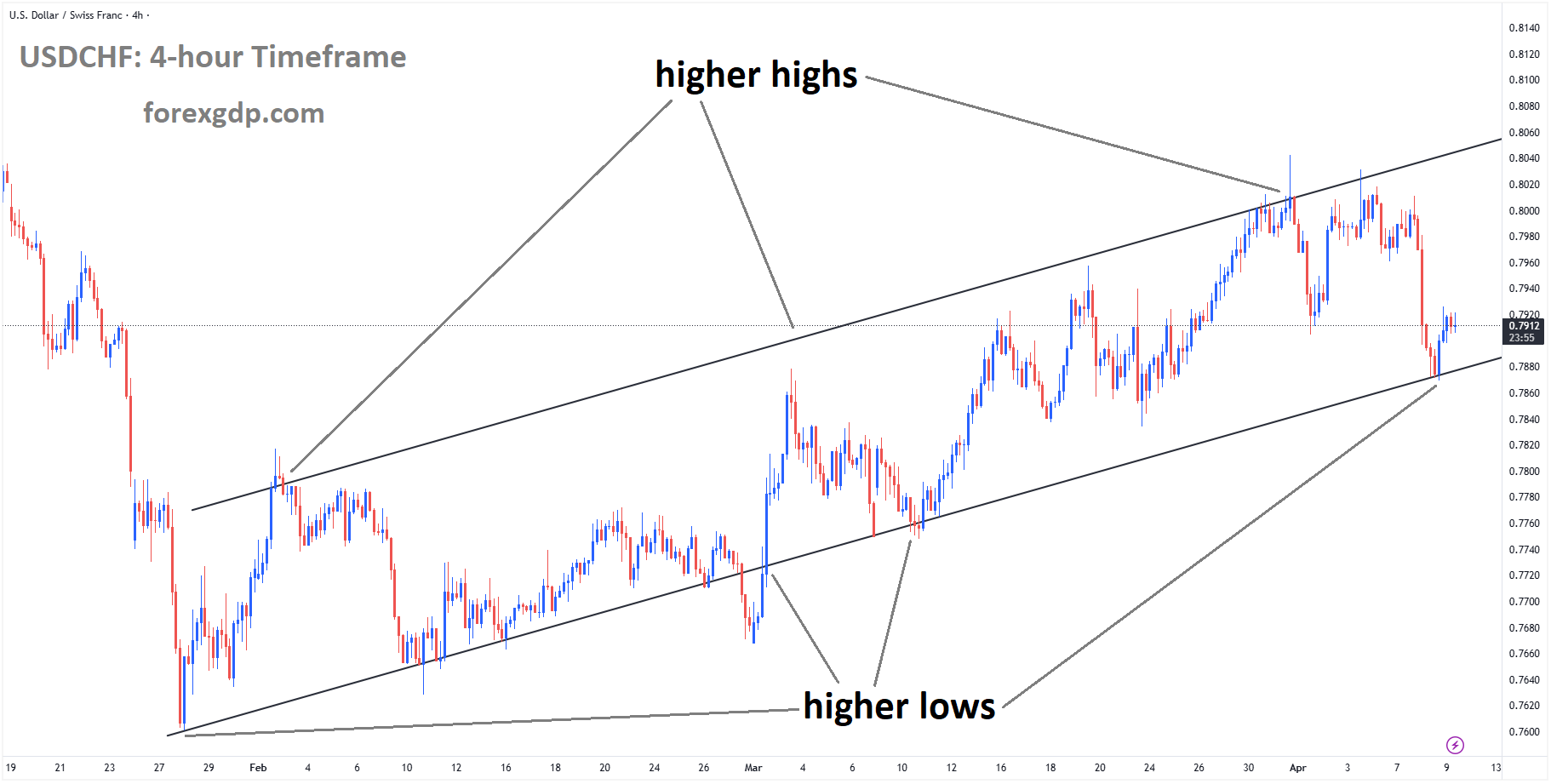
USDCHF is moving in an ascending channel, and the market has rebounded from the higher low area of the channel
Market Sentiment Turns Cautious
The US Dollar has gained slight strength against the Swiss Franc, climbing from lows near 0.7870 and stabilizing above the 0.7900 level. This movement is not happening in isolation. It is closely tied to a change in investor mood, which has turned more cautious due to ongoing geopolitical tensions.
When uncertainty rises, investors often look for safer places to park their money. The US Dollar is widely seen as one of those safe-haven assets. As concerns grow, demand for the Dollar tends to increase, which helps push its value higher against other currencies.
In this case, the shift toward caution has been triggered by developments in the Middle East, particularly surrounding Iran and its fragile peace process. These events have made investors more careful, reducing their willingness to take risks in the market.
Rising Tensions in the Middle East
Recent events involving Iran have added to the uneasy global environment. Shortly after a ceasefire was announced, Iran took the significant step of closing the Strait of Hormuz. This move came in response to what Iran described as violations of the peace agreement.
The situation escalated further following a large-scale attack in Lebanon that resulted in significant casualties. Iran views this as a breach of the agreement, while Israel and the United States maintain that operations in Lebanon were not part of the ceasefire terms.
This disagreement highlights how fragile the current situation is. Even though a ceasefire exists on paper, the reality on the ground remains tense and unpredictable.
Adding to the uncertainty, US leadership has issued warnings about possible further actions if Iran does not adhere to the terms of the agreement. Such statements tend to increase anxiety in global markets, as they raise the possibility of renewed conflict.
Peace Talks Offer a Glimmer of Hope
Despite the tension, there are signs that diplomatic efforts are still moving forward. Both Washington and Tehran have agreed to send representatives to peace talks scheduled to take place in Pakistan.
This development suggests that, while the situation is delicate, there is still a willingness on both sides to pursue a peaceful resolution. For markets, this creates a mixed picture.
On one hand, ongoing talks provide hope that tensions could ease. On the other hand, the fragile nature of the ceasefire means that any progress could quickly unravel.
As a result, investors are adopting a “wait and see” approach. This cautious stance is often described as a risk-off environment, where market participants prioritize safety over higher returns.
The Role of the US Federal Reserve
While geopolitical events are playing a major role, economic factors are also shaping the movement of the USD/CHF pair. One key influence is the stance of the US Federal Reserve.
The latest meeting minutes from the Fed show a balanced outlook. Policymakers are keeping the option of rate cuts open, but they are also mindful of inflation risks. Some members have even suggested that tighter monetary policy could be considered if inflation remains above the desired level for an extended period.
This balanced approach reflects the complexity of the current economic environment. The Fed is trying to support growth while also keeping inflation under control. For currency markets, this creates uncertainty about the future direction of interest rates.
Interest rates are important because they influence the attractiveness of a currency. Higher rates can draw in foreign investment, while lower rates may have the opposite effect. As expectations shift, so does the value of the currency.
Inflation Data in Focus
Upcoming inflation reports in the United States are expected to play a crucial role in shaping market expectations. Investors are closely watching these releases for clues about the direction of the economy and future policy decisions.
Personal Consumption Expenditures (PCE)

The PCE Price Index, scheduled for release on Thursday, is one of the Fed’s preferred measures of inflation. It provides insight into how prices are changing across a wide range of goods and services.
While important, this report is often seen as a precursor to the more widely followed Consumer Price Index.
Consumer Price Index (CPI)
The CPI data, set to be released on Friday, is expected to attract the most attention. It will include figures from March, offering a clearer picture of how recent global events may have impacted prices.
Because inflation plays such a central role in monetary policy decisions, these reports could influence how investors view the US Dollar in the near term.
Switzerland’s Steady Economic Backdrop
In contrast to the busy economic calendar in the United States, Switzerland has seen relatively little activity this week. The most notable data point has been the unemployment rate for March, which held steady at 3%.
This stability reflects the strength of the Swiss labor market. However, with limited new data, the Swiss Franc has been more influenced by external factors rather than domestic developments.
As a result, movements in the USD/CHF pair have been driven largely by changes in global sentiment and developments in the US economy.
Safe-Haven Dynamics at Play
Both the US Dollar and the Swiss Franc are considered safe-haven currencies. This means they tend to perform well during times of uncertainty. However, the balance between the two can shift depending on the situation.
In the current environment, the Dollar appears to be gaining a slight edge. This may be due to its broader role in global finance and its connection to US economic data, which is currently in sharp focus.
At the same time, the Swiss Franc continues to benefit from Switzerland’s reputation for stability. This creates a dynamic where both currencies are supported, but small changes in sentiment can tip the balance.
What This Means for the Broader Market
The recent movement in USD/CHF is a reflection of a larger trend in global markets. Investors are navigating a complex mix of geopolitical risks and economic uncertainty.
Key factors influencing this environment include:
- Ongoing tensions in the Middle East
- The fragile nature of current peace efforts
- Uncertainty around US monetary policy
- Upcoming inflation data
Together, these elements are shaping how investors allocate their capital and manage risk.
Summary
The USD/CHF pair has edged higher as global uncertainty drives a cautious tone in financial markets. Tensions surrounding Iran and the fragile ceasefire have reduced risk appetite, leading investors to seek safer assets like the US Dollar.
At the same time, ongoing peace talks offer a degree of hope, even as doubts remain about their success. Economic factors, particularly US inflation data and Federal Reserve policy signals, are also playing a key role in shaping currency movements.
With Switzerland’s economic calendar relatively quiet, external developments continue to dominate the direction of the Swiss Franc. As markets await new data and watch geopolitical events closely, the balance between risk and safety remains at the center of attention.
AUDUSD struggles as geopolitical risks return despite ceasefire hopes
The Australian Dollar has recently come under pressure as global market sentiment turns more cautious. Investors are becoming more careful due to rising uncertainty around geopolitical developments, particularly involving the United States and Iran. When global risks increase, currencies like the Australian Dollar often struggle because they are closely tied to investor confidence and economic growth expectations.
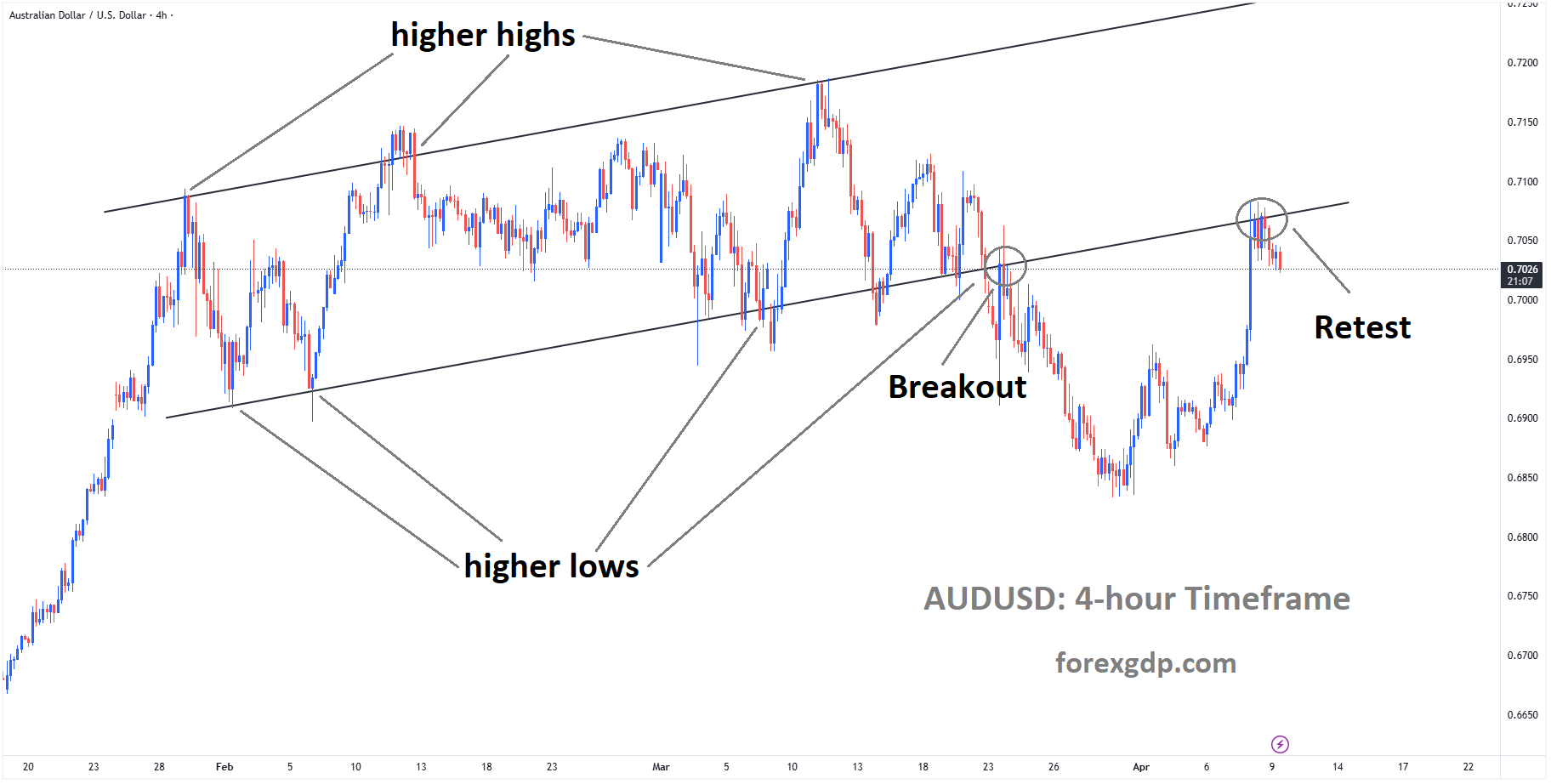
AUDUSD is falling from the retest area of the broken Ascending channel
During Thursday’s European trading session, the Australian Dollar slipped slightly against major currencies. It weakened against the US Dollar, reflecting a broader shift in market mood. This change highlights how sensitive the currency is to global events, especially those that affect risk appetite.
Rising Uncertainty Around US-Iran Ceasefire
A key factor behind the cautious market sentiment is the uncertainty surrounding a recently announced ceasefire between the United States and Iran. The agreement, which was expected to ease tensions, is now facing doubts about its stability.
Iran has openly criticized the United States, claiming that the terms of the peace proposal are not being respected. According to Iranian officials, the agreement included a clear condition for an immediate halt to hostilities across all affected regions. However, continued military actions in certain areas have raised concerns about whether both sides are fully committed to the deal.
This situation has made investors uneasy. When there is uncertainty about peace agreements or geopolitical stability, financial markets tend to react quickly. Traders often reduce exposure to riskier assets, and currencies like the Australian Dollar are usually among the first to feel the impact.
Continued Conflict Adds to Market Anxiety
The situation has become more complicated due to ongoing conflicts involving regional groups. Reports of continued military activity involving Iran-backed forces have added another layer of concern. These developments suggest that the ceasefire may not be as effective or widespread as initially hoped.
As a result, investors are questioning whether the agreement can hold in the long term. Even small signs of instability can trigger caution in global markets. This cautious behavior often leads to reduced demand for currencies linked to economic growth and global trade, such as the Australian Dollar.
At the same time, both the United States and Iran have confirmed that they will send representatives to begin formal discussions. These talks are expected to take place soon and could play a crucial role in shaping future developments. While this step is seen as positive, markets are waiting to see whether meaningful progress will actually be made.
Stronger US Dollar Adds Pressure
Another factor weighing on the Australian Dollar is the strength of the US Dollar. When global uncertainty rises, the US Dollar often benefits because it is considered a safe-haven currency. Investors tend to move their funds into assets that are seen as more stable during uncertain times.
Recently, the US Dollar has shown slight gains against a basket of major currencies. This strength reflects increased demand for safety among investors. As a result, currencies like the Australian Dollar, which are more sensitive to risk sentiment, tend to weaken in comparison.
Additionally, stock market futures in the United States have shown minor declines, indicating a cautious outlook among investors. When equity markets show signs of weakness, it often supports the US Dollar while putting pressure on riskier currencies.
Expectations of Interest Rate Hike in Australia
Despite the current weakness in the Australian Dollar, there is a supportive factor that could limit its losses. Market participants are increasingly expecting the Reserve Bank of Australia (RBA) to raise interest rates again in its upcoming policy meeting.
There is a growing belief among traders that the central bank may continue tightening monetary policy due to persistent inflation pressures. Inflation in Australia has remained relatively high, even before global energy-related price increases added further pressure.
Higher interest rates typically support a currency because they offer better returns to investors. When interest rates rise, foreign investors may be more willing to invest in that country, increasing demand for its currency.
However, even with these expectations, the Australian Dollar is currently struggling. This shows that global factors, such as geopolitical risks and investor sentiment, can sometimes outweigh domestic economic strengths.
Why Inflation Matters for Interest Rates

Inflation plays a major role in shaping central bank decisions. When prices rise too quickly, central banks often increase interest rates to slow down spending and bring inflation under control.
In Australia, inflation has been a key concern for policymakers. The expectation of further rate hikes reflects the central bank’s commitment to managing price stability. While this is generally positive for the currency, its impact can be limited if global risks remain high.
Focus Shifts to US Inflation Data
Investors are now closely watching upcoming economic data from the United States, particularly the Consumer Price Index (CPI). This report is important because it provides insight into inflation trends in the US economy.
The CPI data can influence expectations about future interest rate decisions by the US Federal Reserve. If inflation remains high, the central bank may keep interest rates elevated for longer. This could further strengthen the US Dollar and add pressure on other currencies.
On the other hand, if inflation shows signs of slowing, it could ease some of the pressure on global markets. This might provide temporary relief for currencies like the Australian Dollar.
How Market Sentiment Shapes Currency Movements
Currency movements are not driven by a single factor. Instead, they are influenced by a combination of economic data, central bank policies, and global events. Market sentiment plays a crucial role in this process.
When investors feel confident about the global economy, they are more likely to invest in higher-risk assets. This supports currencies like the Australian Dollar. However, when uncertainty rises, the opposite happens. Investors shift toward safer options, leading to declines in risk-sensitive currencies.
The current situation reflects this dynamic clearly. Even though Australia’s economic outlook includes potential interest rate hikes, global uncertainty is dominating investor behavior.
What Traders Are Watching Next
Going forward, traders will focus on several key developments. The progress of peace talks between the United States and Iran will be closely monitored. Any signs of improvement could help restore confidence in global markets.
At the same time, economic data from both Australia and the United States will remain important. Inflation figures, employment data, and central bank statements will all play a role in shaping expectations.
Investors are also paying attention to broader geopolitical developments. Any escalation in tensions could lead to further volatility in currency markets.
Summary
The Australian Dollar is currently facing downward pressure as global uncertainty increases. Concerns about the stability of the US-Iran ceasefire have made investors more cautious, leading to reduced demand for risk-sensitive currencies. At the same time, the US Dollar is gaining strength as investors seek safer assets.
While expectations of an interest rate hike by the Reserve Bank of Australia provide some support, they are not enough to offset the impact of global risks. Upcoming US inflation data and developments in geopolitical negotiations will play a key role in determining the next direction for the currency.
In the near term, the Australian Dollar’s performance will likely continue to depend on a balance between domestic economic strength and global market sentiment.
NZDUSD maintains upward momentum as investors await fresh signals from US economy
The NZD/USD currency pair has been moving higher for several days in a row, showing a steady recovery after recent dips. This marks the fourth straight day of upward movement, a sign that buyers are stepping in whenever the price pulls back. However, even with this positive trend, there are clear signs that further gains may not come easily.
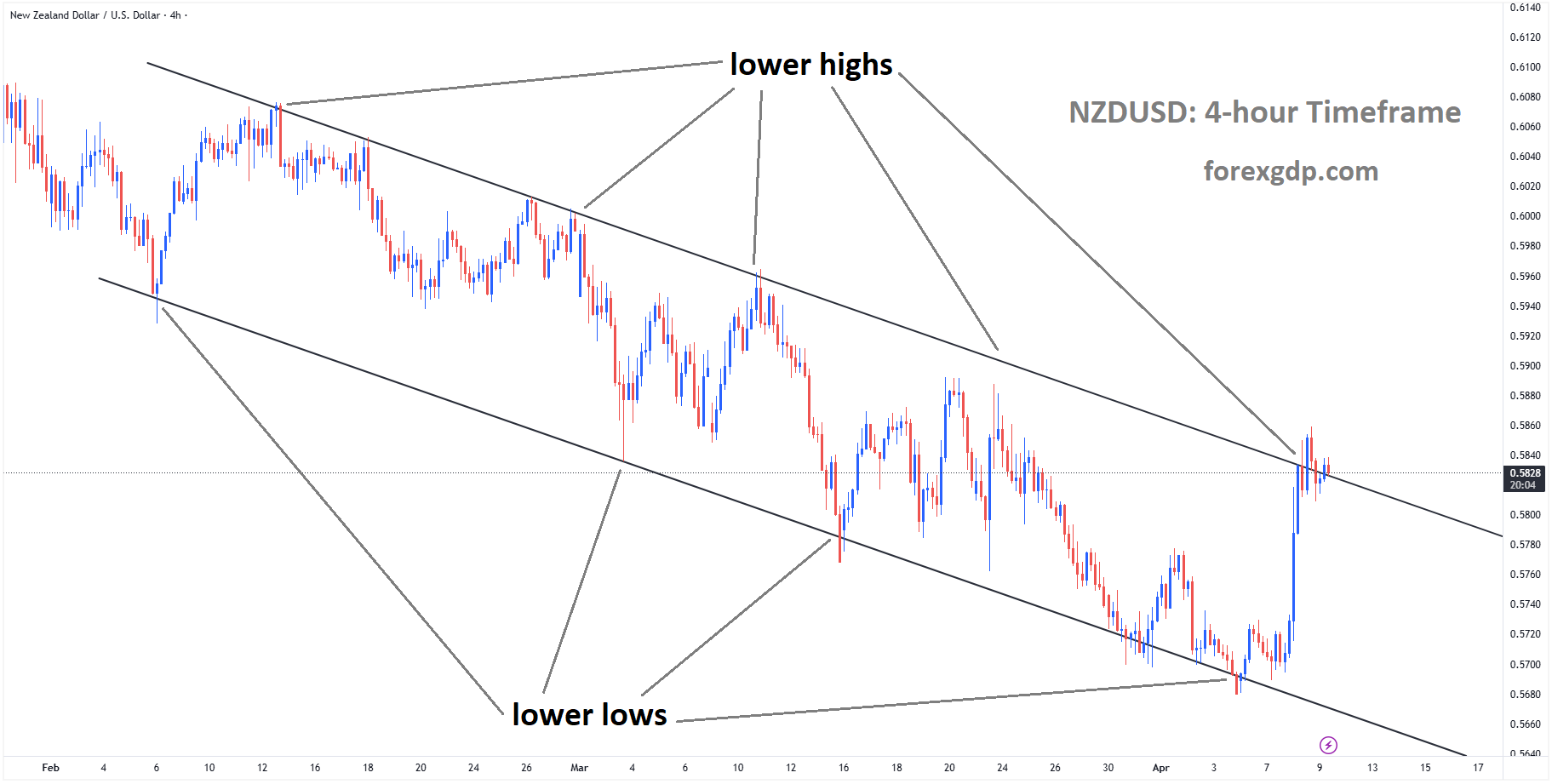
NZDUSD is moving in a descending channel, and the market has reached the lower high area of the channel
A mix of global economic signals, central bank expectations, and geopolitical developments is shaping the direction of this currency pair. While some factors are supporting the New Zealand Dollar, others are limiting how far it can rise.
Why the Pair Is Moving Higher
One of the main reasons behind the recent upward movement is the shift in expectations around US interest rates. The US Federal Reserve has shown a softer stance, often referred to as a “dovish” approach. This means policymakers are more open to lowering interest rates in the future.
When interest rate expectations fall in the United States, the US Dollar often weakens. This creates an opportunity for other currencies, including the New Zealand Dollar, to gain strength. As a result, the NZD/USD pair benefits from this shift in sentiment.
The latest meeting notes from the Federal Reserve confirmed that officials still expect rate cuts in the coming years. Even though the timeline is gradual, this outlook has reduced the appeal of holding the US Dollar. That has helped push the NZD/USD pair higher over the past few sessions.
The Role of Market Sentiment
Currency markets are heavily influenced by overall investor confidence. The New Zealand Dollar is often considered a “risk-sensitive” currency. This means it tends to perform better when investors feel optimistic about the global economy.
In recent days, some traders have been willing to take on more risk, which has supported the Kiwi. Each time the pair dips slightly, buyers step in, showing confidence in short-term recovery.
However, this optimism is not strong enough to drive a major breakout. Traders remain cautious, especially because of ongoing global tensions and upcoming economic data.
Geopolitical Tensions Limit Upside
While the NZD/USD pair is gaining, global uncertainty is preventing stronger upward momentum. Tensions in the Middle East have added a layer of risk to the markets.
Recent military actions involving Israel and Lebanon, along with Iran’s response, have raised concerns about wider conflict. The situation has already affected important global shipping routes, increasing fears of disruption in energy supply and trade.
In times of geopolitical stress, the US Dollar often benefits because it is seen as a safe-haven currency. Investors tend to move their money into safer assets during uncertain periods, which supports the Dollar.
This dynamic creates a balancing effect. While the Fed’s softer stance weakens the Dollar, geopolitical risks strengthen it. As a result, the NZD/USD pair struggles to build strong upward momentum.
Key Economic Data in Focus
Another reason for the limited movement is the lack of strong new economic signals. Traders are waiting for important US data releases before making bigger decisions.
Several key reports are expected to provide insight into the health of the US economy and the future path of interest rates.
Final US GDP Data
The final reading of US economic growth for the fourth quarter is one of the major releases traders are watching. This data helps measure how well the economy has been performing.
If the growth numbers are stronger than expected, it could support the US Dollar. On the other hand, weaker data may reinforce expectations of rate cuts, which could weaken the Dollar further.
Personal Consumption Expenditures (PCE)
The PCE Price Index is another crucial indicator. It is closely monitored by the Federal Reserve as a measure of inflation.
Inflation data plays a key role in shaping interest rate decisions. If inflation remains high, the Fed may delay rate cuts. If it shows signs of slowing down, it could strengthen the case for easing policy.
Upcoming Inflation Data
In addition to the PCE, traders are also looking ahead to the Consumer Price Index (CPI). This is another important inflation measure that can influence market direction.
With so many key reports on the horizon, many traders prefer to wait rather than take large positions. This cautious approach is keeping the NZD/USD pair within a limited range.
Technical Barrier Adds Pressure
Even though the pair is rising, it is approaching a level that many traders consider important. This level acts as a barrier that the price needs to break through to continue moving higher.
So far, the pair has struggled to move decisively beyond this point. This suggests that buyers are not yet strong enough to push the trend further without additional support from economic data or market sentiment.
Until a clear break happens, the upward movement may remain slow and limited.
What This Means for Traders

The current situation highlights a market that is balanced between positive and negative forces. On one side, the Federal Reserve’s softer stance is weakening the US Dollar. On the other side, global tensions and cautious trading behavior are preventing strong gains in the NZD/USD pair.
This creates a scenario where short-term movements can continue, but larger trends may take time to develop.
Traders are paying close attention to upcoming data releases, as these could provide the direction the market is waiting for. A clear signal from economic data could either strengthen the current trend or reverse it.
Summary
The NZD/USD pair has been moving higher for several days, supported by a weaker US Dollar and improving market sentiment. However, the overall outlook remains uncertain due to ongoing geopolitical tensions and cautious trading behavior.
Expectations of future interest rate cuts in the United States are helping the New Zealand Dollar gain ground. At the same time, global risks are keeping demand for the US Dollar alive, limiting further gains.
With important economic data releases approaching, traders are holding back from making strong moves. The next phase for the NZD/USD pair will likely depend on how these reports shape expectations around growth and inflation.
For now, the pair remains in a steady but controlled upward trend, with both opportunity and caution playing equal roles in its movement.
Don’t trade all the time, trade forex only at the confirmed trade setups
Get more confirmed trade signals at premium or supreme – Click here to get more signals, 2200%, 800% growth in Real Live USD trading account of our users – click here to see , or If you want to get FREE Trial signals, You can Join FREE Signals Now!