

XAUUSD strengthens as global markets seek refuge from US–China trade uncertainty
Gold has always been a symbol of stability in uncertain times, and once again, it proves its worth as global markets face political and economic turbulence. The precious metal has maintained strong momentum as investors seek safety amid growing trade disputes, government instability, and expectations of future economic easing. Let’s take a deeper look at what’s driving gold’s performance and why it continues to be the go-to asset for those navigating today’s unpredictable market environment.
Rising Global Uncertainty Drives Investors Toward Gold
Trade War Tensions Ignite Risk Aversion
The ongoing trade conflict between the United States and China continues to shape market sentiment. After U.S. President Donald Trump’s warning about potential new tariffs on Chinese goods, Beijing responded by threatening export restrictions on rare earth materials—a move that could have far-reaching implications for global industries. These developments have reignited fears of an escalating trade war, prompting investors to move away from riskier assets and into traditional safe havens like gold.
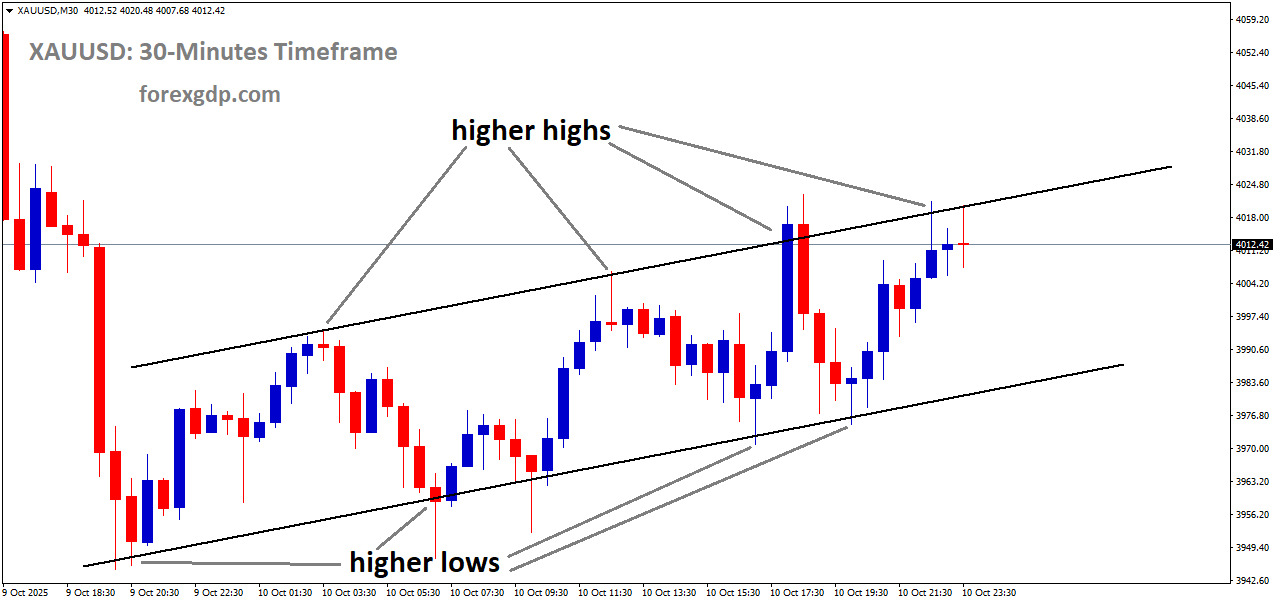
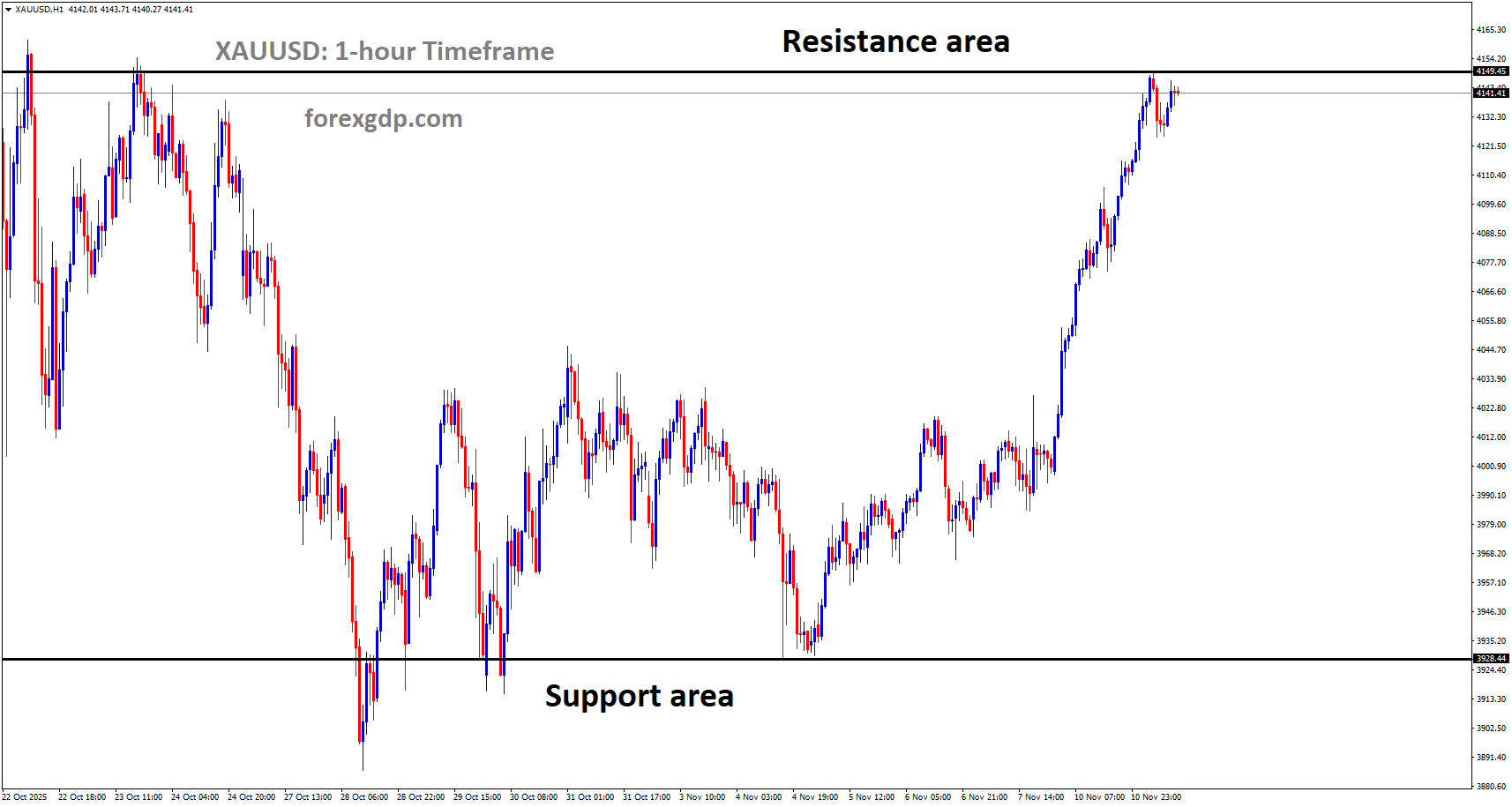
XAUUSD is moving in an Ascending channel, and the market has reached a higher high area of the channel
The tension has also deepened due to stalled communication between both nations. President Trump recently mentioned that there is “no reason” to meet with Chinese President Xi Jinping as previously planned, further fueling market pessimism. Whenever trade negotiations hit a wall, gold tends to benefit, as traders brace for the economic fallout such disputes can cause.
U.S. Government Shutdown Adds to Investor Anxiety
Adding another layer of uncertainty, the United States government has entered its tenth consecutive day of shutdown, with little sign of a resolution. The political deadlock in Washington is raising concerns about the economic impact of prolonged inaction. Many government departments remain closed, and essential services are operating under strain.
This political impasse has created an atmosphere of risk aversion, driving even more investors toward gold. Historically, during times of U.S. political instability, the yellow metal strengthens as confidence in government operations and fiscal stability declines.
Global Politics Stir the Gold Market
Turbulence in France and Japan Boosts Bullion Demand
The geopolitical stage isn’t any calmer outside the U.S. In France, political unrest has been growing after President Emmanuel Macron refused to appoint a left-wing Prime Minister. His decision sparked frustration among political leaders, some of whom have called for either new legislative elections or his resignation. The growing dissatisfaction in one of Europe’s largest economies has rattled markets, adding to the uncertainty that tends to favor gold demand.
Meanwhile, Japan faces its own political drama. The country’s ruling coalition is under pressure after a funding scandal and internal disagreements. The possibility that Japan may lose its long-standing political stability has drawn attention from global investors, who view such instability as another reason to diversify their portfolios with safer assets like gold.
Central Bank and Investor Demand Remains Strong
Another major factor supporting gold’s rally is strong demand from central banks and large institutional investors. Over the past year, many central banks have increased their gold reserves as a way to reduce exposure to the U.S. dollar and diversify their assets. This consistent buying trend reflects growing global concern over currency volatility and inflation risks.
Goldman Sachs recently raised its long-term gold price forecast, citing these strong flows into gold-backed exchange-traded funds (ETFs) and steady central bank accumulation. When major financial institutions express confidence in the long-term potential of gold, it often encourages retail investors to follow suit.
Economic Factors Supporting Gold’s Rise
Fed Policy and Interest Rate Expectations
The Federal Reserve’s monetary policy remains a central influence on gold’s performance. Investors are increasingly betting that the Fed will cut interest rates at its upcoming meeting, as inflation shows signs of easing while the labor market weakens. Lower interest rates typically reduce the opportunity cost of holding non-yielding assets like gold, making it more attractive compared to other investments.
Market data indicates that there’s an overwhelming expectation—over 90% probability—that the Fed will reduce rates by 25 basis points later this month. This belief continues to strengthen gold’s position, as investors anticipate a more accommodative economic environment ahead.
Consumer Sentiment and Economic Outlook
Recent data from the University of Michigan revealed that U.S. consumer sentiment has remained relatively steady despite the government shutdown. However, there’s growing concern that continued political and economic uncertainty could erode household confidence in the coming months. The upcoming release of the U.S. Consumer Price Index (CPI) report is expected to provide further clues about inflation trends and the direction of Fed policy.
If inflation continues to cool while the economy slows, the Fed may feel pressured to cut rates further—another scenario that generally supports gold prices. The combination of lower yields and economic caution often results in higher demand for the metal.
Why Gold Continues to Be the Ultimate Safe Haven


Historical Resilience of Gold
Throughout history, gold has proven itself as a store of value during times of crisis. Whether it’s inflation, war, or political instability, investors have always turned to gold when uncertainty looms large. Its tangible nature and universal acceptance make it one of the few assets that can retain value regardless of market or currency fluctuations.
In the current environment, where both global politics and economic indicators are sending mixed signals, gold remains a dependable option. Unlike stocks or currencies, which can fluctuate wildly in response to headlines, gold offers a sense of stability that investors crave when the future feels uncertain.
Investor Confidence and Long-Term Perspective
What’s particularly notable about the current rally is that it’s not driven solely by short-term speculation. Institutional investors, hedge funds, and even retail traders are viewing gold as a long-term hedge against the unpredictable global landscape. With inflation pressures still lingering and major economies showing signs of slowing growth, gold’s appeal is more than just a temporary reaction—it’s a reflection of broader economic caution.
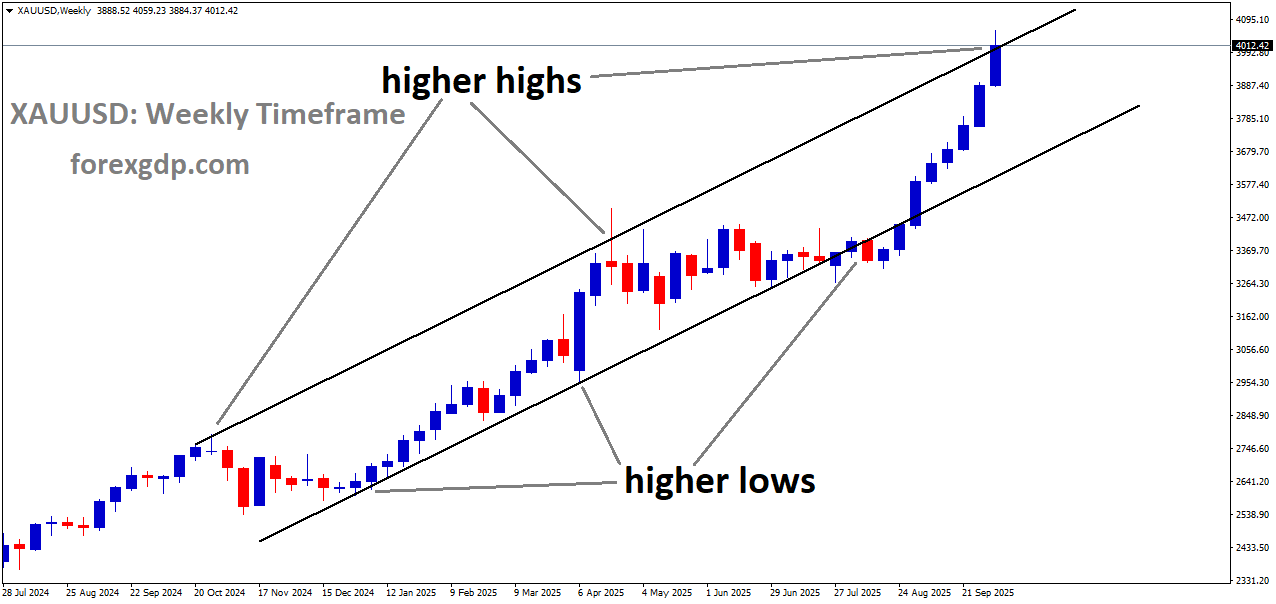
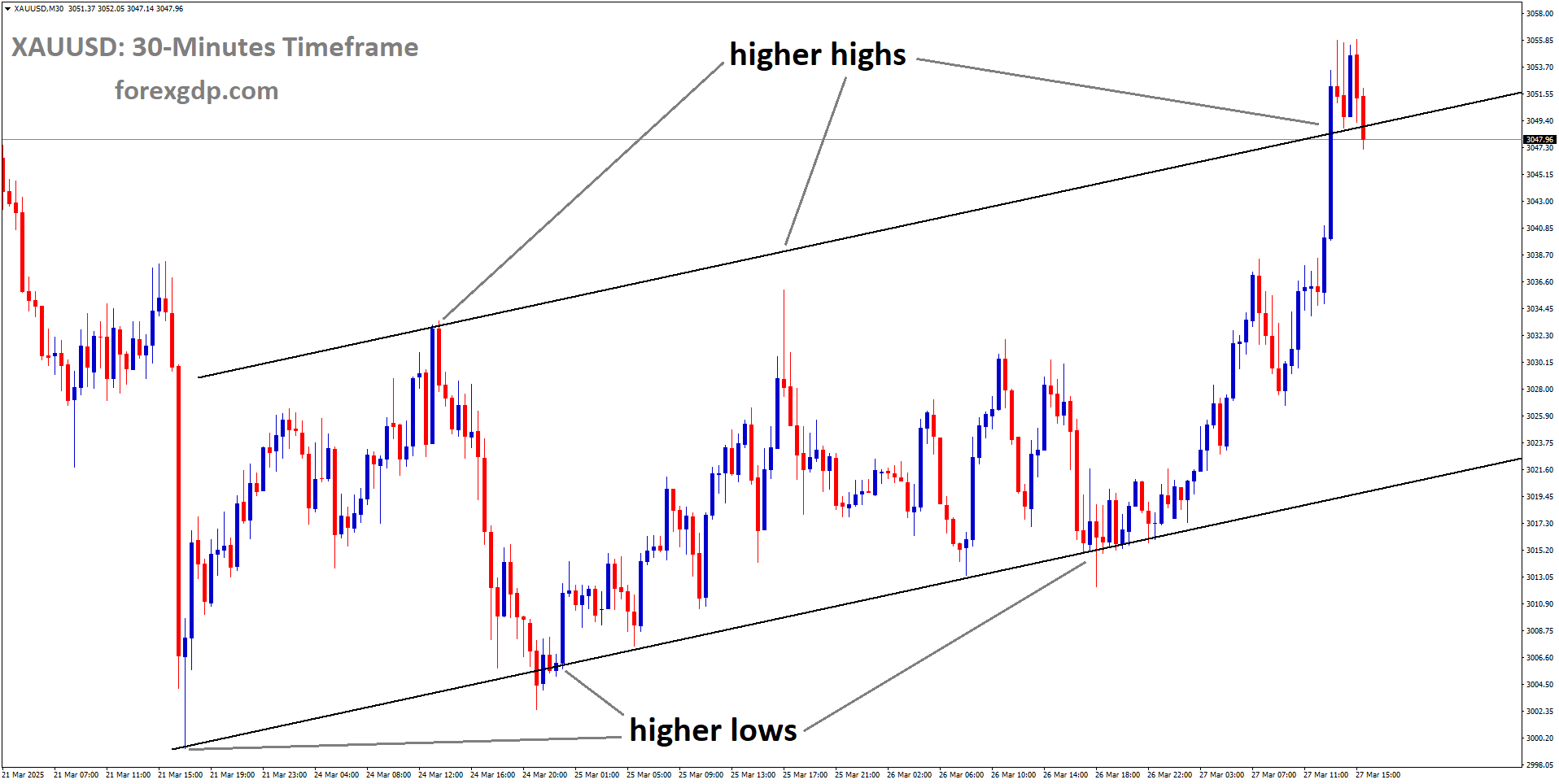
XAUUSD is moving in an uptrend channel, and the market has reached a higher high area of the channel
Final Summary
Gold’s current strength is a story of global uncertainty, political drama, and shifting economic expectations. From the escalating U.S.-China trade conflict to the extended government shutdown in Washington, and political unrest in Europe and Asia, the world seems to be facing challenges on multiple fronts. Investors are naturally seeking safety, and gold stands out as the preferred refuge.
As central banks continue to buy, and as expectations grow for lower interest rates, gold’s long-term outlook remains optimistic. Whether you’re a seasoned investor or just beginning to explore precious metals, the message is clear—gold remains a powerful tool for protecting wealth in uncertain times. With so many moving parts in the global economy, one thing is certain: gold’s shine isn’t fading anytime soon.
EURUSD Gains Momentum on Renewed Trade War Fears and Macron’s Power Move in France
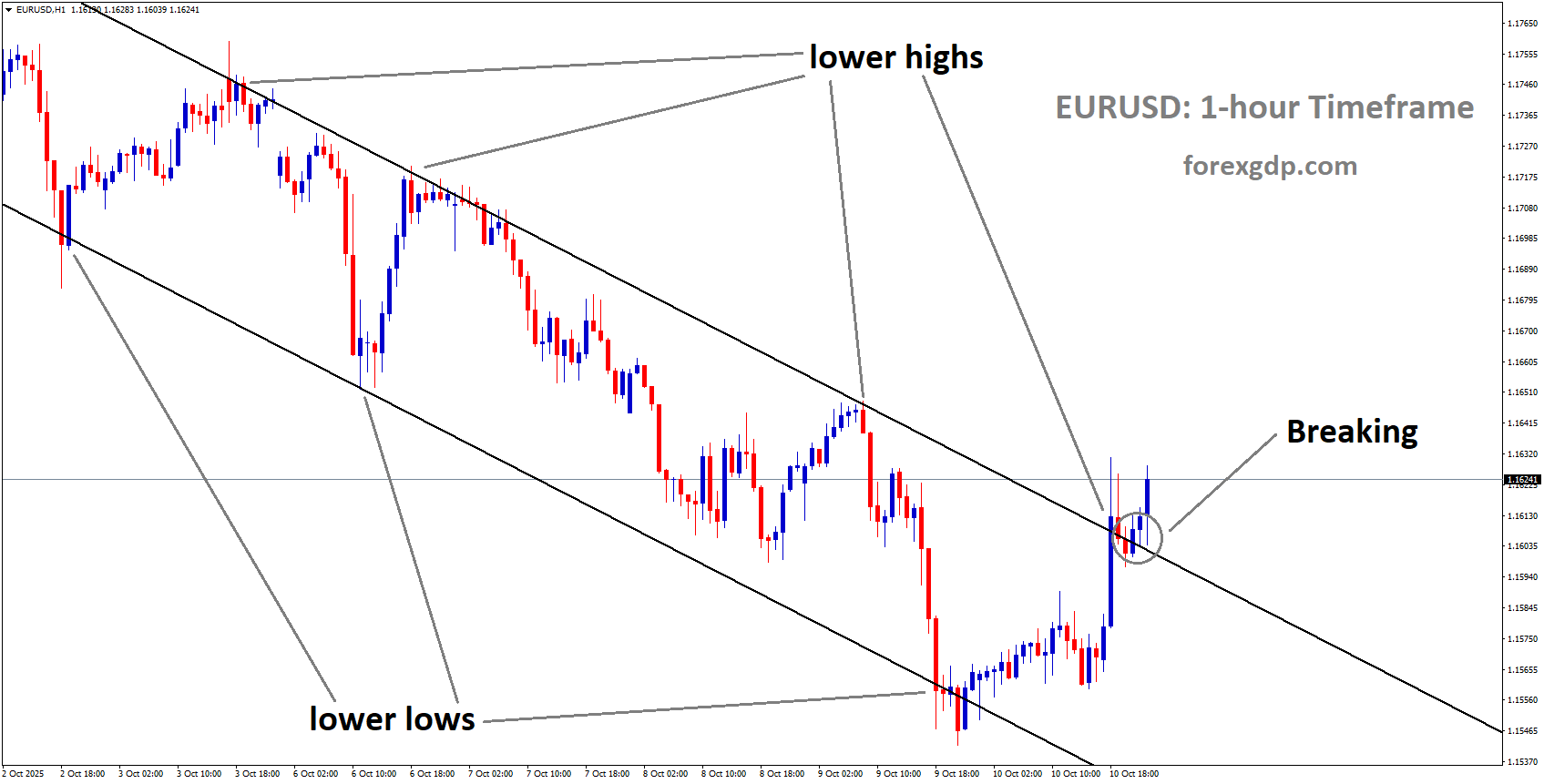

The British Pound has recently slipped to its lowest level in two months against the US Dollar. This decline comes as concerns about the UK’s financial situation grow stronger. Reports suggest that Chancellor Rachel Reeves is considering increasing taxes in the upcoming Autumn Statement. The goal is to control the widening public deficit, but such measures often raise concerns among investors and businesses.
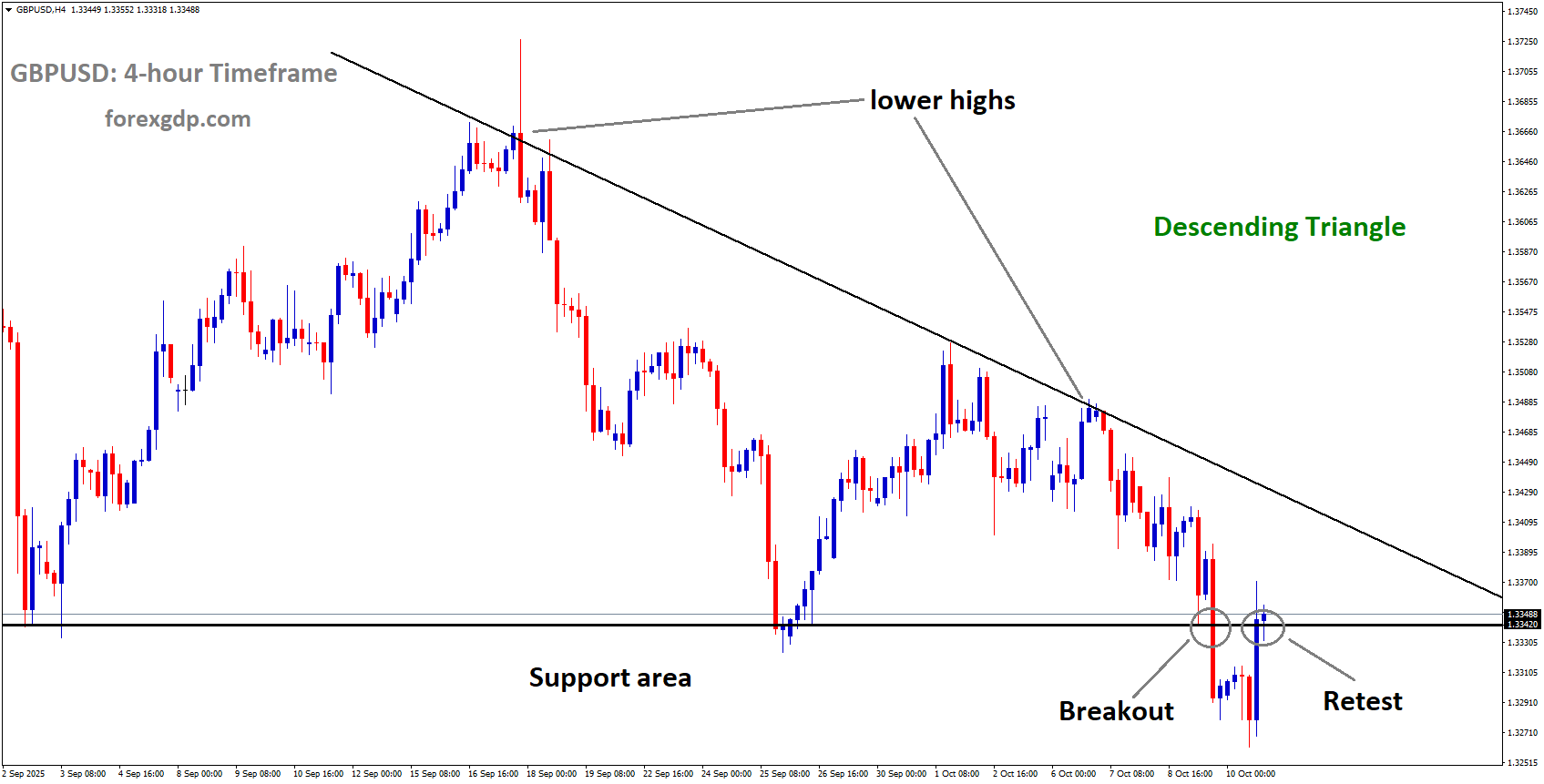
GBPUSD reached the retest area of the descending triangle pattern
Higher taxes can slow down consumer spending and discourage investment, which ultimately affects economic growth. In addition, previous tax hikes, such as the rise in employers’ National Insurance contributions, have already weakened the job market. As a result, many traders see the British Pound as vulnerable in the short term, especially with no clear plan to boost productivity or reduce fiscal pressure.
The uncertainty surrounding government policies is also playing a major role. Businesses are holding back on hiring and expansion plans until there’s a clearer understanding of what fiscal measures might be introduced. This caution contributes to a weaker currency, as it signals slower economic activity and less optimism in the market.
US Dollar Gains Strength Despite Rate Cut Expectations
While the Pound struggles, the US Dollar continues to show remarkable strength. Normally, expectations of interest rate cuts by the Federal Reserve would weaken the Dollar, but that hasn’t been the case this time. Global uncertainty — including political developments in countries like Japan and France — has increased demand for safe-haven assets, and the US Dollar remains a top choice for investors seeking stability.
Even though markets expect the Federal Reserve to cut interest rates later this year, the Dollar has stayed resilient. According to market data, investors see more than an 80% chance of a 0.50% rate cut by December. Yet, this hasn’t reduced confidence in the US economy.
Members of the Federal Open Market Committee (FOMC) have also sent mixed signals. Some policymakers, like John Williams and Mary Daly, believe the current interest rate level is restrictive enough and may need to be lowered soon. However, others, including Fed Governor Michael Barr, have warned that cutting rates too quickly could slow progress in controlling inflation.
The ongoing debate within the Fed has created a balanced situation where the Dollar benefits from both investor caution and relatively strong economic fundamentals. Until there’s a clearer direction on future monetary policy, the US Dollar is likely to remain well-supported.
Weak Consumer Sentiment Reflects Fragile US Outlook


Another factor influencing market sentiment is the recent data from the United States showing a slight drop in consumer confidence. The University of Michigan’s Consumer Sentiment Index slipped marginally in October. Although the decline wasn’t dramatic, it highlighted that many households still feel uncertain about the economy’s direction.
High living costs, borrowing rates, and slower wage growth are keeping consumers cautious. When people are hesitant to spend, it can signal potential weakness in the broader economy. However, since the drop in sentiment was smaller than analysts expected, it also suggests that Americans haven’t completely lost faith in the recovery.
This mixed picture has left the Federal Reserve in a challenging position. On one hand, they need to support the economy by making borrowing cheaper. On the other, they must ensure inflation doesn’t climb again. For now, the Fed seems inclined to keep its tone slightly dovish, meaning it’s open to rate cuts if economic conditions worsen further.
UK’s Fiscal Policy Challenges Continue to Undermine the Pound
Back in the United Kingdom, fiscal concerns continue to dominate discussions. The government is under immense pressure to balance the books while keeping the economy on track. Chancellor Rachel Reeves’ potential tax increase plans have sparked debates across sectors, with many businesses warning that additional fiscal tightening could push the economy closer to stagnation.
The situation is further complicated by rising public debt and weak productivity growth. With borrowing costs already high, the UK government’s room to maneuver is limited. Investors are growing anxious that heavy fiscal adjustments could slow down recovery even further.
Adding to the pressure, Bank of England (BoE) policymakers remain cautious. Catherine Mann, a member of the Monetary Policy Committee, recently stated that interest rates need to stay restrictive for a while longer to tackle persistent inflation risks. Her comment reflects the central bank’s ongoing struggle — keeping inflation in check without choking off economic activity.
This cautious stance from both the government and the central bank leaves little room for optimism in the near term. As a result, traders and investors continue to favor safer currencies like the US Dollar, contributing to the Pound’s recent weakness.
Market Mood: Balancing Growth, Inflation, and Fiscal Stability
The current market environment shows just how complicated the balance between fiscal and monetary policy can be. The United States, despite facing weaker consumer sentiment, benefits from its position as a global financial anchor. Meanwhile, the UK’s ongoing budget and tax debates make the Pound vulnerable to further declines if confidence continues to fall.
Both economies face similar challenges — slowing growth and inflation risks — but their approaches differ significantly. The US has greater flexibility due to its stronger labor market and global reserve currency status. In contrast, the UK’s fiscal tightening and political uncertainty create a clouded outlook for investors.
For now, the GBP/USD pair remains under pressure as long as market sentiment favors safety and stability over risk. The combination of a firm US Dollar and weak UK fundamentals makes it difficult for the Pound to stage a meaningful comeback.
Final Summary
The GBP/USD pair’s recent dip to a two-month low reflects a mix of economic and political realities. The United States, despite hints of economic slowdown, continues to benefit from global demand for safe-haven assets. The Federal Reserve’s cautious approach and mixed economic signals have not dented investor confidence in the Dollar.
The United Kingdom, however, faces a more complex challenge. Fiscal tightening plans, potential tax increases, and persistent inflation concerns are weighing heavily on sentiment. Investors are skeptical about how the government can stimulate growth while managing high public debt.
As a result, the British Pound remains under pressure, while the US Dollar enjoys a period of relative strength. Unless the UK introduces clearer, growth-friendly policies or global risk sentiment improves, the downward momentum for GBP/USD could persist.
In essence, the market is caught between two different stories — one of cautious strength in the US and one of fiscal struggle in the UK. For now, the Dollar remains king, and the Pound continues to search for stability.
USDJPY Remains Elevated as Investors Brace for Fresh US Sentiment Insights
The US dollar has continued to show remarkable strength, holding firm and climbing higher throughout the week. This powerful surge comes as investors turn their attention toward Japan’s growing political instability and concerns about the country’s economic direction. Meanwhile, sentiment in the United States is showing early signs of strain, adding another layer of complexity to the global currency landscape.
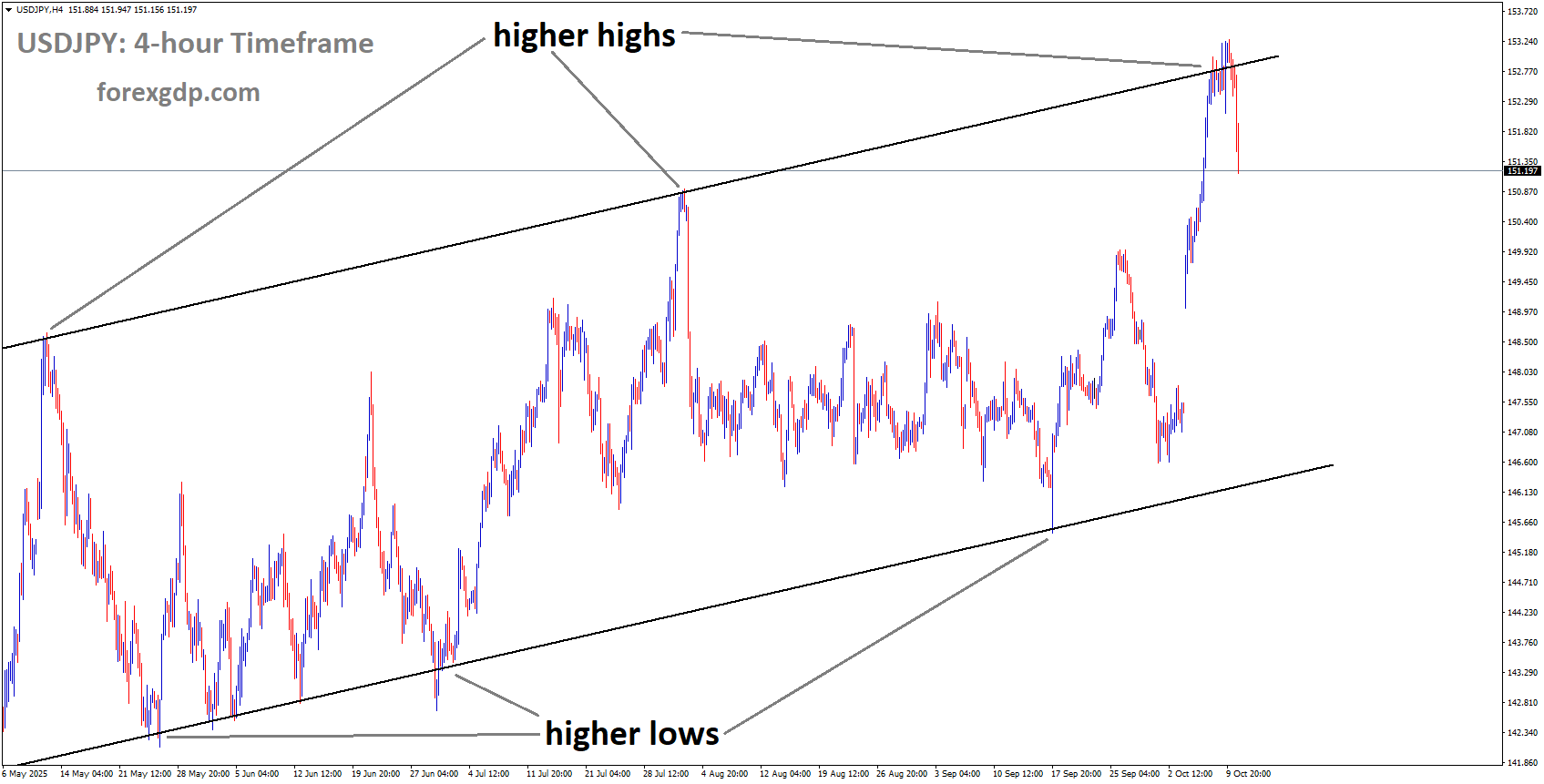
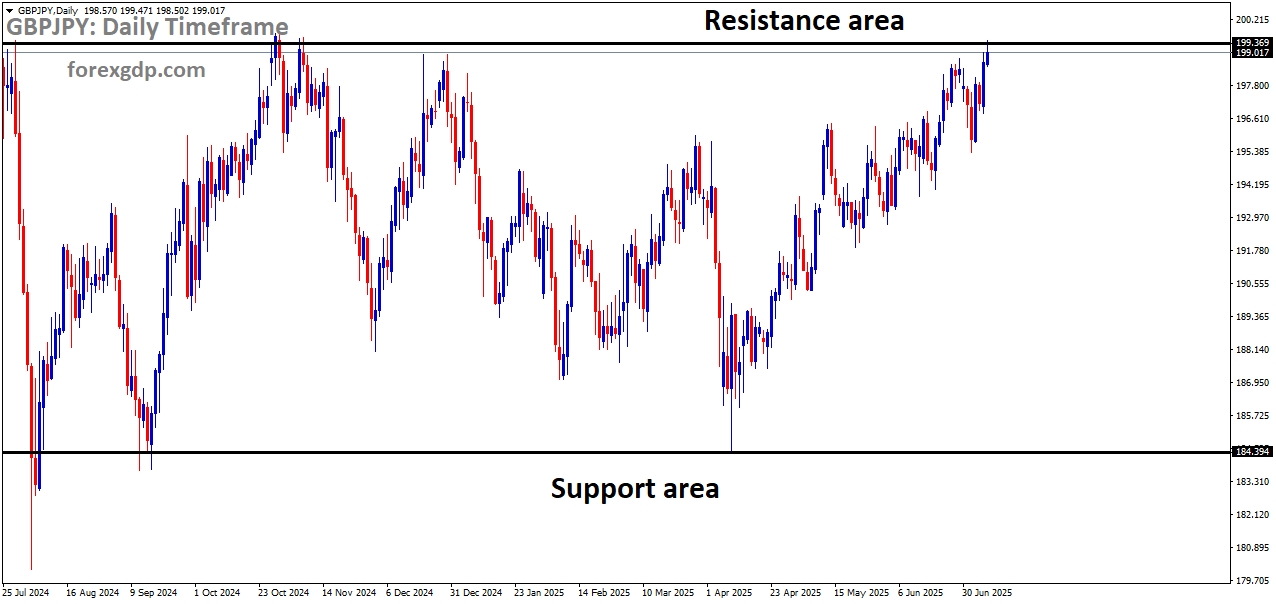
USDJPY is moving in an uptrend channel, and the market has fallen from the higher high area of the channel
The dollar’s solid performance reflects more than just favorable market momentum. It’s a sign that traders and global investors are seeking safety amid uncertainty. As Japan’s political tensions intensify, the Yen has been under heavy selling pressure, while the US dollar has gained from its reputation as a stable, reliable currency in times of turbulence.
Japan’s Political Drama and the Yen’s Struggle
Takaichi’s Victory and Market Reactions
This week, Japan’s political scene took a dramatic turn following Sanae Takaichi’s victory in the ruling Liberal Democratic Party (LDP) leadership vote. As a close ally of former Prime Minister Shinzo Abe, her win triggered immediate speculation that Japan could return to the old Abenomics approach—an economic policy that focused on aggressive fiscal spending and ultra-loose monetary measures.
The idea of renewed large-scale spending has worried investors. Many fear that it could delay the Bank of Japan’s (BoJ) gradual steps toward tightening monetary policy. That fear alone has been enough to send the Yen tumbling, as traders brace for the possibility of prolonged economic stimulus that could weaken the currency even more.
Ruling Coalition Faces a Crisis
As if that weren’t enough, Japan’s coalition government has been hit by internal conflict. Tetsuo Saito, leader of the Komeito party—LDP’s coalition partner—publicly expressed frustration and even hinted at withdrawing support from the alliance. According to Saito, there are “deep disagreements on money and political issues,” suggesting that the ruling partnership is under severe pressure.
This rift has only amplified the sense of political instability in Tokyo. Investors typically dislike uncertainty, especially when it involves questions about government unity and fiscal responsibility. With growing doubts about Japan’s leadership and policy direction, international traders have quickly shifted their capital toward safer assets like the US dollar.
Government Response: Warning of Market Intervention
In response to the Yen’s rapid depreciation, Japan’s Finance Minister, Katsunobu Kato, spoke out about the situation. He described the recent currency movements as “one-sided” and “rapid,” warning that the government is closely watching for excessive or disorderly market behavior. Though he stopped short of announcing any specific measures, his comments carried a subtle warning: Japan may be prepared to step in and stabilize the Yen if the sell-off continues.
Despite these statements, the market remains skeptical. Traders remember that Japan has made similar comments in the past without immediate intervention. As a result, the remarks have done little to halt the Yen’s decline.
Across the Pacific: The US Dollar’s Steady Confidence
Why the Dollar Is Standing Strong
While Japan grapples with its internal problems, the US dollar has remained strong against nearly all major currencies. This resilience comes even after the Federal Reserve hinted at potential rate cuts in the near future. In most cases, dovish comments from the Fed would weaken the dollar—but not this time.
San Francisco Federal Reserve President Mary Daly recently mentioned that the US labor market appears to be softening and that further rate reductions may be necessary to protect economic stability. However, investors are viewing the overall US economy as relatively stronger than others, particularly when compared with Japan and parts of Europe. This perception continues to fuel demand for the dollar as a global safe-haven asset.
Consumer Confidence in the Spotlight
Meanwhile, attention in the US has shifted to consumer sentiment, which has been showing signs of strain. The University of Michigan’s consumer sentiment index, a key gauge of household confidence, is expected to have declined again in October. Americans are becoming more cautious about job prospects and future spending, suggesting that the optimism seen earlier in the year is fading.

Even so, the dollar hasn’t lost ground. The logic is simple: when global investors face uncertainty, they still turn to the US dollar first. The combination of Japan’s political troubles and Europe’s slow growth has made the American currency look like the safest bet on the table.
Global Investors React: Risk Off, Dollar On
A Flight to Safety
In financial markets, when investors sense turbulence, they often adopt a “risk-off” mindset. That means moving money away from riskier assets, such as emerging market currencies and equities, and toward safer ones like the dollar and US Treasury bonds. That’s exactly what has been happening this week.
The combination of Japan’s political drama, potential monetary policy shifts, and weakening consumer confidence across the globe has created the perfect environment for the dollar to thrive. Traders are also anticipating that the US economy, while slowing, remains far from crisis levels—especially compared to Japan’s volatile outlook.
The Bigger Picture
This recent dollar rally highlights a recurring pattern in global finance. Whenever uncertainty arises—whether it’s political instability, market volatility, or weak economic data—investors instinctively return to the dollar. It’s a currency backed by the world’s largest economy, deep financial markets, and a relatively transparent government system. That combination continues to give the US dollar an edge over its rivals.
Final Summary
This week’s currency movements paint a clear picture of global sentiment. The US dollar’s strength isn’t just about economic performance—it’s about stability and confidence. As Japan struggles with political tension following Sanae Takaichi’s rise and internal coalition disputes, the Yen has suffered a steep fall. The government’s vague warnings about market intervention have done little to restore trust or halt the currency’s slide.
In contrast, the United States, despite its own challenges such as declining consumer confidence and a cooling labor market, still stands out as a pillar of stability. The Federal Reserve’s careful tone on interest rates suggests that policymakers are aware of the risks ahead but are acting cautiously to maintain balance.
Ultimately, the story of the week is about contrast. Japan’s uncertainty has fueled fear, while America’s steady approach has encouraged confidence. For investors and traders around the world, that means one thing—the US dollar continues to reign as the global safe haven, and until political clarity returns to Japan, that’s unlikely to change anytime soon.
USDCAD falls under pressure after upbeat Canadian employment sparks Loonie rally
The Canadian Dollar, often called the “Loonie,” just made a solid comeback after a week of pressure from the mighty US Dollar. Friday brought a surprise twist — Canada’s job market delivered far better results than anyone expected, giving the currency a powerful lift and restoring investor optimism.
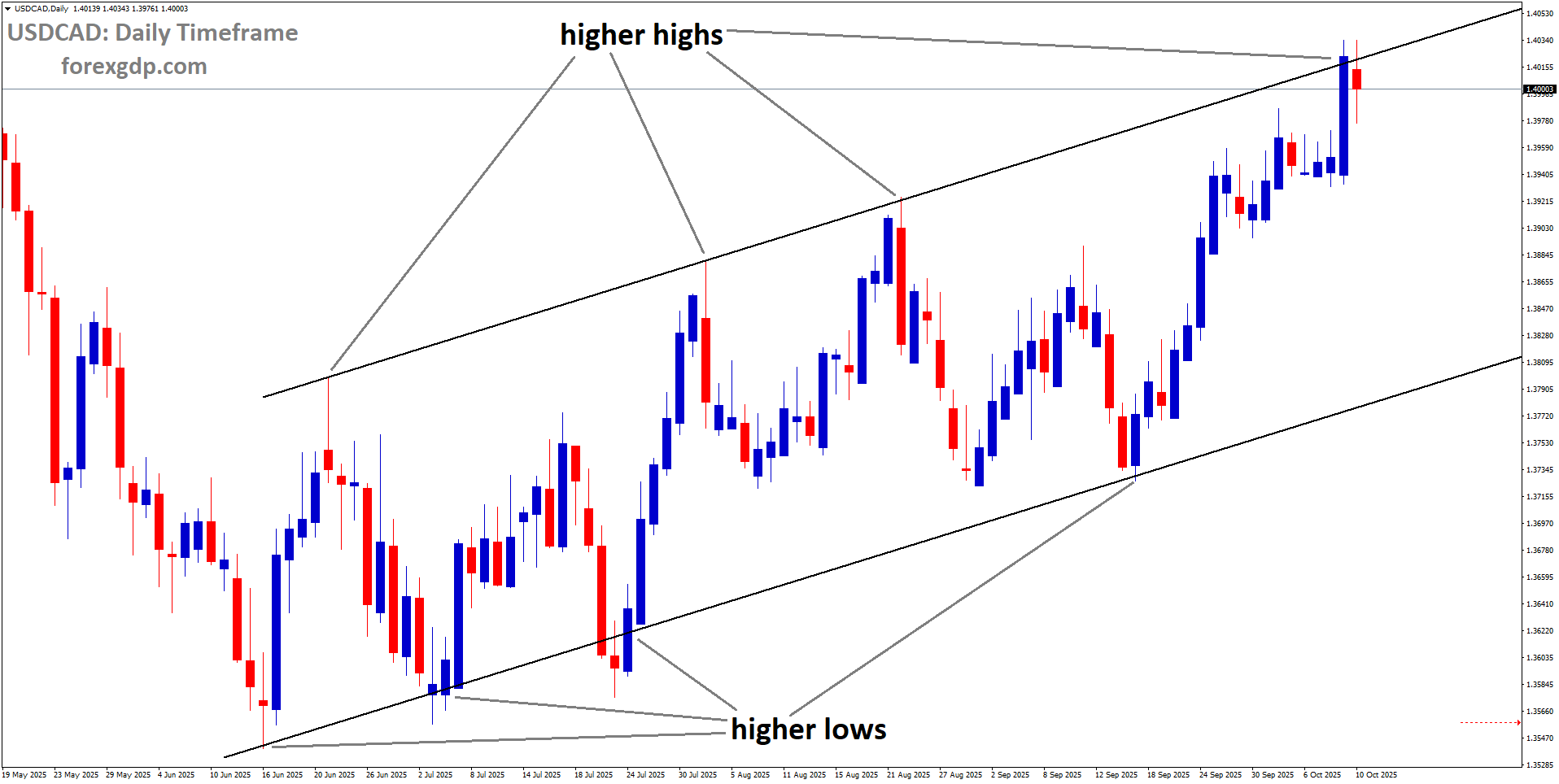
USDCAD is moving in an uptrend channel, and the market has reached a higher high area of the channel
Canada added over 60,000 jobs in September, smashing forecasts that had expected only a small rise. The unemployment rate held steady at 7.1%, showing that even though the economy is adjusting to higher interest rates and global challenges, Canadian employment remains impressively resilient.
This fresh wave of job growth was exactly what the market needed to regain confidence in the country’s economic stability. Let’s break down why this report matters so much, how it’s shifting expectations for the Bank of Canada, and what it means for the Canadian Dollar moving forward.
How Canada’s Job Growth Caught Everyone by Surprise
For months, economists had worried that Canada’s job market was slowing. Businesses had shown signs of cautious hiring due to high borrowing costs, and many expected only modest employment gains. But the latest figures completely turned that narrative around.
Over 60,000 new jobs in a single month is a huge rebound — especially considering that August saw a significant loss in employment. The strength was broad-based, meaning growth wasn’t just in one sector. It reflected renewed hiring confidence across multiple industries, including services and manufacturing.
Even more encouraging was the steady unemployment rate, which held at 7.1% instead of climbing as expected. This signals that job creation is keeping up with labor force growth. In simpler terms, more Canadians are finding work even as more people join the job hunt.
The average hourly wage rose by 3.6% compared to the same month last year, maintaining the same pace as August. While not overly hot, it’s strong enough to support consumer spending without triggering alarm bells about runaway inflation.
What This Means for the Bank of Canada
One of the biggest ripple effects of this data lands directly at the Bank of Canada’s (BoC) doorstep. Investors had been betting that the BoC would cut interest rates again soon to help the slowing economy. However, this unexpectedly strong job report has made that less certain.
Before the labor data, markets were pricing in about a 72% chance of a rate cut at the BoC’s October meeting. But after the numbers came out, that probability dropped closer to 57%. The reason? A healthier job market means there’s less pressure on the central bank to rush into cutting rates.
When employment is strong and wages are stable, it gives policymakers more breathing room. They can focus on controlling inflation instead of stimulating growth. Many traders still believe a rate cut will come before the end of the year, but the odds of an immediate move have clearly decreased.
This shift in sentiment helped the Canadian Dollar strengthen. Investors view strong job growth as a sign that Canada’s economy is still standing tall despite global headwinds.
The Role of Oil and the Global Market Mood


Canada’s economy is heavily influenced by the oil market, given its role as a major exporter of crude. Recently, oil prices have been slipping due to weaker global demand and rising supply from other regions. Normally, falling oil prices tend to weigh on the Canadian Dollar.
However, this time, the impressive employment numbers have managed to offset some of that pressure. While lower oil prices could limit how much the Loonie can rise in the near term, strong domestic data gives it a solid foundation.
On the other hand, the US Dollar’s rally — which had dominated much of the week — also lost some steam. The US Dollar Index, which measures the Greenback against a basket of other currencies, eased slightly after hitting a two-month high. This mild pullback provided extra room for the Canadian Dollar to shine.
Together, these factors — a robust labor report, cooling US Dollar momentum, and tempered oil volatility — combined to create the perfect environment for a Loonie rebound.
Investor Sentiment Turns Positive Again
The Canadian Dollar’s renewed strength isn’t just about numbers; it’s also about market psychology. Investors often move in waves of optimism and caution, reacting quickly to new data that changes the narrative.
The upbeat jobs report brought a noticeable shift in tone. Traders who had been skeptical about Canada’s short-term outlook are now reconsidering. The data suggests the economy still has resilience left, even after months of interest rate hikes and global uncertainty.
For everyday Canadians, this means a slightly stronger currency could ease the cost of imported goods and travel expenses. For businesses and investors, it’s a sign that Canada’s economic fundamentals remain sound.
Still, the path ahead isn’t without challenges. Wage growth is moderate, and inflation remains an ongoing concern. But with employment rising and job stability holding firm, the near-term outlook appears far less gloomy than many feared just a few weeks ago.
How the Global Picture Shapes Canada’s Outlook
It’s impossible to look at Canada’s currency in isolation. The broader global economic landscape plays a major role in shaping the direction of the Loonie. The slowdown in Europe and China, fluctuating energy prices, and uncertainty over US monetary policy all influence investor appetite for riskier assets like the Canadian Dollar.
Right now, markets are in a delicate balance. While investors are cautious about global growth, they’re also encouraged by any signs of stability — and Canada’s latest jobs data provided exactly that.
If oil prices stabilize and the BoC holds off on aggressive rate cuts, the Loonie could continue to perform well in the coming months. On the other hand, any renewed weakness in commodities or a strong rebound in the US Dollar could temper those gains.
Final Summary
Canada’s September jobs report delivered a much-needed boost to both the economy and the national currency. With over 60,000 new jobs added, a steady unemployment rate, and consistent wage growth, the outlook for the Canadian Dollar has turned brighter.
The strong employment data reduced expectations for an immediate rate cut by the Bank of Canada, strengthening confidence among investors and traders. Even though oil prices remain under pressure, the Loonie has found solid support from its domestic economy’s resilience.
In essence, this report serves as a reminder that Canada’s economy isn’t slowing down as quickly as some had feared. The combination of solid job creation, a stable labor market, and a more cautious approach from the central bank gives the country’s currency renewed strength.
As global markets adjust and new data emerges, the Canadian Dollar’s next big moves will depend on how long this wave of optimism lasts — but for now, the Loonie is flying high again.
AUDUSD Under Pressure as New US-China Trade Rift Shakes Investor Sentiment
The Australian Dollar has taken a beating lately, and the reason behind it is much bigger than just numbers on a chart. The ongoing trade drama between the United States and China, combined with political gridlock in Washington, has created a storm that’s pushing currencies like the Aussie lower. Let’s dive deep into what’s going on, why it matters, and what it could mean for global markets in the coming days.
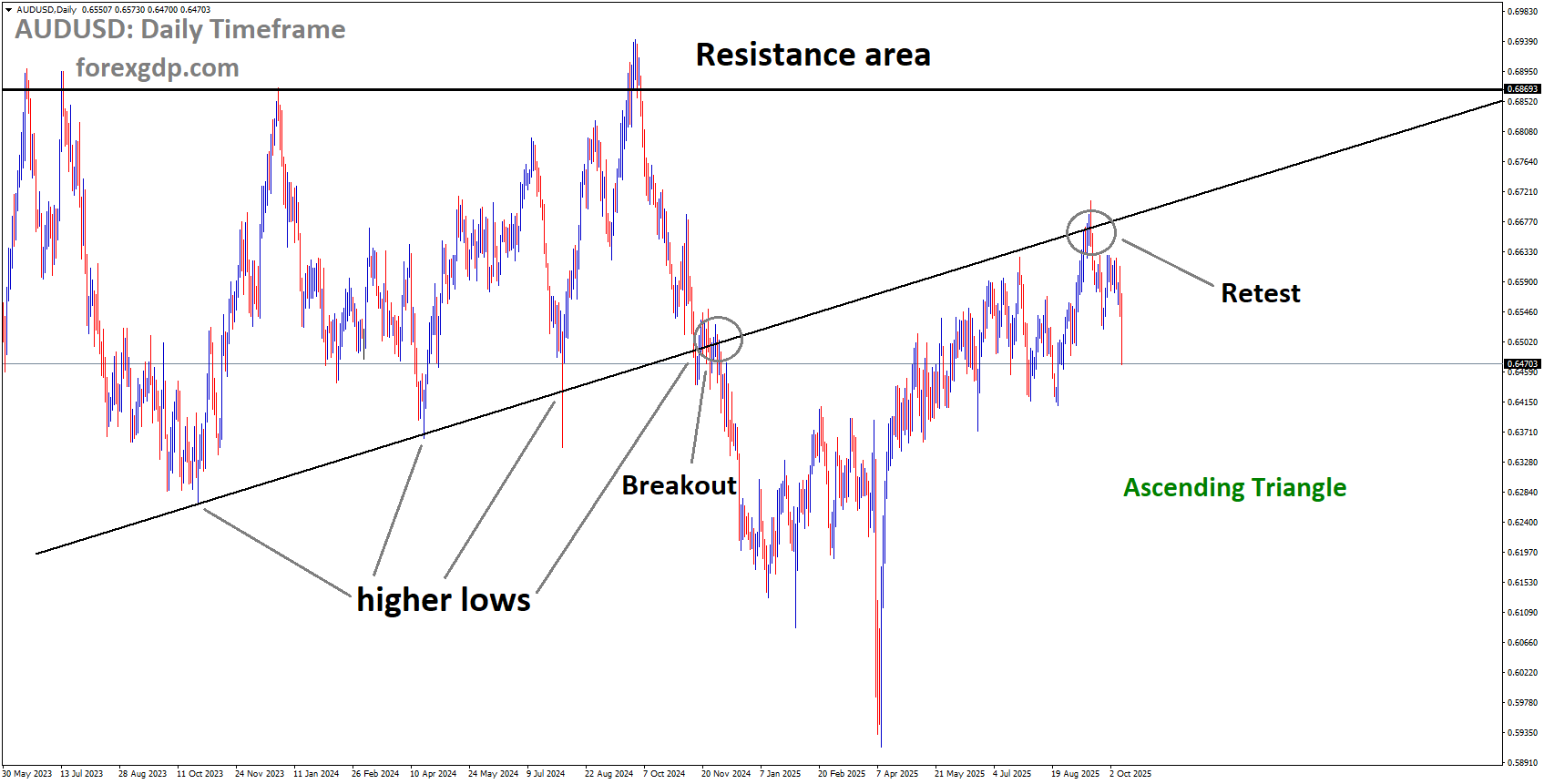
AUDUSD is falling from the retest area of the broken Ascending Triangle pattern
Renewed Trade War Fears Hit the Aussie Hard
When news broke that former US President Donald Trump threatened a “massive increase” in tariffs on Chinese imports, global markets quickly reacted. The tension between the world’s two largest economies is nothing new — but every time it reignites, it sends shockwaves through financial markets.
Australia’s economy is deeply tied to China through exports like iron ore, coal, and agricultural goods. So, when traders hear about potential trade barriers or tariff hikes, they instantly turn cautious on the Australian Dollar (AUD). The logic is simple — if China’s economy slows down because of US tariffs, Australia’s exports could take a hit, and that means weaker demand for the Aussie.
This renewed tension reminded investors just how fragile global trade relations still are. Even after years of negotiations, the possibility of a full-blown trade war always lingers in the background. As a result, many traders decided to reduce their exposure to riskier assets, including the AUD, and moved toward safer options like the US Dollar and gold.
The US Dollar Isn’t Immune Either
Interestingly, while the Australian Dollar fell sharply, the US Dollar also showed signs of weakness. Normally, the Greenback benefits from global uncertainty, as investors see it as a safe-haven currency. But this time, things were a little different.
Trump’s renewed threats against China didn’t just affect Beijing — they raised concerns about the US economy too. Tariffs tend to push up prices for imported goods, which can lead to inflation and reduced consumer spending. On top of that, investors worry about how China might retaliate. The fear is that both sides could once again enter a damaging tit-for-tat cycle that disrupts trade flows, investment, and growth.
The global markets have seen this movie before — back in 2018 and 2019, similar tensions rattled stock markets and slowed manufacturing worldwide. The reminder that such chaos could return was enough to make traders wary. As a result, the US Dollar Index, which measures the Greenback against major currencies, slipped slightly after a week of steady gains.
Trump’s Social Media Post Adds Fuel to the Fire
The real spark came from Trump’s own post on Truth Social, where he accused China of acting “very hostile.” He claimed Beijing had sent letters to multiple countries, warning about restrictions on rare-earth exports — materials that are critical for industries like electronics, defense, and renewable energy.
Trump’s statement that the US might respond with “a massive increase in tariffs” created immediate panic. Investors began to speculate that the upcoming APEC summit, where Trump and Chinese President Xi Jinping were expected to meet, could now be in jeopardy. If that meeting doesn’t happen, it could delay any chance of easing trade tensions.
Markets thrive on stability and predictability — and Trump’s comments did the opposite. The potential breakdown of US-China diplomacy is the last thing investors wanted to hear amid already shaky global conditions.
Australia’s Unique Vulnerability
Australia finds itself in a tricky position. Its economy depends heavily on exports to China — not just raw materials but also services like tourism and education. This close economic link means that any slowdown in Chinese demand directly hits Australian growth.
When the US and China clash, Australia often feels the aftershocks before most other nations. Investors know this and tend to react quickly by pulling back from the Aussie whenever global trade tensions rise. That’s why even a hint of a new tariff dispute can send the AUD/USD pair tumbling.
Beyond trade, Australia also faces domestic economic challenges. Slowing consumer spending, high household debt, and concerns about the housing market have made the Reserve Bank of Australia (RBA) cautious. While interest rate decisions always play a role in currency movements, the bigger picture here is international — what happens between Washington and Beijing will likely dictate the Aussie’s direction for weeks to come.
US Shutdown Deepens Market Gloom


As if trade tensions weren’t enough, the US government shutdown has entered its tenth day, adding more pressure to an already fragile global outlook. Budget Director Russell Vought confirmed that layoffs of federal workers have begun, marking the start of potentially widespread disruptions in public services.
This shutdown has broader implications than just political theater. It’s delaying critical economic data releases that investors rely on to gauge the health of the US economy. Without this data, markets are flying blind, increasing uncertainty and risk aversion.
The longer the shutdown continues, the greater the potential impact on consumer confidence and government spending. It’s another layer of instability that weighs on investor sentiment, especially when combined with global trade worries.
Global Markets Brace for a Rough Ride
The combined weight of US political turmoil and global trade uncertainty has put financial markets in a cautious mood. Stocks have been volatile, commodities are reacting sharply, and currency traders are struggling to find a clear direction.
For Australia, this means more short-term pressure on its currency. However, long-term investors often see these dips as opportunities. Once the noise settles, and trade negotiations resume, the AUD tends to recover as global demand stabilizes.
But for now, the sentiment remains fragile. Markets are highly sensitive to headlines, and every statement from political leaders can trigger rapid moves in exchange rates. Traders are keeping a close eye on any signs of dialogue or compromise between the US and China.
What Could Happen Next?
If Trump follows through with his tariff threats, expect to see continued weakness in risk-sensitive currencies like the Australian Dollar. On the other hand, if diplomatic channels reopen and talks progress positively, the market mood could shift quickly.
Investors will also watch the US government shutdown closely. A prolonged deadlock could slow economic growth and weigh on the US Dollar, creating some relief for the Aussie. However, a resolution combined with easing trade tensions could restore confidence in both currencies and global markets overall.
In the meantime, volatility remains the name of the game. Short-term traders might thrive in these conditions, but long-term investors are likely to stay cautious until the political dust settles.
Final Summary
The sharp fall in the AUD/USD is more than just a market reaction — it’s a reflection of deep-rooted global uncertainty. Renewed trade tensions between the US and China have once again shown how interconnected the world’s economies truly are. For Australia, which depends heavily on Chinese demand, this creates an unavoidable ripple effect.
At the same time, the ongoing US government shutdown adds another layer of complexity, clouding the economic outlook and dampening investor confidence. Until clear progress is seen on both fronts — trade and governance — market sentiment is likely to remain uneasy.
In short, the world’s financial system is navigating choppy waters. Political decisions in Washington and Beijing are shaping the fate of currencies, commodities, and global growth. For now, the Australian Dollar’s path depends less on charts and numbers and more on diplomacy, policy, and patience.
EURGBP Holds Firm as French Political Chaos Meets UK Economic Strain
The EUR/GBP pair has been moving in a narrow range lately, reflecting how investors are caught between political turbulence in France and a sluggish job market in the UK. It’s a classic case of two struggling economies trying to outdo each other in uncertainty. While the Euro is being pulled down by instability in Paris, the British Pound isn’t faring much better due to weak economic data and growing doubts about government finances. Let’s take a deeper look at what’s really driving this currency pair right now.
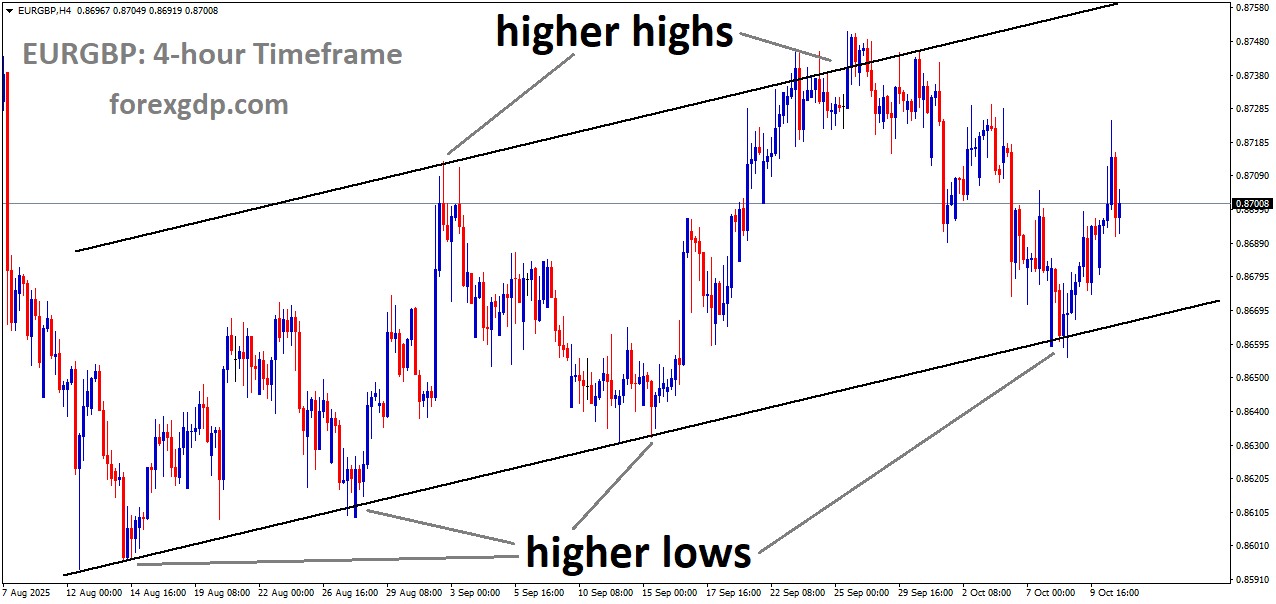
EURGBP is moving in an uptrend channel, and the market has rebounded from the higher low area of the channel
France’s Political Instability Keeps the Euro Under Pressure
Macron’s Challenges and a Divided Parliament
France has once again found itself in a state of political unease. President Emmanuel Macron recently met with opposition leaders, hoping to find some middle ground and restore stability. However, the talks didn’t go as planned. According to reports, Macron’s willingness to delay the controversial pension reforms shows just how fragile the political landscape has become.
Marine Tondelier, the leader of the ecologist party, noted that Macron appeared open to postponing pension changes, but that didn’t do much to calm the growing frustration among the opposition. She also made it clear that she doesn’t expect a left-wing premier to emerge, leaving the government stuck in a difficult balancing act. France’s internal divisions have weakened confidence among investors, who now see the country’s leadership as struggling to maintain direction.
Why Political Uncertainty Hurts the Euro
Political instability often creates doubt in the markets. Investors want clarity, not chaos. When leaders are fighting to hold their coalitions together, it signals that policymaking might stall. In France’s case, the delays in reform and a lack of unity are feeding concerns about long-term economic stability. Even though the Eurozone as a whole has weathered tougher storms, France’s ongoing challenges continue to cast a shadow over the Euro.
UK’s Economic Struggles Add More Weight on the Pound
A Stagnant Job Market and Fiscal Concerns
On the other side of the channel, the United Kingdom isn’t having a much better time. The job market remains weak, according to a recent survey from recruitment firms. Companies are hesitant to hire, and job openings are drying up, suggesting that confidence in the British economy is fading.
Adding to the gloom, investors are also worried about the country’s public finances. Many expect higher taxes ahead as Chancellor Rachel Reeves faces growing pressure to meet her fiscal targets. The government’s spending needs are high, but so is public debt. Balancing those priorities won’t be easy, and it’s leaving investors wondering how much room the government really has to maneuver.
Why the Pound Feels Stuck
When an economy stops creating jobs and investors expect higher taxes, it’s not a recipe for a strong currency. The Pound is feeling the pinch as traders anticipate slower growth ahead. The uncertainty surrounding government policy—especially with discussions about fiscal tightening—has made it difficult for Sterling to gain momentum. Even with the Euro facing its own issues, the Pound isn’t in a position to take advantage of it.
Central Banks: A Tale of Two Policies
The European Central Bank’s Steady Hand
The European Central Bank (ECB) seems to have reached a point where it’s comfortable with its current stance. ECB President Christine Lagarde recently mentioned that the disinflation process is over, suggesting that there’s little reason to cut rates further. This means the ECB is likely to stay on hold for now, keeping interest rates steady to maintain stability across the Eurozone.
For the Euro, that could be a mixed signal. On one hand, steady rates suggest confidence that inflation is under control. On the other, if growth continues to stagnate and political issues like those in France drag on, investors might question whether the ECB is being too complacent.
The Bank of England’s Different Approach
The Bank of England (BoE) has a different problem. The British economy isn’t growing fast enough, and inflation pressures are beginning to ease. As a result, analysts expect the BoE to start cutting rates next year—possibly twice in 2026. That could help stimulate borrowing and spending, but it also means the Pound might lose some of its appeal compared to other currencies.
This divergence in policy—an ECB likely to stay put and a BoE preparing to ease—creates an interesting dynamic for the EUR/GBP pair. If the ECB remains firm while the BoE turns dovish, the Euro could gain a relative edge. However, given the political mess in France and the weak data in the UK, neither currency looks particularly attractive right now.
Global Sentiment Adds to the Pressure

It’s not just Europe and the UK influencing the EUR/GBP pair. Global factors are also playing their part. Recently, market sentiment soured after reports that former U.S. President Donald Trump threatened new tariffs on China. This came right after China announced export restrictions on rare earth materials—a move that rattled global markets.
Whenever trade tensions rise between major economies like the U.S. and China, investors typically look for safer assets. In such cases, both the Euro and the Pound can suffer as traders shift their focus to more stable options like the U.S. dollar or gold. These external pressures make it even harder for EUR/GBP to break out of its current narrow range.
The Broader Picture: Stuck Between Two Weak Links
The current state of EUR/GBP can be summed up in one phrase: stuck in the middle. On one side, the Euro is facing political challenges and slow growth in France. On the other, the Pound is weighed down by weak employment data and growing fiscal uncertainty. Neither side offers a convincing reason for investors to commit strongly in either direction.
As a result, traders have kept the pair confined within a tight range. This kind of sideways movement often reflects hesitation—a lack of conviction about which currency will perform better in the near term. Until one economy clearly outpaces the other, this pattern is likely to continue.
What Could Change the Game?
Several factors could shake up this stalemate:
-
Political Developments in France:
If Macron manages to stabilize the government and push through reforms successfully, it could rebuild investor confidence and lift the Euro. -
Economic Improvements in the UK:
A rebound in the job market or signs of stronger growth could give the Pound some much-needed strength. -
Central Bank Surprises:
Any unexpected policy shift from the ECB or BoE could jolt the market, especially if inflation or growth data forces them to act sooner than expected. -
Global Market Shocks:
Renewed trade tensions, changes in U.S. policy, or commodity price fluctuations could all influence risk sentiment and affect both currencies indirectly.
Final Summary
The EUR/GBP exchange rate is currently navigating a delicate balance between two struggling economies. France’s ongoing political drama and the UK’s slow job market have created an environment of uncertainty, keeping traders cautious. While the European Central Bank appears content to stay on hold, the Bank of England may soon shift toward easing—adding another layer of complexity.
In short, the Euro and the Pound are both facing their share of challenges. For now, neither seems strong enough to break decisively ahead, leaving EUR/GBP trapped within a familiar range. The next major move will likely depend on who recovers first—France regaining political stability or Britain finding economic momentum. Until then, the market remains a waiting game for investors searching for clarity in an uncertain European landscape.
EURJPY Faces Pressure as French Leadership Crisis Dampens Euro Sentiment
The Euro and Japanese Yen are often seen as two of the most influential currencies in the global market, both representing powerful economies with distinct policies. But lately, the EUR/JPY pair has been experiencing some interesting shifts. While Europe faces political instability, Japan is preparing for a new leader who promises to boost the economy with strong fiscal measures. Let’s dive deeper into what’s going on behind the scenes and how these political developments are shaping investor sentiment.
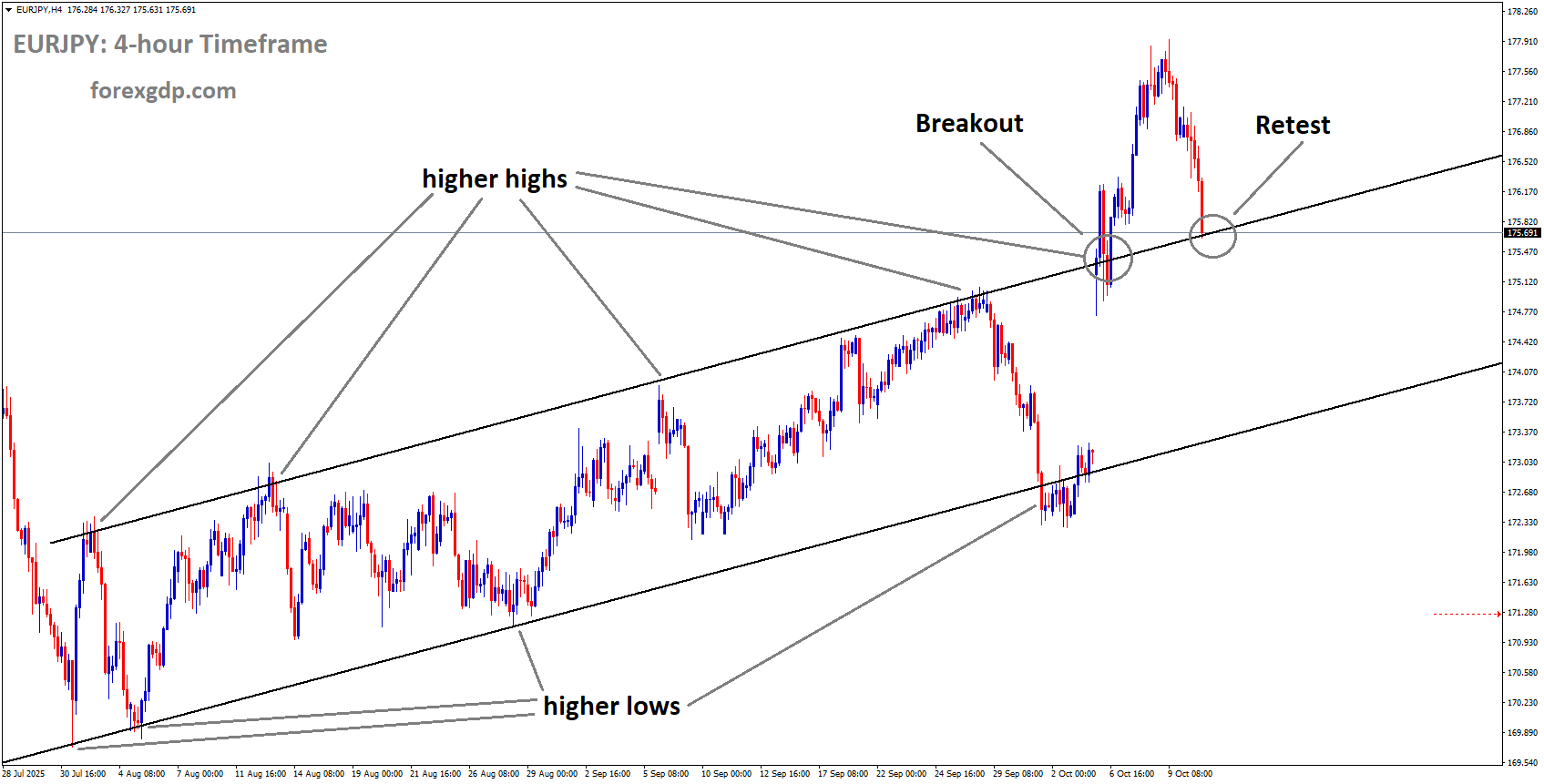
EURJPY reached the retest area of the broken uptrend channel
A Shaky Ground for the Euro: France’s Political Uncertainty
The Euro has been under noticeable pressure recently, and much of that comes from ongoing political drama in France. Following the resignation of Prime Minister Sébastien Lecornu, French President Emmanuel Macron finds himself in a tough spot. He is under growing pressure to quickly appoint a new Prime Minister, but so far, his attempts to build consensus among opposition parties have been unsuccessful.
This stalemate adds more uncertainty to the Eurozone’s second-largest economy. France’s political challenges raise serious concerns about the government’s ability to manage its finances effectively—especially when it comes to tackling its fiscal deficit. Moreover, the delay in major reforms, like the controversial pension policy, could further hurt confidence in the government.
Political instability often leads to market hesitation, and that’s exactly what’s happening here. Investors are wary, as they see the lack of direction from France as a potential warning sign for broader Eurozone stability. The European Central Bank is already dealing with slowing growth and inflation management, and now this internal political tension adds another layer of complexity.
Impact on the Broader Eurozone
It’s not just France that’s feeling the heat. Since France plays such a key role in the Eurozone, any turbulence in its governance tends to ripple across the entire region. The uncertainty over fiscal discipline could make it harder for the EU to maintain investor trust, especially as it tries to balance economic growth with financial responsibility.
Many analysts believe that if France continues to struggle politically, the Euro could remain under pressure. Investors might start seeking safer assets, which typically include the Japanese Yen and U.S. Dollar.
Japan’s New Direction: Takaichi’s Fiscal Expansion Approach
While the Euro faces headwinds, Japan’s political landscape is going through its own transformation. Sanae Takaichi’s victory in the Liberal Democratic Party (LDP) leadership race has set the stage for a significant policy shift in Japan. As the incoming Prime Minister, she is expected to maintain a loose monetary stance while introducing new fiscal stimulus measures to support economic growth.
Takaichi, a long-time advocate of “Abenomics”—the economic approach popularized by former Prime Minister Shinzo Abe—has made it clear that her administration will work closely with the Bank of Japan (BoJ). The aim is to coordinate efforts without compromising the BoJ’s independence. This balance seeks to encourage economic expansion while avoiding excessive currency depreciation that could hurt purchasing power and trade balances.
A Renewed Focus on Growth
Japan has long struggled with low inflation and slow growth, so the new leadership’s focus on fiscal expansion is a strategic move. Increased government spending could help stimulate demand, support businesses, and improve job opportunities.
However, it’s not all smooth sailing. Some political friction within the ruling coalition has already surfaced. The Komeito party leader, Tetsuo Saito, has publicly expressed dissatisfaction with the alliance, hinting at possible withdrawal due to disagreements over political funding. This internal conflict could make it harder for Takaichi to implement her full policy agenda quickly.
At the same time, Japanese Finance Minister Katsunobu Kato has reassured the market that authorities will not tolerate sharp swings in the Yen’s value. His statement suggests that the government may step in if volatility rises too high—something that traders are paying close attention to.
The EUR/JPY Tug of War: Two Different Worlds Collide
When we look at the Euro and Yen together, the contrast between the two economies becomes clear. On one side, Europe is wrestling with political disunity and fiscal concerns. On the other, Japan is gearing up for more government spending and continued monetary support.
This creates a push-and-pull dynamic for the EUR/JPY pair. Political troubles in Europe make the Euro less appealing, while Japan’s stability and potential fiscal stimulus increase interest in the Yen. The combination keeps the pair in a sensitive balance, where small shifts in policy announcements or leadership decisions can cause noticeable moves in the exchange rate.
Why Investors Are Watching Closely
Currency traders and global investors are keeping a close eye on these developments because political decisions have real financial consequences. For instance, if Macron fails to form a stable government soon, confidence in the Euro could drop further. Similarly, if Takaichi successfully rolls out her economic plan without triggering internal conflict, Japan could see renewed economic momentum—further strengthening the Yen.
For now, it seems the market is reacting more to headlines and sentiment than to data. The political stage has taken center focus, and any signs of instability or progress on either side could quickly change the direction of the EUR/JPY trend.
The Bigger Picture: What This Means for the Global Economy


It’s easy to think of currency movements as just numbers on a screen, but they tell a much deeper story about how countries are managing their economies. Europe’s current political situation highlights how internal struggles can weaken confidence, even when the overall economy seems stable.
Meanwhile, Japan’s approach shows a renewed effort to boost domestic growth and manage inflation while keeping its currency stable. If done successfully, it could restore Japan’s influence in the global market and strengthen its economic standing.
For businesses and investors, understanding these shifts is crucial. The balance between Europe’s political uncertainty and Japan’s new fiscal optimism could shape international investment flows, trade relationships, and even central bank strategies in the coming months.
Final Summary
The ongoing tension between the Euro’s political troubles and Japan’s policy optimism paints a fascinating picture of the global currency landscape. France’s leadership uncertainty continues to cast doubt on the Euro’s strength, while Japan’s incoming Prime Minister Sanae Takaichi promises new fiscal expansion and coordination with the Bank of Japan.
While both regions face unique challenges, the overall sentiment leans toward cautious optimism for Japan and growing anxiety for the Eurozone. The EUR/JPY pair remains under pressure, reflecting the broader economic mood—one side weighed down by political fragility, the other looking to recover through proactive economic management.
In the end, how these stories unfold will depend on decisive leadership, stable governance, and the ability of both Europe and Japan to maintain balance between growth and financial control. For now, traders and observers alike are watching closely, knowing that every political decision could spark the next major move in global currency markets.
BTCUSD crashes as Trump’s tariff warning on China sends shockwaves through the crypto world
When major global powers make economic decisions, the ripple effect often spreads far beyond politics and trade. This time, it’s the crypto world feeling the aftershocks. President Donald Trump’s latest announcement about increasing tariffs on Chinese imports has sparked a strong reaction — not just in traditional markets, but also across digital assets. Let’s break down what happened, why it matters, and what it could mean for investors and traders in the coming months.
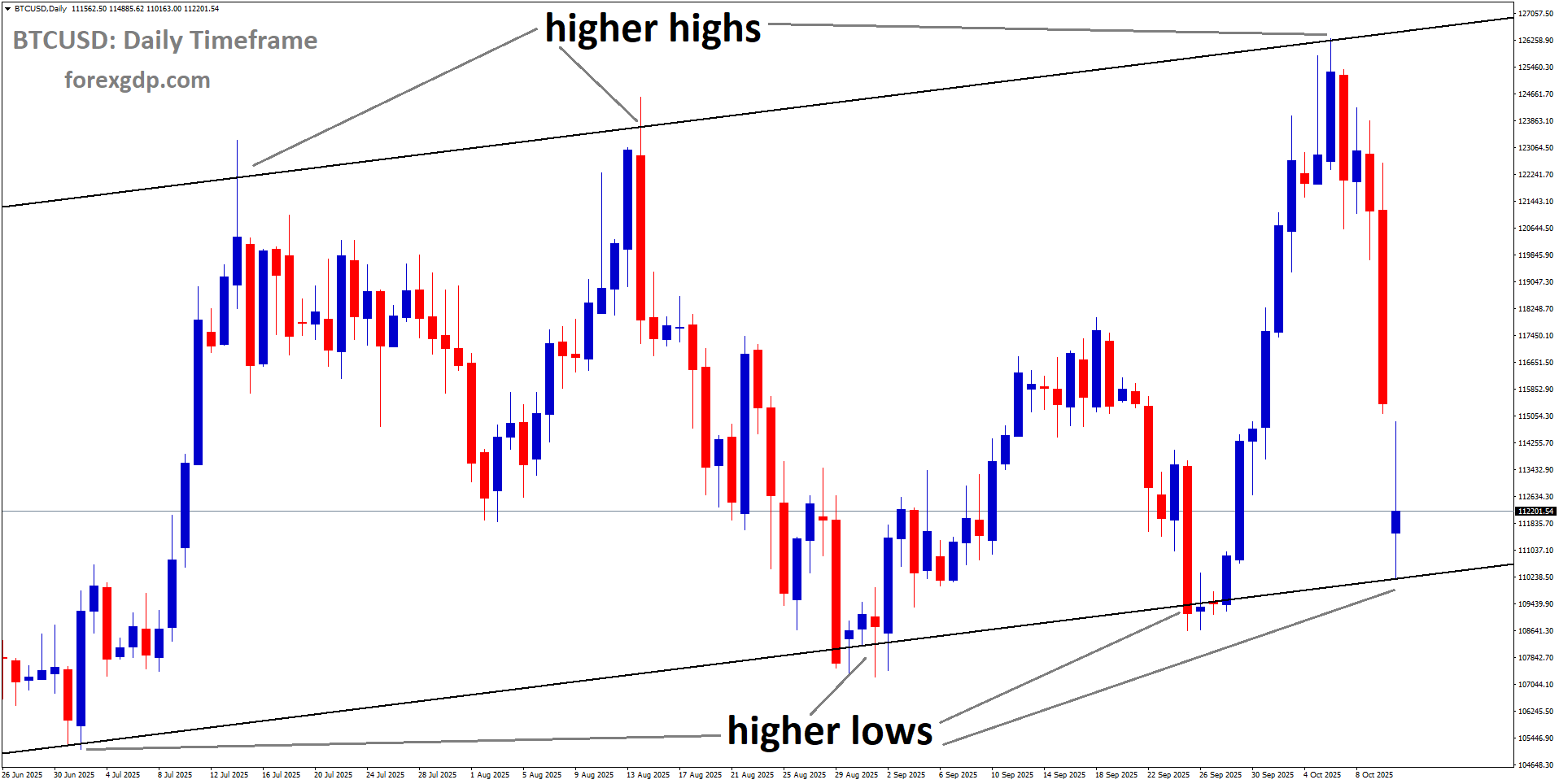
BTCUSD is moving in an uptrend channel, and the market has reached a higher low area of the pattern
The Big News: Trump’s Tariff Move That Shook the Markets
The world woke up to big news when President Donald Trump revealed plans for a 100% tariff increase on Chinese goods, set to take effect in early November. In a post on Truth Social, Trump emphasized that this move was a necessary step to counter what he described as “China’s hostile trade behavior.” He accused China of trying to dominate global markets by restricting exports of crucial rare-earth metals — materials that are vital to modern technology and manufacturing.
Trump’s statement didn’t stop there. He hinted that more countermeasures could follow, suggesting that this may only be the beginning of a broader trade confrontation. Naturally, this announcement triggered immediate uncertainty and fear among investors across different asset classes.
How the Crypto Market Reacted
It didn’t take long for the crypto market to respond. Within hours of Trump’s announcement, Bitcoin’s price fell sharply, plunging around 10% in a single day. This drop erased hundreds of billions in overall crypto market value, signaling widespread panic among traders.
But it wasn’t just Bitcoin feeling the heat. Altcoins — including Ethereum, XRP, and Solana — also experienced steep declines. The broader crypto sector, from meme coins to AI-related tokens, saw significant losses as investors rushed to secure their holdings amid market uncertainty.
Massive Liquidations Followed
The price collapse triggered a chain reaction. Data from liquidation tracking platforms showed that billions of dollars in leveraged positions were wiped out, as traders using borrowed funds were forced to sell their assets. This led to a deeper and faster market decline, one of the sharpest seen in 2025.
Some major investors, however, seemed prepared. Reports surfaced that a long-time Bitcoin whale had opened massive short positions on both Bitcoin and Ethereum right before the announcement, reaping huge profits as the market dropped. Whether this was a lucky guess or insider anticipation remains unclear, but it added more tension to an already chaotic day.
Traditional Markets Also Felt the Pain
While the crypto market tends to grab headlines, traditional markets weren’t immune to the tariff shock either. U.S. stock indices fell sharply, with the S&P 500 dropping over 2% and the Dow Jones Industrial Average sliding nearly 900 points. Investors quickly moved their funds into safer assets, reflecting widespread uncertainty about how the trade situation might evolve.
This wasn’t the first time Trump’s tariff threats affected financial markets. Previous announcements earlier in the year had already caused volatility in both equities and digital assets. However, this latest statement carried extra weight due to the size of the proposed tariff increase and the already delicate global economic environment.
Why Tariffs Impact Crypto So Strongly
At first glance, tariffs on Chinese goods might seem unrelated to Bitcoin or digital currencies. But there’s a deeper connection. Here’s why such political and economic decisions often send shockwaves through the crypto market:
1. Investor Sentiment and Fear
When uncertainty rises in global markets, investors tend to pull back from riskier assets — and cryptocurrencies are among the riskiest. Even without direct links to trade, fear can drive people to sell off their crypto holdings, leading to sharp price declines.
2. Economic Chain Reaction
Tariffs can slow down global trade, increase production costs, and ultimately strain economies. When that happens, financial markets — from stocks to commodities — become more volatile. The crypto market, often viewed as a speculative sector, tends to exaggerate these moves.
3. Strength of the U.S. Dollar

Trade tensions can also affect the U.S. dollar. When tariffs rise, the dollar often strengthens as global investors seek safety in traditional currencies. Since Bitcoin and most cryptocurrencies are priced in dollars, a stronger dollar can pressure crypto prices downward.
The Ongoing U.S.–China Tension and Its Broader Implications
The relationship between the U.S. and China has long been a critical factor in shaping global economic stability. Every new tariff or trade policy announcement tends to stir the markets — and this one is no different.
China remains one of the world’s biggest players in both manufacturing and crypto mining infrastructure. Any tension that disrupts supply chains or technology trade could have lasting effects on the digital asset ecosystem. Even though much of Bitcoin mining has shifted to other regions, China’s role in tech exports and global trade still influences market psychology.
What Market Experts Are Saying
Many analysts have weighed in, warning that the new tariffs could stall the recovery trend crypto assets had been showing since early October. After several weeks of steady gains, the sudden drop reminded investors just how fragile the crypto market can be in response to political events.
Experts also suggest that this downturn might lead to short-term volatility but long-term opportunity. Historically, sharp sell-offs driven by fear often pave the way for price corrections and new entry points for patient investors.
What Traders Should Keep in Mind

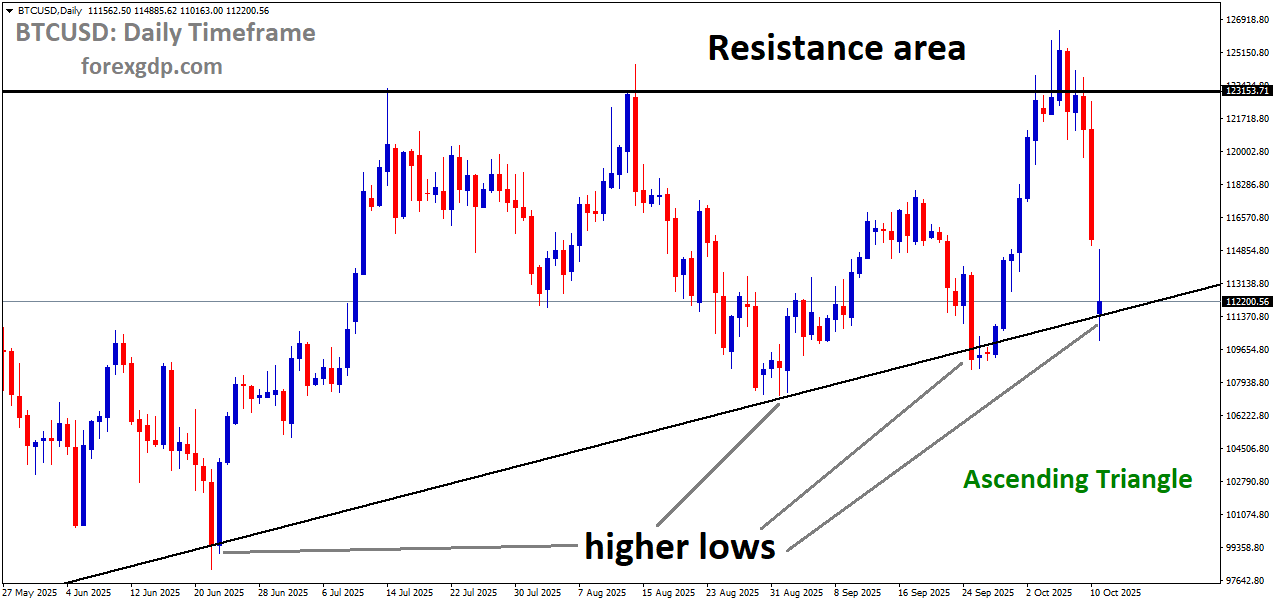
BTCUSD is moving in an Ascending Triangle pattern, and the market has reached the higher low area of the pattern
If you’re a crypto trader or investor, these kinds of global events highlight an important lesson — always expect the unexpected. The crypto market may operate independently from governments, but it doesn’t exist in isolation. Here are a few key takeaways:
-
Stay informed: Global politics and economic announcements can move the markets faster than technical analysis ever could. Keeping track of major policy news is crucial.
-
Manage risk: Leverage can amplify profits, but also magnify losses. Periods of uncertainty are the best times to stay conservative with position sizes.
-
Think long-term: Short-term dips, even steep ones, don’t always spell disaster. Bitcoin and other major cryptocurrencies have historically rebounded after market panic.
Final Summary
President Trump’s latest move to double tariffs on Chinese goods has sent shockwaves through both the crypto and traditional markets. Bitcoin and major altcoins saw heavy losses, erasing hundreds of billions from the overall market capitalization in just hours. The broader reaction underscores how deeply intertwined politics, economics, and digital assets have become.
While short-term pain is evident, experienced investors know that volatility is part of the crypto game. Every downturn reveals valuable lessons about market behavior, investor psychology, and the global impact of government decisions. Whether you’re a seasoned trader or someone just watching from the sidelines, this episode serves as a powerful reminder: in today’s world, politics and crypto are more connected than ever.
Don’t trade all the time, trade forex only at the confirmed trade setups
Get more confirmed trade signals at premium or supreme – Click here to get more signals, 2200%, 800% growth in Real Live USD trading account of our users – click here to see , or If you want to get FREE Trial signals, You can Join FREE Signals Now!