XAUUSD Loses Ground as Fed Tightening Expectations Rise
Gold moved lower after the latest US employment report showed that the labour market remains surprisingly strong. The report revealed that American employers created far more jobs than economists had expected in August. The previous month’s result was also revised higher, making the overall employment picture look healthier.
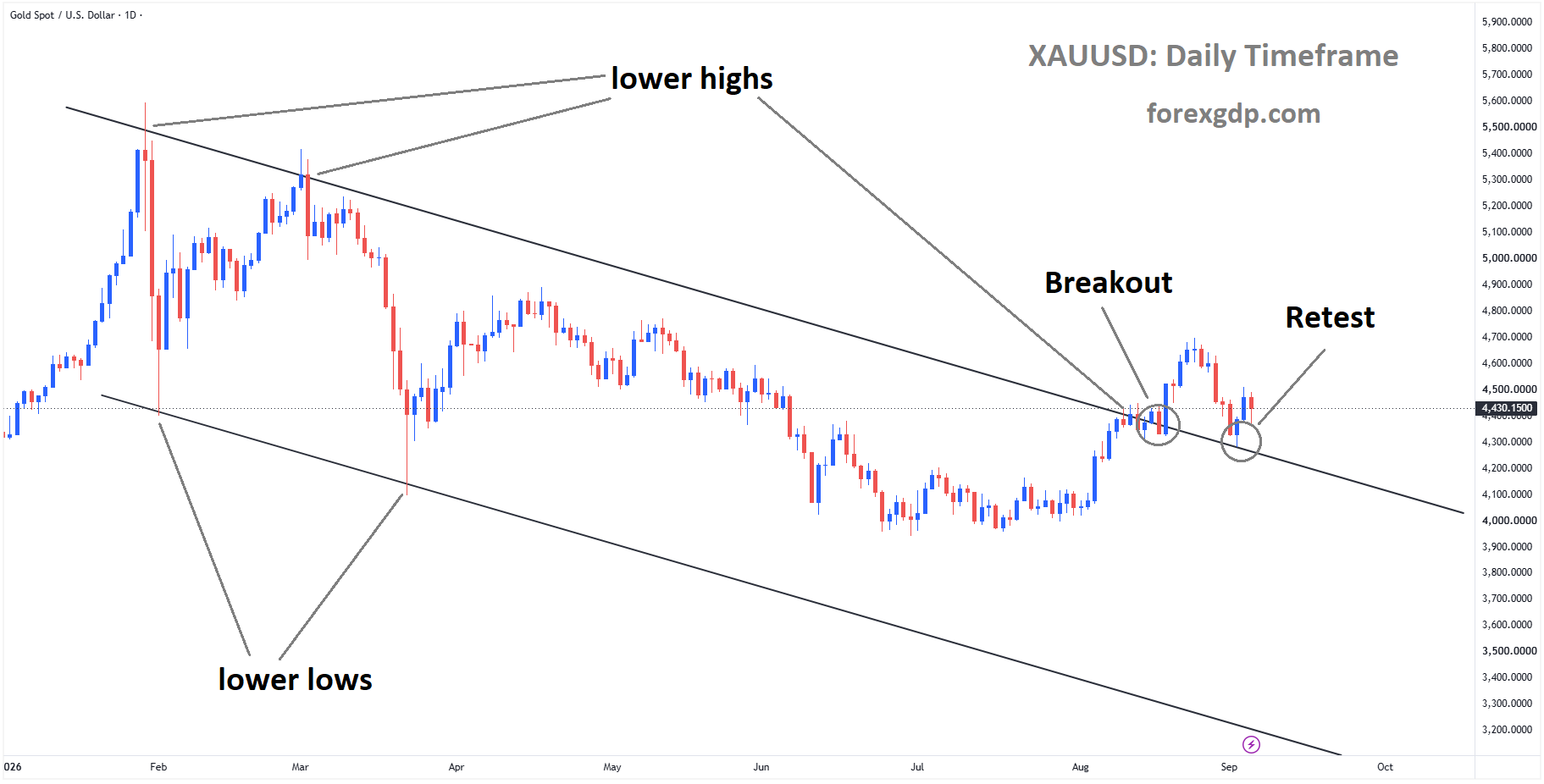
XAUUSD reached the retest area of the broken descending channel
The unemployment rate remained unchanged, adding to the belief that the US economy can cope with tighter monetary policy. This development reduced some of gold’s appeal because the precious metal does not pay interest. When investors expect borrowing costs to rise, interest-bearing assets often become more attractive than holding gold.
The jobs report also eased concerns about an immediate slowdown in the US economy. Although certain areas may still face pressure, the labour market appears stable enough to give the Federal Reserve greater flexibility. Policymakers may feel that they can focus more heavily on inflation without causing serious damage to employment.
Why Strong Job Growth Supports the US Dollar
A healthy labour market generally supports the US Dollar because it can encourage the Federal Reserve to maintain or increase interest rates. Higher rates may attract international investors searching for better returns, increasing demand for Dollar-based assets.
The latest employment numbers strengthened expectations that the central bank could take further action if inflation remains difficult to control. This shift in expectations helped the US Dollar stay firm, even though its immediate gains became less powerful later in the trading session.
Gold and the US Dollar often move in opposite directions. Since gold is commonly traded using the Dollar, a stronger American currency can make the metal more expensive for buyers using other currencies. This may reduce demand and place additional pressure on gold.
However, this relationship is not always perfectly consistent. Investors can sometimes buy both gold and the Dollar during periods of severe uncertainty. In the current situation, expectations surrounding US interest rates appear to be the main influence.
Federal Reserve Keeps Inflation at the Centre of Its Policy
Federal Reserve Chair Kevin Warsh recently described the US labour market as being consistent with full employment. His comments suggested that job creation remains strong enough for policymakers to give inflation their full attention.
Inflation continues to be the central bank’s biggest concern. When consumer and business costs remain elevated, the Federal Reserve may consider higher interest rates to reduce spending and cool demand. The aim is to prevent price pressures from becoming deeply rooted in the economy.
Fed Governor Christopher Waller has also indicated that officials are not in a hurry to raise rates if inflation continues to cool. This shows that the central bank has not made a final decision. Policymakers want to examine fresh economic information before choosing their next move.
The strong jobs report has therefore increased the possibility of tighter policy, but it has not guaranteed it. The final decision will depend heavily on the inflation reports arriving before the Federal Reserve’s September meeting.
Rate Hike Expectations Rise After the Jobs Report
Financial markets increased their expectations for a September rate increase after the employment data was released. Traders now believe there is a greater chance that the Federal Reserve will tighten policy, especially if upcoming inflation figures show that price growth remains stubborn.
These expectations matter because markets often react before an official decision is announced. If investors believe borrowing costs will rise, they may adjust their positions in currencies, bonds, equities and precious metals in advance.
For gold, rising rate expectations can create an uncomfortable environment. The metal has no fixed yield, so higher interest rates increase the opportunity cost of holding it. Investors may prefer government bonds or other assets that offer regular returns.
Still, expectations can change quickly. One weak inflation report could reduce the pressure on the Federal Reserve to act. That is why the next round of economic releases may have a greater impact than the employment report itself.
Treasury Yields Lose Some of Their Initial Momentum
US Treasury yields climbed immediately after the strong jobs figures. This was a natural reaction because investors began preparing for the possibility of higher interest rates. Bond yields often rise when markets expect the central bank to tighten monetary policy.
However, that jump did not last. Yields later gave back part of their post-employment gains, showing that investors were unwilling to make a complete commitment before seeing the next inflation reports.
The US Dollar followed a similar path. It surrendered some of its early strength but remained positive overall. This suggests that traders still favour the Dollar, although they recognise that the Federal Reserve’s September decision is not yet settled.
The pullback in yields offered limited relief to gold. Nevertheless, the metal remained under pressure because the broader economic story had changed. Strong employment numbers gave policymakers more room to fight inflation if necessary.
Producer Inflation Could Shape the Next Fed Decision

The Producer Price Index will be one of the most important releases in the coming week. It measures changes in the prices that producers receive for their goods and services. Rising production costs can eventually reach consumers as businesses attempt to protect their profit margins.
A stronger-than-expected producer inflation report could reinforce fears that inflationary pressure is building again. That would strengthen the argument for a September rate hike and could provide further support to the US Dollar.
On the other hand, a softer report would suggest that cost pressures are easing within the supply chain. This could make policymakers more comfortable with leaving rates unchanged while they wait for additional evidence.
Producer inflation does not always pass directly to consumers, but it provides useful clues about future price trends. For that reason, markets will examine both the headline result and the underlying components carefully.
Consumer Inflation Remains the Bigger Test
The Consumer Price Index will carry even greater importance because it measures changes in the prices paid by households. It gives policymakers a clearer view of how inflation is affecting everyday spending.
If consumer inflation remains persistent, the Federal Reserve may feel that tighter policy is necessary. Strong employment combined with stubborn inflation would create a convincing case for action because the economy may be able to withstand higher borrowing costs.
If inflation continues to slow, the central bank could choose patience. Officials may prefer to observe the economy for longer instead of risking unnecessary pressure on consumers, businesses and the housing market.
For gold investors, softer inflation could be supportive because it may reduce expectations of a rate hike. Higher inflation, by contrast, can have a mixed effect. Gold is often considered an inflation hedge, but the prospect of aggressive Federal Reserve action can initially weigh on the metal.
Other US Data Could Influence Market Confidence
Weekly jobless claims will provide another look at the health of the labour market. A low number of claims would support the message from the latest employment report, while a noticeable increase could raise fresh concerns about job security.
The US Monthly Budget Statement may also attract attention as investors assess government spending, revenue and borrowing requirements. Fiscal conditions can affect bond markets and shape longer-term views about the Dollar.
The University of Michigan Consumer Sentiment report will offer insight into how households feel about the economy. Its inflation-expectation components could be particularly important because the Federal Reserve watches whether consumers believe prices will continue rising.
Individually, these reports may not decide monetary policy. Together, however, they can provide a broader picture of economic strength, inflation risks and consumer behaviour.
Final Summary
Gold has weakened because the strong US jobs report increased confidence in the labour market and revived expectations of a Federal Reserve rate hike. The US Dollar remained firm, while Treasury yields lost part of their initial rise as investors waited for clearer evidence.
The next major direction will depend on US producer and consumer inflation. Hotter data could strengthen the case for September tightening and keep gold under pressure. Softer inflation may reduce the need for higher rates and offer the precious metal some breathing room. Until those reports arrive, uncertainty surrounding Federal Reserve policy is likely to remain the dominant force.
EURUSD Retreats After Strong Payroll Growth Surprises Markets
EUR/USD moved lower on Friday as stronger-than-expected employment figures from the United States increased demand for the US Dollar. The latest labour market report showed that American employers added far more jobs than economists had predicted, giving investors another reason to believe that the US economy remains resilient.
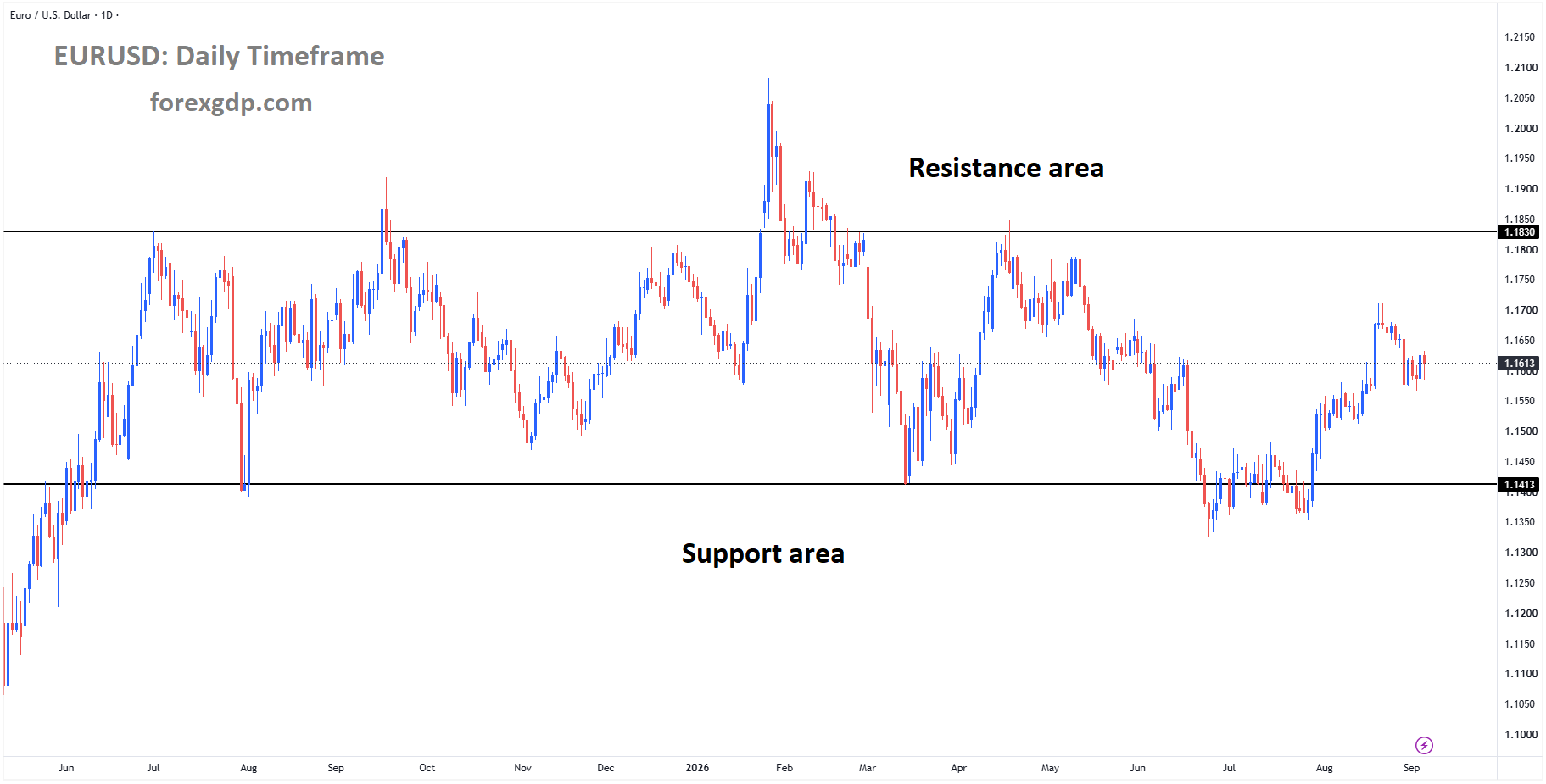
EURUSD is rebounding from the support area of the box pattern
The report also brought interest rate expectations back into focus. Before the release, markets were uncertain about whether the Federal Reserve would tighten monetary policy at its next meeting. However, the surprising strength of job creation has increased the possibility of further action from the central bank.
Pressure on the Euro also came from disappointing retail sales data in the Eurozone. Still, expectations of another European Central Bank rate increase may prevent the currency from suffering deeper losses. Traders will now watch upcoming US inflation figures and the ECB policy meeting for the next major direction.
Strong US Employment Growth Supports the Dollar
The US economy added 162,000 jobs in August, easily exceeding the market forecast of 56,000. This large difference between the actual result and expectations surprised investors and strengthened confidence in the American labour market.
Job creation is closely followed because it offers valuable information about the health of the wider economy. When companies continue hiring, it usually suggests that they expect consumer demand and business activity to remain stable. A stronger labour market can also support household spending because more people are earning regular incomes.
The August report was especially important because recent employment figures had raised concerns about a possible slowdown. The latest numbers helped reduce some of those worries and showed that hiring activity remained stronger than many analysts had assumed.
Previous payroll figures were also revised. July’s result was changed from a reported decline to a small increase, while the June figure was adjusted higher. These revisions created a more positive picture of recent employment conditions.
Stable Unemployment Adds to Economic Confidence
The US Unemployment Rate remained unchanged at 4.1%, matching expectations. Although the number did not improve, its stability was viewed positively when combined with the strong rise in payrolls.
A steady unemployment rate suggests that the labour market is not weakening quickly. That matters because a sudden rise in unemployment could reduce consumer confidence, limit spending and increase fears of an economic downturn.
Instead, the latest report suggests that businesses are still willing to hire even while borrowing costs remain elevated. This resilience may give the Federal Reserve more freedom to focus on controlling inflation without becoming overly concerned about damaging employment.
However, one strong monthly report cannot provide a complete picture. Employment figures can change sharply from one month to another, and earlier results are often revised. Policymakers will therefore examine wage growth, job participation and future hiring reports before making long-term judgments.
Federal Reserve Rate Expectations Return to Focus

The upbeat employment report has renewed speculation that the Federal Reserve could raise interest rates at its September meeting. A strong labour market can increase inflation risks because steady hiring and wage growth may encourage consumers to spend more.
When demand remains strong, businesses may find it easier to increase the cost of goods and services. This can make it harder for the Federal Reserve to bring inflation under control. As a result, policymakers may consider tighter monetary conditions if they believe price pressures could remain high.
Higher interest rate expectations often support the US Dollar because they can make American financial assets more attractive to global investors. This change in market thinking helped the Greenback regain strength after showing weakness earlier in the week.
US government bond yields also moved higher after the report. Rising yields usually reflect expectations that interest rates will remain elevated or increase further. This provided additional support for the Dollar and created more pressure on EUR/USD.
Inflation Data Could Decide the Next Fed Move
Despite the impressive employment numbers, the Federal Reserve’s September decision is not guaranteed. The jobs report is only one part of the economic picture, and inflation remains the central bank’s main concern.
Attention will now turn to the upcoming Consumer Price Index and Producer Price Index reports. Consumer inflation measures changes in the prices paid by households, while producer inflation tracks cost pressures faced by businesses.
If both reports show that inflation remains persistent, expectations of another rate increase could grow stronger. The Federal Reserve may feel that continued economic strength allows it to take further action without causing severe damage to employment.
On the other hand, softer inflation readings could reduce the urgency for an immediate rate increase. Policymakers may choose to wait and examine more data before changing their position. Therefore, next week’s releases could cause another major shift in sentiment toward the Dollar.
Weak Eurozone Retail Sales Weigh on the Euro
The Euro faced its own challenges after Eurozone retail sales came in weaker than expected. Poor retail activity suggests that consumers are becoming more cautious, possibly because of high living costs and expensive borrowing.
Consumer spending is an important part of economic growth. When households reduce their purchases, businesses may experience lower revenue and become less willing to invest or hire. Continued weakness in retail sales could therefore increase concerns about the Eurozone’s economic outlook.
The European Central Bank now faces a difficult situation. Inflation risks remain present, but tighter monetary policy could place even more pressure on households and companies. Raising interest rates may help control prices, yet it can also weaken borrowing, investment and overall demand.
ECB Expectations May Limit Euro Losses
Although the Euro is under pressure, expectations of another European Central Bank rate increase could offer some protection. Markets widely expect the ECB to tighten policy again at its September meeting as inflation remains a concern across the region.
Higher energy costs are adding to those concerns. Tensions in the Middle East have increased uncertainty around oil supplies, creating the risk of further pressure on transport, manufacturing and household expenses.
Energy prices have a powerful influence on European inflation because the region depends heavily on imported fuel. If oil costs remain elevated, businesses may pass some of their additional expenses to customers. This could encourage the ECB to maintain a firm policy approach despite weak economic activity.
The central bank’s communication will be just as important as its decision. Investors will closely examine whether officials remain worried about inflation or begin showing greater concern about slowing growth. Their comments could shape expectations for future policy and influence demand for the Euro.
A Busy Week Lies Ahead for EUR/USD
The direction of EUR/USD will depend heavily on the contrast between the US and Eurozone economic outlooks. Strong American employment figures currently favour the US Dollar, while disappointing retail activity creates a challenge for the Euro.
However, the situation could change quickly. US inflation data may strengthen or weaken expectations of Federal Reserve action, while the ECB announcement will reveal how European officials plan to balance inflation risks against poor growth.
Market attention will remain focused on central bank policy, employment strength, consumer activity and inflation. Each new report will help investors decide which economy appears more capable of handling tighter financial conditions.
Final Summary
EUR/USD weakened as an unexpectedly strong US employment report boosted confidence in the Dollar. Job creation exceeded forecasts by a wide margin, earlier payroll figures were revised higher, and unemployment remained stable.
The results increased expectations that the Federal Reserve could consider another interest rate rise. Still, upcoming US consumer and producer inflation data will play an important role in shaping the final policy outlook.
Meanwhile, weak Eurozone retail sales placed pressure on the Euro, although expectations of another ECB rate increase may limit further weakness. With US inflation reports and the ECB meeting approaching, both currencies face an important period that could reshape market expectations.
GBPUSD Bounces Back as Traders Reconsider the US Labour Report
The British Pound recovered some of its earlier weakness against the US Dollar after a surprisingly strong United States employment report caused a sharp but brief reaction across currency markets. The initial strength of the Greenback faded as traders looked beyond the headline jobs figure and considered whether the data would be enough to influence the Federal Reserve’s next interest-rate decision.
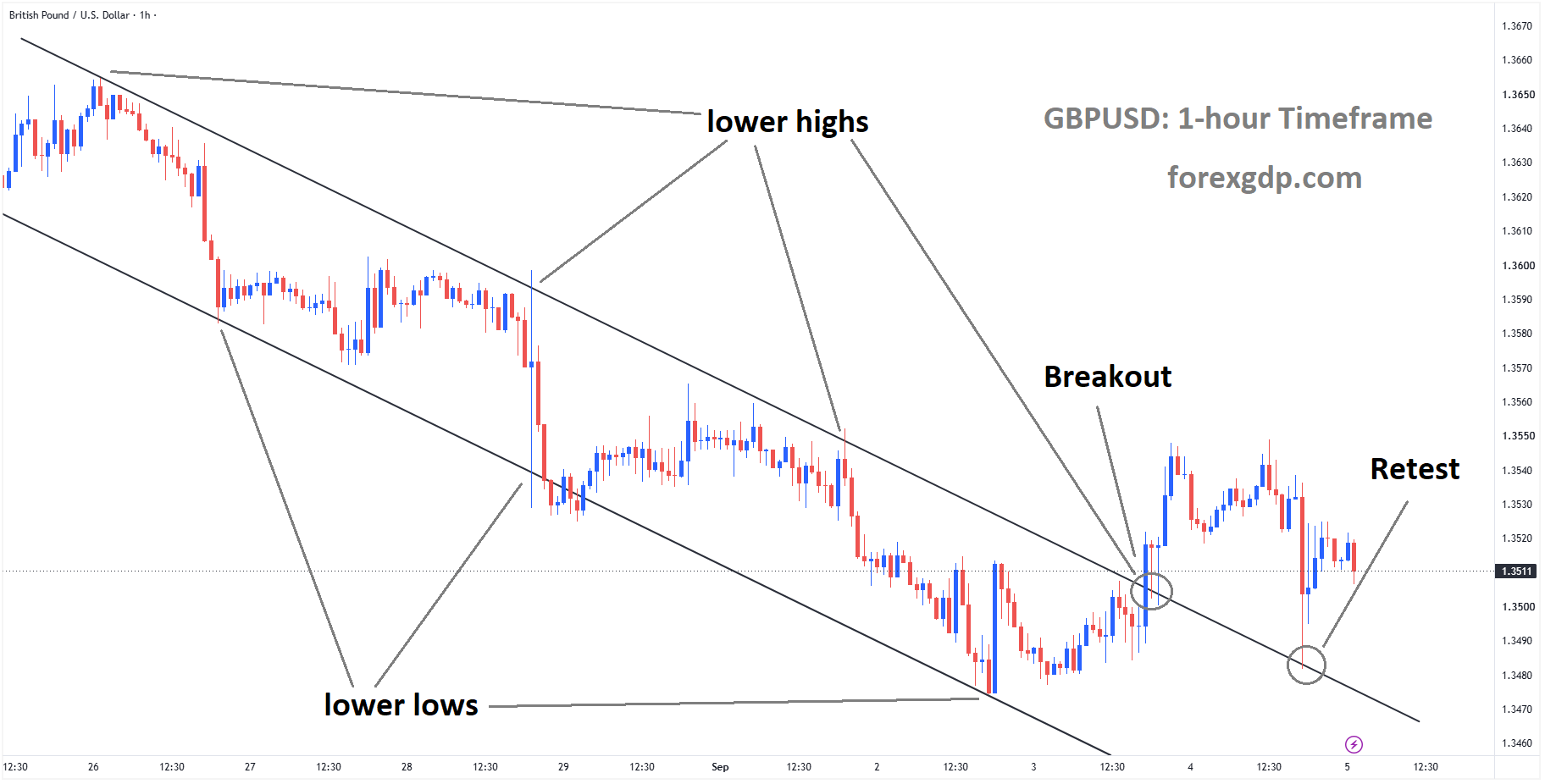
GBPUSD is rebounding from the retest area of the broken descending channel
The latest employment numbers showed that the US labour market performed much better than economists had expected. This encouraged traders to increase their expectations for a possible Federal Reserve rate hike at the upcoming September meeting. However, the market reaction did not last long because employment data represents only one part of the central bank’s decision-making process.
Attention is now moving toward upcoming US inflation reports. The Consumer Price Index and Producer Price Index could provide more valuable information about the direction of inflation and help determine whether policymakers will support another increase in borrowing costs.
Strong US Employment Report Surprises Markets
US Nonfarm Payrolls increased by 162,000 in August, far exceeding the market forecast of 56,000. The result showed that American employers continued to create jobs despite higher borrowing costs and concerns about slower economic activity.
The previous month’s employment figure was also revised higher. Instead of showing a decline in jobs, the updated data revealed a small increase. Meanwhile, the unemployment rate remained unchanged at 4.1%, suggesting that the overall labour market continues to hold firm.
A strong jobs market often supports the US Dollar because it gives the Federal Reserve more freedom to maintain tighter monetary policy. When employment remains healthy, policymakers may feel less pressure to support the economy through lower interest rates.
However, the Dollar’s gains weakened after the first market reaction. Traders appeared unwilling to make a firm decision based only on the employment report. Although the figures were impressive, the Federal Reserve’s main concern remains inflation and whether price growth is returning to its long-term target.
Why the US Dollar’s Initial Strength Faded

The US Dollar moved higher immediately after the employment figures were released, while the Pound came under selling pressure. That reaction was understandable because the report was significantly stronger than expected.
Still, the movement quickly lost momentum. Investors began to question whether one positive employment report could guarantee an interest-rate increase in September. The Federal Reserve considers a wide range of economic information, and employment strength alone may not be enough to justify tighter policy.
The Pound’s recovery reflected this uncertainty. Traders were not necessarily becoming strongly positive about the UK currency. Instead, they were reducing some of their earlier Dollar buying as they waited for more evidence about the Federal Reserve’s intentions.
This kind of cautious response is common when different parts of the economy send mixed signals. The labour market appears strong, but inflation has recently shown signs of slowing. The central bank must therefore balance the risk of persistent inflation against the danger of keeping borrowing costs too high for too long.
Inflation Data Becomes the Next Major Focus
The upcoming US Consumer Price Index and Producer Price Index reports will play an important role in shaping expectations ahead of the Federal Reserve meeting. These reports will show whether inflationary pressure continued to ease during August or began to strengthen again.
The Consumer Price Index measures changes in the prices paid by households for goods and services. The Producer Price Index focuses on costs faced by businesses. Together, these reports can offer a broader view of inflation throughout the economy.
If inflation comes in stronger than expected, policymakers may have more reason to raise interest rates. A combination of strong job creation and renewed price pressure could make the case for tighter policy more convincing.
On the other hand, softer inflation would weaken the argument for an immediate hike. It could suggest that the current level of interest rates is already doing enough to bring price growth under control, allowing the Federal Reserve to wait and assess future data.
Federal Reserve Officials Remain Focused on Price Stability
Recent comments from Federal Reserve officials have highlighted the importance of inflation. Governor Christopher Waller said he was beginning to see encouraging signs that price pressure was easing. He also suggested that the current policy setting could gradually return inflation to the central bank’s 2% target.
However, Waller did not completely rule out another rate increase. He indicated that unexpectedly strong August inflation data could lead him to consider supporting a hike at the September meeting.
His comments show why the latest jobs report did not create lasting confidence in the Dollar. The employment numbers strengthened the argument for tighter monetary policy, but the final decision may depend more heavily on inflation.
Following the jobs report, financial markets increased the estimated chance of a quarter-point rate hike at the September 15–16 meeting to around 60%. Before the report, traders saw the probability at roughly 50%. Expectations have clearly shifted, but the outcome remains far from certain.
Bank of England Comments Offer Support to the Pound
Developments in the United Kingdom also helped the Pound limit its losses. Bank of England Chief Economist Huw Pill maintained a firm position on interest rates, repeating his preference for raising the Bank Rate to 4%.
His comments suggested that at least some UK policymakers remain concerned about inflation and believe tighter monetary policy may still be necessary. A more hawkish Bank of England outlook can support the Pound because higher interest rates may make UK assets more attractive to global investors.
Nevertheless, financial markets largely expect the Bank of England to leave rates unchanged at its upcoming meeting. This difference between Pill’s position and wider expectations creates uncertainty around the UK policy outlook.
The Pound may receive further support if other Bank of England officials express similar concerns about inflation. However, if policymakers favour keeping rates steady, Sterling’s direction could remain heavily influenced by US economic data and changes in Federal Reserve expectations.
GBPUSD Traders Face an Important Week Ahead
The strong US employment report has changed the conversation around the Federal Reserve, but it has not provided a final answer. The labour market remains healthier than many economists predicted, giving policymakers room to consider another rate increase.
At the same time, signs of cooling inflation could encourage the central bank to remain patient. This tension explains why the US Dollar’s initial advance faded and why the Pound managed to recover part of its earlier decline.
The upcoming inflation releases are likely to carry significant weight. Strong CPI and PPI figures could reinforce expectations for a September hike, while weaker readings may reduce the urgency for further tightening.
Final Summary
GBPUSD recovered some of its post-employment-report losses as the US Dollar gave back part of its early gains. US job creation greatly exceeded expectations, the previous month’s figure was revised higher, and unemployment remained steady.
Although the report increased the estimated probability of a Federal Reserve rate hike, traders remain cautious because inflation will be central to the final decision. Upcoming CPI and PPI reports should provide clearer guidance about whether price pressure is continuing to ease.
Meanwhile, hawkish comments from Bank of England Chief Economist Huw Pill have offered limited support to the Pound. With both central banks preparing for important policy meetings, inflation data and official guidance will likely shape the next major move in GBPUSD.
USDJPY Bounces Back with Markets Focused on US Labour Data
USDJPY attracted renewed buying interest on Friday as the US Dollar regained some strength before the release of the closely watched US Nonfarm Payrolls report. The currency pair had faced selling pressure during the previous two sessions, but traders appeared willing to reduce some of their bearish positions ahead of the important employment update.
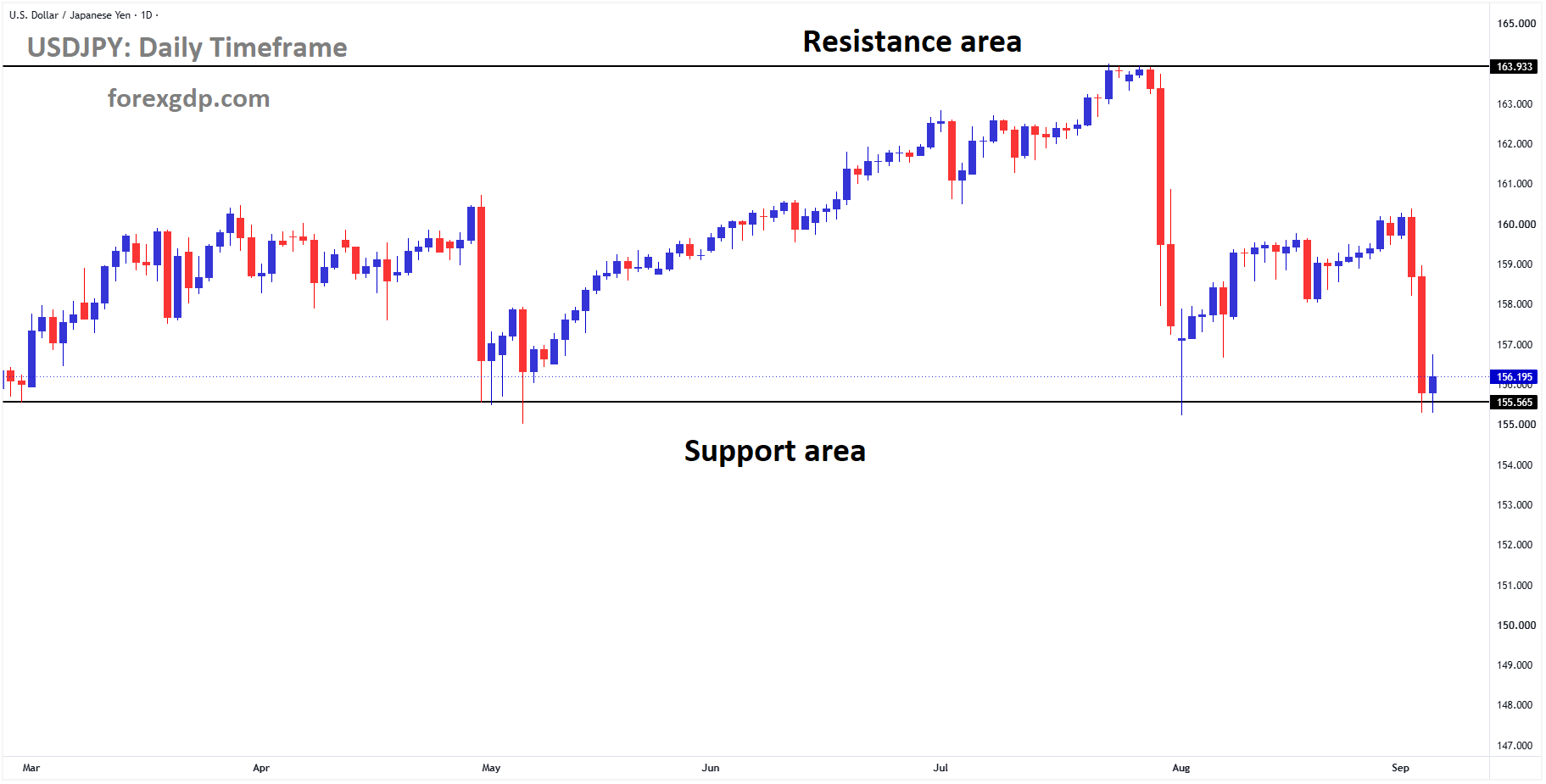
USDJPY reached the support area of the box pattern
This recovery was mainly driven by cautious repositioning rather than a major change in the wider economic outlook. When an influential report is approaching, traders often adjust their positions to protect themselves against unexpected results. Some investors who had previously sold USDJPY may have decided to close part of those positions, creating temporary demand for the pair.
However, the recovery does not necessarily signal the beginning of a lasting upward move. Several important factors continue to support the Japanese Yen and restrict the US Dollar. These include falling US bond yields, reduced expectations for an immediate Federal Reserve rate increase, and growing speculation about tighter monetary policy in Japan.
US Nonfarm Payrolls Take Centre Stage
The US Nonfarm Payrolls report is one of the most important economic releases for currency markets. It provides information about employment growth, wage conditions, and the overall health of the American labour market. A strong jobs report can increase confidence in the US economy, while weaker figures may raise concerns about slowing activity.
Investors will examine the report closely for clues about the Federal Reserve’s next policy decision. If employment remains strong and wage pressures continue, policymakers may have more reason to maintain a restrictive stance. This could support demand for the US Dollar as markets consider the possibility that borrowing costs will remain elevated for longer.
On the other hand, signs of weaker hiring or slower wage growth could reinforce expectations that the Federal Reserve will leave policy unchanged. Such an outcome may reduce the appeal of the US Dollar, particularly if investors believe that inflation is gradually moving in a more comfortable direction.
Because the employment report can influence expectations so quickly, many traders are likely to remain cautious until the figures are released. The immediate recovery in USDJPY may therefore lack strong conviction until the market receives clearer economic guidance.
Federal Reserve Expectations Limit Dollar Strength
The US Dollar found some support before the jobs report, but its ability to extend those gains may remain limited. Investors have recently reduced their expectations for a Federal Reserve rate increase in September. Comments from Fed Governor Christopher Waller played an important role in this shift.
Waller expressed optimism that inflation was beginning to show signs of easing. His remarks strengthened the argument for keeping monetary policy unchanged rather than introducing another increase in borrowing costs. Markets responded by becoming less confident that the Federal Reserve would take a more aggressive step at its upcoming meeting.
This matters for the US Dollar because interest-rate expectations strongly affect demand for a currency. Higher expected rates usually make dollar-based assets more attractive to global investors. When those expectations weaken, the currency can lose part of that advantage.
The changing outlook also pushed US government bond yields lower. Softer yields can reduce international demand for the Dollar because investors receive a smaller return from holding certain US assets. As a result, the Dollar may struggle to build lasting strength even if it experiences brief periods of buying.
Bank of Japan Outlook Supports the Yen

While expectations for the Federal Reserve have become less aggressive, the outlook for the Bank of Japan has moved in the opposite direction. Traders are increasingly preparing for the possibility that the Japanese central bank could raise interest rates at its September meeting.
Markets also see a chance of another policy move later in the year. This represents an important shift because Japan maintained extremely loose monetary conditions for a long period. Growing confidence that the central bank may continue normalising policy has made the Japanese Yen more attractive.
A more determined Bank of Japan could help reduce the large interest-rate gap between Japan and the United States. That gap has been a major reason why the Yen remained under pressure for an extended period. If Japanese borrowing costs rise while US rates remain unchanged or eventually fall, the difference between the two countries could narrow.
This changing policy balance may encourage investors to reduce positions that depend on continued Yen weakness. It could also attract buyers who believe Japan’s monetary environment is entering a new phase. Therefore, even if the US Dollar strengthens temporarily, demand for the Yen could prevent USDJPY from advancing significantly.
Suspected Intervention Adds Another Layer of Caution
Possible action by Japanese authorities is another factor supporting the Yen. Sharp currency movements have repeatedly drawn attention from officials, who have warned that excessive volatility can damage businesses, households, and the wider economy.
Suspected intervention can quickly change market behaviour. Traders may become reluctant to sell the Yen aggressively if they believe authorities are prepared to step into the market. Even without official confirmation, the possibility of intervention can discourage large speculative positions.
Japan is particularly sensitive to rapid Yen weakness because it raises the cost of imported fuel, food, and raw materials. Higher import expenses can place pressure on companies and consumers, especially when wage growth fails to keep pace with living costs. Authorities may therefore continue monitoring currency movements closely.
This creates a challenging situation for USDJPY buyers. Any temporary Dollar strength must compete with the risk of official action and rising expectations for tighter Bank of Japan policy. Together, these forces could keep demand for the Yen firm.
Weekly Pressure Remains Significant
Despite Friday’s recovery, USDJPY remained on course for a difficult weekly performance. The broader fundamental picture continued to favour the Yen, while the Dollar faced uncertainty surrounding US employment conditions and the Federal Reserve’s next decision.
The pair’s rebound appears connected mainly to position adjustments before the jobs report. Such moves can be temporary because traders often return to the wider economic story once the uncertainty surrounding a major release has passed.
For the Dollar to maintain stronger demand, the US data would likely need to convince investors that the economy remains resilient and that restrictive monetary policy is still necessary. Even then, expectations for the Bank of Japan and the possibility of intervention could limit enthusiasm.
If the jobs figures weaken the case for another Federal Reserve increase, the Dollar could face renewed selling. That would leave USDJPY exposed to further pressure, especially if confidence in a Bank of Japan rate increase continues to grow.
Final Summary
USDJPY recovered modestly as the US Dollar gained support before the Nonfarm Payrolls report. The move was helped by traders adjusting their positions and closing some earlier bearish trades ahead of the important employment release.
However, the wider outlook remains uncertain. Reduced expectations for a September Federal Reserve rate increase and softer US bond yields may prevent the Dollar from achieving lasting strength. At the same time, rising Bank of Japan rate expectations and concerns about possible Japanese intervention continue to support the Yen.
The US jobs report will play a major role in shaping the next stage of the market’s policy expectations. Until its impact becomes clear, the USDJPY recovery may remain fragile, with the broader fundamental environment continuing to favour caution.
USDCAD Pauses as Crucial Jobs Reports Take Centre Stage
The Canadian Dollar maintained its stronger weekly position against the US Dollar as investors waited for important employment reports from both Canada and the United States. Trading remained cautious because the upcoming labour figures could influence expectations for interest rates, economic growth, and future central bank decisions.
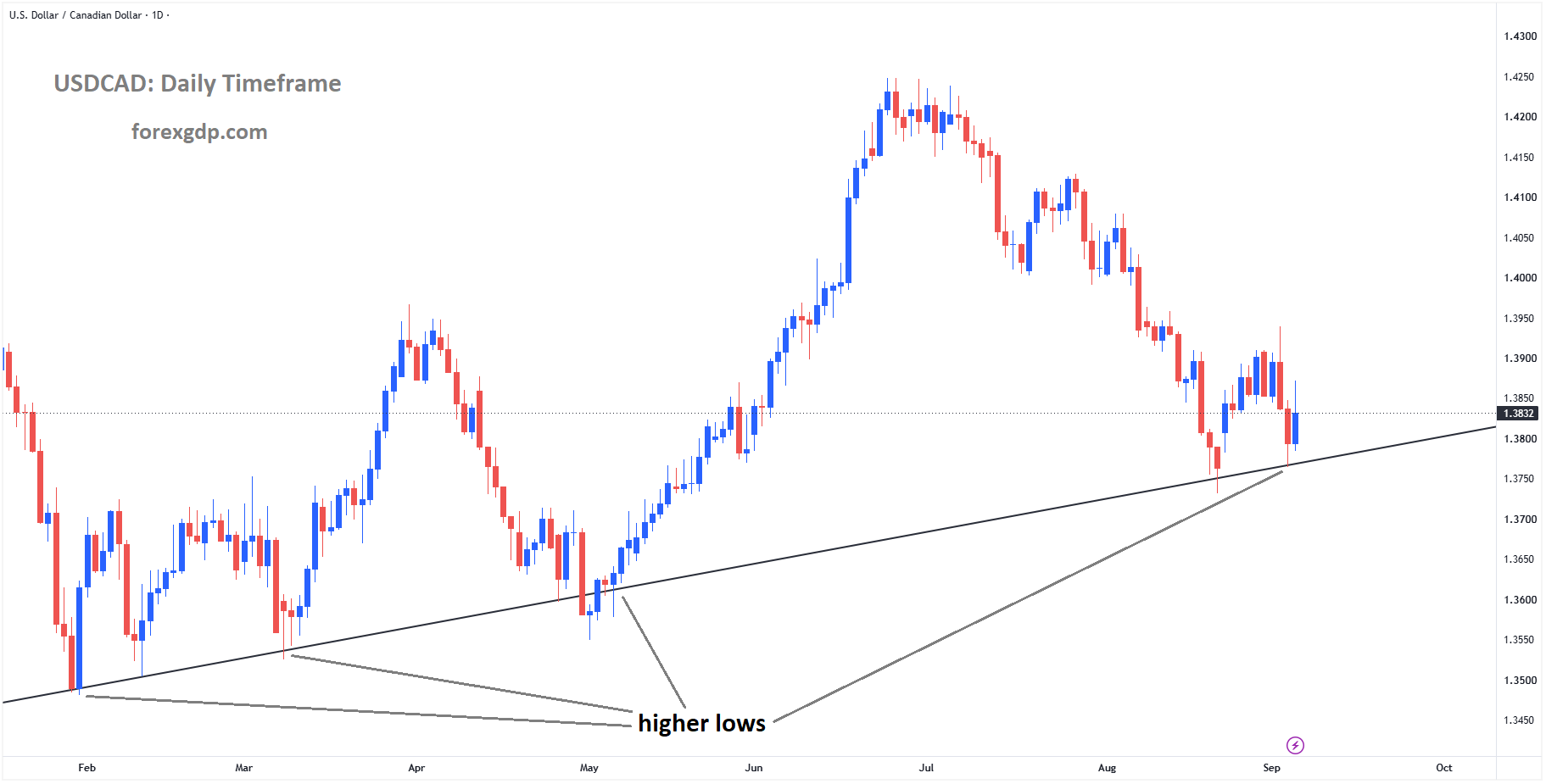
USDCAD reached the higher low area of the uptrend line
Earlier in the week, the Canadian currency received strong support from rising crude oil prices. Canada is one of the world’s major oil exporters, so changes in energy markets often affect demand for its currency. However, traders became less willing to make large decisions before seeing the latest employment numbers.
The US jobs report is also important because it may shape expectations surrounding the Federal Reserve. As a result, the direction of USDCAD could depend on which country delivers the more convincing labour market results.
Canadian Dollar Benefits From Stronger Oil Demand
Oil plays an important role in the Canadian economy. The country exports large amounts of crude oil, especially to the United States. When energy prices rise, Canadian producers may earn more revenue, improving the outlook for exports and supporting demand for the Canadian Dollar.
The latest increase in oil prices followed renewed tensions between the United States and Iran. Reciprocal attacks and stronger warnings from both sides raised fears that the conflict could become more serious. Investors began worrying about possible disruptions to global energy supplies, particularly if transportation routes or production facilities in the Middle East were affected.
These concerns encouraged buyers to move into the oil market. The Canadian Dollar gained alongside that rise because traders often view it as a currency closely connected to global energy conditions.
However, oil alone cannot determine the currency’s direction. Its influence may weaken if Canadian economic data disappoints or if the US Dollar gains broad strength. This is why investors are now turning their attention to labour market reports.
Canada’s Employment Report Could Deliver Another Surprise
Economists expect Canada to report moderate employment growth for August. However, recent Canadian jobs reports have been difficult to predict. Actual figures have frequently differed from forecasts, sometimes by a wide margin.
This uncertainty makes the latest report especially important. A stronger-than-expected increase in employment could improve confidence in the Canadian economy. It may suggest that businesses are still hiring despite concerns about slower growth and difficult trade conditions.
Healthy job creation can also support consumer spending. When more people are employed, household income generally becomes more stable. That can help businesses, strengthen economic activity, and reduce pressure on the Bank of Canada to provide additional support.
A positive surprise could therefore attract further demand for the Canadian Dollar. Traders may interpret strong employment growth as evidence that the economy is coping better than expected with current challenges.
On the other hand, weak figures could quickly damage confidence. A poor report might raise concerns about Canada’s economic strength and encourage expectations of a more cautious approach from the Bank of Canada.
Canada’s Labour Market Remains Difficult to Read
Canada’s employment situation has experienced sharp changes in recent years. Some reports have shown impressive job creation, while others have revealed sudden weakness. This uneven performance has made it harder for economists and investors to identify a clear direction.
Population growth has also changed the labour market. Canada needs steady job creation to provide opportunities for a growing workforce. Even when the economy adds jobs, the unemployment rate can still rise if the number of people looking for work increases faster.
Wage growth will also receive attention. Strong wage gains can support household spending, but they may also keep inflation concerns alive. Weak wage growth, meanwhile, may signal that employers are becoming more careful about hiring and salary increases.
The details behind the main figures will therefore matter. Investors will want to know whether employment growth is broad, whether full-time positions are increasing, and whether companies remain confident enough to expand their workforce.
Trade Tensions Add Pressure to Canada’s Outlook
Relations between Canada and the United States remain another major concern. The two countries share one of the world’s largest trading relationships, meaning any dispute can have a direct effect on Canadian businesses.
Uncertainty over tariffs, trade rules, or political relations may discourage companies from investing or hiring. Businesses often delay major decisions when they are unsure about future costs or access to important markets.
Canada is particularly sensitive to changes in US demand because a large share of its exports goes south of the border. If trade tensions reduce business confidence, the effects may eventually appear in factory activity, employment, and consumer spending.
This background explains why weaker Canadian labour figures would not be entirely unexpected. Even if oil prices remain supportive, concerns about trade could prevent the Canadian Dollar from gaining freely.
US Employment Data May Drive Dollar Sentiment

The Canadian jobs report is only one side of the story. Investors are also waiting for employment figures from the United States, which could have a wider impact on financial markets.
A strong US labour report may support the US Dollar by showing that the world’s largest economy remains resilient. Solid job creation and firm wage growth could reduce pressure on the Federal Reserve to adopt a softer policy stance.
In contrast, disappointing employment figures may weaken confidence in the US economy. They could increase expectations that the Federal Reserve will take action to support growth, potentially reducing demand for the US Dollar.
The timing of both reports creates an interesting situation for USDCAD. If Canada produces strong numbers while the United States disappoints, the Canadian Dollar could receive support from both sides. If the opposite happens, the US Dollar may regain strength quickly.
Mixed results would make the reaction less clear. For example, strong job creation combined with rising unemployment could leave traders uncertain about the real health of the labour market.
Investors Remain Cautious Ahead of Key Data
The limited movement seen before the employment releases reflects normal investor caution. Major economic reports can cause sudden changes in expectations, so many traders prefer to wait rather than take unnecessary risks.
The Canadian Dollar enters the data release with support from stronger energy markets, but that advantage may not last if domestic employment conditions weaken. At the same time, the US Dollar’s direction will depend heavily on how investors interpret the American labour figures.
Beyond the headline numbers, traders will examine unemployment, wage growth, labour force participation, and the balance between full-time and part-time work. These details can provide a more complete picture of economic conditions in both countries.
Final Summary
The Canadian Dollar remains supported by the earlier rise in crude oil prices, which improved the outlook for Canada’s export-driven economy. Concerns about a broader conflict involving the United States and Iran helped lift energy demand and provided an additional boost to the currency.
Attention has now shifted to employment reports from Canada and the United States. Canada’s labour figures have produced major surprises in recent months, making the latest release difficult to predict. Strong results could reinforce confidence in the Canadian economy, while weak numbers may highlight the effects of trade uncertainty and uneven growth.
The US report will be equally important because it could influence Federal Reserve expectations and overall demand for the US Dollar. With both economies releasing major labour data, investors are likely to remain careful until they receive a clearer picture of employment conditions on each side of the border.
USDCHF Rallies as Strong US Jobs Growth Pressures Swiss Franc
USDCHF moved higher on Friday after a surprisingly strong United States employment report gave the US Dollar fresh support. The currency pair initially recorded a sharp rise following the data release before losing part of that momentum later in the session.
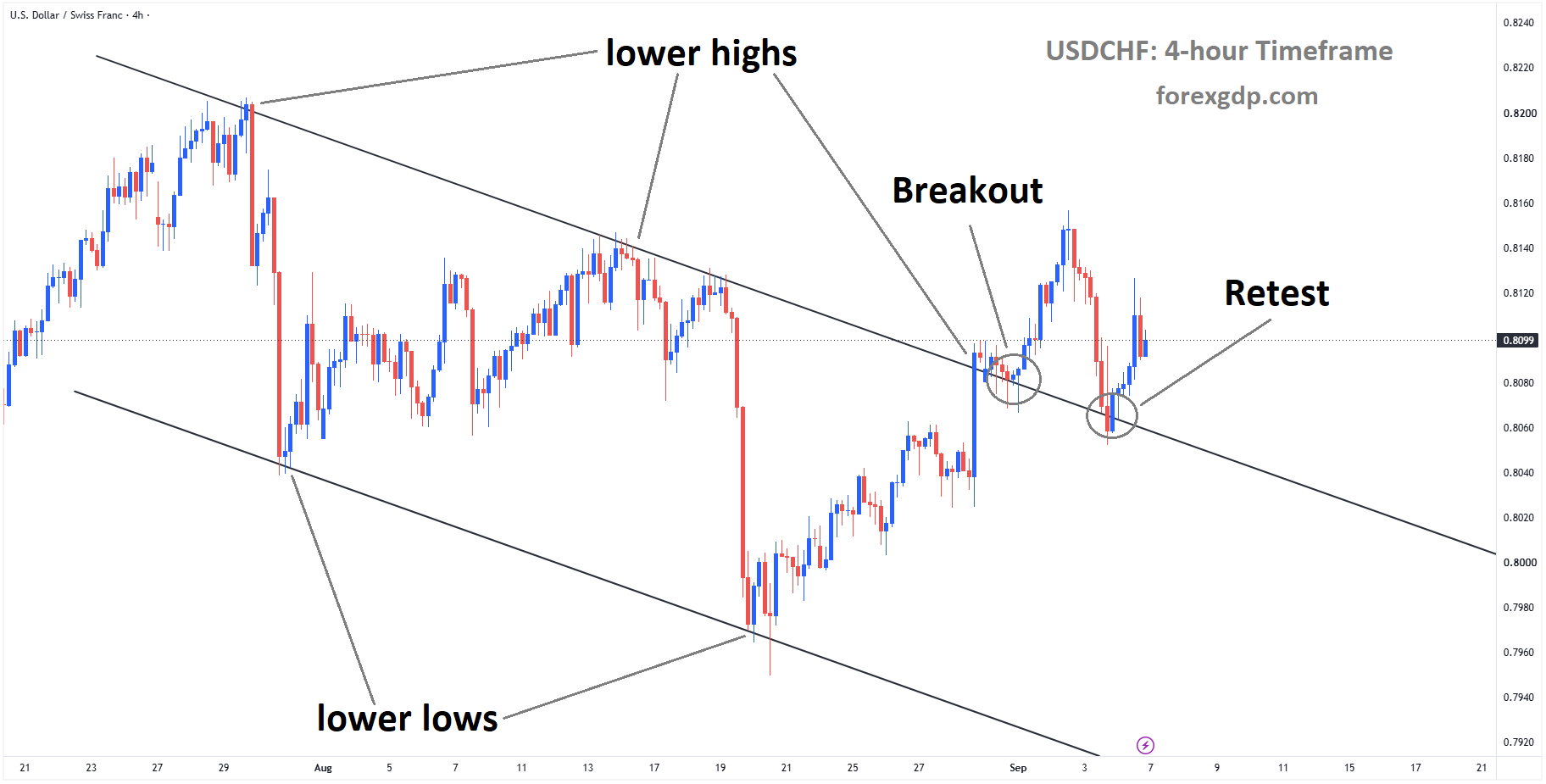
USDCHF is rebounding from the retest area of the broken descending channel
Despite the pullback, the broader tone remained positive. Investors reacted to signs that the American labor market may be stronger than previously believed. This development has created new questions about the Federal Reserve’s next interest-rate decision.
At the same time, inflation in Switzerland remains relatively low. That gives the Swiss National Bank enough flexibility to keep its current policy rate unchanged. The difference between the monetary policy outlooks in the United States and Switzerland could continue to influence demand for both currencies.
US Employment Growth Surprises the Market
The latest US Nonfarm Payrolls report showed that employers added far more workers than economists had predicted in August. The result suggested that businesses remain willing to hire despite higher borrowing costs and uncertainty about the wider economic outlook.
Revisions to earlier employment reports also improved the overall picture. Previous data for June and July were adjusted upward, indicating that the labor market had performed better than initially reported. These changes helped strengthen confidence in the resilience of the US economy.
The unemployment rate remained unchanged and matched market expectations. A stable jobless rate, combined with stronger hiring, showed that the employment market continues to hold firm. This matters because the Federal Reserve closely watches labor conditions when making decisions about interest rates.
A strong labor market can support household spending because more people are earning regular income. However, it can also create concerns about inflation. When employers compete for workers, wages may rise, encouraging consumers to spend more. Strong demand can then make it harder for inflation to return to the central bank’s desired level.
Federal Reserve Expectations Shift After the Jobs Report
The stronger employment figures increased expectations that the Federal Reserve could raise interest rates at its September meeting. Before the report, investors were divided over whether policymakers would act. The positive jobs data encouraged more traders to consider the possibility of another increase in borrowing costs.
Higher interest rates often support a currency because they can make assets linked to that currency more attractive to global investors. This explains why the US Dollar and government bond yields rose immediately after the employment report was published.
However, the Dollar could not maintain all of its initial strength. The reaction showed that investors are still uncertain about the Federal Reserve’s broader policy direction. One strong employment report may influence expectations, but it does not provide the complete economic picture.
Federal Reserve officials must consider employment, inflation, consumer demand, business activity, and financial conditions before making a final decision. Although the labor market appears healthy, recent economic reports have also suggested that inflationary pressure may be cooling.
This mixed picture makes the upcoming inflation releases especially important. The Consumer Price Index will offer information about changes in the cost of goods and services paid by households. The Producer Price Index will show how prices are changing for businesses. Together, these reports may help determine whether another rate increase is necessary.
Dollar Momentum Fades After the Initial Reaction
The US Dollar strengthened quickly after the employment figures exceeded forecasts, but some of those gains later disappeared. This type of reaction often occurs when investors examine the details of an economic report after the first burst of activity.
Some market participants may have taken profits after the Dollar’s rapid advance. Others may have decided to wait for the upcoming inflation reports before making larger commitments. The Federal Reserve’s decision will depend on several economic signals, so uncertainty is unlikely to disappear based on employment data alone.
There is also an important difference between a strong labor market and rising inflation. Healthy job creation does not automatically mean the central bank must increase rates. Policymakers will want to know whether employment strength is contributing to faster wage growth, stronger spending, or renewed price pressure.
The Federal Reserve has repeatedly emphasized the importance of restoring price stability. If inflation continues to moderate, officials may decide that keeping rates unchanged is appropriate. If price growth remains stubborn while employment stays firm, the argument for tighter policy could become stronger.
Political Pressure Adds Another Layer of Uncertainty
US President Donald Trump welcomed the positive employment report and described it as evidence of economic strength. At the same time, he renewed his demand for lower borrowing costs.
His comments highlighted the political pressure surrounding Federal Reserve policy. Lower rates can make loans more affordable for households and companies, potentially supporting investment and economic activity. However, reducing rates while inflation remains a concern could also stimulate demand and make price stability more difficult to achieve.
The Federal Reserve makes monetary policy decisions independently. Its officials are expected to focus on economic data rather than political demands. Nevertheless, public comments from government leaders can add uncertainty and attract attention to future policy announcements.
For the US Dollar, the key issue is whether economic strength leads to higher rates or whether softer inflation allows the central bank to remain patient. Until that question is answered, the currency may experience changing sentiment around major data releases.
Swiss Inflation Remains Under Control

In Switzerland, inflation increased during August and came in stronger than economists had expected. Monthly consumer prices recovered after declining in July, while annual inflation also accelerated.
Even with that increase, Swiss inflation remains comfortably within the Swiss National Bank’s definition of price stability. The central bank aims to keep annual inflation below its upper limit while avoiding a prolonged period of falling prices.
Because price growth remains controlled, the SNB has room to keep its policy rate unchanged. It does not currently face the same level of pressure to tighten policy that may be developing in the United States.
A stable policy rate can help protect the Swiss economy from unnecessary borrowing costs. Switzerland is highly connected to global trade, and restrictive monetary conditions could place additional pressure on businesses and households.
Why the Swiss Franc May Face Limited Support
The Swiss Franc is traditionally viewed as a safe-haven currency. Investors often turn to it when global markets become uncertain or when concerns about economic and political risks increase.
However, safe-haven demand is only one factor affecting the currency. Interest-rate expectations also play a major role. If investors expect US borrowing costs to rise while Swiss rates remain unchanged, the US Dollar may appear more attractive.
Subdued Swiss inflation reduces the need for the SNB to consider higher rates. This could limit the Franc’s ability to strengthen consistently, particularly when American economic data supports a more restrictive Federal Reserve policy.
Still, the Franc may receive support during periods of global uncertainty. Concerns about trade, geopolitical tensions, or financial instability could encourage investors to seek safer assets. Therefore, its outlook will depend on both domestic policy and international risk sentiment.
Upcoming Inflation Data Takes Centre Stage
Attention will now turn to the next set of US inflation reports. These figures could either strengthen or weaken the message delivered by the employment data.
If consumer and producer prices show renewed pressure, expectations of a Federal Reserve rate increase may grow further. Strong hiring combined with persistent inflation would give policymakers a clearer reason to tighten monetary conditions.
On the other hand, softer inflation could reduce the urgency for immediate action. Officials may decide that current borrowing costs are already restrictive enough to guide price growth lower over time.
For Switzerland, the inflation outlook appears calmer. Unless domestic price pressure rises considerably, the SNB may continue to maintain its current position. This difference in policy expectations will remain an important influence on USDCHF sentiment.
Summary
USDCHF remained supported after stronger-than-expected US employment growth improved confidence in the American economy. The report also increased expectations that the Federal Reserve could raise interest rates at its September meeting.
However, the US Dollar gave back part of its early advance because investors remain uncertain about the future policy path. Upcoming consumer and producer inflation reports will provide crucial guidance before the central bank makes its decision.
Meanwhile, Swiss inflation remains contained within the SNB’s price stability range. This gives the central bank room to keep its policy rate unchanged and may restrict lasting demand for the Swiss Franc. The contrast between a potentially more restrictive Federal Reserve and a patient Swiss National Bank is likely to remain a central theme for USDCHF.
AUDUSD Extends Recovery as Dollar Demand Weakens After Payrolls
The Australian Dollar resumed its upward move against the US Dollar on Friday after briefly coming under pressure. The initial decline followed the release of a much stronger-than-expected US employment report, which encouraged traders to consider the possibility of another Federal Reserve interest rate increase.
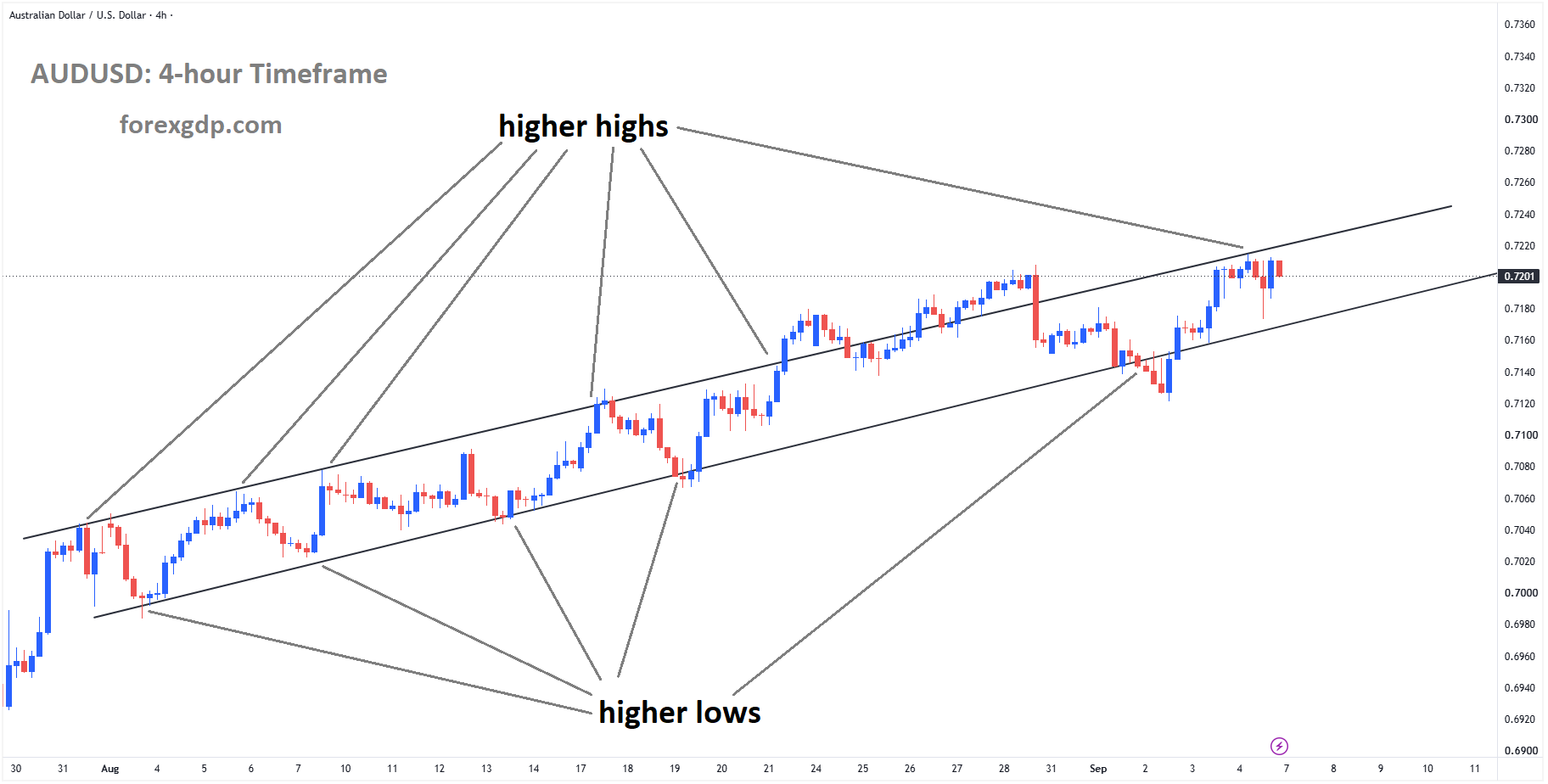
AUDUSD reached a higher high area of the ascending channel
However, the reaction did not last long. Although the employment figures initially lifted the US Dollar, the American currency struggled to maintain its strength. This allowed the Australian Dollar to recover quickly and continue its advance.
The movement showed that strong economic data alone may not be enough to provide lasting support for the US Dollar. Investors are considering several factors, including inflation, energy costs, central bank guidance, and the overall direction of monetary policy.
At the same time, the Australian Dollar continues to benefit from expectations that the Reserve Bank of Australia may raise borrowing costs again. This policy outlook has helped the currency remain firm, even when positive US economic reports have temporarily strengthened the Greenback.
US Job Growth Exceeds Market Forecasts
The latest US Nonfarm Payrolls report showed that the American economy created significantly more jobs than economists had predicted. Employment growth during August was comfortably above market expectations, while the previous month’s result was also revised in a more positive direction.
The unemployment rate remained unchanged, matching economists’ forecasts. This combination of solid job creation and stable unemployment suggested that the US labour market continues to perform well.
A resilient employment market can influence the Federal Reserve’s decisions because strong job conditions may support consumer spending and economic activity. When people have stable employment and regular income, they are generally more willing to spend money. That demand can make it harder for inflation to return to the central bank’s preferred level.
Following the employment report, investors increased their expectations of a Federal Reserve rate increase at the September meeting. The probability of a rate move rose noticeably after the figures were published.
Even so, the market reaction was not completely straightforward. The US Dollar initially strengthened as traders responded to the positive report, but those gains quickly faded. This suggested that investors were not yet ready to make a firm decision about the future direction of US interest rates.
Federal Reserve Decision Remains Uncertain
The stronger employment figures have made a September interest rate increase more possible, but the Federal Reserve’s decision is still far from certain. Policymakers must balance a healthy labour market against signs that some areas of inflation may be cooling.
Upcoming inflation reports are likely to play an important role in shaping expectations before the Federal Reserve meeting. Investors will pay close attention to both consumer and producer inflation data. These reports will provide a clearer picture of whether price pressures are continuing to ease or beginning to build again.
If inflation remains high, Federal Reserve officials may feel that tighter monetary policy is necessary. Higher interest rates can reduce demand by making borrowing more expensive for households and businesses. However, if inflation shows convincing signs of slowing, policymakers may decide that another increase is unnecessary.
The challenge is that inflation is being influenced by more than domestic demand. Elevated oil prices linked to the war in the Middle East have created additional uncertainty. Higher energy costs can affect transport, manufacturing, food production, and household expenses. As these costs spread through the economy, they can slow the progress toward stable inflation.
Cleveland Federal Reserve President Beth Hammack has also expressed concern about inflation. She indicated that monetary policy may not be restrictive enough and warned that inflation remains too high. Her comments supported the argument for keeping interest rates elevated or considering further action.
However, Federal Reserve officials do not always share the same view. The final decision will depend on the full range of economic evidence available before the meeting.
US Dollar Struggles to Hold Its Initial Strength
The US Dollar’s failure to maintain its post-employment gains was an important part of the market response. Strong labour data would normally be expected to provide broad support for the currency, especially when it increases the likelihood of tighter monetary policy.
In this case, traders appeared cautious about buying the US Dollar too aggressively. One strong report may improve the economic outlook, but it does not remove uncertainty surrounding inflation or guarantee a Federal Reserve rate increase.
Investors may also be waiting for more evidence before changing their broader positions. The upcoming inflation releases could either confirm the case for higher rates or weaken it. Until those figures arrive, the US Dollar may struggle to find a clear and lasting direction.
This hesitation gave the Australian Dollar room to recover from its initial decline. Rather than remaining under pressure, the currency benefited from its own supportive domestic policy expectations.
Hawkish RBA Outlook Supports the Australian Dollar

The Reserve Bank of Australia remains a major source of strength for the Australian Dollar. Inflation continues to sit above the central bank’s target range, creating pressure on policymakers to take further action.
When inflation stays above the desired level, a central bank may raise interest rates to reduce spending and slow price growth. Traders currently expect that the RBA could increase rates again later this month.
Australia’s resilient economic growth has strengthened this view. Healthy growth gives the RBA more room to tighten policy because the economy may be better able to handle higher borrowing costs. If growth were weak, the central bank would need to be more careful, as another increase could place greater pressure on households and businesses.
The contrast between the two central banks is also important. The Federal Reserve faces uncertainty about whether another increase is necessary, while expectations surrounding the RBA remain relatively firm. This difference has helped keep demand for the Australian Dollar supported.
Still, the RBA must manage several risks. Higher rates can make mortgage payments more expensive, weaken household spending, and reduce business investment. Policymakers will need to decide whether controlling inflation justifies the potential pressure on economic activity.
Chinese Economic Data Could Influence Sentiment
Australia’s domestic economic calendar is expected to be relatively quiet, with consumer inflation expectations among the most important scheduled releases. This report may offer clues about how Australian households expect prices to behave in the coming months.
Inflation expectations matter because they can influence spending habits, wage demands, and business pricing decisions. If consumers expect prices to rise rapidly, they may change their behaviour in ways that make inflation more difficult to control.
Investors will also watch economic reports from China, particularly inflation and trade figures. China is one of Australia’s most important trading partners, so changes in Chinese demand can have a meaningful effect on the Australian economy.
Stronger Chinese trade activity may improve demand for Australian exports and support confidence in the country’s economic outlook. Weak results, however, could raise concerns about future export demand and create pressure on the Australian Dollar.
Final Summary
The Australian Dollar recovered quickly after initially weakening in response to the strong US employment report. Better-than-expected job creation increased expectations of a Federal Reserve interest rate rise, but the US Dollar was unable to preserve its early gains.
Attention will now turn to upcoming US inflation data, which could determine whether the Federal Reserve moves toward tighter policy at its September meeting. Oil prices and comments from central bank officials will also remain important.
Meanwhile, expectations of another Reserve Bank of Australia rate increase continue to support the Australian Dollar. Persistent inflation and resilient economic growth have given policymakers room to consider further tightening. With Australia’s domestic calendar relatively quiet, Chinese inflation and trade figures could become the next major influence on sentiment surrounding the currency.
NZDUSD Gains Momentum While US Dollar Demand Weakens
The New Zealand Dollar has strengthened against the US Dollar for a second straight trading session. The move reflects a change in expectations surrounding monetary policy in the United States, alongside recent action from the Reserve Bank of New Zealand.
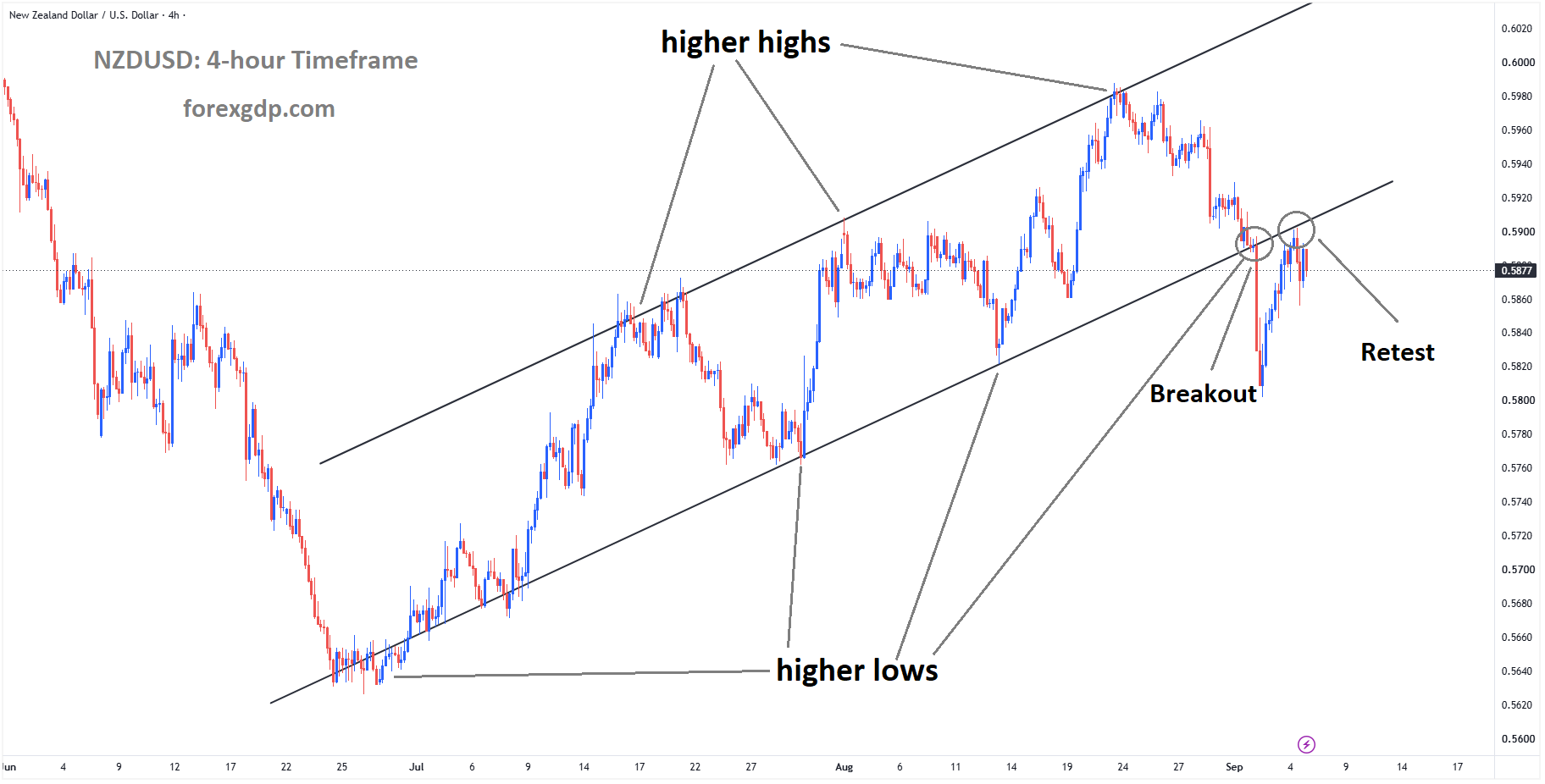
NZDUSD reached the retest area of the broken ascending channel
The US Dollar has come under pressure as traders become less certain that the Federal Reserve will raise interest rates at its next meeting. This shift has created room for currencies such as the New Zealand Dollar to recover and attract fresh demand.
At the same time, New Zealand’s central bank has continued its tightening cycle by raising borrowing costs for the second consecutive meeting. Although policymakers appear less aggressive about future increases, the latest decision still highlights a noticeable difference between the policy outlooks of the two countries.
Waller Supports Keeping US Interest Rates Steady
Federal Reserve Governor Christopher Waller recently indicated that he would prefer to leave interest rates unchanged at the September meeting. However, his position depends heavily on upcoming inflation figures. If the data remains stable and avoids any unexpected increase, he may continue supporting a pause.
Waller’s comments encouraged traders to reduce their expectations of another immediate rate rise. The remarks suggested that at least some Federal Reserve officials believe current policy may already be restrictive enough to control inflation without placing unnecessary pressure on the economy.
This matters for the US Dollar because higher interest rates often make a currency more attractive to global investors. When the likelihood of a rate increase falls, demand for that currency may weaken. That appears to be one of the main reasons the New Zealand Dollar has gained ground against the greenback.
Fed Officials Are Sending Mixed Messages
The Federal Reserve’s policy direction is not completely clear. Waller’s softer tone stands in contrast to the more aggressive comments made by Fed Chairman Kevin Warsh a week earlier.
These conflicting views have created uncertainty about what the central bank might do next. Some officials remain concerned that inflation could stay too high, while others may be more worried about economic growth and employment.
When policymakers send different messages, traders often become cautious. Rather than confidently preparing for a rate increase, they wait for stronger evidence from economic reports. This uncertainty has reduced some of the recent support for the US Dollar.
Inflation Data Could Shape the September Decision
Waller made it clear that future inflation figures will play an important role in his decision. If inflation remains under control, the argument for keeping rates unchanged may become stronger. However, an unexpected increase could quickly revive calls for tighter monetary policy.
The Federal Reserve has spent a long period trying to bring inflation back toward its goal. Although progress has been made, officials do not want to declare victory too soon. Cutting borrowing pressure or pausing at the wrong time could allow inflation to become a serious concern again.
For that reason, every major inflation release can influence expectations. A calm report may weaken demand for the US Dollar by supporting a policy pause. A stronger reading could produce the opposite reaction by encouraging traders to expect another rate rise.
US Employment Report Moves Into Focus
Attention is now turning toward the upcoming US employment report. The release will provide fresh information about the health of the American labor market and may offer important clues about the Federal Reserve’s next policy decision.
Economists expect job creation to remain limited, while the unemployment rate is forecast to stay unchanged. If the report confirms that hiring is losing strength, Fed officials may feel less pressure to raise interest rates again.
A softer labor market could show that existing borrowing costs are already slowing the economy. Businesses may become more careful about hiring, while households could reduce spending because of uncertainty around employment. Under those conditions, another rate increase could carry greater risks.
On the other hand, a surprisingly strong jobs report may support the view that the economy can handle tighter policy. It could also raise concerns that wage growth and consumer demand may keep inflation elevated.
Why Employment Matters to the Federal Reserve
The Federal Reserve considers both inflation and employment when setting monetary policy. Its task is not simply to control rising prices. It must also support conditions that encourage stable employment over time.
When the labor market is strong and inflation remains high, the central bank has more freedom to increase rates. But when job growth weakens, officials must think carefully before adding more pressure.
This balance explains why the employment report can produce a major change in expectations. It may either support Waller’s cautious view or strengthen the case for another rate increase.
RBNZ Delivers a Second Consecutive Rate Increase

While uncertainty surrounds the Federal Reserve, the Reserve Bank of New Zealand has already moved forward with another interest rate hike. This was its second consecutive increase, showing that the central bank remains concerned about inflationary pressure within the domestic economy.
Higher interest rates can support the New Zealand Dollar because they may improve the returns available on assets connected to the currency. Investors often compare interest rates across countries before deciding where to place their funds.
The RBNZ’s action has therefore offered some support to the New Zealand Dollar, particularly as expectations for further US tightening have weakened.
However, the New Zealand central bank did not present an openly aggressive message about the future. Policymakers suggested that they may take a more careful approach before approving additional increases.
A More Patient RBNZ Could Limit Expectations
The latest rate increase does not necessarily mean that a long series of hikes will follow. The RBNZ appears ready to study upcoming economic information before deciding whether further tightening is required.
This patient approach may be designed to avoid placing too much pressure on households and businesses. Higher borrowing costs can help reduce inflation, but they can also weaken consumer spending, business investment and economic growth.
The central bank must now judge whether its recent actions are enough to bring inflation under control. If price pressures remain persistent, another move may still be considered. If the economy slows sharply, policymakers could choose to wait.
Different Policy Paths Drive NZD/USD Sentiment
The recent improvement in the New Zealand Dollar is largely connected to changing expectations in both countries. The RBNZ has raised interest rates again, while one influential Fed policymaker has supported leaving US rates unchanged.
This contrast has made the New Zealand Dollar more attractive in the short term. Still, the wider outlook remains dependent on fresh economic reports and comments from central bank officials.
A weak US employment report and stable inflation could increase expectations that the Federal Reserve will pause. Meanwhile, stronger New Zealand data could encourage confidence that the RBNZ will maintain tighter policy for longer.
The situation could change quickly if US inflation rises or employment data exceeds expectations. Similarly, signs of a sharp slowdown in New Zealand could reduce expectations of additional action from the RBNZ.
Final Summary
NZD/USD has moved higher as the US Dollar loses strength amid changing expectations for Federal Reserve policy. Governor Christopher Waller’s preference for keeping rates unchanged has reduced confidence in an immediate US rate increase, although upcoming inflation figures remain important.
The US employment report is now the next major source of guidance. Its results could influence whether the Fed chooses to pause or continue tightening.
In New Zealand, the RBNZ has completed its second consecutive interest rate hike, offering support to the domestic currency. However, its cautious message suggests that future decisions will depend on inflation, growth and other economic developments. For now, the contrast between softer Fed expectations and recent RBNZ action remains the main force supporting the New Zealand Dollar.
EURGBP Pulls Back as Consumer Demand Across Europe Fades
EURGBP moved lower at the end of the week, bringing its four-day winning run to an end. The currency pair had recently climbed to its strongest position in several weeks, but the upward momentum slowed as traders reacted to fresh economic data from the Eurozone and comments from Bank of England officials.
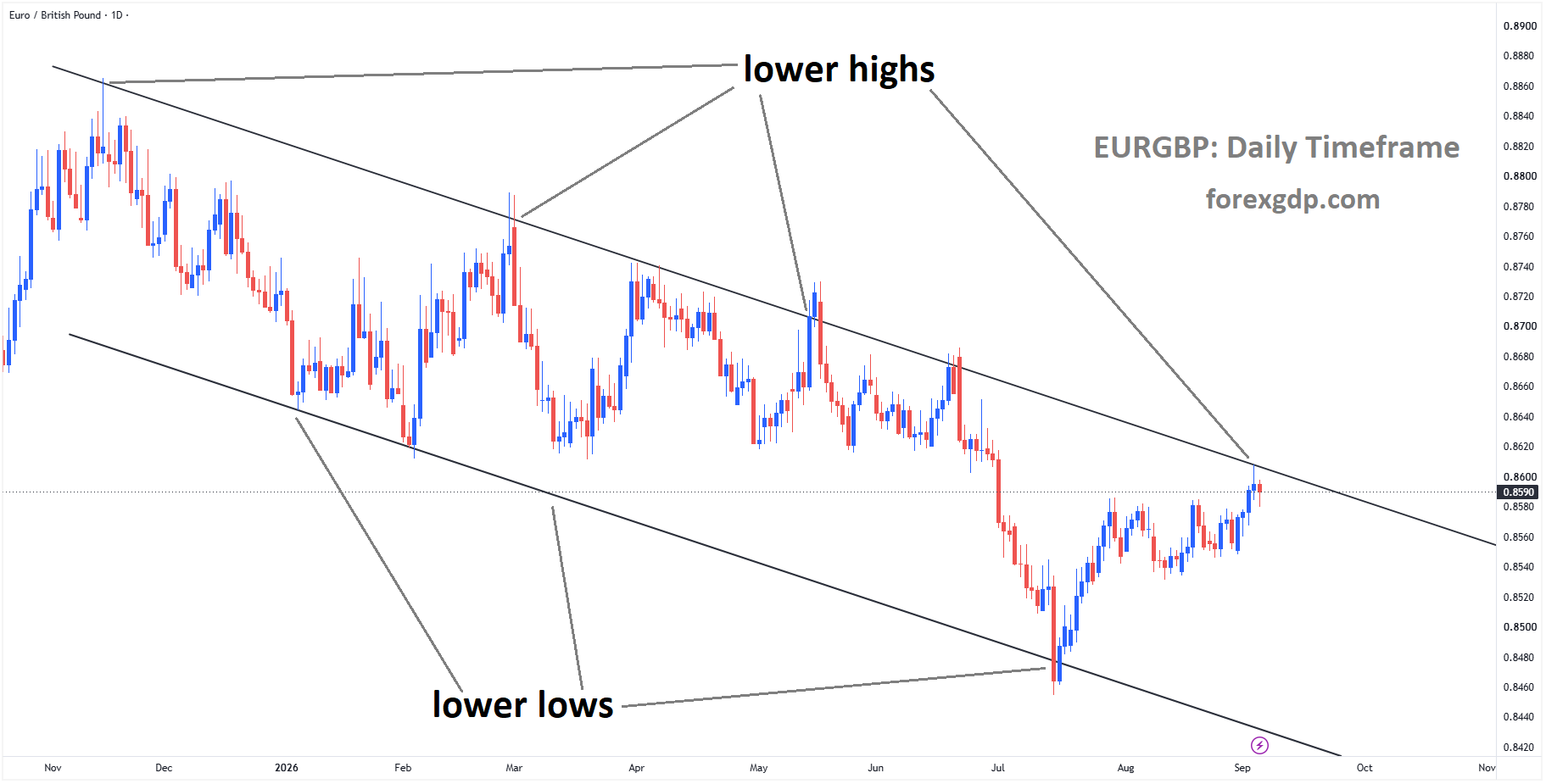
EURGBP reached the lower high area of the descending channel
The Euro came under mild pressure after retail activity across the currency bloc delivered a disappointing result. Meanwhile, the British Pound received support from a cautious but firm message from Bank of England Chief Economist Huw Pill. His comments suggested that tighter monetary policy may still be needed to prevent inflation pressures from becoming more deeply rooted in the UK economy.
However, the broader outlook for EURGBP remains mixed. Expectations that the European Central Bank and the Bank of England may follow different policy paths could support the Euro over time. At the same time, concerns about the UK government’s finances may prevent the Pound from gaining strong and lasting momentum.
Weak Retail Sales Weigh on the Euro
The latest Eurozone Retail Sales report showed that consumer spending weakened during July. Monthly sales declined instead of recording the growth economists had expected. The previous month had shown a small improvement, making the latest fall more disappointing for the market.
Annual retail sales growth also lost speed and failed to meet forecasts. This suggests that households across the Eurozone remain careful about how they spend their money. Higher living costs, expensive energy, and uncertainty about the economic outlook may be encouraging consumers to focus on essential purchases rather than optional goods and services.
Retail spending is an important part of economic activity. When consumers reduce their purchases, businesses may experience weaker demand, lower revenue, and less confidence about future growth. If that trend continues, companies could delay investment, reduce hiring, or control costs more aggressively.
For the European Central Bank, the data creates an uncomfortable situation. Policymakers remain concerned about inflation, especially if energy costs continue to rise. Yet weak consumer demand raises doubts about whether the economy can handle further monetary tightening without suffering additional damage.
British Pound Gains Support From Huw Pill
The Pound benefited from comments made by Bank of England Chief Economist Huw Pill. He repeated his preference for higher borrowing costs and warned that acting quickly could prevent harmful inflation behaviour from developing across the economy.
His concern appears to be that workers and businesses may try to recover past losses caused by rising prices. Employees may continue demanding higher wages, while companies may raise prices to protect their profit margins. If both sides keep responding to each other, inflation could become harder to control.
Pill’s message was more aggressive than the wider market expected from the Bank of England. This helped the Pound because higher interest rates can make a currency more attractive to investors. His remarks also showed that some members of the central bank remain uncomfortable with the current inflation outlook.
Even so, one policymaker’s view does not guarantee that the Bank of England will change interest rates at its next meeting. The final decision will depend on inflation, wage growth, employment conditions, business activity, and the strength of household demand.
Andrew Bailey Keeps His Options Open
Bank of England Governor Andrew Bailey did not offer a clear signal about the next policy decision. Instead, he focused on the need to bring inflation back to its official target.
Bailey explained that policymakers may have some flexibility over how quickly inflation returns to the desired level. However, he made it clear that price stability must eventually be restored. This balanced message suggests that the central bank wants to avoid making promises before reviewing all available economic information.
His comments left room for different interpretations. Traders looking for higher interest rates could focus on the commitment to control inflation. Those expecting no immediate policy change could point to the Bank’s willingness to take a flexible approach.
Bailey also discussed the challenges created by high government debt. Heavy borrowing needs can increase pressure on bond markets, especially when investors are already worried about inflation and public spending. These concerns may influence confidence in the UK economy and limit demand for the Pound.
ECB and BoE Expectations Move in Different Directions

The European Central Bank and the Bank of England are expected to take different approaches at their upcoming meetings. This policy gap is one of the main factors shaping the outlook for EURGBP.
The ECB is expected to maintain a firm position as officials respond to renewed inflation risks. Higher oil costs, driven partly by geopolitical tensions in the Middle East, could raise transport, manufacturing, and household energy expenses across Europe.
Rising energy costs can quickly spread through an economy. Businesses often face higher production and delivery expenses, which may eventually be passed on to consumers. This makes energy-driven inflation particularly difficult for central banks to ignore.
In contrast, the Bank of England is widely expected to keep its current policy setting unchanged. Although some officials favour tighter conditions, the Bank must also consider weak economic growth and the pressure already facing British households and businesses.
If the ECB tightens policy while the BoE remains on hold, the Euro could receive support against the Pound. This possibility may prevent EURGBP from falling sharply, even when disappointing European data creates short-term pressure.
UK Fiscal Worries Could Limit Pound Strength
The British Pound also faces challenges linked to the UK’s fiscal position. Investors remain alert to high public debt, government borrowing, and rising financing costs. These issues can reduce confidence when markets question whether future spending plans are sustainable.
A country with heavy debt may need to spend more money on interest payments, leaving less available for public services, infrastructure, and economic support. If borrowing costs continue to rise, the government may face difficult choices involving taxes, spending cuts, or additional debt.
These concerns do not always weaken the Pound immediately. However, they can make investors more cautious about holding UK assets for long periods. As a result, positive support from hawkish central bank comments may be partly offset by worries about government finances.
The UK economy is therefore caught between two competing forces. Firm comments from Bank of England officials may help the Pound, but fiscal uncertainty and slow growth could limit its ability to maintain those gains.
What Could Shape EURGBP Next
Future movement in EURGBP will depend on incoming economic reports and central bank communication. Eurozone inflation, consumer activity, and energy costs will help determine whether the ECB continues with tighter policy.
In the UK, traders will pay close attention to wage growth, employment, inflation, and economic activity. Strong wage pressure could encourage the Bank of England to consider further action. Weak business or consumer data, however, may give policymakers a reason to remain patient.
Government borrowing and fiscal plans will also remain important for the Pound. Any sign of growing financial pressure could reduce confidence in the UK outlook, even if the Bank of England maintains a firm tone on inflation.
Final Summary
EURGBP ended its recent winning run as weak Eurozone Retail Sales placed pressure on the Euro and hawkish remarks from Huw Pill supported the British Pound. Andrew Bailey offered no direct guidance on the Bank of England’s next move but repeated that inflation must return to target.
Despite the latest decline, expectations of different policy paths at the ECB and BoE may protect the currency pair from deeper losses. The possibility of tighter ECB policy contrasts with expectations that the BoE will remain steady. Meanwhile, concerns about UK debt and government finances could restrict further Pound strength, leaving EURGBP influenced by a complex mix of economic weakness, inflation risks, and central bank decisions.
Crude Oil Slips as Strait of Hormuz Security Concerns Remain High
West Texas Intermediate (WTI) Oil came under renewed selling pressure on Friday as traders responded to signs that commercial vessels could continue moving through the Strait of Hormuz under military protection. The decline followed a period of strong gains driven by growing tensions between the United States and Iran.
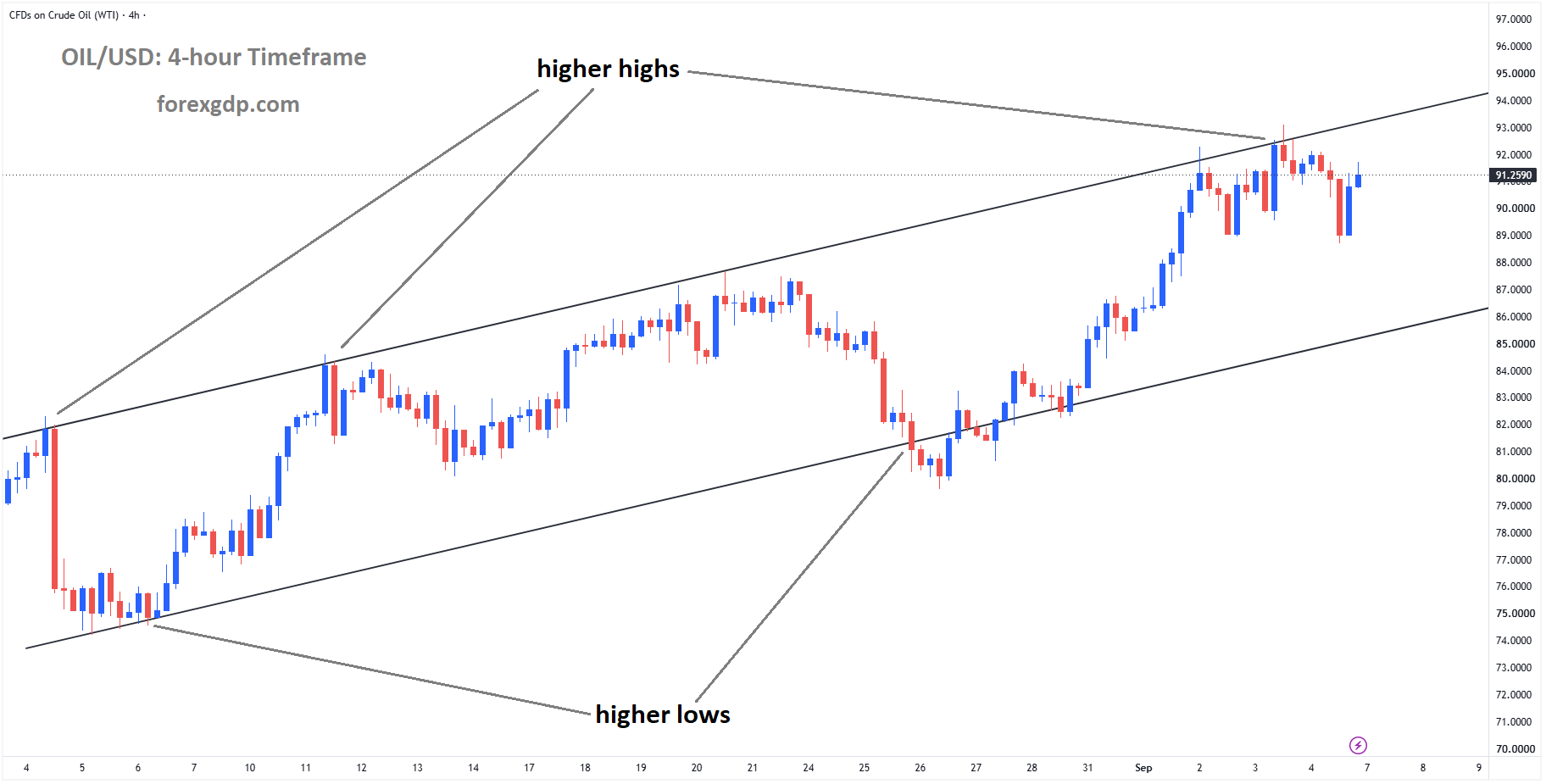
Crude Oil is falling from the higher high area of the ascending channel
Although the latest escort operation offered some relief, the wider situation remains highly uncertain. Renewed hostilities, missile threats, drone attacks, and concerns about maritime security continue to keep the global Oil market on edge. As a result, the geopolitical risk premium surrounding Crude Oil has not disappeared.
The key issue is whether energy shipments can continue passing safely through the Strait of Hormuz. For now, military protection has reduced immediate fears of a major supply interruption. However, any fresh escalation could quickly bring those concerns back into focus.
US Military Escorts Calm Immediate Supply Concerns
WTI Oil weakened after US military forces successfully escorted dozens of commercial vessels through the Strait of Hormuz. These ships were carrying a large volume of Oil, making the operation an important test of whether the strategic waterway could remain open during heightened regional tensions.
The successful journey reassured traders that tankers were still able to transport energy supplies through the area. It also demonstrated that the United States was willing and able to provide military protection for commercial shipping.
This helped reduce fears of an immediate halt to Oil flows. When markets believe that tankers can move safely, some of the emergency premium built into Oil prices begins to fade. That change in sentiment contributed to Friday’s decline.
However, the escort operation did not remove the underlying threat. It only showed that shipments could continue under strong military protection. The need for warships and defensive measures highlights how serious the security situation has become.
US-Iran Hostilities Keep the Oil Market Nervous
Tensions between Washington and Tehran remain the main source of uncertainty. Iran reportedly targeted US military bases in Kuwait and the United Arab Emirates, raising concerns that the confrontation could spread across the region.
At the same time, clashes near the Strait of Hormuz continue to create risks for commercial vessels. During the US escort mission, American forces reportedly intercepted a cruise missile and responded to several drone attacks.
These events show that the route remains dangerous even when tankers travel with military support. A single successful attack on a commercial vessel, port, or energy facility could quickly change market sentiment and threaten regional supply movements.
For this reason, WTI Oil remains influenced by more than ordinary supply and demand expectations. Traders must also consider the possibility of military escalation, damaged infrastructure, shipping delays, and higher insurance costs.
Even without a complete closure of the Strait, repeated attacks could slow traffic and make transportation more expensive. Shipping companies may delay journeys, avoid the region, or demand higher fees to cover the additional danger.
Why the Strait of Hormuz Matters to Global Energy

The Strait of Hormuz is one of the world’s most important routes for energy transportation. A major share of internationally traded Oil and other energy products passes through this narrow waterway.
Its strategic importance means that any threat to shipping can affect energy markets far beyond the Middle East. Countries across Asia and other regions depend heavily on supplies transported through the Strait.
If traffic were interrupted for a long period, buyers could face delays and tighter availability. Alternative routes may not have enough capacity to replace the lost shipments quickly. This is why even the possibility of disruption can create a strong reaction in the Oil market.
The current military escorts provide temporary confidence, but they do not offer a permanent answer. Safe passage depends on the ability of naval forces to detect and stop possible threats before they reach commercial vessels.
A continued military presence could support the movement of tankers, yet it may also increase the risk of direct confrontation. Any misunderstanding or unexpected attack could cause tensions to rise rapidly.
South Korea Considers Supporting Maritime Security
South Korea is reportedly preparing to send military assets to help protect freedom of navigation through the Strait of Hormuz. Such involvement would underline the international importance of keeping the route open.
South Korea is a major energy importer and has a clear interest in protecting reliable access to global Oil supplies. Its possible participation also suggests that the security challenge is becoming a wider international concern rather than an issue limited to the United States and regional powers.
Additional military support could make commercial shipping safer and reduce the risk of prolonged supply interruptions. However, it may also signal that governments expect tensions to remain elevated.
For Oil traders, this creates a mixed picture. Stronger naval protection reduces immediate fears about blocked shipments, while the growing number of military forces in the area confirms that the threat is still significant.
Diesel Supply Disruptions Add Pressure to Energy Markets
The uncertainty is not limited to Crude Oil. Refined fuel markets are also facing pressure, particularly Diesel supplies.
Hostilities involving the United States and Iran have added to fears about fuel availability and transportation. At the same time, Ukrainian strikes on Russian refineries that produce and export Diesel have created further supply concerns.
Russia plays an important role in global refined-product markets. When its export facilities face disruption, buyers may need to search for replacement supplies from other regions. That can increase competition for available fuel and raise transportation costs.
The combination of Middle Eastern tensions and refinery disruptions in Russia creates a difficult environment for consumers, transport companies, and energy-dependent industries. Even when Crude Oil shipments continue, problems at refineries can reduce the availability of finished products such as Diesel.
This explains why fuel costs can remain under pressure even during a temporary retreat in WTI Oil. Crude supply is only one part of the energy chain. Refining capacity, shipping access, insurance expenses, and regional demand also play important roles.
Peace Comments From Russia Offer Limited Relief
Comments from Russian President Vladimir Putin expressing openness to possible peace negotiations provided a small counterbalance to the wider geopolitical concerns.
Any progress toward peace could reduce risks surrounding Russian energy infrastructure and improve expectations for future fuel exports. It could also lower fears of further attacks on refineries and transportation networks.
However, these comments alone are unlikely to transform market conditions. Traders will want to see clear diplomatic progress and a meaningful decline in hostilities before removing the risk linked to Russian energy supplies.
For WTI Oil, the situation around the Strait of Hormuz remains the more immediate concern. The market is closely watching whether tankers can continue travelling safely and whether military forces can prevent attacks from disrupting major shipments.
What Could Drive WTI Oil Next
WTI Oil may remain sensitive to every new military, diplomatic, and shipping development. Reports of successful tanker escorts could encourage further selling by reducing immediate supply fears.
On the other hand, fresh attacks on vessels, military bases, ports, or energy facilities could quickly renew concerns about disrupted Oil flows. A wider conflict between the United States and Iran would create even greater uncertainty.
Diplomatic talks could help reduce the geopolitical premium, but lasting relief would require more than public statements. Markets would need evidence that both sides were stepping back from direct confrontation and that commercial shipping could move without extraordinary protection.
Until then, WTI Oil is likely to remain caught between two opposing forces. Safe vessel movements may limit fears of an immediate shortage, while ongoing hostilities continue to prevent the market from feeling fully secure.
Final Summary
WTI Oil declined as successful US military escorts through the Strait of Hormuz eased immediate worries about supply disruptions. The operation showed that commercial tankers could continue using the vital route when supported by military protection.
Still, the broader risk remains elevated. Missile threats, drone attacks, strikes on US military bases, and continued tensions between Washington and Tehran keep maritime security at the center of attention. Possible support from South Korea may strengthen shipping protection, but it also reflects the seriousness of the situation.
Meanwhile, disruptions to Russian Diesel-exporting refineries are adding pressure to refined fuel supplies. Peace-related comments from Russia offer modest hope, though they have not removed the wider uncertainty.
For now, the ability of military forces to protect tankers and prevent a major interruption in the Strait of Hormuz will remain one of the most important influences on WTI Oil sentiment.
Bitcoin Attracts Fresh Buying as Investors Assess the Fed’s Next Move
Bitcoin is heading toward the end of the week with positive momentum as investors prepare for the next major market catalyst. Strong demand from large institutions has helped improve confidence, while attention has shifted toward the latest United States employment report and its possible effect on Federal Reserve policy.
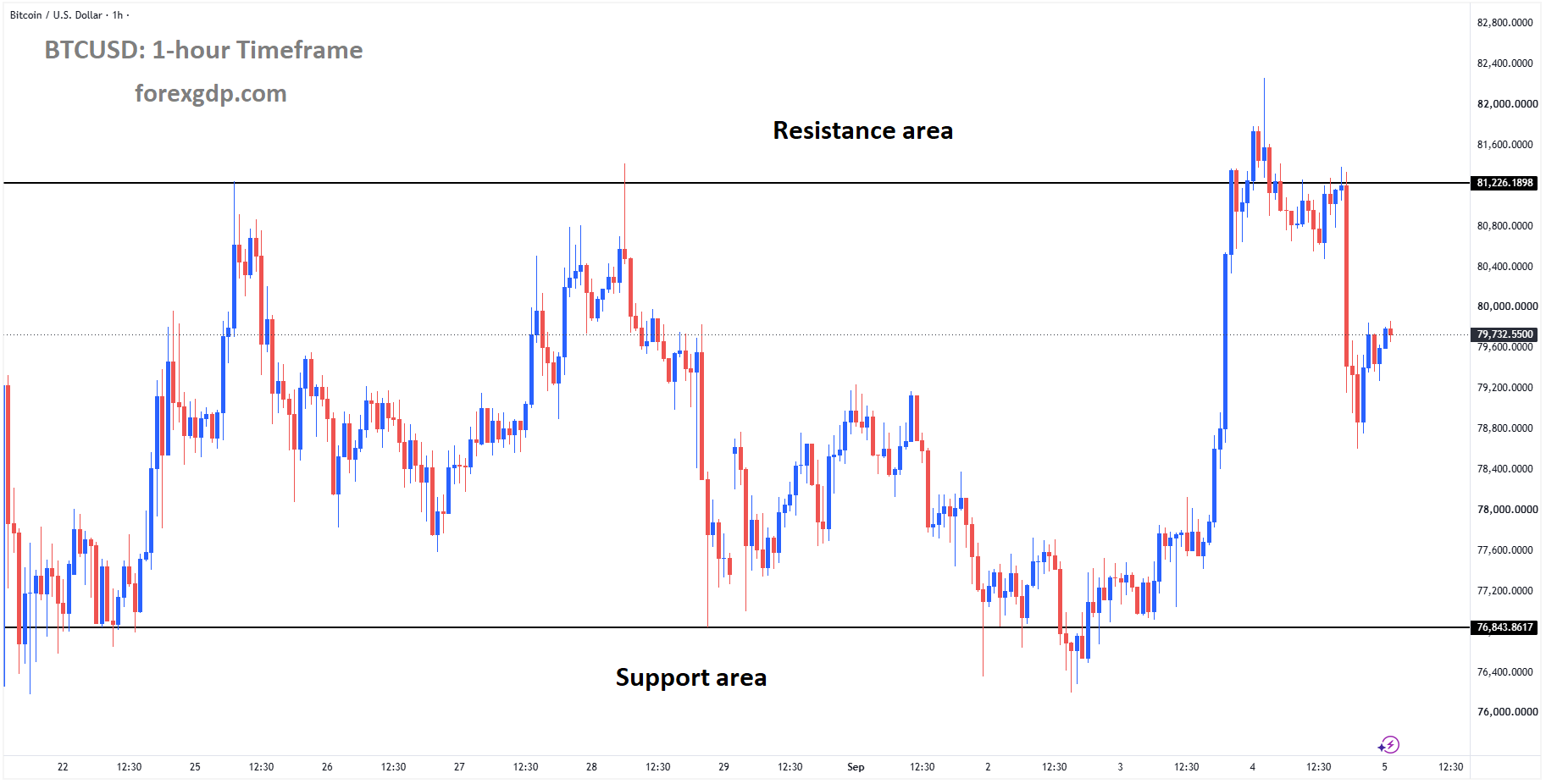
BTCUSD is falling from the resistance area of the box pattern
The cryptocurrency market remains sensitive to changes in interest-rate expectations. A strong US labor market could encourage the Federal Reserve to maintain a firm policy stance or consider tighter conditions. A weaker employment report, however, could reduce expectations for higher rates and create a more supportive environment for Bitcoin and other risk-sensitive assets.
At the same time, geopolitical tensions in the Middle East are creating fresh inflation concerns. Rising energy costs could make the Federal Reserve’s decisions more difficult, especially if higher fuel prices begin to affect businesses and consumers. These competing forces have left Bitcoin traders watching economic data, institutional activity, and geopolitical developments closely.
US Employment Data Takes Centre Stage
The latest US Nonfarm Payrolls report showed that employers added 162,000 jobs in August. This was a sharp improvement from the much smaller increase recorded in July and came well above economists’ forecasts.
The stronger result suggests that the American labor market remains more resilient than many analysts expected. Healthy job creation can support consumer spending and economic activity, but it may also create concerns about persistent inflation. When employment stays strong, the Federal Reserve has less pressure to lower borrowing costs and may have more room to keep monetary policy restrictive.
For Bitcoin, this creates an uncertain situation. Higher interest rates generally make safer, interest-paying assets more attractive. They can also strengthen the US Dollar and increase Treasury yields, which may reduce demand for cryptocurrencies and other speculative investments.
If the labor market continues to outperform expectations, investors may begin preparing for a more hawkish Federal Reserve. That could limit Bitcoin’s near-term progress, even if institutional demand remains healthy.
On the other hand, future employment reports showing slower hiring or weaker wage growth could change the outlook. Softer labor conditions may reduce pressure on the central bank to raise rates, which could weaken the US Dollar and improve demand for risk assets.
Federal Reserve Expectations Remain Important
Federal Reserve Governor Christopher Waller recently indicated that he was leaning toward keeping interest rates unchanged at the central bank’s September meeting, provided upcoming inflation figures do not deliver any major surprises.
His comments encouraged a decline in US Treasury yields and the US Dollar. This created a more favourable backdrop for risk-sensitive markets, including Bitcoin. Lower yields can make non-interest-paying assets more appealing because investors receive less return from traditional fixed-income products.
However, the Federal Reserve’s final decision will depend on several pieces of economic information. Employment data is important, but inflation remains the central bank’s biggest concern. Officials must decide whether economic conditions are cooling enough to justify a pause or whether stronger action is needed to control price pressures.
This uncertainty explains why Bitcoin can react sharply to major US reports. Cryptocurrency traders are not only evaluating the condition of the digital asset market. They are also trying to predict how central bank policy will affect liquidity, borrowing costs, and global investor confidence.
Middle East Conflict Raises Inflation Risks
Geopolitical tensions surrounding the Strait of Hormuz have added another layer of uncertainty. The region plays an important role in global energy transportation, so any disruption can increase concerns about oil supplies and rising energy costs.
Recent military developments involving Iran and US interests have kept investors cautious. Iran reportedly targeted American military bases in Kuwait and the United Arab Emirates, while US officials suggested that Washington had several possible responses available, including economic, diplomatic, military, and covert measures.
South Korea is also reportedly preparing to send military assets to help protect freedom of navigation through the Strait of Hormuz. Such action highlights the growing international concern surrounding the security of this strategic shipping route.
For the Federal Reserve, higher energy costs could make inflation harder to control. Businesses often pass increased transportation and production expenses to consumers, which can keep overall prices elevated. If inflation risks grow, policymakers may feel less comfortable easing monetary conditions.
Bitcoin’s reaction to geopolitical tension is not always straightforward. Some investors view it as an alternative store of value, while others treat it as a risky asset and reduce exposure during periods of uncertainty. In the short term, stronger demand for the US Dollar and lower risk appetite could restrict Bitcoin’s upward movement.
Spot Bitcoin ETFs Attract Fresh Capital

Despite the uncertain economic and political environment, institutional interest in Bitcoin remains strong. US-listed spot Bitcoin exchange-traded funds are on course to record a third consecutive week of net inflows.
According to SoSoValue data, these funds attracted more than $812 million through Thursday. Continued inflows suggest that professional investors and larger market participants are increasing or maintaining their exposure to Bitcoin.
Spot ETFs have made Bitcoin easier to access through traditional investment accounts. Investors can gain exposure without directly purchasing the cryptocurrency, managing private keys, or using a crypto exchange. This structure has helped bring more institutional capital into the market.
Consistent inflows can provide an important source of demand, especially when newly created ETF shares require providers to acquire additional Bitcoin. While daily flows may change quickly, several consecutive weeks of positive activity indicate that institutional confidence has strengthened.
ETF demand does not remove Bitcoin’s volatility, but it can improve the longer-term outlook by expanding access and increasing participation from established financial institutions.
Strategy Returns to Bitcoin Accumulation
Michael Saylor’s company, Strategy, has also returned to the spotlight after a quiet period. Saylor announced that the firm acquired an additional 4,603 Bitcoin, lifting its total holdings to 845,050 BTC.
The purchase suggests that Strategy may be returning to its well-known accumulation approach after spending much of the summer improving its liquidity position. The company has become one of the most closely watched corporate Bitcoin holders, and its purchases often attract attention across the cryptocurrency market.
Strategy also increased its cash position and repurchased part of its Stretch preferred stock. These moves helped strengthen its reserves and reduce net leverage, giving the company more flexibility when managing future Bitcoin purchases and financial obligations.
However, its preferred stock continues to face challenges. Further repurchases may help support investor confidence, but additional stock issuance or larger Bitcoin acquisitions could increase the company’s future dividend commitments.
For now, Strategy appears to have enough liquidity to cover several years of dividend payments. This stronger financial position may allow the company to continue pursuing its Bitcoin-focused strategy while managing the risks linked to borrowing, preferred shares, and market volatility.
Final Summary
Bitcoin is receiving meaningful support from strong institutional demand, continued spot ETF inflows, and renewed corporate accumulation by Strategy. These developments show that long-term interest in the cryptocurrency remains active despite wider market uncertainty.
The main challenge comes from the changing outlook for US monetary policy. Strong employment growth may encourage the Federal Reserve to keep interest rates elevated, while persistent geopolitical tensions could increase energy costs and renew inflation pressure.
Bitcoin’s next major move may depend on how investors balance these factors. Institutional buying offers a positive foundation, but Federal Reserve expectations, Treasury yields, the US Dollar, and global risk sentiment will continue to shape market confidence in the near term.
Don’t trade all the time, trade forex only at the confirmed trade setups
Get more confirmed trade signals at premium or supreme – Click here to get more signals, 2200%, 800% growth in Real Live USD trading account of our users – click here to see , or If you want to get FREE Trial signals, You can Join FREE Signals Now!