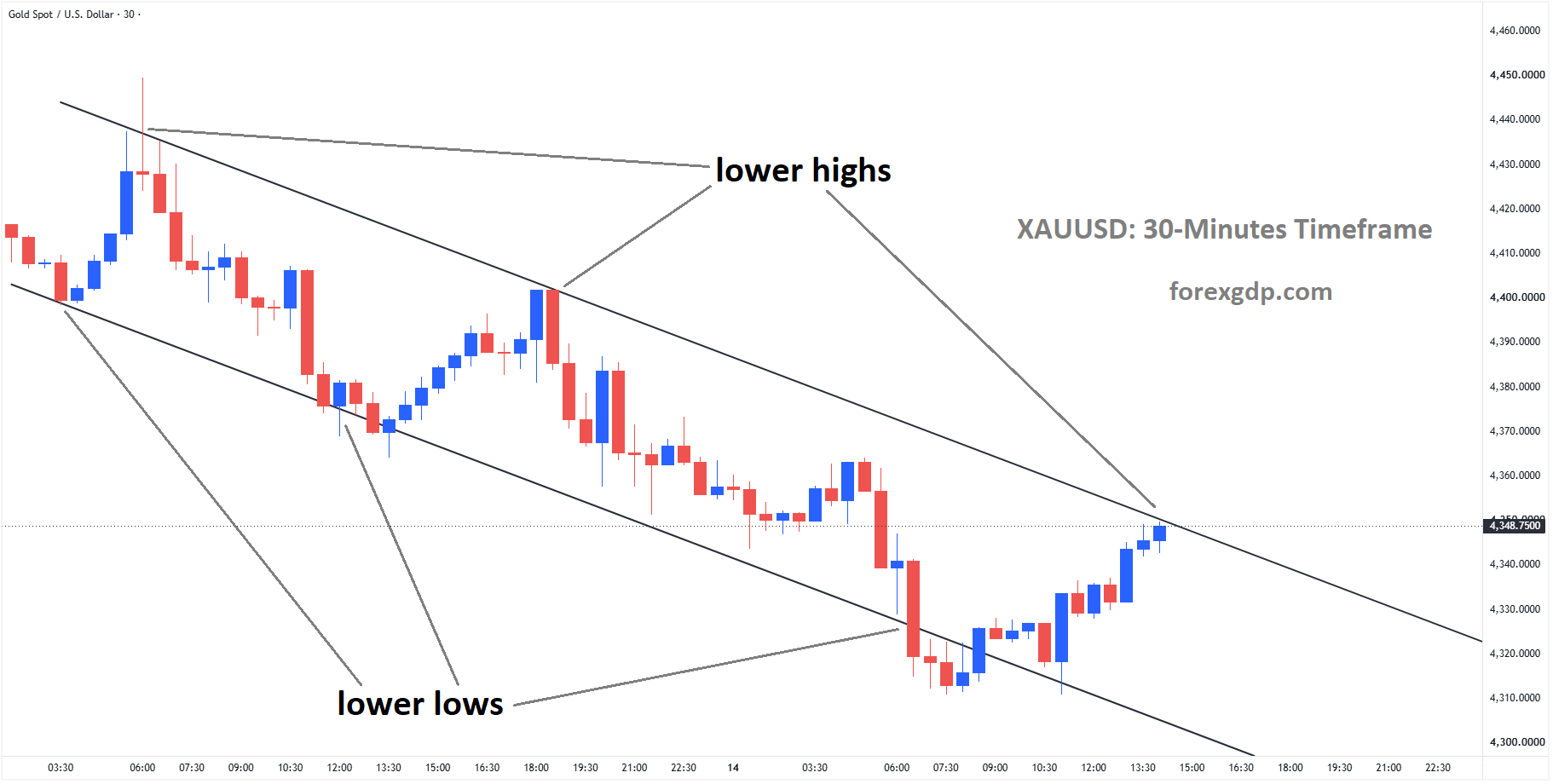
XAUUSD is moving in a descending channel, and the market has rebounded from the lower low area of the channel
Gold has started the new week on a slightly stronger note, attracting buyers after a recent dip. While this upward movement may seem encouraging at first glance, there are several factors suggesting that the rise could be limited. Global economic conditions, central bank policies, and geopolitical tensions are all playing a role in shaping the current outlook for gold.
Gold Edges Higher as Dollar Weakens
At the beginning of the week, gold prices moved up for the second day in a row after briefly falling earlier. This recovery came as the US Dollar showed some weakness. Since gold is priced in dollars, a softer dollar often makes gold more attractive to buyers using other currencies.
The US Dollar Index, which measures the strength of the dollar against a group of major currencies, pulled back slightly after reaching a recent high. This small decline helped support gold prices and encouraged some investors to step in and buy during the dip.
However, this support from the weaker dollar may not be enough to push gold significantly higher. The overall environment still presents challenges that could limit further gains.
Central Bank Policies Continue to Weigh on Gold
One of the biggest factors affecting gold right now is the stance taken by central banks around the world. Many investors believe that major central banks will continue to focus on controlling inflation by keeping interest rates high or even raising them further.
Gold does not offer interest or yield, which means it becomes less attractive when interest rates are high. Investors often prefer assets that provide returns, such as bonds or savings instruments, during such times. This shift in preference can reduce demand for gold and hold back its price.
Recent forecasts have added to these concerns. The Organisation for Economic Co-operation and Development (OECD) has increased its outlook for inflation in the United States, expecting it to remain higher than previously thought. This suggests that central banks may need to maintain stricter policies for a longer period.
In addition, market expectations indicate a meaningful chance that interest rates could rise again in the coming years. These expectations support the US dollar and create further pressure on gold.
Rising Global Tensions Add Complexity
While monetary policy is one side of the story, geopolitical developments are adding another layer of uncertainty. Ongoing conflicts and rising tensions in key regions are influencing global markets and investor sentiment.
Recent reports of escalating conflict in the Middle East have raised concerns about disruptions to global trade and energy supplies. There have been warnings of further military actions and increased instability, which could impact major shipping routes.
Two critical waterways—the Strait of Hormuz and the Bab el-Mandeb Strait—are especially important for global oil transport. Any disruption in these areas can lead to higher energy prices, which in turn can push inflation higher.
Higher inflation often supports gold because it is seen as a store of value. However, in the current situation, the impact is mixed. While geopolitical risks can drive demand for safe-haven assets like gold, they also contribute to inflation, which pushes central banks to maintain higher interest rates. This creates a balancing effect that limits strong upward movement in gold prices.
Inflation Outlook Remains a Key Driver
Inflation continues to be one of the most important factors influencing gold. The updated projections from the OECD suggest that inflation in the US could remain elevated for a longer time than expected.
This has two major implications. First, it reinforces the idea that central banks will stay cautious and keep monetary policies tight. Second, it supports the US dollar, as higher interest rates often attract foreign investment into dollar-based assets.
Both of these factors can limit gold’s ability to rise. Even though gold is often used as a hedge against inflation, the relationship is not always straightforward. When inflation leads to higher interest rates, gold can struggle despite its traditional role as a safe haven.
Market Sentiment Shows Mixed Signals
Investor sentiment around gold appears to be divided. On one hand, some buyers are stepping in to take advantage of recent price dips, showing that there is still interest in the metal. On the other hand, many traders remain cautious due to the broader economic and policy environment.
There is also uncertainty about whether gold has reached a stable bottom after recent declines. While prices have recovered slightly, stronger and more consistent buying would be needed to confirm a lasting upward trend.
This cautious approach reflects the complex mix of factors currently influencing the market. Investors are balancing short-term opportunities with longer-term risks, leading to limited momentum in either direction.
What Could Shape Gold’s Next Move?
Looking ahead, several key elements will determine the direction of gold prices:
Interest Rate Decisions
Future actions by central banks will be critical. Any signals of continued tightening could weigh on gold, while hints of easing may provide support.
Strength of the US Dollar
The dollar remains a major driver of gold prices. A stronger dollar typically puts pressure on gold, while a weaker dollar can help it rise.
Geopolitical Developments
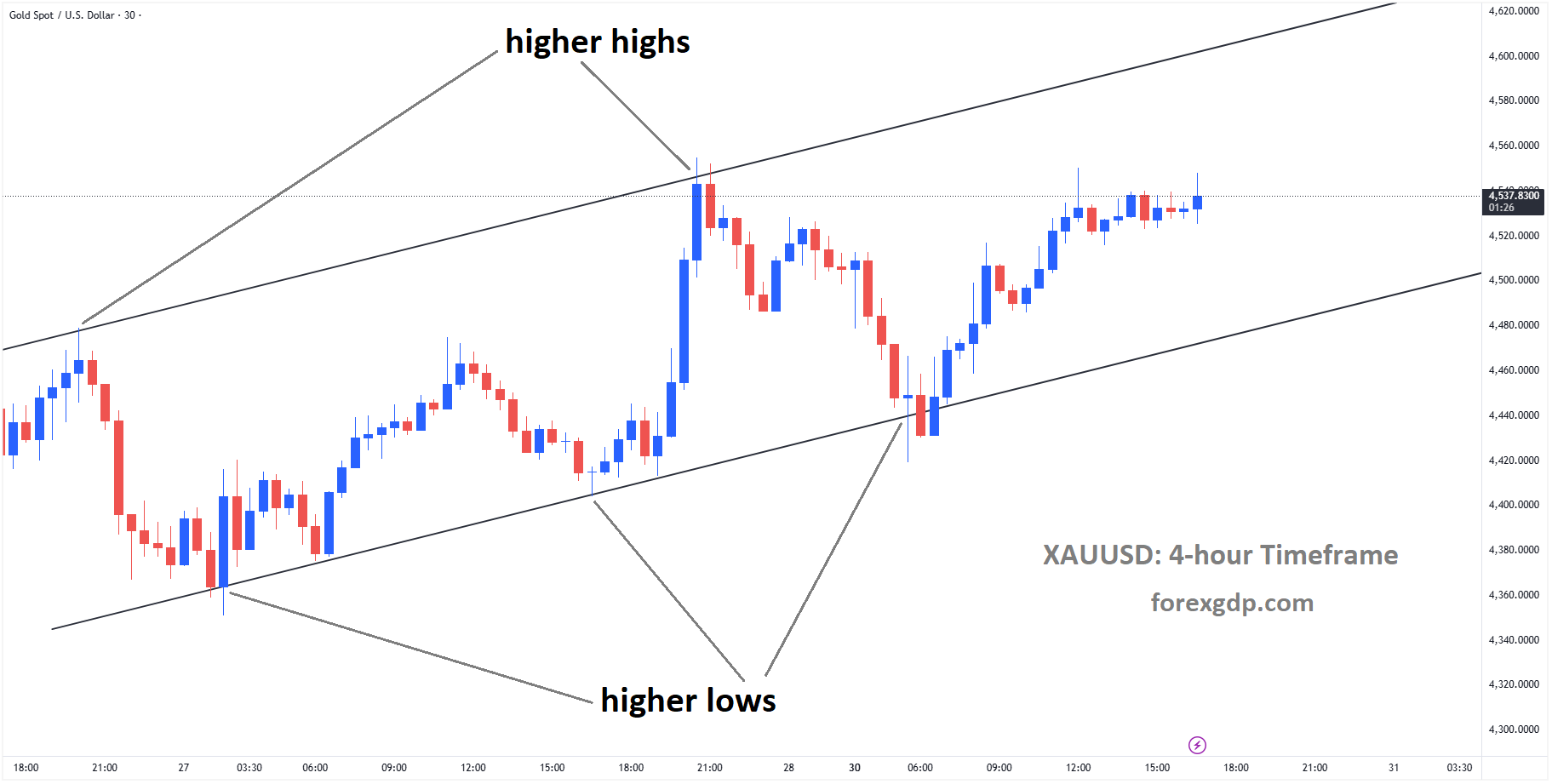
XAUUSD is moving in an uptrend channel, and the market has rebounded from the higher low area of the channel
Ongoing conflicts and global tensions will continue to influence investor behavior. Increased uncertainty often boosts demand for safe-haven assets, including gold.
Inflation Trends
Changes in inflation expectations will also play a key role. Persistent inflation could keep central banks cautious, affecting gold indirectly through interest rates.
Final Summary
Gold has begun the week with a modest recovery, supported by a slight pullback in the US dollar and renewed buying interest after recent declines. However, the broader outlook remains uncertain. Expectations of higher interest rates, driven by persistent inflation and central bank policies, are limiting gold’s upward potential.
At the same time, geopolitical tensions are adding both support and pressure, creating a complex environment for investors. While gold continues to attract attention as a safe-haven asset, stronger momentum will depend on clearer signals from central banks, shifts in inflation trends, and developments on the global stage.
For now, gold remains caught between opposing forces, with cautious optimism balanced by underlying risks.
Don’t trade all the time, trade forex only at the confirmed trade setups
Get more confirmed trade signals at premium or supreme – Click here to get more signals, 2200%, 800% growth in Real Live USD trading account of our users – click here to see , or If you want to get FREE Trial signals, You can Join FREE Signals Now!