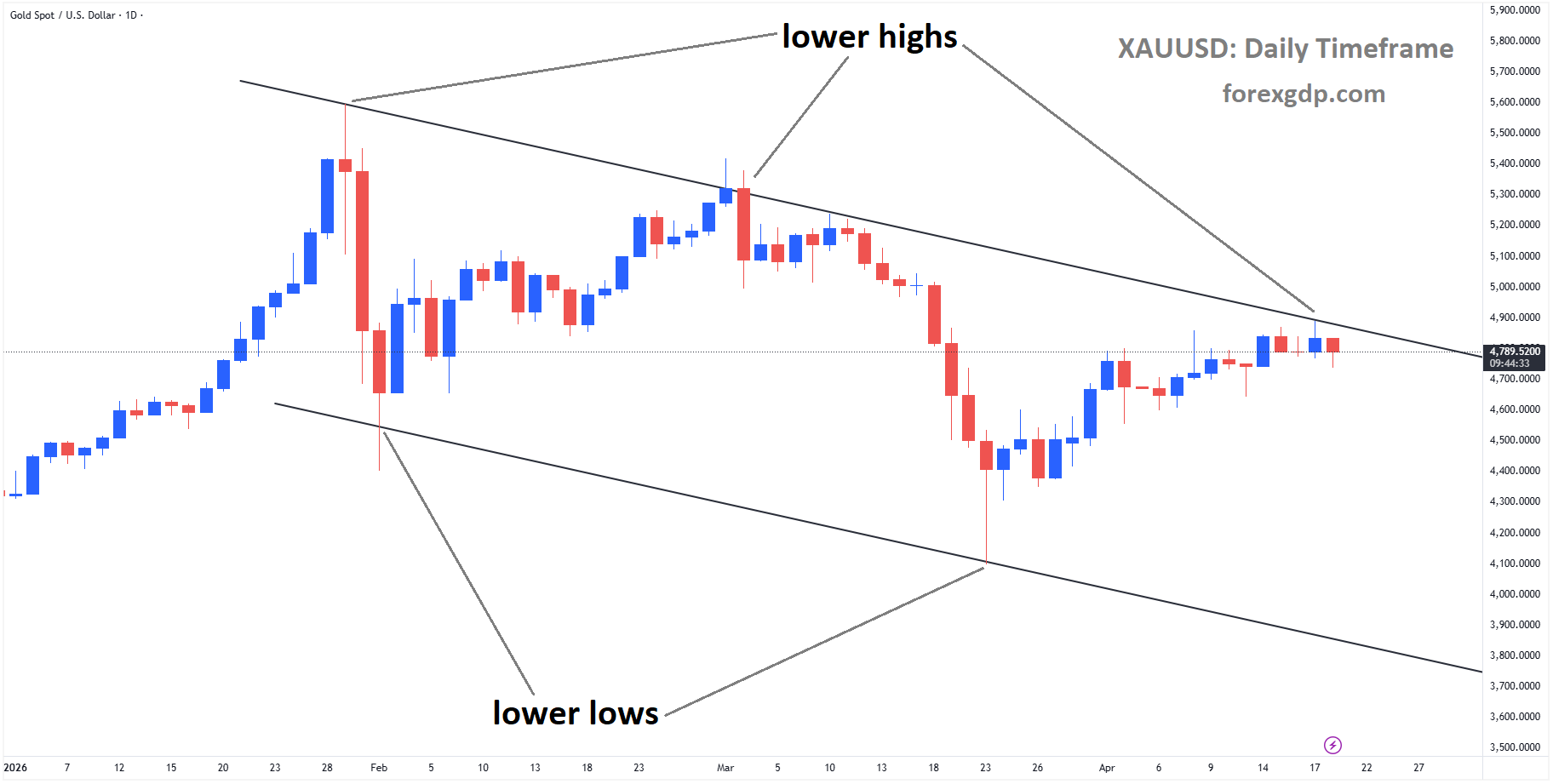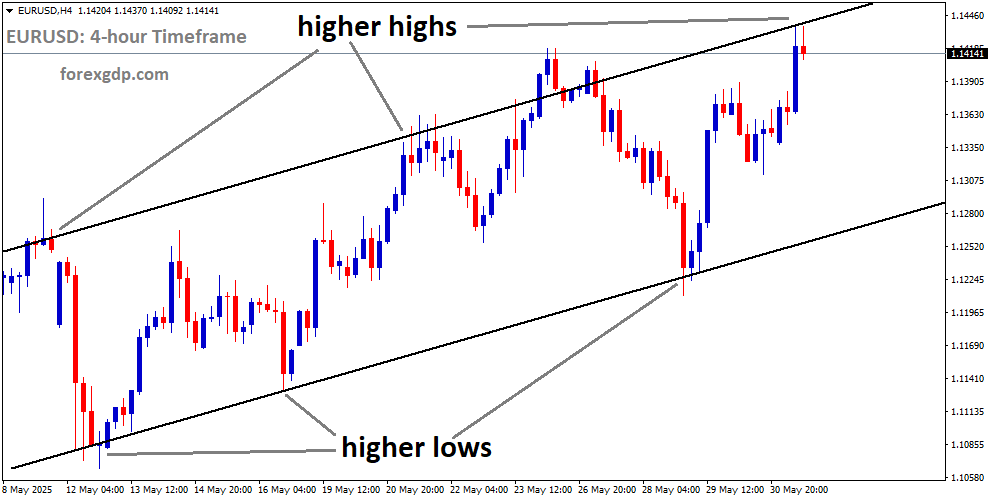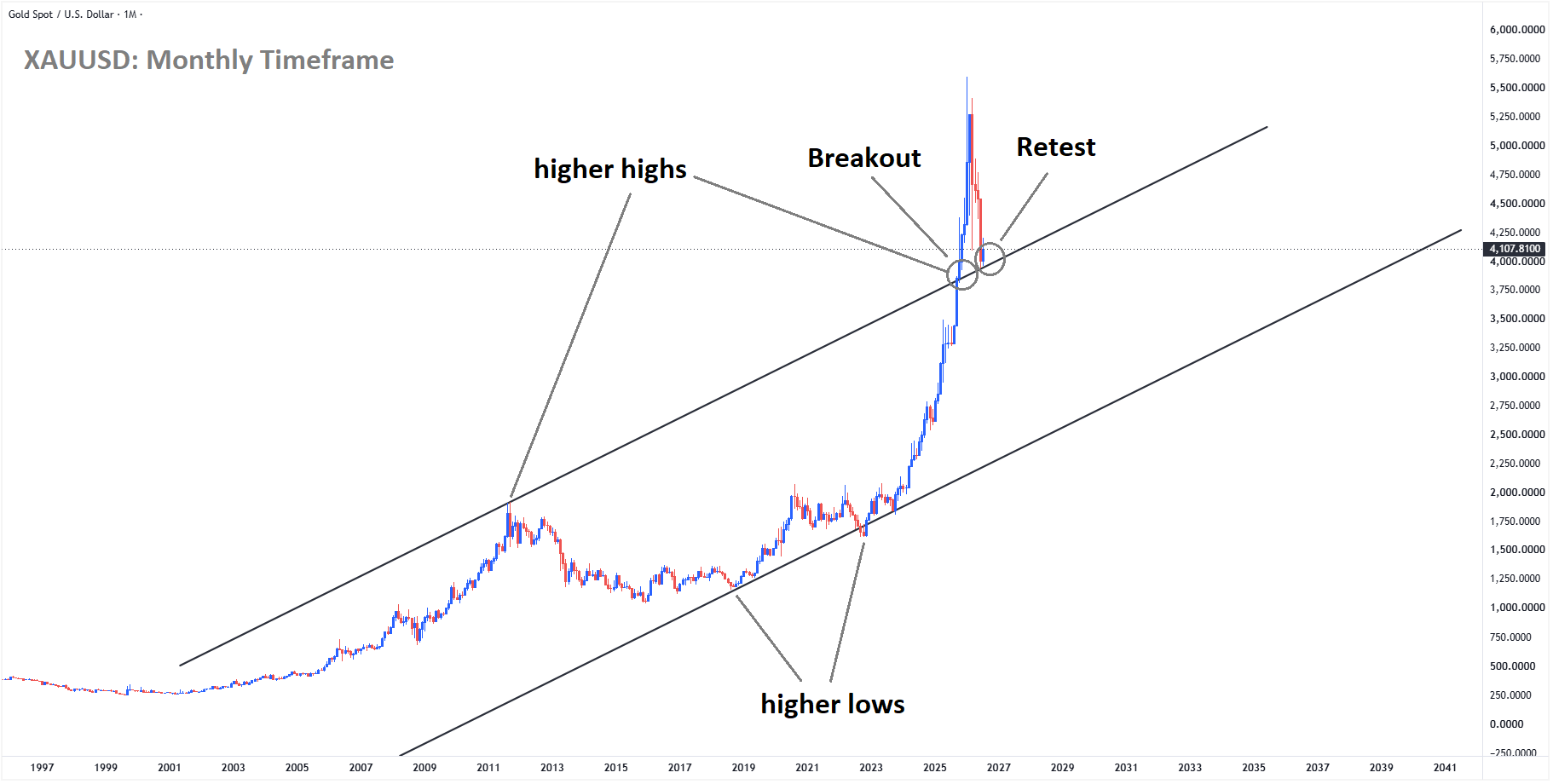
XAUUSD reached the retest area of the broken ascending channel
Gold moved higher on Thursday after several days of losses, helped by a slightly weaker US Dollar and lower US Treasury yields. These factors gave the precious metal enough support to recover part of its recent decline. Even so, the overall outlook remains cautious as investors continue to focus on global political tensions and expectations surrounding future US interest rate decisions.
Although Gold has found some buying interest, stronger gains remain difficult because the US Dollar continues to attract demand. Ongoing uncertainty in the Middle East and concerns about inflation are keeping financial markets on edge, making traders more careful with their investment decisions.
Why Gold Is Recovering
Gold often benefits when the US Dollar weakens or when bond yields fall. A softer Dollar makes Gold more affordable for buyers using other currencies, while lower bond yields reduce the opportunity cost of holding an asset that does not generate interest.
These conditions helped Gold bounce back after three straight days of losses. However, the recovery has been moderate rather than strong, showing that investors are still hesitant to become too optimistic.
Market participants are balancing several competing factors. While Gold remains a popular safe-haven asset during uncertain times, expectations of higher interest rates continue to limit its ability to move significantly higher.
Middle East Tensions Return to the Spotlight
One of the biggest factors influencing markets is the renewed conflict between the United States and Iran. Fresh military actions between the two countries have increased concerns that the situation could become more serious.
US President Donald Trump stated that the latest strikes were carried out in response to attacks on ships, warning that stronger action could follow if further incidents occur. These comments have increased uncertainty and reminded investors that geopolitical risks remain high.
At the same time, Iran has repeated its warning that it could close the Strait of Hormuz if additional attacks take place. This important waterway is one of the world’s busiest energy shipping routes, and any disruption could affect global oil supplies.
Whenever there is uncertainty around energy transportation, markets quickly begin to worry about higher oil prices and the possibility of rising inflation. These concerns often spread beyond the energy sector and influence many other financial markets.
Inflation Concerns Keep Investors Alert
Higher oil prices can increase transportation and production costs for businesses around the world. Those higher costs may eventually be passed on to consumers, leading to stronger inflation.
Inflation has remained one of the biggest concerns for central banks over the past few years. If inflation rises again because of higher energy prices, policymakers may feel pressure to keep interest rates elevated or even tighten monetary policy further.
This possibility has become an important reason why Gold’s recent recovery has remained limited. While geopolitical uncertainty usually supports safe-haven demand, inflation fears can strengthen the US Dollar if investors believe the Federal Reserve will respond with higher interest rates.
Federal Reserve Expectations Continue to Influence Markets
The outlook for US interest rates remains one of the most closely watched topics among investors. Many market participants believe the Federal Reserve may still need to maintain a firm stance if inflation does not cool as expected.
Higher interest rates generally make interest-bearing investments more attractive compared with Gold, which does not provide regular income. As a result, expectations of tighter monetary policy often reduce investor demand for the precious metal.
Recent market expectations suggest that many investors continue to believe additional policy tightening remains possible. This belief has helped keep the US Dollar supported even during periods of temporary weakness.
As long as investors expect borrowing costs to remain high, Gold could continue facing challenges despite periods of increased safe-haven demand.
US Dollar Remains Well Supported

The US Dollar has stayed relatively strong because investors continue to view it as a safe place to hold money during uncertain times.
Although the currency experienced some short-term weakness during the trading session, overall demand remains healthy. Global investors often move funds into the Dollar whenever geopolitical tensions increase or economic uncertainty grows.
This creates an interesting balance for Gold. On one hand, political risks encourage investors to seek safer assets like Gold. On the other hand, the same risks also strengthen the US Dollar, which can reduce Gold’s upside potential.
Because both assets are considered relatively safe during uncertain periods, their relationship often depends on which factor becomes more influential at any given time.
Analysts See Mixed Forces Driving Gold
Market analysts believe Gold is currently being influenced by several powerful forces rather than a single event.
Normally, geopolitical tensions would provide stronger support for Gold prices. However, this time much of the market’s attention has shifted toward the possible impact of higher energy costs on inflation and future interest rate decisions.
Experts suggest that unless concerns about inflation begin to ease or oil markets become more stable, Gold may struggle to maintain strong upward momentum over the near term.
This highlights how today’s financial markets are responding not only to political events but also to how those events could shape future economic policy.
Federal Reserve Officials Remain Divided
Recent meeting minutes from the Federal Reserve showed that policymakers continue to hold different opinions about the future direction of interest rates.
Some officials believe inflation risks remain high enough to justify keeping monetary policy restrictive for longer. Others appear more cautious and are waiting for additional economic data before supporting further action.
This difference of opinion reflects the uncertainty facing central banks as they try to balance inflation control with economic growth.
For investors, every new piece of economic data and every statement from Federal Reserve officials could influence expectations about future policy decisions, making both the US Dollar and Gold sensitive to changing market sentiment.
What Investors Are Watching Next
Going forward, traders will continue monitoring developments in the Middle East, changes in energy markets, and signals from the Federal Reserve.
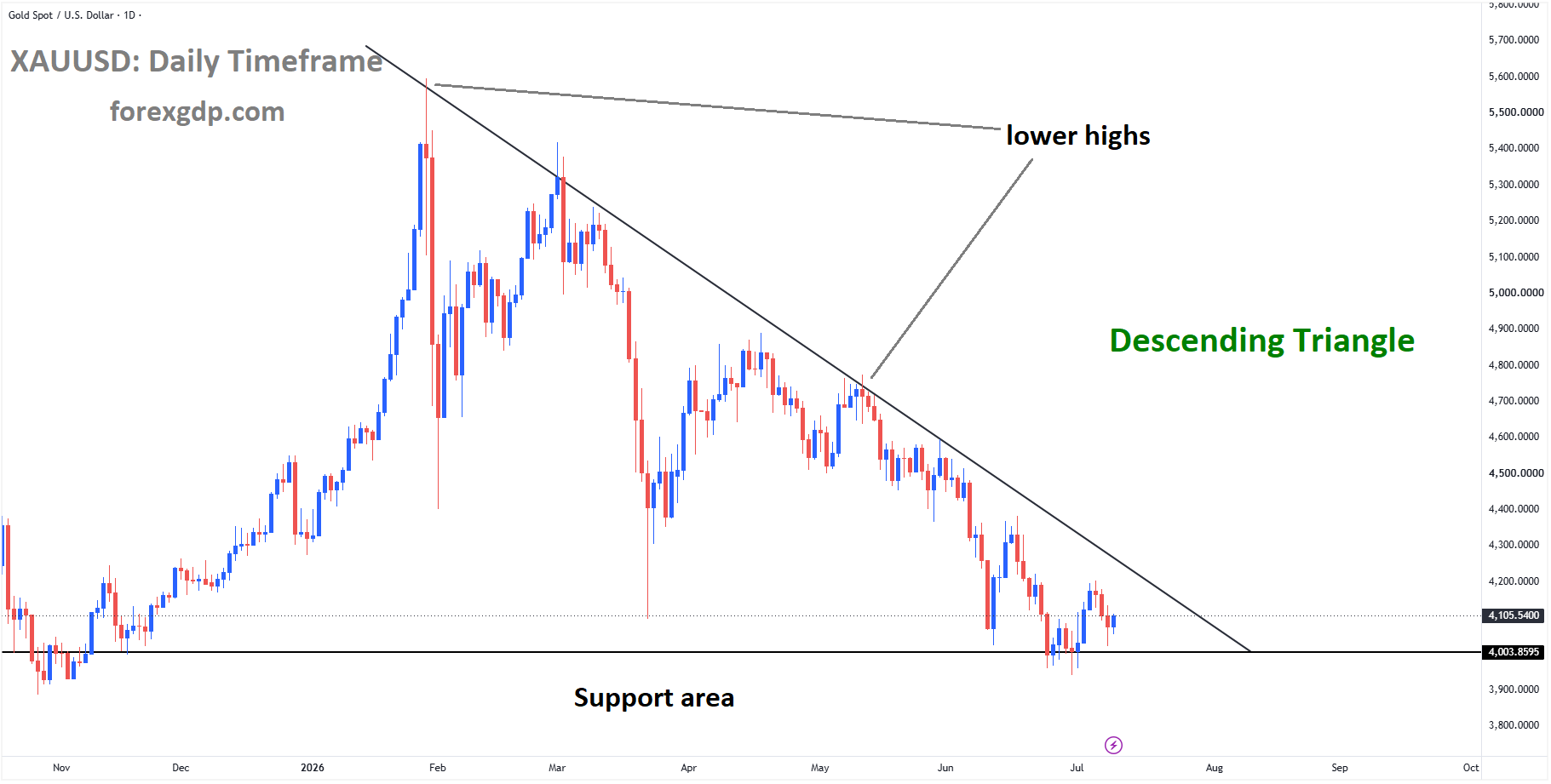
XAUUSD is moving in a descending triangle pattern
Any signs of easing geopolitical tensions could reduce demand for safe-haven assets. At the same time, evidence that inflation is slowing may weaken expectations for tighter monetary policy, which could provide additional support for Gold.
On the other hand, if political conflicts intensify or inflation pressures increase further, markets may continue favoring the US Dollar alongside cautious investment strategies.
Final Summary
Gold has managed to recover after several days of weakness, supported by a softer US Dollar and lower bond yields. However, stronger gains remain difficult as renewed tensions between the United States and Iran raise concerns about energy supplies, inflation, and future interest rate decisions.
Investors are carefully weighing safe-haven demand against the possibility of tighter Federal Reserve policy. Until there is greater clarity on inflation, geopolitical risks, and central bank decisions, Gold is likely to remain influenced by these competing forces, with market sentiment changing as new developments emerge.