
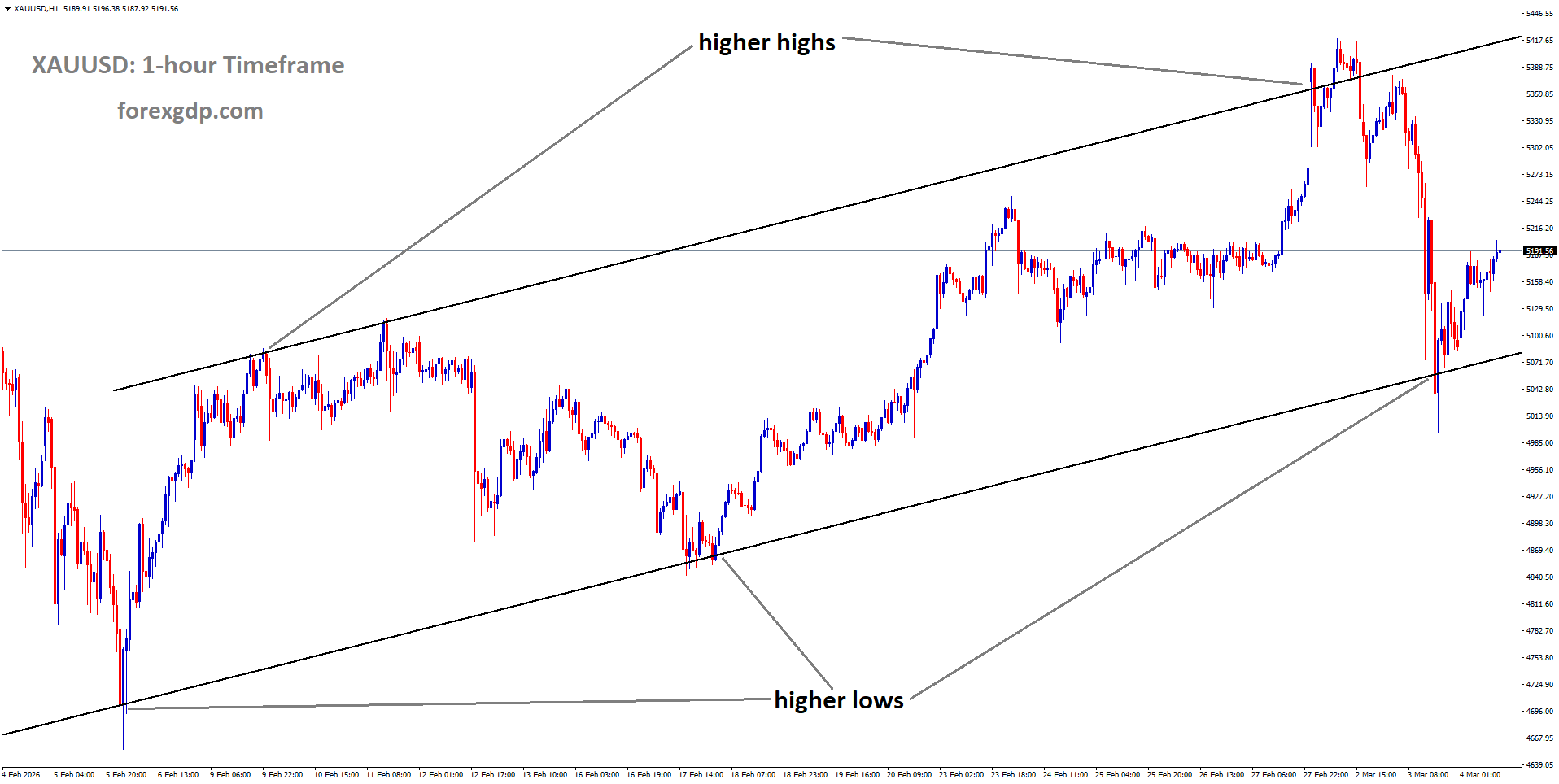
XAUUSD is moving in an ascending channel, and the market has rebounded from the higher low area of the channel
Gold continues to attract investor attention as global uncertainty increases. Rising geopolitical tensions and concerns about the global economy are pushing many investors toward traditional safe-haven assets. At the same time, the strength of the US Dollar is creating some resistance for gold, preventing the precious metal from moving higher.
Market participants are closely monitoring political developments, especially in the Middle East, while also keeping an eye on upcoming US economic data. However, geopolitical news remains the main driver shaping investor sentiment and influencing the direction of gold.
Geopolitical Tensions Increase Demand for Safe-Haven Assets

One of the biggest factors supporting gold demand is the growing uncertainty surrounding the conflict in the Middle East. Investors often turn to gold during times of political or economic instability because it is considered a reliable store of value.
Recent comments from US President Donald Trump have added to these concerns. According to him, the US military operation in Iran could last between four and five weeks. He also stated that additional strikes may continue for as long as necessary. Such statements have increased fears that the conflict could expand or last longer than expected.
When geopolitical tensions rise, investors usually become more cautious. Many choose to move their funds away from riskier investments such as stocks and into safer assets like gold. This shift in sentiment has been visible in global markets, where equities have shown signs of weakness.
Gold benefits in such situations because it does not rely on the performance of any single country or economy. Instead, it acts as a protective asset during uncertain times.
Impact on Global Market Sentiment
The ongoing conflict has already started affecting investor confidence across financial markets. Many traders are concerned that prolonged instability in the Middle East could disrupt global economic growth.
As a result, risk appetite has declined, and demand for defensive assets has increased. Gold has historically performed well during periods of uncertainty, making it a natural choice for investors seeking stability.
The growing tensions have also pushed investors to monitor geopolitical headlines more closely than economic data.
Energy Supply Concerns Add to Market Uncertainty
Another important factor influencing the gold market is the situation surrounding global energy supply. The closure of the Strait of Hormuz has raised serious concerns about oil transportation and energy availability.
The Strait of Hormuz is one of the most critical shipping routes for oil in the world. A large portion of global oil supply passes through this narrow waterway. Any disruption in this region can quickly affect energy markets worldwide.
Recently, crude oil prices surged to their highest level since June 2025 after reports that the strait had been closed. This development has sparked fears of a new energy crisis.
Threats to Global Energy Infrastructure
Iran has also reportedly targeted infrastructure that plays a key role in global energy production. In addition, the country has warned that it will not allow oil exports from the region if tensions continue to escalate.
Such developments could significantly reduce the global supply of oil, leading to higher energy costs. Rising oil prices often contribute to inflation because energy plays a central role in transportation, manufacturing, and everyday goods.
Higher inflation can create new challenges for central banks around the world, especially the US Federal Reserve.
Inflation Concerns and Federal Reserve Policy
The possibility of rising inflation due to higher energy prices could influence future monetary policy decisions in the United States. If inflation begins to increase again, the Federal Reserve may need to adjust its plans regarding interest rates.
Central banks typically lower interest rates to stimulate economic growth. However, when inflation is high, they may delay or slow down rate cuts in order to maintain price stability.
This situation creates an interesting dynamic for the gold market.
Gold does not provide interest or yield, so its attractiveness often depends on the broader interest rate environment. When interest rates are high, investors may prefer assets that offer returns through interest payments. On the other hand, when rates fall, gold can become more appealing.
If the Federal Reserve decides to slow down its plans to reduce interest rates due to inflation concerns, the US Dollar could remain strong. A strong dollar can limit gold’s upward momentum because gold is priced in US currency.
The Role of the US Dollar in Gold’s Movement
The US Dollar continues to maintain its position as the world’s primary reserve currency. Even during times of global uncertainty, many investors still view the dollar as a safe and reliable asset.
This strong demand for the US Dollar has helped it remain steady near its highest levels of the year. While geopolitical tensions are supporting gold, the dollar’s strength is preventing the metal from gaining stronger upward momentum.
When the dollar remains firm, gold often faces challenges because it becomes more expensive for buyers using other currencies.
This balance between safe-haven demand and currency strength is currently shaping the gold market. On one hand, global instability supports the metal. On the other hand, the resilience of the US Dollar limits its ability to rise significantly.
Investors Await Key US Economic Data
In addition to geopolitical developments, traders are also watching upcoming economic reports from the United States. These reports may provide insights into the health of the American economy and future monetary policy decisions.
Two important data releases are expected:
-
The ADP report on private-sector employment
-
The ISM Services PMI report
The ADP report provides an early look at employment trends in the private sector. It can offer clues about the broader labor market before the official government employment report is released.
The ISM Services PMI measures activity in the services sector, which makes up a large portion of the US economy. Strong data may indicate economic resilience, while weaker numbers could signal slowing growth.
However, many analysts believe that economic data may have a limited impact on gold in the near term. Market attention remains heavily focused on geopolitical developments and the evolving situation in the Middle East.
What Investors Are Watching Next
For now, traders are carefully monitoring both political and economic developments. The conflict involving the United States, Israel, and Iran remains the central focus for global markets.
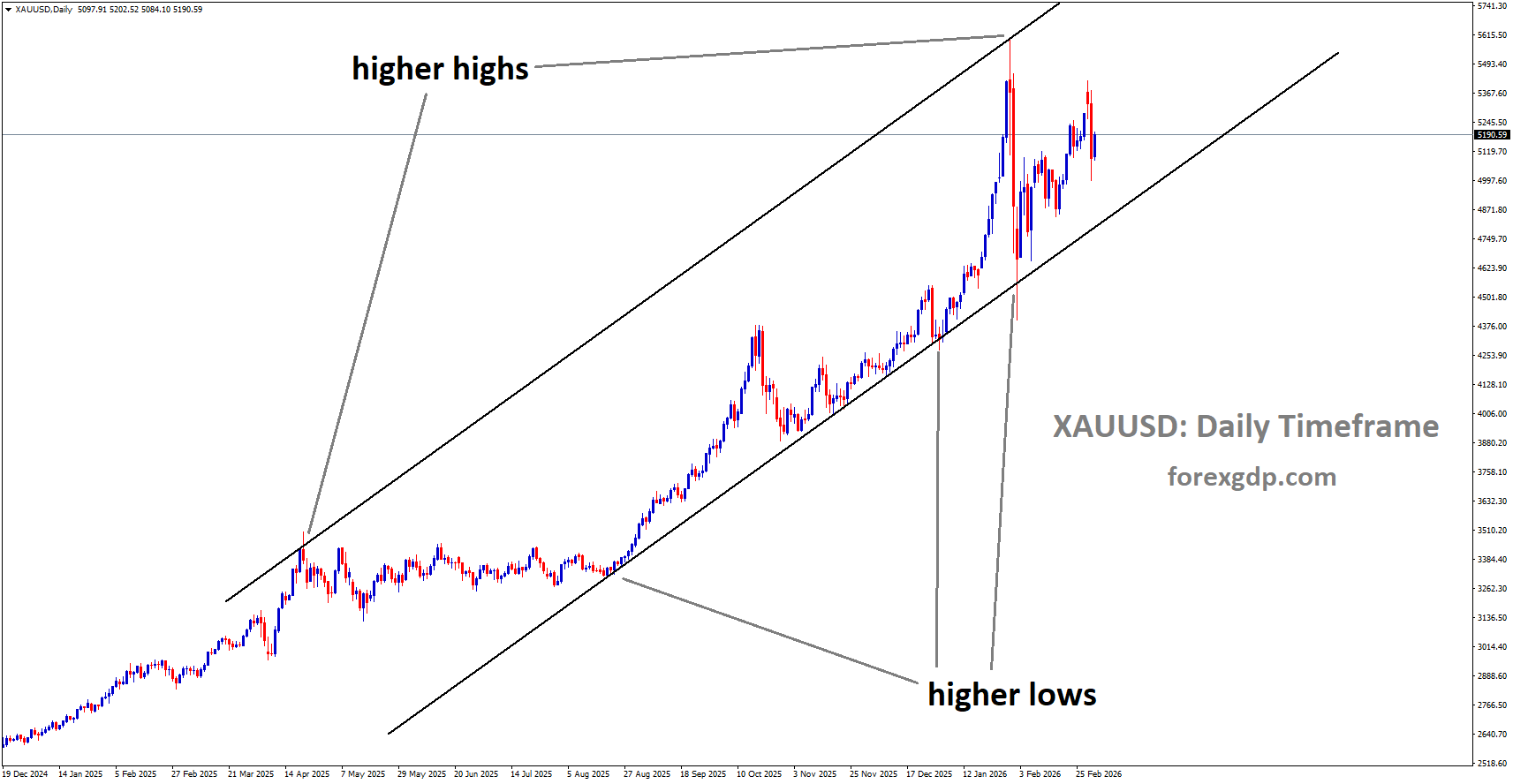
XAUUSD is moving in an uptrend channel, and the market has rebounded from the higher low area of the channel
Any escalation or signs of prolonged instability could increase demand for safe-haven assets like gold. At the same time, movements in the US Dollar and expectations surrounding Federal Reserve policy will continue to influence gold’s direction.
Investors are also watching for updates related to energy supply and global oil transportation. If disruptions continue, rising energy costs could further impact inflation expectations and economic outlooks worldwide.
Summary
Gold remains supported by growing geopolitical tensions and concerns about global stability. The ongoing conflict in the Middle East, combined with disruptions to critical energy routes such as the Strait of Hormuz, has increased investor demand for safe-haven assets.
At the same time, the strength of the US Dollar and uncertainty about future interest rate decisions are limiting gold’s ability to move significantly higher. Inflation fears linked to rising energy prices could also influence the Federal Reserve’s monetary policy in the coming months.
While upcoming US economic data may provide additional insights into the state of the economy, the primary driver for gold at the moment remains geopolitical developments. Investors around the world continue to watch the situation closely as it evolves.