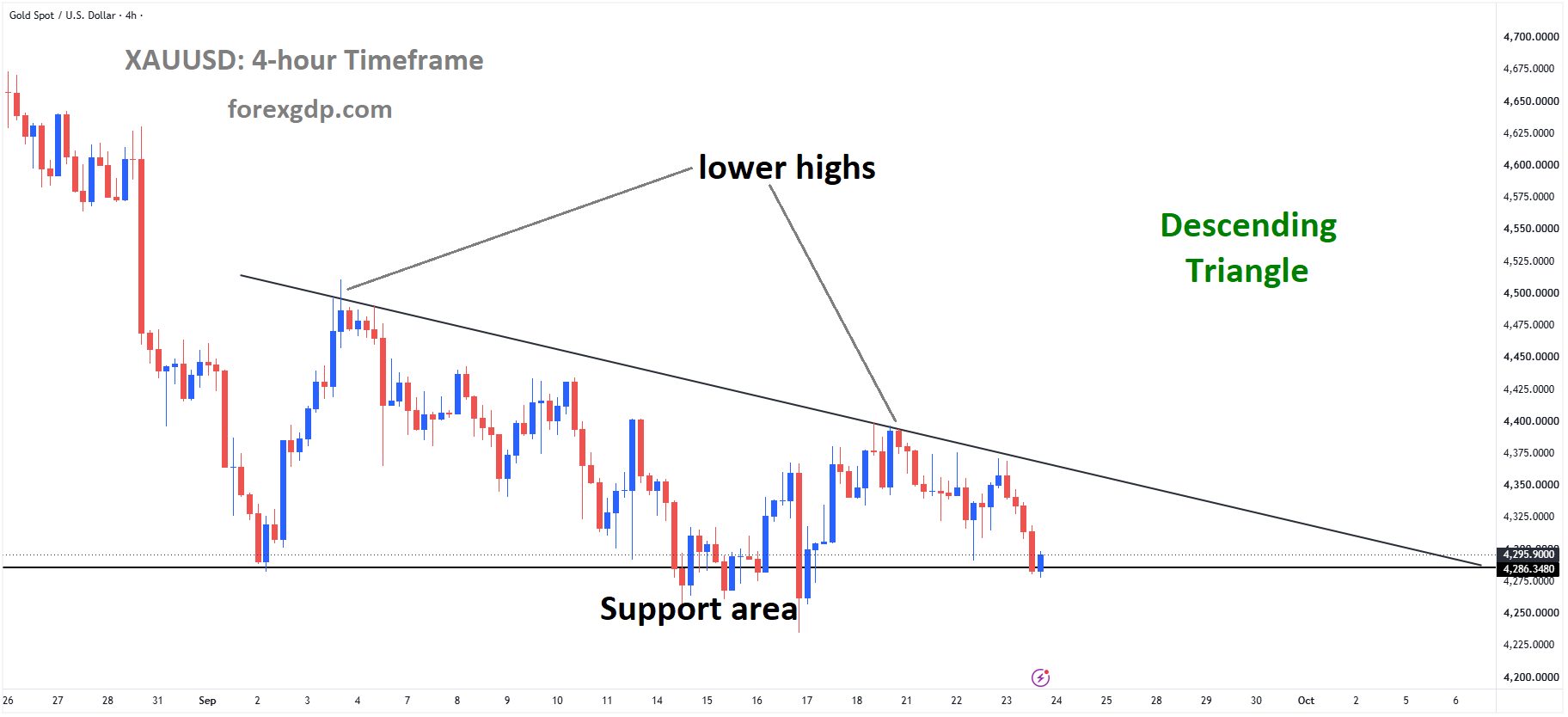
XAUUSD reached the support area of the descending triangle
Gold is under pressure as the US Dollar continues to strengthen following the Federal Reserve’s latest interest rate increase. Expectations that the Fed may raise rates again have made the dollar more attractive and left less room for gold to recover.
Lower oil prices might normally ease some concern about inflation. For now, that relief has been limited. Energy costs remain a concern, US Treasury yields are elevated, and investors are still weighing the possibility of higher borrowing costs. Together, these factors have created a difficult environment for gold.
Why Fed Expectations Matter for Gold
The Federal Reserve raised interest rates last week as part of its effort to bring inflation under control. Its outlook also left the door open to another increase. That message has shaped market sentiment: investors expect the Fed to remain cautious about easing its policy while inflation risks persist.
Gold does not pay interest. When yields on US government bonds rise, those bonds can become more appealing to investors seeking a return. Higher rates can also support the US Dollar. Because gold is traded in dollars, a stronger dollar may make it more expensive for buyers using other currencies.
Recent comments from Richmond Fed President Thomas Barkin have reinforced the Fed’s cautious stance. He described economic conditions as firm and warned that the effects of tariffs and energy shocks may last longer than hoped. He also raised concern that inflation today could influence expectations about inflation in the future.
For gold traders, the question is whether the Fed sees enough progress on inflation to pause further rate increases. Until there is greater confidence on that front, expectations of tighter policy may continue to weigh on the metal.
Lower Oil Prices Have Brought Limited Relief

Oil prices have eased as investors follow renewed diplomatic efforts in the Middle East. Reports of talks between US and Iranian representatives have offered some hope that tensions could cool and energy supplies could face fewer disruptions.
There is still a gap between talks and a lasting agreement. Iran has set out conditions for reopening the Strait of Hormuz, including changes to US actions and the wider conflict. With no clear breakthrough yet, uncertainty remains over how quickly the situation could improve.
Oil also remains elevated compared with levels before the conflict. As a result, its recent decline has not removed concerns about future energy costs. Businesses may continue to face higher expenses, while consumers could feel pressure if those costs flow through to everyday goods and services.
That matters to gold because persistent inflation could keep the Fed focused on higher interest rates. Even when oil falls for a few days, investors may hesitate to change their view of inflation until they see stronger evidence that price pressures are easing.
US Treasury Yields Add to the Pressure
US Treasury yields have stayed elevated as investors consider the possibility of further Fed action. Strong economic conditions can give the central bank more room to keep rates high, especially if inflation remains above its goal.
This creates a challenge for gold. Some investors hold it as a store of value during uncertain periods. Yet when bonds offer higher yields, the cost of holding an asset that pays no interest becomes more noticeable. A stronger dollar adds to that challenge.
Gold’s reaction is not driven by one factor alone. Concern about geopolitical events can increase demand for safe assets, while inflation fears can sometimes make gold attractive as a way to preserve value. In the current environment, however, the pull from higher yields and a firm dollar has been stronger.
US Economic Data Could Shape the Next Move
Investors will now turn to preliminary US business activity data for a clearer view of the economy. The figures cover manufacturing and services and may help show whether businesses are expanding despite higher borrowing costs.
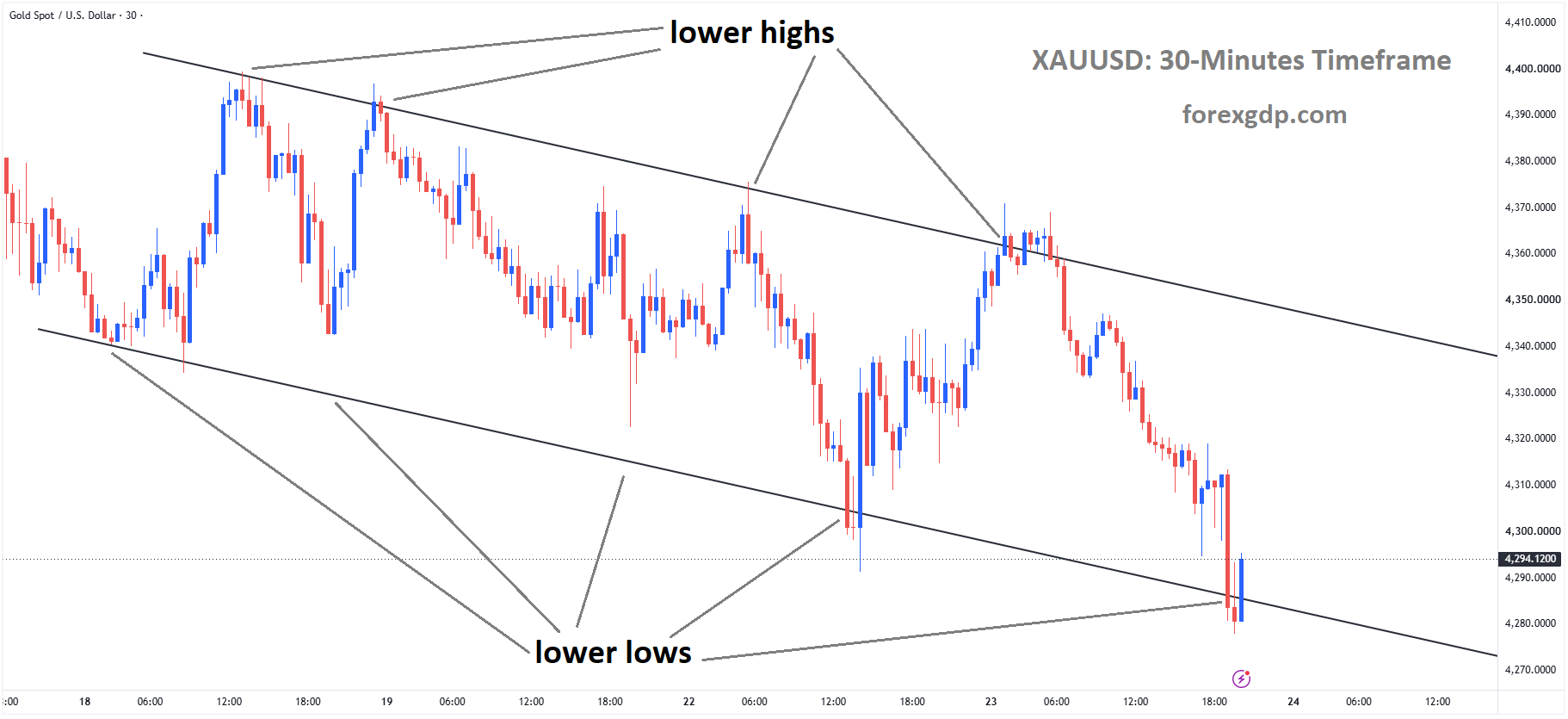
XAUUSD reached the lower low area of the descending channel
If the data points to continued strength, it could support expectations that the Fed has more work to do on inflation. That may keep Treasury yields and the dollar firm, maintaining pressure on gold. Weaker figures could lead investors to question how much further the Fed can raise rates.
One report is unlikely to settle the outlook by itself. Traders will also watch Fed comments, inflation data and developments in the Middle East. Each could change expectations for interest rates or energy costs, both of which matter for gold.
Summary
Gold faces a difficult mix of a stronger US Dollar, elevated Treasury yields and expectations of another Federal Reserve rate increase. Falling oil prices have offered only modest relief because the diplomatic situation remains uncertain and inflation concerns have not disappeared.
The next US economic reports may help clarify whether the Fed can afford to keep rates high. Until the outlook for inflation and interest rates becomes clearer, XAUUSD may remain sensitive to changes in the dollar, bond yields and Middle East developments.