XAUUSD is moving in a downtrend channel, and the market has reached the lower low area of the channel
Gold has started Tuesday on a softer note, with some sellers stepping in during the European morning. The main reason is simple: when investors feel more comfortable taking risks, they usually don’t rush to buy classic “safety” assets like gold.
At the same time, this isn’t turning into a heavy slide. Gold has managed to stay above an important psychological area around $4,200, and it isn’t seeing aggressive follow-through selling. That’s because another powerful force is working in the opposite direction: growing confidence that the US Federal Reserve may cut interest rates again in December, which has kept the US Dollar from gaining much traction.
So right now, gold is being pulled in two directions—risk-on mood pushing it down, and softer Fed expectations helping to hold it up.
Why Gold Is Facing Pressure: A More Positive Risk Mood
One of the biggest drivers for gold in the short term is overall market emotion. When stock markets look steady or upbeat, investors often move money into assets that can benefit from growth and confidence. In that kind of environment, the appeal of gold can fade because it’s typically used as a “parking place” when fear is high.
That’s what we’re seeing now. After a rough patch in markets recently, Asian shares opened more positively, and that improved tone has carried into broader sentiment. With investors feeling less defensive, gold has naturally cooled off from the strong push it made earlier.
It’s also worth noting that gold just touched its strongest levels in weeks on Monday, reaching its highest mark since late October. After a move like that, it’s normal for some traders to lock in profits, especially if the mood in markets suddenly looks calmer.
The Fed Factor: Rate-Cut Expectations Are Limiting Gold’s Downside
Even with the risk-on mood leaning against gold, the metal is not being abandoned. The reason comes down to the Fed and what lower interest rates usually mean for both the US Dollar and gold.
Gold does not pay interest. So when interest rates are high, some investors prefer assets that generate yield. But when markets start expecting lower rates, gold can look more attractive by comparison. That’s why dovish Fed expectations are acting like a cushion under the gold price.

Investors have become increasingly convinced that the Fed could lower borrowing costs again at its next policy meeting. That belief has also kept the US Dollar under pressure, which matters because gold is priced in dollars. When the dollar is weaker, gold often becomes easier to buy for investors using other currencies, which can help support demand.
In short, even though gold is attracting some sellers, the broader backdrop of rate-cut expectations is stopping the decline from turning into a full-scale drop.
Softer US data is helping the rate-cut story
More traders have leaned into the idea of Fed easing after recent economic signals suggested the US economy may be cooling. One key update came from US manufacturing data.
The ISM Manufacturing PMI for November slipped to 48.2, down from 48.7 previously, and came in weaker than expected. Readings below 50 generally suggest contraction in activity. While one report doesn’t decide everything, it adds to the wider feeling that growth is not running too hot—an environment where the Fed may feel more comfortable cutting rates.
That combination—cooler data and rising rate-cut expectations—has made it harder for the dollar to stage a meaningful rebound, even after it bounced from a recent low.
Geopolitics Still Matters, and It’s Keeping a Safety Bid in the Background
Gold isn’t only about rates and stocks. It also reacts to global uncertainty, especially when headlines involve major conflict risks.
This week, the market is watching developments tied to efforts to end the war in Ukraine. Reports indicate that US envoy Steve Witkoff and Russian President Vladimir Putin are expected to hold talks in Moscow, connected to proposals aimed at bringing the conflict to an end. There have also been comments suggesting progress in discussions, while other officials caution that more work remains.
Meanwhile, Ukraine’s leadership is looking for support from European allies, with concerns about whether any proposal might favor Russia too heavily. These kinds of headlines can shift market mood quickly. Even when stock markets are positive, ongoing geopolitical tension can keep a subtle layer of demand under gold, as investors are reluctant to ignore global risks completely.
That’s another reason why gold, despite dipping, is still holding up rather than falling sharply.
What Traders Are Watching Next: US Jobs Data and Inflation Signals
At the moment, traders appear cautious. Gold is moving, but not violently, because many market participants don’t want to make big bets before this week’s major US economic reports.
Two releases stand out:
ADP private-sector employment report
This data is often used as an early clue about the health of the US job market. Since the Fed watches employment closely, a surprise either way can quickly change expectations about future policy decisions.
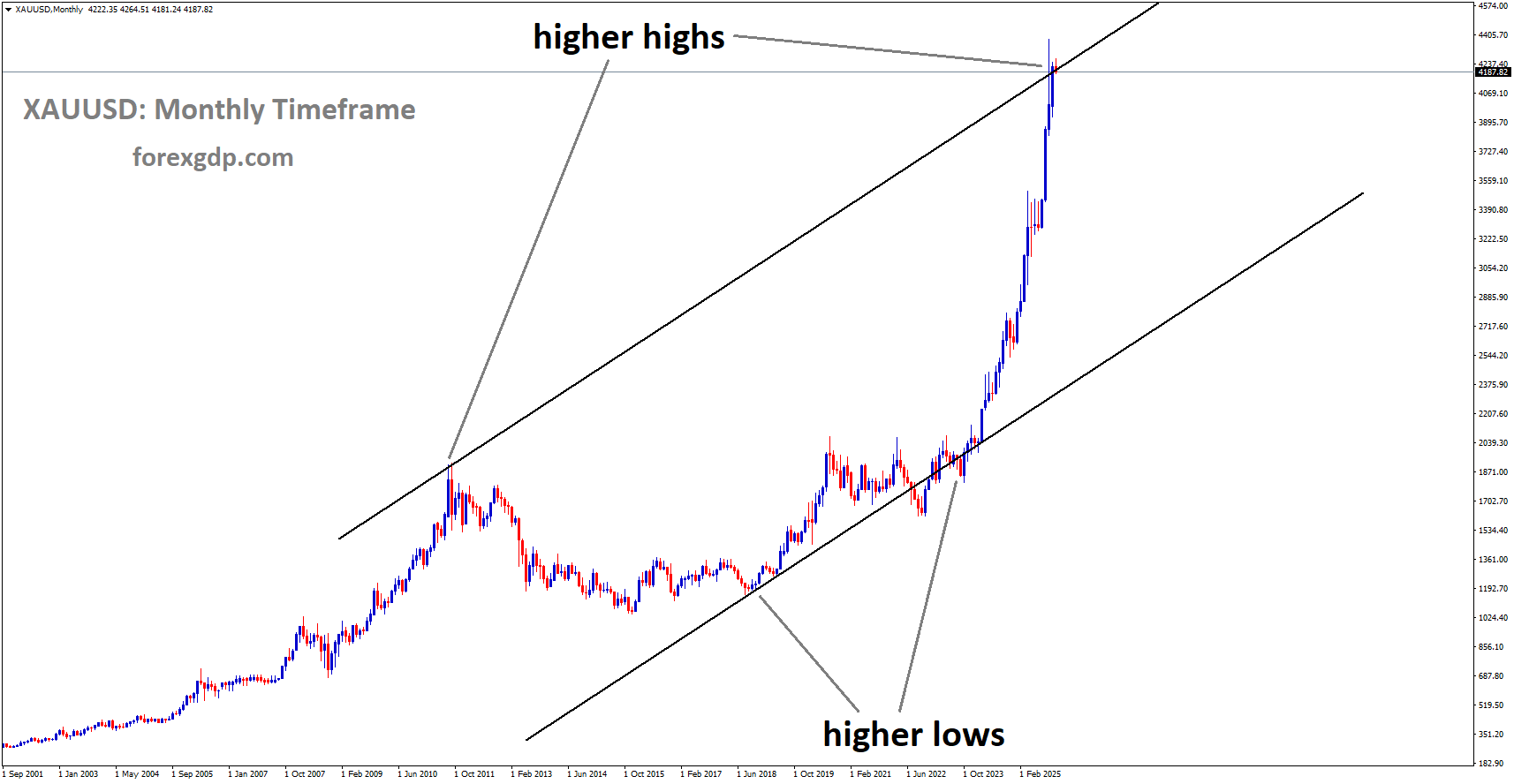
XAUUSD is moving in an uptrend channel, and the market has reached a higher high area of the channel
US PCE Price Index
The Personal Consumption Expenditures (PCE) Price Index is one of the Fed’s preferred measures of inflation. Any sign that inflation is cooling faster—or refusing to cool—could influence how the market prices the path of interest rates.
These reports matter because they can reshape the market’s view of what the Fed will do next. And that feeds directly into the US Dollar’s direction, bond yields, and ultimately gold demand.
Until then, the market may stay in a “wait and see” mode. That’s why gold can drift lower on sentiment but still avoid a dramatic breakdown—many traders prefer to see the data first, then commit.
Summary
Gold has eased as investors show a more confident, risk-on attitude, reducing demand for traditional safe havens. Still, expectations for a December Fed rate cut—and the resulting softer tone in the US Dollar—are helping gold stay supported above the $4,200 area. Ongoing geopolitical uncertainty adds another reason why investors are not rushing to abandon gold. The next big catalyst is likely to come from key US macro data this week, especially employment and inflation reports that could reshape expectations for the Fed’s next move.